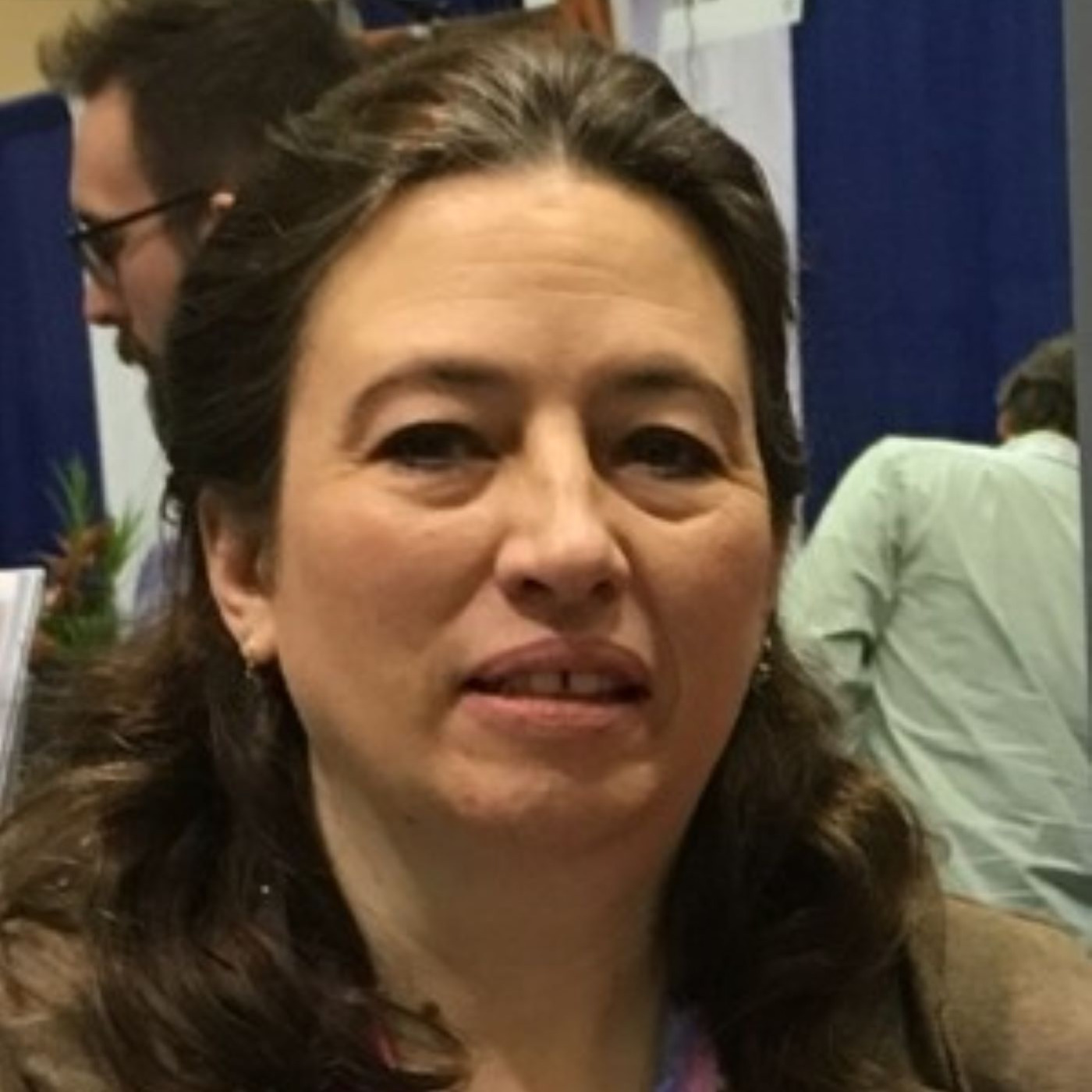
How to See the Surface of a Star: New Mexico’s Secret Super-Telescope with Professor Michelle Creech-Eakman
About this episode
In this episode, Professor Michelle Creech-Eakman discusses her work on the Magdalena Ridge Observatory Interferometer and the technology behind observing distant stars.
What does it take to see the surface features of distant stars or track satellites in deep space? In this episode we sit down with Professor Michelle Creech-Ekman , Professor of Physics and Project Scientist at New Mexico Tech. From her roots in North Dakota to her pivotal work at JPL on the Keck Interferometer, Dr. Creech-Ekman shares her journey and her current groundbreaking project: the Magdalena Ridge Observatory Interferometer (MROI). Perched 10,500 feet high in central New Mexico, the MROI is a engineering marvel. We dive deep into the tech behind this massive optical and infrared array, including: High-Precision Engineering: Custom Belgian-built altitude-altitude mounted telescopes and Italian "squashed" domes that can be relocated across 28 stations in just four hours. Extreme Resolution: How "optical trombones" in a light vacuum delay line allow the array to achieve spatial resolution down to half a milliarcsecond—roughly 90 times sharper than the angular size of Betelgeuse. Cutting-Edge Science: The observatory's historic milestone of reaching first fringes on July 12th, and its mission to image starspots, track expanding supernovas, and monitor objects in…
People in this episode
Host: Eric Loyd: The Astropotamus
Guest: Professor Michelle Creech-Eakman
Topics covered
- astronomy
- telescope technology
- space exploration
- scientific innovation
- education
Keywords
- super-telescope
- MROI
- optical array
- high-precision engineering
- starspots
- supernovas
- geosynchronous orbit
Mentioned in this episode
Organizations: New Mexico Tech, JPL
Places: North Dakota, New Mexico, Magdalena Ridge Observatory Interferometer, Betelgeuse
More episodes of The Star River Podcast
- Seeing the Entire Sky at Once in Radio Waves with Dr Jayce Dowell
- Transitioning from the VLA to the Rest of New Mexico
- Can a Star Make a Cookie? (And How We Search for Alien Tech) with Dr. Chenoa Tremblay
- Flecks of Matter on a Spinning Rock: Finding Joy in Smallness with Corrina Jaramillo-Feldman
- What's Dance Got to Do With It? Signe Mason, Part 2
- Not Today, Satan: Managing the VLA Telescope with Signe Mason, Part 1
Explore listener stats, chart rankings, contacts and more on the The Star River Podcast podcast page.