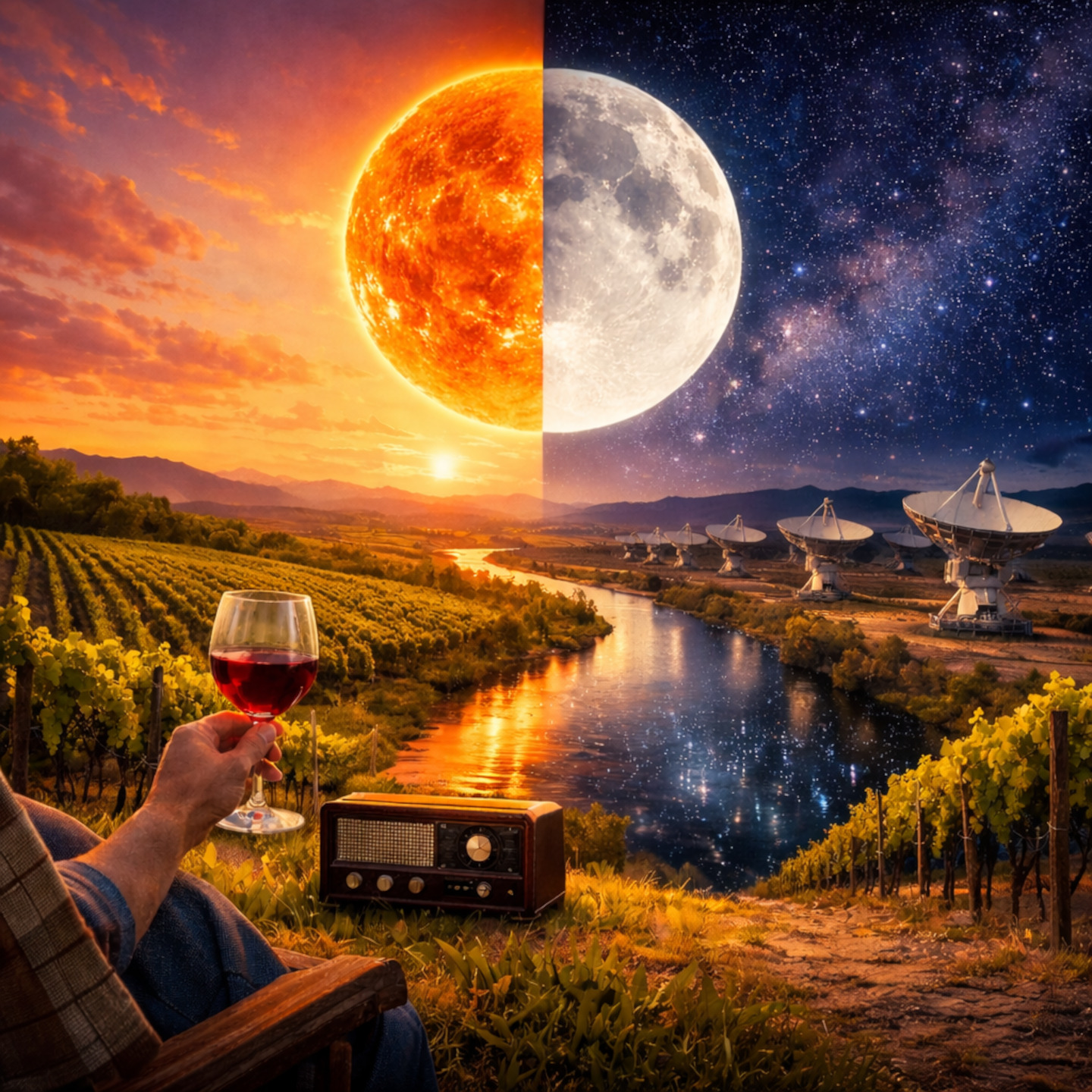
The Star River Podcast
*The Star River: Astronomy, Culture, and the Cosmic Connection*We are all travelers on a single current - a River of Space and Time flowing from ancient suns into the distant future. On *The Star River* , we don’t just w...
Insights from recent episode analysis
On the show
- Signe Mason2 eps
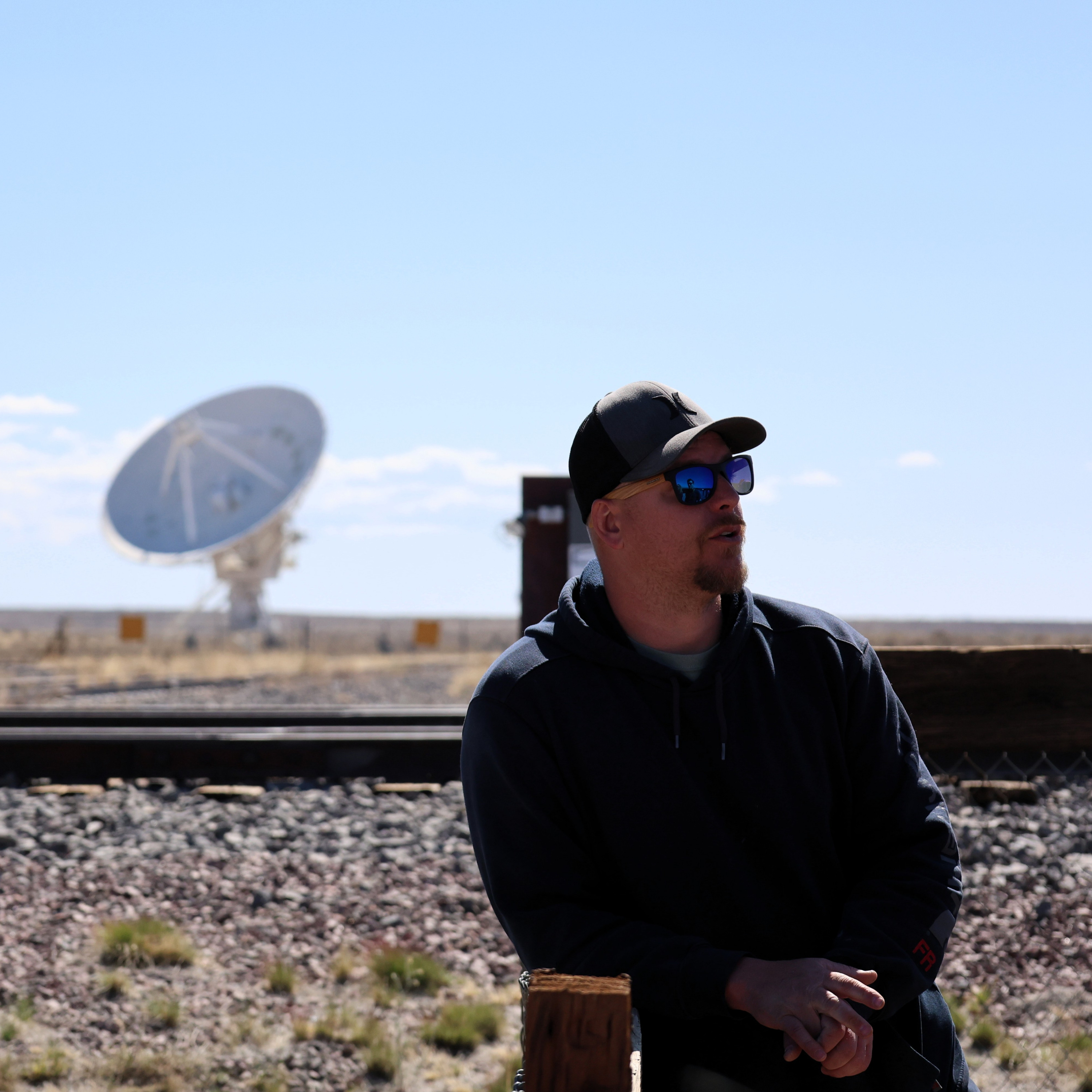
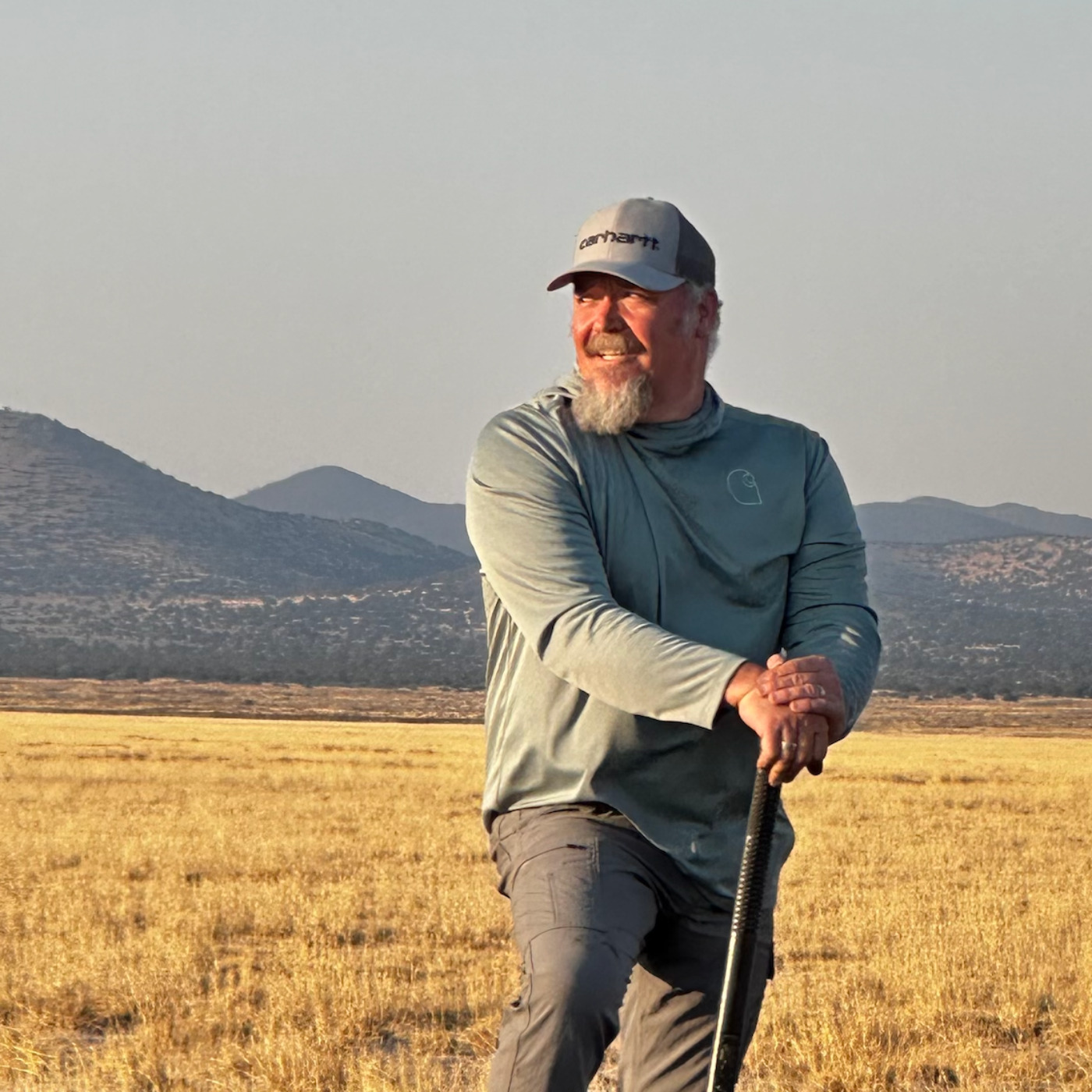
- Shane Baca2 eps
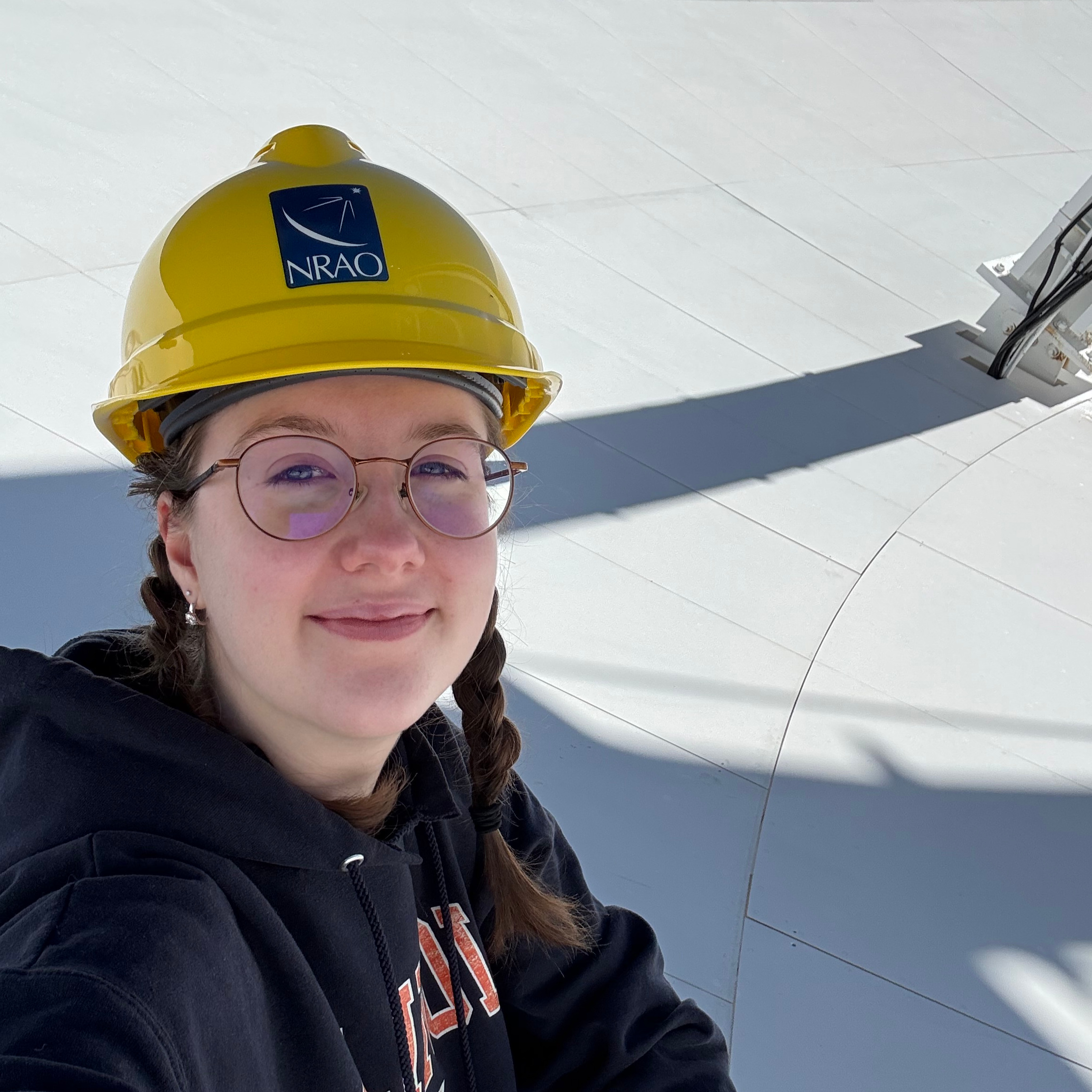
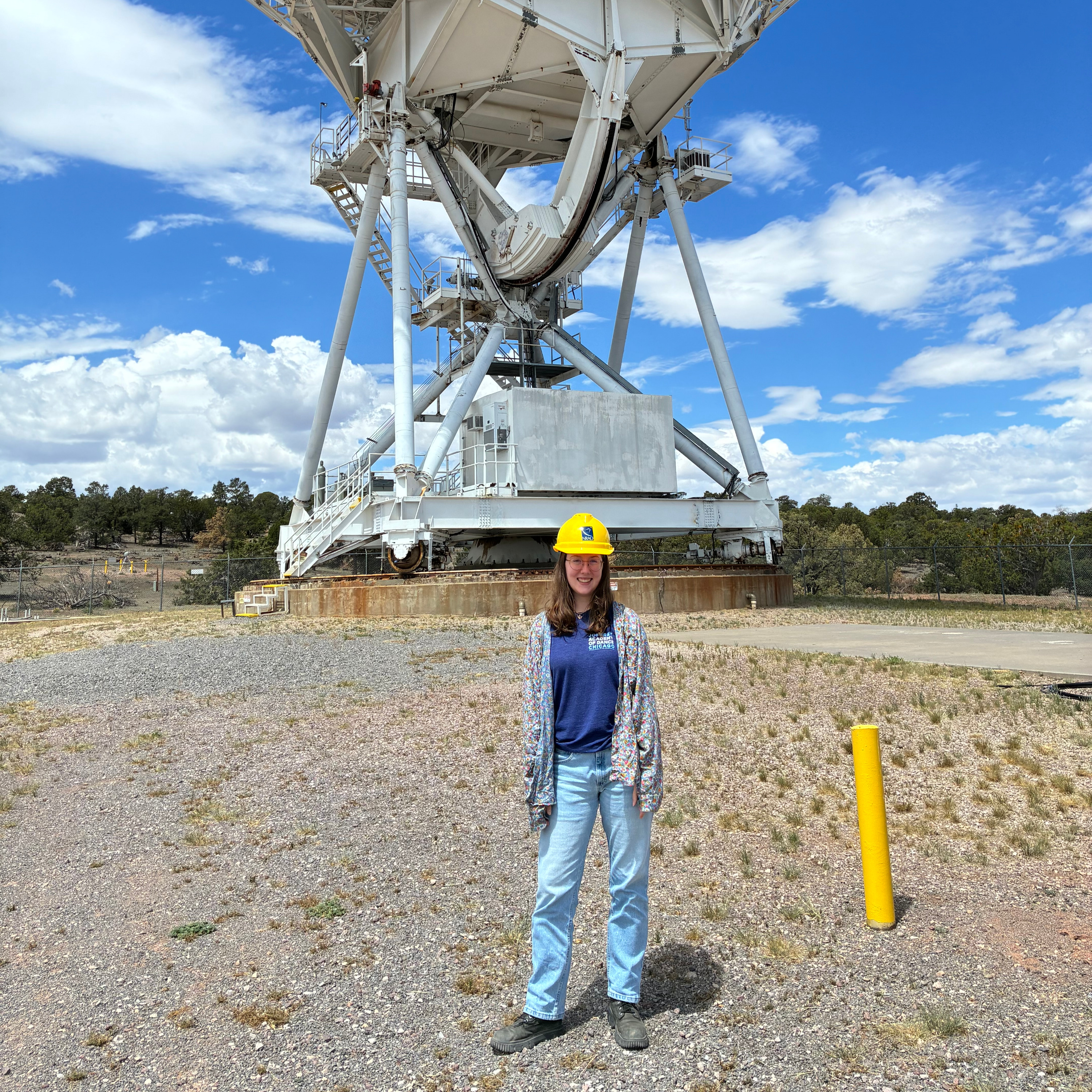
- Dr Jayce Dowell1 ep
Also: Professor Michelle Creech-Eakman, John Briggs, Dr. Chenoa Tremblay, Corrina Jaramillo-Feldman, Lorenzo Pina, Richard Harding
Audience Interest
Podcast Focus
Publishing Consistency
Insights are generated by CastFox AI using publicly available data, episode content, and proprietary models.
Most discussed topics
Brands & references
Total monthly reach
Based on 1 signal.
Built from
By chart position
- 🇺🇸United States · AstronomyHOME#9618K to 94K
- 🇨🇦Canada · Astronomy#286.1K to 32K
- 🇬🇧United Kingdom · Astronomy#173323 to 1.7K
- Per-Episode Audience
Est. listeners per new episode within ~30 days
24K to 129K🎙 Weekly cadence·24 episodes·Last published 2d ago - Monthly Reach
Unique listeners across all episodes (30 days)
49K to 257K🇺🇸73%🇨🇦25%🇬🇧1% - Active Followers
Loyal subscribers who consistently listen
27K to 141K
Market Insights
Platform Distribution
Reach across major podcast platforms, updated hourly
Total Followers
—
Total Plays
—
Total Reviews
—
* Data sourced directly from platform APIs and aggregated hourly across all major podcast directories.
| Date | Episode | Topics | Guests | Brands | Places | Keywords | Sponsor | Length | |
|---|---|---|---|---|---|---|---|---|---|
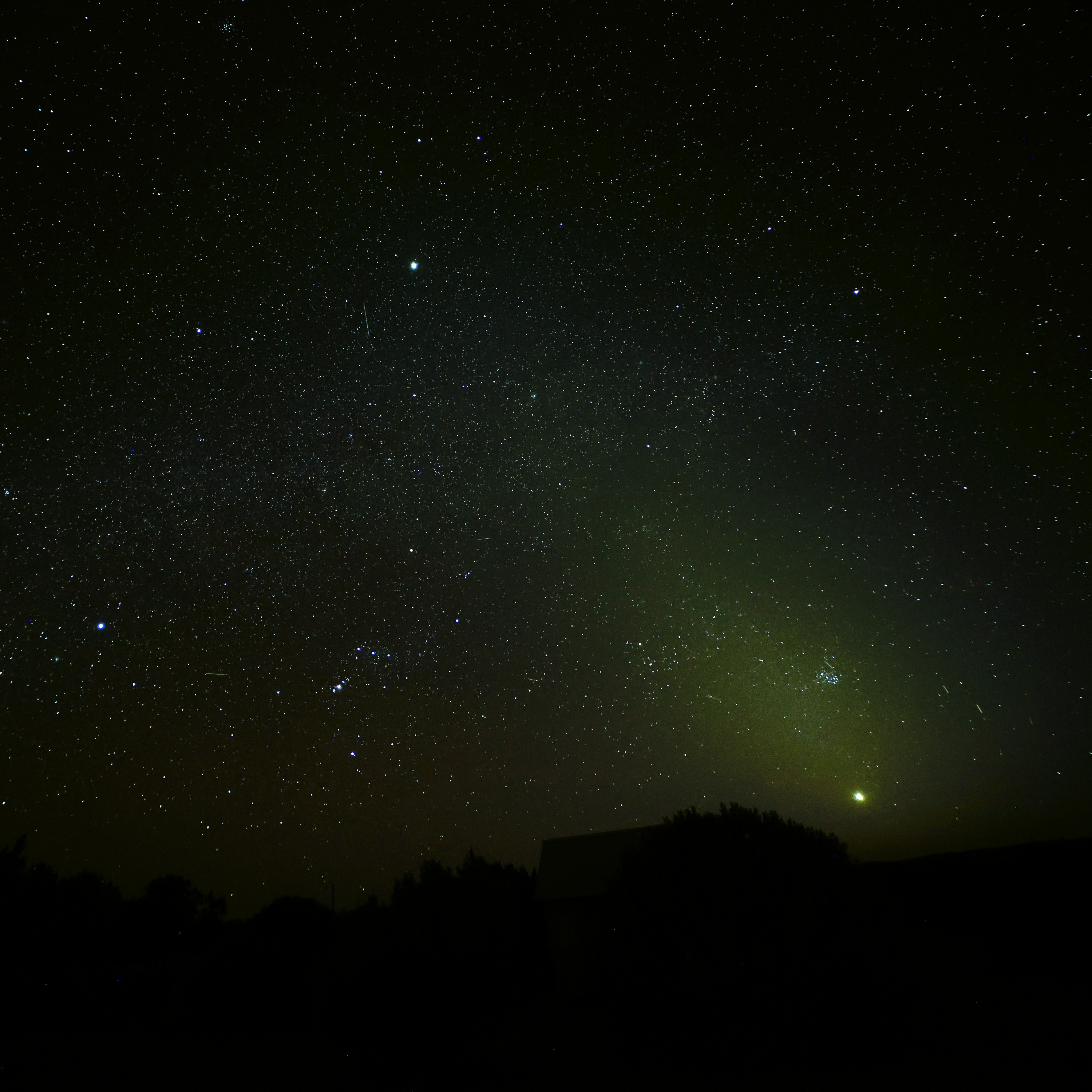
| 11/20/26 | 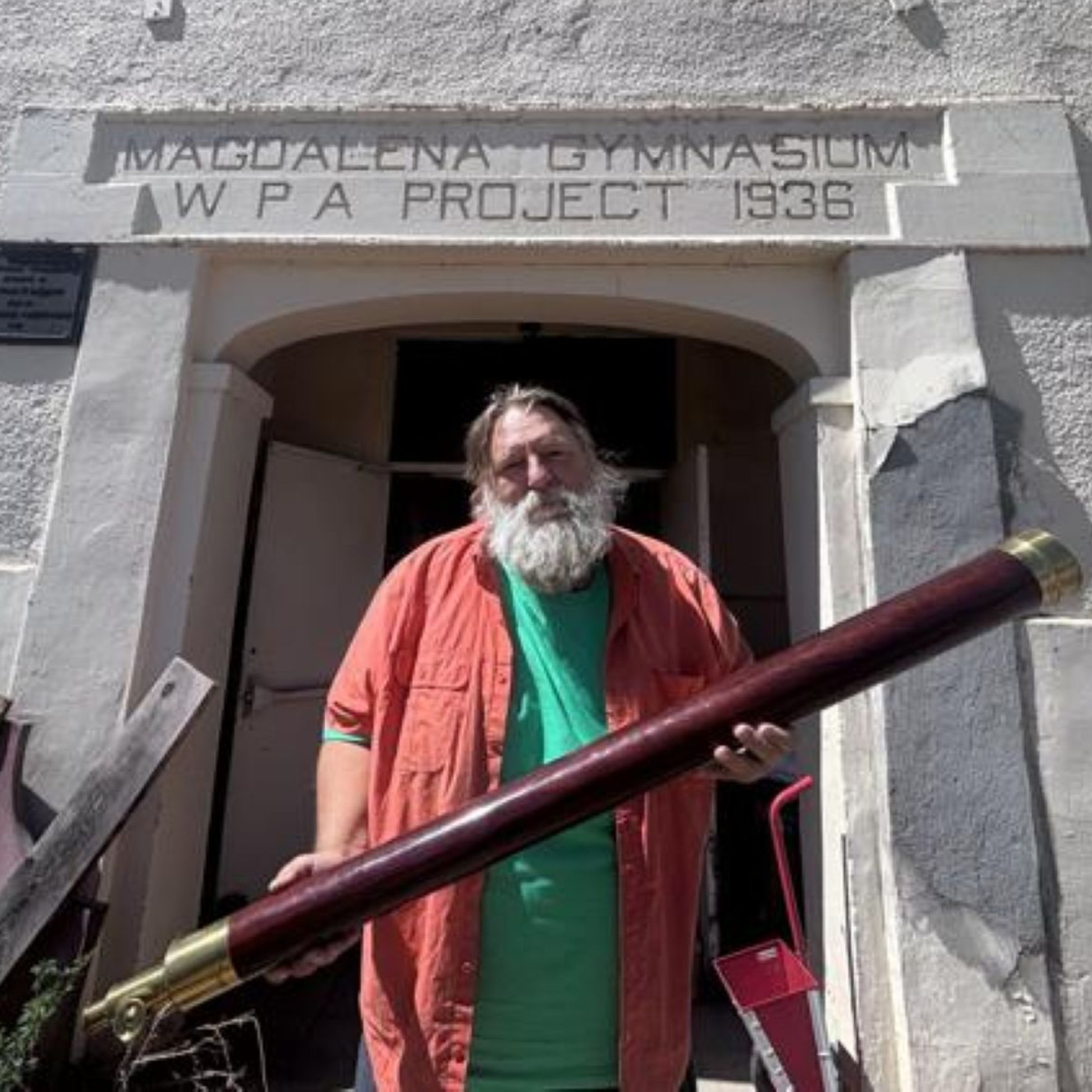 Two Rivers of Light: Treasures of the Astronomical Lyceum, Part 2 | Two rivers of light, a dollar a square foot, and a winter at the South Pole: John Briggs takes us deeper into the Magdalena Astronomical Lyceum.Part 2 picks up minutes after part 1 ended. I moved my chair next to John so we could both look out over the Lyceum: a 1936 WPA gymnasium in Magdalena, New Mexico, filled with orphaned telescopes, an optical bench from JPL, and entire astronomical libraries that would otherwise have been thrown away.We begin with the sky over Magdalena, dark enough to show two rivers of light crossing overhead: the Milky Way and the zodiacal light. Then John walks me through the room and through his life: a Zeiss lens from a friend's storage unit, Henrietta Leavitt's three-page paper in the original printed volume, George Ellery Hale's horse in the Astrophysical Journal, the lucky breaks that made him an instrumentalist, and a winter at the South Pole at −106.6 °F."They need you more than you realize at many of these places." – John BriggsChapters00:00:00 Back in the Lyceum00:02:16 Magdalena and the high desert00:05:00 Zodiacal light: two rivers in the sky00:09:11 How John came to Magdalena00:15:08 The 1936 WPA gymnasium00:17:28 Gateway to the Stars00:25:52 From frontier theater to Lyceum00:29:25 Why real books still matter00:34:21 The Lyceum's future00:40:20 A Zeiss lens in a storage unit00:43:32 Henrietta Leavitt's three pages00:49:12 Popular Astronomy and Hale's horse00:55:42 From horses to the Moon01:00:06 A Celestron 14 on wheels01:07:35 The Summer Science Program01:12:53 Maria Mitchell Observatory01:17:55 "You, John, are an instrumentalist"01:24:13 A winter at the South Pole01:38:16 Amateurs are needed01:42:05 One last toastShow notes, photos and links: thestarriver.com/episodes/john-briggs-part-2Start with part 1: thestarriver.com/episodes/john-briggsAround the campfire: Have you ever seen the zodiacal light? Where were you when you first noticed it? Call 855-DEEP-SKY (855-333-7759) and your answer may end up on the show. | 1h 43m 10s | ||||||
| 11/12/26 | 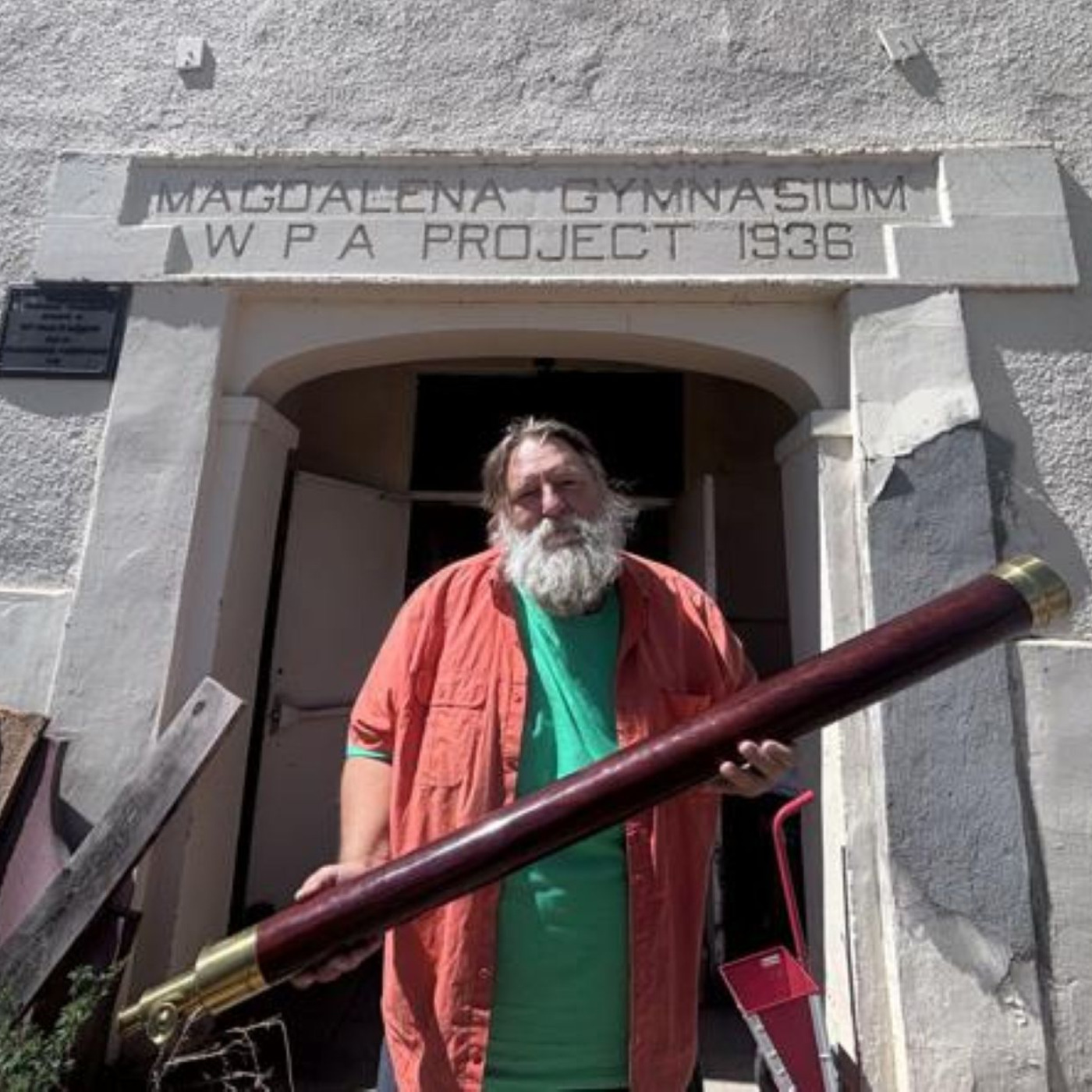 Treasures of the Astronomical Lyceum with John Briggs | Treasures of the Astronomical LyceumSaving the Orphaned Telescopes of HistoryAstronomical history and the passion for sharing it flow through this episode. Can you handle the weight of telescopes and the wisdom of the cosmos?Charting the CourseJoin The Astropotamus as he explores the vast collection of historical telescopes and astronomical artifacts housed in the Astronomical Lyceum with curator John Briggs. This episode delves into the history of American astronomy and the importance of preserving and sharing astronomical heritage.Waypoints00:05:24 - The Ritual: Sharing a Drink00:12:33 - John Briggs' Background and Retirement00:21:03 - The Astronomical Lyceum and Its Collection00:33:59 - Historic Telescopes and Henry Fitz's Refractor00:46:37 - Engagement with Astronomy and Historical Perspective00:59:32 - Legacy and Inspiration in Astronomy01:06:31 - Top Three Treasures at the Astronomical Lyceum01:25:58 - Optical Bench from JPL and Its SignificanceCurrentsJohn Briggs shares his journey from amateur astronomer to professional in observatories across the country.The significance of the Astronomical Lyceum as a repository for orphaned telescopes and historical astronomical artifacts.The importance of connecting with the history of astronomy to inspire future generations.The role of amateur astronomers in advancing the field and engaging the public.The story of Alvin Clark and his contribution to refracting telescopes in the United States."I'm a grown-up amateur astronomer. I'm retired. I'm 67 now, but I have been interested in this for all my life." - John BriggsWhere the River Took UsHistorical telescopesAmateur astronomyAlvin ClarkOptical benchSpectroscopySidewalk astronomyLinksThe Magdalena Astronomical LyceumAlvin Clark and SonsAmerican Astronomical SocietyStellafane ConventionSwarthmore College Spurlock ObservatoryJoin the CurrentSo dive into the history of telescopes, grab your drink for The Ritual, and join us as we take a trip down John Briggs' tributary of The Star River! | 1h 39m 23s | ||||||
| 10/6/26 | The Software Behind the Stars: Seti Astro's Frank Marek | The Software Behind the Stars: How did Frank Marek's SETI Astro Suite Pro become the go-to tool for image processing?Charting the CourseThis episode dives into the world of astrophotography and the software that powers it, featuring Frank Marek, the creator of SETI Astro Suite Pro. We explore his journey from Navy veteran to astrophotography developer and his commitment to making advanced image processing accessible to everyone. "The bar's been set fairly low for entry to get in there." - Frank MarekWaypoints00:02:53 - The Ritual: Sharing a Drink00:15:20 - Introduction to Frank Marek00:28:10 - Astrophotography Journey: From Navy to Hobby00:45:30 - Seti Astro Suite Pro Development01:00:19 - YouTube Channel and Content Creation01:06:32 - Thumbnail Creation and Props01:08:05 - Surprise at Community Growth01:13:52 - Encouragement for New AstrophotographersCurrents- Frank's transition from Navy nuclear power to astrophotography- The importance of community support and user feedback in software development- The role of AI in creating and improving astrophotography tools- The significance of accessible and affordable equipment for newcomers to the hobby- The science behind color theory and its application in image processingWhere the River Took Us- SETI Astro Suite Pro- Pix Insight- AI and machine learning in astrophotography- Color theory and chroma vs. saturation- Robotic telescopes like Sea Stars- NINA acquisition softwareLinks- SETIAstro.com- SETI Astro Discord- Frank Marek's YouTube channel- GPU-accelerated Riemann–Siegel Z scanner (whaaaaa?)- That YouTube video where we talk about the nature of the Galaxy# Join the CurrentSo download SETI Astro Suite Pro, grab your drink for The Ritual, and join us as we take a trip down Frank Marek's tributary of the Star River! | 1h 19m 28s | ||||||
| 9/29/26 | 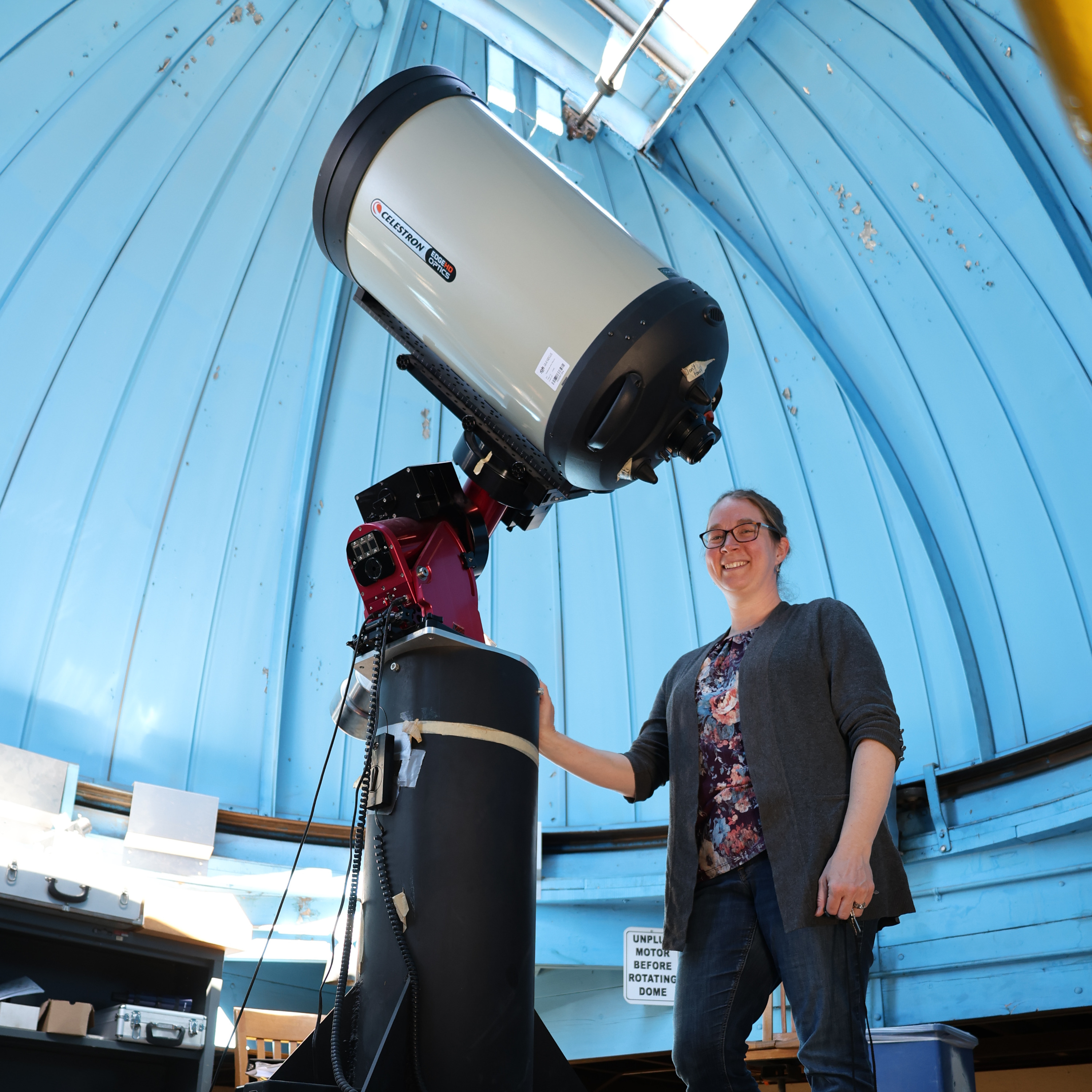 Chasing Stars in the City Lights with Jessica Dowell | How does an observatory thrive amidst urban lights?Charting the CourseExplore the challenges and triumphs of the University of New Mexico Observatory, nestled in the heart of Albuquerque. Observatory Director Jessica Dowell and her husband, Jayce Dowell discuss the observatory's history, outreach efforts, and the quest for a darker sky site."The goal is to give them the experience I had as an undergrad, which inspired me to be an astronomer." - Jessica DowellWaypoints00:02:53 - The Ritual: Sharing a Drink00:11:08 - Challenges of Light Pollution and City Expansion00:22:20 - Visual Astronomy and Public Outreach00:31:04 - Dreams for the Observatory00:38:00 - Public Reactions to Observing Nights00:45:30 - Optical Telescopes and Research Instruments00:52:00 - Historical Context and Future PlansCurrentsThe observatory's 72-year-old building faces encroaching city lights and infrastructure.Friday night open houses engage the public and students with telescopes and starry skies.Efforts to restore a 26-inch telescope for research and educational purposes.Balancing accessibility and research goals in a changing urban landscape.The importance of community outreach and fundraising for the observatory's future.Where the River Took UsEncroaching city lightsPublic outreach and educationRestoration of old telescopesDark sky sitesADA accessibilityRadio astronomy vs. optical astronomyLinksUniversity of New Mexico ObservatoryAlbuquerque Astronomical SocietyLong Wavelength ArrayDark Sky InternationalJoin the CurrentSo visit the University of New Mexico Observatory's website, grab your drink for The Ritual, and join us as we take a trip down Jessica and Jayce Dowell's tributary of the Star River! | 1h 01m 38s | ||||||
| 9/1/26 | radio astronomyLong Wavelength Array+3 | Dr Jayce Dowell | University of New MexicoLong Wavelength Array | Sevilleta National Wildlife RefugeLWA-2 facility | radio wavesastronomy+5 | — | 1h 24m 27s | ||
| 8/18/26 | astronomytelescope technology+3 | Professor Michelle Creech-Eakman | New Mexico TechJPL | North DakotaNew Mexico+2 | super-telescopeMROI+5 | — | 1h 42m 20s | ||
| 8/4/26 | astronomyNew Mexico+4 | John Briggs | Karl G. Jansky Very Large ArrayMagdalena Ridge Observatory Interferometer+3 | Plains of San AugustinNew Mexico | VLAastronomy+5 | — | 5m 56s | ||
| 7/28/26 | astrochemistryextraterrestrial intelligence+4 | Dr. Chenoa Tremblay | SETI InstituteBreakthrough Listen+1 | — | extraterrestrial lifeSETI+6 | — | 1h 12m 34s | ||
| 7/21/26 | political campaign managementradio astronomy+4 | Corrina Jaramillo-Feldman | National Radio Astronomy ObservatoryVLA+2 | Santa FeNew Mexico | political campaignsradio astronomy+6 | — | 41m 58s | ||
| 7/14/26 | astrophysicsdance+3 | Signe Mason | Very Large ArrayNorthwestern University | New MexicoSocorro | astrophysicsVery Large Array+5 | — | 52m 10s | ||
Want analysis for the episodes below?Free for Pro Submit a request, we'll have your selected episodes analyzed within an hour. Free, at no cost to you, for Pro users. | |||||||||
| 7/7/26 | radio telescopesastrophysics+3 | Signe Mason | Very Large ArrayNorthwestern University | New MexicoSocorro | VLAtelescope management+5 | — | 54m 24s | ||
| 6/23/26 | interviewastronomy+3 | Lorenzo PinaRichard Harding | U.S. National Science Foundation | Very Large Array | VLAastronomy+5 | — | 30m 04s | ||
| 6/9/26 | Blue Collar AstronomyVLA+3 | Shane Baca | VLA | — | Blue CollarVLA+3 | — | 42m 17s | ||
| 6/2/26 | radio wavescosmic signals+4 | Shane Baca | Very Large Array | New Mexico | astronomyradio waves+5 | — | 5m 30s | ||
| 5/26/26 | VLBA Space Exploration: From Books to Black Holes with Dr. Justin Linford | You don't need an elite academic pedigree to have a meaningful relationship with the universe; you just have to be curious, dedicated, and a little bit crazy. Dr. Justin Linford shares his journey along the Star River with me, in person, at the Very Large Array in New Mexico.For the very first time on The Star River Podcast, I packed up my gear and traveled 2,000 miles to the high desert of New Mexico for a live, face-to-face interview. Sitting in the break room inside the iconic Very Large Array control building, I shared a cup of desert water and a deep conversation with NRAO scientist Dr. Justin Linford. Rather than getting bogged down in dry mathematics and complex equations, Justin opens up about the heart behind his science."Anybody can do science. You just have to be curious and dedicated and a little bit crazy." -Dr. LinfordSneaker Net: Why continent-spanning telescope arrays still rely on shipping physical hard drives via FedEx to move petabytes of deep-space data.Blazars: How supermassive black holes blast powerful jets of energy straight down Earth's line of sight.Radio Noise: The unexpected challenges of radio astronomy, including rogue military satellites.We trace his personal path to the stars. From discovering a simple constellation book as a third-grader under the pristine, dark skies of Gallup, all the way to his work tracking the ferocious currents of supermassive black holes. Ultimately, this episode is a moving, grounded reminder that the universe isn't just for academics; it proves that pure curiosity is the only credential you truly need to explore the cosmos.So pull up a camp chair, pour a drink for our Ritual, and join a conversation between friends that bridges the gap between the backyard stargazer and the frontiers of science.Connect with the Current:Official Website: https://thestarriver.comJoin the Conversation: Call 855-DEEP-SKY to share your "Star River" story, ask a guest a question, or leave feedback for the Astropotamus.Follow the Journey: Find on social media @Astropotamus.Keywords: Radio Astronomy, VLBA, Very Large Array, National Radio Astronomy Observatory, NRAO, Supermassive Black Holes, Stargazing New Mexico, Space Exploration, Astrophotography, Astronomy Education, Science Communication | 34m 30s | ||||||
| 5/22/26 | 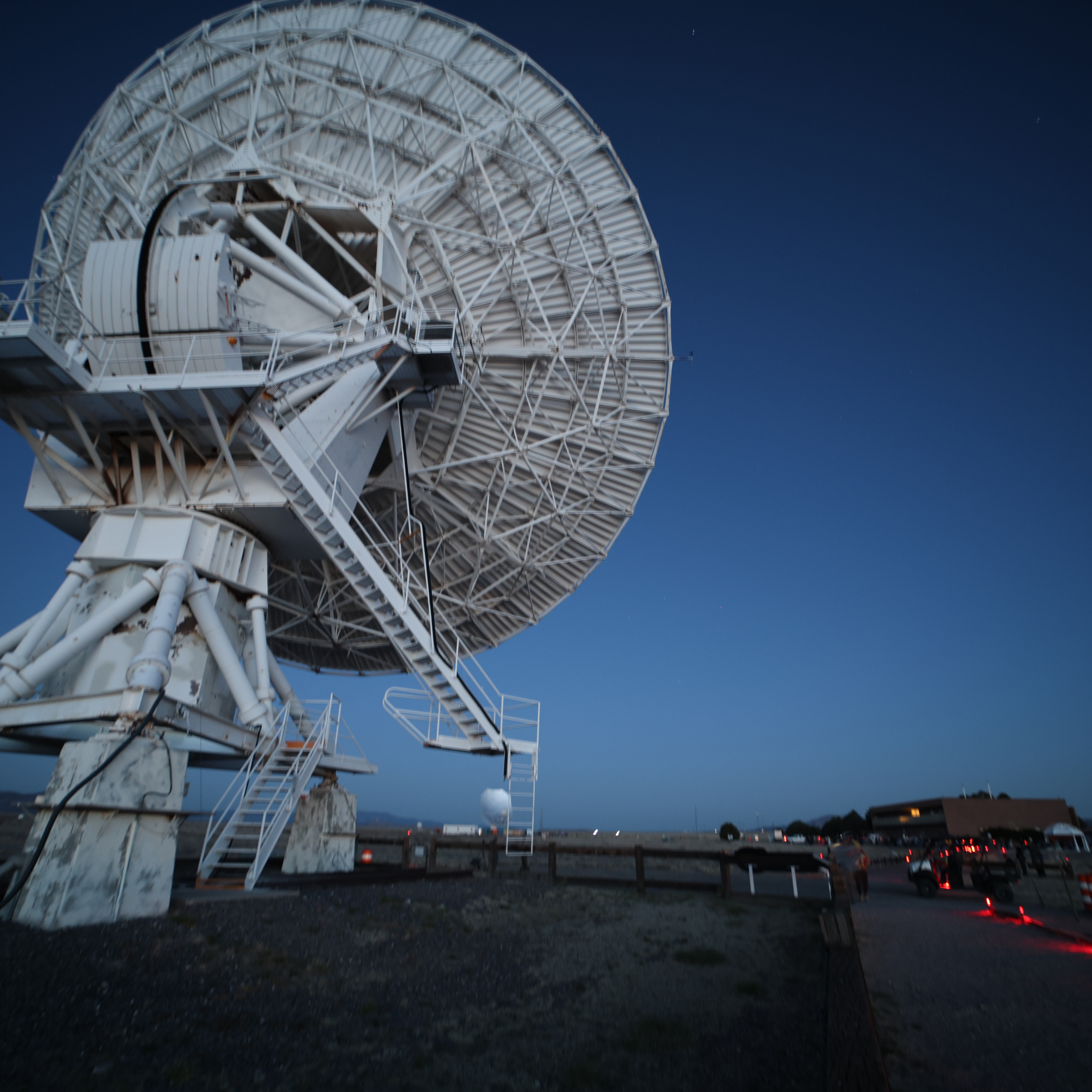 Introduction to Season Two: The Enchanted Frequency | Gather 'round the campfire, Navigators. Welcome back to the banks of the Star River!After a six-week winter thaw, the current is officially moving again. In this special Season 2 teaser, I detail my recent 2,000-mile expedition into the stark, whisper-quiet high desert of New Mexico in search of the Enchanted Frequency.From chasing the ghostly glow of the Zodiacal light under heavy, pristine dark skies to standing among the massive dishes of the world’s most iconic observatory, Season 2 is a deep dive into how we connect with the universe when the lights go out.Inside this episode:The Return: Shaking off the winter clouds and setting the stage for the journey ahead.The Hotline: Long-time listener Mark calls in from the city lights of Ohio to ask a question that bridges the gap straight into the desert.The Tease: A sneak peek at next Tuesday’s full-length premiere, featuring my first-ever face-to-face interview, at the VLA with NRAO radio astronomer Dr. Justin Linford.📞 Join the River: Call 855-DEEP-SKYThe hotline is officially open! Share your backyard stargazing rituals, ask a burning cosmic question, or tell us what the sky looks like from your campsite. Call 855-DEEP-SKY (855-333-7759) to have your voice become part of the River.🌌 Claim Your Limited-Edition Mission Sticker!To celebrate The Enchanted Frequency mini-series, the first 25 fellow Navigators to step up and support the show will receive a high-quality, weather-resistant Enchanted Frequency mission sticker mailed straight to their house with a handwritten note from me, the Astropotamus.Head over to astropotamus.com/supportChoose your level of support and Join the CrewBy joining the crew, you’ll also unlock access to our private Discord channels, where I will be dropping my raw New Mexico astrophotography files, audio, pictures, drone videos, and more over the coming weeks.So mark your calendars for Tuesday morning, Navigators. Check your gear, warm up the dew heaters, and get that drink ready for our Ritual, because we're headed into some of the darkest skies, and one of the most radio-quiet areas in America: New Mexico. The Land of Enchantment.Until the next bend in the River... clear skies, and I'll see you in the dark! | 5m 52s | ||||||
| 4/25/26 | 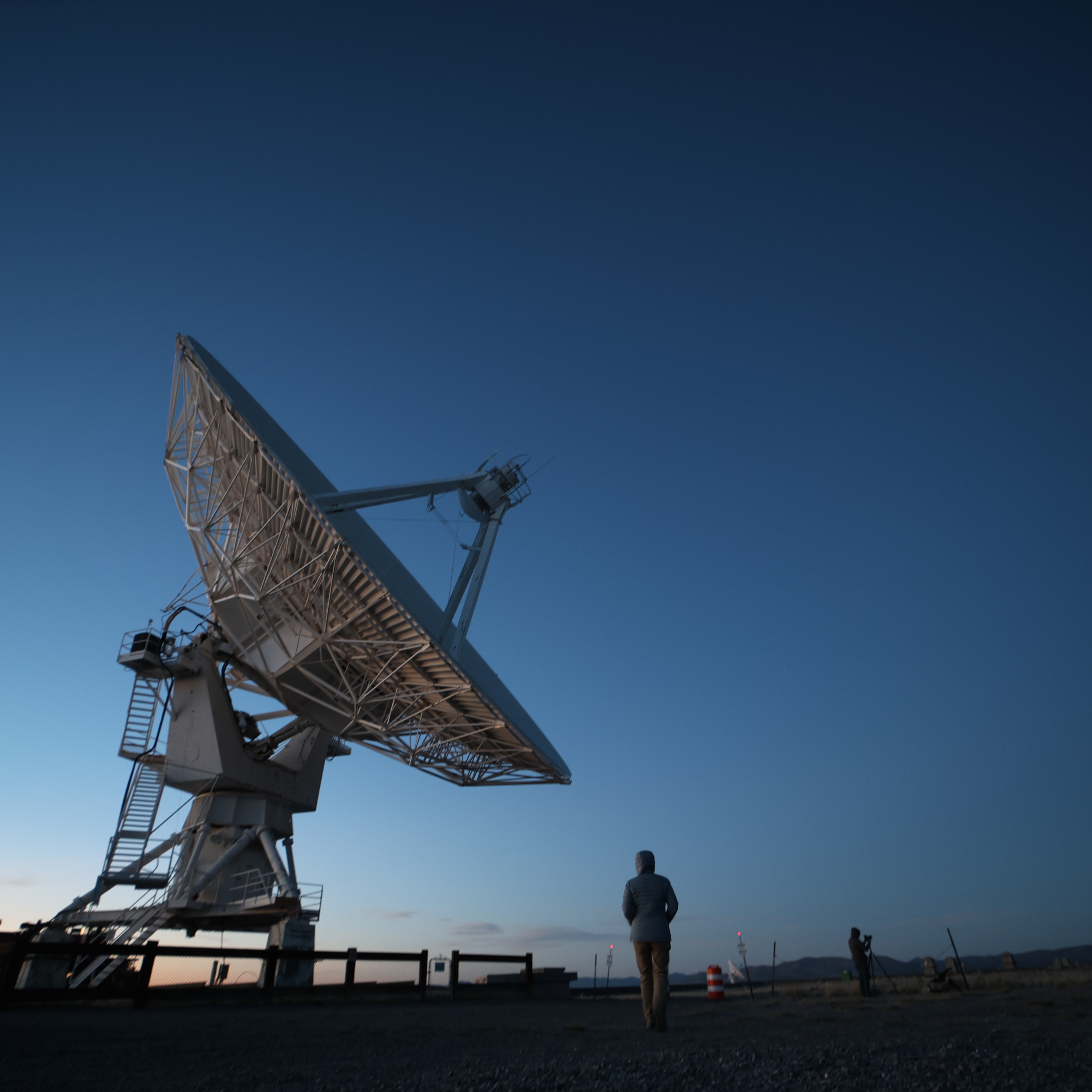 The New Mexico Mission: Returning Home | In this final "transition" episode, Eric (The Astropotamus) packs his bags and heads home from the Land of Enchantment. Returning with dozens of hours of audio from the deep heart of the Southwest, he pauses to reflect on the voices recorded, the connections made, and the shared Rituals that anchored this mission."I am a time traveler, and I'm leaving New Mexico not the same person who arrived."Coming soon to the Star River:The Builders: Impromptu conversations with the VLA rail and maintenance crews.The Visionaries: Deep dives with the scientists and controllers of the VLA, VLBA, and MROI.The Historians: A pilgrimage to the Magdalena Astronomical Lyceum.The Navigators: Future-facing science at the LWA and UNM Observatory.The Ancestors: Reflections on the final Gathering of Nations Powwow after 46 years.Whether you are a backyard imager, a professional radio astronomer, or a dreamer following the drums, join Eric as he re-joins his "normal" life after a transformational experience on the Star River. Episodes resume once this massive amount of audio has been edited into the stories they deserve.There are a few surprises along the way as well, some of which are simply *amazing*. Please join us in the River for these episodes; you won't want to miss them!Connect with the Current:Official Episode Website: https://thestarriver.com/episodes/land-of-enchantmentJoin the Conversation: Call 855-DEEP-SKY to share your Star River story, ask my guest a question, or leave feedback for the Astropotamus.Follow the Journey: Find on social media @Astropotamus.Until the next bend in the River, clear skies, and I'll see you in the dark!Topics & Keywords: Astronomy, VLA, Very Large Array, New Mexico, Astrophotography, Science Communication, Indigenous Astronomy, Gathering of Nations, Radio Astronomy, Finger Lakes Wine, Space Philosophy. | 4m 30s | ||||||
| 4/18/26 | The New Mexico Mission: Standing in the Middle of Silence and the Darkness of the Skies | In this special "transition" episode, Eric (The Astropotamus) packs his bags and heads for the Land of Enchantment. Before diving into interviews with the scientists of the Southwest, he pauses to bridge the gap between two worlds: the green, frost-nipped vineyards of Upstate New York and the red, silent dust of the Plains of San Agustin."I am a time traveler. By the time you hear my voice, I’m already standing in the high desert of New Mexico."In this journey down the River, we explore:The Ritual: A final glass of Keuka Springs Riesling serves as an anchor between the "Terroir of the Soil" and the "Terroir of the Cosmos."The Ears of the Plains: A visit to the Very Large Array (VLA). Discover why a dried-up ancient lakebed is the perfect place to listen to the violent heart of the universe, and why radio astronomy is as much "heavy industry" as it is high science.The Skin of the Sky: The Long Wavelength Array (LWA) and the "Radio Quiet Zone," where we learn that to hear the universe, we must first learn to silence ourselves.The Human Lens: A preview of our visit to the University of New Mexico Observatory and the "Sweet Spot" of astronomy where photons finally meet the human eye.Ancestral Currents: Reflecting on the Gathering of Nations Powwow and the deep, indigenous history of the stars as relatives, guides, and a "River of Milk" in the sky.Whether you are a backyard imager or a dreamer following the drums, join Eric as he re-introduces himself to the stars.Connect with the Current:Official Episode Website: https://thestarriver.com/episodes/land-of-enchantmentJoin the Conversation: Call 855-DEEP-SKY to share your Star River story, ask my guest a question, or leave feedback for the Astropotamus.Follow the Journey: Find on social media @Astropotamus.Until the next bend in the River, clear skies, and I'll see you in the dark!Topics & Keywords: Astronomy, VLA, Very Large Array, New Mexico, Astrophotography, Science Communication, Indigenous Astronomy, Gathering of Nations, Radio Astronomy, Finger Lakes Wine, Space Philosophy. | 10m 37s | ||||||
| 4/14/26 | From Flashing the ISS to Building a Legacy: A Conversation with Robert Lozano | Ever wondered how a karaoke machine can help you communicate with the International Space Station? Listen to this amazing story and find out!In this expansive interview, I wade into the Star River with prolific astrophotographer and observatory operator Robert Lozano. We navigate a journey that spans decades - from Robert's childhood in San Antonio to his current role as a pioneer of remote deep-sky imaging.The conversation begins with an "astronomical first": the 2012 ISS Flash Project. Robert shares the behind-the-scenes chaos and triumph of coordinating with astronaut Don Pettit to signal the International Space Station from Earth using searchlights, lasers, and a daughter's karaoke machine as a makeshift mission control."I just think we've been given the opportunity... with podcasts and with the internet and everything that's going on now to be able to be ambassadors for the next generation of astronomers. And I think we have an obligation to do it too. I really do."As the current shifts, we move from the spectacle of the sky to the "Technician's" rigors of the ground. Robert provides a candid, "all the zeros" look at what it takes to build a remote observatory in the harsh West Texas environment. We discuss the engineering of the new SkyShed Pod-S, the heartbreak of early technical mistakes (like 15-foot piers on clay soil), and the leap of faith required to leave high-end gear at the mercy of the elements while controlling it from hundreds of miles away.Finally, we explore the heart of the hobby: The Legacy. Inspired by his meteorologist father, Robert views astrophotography not just as a technical pursuit, but as a form of art and a tool for outreach. This is a story for anyone who has ever felt the spark of seeing Saturn for the first time and wondered how to share that light with the rest of the world. In this episode, we navigate:The ISS Signal: The technical and personal story of the first successful ground-to-space light contact.The Eclipse Experience: Comparing the 2017 and 2024 totalities and why being in the shadow is a "spiritual experience" that technology can't replicate.Observatory Engineering: The evolution from PVC-and-canvas setups to permanent piers and automated slotted domes.The Cost of Learning: A transparent discussion on the financial and technical hurdles of self-taught astrophotography.The Ritual of Observation: Why we raise a glass (whether it's Coke with lime or Diet Mountain Dew) to the connection we all share under the stars.Ambassadors of the Dark: Our shared obligation to inspire the next generation of "Time Travelers" and scientists.What was your "Super Bowl Eve" moment in astronomy? Call the DEEP-SKY Hotline (855-333-7759) to share your build stories or ask Robert a question.Connect with the Current:Official Episode Website: https://thestarriver.com/episodes/robert-lozanoJoin the Conversation: Call 855-DEEP-SKY to share your Star River story, ask my guest a question, or leave feedback for the Astropotamus.Follow the Journey: Find on social media @Astropotamus.Topics and Keywords: astrophotography, ISS Flash Project, remote observatory, SkyShed Pod-S, Total Solar Eclipse, deep-sky imaging, citizen science, and astronomy outreach. | 1h 15m 58s | ||||||
| 4/11/26 | 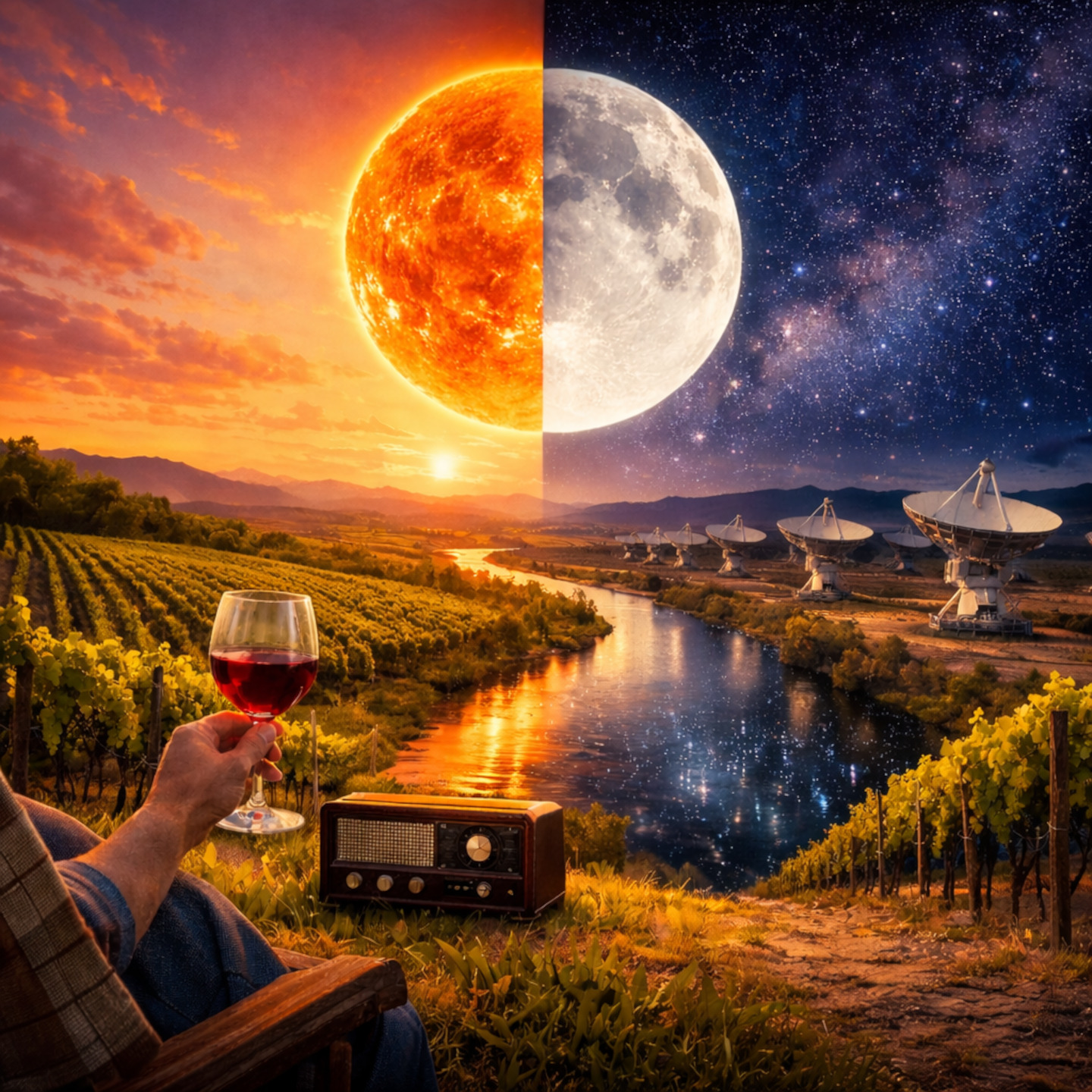 The New Mexico Mission: Exploring the Silence of the Cosmos and the Darkness of the Skies | The Astropotamus is heading to the Land of Enchantment. By the time you hear this, I'll already be in the current - traveling from the vineyards of New York to the high desert of New Mexico. This mission isn't just about dark skies; it’s about the Plains of San Agustin, where radio waves from the distant Cosmos hit sensitive receivers planted across the ancient lakebed like weird, steel sunflowers.This short briefing previews an expedition that spans the heavy-industry science of the Very Large Array (VLA), the delicate "skin" of the Long Wavelength Array (LWA), and the human connection to the stars at the University of New Mexico Observatory.Join the MissionSupport the Journey: You can help fuel this expedition and gain access to exclusive raw data and field notes at: https://astropotamus.com/star-river/episodes/new-mexicoThe 855-DEEP-SKY Hotline: Have a question for our guests at the VLA or UNM? Have a suggestion for a hidden gem in the desert? Call 855-333-7759 and leave a message. With your permission, your voice will become part of the Star River Podcast!I have a series of deep-dive interviews and "Sound of the Void" field recordings planned for the coming weeks. Subscribe and follow the current - we're just getting started.Clear skies, and I'll see you in the dark. | 2m 50s | ||||||
| 4/7/26 | 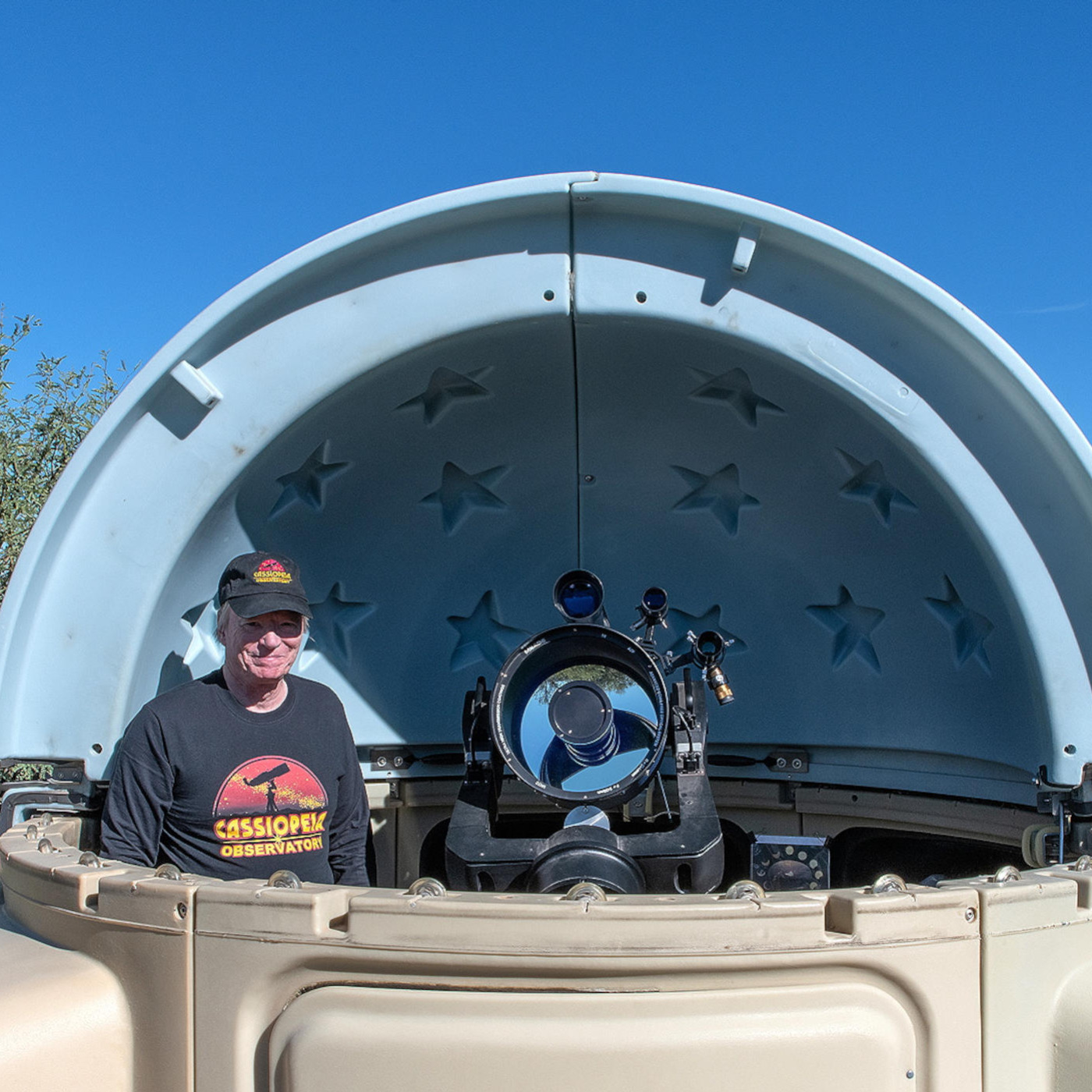 The Dark Sky Defender: From Fighter Jets to the Space Shuttle Program with Mike Weasner | What does it feel like to fly a jet fighter at Mach 1 and realize your wingman is silhouetted against the brilliant, unpolluted glow of the Milky Way? In this episode, I sit down with Mike Weasner, a man whose life has been a high-velocity voyage through the cosmos.From his early days as an astrophysicist to his time managing the Air Force Space Shuttle program, Mike has spent decades navigating what lies above. He shares the staggering perspective of looking down at the world from 35,000 feet—and the even more profound experience of looking up from the quiet dome of his own Cassiopeia Observatory.In this episode, we navigate:International Dark Sky Week: In honor of the week of April 13, 2026, we dive into Mike's work as a "Dark Sky Defender" and his lead role in protecting Arizona’s oldest natural resource: the night.The High-Speed Perspective: Stories from the cockpit of supersonic jets and the transition to managing the cutting edge of the Space Shuttle program.The Ritual of the Backyard: Why Mike named his observatory Cassiopeia and how he uses it to anchor himself to history by catching ancient photons.The "Don't Be Afraid of Success" Philosophy: A meditation on how our tools—from supersonic jets to smartphones—are all just vessels for the same journey along the Star River.Whether you are an experienced astrophotographer or a casual stargazer, this conversation bridges the gap between the adrenaline of flight and the serenity of the stars.Connect with the Current:Official Website: thestarriver.comJoin the Conversation: Call 855-DEEP-SKY to share your "Star River" story, ask a guest a question, or leave feedback for the Astropotamus.Follow the Journey: Find on social media @Astropotamus.Topics & Keywords: International Dark Sky Week 2026, Mike Weasner, Dark Sky Defender, Light Pollution, Space Shuttle Program, Air Force, Fighter Pilot, Cassiopeia Observatory, Arizona Dark Skies, Astrophotography, NASA History, Night Sky Preservation, Astronomy Education, Supersonic Flight. | 1h 07m 39s | ||||||
| 3/31/26 | 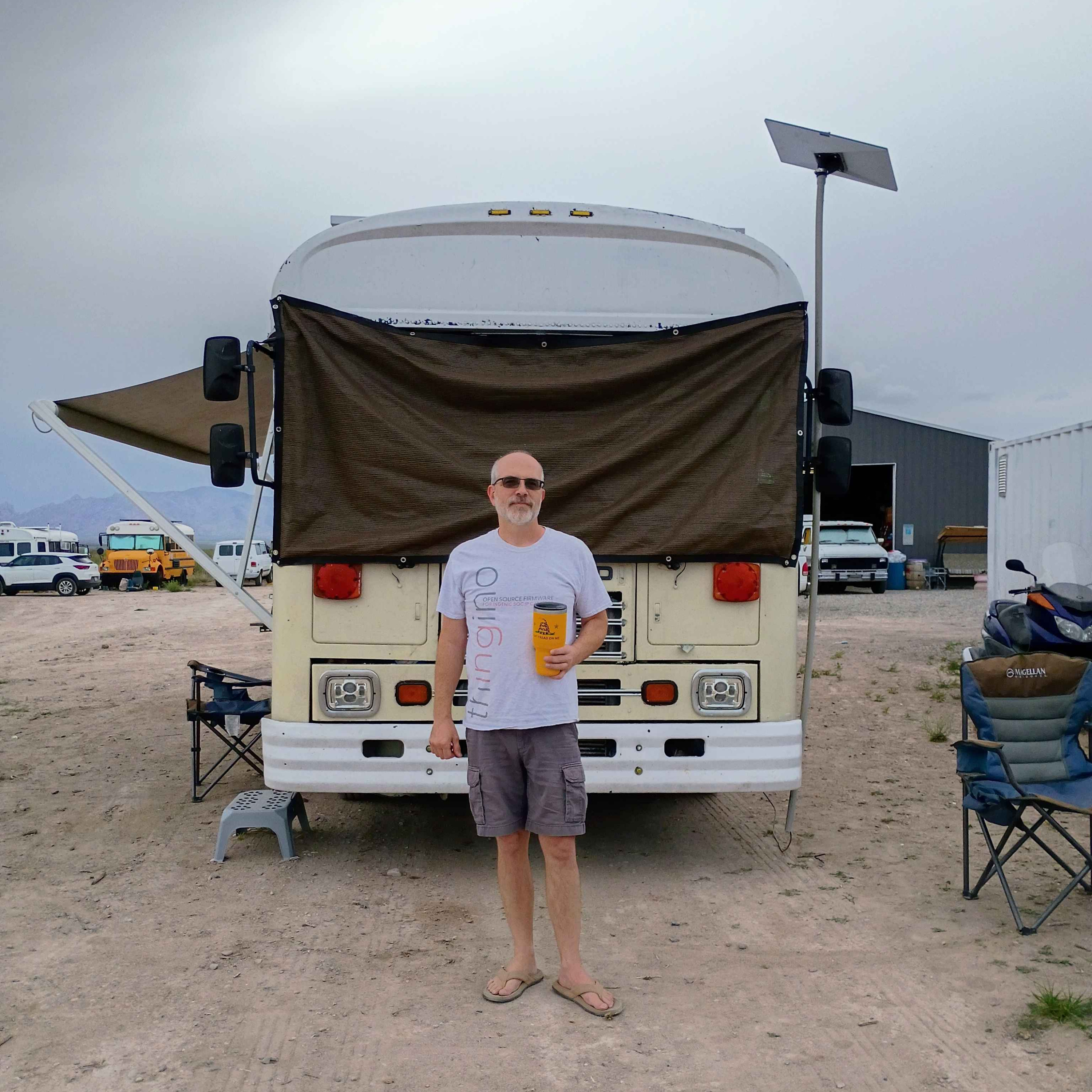 The Human Firewall: Open Source Firmware and the Fight Against Digital Predators with Josh at WLTechBlog | Is our technology a bridge to the stars, or a back door into our private lives?On this journey down the Star River, the current has led me to Josh at WLTechBlog - a digital nomad, technologist, and security expert who navigates the invisible currents of our online world.We dive into the "code" of modern living, from the ethics of closed-source security cameras (and superior open-source firmware like Thingino) to the reality of life as a digital nomad. But the conversation turns deeply personal as Josh shares a cautionary tale about elder financial scams - a stark reminder that in our high-tech age, the most dangerous "bugs" are often found in human psychology.In this episode, we navigate:The Thingino Project: A look at open-source IP camera firmware and why taking control of your hardware is the ultimate act of digital sovereignty.The Digital Nomad Life: What it really looks like to work and travel through the "Radio Quiet" parts of the world while staying connected.The Human Hack: A breakdown of how elder financial scams operate and what we can do to protect our families from increasingly sophisticated digital predators.The Ritual: Finding a sense of security and "home" in the infinite, even when your office is wherever the signal finds you.Whether you're a firmware tinkerer or just someone trying to keep your loved ones safe in a connected world, Josh’s story is a vital map for the modern age.Connect with the Current:Official Website: thestarriver.comJoin the Conversation: Call 855-DEEP-SKY to share your "Star River" story, ask a guest a question, or leave feedback for the Astropotamus.Follow the Journey: Find on social media @Astropotamus.Topics & Keywords: Online Security, Thingino, IP Cameras, Digital Nomad, Open Source Software, Elder Fraud Prevention, Financial Scams, Cybersecurity, Tech Ethics, Remote Work, Privacy, IoT Security, Digital Sovereignty. | 1h 01m 57s | ||||||
| 3/24/26 | 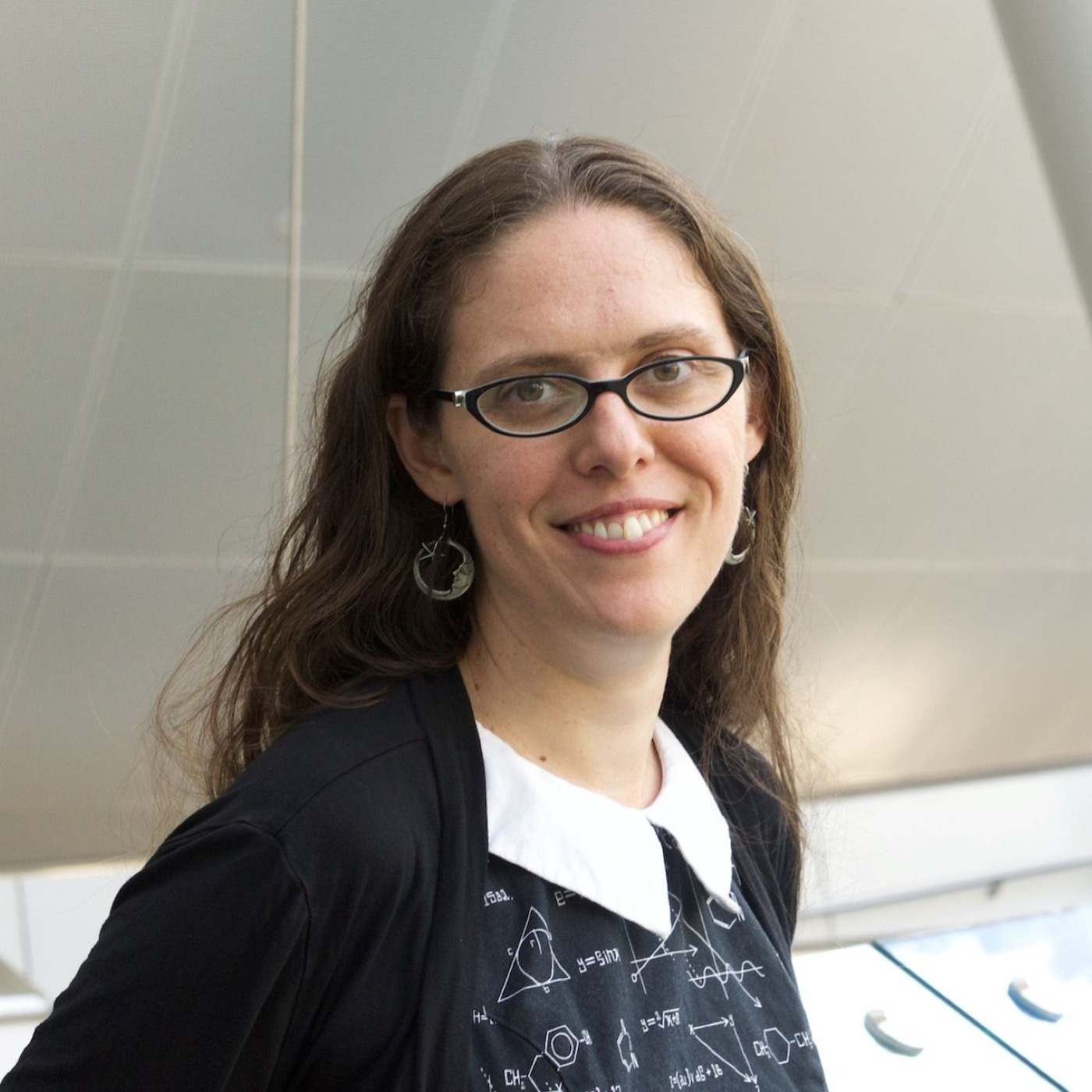 The Five Messengers: Black Holes, Gravitational Waves, and Multi-Messenger Astronomy with Dr. Saavik Ford | How do we listen to the five - and only five - messengers of the universe? Join astrophysicist Dr. Saavik Ford as we explore the high-energy heart of Active Galactic Nuclei (AGN) and the shift into the Multi-Messenger era, all starting with a ritual glass of Nero di Troia.In this expansive conversation, I'm joined by Dr. Ford, a professor at CUNY and a researcher at the American Museum of Natural History, for a journey that meanders from the subways of New York to the edge of the observable universe.In this episode, we navigate:The Ritual: Tracing Saavik's ancestral roots through a bottle of Nero di Troia before diving into the physics of deep space.The Reality of Research: Saavik pulls back the curtain on the "glamour" of professional astronomy. A world built on Python code, data calibration, and the rare lore of being the last generation to ever put a human eyeball to the lens of a world-class telescope.The Five Messengers: A breakdown of how we receive information from the stars and how the discovery of Gravitational Waves has fundamentally changed our role as observers.Lifting as We Climb: Saavik’s mission through Astrocom NYC, helping underrepresented students build a "scientist identity" and navigate the precarious path of academia.The Surprise Detour: A look at how the world of professional theater intersects with the world of professional science.Whether you're counting photons from a quasar 14 billion light-years away or mentoring a freshman in a NYC classroom, we are all part of the same current. Saavik's story proves that science is not just data - it is a creative, collaborative act of wonder.Connect with the Current:Official Website: thestarriver.comJoin the Conversation: Call 855-DEEP-SKY to share your "Star River" story, ask a guest a question, or leave feedback for the Astropotamus.Follow the Journey: Find on social media @Astropotamus.Topics & Keywords: Multi-Messenger Astronomy, Gravitational Waves, Active Galactic Nuclei (AGN), Black Holes, Dr. Saavik Ford, AMNH, CUNY, Astrocom NYC, Science Communication, Python for Astronomy, Quasars, Nero di Troia, Wine and Science, STEM Diversity, Astrophysics, American Museum of Natural History. | 1h 16m 48s | ||||||
| 3/17/26 | Pro Astrophotography Results from Your Backyard: The Greg Yancey Method | Sometimes, the best way to travel through time is to sit still under the stars. In this episode, I wade into the current with fellow traveler Greg Yancey for a masterclass in the backyard workflow.An award-winning astrophotographer, Greg takes us through his transition from a permanent observatory dome to a high-performance mobile APO setup. We discuss how the act of capturing light - which has traveled for thousands of years only to be obscured by the glow of our modern world - serves as a way to clear the mind and truly connect with the night.In this episode, we navigate:The Gear Shift: Greg’s journey from the "shallows" of the hobby into the deep waters of Mono imaging, Narrowband filters, and the relentless pursuit of detail.The "Unseen" Cosmos: How to carve a path through light pollution to reveal intricate structures like the Horsehead Nebula and the delicate filaments of the Question Mark Nebula.The Technical Setup: A deep dive into Greg’s current rig, including his ZWO and Askar setups, and how he manages the complex math required to bring a nebula to life.The Zen of Imaging: Why sitting in the dark with a telescope is the ultimate exercise in patience and technical grace.Whether you're just starting with a DSLR or you're managing a remote observatory, Greg’s perspective on balancing high-level tech with a sense of wonder is a must-listen.Connect with the Current:Official Website: thestarriver.comJoin the Conversation: Call 855-DEEP-SKY to share your "Star River" story, ask a guest a question, or leave feedback for the Astropotamus.Follow the Journey: Find on social media @Astropotamus.Topics & Keywords: Astrophotography, Mono Imaging, Narrowband Filters, ZWO, Askar Telescopes, Horsehead Nebula, Question Mark Nebula, Backyard Astronomy, Deep Sky Imaging, APO Refractor, Light Pollution, Astro Workflow, Image Processing, Space Photography, Greg Yancey. | 1h 07m 02s | ||||||
| 3/10/26 |  The Sound of the Void: Synthesizers and Sonification of the Cosmos with Thomas Loupe | On this journey down the Star River, I’m joined by Thomas Loupe, a creator who navigates the precise intersection of engineering, filmmaking, and music.Known for his atmospheric electronic project First Sun and his sound design on Natural Selection II, Thomas has spent years "translating" the universe into frequencies we can actually feel.We dive deep into his Return Void project and the philosophy of making the vast, silent cosmos accessible to everyone. As fellow travelers and musicians, we explore the "code" of creativity; comparing the mathematical oscillators of a synthesizer to the complex data processing of an astrophoto."What I love most about my connection to the cosmos and my connection to music is taking all of that together... so that other people in the world are able to have the experience that I wasn't able to have as a kid."In this episode, we explore:The Return Void Project: How Thomas uses sound to create a gateway into the "Great Silence" of space.The Math of Music: Why a synthesizer’s waveform isn't that different from a star’s light curve.Accessibility through Sound: Using sonification to bring the universe to those who may never put an eye to a telescope.The Surprise: Stay tuned for a rare, immersive audio treat that brings the "Sound of the Void" directly into your headphones.Whether you’re a gear-head, a gamer, or a stargazer, this conversation proves that the universe doesn't just look like something—it sounds like something, too.Connect with the Current:Official Website: thestarriver.comJoin the Conversation: Call 855-DEEP-SKY to share your "Star River" story, ask a guest a question, or leave feedback for the Astropotamus.Follow the Journey: Find on social media @Astropotamus.Topics & Keywords:Sonification, Space Music, Synthesizers, Thomas Loupe, Return Void, First Sun, Natural Selection II, Sound Design, Astronomy Art, Audio Engineering, Astrophotography Processing, Electronic Music, Space Sounds, Ambient Music. | 1h 12m 19s | ||||||
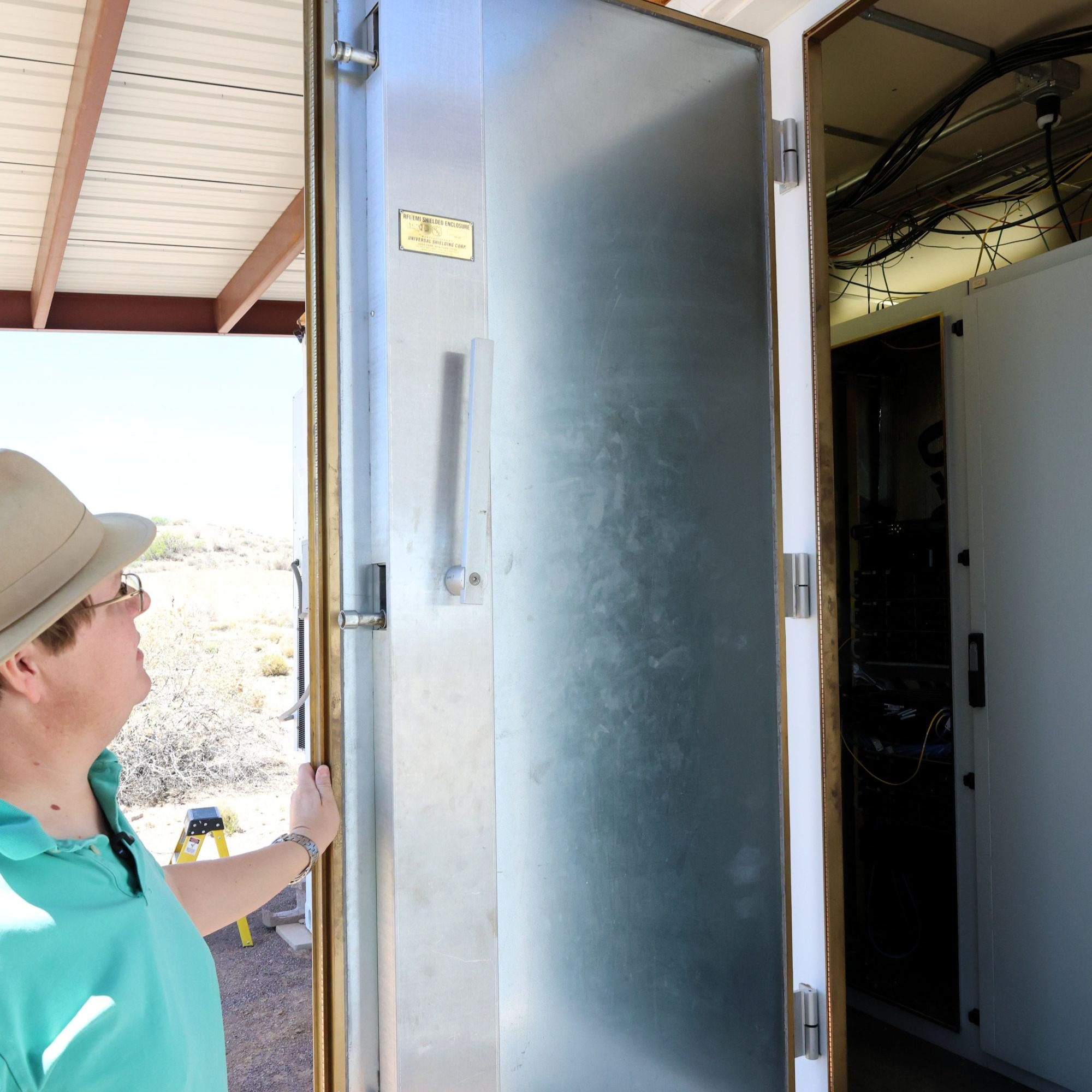
Showing 25 of 24
Pitch Fit is a Pro feature
See how bookable this show is for guests, which brands already advertise, the per-episode ad value, and the best-fit guest and sponsor profile. The numbers are blurred on the free plan.
How readily this show books outside guests like you.
How proven this show is for host-read sponsorships.
For Guests
ProFor Advertisers
ProUpgrade to Pro to unlock guest cadence, sponsor categories, fit scores, and per-episode ad value for this show.
Chart history for The Star River Podcast
Peaked at #28 in Canada, currently #28 in Canada.
| Market | Genre | Peak | Current | Trend |
|---|---|---|---|---|
| Canada | — | #28 | #28 | — |
| United States | — | #96 | #96 | — |
| United Kingdom | — | #173 | #173 | — |
Chart Positions
3 placements across 3 markets.
Chart Positions
3 placements across 3 markets.