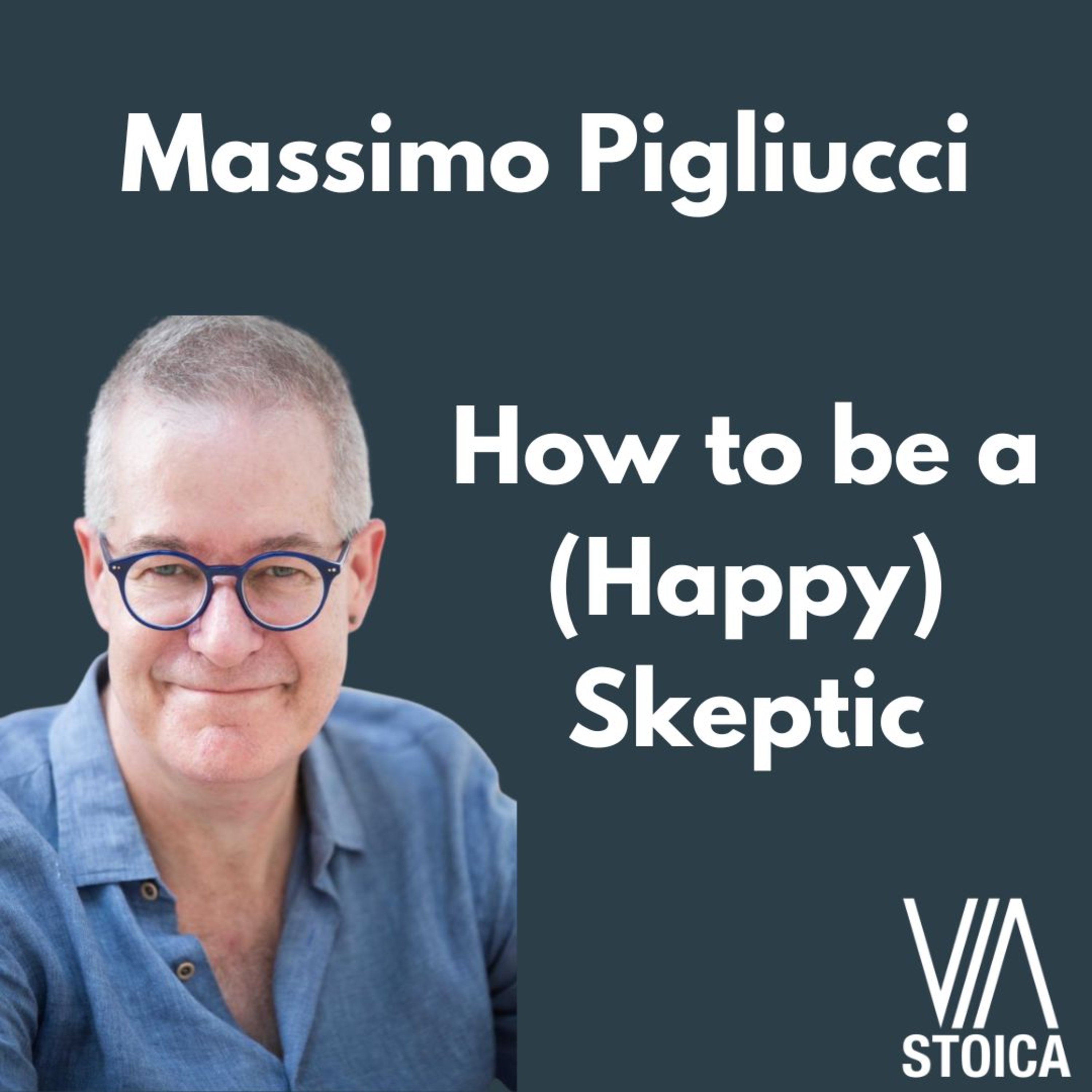
A Stoic Conversation with Massimo Pigliucci: How to be a (Happy) Skeptic
About this episode
Massimo Pigliucci discusses the intersection of Stoicism and skepticism, exploring how to build a philosophy of life based on evidence and intellectual humility.
What does it mean to be both a Stoic and a skeptic? In this episode of the Via Stoica Podcast, philosopher and author Massimo Pigliucci returns to discuss his new book How to Be a (Happy) Skeptic: a guide to building a philosophy of life rooted in Stoic virtue and the ancient art of proportioning belief to evidence. Welcome to the Via Stoica Podcast, the podcast on Stoicism. Massimo Pigliucci is Professor of Philosophy at the City College of New York, a former evolutionary biologist, and one of the most important voices in modern Stoic philosophy. This is his second conversation on the show. The discussion moves from the foundations of a philosophy of life to the ancient debate between the Stoics and the Academic Skeptics, and then to one of the most compelling figures in Western history: Marcus Tullius Cicero. Not a Stoic himself, but deeply shaped by Stoic ethics, Cicero lived through the fall of the Roman Republic, exile, personal grief, and death at the hands of Mark Antony's soldiers. His life, Pigliucci argues, is a model for holding strong convictions while remaining honestly uncertain about what you know and why. The episode also explores how skepticism is not the enemy…
People in this episode
Host: Benny Voncken
Guest: Massimo Pigliucci
Topics covered
- Stoicism
- skepticism
- philosophy of life
- evidence-based belief
- Marcus Tullius Cicero
- intellectual humility
Keywords
- Stoicism
- skepticism
- Massimo Pigliucci
- Cicero
- philosophy
- evidence
- belief
Mentioned in this episode
Organizations: City College of New York
Books & works: How to Be a (Happy) Skeptic
More episodes of The Via Stoica Podcast — A Stoic Way of Life
- The Blame Game: Stop Pointing the Finger and Start Growing
- Your Life Is Not Short. You Just Don't Know How to Live It.
- The Real Stoic View on Emotions: What Are They Telling You?
- The People Pleaser: How to Stop Living for Other People's Approval
- Who Wrote Your Script? The Stoic Guide to Authentic Living
Explore listener stats, chart rankings, contacts and more on the The Via Stoica Podcast — A Stoic Way of Life podcast page.