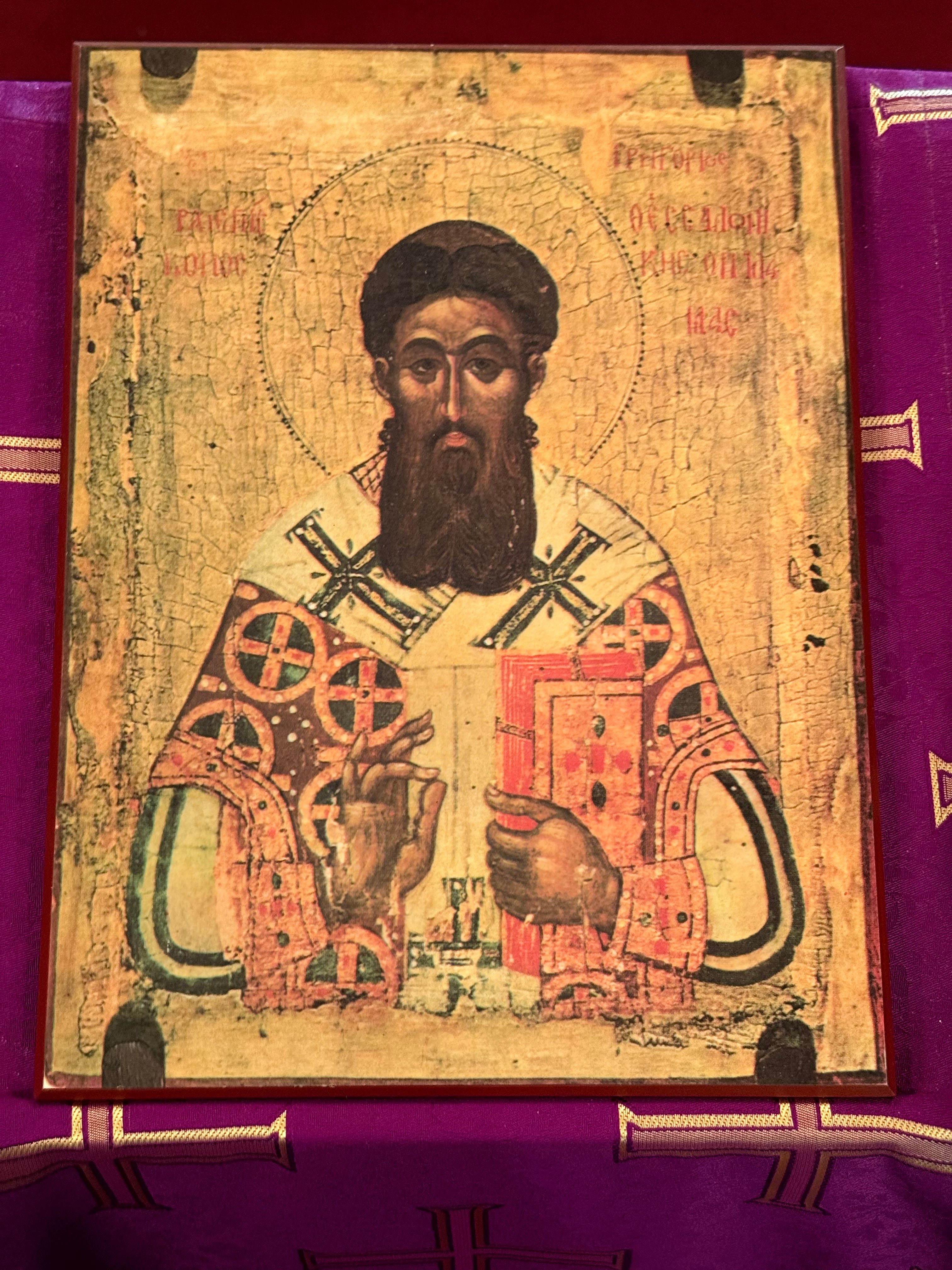
St. Gregory Palamas Sunday
About this episode
The episode discusses the life of Saint Gregory Palamas and the historical challenges he faced during his time, drawing parallels to contemporary concerns.
There’s supposedly an ancient Chinese curse: “May you live in interesting times.” Well, apparently we’ve all been cursed. People are concerned. Some are worried that Islam is encroaching on our civilization. Some are concerned that with the continual elevation of the culture wars, civil war may not be far off. We’ve been through a pretty weird time with sickness. These are interesting times. If you listen to the hymnography for the saint that we are celebrating today, Saint Gregory Palamas, you would probably not notice—you’d certainly not know from the hymnography—that he lived in even more interesting times. St. Gregory Palamas was a well-educated young man. His education was encouraged and supported by the emperor himself, who was really hoping that this brilliant young man would go into the imperial service. But Gregory instead went into monasticism at a very young age and engaged in the hesychastic tradition. As I said, he lived in interesting times. The Muslims were actually encroaching on their civilization. The Byzantines were being gradually driven back. So that when Gregory was eventually ordained a priest, he was ordained in Thessalonica because that was relatively…
People in this episode
Host: Fr. Justin (Edward) Hewlett
Topics covered
- Saint Gregory Palamas
- historical context
- civil war
- Islam encroachment
- hesychastic tradition
- Byzantine Empire
Keywords
- Saint Gregory Palamas
- Byzantine Empire
- Islam
- civil war
- hesychastic tradition
- history
- culture wars
Mentioned in this episode
Organizations: Byzantium, Islam
Places: Thessalonica, Nicaea
More episodes of Translating the Tradition
- Speaking the Truth Well, in Love
- Myrrh-bearers and the Body of Christ
- Joseph and Lazarus and Injustice
- Our Desert Struggle
- The First Sin after the Flood
- The Warning and the Nature of the Last Judgment
Explore listener stats, chart rankings, contacts and more on the Translating the Tradition podcast page.