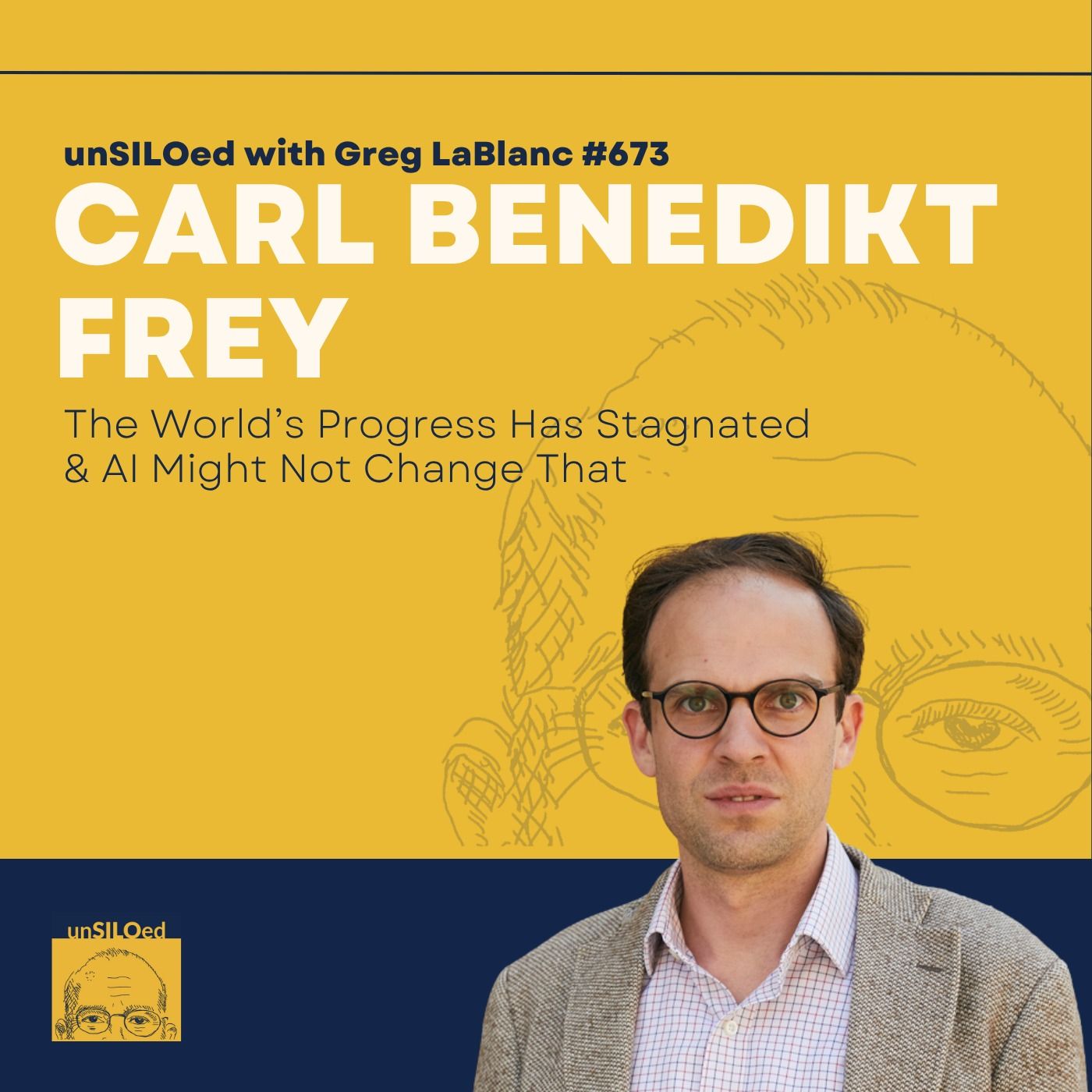
673. The World’s Progress Has Stagnated & AI Might Not Change That with Carl Benedikt Frey
About this episode
Carl Benedikt Frey discusses the stagnation of global progress despite advancements in AI and technology.
What does the history of human innovation tell us about the current moment we’re in? It tells us that, despite the computational and AI gains of the last few decades, the world’s progress is a bit flat. Why? Carl Benedikt Frey is an associate professor of AI & Work at the University of Oxford and directs the Future of Work Programme at Oxford. His latest book, How Progress Ends: Technology, Innovation, and the Fate of Nations, examines the world’s start and stall relationship with progress over the last thousand years. In this episode, Carl and Greg dive into the history of how centralized and decentralized systems have impacted the world’s technological innovation. They contrast China’s earlier technological lead and bureaucratic state-building with Europe’s decentralized politics that enabled the Scientific and Industrial Revolutions, Prussia’s critical role in advancing progress, and why despite the breakthroughs with AI, the world could be facing an era of less progress and more stagnation. *unSILOed Podcast is produced by University FM.*
People in this episode
Host: Greg La Blanc
Guest: Carl Benedikt Frey
Topics covered
- human innovation
- AI and technology
- historical progress
- centralized vs decentralized systems
- stagnation in progress
- Scientific Revolution
- Industrial Revolution
Mentioned in this episode
Organizations: University of Oxford
Books & works: How Progress Ends: Technology, Innovation, and the Fate of Nations
Places: China, Europe, Prussia
More episodes of unSILOed with Greg LaBlanc
- 682. Exploring Complexity: From Physics to Economics with J. Doyne Farmer
- 681. Dining with Purpose: Exploring Taste and Tradition with Scott Samuelson
- 680. Decoding Change Management in the Workplace with Ashley Goodall
- 679. Happy Spending and Joyful Climate Action with Elizabeth Dunn
- 678. Exploring Exponential Organizations with Salim Ismail
- 677. AI-Driven Futures: Business Strategies for the Digital Age with Carlos Escapa
Explore listener stats, chart rankings, contacts and more on the unSILOed with Greg LaBlanc podcast page.