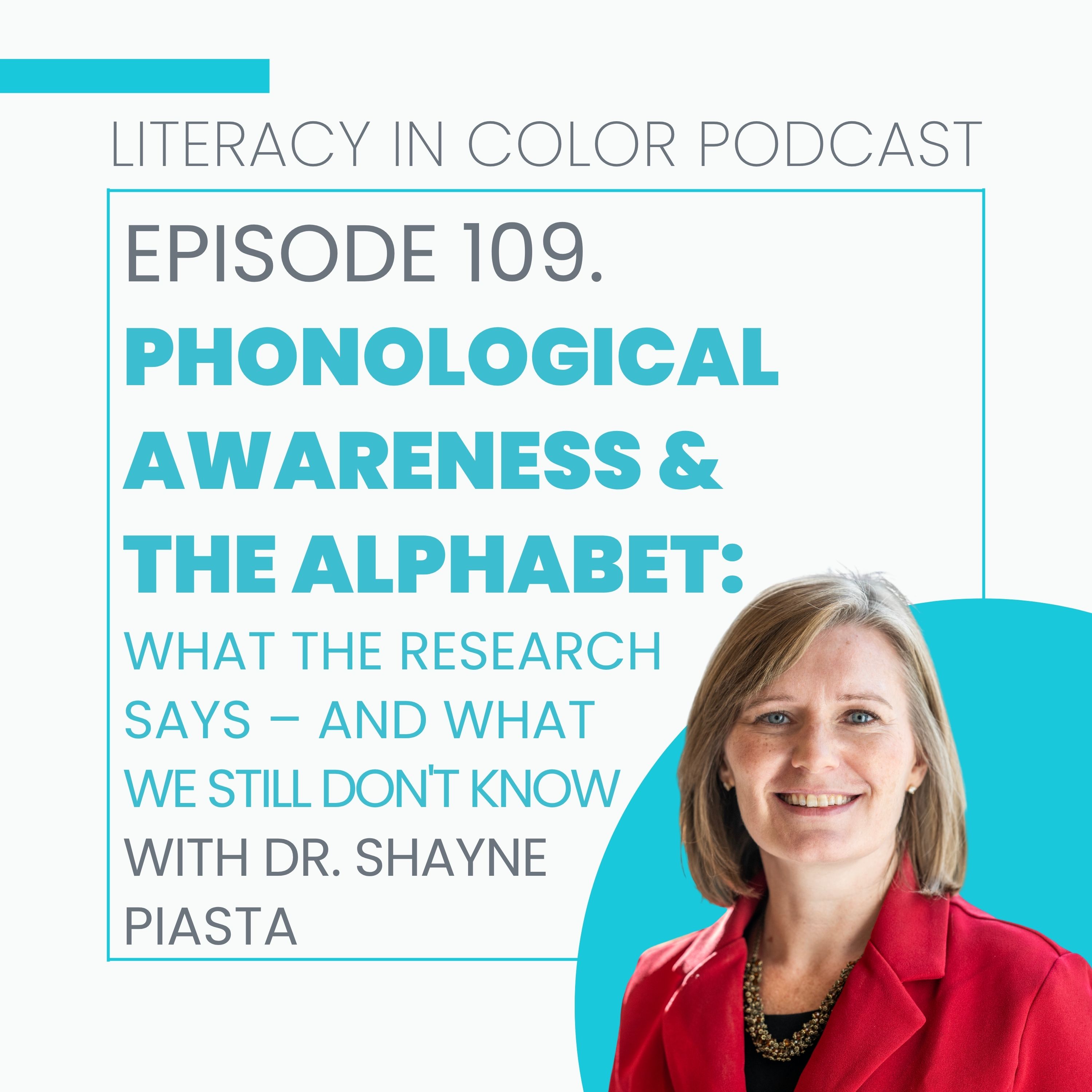
109. Phonological Awareness & the Alphabet: What the Research Says – and What We Still Don't Know with Dr. Shayne Piasta
About this episode
Dr. Shayne Piasta discusses the research on phonological awareness and alphabet instruction, highlighting evidence-based practices and ongoing questions in the field.
Before we get into what the research currently says about teaching phonological awareness and the alphabet, this episode begins by breaking down some key terminology. What makes a practice evidence-based? What’s the difference between research-based and research-tested? What should we consider when implementing instruction aligned with the Science of Reading? Dr. Shayne Piasta, Distinguished Professor at THE Ohio State University and Faculty Associate at the Crane Center for Early Childhood Research and Policy, helps unpack what we know, what we’re still learning, and how educators can make evidence-informed decisions. We then dig into phonological and phonemic awareness. Dr. Piasta explains what research has established about the importance of PA, why phonemic awareness ultimately matters for reading and spelling, and where questions remain about exactly how PA should be taught. We discuss larger versus smaller units of sound, advanced tasks, group size, dosage, incorporating letters, and even differentiation. Next, we turn to alphabet learning and instruction. Research increasingly supports teaching names and sounds simultaneously. We also discuss what makes certain letters…
People in this episode
Host: Michelle Sullivan
Guest: Dr. Shayne Piasta
Topics covered
- phonological awareness
- alphabet instruction
- evidence-based practices
- Science of Reading
- reading and spelling
- early childhood education
Keywords
- phonological awareness
- alphabet learning
- evidence-informed instruction
- reading research
- phonemic awareness
- kindergarten education
- teaching practices
Mentioned in this episode
Organizations: THE Ohio State University, Crane Center for Early Childhood Research and Policy
More episodes of Literacy in Color: A Science of Reading Aligned Podcast for Educators
- 110. Decodable Texts Done Right: How to Leverage Them for Phonics, Fluency, Vocabulary & Writing with Dr. Wiley Blevins
- 108. Making Phonics Richer with Multiple Meaning Words
- 107. Stop Overcomplicating Big Words: How to Teach Polysyllabic Word Reading with Dr. Devin Kearns
- 106. How New York City Is Transforming Reading Instruction with Dr. Katie Pace Miles
- 104. Building the Biliterate Reading Brain: Multi-Component Instruction & Deep Reading with Dr. Maryanne Wolf
- 103. 5 Quick Tips for b/d Letter Reversals
Explore listener stats, chart rankings, contacts and more on the Literacy in Color: A Science of Reading Aligned Podcast for Educators podcast page.