
Literacy in Color: A Science of Reading Aligned Podcast for Educators
by Michelle Sullivan • Literacy Coach & Science of Reading Advocate
Last updated Oct 16, 2026Is this your podcast?Literacy in Color is the go-to podcast for elementary teachers, literacy coaches, and reading interventionists who are passionate about bringing the Science of Reading to life in vibrant, engaging, and effective ways. Ho...
Insights from recent episode analysis
On the show
- Dr. Wiley Blevins1 ep
- Dr. Shayne Piasta1 ep
- Dr. Devin Kearns1 ep
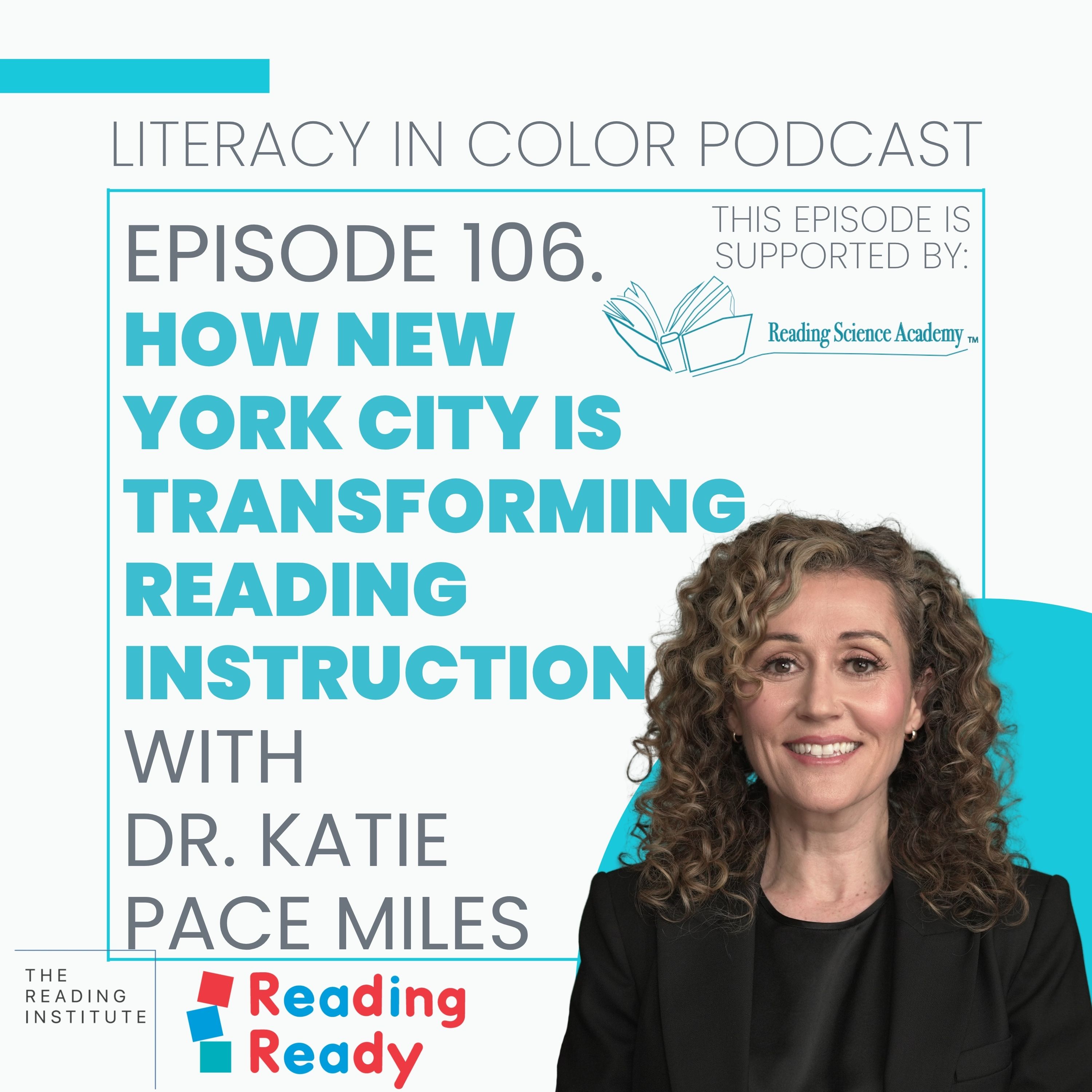
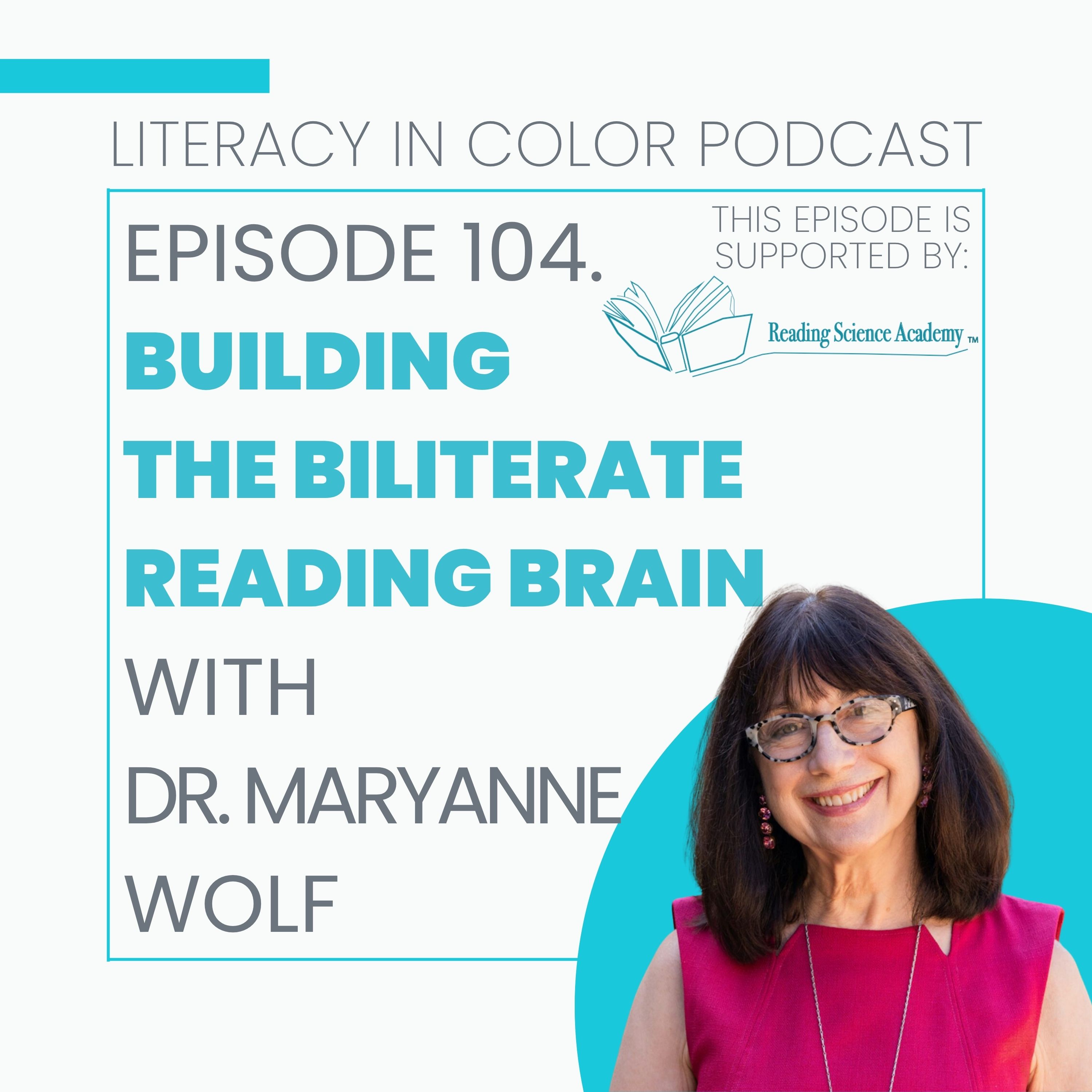
Also: Dr. Katie Pace Miles, Dr. Maryanne Wolf, Anna Geiger
Audience Interest
Podcast Focus
Publishing Consistency
Insights are generated by CastFox AI using publicly available data, episode content, and proprietary models.
Most discussed topics
Brands & references
Total monthly reach
Based on 1 signal.
Built from
By chart position
- 🇺🇸United States · How ToHOME#21203K to 1.1M
- 🇨🇦Canada · How To#295.8K to 31K
- 🇭🇰HK · How To#54.9K to 26K
- 🇲🇽Mexico · How To#402.9K to 15K
- 🇸🇬SG · How To#161.2K to 6.3K
- Per-Episode Audience
Est. listeners per new episode within ~30 days
221K to 1.2M🎙 ~2x weekly·110 episodes·Last published 5d ago - Monthly Reach
Unique listeners across all episodes (30 days)
441K to 2.3M🇺🇸92%🇨🇦3%🇭🇰2%+3 more - Active Followers
Loyal subscribers who consistently listen
243K to 1.3M
Market Insights
Platform Distribution
Reach across major podcast platforms, updated hourly
Total Followers
—
Total Plays
—
Total Reviews
—
* Data sourced directly from platform APIs and aggregated hourly across all major podcast directories.
| Date | Episode | Topics | Guests | Brands | Places | Keywords | Sponsor | Length | |
|---|---|---|---|---|---|---|---|---|---|
| 10/16/26 |  118. Parents for Reading Justice: How Parents are Changing the Literacy System with Brett Tingley (Dyslexia Awareness Month) | What happens when parents start fighting for every child's right to learn to read?I'm joined by Brett Tingley, President of Parents for Reading Justice, for a powerful conversation about parent advocacy, dyslexia, and the role families can play in transforming literacy instruction across the country.Brett's journey began as a mom searching for answers when her own child struggled to read. What started as an individual fight for appropriate instruction grew into a movement for systemic change — first within her local school district, then across Ohio, and now through a national network of parent advocates.We explore why Brett calls parents an "untapped lever" in literacy reform, how organized parent groups can influence school districts, legislation, and even teacher preparation programs, and why parent advocacy doesn't have to mean working against educators. In fact, parents and teachers can become some of each other's strongest allies.We also discuss the far-reaching consequences of reading difficulties, the importance of early dyslexia identification and intervention, and how families can move from awareness to meaningful action. Key Takeaways:How parents have unique power to influence literacy instruction and systemic reformThe importance of holding teacher preparation programs accountable for evidence-aligned reading instructionHow parents and educators can work together while keeping children's needs at the centerWhy dyslexia advocacy can help improve reading instruction for all studentsPractical ways parents can get involved, organize, and advocate for change in their own communitiesFree resources from Parents for Reading Justice, including Our Dyslexic Children, parent advocacy training, and opportunities to connect with other familiesResources Mentioned:Documentary: Our Dyslexic ChildrenPodcast: Literacy NowMasterclassResources on LinkTreeParent Group RegistryConnect with Brett Tingley and Parents for Reading Justice:Website: https://parentsforreadingjustice.org/Instagram: @parentsforreadingjusticeYouTube: @parentsforreadingjusticeTikTok: @parentsforreadingjusticeLinkedIn: Brett TingleyConnect with Michelle:Visit: www.michelleandthecolorfulclassroom.comFollow me on Instagram: @michelle_thecolorfulclassroom & @logosliteracyacademyJoin our Facebook CommunitySign up for my NewsletterShop on TPT: The Colorful ClassroomFor Phonics Resources, grab: The COLORFUL Phonics ToolkitWant to Support the Podcast?Make a Donation to Support ProductionInterested in Learning More about Morphology?Logos Literacy Academy with Michelle Sullivan & Sarah PaulJoin: Beyond Phonics Club - our Membership CommunityMentioned in this episode:Beyond Phonics ClubFind out more about our membership community: https://beyond-phonics-club.circle.so/beyond-phonics-clubReading Science AcademyGet your FREE grouping resource bundle here: https://www.stephaniestollarconsulting.com/groupingsheets?utm_source=podcast&utm_medium=show_notes&utm_campaign=podcast Join The Reading Science Academy: https://www.stephaniestollarconsulting.com/register?utm_source=podcast&utm_medium=show-notes&utm_campaign=literacy-in-color | 51m 54s | ||||||
| 10/15/26 |  Beyond Phonics Club is Here! Let's Connect the Pieces of Literacy with Michelle Sullivan & Sarah Paul | Phonics is foundational — but it's not the finish line!You've learned about phonemic awareness, phonics, and decodable text — but what happens when words get longer? When spelling gets more complex and sound alone doesn't tell the whole story? When students can read a word but don't fully understand how it works?There's a bigger picture of literacy to explore, and we want to help you connect the pieces!Introducing Beyond Phonics Club! 🎉Sarah Paul and I created Beyond Phonics Club, our membership community for K-5 educators who want to deepen their understanding of the full picture of the Science of Reading so their students can become stronger readers, spellers, and word learners.Why a membership?When Sarah and I first launched Logos Literacy Academy, we created our Mastering Morphology course and our K–2 Morphology Course & Curriculum to help educators build their linguistic knowledge and bring meaningful morphology instruction into their classrooms.We quickly realized we wanted to offer something more than standalone courses.We wanted a place where professional learning didn't end when the video did. Where educators could ask questions, collaborate, share ideas, and continue growing alongside one another. And where the knowledge gained through professional learning was paired with practical lessons, routines, and resources that made classroom application easier.So, we've reimagined our platform and transitioned to a membership model!Beyond Phonics Club brings together our asynchronous course content, ready-to-use instructional resources, ongoing professional learning, live community calls, and collaborative support — all in one place.Inside the Club, we're exploring how morphology, oral language, decoding, spelling, vocabulary, grammar, syntax, and more work together to strengthen literacy instruction.The best part: This isn't about adding one more thing to your plate. It's about enhancing the instruction you're already doing by making meaningful connections across literacy.We believe educators deserve more than information. They deserve the tools, confidence, and community to put that information into practice.We'd love for you to be part of it!👉 Explore Beyond Phonics Club & Join the CommunityLet's keep learning, growing, and connecting the pieces of literacy — together!-Michelle & SarahFounders of Logos Literacy AcademyConnect with Michelle:Visit: www.michelleandthecolorfulclassroom.comFollow me on Instagram: @michelle_thecolorfulclassroom & @logosliteracyacademyJoin our Facebook CommunitySign up for my NewsletterShop on TPT: The Colorful ClassroomFor Phonics Resources, grab: The COLORFUL Phonics ToolkitWant to Support the Podcast?Make a Donation to Support ProductionInterested in Learning More about Morphology?Logos Literacy Academy with Michelle Sullivan & Sarah PaulJoin: Beyond Phonics Club - our Membership Community | 1m 34s | ||||||
| 10/13/26 |  117. Beneath the Surface of Words: What English Spelling Reveals and Why It Matters with Sue Scibetta Hegland | What if the English spelling system isn't nearly as irregular as we've been led to believe? What if the letters we sometimes call “silent” are actually telling us something important about a word's structure, identity, or history?Sue Scibetta Hegland, author of Beneath the Surface of Words: What English Spelling Reveals and Why It Matters joins the show for a fascinating conversation about what lies beneath the surface of English spelling.Sue shares how her son's experience with dyslexia sparked her journey into understanding the English spelling system and why learning to read and learning to spell don't always develop in the same way.We explore three foundational concepts: English spelling is structural, spelling reveals the identity of words, and written and spoken language are deeply connected yet distinct systems. Through examples like says, does, been, comfortable, and even leopard, Sue reveals how morphology, phonology, and etymology work together to make English spelling more understandable.We also discuss why graphemes don't always represent phonemes, the different roles of graphemic markers, and how Sue's thinking has evolved as she works on the second edition of her book.Plus, Sue shares insights from her conversations with renowned reading researcher Dr. Linnea Ehri, including the role of morphology in orthographic mapping and why morphological instruction doesn't need to wait until students are older.Key Takeaways:Morphology provides a structural framework for understanding English spellingSpelling preserves word identity, even when pronunciation changesGraphemes can serve purposes beyond representing phonemesWhy phonology and morphology should be taught in parallel from the beginningWhy teaching the English spelling system doesn't have to mean overwhelming young learners with complexity.Resources Mentioned:Book: Beneath the Surface of Words: What English Spelling Reveals and Why It Matters by Sue Scibetta Hegland (A 2nd edition is coming in 2027!)Book: The American Way of Spelling: The Structure and Origins of American English Orthography by Richard VenetzkyBook: The Oxford Reference Guide to English MorphologyInternational Dyslexia Association (IDA)This post may contain affiliate links, which means if you click on a link and make a purchase, I may earn a small commission at no additional cost to you. Thank you for supporting the podcast!Connect with Sue Scibetta Hegland:Website: https://learningaboutspelling.com/Resources & Linked Presentations on Sue’s WebsiteThis podcast is brought to you by Reading Science Academy, where our friend Stephanie Stollar is giving Literacy in Color listeners an exclusive, free grouping resource bundle designed to help you spend less time figuring out what to do with screening data and move more quickly into purposeful, skill-based groups.Get your FREE grouping resource bundle here.Or, become a member of Reading Science Academy to learn in community and receive research-backed support alongside over 1,600 literacy educators.Connect with Michelle:Visit: www.michelleandthecolorfulclassroom.comFollow me on Instagram: @michelle_thecolorfulclassroom & @logosliteracyacademyJoin our Facebook CommunitySign up for my NewsletterShop on TPT: The Colorful ClassroomFor Phonics Resources, grab: The COLORFUL Phonics ToolkitWant to Support the Podcast?Make a Donation to Support ProductionInterested in Learning More about Morphology?Logos Literacy Academy with Michelle Sullivan & Sarah PaulJoin: Beyond Phonics Club - our Membership CommunityMentioned in this episode:Reading Science AcademyGet your FREE grouping resource bundle here: https://www.stephaniestollarconsulting.com/groupingsheets?utm_source=podcast&utm_medium=show_notes&utm_campaign=podcast Join The Reading Science Academy: https://www.stephaniestollarconsulting.com/register?utm_source=podcast&utm_medium=show-notes&utm_campaign=literacy-in-colorBeyond Phonics ClubFind out more about our membership community: https://beyond-phonics-club.circle.so/beyond-phonics-club | 1h 17m 19s | ||||||
| 10/9/26 |  116. All 50 States Have Dyslexia Laws... So Why Are Kids Still Being Left Behind? with Missy Purcell (Dyslexia Awareness Month) | All 50 states now have dyslexia legislation on the books. So why are so many students with dyslexia still caught in a “wait to fail” system? Dyslexia advocate, Missy Purcell joins the show to explore the gap between passing legislation and actually changing outcomes for students.Missy shares the deeply personal story of advocating for her own son after watching him go from a child excited to start school to one who was frustrated, anxious, and struggling. That journey, later featured in the Sold a Story podcast, ultimately led Missy from advocating for one child to helping families and educators navigate systems that too often fail to identify and support students early enough.We unpack what “wait to fail” really looks like in schools, what dyslexia legislation can and cannot accomplish, and why screening alone is never enough. Missy shares lessons from Georgia’s evolving dyslexia and early literacy legislation, including what can happen when well-intentioned laws encounter policies and systems that don’t fully reflect their intent.We also discuss the importance of early identification, Child Find and IDEA, the relationship between MTSS and special education evaluation, individualized intervention, teacher knowledge, and why a program alone cannot replace a highly trained, responsive educator.Most importantly, Missy makes the case that dyslexia advocacy does not have to be parents versus teachers. Meaningful change happens when families, educators, school leaders, policymakers, and communities work together – with urgency – to make sure children get what they need before they fail.Key Takeaways:What “wait to fail” actually looks like for a childWhy dyslexia legislation is an important beginning, but not the finish lineThe role of early screeningWhat can go wrong between legislation, policy, and implementationWhy growth is not necessarily the same as closing the gapHow parents and teachers can advocate alongside one another & how systems change requires the entire community to work togetherResources & References Mentioned:Sold a Story Podcast with Emily HanfordSold a Story - Episode 6: “The Reckoning” features Missy PurcellIndividuals with Disabilities Education Act (IDEA)Sec. 300.111 Child Find under IDEAOffice of Special Education Programs (OSEP) guidance/letters regarding delaying or denying evaluationsGeorgia HB 1193Georgia: Literacy & DyslexiaGeorgia Dyslexia Informational HandbookGeorgia HB 538 (Early Literacy Act)Connect with Missy Purcell:Website: https://misspurcell.com/Instagram: @misspurcelladvocatesConnect with Michelle:Visit: www.michelleandthecolorfulclassroom.comFollow me on Instagram: @michelle_thecolorfulclassroom & @logosliteracyacademyJoin our Facebook CommunitySign up for my NewsletterShop on TPT: The Colorful ClassroomFor Phonics Resources, grab: The COLORFUL Phonics ToolkitWant to Support the Podcast?Make a Donation to Support ProductionInterested in Learning More about Morphology?Logos Literacy Academy with Michelle Sullivan & Sarah PaulJoin: Beyond Phonics Club - our Membership CommunityMentioned in this episode:Reading Science AcademyGet your FREE grouping resource bundle here: https://www.stephaniestollarconsulting.com/groupingsheets?utm_source=podcast&utm_medium=show_notes&utm_campaign=podcast Join The Reading Science Academy: https://www.stephaniestollarconsulting.com/register?utm_source=podcast&utm_medium=show-notes&utm_campaign=literacy-in-colorBeyond Phonics ClubFind out more about our membership community: https://beyond-phonics-club.circle.so/beyond-phonics-club | 50m 30s | ||||||
| 10/6/26 |  115. From Undiagnosed Dyslexia to Advocacy: Ameer Baraka on the Life-Changing Power of Reading (Dyslexia Awareness Month) | Emmy-nominated actor, dyslexia advocate, and speaker Ameer Baraka explores the human side of unidentified dyslexia. Ameer takes us back to his childhood, when difficulties with reading left him feeling isolated, ashamed, and convinced that he simply wasn’t capable of learning. As his struggles went unidentified, school felt like it wasn’t a place of possibility, and he began searching for another way to make it in the world.It wasn’t until Ameer was incarcerated as a young adult that his educational journey began to change. After being screened for dyslexia and finally having an explanation for the difficulties he had experienced throughout his life, Ameer describes an almost immediate shift in how he saw himself: he wasn’t “stupid.” He could learn.For Ameer, literacy became freedom.Throughout this deeply personal conversation, Ameer shares how learning to read transformed not only his opportunities, but his identity, his sense of hope, and ultimately the trajectory of his life. He also discusses the adults who believed in him when he struggled to believe in himself, the profound influence of his faith, and why he now feels called to advocate for children and incarcerated adults who struggle with literacy.We also discuss what educators may see when reading difficulties show up as something other than reading difficulties – including acting out, frequent physical complaints, avoidance, or the child who quietly disappears into the back of the classroom.Today, Ameer uses his story to advocate for early identification of dyslexia, stronger literacy instruction, prison reform, and greater awareness of the consequences that can occur when children spend years believing they cannot learn.This conversation is ultimately about more than dyslexia. It is about literacy, identity, human potential, faith, and the extraordinary power educators have to help a child see possibilities they may not yet be able to see for themselves.Stay tuned for more details on the film Undiagnosed, a biopic based on Ameer’s life and his experience with dyslexia. It’s the first film of its kind to explore what Ameer calls “the ugly side of dyslexia” – what can happen when a child’s struggles go unidentified and unsupported for far too long. Dyslexia organizations have already reached out in support of the project, and millions of people are anticipating to see this story on screen.Key Takeaways:Ameer's experience growing up with unidentified dyslexiaHow reading struggles affected his identity, self-worth, and relationship with schoolThe connection Ameer sees between literacy struggles, environment, and the paths available to young peopleWhy receiving a dyslexia diagnosis felt liberating & Ameer's powerful belief that literacy is freedomHis advocacy for early dyslexia screening, literacy access, and prison reformThe message he would give his younger self – and the teachers who may have an “Ameer” sitting in their classroom todaySee Ameer Baraka on:ZatimaJupiter JonesA House DividedConnect with Ameer Baraka:Book: Undiagnosed: The Ugly Side of Dyslexia by Ameer BarakaInstagram: @ameerbarakaFacebookLinkedInSupport Undiagnosed: The Ugly Side of Dyslexia (the biopic)This post may contain affiliate links, which means if you click on a link and make a purchase, I may earn a small commission at no additional cost to you. Thank you for supporting the podcast!This podcast is brought to you by Reading Science Academy, where our friend Stephanie Stollar is giving Literacy in Color listeners an exclusive, free grouping resource bundle designed to help you spend less time figuring out what to do with screening data and move more quickly into purposeful, skill-based groups.Get your FREE grouping resource bundle here.Or, become a member of Reading Science Academy to learn in community and receive research-backed support alongside over 1,600 literacy educators.Connect with Michelle:Visit: www.michelleandthecolorfulclassroom.comFollow me on Instagram: @michelle_thecolorfulclassroom & @logosliteracyacademyJoin our Facebook CommunitySign up for my NewsletterShop on TPT: The Colorful ClassroomFor Phonics Resources, grab: The COLORFUL Phonics ToolkitWant to Support the Podcast?Make a Donation to Support ProductionInterested in Learning More about Morphology?Logos Literacy Academy with Michelle Sullivan & Sarah PaulJoin: Beyond Phonics Club - our Membership CommunityMentioned in this episode:Beyond Phonics ClubFind out more about our membership community: https://beyond-phonics-club.circle.so/beyond-phonics-clubReading Science AcademyGet your FREE grouping resource bundle here: https://www.stephaniestollarconsulting.com/groupingsheets?utm_source=podcast&utm_medium=show_notes&utm_campaign=podcast Join The Reading Science Academy: https://www.stephaniestollarconsulting.com/register?utm_source=podcast&utm_medium=show-notes&utm_campaign=literacy-in-color | 45m 45s | ||||||
| 10/2/26 |  114. But what exactly are we "waiting to see"? with Barb Golub (Dyslexia Awareness Month) | What does dyslexia actually look like – from preschool through high school – and how can educators recognize when a student’s struggles may be telling us something more?In this Dyslexia Awareness Month bonus episode, Certified Dyslexia Therapist and teacher educator Barb Golub joins the show for an honest, practical, and incredibly fun conversation about recognizing and supporting students with dyslexia.Barb shares the personal story that ultimately led her into dyslexia therapy, and explains why dyslexia can be easy to miss, particularly in bright students who have become skilled at compensating. She walks through signs educators and families might notice at different ages. We also dig into why multilingual learners may be under-identified for dyslexia and why evaluators must consider both language acquisition and reading development rather than defaulting to a “wait and see” approach.They also discuss what needs to change at the systems level, why intervention shouldn't become a permanent placement without meaningful progress, and what general education teachers can do when they suspect a student is struggling – even when they don't have a specialist standing beside them.And because it's Barb, the episode ends with push-ups, miniature tchotchkes, irregular high-frequency words, crispy Diet Coke, and some literacy hot takes… obviously! Key Takeaways:What dyslexia is – and some persistent misconceptions about itSigns of dyslexia from preschool through adolescenceDyslexia therapy versus traditional tutoringFidelity, dosage, mastery, and responsive instructionWhy strong instruction for dyslexic readers can also support other readersThe importance of vetting literacy materials and practicesConnect with Barb Golub:Website: https://www.barbgolub.com/Email: [email protected]: @literacy_barbLinkedInMentioned in this episode:Beyond Phonics ClubFind out more about our membership community: https://beyond-phonics-club.circle.so/beyond-phonics-clubReading Science AcademyGet your FREE grouping resource bundle here: https://www.stephaniestollarconsulting.com/groupingsheets?utm_source=podcast&utm_medium=show_notes&utm_campaign=podcast Join The Reading Science Academy: https://www.stephaniestollarconsulting.com/register?utm_source=podcast&utm_medium=show-notes&utm_campaign=literacy-in-color | 1h 08m 38s | ||||||
| 9/29/26 | 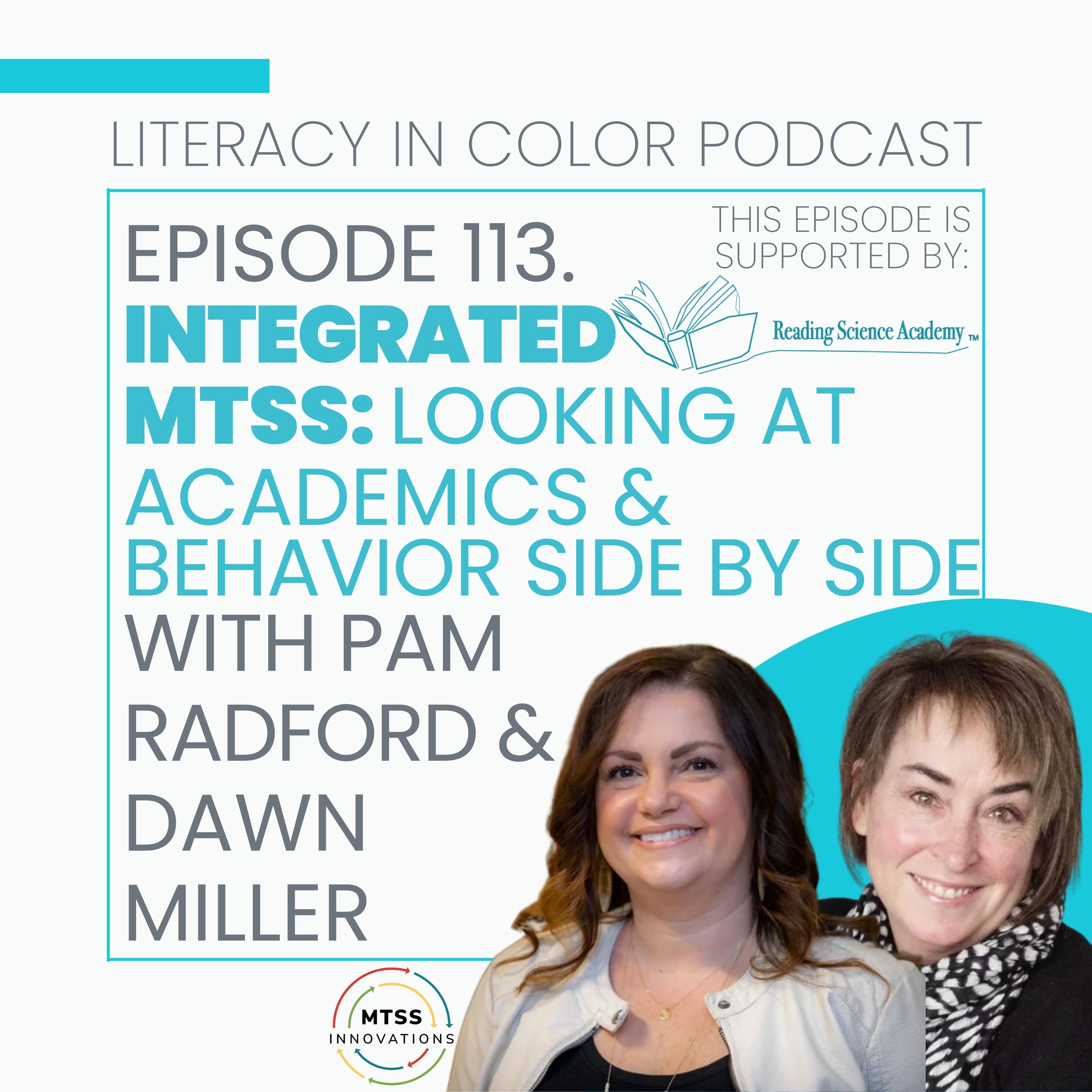 113. Integrated MTSS: Looking at Academics & Behavior Side by Side with Pam Radford and Dawn Miller, MTSS Innovations | What happens when schools treat academics and behavior as two completely separate systems?Dr. Dawn Miller and Dr. Pamela Radford of MTSS Innovations help us explore what it really means to build an integrated Multi-Tiered System of Supports (MTSS): one that recognizes that students’ academic, behavioral, social, and emotional needs don’t exist in isolation.We unpack the powerful relationship between academic success and behavior, including what can happen when a student’s academic struggles show up as avoidance, disengagement, disruptive behavior, or missed instructional time. We also explore the reverse: how behavioral needs and time away from instruction can compound academic difficulties.Dawn and Pam take us inside an integrated MTSS model, discussing how schools can move away from siloed academic and behavior teams and instead create systems in which educators examine multiple sources of data side by side. We talk about universal screening, attendance, office discipline referrals, behavioral screeners, and implementation data.We also dig into what this means for Tier 1 instruction and evidence-based practices. Dawn and Pam explain why selecting an evidence-based practice isn't simply about finding something that “works”; it's about considering the student, the context, available resources, implementation, and the interaction between academic and behavioral needs.For leaders wondering where to even begin? Dawn offers an important reminder: “don't let perfect be the enemy of good”. You may begin by strengthening one part of your system, but the vision from the beginning should be one of integration.Key Takeaways:What an integrated MTSS model actually looks like & why academic and behavioral data should be examined togetherThe relationship between academic struggles, behavior, engagement, and access to instructionBehavioral data sources including attendance, office discipline referrals, universal screeners, and daily progress reportsHow engagement and opportunities to respond can influence both academic and behavioral outcomesSelecting evidence-based practices based on student need, context, resources, and fitThe role of implementation fidelity, and why fidelity data should be used to support educatorsHow leaders can begin moving from siloed systems toward an integrated MTSSWhy continuous improvement really does have to be continuousResources Mentioned:Book: Leading Equity-Based MTSS for All StudentsBook: Promoting Effective MTSS Implementation: Challenges and Solutions for School ConsultationBook: Explicit Instructionhttps://www.mtss-innovations.com/MTSS Fidelity Integrity Assessment (FIA)Self Assessment of MTSS Implementation - Illinois (SAM-I)MTSS Innovations: The Collective & Additional FREE Resources:Recorded webinar: "Epic Fails" where Dawn shares the journey of an integrated model in a first-ring suburban districtRecorded webinar: “Find Your Focus,” that highlights the 6 habits of MTSS to incorporate into an integrated approachA MTSS Discussion Guide for District and School LeadersThis post may contain affiliate links, which means if you click on a link and make a purchase, I may earn a small commission at no additional cost to you. Thank you for supporting the podcast!Connect with Pam and Dawn:Email: [email protected] & [email protected]: Dawn Miller & Pam RadfordWebsite: https://mtss-innovations.com/Join MTSS Innovations: The Collective to learn in community and receive research-backed support alongside other MTSS leaders.This podcast is brought to you by Reading Science Academy, where our friend Stephanie Stollar is giving Literacy in Color listeners an exclusive, free grouping resource bundle designed to help you spend less time figuring out what to do with screening data and move more quickly into purposeful, skill-based groups.Get your FREE grouping resource bundle here.Or, become a member of Reading Science Academy to learn in community and receive research-backed support alongside over 1,600 literacy educators.Connect with Michelle:Visit: www.michelleandthecolorfulclassroom.comFollow me on Instagram: @michelle_thecolorfulclassroom & @logosliteracyacademyJoin our Facebook CommunitySign up for my NewsletterShop on TPT: The Colorful ClassroomFor Phonics Resources, grab: The COLORFUL Phonics ToolkitWant to Support the Podcast?Make a Donation to Support ProductionInterested in Learning More about Morphology?Logos Literacy Academy with Michelle Sullivan & Sarah PaulJoin: Beyond Phonics Club - our Membership CommunityMentioned in this episode:Reading Science AcademyGet your FREE grouping resource bundle here: https://www.stephaniestollarconsulting.com/groupingsheets?utm_source=podcast&utm_medium=show_notes&utm_campaign=podcast Join The Reading Science Academy: https://www.stephaniestollarconsulting.com/register?utm_source=podcast&utm_medium=show-notes&utm_campaign=literacy-in-colorBeyond Phonics ClubFind out more about our membership community: https://beyond-phonics-club.circle.so/beyond-phonics-club | 1h 02m 03s | ||||||
| 9/22/26 |  112. Routines for Reading Results with Dr. Sarah Brown & Dr. Kelly Powell-Smith | Dr. Sarah Brown and Dr. Kelly Powell-Smith, co-authors of Routines for Reading Results: A Practical Approach for Accelerating Growth, alongside Dr. Stephanie Stollar and Beth Madden unpack the principles of Direct Instruction and explain why effective reading instruction depends not only on what we teach, but on the intentional design and delivery of instruction.They walk through the four phases of learning: acquisition, automaticity, generalization, and adaptation – and explain why students can appear to “get it” during a lesson yet struggle to retain or apply that learning later.The conversation also tackles a common criticism of scripted instruction: Do scripts stifle teacher creativity and responsiveness? Sarah and Kelly explain why thoughtfully designed routines can actually reduce cognitive load for teachers, provide consistency for students, and free educators to focus on the thing that cannot be scripted ahead of time: how students are responding in the moment.They also discuss how these routines can live alongside existing high-quality instructional materials, how educators can use data to identify gaps rather than continually purchasing new programs, and what school leaders can do to support implementation.Key Takeaways:Direct Instruction (DI) defined & why both the design and delivery of instruction matterThe four phases of learning: acquisition → automaticity → generalization → adaptation & how instructional needs change depending on a student’s phase of learningThe role of precise, concise teacher languageModeling, leading, testing, firming, and providing individual turns – while building sufficient practice and intentional error correction into instructionHow leaders can support implementation through collaboration, data analysis, ongoing learning, and coachingResources & References Mentioned:Book: Routines for Reading Results: A Practical Approach for Accelerating Growth - Stephanie Stollar, Kelly A. Powell-Smith, Beth A. Madden & Sarah Brown (Amazon)Book: Routines for Reading Results (Solution Tree)Book: Teaching Struggling and At-Risk Readers: A Direct Instruction Approach - Doug Carnine and colleaguesDirect Instruction: the instructional approach originating in the work of Siegfried EngelmannProject Follow Through: “the largest and most consequential educational experiment in U.S. history, and its findings continue to inform NIFDI’s work to promote evidence-based, replicable instructional practices.”Research on connected phonation/continuous blending (Gonzalez-Frey, S. M., & Ehri, L. C. (2021). Connected Phonation is More Effective than Segmented Phonation for Teaching Beginning Readers to Decode Unfamiliar Words. Scientific Studies of Reading, 25(3), 272–285. https://doi.org/10.1080/10888438.2020.1776290)This post may contain affiliate links, which means if you click on a link and make a purchase, I may earn a small commission at no additional cost to you. Thank you for supporting the podcast!Connect with Dr. Sarah Brown:Website: https://systemimpactconsulting.com/Contact Dr. Sarah Brown on her WebsiteLinkedIn: Sarah Brown Ph.D.Join Dr. Brown’s MTSS Data AcademyDr. Brown also offers Virtual Coaching Sessions!Connect with Dr. Kelly Powell-Smith:LinkedIn: Kelly A. Powell-SmithMount St. Joseph University: Kelly Powell-Smith This podcast is brought to you by Reading Science Academy, where our friend Stephanie Stollar is giving Literacy in Color listeners an exclusive, free grouping resource bundle designed to help you spend less time figuring out what to do with screening data and move more quickly into purposeful, skill-based groups.Get your FREE grouping resource bundle here.Or, become a member of Reading Science Academy to learn in community and receive research-backed support alongside over 1,600 literacy educators.Connect with Michelle:Visit: www.michelleandthecolorfulclassroom.comFollow me on Instagram: @michelle_thecolorfulclassroom & @logosliteracyacademyJoin our Facebook CommunitySign up for my NewsletterShop on TPT: The Colorful ClassroomFor Phonics Resources, grab: The COLORFUL Phonics ToolkitWant to Support the Podcast?Make a Donation to Support ProductionInterested in Learning More about Morphology?Logos Literacy Academy with Michelle Sullivan & Sarah PaulJoin: Beyond Phonics Club - our Membership CommunityMentioned in this episode:SOR Fall Book Study Join us: https://colorful-classroom.mykajabi.com/sor-fall-book-study-2026Reading Science AcademyGet your FREE grouping resource bundle here: https://www.stephaniestollarconsulting.com/groupingsheets?utm_source=podcast&utm_medium=show_notes&utm_campaign=podcast Join The Reading Science Academy: https://www.stephaniestollarconsulting.com/register?utm_source=podcast&utm_medium=show-notes&utm_campaign=literacy-in-color | 51m 50s | ||||||
| 9/15/26 | 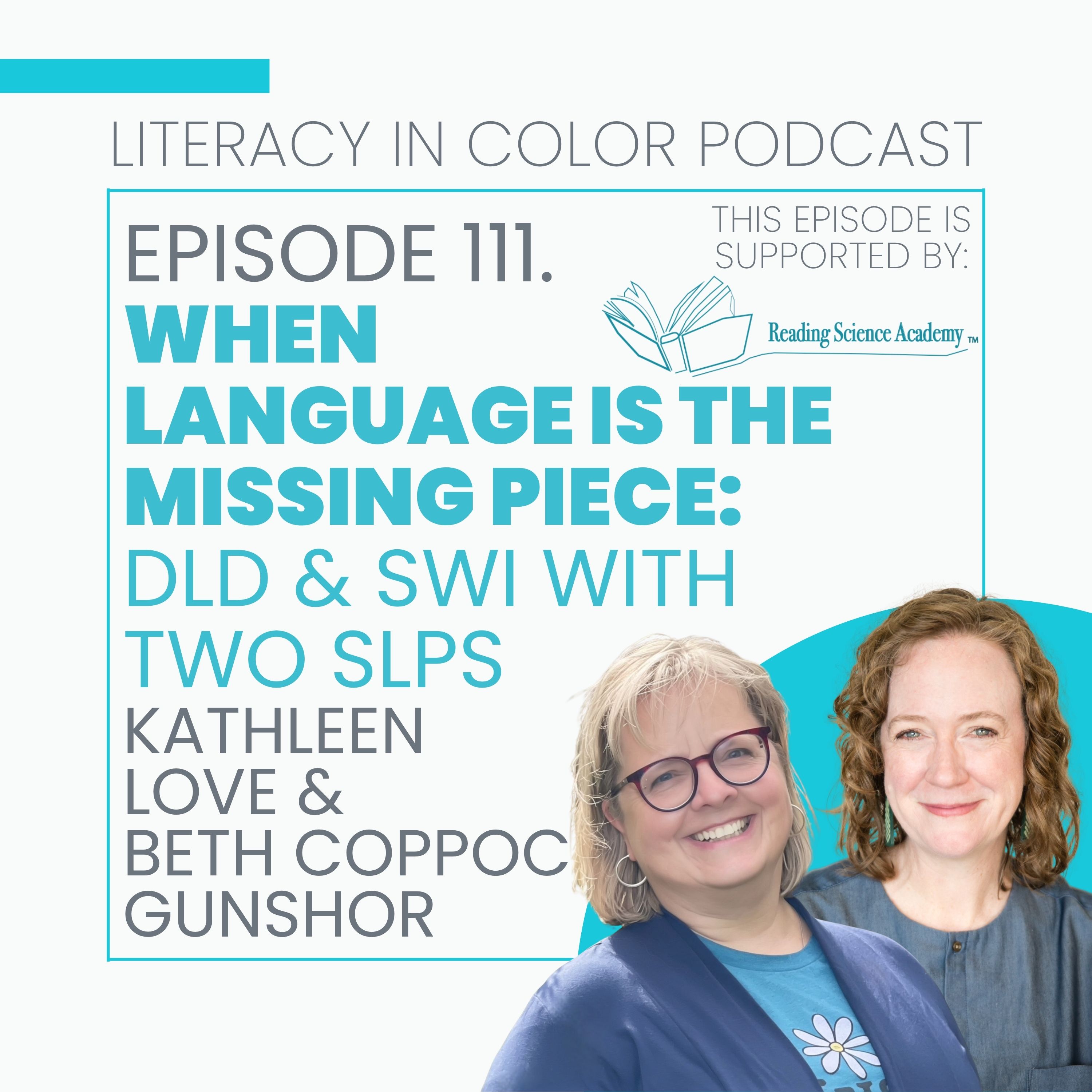 111. When Language is the Missing Piece: DLD & SWI with Two SLPs, Kathleen Love & Beth Coppoc Gunshor | Developmental Language Disorder (DLD) affects approximately 1 in 14 people, yet many educators have never heard of it. So what might DLD actually look like in the classroom? How can we better support students when difficulties with language intersect with dyslexia, ADHD, executive function, reading, spelling, and writing?Speech-language pathologists, Kathleen Love and Beth Coppoc Gunshor take us for a deep dive into DLD and language-based literacy intervention.Kathleen and Beth unpack the differences and overlap among DLD, dyslexia, and ADHD, including why a student who appears inattentive or off-task may actually be struggling with the language demands of a task. They also share subtle signs of DLD educators can watch for: from vague vocabulary and word-retrieval difficulties to challenges following directions, understanding complex sentences, and telling cohesive stories.Then, the conversation turns practical. Kathleen and Beth explore ways educators can manage cognitive load, strengthen vocabulary instruction, and provide the repeated, explicit language experiences students with DLD may need. They also take us inside their intervention practices to show how Structured Word Inquiry (SWI) can extend far beyond spelling – supporting morphology, vocabulary, syntax, semantic networks, executive function, oral language, and even confidence.Key Takeaways:DLD definedThe overlap and distinctions among DLD, dyslexia, and ADHDPractical ways to reduce unnecessary cognitive load without reducing the thinkingHow to strengthen vocabulary instruction for students with language difficultiesWhy Structured Word Inquiry can be a powerful tool for building language as well as literacyResources Mentioned:Conifer literacy appDLD and MeOxEd & Assessment / NELIDr. Tiffany Hogan / The Speech and Language (SAiL) Literacy Lab2026 ASHA ConventionConnect with Kathleen Love:Website: https://conifermatrix.com/Instagram: @conifermatrixConifer Matrix on FacebookWebsite: https://www.raincityreading.com/Instagram: @rain.city.readingRain City Reading on FacebookRain City Reading on YouTubeRain City Reading NewsletterConnect with Beth Coppoc Gunshor:Website: http://bcgslp.com/Instagram: @bcgslpBCG SLP on FacebookBCG SLP Shop - T-ShirtsBCG SLP Shop - StickersThis podcast is brought to you by Reading Science Academy, where our friend Stephanie Stollar is giving Literacy in Color listeners an exclusive, free grouping resource bundle designed to help you spend less time figuring out what to do with screening data and move more quickly into purposeful, skill-based groups. Get your FREE grouping resource bundle here.Or, become a member of Reading Science Academy to learn in community and receive research-backed support alongside over 1,600 literacy educators. Connect with Michelle:Visit: www.michelleandthecolorfulclassroom.comFollow me on Instagram: @michelle_thecolorfulclassroom & @logosliteracyacademyJoin our Facebook CommunitySign up for my NewsletterShop on TPT: The Colorful ClassroomFor Phonics Resources, grab: The COLORFUL Phonics ToolkitWant to Support the Podcast?Make a Donation to Support ProductionInterested in Learning More about Morphology?Logos Literacy Academy with Michelle Sullivan & Sarah PaulJoin: Beyond Phonics Club - our Membership CommunityMentioned in this episode:SOR Fall Book Study Join us: https://colorful-classroom.mykajabi.com/sor-fall-book-study-2026Reading Science AcademyGet your FREE grouping resource bundle here: https://www.stephaniestollarconsulting.com/groupingsheets?utm_source=podcast&utm_medium=show_notes&utm_campaign=podcast Join The Reading Science Academy: https://www.stephaniestollarconsulting.com/register?utm_source=podcast&utm_medium=show-notes&utm_campaign=literacy-in-color | 1h 10m 12s | ||||||
| 9/8/26 | decodable textsphonics instruction+4 | Dr. Wiley Blevins | Literacy in Color | — | decodable textsphonics+5 | — | 52m 10s | ||
Want analysis for the episodes below?Free for Pro Submit a request, we'll have your selected episodes analyzed within an hour. Free, at no cost to you, for Pro users. | |||||||||
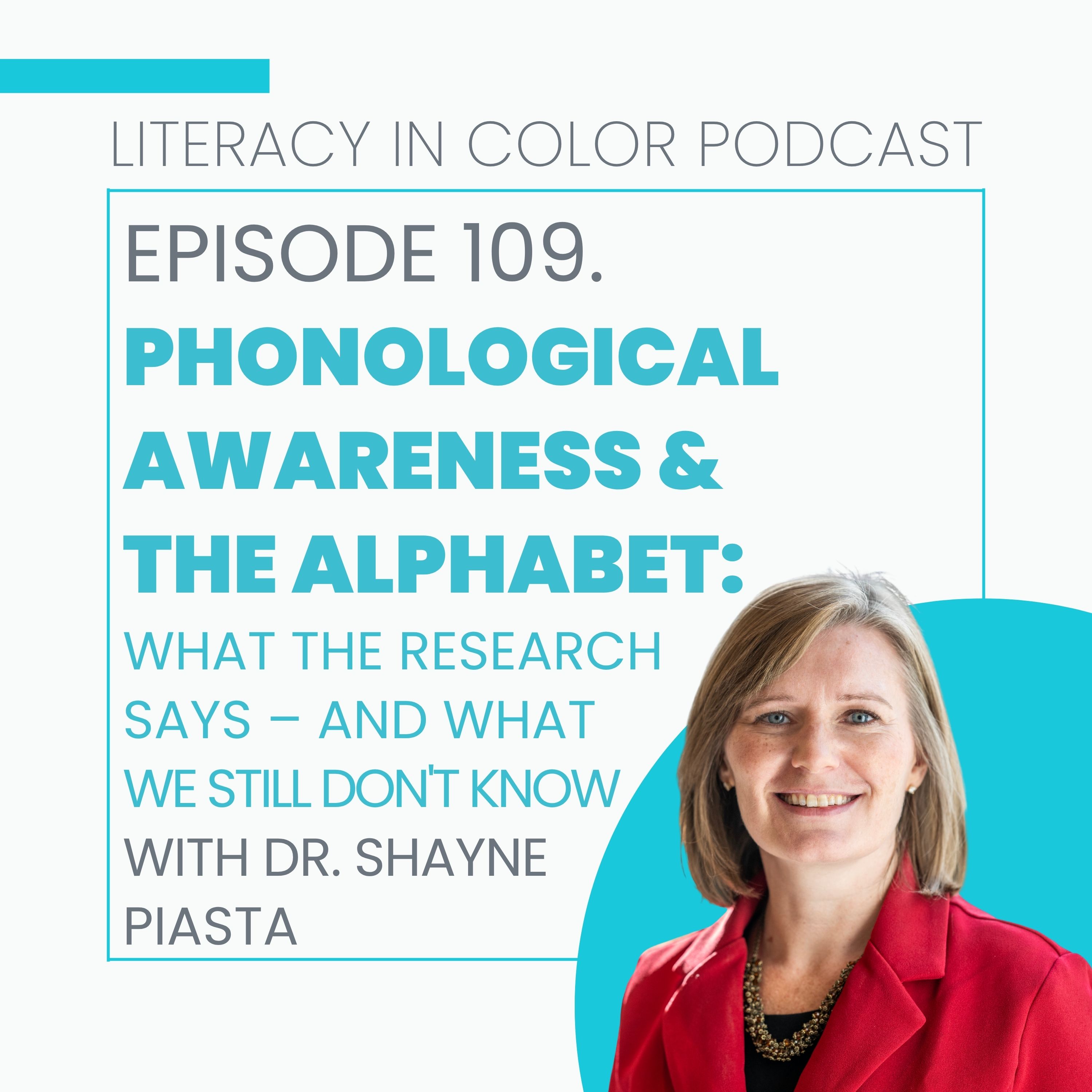
| 9/1/26 | phonological awarenessalphabet instruction+4 | Dr. Shayne Piasta | THE Ohio State UniversityCrane Center for Early Childhood Research and Policy | — | phonological awarenessalphabet learning+5 | — | 1h 11m 11s | ||
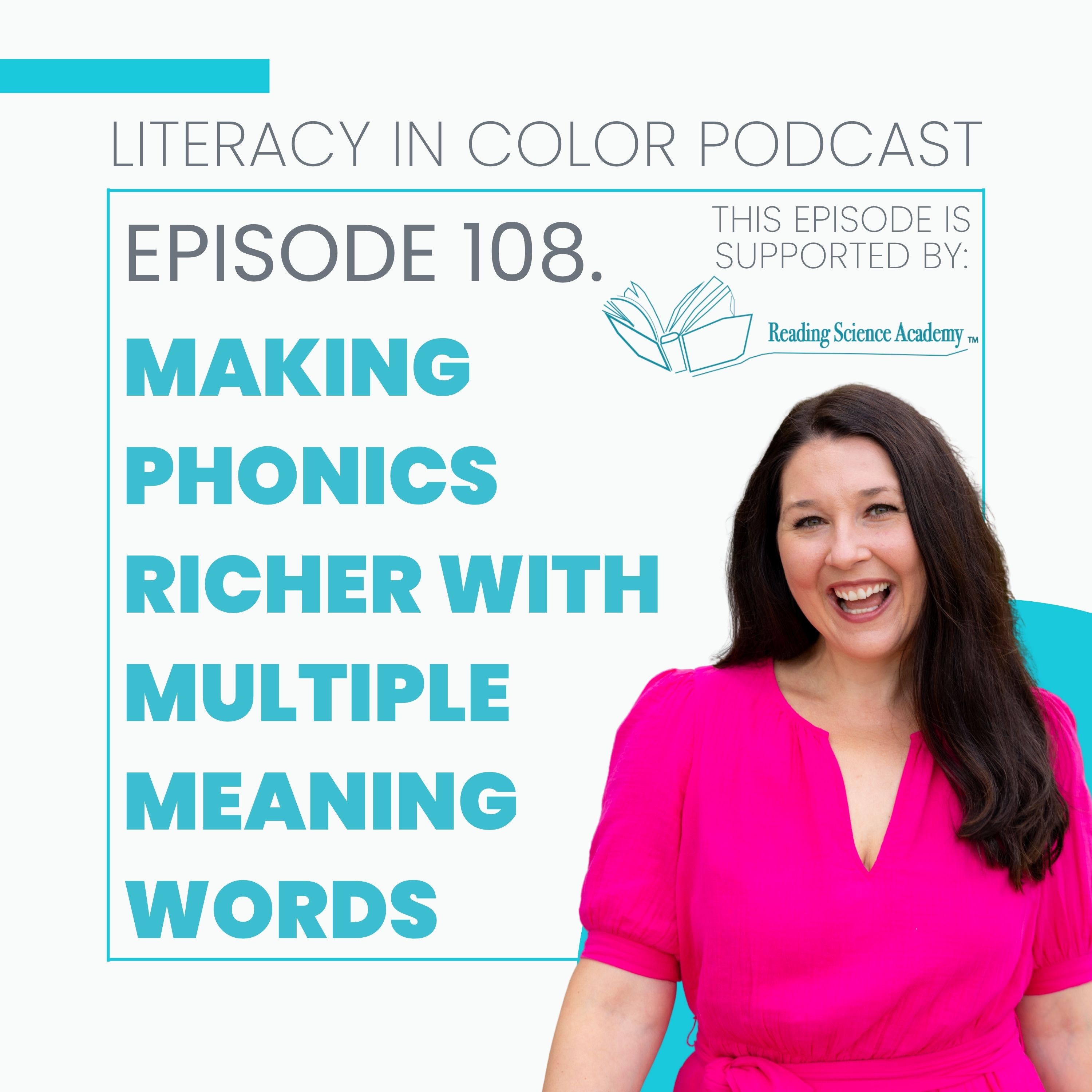
| 8/25/26 | phonicsmultiple-meaning words+3 | — | Logos Literacy Academy | — | phonicsmultiple-meaning words+3 | — | 19m 39s | ||
| 8/18/26 | polysyllabic word readingphonics+4 | Dr. Devin Kearns | — | — | polysyllabic wordsphonics instruction+5 | — | 1h 00m 55s | ||
| 8/11/26 | reading instructionorthographic mapping+4 | Dr. Katie Pace Miles | The Reading InstituteCUNY Reading Fellows | New York CityBrooklyn College | orthographic mappingstructured literacy+5 | — | 46m 40s | ||
| 8/4/26 | 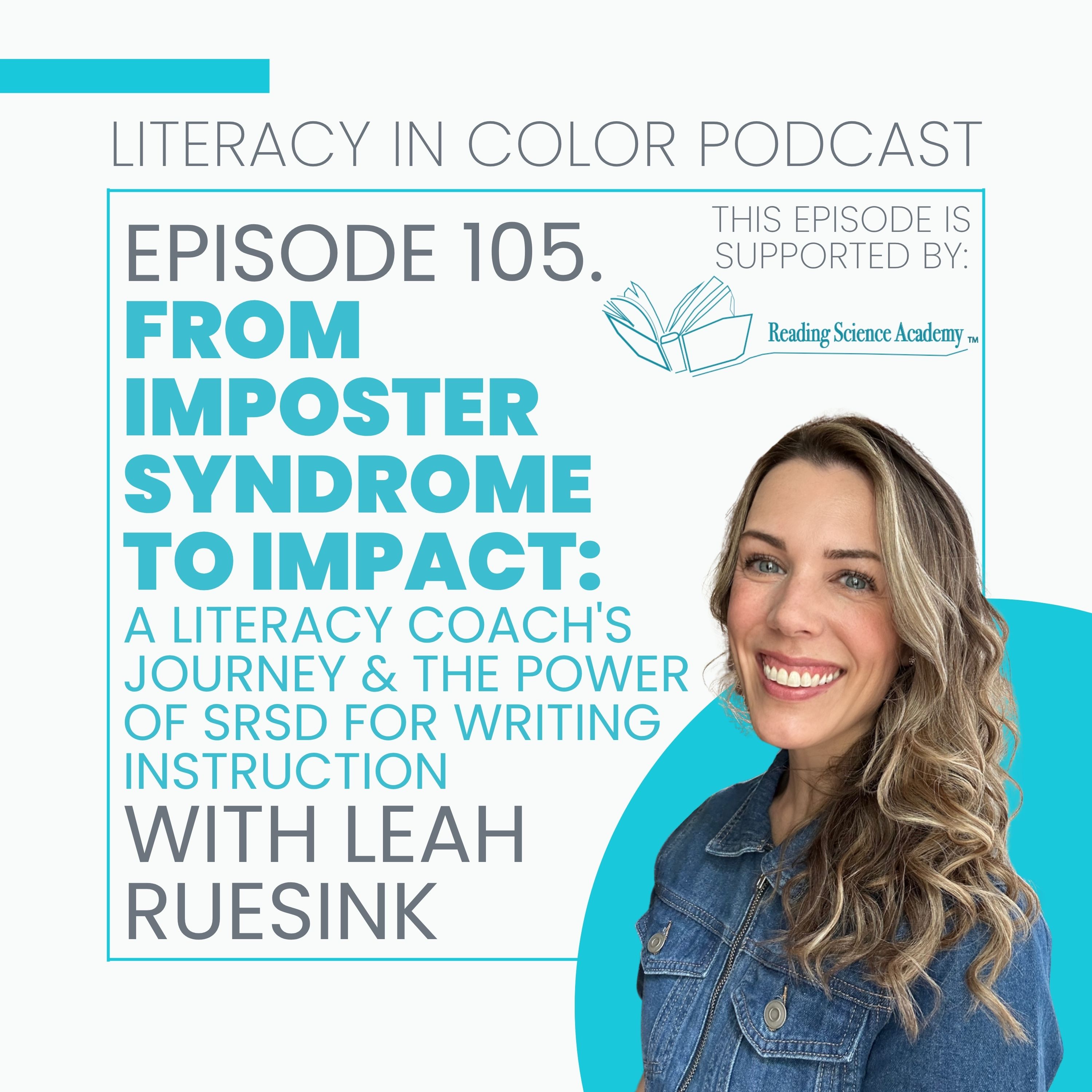 105. From Imposter Syndrome to Impact: A Literacy Coach's Journey & the Power of SRSD for Writing Instruction with Leah Ruesink | Transitioning from classroom teacher to literacy coach is exciting, but it can also be overwhelming. How do you build trust? Support veteran teachers? Know when to offer advice...and when to simply listen?Today’s episode is part Coaching Conversation, as literacy coach Leah Ruesink shares about her transition to coach and what coaching really looks like behind the scenes. Leah shares some lessons she’s learned along the way, including how to build meaningful relationships, navigate imposter syndrome, and support teachers through instructional change.Then the conversation shifts into one of Leah's greatest passions: writing instruction. Leah introduces listeners to Self-Regulated Strategy Development (SRSD), an evidence-based writing framework that explicitly teaches students how to plan, organize, and write – all while regulating themselves throughout the writing process.So, while this episode speaks directly to a literacy coach’s heart, classroom teachers will walk away with some really practical ideas and valuable insights for explicitly teaching writing in your classrooms.Resources Mentioned:Leah Ruesink's Literacy Coaching HubBook: The Impact Cycle by Jim KnightBook: Better Conversations by Jim KnightSRSD - Self-Regulated Strategy DevelopmentReleasing Writers (Formerly Think SRSD) Releasing Writers Facebook PageBook: Executive Skills and Writing Instruction by Dr. Leslie LaudBook: Rock Your Literacy Block by Lindsay KemenyTIDE chant and writing routinesBook: The Writing Rope by Joan SeditaThis post may contain affiliate links, which means if you click on a link and make a purchase, I may earn a small commission at no additional cost to you. Thank you for supporting the podcast!Connect with Leah Ruesink:Instagram: @theearlyliteracycoachTikTok: @theearlyliteracycoachLiteracy Coaching HubLeah’s Stan.StoreThis podcast is brought to you by Reading Science Academy, where our friend Stephanie Stollar is giving Literacy in Color listeners an exclusive, free grouping resource bundle to help you turn fall screening data into skill-based groups that actually move students forward.Get your FREE grouping resource bundle here.Or, become a member of Reading Science Academy to learn in community and receive research-backed support alongside over 1,400 literacy educators.Connect with Michelle:Visit: www.michelleandthecolorfulclassroom.comFollow me on Instagram: @michelle_thecolorfulclassroom & @logosliteracyacademyJoin our Facebook CommunitySign up for my NewsletterShop on TPT: The Colorful ClassroomFor Phonics Resources, grab: The COLORFUL Phonics ToolkitWant to Support the Podcast?Make a Donation to Support ProductionInterested in Learning More about Morphology?Logos Literacy Academy with Michelle Sullivan & Sarah PaulJoin: Beyond Phonics Club - our Membership CommunityMentioned in this episode:Reading Science AcademyGet your FREE grouping resource bundle here: https://www.stephaniestollarconsulting.com/groupingsheets?utm_source=podcast&utm_medium=show_notes&utm_campaign=podcast Join The Reading Science Academy: https://www.stephaniestollarconsulting.com/register?utm_source=podcast&utm_medium=show-notes&utm_campaign=literacy-in-colorSOR Fall Book Study Join us: https://colorful-classroom.mykajabi.com/sor-fall-book-study-2026Reading Science AcademyGet your FREE grouping resource bundle here: https://www.stephaniestollarconsulting.com/groupingsheets?utm_source=podcast&utm_medium=show_notes&utm_campaign=podcast Join The Reading Science Academy: https://www.stephaniestollarconsulting.com/register?utm_source=podcast&utm_medium=show-notes&utm_campaign=literacy-in-color | 52m 20s | ||||||
| 7/28/26 | biliteracyreading brain+5 | Dr. Maryanne Wolf | — | — | reading circuitrydeep reading+6 | — | 51m 38s | ||
| 7/21/26 | letter reversalsbrain development+3 | — | Developing Proficient WritersLogos Literacy Academy+1 | — | letter reversalsb/d reversals+3 | Reading Science Academy | 19m 31s | ||
| 7/14/26 | 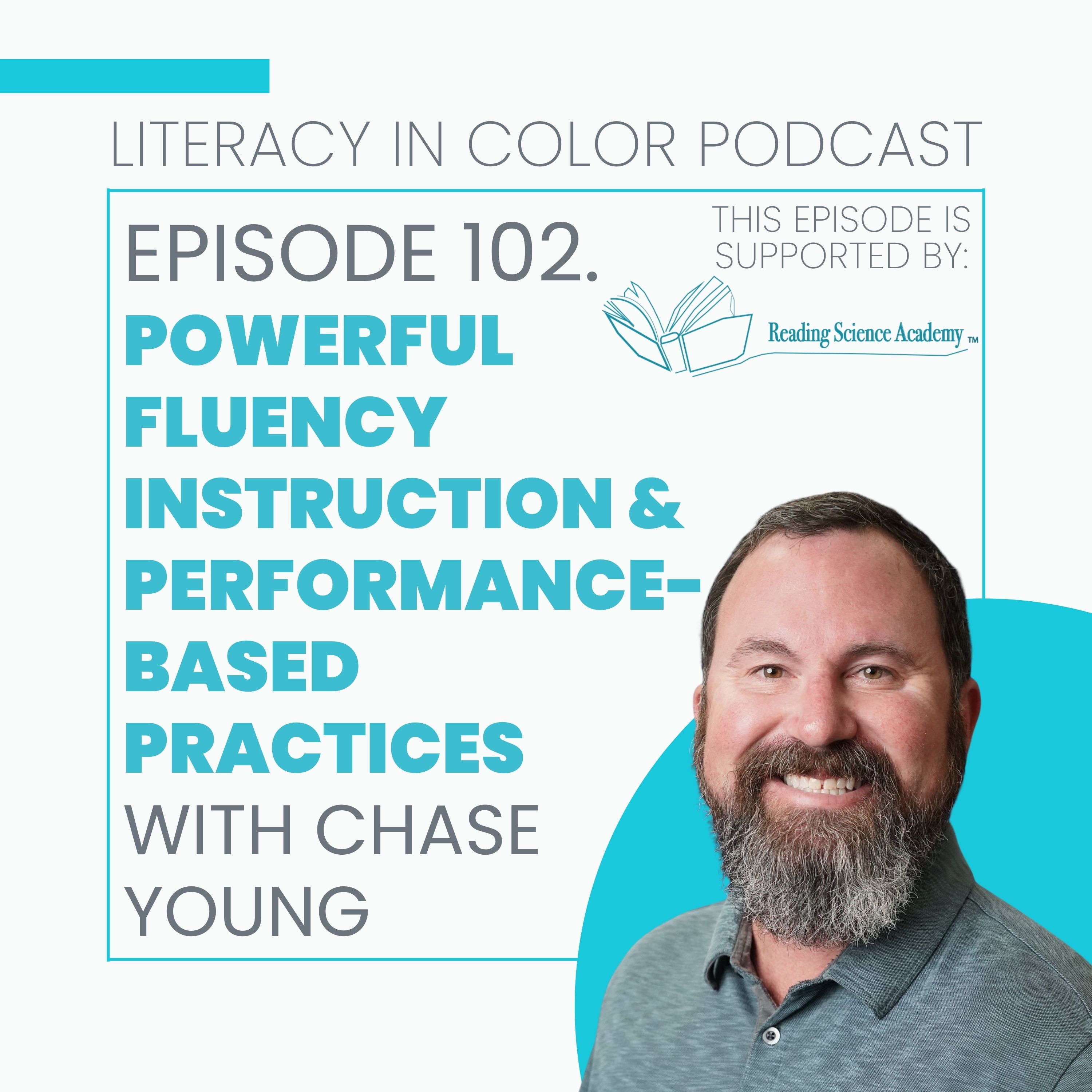 102. Powerful Fluency Instruction & Performance-Based Practices with Dr. Chase Young | Fluency serves as the critical bridge between accurate word reading and deep comprehension, so how can we build it? In this episode, Michelle sits down with literacy scholar, author, and educator, Dr. Chase Young shares what fluency really is, why it matters, and how teachers can transform fluency instruction from repetitive practice into engaging, meaningful learning experiences.Chase shares the research behind performance-based fluency instruction, including Reader’s Theater, Poetry Slams, Teddy Talks, and his evidence-based intervention framework, Read Like Us. We discuss how fluency supports comprehension, why repeated reading works, and how teachers can create classrooms where students want to practice reading.Key Takeaways:What reading fluency actually is (and what it isn't)Performance-based fluency instruction and the research behind it (like Reader’s Theater, Poetry Slams, and Teddy Talks)The importance of complex texts during fluency instructionThe Read Like Us intervention frameworkWays to make fluency instruction engaging, authentic, and joyfulHelpful ResourcesResources from PodcastReader’s Theatre Scripts (The Best Class)Professional Development Parent ResourcesResearch Article: Read Like Me: An Intervention for Struggling Readers (Chase Young, Stacey Lagrone, Joyce K. McCauley)Research Article: Promoting Fluency Through Challenge: Repeated Reading with Texts of Varying Complexity (Jake Downs, Chase Young, Alycia Cole)Research Article: Promoting Reading Accuracy and Fluency Outcomes with Complex Texts: A Grade 3 Intervention Comparison (Jake Downs, Elfrieda Hiebert, Kristen Conradi Smith, Katie Martz)Connect with Dr. Chase Young:Email: [email protected]: @ChaseJYoung1Website: https://www.thebestclass.org/Website: http://www.literacylive.orgThis podcast is brought to you by Reading Science Academy, where our friend Stephanie Stollar is giving Literacy in Color listeners an exclusive, free grouping resource bundle to help you turn fall screening data into skill-based groups that actually move students forward.Get your FREE grouping resource bundle here.Or, become a member of Reading Science Academy to learn in community and receive research-backed support alongside over 1,400 literacy educators.Connect with Michelle:Visit: www.michelleandthecolorfulclassroom.comFollow me on Instagram: @michelle_thecolorfulclassroom & @logosliteracyacademyJoin our Facebook CommunitySign up for my NewsletterShop on TPT: The Colorful ClassroomFor Phonics Resources, grab: The COLORFUL Phonics ToolkitWant to Support the Podcast?Make a Donation to Support ProductionInterested in Learning More about Morphology?Logos Literacy Academy with Michelle Sullivan & Sarah PaulJoin: Beyond Phonics Club - our Membership CommunityMentioned in this episode:SOR Fall Book Study Join us: https://colorful-classroom.mykajabi.com/sor-fall-book-study-2026Reading Science AcademyGet your FREE grouping resource bundle here: https://www.stephaniestollarconsulting.com/groupingsheets?utm_source=podcast&utm_medium=show_notes&utm_campaign=podcast Join The Reading Science Academy: https://www.stephaniestollarconsulting.com/register?utm_source=podcast&utm_medium=show-notes&utm_campaign=literacy-in-colorReading Science AcademyGet your FREE grouping resource bundle here: https://www.stephaniestollarconsulting.com/groupingsheets?utm_source=podcast&utm_medium=show_notes&utm_campaign=podcast Join The Reading Science Academy: https://www.stephaniestollarconsulting.com/register?utm_source=podcast&utm_medium=show-notes&utm_campaign=literacy-in-color | 1h 03m 03s | ||||||
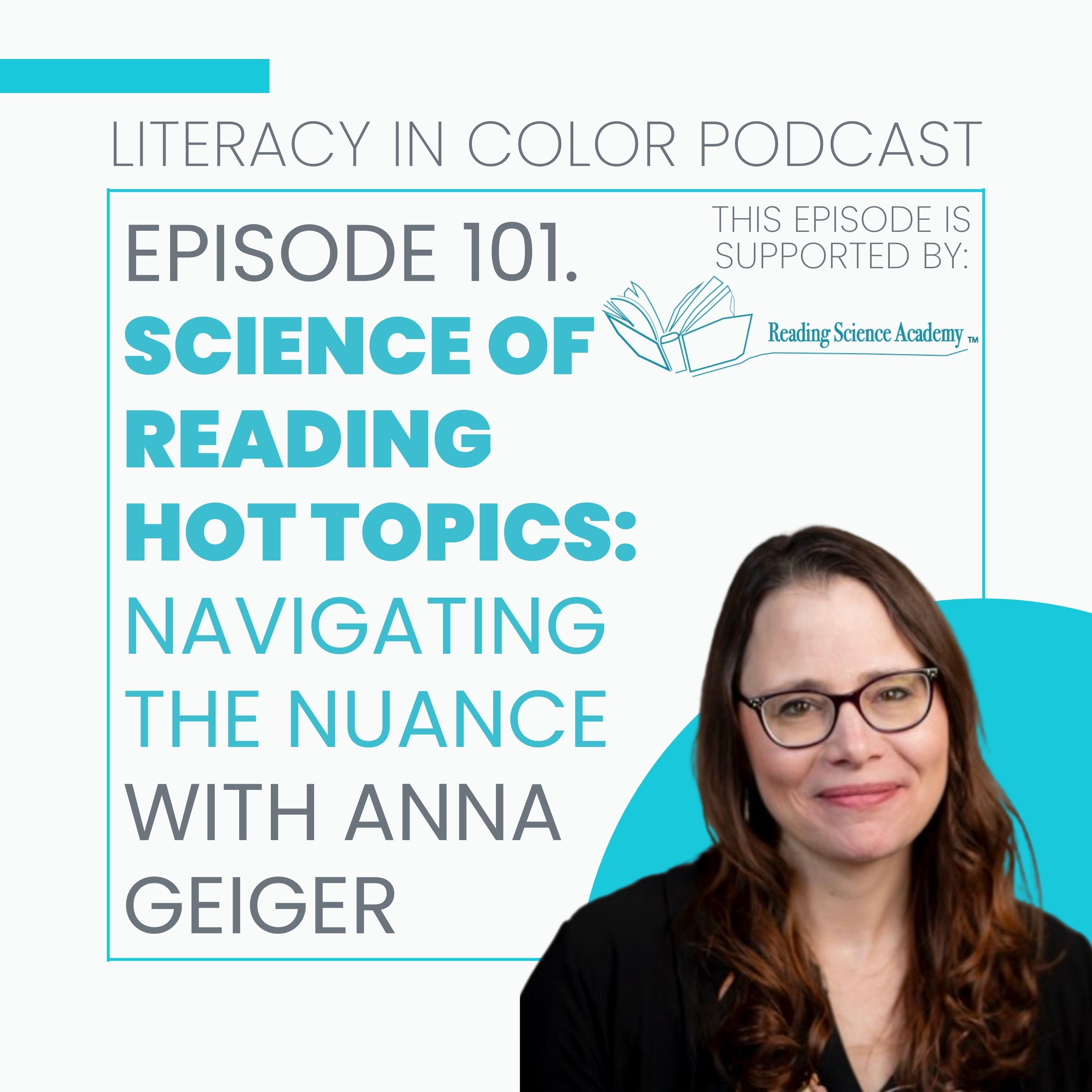
| 7/7/26 | Science of Readingliteracy instruction+4 | Anna Geiger | Reach All Readers | — | literacyinstruction+6 | — | 1h 02m 14s | ||
| 6/30/26 | 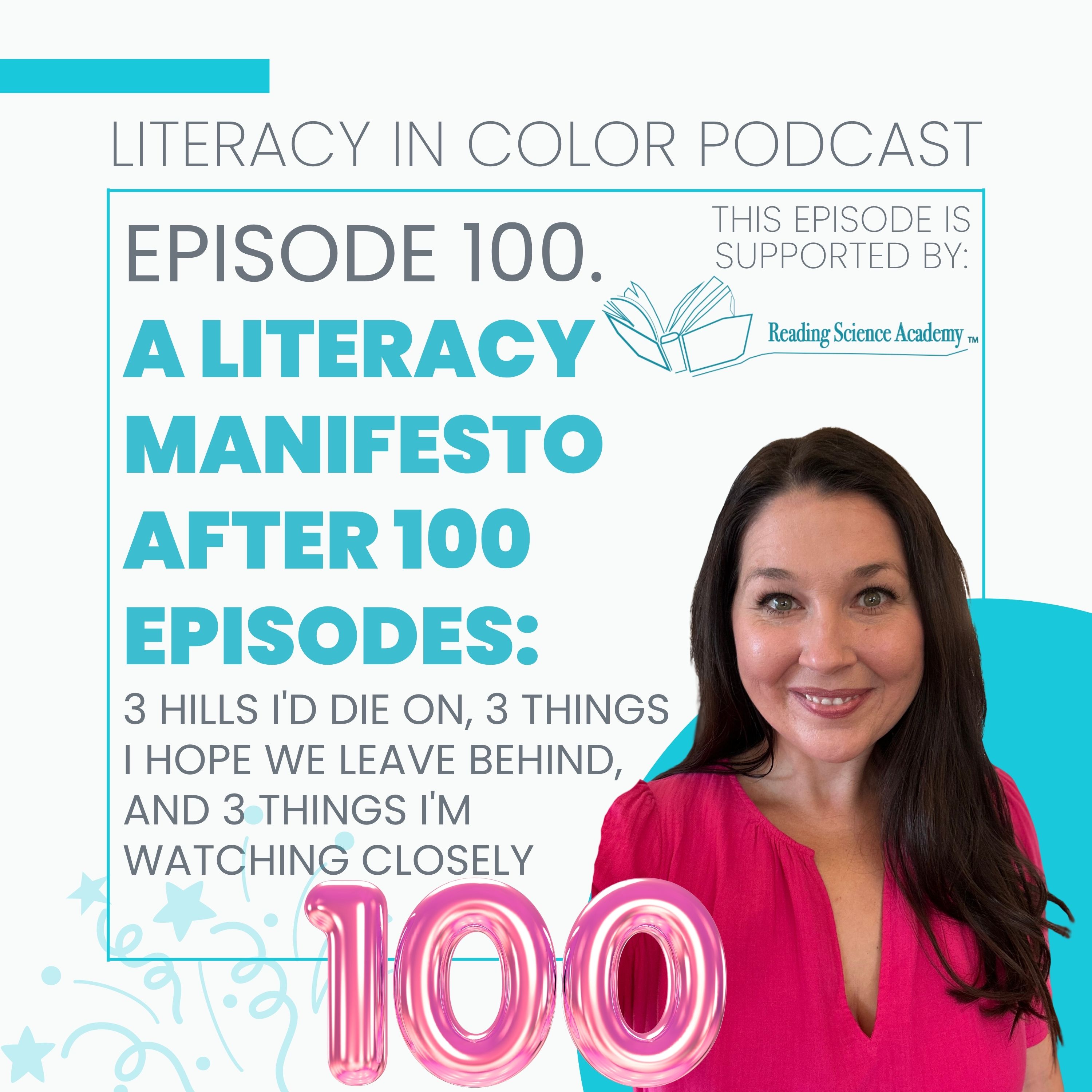 100. A Literacy Manifesto After 100 Episodes: 3 Hills I'd Die On, 3 Things I Hope We Leave Behind, and 3 Things I'm Watching Closely | Happy 100th Episode!!! To celebrate this milestone episode, I share:3 literacy hills I’d die on3 things I hope we can leave behind, and3 things I’m watching closely Thank you for helping make the first 100 episodes possible. Here's to the next 100!Favorite Episodes Mentioned:Playlist (if listening from your computer)Playlist (if listening from a podcast player)This podcast is brought to you by Reading Science Academy, where our friend Stephanie Stollar is giving Literacy in Color listeners an exclusive, free grouping resource bundle to help you turn fall screening data into skill-based groups that actually move students forward.Get your FREE grouping resource bundle here.Or, become a member of Reading Science Academy to learn in community and receive research-backed support alongside over 1,400 literacy educators.Connect with Michelle:Visit: www.michelleandthecolorfulclassroom.comFollow me on Instagram: @michelle_thecolorfulclassroom & @logosliteracyacademyJoin our Facebook CommunitySign up for my NewsletterShop on TPT: The Colorful ClassroomFor Phonics Resources, grab: The COLORFUL Phonics ToolkitWant to Support the Podcast?Make a Donation to Support ProductionInterested in Learning More about Morphology?Logos Literacy Academy with Michelle Sullivan & Sarah PaulJoin: Beyond Phonics Club - our Membership CommunityMentioned in this episode:Reading Science AcademyGet your FREE grouping resource bundle here: https://www.stephaniestollarconsulting.com/groupingsheets?utm_source=podcast&utm_medium=show_notes&utm_campaign=podcast Join The Reading Science Academy: https://www.stephaniestollarconsulting.com/register?utm_source=podcast&utm_medium=show-notes&utm_campaign=literacy-in-colorSOR Fall Book Study Join us: https://colorful-classroom.mykajabi.com/sor-fall-book-study-2026Reading Science AcademyGet your FREE grouping resource bundle here: https://www.stephaniestollarconsulting.com/groupingsheets?utm_source=podcast&utm_medium=show_notes&utm_campaign=podcast Join The Reading Science Academy: https://www.stephaniestollarconsulting.com/register?utm_source=podcast&utm_medium=show-notes&utm_campaign=literacy-in-color | 31m 08s | ||||||
| 6/23/26 | 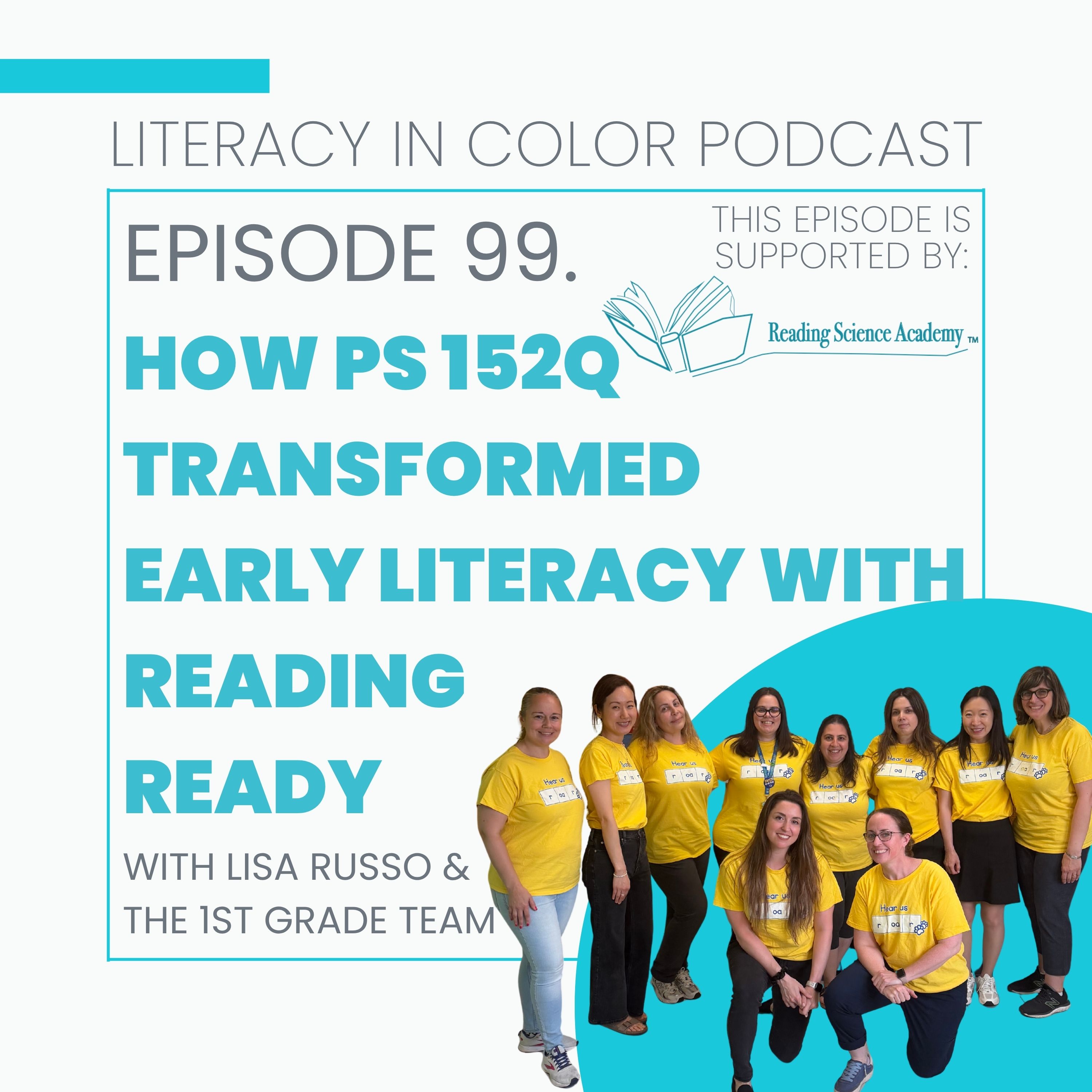 99. How PS 152Q Transformed Early Literacy with Reading Ready with Lisa Russo & the 1st Grade Team | What happens when a school decides that "business as usual" is no longer good enough? Principal Lisa Russo and the first-grade team at PS 152Q to discuss their remarkable literacy transformation. After years of using balanced literacy practices, the school shifted toward structured literacy, embraced the science of reading, and implemented a schoolwide intervention block supported by Dr. Katie Pace Miles' Reading Ready intervention program.The team shares their journey from seeing students struggle with foundational skills to creating a system that provides targeted instruction based on student needs. You'll hear how leadership, teacher buy-in, strategic grouping, and a commitment to following the research helped create meaningful change for young readers.Resources Mentioned:Reading Ready (The Reading Institute)Book: Making Words Stick by Dr. Katie Pace Miles & Dr. Molly NessThis post may contain affiliate links, which means if you click on a link and make a purchase, I may earn a small commission at no additional cost to you. Thank you for supporting the podcast!Connect with Lisa Russo & PS 152Q:Website: https://www.ps152q.org/Instagram: @ps152q & @littleextraliteracyThis podcast is brought to you by Reading Science Academy, where our friend Stephanie Stollar is giving Literacy in Color listeners an exclusive, free grouping resource bundle to help you turn fall screening data into skill-based groups that actually move students forward.Get your FREE grouping resource bundle here.Or, become a member of Reading Science Academy to learn in community and receive research-backed support alongside over 1,400 literacy educators.Connect with Michelle:Visit: www.michelleandthecolorfulclassroom.comFollow me on Instagram: @michelle_thecolorfulclassroom & @logosliteracyacademyJoin our Facebook CommunitySign up for my NewsletterShop on TPT: The Colorful ClassroomFor Phonics Resources, grab: The COLORFUL Phonics ToolkitWant to Support the Podcast?Make a Donation to Support ProductionInterested in Learning More about Morphology?Logos Literacy Academy with Michelle Sullivan & Sarah PaulJoin: Beyond Phonics Club - our Membership CommunityMentioned in this episode:SOR Fall Book Study Join us: https://colorful-classroom.mykajabi.com/sor-fall-book-study-2026Reading Science AcademyGet your FREE grouping resource bundle here: https://www.stephaniestollarconsulting.com/groupingsheets?utm_source=podcast&utm_medium=show_notes&utm_campaign=podcast Join The Reading Science Academy: https://www.stephaniestollarconsulting.com/register?utm_source=podcast&utm_medium=show-notes&utm_campaign=literacy-in-colorReading Science AcademyGet your FREE grouping resource bundle here: https://www.stephaniestollarconsulting.com/groupingsheets?utm_source=podcast&utm_medium=show_notes&utm_campaign=podcast Join The Reading Science Academy: https://www.stephaniestollarconsulting.com/register?utm_source=podcast&utm_medium=show-notes&utm_campaign=literacy-in-color | 41m 20s | ||||||
| 6/16/26 | 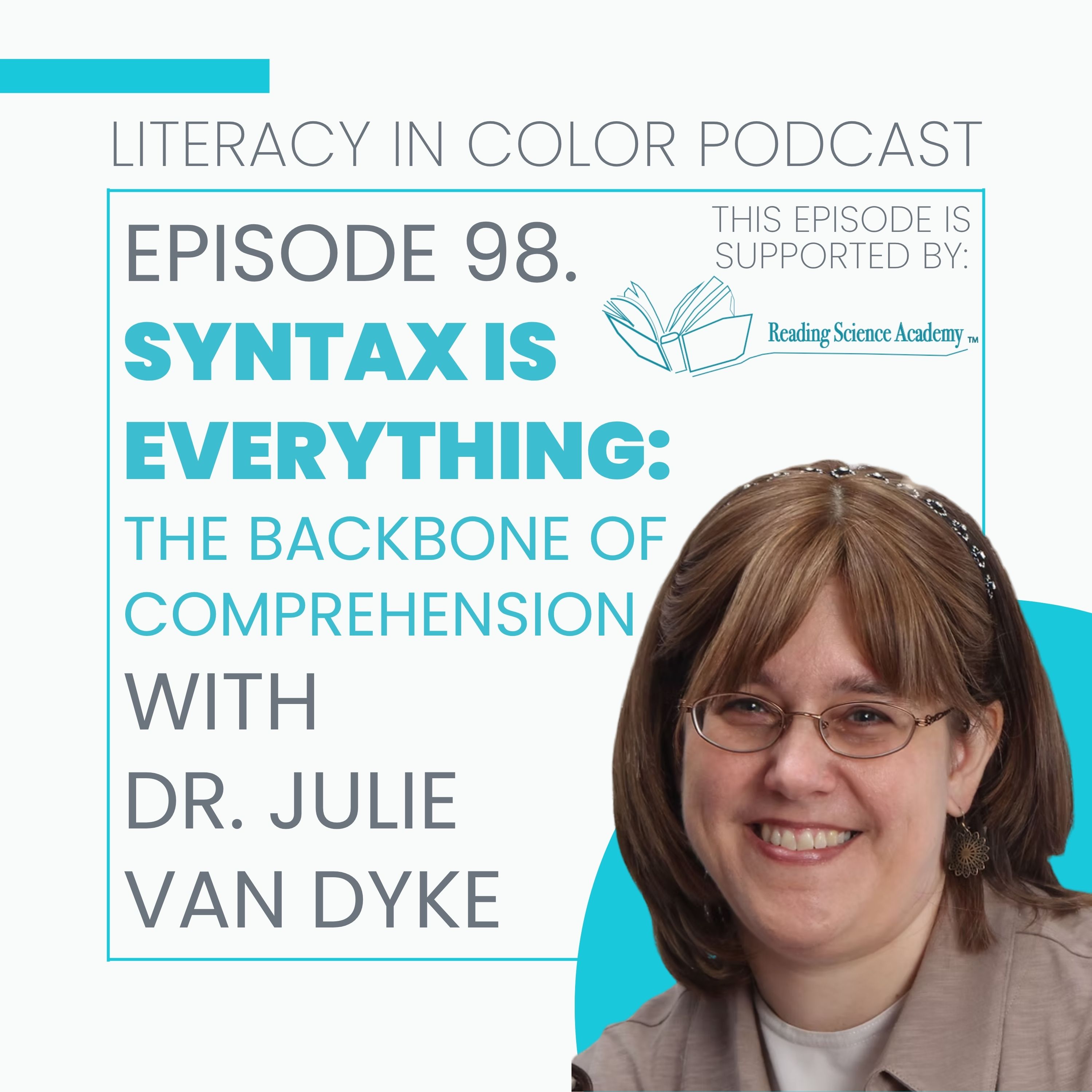 98. Syntax is Everything: The Backbone of Comprehension with Dr. Julie Van Dyke | When educators discuss reading comprehension, the conversation often centers around vocabulary, background knowledge, and comprehension strategies, but what if we've been overlooking one of the most critical components of comprehension all along?Research scientist, Dr. Julie Van Dyke shares about the powerful role syntax plays in reading comprehension. Drawing from decades of research in cognitive psychology, neuroscience, linguistics, and language processing, Dr. Van Dyke explains why syntax is much more than word order; it's the system that helps readers determine who did what to whom and construct meaning moment by moment.We discuss what happens in the brain when we read, why comprehension occurs word by word rather than after a passage is finished, how Developmental Language Disorder (DLD) impacts reading, and practical ways teachers can begin supporting syntactic development in their classrooms.We also dive into Cascade Reading, an innovative tool designed to make sentence structure visible and support comprehension for all learners.Key Takeaways:Syntax is not simply word order.Comprehension happens continuously, word by word, as the brain integrates new information into what has already been processed.The brain relies on multiple systems during reading, including perception, language, and thought networks.Syntax serves as the foundation of language comprehension in much the same way phonology serves as the foundation of decoding.Explicit attention to sentence structure can be embedded into existing literacy instruction.Resources Mentioned:IDA Perspectives 2025: Volumes 1 & 2 - Syntax Comes First (Available through the IDA)FREE Tool: Cascade ReadingSyntax Usage SurveyConnect with Dr. Julie Van Dyke:Website: https://www.drjvandyke.net/LinkedInStay tuned for her upcoming Substack: Decoding SyntaxThis podcast is brought to you by Reading Science Academy, where our friend Stephanie Stollar is giving Literacy in Color listeners an exclusive, free grouping resource bundle to help you turn fall screening data into skill-based groups that actually move students forward.Get your FREE grouping resource bundle here.Or, become a member of Reading Science Academy to learn in community and receive research-backed support alongside over 1,400 literacy educators.Connect with Michelle:Visit: www.michelleandthecolorfulclassroom.comFollow me on Instagram: @michelle_thecolorfulclassroom & @logosliteracyacademyJoin our Facebook CommunitySign up for my NewsletterShop on TPT: The Colorful ClassroomFor Phonics Resources, grab: The COLORFUL Phonics ToolkitWant to Support the Podcast?Make a Donation to Support ProductionInterested in Learning More about Morphology?Logos Literacy Academy with Michelle Sullivan & Sarah PaulJoin: Beyond Phonics Club - our Membership CommunityMentioned in this episode:Reading Science AcademyGet your FREE grouping resource bundle here: https://www.stephaniestollarconsulting.com/groupingsheets?utm_source=podcast&utm_medium=show_notes&utm_campaign=podcast Join The Reading Science Academy: https://www.stephaniestollarconsulting.com/register?utm_source=podcast&utm_medium=show-notes&utm_campaign=literacy-in-colorSOR Fall Book Study Join us: https://colorful-classroom.mykajabi.com/sor-fall-book-study-2026Reading Science AcademyGet your FREE grouping resource bundle here: https://www.stephaniestollarconsulting.com/groupingsheets?utm_source=podcast&utm_medium=show_notes&utm_campaign=podcast Join The Reading Science Academy: https://www.stephaniestollarconsulting.com/register?utm_source=podcast&utm_medium=show-notes&utm_campaign=literacy-in-color | 54m 32s | ||||||
| 6/9/26 | 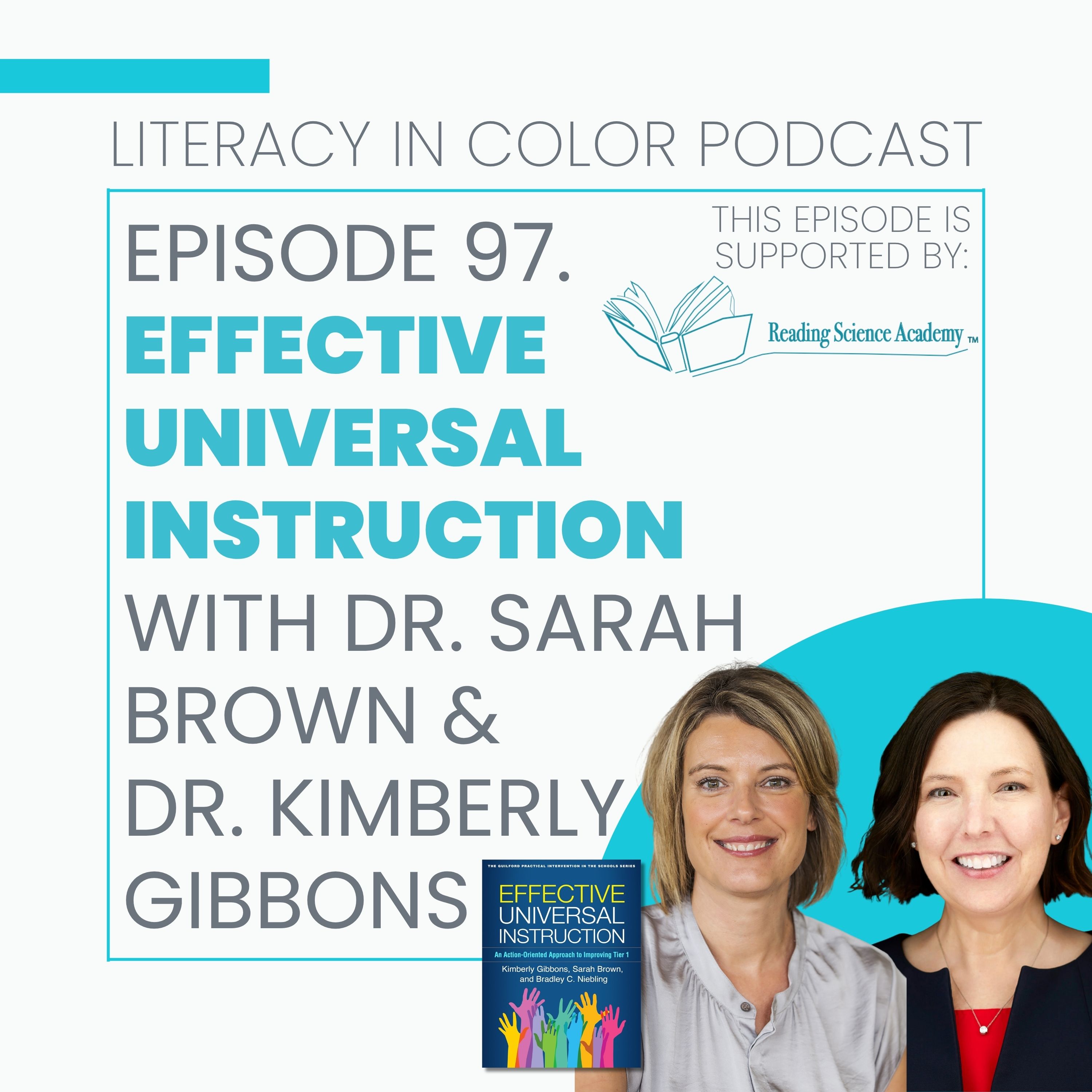 97. Effective Universal Instruction with Dr. Sarah Brown & Dr. Kimberly Gibbons | Drawing from decades of experience in literacy, school psychology, systems-level leadership, and MTSS implementation, Dr. Sarah Brown and Dr. Kimberly Gibbons explain why strong universal instruction is the true foundation of student success. They explore what Tier 1 actually includes, why intervention alone cannot solve widespread literacy struggles, and how leadership, collaboration, fidelity, coaching, and systems-thinking all work together to improve outcomes for students.Key Takeaways:What Tier 1 really means inside an MTSS frameworkWhy MTSS is about resources and systems, not “Tier 2 kids” or “Tier 3 kids”Why buying a new curriculum alone won’t solve literacy problemsThe role of leadership in sustaining effective instructionThe importance of job-embedded coaching and ongoing supportWhy fidelity data matters (...and why it shouldn’t feel punitive)How collaborative teams build consensus and instructional coherenceThe power of strong questioning to uncover root causesWhy prevention through effective Tier 1 instruction is more powerful than over-relying on interventionPractical first steps schools can take immediately to strengthen instructionResources:Book: Effective Universal Instruction: An Action-Oriented Approach to Improving Tier 1 by Sarah Brown & Kimberly GibbonsBook: MTSS for Reading Improvement by Stephanie Stollar & Sarah Brown from Solution Tree (or on Amazon)This post may contain affiliate links, which means if you click on a link and make a purchase, I may earn a small commission at no additional cost to you. Thank you for supporting the podcast!Connect with Dr. Sarah Brown:Website: https://systemimpactconsulting.com/Contact Dr. Sarah Brown on her WebsiteLinkedIn: Sarah Brown Ph.D.Join Dr. Brown’s MTSS Data AcademyDr. Brown also offers Virtual Coaching Sessions!Connect with Dr. Kimberly Gibbons:CAREI DirectorCAREI at the University of MinnesotaThis podcast is brought to you by Reading Science Academy, where our friend Stephanie Stollar is giving Literacy in Color listeners an exclusive, free grouping resource bundle to help you turn fall screening data into skill-based groups that actually move students forward.Get your FREE grouping resource bundle here.Or, become a member of Reading Science Academy to learn in community and receive research-backed support alongside over 1,400 literacy educators.Connect with Michelle:Visit: www.michelleandthecolorfulclassroom.comFollow me on Instagram: @michelle_thecolorfulclassroom & @logosliteracyacademyJoin our Facebook CommunitySign up for my NewsletterShop on TPT: The Colorful ClassroomFor Phonics Resources, grab: The COLORFUL Phonics ToolkitWant to Support the Podcast?Make a Donation to Support ProductionInterested in Learning More about Morphology?Logos Literacy Academy with Michelle Sullivan & Sarah PaulJoin: Beyond Phonics Club - our Membership CommunityMentioned in this episode:SOR Fall Book Study Join us: https://colorful-classroom.mykajabi.com/sor-fall-book-study-2026Reading Science AcademyGet your FREE grouping resource bundle here: https://www.stephaniestollarconsulting.com/groupingsheets?utm_source=podcast&utm_medium=show_notes&utm_campaign=podcast Join The Reading Science Academy: https://www.stephaniestollarconsulting.com/register?utm_source=podcast&utm_medium=show-notes&utm_campaign=literacy-in-colorReading Science AcademyGet your FREE grouping resource bundle here: https://www.stephaniestollarconsulting.com/groupingsheets?utm_source=podcast&utm_medium=show_notes&utm_campaign=podcast Join The Reading Science Academy: https://www.stephaniestollarconsulting.com/register?utm_source=podcast&utm_medium=show-notes&utm_campaign=literacy-in-color | 57m 22s | ||||||
| 6/2/26 | 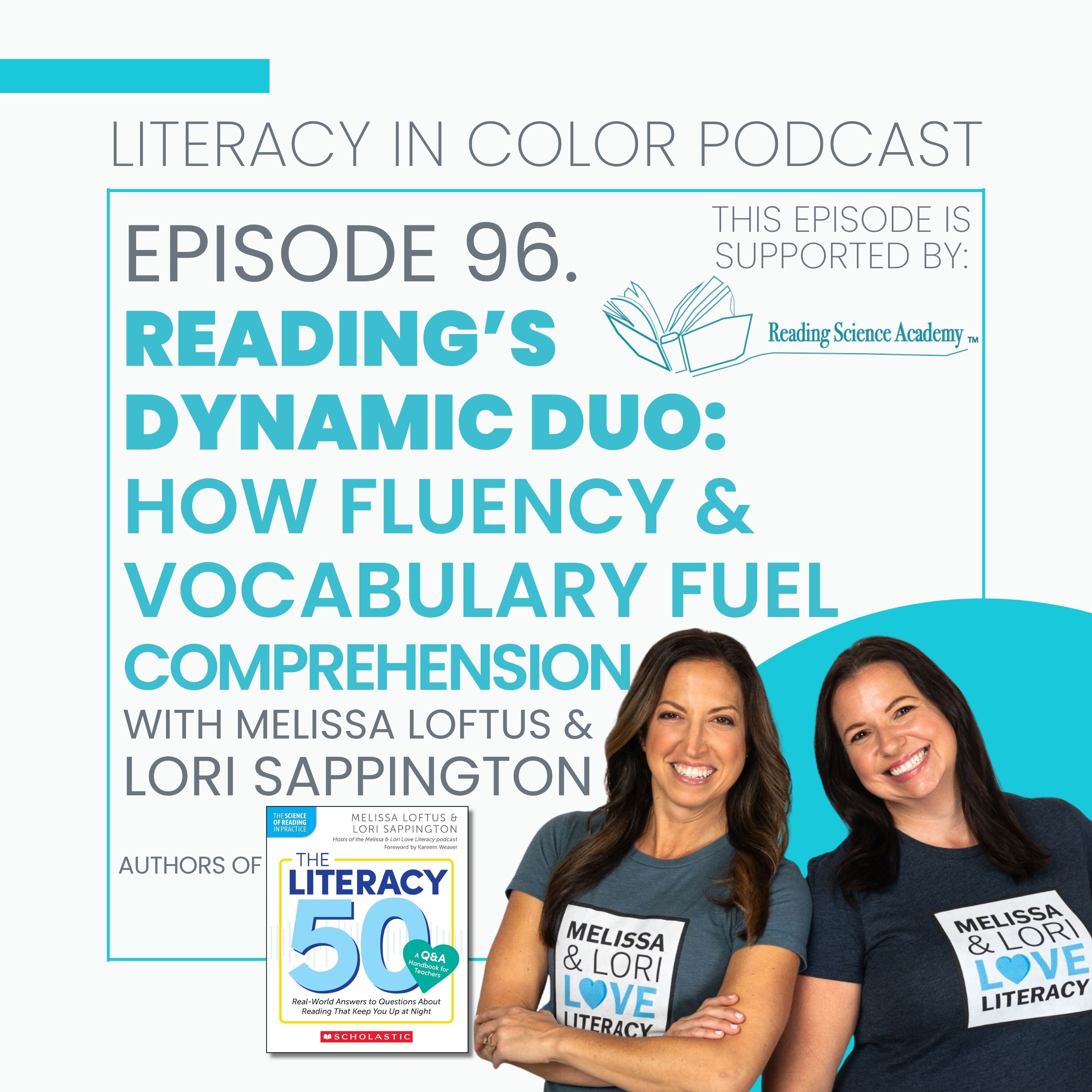 96. Reading’s Dynamic Duo: How Fluency & Vocabulary Fuel Comprehension with Melissa Loftus & Lori Sappington | Melissa Loftus and Lori Sappington from the Melissa & Lori Love Literacy podcast take their hosting hats off for the day to share their expertise around fluency, vocabulary, and comprehension – and why comprehension instruction is far more complex than simply teaching “strategies.”Melissa and Lori explain why comprehension is considered an unconstrained skill, how fluent word recognition frees up cognitive space for meaning-making, and why vocabulary and knowledge building are essential for students to truly understand text.Resources Mentioned:Sign up for Melissa & Lori’s email list and grab a free, fun fluency resource pack!Book: The Literacy 50 by Melissa Loftus & Lori SappingtonFive Step Vocabulary Routine (from the Literacy 50)Research: Spencer, Quinn, and Wagner tested 425,000 children from first through third grade on decoding, vocabulary, and comprehension. Among those who had adequate decoding and adequate vocabulary, fewer than one per cent scored poorly on comprehension. Fewer than one in a hundred. Once the word-level problems are solved, the decoding and the vocabulary, comprehension takes care of itself in virtually every case. This post may contain affiliate links, which means if you click on a link and make a purchase, I may earn a small commission at no additional cost to you. Thank you for supporting the podcast!Connect with Melissa Loftus & Lori Sappington:Melissa & Lori Love Literacy PodcastWebsite: literacypodcast.com/Instagram: @literacypodcastWebsite: sorinpractice.com/Instagram: @sorinpracticeThis podcast is brought to you by Reading Science Academy, where our friend Stephanie Stollar is giving Literacy in Color listeners an exclusive, free grouping resource bundle to help you turn fall screening data into skill-based groups that actually move students forward.Get your FREE grouping resource bundle here.Or, become a member of Reading Science Academy to learn in community and receive research-backed support alongside over 1,400 literacy educators.Connect with Michelle:Visit: www.michelleandthecolorfulclassroom.comFollow me on Instagram: @michelle_thecolorfulclassroom & @logosliteracyacademyJoin our Facebook CommunitySign up for my NewsletterShop on TPT: The Colorful ClassroomFor Phonics Resources, grab: The COLORFUL Phonics ToolkitWant to Support the Podcast?Make a Donation to Support ProductionInterested in Learning More about Morphology?Logos Literacy Academy with Michelle Sullivan & Sarah PaulJoin: Beyond Phonics Club - our Membership CommunityMentioned in this episode:Reading Science AcademyGet your FREE grouping resource bundle here: https://www.stephaniestollarconsulting.com/groupingsheets?utm_source=podcast&utm_medium=show_notes&utm_campaign=podcast Join The Reading Science Academy: https://www.stephaniestollarconsulting.com/register?utm_source=podcast&utm_medium=show-notes&utm_campaign=literacy-in-colorSOR Fall Book Study Join us: https://colorful-classroom.mykajabi.com/sor-fall-book-study-2026Reading Science AcademyGet your FREE grouping resource bundle here: https://www.stephaniestollarconsulting.com/groupingsheets?utm_source=podcast&utm_medium=show_notes&utm_campaign=podcast Join The Reading Science Academy: https://www.stephaniestollarconsulting.com/register?utm_source=podcast&utm_medium=show-notes&utm_campaign=literacy-in-color | 58m 38s | ||||||
| 5/26/26 | 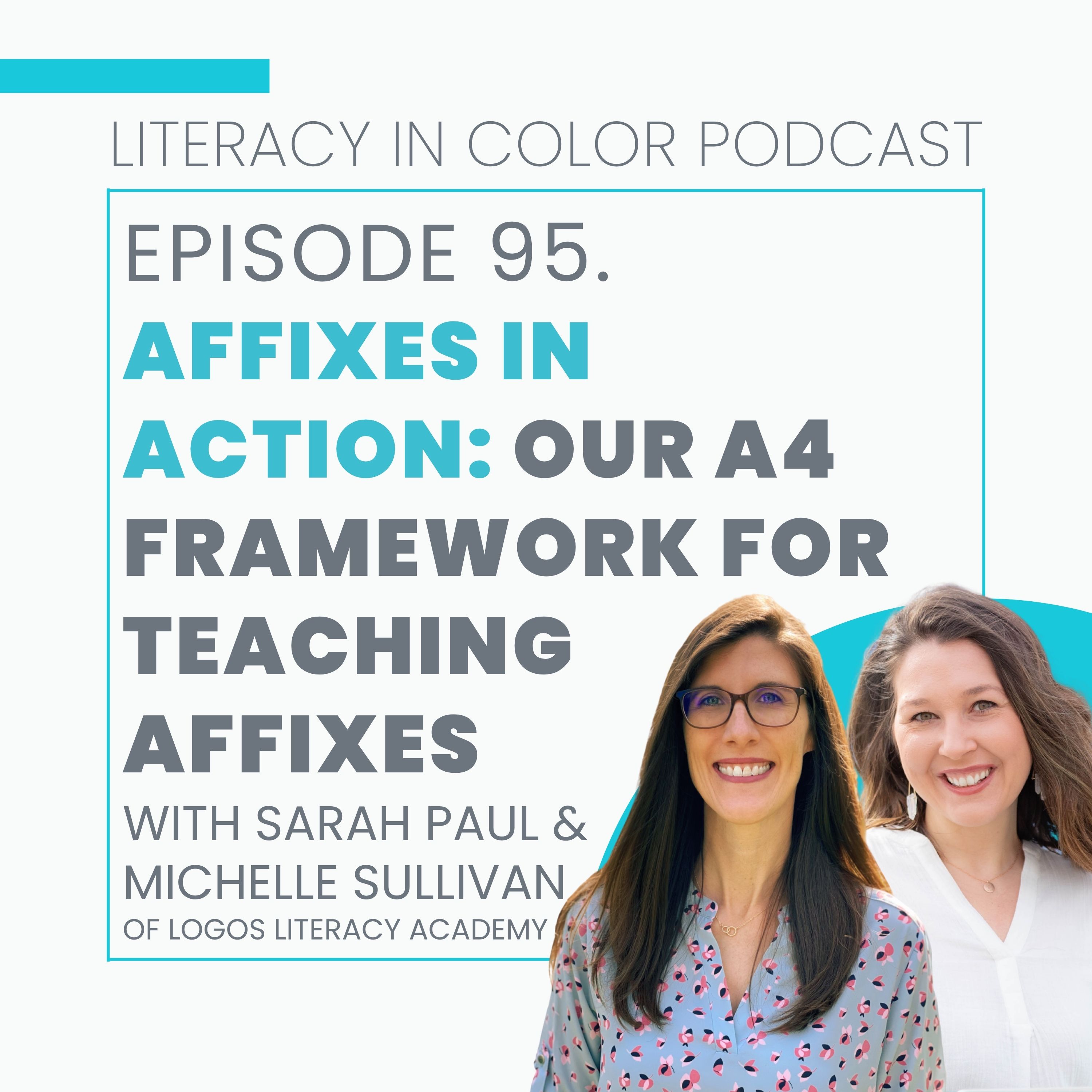 95. Affixes in Action: Our A4 Framework for Teaching Affixes with Sarah Paul and Michelle Sullivan of Logos Literacy Academy | Exciting news! Sarah & Michelle share their signature A4 Framework for teaching affixes inside of Logos Literacy Academy! Rather than treating prefixes and suffixes as isolated definitions to memorize, we explore how affixes function as meaningful structural units that help words grow and change across the English writing system.If you loved the BASE Framework episode, this conversation is the perfect companion episode!Key Takeaways:Affixes, definedWhy affix instruction should connect meaning, structure, spelling, grammar, and pronunciationCommon practices they see in affix instruction – and how their approach differsHow they intentionally embedded affix instruction within a phonics progressionHow their A4 Framework supports transfer into reading and writingResources Mentioned:K-2 Course & Curriculum from Logos Literacy AcademySave with a Bundle: Get Mastering Morphology AND our K-2 Course & Curriculum bundled together!Connect with Sarah & Michelle:Website: https://www.logosliteracyacademy.com/Instagram: @logosliteracyacademyLogos Literacy Academy Beacons PageConnect with Michelle:Visit: www.michelleandthecolorfulclassroom.comFollow me on Instagram: @michelle_thecolorfulclassroom & @logosliteracyacademyJoin our Facebook CommunitySign up for my NewsletterShop on TPT: The Colorful ClassroomFor Phonics Resources, grab: The COLORFUL Phonics ToolkitWant to Support the Podcast?Make a Donation to Support ProductionInterested in Learning More about Morphology?Logos Literacy Academy with Michelle Sullivan & Sarah PaulJoin: Beyond Phonics Club - our Membership CommunityMentioned in this episode:Beyond Phonics ClubWe'd love to see you inside Beyond Phonics Club!: https://beyond-phonics-club.circle.so/beyond-phonics-clubReading Science AcademyGet your FREE grouping resource bundle here: https://www.stephaniestollarconsulting.com/groupingsheets?utm_source=podcast&utm_medium=show_notes&utm_campaign=podcast Join The Reading Science Academy: https://www.stephaniestollarconsulting.com/register?utm_source=podcast&utm_medium=show-notes&utm_campaign=literacy-in-colorBeyond Phonics ClubFind out more about our membership community: https://beyond-phonics-club.circle.so/beyond-phonics-club | 35m 30s | ||||||

Showing 25 of 110
Pitch Fit is a Pro feature
See how bookable this show is for guests, which brands already advertise, the per-episode ad value, and the best-fit guest and sponsor profile. The numbers are blurred on the free plan.
How readily this show books outside guests like you.
How proven this show is for host-read sponsorships.
For Guests
ProFor Advertisers
ProUpgrade to Pro to unlock guest cadence, sponsor categories, fit scores, and per-episode ad value for this show.
Similar Audience Demographics
Podcasts that attract a similar listener profile




Chart history for Literacy in Color: A Science of Reading Aligned Podcast for Educators
Peaked at #5 in HK, top 10 in 1 of 16 tracked markets, currently #5 in HK.
| Market | Genre | Peak | Current | Trend |
|---|---|---|---|---|
| HK | — | #5 | #5 | — |
| SG | — | #16 | #16 | — |
| United States | — | #21 | #21 | — |
| Canada | — | #29 | #29 | — |
| Mexico | — | #40 | #40 | — |
| Ireland | — | #45 | #45 | — |
| PH | — | #67 | #67 | — |
| Australia | — | #69 | #69 | — |
| South Africa | — | #84 | #84 | — |
| South Korea | — | #91 | #91 | — |
| AE | — | #108 | #108 | — |
| TW | — | #126 | #126 | — |
| PT | — | #127 | #127 | — |
| VN | — | #130 | #130 | — |
| CH | — | #155 | #155 | — |
| HK | — | #192 | #192 | — |
Chart Positions
16 placements across 15 markets.
Chart Positions
16 placements across 15 markets.