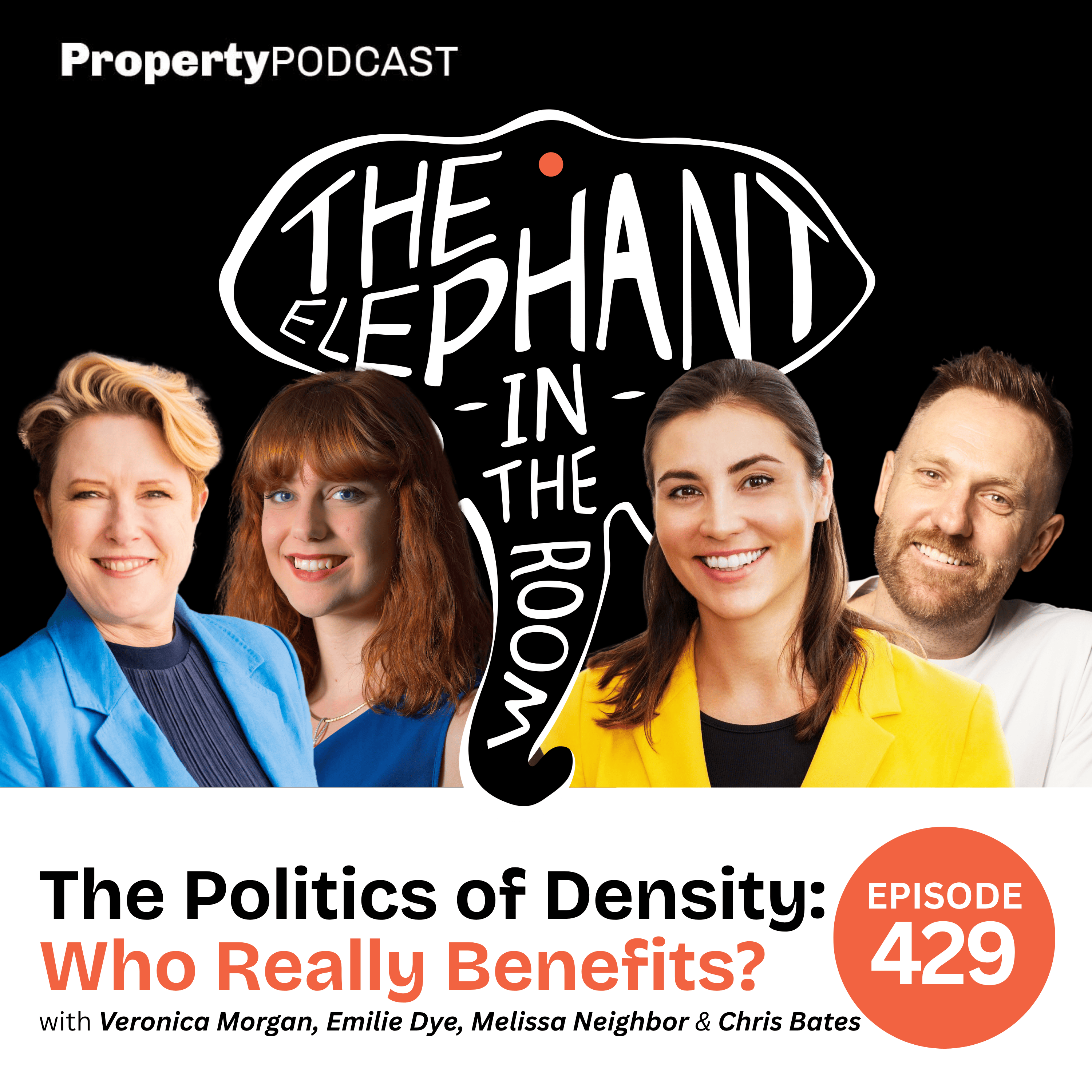
The Politics of Density: Who Really Benefits?
About this episode
This episode explores the structural issues affecting Australia's housing market and the implications of increasing supply on affordability.
For years, we’ve treated housing affordability as a demand problem — interest rates, borrowing power, incentives. But what if the real issue sits deeper in the system? In this episode, we unpack the structural forces shaping Australia’s housing market, from planning constraints to policy decisions that have quietly restricted supply for decades. Joined by planning reform advocate Melissa Neighbor and economist Emilie Dye, we explore the structural issues baked into Australia’s housing system — from restrictive zoning laws and slow approval processes to the political incentives that favour existing homeowners. We also dive into the concept of “gentle density,” why three-storey townhouses could be a missing middle solution, and how cities like Auckland have used upzoning to stabilise housing pressures without crashing the market. But this isn’t just a supply story. We challenge the idea of housing as an investment vehicle versus a place to live, unpack intergenerational inequality, and examine why forcing people into renting can actually make them worse off. The conversation also tackles the uncomfortable reality: increasing supply may solve affordability — but not without…
People in this episode
Host: Chris Bates
Guests: Melissa Neighbor, Emilie Dye
Topics covered
- housing affordability
- planning constraints
- policy decisions
- zoning laws
- gentle density
- intergenerational inequality
- supply and demand
Keywords
- housing market
- affordability
- investment
- zoning
- density
- policy
- renting
- intergenerational
- supply
Mentioned in this episode
Places: Australia, Auckland
More episodes of The Elephant In The Room Property Podcast | Inside Australian Real Estate
- How Protected Are You Using a Property Advisor?
- Why CGT Changes Won’t Solve Australia’s Housing Crisis
- Paul Scully: Inside NSW’s Plan to Fix Housing—and What Could Go Wrong
- The Reality of Buying a Home with a 5% Deposit in Australia
- Inside the Business of Property Development Site Acquisition
- The Policy Shift That Could Reshape Property Prices
Explore listener stats, chart rankings, contacts and more on the The Elephant In The Room Property Podcast | Inside Australian Real Estate podcast page.