US History 1492-1877, Unit 2: Colonial America: Middle Colonies
About this episode
This episode explores the development of the Middle Colonies and how various factors shaped life in the region.
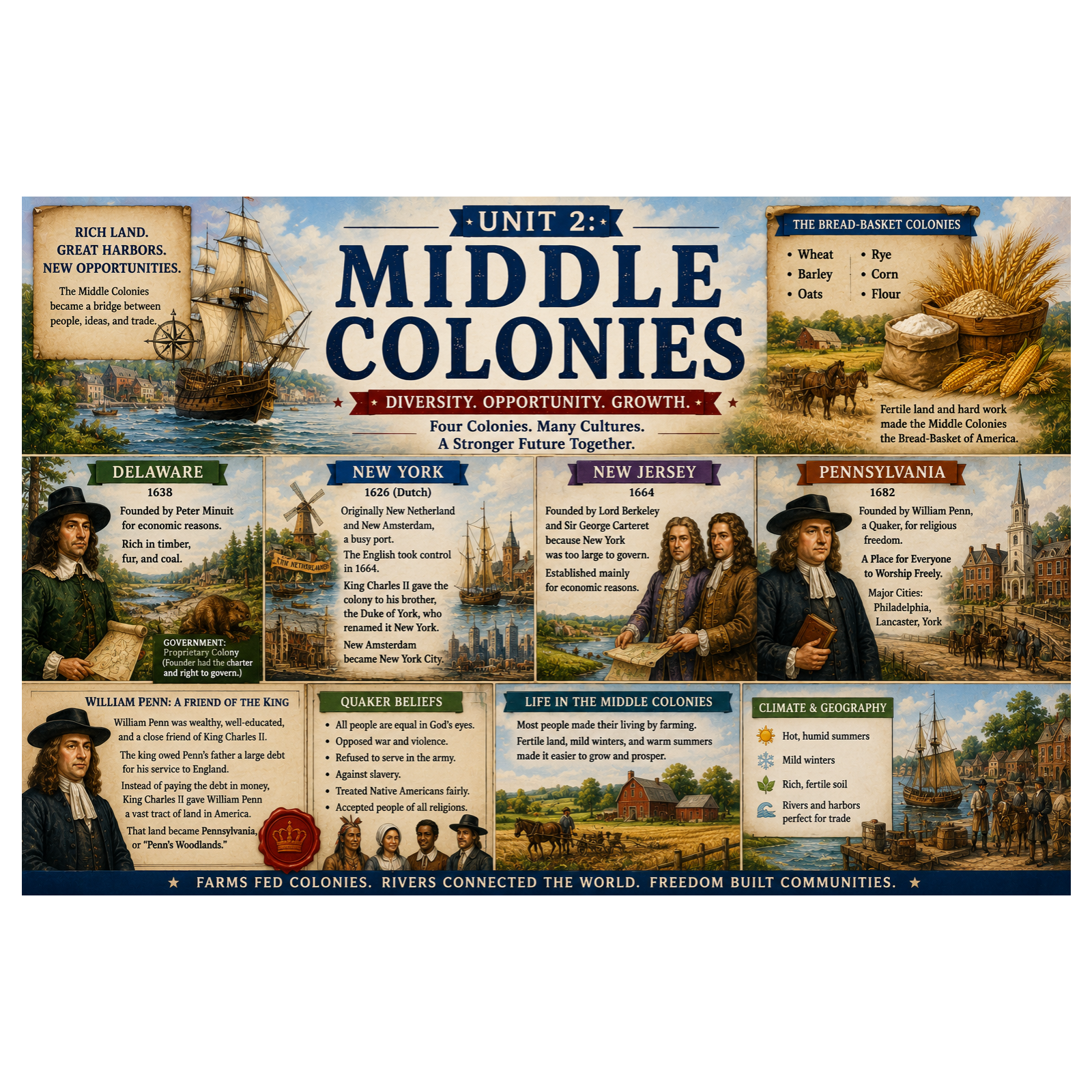
In this lesson from Unit 2: Colonial America, students explore the development of the Middle Colonies and examine how geography, economics, diversity, and religious tolerance shaped life in the region. Students study the colonies of Delaware, New York, New Jersey, and Pennsylvania while analyzing how these colonies became some of the most economically successful and culturally diverse areas in Colonial America. The lesson begins by introducing the concept of regions and examining the geography and climate of the Middle Colonies, including fertile soil, mild winters, hot summers, and access to important rivers and ports. Students learn how these environmental advantages supported farming, trade, and economic growth. Students then investigate the founding of Delaware and New York, including the Dutch origins of New Netherland and New Amsterdam before English forces took control and renamed the colony New York. The lesson highlights the importance of trade, harbors, and economic competition between European powers in North America. A major focus of the lesson is Pennsylvania and the leadership of William Penn. Students examine Penn’s background as a wealthy Quaker with close ties to…
More episodes of The History AI Podcast
- Tycho Brahe: The Man Who Measured the Sky (and Lost His Nose Doing It)
- US History 1492-1877, Unit 2: Colonial America: Representative Government
- US History 1492-1877, Unit 2: Colonial America: Enlightenment Documents
- US History 1492-1877, Unit 2: Colonial America: Enlightenment Thinkers
- US History 1492-1877, Unit 2: Colonial America: Colonial Labor
- US History 1492-1877, Unit 2: Colonial America: Southern Colonies
Explore listener stats, chart rankings, contacts and more on the The History AI Podcast podcast page.