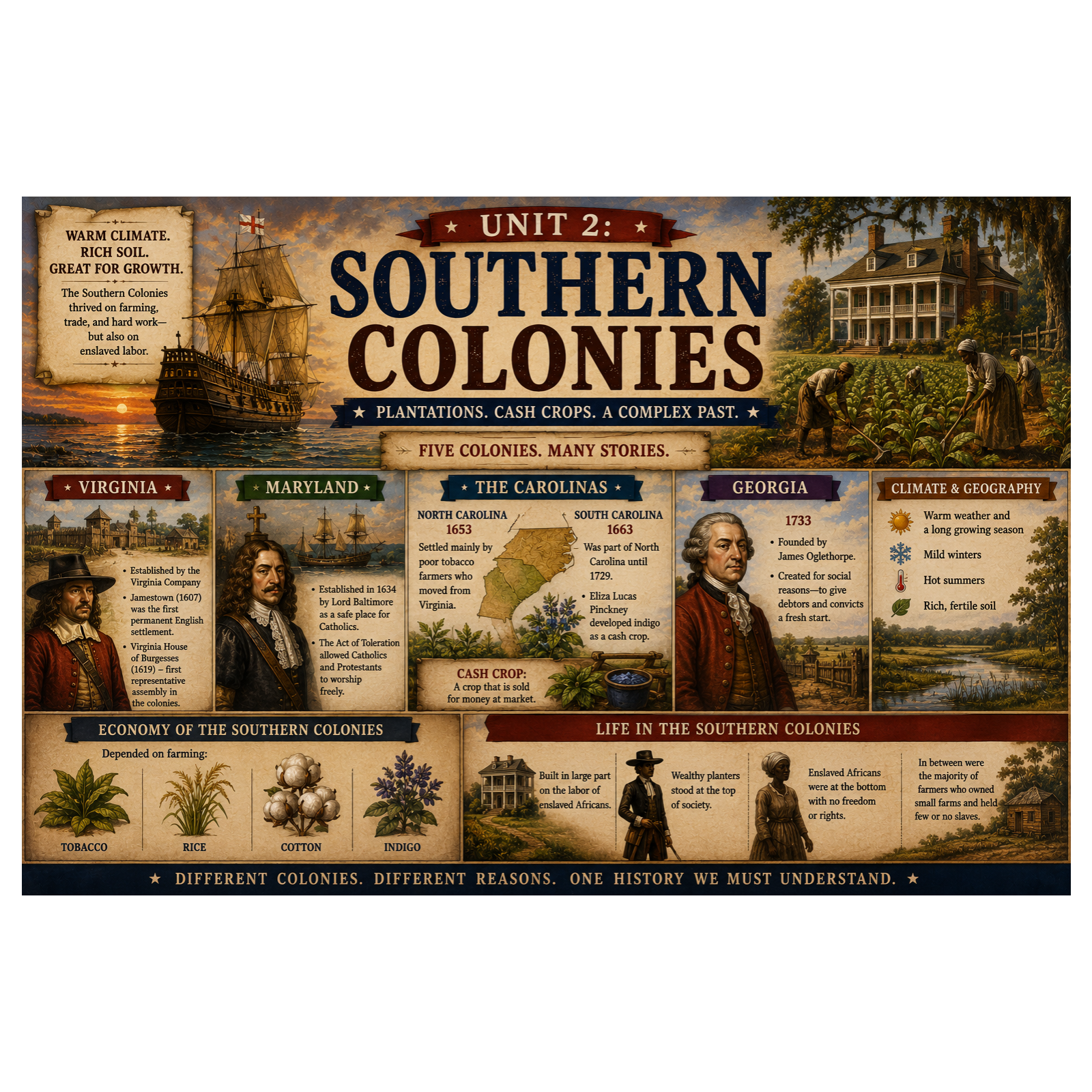
US History 1492-1877, Unit 2: Colonial America: Southern Colonies
About this episode
This episode explores the development of the Southern Colonies in Colonial America, focusing on geography, agriculture, and the impact of slavery.
In this lesson from Unit 2: Colonial America, students explore the development of the Southern Colonies and examine how geography, agriculture, economics, and slavery shaped life in the region. Students study the colonies of Virginia, Maryland, North Carolina, South Carolina, and Georgia while learning how the Southern Colonies became centers of plantation agriculture and cash crop production. The lesson begins with the founding of Virginia and Jamestown, the first permanent English settlement in North America. Students examine the growth of tobacco as a major cash crop and learn about the Virginia House of Burgesses as the first representative assembly in the English colonies. Students then explore the founding of Maryland by Lord Baltimore as a refuge for Catholics and analyze the significance of the Act of Toleration in promoting limited religious freedom for Christians within the colony. The lesson also examines the development of North Carolina and South Carolina, including the role of the Lords Proprietors and the economic growth of plantation agriculture. Students learn about Eliza Lucas Pinckney and her contribution to developing indigo as an important Southern cash crop…
More episodes of The History AI Podcast
- Tycho Brahe: The Man Who Measured the Sky (and Lost His Nose Doing It)
- US History 1492-1877, Unit 2: Colonial America: Representative Government
- US History 1492-1877, Unit 2: Colonial America: Enlightenment Documents
- US History 1492-1877, Unit 2: Colonial America: Enlightenment Thinkers
- US History 1492-1877, Unit 2: Colonial America: Colonial Labor
- US History 1492-1877, Unit 2: Colonial America: Middle Colonies
Explore listener stats, chart rankings, contacts and more on the The History AI Podcast podcast page.