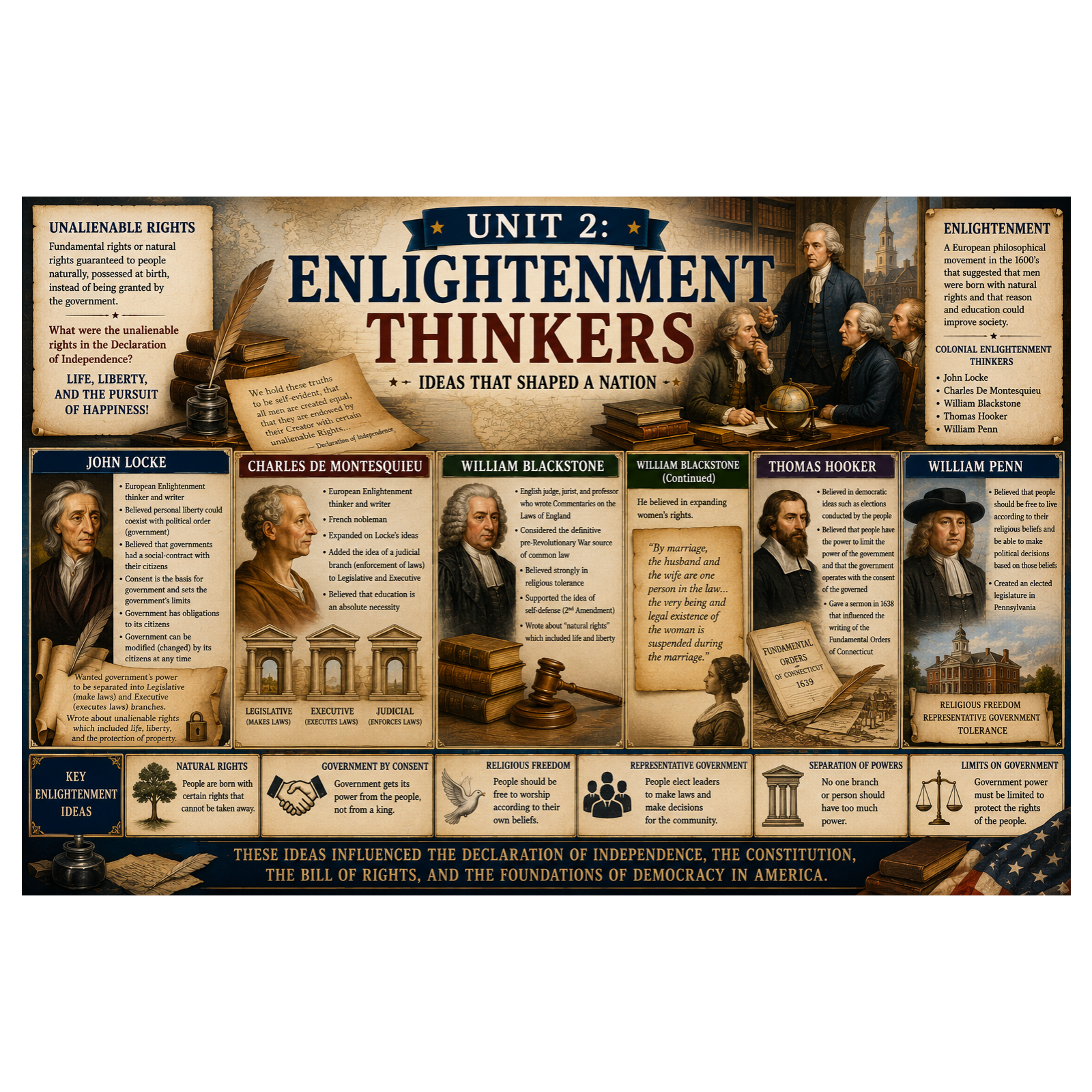
US History 1492-1877, Unit 2: Colonial America: Enlightenment Thinkers
About this episode
This episode explores Enlightenment thinkers and their influence on the foundations of the United States government.
In this lesson from Unit 2: Colonial America, students examine the Enlightenment and the major thinkers whose ideas helped shape the foundations of the United States government and political system. Students explore how Enlightenment philosophers challenged traditional ideas about monarchy, government authority, religion, and individual rights during the 1600s and 1700s. The lesson begins with the concept of unalienable rights, or natural rights that people possess at birth rather than rights granted by government. Students analyze how these ideas later influenced the Declaration of Independence, including the famous phrase “Life, Liberty, and the Pursuit of Happiness.” Students then study the broader Enlightenment movement and learn how thinkers across Europe encouraged the use of reason, logic, education, and critical thinking to question traditional authority and improve society. A major focus of the lesson is John Locke and his theory of the social contract. Students examine Locke’s belief that governments exist through the consent of the governed, that government power should be limited, and that citizens have the right to change or overthrow governments that fail to protect…
More episodes of The History AI Podcast
- Tycho Brahe: The Man Who Measured the Sky (and Lost His Nose Doing It)
- US History 1492-1877, Unit 2: Colonial America: Representative Government
- US History 1492-1877, Unit 2: Colonial America: Enlightenment Documents
- US History 1492-1877, Unit 2: Colonial America: Colonial Labor
- US History 1492-1877, Unit 2: Colonial America: Southern Colonies
- US History 1492-1877, Unit 2: Colonial America: Middle Colonies
Explore listener stats, chart rankings, contacts and more on the The History AI Podcast podcast page.