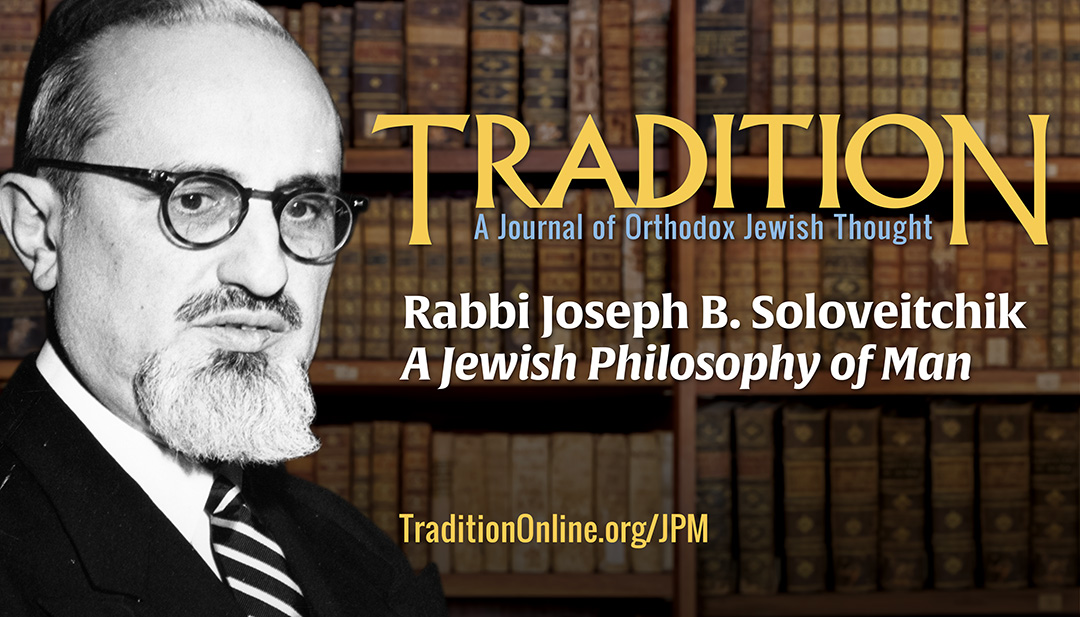
A Jewish Philosophy of Man (E3): Three Approaches to Man
About this episode
This episode explores three philosophical approaches to understanding man from Biblical, Classical Greek, and modern scientific perspectives.
A Lecture Series by Rabbi Joseph B. Soloveitchik Lecture 3: Delivered December 4, 1958 Modern philosophy knows of three approaches to the question, what is Man: the Biblical, the Classical Greek, and the modern scientific views. The Classical Greek and Biblical anthropologies agree that man is unique and incongruous with the natural order, while the modern scientific view considers man as just a more skilled animal. The Classical and Biblical views also agree that the uniqueness of man is not granted to him as a gift but as a task to be achieved. The two also agree that the intellect is the greatest tool available to man to develop his uniqueness. They disagree, however, as to whether the development of the intellect is the final goal or just a tool to achieve a greater goal. The highest form of human engagement for Judaism is something beyond intellectual achievement, something to be identified and discussed not now but in a future lecture, but for now we can say that Judaism is not logocentric as the Greeks were. Judaism also differed from the Classical Greek view of Man in that the Classical view concerned itself with Man as a universal, anonymous being, with Mankind, with the…
People in this episode
Host: Joseph B. Soloveitchik
Topics covered
- Jewish philosophy
- Biblical anthropology
- Classical Greek philosophy
- modern scientific views
- uniqueness of man
- intellect
- Judaism
Keywords
- man
- philosophy
- Judaism
- intellectual achievement
- individuality
Mentioned in this episode
Books & works: A Jewish Philosophy of Man
More episodes of Tradition Podcast
- A Jewish Philosophy of Man (E8): The Content of the Covenant of Egypt – The Jewish Existential Community
- A Jewish Philosophy of Man (e7): Prophetic Loneliness as the Solution to the Problem of Jewish Loneliness
- Rav Moshe’s Legacy
- A Jewish Philosophy of Man (E6): Judaism’s Glorification of the Anonymous Person
- A Jewish Philosophy of Man (E5): The Dialectical Approach to the Individual and the Community
- Understanding a Jewish Philosophy of Man
Explore listener stats, chart rankings, contacts and more on the Tradition Podcast podcast page.