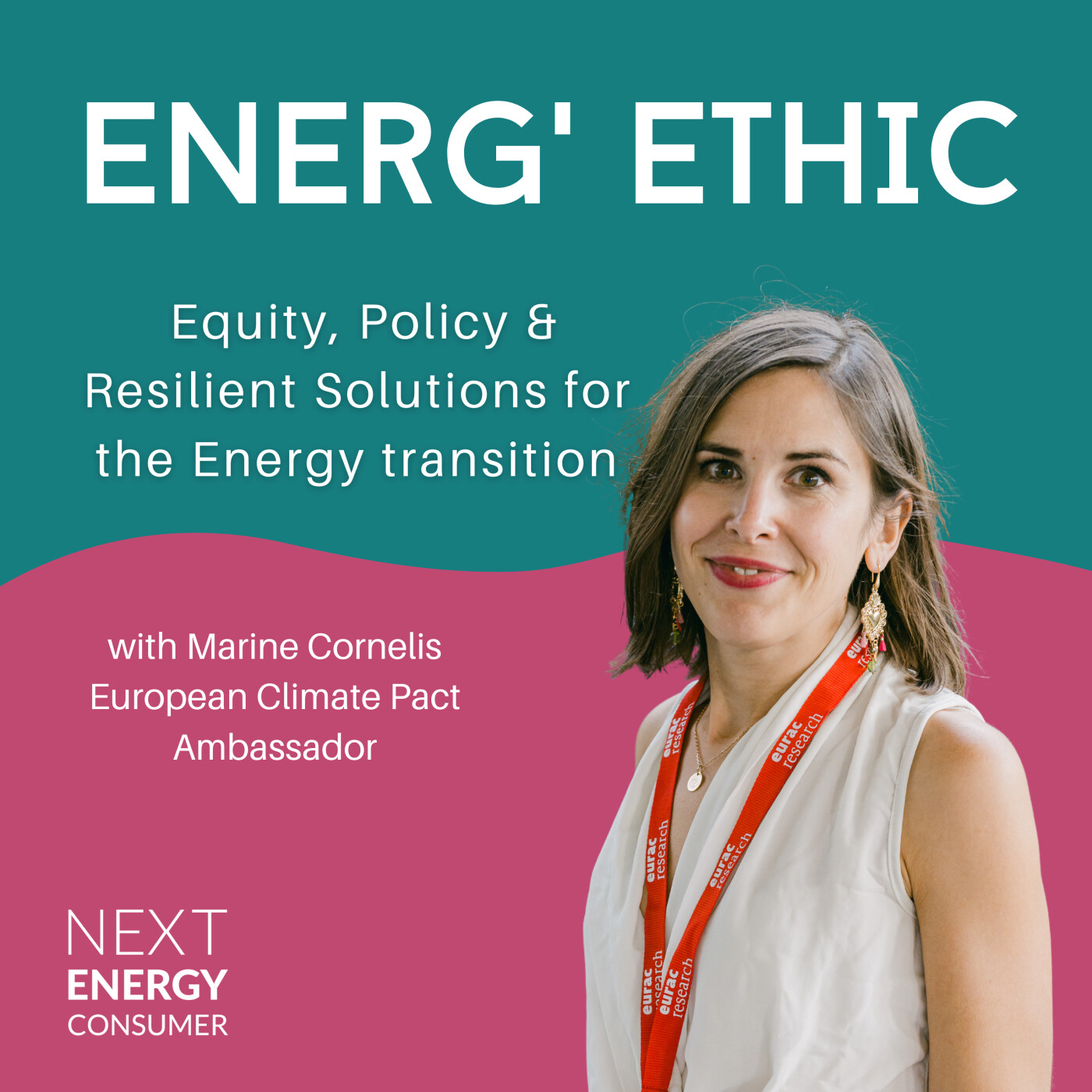
She's Already Leading the Project. Why Isn't the System Designed Around Her?
About this episode
The episode discusses the challenges women face in the retrofit system and the importance of trust and community in driving energy transitions.
Women are already the primary decision-makers in household renovation and low-carbon upgrades. They manage timelines, handle budgets, research materials, anticipate health impacts, and carry the cognitive load of the entire process. The retrofit system, however, is not designed around them. In this episode, Marine Cornelis speaks with Ellora Coupe, founder of Her Own Space, about the structural gap between where retrofit happens and how it is designed. The conversation examines why trust, not technology, is the real barrier to household action, why peer-based learning models fill a gap that institutional tools cannot, and what it would take for funding and policy frameworks to account for the full complexity of human-centred change. This is a conversation about why retrofit moves slowly when it ignores who is already leading the work. 1. Trust as missing infrastructure. Retrofit faces a systemic trust deficit — not a communications problem, but a structural one. Households distrust contractors, product recommendations, and institutional schemes. Ellora argues that this trust erosion is the most underestimated obstacle to transition at scale. 2. The patronising design gap Women…
People in this episode
Host: Marine Cornelis
Guest: Ellora Coupe
Topics covered
- women in energy transition
- household renovation
- trust in retrofit
- community governance
- low-carbon upgrades
Keywords
- retrofit
- trust
- women leaders
- energy transition
- community models
Mentioned in this episode
Organizations: Her Own Space
More episodes of Energ’Ethic - Climate Justice and Energy Transition
- The public square - Ewelina Hartstein, DG Energy
- The Subsidy That Went to the Wrong Address — Anna Bajomi, FEANTSA
- Fixing Europe's Energy System (Still Working on His Own House)
- Your Flat Called. It Wants a Battery - Ashley Grealish, Windfall Energy
- Willing But Unable - Aurore Dudka
- Solar Is Easy. Neighbours Are Not.
Explore listener stats, chart rankings, contacts and more on the Energ’Ethic - Climate Justice and Energy Transition podcast page.