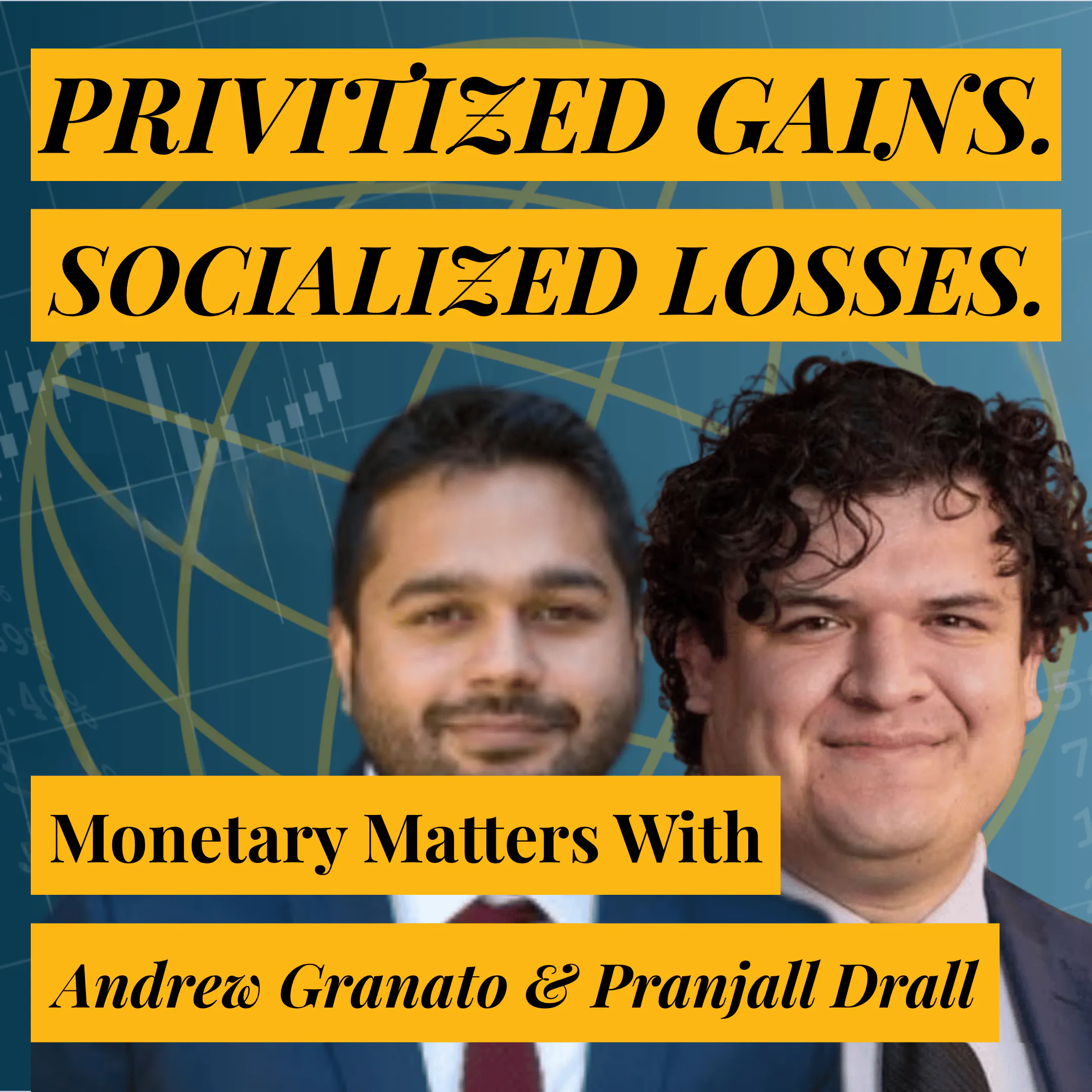
What Actually Happens When a Life Insurer Fails (It's Worse Than a Bank) | Pranjal Drall and Andrew Granato on How Private Equity Turned Life Insurance Into a Taxpayer Backstop
About this episode
The episode discusses the implications of private equity ownership in life insurance and its impact on taxpayers when insurers fail.
Andrew Granato, Assistant Professor of Law at the University of Texas at Austin, and Pranjal Drall, JD/PhD candidate at Yale, join Jack Farley to discuss their paper "Private Credit, State Backstop: How Private Equity Socializes Risk Through Insurers." Private equity ownership of life insurers has grown from roughly $23 billion in 2009 to about $700 billion by 2024, and Granato and Drall argue this has created a system that socializes losses even more sharply than federal deposit insurance does for banks. They walk through how state guarantee funds work: when a life insurer fails, its surviving rivals are assessed based on premium volume rather than risk, and in 44 states those assessments are recouped through tax credits, meaning taxpayers ultimately foot the bill without any vote ever taking place. The conversation covers how PE-linked insurers reallocate balance sheets into opaque private credit and affiliated loans, arbitrage ratings through firms like Egan-Jones and undisclosed private letter ratings, and use Bermuda "shadow reinsurance" to escape disclosure and capital requirements, with leverage reportedly running as high as 30-to-1 or 50-to-1. Jack and the guests also…
More episodes of Monetary Matters with Jack Farley
- “I’m Insanely Bullish on Bonds” | Jared Dillian on Copper, Bonds, Semis, and The Awesome Portfolio
- The Certainty Premium: What’s Driving the Tech Sector Divergence? | Jeff Keller
- The Commodity Bull Market Is Broadening | Jim Wiederhold on Copper, Grains, and Bloomberg Commodity Index
- Time to Reduce Equity Risk: Why Underappreciated Macro Risks Could Derail the Bull Market | Warren Pies
- Is Private Equity Broken? Why the Buyside’s Problems Are Making 2026 “The Year of the Banker” | High Yield Harry
- Why Bessent Blinked | Luke Gromen on Doubling of Treasury Buyback Plan to Tame Long-End Yields
Explore listener stats, chart rankings, contacts and more on the Monetary Matters with Jack Farley podcast page.