
10 Percent True - Tales from the Cockpit
Interviews and anecdotes from military pilots and aircrew from across the globe. As the rule says, so long as it's 10 percent true, you're allowed to tell the story! Head over to the 10 Percent True YouTube channel to li...
Insights from recent episode analysis
On the show
- Diego Salgues3 eps
- Ray "Homer" Simpson2 eps
- Dave “Khan” Carr1 ep
Also: Gary “Schlick” Skilton, Aaron Amick, Deuce Cooper, Funkle Esler, NAILS Ashmore, Leroy Domberg, MeSo Harney, Mask Stark
Audience Interest
Podcast Focus
Publishing Consistency
Insights are generated by CastFox AI using publicly available data, episode content, and proprietary models.
Most discussed topics
Brands & references
Total monthly reach
Based on 1 signal.
Built from
By chart position
- 🇺🇸United States · AviationHOME#6636K to 191K
- 🇩🇪Germany · Aviation#2011K to 58K
- 🇮🇳India · Aviation#2011K to 58K
- 🇬🇧United Kingdom · Aviation#299.1K to 48K
- 🇦🇺Australia · Aviation#188.8K to 47K
- Per-Episode Audience
Est. listeners per new episode within ~30 days
131K to 695K🎙 Daily cadence·158 episodes·Last published 1w ago - Monthly Reach
Unique listeners across all episodes (30 days)
438K to 2.3M🇺🇸27%🇩🇪8%🇮🇳8%+25 more - Active Followers
Loyal subscribers who consistently listen
241K to 1.3M
Market Insights
Platform Distribution
Reach across major podcast platforms, updated hourly
Total Followers
—
Total Plays
—
Total Reviews
—
* Data sourced directly from platform APIs and aggregated hourly across all major podcast directories.
| Date | Episode | Topics | Guests | Brands | Places | Keywords | Sponsor | Length | |
|---|---|---|---|---|---|---|---|---|---|
| 10/9/26 | 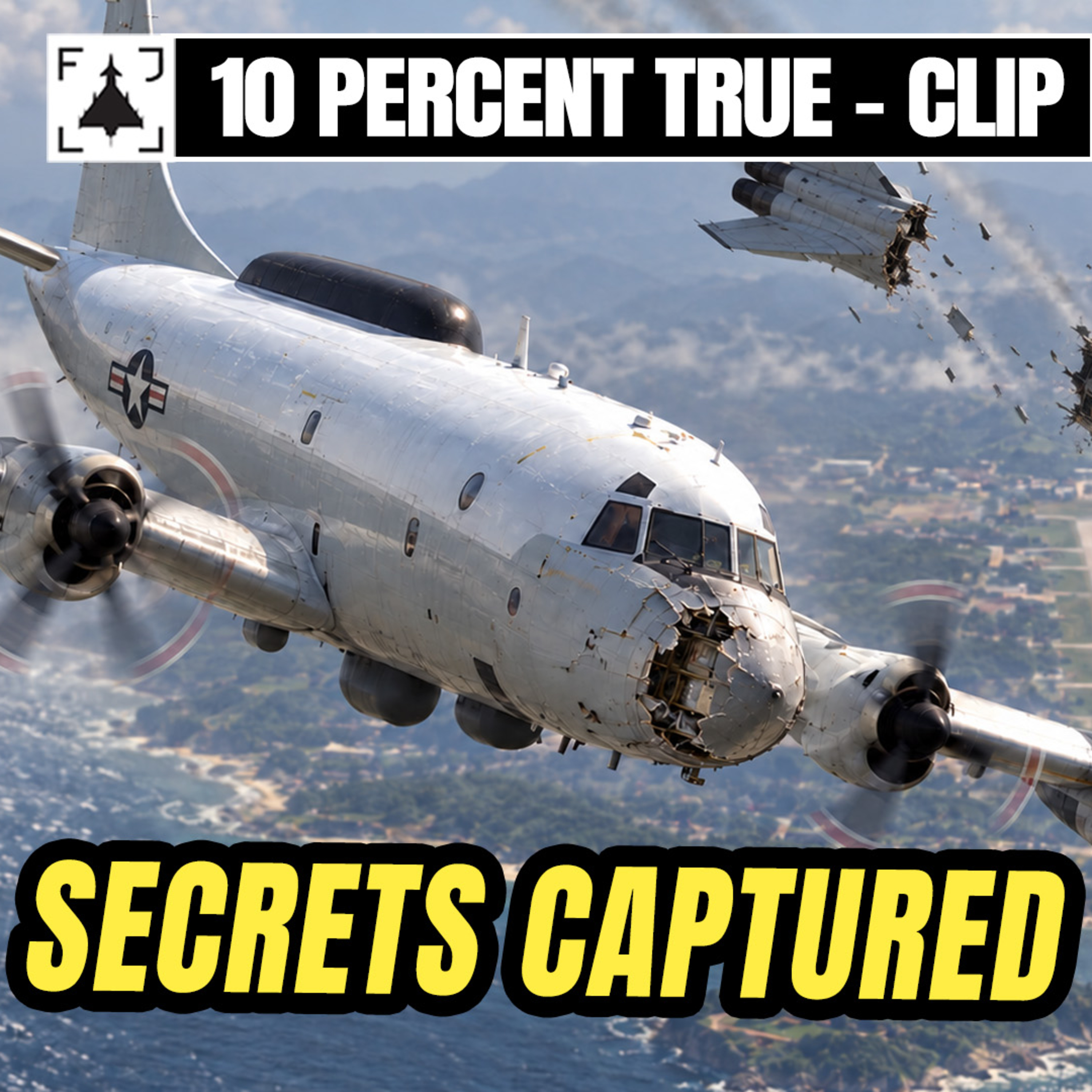 The EP-3 Collision That Handed US Secrets to China | In 2001, a Chinese J-8 fighter collided with a US Navy EP-3 reconnaissance aircraft over the South China Sea. Badly damaged and with limited flight controls, the American crew made an emergency landing on China’s Hainan Island.Former EP-3 mission commander Hoover Coggins examines the crew’s controversial decision, the sensitive material left aboard and the intelligence windfall handed to China.Watch the complete Hoover Coggins interview on 10 Percent True.#EP3 #HainanIsland #USNavy #China #MilitaryAviation | 11m 46s | ||||||
| 10/2/26 | 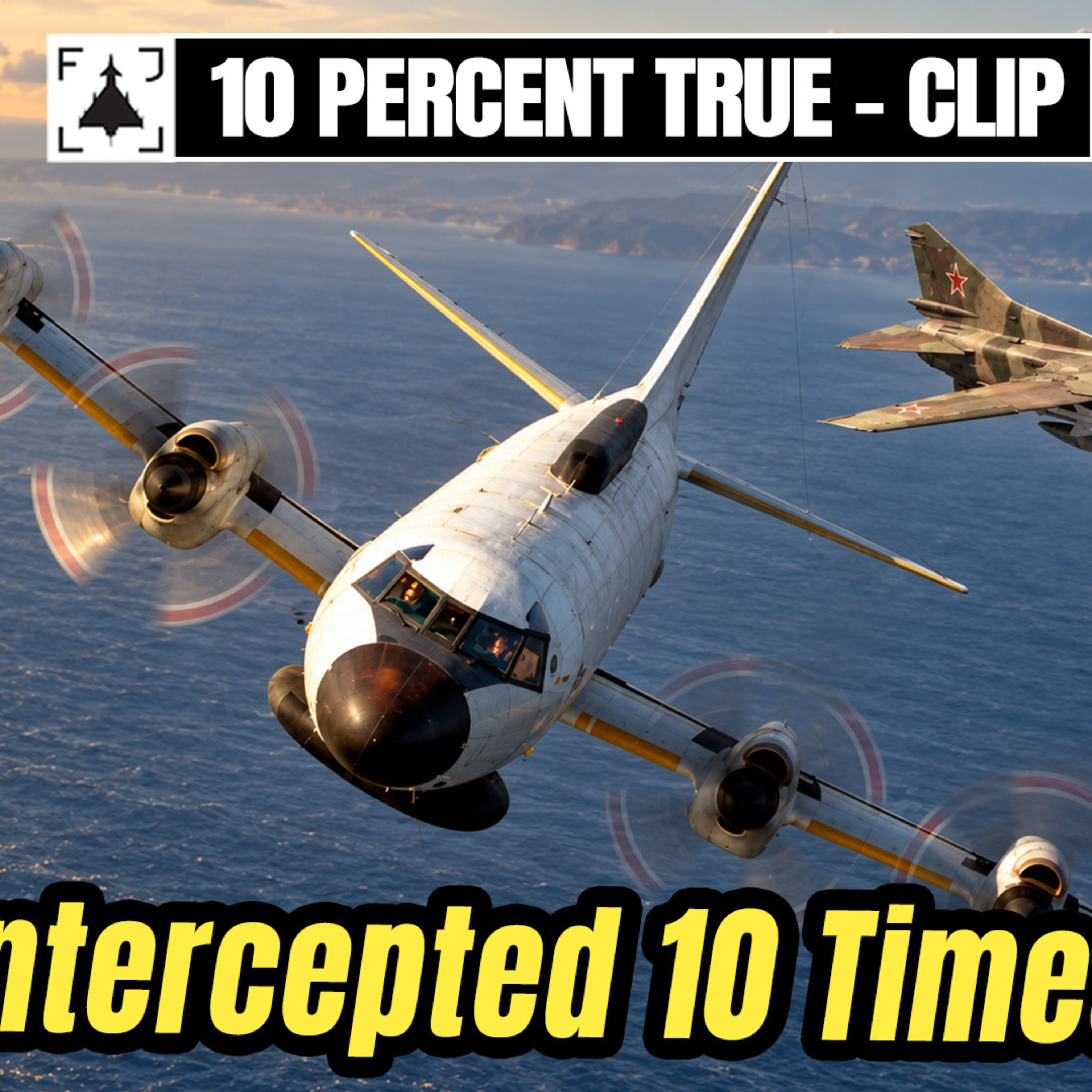 Intercepted 10 Times in One Mission: Inside a US Navy Spy Plane | This is a clip. For the full episode, subscribe: 10percenttrue.comFormer US Navy Naval Flight Officer Hoover Coggins takes us inside the secretive world of the EP-3 electronic-intelligence aircraft. Flying from Spain and forward bases around the Mediterranean during the Cold War, Hoover progressed from navigator to senior tactical electronic-warfare evaluator and mission commander. In Part 1, he explains the EP-3’s enormous mission crew, its sensors and linguists, how operators identified hostile radar systems, and what happened when Soviet, Israeli or Libyan fighters came to investigate. | 13m 50s | ||||||
| 9/25/26 |  The Biggest Mistake America Made in Iraq | Former US Diplomat Explains | Watch full episodes at: 10percenttrue.comJosé Jiménez 10PCT EP59 P4 ClipFormer F-111 pilot, Libya raider, test pilot and squadron commander José Jiménez returns to recount an extraordinary third career. After retiring from the US Air Force and briefly flying Boeing 747s, the events of 9/11 drove him back toward public service. At 44, he entered the US Foreign Service and began again at the bottom, eventually serving in Senegal, Iraq, Morocco and Zimbabwe. In this clip, José offers an unusually candid account of diplomacy, de-Ba’athification, reconstruction, terrorism and the strange realities of representing America in a war zone.#iraqwar #militaryhistory #geopolitics | 14m 31s | ||||||
| 9/18/26 | 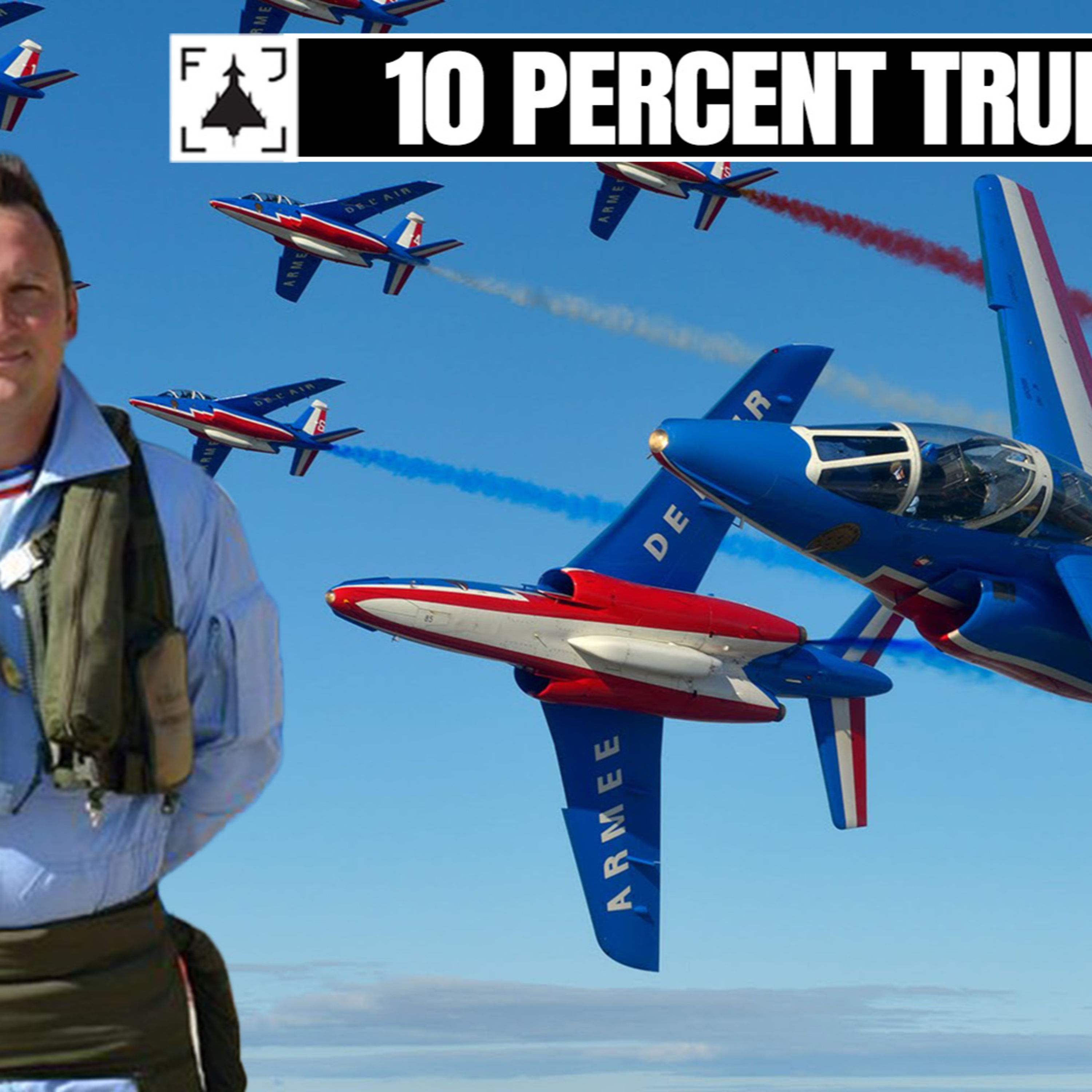 “It’s War Twice a Day” — Inside the Patrouille de France | Easy Béthoux | Former Mirage F1 combat pilot Easy Bethoux initially dismissed aerobatic flying as “circus” work—until a friend told him that life in the Patrouille de France was “war twice a day.” One selection flight changed everything. Easy went on to fly with and ultimately lead France’s national display team. In this remarkably candid conversation, he explains the fear, trust, discipline and emotional cost behind one of the world’s most respected formation teams.00:00:00 Introduction00:02:15 From the Mirage F1 to the Patrouille de France00:03:26 “I’m not a circus guy”00:04:04 “It’s war twice a day”00:05:31 Arriving for the selection day00:07:00 Flying in the Alpha Jet’s back seat00:09:12 The formation tightens—and Easy cries00:10:33 The dynamic flight at 100 feet00:12:00 The selection interview00:15:00 Joining the team and starting again00:19:40 Searching for the perfect formation flight00:21:16 Going to war with yourself00:25:01 Learning to accept fear00:27:29 “I was afraid of dying”00:34:00 A typical Patrouille de France training day00:39:00 The pilot–mechanic relationship00:44:00 Learning movements from the team’s “Bible”00:50:30 The training flight that nearly ended in ejection00:57:50 The relentless display schedule01:10:00 Safety, fatigue and flying within your limits01:19:09 Dealing with threats during a live display01:25:46 The hardest part of the job01:31:00 When the entire formation reaches 100%01:34:15 Choosing the next leader01:38:25 Emotion and honesty among fighter pilots01:39:43 Easy’s fear above Flight Level 30001:45:01 Creating the “Apache” manoeuvre01:50:00 Meeting the world’s other display teams01:54:57 Why the Alpha Jet works so well02:05:34 What audiences never see behind the display02:15:00 How the show continues to evolve02:21:40 Leaving the Patrouille de France02:24:19 Bringing every pilot home02:24:35 Bertrand and the death of his father02:31:44 “You bring him back every day”02:33:26 The team’s accident and safety briefing02:35:35 Should Bertrand see his father’s fatal accident?02:37:31 The decision and its aftermath02:39:50 “You can be a fighter and you can cry”02:41:00 Closing thoughts | 2h 41m 22s | ||||||
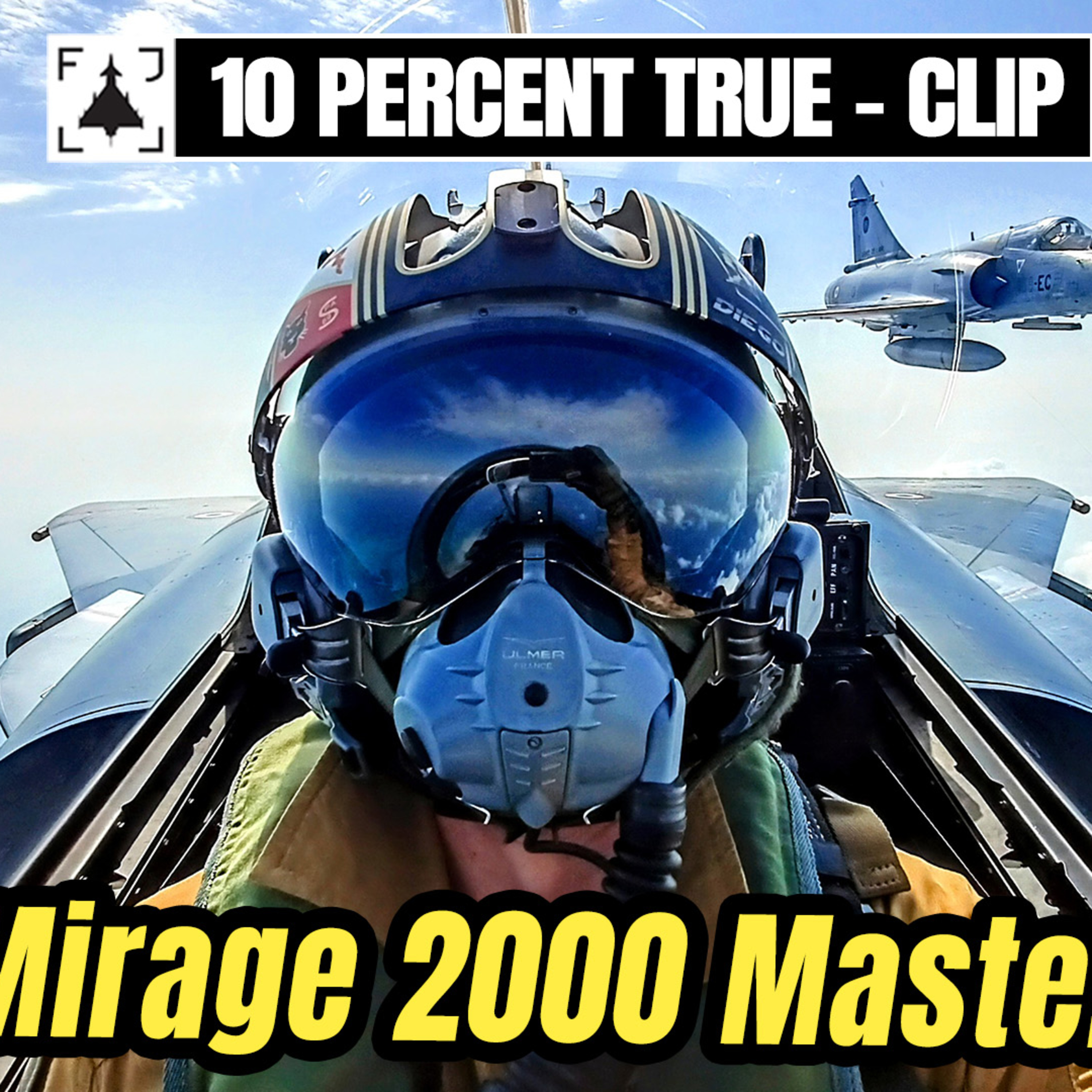
| 9/4/26 | aviationmilitary technology+3 | Diego Salgues | Mirage 2000Mirage 2000-5+3 | Ukraine | Mirage 2000Shahed drone+7 | — | 8m 43s | ||
| 8/28/26 | G-LOCdogfight+3 | Diego Salgues | Mirage 2000 | — | G-LOCMirage 2000+5 | — | 14m 22s | ||
| 8/21/26 | military aviationfighter pilot training+4 | Diego Salgues | Mirage 2000Epsilon+5 | — | Mirage 2000fighter pilot+6 | — | 14m 52s | ||
| 8/1/26 | fighter aviationUSAF+4 | Dave “Khan” Carr | 10 Percent TrueF-15 Eagle+1 | AlaskaIceland+1 | F-15F-16+5 | — | 1h 55m 20s | ||
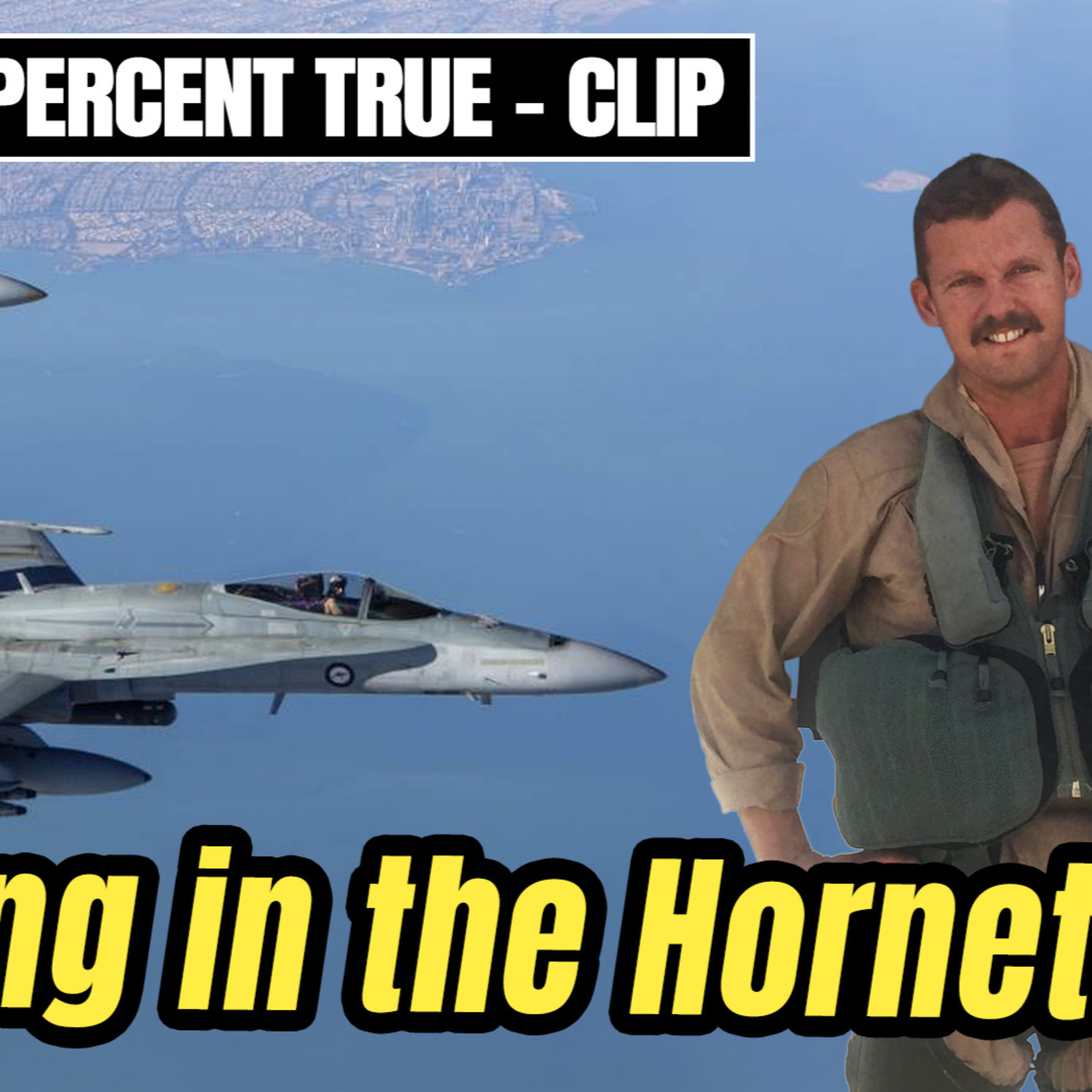
| 7/31/26 | F/A-18A HornetRoyal Australian Air Force+3 | Ray "Homer" Simpson | F/A-18A HornetRoyal Australian Air Force | — | F/A-18A HornetRay Simpson+3 | — | 11m 12s | ||
| 7/17/26 | fighter aviationdogfighting+5 | Ray "Homer" Simpson | F/A-18 HornetAMRAAM+9 | — | dogfightF/A-18 Hornet+5 | — | 16m 13s | ||
Want analysis for the episodes below?Free for Pro Submit a request, we'll have your selected episodes analyzed within an hour. Free, at no cost to you, for Pro users. | |||||||||
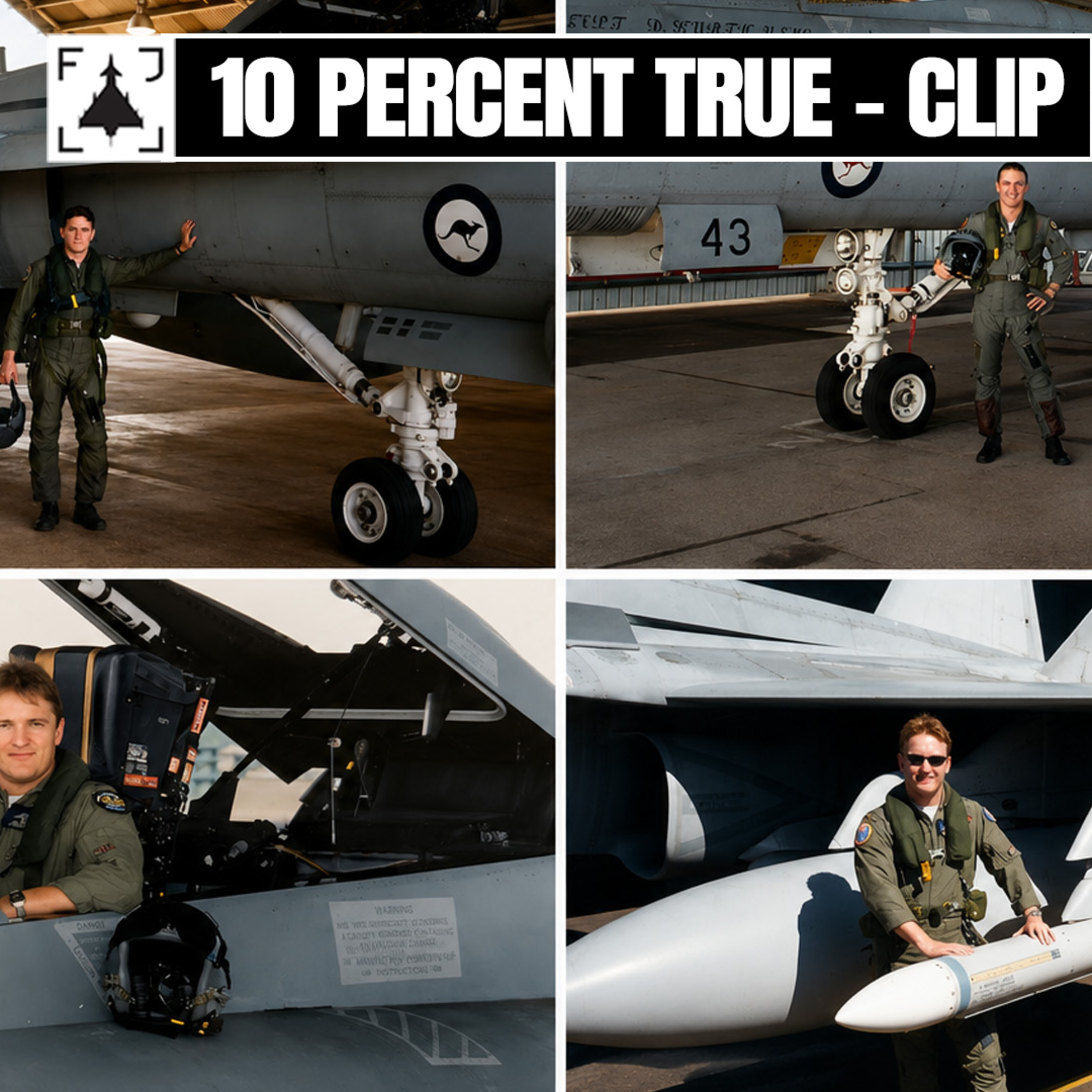
| 7/10/26 | F/A-18A HornetRoyal Australian Air Force+4 | Gary “Schlick” Skilton | F/A-18A HornetAMRAAM+3 | Papua New GuineaAustralia | F/A-18A HornetRoyal Australian Air Force+7 | — | 13m 06s | ||
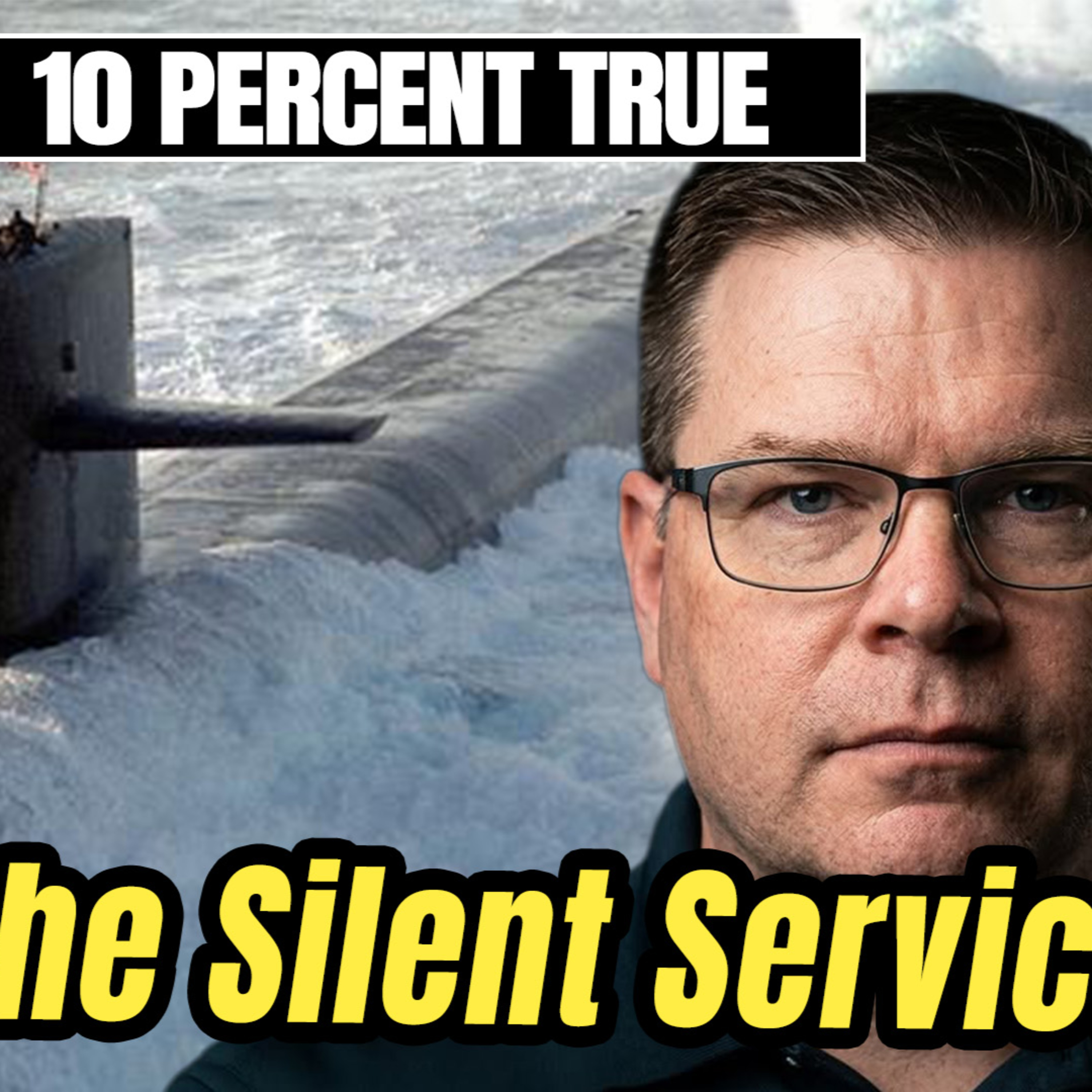
| 7/3/26 | submarine warfaresonar operations+4 | Aaron Amick | US NavySub Brief+2 | — | nuclear submarinesonar school+5 | — | 2h 07m 18s | ||
| 6/19/26 | F-15E Strike EagleLibya air war+4 | Deuce CooperFunkle Esler+2 | RAF LakenheathTwenty Years at War | LibyaBenghazi | F-15Eair war+6 | — | 14m 21s | ||
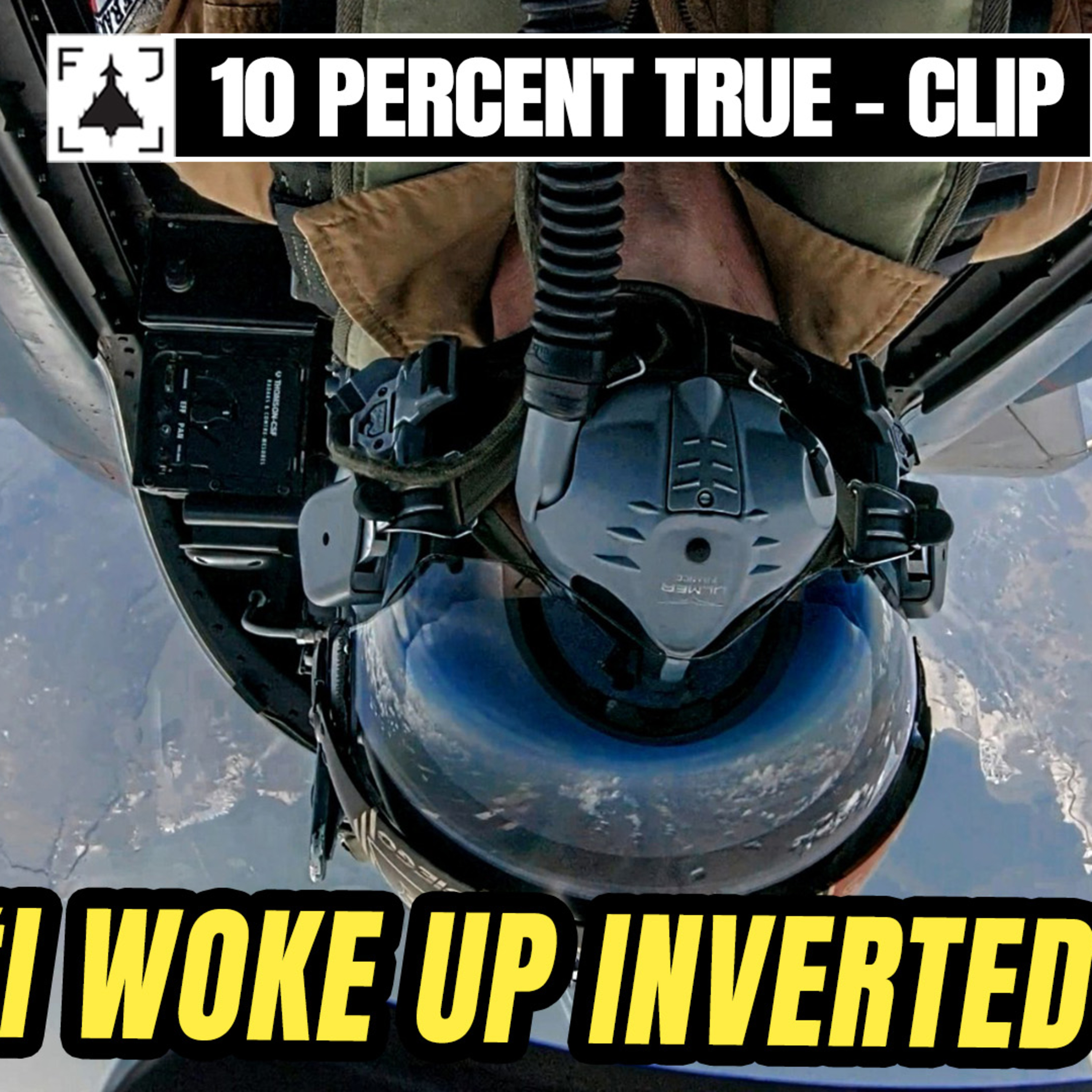
| 6/12/26 | military rescueaviation+4 | MeSo HarneyMask Stark | — | LibyaBenghazi | F-15EU.S. Marines+5 | — | 12m 53s | ||
| 6/5/26 | 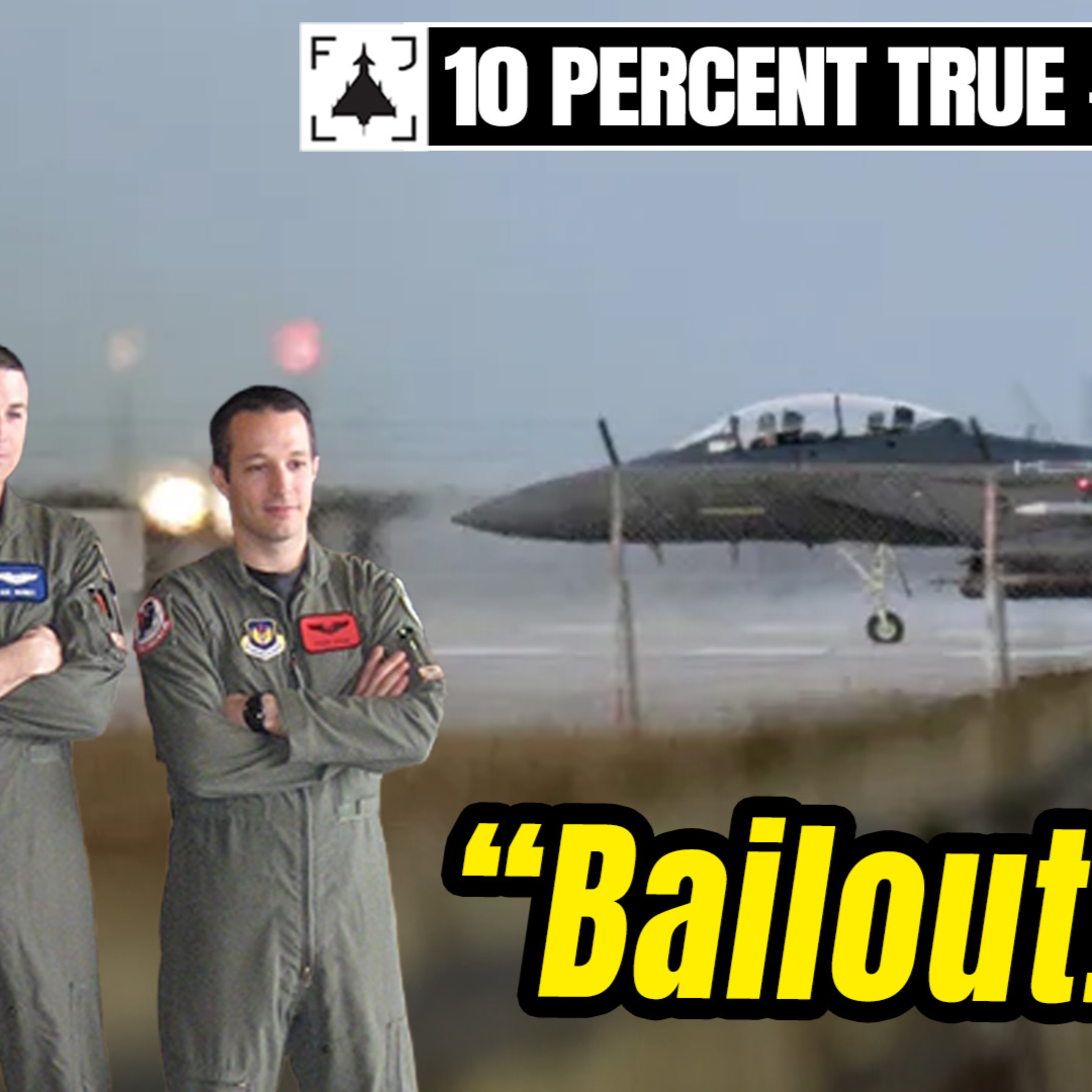 Meso Mask | 10PCT EP89 MeSo Harney and Mask Stark0:00 welcome to Mask and MeSo and episode preview 1:02 MeSo intro1:55 Mask intro3:22 background to the fateful deployment 5:40 initial 6 ship deployment ends in a bunch of diversions7:02 mission set(s)9:00 defining SCAR from the crew point of view10:42 geographical constraints?11:30 co-ordinating with other assets13:20 treading unfamiliar ground with the spotlight on you?15:20 co-ordinating with ground assets?16:55 difficulty with ROE/authority/responsibility?20:55 weaponeering/loadouts23:17 strafe?24:55 threats?26:46 SERE refresher and preparation/study?30:40 hard crewed, previous flight experience together?33:35 standardisation?34:00 mission of the day, mission planning and ejection contract37:30 pre planned evasion tactics?39:18 initial phase of the mission40:48 trapped fuel, initial troubleshooting and handling imbalance in the established community fashion43:09 target details45:12 target egress, loading and initial indications of trouble47:30 -229 jets spin departure aids - did they work?49:30 thought process in this phase?51:05 mayday call51:44 flight lead’s SA and tapes?53:10 bailout decision and sequence56:45 opening shock (of chute) and bye bye NVGs59:02 how long in the chute and contemplating landing1:03:50 landing roll/PLF | 14m 46s | ||||||
| 5/29/26 | 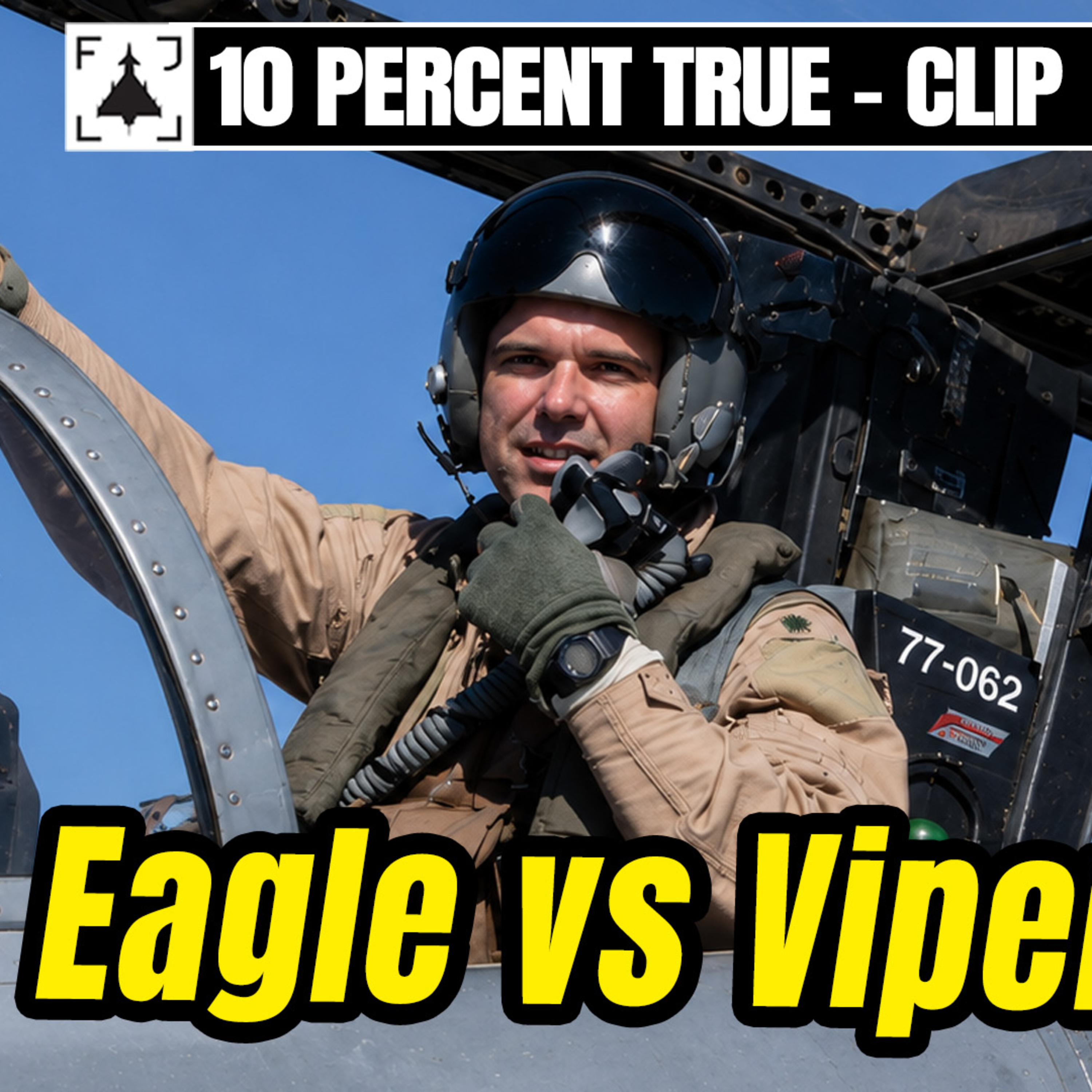 F-15 vs F-16 – Which Fighter Was Better? | Dave “Khan” Carr | Get the full, ad-free episode here: https://www.10percenttrue.com/pricing-plans/list10PCT EP88 – Dave “Khan” Carr | F-15 Eagle, F-16 Viper, Weapons School & AggressorsDave “Khan” Carr joins 10 Percent True to discuss an extraordinary fighter career flying both the F-15 Eagle and F-16 Viper.From Cold War intercepts over Alaska and Iceland to the pressure cooker of the USAF Fighter Weapons School, Red Flag, and Aggressor duty, Khan offers a rare behind-the-scenes look at elite fighter aviation.This episode explores how the USAF prepared to fight the Soviet Union, how air combat tactics evolved through the Cold War and beyond, and what it really took to become a top-tier fighter pilot.Along the way, Khan shares stories of Arctic alert missions, Keflavik intercepts, Weapons School work-ups, massive Red Flag battles, Soviet threat replication, and how the Eagle and Viper compared in a fight.If you’ve ever wondered what really happens behind the scenes in elite fighter aviation, this is one you won’t want to miss.Timestamps2:20 A Quick Word from Steve 4:04 Welcome, Khan 4:50 Khan Introduces Himself 6:40 First Tour at Elmendorf – Flying the Eagle in Alaska 8:38 Early Career Challenges & Encounters 12:12 Discussing Losses in the Early Days 14:08 Dealing with Loss 15:34 Eyeing the Next Career Step – and Making It Happen 17:17 Keflavik – CFTs & Diversions to Scotland 19:47 Steve Geeks Out on CFTs 21:14 The Mission at Keflavik – Bears, Tomcats & Lightnings (with Tankers) 23:04 Honing Air-to-Air Skills as the Eagle Matured 25:28 Dialling Up the AoA – “It Depends…” 26:55 Rudder Use, Evolving Tactics & When to Use It 28:32 Weapons School – Selection, Work-Ups & Challenges 32:40 A Memorable Weapons School Sortie – Vark Speed & Perfect Execution 35:58 Why No “Super Squadrons”? 37:24 The Benefits of Weapons School Graduation 40:30 Expertise Across All Facets of the Mission 41:52 Tyndall & the FTU 44:35 Does It Get Better Than This? 46:18 Eagle Culture – Did It Change? 49:52 Peak Performance or Room for Improvement? The Importance of Comms 54:12 Getting Granular – What It Takes to Make It in the Eagle Community 56:34 Regrets About Missing Desert Storm? 58:12 Joining the Aggressors 59:48 Being a “True” Aggressor 1:04:25 Gloves Off? 1:06:10 Simulating the Threat Accurately – Who Sees Who? 1:09:48 Maintaining Situational Awareness 1:10:55 Becoming a Threat System SME – The Process 1:13:05 Expectation vs Reality as More Information Became Available 1:15:50 “Natural” Bias? 1:17:54 Views on Threat Advantages & Capabilities 1:21:45 Eagle vs Viper Comparisons (Intro Teaser Topic) 1:25:02 The “Bad Bob” (VX-9 F-14D) Encounter 1:26:55 Toughest Opponent as an Aggressor? 1:30:19 When Things Don’t Go to Plan – Scaring Yourself 1:34:10 Eating Shit as an Eagle Guy Flying Vipers? 1:34:54 Twilight of a Career – Guard Life, MSIP A Models, NVGs & Iraq 1:39:32 Young vs Old Eagle Driver 1:42:14 Keeping Up with Evolving Tactics & Change 1:49:30 Fini Flight 1:53:15 Do You Miss It? 1:53:54 Thanks, Khan – Till Next Time | 14m 35s | ||||||
| 5/15/26 | !["We flew into Hell": the A-10 in Desert Storm | Pappy Brogli [CLIP] episode artwork](https://d3t3ozftmdmh3i.cloudfront.net/staging/podcast_uploaded_episode/42035457/42035457-1778841084728-99a7098b7accc.jpg) "We flew into Hell": the A-10 in Desert Storm | Pappy Brogli [CLIP] | Get the full, ad-free episode here:10 Percent True Memberships10PCT EP87 Marty “Pappy” Brogli – A-10 Desert StormMarty “Pappy” Brogli joins 10 Percent True to tell the story of flying the A-10 Warthog in Operation Desert Storm.From Cold War preparation and the long deployment to the Gulf, to tank killing, SAMs, AAA, and losing friends in combat, Pappy delivers an extraordinarily candid account of what it was really like to fly the Hog in one of the most dangerous air wars in history.This is not the sanitised version of Desert Storm. Pappy talks honestly about fear, humour, squadron culture, survival, morality, and the reality of combat at low level in an aircraft built to take punishment – and sometimes barely survive it.Along the way, he shares remarkable stories of crippled aircraft, manual reversion landings, near disasters, and the unique camaraderie of the A-10 community.If you’ve ever wondered what Desert Storm looked and felt like through the eyes of an A-10 pilot, this is one you won’t want to miss. | 25m 33s | ||||||
| 5/8/26 |  The Most Complicated Fighter Britain Ever Built? Lightning P1B Restoration, Part 2 | EE Lightning P1B | 10 Percent True | EP84 – Part 2The restoration of the English Electric Lightning P1B reaches a major milestone as the fuselage emerges from storage for the first time in nearly 30 years. Blackie gives an extraordinary tour through the aircraft’s bizarre and brilliant engineering – from handmade panels and unique fuel systems to the realities of maintaining and restoring Britain’s legendary Mach 2 interceptor. Along the way, he reveals the challenges of preparing the aircraft for Goodwood, the hunt for rare original parts, and why the Lightning remains one of the most fascinating fighters ever built. | 40m 08s | ||||||
| 5/1/26 | 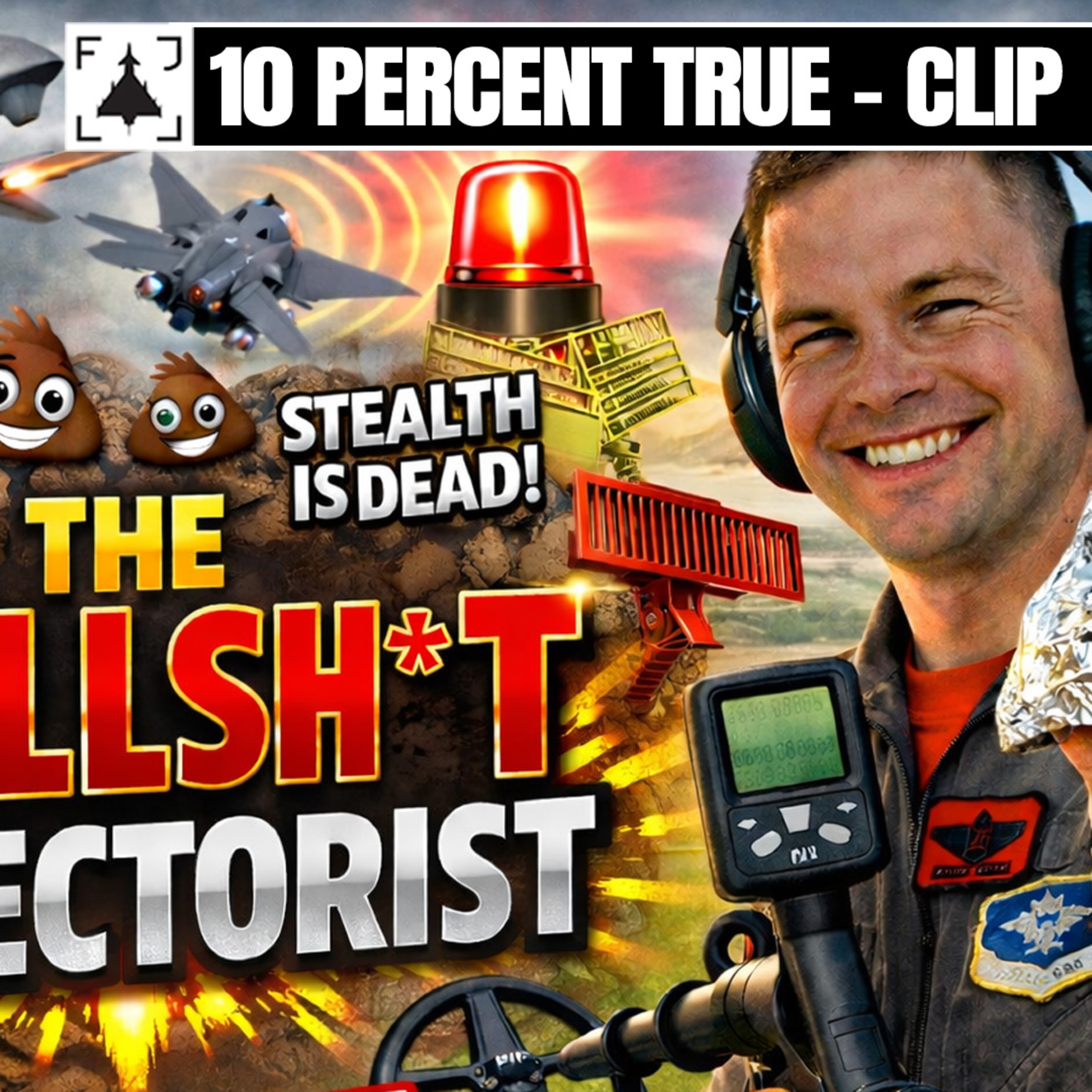 Stealth Is Dead (And Other Aviation Myths) | Bullsh*t Detectorist Ep.1 | This is the first episode of a new series we’re calling The Bullshit Detectorist. I’m joined by Starbaby Pietrucha, and the idea is simple—take some of the stuff you hear all the time about military aviation and see if it actually stands up. Stealth’s dead, drones have changed everything, low-frequency radar can see anything… we get into all of it.0:00 Aurora1:00 welcome back Starbaby - series outline/premise3:55 super low freq/passive radars are the death of stealth11:15 other dimensions of lo-observable?15:11 collapsing the kill chain?16:40 HARM were used to maybe make the Iraqis duck a bit…… (Dan Hampton quote) 🤡 21:35 “it’s not the plane, but the person in the box”26:02 “there’s no 100% defence against low cost cruise missiles (Shahed/Geran etc)” - previews further discussion on mass as a principle of war33:23 Starbaby and the Somme teaser34:06 “SR-71 shouldn’t have been retired”37:10 why did the U-2 survive?39:25 Aurora?43:36 “Crewed, oxygen breathing AEW aircraft are overrated and unnecessary…..” (incl underfunding/mismanagement of suck programs follow on)49:28 “the appearance of an aircraft is the most important (in US combat aircraft selection)”Beauty is in the eye of the beholder. 53:32 “high speed low level penetration of an enemy IAD is redundant because of stealth”56:38 low level mitigation? 59:25 “Ghost Bat” or “MQ-28”1:01:18 SDB stormbreaker mean 1000 and 2000lbs bombs are unreasonable risks of collateral damage 1:07:30 intercepting bombs is much harder than cruise missiles 1:08:46 Stormbreaker 2 and associated marketing1:12:15 wrapping up | 31m 16s | ||||||
| 4/24/26 | 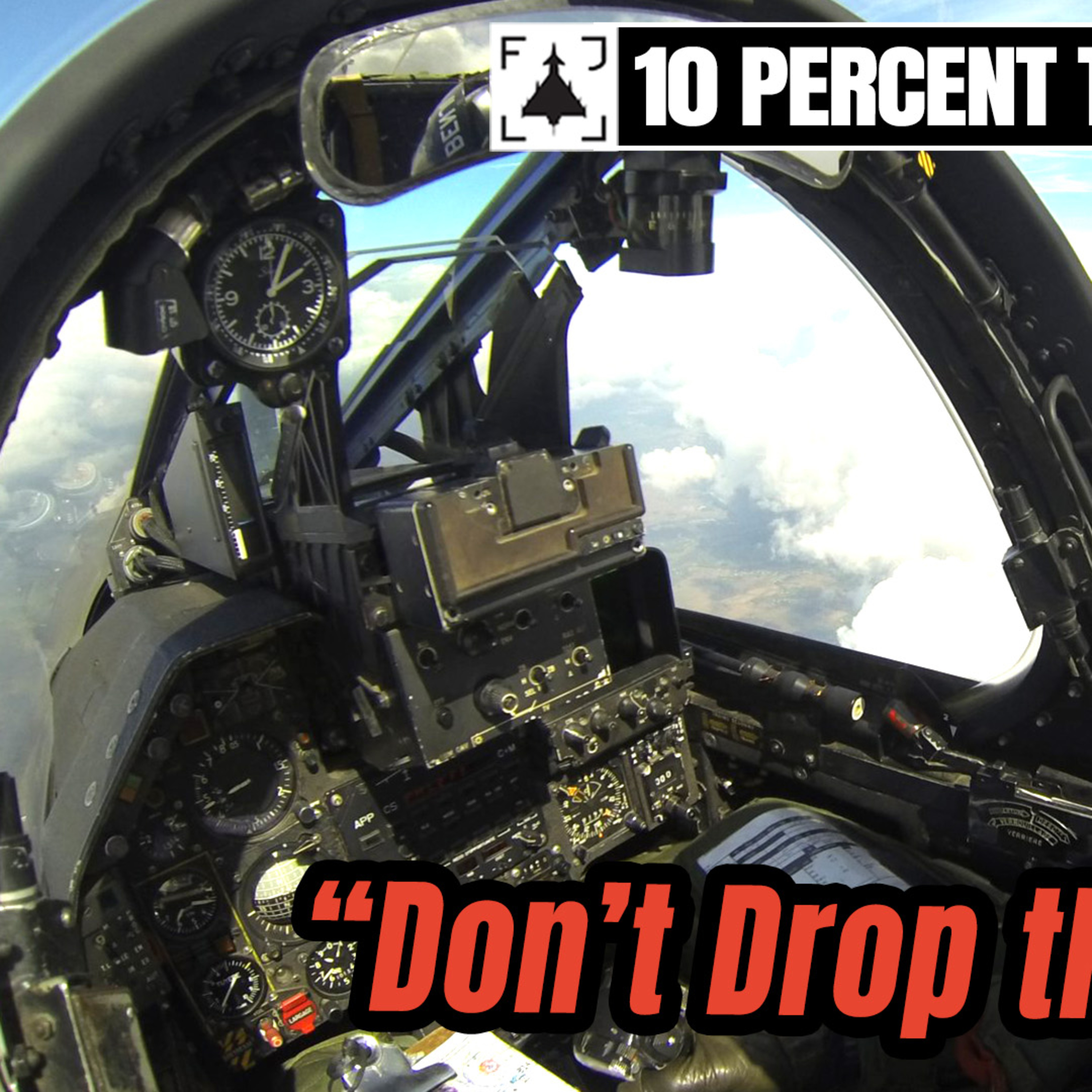 Why Fighter Pilots Sometimes REFUSE to Drop Bombs | Benji Prefontaine | Get the full episode here: https://www.10percenttrue.com/pricing-plans/listIn Episode 3, Benji Prefontaine takes you into the most demanding phase of his combat experience—flying the Dassault-Breguet Super Étendard over Afghanistan in a crowded, chaotic coalition battlespace.With limited sensors, minimal weapons, and no datalink, every mission becomes a test of situational awareness and judgment. He describes near-misses in mid-air, fuel emergencies, comms failures, and the constant risk of fratricide—all while supporting troops in contact on the ground.The central theme is stark: the biggest danger isn’t always the enemy—it’s the environment, the complexity, and your own decisions. Benji explains why the urge to drop a weapon can be the most dangerous instinct a pilot has—and why sometimes the right call is to hold fire.This episode is a raw, honest look at the reality of close air support—and the responsibility carried by the person in the cockpit.⸻0:00 intro teaser - CAS story2:40 Welcome back (Again!) Benji3:30 recap of Super E capabilities as deployment to Afghanistan looms6:28 Spinning up and deploying 9:02 commencing ops in a relatively quiet 200611:04 2007 tougher (expanded ops, integration of new Rafale capabilities)14:30 “joint” Navy buddy mission with Rafale on 27/03/07 (including 5:59:59 flameout)19:01 admin can kill you - fuel problems and deconfliction 22:48 2008 Carrier stood down for refit/repair so Super E is ground based at Kandahar 26:55 reviewing the learning points emerging from the initial engagement (including Damocles limitations and intro story)34:36 integration into ATO? 37:25 personal growth?42:24 USB exchange pilot contributions?44:48 full access? (and the perils of Super E cockpit for the well built gentleman)48:07 kneeboard capabilities 52:11 comms - satcom54:11 going back to F1, missing it, an adjustment?58:58 back to Kandahar in the F11:02:44 revisiting the psychological aspect in terms of Afghanistan (and Libya)1:06:41 Dollars!1:11:40 Libya - state of play/the vagaries of real world deployment and getting in on the action 1:23:50 the benefits of a tight knit community (moving a squadron whilst fighting a war and training new people) 1:29:58 the toll on family?1:32:42 threat levels in Libya1:37:22 XCAS and Intel?1:40:28 SCUD launcher mission1:44:00 tanker scarcity1:45:10 ATL21:46:12 QRA/policing/Chad (again)1:53:10 intercepts and “etiquette”1:55:30 flying with MiG-29SMTs2:00:17 drinking vodka with MiG-31 squadron cmdr 2:01:43 Foxhound intel?/diplomacy/history2:05:49 rounding out Air Force career and next chapter2:11:40 Merci Benji | 27m 17s | ||||||
| 4/17/26 | 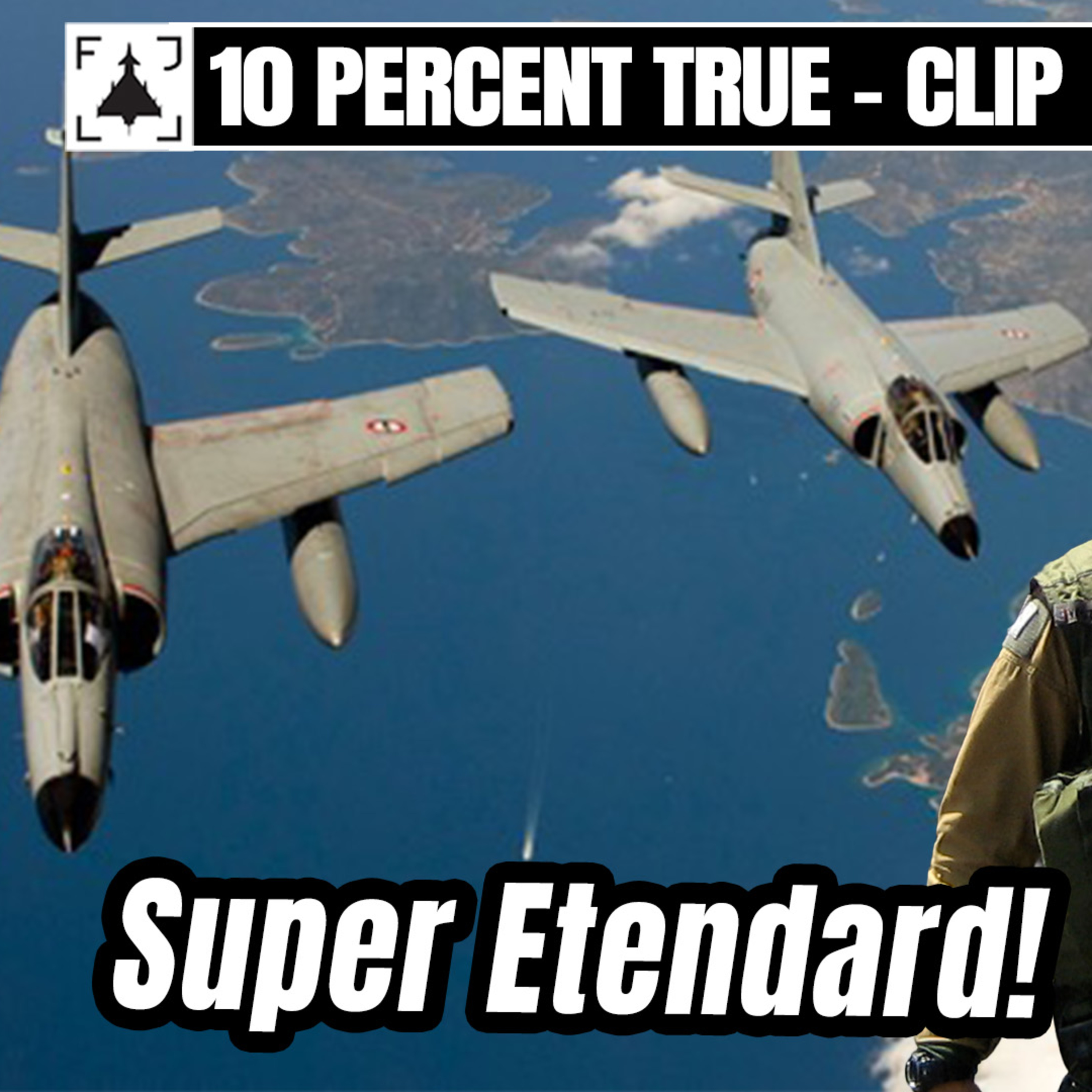 From Mirage F1 to Carrier Ops – The Reality of Naval Aviation | Benji Prefontaine | Get the full episode here: https://www.10percenttrue.com/pricing-plans/list10PCT EP86 P2 Benji PrefontaineIn Episode 2, Benji Prefontaine moves from early operations into real combat experience—flying the Dassault Mirage F1 in Africa before transitioning to carrier aviation in the Dassault-Breguet Super Étendard.He describes the shock of adapting from Air Force flying to life on the carrier—where precision, discipline, and consistency are everything. Landing on the boat becomes a defining challenge, exposing the difference between being a good pilot and being an operational one.The episode also explores the limitations of the Super Étendard—an aging, analog jet forced into modern combat—and how that shapes tactics, workload, and risk. Benji highlights the realities of coalition warfare, early Afghanistan deployments, and the steep learning curve of operating in a far more complex and demanding environment.This is where the story shifts from “becoming a pilot” to learning how to survive and operate effectively in combat.0:00 Teaser – Pyjamas, Wine, Corkscrews and Cigarettes 1:45 Welcome Back Benji (Steve’s Lost It!) + Episode Outline 3:20 First Operational Squadron – Tough Start to Mixed Force Ops 9:20 Post-9/11 Politics and Operational Reality 12:38 Red Flag – Flying with Mirage 2000D 15:36 Did Red Flag Validate the EW Suite? 18:41 How Red Flag Prepared Him for Combat 22:26 Inferiority Complex in Coalition Ops? 28:02 Social Life on Squadron 31:24 Old School vs New School – What Works? 35:38 Deployments to Chad 40:42 Threat Environment and Risk 44:48 Ferry Flight to Red Flag – Single-Engine Stress 47:43 Bird Strikes and Wildlife Hazards 52:09 Survival Kit – What’s On Board? 55:10 CSAR – Expectations vs Reality 57:46 What Is a Pilot Worth? 59:05 Combat Psychology 1:04:18 Managing Pilots Doing “Cool Stuff” (Photos/Video) 1:09:54 Romania Deployment – Encounters with MiGs 1:18:09 QRA – Intercepts and Real-World Stories 1:24:45 French Air Force “Urban Legends” 1:27:27 Encounters with USAF Incursions? 1:30:08 End of First Tour – Seeking Exchange Opportunities 1:32:50 Carrier Tour Expectations – Charles de Gaulle 1:35:15 No Night Landings? 1:36:30 Targeting Pod (PDLCT) 1:37:52 FCLP – Carrier Landing Practice 1:42:12 The Hardest Part of Carrier Ops 1:45:15 Nuclear Strike Mission Explained 1:51:53 Super Étendard Capabilities (Including Exocet) 2:01:17 From Detection to Attack 2:05:00 Situation Display, Autopilot, Datalink 2:07:55 Tuning Exocet Targeting and Performance 2:09:12 How Do You Attack a Carrier Group? 2:13:00 Part 3 Preview – Combat and Command | 28m 24s | ||||||
| 4/10/26 | 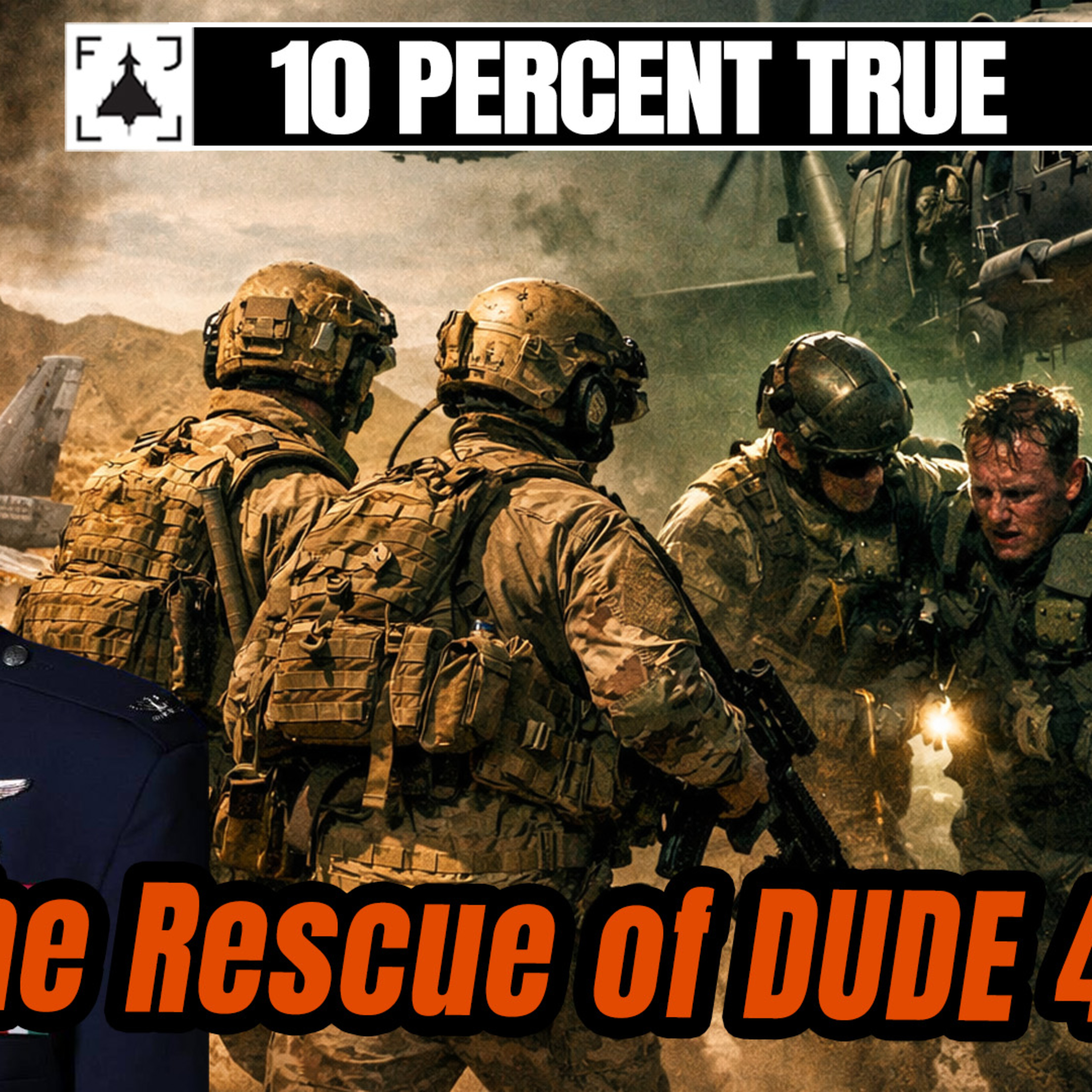 Shot Down Over Iran: The Rescue of Dude 44 | The rescue of the crew of DUDE 44, an F-15E Strike Eagle shot down over Iran, is one of the most complex and dangerous combat search and rescue (CSAR) operations in modern warfare. Retired USAF Colonel and Special Operations pilot Buck Walker breaks down how it happened – from the shootdown to the high-risk mission that brought the crew home. This is how CSAR really works. | 1h 36m 07s | ||||||
| 4/4/26 | 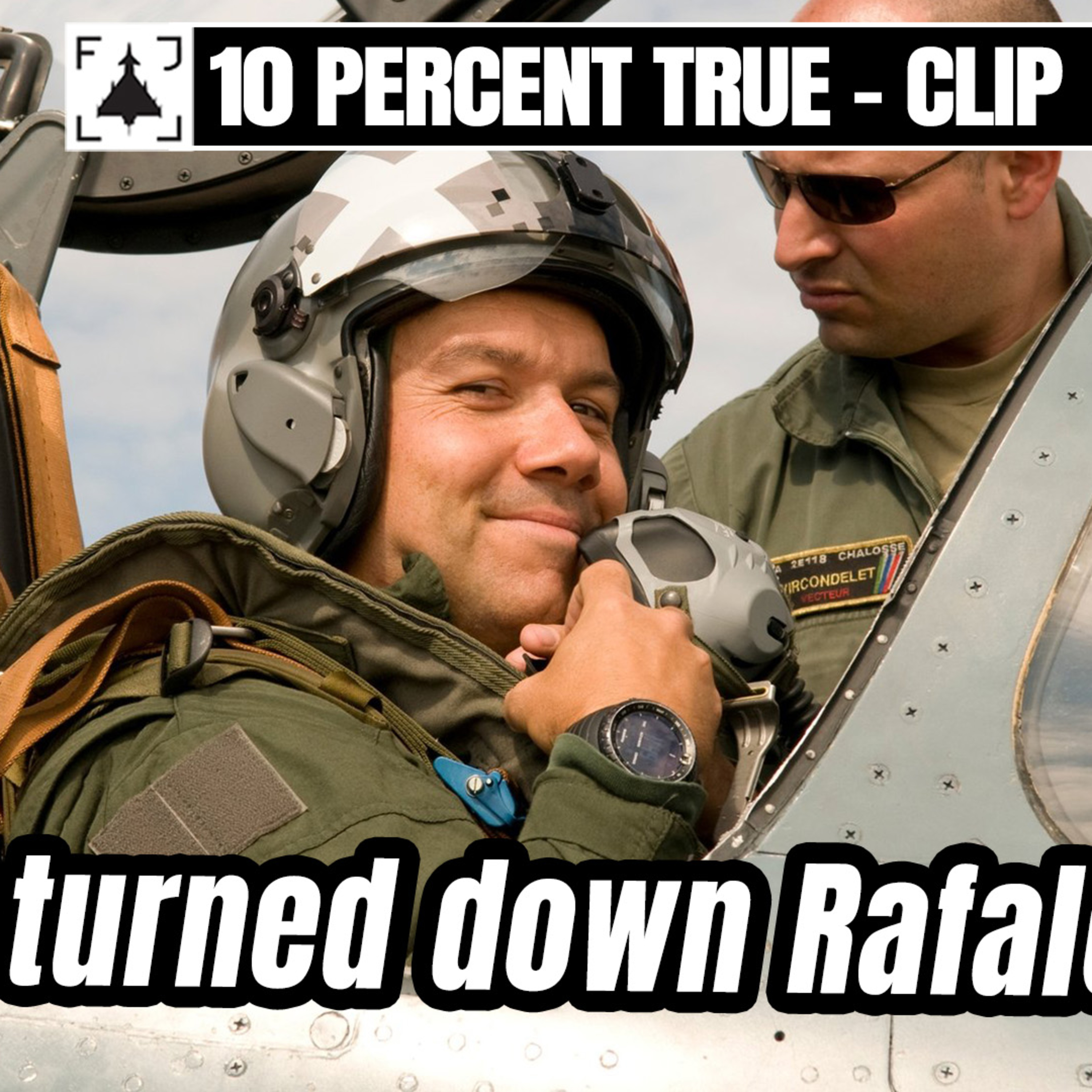 Why I Chose Mirage F1 over Rafale | Benji Prefontaine | Get the full episode here: https://www.10percenttrue.com/pricing-plans/list10PCT EP86 P1 – Benji PrefontaineChapters0:00 Intro Teaser – M1.3 Corner Speed, Avoiding the Merge, Low Level3:00 Welcome, Benji4:15 Subscriber Question (T-Stoff) – Super Étendard Carrier Ops10:35 The Hardest Flying of His Career?13:44 Route to the Air Force16:15 Initial Flying & Training Curriculum19:04 Early Impressions & Developing Mission Focus23:48 Choosing a Platform & Mission27:10 Explaining Career Choices29:15 The Mirage 2000N Mission31:32 Revisiting the Training Accident & Its Repercussions36:14 Ready for That Conversation?38:44 The Reward for That Risk40:22 Alpha Jet46:36 Air-to-Air Phase – How Formative?49:18 Armée de l’Air Culture56:00 Parents’ Opinions57:37 Mirage F1CT – Introduction, Impressions & Capabilities1:06:05 Electronic Warfare Suite1:07:40 MATRA 530 – Fox 1 Capability1:13:53 Were Export F1 Variants Better?1:17:00 Diving Deeper into EW Capabilities1:20:42 M1.3 Corner Speed – Avoiding the Merge at Low Level1:23:34 “Cheating” in the F1?1:26:10 DACT Opportunities1:27:57 Taking on the Mirage 20001:30:48 Recce & Air-to-Ground Role1:36:45 ELINT System Autonomy & Mission Planning1:40:26 Datalink1:41:50 Flying Qualities (and Vices) of the F11:46:04 Bird Strikes1:48:20 Experience on the F1CT & Close Calls1:50:58 Air-to-Air Refuelling – Tankers, Techniques & Night Ops2:02:15 Geeking Out & Previewing the Next Episode | 32m 03s | ||||||
| 4/3/26 | 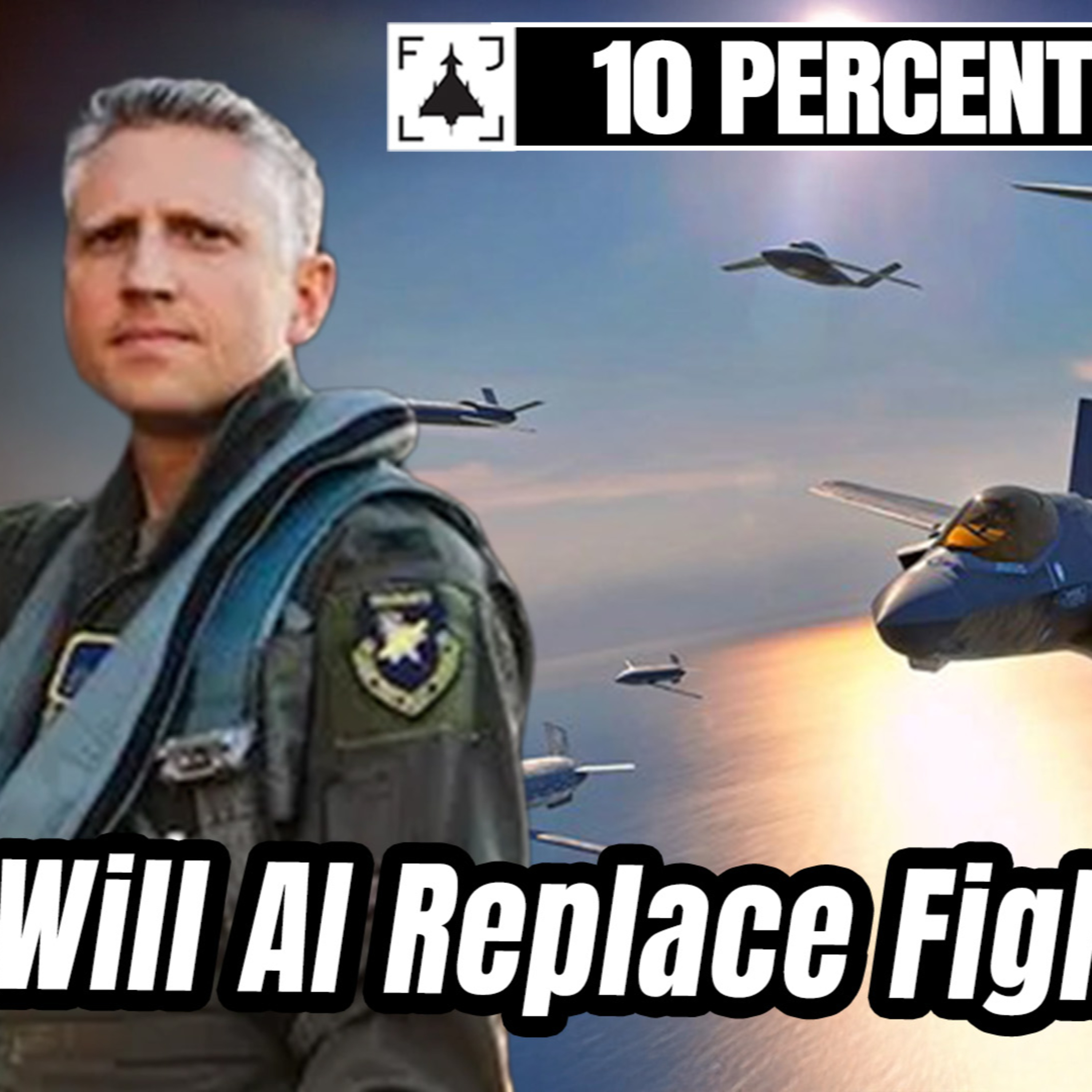 Will AI Replace Fighter Pilots? | F-35 Test Leader Explains | Cinco Hamilton | 10 Percent True | EP85Former USAF fighter pilot, F-35 test leader, and AI program director Tucker “Cinco” Hamilton joins the show to explain what artificial intelligence actually means for combat aviation. Drawing on his career flying the F-15C, standing up the MC-12 ISR platform, leading F-35 developmental test, and directing the Department of the Air Force–MIT AI Accelerator, Hamilton breaks down the difference between autonomy and AI, how machine learning is being tested in drones like the XQ-58 Valkyrie, and the ethical limits that should never be crossed. The conversation explores whether AI could ever control lethal weapons, how militaries test AI safely through millions of simulations, what AI could do inside aircraft like the F-35, and whether pilots risk becoming deskilled as automation increases. It’s a rare inside look at the future of autonomous combat systems from someone who helped build them0:00 Intro teaser – Drawing a Line 2:23 Welcome Cinco and Episode Outline 5:05 Quick Timeline Introduction 12:50 From Eagle to MC-12? 16:46 Outlining AI in Military Aviation and Defence 22:25 Thought Exercise Presentation 30:14 How Do You Ensure the AI Drone Doesn’t Hit the Bus? Should There Be Concern? 36:37 The Practicalities of Putting AI in the Driving Seat 40:22 How Nuanced Does AI Have to Be to Be “Good Enough”? 45:00 From Theory to Implementation 50:42 Can It Be That Simple? 53:22 Adversarial Developments and Excluding AI from Nuclear Decision-Making 1:01:00 AI Applications in the F-35 and Whether Loyal Wingman Is Possible Without AI 1:06:45 Deskilling of Operators 1:14:22 Audience Question (Nucks) 1:17:00 Audience Question (Matthew) 1:20:55 Audience Question (Biggles-Tintin) 1:23:20 Unlocking the Last 20% – Why Write It? 1:26:50 Balancing Risk in Test Flying and the Role of Faith 1:33:50 How to Get the Book 1:35:10 Thanks to Cinco (Plus the Callsign Story Bonus!) | 1h 41m 30s | ||||||
| 3/22/26 | 10 Percent True Channel Update March 2026 | 10 Percent True Channel Update March 2026 | 4m 21s | ||||||
![Hunting Shahed Drones in a Mirage 2000 [CLIP] episode artwork](https://d3t3ozftmdmh3i.cloudfront.net/staging/podcast_uploaded_episode/42035457/42035457-1788536571562-69ece6a1cfb28.jpg)
![How U.S. Marines Rescued an F-15E Crew From Libya [CLIP] episode artwork](https://d3t3ozftmdmh3i.cloudfront.net/staging/podcast_uploaded_episode/42035457/42035457-1781195317574-bf14abaa5d99e.jpg)
Showing 25 of 158
Pitch Fit is a Pro feature
See how bookable this show is for guests, which brands already advertise, the per-episode ad value, and the best-fit guest and sponsor profile. The numbers are blurred on the free plan.
How readily this show books outside guests like you.
How proven this show is for host-read sponsorships.
For Guests
ProFor Advertisers
ProUpgrade to Pro to unlock guest cadence, sponsor categories, fit scores, and per-episode ad value for this show.
Chart history for 10 Percent True - Tales from the Cockpit
Peaked at #6 in PT, top 10 in 2 of 37 tracked markets, currently #6 in PT.
| Market | Genre | Peak | Current | Trend |
|---|---|---|---|---|
| PT | — | #6 | #6 | — |
| Denmark | — | #9 | #9 | — |
| Ireland | — | #11 | #11 | — |
| Sweden | — | #11 | #11 | — |
| HU | — | #11 | #11 | — |
| IL | — | #11 | #11 | — |
| PH | — | #12 | #12 | — |
| MY | — | #12 | #12 | — |
| Norway | — | #15 | #15 | — |
| Finland | — | #15 | #15 | — |
| New Zealand | — | #16 | #16 | — |
| Australia | — | #18 | #18 | — |
| TR | — | #18 | #18 | — |
| CL | — | #18 | #18 | — |
| Germany | — | #20 | #20 | — |
| India | — | #20 | #20 | — |
| CZ | — | #25 | #25 | — |
| BE | — | #26 | #26 | — |
| AE | — | #26 | #26 | — |
| United Kingdom | — | #29 | #29 | — |
Chart Positions
37 placements across 35 markets.
Chart Positions
37 placements across 35 markets.