
Insights from recent episode analysis
Audience Interest
Podcast Focus
Publishing Consistency
Platform Reach
Insights are generated by CastFox AI using publicly available data, episode content, and proprietary models.
Most discussed topics
Brands & references
Total monthly reach
Estimated from 1 chart position in 1 market.
By chart position
- 🇮🇪IE · Technology#713K to 10K
- Per-Episode Audience
Est. listeners per new episode within ~30 days
1.5K to 5K🎙 Weekly cadence·36 episodes·Last published 7mo ago - Monthly Reach
Unique listeners across all episodes (30 days)
3K to 10K🇮🇪100% - Active Followers
Loyal subscribers who consistently listen
900 to 3K
Market Insights
Platform Distribution
Reach across major podcast platforms, updated hourly
Total Followers
—
Total Plays
—
Total Reviews
—
* Data sourced directly from platform APIs and aggregated hourly across all major podcast directories.
On the show
From 10 epsHosts
Recent guests
Recent episodes
Democratic governance of technology: myth or reality ? With Dr Mar Hicks from the University of Virginia School of Data Science
Nov 3, 2025
27m 20s
The TESCREAL to fascism pipeline with Adrienne Williams from the Distributed AI Research Institute (DAIR)
Oct 7, 2025
32m 31s
Back to basics: Technofascism 101 with Emile Dirks from the Citizen Lab
Sep 16, 2025
28m 29s
The datafication of refugees: humanitarian agencies & biometrics with Zara Rahman from the Superrr Lab
Feb 18, 2025
35m 32s
Mapping for justice: from cartography to GIS, with Cathy Richards from the Open Environmental Data Project
Feb 7, 2025
37m 30s
Social Links & Contact
Official channels & resources
Official Website
Login
RSS Feed
Login
| Date | Episode | Topics | Guests | Brands | Places | Keywords | Sponsor | Length | |
|---|---|---|---|---|---|---|---|---|---|
| 11/3/25 | 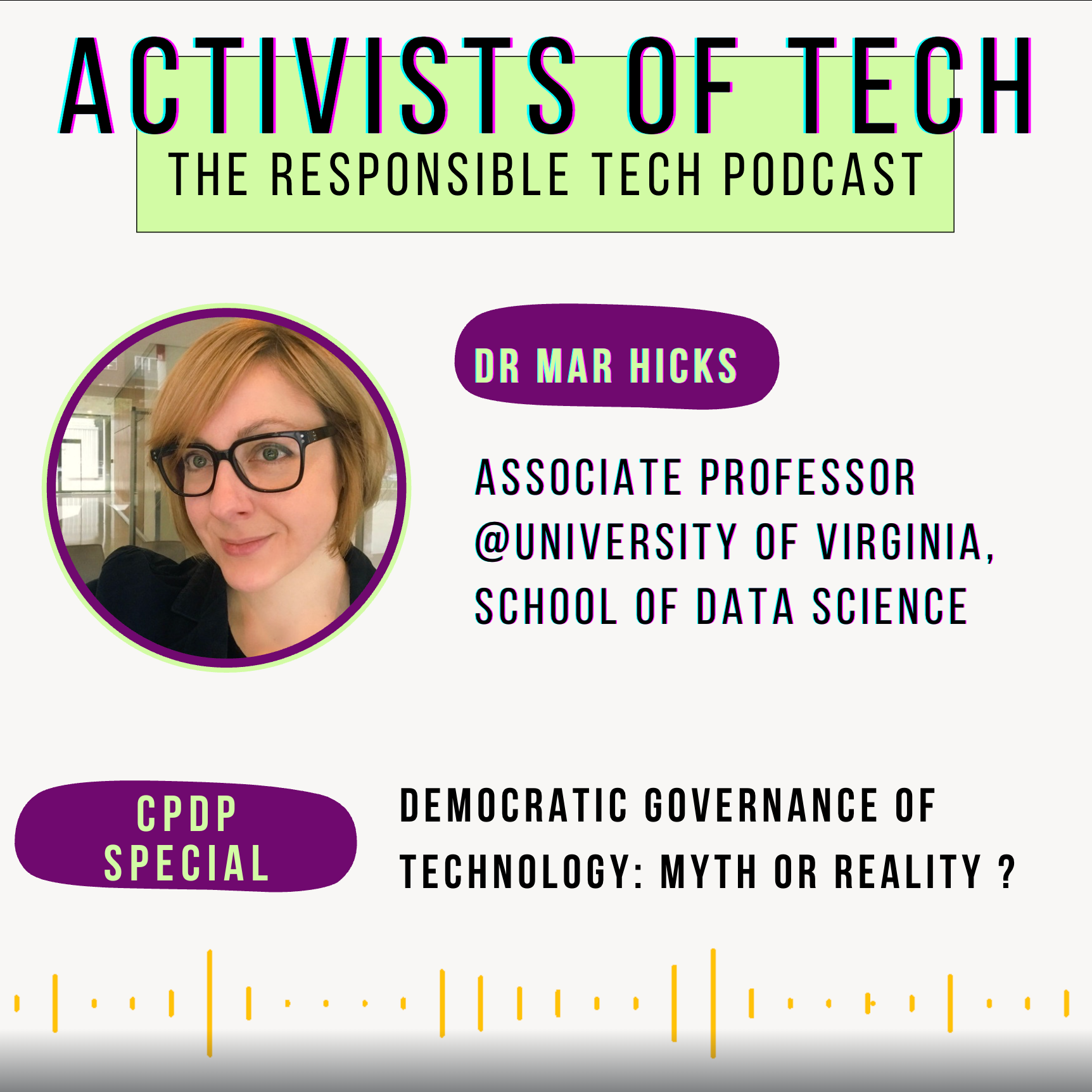 Democratic governance of technology: myth or reality ? With Dr Mar Hicks from the University of Virginia School of Data Science✨ | democratic governancetechnology+4 | Dr Mar Hicks | University of Virginia School of Data ScienceProgrammed Inequality: How Britain Discarded Women Technologists and Lost Its Edge in Computing+1 | — | democracytech oligarchy+3 | — | 27m 20s | |
| 10/7/25 | 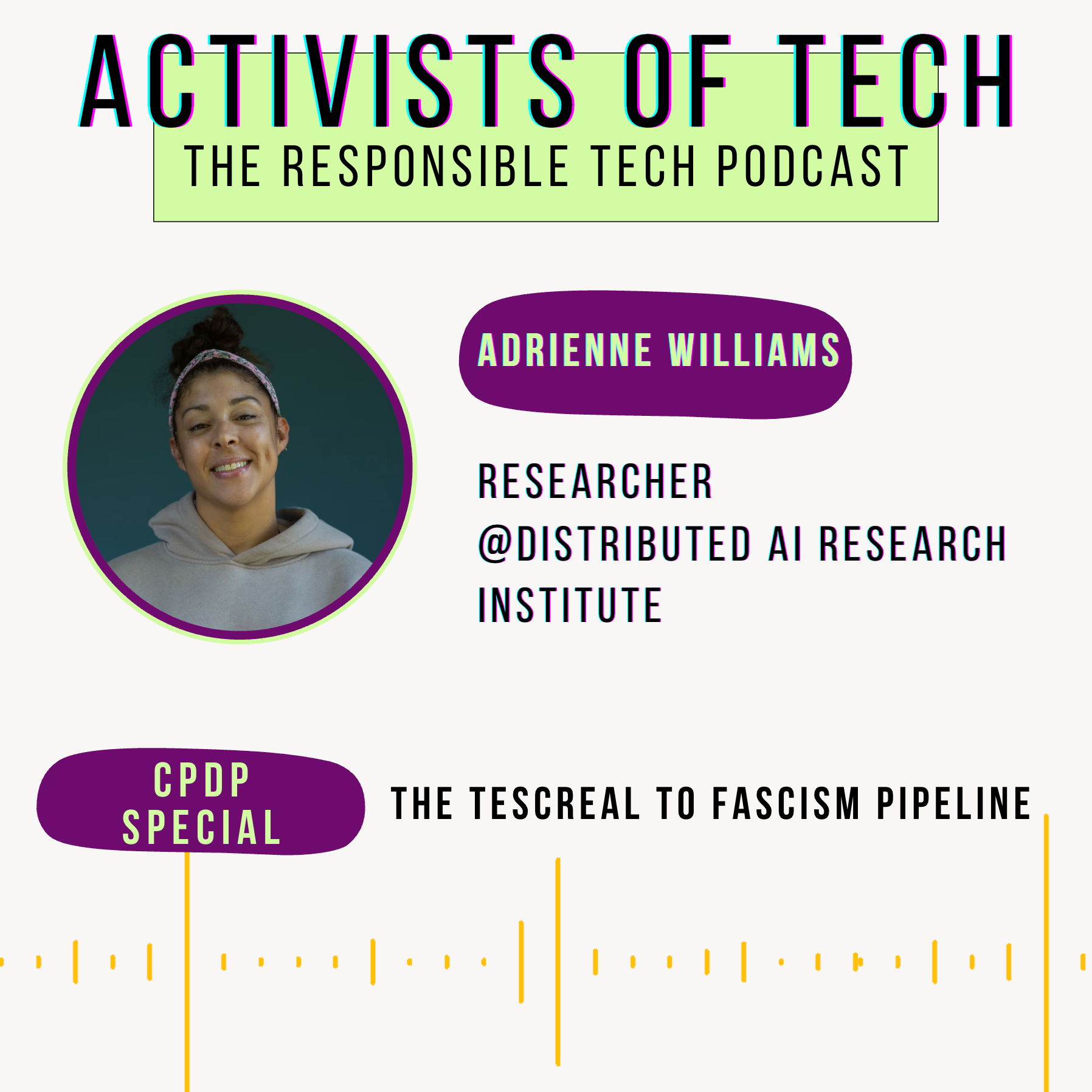 The TESCREAL to fascism pipeline with Adrienne Williams from the Distributed AI Research Institute (DAIR)✨ | TESCREALfascism+4 | Adrienne Williams | Distributed AI Research InstituteOpenAI | — | TESCREALfascism+5 | — | 32m 31s | |
| 9/16/25 | 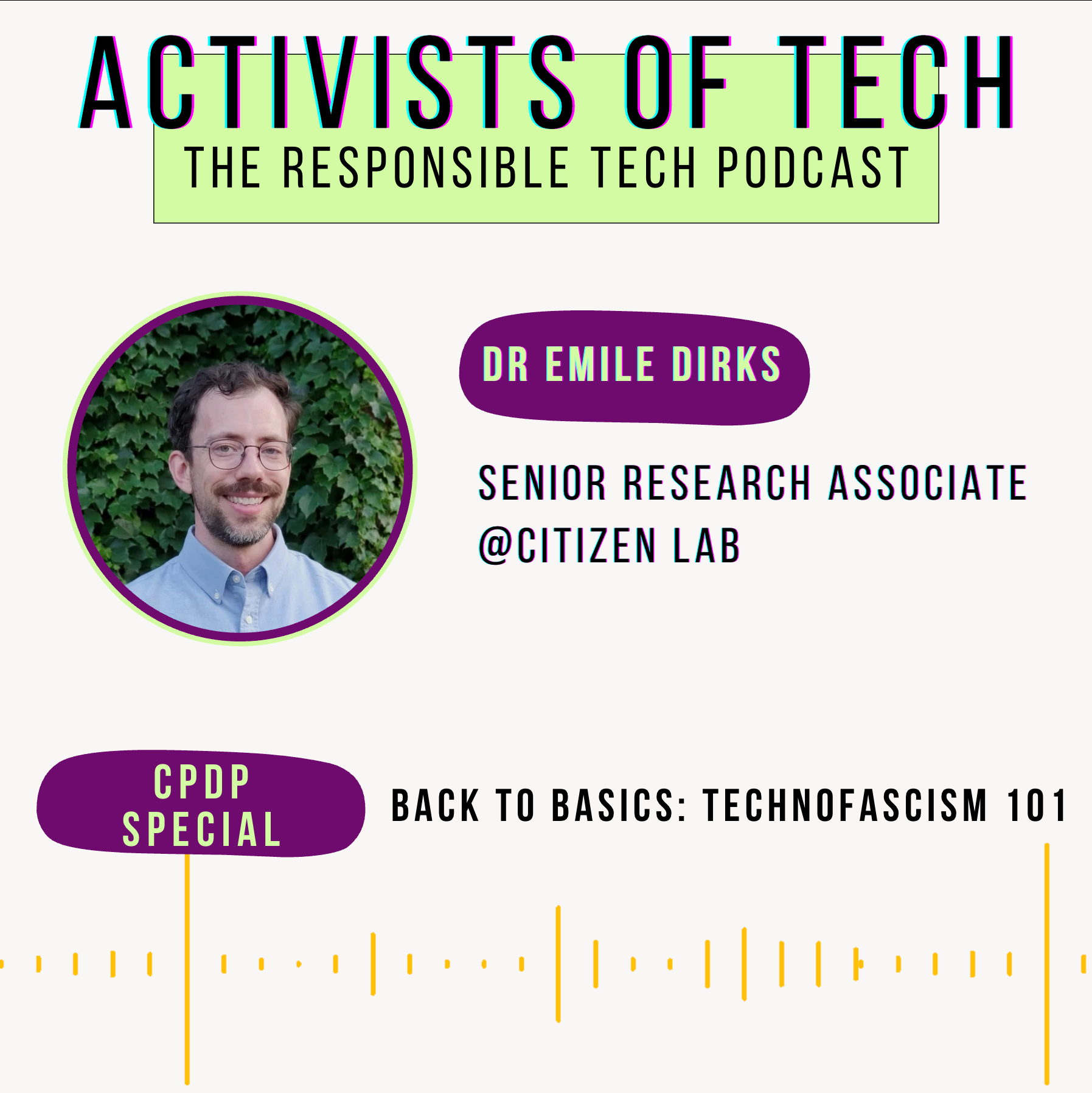 Back to basics: Technofascism 101 with Emile Dirks from the Citizen Lab✨ | technofascismtechnology and politics+3 | Emile Dirks | Citizen Lab | United States | technofascismfascism+5 | — | 28m 29s | |
| 2/18/25 | 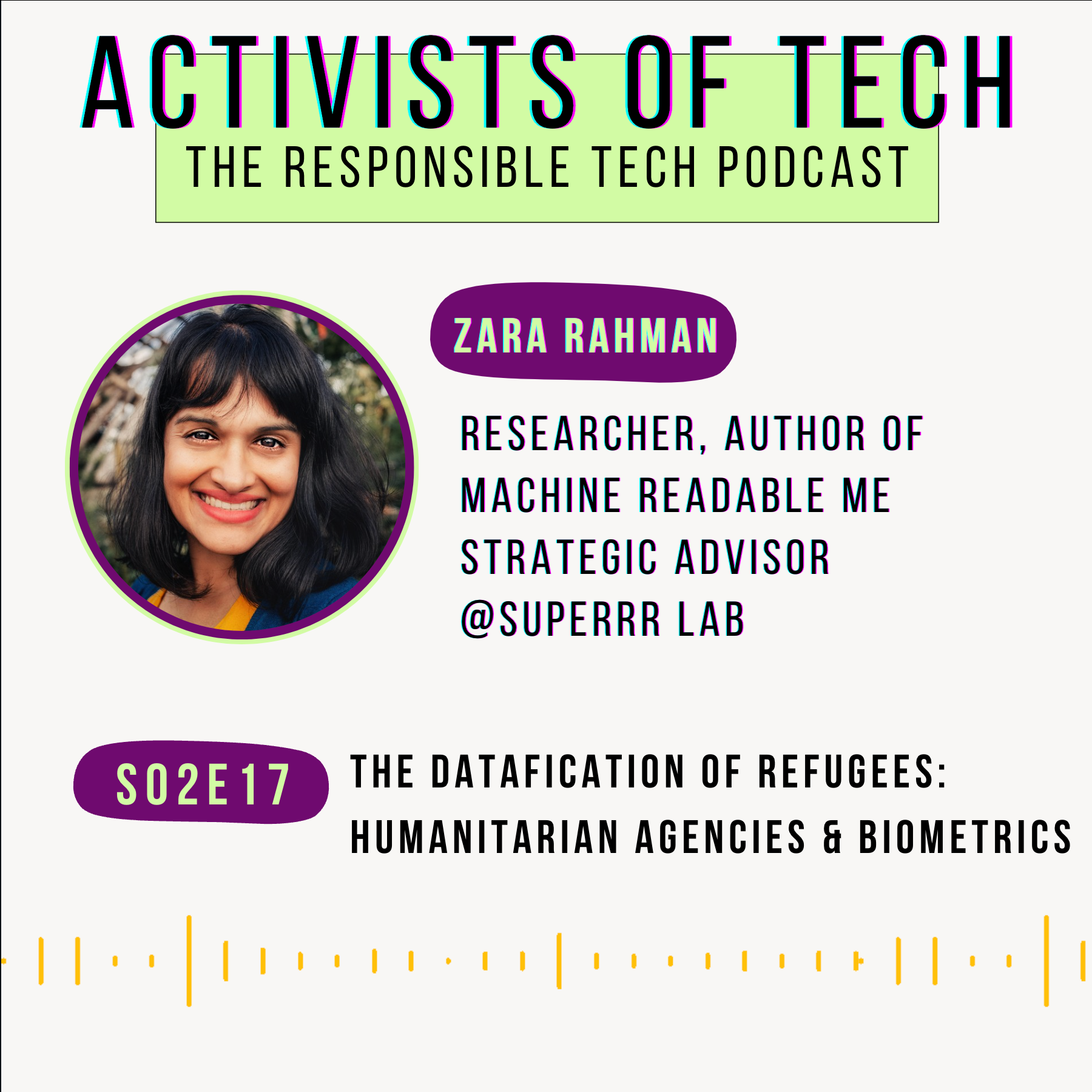 The datafication of refugees: humanitarian agencies & biometrics with Zara Rahman from the Superrr Lab✨ | biometricsrefugees+4 | Zara Rahman | Superrr LabCitizens and Technology Lab+1 | — | biometricsrefugees+5 | — | 35m 32s | |
| 2/7/25 | 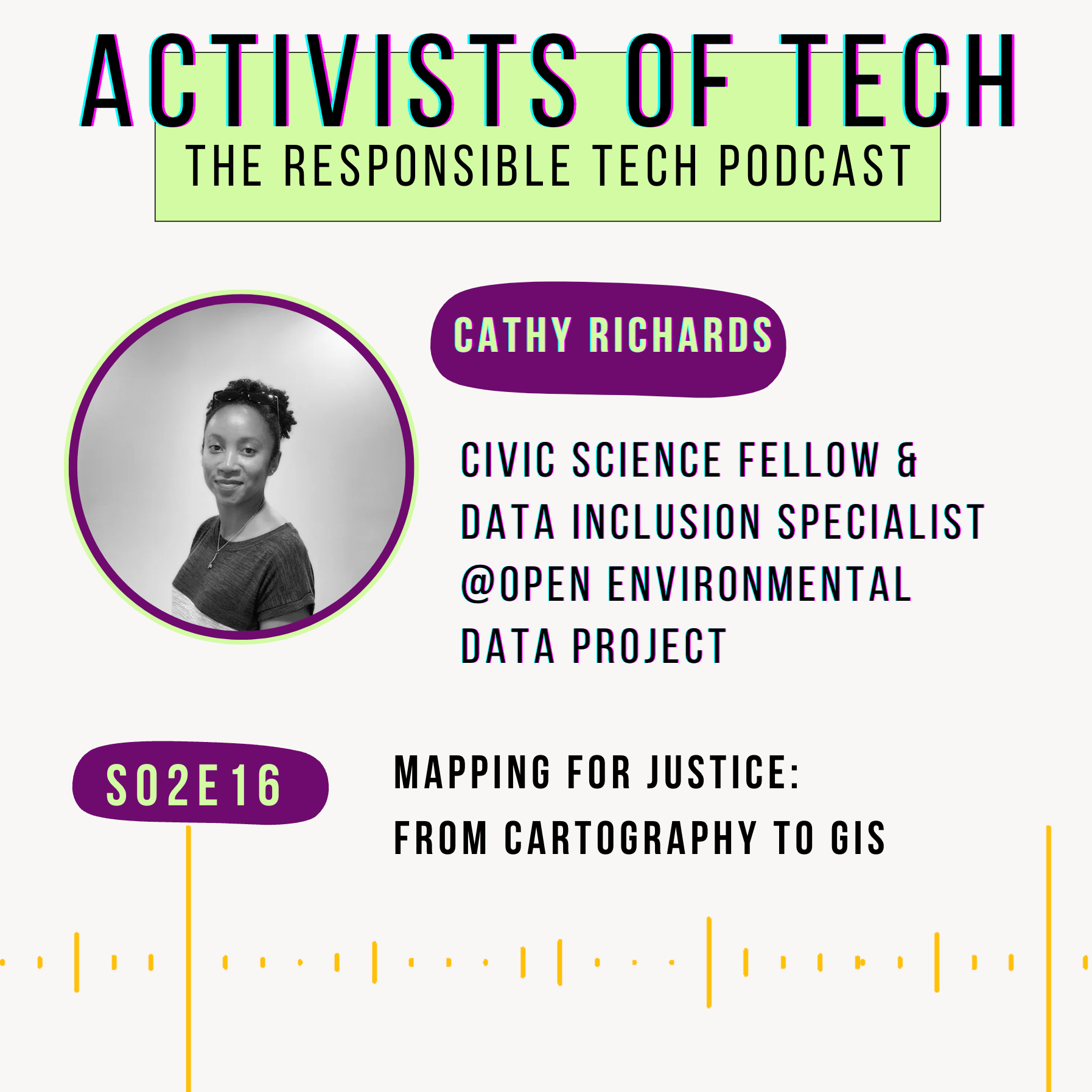 Mapping for justice: from cartography to GIS, with Cathy Richards from the Open Environmental Data Project✨ | cartographyGIS+4 | Cathy Richards | Open Environmental Data ProjectThe Engine Room | Costa RicaBoston University+1 | cartographyGIS+7 | — | 37m 30s | |
| 1/31/25 | 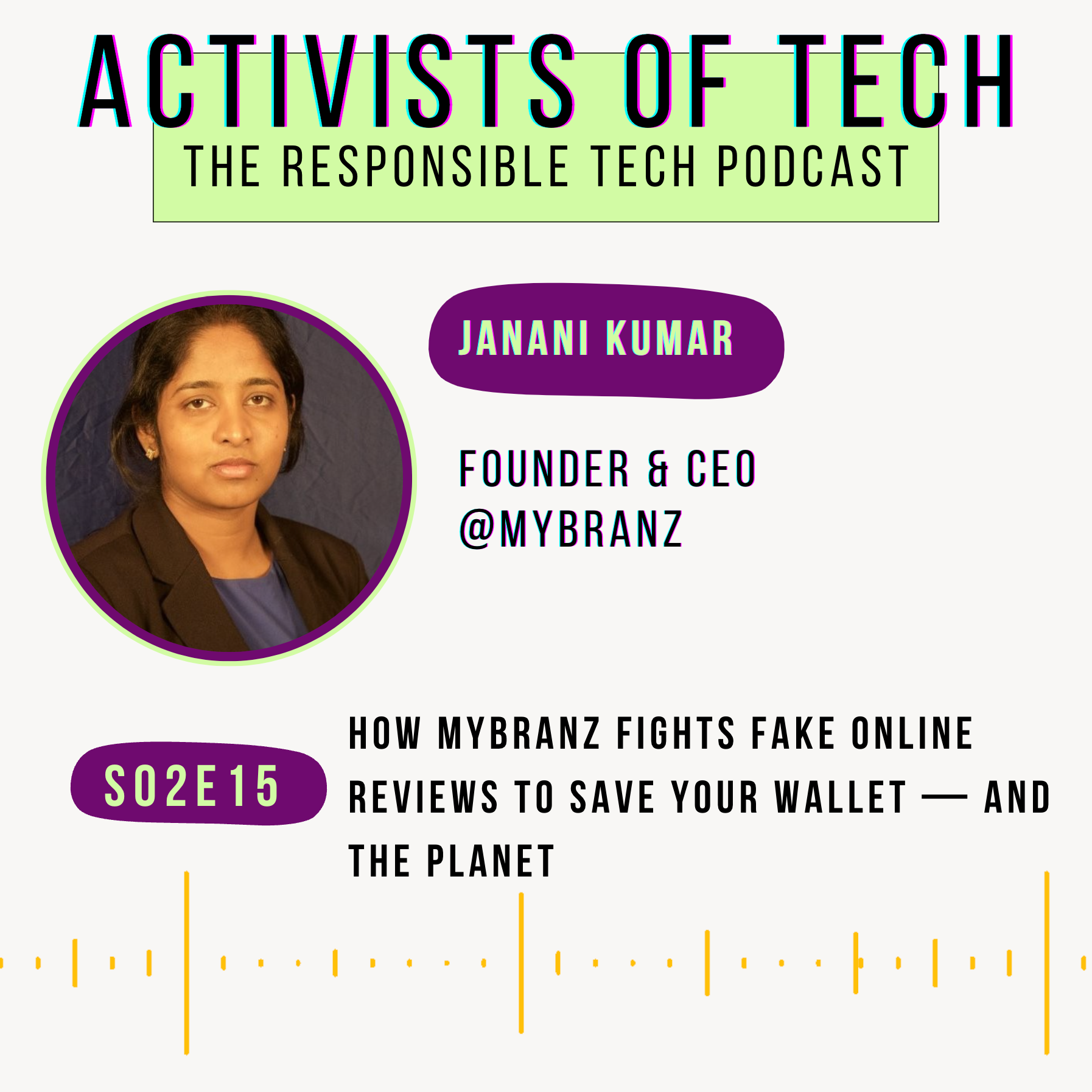 How MyBranz fights fake online reviews to save the planet — and your wallet with Janani Kumar, Founder of MyBranz✨ | fake reviewsconsumer trust+3 | Janani Kumar | MyBranzFederal Trade Commission | — | fake reviewsMyBranz+5 | — | 23m 42s | |
| 1/24/25 | 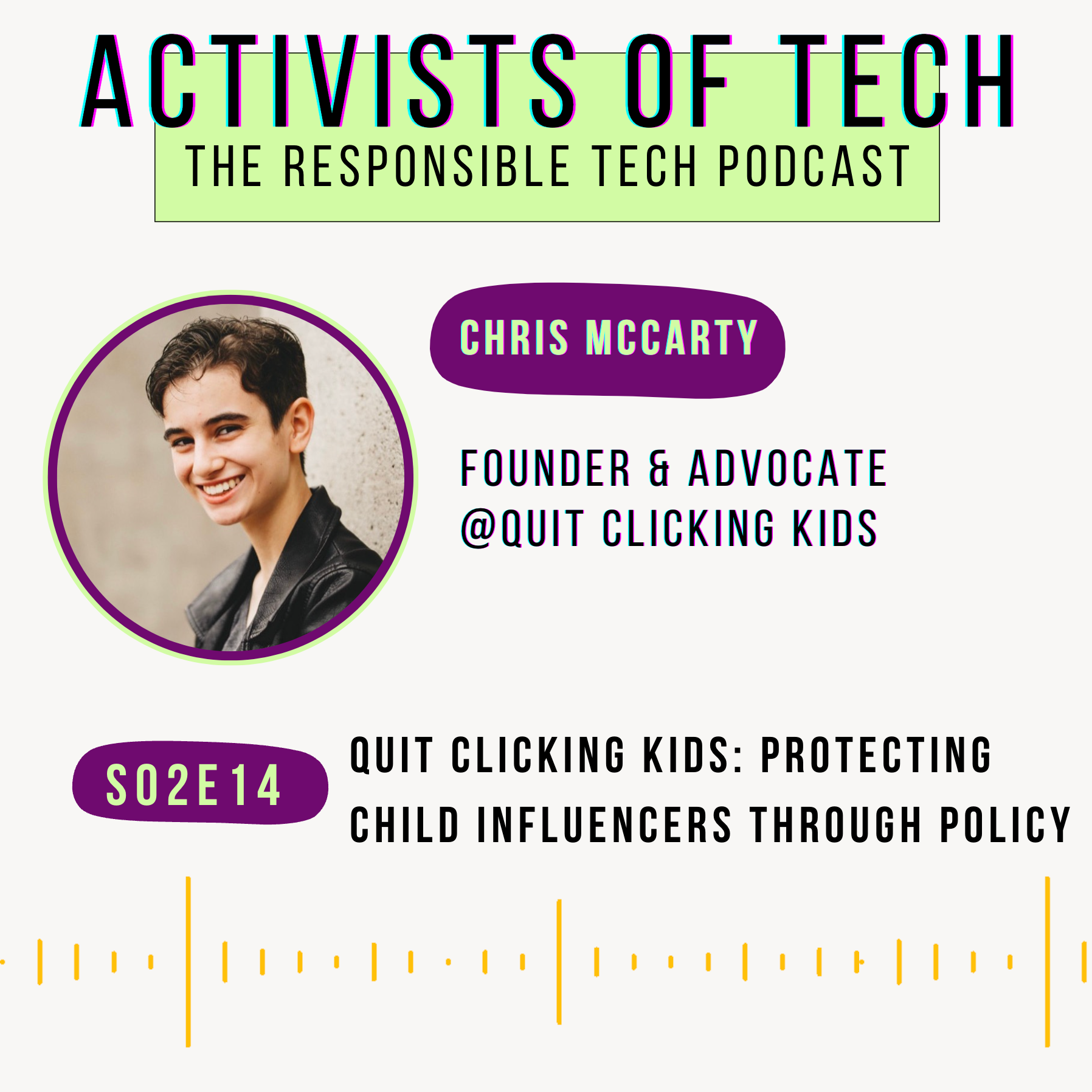 Quit Clicking Kids: protecting child influencers through policy with Chris McCarty, founder of Quit Clicking Kids✨ | child influencersonline safety+4 | Chris McCarty | Quit Clicking KidsThe New York Times+4 | United StatesUniversity of Washington | child influencersQuit Clicking Kids+3 | — | 29m 55s | |
| 1/17/25 |  How existing safety mitigation safeguards fail in LLMs with Khaoula Chehbouni, PhD Researcher at McGill and MILA✨ | Large Language ModelsAI safety+4 | Khaoula Chehbouni | McGill UniversityMILA+2 | — | LLMsAI systems+6 | — | 37m 15s | |
| 1/10/25 | 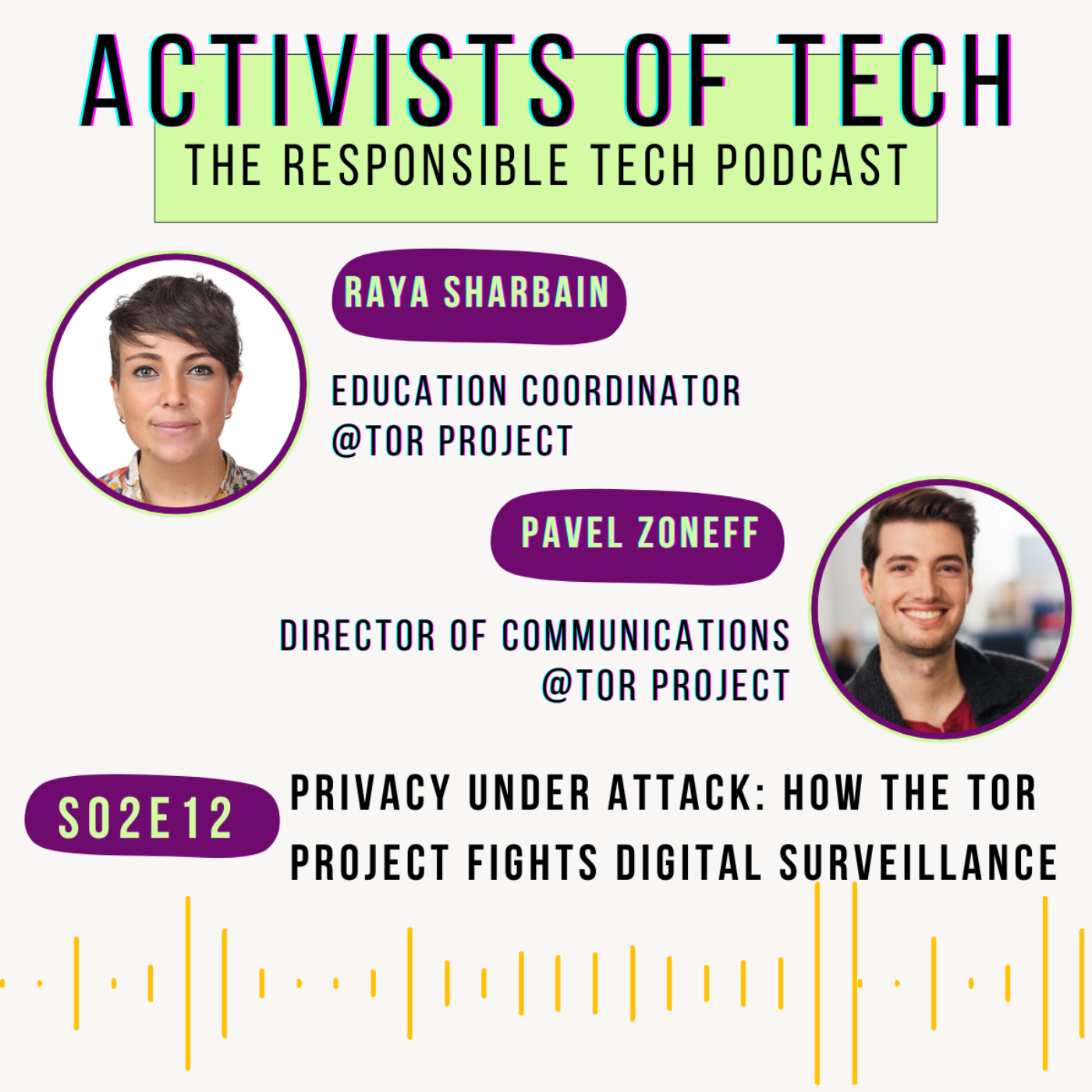 Privacy under attack: how the Tor Project fights digital surveillance, with Raya S. & Pavel Zoneff✨ | digital surveillanceprivacy+4 | Raya S.Pavel Zoneff | Tor Project1984 | United StatesRussia | digital surveillanceprivacy+5 | — | 34m 25s | |
| 12/17/24 | 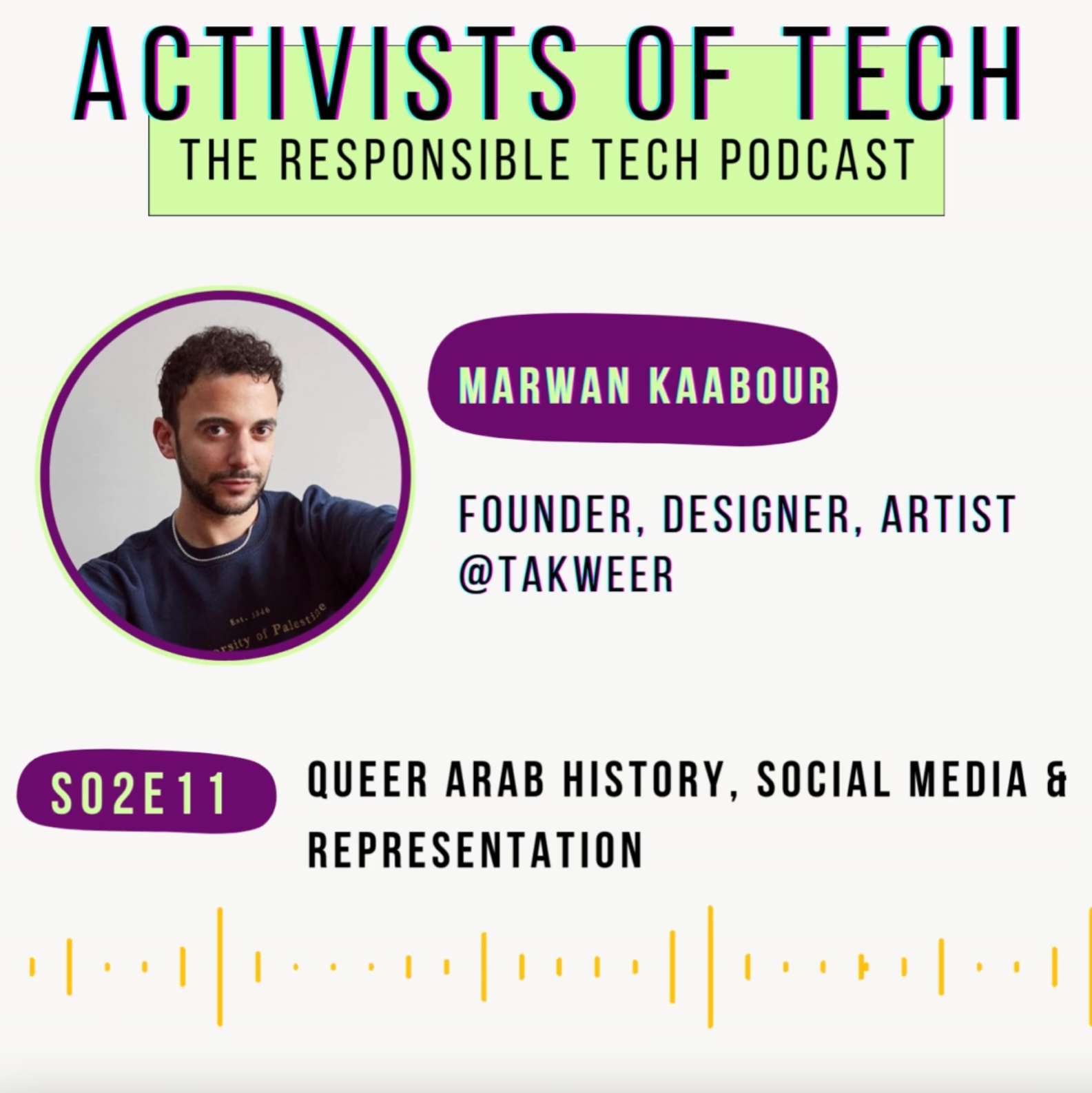 Queer Arab History, social media, and representation with Marwan Kaabour from Takweer✨ | Queer Arab Historysocial media+4 | Marwan Kaabour | TakweerThe Queer Arab Glossary | BeirutLondon | Queer ArabsTakweer+5 | — | 28m 02s | |
Want analysis for the episodes below?Free for Pro Submit a request, we'll have your selected episodes analyzed within an hour. Free, at no cost to you, for Pro users. | |||||||||
| 12/3/24 | 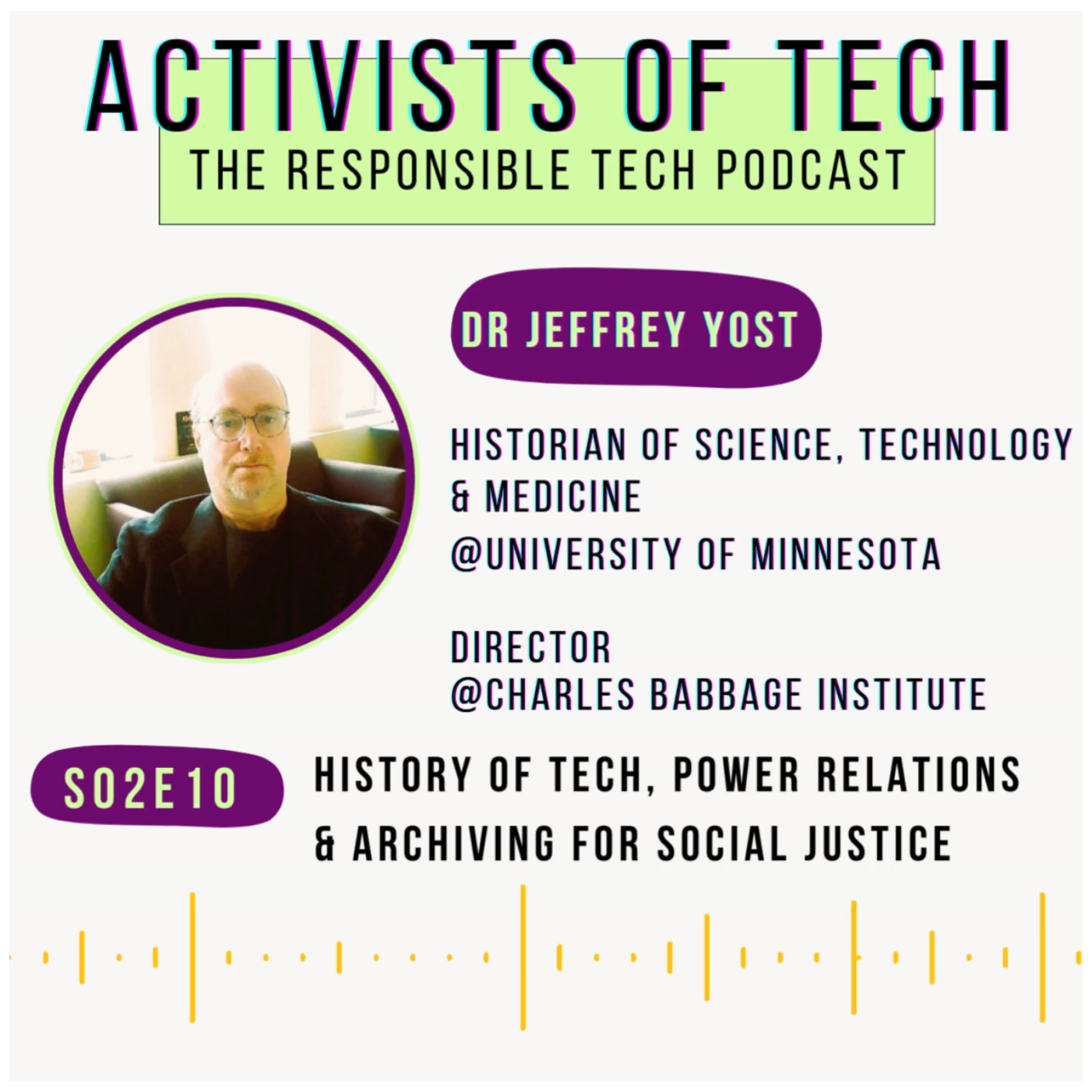 History of tech, power relations, & archiving for social justice with Dr Jeffrey Yost from the Charles Babbage Institute | Technology narratives are set in the present, and all of their promises set in the near future. We’ve heard about flying cars, automated jobs, robots able to annihilate Humanity, robots able to save Humanity, and went through many hype cycles, like crypto – a time that I personally tend to block from my memory. But looking at the past, at the evolution of technology, is actually critical for its impacts to be relevant and beneficial for everyone.We often say that History keeps repeating itself, so if we want to predict the future of technology, why not look at its past? Beyond that, I wondered how the History of Technology related to social justice and how interdisciplinary studies could advance social justice, as well as how to choose who and what to archive when it comes to Tech History, and how much AI could be useful or harmful in this endeavour. To answer these questions and more, I had the pleasure to welcome Dr Jeffrey Yost who studies power imbalances & societal inequality in our digital world.Dr Yost is a historian of science, technology, and medicine focused on the social, political, and cultural and intellectual history of the digital world. He is the Director of the Charles Babbage Institute (CBI) for Computing, Information & Culture, a computing and software studies research institute and the leading and most diverse historical archives center for students and scholars to study digital tech & its contexts.Created, hosted and produced by Mélissa M'Raidi-Kechichian. | 41m 41s | ||||||
| 11/26/24 | 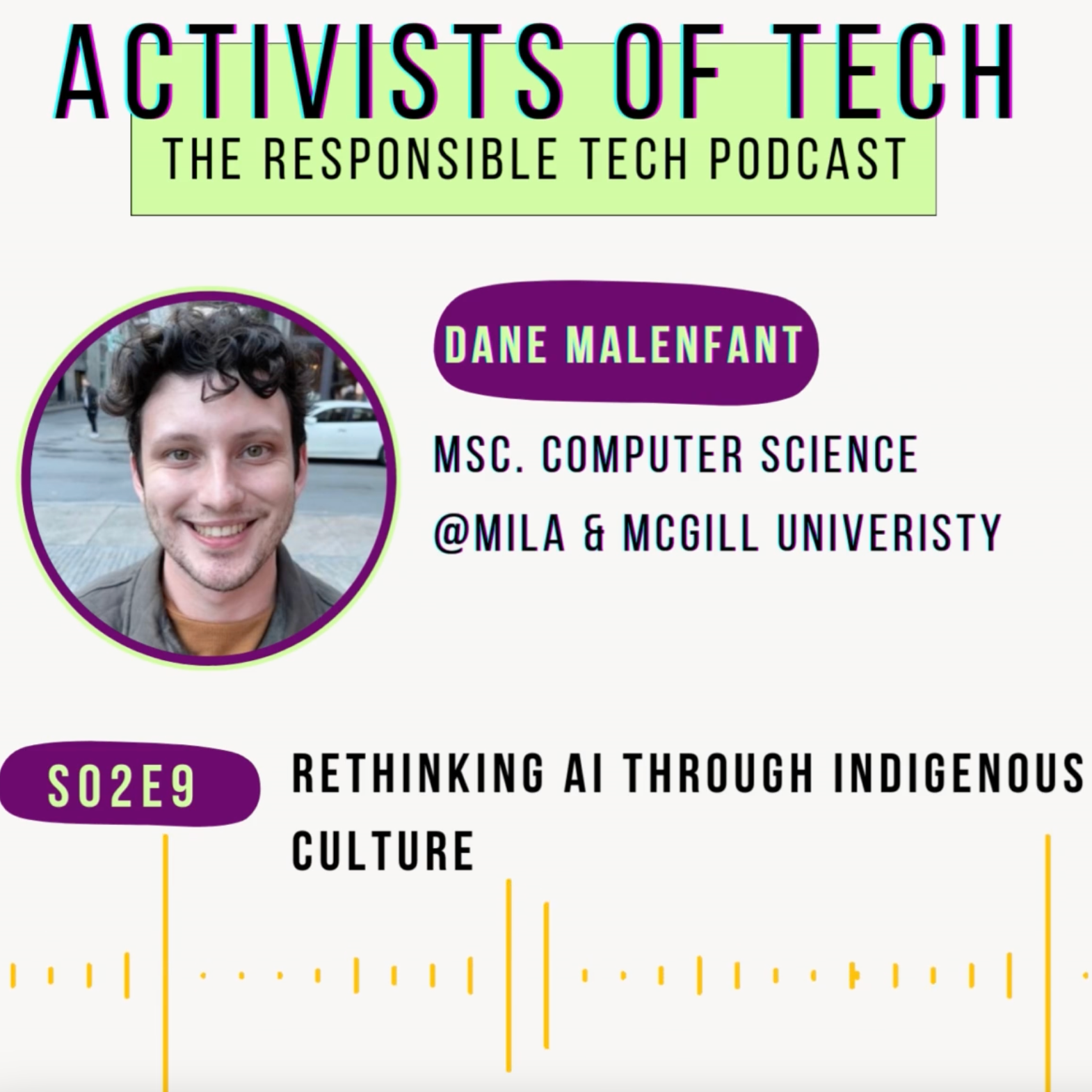 Rethinking AI through Indigenous culture with Dane Malenfant from McGill University & MILA | An interesting thing about AI systems is that without a deliberately designed structure to promote the concept of sharing, AI systems will focus solely on maximizing their individual rewards, even if this prevents them from successfully completing a task. This is fascinating, and Dane Malenfant is working on the long term credit assignment problem at MILA and McGill University, and researching solutions through an indigenous lens. Dane is a citizen of Métis Nation- Saskatchewan and originally from the traditional Métis Homeland of North Battleford (Treaty 6) and of Regina (Treaty 4). He advocates for Indigenous representation in STEM and offers a unique perspective in doing so.In this episode, we explored the role of Indigenous cultural values, like reciprocity, in reshaping AI development – and how diverse perspectives can address both technical and societal challenges. Dane also talked about the importance of having diverse voices in AI and about the systemic barriers that indigenous people face that prevent them from being part of the field of AI, and how we can change it. Created, hosted and produced by Mélissa M'Raidi-Kechichian. | 32m 26s | ||||||
| 11/19/24 | 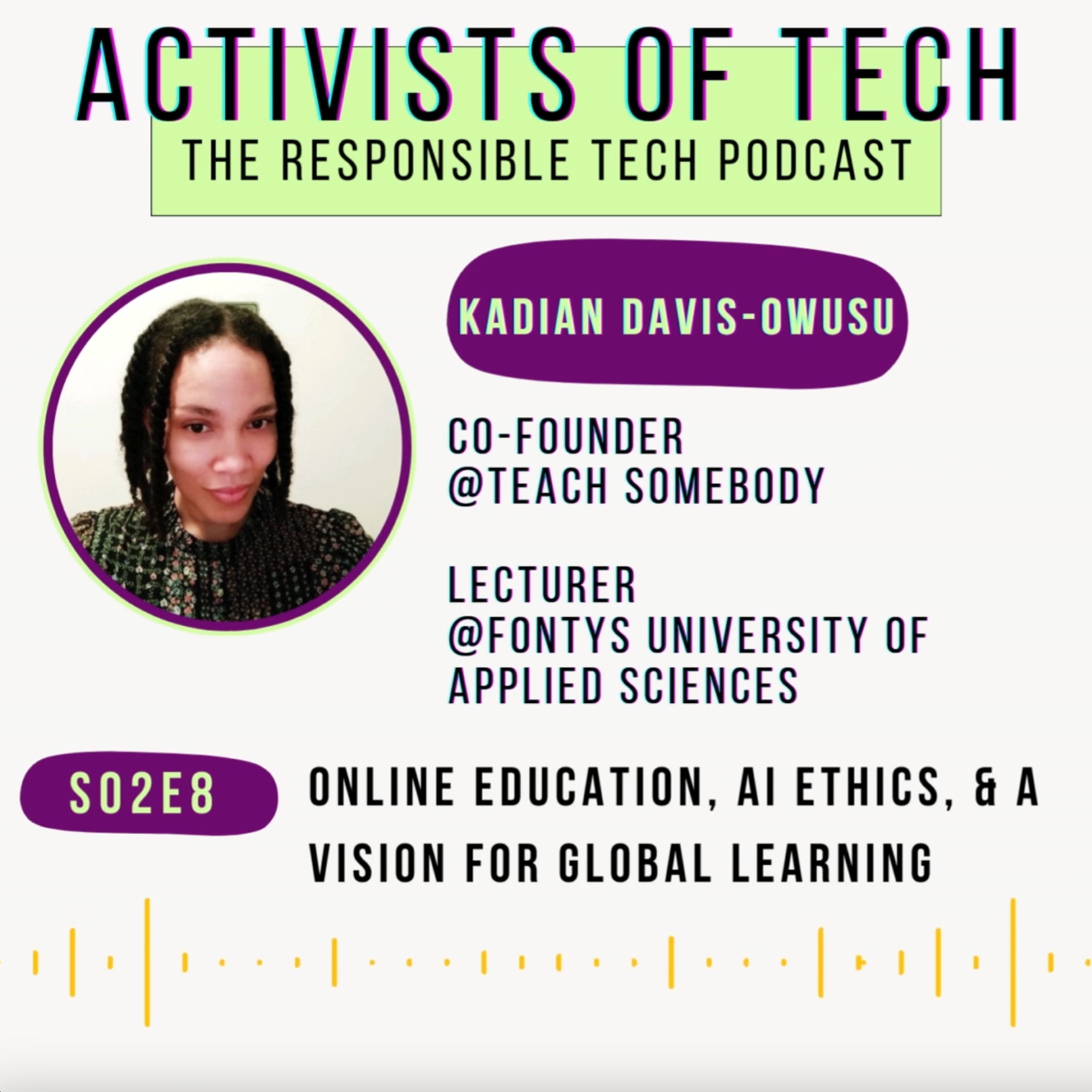 Online education, AI Ethics, & a vision for global learning with Kadian Davis-Owusu from TeachSomebody | More often than not, on Activists of Tech, we talk about the problems caused by technology and the solutions or alternatives to these issues. And I kind of feel guilty because I don’t want to convey the idea that AI is inherently bad. Though the mainstream culture surrounding AI certainly is, we have agency over what we create, over the AI systems we design and on how they impact others. Today’s guest is a great example and she is nothing short of inspiring: Dr Kadian Davis-Owusu has turned her passion for technology and learning into purpose, advocating for the power of online education and the ethical use of AI in learning. Kadian is the co-founder of TeachSomebody and a university lecturer at the Fontys University of Applied Sciences in the Netherlands.This episode is about tackling educational inequalities with technology, and we dived into Kadian’s work as an educator and technologist at TeachSomebody, a platform on a mission to bridge educational divides by making education accessible and providing equal opportunities to underserved communities. We talked about how online courses can address global inequalities, the potential of AI to revolutionize learning access, and what it takes to tackle concerns about privacy and AI ethics, and much more.Created, hosted and produced by Mélissa M'Raidi-Kechichian. | 34m 34s | ||||||
| 11/12/24 | 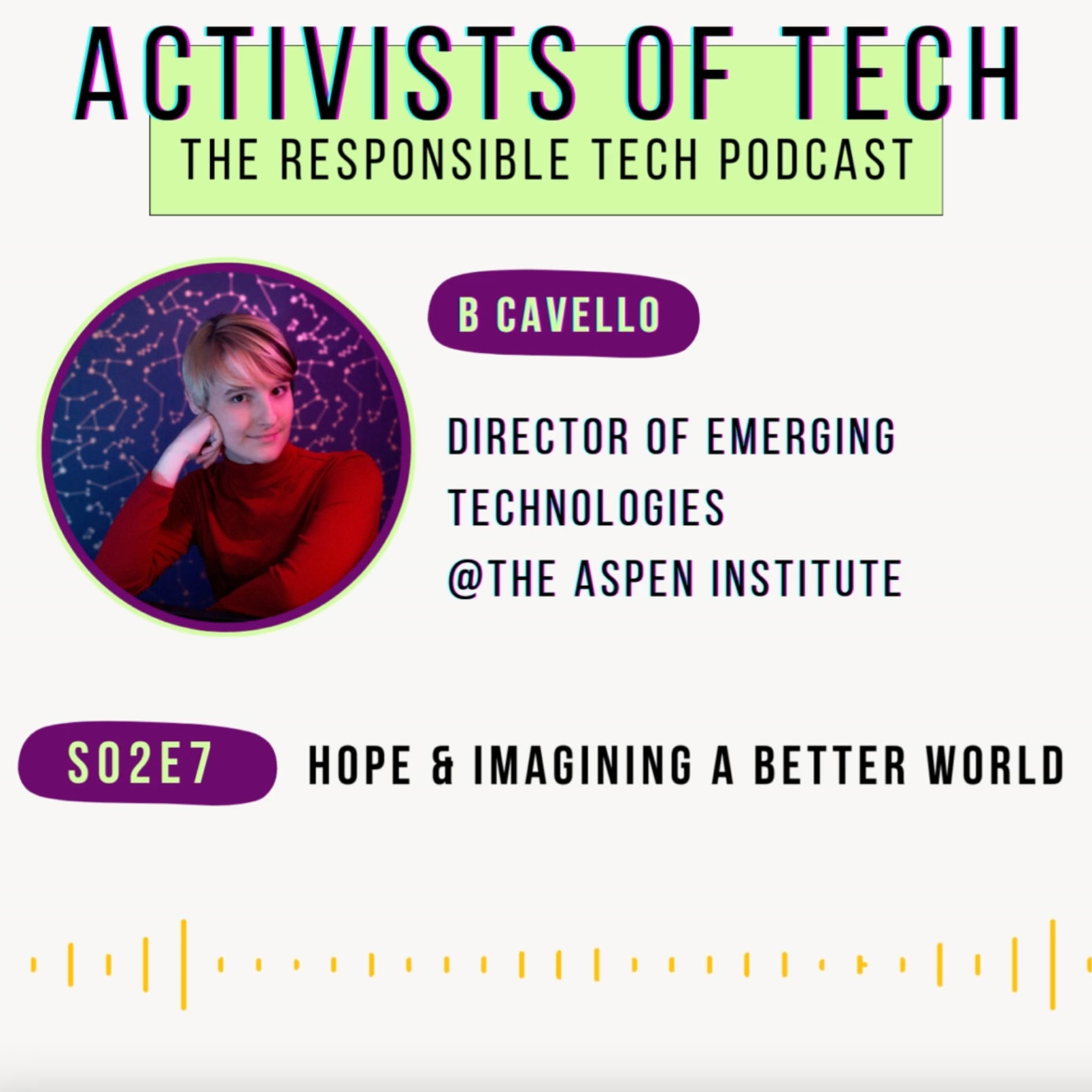 Hope & imagining a better world with B Cavello from the Aspen Institute | This episode was initially scheduled to be released in mid-December, but it was actually recorded last week, specifically one day after the American elections took place and after Trump was re-elected. B and I briefly talked about the elections in this episode, but I decided to edit and release earlier because B radically tries to move us forward and their dedication and energy made me feel so much better and hopefully this episode will make you feel better as well.In this episode, B Cavello, Director of emerging technologies at the @ Aspen Institute and I talked about responsible tech, what it looks like, what limits the design and development of ethical artificial intelligence, but also about the importance of media and tech literacy, and bringing diverse voices to the tech conversation.Created, hosted and produced by Mélissa M'Raidi-Kechichian. | 34m 34s | ||||||
| 11/5/24 | 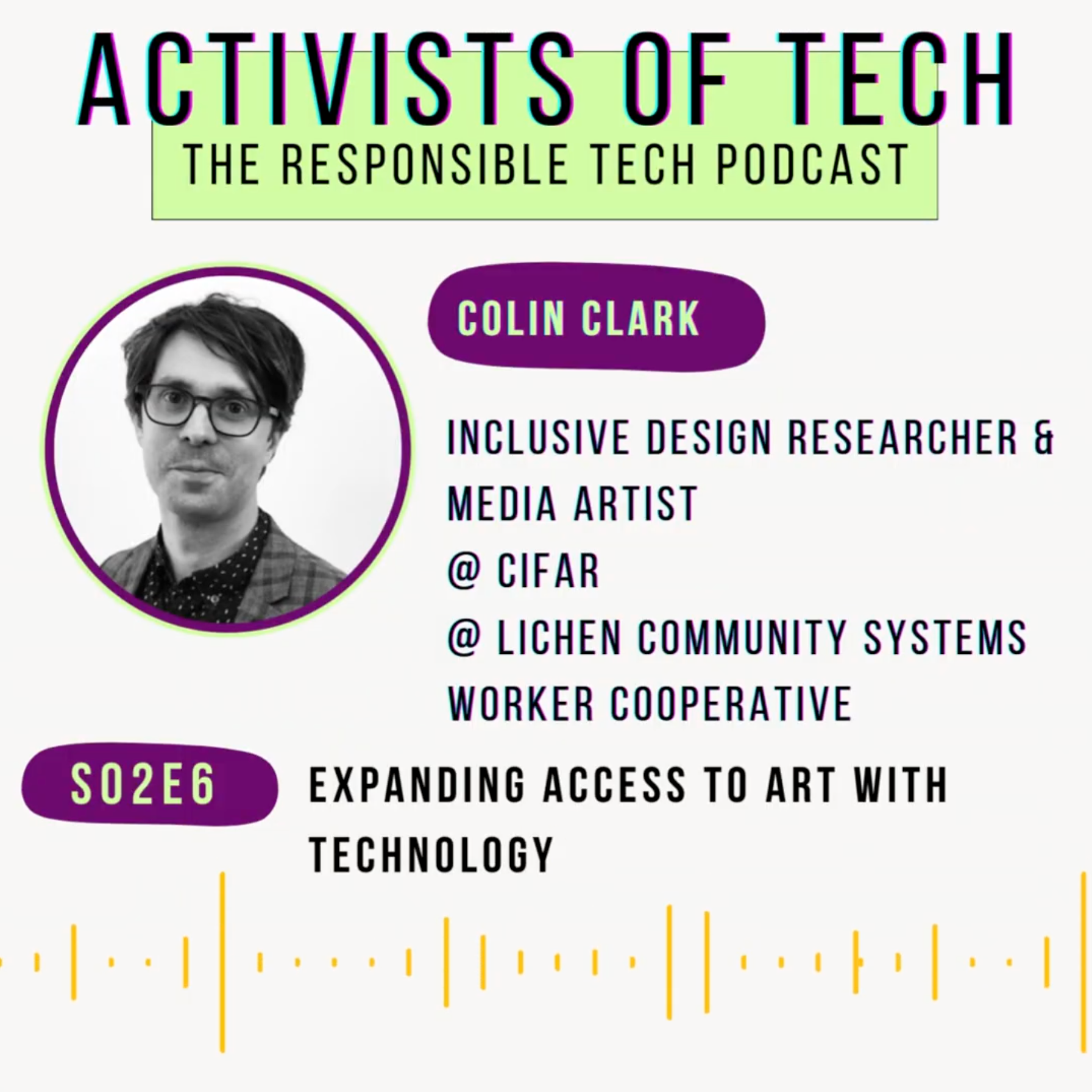 Expanding access to art using technology with Colin Clark | Culture, the arts, or what makes humans.. Humans. Yet it is not accessible to just everyone. When you think about it, how do you make a play accessible to visually or hearing impaired people? How can we use technology to translate art into senses they were not designed for in the first place? How does tech and art relate to disability justice?More often than not, people with disabilities are not included in the design process of artistic spaces that are not accessible and don’t accommodate bodies differing from the norm.In this episode, Colin Clark, inclusive designer and creative technologist and co-Founder of Lichen Community Systems Worker Cooperative Canada and Data Communities for Inclusion Solution Network at CIFAR joined me to talk about making the art world accessible with technology, the power of community led design, and move toward another yet related topic: the use of chat gpt by artists and the labor exploitation of the creative sector, and more!Created, hosted and produced by Mélissa M'Raidi-Kechichian. | 55m 51s | ||||||
| 10/29/24 | 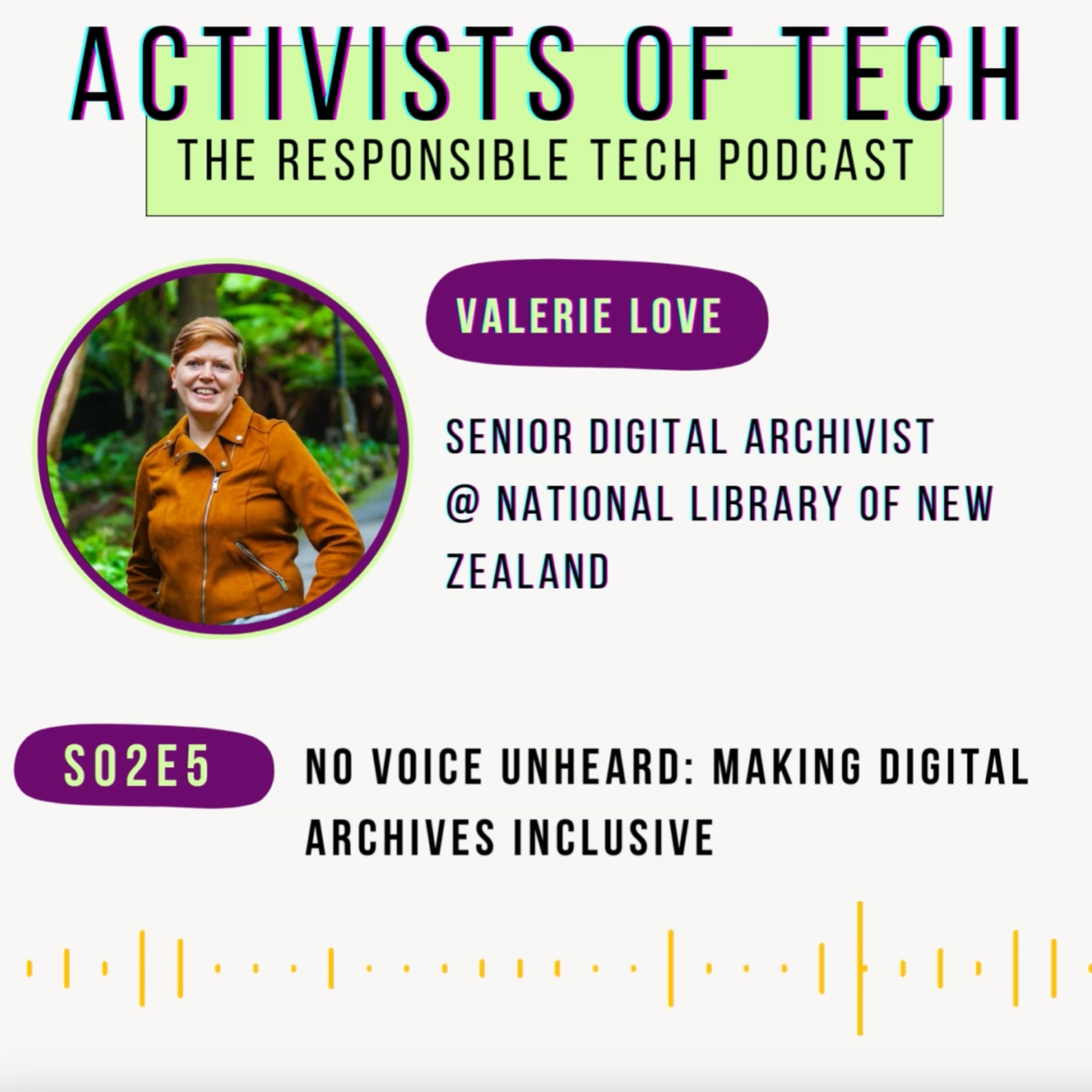 No voice unheard: Making digital archives inclusive with Valerie Love from the National Library of New Zealand | We produce a LOT of data, tweet for any reason, post a gazillion pictures online, and that somehow will give an idea to future generations about who we are and where we are at culturally speaking. Of course, and thankfully, not every digital content is archived, it has to have cultural or historical significance. But how do you determine that? Who should decide which stories get to be archived or unarchived? Are colonial dynamics taken into consideration when archiving contemporary records and what measures are being taken for archives to be inclusive? To answer these questions and more, I had the pleasure to welcome Valerie Love, Senior Digital Archivist at the Alexander Turnbull Library, which holds the archives and special collections for the National Library of New Zealand.Created, hosted and produced by Mélissa M'Raidi-Kechichian. | 41m 24s | ||||||
| 10/22/24 | 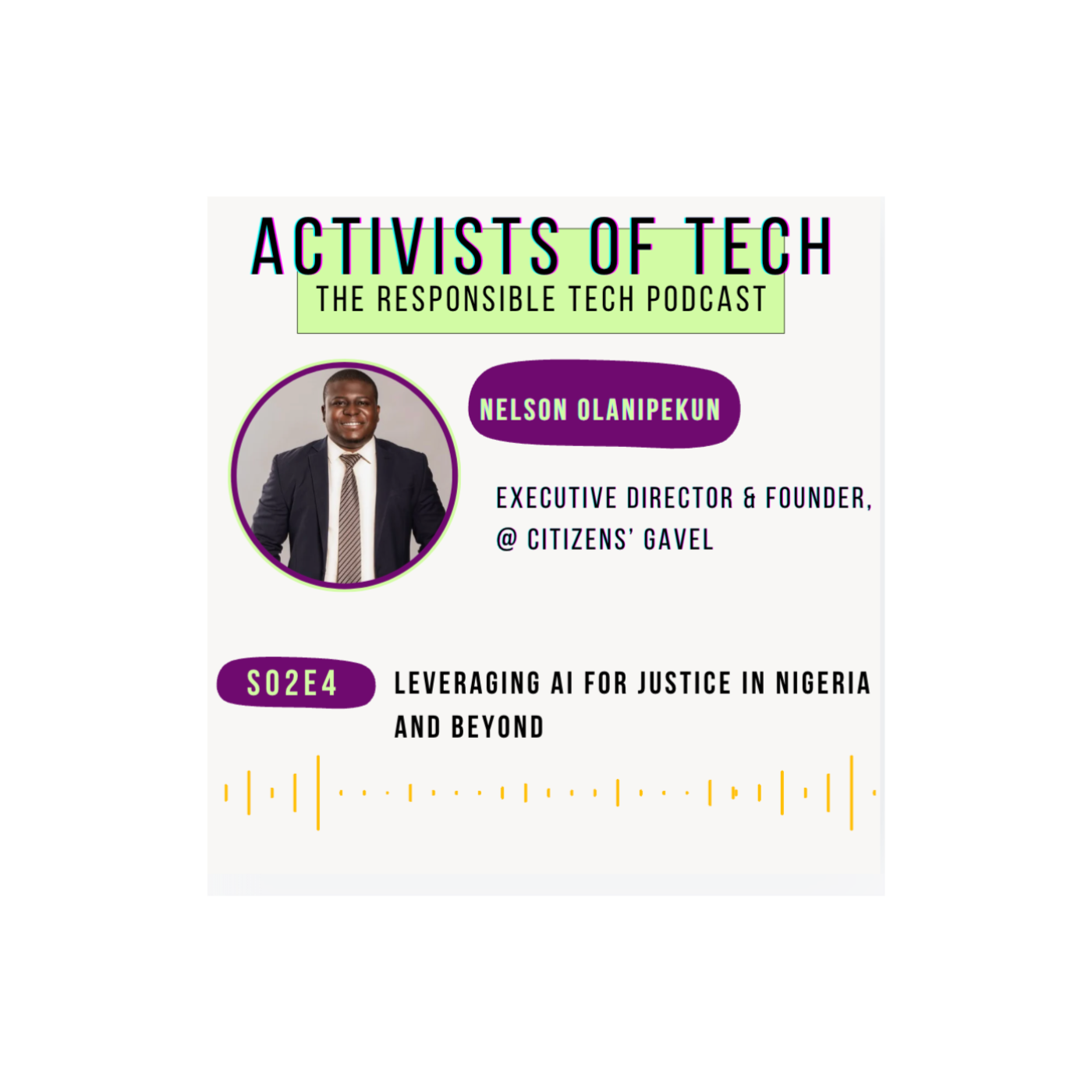 Leveraging AI for Justice in Nigeria and beyond with Nelson Olanipekun from Citizens' Gavel | Facing an injustice and requiring legal representation is a tedious, complex, and time-consuming process, on top of being expensive and not affordable by everyone who needs help. This hurdle greatly contributes to the prevalence of injustices, and today we are focusing on the case of a Nigerian non -profit, Citizens’ Gavel that is addressing this hurdle and leveraging AI to promote access to justice.Created, hosted and produced by Mélissa M'Raidi-Kechichian. | 22m 41s | ||||||
| 10/15/24 | 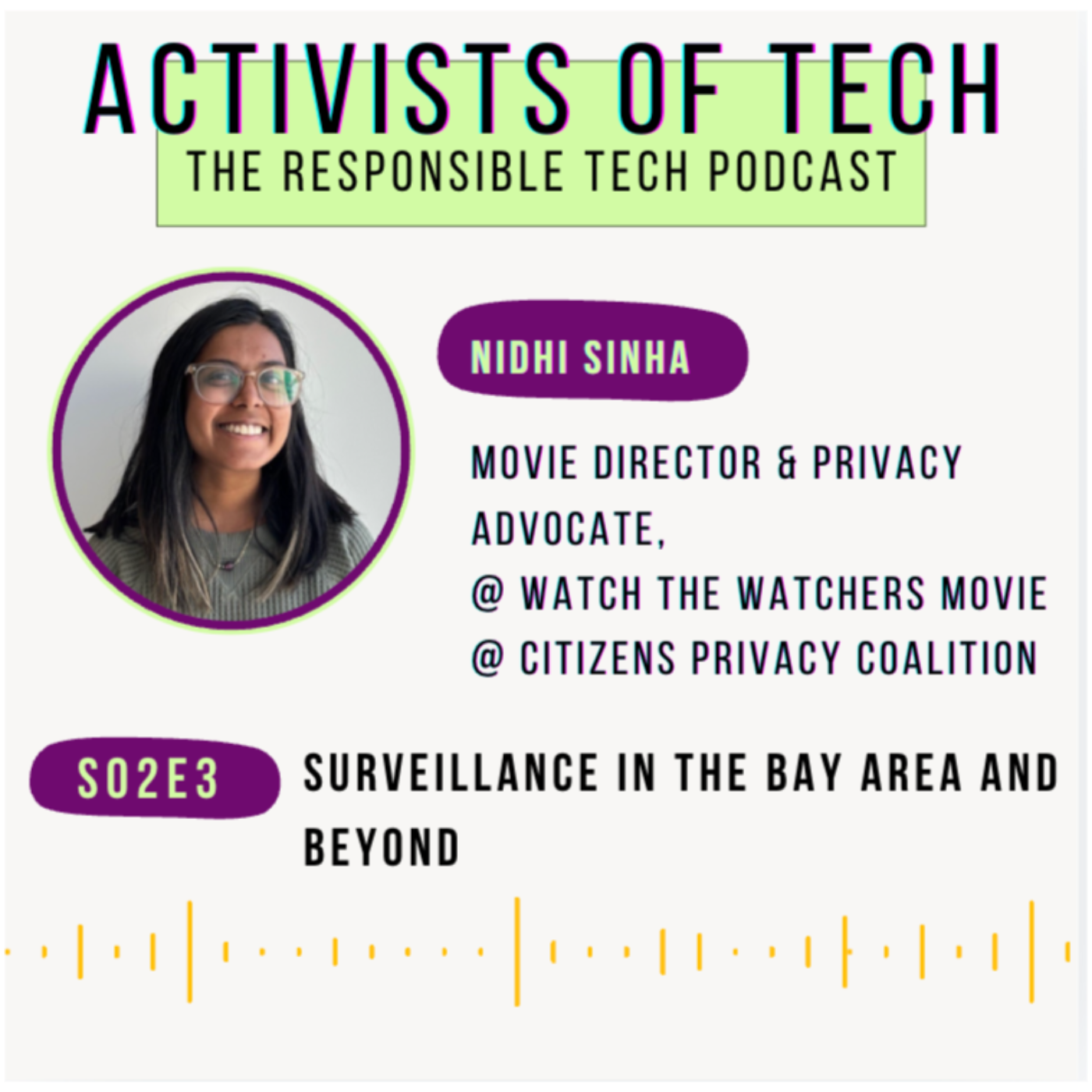 Surveillance in the Bay Area and beyond with Nidhi Sinha | Growing up in the Bay area with a future drawn for her, Nidhi Sinha did everything she was supposed to do: go to a private high school, pursue a degree in Computer Science and Mathematics, and work at a Big Tech company in the Bay. Until she got into AI ethics and burst the bubble she had grown in. What happens when surveillance happens in your own backyard, and the Big Tech companies you were told to reach for growing up are responsible for the harm of communities locally and beyond borders?Nidhi decided to get involved at CAIDP, at the Citizens Privacy Coalition, and recently to direct her first documentary on surveillance and privacy rights in the Bay area. In this episode, she talks about how Big Tech has impacted local Bay Area life, the growing wealth gap in the region, the extent of surveillance and most importantly what we can do to resist and fight back.Support the crowdfunding campaign: https://seedandspark.com/fund/watch-the-watchers?token=9a83801e4562a6e1e848ee4517b978856dfb832076e4e508745120edc4701853Created, hosted and produced by Mélissa M'Raidi-Kechichian. | 31m 33s | ||||||
| 10/8/24 | 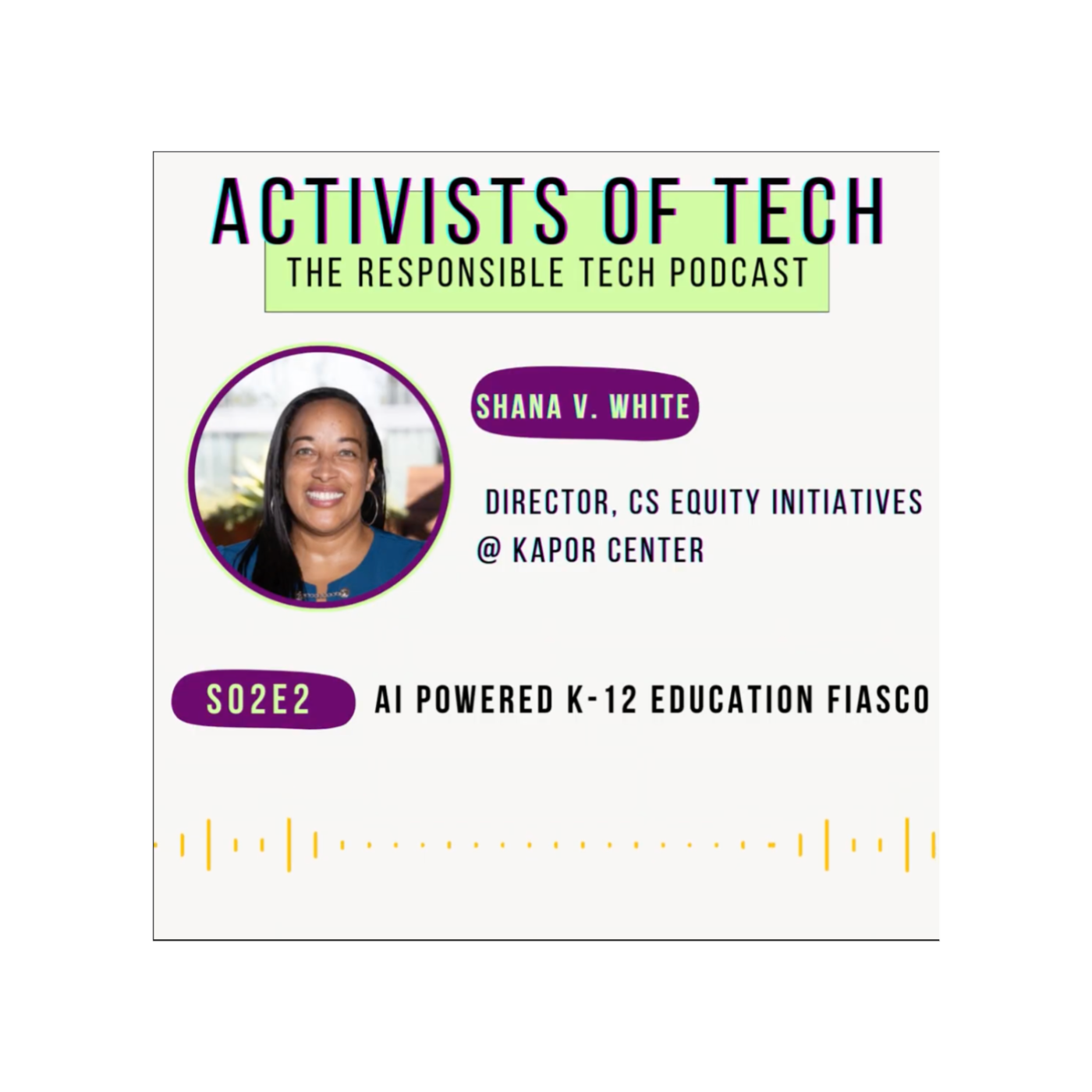 AI powered K-12 education fiasco with Shana V. White from the Kapor Center | AI products and features are becoming ubiquitous. When the targets of AI systems are children in school, it should be common sense that the impacts of these technologies should be assessed before reaching the “market” and the privacy of kids subjected to them should be the number one priority of school boards. Of course, it’s not, and serious questions arise. How does the AI hype and the mass deployment of AI “solutions” impact education in the United States? What are the risks and benefits for the educational system? Who is in charge and who does it impact? To answer these questions and more, I am thrilled to have welcomed the most ✨outspoken✨ person I know (and I know quite a few), Shana V White, who works at the intersection of racial justice and tech as the Director of CS equity initiatives at the Kapor Center.Created, hosted and produced by Mélissa M'Raidi-Kechichian. | 43m 45s | ||||||
| 10/1/24 | 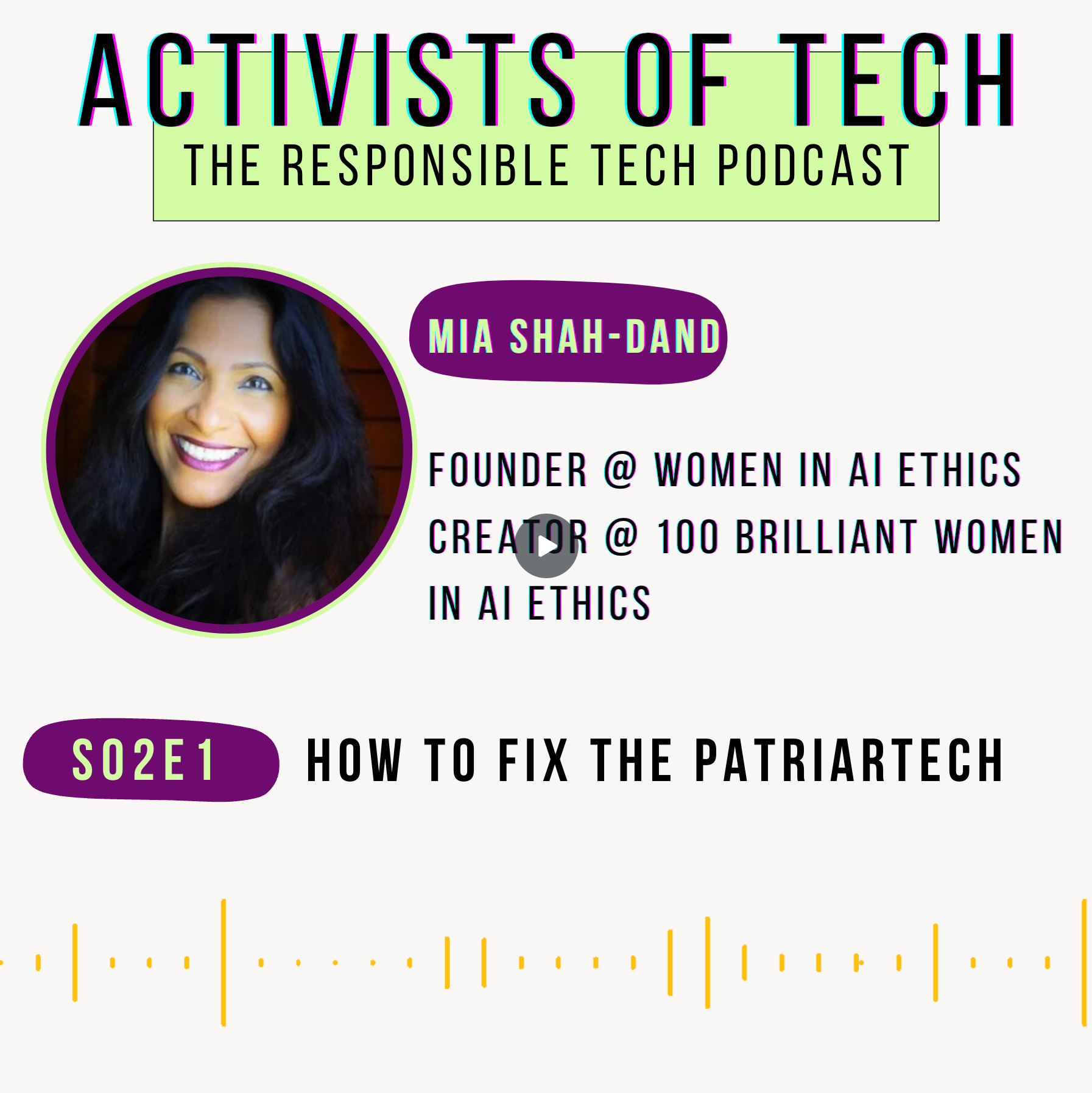 How to fix the patriartech with Mia Shah-Dand, founder of Women in AI ethics | Sexism and oppression are tied to culture, which in turn impacts the tech industry, tech design and deployment. To talk about the relationship between the patriarchy, women in tech, and how to fight back, I talked with Mia Shah-Dand, founder of Women in AI ethics and creator of the 100 Brilliant Women in AI Ethics. In this episode, Mia talks about her personal story and upbringing, what women have to put up with when they work in tech, gender based violence enabled by technologies, diversity in tech, and how to fight back to reclaim space.Created, hosted and produced by Mélissa M'Raidi-Kechichian. | 49m 48s | ||||||
| 5/31/24 |  Environmental justice, social media, and the promises of the Digital Services Act with Rachel Griffin, PhD candidate at Sciences Po Paris School of Law | The Digital Services Act was recently passed in the European Union, and I wondered how did this piece of regulation related to climate change and how did it impact online activism? In this episode, Rachel Griffin, PhD candidate and lecturer in law at Sciences Po Paris, talks about the intersections between platform regulation and digital justice, the impacts of tech on the environment, shadow banning, and more. Check out Rachel’s policy brief on environmental risks in the DSA: https://www.hertie-school.org/en/news/detail/content/climate-breakdown-as-a-systemic-risk-in-the-digital-services-actCreated, hosted and produced by Mélissa M'Raidi-Kechichian. | 37m 25s | ||||||
| 5/31/24 |  "Every bubble will burst at some point": digital rights, encryption, and the AI hype with Elina Eickstädt from the Chaos Computer Club | Did you know that encryption could save lives? In this episode, Elina Eickstaedt, spokesperson at the Chaos Computer Club, answers my questions with no BS about privacy, surveillance, German and European tech policies and their impacts, surveillance capitalism, and explains why tech solutionism is not the magical answer to all of our problems.Created, hosted and produced by Mélissa M'Raidi-Kechichian. | 31m 33s | ||||||
| 5/31/24 |  Decolonizing Digital Rights and the collective imaginary of technology with Laurence Meyer from the Digital Freedom Fund | What does it take for Big Tech to exist? Who does it take? What knowledge do we value and amplify in AI systems? In this episode, Laurence Meyer, Racial and Social Justice Lead at the Digital Freedom Fund and co-director at Weaving Liberation teaches us about the importance of decolonization, questioning the system, and how to do it. Our guest unpacks the narratives surrounding technology and AI, and she brings us on a hell of a ride to understand the relationship between tech, digital rights, data colonialism, colonization, and post-colonial culture. Check out weavingliberation.orgCreated, hosted and produced by Mélissa M'Raidi-Kechichian. | 48m 03s | ||||||
| 5/31/24 |  Free speech, content moderation, and the "killer switch" with Eliška Pírková from Access Now | What is the relationship between content moderation, social media organizing, censorship and the online space? How is one of our fundamental human rights, free speech, protected or not in the online space? In this episode, Eliška Pírková, Senior Policy Analyst and Global freedom of expression lead at Access Now, gives us expert insight on the topic.Created, hosted and produced by Mélissa M'Raidi-Kechichian. | 33m 03s | ||||||
| 5/31/24 |  Bye bye, Clearview AI ✌️: Greek digital rights advocacy in times of mass surveillance with Lamprini Gyftokosta from Homo Digitalis | Remember when Clearview AI got fined 20 million euros by the Hellenic Data Protection Authority for its intrusive Facial Recognition & data collection practices? Yeah, that wouldn’t have been possible without the incredible work of the non-profit Homo Digitalis. In this episode, Lamprini Gyftokosta, Director of Artificial Intelligence and Human Rights at Homo Digitalis, talks about mass surveillance in Greece, digital rights, and the three pillars of Homo Digitalis: raising awareness, advocacy, and litigation. PS: do NOT accept cookies!Created, hosted and produced by Mélissa M'Raidi-Kechichian. | 47m 27s | ||||||
Showing 25 of 36
Pitch Fit is a Pro feature
See how bookable this show is for guests, which brands already advertise, the per-episode ad value, and the best-fit guest and sponsor profile. The numbers are blurred on the free plan.
How readily this show books outside guests like you.
How proven this show is for host-read sponsorships.
For Guests
ProFor Advertisers
ProUpgrade to Pro to unlock guest cadence, sponsor categories, fit scores, and per-episode ad value for this show.
Chart Positions
1 placement across 1 market.
Chart Positions
1 placement across 1 market.