

Insights from recent episode analysis
Audience Interest
Podcast Focus
Publishing Consistency
Platform Reach
Insights are generated by CastFox AI using publicly available data, episode content, and proprietary models.
Most discussed topics
Brands & references
Est. Listeners
Insufficient chart data. Estimates will improve as the show charts.
- Per-Episode Audience
Est. listeners per new episode within ~30 days
N/A🎙 ~2x weekly·214 episodes·Last published 2w ago - Monthly Reach
Unique listeners across all episodes (30 days)
N/A - Active Followers
Loyal subscribers who consistently listen
N/A
Market Insights
Platform Distribution
Reach across major podcast platforms, updated hourly
Total Followers
—
Total Plays
—
Total Reviews
—
* Data sourced directly from platform APIs and aggregated hourly across all major podcast directories.
On the show
From 10 epsHosts
Recent guests
Recent episodes
Self-Determination, Employment, and Community Participation for People with Disabilities: A Conversation with Marco Damiani
Jun 11, 2026
Unknown duration
Let’s Get to Work:” Disability Employment Policy and Economic Opportunity: A Conversation with Dr. Purvi Sevak
Jun 9, 2026
Unknown duration
ADALive! Episode 154: The Access Coalition: Creating More Inclusive Retail Spaces
Jun 2, 2026
Unknown duration
ADALive! Episode 153: Disability Studies and Ethics as a Path to Equality and Justice
May 5, 2026
44m 38s
Episode 152: New Opportunities for Job Success for Workers who are Blind: The Monarch Rise Project
Mar 31, 2026
40m 48s
Social Links & Contact
Official channels & resources
Official Website
Login
RSS Feed
Login
| Date | Episode | Topics | Guests | Brands | Places | Keywords | Sponsor | Length | |
|---|---|---|---|---|---|---|---|---|---|
| 6/11/26 | 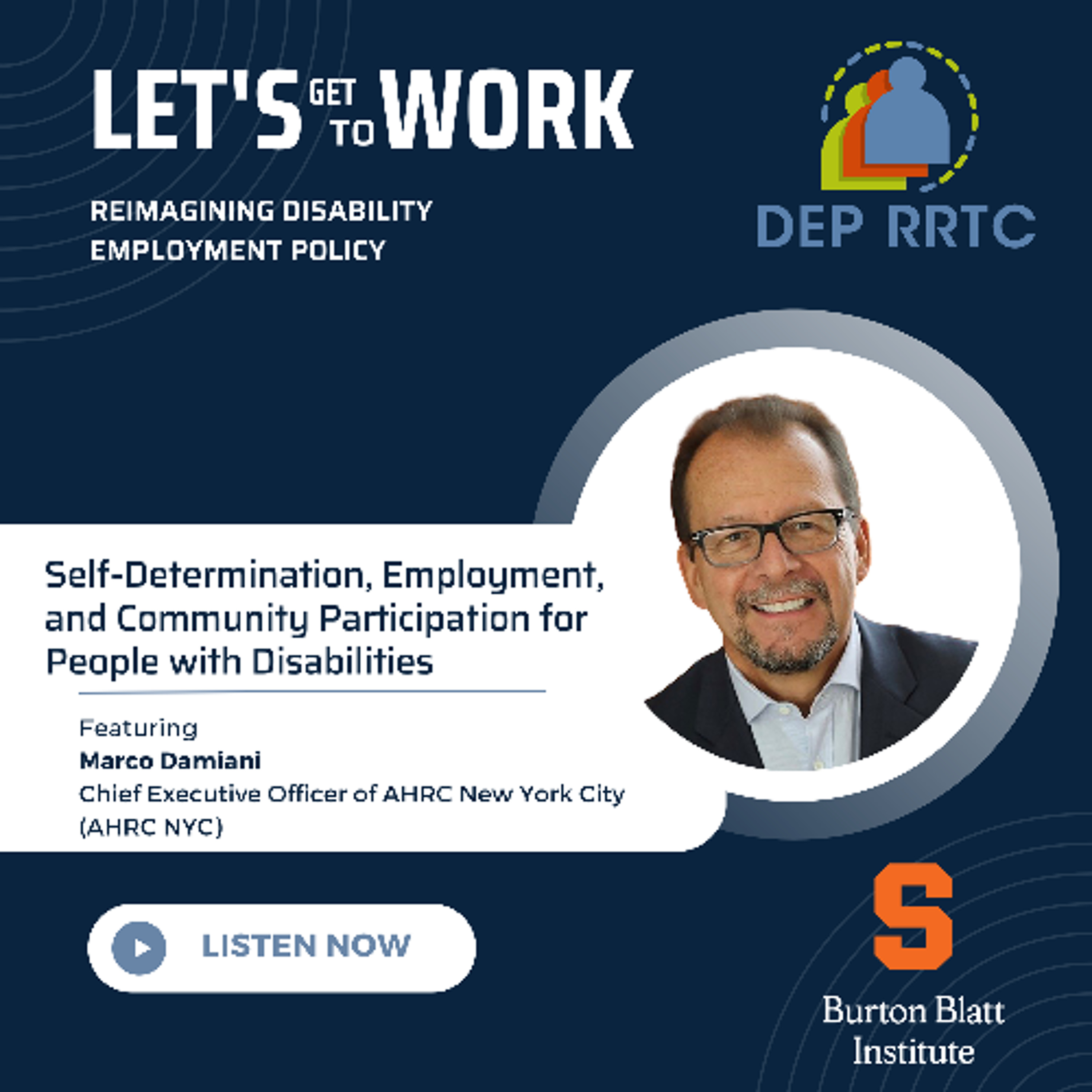 Self-Determination, Employment, and Community Participation for People with Disabilities: A Conversation with Marco Damiani | Marco Damiani, Chief Executive Officer of AHRC New York City (AHRC NYC), joins the DEP RRTC’s Let’s Get to Work podcast hosted by Dr. Peter Blanck, University Professor and Chairman of the Burton Blatt Institute at Syracuse University and Principal Investigator of the DEP RRTC. Drawing on decades of experience supporting people with disabilities, Marco discusses his journey from working as a direct support professional to leading one of the largest organizations supporting people with intellectual and developmental disabilities in the U.S. He highlights the movement from institutionalization to community-based supports and services and the importance of self-advocacy, self-determination, and Supported Decision-Making. Marco and Peter also emphasize employment as a way to advance independence and community participation. Using AHRC NYC's nationally recognized initiatives as examples, they show how meaningful, competitive work benefits people with disabilities, employers, communities, and the broader economy. | — | ||||||
| 6/9/26 | 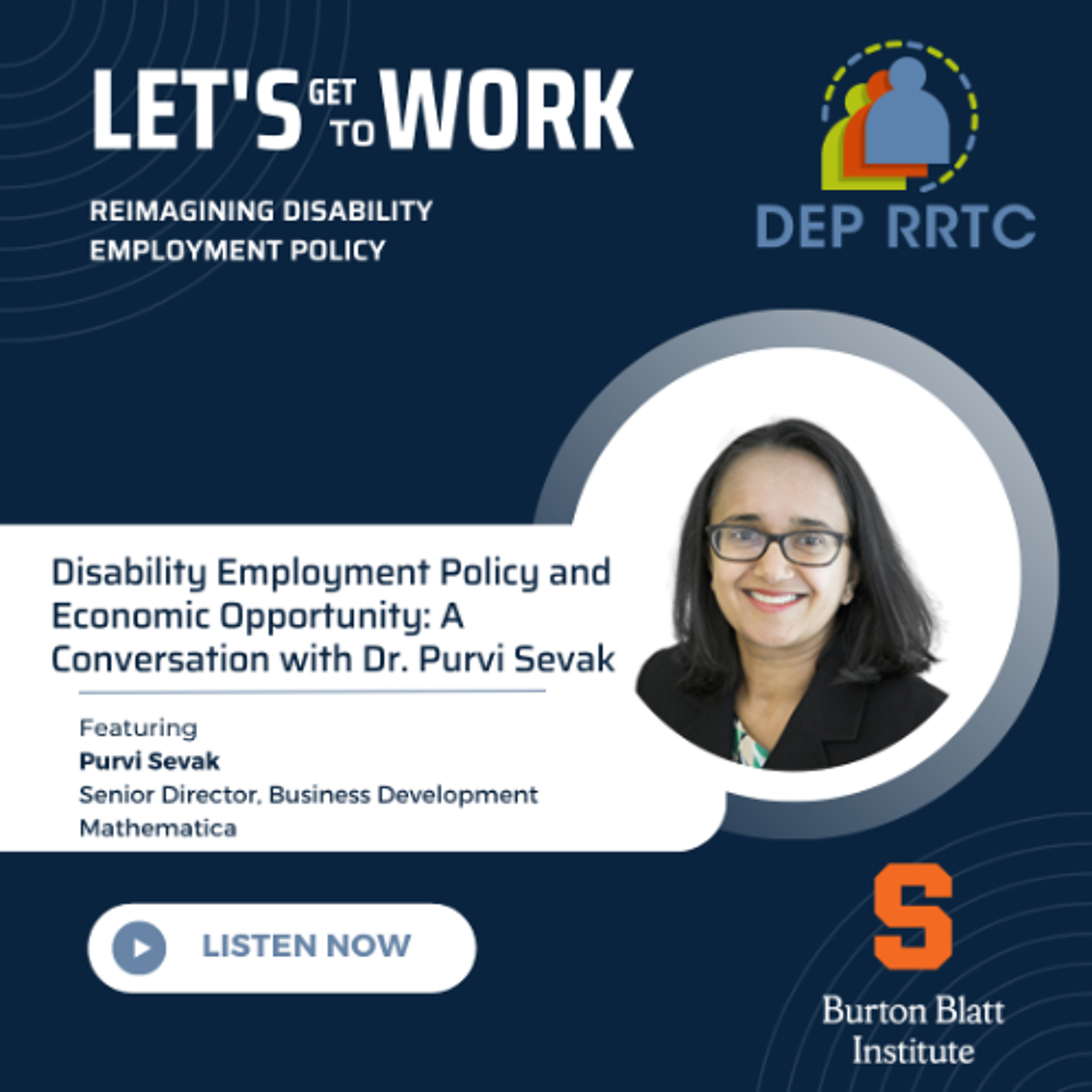 Let’s Get to Work:” Disability Employment Policy and Economic Opportunity: A Conversation with Dr. Purvi Sevak | Dr. Purvi Sevak, Senior Director of Mathematica’s Disability Practice, joins the DEP RRTC’s Let’s Get to Work podcast hosted by Dr. Peter Blanck, University Professor and Chairman of the Burton Blatt Institute at Syracuse University and Principal Investigator of the DEP RRTC. Dr. Sevak discusses her path from an undergraduate student studying health policy to her work at Mathematica, the evolution and importance of disability employment policy, and her research with the DEP RRTC examining how local infrastructure affects employment opportunities for people with disabilities. Drawing on both professional and personal experiences, Dr. Sevak highlights the importance of disability employment policy to the broader economy. “Making sure that everyone who wants to work can work and contribute is important,” she states. “If people with disabilities are employed and earning more than they could be making on SSI, they're going to be spending more money and just contributing to the local economy, buying more things, renting apartments.” | — | ||||||
| 6/2/26 | 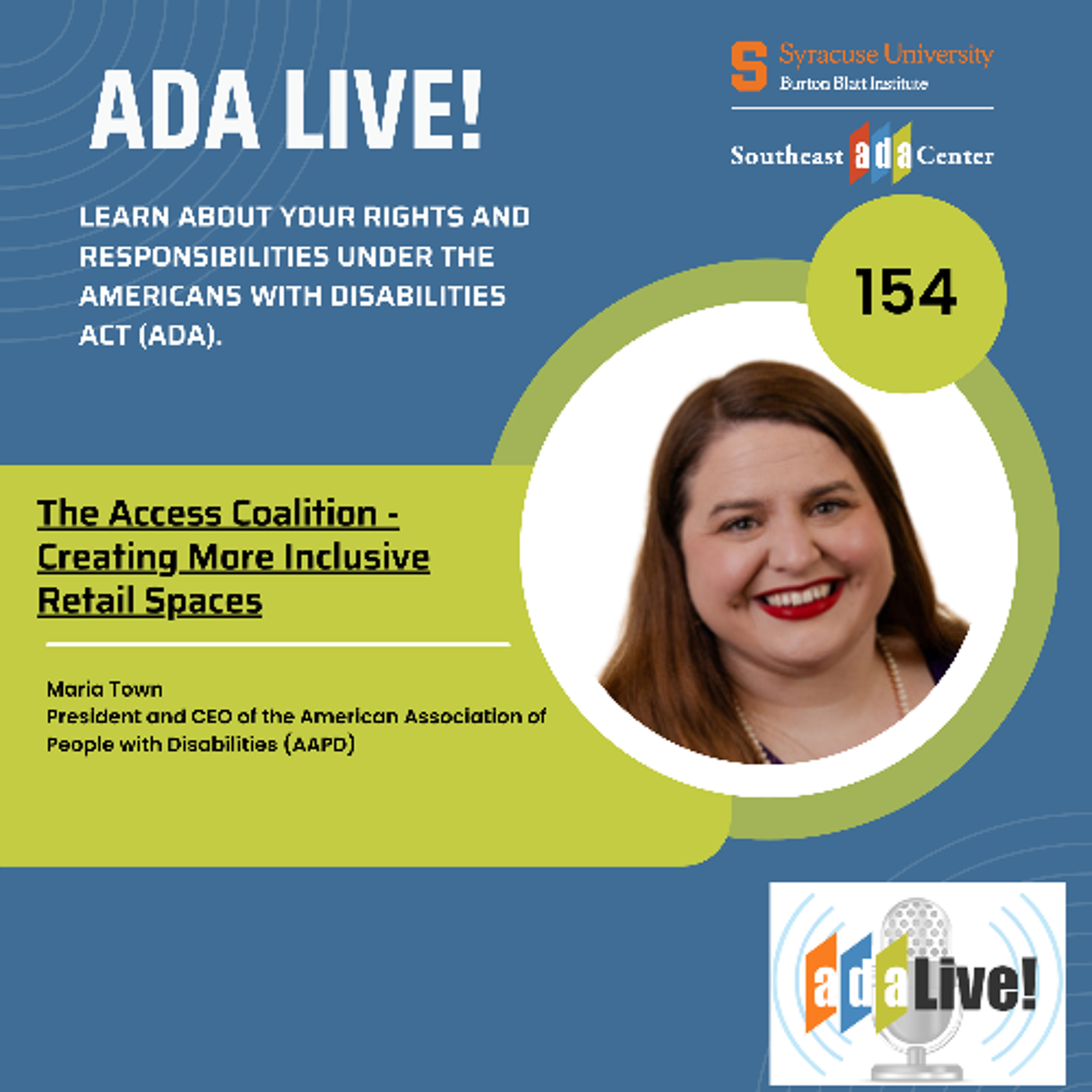 ADALive! Episode 154: The Access Coalition: Creating More Inclusive Retail Spaces | Archive, Bios, Description, Transcripts for Episode 154: The Access Coalition: Creating More Inclusive Retail Spaces available at: https://adalive.org/episodes/episode-154/ Under Title III of the Americans with Disabilities Act, retail spaces are required to provide goods and services to customers with disabilities equal to the goods and services offered to customers without disabilities. This allowed businesses to benefit from the patronage of all customers. Thirty-six years after the ADA became law, many businesses are still not fully accessible to people with disabilities. Recognizing that the consumer spending power of people with disabilities worldwide is over $13 trillion annually, beginning in 2024 Walmart and the American Association of People with Disabilities, or AAPD, began working together on this problem. They created the Access Coalition as a place where business competitors and partners could move beyond basic ADA compliance to reimagine what inclusive, accessible retail space could look like. To tell us more about this ambitious initiative, we have with us Maria Town. She is president and CEO of the American Association of People with Disabilities, a cross-disability organization dedicated to increasing political and economic power of people with disabilities. | — | ||||||
| 5/5/26 | 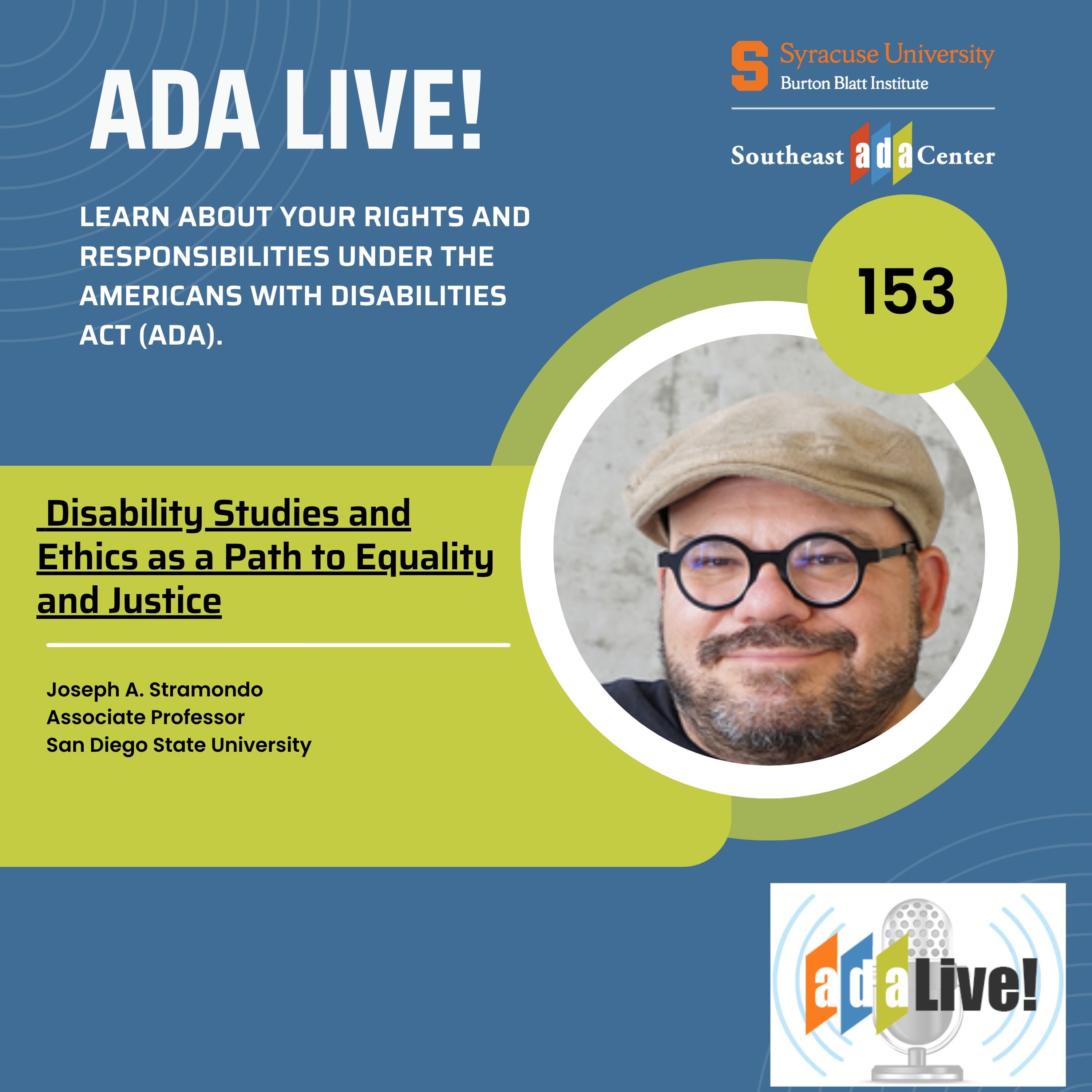 ADALive! Episode 153: Disability Studies and Ethics as a Path to Equality and Justice✨ | disability studiesethics+4 | Dr. Joseph A. Stramondo | San Diego State UniversityBurton Blatt Institute+5 | — | disabilityethics+5 | — | 44m 38s | |
| 3/31/26 | 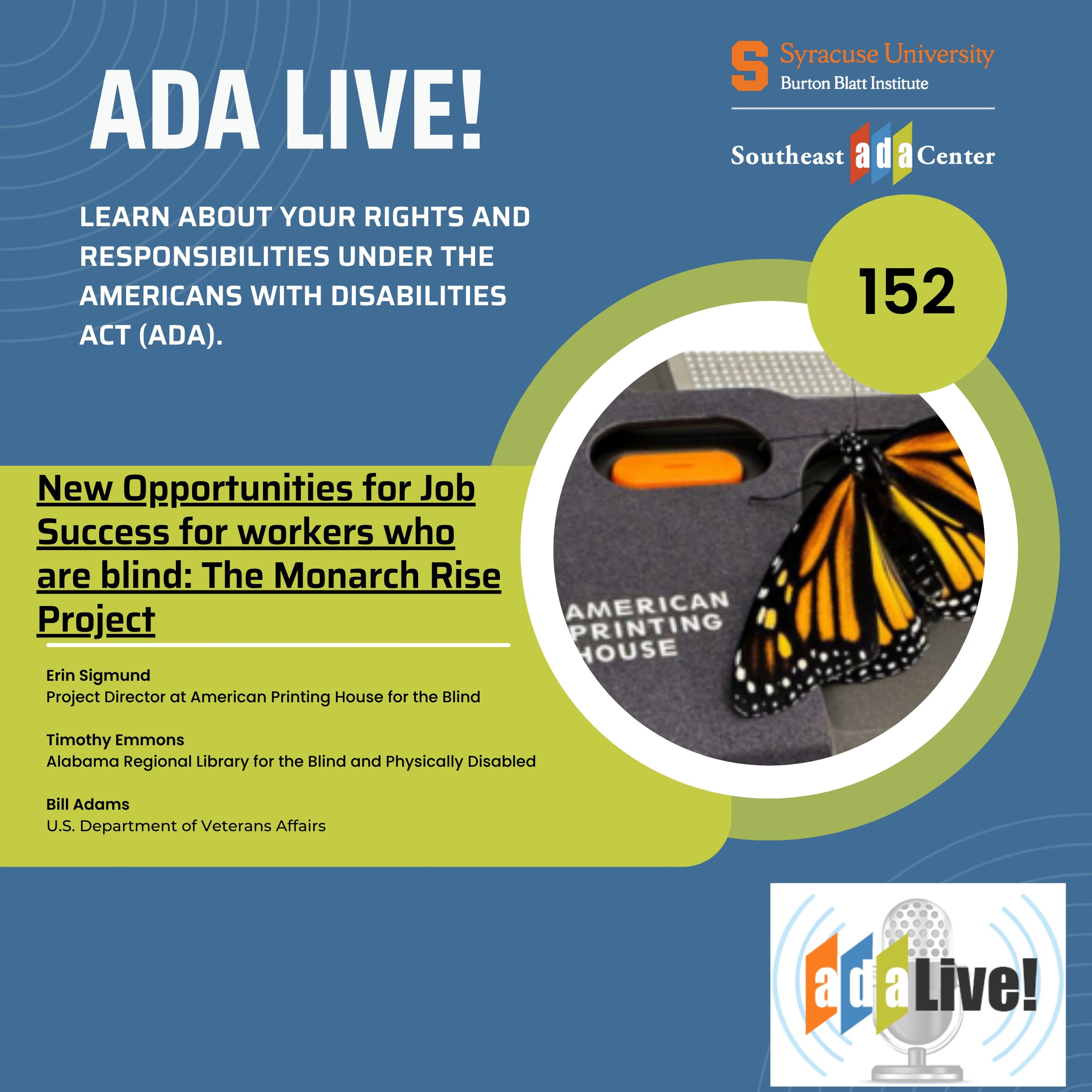 Episode 152: New Opportunities for Job Success for Workers who are Blind: The Monarch Rise Project✨ | employment for blind workersMonarch RISE project+3 | Erin SigmundTim Emmons+1 | American Printing House for the BlindU.S. Census Bureau+1 | Louisville, Kentucky | blindnessemployment+4 | — | 40m 48s | |
| 3/27/26 |  Let's Get To Work: Knowledge Translation and the Future of Disability Employment Policy✨ | disability employmentknowledge translation+3 | Jonathan MartinisBarry Whaley | DEP RRTCSoutheast ADA Center+2 | — | disabilityemployment policy+4 | — | 35m 20s | |
| 3/13/26 |  Let's Get To Work: The Business Case for Employing People with Disabilities✨ | disability employmentbusiness benefits+3 | Beth Sirull | National Organization on DisabilityBurton Blatt Institute+1 | — | disability employmentbusiness case+3 | — | 28m 56s | |
| 3/4/26 |  Episode 151: When Eating Is a Disability Rights Issue✨ | disability rightsneurodiversity+4 | Naureen Hunani | Registered Dieticians or RDs for NeurodiversitySoutheast ADA Center | — | disability rightsneurodiversity+5 | — | 45m 18s | |
| 2/3/26 |  Episode 150: A Self-Advocate Asks Questions About Using Supported Decision-Making✨ | Supported Decision-Makingself-advocacy+3 | Leo True Frost | Burton Blatt InstituteJenny Hatch case | — | Supported Decision-Makingself-advocate+3 | — | 37m 46s | |
| 2/2/26 |  Let's Get To Work: Disability and Employment Policy: A Conversation with Lex Frieden✨ | disability rightsemployment policy+4 | Lex Frieden | Burton Blatt InstituteSyracuse University+2 | — | disabilityemployment+5 | — | 54m 58s | |
Want analysis for the episodes below?Free for Pro Submit a request, we'll have your selected episodes analyzed within an hour. Free, at no cost to you, for Pro users. | |||||||||
| 1/6/26 |  Episode 149: Holiday Hospitality for Guests with Disabilities✨ | holiday hospitalityaccessibility+3 | Nancy Horton | Mid-Atlantic ADA Center | — | accessibilityholidays+3 | — | 52m 18s | |
| 12/3/25 |  ADALive! Episode 148 : Housing, Disability Rights, and Planning Accessible Communities✨ | housing rightsdisability rights+5 | Robin MalloyPeter Blanck | Southeast ADA CenterAmericans with Disabilities Act | — | housingdisability rights+6 | — | 36m 09s | |
| 11/4/25 |  Episode 147: Top Technical Assistance Questions with the Southeast ADA Center✨ | Americans with Disabilities Acttechnical assistance+4 | Jenny Sykes | Southeast ADA CenterAmericans with Disabilities Act | — | ADAdisability rights+5 | — | 25m 52s | |
| 10/31/25 |  Episode 21: Long COVID: An Emerging, Essential Research Area | Vidya Sundar and Debra Brucker, co-principal investigators of the University of New Hampshire’s new Disability and Rehabilitation Research Project (DRRP) on Living and Working with Long COVID and Disabilities, funded by the National Institute on Disability, Independent Living, and Rehabilitation Research (NIDLRR), discuss their proposed research activities to be implemented over the next five years. A critical piece of their research is to build on their prior study on the use and impact of “job crafting,” or how individuals can redesign their jobs to better align with their strengths without having to self-identify with a disability and rely on the formal disability accommodation process. To learn more about job crafting, and the other research projects to be implemented relating to people with pre-existing disabilities who have Long COVID, listen to this podcast. | — | ||||||
| 10/31/25 |  Episode 20: Long COVID and Disability Employment Policy | Sharon Rennert, senior attorney with the ADA Division of the Equal Employment Opportunity Commission, has played a leading role in the development of their policy interpretations of the Americans with Disabilities Act and the Rehabilitation Act. In this podcast, Sharon explains the protections for people with disabilities in employment and how they apply to people with Long COVID. Rennert describes the importance for employers to understand the protections that job applicants and employees with disabilities have in the workplace, and the related responsibility for people with disabilities to understand the process for securing needed accommodations that enable them to perform the essential functions of their job. | — | ||||||
| 10/31/25 |  Episode 19: Accommodations in the Era of Long COVID | Professor Yana Rodgers, Rutgers University and Professor Jennifer Cohen, Miami University discuss their collaborative research about Long COVID, disability and accommodation. Their research examines the prevalence of Long COVID across different demographic groups, and the extent with which workers with impairments associated with Long COVID have benefitted from remote work. People with pre-existing disabilities, women, sexual and gender minorities, individuals without college degrees and Hispanic people are more likely to experience Long COVID. These groups are also more likely to be clustered in jobs less amenable to remote work. Rodgers and Cohen suggest other types of accommodations for employers to consider, including flexible scheduling and task-sharing that re-evaluates essential job functions. | — | ||||||
| 10/31/25 | 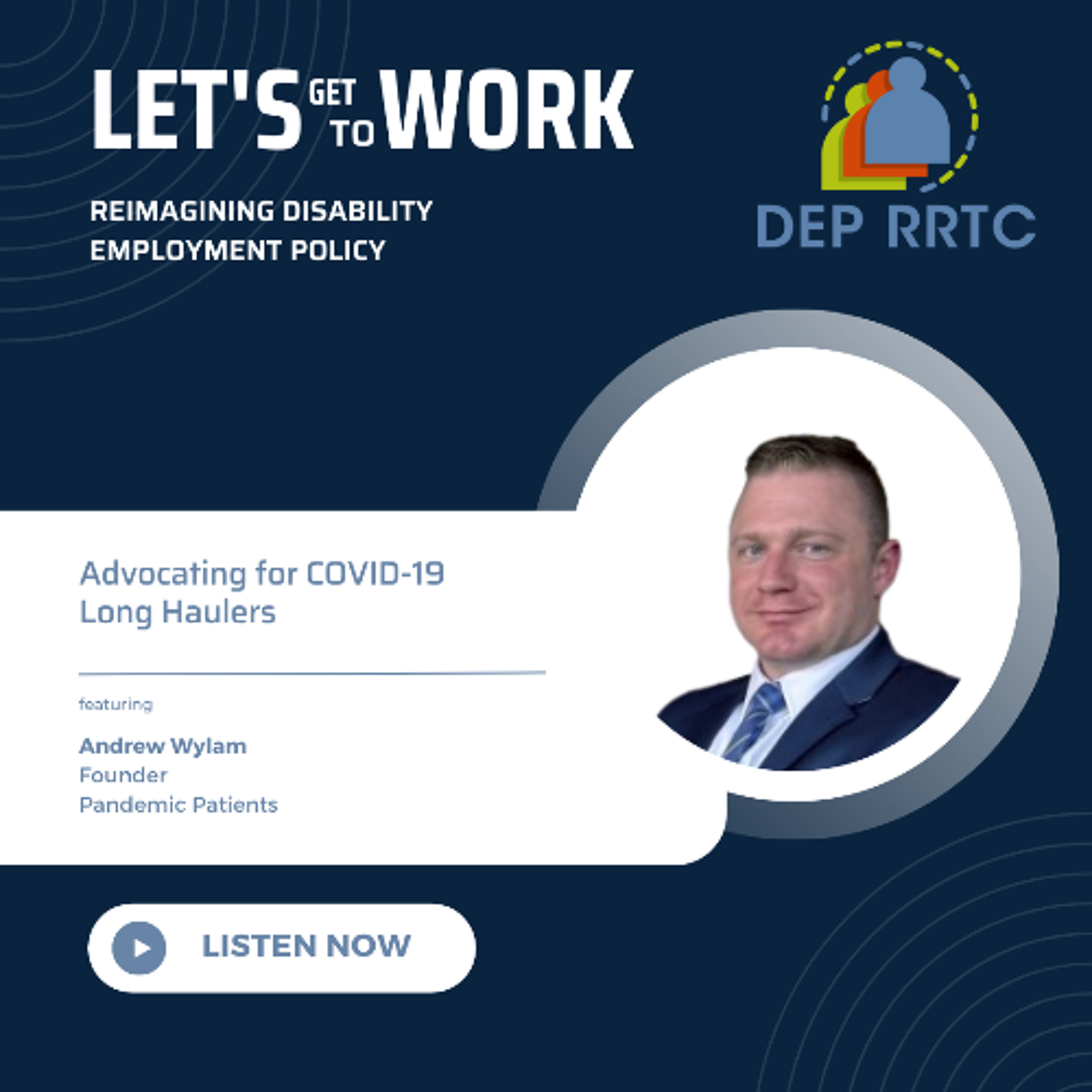 Episode 18: Advocating for Long Haulers | Pandemic Patients founder Andrew Wylam discusses the reasons he created the organization, and his vision for future national efforts to address issues facing individuals with disabilities with Long COVID. The organization also manages a COVID 19 Advocacy Center to connect individuals with Long COVID with policy makers in support of legislative proposals that will improve access to health services and expansion of family and medical leave policies. His organization offers a Legal Assistance Network that provides attorneys who volunteer their time to assist individuals with Long COVID with such issues as disability discrimination in the workplace and access to social security disability benefits. He explains some of the challenges he has encountered as he has advocated for policies that are shaped around Long COVID, but also discusses the importance of supporting individuals with Long COVID on a one-on-one basis to help them with their new daily challenges. | — | ||||||
| 10/31/25 | 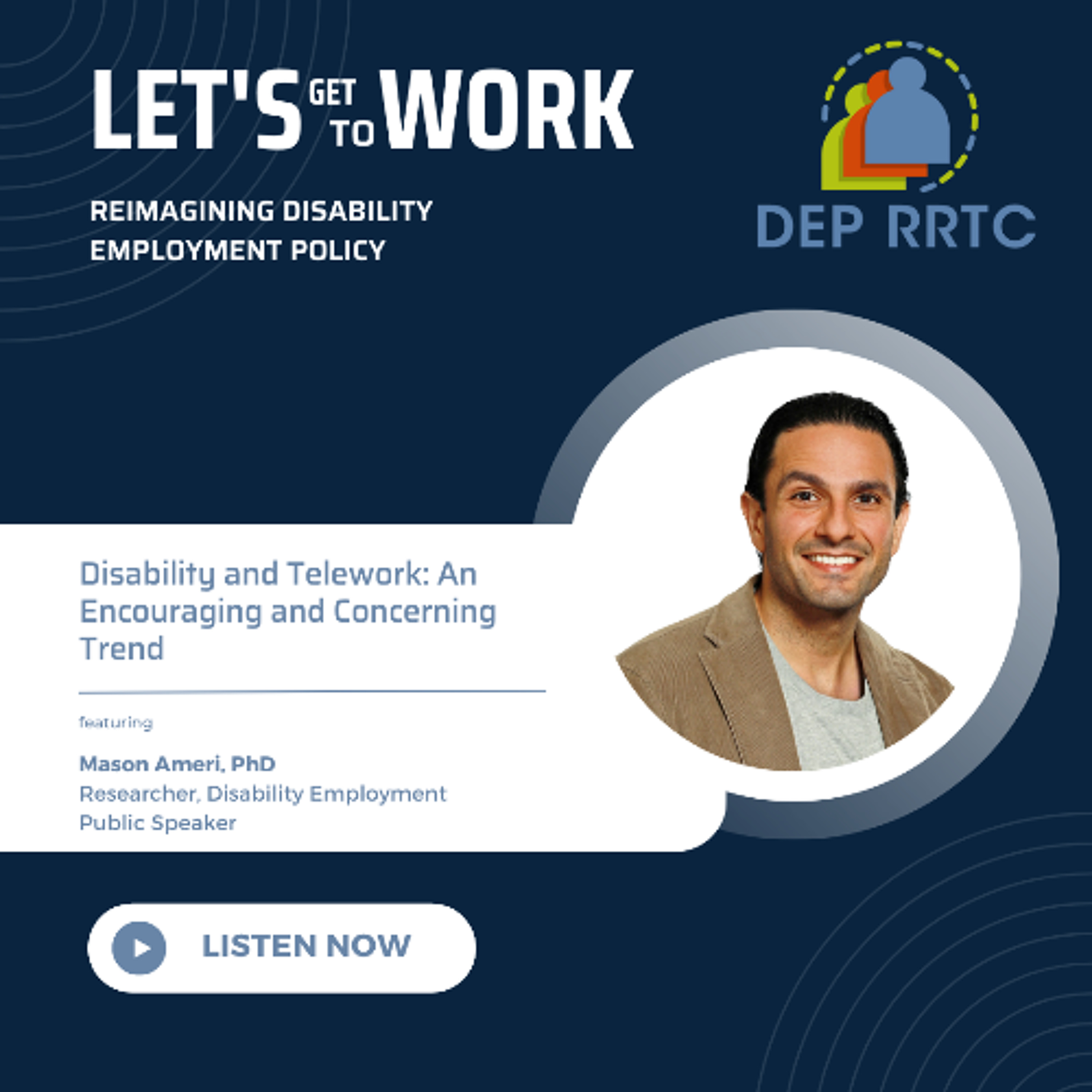 Episode 17: Disability and Telework: An Encouraging and Concerning Trend | Mason Ameri, associate professor at the Rutgers University Business School, describes how the pandemic has transformed the outlook of disability employment. Tight labor markets have demonstrated an increased willingness by employers to have remote workers, and people with disabilities are helping meet this demand. However, the growth of telework is more likely in white collar jobs, and workers with disabilities are more concentrated in blue collar jobs and service positions. There is a need for more research to understand how employers can restructure jobs where nonessential tasks are done remotely as well as increased understanding of remote work as a reasonable accommodation under the ADA with other supports that make that possible. There remain unanswered questions as to whether remote workers will be put to a different standard in proving performance necessary for career advancement, challenged by less real time interaction face-to-face with supervisors. | — | ||||||
| 10/31/25 | 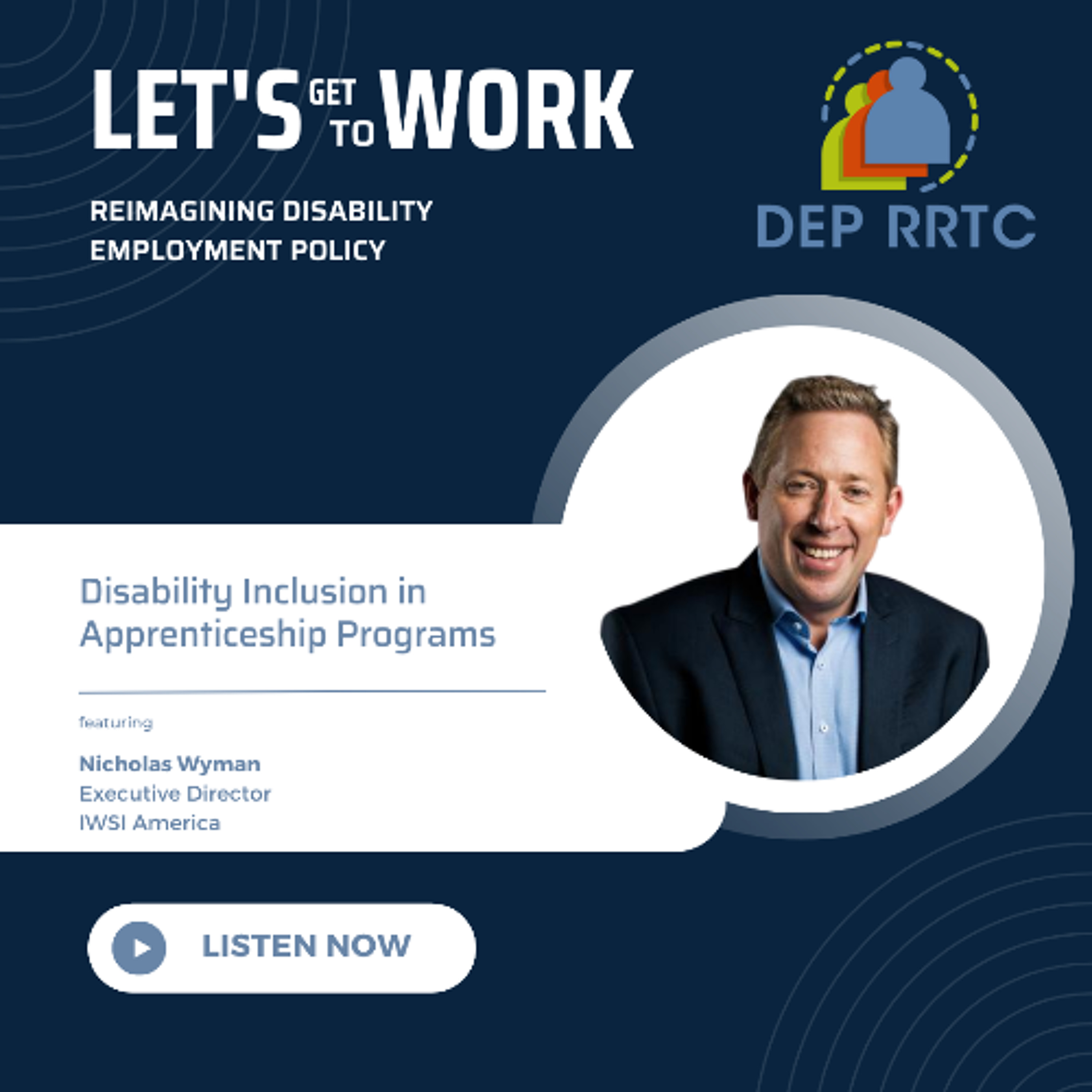 Episode 16: Advancing Disability Inclusion in Apprenticeship Programs | Nicholas Wyman, executive director of the Institute for Workforce Skills and Innovation, describes the value that apprenticeships offer in addressing disability employment disparities. In doing so, he describes the obstacles that people with disabilities face in seeking employment, whether outright discriminatory assumptions or longstanding practices that may have good intentions but have adverse consequences for people with disabilities. It is vital with continued skilled labor shortages for employers to rethink the application processes and coordinated support systems to enable disabled people to succeed in inclusive apprenticeships. | — | ||||||
| 10/31/25 | 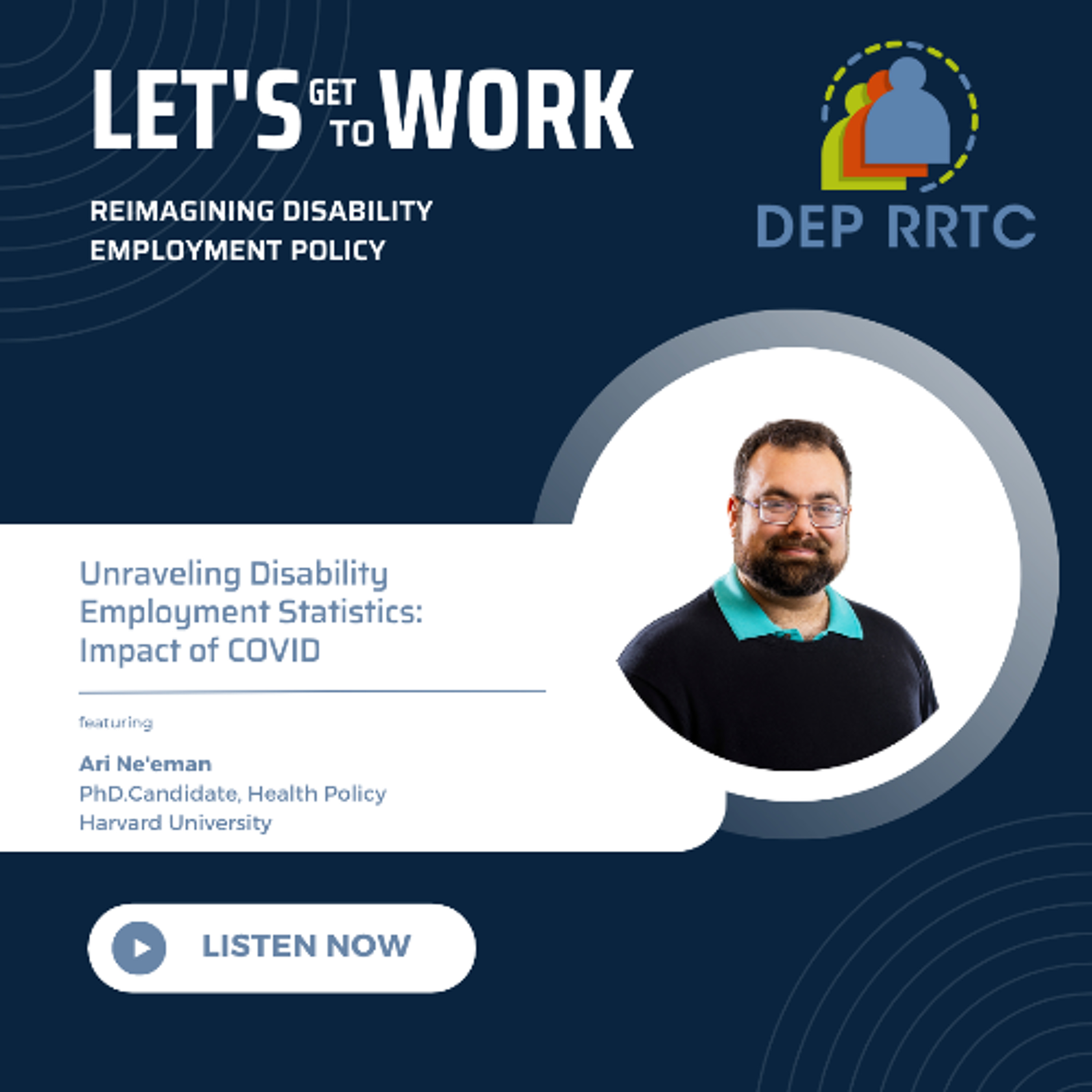 Episode 15: Unraveling Disability Employment Statistics: Impact of COVID | Ari Ne’eman, doctoral candidate in health policy at Harvard University, says that the numbers demonstrate the extraordinary impact the COVID-19-induced shift to expanded telework had on the employment opportunities for people with disabilities, but even those don’t tell the complete story regarding what remote work means for disability employment. It is a situation reflective of the gains prospective employees with disabilities experienced because of the pandemic and the parallel economic recession, Ari Ne’eman, doctoral candidate in health policy at Harvard University, says in this episode. The overnight shift to remote work for much of the general workforce because of the pandemic has made it more difficult for employers to argue that physical presence in the workplace is an essential component in job duties, Ne’eman points out, and this is the essence of how disability employment has benefited from remote work. That deconstruction of the perceived importance of physical presence in the workplace needs to be normalized. | — | ||||||
| 10/31/25 | 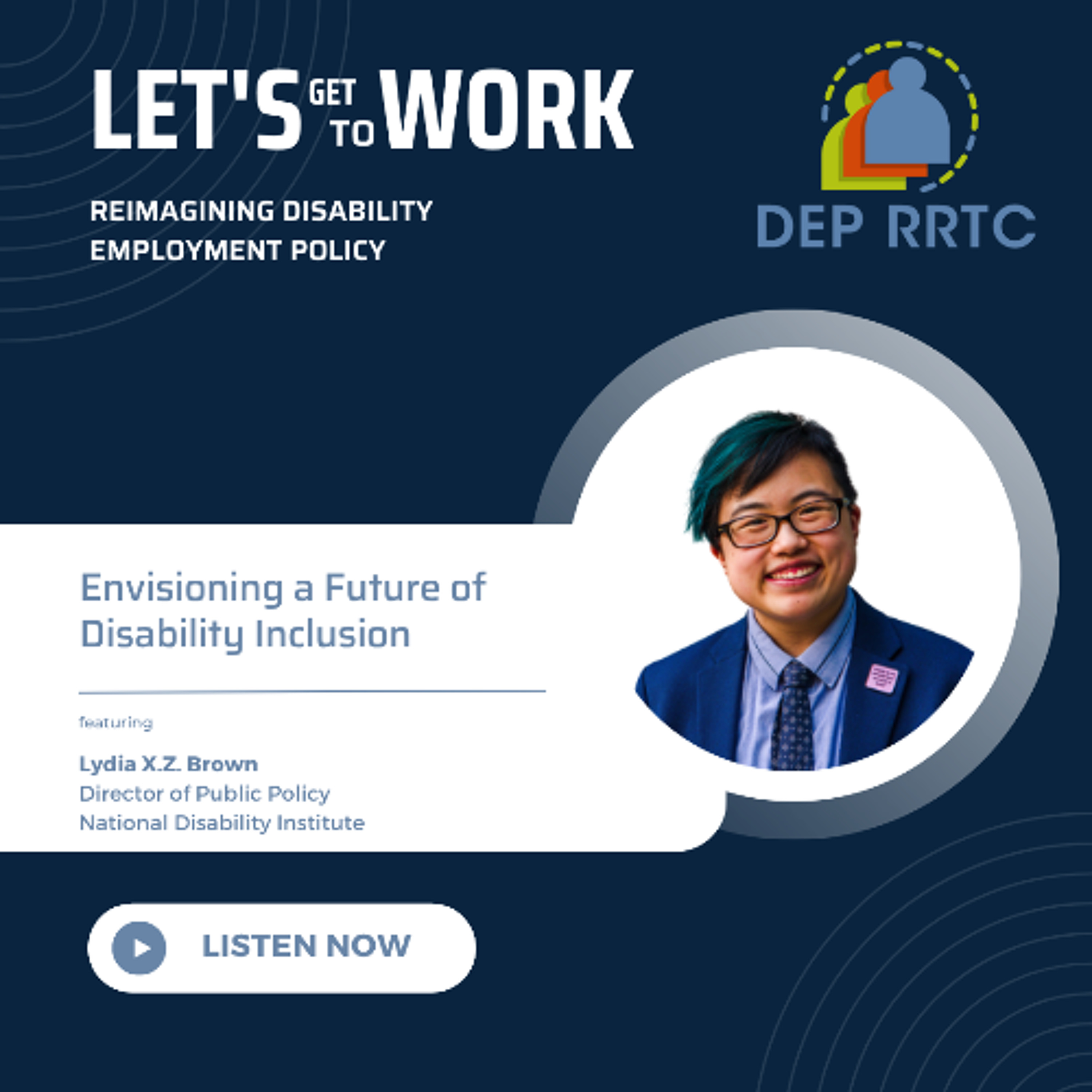 Episode 14: Envisioning a Future of Disability Inclusion | Lydia Brown, director of public policy at the National Disability Institute, discusses two issues preventing people with disabilities from excelling in the workforce and in general: policies that trap them in poverty and artificial intelligence that discriminates. Antiquated Social Security rules with asset and income limits create a poverty trap that limits a disabled individual from seeking more pay or career advancement. In terms of AI, algorithms are being used that may screen out candidates with disabilities based on certain characteristics such as gaps in employment history, or length of time it took an individual to graduate from college. Often these characteristics are unrelated to a job function or job performance. Brown says these are two of the major issues of this generation for not only disability rights groups but also policymakers. They represent larger issues regarding policies, laws, socioeconomic structures, and the need to address our fundamental values as a society. | — | ||||||
| 10/31/25 | 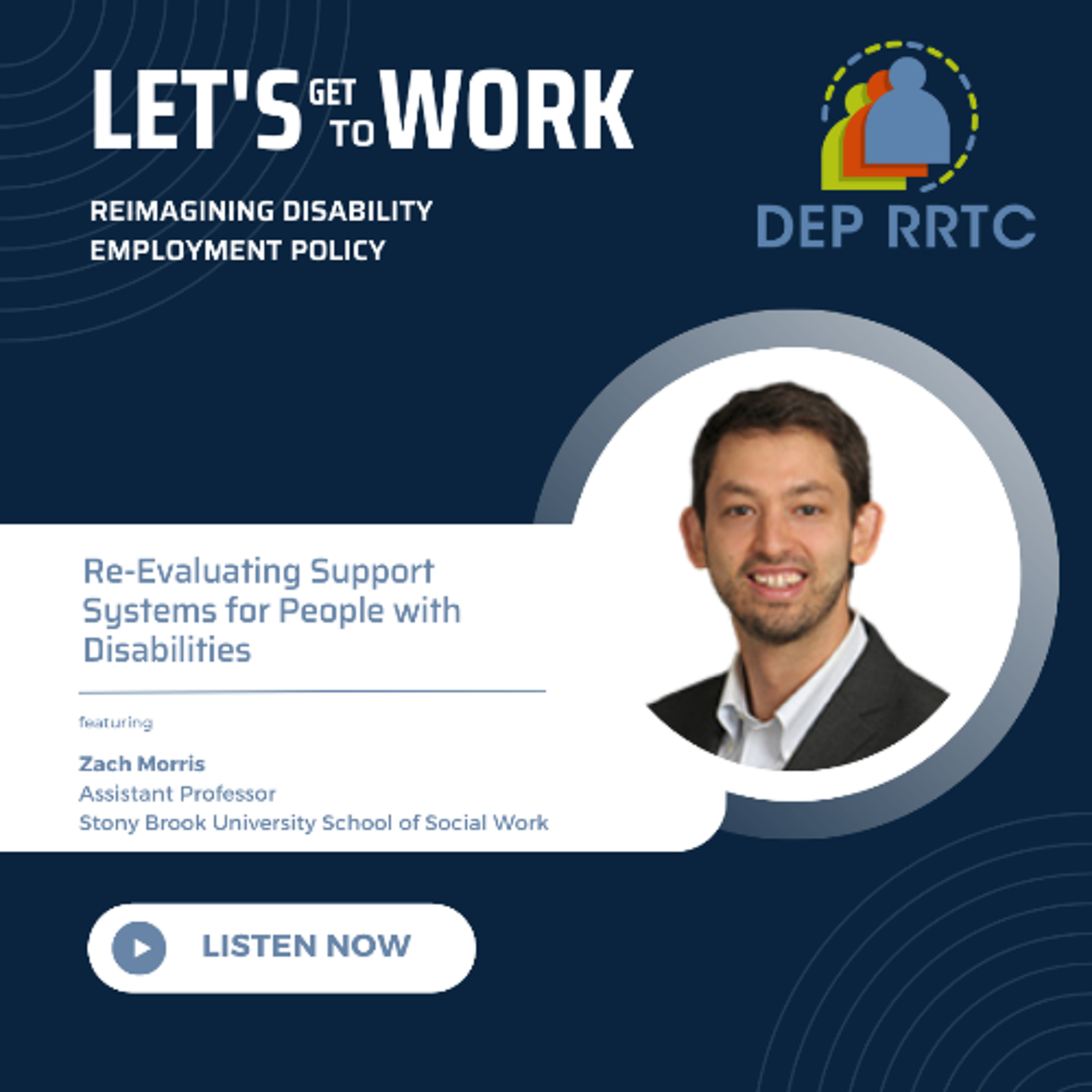 Episode 13: Re-Evaluating Support Systems for People with Disabilities | Zach Morris, Assistant Professor, Stony Brook University School of Social Work, calls for a re-evaluation of the systems in place to support people with disabilities. We must recognize that people with disabilities not only earn less than people without disabilities. They also face extra expenditures to cover disability-related out-of-pocket costs. | — | ||||||
| 10/31/25 | 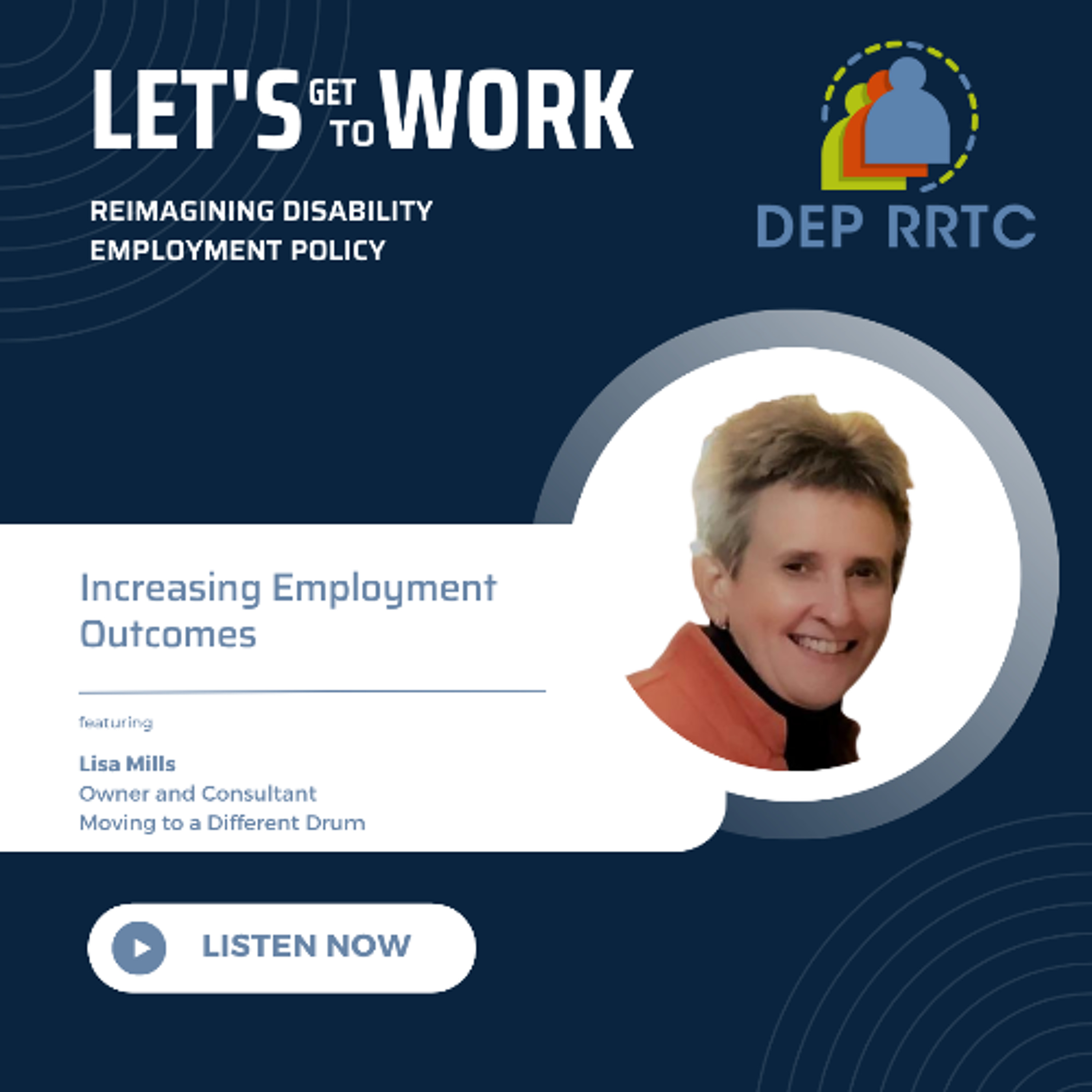 Episode 12: Increasing Employment Outcomes | Lisa Mills, Owner, Moving to a Different Drum, Disability Policy and Services Consulting, discusses opportunities to increase employment outcomes by braiding and blending resources across funding sources such as vocational rehabilitation, Medicaid, and Ticket to Work. | — | ||||||
| 10/31/25 | 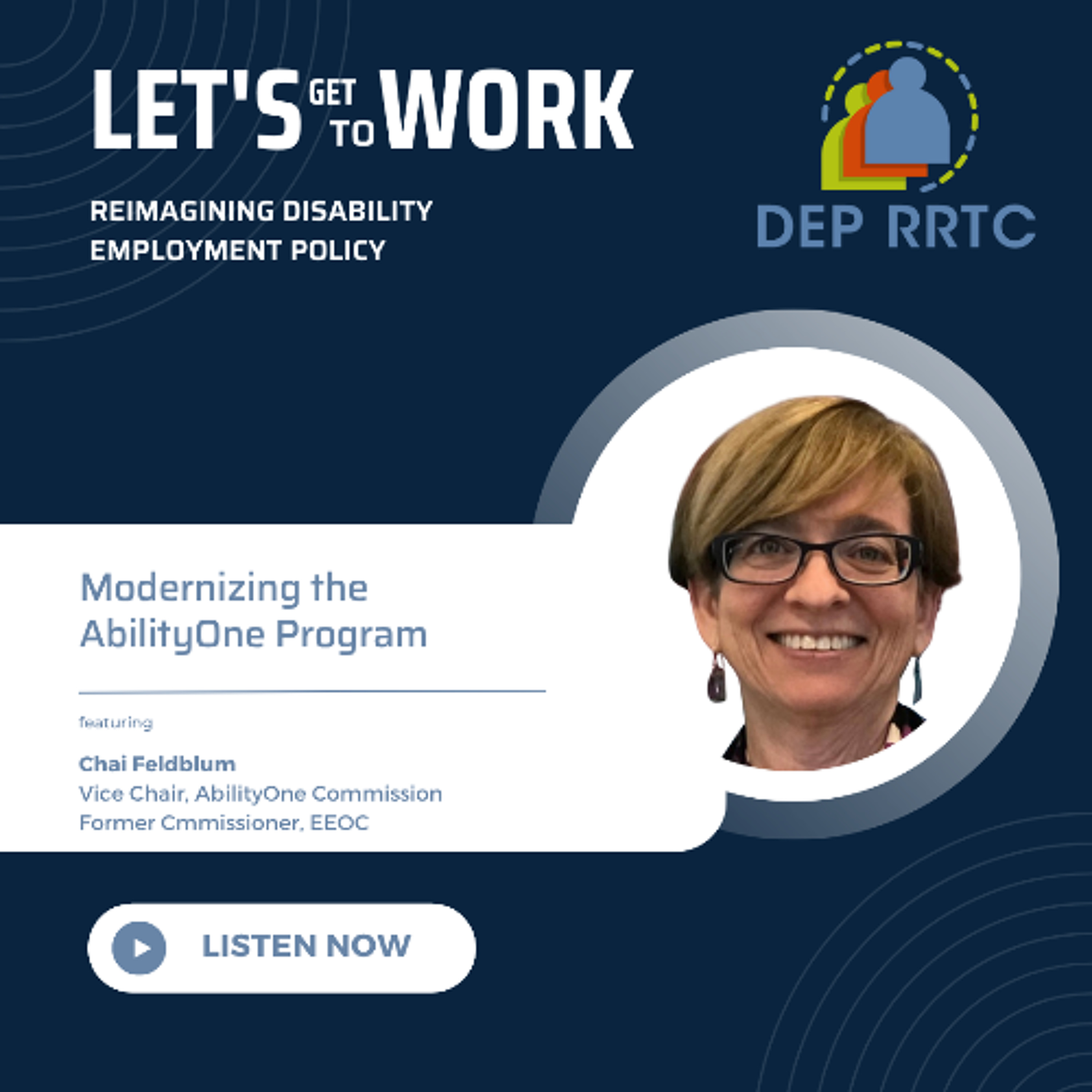 Episode 11: Modernizing the AbilityOne Program | Chai Feldblum, Vice Chair of the AbilityOne Commission and former EEOC Commissioner, discuss the importance of the ADA Amendments Act of 2008 and describe the strategic plan to modernize the AbilityOne program. She also talks about the recent rule that prohibits payment 14(c) subminimum wage on contracts within the AbilityOne Program. | — | ||||||
| 10/31/25 | 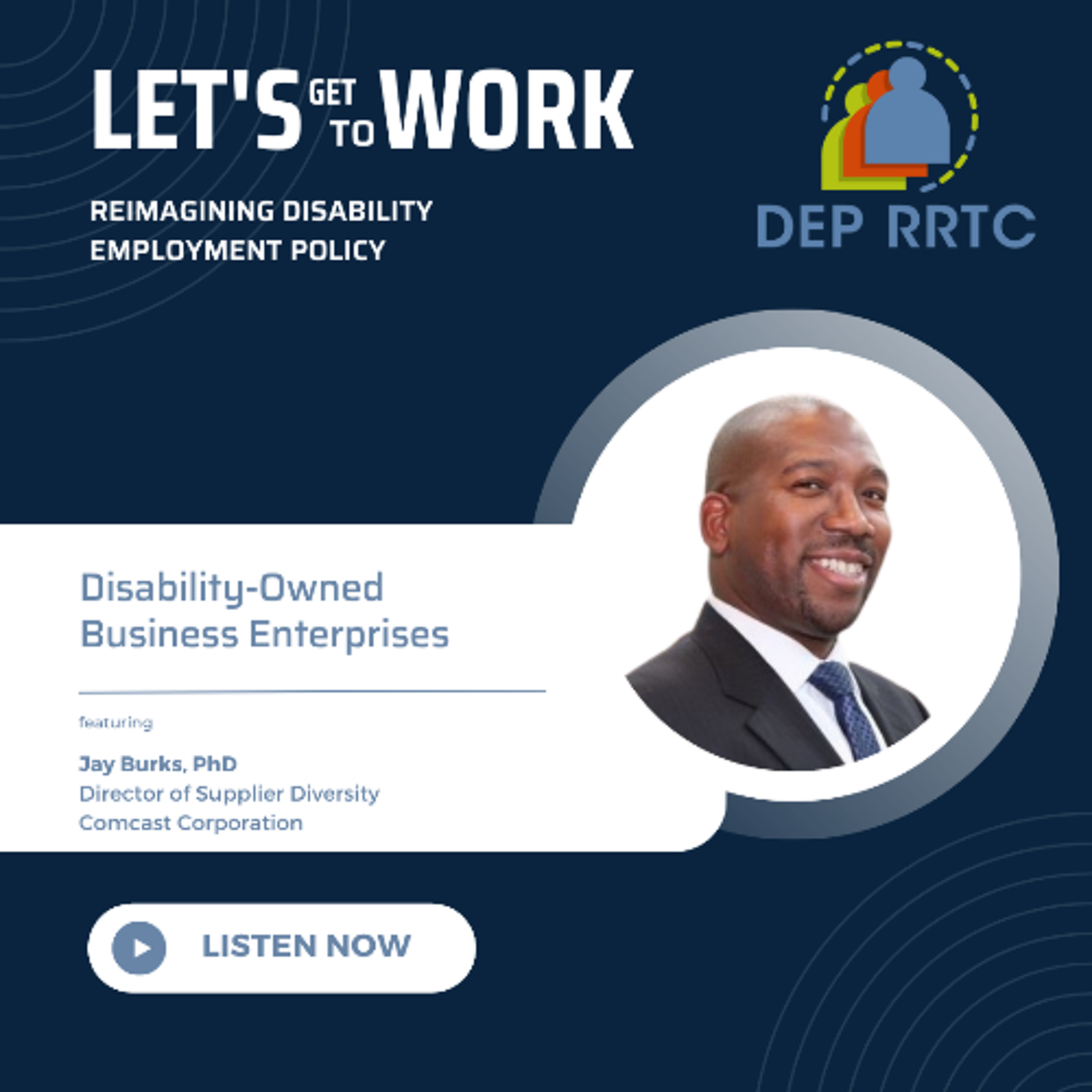 Episode 10: Disability-Owned Business Enterprises | Jay Burks, Director of Supplier Diversity at the Comcast Corporation, shares about the importance of ensuring that large companies like Comcast buy goods and services from diverse suppliers, including Disability-owned Business Enterprises (DOBEs). | — | ||||||
Showing 25 of 218
Pitch Fit is a Pro feature
See how bookable this show is for guests, which brands already advertise, the per-episode ad value, and the best-fit guest and sponsor profile. The numbers are blurred on the free plan.
How readily this show books outside guests like you.
How proven this show is for host-read sponsorships.
For Guests
ProFor Advertisers
ProUpgrade to Pro to unlock guest cadence, sponsor categories, fit scores, and per-episode ad value for this show.