

Insights from recent episode analysis
Audience Interest
Podcast Focus
Publishing Consistency
Platform Reach
Insights are generated by CastFox AI using publicly available data, episode content, and proprietary models.
Total monthly reach
Estimated from 2 chart positions in 2 markets.
By chart position
- 🇺🇸US · Religion#9630K to 100K
- 🇮🇳IN · Religion#1111K to 10K
- Per-Episode Audience
Est. listeners per new episode within ~30 days
16K to 55K🎙 Weekly cadence·1,496 episodes·Long inactive - Monthly Reach
Unique listeners across all episodes (30 days)
31K to 110K🇺🇸91%🇮🇳9% - Active Followers
Loyal subscribers who consistently listen
9.3K to 33K
Market Insights
Platform Distribution
Reach across major podcast platforms, updated hourly
Total Followers
—
Total Plays
—
Total Reviews
—
* Data sourced directly from platform APIs and aggregated hourly across all major podcast directories.
On the show
Recent episodes
Ishavasyopanishad chanting
May 18, 2022
Unknown duration
Mundakopanishad Chanting
Nov 9, 2021
Unknown duration
Mandukya Upanishad Chanting
Nov 9, 2021
Unknown duration
Kaivalya Upanishad Chanting
Nov 8, 2021
Unknown duration
Kathopanishad Chanting
Nov 8, 2021
Unknown duration
Social Links & Contact
Official channels & resources
Official Website
Login
RSS Feed
Login
| Date | Episode | Description | Length | ||||||
|---|---|---|---|---|---|---|---|---|---|
| 5/18/22 | Ishavasyopanishad chanting | Ishavasyopanishad chanting bu Swami Viditatmananda Saraswatiji. | — | ||||||
| 11/9/21 | Mundakopanishad Chanting | Mundakopanishad Chanting by Swamiji | — | ||||||
| 11/9/21 | Mandukya Upanishad Chanting | Mandukya Upanishad Chanting by Swamiji Viditatmananda Saraswatiji | — | ||||||
| 11/8/21 | Kaivalya Upanishad Chanting | Kaivalya Upanishad Chanting by Swamiji Viditatmananda Saraswatiji | — | ||||||
| 11/8/21 | Kathopanishad Chanting | Kathopanishad Chanting by Swami Viditatmananda Saraswatiji | — | ||||||
| 6/20/21 |  24 May 30th, 2021 Sunday Morning Youth Session: Interpreting Truth, and Objectivity and Subjectivity | In this Sunday Morning Youth session, Pujya Swamiji addresses the doubts related to previous session on speaking truth, and in the latter half introduces the topic of objectivity and subjectivity. With regards to speaking truth, one of the questions raised is how to master the skill of speaking truth without not hurting others. Pujya Swamiji responds how first we have to have the value to not hurt others and keep our intentions clean and make our best attempts. It is pointed out how our interpretations are dependent on our impressions based on our history with different people, and thus there is likelihood of misinterpretations in our interactions with the world. It is important to start fresh in all our interactions without basing the interaction with a judgement and certain conclusion about the other person. How it is important to seek pardon, respecting the feeling of others, even when our intention was not to hurt the other person but the other person feels hurt. Even if we may not feel the way the other person feels, respecting their feelings is part of non-violence. In our interaction we need to resolve how we didn’t intend to hurt others and be sensitive to the other person and communicate our intentions clearly and build on the relationships. Our endeavor should not be just to increase the number of friends and relations, but to improve the quality of every relationship. Pujya Swamiji also emphasizes how we need to be genuine in our endeavors when we seek pardon otherwise it would again lead to not speaking truth. And it is the caring for the other person which should be the driving factor when we seek such pardon for it to be genuine. Thus speaking truth requires use of appropriate words, and requires carefulness and alertness. In the latter part the discussion on non-violence is summarized on how more consumption and more possession for pleasure results in violence. How we have concluded that pleasure comes from the objects of the world. Basically we seek happiness and see these objects of the world as means of pleasure. With this Pujya Swamiji transitions into a new topic of objectivity and subjectivity. Pujya Swamiji points out how we have wrongly concluded that this world is a means of pleasure without applying reasoning or logic. Even though we do have the faculty of reasoning and logic, right now we have a distorted reasoning. Although we are able to apply reasoning well for objective things without any opinions, and we are impartial towards it, but when it comes to subjective things, our opinion about ourself, we are not open-minded, we are partial, we are manipulative. So our scriptures help us to check and correct our reasoning and conclusions with regards to understanding ourself. | — | ||||||
| 6/20/21 |  23 April 11th, 2021 Sunday Morning Youth Session: Truth and Non-violence | In this Sunday Morning Youth session, Pujya Swamiji talks about truth and non-violence as important values to inculcate in our life. Pujya Swamiji points out that in life what is important is to travel in the right direction, and for that we need to make right choices. These values guide us to make the right choices and thus stay on track. Pujya Swamiji provides here the basis for understanding and interpreting what truth and non-violence is in a given situation. The two aspects: Truth as in speaking truth and non-violence at the physical level are essentially unfolded and how to understand and interpret these aspects in our life is elaborately discussed. It is pointed out that speaking truth includes speaking pleasantly meaning being sensitive about the feelings of other people, respecting their feelings, refraining from doing something that will hurt their feelings, and speaking only if needed, meaning if it would be beneficial to the other person, or for the greater good. Speaking truth requires strength and not hurting others requires sensitivity on our part. Thus speaking truth makes us both a strong and sensitive person, and helps us understand and accommodate others in our life. Observing our own self and looking at the events in our life, whether or not we bend the truth in certain circumstances, would help us understand the subtleness of truth in our life. In the latter part, Pujya Swamiji elaborates on non-violence at physical level, how consumption and possession are a mark of violence, because it deprives the others of their food. Thus consuming and possessing just what we need, not over-consuming for our pleasure or enjoyment, is a value whereby we can be sensitive to the needs of other fellow beings and creatures, and address scarcity of resources by a simple act of minimizing our consumption and possession. Om! | — | ||||||
| 4/11/21 |  22 April 4th, 2021 Sunday Morning Youth Session: Separation is a Notion | In this Sunday Morning Youth session, Pujya Swamiji unfolds how our feeling of being separated from God is a notion. How the separation from God is like river feeling separated from the ocean. But if we investigate the essential nature of river, is it the banks, the flow or water? True nature is that which never changes. River when meets the ocean doesn’t remain as Ganga, Kaveri etc. The incidental changes but the essential doesn’t change. So also when you forget your identity you behave what you are not. Separation from God is a notion not a reality! Knowing this reality that separation was false, notion, you own up your true nature. So you are what you are from one standpoint, and from other standpoint, you have costume, which changes. This is the discrimination we have to understand in life. All values are meant so someday we can recognize our true nature. When we live the life the right way following the values, it becomes a journey in this direction, so that someday we discover this fact that there is no separation! To know one’ s essential nature is the real success, and for this we inculcate values in our life. | — | ||||||
| 4/4/21 |  19 March 28th, 2021 Sunday Morning Youth Session: Importance of Prayers | In this Sunday Morning Youth session, Pujya Swamiji answers to some fundamental questions each of us have within. When did we get separated from God? Pujya Swamiji points out to pay attention of why this question arises. Because we feel separated from God, we feel we don’t see God, we don’t know where he is. This sense of separation is explained differently in different philosophies, but what is important is that we feel separated, why we feel so is not so important. The various Acharyas have given us the means to remove that separation, like Bhakti. Pujya Swamiji explains how there should be worship of Isvara in one way or other. We need Isvara’s anugraha to accomplish moral, wordly and spiritual goals. Because for any successful accomplishment both self effort, a proper and adequate one at the right time, and grace of God is required. We are born with the need to be successful, the outcome is very important to us, and thus grace of God is very important in our life. So Isvara’s anugraha is important for helping us to be successful, as we are selfish people. But someday we will grow out of this begging, and the prayers will be an offering, just out of pleasure. Knowingly or unknowingly Isvara is the most important in our life, and we are born with this destination in mind, and our journey finds its culmination when we meet Bhagawan. What is growth? When we become free from our needs progressively! Right now we have many needs and our happiness depends on fulfilling those needs. By including prayers in our life, we live a conscious life, so we don’t take things for granted. We always need the grace of God, which we are as such receiving without asking. So let us all include prayers in our life whether it be to fulfill our needs, whether it be as an offering, let us all contemplate on the constant grace we are experiencing and offer our gratitude towards our Bhagawan. | — | ||||||
| 3/24/21 |  18 March 21st, 2021 Sunday Morning Youth Session: Speaking Truth | In this Sunday Morning Youth session, Pujya Swamiji speaks about truthfulness as a value in our life. The scriptures claim, ‘Truth alone prevails, wins’. This is what we have to discover in our life. The simple meaning of truth is taken here as speaking truth. But what does speaking truth involve is unfolded elaborately. Speaking truth: does it mean I have to speak all the time? No, but if you choose to speak, speak truth. Secondly speak in a pleasant way which doesn’t hurt others. Truth should not become violent. Sometimes we do speak truth but are not sensitive to the feelings of others. Truth is not bitter but sometimes bitterness in in our own mind, and it expresses in guise of truth. Third, truth is supposed to serve a purpose, overall good. When we communicate with others we need to make sure our words do not hurt others, the feelings of others, are truthful, and for the overall benefit of others. Now this requires Viveka. I must think before I speak. Speech is a great gift, but if not used properly can bring damage, lot of hurt, destruction. So through our interactions we need to constantly be on guard for proper interpretation of speaking truth, and be watchful of what and how we speak, and in what circumstances we speak. The youth and the seekers are encouraged to refer to the ‘Management Wisdom from Bhagavad Gītā’ by Pujya Swami Viditatmanandaji. This reading will provide further clarity of understanding and interpreting the issues we face in our daily life, and will complement this Satsanga. | — | ||||||
Want analysis for the episodes below?Free for Pro Submit a request, we'll have your selected episodes analyzed within an hour. Free, at no cost to you, for Pro users. | |||||||||
| 3/24/21 |  17 March 14th, 2021 Sunday Morning Youth Session: Values and Self Worth | In this Sunday Morning Youth session, Pujya Swamiji talks about how practicing a value requires strength. We expect others to be kind, honest, truthful, but when it comes to us, it costs something, my image, respect, success, prestige, fear of punishment, fear of losing something precious to me. Whenever we don’t follow a value, inwardly it pinches us and leaves us with guilt of compromising the particular value. These guilt, the pinch cannot be measured in tangible terms and so we ignore, but it builts up, and hurts our personality. Pujya Swamiji highlights how we constantly seek approval of the world, but it is we who have to make ourselves happy. Self-worth is very important to be a successful person in the outer world. But this can be there only if I enjoy harmony with myself, if I am happy with myself. If you respect yourself, you do not need respect from others, if you approve yourself, you do not need approval from others. Self-confident person is one who acts without helplessness. Self-approval, self-worthiness is what we acquire slowly by living a life of value. But this requires that sometimes we have to let go what is dear to us. We should see how we have a tendency to keep on repeating wrong things, which means we become less and less worthy in our own view. Following the basic values of life makes us a more effective person by bringing out the self-worth, self-approval the confidence within. The youth and the seekers are encouraged to refer to the ‘Management Wisdom from Bhagavad Gītā’ by Pujya Swami Viditatmanandaji. This reading will provide further clarity of understanding and interpreting the issues we face in our daily life, and will complement this Satsanga. | — | ||||||
| 3/24/21 |  16 March 7th, 2021 Sunday Morning Youth Session: Value of Values | In this Sunday Morning Youth session, Pujya Swamiji brings us closer to the facts of life, of what we really want in life and how can we obtain that. How we are constantly observing and judging ourselves, and all problems in our life are because of failing myself, my disliking myself. And I can love myself only when I live upto my expectations. So while we are constantly trying to change the outside, what is important to us is inner comfort. Inner comfort makes me happy and inner discomfort makes me unhappy. Happiness or unhappiness is created based on what we do or don’t do. We are the creators of our own life. And the more saint you are, the happier you are. We have to progressively bring out the saint in us. By being honest and truthful, I become more valuable in my own perception. More compassion I possess, the more valuable I become. Thus the role of honesty, truthfulness is to bring out the good self within me, and this is the purpose of life. The youth and the seekers are encouraged to refer to the ‘Management Wisdom from Bhagavad Gītā’ by Pujya Swami Viditatmanandaji. This reading will provide further clarity of understanding and interpreting the issues we face in our daily life, and will complement this Satsanga. | — | ||||||
| 3/15/21 |  15 February 28th, 2021 Sunday Morning Youth Session: Freedom | In this Sunday Morning Youth session, Pujya Swamiji draws our attention to the secret of gaining freedom in life. How it is important to master the mind to develop an inner freedom, and one who hasn’t mastered the mind becomes a slave of the mind. When we become slave of the mind, then the mind makes me do things, we helplessly do things which we may regret later on! Happiness is where freedom is, while unhappiness is where there is dependence. So with every relation in our life we need to check whether there is freedom or slavery in that relation. Are we able to control or manage our emotions, or are we controlled and managed by our emotions? Are we demanding in our relationships or are we giving, contributing? Pujya Swamiji gives description of a saint, of a wise person, of a free person, the one who doesn’t have hatred for anyone, who is a friend to all. Freedom is an inner disposition of the mind. It is this inner freedom that makes us free in life. First it begins with the freedom to do what is right and not what I like, and ultimately what is right is also what such a wise person likes by default. This inner transformation happens provided we are clear of what we want in life. We may have material goals in our life to be wealthy, powerful, etc, but we also have the desire to be free. We want to be wealthy and free, powerful and free, successful and free. So really speaking there is only one goal behind all the goals: to be free! So self transformation should happen for self-management! While pursuing external goals we should also pursue inner goal for our spiritual growth. Power, success etc can be used to either help others or to exploit others. And our goal should be to be successful and help others succeed. The youth and the seekers are encouraged to refer to the ‘Management Wisdom from Bhagavad Gītā’ by Pujya Swami Viditatmanandaji. This reading will provide further clarity of understanding and interpreting the issues we face in our daily life, and will complement this Satsanga. Om! | — | ||||||
| 3/13/21 |  14 February 21st, 2021 Sunday Morning Youth Session: Changing our Opinions | In this Sunday Morning Youth session, Pujya Swamiji elaborates further on the ongoing discussion of the art of developing a happy mind. How we have to change our existing equation of becoming happy from getting rid of or acquiring desired things. In this talk, Pujya Swamiji shows how this desire of acquiring or getting rid of things is not based on the reality of life because our likes and dislikes are not constant. If we observe carefully we will find our interactions are all based on our mind. We donot respond to a person, our response is determined by our likes and dislikes. And likes and dislikes are because we have opinion about everything in life. In this way Pujya Swamiji brings our attention to our mind, how the mind is, before we can understand the maturity of mind. We are not independent, we are not free, we are controlled by our likes and dislikes! Our behavior, our responses everything is determined by our likes and dislikes. Pujya Swamiji emphasizes that we pay attention to our mind and thus understand ourselves. What we need to do is change our opinions. The difference between preferences versus likes and dislikes is also pointed out. Simple choice is not likes and dislikes, but when our preferences are not met and we react that is called likes and dislikes. And this is where we need to work on to change our opinions, to change the response we give to people and situations in life, and thereby create a ground for an emotionally mature mind. The youth and the seekers are encouraged to refer to the ‘Management Wisdom from Bhagavad Gītā’ by Pujya Swami Viditatmanandaji. This reading will provide further clarity of understanding and interpreting the issues we face in our daily life, and will complement this Satsanga. | — | ||||||
| 3/10/21 |  13 February 14th, 2021 Sunday Morning Youth Session: The Art of developing a Happy Mind | In this Sunday Morning Youth session, Pujya Swamiji unfolds the art of developing a happy mind. Pujya Swamiji explains how all of us are having a love affair with ourselves – with a happy self or pleased self. We have the capacity to enjoy anything, but we have to learn to make ourselves happy. When I feel I made somebody happy, comforted, with what I did, I feel happy, and so to the extent there is sharing in our mind, to that extent I am happy. On the contrary when I am self-centred, and narrow-minded, when I do not give or share with others, I later do not feel good, and I become unhappy. It is the mind which is the cause of my happiness and the cause of my unhappiness. Therefore my mind becomes the most important to me. So we have to progressively develop a happy mind by invoking kindness within us, and that is the emotional maturity we need to develop to be happy. Values and attitudes is what makes us large-hearted, accommodating and friendly, and this is what we should inculcate in our daily life to shape our mind, to shape our heart. A kind, generous, forgiving person is an emotionally mature person, that’s what we are in true sense, and so we should invoke these values constantly. While being narrow-minded, self-centred, hurtful, revengeful is what an emotionally immature person is. We have to slowly get rid of these negative tendencies within us to discover the saintliness within us, which is our true nature. And this is the way to develop a happy mind, to be happy! The youth and the seekers are encouraged to refer to the ‘Management Wisdom from Bhagavad Gītā’ by Pujya Swami Viditatmanandaji. This reading will provide further clarity of understanding and interpreting the issues we face in our daily life, and will complement this Satsanga. Om! | — | ||||||
| 2/25/21 |  10 January 24 2021 Sunday Morning Youth Session: Self Management | In this Sunday Morning Youth session, Pujya Swamiji unfolds the importance of self management through understanding our desires and managing the desires. That we have ambitions in life indicates that we are not contented with ourselves. We keep on comparing ourselves with others which results in competition. In this segment Pujya Swamiji points out that the complexes we entertain have all arisen because of judging ourselves and comparing with others. Further the importance of managing our desires so that we are able to properly utilize the resources is highlighted. In every situation one has to choose, and whatever is the choice, one is responsible for that, accountable for that. So making a choice is a great responsibility. Of the are two aspects one can manage: managing things or person other than me, and secondly self-management, self-management is what one has to work on. Only when one manages oneself properly, one can manage others. This is what Gita, Vedanta teaches, and Pujya Swamiji unfolds this art of self-management using simple language with practical day to day examples. The youth and the seekers should refer to the ‘Management Wisdom from Bhagavad Gītā’ by Pujya Swami Viditatmanandaji to complement this talk. The talk and the question answers associated with the talk under each topic will provide further clarity of understanding and interpretation as it relates to our day to day life. Om! | — | ||||||
| 12/26/20 |  07 Sunday Morning Satsanga on Shreyas and Preyas (Dec 27 2020) | Dec 27 2020 Sunday Morning Satsanga on Shreyas and Preyas This Sunday’s Satsanga is in English. The week’s Satsanga is related to Kathopanisad: subtle aspects of shreyas and preyas in a seeker’s life. Pujya Swamiji sheds light on what does being like Nachiketa mean in today’s world. As Pujya Swamiji mentions in Kathopanisad, ‘Every moment can be a moment of joy if alertness is there and Shreyas is there’, so Shreyas is not a onetime thing and a seeker has to constantly apply it in life. How the choice of shreyas and preyas also leads to antahkaran shuddhi, because happiness from Anatma is what we are familiar with, and what is attractive, we know the pleasure from there, and the mind easily gets attracted. While Shreyas is the happiness of the self, which requires removal of likes and dislikes, and so it may not be immediately pleasing, but it is a short term pain for a long term gain. Shreyas and Preyas is not about choosing a given thing, rather it is choosing the right attitude. So to apply Shreyas and Preyas, a seeker first has to have the Viveka of what does he want in life, he has to set the goal, then what will lead to that choice, the means, and then the values have to be applied. Lastly how can a seeker motivate himself when at every step it is like a glass half filled, with the little progress made, but the larger half still to be achieved? | — | ||||||
| 12/5/20 |  04 રવિવારની સવારનો સત્સંગ સ્વામીજીને સંગ (06 ડિસેમ્બર 2020) | December 6th 2020 Sunday Morning Satsanga This Sunday Morning Satsanga is in Gujarati. In this Satsanga, Pujya Swamiji provides greater insight on the value ‘Amānitvam’. The subtle difference between Ātmagarva (ego) and Ātmagaurav (self-dignity/self-respect) are discussed here, and the importance of Ātmagaurav (self-dignity/self-respect) in the life of a seeker for self-confidence and associated interactions with the world is pointed out. The maturity of the value ‘Amānitvam’ and how it is reflected in the life of a wise person ‘Jñānī’, further gives us an insight that ‘Ātmagaurav is at the level of ‘Ahankār. What is required for gaining spontaneity in one’s own nature ‘Ātmā, and clarity regarding the cause of the extrovertedness of the mind is provided the subsequent part. That one must understand ‘Viṣaya’ as not just limited to the sense objects and sense pleasures, rather the very ‘rāga and dveśa’, the likes and dislikes are the cause of desires, karma and the subsequent chain of extrovertedness. What triggers the likes and dislikes? It encompasses everything from objects, people, situation, location, events, etc. The attitude that something is useful or not, described as ‘Samīcin buddhi’ manifests into ‘rāga and dveśa’, and these rāga and dveśa’ are the very cause of extrovertedness of mind. Questions for Sunday Morning Satsanga can be submitted to adhyatmachintan@gmail.com or whatsapp number 7874743310. Please note English and Gujarati Satsanga will fall on alternate weeks. | — | ||||||
| 11/16/20 |  39 Aparokṣānubhūtiḥ (Verse 137-144 End) | Adhyatma Vidya Mandir Video lecture link : https://www.youtube.com/playlist?list=PLvByNyt5x4-Aj-amr2__x6-DAvIk3EXFL Subject: अपरोक्षानुभूतिः aparokṣānubhūtiḥ Speaker : Swami Viditatmananda Saraswatiji Such treatises as aim at serving as introductions to a more advanced study of a system of philosophy, are generally known as प्रकरण ग्रन्था prakaraṇa granthā. Besides giving an outline of the system, each of them emphasizes some one or other of the main features. Aparokṣānubhūtiḥ is one such title manual, which, while presenting a brief description of Vedanta, deals specially with that aspect of it which relates to anubhūtiḥ realization of the highest truth. Such realization, unlike the knowledge of objects through sense-perception of inference, is an immediate and direct perception of one’s own Self, which is here indicated by the word aparokṣa. | — | ||||||
| 11/16/20 |  38 Aparokṣānubhūtiḥ (Verse 130-136) | Adhyatma Vidya Mandir Video lecture link : https://www.youtube.com/playlist?list=PLvByNyt5x4-Aj-amr2__x6-DAvIk3EXFL Subject: अपरोक्षानुभूतिः aparokṣānubhūtiḥ Speaker : Swami Viditatmananda Saraswatiji Such treatises as aim at serving as introductions to a more advanced study of a system of philosophy, are generally known as प्रकरण ग्रन्था prakaraṇa granthā. Besides giving an outline of the system, each of them emphasizes some one or other of the main features. Aparokṣānubhūtiḥ is one such title manual, which, while presenting a brief description of Vedanta, deals specially with that aspect of it which relates to anubhūtiḥ realization of the highest truth. Such realization, unlike the knowledge of objects through sense-perception of inference, is an immediate and direct perception of one’s own Self, which is here indicated by the word aparokṣa. | — | ||||||
| 11/16/20 |  37 Aparokṣānubhūtiḥ (Verse 123-129) | Adhyatma Vidya Mandir Video lecture link : https://www.youtube.com/playlist?list=PLvByNyt5x4-Aj-amr2__x6-DAvIk3EXFL Subject: अपरोक्षानुभूतिः aparokṣānubhūtiḥ Speaker : Swami Viditatmananda Saraswatiji Such treatises as aim at serving as introductions to a more advanced study of a system of philosophy, are generally known as प्रकरण ग्रन्था prakaraṇa granthā. Besides giving an outline of the system, each of them emphasizes some one or other of the main features. Aparokṣānubhūtiḥ is one such title manual, which, while presenting a brief description of Vedanta, deals specially with that aspect of it which relates to anubhūtiḥ realization of the highest truth. Such realization, unlike the knowledge of objects through sense-perception of inference, is an immediate and direct perception of one’s own Self, which is here indicated by the word aparokṣa. | — | ||||||
| 11/16/20 | 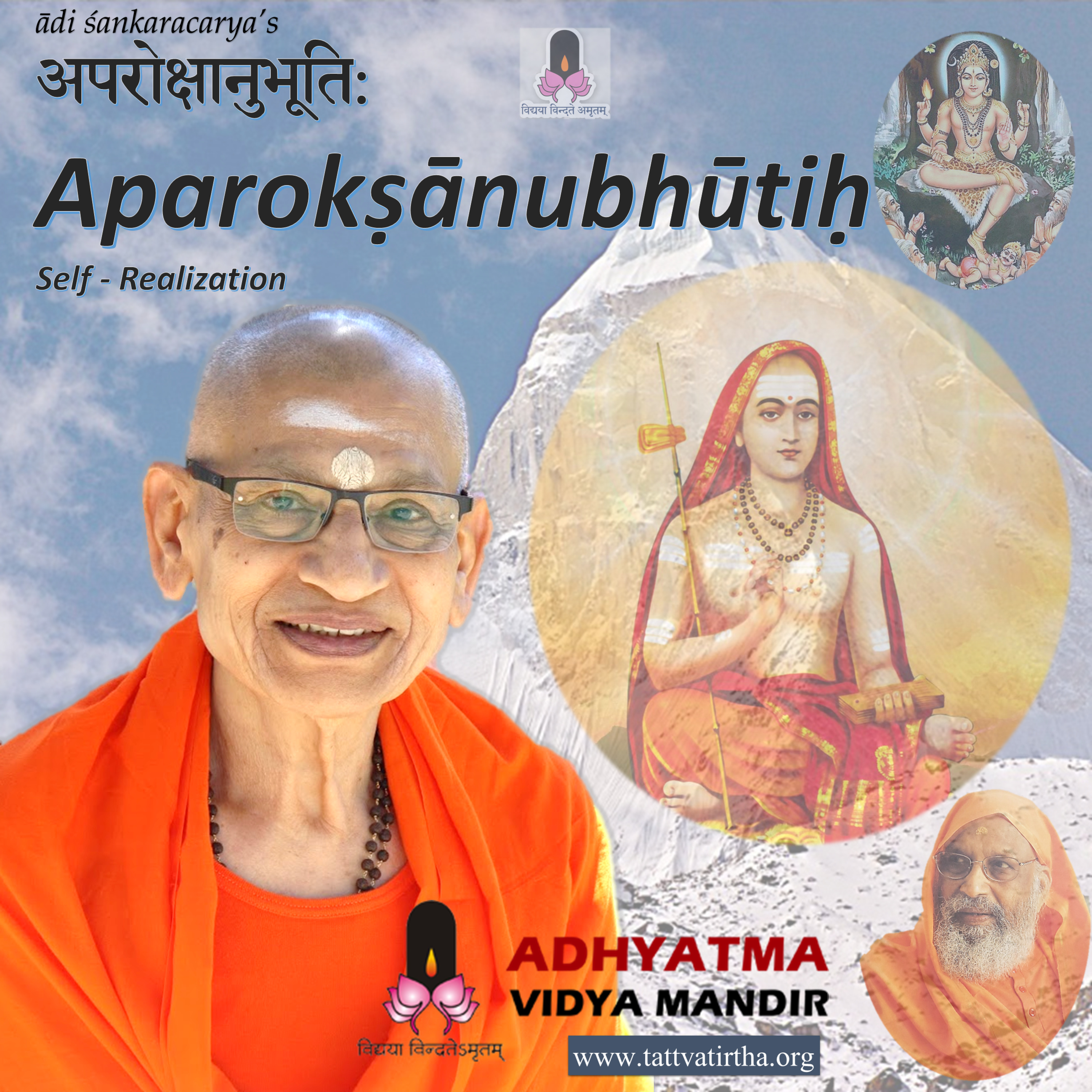 36 Aparokṣānubhūtiḥ (Verse 116-122) | Adhyatma Vidya Mandir Video lecture link : https://www.youtube.com/playlist?list=PLvByNyt5x4-Aj-amr2__x6-DAvIk3EXFL Subject: अपरोक्षानुभूतिः aparokṣānubhūtiḥ Speaker : Swami Viditatmananda Saraswatiji Such treatises as aim at serving as introductions to a more advanced study of a system of philosophy, are generally known as प्रकरण ग्रन्था prakaraṇa granthā. Besides giving an outline of the system, each of them emphasizes some one or other of the main features. Aparokṣānubhūtiḥ is one such title manual, which, while presenting a brief description of Vedanta, deals specially with that aspect of it which relates to anubhūtiḥ realization of the highest truth. Such realization, unlike the knowledge of objects through sense-perception of inference, is an immediate and direct perception of one’s own Self, which is here indicated by the word aparokṣa. | — | ||||||
| 11/16/20 | 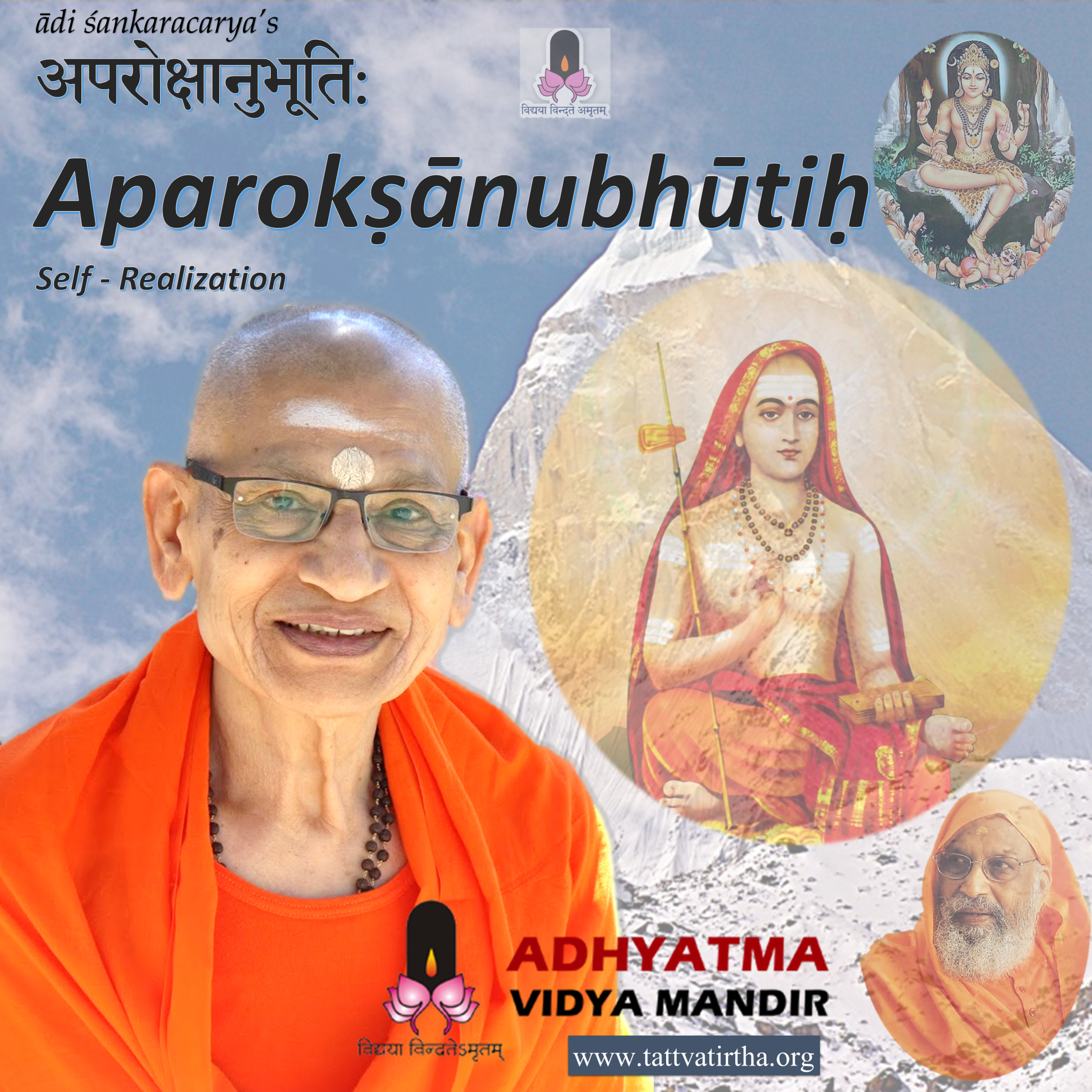 35 Aparokṣānubhūtiḥ (Verse 111-115) | Adhyatma Vidya Mandir Video lecture link : https://www.youtube.com/playlist?list=PLvByNyt5x4-Aj-amr2__x6-DAvIk3EXFL Subject: अपरोक्षानुभूतिः aparokṣānubhūtiḥ Speaker : Swami Viditatmananda Saraswatiji Such treatises as aim at serving as introductions to a more advanced study of a system of philosophy, are generally known as प्रकरण ग्रन्था prakaraṇa granthā. Besides giving an outline of the system, each of them emphasizes some one or other of the main features. Aparokṣānubhūtiḥ is one such title manual, which, while presenting a brief description of Vedanta, deals specially with that aspect of it which relates to anubhūtiḥ realization of the highest truth. Such realization, unlike the knowledge of objects through sense-perception of inference, is an immediate and direct perception of one’s own Self, which is here indicated by the word aparokṣa. | — | ||||||
| 11/16/20 | 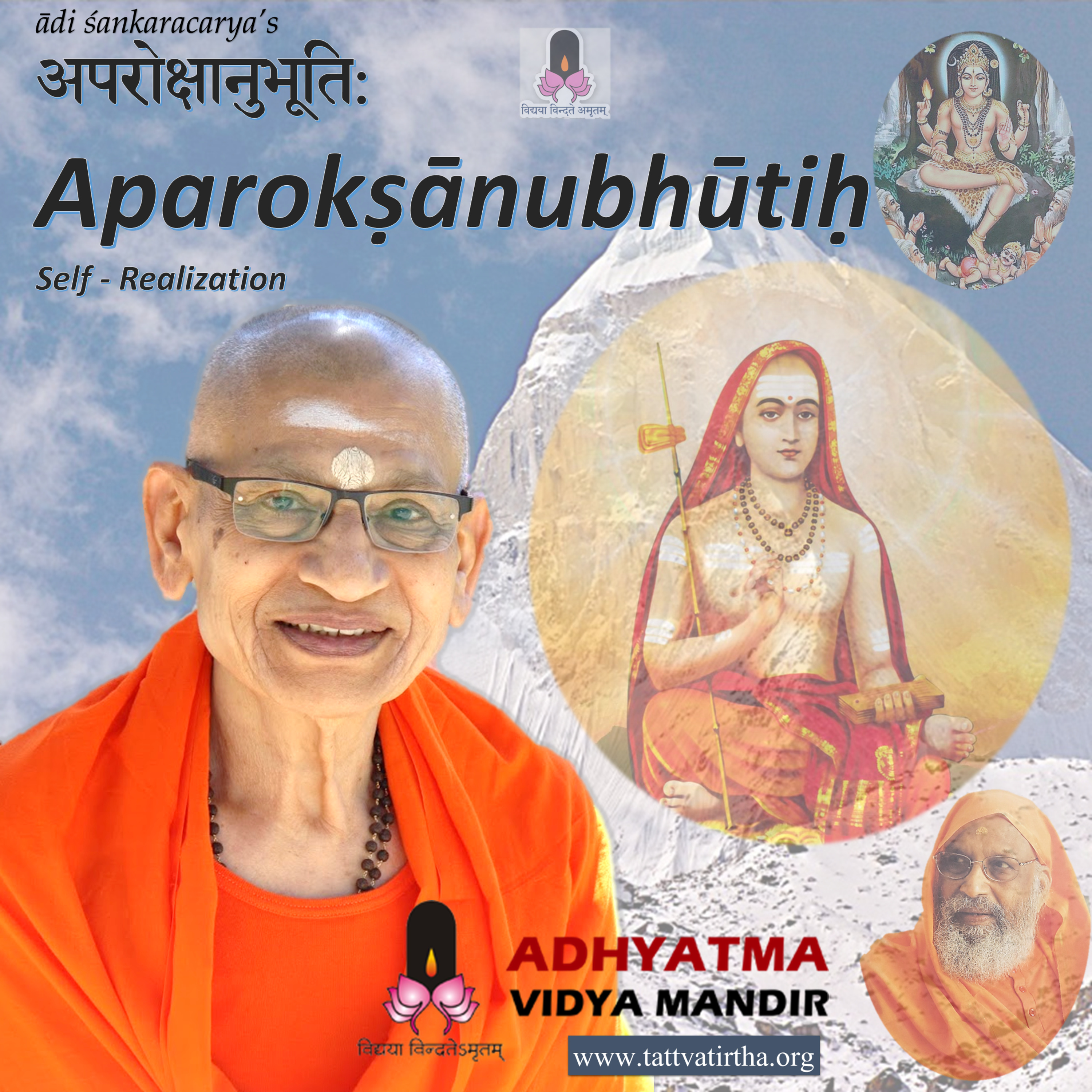 34 Aparokṣānubhūtiḥ (Verse 107-110) | Adhyatma Vidya Mandir Video lecture link : https://www.youtube.com/playlist?list=PLvByNyt5x4-Aj-amr2__x6-DAvIk3EXFL Subject: अपरोक्षानुभूतिः aparokṣānubhūtiḥ Speaker : Swami Viditatmananda Saraswatiji Such treatises as aim at serving as introductions to a more advanced study of a system of philosophy, are generally known as प्रकरण ग्रन्था prakaraṇa granthā. Besides giving an outline of the system, each of them emphasizes some one or other of the main features. Aparokṣānubhūtiḥ is one such title manual, which, while presenting a brief description of Vedanta, deals specially with that aspect of it which relates to anubhūtiḥ realization of the highest truth. Such realization, unlike the knowledge of objects through sense-perception of inference, is an immediate and direct perception of one’s own Self, which is here indicated by the word aparokṣa. | — | ||||||
| 11/16/20 | 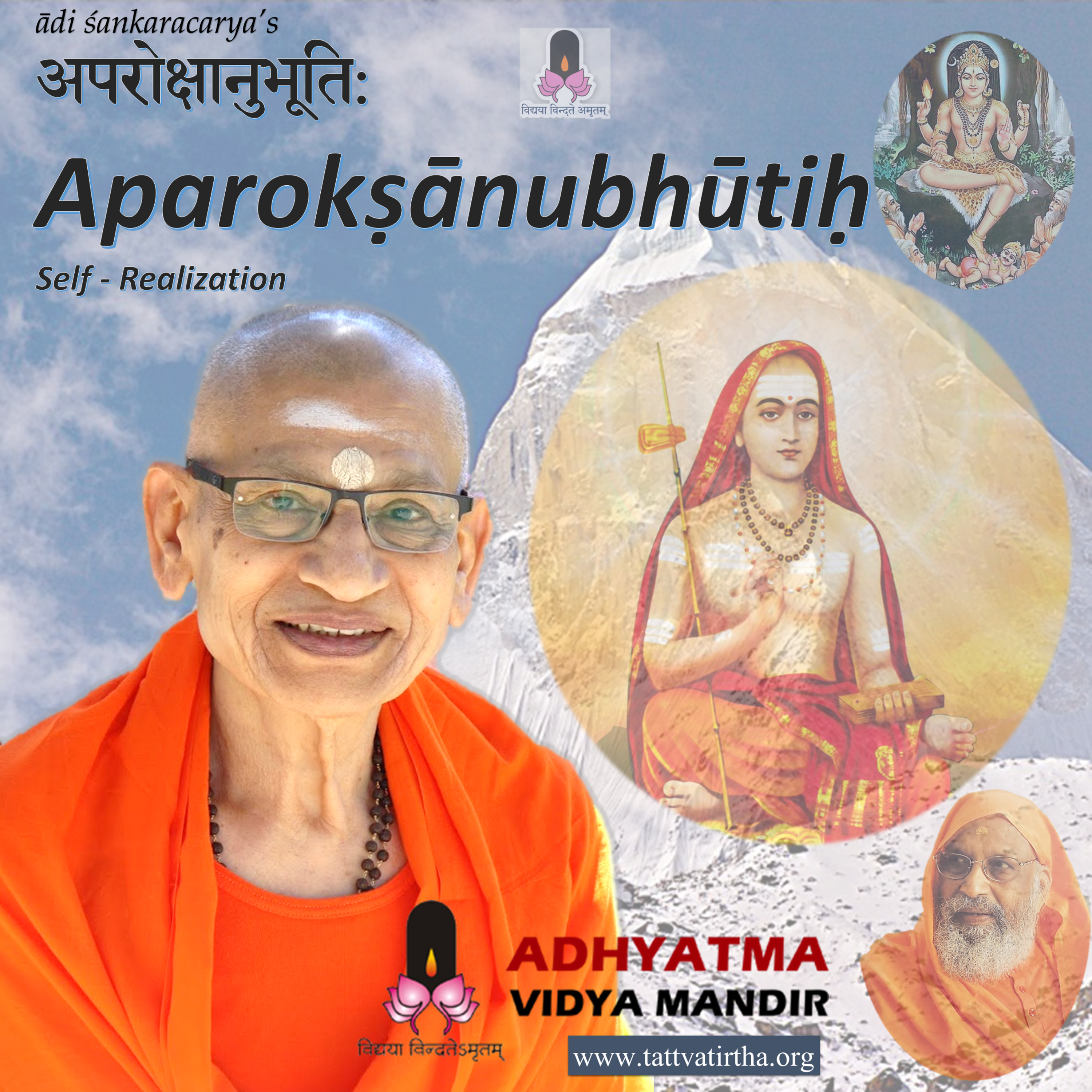 33 Aparokṣānubhūtiḥ (Verse 101-106) | Adhyatma Vidya Mandir Video lecture link : https://www.youtube.com/playlist?list=PLvByNyt5x4-Aj-amr2__x6-DAvIk3EXFL Subject: अपरोक्षानुभूतिः aparokṣānubhūtiḥ Speaker : Swami Viditatmananda Saraswatiji Such treatises as aim at serving as introductions to a more advanced study of a system of philosophy, are generally known as प्रकरण ग्रन्था prakaraṇa granthā. Besides giving an outline of the system, each of them emphasizes some one or other of the main features. Aparokṣānubhūtiḥ is one such title manual, which, while presenting a brief description of Vedanta, deals specially with that aspect of it which relates to anubhūtiḥ realization of the highest truth. Such realization, unlike the knowledge of objects through sense-perception of inference, is an immediate and direct perception of one’s own Self, which is here indicated by the word aparokṣa. | — | ||||||
Showing 25 of 1476
Sponsor Intelligence
Sign in to see which brands sponsor this podcast, their ad offers, and promo codes.
Chart Positions
2 placements across 2 markets.
Chart Positions
2 placements across 2 markets.