Insights from recent episode analysis
Audience Interest
Podcast Focus
Publishing Consistency
Platform Reach
Insights are generated by CastFox AI using publicly available data, episode content, and proprietary models.
Most discussed topics
Brands & references
Total monthly reach
Estimated from 3 chart positions in 3 markets.
By chart position
- 🇦🇺AU · Nature#9830K to 100K
- 🇳🇱NL · Nature#3530K to 100K
- 🇵🇹PT · Nature#533K to 10K
- Per-Episode Audience
Est. listeners per new episode within ~30 days
32K to 105K🎙 ~2x weekly·38 episodes·Last published 1w ago - Monthly Reach
Unique listeners across all episodes (30 days)
63K to 210K🇦🇺48%🇳🇱48%🇵🇹5% - Active Followers
Loyal subscribers who consistently listen
25K to 84K
Market Insights
Platform Distribution
Reach across major podcast platforms, updated hourly
Total Followers
—
Total Plays
—
Total Reviews
—
* Data sourced directly from platform APIs and aggregated hourly across all major podcast directories.
On the show
From 13 epsHost
Recent guests
Recent episodes
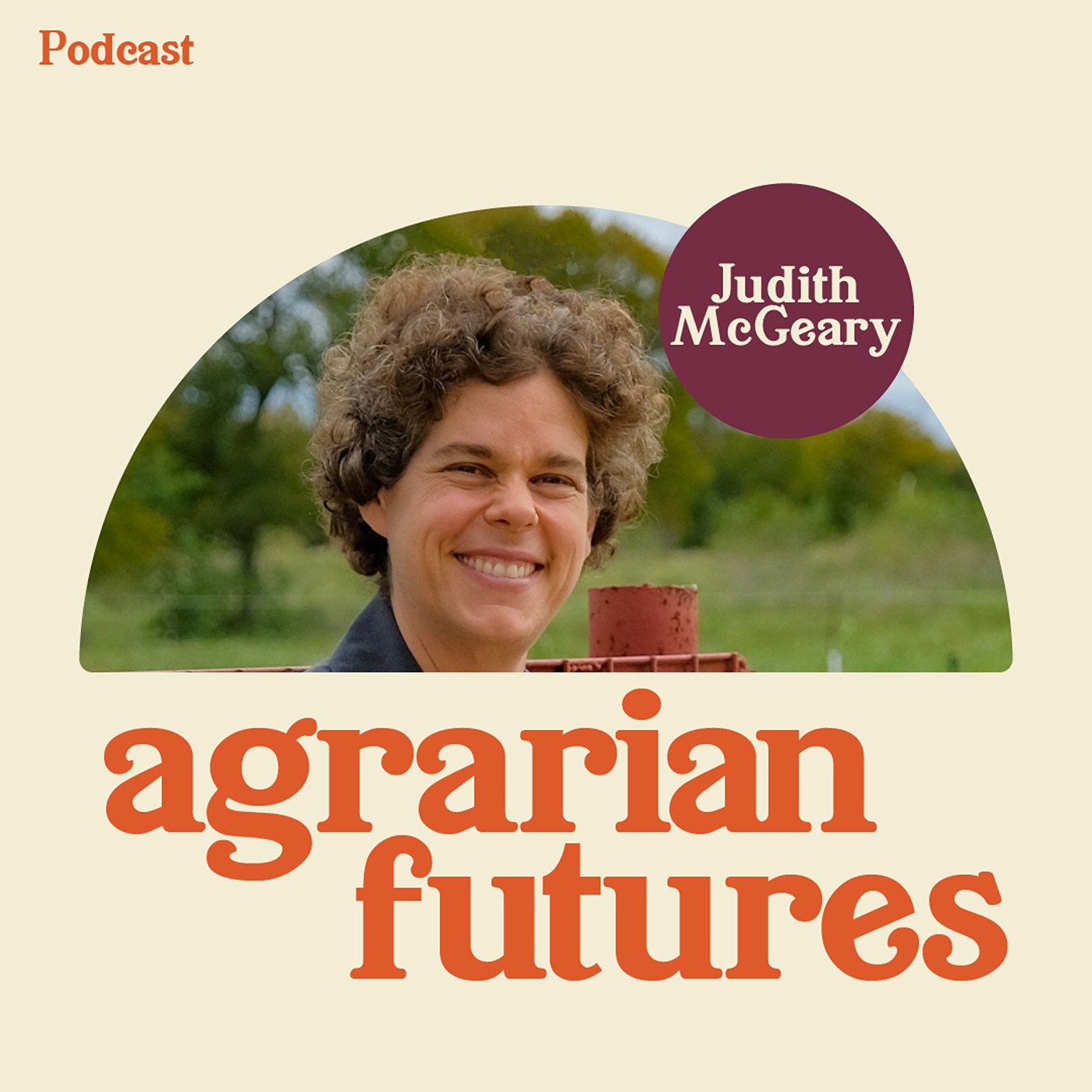
The Farm Bill Explained with Judith McGeary
Jun 12, 2026
42m 53s
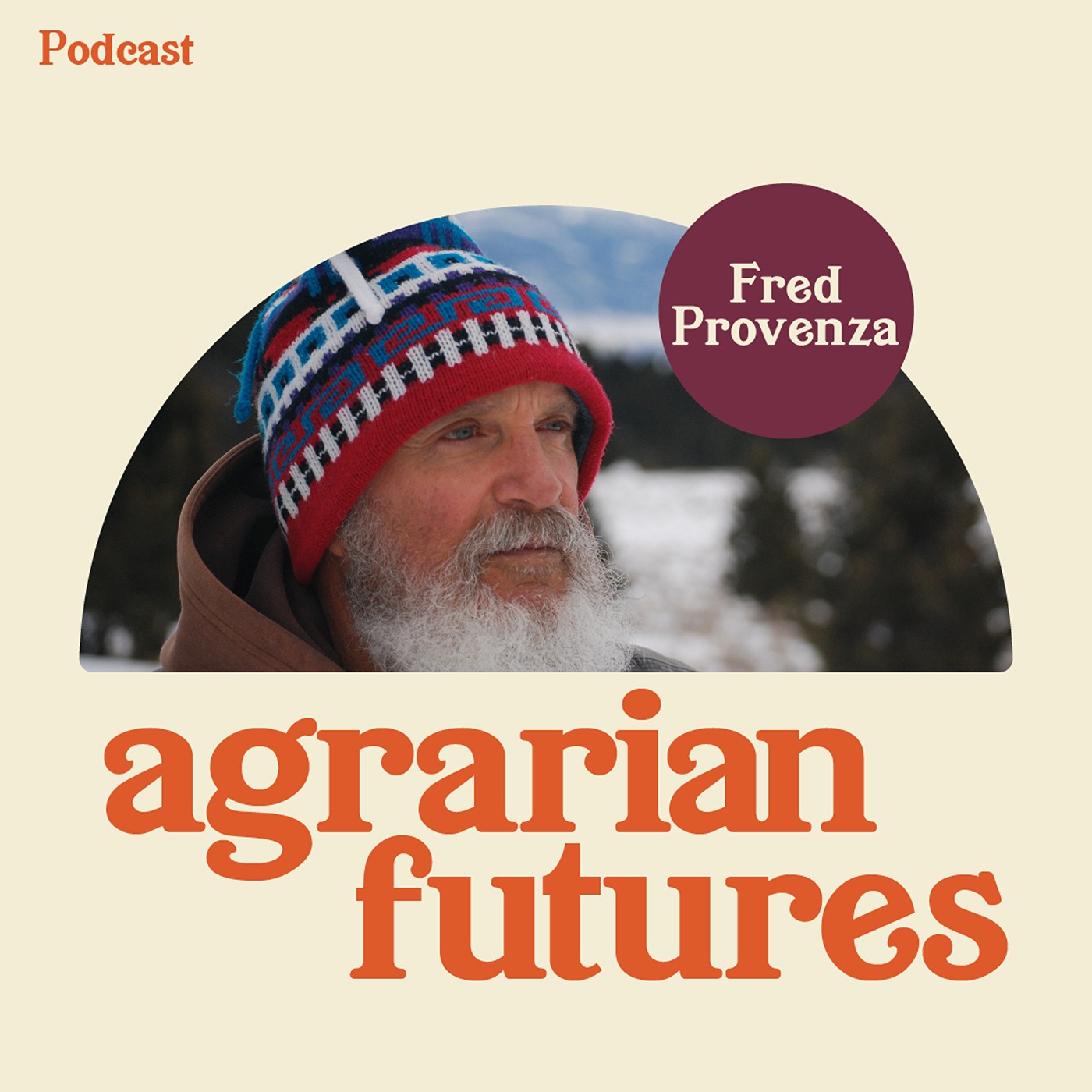
What Animals Teach Us About Caring for the Land with Fred Provenza
May 26, 2026
1h 05m 42s
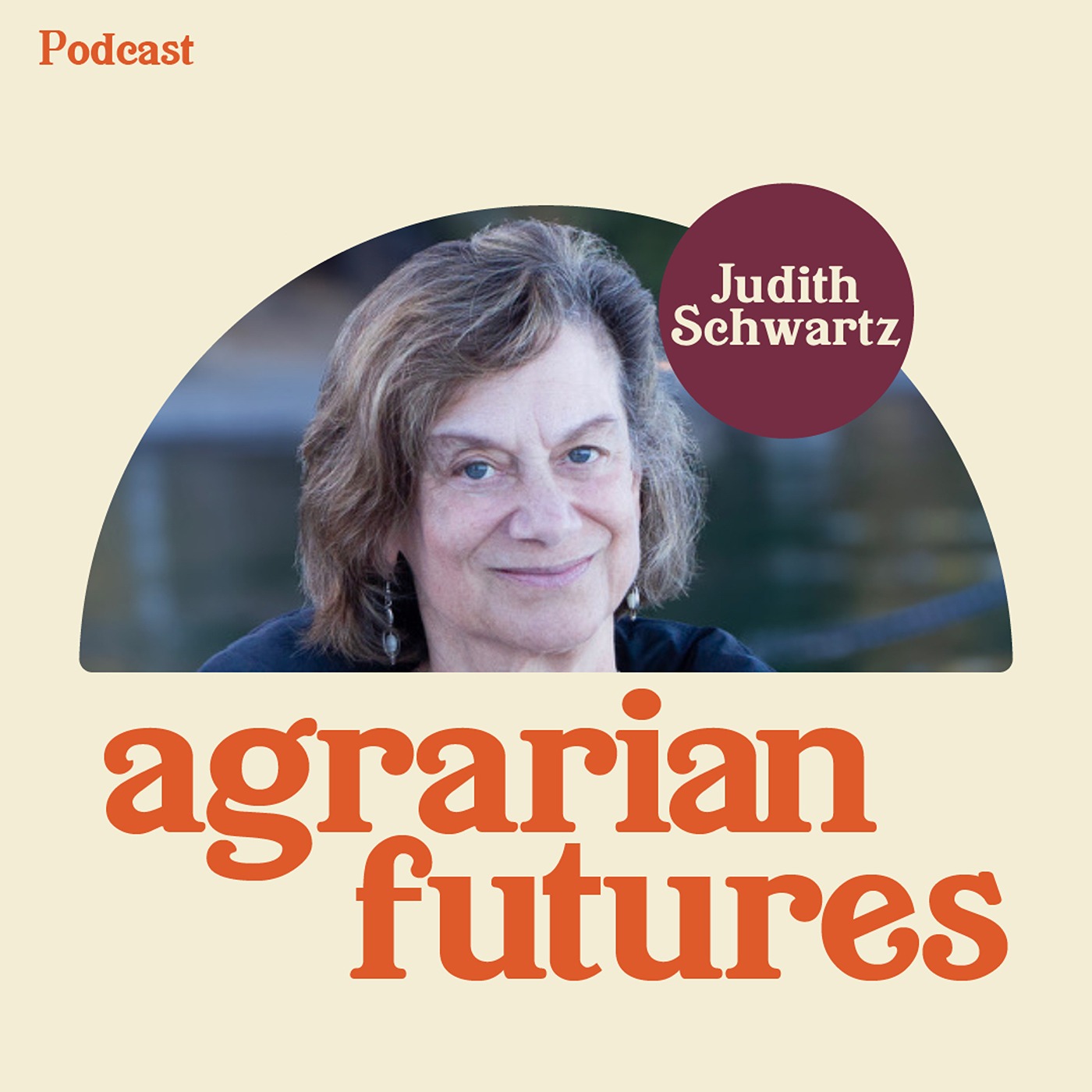
How Land Heals with Judith Schwartz
May 8, 2026
37m 06s
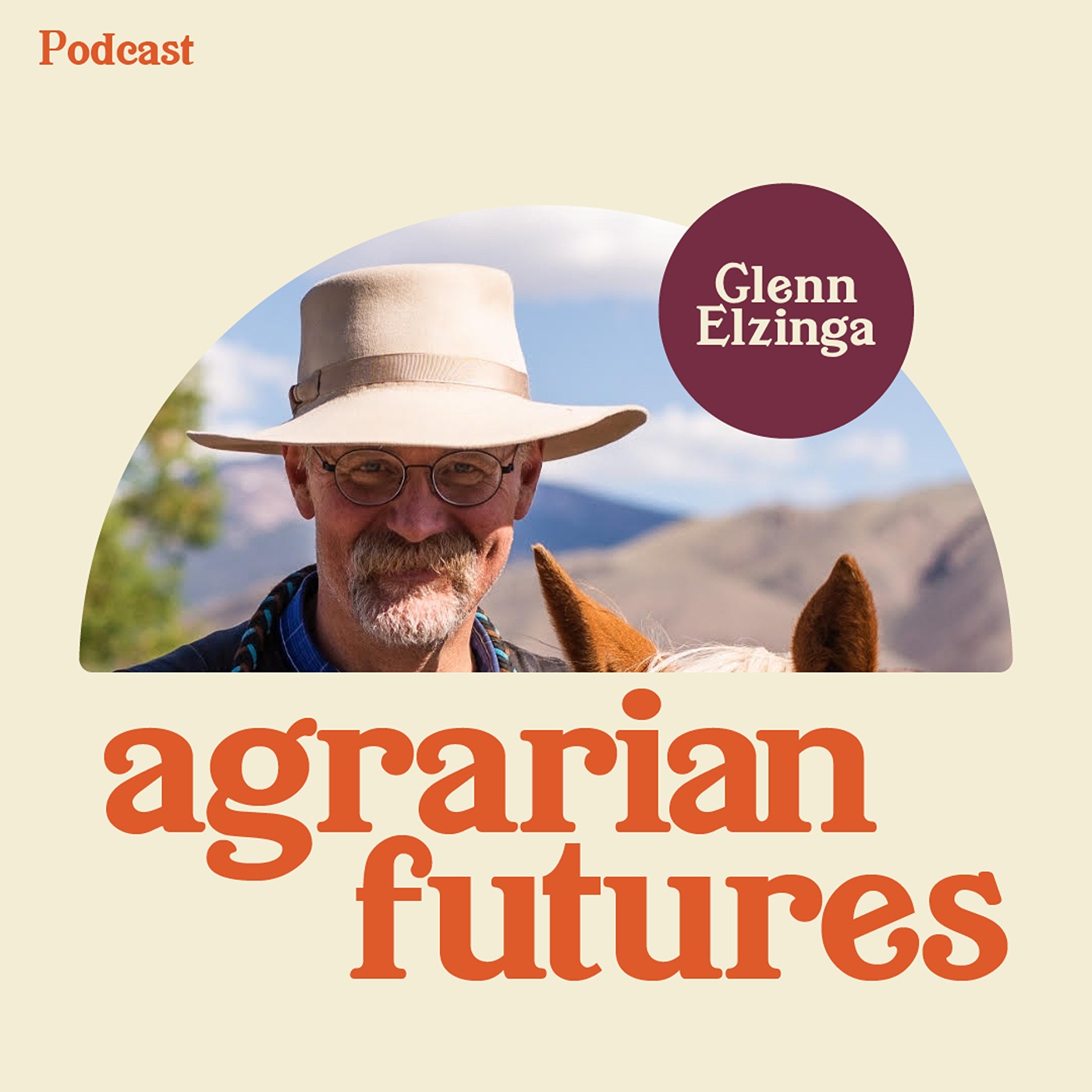
Life on the Range with Glenn Elzinga
Apr 20, 2026
55m 18s
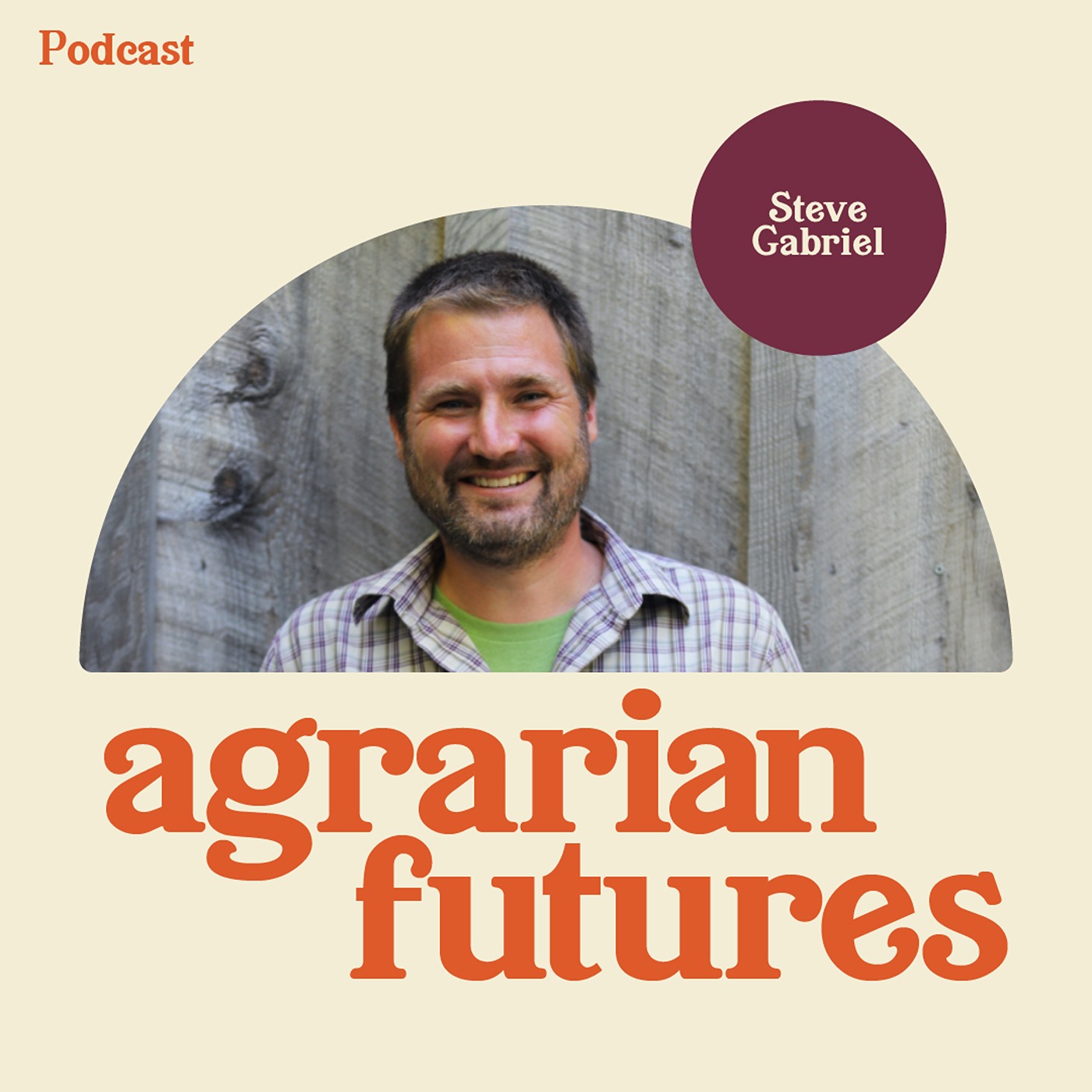
Blending Forest and Field with Steve Gabriel
Apr 1, 2026
29m 58s
Social Links & Contact
Official channels & resources
Official Website
Login
RSS Feed
Login
| Date | Episode | Topics | Guests | Brands | Places | Keywords | Sponsor | Length | |
|---|---|---|---|---|---|---|---|---|---|
| 6/12/26 | ![]() The Farm Bill Explained with Judith McGeary✨ | Farm BillUS food policy+4 | Judith McGeary | Farm and Ranch Freedom Alliance | USSenate | Farm Billfood policy+4 | — | 42m 53s | |
| 5/26/26 | ![]() What Animals Teach Us About Caring for the Land with Fred Provenza✨ | animal behaviorland stewardship+4 | Fred Provenza | Utah State UniversityNourishment: What Animals Can Teach Us About Rediscovering Our Nutritional Wisdom+2 | ColoradoUtah+1 | behavioral ecologyforaging+3 | — | 1h 05m 42s | |
| 5/8/26 | ![]() How Land Heals with Judith Schwartz✨ | land restorationclimate crisis+4 | Judith Schwartz | Agrarian FuturesCows Save the Planet+2 | Loess PlateauNorway+2 | land healingclimate crisis+5 | — | 37m 06s | |
| 4/20/26 | ![]() Life on the Range with Glenn Elzinga✨ | sustainable agricultureanimal husbandry+4 | Glenn Elzinga | Alderspring Ranch | Salmon RiverIdaho | organic beefranching practices+4 | — | 55m 18s | |
| 4/1/26 | ![]() Blending Forest and Field with Steve Gabriel✨ | agroforestrycultural barriers+4 | Steve Gabriel | Wellspring Forest FarmCornell Small Farms Program+2 | Mecklenburg, New York | agroforestrytrees+6 | — | 29m 58s | |
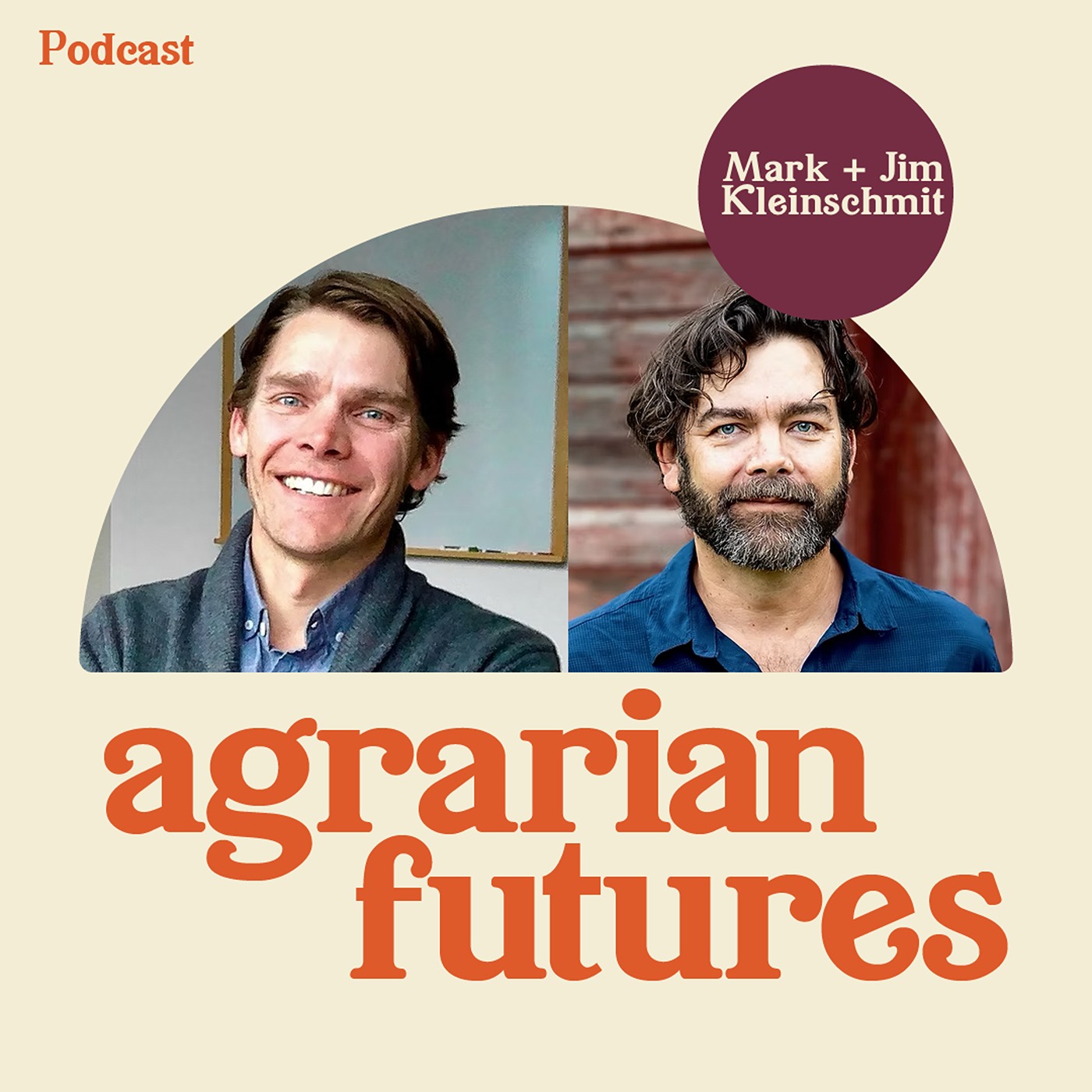
| 3/19/26 | ![]() The Economics of the Other Half with Jim and Mark Kleinschmit✨ | regenerative agricultureeconomic systems+4 | Jim KleinschmitMark Kleinschmit | Other Half ProcessingAgrarian Futures | Northeast Nebraska | regenerative agriculturehides+4 | — | 44m 07s | |
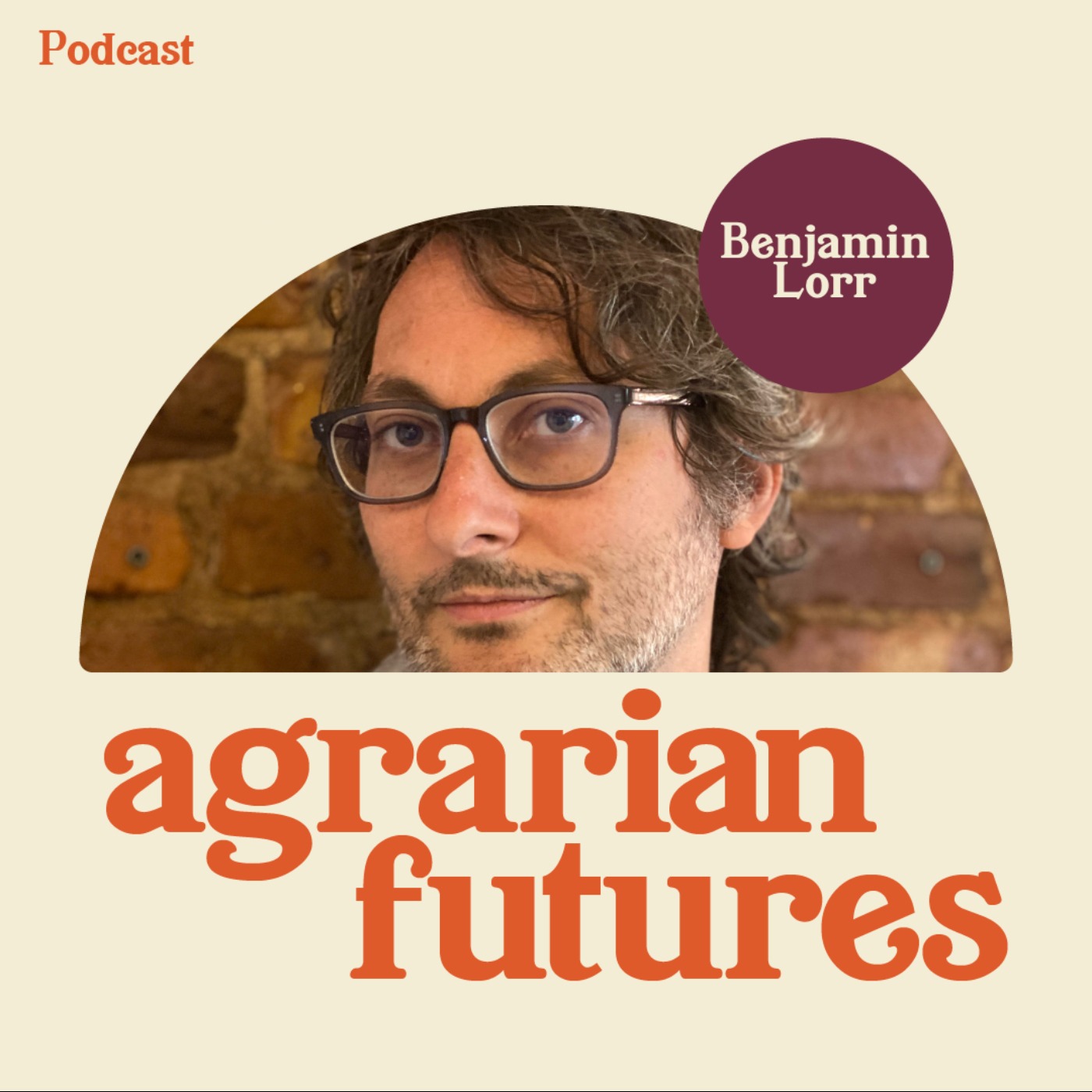
| 2/27/26 | ![]() The Dark Miracle of the Supermarket with Benjamin Lorr✨ | supermarketsfood supply chains+3 | Benjamin Lorr | Whole FoodsThe Secret Life of Groceries | Thailand | supermarketfood system+5 | — | 50m 40s | |
| 2/12/26 | ![]() Why Aren't We Eating Acorns? with Elspeth Hay✨ | acorns as foodfood systems+3 | Elspeth Hay | Feed Us with Trees | — | acornsfood history+3 | — | 42m 38s | |
| 2/3/26 | ![]() Could Leather Be the Missing Piece for Regenerative Ranching? with Cate Havstad of Range Revolution✨ | regenerative ranchingsustainability+3 | Cate Havstad | Range RevolutionAgrarian Futures | — | regenerative ranchingleather+3 | — | 35m 43s | |
| 1/9/26 | ![]() The Regenerative Rebellion with Joel Salatin✨ | regenerative agricultureindustrial food system+4 | Joel Salatin | Polyface FarmOmnivore's Dilemma+1 | Virginia | regenerative farmingagriculture+4 | — | 35m 13s | |
Want analysis for the episodes below?Free for Pro Submit a request, we'll have your selected episodes analyzed within an hour. Free, at no cost to you, for Pro users. | |||||||||
| 12/19/25 | ![]() Eating Fish in the Age of Limits with Paul Greenberg✨ | sustainable fishingaquaculture+3 | Paul Greenberg | Four Fish: The Future of the Last Wild Food | — | seafoodfishing+5 | — | 46m 47s | |
| 12/1/25 | ![]() The Future of Food, Health, and Rural Life with Bob Quinn✨ | local food systemsrural communities+4 | Bob Quinn | Quinn InstituteUC Davis | MontanaBig Sandy | food systemrural economy+4 | — | 39m 06s | |
| 11/20/25 | ![]() Why Soil Is the Key to Regeneration with David Montgomery✨ | regenerative agriculturesoil health+3 | David Montgomery | University of WashingtonMacArthur Fellowship+1 | — | soil degradationnutrient density+3 | — | 45m 06s | |
| 10/14/25 | ![]() Building Collective Power in the Rural South with Terence Courtney | Across the south, generations of Black farmers and business owners have faced losing not just their land, but their livelihoods - pushed out by discriminatory lending, land theft, and the consolidation of power. Yet from that struggle has grown something powerful: a movement rooted in cooperation, where farmers pool their resources, share their knowledge, and build wealth together instead of competing for survival. That spirit of collective power is what drives the Federation of Southern Cooperatives [https://www.federation.coop/], where Terence Courtney works to support Black-owned farms and rural businesses through education, advocacy, and cooperative enterprise. The Federation's model flips the extractive script of traditional capitalism, proving that shared ownership and community investment are sound economic strategies. In this episode, we dive into: * The long history of Black cooperative movements in the South. * How cooperative models help farmers build wealth and autonomy in the face of systemic discrimination. * Why collective economics is key to sustaining rural communities. * The Federation's approach to balancing profitability with community values. * How policy and history continue to shape access to land and opportunity. * What true self-determination looks like in agriculture. More about Terence and the Federation of Southern Cooperatives [https://www.federation.coop/]: Terence Courtney began organizing with the Service Employees International Union to improve economic conditions for working people. He led union campaigns and later became the union's statewide representative in Georgia. He's co-founded and led coalitions such as Atlanta Jobs with Justice and a community group focused on the public sector called the Atlanta Public Sector Alliance. Expanding from a city to a regional focus, Terence organized US born and foreign born (immigrants) of African descent to educate and raise consciousness about immigrant rights and mass incarceration from a Black Diasporic perspective for the Black Alliance for Just Immigration. He co-developed the Organization for Human Rights and Democracy and served as the Director of Organizing overseeing campaigns against school privatization, as well as its spin off project: Cooperative Atlanta. Currently Terence serves as the Director of Cooperative Development & Strategic Initiatives for theFFederation of Southern Cooperatives [https://www.federation.coop/] Agrarian Futures is produced by Alexandre Miller, who also wrote our theme song. This episode was edited by Drew O'Doherty. | 53m 39s | ||||||
| 9/18/25 | ![]() Farming Against the Odds with Beth Hoffman | What happens when you leave behind a career in food journalism to take over a family farm in Iowa? For Beth Hoffman, it meant putting theory into practice - and learning firsthand just how difficult it is to make small and mid-sized farming work in today's economy. In her book Bet the Farm [https://bookshop.org/p/books/bet-the-farm-the-dollars-and-sense-of-growing-food-in-america-beth-hoffman/91116e97c0557857?ean=9781642831597&next=t&next=t] and in her daily life raising grass-finished cattle and organic crops, Beth confronts the financial and cultural realities most farmers face: land that's too expensive for beginners, markets that reward consolidation over stewardship, and infrastructure built for scale instead of community. Yet her story is also one of possibility -o f finding ways to align values with viability and imagining what a more just and sustainable food system could look like. In this episode, we dive into: * Beth's journey from food journalist to first-generation farmer in Iowa * The hidden costs of farming and why most operations run on razor-thin margins * The double bind of land access, generational transfer, and skyrocketing prices * Why infrastructure like slaughterhouses and markets is as important as the land itself * The trade-offs between environmental ideals and financial realities on the ground * How gender and cultural narratives shape who is seen as a "real farmer" * What a truly sustainable and just farming system would require More about Beth [https://www.farmbetiowa.com/]: Beth Hoffman began her food writing career focused on culture, producing a food series on KUER in Salt Lake City and receiving a grant to document the stories of immigrant women as they cooked in their homes (which became a radio series that aired on Weekend America). Now, twenty-five years into writing and producing work on food and agriculture, Beth has freelanced for radio and print publications (NPR, The World, The Guardian, Forbes and many more) and was an Associate Professor at the University of San Francisco in Media Studies. But perhaps most importantly, she and her husband John moved from the big city to rural Iowa to take over his family's 530-acre farm. She wrote a book called Bet the Farm: The Dollars and Sense of Growing Food in America, using their experiences to illustrate how the American food system works. The couple raises grass-fed and finished beef, pastured goats and some vegetables and offer cooking and writing classes on the farm. Agrarian Futures is produced by Alexandre Miller, who also wrote our theme song. This episode was edited by Drew O'Doherty. | 59m 28s | ||||||
| 8/13/25 | ![]() Restoring the Underwater Forests with Jon Dickson | Before industrial dredging, clear-cutting, and destructive fishing practices, our rivers and oceans were full of wood. Fallen trees, driftwood, and branches created underwater forests where fish and countless other creatures could thrive. That wood provided shelter, food, and the foundation for entire aquatic ecosystems. Today, much of it is gone, and so are the fish. Marine restoration expert Jon Dickson noticed this loss while working along Europe's coasts and asked a deceptively simple question: if we remove the wood, do we also remove the fish? His answer is the "tree reef," an artificial reef made from pear trees and other natural materials that replaces destroyed habitat. It is a low-tech, high-impact idea with the potential to revive aquatic life far beyond local waters, and it is deeply connected to the broader regenerative agriculture movement on land and at sea. In this episode, we dive into: * The forgotten role of wood in rivers, estuaries, and oceans and why it matters for fish * How dredging and "cleaning" waterways destroyed essential aquatic habitats * Why restoring fish populations is critical for global ecological balance, including land-based food systems * The limitations of many well-meaning marine restoration efforts and how tree reefs succeed where others fail * The design, construction, and surprising results of tree reefs * How low-cost, replicable solutions could transform restoration at scale * Why thinking like an ecosystem is the key to regeneration everywhere If you have ever wondered how oceans and rivers fit into the future of regenerative food systems, Jon's work might change the way you see both land and sea. More about Jon and Marine Trees [https://www.marinetrees.com/]: Jon grew up in British Columbia, Canada, where after university, he worked as a forest fire fighter. In the off season, he worked as a polar guide and boat driver in Antarctica, Greenland, and Northern Canada. These seasonal jobs and education were interspersed by backpacking trips; his favourite countries (so far) are Iceland, Mongolia, Uganda, Slovenia, and with a vote for the home team, Canada. Since moving to the Netherlands to work on a PhD, he noticed a distinct lack of driftwood in Europe and decided to see if fish were missing habitat due to lack of wood - and so invented tree-reefs, an artificial reef made of trees to replace destroyed habitat. Agrarian Futures is produced by Alexandre Miller, who also wrote our theme song. This episode was edited by Drew O'Doherty. | 40m 43s | ||||||
| 7/23/25 | ![]() How to Leave the Industrial System Behind with Will Harris | Years before regenerative ag and grass-fed beef hit the spotlight, Will Harris was figuring it out on his own land. At White Oak Pastures in Bluffton, Georgia, Will spent the last few decades unwinding everything industrial agriculture taught him: the chemicals, the confinement, the commodity mindset. In its place, he's built a vertically integrated, closed-loop system that honors the land, the animals, the people who work it, and the rural town that depends on it. White Oak Pastures is now one of the shining lights of what the future of agriculture can look like. If you're thinking about what it takes to make regenerative ag not just real but resilient, you'll have something to learn from Will Harris. In this episode, we get into: * The real costs of industrial efficiency and what it takes to opt out. * Why Will restructured every aspect of his farm—from soil health to slaughter. * How White Oak Pastures uses animal impact to build biology, not extract from it. * The economics of rebuilding a rural economy around regenerative principles. * Will's take on corporate greenwashing, fake meat, and the soul of agriculture. * And the core belief that drives it all: regeneration is about relationships, not inputs. More about Will and White Oak Pastures [https://whiteoakpastures.com/]: Will Harris is a fourth-generation cattleman, who tends the same land that his great-grandfather settled in 1866. Born and raised at White Oak Pastures, Will left home to attend the University of Georgia's School of Agriculture, where he was trained in the industrial farming methods that had taken hold after World War II. Will graduated in 1976 and returned to Bluffton, where he and his father continued to raise cattle using pesticides, herbicides, hormones, and antibiotics. They also fed their herd a high-carbohydrate diet of corn and soy. In the mid-1990s, Will became disenchanted with the excesses of these industrialized methods. They had created a monoculture for their cattle, and, as Will says, "nature abhors a monoculture." In 1995, Will made the audacious decision to return to the farming methods his great-grandfather had used 130 years before. Since Will has successfully implemented these changes, he has been recognized all over the world as a leader in humane animal husbandry and environmental sustainability. Will is the immediate past President of the Board of Directors of Georgia Organics. He is the Beef Director of the American Grassfed Association and was selected 2011 Business Person of the year for Georgia by the Small Business Administration. Will lives in his family home on the property with his wife Yvonne. He is the proud father of three daughters, Jessi, Jenni, and Jodi. His favorite place in the world to be is out in pastures, where he likes to have a big coffee at sunrise and a 750ml glass of wine at sunset. Agrarian Futures is produced by Alexandre Miller, who also wrote our theme song. This episode was edited by Drew O'Doherty. | 46m 06s | ||||||
| 6/30/25 | ![]() Why Farmland Shouldn't Be a Commodity with Sarah Mock | We all need land to eat, but more and more, farmland has become a financial asset instead of a source of food, livelihood, and community. And when agriculture becomes just another investment, we risk losing something essential, not just for farmers, but for the health, resilience, and future of our entire society. Journalist and researcher Sarah Mock joins us to unpack the deep consequences of treating land like a commodity - from pricing out new farmers, to consolidating ownership, to weakening the rural communities that once thrived around agriculture. We explore the forgotten history of agrarian populism, the modern land trap that affects both aging landowners and aspiring farmers, and why the future of food depends on rethinking ownership - not just optimizing yields. In this episode, we dive into: * Why land "defies capitalism" - and what that means for our food system. * The double bind of retiring farmers and new farmers locked out by land prices. * How the disappearance of agrarian populism has shaped today's agriculture policy. * The myth of the silver-bullet tech fix for food and farming. * Real alternatives to land as a speculative commodity. * And what it would take to make small and mid-size farming viable again. More about Sarah [https://sarahkmock.com/]: Sarah Mock is a food and agriculture writer, researcher, and podcaster. She grew up on a small farm in Wyoming, and since then has spent more than a decade working on everything from farm production, strategy, and marketing to ag history and economics to food logistics, supply chains, and climate impact. She's worked in and around agriculture across the country and around the globe, with non-profits, the U.S. Department of Agriculture, Silicon Valley companies, the national news media, and directly with farms. Her work has culminated in a number of award-winning projects, including her best-selling book Farm (and Other F Words) [https://bookshop.org/books/farm-and-other-f-words-the-rise-and-fall-of-the-small-family-farm] and her podcast series The Only Thing That Lasts [https://ambrook.com/research/podcast/the-only-thing-that-lasts], which explores the past, problems, and possibilities of American farmland. Learn more at https://sarahkmock.com/. Agrarian Futures is produced by Alexandre Miller, who also wrote our theme song. This episode was edited by Drew O'Doherty. | 1h 05m 50s | ||||||
| 6/4/25 | ![]() Losing 10,000 Farms a Year — And How to Reverse It with Brian Reisinger | Are fewer, bigger farms putting our entire food system at risk? That's the warning at the heart of Land Rich, Cash Poor [https://www.brian-reisinger.com/], the latest book by Brian Reisinger. In it, he explores the forces—technological, political, and economic—that have hollowed out rural America and made it harder than ever to keep a family farm alive. Drawing from his own multigenerational farming roots in Wisconsin, Brian traces how policy choices and market consolidation have left farmers squeezed—sometimes literally sitting on millions of dollars of land they can't afford to keep. In this episode, we dive into: * Why the U.S. has lost over 70% of its farms in the past century—and what that's done to rural communities. * The role of technology and policy in fueling unnecessary consolidation. * How farm crises, past and present, continue to push out small and mid-sized producers. * The rise of land as an investment asset—and what that means for food producers. * The growing divide between those who own the land and those who work it. * Why America's tradition of small landowners is worth fighting for. * What scale-neutral technology and smarter R&D could do to level the playing field. * How we create real economic opportunity for a new generation of small farms. More about Brian [https://www.brian-reisinger.com/]: Brian Reisinger is an award-winning writer and rural policy expert who grew up on a family farm in Sauk County, Wisconsin. Reisinger worked with his father from the time he could walk, before entering the worlds of business journalism and public policy, then going on to work as a columnist and consultant. He lives to tell the hidden stories of rural America and has been published by USA Today, Newsweek, Yahoo News, the Milwaukee Journal Sentinel, PBS/Wisconsin Public Radio's "Wisconsin Life," The Daily Yonder, RealClearPolitics, The Hill, and elsewhere. He's given a TEDx talk on risks to our food supply, and appeared on C-SPAN's "Washington Journal," CNN, public radio, farm radio, and other outlets across the political spectrum. Reisinger's writing has won awards from the National Society of Newspaper Columnists, first place in the Seven Hills Literary Contest, a Solas Award, and more. He lives with his wife and daughter, and helps lead Midwestern-based Platform Communications, splitting time between northern California and the family farm in Wisconsin. Land Rich, Cash Poor is his first book. Find him on X: @BrianJReisinger Agrarian Futures is produced by Alexandre Miller, who also wrote our theme song. This episode was edited by Drew O'Doherty. | 58m 15s | ||||||
| 5/21/25 | ![]() Breaking the Beef Monopoly with Cole Mannix of Old Salt Co-Op | What do we lose when our food comes from nowhere in particular? For Cole Mannix, that question is at the heart of his work. He's part of Old Salt Co-op [https://www.oldsaltco-op.com/?srsltid=AfmBOoraYO3_5wSO3lmz7D4i1d4ryGJBF0q9MHKQJAvEvhIV4q1eJ50C\], a group of ranchers outside Helena, Montana working to unseat Big Beef—not with billion-dollar backing or slick marketing, but with community, collaboration, and a commitment to place. In today's episode, we talk about what it means to break out of the commodity system, the power of cooperation in an industry dominated by consolidation, and how reconnecting food production to place might just be the key to restoring rural and small town life. This is a story about beef—but really, it's about belonging. In this episode, we dive into: * How Old Salt Co-op is using a cooperative model to rebuild local meat economies. * Why the beef you buy at the store often has no traceable connection to where—or how—it was raised. * What we lose when we prioritize cheap, consistent food over community and ecology. * The hidden costs of a commodity system that favors efficiency over stewardship. * What it takes to rebuild local processing, distribution, and marketing from the ground up. * The creative mix of restaurants, festivals, and direct-to-consumer sales that make Old Salt's model work. * Why betting on local food systems might be the least risky path forward. More about Cole and Old Salt Co-Op [https://www.oldsaltco-op.com/?srsltid=AfmBOoraYO3_5wSO3lmz7D4i1d4ryGJBF0q9MHKQJAvEvhIV4q1eJ50C]: Cole is part of an extended family that has ranched together since 1882 near Helmville, MT. He did an undergrad in biology, then another in philosophy at Carroll College, then a masters in theology at Boston College. From '12-'16 he worked for a valiant startup called Salt of the Earth Ranchers Cooperative. From '17-'20 he worked for Western Landowners Alliance to advance policies and practices that sustain working lands, connected landscapes, and native species. As a co-founder of Old Salt Co-op, he is helping to build a regenerative economy for damn fine Montana meat. He was part of Helena's 20 under 40 class of ''22 and in '23 was named Montana Ambassadors Entrepreneur of the Year. He and spouse Eileen Brennan live in Helena with two sons, Finn and Charlie. Agrarian Futures is produced by Alexandre Miller, who also wrote our theme song. This episode was edited by Drew O'Doherty. | 59m 12s | ||||||
| 4/3/25 | ![]() Lessons Learned Roadtripping Through a Divided America with Anthony James | It's no secret our world is in upheaval right now—climate disasters, political unrest, economic uncertainty. But in the midst of it all, there are also stories of resilience, adaptation, and new ways forward. That's a theme Anthony James, host of The Regen Narration Podcast [https://www.regennarration.com/], has explored deeply. From an extended road trip across the U.S., interviewing community leaders navigating climate adaptation, to studying how people respond to upheaval, Anthony has seen firsthand how crisis can be a catalyst for transformation. In this episode, we dive into: * Why witnessing and pitching in during disaster—rather than looking away—is essential to change. * Lessons from his travels across the U.S., meeting communities in the midst of transformation. * A Paradise Built in Hell by Rebecca Solnit, and how joy and transcendence can emerge from catastrophe. * Real-world examples of people coming together across political and cultural divides to build something new. * What modern society can learn from Indigenous worldviews that see nature as kin and resilience as a collective effort. * Do we focus on building centralized movements, or do we nurture local seeds of change and trust in their transformative power? * And much more… More about Anthony and The Regen Narration Podcast [https://www.slowmoneynyc.org/]: The RegenNarration podcast features the stories of a generation that is changing the story, enabling the regeneration of life on this planet. It's independent media, ad-free, freely available and entirely listener-supported. Created and hosted by Anthony James, a fifth generation Australian man living on ancient lands among the oldest continuous cultures on earth. He is a Prime Ministerial award-winner for service to the international community, sought after MC, widely published writer, facilitator and educator, Honorary Research Fellow at the University of Western Australia, and Warm Data Lab Host Certified by the International Bateson Institute. Agrarian Futures is produced by Alexandre Miller, who also wrote our theme song. This episode was edited by Drew O'Doherty. | 52m 46s | ||||||
| 3/18/25 | ![]() Bringing Money Back Down to Earth with Claude Arpels | If we want regenerative farms and food businesses to thrive, we have to talk about money. How do we help them grow without forcing them to sell out their values? That's exactly what Claude Arpels - and Slow Money NYC - is working to solve. Claude has spent years rethinking investment strategies to support regenerative food systems. After a first career in luxury fashion, he pivoted to impact investing, helping farms and food businesses secure the land and capital they need—without compromising their mission. In this episode, Claude breaks down: * Why traditional venture capital and private equity push businesses toward environmental and labor exploitation. * How Slow Money NYC was created as a response to these challenges. * The creative funding tools—like revenue notes—that align investment with long-term sustainability. * The role of local investment in building resilient food systems. * And much more… More about Claude and Slow Money [https://www.slowmoneynyc.org/]: After a first career in the fashion and luxury biz, Claude chose to dedicate himself to his interests in food, the environment, social enterprise, and the arts. He has become an impact angel investor, with a focus on local economies and businesses that have a sustainable/regenerative food and agriculture mission. His portfolio of investments includes Brooklyn Grange, Matriark Foods, Raven & Boar, and Edenesque. Claude is the Co-Chair of Slow Money NYC and a founding member of Foodshed Investors New York, which is now part of Investors Circle, whose advisory board he sits on. An important part of Slow Money's work is helping small farms find access to land and capital. As part of this mission, Claude was one of the founding investors in Local Farms Fund and has led several investments in local farm projects. Claude is the Board President of International Contemporary Ensemble, the nation's pre-eminent contemporary music ensemble. Championing the works of emerging and under-represented composers, ICE has developed and performed over 1000 world premieres since its founding in 2001. Agrarian Futures is produced by Alexandre Miller, who also wrote our theme song. This episode was edited by Drew O'Doherty. | 32m 02s | ||||||
| 1/14/25 | ![]() Financing Native Food Sovereignty with Skya Ducheneaux | On this show, we've talked a lot about how traditional banking and financial systems make it tough for new farmers or those without direct land ownership to get a fair shot. But those challenges run even deeper for agricultural producers in Indian Country. Enter Skya Ducheneaux, who's tackling these barriers head-on as the leader of Akiptan [https://www.akiptan.org/]—the first Native CDFI dedicated to serving agricultural producers all across Indian Country. Skya brings fresh eyes to lending, challenging old-school banking practices that just don't work for farmers without big land holdings or a long financial track record. Instead, Akiptan focuses on sweat equity, work ethic, hands-on support, and long-term solutions - and yield tremendous outcomes as a result. In this episode, Skya shares: * Her journey from growing up on a cattle ranch to leading a groundbreaking financial institution. * Why extractive capital leads to extractive practices—and how patient, thoughtful capital can support regenerative agriculture. * The unique ways Akiptan removes barriers and empowers Native ag producers. * Remarkable success stories from the communities Akiptan serves. * Why Native CDFIs have an opportunity to step up investment in agriculture. * And how outside investors can better align with the long-term needs of Native farmers. * And much more… More about Skya and Akiptan [https://www.akiptan.org/]: Skya Ducheneaux is the Executive Director of Akiptan and is an enrolled member of the Cheyenne River Sioux Tribe. She spent her first 18 years of life on a cattle ranch on the CRST Reservation in South Dakota. She then pursued a Bachelors and Masters Degree in Business Administration while working at a county FSA office and buffalo meat processing plant. After returning home to work for the Intertribal Agriculture Council, she was tasked with creating the first Native CDFI dedicated to serving Native Agriculture producers all across Indian Country. Akiptan began lending in January of 2019 and has grown rapidly over the years. In addition to Akiptan, Skya has served on many advisory committees and is currently the Board Chair of the Mountain Plains CDC. In her role as Executive Director, she is a part of several CDFI coalitions, advocates locally and federally and presents at conferences to share the mission of Akiptan. Agrarian Futures is produced by Alexandre Miller, who also wrote our theme song. This episode was edited by Drew O'Doherty. | 52m 28s | ||||||
| 1/8/25 | ![]() The Case Against Techno-Fixes with Chris Smaje | In the face of climate change and biodiversity loss, the solutions we hear the most are technological ones - many of which mirror the economic and philosophical approaches that precipitated these crises in the first place. But what if that vision is flawed? Chris Smaje, author of Saying NO to a Farm-Free Future, challenges the dominant eco-modernist philosophy head-on. He critiques its reliance on techno-fixes—not just on technological grounds, but also economic, political, and spiritual ones. In this episode, Chris shares an alternative vision: a localist, agro-ecological approach to modern agriculture, rooted in self-provisioning for our basic needs and leveraging natural cycles instead of hyper-technological systems. It's a vision that reconnects us to the land, promotes food sovereignty, and rethinks what a feasible and fulfilling future could look like. In this episode, we dive into: * Why he wrote Saying NO to a Farm-Free Future, inspired by a critique of prominent environmental and agricultural thinker George Monbiot. * What our environmental crises reveal about the deeper flaws in our econmic systems. * How industrial agriculture's obsession with efficiency undermines ecological and social resilience. * The ecological work of animals and why they're vital to sustainable farming systems. * The drive toward urbanism and the assumptions—often misguided—about its benefits for the planet. * Reimagining quality of life beyond financial measures. * And much more… More about Chris [https://chrissmaje.com/]: Chris Smaje helps run a small farm in Somerset, England and has worked as a commercial vegetable grower and an academic social scientist. He's recently published two books, A Small Farm Future (2020) and Saying NO to a Farm-Free Future (2023). He's currently at work on a third – Lights for a Dark Age – all published by Chelsea Green. Agrarian Futures is produced by Alexandre Miller, who also wrote our theme song. This episode was edited by Drew O'Doherty. | 46m 06s | ||||||
| 12/17/24 | ![]() Living Without Fossil Fuels with Alexis Zeigler | It's easy to feel powerless in the face of climate change, but where can we find models for living in harmony with the planet—before it's too late? Alexis Zeigler and the community at Living Energy Farm are doing just that: building a self-sustaining, non-extractive way of life and sharing their knowledge with others. Alexis brings a unique blend of practical, technical expertise and a deep philosophical vision for restoring our spiritual connection to nature—and to one another. These themes are at the heart of this show. If you're seeking grounded hope and a climate-resilient model for living, we think you'll find this conversation inspiring. In this episode, we cover: * Living Energy Farm's mission to live without reliance on fossil fuels or grid electricity and how that works in practice. * The limitations of climate change mitigation strategies that rely on just converting consumer products into something more sustainable. * The sacrifices they make to live self-sufficiently, and how its less than what you might think. * The core tenets necessary to live this way. * The benefits of living intentionally and in community vs a life focused on private property. * And much more... More about Alexis and Living Energy Farm [https://livingenergyfarm.org/]: Alexis Zeigler is an author, activist, designer and builder of renewable energy systems. He was raised on small, diversified farm in Georgia. He is the primary designer of Living Energy Farm, a community of 10 people that grows most of its food and provides all of its own domestic energy. Alexis has a passion for growing food on trees, and is particularly devoted to persimmons. His books include Integrated Activism, which discusses the links between ecological change and politics, as well as Empowering Communities, which describes how to build food and energy independent communities. Agrarian Futures is produced by Alexandre Miller, who also wrote our theme song. This episode was edited by Keith J. Nelson, Alexandre Miller, and Drew O'Doherty. | 45m 56s | ||||||
Showing 25 of 42
Pitch Fit is a Pro feature
See how bookable this show is for guests, which brands already advertise, the per-episode ad value, and the best-fit guest and sponsor profile. The numbers are blurred on the free plan.
How readily this show books outside guests like you.
How proven this show is for host-read sponsorships.
For Guests
ProFor Advertisers
ProUpgrade to Pro to unlock guest cadence, sponsor categories, fit scores, and per-episode ad value for this show.
Chart Positions
3 placements across 3 markets.
Chart Positions
3 placements across 3 markets.