

Insights from recent episode analysis
Audience Interest
Podcast Focus
Publishing Consistency
Platform Reach
Insights are generated by CastFox AI using publicly available data, episode content, and proprietary models.
Most discussed topics
Brands & references
Total monthly reach
Estimated from 1 chart position in 1 market.
By chart position
- 🇰🇷KR · Technology#1431K to 10K
- Per-Episode Audience
Est. listeners per new episode within ~30 days
500 to 5K🎙 Weekly cadence·22 episodes·Last published 3w ago - Monthly Reach
Unique listeners across all episodes (30 days)
1K to 10K🇰🇷100% - Active Followers
Loyal subscribers who consistently listen
400 to 4K
Market Insights
Platform Distribution
Reach across major podcast platforms, updated hourly
Total Followers
—
Total Plays
—
Total Reviews
—
* Data sourced directly from platform APIs and aggregated hourly across all major podcast directories.
On the show
From 10 epsHosts
Not detected.
Recent guests
Recent episodes
Simo D | AI Agents and My Digital Employee!
Jun 3, 2026
Unknown duration
Fred Voccola | Simpro | AI in the Commercial Trades
Apr 10, 2026
42m 20s
Steven BigBeat Orr - Quasar Markets and AI for Investing
Dec 3, 2025
1h 07m 22s
Denver AI 2025 Summit Recap - John Emerson
Oct 13, 2025
39m 12s
Live Vibe Coding Session: Brice Bowrey, Academic, Researcher, Educator
Aug 26, 2025
1h 05m 54s
Social Links & Contact
Official channels & resources
Official Website
Login
RSS Feed
Login
| Date | Episode | Topics | Guests | Brands | Places | Keywords | Sponsor | Length | |
|---|---|---|---|---|---|---|---|---|---|
| 6/3/26 |  Simo D | AI Agents and My Digital Employee! | Simon D from BottBott Business Systems discusses workflow automation, AI agent creation, self-improvement, local deployment, and technology adoption in Belize. The conversation covers the challenges and opportunities of AI and automation in professional services and developing countries. The conversation delves into the impact of technology on business processes, addressing objections and pushback in technology adoption, the role of AI in business solutions, the advancements in AI technology, the development of memory systems in AI, and the future of AI in education and business. The discussion highlights the challenges and opportunities presented by AI and its potential impact on the future workforce and education system.TakeawaysWorkflow automation and AI agents improve efficiencyLocal deployment addresses security concernsTechnology adoption in developing countries presents unique challenges The influence of technology on business processesThe challenges and opportunities in AI adoptionChapters00:00 Introduction to Simon D and BotBot Business Systems06:34 Workflow Automation and Tools17:10 Agent Self-Improvement and Human-in-the-Loop23:33 Local Deployment and Security Concerns29:51 Technology Adoption in Belize36:24 Objections and Pushback in Technology Adoption42:03 Scaffolding Memory Systems and AI | — | ||||||
| 4/10/26 | Fred Voccola | Simpro | AI in the Commercial Trades✨ | AI in productivityAI in commercial trades+7 | Fred Voccola | Simpro | — | AIcommercial contracting+3 | — | 42m 20s | |
| 12/3/25 |  Steven BigBeat Orr - Quasar Markets and AI for Investing✨ | AIfinance+4 | Steven BigBeat Orr | Quasar MarketsThe Genesis of Big Beat+1 | Texas | democratization of financial datamentorship+3 | — | 1h 07m 22s | |
| 10/13/25 |  Denver AI 2025 Summit Recap - John Emerson✨ | AI and government processestrust in AI+4 | John Emerson | Reflections on the AI SummitThe AI Bubble: Reality vs. Hype+2 | — | AI implementationautomation+3 | — | 39m 12s | |
| 8/26/25 |  Live Vibe Coding Session: Brice Bowrey, Academic, Researcher, Educator✨ | AI in academic researchhistorical data access+7 | Brice Bowrey | The Evolution of Research Methodologies | — | AIresearch+3 | — | 1h 05m 54s | |
| 8/2/25 |  Live Vibe Coding with Lovable, Replit, and Cursor! Who wins?? | Devin Ellis✨ | AI in product developmentuser experience+7 | Devin Ellis | LovableReplit+3 | — | Vibe CodingAI tools+3 | — | 46m 47s | |
| 7/16/25 |  Chris Carter - Enterprise AI Solutions✨ | codingAI+6 | Chris CarterEli Wood+1 | — | — | AI toolsfuture tech professionals+2 | — | 49m 04s | |
| 6/3/25 |  Getting Hands on Generating Code with AI✨ | app developmentAI integration+4 | — | Replit | — | debugging techniquesReplit+3 | — | 1h 14m 32s | |
| 4/25/25 |  PenguinHub.AI - Jerry Limber✨ | AI marketplacesmall businesses+5 | Jerry Limber | PenguinHub.AIPenguinHub+3 | — | PenguinHub.AIAI integration+2 | — | 46m 45s | |
| 3/28/25 |  Anne Murphy - SheLeadsAI & Empowered Fundraiser✨ | philanthropynonprofit leadership+3 | Anne Murphy | The Path to Nonprofit LeadershipUnderstanding Philanthropy and Human Generosity+2 | — | empathyhuman generosity+3 | — | 51m 24s | |
Want analysis for the episodes below?Free for Pro Submit a request, we'll have your selected episodes analyzed within an hour. Free, at no cost to you, for Pro users. | |||||||||
| 2/16/25 |  The Role of AI in Real Estate and Investing with Derek Marlin from Elevation✨ | AIreal estate+4 | Derek Marlin | ElevationThe Role of AI | — | institutional investorsmom-and-pop investors+2 | — | 1h 01m 47s | |
| 2/10/25 |  DeepSeek, NVIDIA, Apple Silicon, and Colorado AI Community | The conversation explores the rapid growth of the AI community in Colorado, highlighting the success of local events and the collaborative spirit among engineers and entrepreneurs. The discussion delves into the advancements in AI models, particularly focusing on DeepSeek and its implications for the future of AI. The speakers emphasize the importance of hands-on experimentation with AI technologies, the competitive landscape between Apple Silicon and Nvidia, and the potential for AI to revolutionize scientific research and engineering practices. The conversation concludes with a call to action for listeners to engage with AI development and explore the tools available to them.TakeawaysThe AI community in Colorado is thriving and expanding rapidly.DeepSeek represents a significant advancement in AI model capabilities.Hands-on experimentation with AI tools is essential for innovation.Apple Silicon offers a competitive edge in AI processing efficiency.The evolution of computing architectures is crucial for future AI developments.AI has the potential to transform scientific research methodologies.Collaboration among engineers and entrepreneurs is key to progress.The cost of AI inference and training is decreasing, making it more accessible.Open-source software will play a critical role in the future of AI.Engaging with local AI communities can lead to valuable networking opportunities.Chapters00:00 The Rocky Mountain AI Community02:57 The Impact of AI on Business and Engineering05:58 DeepSeek: Market Reactions and Innovations08:52 Advancements in AI Training Techniques12:05 Hardware Innovations and AI Efficiency14:55 Apple Silicon vs. Nvidia: A Comparative Analysis22:47 The Evolution of AI Hardware24:55 Local Models and Their Impact26:41 DeepSeq and Its Innovations30:02 The Future of AI Applications33:51 AI in Scientific Research37:55 The Call to Action for AI Enthusiasts | — | ||||||
| 2/2/25 |  The Buzz About DeepSeek | In this conversation, the hosts discuss the emergence of DeepSeek, a new AI model that has garnered significant attention. They explore its performance compared to existing models, ethical implications regarding data privacy, and the geopolitical context surrounding its development. The discussion also touches on the importance of model agnosticism in AI development and the future dynamics of the AI market. Takeaways DeepSeek is generating buzz in the AI community. Performance metrics show DeepSeek outperforming other models. Concerns about data privacy and ethical sourcing are prevalent. The launch of DeepSeek coincides with significant geopolitical events. Model agnosticism is essential for adapting to rapid changes in AI. Control over AI models can enhance application safety and predictability. The cost of training AI models is decreasing, impacting market dynamics. Developers are cautious about adopting new models without thorough vetting. The tech landscape is influenced by the actions of major companies. Future AI applications may require multiple models for different tasks. Chapters 00:00 Introduction to DeepSeek and Initial Impressions 02:45 DeepSeek's Performance and Comparisons 05:39 Ethical Considerations and Data Privacy 08:56 Geopolitical Implications of AI Models 11:58 The Future of AI Models and Market Dynamics 14:56 Model Agnosticism and Development Strategies 17:44 Final Thoughts and Recommendations | — | ||||||
| 1/24/25 |  Avi Yashchin | Subconscious AI | Causal Research with AI Agents | Summary In this conversation, Avi Yashchin discusses the evolution and potential of synthetic data in market research, emphasizing the shift from skepticism to acceptance. He highlights the importance of causal modeling as the gold standard for understanding consumer behavior and the role of large language models in generating insights. The discussion also covers the risks associated with synthetic data, the need for bioequivalence to ensure quality, and the integration of qualitative and quantitative research methods. Yashchin stresses the importance of trust and transparency in data usage and explores the ethical implications of market research in the age of AI. Takeaways Synthetic data has evolved from skepticism to acceptance. Causal modeling is essential for understanding consumer behavior. Large language models reduce out-of-sample risks in data generation. Performance research is crucial for understanding model behavior. Causal understanding differentiates human decision-making from AI. Risks of synthetic data include validation against real humans. Bioequivalence ensures high-quality outputs in research. Integrating qualitative and quantitative research enhances insights. Synthetic data can significantly reduce research costs. Trust and transparency are paramount in data-driven research. Chapters 00:00 The Evolution of Synthetic Data and Market Research 02:00 Causal Modeling: The Gold Standard in Market Research 04:56 Understanding Language Models and Their Limitations 08:01 Bias in Language Models and Its Implications 10:35 The Importance of Causal Understanding 13:33 Risks and Challenges of Synthetic Data 16:07 Bioequivalence in Predicting Human Behavior 21:33 Scaling Research: Cost and Efficiency 22:52 Qualitative vs Quantitative: The Research Balance 24:48 Ethics and Data: Navigating Privacy Concerns 27:52 Trust and Transparency in Research 30:40 Leveraging Third-Party Data for Insights 34:41 Causation vs Correlation: The Social Media Dilemma 36:29 Ethical Research: A New Paradigm 41:11 Proactive Decision-Making in Business 45:04 Key Takeaways: Understanding Human Decision-Making | — | ||||||
| 1/3/25 |  The Maximum Rate of Communication | In this conversation, Eli explores the evolution of communication throughout history, emphasizing the pivotal role of advancements in technology and the rise of artificial intelligence. He discusses how these changes have transformed the way we connect, create, and conduct business, while also highlighting the importance of human comprehension and decision-making in leveraging these advancements effectively. Takeaways Humanity's pursuit of faster communication has driven progress. The rise of AI has transformed information flow into near instantaneous insights. The maximum rate of communication is crucial for businesses today. Advancements in transportation have historically influenced communication speed. AI tools are reshaping business operations and decision-making. The maximum rate of consumption is still a human problem. Investing in design and accessibility is essential for AI's success. Professional development in literacy and fluency is crucial. Technology should amplify human capability, not replace it. The future requires a balance between technical progress and inclusivity. Chapters 00:00 The Evolution of Communication 02:49 The Impact of AI on Communication and Economy 05:41 The Human Element in the Age of AI | — | ||||||
| 11/15/24 |  The AI Race, Hackathons, San Fransisco, Entrepreneurship | In this conversation, Sorhan shares his journey of moving to San Francisco to immerse himself in the entrepreneurial ecosystem. He discusses the vibrant hackathon culture, the rise of AI agents in startups, and the shift towards fewer co-founders in the tech space. The conversation delves into marketing strategies for new ventures, the impact of AI on traditional industries like FinTech, and the future of work as AI tools become more prevalent. Sorhan emphasizes the importance of building software solutions and the opportunities available for aspiring entrepreneurs in today's tech landscape. Keywords San Francisco, entrepreneurship, hackathons, AI agents, startups, marketing strategies, FinTech, development tools, blockchain, software solutions Takeaways San Francisco is a hub for entrepreneurship and innovation. Hackathons provide valuable networking and learning opportunities. AI agents are transforming the startup landscape. Fewer co-founders can lead to more streamlined decision-making. Effective marketing is crucial for startup success. AI tools are making development faster and more accessible. The FinTech industry is ripe for AI integration. Blockchain technology is set for a resurgence. Understanding marketing is essential for tech entrepreneurs. Building software solutions can lead to successful entrepreneurial ventures. Chapters 00:00 Introduction to Sorhan's Journey in San Francisco 02:10 The Hackathon Experience and Innovations in AI 04:23 The Rise of AI Agents and Startups 07:22 The Role of Co-Founders in Modern Startups 10:16 Marketing Strategies for New Ventures 12:53 The Future of Startups and AI Integration 15:49 Building AI Solutions in FinTech 18:28 The Impact of AI on Development Tools 21:29 Challenges and Opportunities in AI Development 23:59 AI in Banking: Current Trends and Future Prospects 28:35 Disruption in Banking and FinTech 30:20 The Future of Accounting and AI 31:55 Challenges of AI in Sensitive Data 33:03 The Limits of AI and Future Innovations 35:30 The Role of AI in Programming 37:27 Learning to Code in the Age of AI 41:01 The Evolution of Software Development 45:54 Blockchain's Resurgence and Future Trends 47:22 New Chapter | — | ||||||
| 11/11/24 |  AI Consumer Protections and Managing Legal Risk | Summary Eli Wood discusses the implications of the Consumer Protections Act for AI, focusing on high-risk applications, the role of technology providers, and the challenges of compliance. He emphasizes the need for businesses to adapt to new regulations while maintaining ethical standards and consumer trust. The conversation also explores the future of AI development, risk management, and the importance of transparency in branding. Takeaways The Consumer Protections Act for AI aims to establish extensive consumer protections related to AI. High-risk applications are defined by their potential impact on consequential decisions. Most businesses will need to innovate to comply with the new standards set by the bill. The role of technology providers is crucial in the deployment of AI systems. EU regulations serve as a model for AI legislation in the U.S. Algorithmic discrimination is a key focus of the bill, but its regulation is complex. Implementation of the bill poses significant challenges for small businesses. On-device AI models may offer a solution for privacy and compliance issues. Branding and consumer trust will be essential in the AI landscape. AI may end up managing its own risk assessments, raising ethical concerns. Chapters 00:00 Introduction to Consumer Protections Act for AI 03:05 Understanding High-Risk AI Applications 05:48 The Role of Technology Providers in AI 08:54 EU Regulations and Their Impact 11:39 Algorithmic Discrimination and High-Risk AI 14:33 Implementation Challenges of the Bill 17:17 Future of AI Development and Compliance 20:31 Risk Management and Developer Responsibilities 23:17 The Role of AI in Risk Assessment 26:31 On-Device Models and Consumer Control 29:17 The Future of AI and Brand Value | — | ||||||
| 10/28/24 | 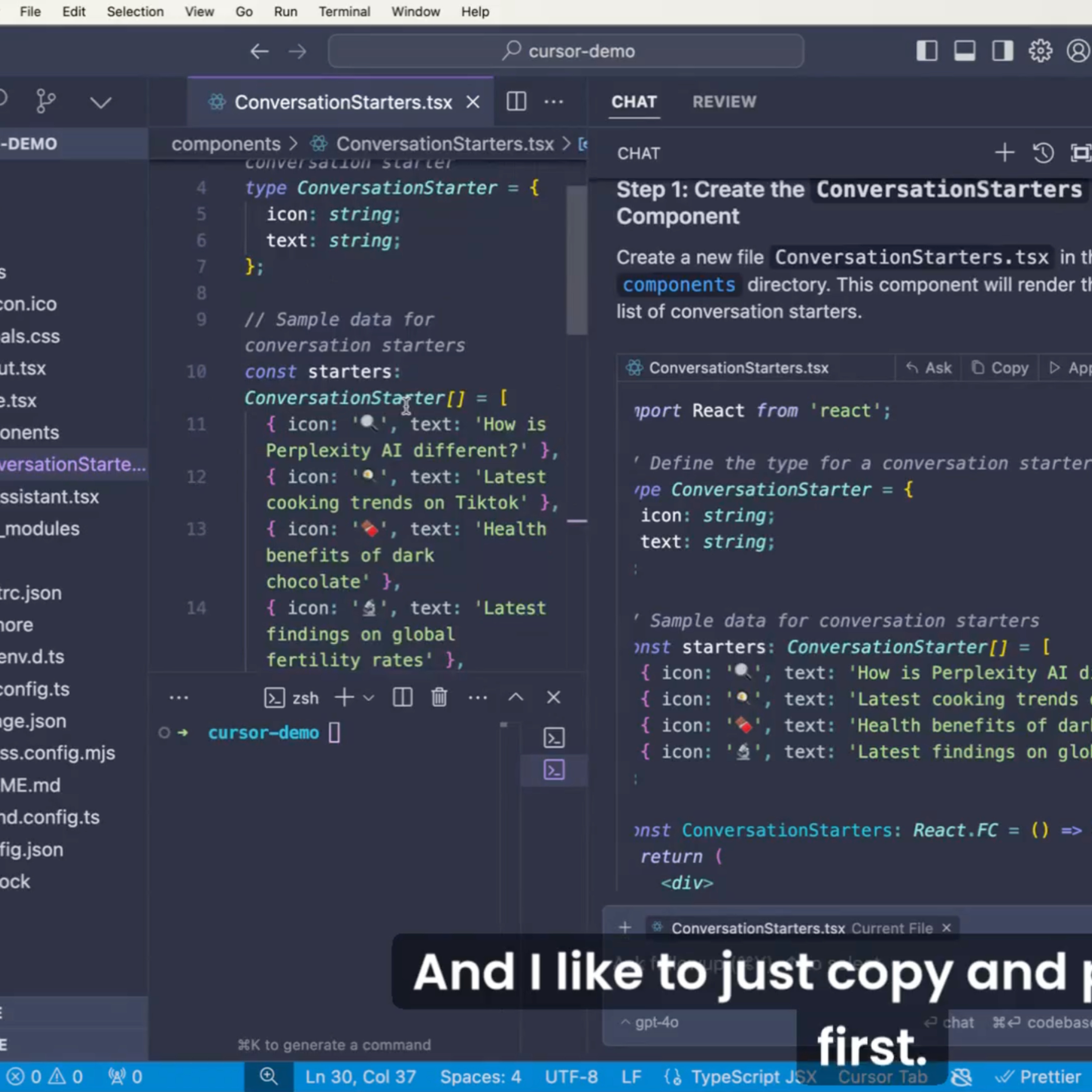 Cursor AI Development RULES! - Generative Design, AI Development, and Cursor Preferences | Summary This conversation delves into various themes surrounding personal experiences, insights gained over time, and reflections on past events. The speakers share their thoughts on the importance of learning from experiences and how these shape future perspectives. takeaways Learning from experiences shapes our future decisions. Conversations can lead to deeper insights. Sharing stories helps in understanding different perspectives. Every experience, good or bad, has value. Looking back can provide clarity for the future. Engaging discussions can spark new ideas. It's important to remain open to learning. The journey of understanding is ongoing. Concluding thoughts often bring new insights. Chapters 00:00 The Evolution of Design Tools 02:47 Harnessing Cursor for Enhanced Workflow 05:47 Integrating Screenshots and AI in Design 11:28 Navigating Code with Cursor's AI 17:10 Collaborative Design and Development 22:00 Exploring Figma and AI Plugins 28:54 The Future of Design to Code 29:44 Exploring Design Systems and AI Integration 33:44 Setting Up Cursor for Optimal Use 36:57 Creating Effective Cursor Rules 41:31 Enhancing Development with AI-Powered Tools 46:45 The Future of Design and Development with AI | — | ||||||
| 9/24/24 | 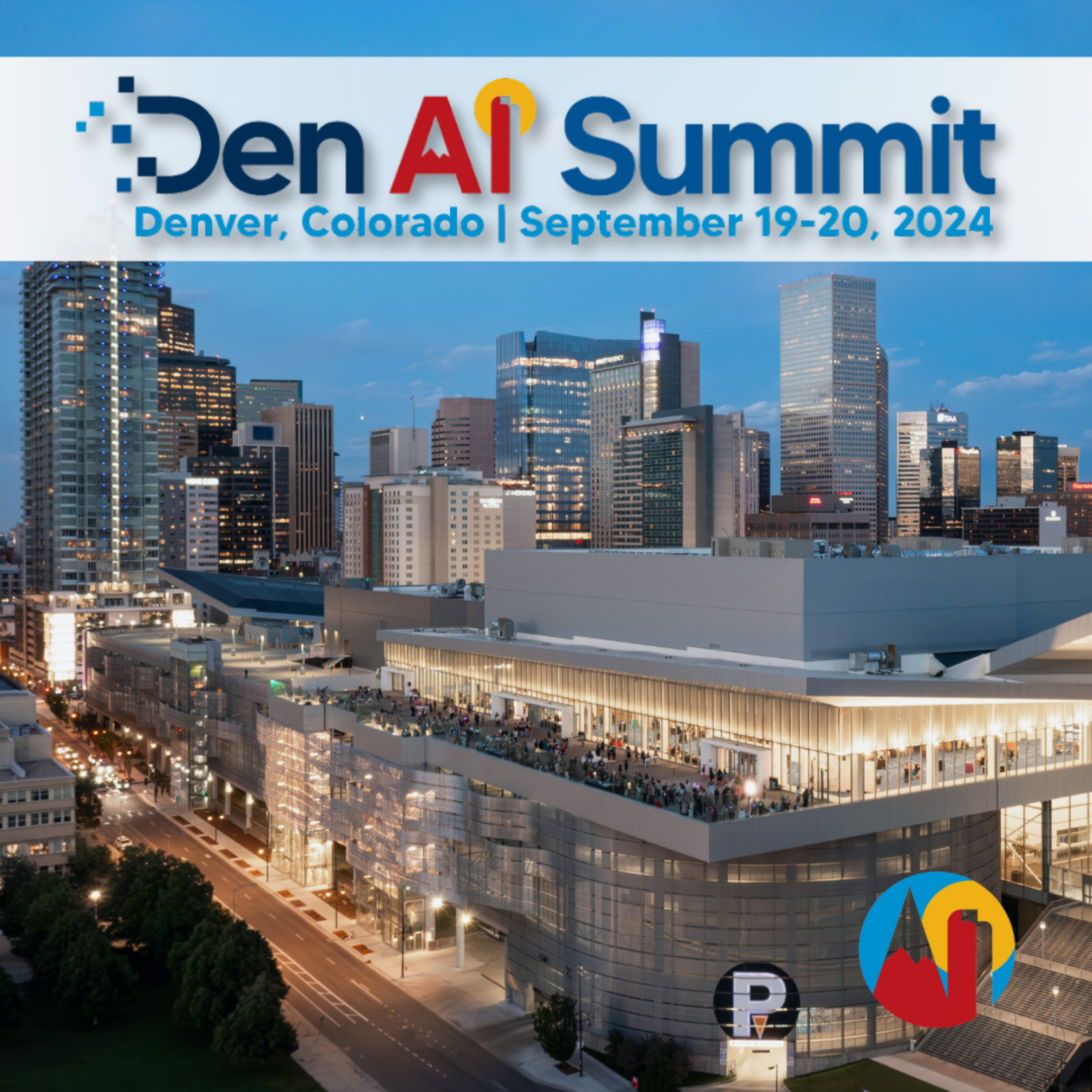 Denver AI Summit | Civic Technology and Education | Summary The conversation revolves around the Denver AI Summit, highlighting its significance in the AI landscape, the diverse perspectives shared by attendees, and the discussions on AI's role in civic engagement, education, and data privacy. The speakers reflect on the potential of AI to transform government processes and enhance educational outcomes, while also addressing concerns about data security and the implications of local versus cloud processing. Takeaways Denver is striving to become the top city for VC funding in AI. The concept of an open API for civic tech is promising. AI's practical applications in government are becoming evident. Education was a focal point at the summit, highlighting its importance. The diversity of attendees enriched the discussions. Data privacy and security were prevalent themes throughout the conference. Local processing of AI can address privacy concerns effectively. AI's second-order effects, like multilingual communication, are significant. The need for change management in government processes is crucial. The future of education with AI could empower marginalized voices. Chapters 00:00 Overview of the Denver AI Summit 05:01 Keynote Highlights and Major Themes 09:35 The Role of Education in AI 14:23 Civic Engagement and Government's Role in AI 19:06 Data Privacy and Security Concerns 23:21 Local Models vs. Cloud Services 28:08 AI in Education: Opportunities and Challenges 33:16 Closing Thoughts and Future Directions 48:45 AI DIY demo1.wav | — | ||||||
| 9/11/24 |  AI Assisted Development, Prompting, and Creativity | The conversation explores the use of AI in the development process and its impact on productivity and collaboration. The speakers discuss their experiences with AI tools like ChatGPT, Galileo, and Cursor, highlighting the benefits and challenges they bring. They emphasize that AI is not a silver bullet and does not replace human developers, but rather enhances their abilities and accelerates the development process. The speakers also touch on the importance of communication, alignment, and documentation in effectively utilizing AI tools. Overall, they express excitement about the potential of AI in software development while acknowledging the need for ongoing adaptation and collaboration.keywordsAI, development process, productivity, collaboration, ChatGPT, Galileo, Cursor, benefits, challenges, communication, alignment, documentation AI tools like ChatGPT, Galileo, and Cursor enhance the abilities of developers and accelerate the development process. AI is not a silver bullet and does not replace human developers, but rather requires ongoing adaptation and collaboration. Effective communication, alignment, and documentation are crucial in utilizing AI tools effectively. AI can help with tasks like code generation, documentation, and adherence to best practices. The use of AI in software development requires a balance between leveraging its capabilities and addressing the challenges it presents. Sound Bites "AI provides tools to augment the processes of developers and allows them to focus on the implications and responsibilities of the system they are building." "AI allows us to move faster but puts the complex problems of software development at the forefront." "AI accelerates the time to the messy middle and requires teams to address communication, alignment, and decision-making more effectively." Chapters 00:00 The Impact of Talking to AI 20:53 The Beauty of Pottery and Iteration 26:18 Enhancing UI/UX Design and Front-End Development 30:33 The Role of the Programmer in Collaboration with AI 36:48 Navigating the Messy Middle with AI Tools 41:54 No Silver Bullet: Human Intervention in AI-Driven Development 45:40 Adapting to the Evolving Industry with AI Tools | — | ||||||
| 8/29/24 |  Oori Data at PyCon Nigeria 2024 | In this conversation, Uche Ogbuji interviews Gift Ojeabulu at PyCon Nigeria 2024 in Lagos. They discuss the importance of data in AI models and the role of Data Community Africa in promoting data-centric AI. Gift Ojeabulu also talks about his work as a sports data scientist and the challenges of incorporating AI into sports analytics. He emphasizes the need for feedback from the community to improve AI products and highlights the importance of software engineering techniques for data scientists. The conversation concludes with a discussion on the DIY ethos and the importance of good engineering in AI development. Data is crucial for AI models, and data-centric AI is essential for accurate results. Data Community Africa is a conference that brings together data practitioners and promotes data-centric AI. Gift Ojeabulu works as a sports data scientist and faces challenges in incorporating AI into sports analytics. Feedback from the community is vital for improving AI products. Data scientists should adopt software engineering techniques for better code quality and reproducibility. The DIY ethos in AI development emphasizes the importance of good engineering and craftsmanship. The Importance of Data in AI Models Challenges in Incorporating AI into Sports Analytics "Garbage in, garbage out. If you don't have good data, your AI model is low below." "Last year we had representation from six different countries." "Feedback is like the fuel of your product from the community." Chapters 00:00 - Introduction and Context 00:59 - The Importance of Good Data in AI Models 02:29 - Data Community Africa: Connecting Data Practitioners 03:58 - The Role of Feedback in Improving AI Products 05:27 - Software Engineering Techniques for Data Scientists 06:01 - The Evolving Landscape of Language Models | — | ||||||
| 8/2/24 |  Retrieval Augmented Generation (RAG) and its Importance for Gen AI Apps | In this episode, the hosts discuss RAG (Retrieval Augmented Generation) and its importance for new generative AI applications. They explain that RAG is a technique that enhances language models by adding context and relevant information from external sources. RAG helps combat the problem of hallucinations, where language models generate incorrect or made-up information. The hosts also highlight the importance of reducing hallucinations within a reasonable limit and setting clear expectations with clients. They discuss the use cases of RAG, such as adding context to LLMs, resurrecting old documentation, and improving search and product discovery in e-commerce. The conversation focused on the implementation and use cases of Retrieval-Augmented Generation (RAG). The main themes discussed were the process of embedding documents, handling longer data sources, chunking information, and the generation of responses. The conversation also touched on the customization of RAG, the three levers of customization (chunking, vector similarity search, and prompting), and the potential of RAG as a product or feature. Use cases for RAG in revenue generation were explored, including data extraction and AI dev tools. The conversation concluded with a call to explore RAG further and join the DIY AI movement. RAG enhances language models by adding context and relevant information from external sources. RAG helps combat the problem of hallucinations in language models. Reducing hallucinations within a reasonable limit is important, and clear expectations should be set with clients. RAG has various use cases, including adding context to LLMs, resurrecting old documentation, and improving search and product discovery in e-commerce. RAG involves the process of embedding documents and using vector similarity search to retrieve relevant information. Chunking is necessary for handling longer data sources, such as books or large documents, and allows for efficient retrieval. RAG can be customized through the levers of chunking, vector similarity search, and prompting. RAG has various use cases for revenue generation, including data extraction and AI dev tools. RAG is an emerging field with opportunities for DIY exploration and experimentation. | — | ||||||
| 7/25/24 |  Apple Intelligence, Microsoft GraphRag, Pycon Nigeria, and Intelligence | In this conversation, the hosts discuss various topics related to AI, including Apple's new intelligence features, Microsoft's GraphRAG release, and Meta's Llama 3.1 model. They explore the implications of these advancements and discuss the potential for experimentation and preparation for the future of AI. The conversation covers various topics related to artificial intelligence and its impact on different aspects of life. It explores the use of AI tools like LangSmith and Grok for testing and comparing models. The conversation also highlights the importance of AI in the global South and the need for diversity and inclusivity in the development of AI technologies. The speakers discuss the concept of intelligence and how AI can augment human capabilities. They share personal experiences and examples to illustrate the potential of AI in various fields. Apple's new intelligence features, showcased at WWDC, indicate a shift in the way they approach artificial intelligence, with a focus on on-device local LLMs and a fabric representation of Siri. Microsoft's GraphRAG is a solution to the problem of LLMs lacking trustworthy intrinsic knowledge. It uses knowledge graphs to augment and empower searching functionality, allowing for more accurate and context-aware responses. Meta's Llama 3.1 model, with its massive 400 billion parameters, brings us closer to a commercial-grade AI comparable to GPT-4. The model can be compressed using quantization techniques to reduce memory usage while maintaining quality. Experimentation and preparation for the future of AI can involve signing up for developer betas, exploring platform APIs, and recreating existing use cases with new AI technologies. LangSmith and Grok provide useful AI tools for testing and comparing models. AI has the potential to empower people in the global South and drive innovation in developing countries. Intelligence is not limited to standardized tests or logic; it encompasses diverse perspectives and the ability to offload work from the human brain. AI can augment human capabilities and free up time for more meaningful tasks. The development of AI should prioritize diversity, inclusivity, and ethical considerations. Understanding Microsoft's GraphRAG Exploring Apple's New Intelligence Features AI Empowerment in the Global South Augmenting Human Capabilities with AI "AI is going to be complementary to the user experience that Apple can provide." "Apple Intelligence should be coming this fall." "GraphRAG is a solution to curb the lack of trustworthy intrinsic knowledge in LLMs." "LangSmith, in their playground now, I can test existing prompts in our products against different models and across data sets." "Grok is hosting Lama 3.1, you get the context, but then you also get the grok inferencing speed." "AI has the potential to make significant improvements to agriculture in developing countries." | — | ||||||
Showing 23 of 23
Pitch Fit is a Pro feature
See how bookable this show is for guests, which brands already advertise, the per-episode ad value, and the best-fit guest and sponsor profile. The numbers are blurred on the free plan.
How readily this show books outside guests like you.
How proven this show is for host-read sponsorships.
For Guests
ProFor Advertisers
ProUpgrade to Pro to unlock guest cadence, sponsor categories, fit scores, and per-episode ad value for this show.
Chart Positions
1 placement across 1 market.
Chart Positions
1 placement across 1 market.