
Insights from recent episode analysis
Audience Interest
Podcast Focus
Publishing Consistency
Platform Reach
Insights are generated by CastFox AI using publicly available data, episode content, and proprietary models.
Total monthly reach
Estimated from 3 chart positions in 3 markets.
By chart position
- 🇦🇺AU · Entrepreneurship#1335K to 30K
- 🇳🇬NG · Entrepreneurship#963K to 10K
- 🇬🇷GR · Entrepreneurship#170500 to 3K
- Per-Episode Audience
Est. listeners per new episode within ~30 days
2.5K to 13K🎙 Daily cadence·162 episodes·Last published yesterday - Monthly Reach
Unique listeners across all episodes (30 days)
8.5K to 43K🇦🇺70%🇳🇬23%🇬🇷7% - Active Followers
Loyal subscribers who consistently listen
4.7K to 24K
Market Insights
Platform Distribution
Reach across major podcast platforms, updated hourly
Total Followers
—
Total Plays
—
Total Reviews
—
* Data sourced directly from platform APIs and aggregated hourly across all major podcast directories.
On the show
Recent episodes
Your Vibe Code Just Handed Hackers Your Database - Punit Bhatia, Founder of Fit4Privacy
May 14, 2026
Unknown duration
The AI EA Flex
May 13, 2026
Unknown duration
Jazz Fusion in the Agentic Era
May 12, 2026
Unknown duration
One Problem, Forever
May 9, 2026
Unknown duration
Quit Code to Grow Lettuce
May 7, 2026
Unknown duration
Social Links & Contact
Official channels & resources
Official Website
Login
RSS Feed
Login
| Date | Episode | Description | Length | ||||||
|---|---|---|---|---|---|---|---|---|---|
| 5/14/26 | 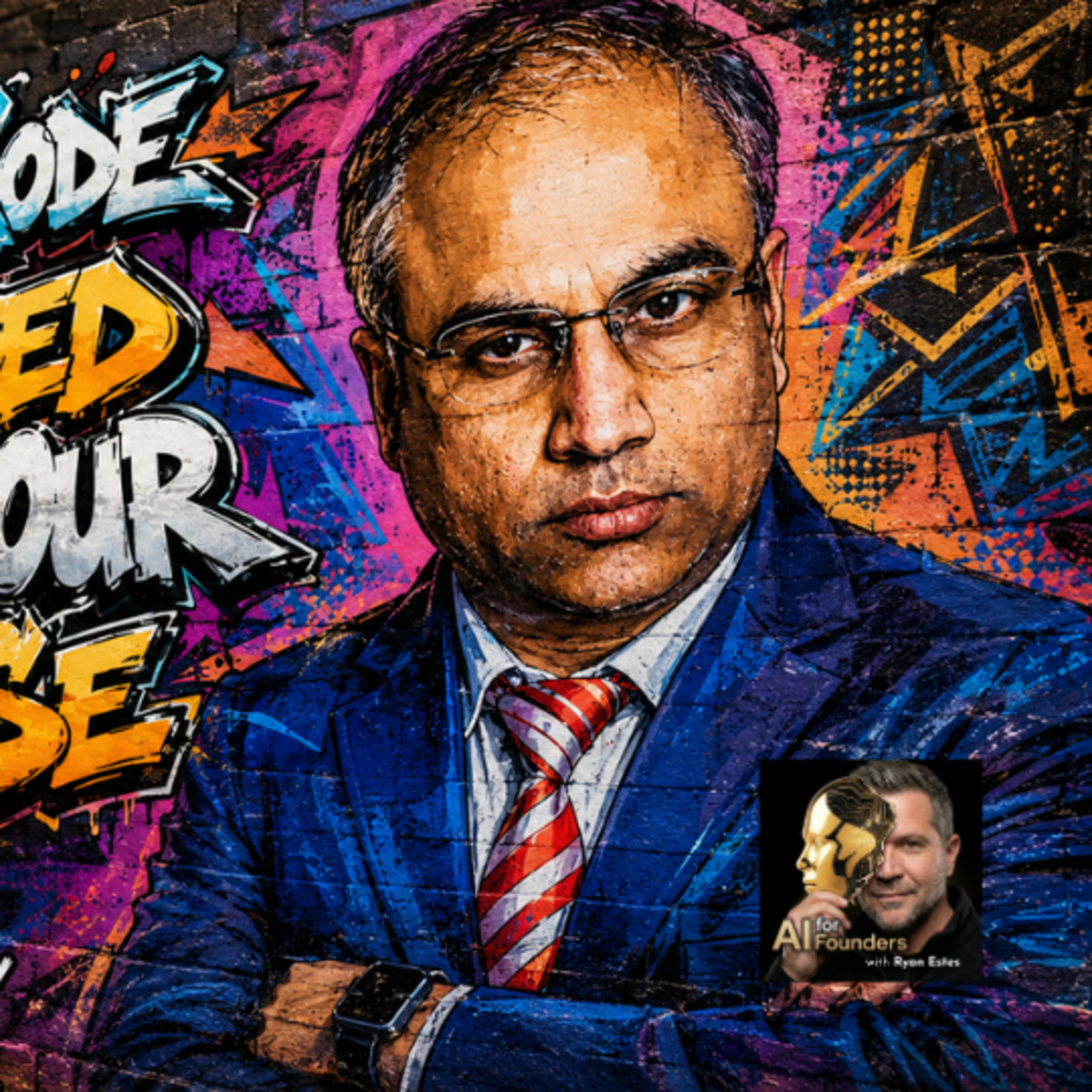 Your Vibe Code Just Handed Hackers Your Database - Punit Bhatia, Founder of Fit4Privacy | When Punit Bhatia walks into a founder's office, the building is usually already on fire. Someone configured the CRM, blasted thousands of cold emails, scaled the AI agent stack overnight, and is now staring at a complaint, a regulator, or worse, a trending news story. The problem was never the AI. The problem was the speed without the guardrails.In this conversation, Punit walks Ryan through what responsible AI actually looks like for founders who are vibe coding at midnight with their credit cards burning. He pulls apart real client stories: the founder who built a beautiful email empire on top of a non compliant list and had to torch it, the developer who copied every field of personal data because it was easier than copying only what was needed, the executive team that listed transparency as a core value but refused to publish a five page policy because competitors might read it.Punit's view is simple and uncomfortable. Privacy is not a compliance issue. It is a brand issue. It is a trust issue. The moment a founder hesitates when asked "is my customer data safe," they have already done the work of identifying their next sprint.1. The Discovery to Deployment Loop (Punit's Consulting Engine)This is how Fit4Privacy actually moves a founder from chaos to compliance.One hour alignment training to lock vocabulary across the roomTwo to four hour discovery workshop with key decision makersOne week to a gap report and an action planCertification training for select staff, short capsule training for everyone elsePolicy creation that translates law into language developers can act onSelf control assessment by the team, followed by an independent control assessmentFix gaps before the product hits the market, not after a complaint hits the inbox2. The Responsible AI FoundationA reusable principle stack Punit applies before any AI product ships.Decide if you actually want to be ethical, private, compliant, and transparent (most leaders nod on three, hesitate on the fourth)Document those decisions as written rules, not vibesTest for bias, hallucination, and data quality, not just "does it run"Copy only the data you need, never the whole table because it is easierGovern the agents the way you would govern human employees, with named accountabilityRun a gut check: would you let your 12 year old use this product3. The Reactor Prompt FrameworkPunit's six part prompting structure that turns any LLM into something close to a senior consultant.R Role: tell the model who it is (your McKinsey consultant, your privacy auditor)E Example: show it what good looks likeA Aim: state what you are trying to achieve and whyC Context: situation, company, stakes, constraintsT Text: the source material it should work fromOR Output: the exact format, length, and structure you want back4. The Virtual Privacy Advisor PatternA blueprint for the AI agent founders should be building right now.Feed it the responsible AI policy, the rules, and the executive guidanceWire it as a quiet observer across the agent stackHave it review outputs, flag scripts that pull more data than they should, and challenge configurations before deploymentUse it as the security guard that never clocks out and never sends the client database to the wrong serverhttps://www.fit4privacy.comhttps://www.growskills.storehttps://aiforfounders.cohttps://www.kitcaster.comhttps://punitbhatia.comhttps://www.linkedin.com/in/punitbhatia/https://www.linkedin.com/in/estesryan/https://trynina.co/ | — | ||||||
| 5/13/26 | 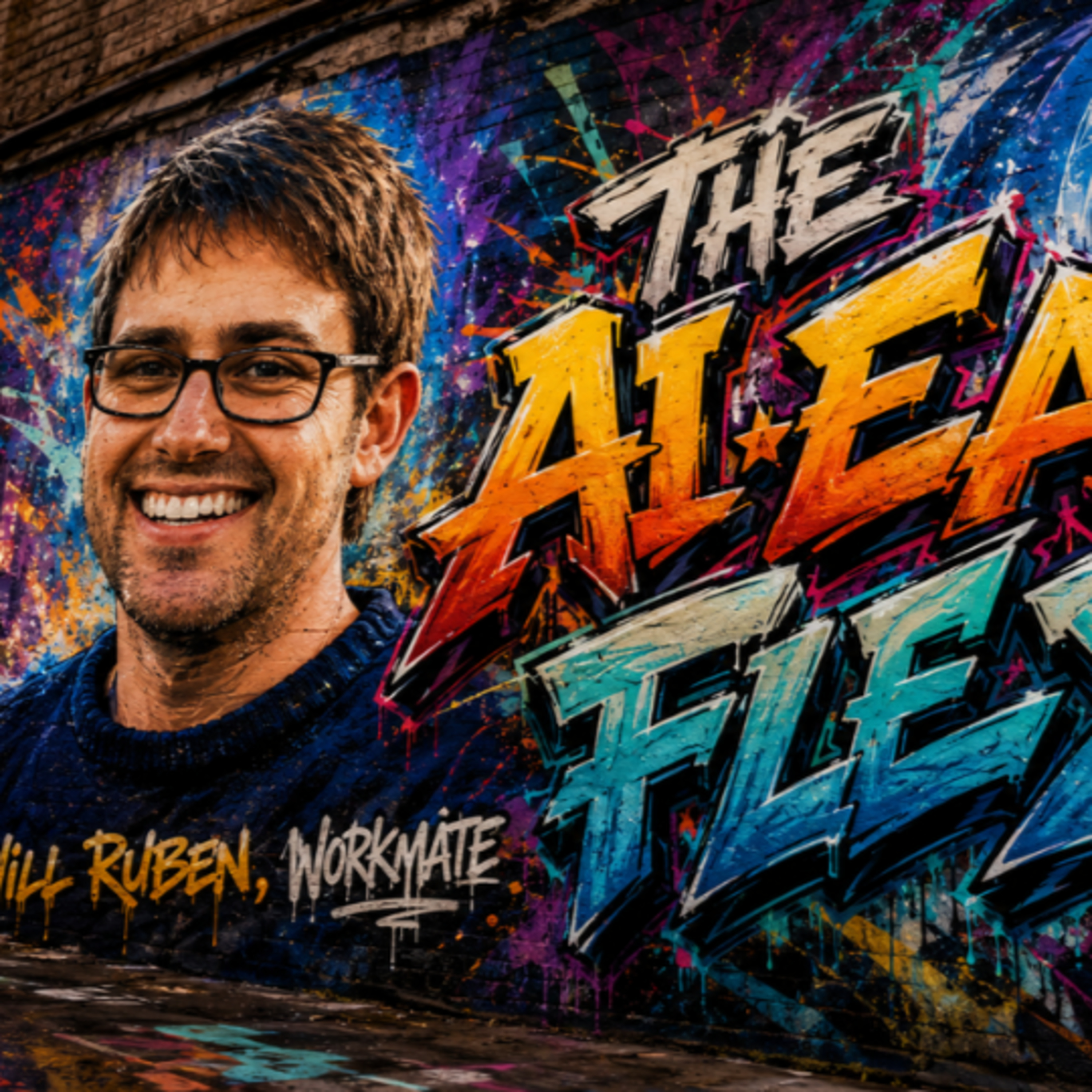 The AI EA Flex | Will Ruben spent more than a decade at the companies that taught the internet what attention looks like. He led ranking and recommendations across Instagram during the era when Reels stopped being a feature and started being the entire product. He worked on Coinbase's Web3 Wallet. He scaled consumer products for billions of people. And then he walked away from all of it to solve something almost embarrassingly small in scope: the back and forth of scheduling a meeting.That choice is the whole story. Will is not building Workmate because scheduling is glamorous. He is building it because scheduling is the gateway drug to giving every knowledge worker the kind of strategic support that used to be reserved for executives with assistants and corner offices. The premise is democratization, the wedge is the calendar, and the long arc is a world where you collaborate with a mix of humans and AI teammates that feel indistinguishable from coworkers.In conversation with Ryan, Will lays out a thesis that is unusual in this AI moment. While most founders are racing to make their agents louder, faster, and more obviously artificial, Will is doing the opposite. Workmate is engineered to disappear. It has an email address at your domain. It writes the same way every time. It is white-labeled, customizable, and in many cases, the people interacting with it do not know they are talking to AI. Will calls this a flex. The flex is appearing more important than you are.The conversation winds through the ethics of disclosure, the speed of building when the foundation models change every two months, the difference between sculpting and painting, and a tangent on Instagram Reels that will make you reconsider why your wife sees men cooking with no shirts on. It also lands somewhere unexpected: a quiet, almost paternal argument that the founders who win in this era are the ones who go to bed on time.1. The Trust Curve in AI DisclosureWill frames the disclosure question not as a binary but as a function of industry, demographic, and medium.Internal team communication: full transparency is the default because users know they are working with the productExternal client communication: depends on industry norms (some sectors expect executive assistants, where AI fits seamlessly into existing expectations)The Workmate position: provide both options and let the customer choose the level of transparencyThe bet: in two years the question will dissolve entirely because AI teammates will be normalized the way remote work was normalized between 2015 and 20252. The Three Waves of Instagram (and What They Taught Will About AI Products)Will identifies three distinct product eras at Instagram, each of which informs how he is building Workmate.Wave one: filters on the feed (self-expression)Wave two: stories (ephemeral connection)Wave three: constant content recommendations and Reels (algorithmic discovery)The takeaway for AI: the third wave succeeded because it gave users more control over what they saw, not less. Workmate applies the same principle to scheduling preferences.3. The Sculpting versus Painting DistinctionWill and Ryan agree that the founder's job is shifting from execution to taste.Painting: the founder hand-crafts the outputSculpting: the founder shapes what AI produces by setting parameters, reviewing direction, and arbitrating qualityThe implication: management skills, not technical execution, become the bottleneckThe catch: agents are not fully autonomous yet, so founders still cannot fully step awayhttps://www.workmate.comhttps://www.linkedin.com/in/wrubenhttps://www.care-international.orghttps://aiforfounders.cohttps://kitcaster.comhttps://www.linkedin.com/in/estesryan/https://trynina.co/ | — | ||||||
| 5/12/26 |  Jazz Fusion in the Agentic Era | When Tim Freestone first logged into ChatGPT on November 23, 2022, he turned to his wife and said, "Okay, this is a thing." Two and a half years later, he's the Chief Strategy Officer at Kiteworks, a PE-backed unicorn protecting how data moves in and out of the world's most regulated companies. This episode is part jazz appreciation, part AI philosophy, and part hard-earned playbook for any founder staring down the agentic era wondering whether their data exposure is about to catch up with them.Tim's path is the kind founders should pay attention to. He spent the early part of his career writing grants for a performing arts college, then bootstrapped a New York marketing agency from zero to fifty employees and nearly ten million in revenue across a decade. The throughline was always building systems, and when AI collapsed the gap between intent and outcome, he went all in. A year ago he didn't know what a CLI was. Now he has more terminal tabs open than browser tabs.Kiteworks itself is a study in repositioning. The company spent fifteen years as Accellion, a secure file transfer business that had commoditized into a struggling thirty-million-dollar revenue line. Then current CEO Jonathan Yaron, a veteran of Israel's elite 8200 unit, saw signal where others saw stagnation. He expanded the platform to cover every channel through which data enters and exits an organization: file share, email, managed file transfer, APIs, secure protocols. Tim arrived as CMO five years ago, recognized the brand confusion between Accellion and its Kiteworks platform, and convinced Yaron to elevate the product name to the company name. The rebrand stuck. The vision expanded. And now, in the age of agents, that same control plane is being extended to govern how AI systems access and move enterprise data.The Intent-Data Layer FrameworkSaaS historically sat as a complex translation layer between human intent and dataEntire job titles formed around mastering specific software stacks (Salesforce admins, etc.)AI strips out the complexity layer entirely, allowing natural language to bridge intent and data directlyThis democratizes data leverage for both good actors and bad actorsThe strategic implication: protection must move down to the data layer itself, not the software layerThe Control Plane for Data ModelTraditional security stacks at the perimeter, cloud, and endpointAll of those layers exist to protect data, but none control data directlyKiteworks operates at the data layer, mapping individual assets to individual agentsYes/no permissions on access, sharing, and use, asset by asset, agent by agentThis becomes the matrix companies need to maintain compliance in agentic workflowsThe Regulator Doesn't Care PrincipleData exposure penalties apply regardless of cause: human error, agent action, orangutan typingPII, PHI, and CUI regulations remain in force even as agent regulations lagCompanies will face audits in 12+ months on agent activity happening todayInsurance policy: instrument controls now, before the legislative wave catches upThe Failure-as-Muscle FrameworkFailures should be encouraged the way muscles must be pushed toward failure to growInsecure leaders pour gasoline on others' mistakes to distract from their own gapsStrong organizations normalize mistakes as part of the operating systemMentorship is less about seeking mentees and more about transparently sharing the lessons that informed every current decisionhttps://www.kiteworks.comhttps://www.linkedin.com/in/freestonehttps://www.linkedin.com/in/estesryan/https://aiforfounders.cohttps://trynina.co/ https://www.montereyjazzfestival.org | — | ||||||
| 5/9/26 | 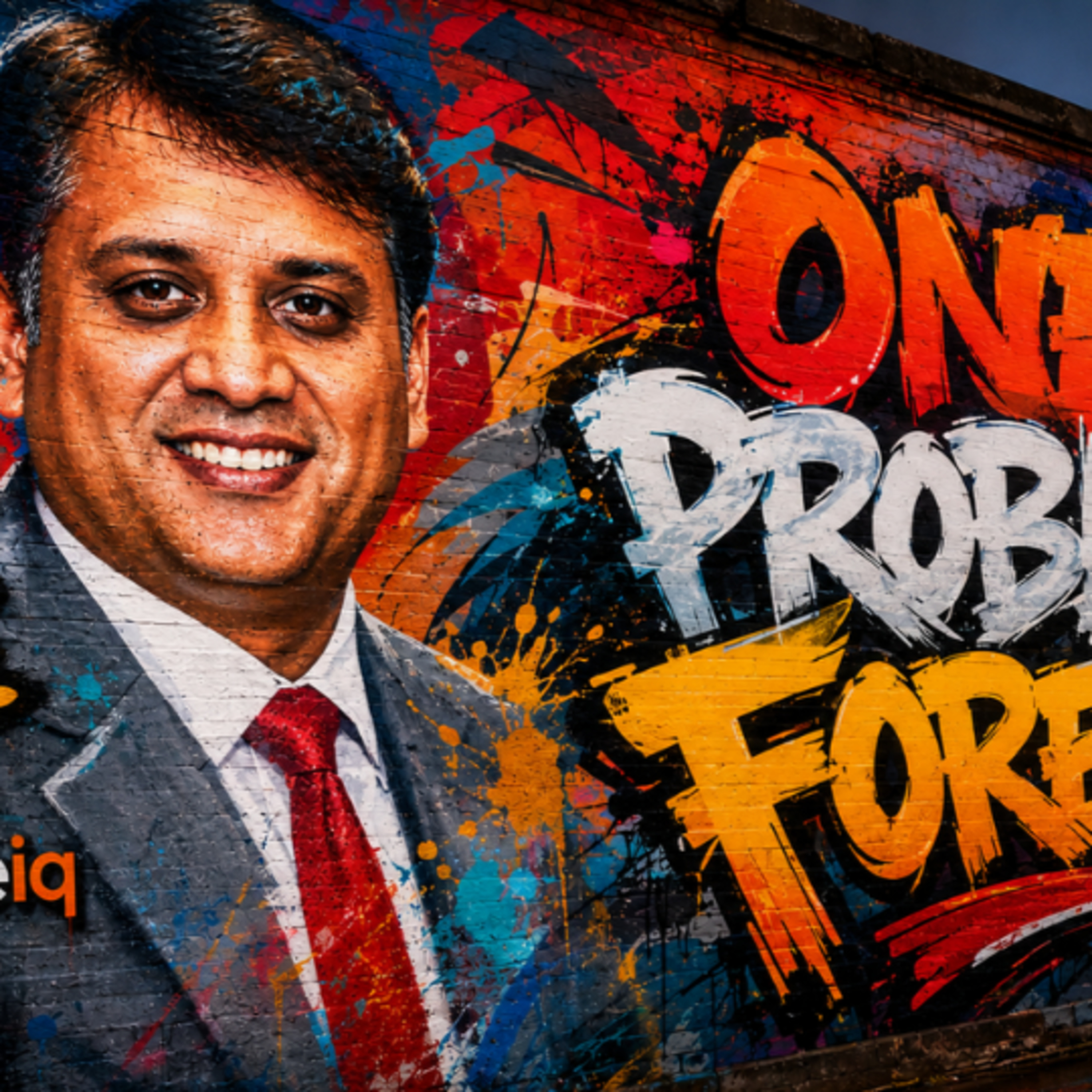 One Problem, Forever | The Stealth Decade That Built a CategoryMost founders ship in six weeks and pivot in six months. Sameet Gupte and his four co-founders did the opposite. They put pen to paper in 2007, built in stealth from 2009 to 2019, and only then incorporated EvoluteIQ. No customers. No revenue. Just five operators with a thesis that everyone else in automation was solving fragments of the problem instead of the whole thing.When they finally went to market, they made another contrarian bet. They would sell only to Fortune 500 enterprises, the slowest and most cynical buyers on the planet. The first big pitch was to a Fortune 100 telecom that listened for two hours and politely showed them the door, telling them this was a 2030 problem. Sameet and his co-founder Naveen went straight to a London pub at 2:30 on a Tuesday. By the third pint they had decided they were coming back to win that account. A year and a half later, the same customer signed a multi-million dollar licensing deal.Today, 85 percent of EvoluteIQ's customers are Fortune 500. Net revenue retention runs above 120 percent. They have raised roughly $73 million, led by Baird Capital, and ARR is roughly doubling year over year. The shift that unlocked everything was philosophical. Sameet stopped selling technology and started selling outcomes, telling enterprise buyers, "Don't pay us if we don't deliver." That single sentence reframed every conversation from a transaction into a partnership.The Whole Problem, Not the PartsInputs and outputs are connected by people, culture, and processMost automation vendors automate fragments (a bot here, a workflow there)EvoluteIQ's thesis is full-stack, end-to-end orchestration of the process itselfThe technology must think, build, self-heal, and self-learn so humans can step out of executionSame Problem, Forever (The Anti-Pivot)Health and wellness is the example: reactive treatment 500 years ago, proactive screening 50 years ago, real-time wearables today, predictive prescriptive intervention tomorrowThe problem stays constant, the technology stack changes underneath itFounders should commit to a problem they would solve for life, not a featureOutcome-Based SellingStop pitching technology specs to non-technical buyersCo-define the outcome with the customer up frontTie commercial terms to delivery of that outcomeResult: shared accountability, not vendor-customer transactionsThe Partner Backdoor Into the Fortune 500A startup with no logos cannot get past procurement at a Fortune 500Pick 15 or so credible system integrators (HCLTech, PwC, WNS Capgemini, etc.) who already have 10 to 20 year relationshipsLet those partners carry the credibility while you carry the technologyOnce you deliver consistently, expansion becomes inboundRead the Tea Leaves on Two AxesBuild the right technology AND build the right distribution modelMost founders only optimize one of the twoEvoluteIQ optimized both: end-to-end stack plus partner-led GTMhttps://evoluteiq.comhttps://aiforfounders.cohttps://kitcaster.comhttps://createaloop.orghttps://www.linkedin.com/in/sameet-gupte-3421a71https://www.linkedin.com/in/estesryan/ | — | ||||||
| 5/7/26 | 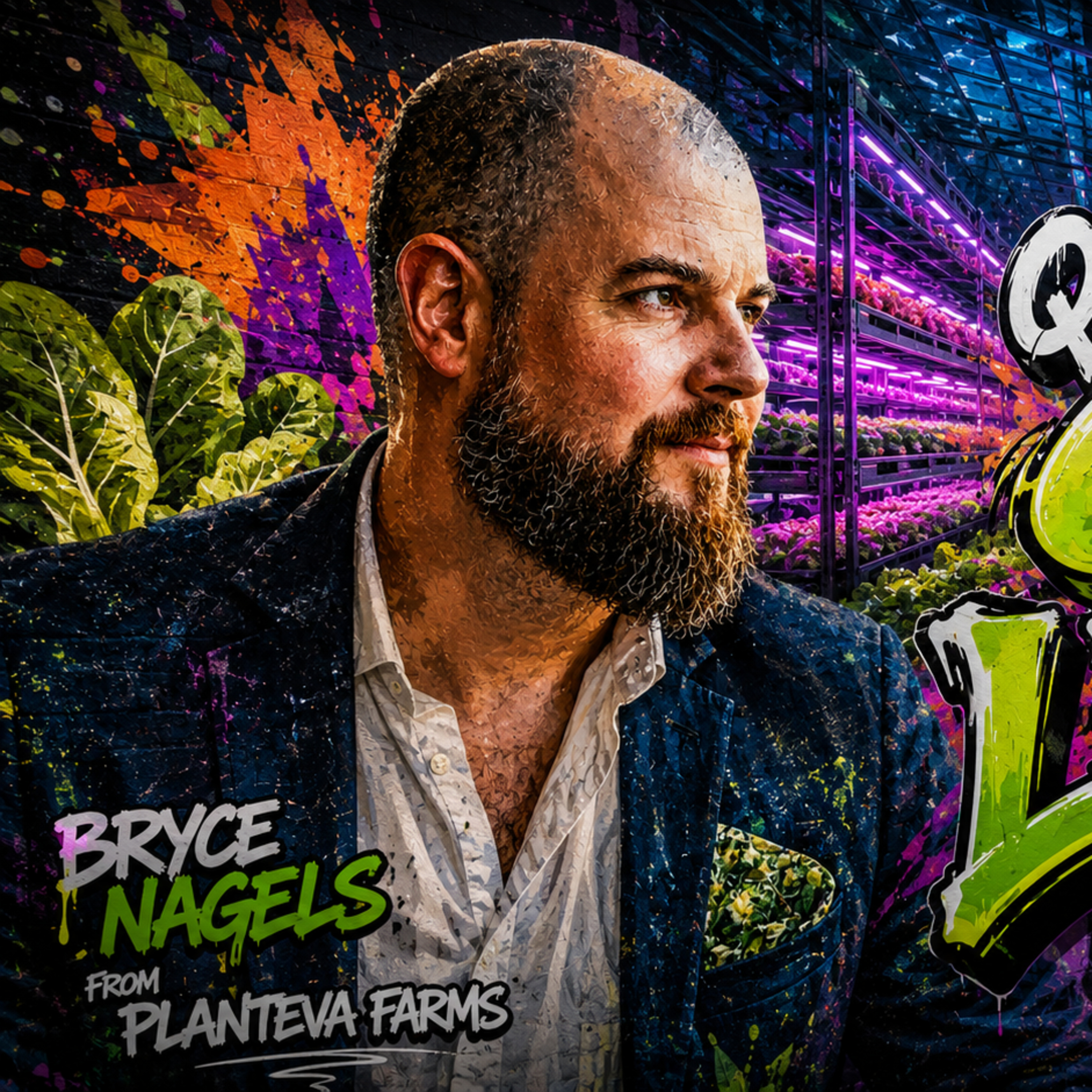 Quit Code to Grow Lettuce | In a market obsessed with AI multiples and overnight unicorn exits, Bryce Nagels is making a different bet. The CEO and co-founder of Planteva Farms is building what he calls a "halo company": high asset, low obsolescence. The kind of business that doesn't get wiped out when the next model drops, and actually gets stronger every time AI improves.Planteva specializes in propagation. They take seeds, grow them into uniform, pest-free, disease-free transplants in a tightly controlled environment, then ship those young plants to commercial growers, indoor farms, greenhouses, and field operations. It's the most overlooked step in agriculture, and Bryce realized it was also the highest-leverage one. Get the first 12 to 14 days right, and the entire downstream economics of farming change.In this conversation with Ryan, Bryce walks through how a former software engineer ended up running a CapEx-heavy biology business, what he learned pitching 120 VCs and getting shut down by most of them, and how his agronomists are now using Claude to wire together multispectral cameras, climate systems, and lighting protocols without writing a line of production code themselves. He gets candid about the mental health toll of founding capital-intensive companies, why "the goalpost always moves," and why celebrating wins matters when you're already filing your Series A paperwork the day your seed closes.This episode is for founders who want to think bigger about white space — the categories AI can't replace, only amplify — and the specific advantages of building where software can't follow.The Halo Company Thesis (High Asset, Low Obsolescence)Sit at the intersection of physical infrastructure and biological realityBuild things that must exist and can't be digitized awayAI makes the business more valuable, not obsoleteDefensible moats: hard assets, proprietary processes, real-world outputsThe pressures (labor shortages, supply chain fractures, climate) compound your value over timeThe Brake Pad Strategy (Specialize on the Critical Step)Don't try to own the whole stack; own the step nobody else is optimizingPropagation is to farming what brake pads are to automotive: invisible, essential, and underbuiltConvergence creates opportunity: as industries mature, secondary solutions emerge that streamline the whole systemPosition yourself as the upgrade input, not the end productThe Multi-Recipe Propagation MethodOne seed, multiple growth recipes throughout a single 12 to 14 day cycleLighting changes 4 to 5 times based on destination environment (indoor vs. field)Multispectral cameras detect photosynthesis in real time and trigger biofeedback loopsSame crop, different protocols based on where the plant is going nextResult: celery germination jumped from 50 to 60 percent up to 89 to 95 percent, with crop cycle cut from 65 to 80 days down to 40 to 45The Capital-Intensive Founder's Investor FilterVCs want unicorn exits; CapEx businesses need different moneyTarget family offices, strategic corporates, large-scale operators with personal stake in the outcomeLook for investors with operational vision, not just capitalExpect rejection at scale (Bryce pitched 115 to 120 VCs); treat the muscle of rejection as a deliverableThe Founder Mental Health Operating SystemAcknowledge the isolation: high-stakes decisions early in your career with limited peers who get itBuild founder community deliberately (Bryce supports the Quebec ecosystem; Ryan referenced Hampton)Reject the "4:30 a.m. tech CEO" archetype as fiction for most operatorsCelebrate wins explicitly with your team, because the goalpost always moveshttps://www.plantevafarms.com/linkedin.com/in/brycenagelshttps://www.linkedin.com/in/estesryan/https://aiforfounders.cohttps://trynina.co/ | — | ||||||
| 5/6/26 |  "Your Code Is Worthless" A Top VC Just Told Us Why | The Trillion-Dollar Founder Personality Type Nobody Talks About | Jim Ferry has spent his career on the investor side of the table at Volition Capital, a Boston-based growth equity fund that writes Series A and B checks into capital-efficient companies between $1M and $10M in revenue. He's seen thousands of pitches, sat on dozens of boards, and watched the rules of building a defensible business get rewritten in real time over the last 24 months.The throughline of this conversation: code used to be the moat. It isn't anymore. What's replacing it is messier, more human, and harder to fake — distribution baked into a founder's personality, communities built on Reddit and LinkedIn, and a willingness to tinker at midnight with tools that didn't exist last quarter. Jim makes the case that the next generation of trillion-dollar businesses will not be built by the technical purists who dominated the cloud era. They'll be built by operators who know what they don't know, hire around their weaknesses, and treat AI not as a feature but as a substrate.He also gets candid about how Volition itself is changing. Their analysts now work alongside sandboxed Claude agents that surface 50 potentially interesting companies every morning. The traditional cold email playbook is dead. The dinner you weasel your way into is worth more than the conference you paid $25K to exhibit at.The Founder Journey in Three StagesBuild — Zero to one. Founder has hands on everything.Growth — Repeatable processes get installed. Trusted hires take work off the founder's plate. (This is where Volition typically enters.)Scale — The founder transitions from builder to operator.The Five Things That Matter in an InvestmentProductMarketManagementManagementManagement(Volition's half-joking internal mantra. The repetition is the point.)Make Yourself the Dumbest Person in the RoomSelf-awareness is the most underrated founder trait.The best founders identify their weaknesses and hire world-class talent against them.Jack of all trades, master of none — every time.The Optimist–Pessimist Co-Founder BalanceSkill complementarity matters less than mindset complementarity.Optimist + pessimist pairs tend to land on better decisions because they negotiate toward the middle.Durability in the AI EraCode is no longer defensible.New moats: first-party data, distribution baked into founder personality, proprietary integrations via non-public APIs, community ownership.The key diligence question at every firm right now: what makes this durable in three years?The New Sourcing RealityCold email is saturated; AI made canned outreach so good people now recognize it instantly.LinkedIn inboxes are next to flood.The unfair advantage: in-person meetings in a Zoom-default world. Founders remember a 45-minute coffee far longer than a Zoom call.https://www.volitioncapital.com/https://www.linkedin.com/in/jim-ferry-91b33375/https://www.linkedin.com/in/estesryan/https://aiforfounders.cohttps://trynina.co/ https://x.com/JimFerryVChttps://www.jimmyfund.org/ | — | ||||||
| 5/5/26 |  Healthcare's AI Operating System | AI Won't Replace Your Doctor. Here's What It Will Do Instead. | In 2017, while most founders were still debating whether chatbots had a future, Punit Singh Soni was studying speech models with the patience of someone who'd already seen what came next. He wasn't a healthcare guy. He'd run games at Google, built mobile apps, sat in the social team. But he understood one thing the rest of the industry was about to learn the hard way: AI was about to become the new UI, and the biggest unlock would happen wherever sophisticated users were drowning in repeatable, unstructured workflows they hated doing.That pointed straight at medicine. Doctors had become data clerks. Patients were getting 13 minutes of face time, half of it spent watching their physician type. So Punit founded Suki with a single mission: bring presence back to healthcare. Today, Suki is the ambient clinical intelligence layer running quietly inside Zoom, Optum, Athena, Meditech, and a growing list of healthcare giants, valued at roughly half a billion dollars and built on the contrarian belief that the best product in a regulated, bureaucratic industry isn't a feature, it's giving someone their time back.The Four Arcs of Ambient Clinical IntelligencePunit's mental model for what an AI layer in healthcare actually does:Clinical documentation — capturing what happened in the encounterAssisted revenue cycle — extracting financial information so the doctor and system get paidClinical reasoning — providing contextual information back to the doctor based on patient historyClinical operations — running agents on the encounter output to automate downstream tasksThe Android Analogy for Platform StrategyHow Suki structured its dual go-to-market without splitting focus:The Suki app is the "Pixel" — the reference implementation Suki sells directly to health systemsThe Suki platform is "Android" — given to companies like Zoom, Optum, and Athena to power their own clinical AI productsSelling the reference product teaches the company how to build the platform; the platform creates ecosystem footprintWhere AI Will Have the Biggest ImpactPunit's filter for picking a market in the AI era. Look for the intersection of:A sophisticated userLots of unstructured dataRepeatable workflows the user finds boring or burdensomeThe Eating Glass / Love Is a Strategy TensionBuilding requires a constant willingness to confront your own inadequacy. Surviving that requires self-empathy, which means extending care outward too. Aggression and warmth aren't opposites; they're the two halves of a sustainable founder operating system.The Future DoctorTomorrow's clinician is a student of medicine and AI both. The role shifts from gatekeeper of knowledge to guide who takes responsibility for the patient navigating a sea of tools and information.https://suki.aihttps://www.linkedin.com/in/punitsoni/https://www.linkedin.com/in/estesryan/https://aiforfounders.cohttps://trynina.co/ | — | ||||||
| 5/3/26 | 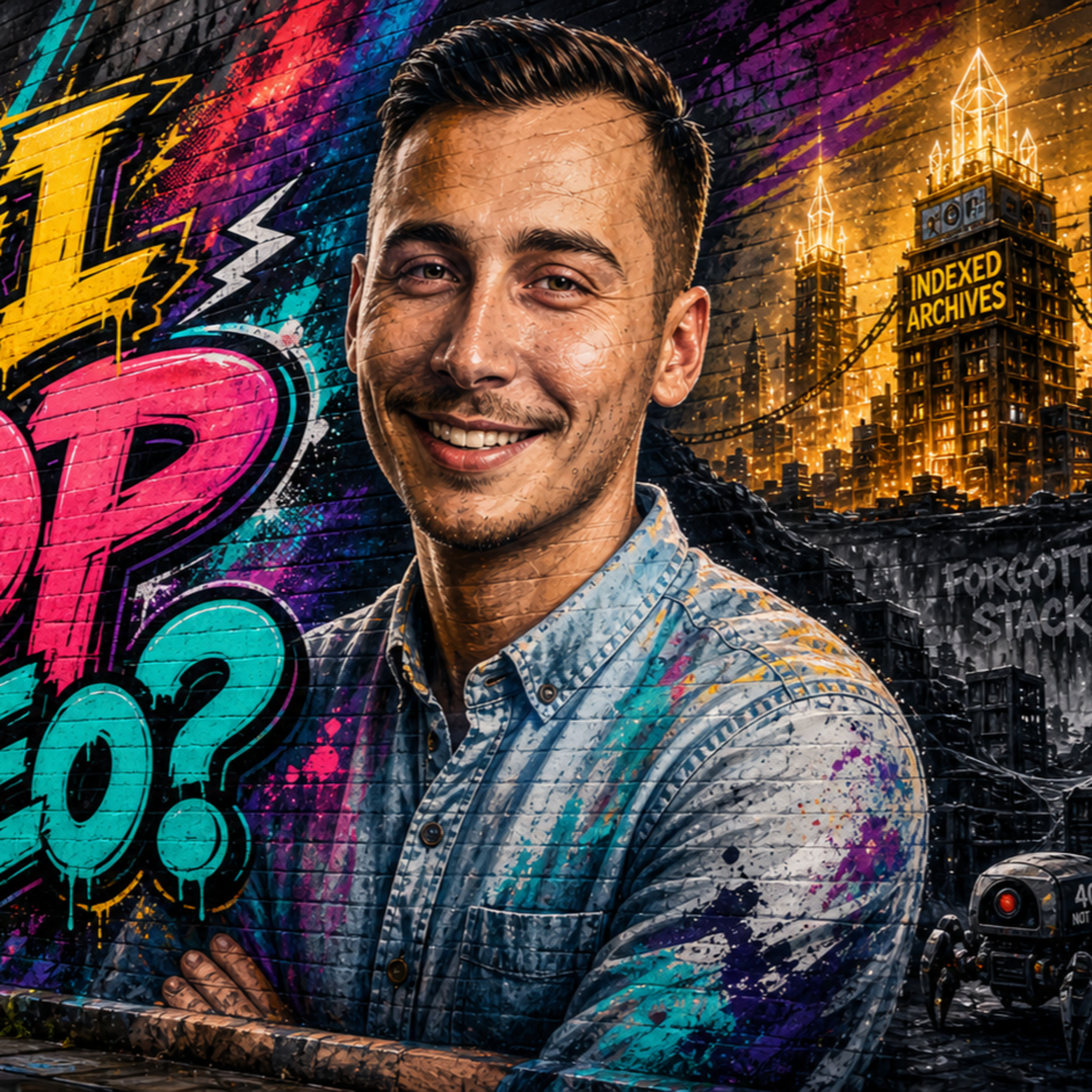 Is AI Slop Killing SEO? | From Zero to Indexed in Two Weeks: The Real SEO Timeline | Most founders treat SEO like a slot machine. Pull the lever, publish a blog, pray to the algorithm gods. Kaelan Donadio, co-founder of Nina (trynina.co), walked into the studio and dismantled that fantasy in the first sixty seconds. Your blog posts aren't bad, he says. They're invisible. Google literally cannot find them, and no amount of ChatGPT-generated content is going to change that until you understand the mechanics underneath.What unfolded was a masterclass on the unsexy fundamentals that actually move organic traffic. Domain authority, backlinks earned through real PR, onsite content density, and the boring data markup that LLMs and search engines both depend on. Kaelan came up through startups before going out on his own, and that founder-to-founder lens shapes everything Nina builds. They're not a content mill. They're a system for the early stage operator who knows they need SEO but has zero hours to execute it.Then came the heretical take. GEO, AEO, whatever the latest acronym, is 90% just good SEO with an omnichannel layer on top. The brands winning in AI search are the ones doing the boring work right. Title tags. H1s. Internal links. FAQs that answer the question before anyone asks it. Kaelan walked through how Google treats AI generated content (it doesn't care, as long as it's good), why thin content gets ignored, and how podcast appearances function as both backlink engines and LLM training signals. He even ran a free audit on the AI for Founders domain mid-episode.The conversation closed on something deeper. Marketing is a game of resiliency. Most founders quit at three episodes, three blog posts, three cold emails. The ones who win are the ones who keep showing up after the dopamine wears off.The Domain Authority Threshold FrameworkBelow 35: Google is ghosting you, manual indexing requiredAbove 35-40: Content gets crawled and indexed faster, keyword growth visible in 1-3 weeksDomain authority is built through two levers: time + backlinks + onsite content densityManual submission through Google Search Console is the workaround almost no one usesThe Earned Backlink HierarchyTier 1: Earned PR through podcasts, industry media, local news (highest credibility transfer)Tier 2: Self-driven press releases (lower link value but high LLM dissemination value)Tier 3: Bought backlinks (use sparingly, never point all to one page, Google punishes patterns)Avoid: Bulk purchased backlinks pointing at homepage (instant penalty territory)The Three-Hour vs Three-Minute Content TestAI lets you compress three hours of work into three minutesFounders expect three-hour results from three-minute effortThe fix: either accept fractional results, or invest in human "massage" of AI draftsBrand voice, internal linking, external linking, and image relevance are where AI failsThe High-Ranking Blog Post ChecklistTopic research: blend low keyword difficulty with high search volumeContent quality: net new information, not regurgitated jargonLink structure: internal links AND external links (even to competitors)Data markup: H1, H2, author schema, image alt text, meta descriptionFAQ block at the bottom: answers questions before they're asked, drives LLM visibilityThe 10-15% Content RuleBlog content is roughly 10-15% of your SEO successSite health (load times, 4xx errors, mobile responsiveness) carries the restPlug content into a sound system or it underperforms regardless of qualityhttps://trynina.cohttps://www.linkedin.com/in/kaelan-donadio-0b09b7113/https://www.linkedin.com/in/estesryan/https://aiforfounders.co | — | ||||||
| 4/29/26 |  Your Next Co-Founder Should Be AI | Most founders are still asking how to use AI. Dave Sifry is asking something stranger: what if the org chart itself is the product?Nine companies in, Dave is running what he calls a Meta Factory, a system that spawns entire businesses with AI co-founders at the helm. Two of those companies are already live. One is cashflow positive. And the AI CEO, not Dave, is the one deciding to plow the money back into go-to-market instead of more product.The episode opens with a heretical idea: corporations were always proto-AGI. They run 24/7, outlive any single human, coordinate thousands of moving parts, and operate without emotion. So if we already trust corporations to act like superintelligences, why not formalize the analogy and let the agents actually run them?Dave walks through the architecture he's been refining. There's an AI CEO, an AI COO running standard operating procedures, an AI CFO holding the wallet, a chief of staff verifying that SOPs are actually being followed, and an "eye in the sky" agent that watches every other agent without being seen by any of them. Human contractors get tasked, paid, and managed by the agents above them, and they have a direct escalation line back to Dave the moment anything feels off.The juicy part is the operating cadence. Every day at 6pm, a daily retrospective runs across the agent stack. Roses, thorns, votes, ranked outputs, fed straight into tomorrow's goals. It's an hour-a-week ritual when humans run it. Agents run it in minutes, ten times a day, and never get passive aggressive about it.But the real lesson Dave keeps hammering: policies, guardrails, and gateways are not the same thing. A policy is a sentence in your agents.md. A guardrail is a prompt that audits behavior. A gateway is the actual credit card limit, the GitHub action, the CI/CD hook that makes the wrong move literally impossible. If you only have policies, you have wishes.The Hybrid Human Agentic Org ChartFounder sets direction and high-level goalsAI CEO drives strategy and reports to founderAI COO owns SOPs and organizational designAI CFO holds the wallet and enforces spendChief of Staff verifies SOPs are followedSpecialist agents (marketing, sales, security review, architecture review)Eye-in-the-sky agent watches everyone, visible to no oneHuman contractors handle judgment, taste, platform-specific work, and ethics escalationThe Identity-Memory-Governance StackIdentity: every agent has a clear, consistent role and personalityMemory: agents need a sense of past decisions and current goalsGovernance: hierarchy, accountability, isolation between agentsVerification: adversarial review by other agents with different rubricsLearning: daily retrospectives feed organizational memoryPolicy vs Guardrail vs GatewayPolicy: written rule (e.g. "spend no more than $100/day")Guardrail: prompt or check the agent runs to self-auditGateway: hard enforcement at the infrastructure layer (credit card limits, CI checks, GitHub actions)Without gateways, policies are just suggestionsThe Daily Retrospective LoopEach agent submits roses and thorns privatelyAllocate 5 votes across each categoryRank outputs collectivelyDiscuss top items brieflyFeed conclusions into tomorrow's goals and SOPshttps://repofortify.comhttps://braingem.aihttps://www.linkedin.com/in/dsifry/https://www.linkedin.com/in/estesryan/https://ainativestudent.com/https://aiforfounders.cohttps://inboxalchemy.cohttps://trynina.co/ | — | ||||||
| 4/28/26 |  Stop Doing Your Own HR | Most founders don't think about HR until HR thinks about them. And by then, it's a letter on the desk demanding $38,000 and a lien notice attached for good measure.This week on AI for Founders, John, the founder of CogNet HRO, walks through the quietly catastrophic world of multi-state payroll, the surprise tax bills no one warns you about, and why a guy who spent fifteen years running this thing as a side hustle suddenly grew it from 67 to 600 employees in under five years. He moved offshore back when "doing business in India" still made boardrooms nervous, built a 600-person team in Chennai, and now runs a service operation that lets founders skip the part where they wake up at 2 AM wondering if California changed its overtime laws again. (Spoiler: California changed its overtime laws again.)The conversation goes deep on what AI can actually do for HR right now, what it absolutely cannot, and why CogNet built its own internal ingestion tool called Drive instead of letting client PHI bounce around inside Claude or ChatGPT. John is refreshingly blunt: most of the AI tools the big payroll providers are bragging about are still glorified bots. The real wins are in robotics, document migration, and the unsexy automation work that lets a small founder team punch above its weight.Frameworks discussed:Land and Expand: Solve one acute pain (usually a tax notice), then earn the right to handle payroll, benefits, finance, and HRIS implementation. CogNet is internally organized by practice area, not client, so the expansion is structural.The Bus Theory of Hiring: Don't fire fast, reseat fast. The hard skill is figuring out where someone fits, not deciding they don't. Took John three years to nail this with one senior manager.Predictive Hiring Modeling: CogNet is pulling its own historical hiring data to model who actually thrives, knowing humans are irrational but the patterns aren't.Ingest First, Decide Second: Drive is built to absorb anything (PDFs, registers, JSONs from terminated providers) before any decision gets made about whether AI, robotics, or humans handle it.Robotics Over AI for Repeatable Tasks: When the job is "do these five steps 500,000 times," skip the LLM. Spin up 18 robots on AWS and let them grind 24/7 without exposing data.Multi-State as the Trigger Point: The moment a company hires across more than one state, the compliance math changes. That's the founder's signal it's time to outsource.https://www.cognethro.comhttps://www.linkedin.com/in/john-sansoucie-033b20/https://www.linkedin.com/in/estesryan/https://www.inboxalchemy.cohttps://www.aiforfounders.cohttps://trynina.co/ | — | ||||||
Want analysis for the episodes below?Free for Pro Submit a request, we'll have your selected episodes analyzed within an hour. Free, at no cost to you, for Pro users. | |||||||||
| 4/28/26 |  Synthetic Relationships, FTW | Rebecca Liao spent her career advising the most powerful people in the world. Clinton's campaign. Biden's transition. The Pentagon's policy halls. And then one day she realized something brutal: she didn't want to give advice anymore. She wanted to build.Now she's running Saga AI Labs, a company quietly rewiring how brands acquire customers. Forget influencer budgets. Forget CPM. Forget cold email. Rebecca's team is training character agents (think Mario, think the Trivia Crack mascot Willie) to slide into your DMs, hold real conversations, and convert at rates that make traditional UA look like a slot machine.Willie alone is hitting 90% engagement on every comment he posts.In this episode, Rebecca breaks down why character-driven AI isn't just a gaming play. It's the next distribution model for every consumer brand on the internet. She talks about the day she realized blockchain wasn't going to solve the scale problem (AI was), the philosophical knife-edge of synthetic relationships, and why she thinks Anthropic just wrote the playbook every founder should be studying.The Synthetic Relationship FrameworkTrain agents on the lore, history, and personality of an existing IPDeploy across Instagram, TikTok, X, Reddit, WhatsApp, Discord, MetaUse modular personalities so individual traits can be tuned without rebuilding the whole agentMatch user energy in conversation while holding brand guardrails (no politics, no religion, no cursing)Turn one-to-many advertising into one-to-one relationships at scaleThe Saga User Acquisition PlaybookCrawl social platforms for users matching the core demographicComment on trending topics, not branded keywordsOpen a DM channel and let it warm naturallyConvert through MNP links tracked by the studioRe-engage churned users without becoming spamThe Compelling Agent TestPersonality holds even under stress-testing from usersConversations move from functional ("I'm stuck on this level") to personal ("how was your day")The agent leads users deeper into the community, not just the productPlatform algorithms reward quality, not chat-bot volumeThe Two Saga Business ModelsMonthly package covering text messages plus voice and video minutesRevenue share averaging 50% of agent-attributable saleshttps://www.saga.xyzhttps://www.linkedin.com/in/rebecca-liao/https://www.linkedin.com/in/estesryan/https://aiforfounders.cohttps://inboxalchemy.co/ | — | ||||||
| 4/27/26 |  The Real IP Is How You Think | Most founders are racing to build on top of the foundation models. Dan Pratl is doing something stranger and more interesting: he's betting against them. Or more precisely, he's betting against the assumption that the artifact, the output, the polished deliverable, is the thing that matters. Dan thinks expertise itself is the scarce resource of the AI era, and he's building Quadron to capture, verify, and trade it.His path to this thesis is improbable. He started his career at the SEC during the Great Recession, watched regulators chase the wrong things, and walked. He moved into open source, then crowdfunding (where he co-founded Alum Shares and raised roughly $4.5M at $5,000-per-clip from strangers online), then crypto as Chief of Staff to the CEO at Ava Labs. Each pivot taught him the same lesson from a different angle: incentive systems get captured, mechanisms calcify, and the people doing the actual work rarely get rewarded in proportion to what they create.Quadron is the culmination of those scars. The company has three product layers. The institutional layer is what Dan calls "a judo move against the 800 pound gorillas," a multi-tier agentic system that gives organizations persistent memory, context, security, and auditability, things the foundation models will never offer because they want you in their sandbox. The individual layer is "verification," which captures what Dan calls your lens: the encoded prism of how you think, weigh evidence, and make judgment calls. The third layer is "credibility markets," an inversion of prediction markets where you bet on yourself by exposing your lens to other people's lenses and getting real-time calibration of your value.The big idea underneath all of it: the artifact is no longer where the value lives. Output is becoming abundant. What matters now is the prism by which you got there. Quadron wants to make that prism structured, portable, durable, and tradeable.The Lens vs. The ArtifactThe artifact is the output (book, brief, deck, code). AI can generate infinite high-quality artifacts.The lens is the encoded expertise: how you weigh evidence, spot issues, deduce uniqueness.Organizations keep the artifact. Individuals keep and carry the lens.The lens dynamically updates over time based on accuracy and effectiveness.The Three-Layer StackInstitutional AI: persistent memory, auditability, ensemble approach across models.Verification: structuring secrets so individuals own their prism while organizations get utility.Credibility Markets: a marketplace where lenses are tested against other lenses for real-time signal.The Inversion of Prediction MarketsTraditional prediction markets bet on outcomes.Credibility markets bet on the process that produced the outcome.Reputation becomes portable, not trapped inside Uber, Upwork, or LinkedIn.Good Friction as Design PrincipleLLMs are an "easy button" that hallucinate because users have no skin in the game.Pride of authorship in your tools forces quality control.Friction is the feature, not the bug.Maslow's Hierarchy as a Founder Targeting ToolGet as low on Maslow's hierarchy as possible.AI anxiety hits at a primal level (am I still valuable?).Solve a real problem at the bottom of the pyramid and you have a market.The Unbundling ThesisMedia unbundled over 30 years (NBC monoculture became Reddit's network of communities).Markets are next: assets, market makers, and evaluators all collapse into the individual.Real-world assets on chain is just "putting radio on television." The interesting question is what becomes an asset that wasn't one before.https://quadron.techhttps://pratl.me/https://www.linkedin.com/in/danpratl/https://www.linkedin.com/in/estesryan/https://aiforfounders.cohttps://inboxalchemy.co/ | — | ||||||
| 4/19/26 |  The Asset Class Quietly Making Millionaires | ⭐⭐⭐⭐⭐The Anti-AI Asset: How Nathan Jameson Builds Fortress Wealth in a Market Obsessed With HypeNathan Jameson sits outside Philadelphia with a human skull (replica) on his desk and a fundamentally different worldview than the founders currently torching runway chasing the next model update. While Silicon Valley places hundred-x bets and watches whole categories get absorbed in a Tuesday release, Nathan quietly compounds mid-teens IRRs on assets everyone else finds unsexy. Mobile home parks. RV parks. Self-storage. The stuff nobody brags about at dinner.His firm, arxventures.com (Latin for fortress), was born in 2016 after Nathan spent his early career in land development and home building, including a front row seat to the carnage of the Great Recession, when a single webpage tracked the thousands of home builders filing for bankruptcy week after week. That scar never left him. It shaped an investment philosophy built around one question most founders are too busy to ask themselves: are you building something that depends on attention, or something that compounds without it?The frameworks Nathan uses to answer that question are the real meat of this episode.The Recession-Resistant Asset FrameworkTarget mid-teens IRRs over the life of the investment, yielding a high 1x to low 2x equity multiplePrioritize assets with meaningful depreciation to offset gains from other investments, including tech exitsRequire a roughly one-third higher return from any non-real-estate asset to match the tax-adjusted return of manufactured housingRefuse to over-leverage, so the investment never goes "poof"Make the first and largest commitment from the family office before inviting outside capitalThe Supply-Demand Imbalance ThesisDemand for affordable housing is through the roof because a home can be bought for $75K to $150K with lot rent plus utilities of $500 to $1,000 a monthSupply of new manufactured housing communities is effectively zero nationwide, particularly in the NortheastEveryone wants affordable housing. Nobody wants it near them. That imbalance is the opportunityFocus on regions where the right to build is hardest to secure, not the "smile states" where supply catches up fastThe Cave People Problem (Citizens Against Virtually Everything)Municipal meetings are dominated by the loudest opposition, not the silent majority coaching little leagueDown-zoning acts as an uncompensated takingMunicipalities in Pennsylvania have been known to sue their own zoning hearing boards to block reasonable parking reductionsBureaucracy plus "we just want to wait it out" is why real estate is notoriously slow to adaptThe AI Disqualification StackUse Claude (primary) and ChatGPT to sift deal flow and kill bad deals before human underwriting time is wastedRun non-negotiables as an automated first pass: property in a regulated floodway, aging private infrastructure like a 60-year-old wastewater treatment plant, missing financialsLeverage Claude's Excel integration for reporting and formatting that used to require an Excel whizBuild outbound lists and mailing campaigns to find park owners who don't live on-siteThe Density ArgumentA half-acre lot is not open space, it's someone's private propertyTrue open space preservation requires building as densely as possible where you do buildAggregate green space into shared pocket parks rather than scattering it across suburban lawnsAutonomous vehicles will eliminate most parking requirements, and municipal planning is nowhere near readyhttps://www.arxventures.com/https://www.linkedin.com/in/nathan-jameson/https://www.linkedin.com/in/estesryan/https://aiforfounders.cohttps://kitcaster.com/application | — | ||||||
| 4/17/26 |  The Searchable Life: When Memories Get a Database | Bob Matteson grew up around a father who quietly carried a piece of history with him for decades. The dad attended Game 6 of the 1945 Cubs vs. Tigers World Series. Bob never knew. The story surfaced only after his father passed, dug up secondhand from his mother. That single missing thread, a baseball game his dad never spoke about, planted the question that would become a company: what happens to the memories we never bothered to capture in context?Years later, Bob became a father himself. He noticed his behavior had quietly shifted. He was photographing everything. His daughter's first laugh. The eggs his babies ate at their tiny breakfast table. The vaccine band-aid from her first pediatrician shot, kept in a box because it felt right to both him and his wife. He looked at the chaos of his camera roll, looked at his pre-kids and post-kids self, and realized the camera roll was not a memory system. It was a graveyard.Then he did something most founders never do. He waited. He sat with the idea for months. He let himself fall in love before spending a single dollar of someone else's money. Only after he was fully committed did he raise pre-seed capital, mostly from friends, family, and operators who believed in his vision.The original Relivable was a consumer-facing memory app. Then six months ago, a venue showed him something he wasn't expecting. The hotels and resorts he was meeting with kept asking if they could use Relivable internally for sales. They couldn't find good content to show prospects. They couldn't personalize the pitch for a black-tie wedding versus a casual buffet party. So Bob took a step back, did the research, and built a second product. Relivable became B2B2C overnight, with consumer reach distributed through every venue partnership.The seed round closed this spring. The cap table now includes hotel operators, event planners, and the celebrity event planner whose team is actively giving product feedback. The conviction is clear: today's couples have had iPhones their entire adult lives. They expect instant gratification, personalization, and AI-driven curation. Hotels know this and have no idea what to do about it. Bob does.The "Fall in Love First" Capital FrameworkBob's discipline around when to take outside money is a masterclass in founder accountability:Spend your own capital during research and validation. Losing your own money is acceptable. Losing someone else's is a contract.Only raise pre-seed when you are fully committed. The investor relationship is a formal promise to do your best for an outcome.Use the pre-seed period to validate, not to scale. Mistakes are expected. Communicate them."Graduate from pre-seed" by hitting three markers: conviction in product, paying customers (even if not product-market fit), and a validated go-to-market strategy you can execute on.Use seed capital to go faster, not to do more. Speed is the moat when AI compresses build cycles to weeks.The Distribution-on-the-Cap-Table FrameworkBob built two cap tables this way and it has become his signature move:First checks should come from operators inside your target customer base. They give you access to what they control plus their peer network.Diversify stakeholder types. For Relivable, that meant venue owners, venue operators, event planners, and the celebrity-tier event planner whose team becomes a live focus group.Cap table relationships compound. The introductions you get from a strategic investor are worth more than the check.One investor type is not enough. Distribution requires hitting the category from multiple angles.https://www.relivable.com/https://www.linkedin.com/in/bobmatteson/https://www.linkedin.com/in/estesryan/https://aiforfounders.cohttps://kitcaster.com/application https://ryanestes.info | — | ||||||
| 4/16/26 |  The Truth About Lying to Your Doctor | Stephen Rouse didn't set out to pick a fight with Google, OpenAI, Amazon, and Microsoft. He just noticed something broken. Every founder in his orbit was tracking their body through a circus of apps that refused to speak to each other. A Whoop on the wrist. A Garmin for skiing. MyFitnessPal for food. Epic MyChart for labs. Strava for runs. Six logins, zero clarity. Meanwhile, the 21st Century Cures Act had quietly opened the door: third parties could now legally pull patient medical records directly from hospital EHRs. Stephen and his co-founder Amit Shah had already spent years building exactly that infrastructure at their previous company, Protocol First, which was acquired by Roche Pharma via Flatiron Health after becoming the first FHIR app to extract patient health data from Epic hospitals for FDA clinical trial submissions.So they built Savva. A unified health intelligence layer that pulls in your medical records, your wearables, your labs, and your meds, then lets you run them through Claude, GPT, Gemini, Grok, Llama, Falcon, Mistral, and Med Gemma like a round table of second opinions. For ten dollars a year. Stored locally on your device. Not sold to insurers. Not uploaded to a cloud that gets monetized in a bad quarter. Not harvested when the CEO decides he wants a bigger house in Tahoe.The philosophical core of the episode is trust. Stephen argues that people lie to their doctors because the incentives are broken. Admit you smoke a cigar on the golf course and your life insurance premium jumps three hundred dollars a month. Admit you had seven vodka sodas last night and it lives on a clipboard forever. But you'll tell the AI. Because the AI already has the data, doesn't judge you, and isn't reporting back to your payer. When healthcare finally gets a system that sees everything and costs nothing, the entire concierge medicine model starts looking expensive by comparison.The Unidentified Data Principle — Most apps say encrypted, in transit, at rest, de-identified. Stephen goes one step further.No accounts. Nothing tied to a person.Local device storage, not cloud storage.App grows on your phone as records accumulate, not on their servers.If acquired tomorrow, there's no data sitting there to monetize.The business model physically cannot pivot into data harvesting.The Round Table of Second Opinions — Instead of marrying one model, let the user poll them.Ask the same health question to Claude, GPT, Gemini, Grok in sequence.Each model has different training data, different personality, different blind spots.Cost is distributed: roughly 12,000 questions a year across all models for ten dollars.Replaces the "I don't trust that doctor, I want a second opinion" loop with a two-second model switch.The Blue Collar Infrastructure Play — How Savva got to 314,000 connected healthcare institutions without venture capital.Direct EHR integrations instead of Health Information Exchanges like Commonwealth or Health X.No middleman API fees to bleed unit economics.Wearables pulled through Apple HealthKit instead of direct Whoop, Garmin, Oura APIs.Free ingestion on both sides, which is what makes a ten-dollar price point survive.The Global Footprint Thesis — The reason the price is ten dollars a year is not marketing.One hundred million people in the West have access to modern EHRs.A billion people in underserved regions do not, and will not in our lifetimes.An EHR build costs hundreds of millions of dollars and takes a decade.Savva works without an EHR: upload a document, it treats it as a visit, and chronological history emerges.The ten-dollar price is designed to be swallow-able in Dar es Salaam.https://www.savva.aihttps://www.linkedin.com/in/rousestephen/https://www.linkedin.com/in/estesryan/https://aiforfounders.cohttps://kitcaster.com/application https://ryanestes.info | — | ||||||
| 4/16/26 |  Fix the Thing 70% of Americans Are Ignoring | The Will You Don't Have Is Already Costing YouMost people think estate planning is something you do when you're old, wealthy, or both. David Rosati spent 15 years as a corporate and M&A lawyer watching that assumption wreck families. The paperwork gets avoided. The conversations never happen. And then someone dies, and suddenly everything that should have been simple becomes a courtroom fight.So he built something to fix that. Succession Wills is a flat-fee online will builder, starting at $79.99, designed to give regular people the legal document they need without the lawyer bill they've been dreading. David is one half of a fully bootstrapped two-person team. They launched in January. They have no investors and no office. And they rebuilt their entire front end, from scratch, in a matter of days, using AI.That's not the wild part. The wild part is how they're using AI inside the product itself.Framework 1: Deterministic Logic Plus Conversational AIMost online will builders are wizard-based forms. You fill in fields, answer dropdowns, and a document gets generated. The problem is that approach assumes you already know what you want and understand every question being asked. That's almost never true.David describes the traditional lawyer experience as a back-and-forth conversation. A lawyer asks questions, interprets answers, explains concepts, offers examples, and gently redirects when you're overthinking something. That's the experience Succession Wills is trying to replicate.Their solution is a split architecture:The will itself is generated by a fully deterministic system. Every line of text that could appear in the final document was authored by David and his co-founder Nick. No AI is drafting legal language.The AI layer sits on top of that system as a trained conversational guide. It walks users through the process, answers questions in plain language, and surfaces the right prompts at the right moment.The result is something closer to having a lawyer in the room than clicking through a form.Framework 2: Perfect as the Enemy of Good (Applied to Estate Planning)David has a clear take on how to actually get a will done: stop waiting until it's perfect. The biggest threat to completing a will isn't complexity. It's the emotionally loaded questions, like who gets Dad's guitar, that cause people to stall and never finish.His advice:Get the document done first. "All my stuff goes to my kids equally" is a legally valid will.Sentimental and specific bequests can be handled in a separate non-binding rider that doesn't tie the executor's hands if circumstances change.Succession Wills offers lifetime platform access for one flat fee. You can revise whenever life changes, without paying again.The core insight is that a will should be a living document, revisited after major life events, not a one-time ceremonial act.Framework 3: The LLM-as-Wireframe MethodDavid has developed a practical framework for how founders and individuals can use AI responsibly in legal contexts without replacing professional counsel entirely.Use an LLM to draft a first version of any agreement: partnership, NDA, employment contract, prenup.Treat that output as a wireframe, not a final document.Bring that wireframe to a lawyer. The expensive part of legal work is the blank-canvas drafting. Show up with 80% done and you've cut the billable hours significantly.This is a reframe most founders haven't considered. AI doesn't replace the lawyer. It dramatically reduces what the lawyer has to do, which reduces what you pay.https://www.successionwills.com/https://www.linkedin.com/in/david-rosati-aa8b91100/https://www.linkedin.com/in/estesryan/https://aiforfounders.cohttps://kitcaster.com/application https://ryanestes.info | — | ||||||
| 4/15/26 |  Legal AI: Why Lawyers Are Finally Free to Think | Devansh walked into the legal tech market and saw a graveyard of point solutions. Word doc plugins. Document hosting tools. Niche contract reviewers. Each one promising to make attorneys more efficient, and each one adding another tab to an already fragmented workflow.That is the problem Irys was built to eliminate.Devansh, co-founder of Irys and creator of the AI Made Simple newsletter, reaching over 1.5 million people monthly through what his community calls the Chocolate Milk Cult, did not set out to make a better legal AI tool. He set out to rebuild the infrastructure underneath legal work entirely.The Fragmentation ProblemMost legal AI today is what Devansh calls a system prompt wearing a trench coat. A niche product wraps a general-purpose model, calls itself a legal AI, and charges per word or per page for the privilege. The result is that small and mid-sized law firms get overwhelmed trying to stitch together 10 point solutions, none of which talk to each other and none of which understand the full context of a case.Irys attacks this from the foundation.Built ground-up as a full end-to-end legal platform, not a wrapperProcesses unlimited documents without vector search limitationsBuilds entity maps and relationship graphs across the entire document setFlags contradictions, jurisdictional mismatches, and contextual gaps that RAG-based systems missDelivers a transparent, auditable thinking trace so attorneys can verify every recommendationRuns 50 to 60 argument simulations and identifies which ones are likely to succeedThe Three Categories of HallucinationDevansh breaks legal AI hallucinations into three categories:Citation hallucinations. The AI cites a case that does not existApplicability hallucinations. The case exists, but the jurisdiction, domain, or context makes it inapplicableContext hallucinations. The AI misses a relationship between documents, where one document modifies, contradicts, or conditionally applies to anotherThe third category is the most dangerous and the hardest to catch with traditional vector search. Irys addresses it with a self-updating knowledge graph that links entities, propositions, and assertions across the entire document set.The Democratization MissionDevansh grew up watching legal inaccessibility cause real harm. In India, civil cases carry a 10-year backlog. In New York City, tenants get bullied by landlords because they cannot afford to fight. His co-founder, a former Big Law attorney, had lived the inefficiency from the inside.Their shared conviction is that there is no technical reason legal work has to take this long or cost this much.That is why Irys is free to sign up. That is why Devansh open-sources parts of the stack, including latent space reasoning work he believes will define the next generation of AI reasoning models. That is why the platform is being positioned not just as a tool for firms, but as infrastructure for justice.https://www.irys.ai/https://www.linkedin.com/in/devansh-devansh-516004168/https://substack.com/@chocolatemilkcultleaderhttps://www.linkedin.com/in/estesryan/https://aiforfounders.cohttps://kitcaster.com/application https://ryanestes.info | — | ||||||
| 4/13/26 |  Neuro Spiritual Sovereignty - 10 Years and Zero Shortcuts | Most founders obsess over the wrong leverage point.Not the funnel. Not the product. Not the team. The voice in your head running all three.Dr. Dhruva Gulur grew up in Juneau, Alaska, the child of a schizophrenic mother, a father with full narcissistic personality disorder, and a brother struggling silently with addiction. He watched his family fracture in real time and absorbed it all without language to process it. What he built instead was architecture, behavioral scaffolding that helped him survive, but later threatened to bury him.He made it to India. Got seven scholarships into medical school. Became a doctor. And then, quietly, began drowning. Sixty pounds of weight gain. A $300,000 gambling debt. A hundred thousand dollars in credit card debt. A cocaine-induced manic episode. Three months in a dual-diagnosis rehab center in Warrior, Alabama.He had everything society said meant success. And he hated himself.What followed was not a redemption arc powered by willpower or a mentor or a morning routine stolen from a podcast. It was ten years of radical solitude, daily writing, rapping through emotional honesty, and the systematic reconstruction of identity from the inside out. It produced a framework he now calls Mind Hygiene, and a philosophy of self-reliance he calls Neuro Spiritual Sovereignty.He calls the outcome Structural Density: a life so internally clean that your files are labeled, your fridge matches your mind, and you operate from full presence rather than constant cortisol.Framework 1: The ACES FrameworkDr. Dhruva's daily writing practice follows the ACES structure:A: Accept your awareness around any event without trying to fix, suppress, or reframe itC: Compassion expressed through doing something you do not want to do, forging health through action not feelingE: Empathize with yourself and others involved in the situationS: Soften and Alchemize by turning resentment into purpose, and easing the process so it does not feel like sufferingThis replaces FACES (Fixing, Avoiding, Controlling, Escaping, Suppressing), which is how most people handle difficult emotions.Framework 2: Neuro Spiritual SovereigntyThe journey from fixed mindset to sovereign self moves through three stages:Fixed Mindset: External validation required, cortisol constantly elevated, dopamine sought through substances, food, attentionAcceptance Mindset: Beginning to observe without judgment, writing to engage the prefrontal cortex, reducing amygdala activityConsecrated Mindset: Full self-reliance, surrendering to higher purpose, 60 to 70% emotional baseline of well-being without external inputFramework 3: Structural DensityA state in which the internal and external environment are aligned and uncluttered:One tab open at a timeLabeled files and clean digital environmentsDiet free of inflammatory foodNo emotional dependency on others for baseline stabilityMission-driven financial consecration (donating 70% of speaking fees, 30% of book sales)Framework 4: Mind HygieneA four-year retrospective observational study on 4,000+ patients using 90-second writing reflections every 90 minutes for 90 days produced measurable improvements across five domains of health:Spiritual Health: Clarity of mission and purposeMind Health: Awareness and self-compassionPhysical Health: Reduction of inflammatory behaviorFinancial Health: Consecration of resources toward higher purposeExecutional Health: Single-task focus, delayed gratificationThe neuroscience backing it: writing by hand engages the prefrontal cortex, decreases amygdala activity, stabilizes serotonin, and has been shown in multiple studies to improve immune function.https://dhruvamd.com/https://www.linkedin.com/in/dhruvamd/https://www.linkedin.com/in/estesryan/https://aiforfounders.cohttps://kitcaster.com/application https://ryanestes.infohttps://www.createaloop.org/ | — | ||||||
| 4/12/26 |  Podcast DJ: The Cliff Notes for Your Podcast Queue | Most founders aren't short on information. They're short on signal. Kevin, founder and CEO of Snipd, has been quietly solving the problem that every high-volume podcast listener knows intimately: you have hundreds of episodes queued up, a finite amount of attention, and no good way to extract the gold without siting through the banter.In this return visit, Kevin pulls back the curtain on Snipd's newest feature: the Podcast DJ. Think of it as a personalized audio moderator that analyzes an episode, identifies the highest-value moments, and guides you through them one by one, complete with intros, segues, and a closing takeaway summary. You still hear the real voices. You still get the original tone and energy. You just skip to the parts that matter. Kevin's promise: get through a podcast episode in 25% of the time.Frameworks DiscussedThe Signal-to-Noise Problem in Content ConsumptionThe Highlight Reel ModelPersonalization as the North StarThe Hive Brain AdvantageContent Creator vs. Listener ControlGet a month free with Snipd -> https://link.snipd.com/Cx7S/ryanesteshttps://www.linkedin.com/in/kevin-smith-673714b4/https://www.linkedin.com/in/estesryan/https://aiforfounders.cohttps://kitcaster.com/application https://ryanestes.info | — | ||||||
| 4/11/26 |  Peptides, and the Future of Human Performance | Dr. Ian Ellis, Founder of voafit.com | Precision Dosing, Peptides, and the Future of Human PerformanceThe story starts in an emergency room. Dr. Ian Ellis spent almost a decade watching the same patients cycle through with the same problems, receiving the same treatments, never actually getting better. Just bailing out the pool, he says. That disillusionment became the seed of something bigger.When Dr. Ellis was prescribed semaglutide in 2022, he experienced what millions of people experience every day: real weight loss with a catastrophic tradeoff. Thirty pounds gone. But the body composition scan told the real story. He had lost twice as much lean mass as fat. Same body fat percentage. Just a lighter, weaker version of himself. The drug had done what it was designed to do. The problem was the dosing.That realization sent him down a research rabbit hole that ended with the founding of his concierge practice and an app called My Level, designed to help patients find their minimum effective dose of GLP-1 medications, not the maximum tolerated dose. The results at his clinic have been remarkable: faster weight loss than clinical trials, on half the medicine, with zero desistance due to side effects.Key Frameworks:The Precision Dosing Model: Standard GLP-1 protocols escalate doses on a fixed schedule regardless of individual response. Dr. Ellis argues this is backwards. The goal is to find the lowest dose that suppresses appetite just enough to create a 500-750 calorie deficit, not to eliminate hunger entirely. Think dimmer switch, not on/off toggle.The Appetite-as-Physiology Framework: Willpower is not a weight loss strategy. Dr. Ellis compares appetite suppression to sleep deprivation. You can fight it for a day or two, but biological drives increase in intensity until they become inevitable. The solution is not discipline. It is solving the physiologic problem.The Nutrition Hierarchy on GLP-1s: Because appetite is suppressed, what you eat first matters enormously. If you fill up on carbs, you will never reach protein and plants.The Cost-Convenience-Quality Triangle: You only get two. Cheap and convenient equals low quality. Convenient and high quality equals expensive. Inexpensive and high quality means you are cooking it yourself. There is no fourth option.Peptides as Information Systems: Peptides are strings of amino acids that act as keys for specific biological locks. Their safety profile is relatively predictable because they bind to one receptor and produce effects that follow logically from what that receptor does. GLP-1 receptor? Suppresses appetite and slows gastric motility. Overdose? Stomach stops working. Predictable. Manageable.The 15% Body Fat Sweet Spot: Evolutionary biology has calibrated human attraction toward function, not aesthetics. Studies show 15% body fat consistently ranks as most attractive across populations because it signals strength, capability, and survivability. Single-digit body fat is not optimal health. It is a performance liability.https://voafit.com/https://www.linkedin.com/in/voafitmd/https://www.linkedin.com/in/estesryan/https://aiforfounders.cohttps://kitcaster.com/application https://ryanestes.info | — | ||||||
| 4/10/26 |  IRL Events Are the New Moat | ★★★★★You can automate your outreach. You can spin up agents overnight. But you cannot automate the moment someone walks into a room and feels seen.Virginia Frischkorn has produced several hundred million dollars worth of live events across 18 years. She is the founder of Partytrick, a platform she describes as having a professional event planner in your pocket. Her user is not the professional event planner. It is what she calls the Secret Event Planner: the founder, the team lead, the parent, the person who got voluntold into hosting something they've never done before and needs to not embarrass themselves.This conversation is a masterclass in why the further we go into technology, the more a well-designed room is worth.Frameworks from the EpisodeStart with the WhyVirginia returns to this principle every time the conversation drifts toward logistics. Before you book the venue, before you curate the guest list, before you order the swag, ask why you are doing this event. Is the goal press? Lead gen? Community? A brand moment? A splashy launch? The answer to that question changes every single downstream decision. Founders who skip this step run events that feel busy but accomplish nothing.The Secret Event PlannerPartytrick was not built for professional event planners. It was built for the person who is suddenly responsible for a networking happy hour or a product launch and has never done it before. Virginia calls this person the Secret Event Planner. The platform walks them through blueprints, timelines, and checklists so that the basics are covered and the founder can spend mental energy on the things that actually create memory.Engineer the Room, Do Not Just Fill ItGuest list curation is a strategic act. Virginia deliberately mixes people across career stage, industry, and background because friction between unlike people creates energy. She also recommends going 60/40 for community-building events: 60% recurring attendees to create the sense of tribe, and 40% new faces to keep it from going stale. A room full of people who are exactly alike is comfortable and forgettable.The Peaks, Pits, and Bookends Principle (The Power of Moments)People do not remember the middle of an experience. They remember the beginning, the end, and the moments that surprised them. Virginia designs for surprise and delight deliberately: a magic eight ball at a trade show booth, a garden gnome hidden in the bathroom, a key party fishbowl at a product demo. These are not gimmicks. They are engineered memory anchors.Start Small and Get the RepsVirginia told Ryan the same thing she told her 11-year-old son before a difficult apology: practice in safe spaces before you do the big thing. A 10-person dinner in your living room is a real event. It gives you the reps to become a confident host. Confidence is not cosmetic. Guests read the energy of the host immediately. If the host is anxious, the room is anxious.The Duck PrincipleSomething will go wrong at every live event. The job of the host is not to prevent this. The job is to respond with the energy of a duck, calm on the surface while paddling underneath. No one in the room knows what was supposed to happen except you. If you act like it was planned, most people will believe you.Pre, During, and Post: The Full Arc of an EventVirginia sends playlists after her parties. She makes introductions via email after the night ends. She helps clients craft follow-up moments that extend the experience and deepen the memory. The event is not over when the last guest leaves. That post-event window is one of the most underused tools founders have for building real relationships.https://partytrick.com/https://www.linkedin.com/in/virginiatfrischkorn/https://www.linkedin.com/in/estesryan/https://aiforfounders.cohttps://kitcaster.com/application https://ryanestes.info | — | ||||||
| 4/8/26 |  The Behavioral Health Crisis Is a Data Problem | The average patient gets seen and disappears. No signal, no follow-up, no data trail. Just a receipt and a co-pay. Lauren Larson, CEO of Videra Health, knows exactly what lives in that gap, and he has spent six years building AI to close it.Lauren came up through HireVue, where video-based AI interviewed 100 million job candidates and surfaced the best ones through behavioral signal, not resume gatekeeping. When the company sold in 2019, he took everything he learned about reading humans through a screen and pointed it directly at behavioral healthcare.The Problem Videra Is SolvingThe system rewards patients who are good at making appointments. The people who are actually in crisis, the ones who missed their last visit, the ones who stopped their medication because of nausea, the ones who are not sleeping, those people spiral quietly. Videra uses AI-powered check-ins via audio and video to reach those patients between appointments, collect behavioral data, and surface the ones who need intervention back to their clinical teams.The platform is not trying to replace providers. It is trying to make sure providers only get interrupted when it actually matters.Core Frameworks DiscussedPassive vs. Structured Assessment: Lauren emphasizes the difference between conversational AI that just listens and structured clinical AI that knows which questions to ask first. The opening prompt is everything. Random check-ins produce noisy data. Calibrated sequences produce signal.Observational Biomarkers at Scale: Rather than guessing which features predict a condition, Videra trains on as many features as possible and lets the model surface what matters. The goal is 30 to 40 observational biomarkers detected in a single two-minute session, tracking movement, voice, language, and facial affect over time.The ROI Problem in Healthcare Innovation: Cool technology does not get deployed unless someone can pay for it. Lauren learned this lesson early. Videra had to expand beyond assessment into clinical documentation, patient intake, and provider coaching before the sales motion started working.Bias Testing Through Model Cards: For every predictive model, Videra builds model cards that track false positive and false negative rates across demographic and intersectional groups. Not just men vs. women. Not just race. But black women vs. black men vs. white women, and so on. Then they monitor for drift over time.The Elevate Product: AI that listens to provider-patient conversations and gives clinicians direct, specific feedback on where their empathy broke down and what they could have done differently. The goal is not to replace human care. It is to make every clinician perform closer to their best.Founder Experiment: Build a Behavioral Signal Intake BotUsing a voice or text-based AI agent (Claude, GPT-4o, or a similar LLM with tool access), build a simple structured intake flow for your product that collects behavioral signal, not just preference data.Start with three seed questions designed to elicit emotional state rather than factual answers. Log the responses. After 10 interactions, review the transcripts and flag any response patterns that correlate with disengagement, churn risk, or user distress. Run that as a lightweight customer health model before you ever touch a clinical dataset.If your product drives human decision-making in any way, behavior is your biggest data layer. This experiment will show you how much you are currently leaving on the table.https://viderahealth.com/https://www.linkedin.com/in/estesryan/https://aiforfounders.cohttps://kitcaster.com/application https://ryanestes.info | — | ||||||
| 4/3/26 |  The AI Analyst That Never Sleeps: Burak Karakan of Bruin | Say Hello to Your AI Data Analyst: How Bruin Is Replacing Headcount, Not Just DashboardsThere is a question Burak Karakan wants every founder to ask themselves right now: Do you know where your agents are?Burak is the co-founder of Bruin, an AI data analyst that connects directly to your data warehouse and answers any question in under 90 seconds, right inside Slack, Microsoft Teams, or a clean web UI. No dashboards to wrangle. No tickets to the data team. No waiting two days for a report that is already out of date by the time it lands in your inbox.Calling in from Istanbul, one of the world's oldest crossroads of culture and commerce, Burak brings the kind of perspective that only comes from years of building data infrastructure inside big enterprises and scrappy startups alike. That experience is the foundation Bruin was built on.The Framework: Data as the Operating System of Agentic AIBurak lays out what he calls the Virtual Data Team model. As companies begin spinning up multiple AI agents across marketing, sales, operations, and support, those agents will need to collaborate, just like humans do. The missing piece is not more agents. It is a centralized, governed, trustworthy data layer that all of them can query reliably.Bruin fills that role. Think of it as the data team member that every agent in your org chart can ping before making a decision.Key principles of the framework:Data still lives in your warehouse (Snowflake, BigQuery, etc.). Bruin does not move or copy it.Every action the agent takes is traceable. You can click through and see exactly how it arrived at any answer.Granular access control means marketing agents only see marketing data, while executive channels get broader access.Multiple deployment models are available: fully managed cloud, hybrid, or fully on-premise with your own LLMs.An MCP server exposes Bruin's full capabilities so other agents can query it programmatically.The Experiment: From Reactive to Proactive IntelligenceBurak draws a sharp distinction between a reporting tool and a reasoning system. Bruin starts as the former and is actively evolving into the latter. Current customers are already using it to route incoming support tickets through the AI analyst before the support agent even sees them, pulling customer purchase history, validating claims, and generating accurate responses. What used to take two to three hours per ticket now takes about 40 seconds.The next frontier Burak is building toward: agents that proactively surface problems you have not thought to ask about yet. Upcoming capacity shortfalls. Campaign spend misaligned with available sales bandwidth. Churn patterns hiding in plain sight. The data already knows. Bruin is learning to tell you before you ask.The Wild West Warning: A Framework for Agent GovernanceBurak introduces what might be called the Do You Know Where Your Agents Are test. As organizations deploy more and more autonomous agents, the risks compound fast if data access is uncontrolled.His governance framework:Run data quality checks at onboarding before the agent ever touches live data.Assign read-only permissions scoped to exactly what each agent needs.Use agent-controlled outputs (one agent checks another agent's answers before they surface to users).Set hard spending limits per query so no agent can run a runaway Snowflake job.Control internet access permissions per agent, per channel, per use case.The punchline: if your agent only has read access to two marketing tables, the blast radius of any mistake is tiny. Structure the permissions right and you can let the agents run free.https://getbruin.comhttps://www.linkedin.com/in/burakkarakan/https://www.linkedin.com/in/estesryan/https://aiforfounders.cohttps://kitcaster.com/application https://ryanestes.info | — | ||||||
| 4/2/26 |  Delightful Procurement: The CFO That Never Sleeps - Alex Yakubovich from Levelpath | Procurement Is Not Boring. It's Just Broken.There is a word that kills deals before they start. A word that makes investors yawn, makes journalists skip the story, and makes founders steer away from the category entirely. That word is procurement.Alex Yakubovich has spent his entire career proving that instinct wrong. As co-founder and CEO of Levelpath, and previously co-founder and CEO of Scout RFP (acquired by Workday for $540 million in 2019), Alex has made procurement his life's work. Not because it is glamorous. Because it is genuinely broken. And because broken things, when fixed well, are worth a fortune.This episode covers what it actually means to build an AI native company from the inside out, why delightful procurement is a real mission and not a marketing tagline, and what founders building in any category can learn from a man who took the most overlooked function in business and turned it into a $100M+ venture-backed platform.The Anchor Framework: What Doesn't ChangeAlex opened by addressing the thing that keeps most founders anxious right now: the pace of change. His answer was not to slow down or resist it. It was to find the anchors that hold steady underneath all the noise.At Levelpath, those anchors are their four values:Obsess over the customer (the north star above all others)A players only (owners, not passengers)Elevate our employees (growth that sometimes comes with pain, and is always worth it)Earn the trust of others (not just "have integrity," but actively earn it, every single day)The insight here is structural. When everything else is accelerating, values are not motivational posters. They are operating instructions. They tell every person in the company what to optimize for when no one is watching.The Experiment Framework: Run More, Not FewerCounterintuitively, Alex argued that the right response to AI-driven chaos is not more focus. It is more experimentation. The cost of experiments has collapsed. What used to take two weeks of spreadsheet warfare now takes seconds. That changes the calculus entirely.But the filter for which experiments to keep? That never changes. His rule: name the customer this experiment will serve better. If you cannot answer that question with a specific person in mind, kill it. If you can answer it clearly, run it.The Delight Framework: Predictable, Not SurprisingAlex built his case for "delightful procurement" not on feature lists or dashboards, but on a feeling. The highest compliment Levelpath receives from customers is: "This is the product I would have built if I were a product person." That is not a UX win. That is empathy at scale.His practical examples of delight in enterprise software:Label your icons. Or remove them entirely. Cognitive load kills trust.Pre-configure the AI assistant to deliver an insight the moment someone lands on a page, before they ask. (A negotiation strategy based on your company's playbook, generated automatically when you open a contract, is a delight.)The Pavlovian ping. DocuSign's signature sound. Quicken's completion tone. Small audible moments that signal: you did something right.The through line is predictability. Delight is not surprise for its own sake. It is when the product does exactly what you needed before you knew to ask for it.https://www.levelpath.comhttps://www.linkedin.com/in/alex-yakubovich/https://www.linkedin.com/in/estesryan/https://aiforfounders.cohttps://kitcaster.com/application https://ryanestes.info | — | ||||||
| 4/1/26 |  Your API Keys Are Killing Your Productivity: Mitchell Jones of Lava.so | Mitchell Jones did not set out to build a payments company. He set out to solve a problem he could not stop running into: brilliant people paralyzed by plumbing. The API keys, the secret credentials, the subscription walls, the context switches. Every one of those friction points is a tax on thinking, and Mitchell decided the tax was too high.Lava is his answer. At its core, it is an AI gateway that sits between end users and the services they need, handling authentication, payment, and routing so the human never has to. Install the Lava MCP, load your wallet, and your Claude Code or Codex instance can immediately reach financial data, LLM models, go-to-market enrichment tools, blockchain queries, and dozens of other paid APIs without a single secret key or signup flow.The Two-Sided Marketplace FrameworkLava operates on a marketplace model with two distinct customer types, each with a distinct problem Lava solves:End users: founders, operators, and builders who want to access paid services without managing credentials or subscriptions. Lava handles the plumbing and acts as their universal AI service wallet.Merchants and service providers: companies sitting on valuable APIs and data who have no native way to meter, monetize, or convert the agent traffic already hitting their endpoints. Lava becomes their monetization layer, tracking usage, enforcing paywalls, and remitting payments, without requiring any new infrastructure.The Manager-of-Instances FrameworkMitchell introduced a framework that reframes the exhaustion founders feel after long AI work sessions. The shift from individual contributor to manager is not metaphorical. When you run multiple Claude Code instances simultaneously, you are no longer doing the work. You are directing it, context switching constantly, evaluating outputs, making judgment calls. The mental load is managerial, and it compounds quickly. Recognizing that shift is the first step toward managing your energy alongside your instances.The Systems Over Goals FrameworkMitchell's team at Lava does not set goals for how they adopt new AI tools. They set systems. Teammates experiment freely, share their wins and learnings weekly, and those learnings get baked into default files, memory blocks, and shared context that the entire org benefits from automatically. The system compounds. The goal-setting would not.Founder AI ExperimentUsing Cursor or Claude Code with the Lava MCP installed, build a one-prompt podcast production workflow. Start by listing every tool in your current production stack that has an API. Then prompt Claude to check which of those tools are already accessible through the Lava gateway. For any that are available, write a single system prompt that takes a recording timestamp as input and chains all the downstream production tasks: transcription, show notes generation, title creation, and asset formatting. Time how long the workflow runs versus your current manual process. This gives you a real cost-per-episode number and a live demonstration of the "one-shot your whole tech stack" concept Mitchell describes.https://www.lava.so/https://www.linkedin.com/in/mitchell-jones-333559a2/https://www.linkedin.com/in/estesryan/https://aiforfounders.cohttps://kitcaster.com/application https://ryanestes.info | — | ||||||
Showing 25 of 175
Sponsor Intelligence
Sign in to see which brands sponsor this podcast, their ad offers, and promo codes.
Chart Positions
3 placements across 3 markets.
Chart Positions
3 placements across 3 markets.