
Insights from recent episode analysis
Audience Interest
Podcast Focus
Publishing Consistency
Platform Reach
Insights are generated by CastFox AI using publicly available data, episode content, and proprietary models.
Most discussed topics
Brands & references
Est. Listeners
Insufficient chart data. Estimates will improve as the show charts.
- Per-Episode Audience
Est. listeners per new episode within ~30 days
N/A🎙 Weekly cadence·37 episodes·Last published 6mo ago - Monthly Reach
Unique listeners across all episodes (30 days)
N/A - Active Followers
Loyal subscribers who consistently listen
N/A
Market Insights
Platform Distribution
Reach across major podcast platforms, updated hourly
Total Followers
—
Total Plays
—
Total Reviews
—
* Data sourced directly from platform APIs and aggregated hourly across all major podcast directories.
On the show
From 10 epsHost
Recent guests
Recent episodes
AI lab TL;DR | Joan Barata - Transparency Obligations for All AI Systems
Dec 10, 2025
17m 05s
AI lab TL;DR | Aline Larroyed - The Fallacy Of The File
Nov 27, 2025
7m 45s
AI lab TL;DR | Anna Mills and Nate Angell - The Mirage of Machine Intelligence
May 26, 2025
20m 50s
AI lab TL;DR | Emmie Hine - Can Europe Lead the Open-Source AI Race?
May 12, 2025
11m 03s
AI lab TL;DR | Milton Mueller - Why Regulating AI Misses the Point
Apr 21, 2025
18m 06s
Social Links & Contact
Official channels & resources
Official Website
Login
RSS Feed
Login
| Date | Episode | Topics | Guests | Brands | Places | Keywords | Sponsor | Length | |
|---|---|---|---|---|---|---|---|---|---|
| 12/10/25 |  AI lab TL;DR | Joan Barata - Transparency Obligations for All AI Systems✨ | transparencyAI systems+3 | Joan Barata | EUAI Act+1 | — | transparency obligationsAI developers+3 | — | 17m 05s | |
| 11/27/25 |  AI lab TL;DR | Aline Larroyed - The Fallacy Of The File✨ | AI memorisationcopyright law+4 | Aline Larroyed | Europe | — | AImemorisation+5 | — | 7m 45s | |
| 5/26/25 |  AI lab TL;DR | Anna Mills and Nate Angell - The Mirage of Machine Intelligence✨ | AI languagemachine intelligence+3 | Anna MillsNate Angell | AI labinformation labs | — | AIhallucinations+5 | — | 20m 50s | |
| 5/12/25 |  AI lab TL;DR | Emmie Hine - Can Europe Lead the Open-Source AI Race?✨ | open-source AIEU leadership+4 | Emmie Hine | Yale Digital Ethics Center | EuropeEU+2 | open-source AIEurope+5 | — | 11m 03s | |
| 4/21/25 |  AI lab TL;DR | Milton Mueller - Why Regulating AI Misses the Point✨ | AI regulationdigital ecosystem+3 | Milton Mueller | Georgia Institute of Technology School of Public Policy | — | AIregulation+6 | — | 18m 06s | |
| 4/7/25 |  AI lab TL;DR | Kevin Frazier - How Smarter Copyright Law Can Unlock Fairer AI✨ | copyright lawAI development+3 | Kevin Frazier | University of Texas at Austin school of Law | — | copyrightAI training+3 | — | 16m 51s | |
| 3/24/25 |  AI lab TL;DR | Paul Keller - A Vocabulary for Opting Out of AI Training and TDM✨ | AI trainingcopyright+3 | Paul Keller | The Open Future FoundationEU+1 | — | AI trainingcopyright+5 | — | 15m 06s | |
| 3/3/25 |  AI lab TL;DR | João Pedro Quintais - Untangling AI Copyright and Data Mining in EU Compliance✨ | AI copyrightdata mining+4 | João Pedro Quintais | Institute for Information LawEU+2 | — | AI ActEU copyright law+4 | — | 25m 10s | |
| 2/10/25 | 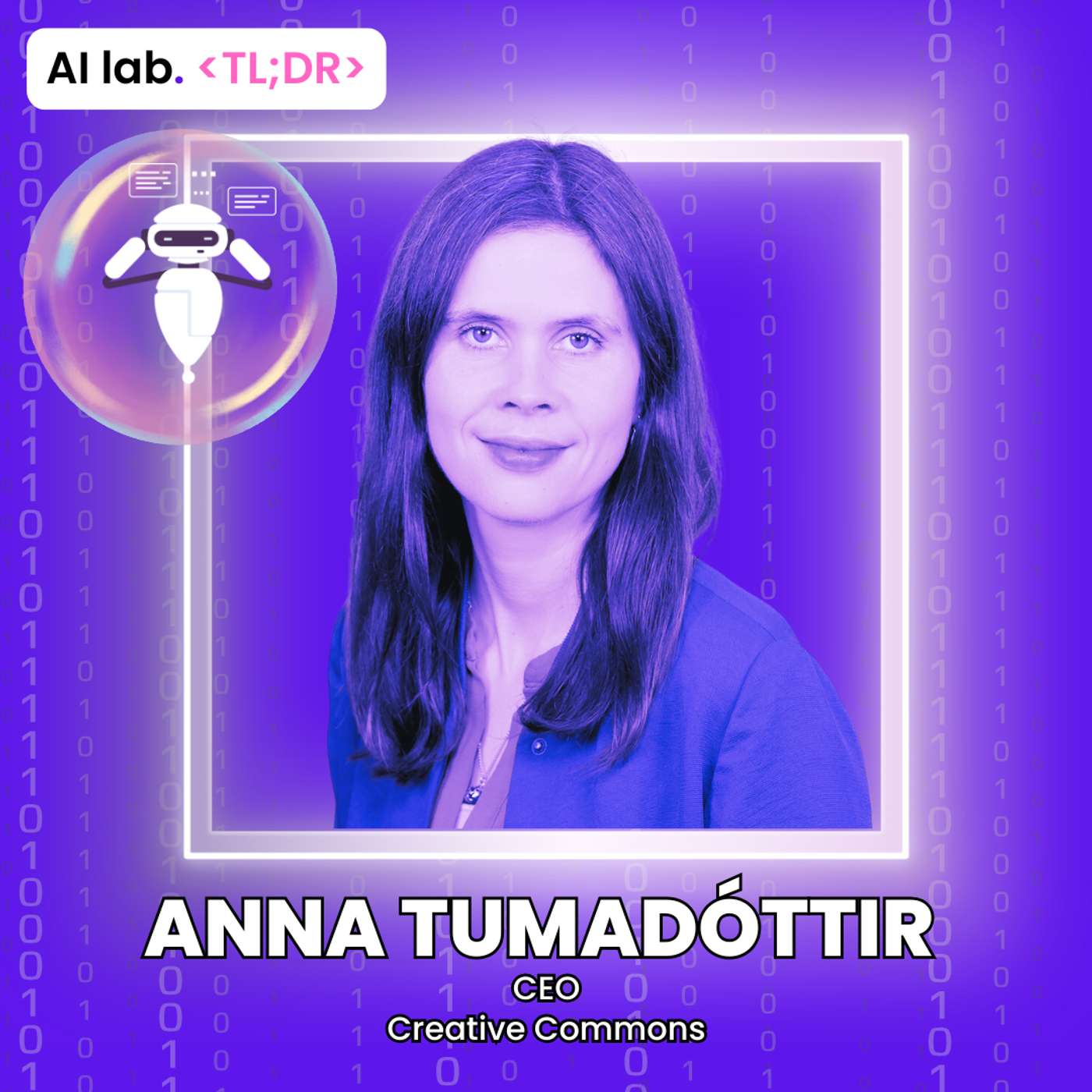 AI lab TL;DR | Anna Tumadóttir - Rethinking Creator Consent in the Age of AI✨ | creator consentAI+3 | Anna Tumadóttir | Creative CommonsEU AI Act | — | creator consentAI+5 | — | 19m 41s | |
| 1/27/25 | 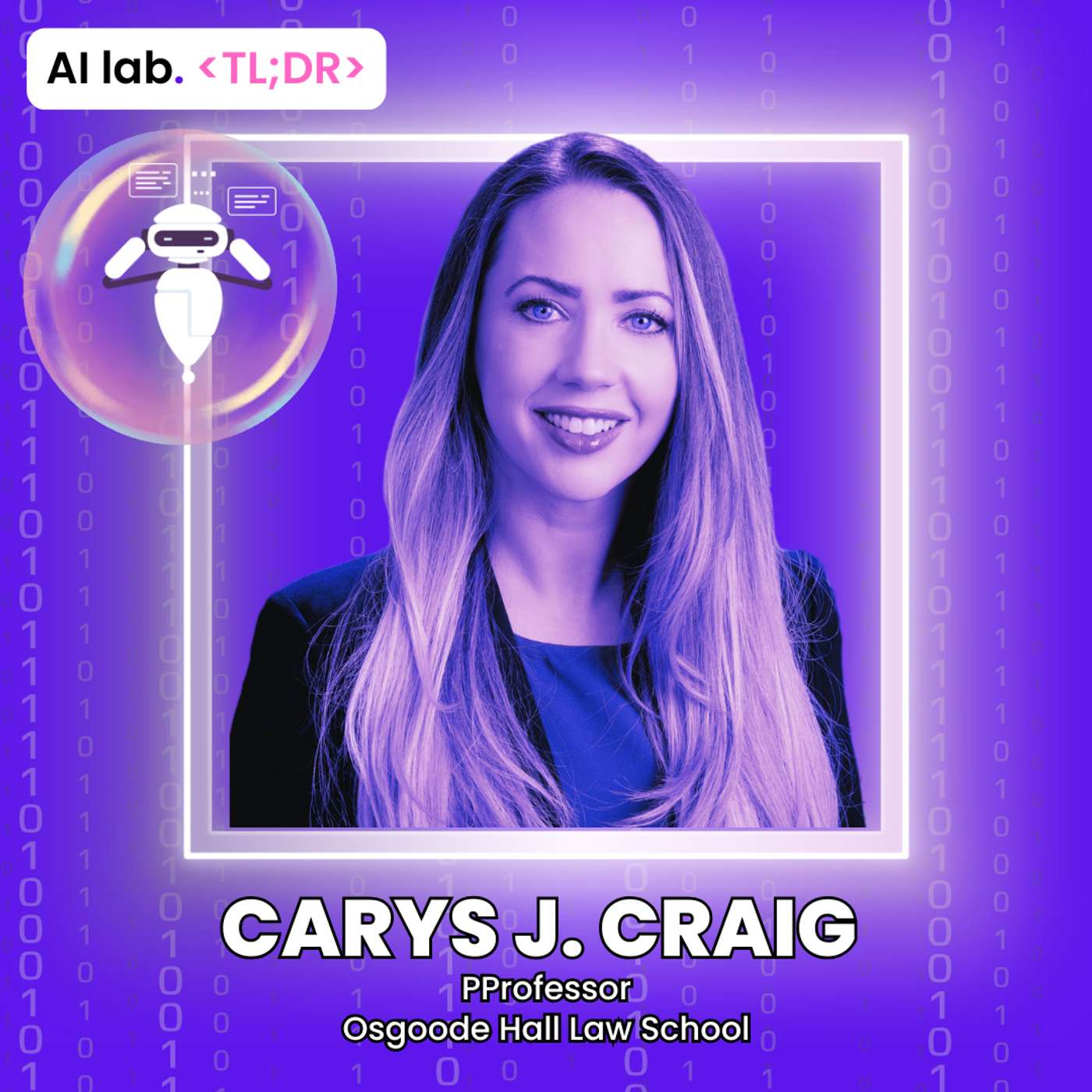 AI lab TL;DR | Carys J. Craig - The Copyright Trap and AI Policy✨ | copyrightAI regulation+3 | Carys J. Craig | Osgoode Professional Development | — | copyright trapAI policy+3 | — | 29m 23s | |
Want analysis for the episodes below?Free for Pro Submit a request, we'll have your selected episodes analyzed within an hour. Free, at no cost to you, for Pro users. | |||||||||
| 1/13/25 | 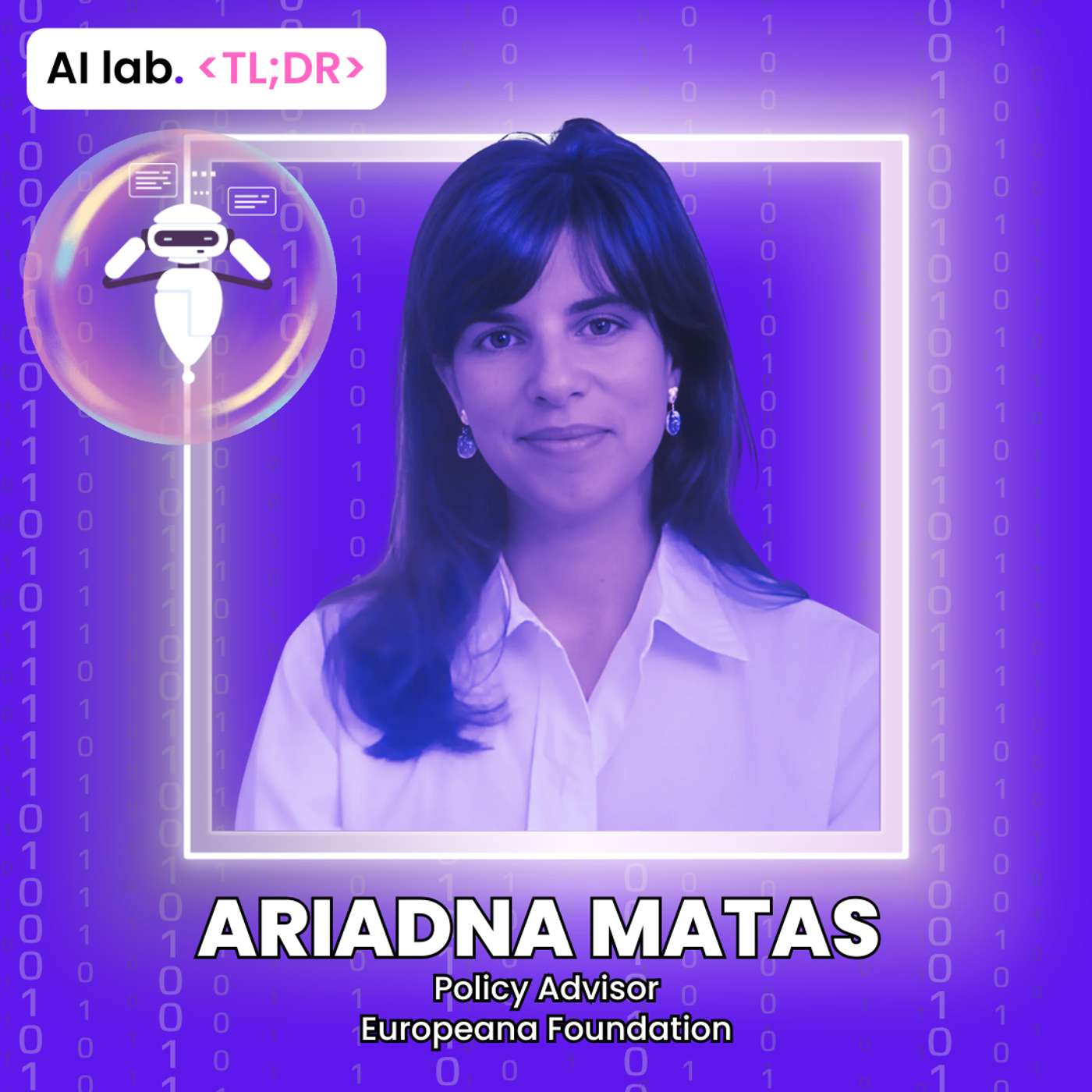 AI lab TL;DR | Ariadna Matas - Should Institutions Enable or Prevent Cultural Data Mining? | 🔍 In this TL;DR episode, Ariadna Matas (Europeana Foundation) discusses how the 2019 Copyright Directive has influenced text and data mining practices in cultural heritage institutions, highlighting the tension between public interest missions and restrictive approaches, and explores the broader implications of opt-outs on access, research, and the role of AI in the cultural sector.📌 TL;DR Highlights⏲️[00:00] Intro⏲️[00:53] Q1-How did the 2019 Copyright Directive change the landscape for cultural heritage institutions in terms of text and data mining?⏲️[05:07] Q2-Why are some cultural heritage institutions choosing to opt-out of text and data mining and what are the challenges involved?⏲️[11:27] Q3-What are the broader implications of these opt-outs for research, smaller institutions, and open access to cultural content?⏲️[14:53] Wrap-up & Outro💭 Q1 - How did the 2019 Copyright Directive change the landscape for cultural heritage institutions in terms of text and data mining?🗣️ "The 2019 Directive was expected to open up possibilities for cultural heritage institutions to continue their public interest mission with the help of technology."🗣️ "The first big use of text and data mining techniques is to facilitate cultural heritage institutions’ day-to-day work.It’s rare to see cultural heritage institutions preparing datasets for public text and data mining activities."🗣️ "More institutions are leaning toward putting barriers on data use rather than encouraging it.Instead of embracing possibilities, there’s unnecessary caution in the cultural heritage sector around AI."💭 Q2 - Why are some cultural heritage institutions choosing to opt-out of text and data mining and what are the challenges involved?🗣️ "The only fully legitimate reason for opting out is when the rights holder explicitly requests it."🗣️ "Cultural heritage institutions rarely own the copyright for the materials they hold, making enforcement of opt-outs challenging."🗣️ "Confusion about the legal framework leads some institutions to fear they must protect data from misuse."🗣️ "By opting out, institutions risk missing out on positive uses of their data due to fear of negative outcomes."🗣️ "Cultural heritage institutions have a public interest mission to safeguard access and encourage the use of their information."💭 Q3 - What are the broader implications of these opt-outs for research, smaller institutions, and open access to cultural content?🗣️ "Some organisations block access to avoid supporting big players in activities perceived as unethical."🗣️ "Opting out doesn’t weaken monopolistic practices but harms smaller players who can’t access the data."🗣️ "Institutions must balance the implications of their decisions on access with the potential for positive uses."🗣️ "Aggressive crawling that disrupts public services may justify access restrictions in certain cases."🗣️ "Overly broad decisions could limit the positive applications of text and data mining techniques on cultural heritage data."📌 About Our Guest🎙️ Ariadna Matas | Europeana Foundation🌐 Article | AI ‘opt-outs’: should cultural heritage institutions (dis)allow the mining of cultural heritage data?AI ‘opt-outs’: should cultural heritage institutions (dis)allow the mining of cultural heritage data?🌐 Ariadna Matashttps://pro.europeana.eu/person/ariadna-matasAriadna is Policy Advisor at the Europeana Foundation, an independent, non-profit organisation that stewards the common European data space for cultural heritage and contributes to other digital initiatives that put cultural heritage to good use in the world. #AI #ArtificialIntelligence #GenerativeAI | 16m 18s | ||||||
| 12/16/24 | 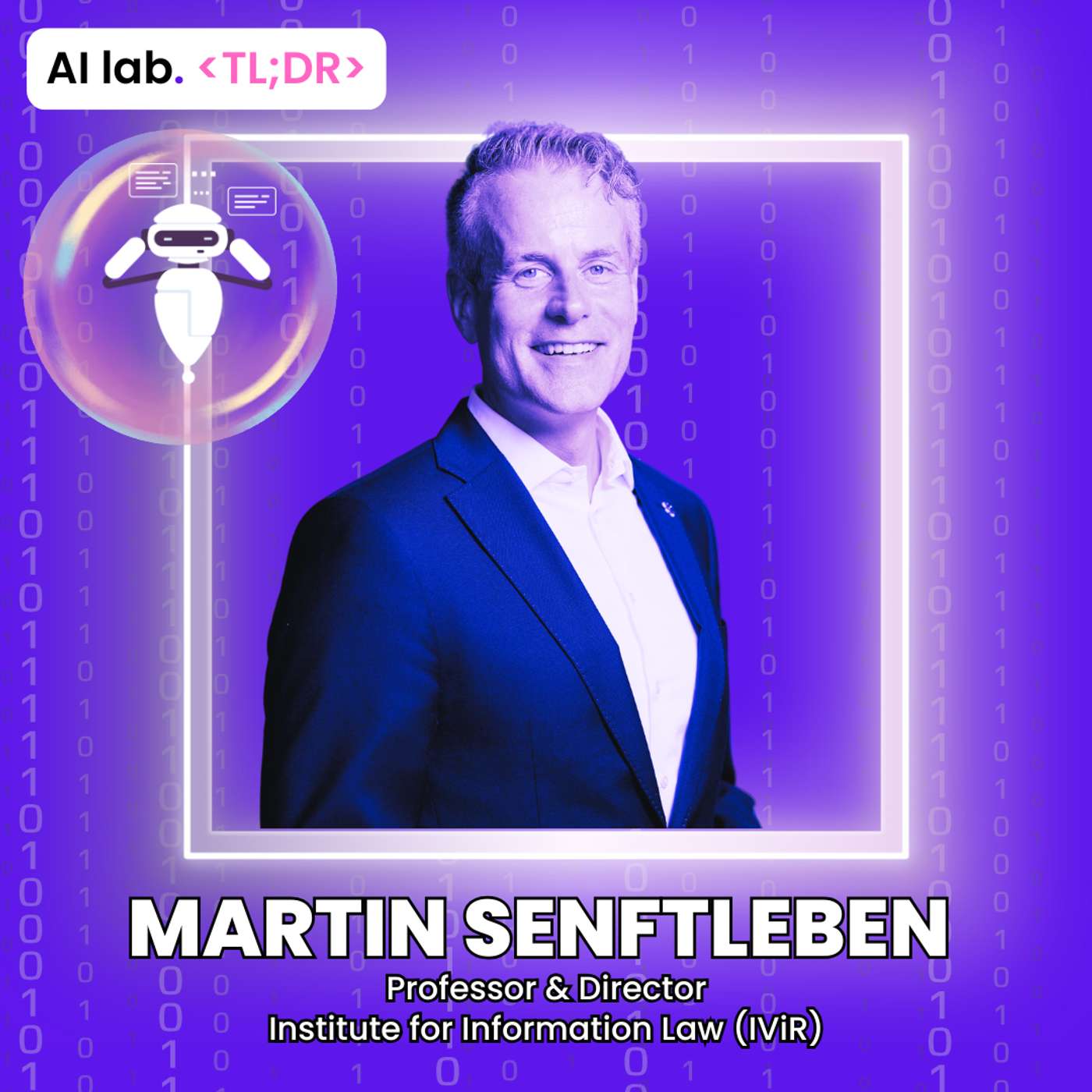 AI lab TL;DR | Martin Senftleben - How Copyright Challenges AI Innovation and Creativity | 🔍 In this TL;DR episode, Martin Senftleben (Institute for Information Law (IViR) & University of Amsterdam) discusses how EU regulations, including the AI Act and copyright frameworks, impose heavy burdens on AI training and development. The discussion highlights concerns about bias, quality, and fairness due to opt-outs and complex rights management systems, questioning whether these rules truly benefit individual creators. A proposal is made to focus regulatory efforts on the market exploitation phase of AI systems, ensuring compensation flows back to creative industries and authors through well-managed redistribution mechanisms.📌 TL;DR Highlights⏲️[00:00] Intro⏲️[01:04] Q1-How does the EU's current approach to AI training and copyright hinder innovation and fair pay for authors?⏲️[04:53] Q2-What’s your alternative to balance author compensation and AI development?⏲️[06:50] Q3-Why is output-based remuneration better for creators, AI developers, and society?⏲️[09:23] Wrap-up & Outro💭 Q1 - How does the EU's current approach to AI training and copyright hinder innovation and fair pay for authors?🗣️ "What policymakers try to do in this space where we try to reconcile AI innovation with traditional copyright goals is: first of all, of course we want the best AI systems and we want the least biassed AI systems."🗣️ "The regulation puts a heavy, heavy burden on AI training by requiring to take into account rights reservations, the so-called opts-outs."🗣️ "You might not get the best AI systems if you put all these burdens on the AI training process."🗣️ "The moment you allow rights holders to opt out and to remove certain resources from training, then of course you no longer know whether you get the least biassed AI systems."🗣️ "The simple fact that a big creative industry right holder receives some extra money doesn't mean that this money is passed on to the individual authors really doing the creative work."💭 Q2 - What’s your alternative to balance author compensation and AI development?🗣️ "If we imagine a regulation that leaves this development phase totally unencumbered by copyright burdens, you give lots of freedom for AI developers to use all the resources they think are necessary."🗣️ "Once we have these fully developed, high potential AI systems and these systems are brought to the market, (...) You place a tax, a burden on the AI systems, not at the development stage, but at the moment where they are exploited in the marketplace.”🗣️ "The money finally flows back in the form of compensation to the creative industry and individual authors."💭 Q3 - Why is output-based remuneration better for creators, AI developers, and society?🗣️ "From a European perspective, it's quite easy to propose that this should be collecting societies because we have a very well developed system of collective rights management in the area of copyright."🗣️ "In the case of AI output, you can also use data from the systems itself: to which extent is a certain style, a certain genre prominent in prompts that users enter? What type of AI output is generated and to which extent does it resemble certain pre-existing human works and creations? What is the market share on the more general market for literary, artistic expression and so on?"🗣️ "Traditionally, repartitioning schemes have a split between money that is directly given to individual authors and money that is given to the industry.We have a guarantee that a certain percentage of the money will directly reach the individual authors and performers, and will not stay at industry level exclusively."📌 About Our Guest🎙️ Martin Senftleben | Institute for Information Law (IViR) and University of Amsterdam🌐 Article | Win-win: How to Remove Copyright Obstacles to AI Training While Ensuring Author Remuneration (and Why the European AI Act Fails to Do the Magic)Win-win: How to Remove Copyright Obstacles to AI Training While Ensuring Author Remuneration (and Why the European AI Act Fails to Do the Magic)🌐 Martin Senftlebenlinkedin.com/in/martin-senftleben-2430aa5b Martin Senftleben is Professor of Intellectual Property Law and Director, Institute for Information Law (IViR), University of Amsterdam. His activities focus on the reconciliation of private intellectual property rights with competing public interests of a social, cultural or economic nature. He publishes extensively on these topics and lectures across the globe.#AI #ArtificialIntelligence #GenerativeAI | 10m 09s | ||||||
| 11/25/24 |  AI lab TL;DR | Mark Lemley - How Generative AI Disrupts Traditional Copyright Law | 🔍 In this TL;DR episode, Mark Lemley (Stanford Law School) discusses how generative AI challenges traditional copyright doctrines, such as the idea-expression dichotomy and substantial similarity test, and explores the evolving role of human creativity in the age of AI.📌 TL;DR Highlights⏲️[00:00] Intro⏲️[00:54] Q1-How does genAI challenge traditional copyright doctrines and will this lead to an evolution of copyright?⏲️[03:58] Q2-Can we expect new forms of legal recognition or protection for prompts?⏲️[06:13] Q3-Are current copyright rules able to address authorship in genAI works or do we need new legal categories?⏲️[08:00] Wrap-up & Outro💭 Q1 - How does genAI challenge traditional copyright doctrines and will this lead to an evolution of copyright?🗣️ "Copyright law has always tried to protect creative expression but is careful not to protect the idea behind a work."🗣️ "Generative AI changes the normal economics and dynamics of creation by doing the hard work for us, like making the painting or doing the actual brushstrokes."🗣️ "If copyright law doesn’t protect the expression created by AI rather than by a person, the question is, what, if anything, is there to copyright?"🗣️ "Generative AI blows up the substantial similarity test because it’s unclear whether two similar works came from the same prompt or if the AI just made the same thing."🗣️ "I might copy your prompt, input it into generative AI, and get a different output—making similarity no longer the evident marker of copying."💭 Q2 - Can we expect new forms of legal recognition or protection for prompts?🗣️ "We're still litigating whether the material generated by AI can be copyrighted, but we may ultimately say yes, as with photography 150 years ago."🗣️ "Courts may get comfortable with the idea that structuring the prompt and iterating it is a form of creativity that leads to the final output."🗣️ "In early photography, we gave copyright protection even though the machine made the image, because human judgment helped determine the outcome."🗣️ "Prompt engineering could become more sophisticated, leading courts to see creativity in how prompts are structured and refined."🗣️ "Sometimes I just ask a very simple question, and if that's all I contribute, I’m not sure there’s any protection."💭 Q3 - Are current copyright rules able to address authorship in genAI works or do we need new legal categories?🗣️ "There may be something around the creativity of prompts that will matter, but we're not there yet in terms of case law."🗣️ "The assumption that 'I made a movie, I wrote text, so I get copyright in that work' is going to be called into question in the generative AI context."🗣️ "Movie studios or video game companies that use AI to save money might be shocked when other people are free to copy AI-generated backgrounds."🗣️ "Even if we get copyright protection for AI outputs, it will occupy a weird middle ground that feels different from what we’re used to."🗣️ "There’s going to be pressure to change the law to make it align more with what copyright industries have been comfortable with, but it won’t be easy."📌 About Our Guest🎙️ Mark Lemley | Stanford Law School🌐 Article | How Generative AI Turns Copyright Upside Downhttps://papers.ssrn.com/sol3/papers.cfm?abstract_id=4517702 🌐 Mark Lemleyhttps://law.stanford.edu/mark-a-lemley/Mark is William H. Neukom Professor of Law at Stanford Law School and the Director of the Stanford Program in Law, Science and Technology. He teaches intellectual property, patent law, trademark law, antitrust, the law of robotics and AI, video game law, and remedies and he is the author of 11 books and 218 articles. | 8m 40s | ||||||
| 11/4/24 | 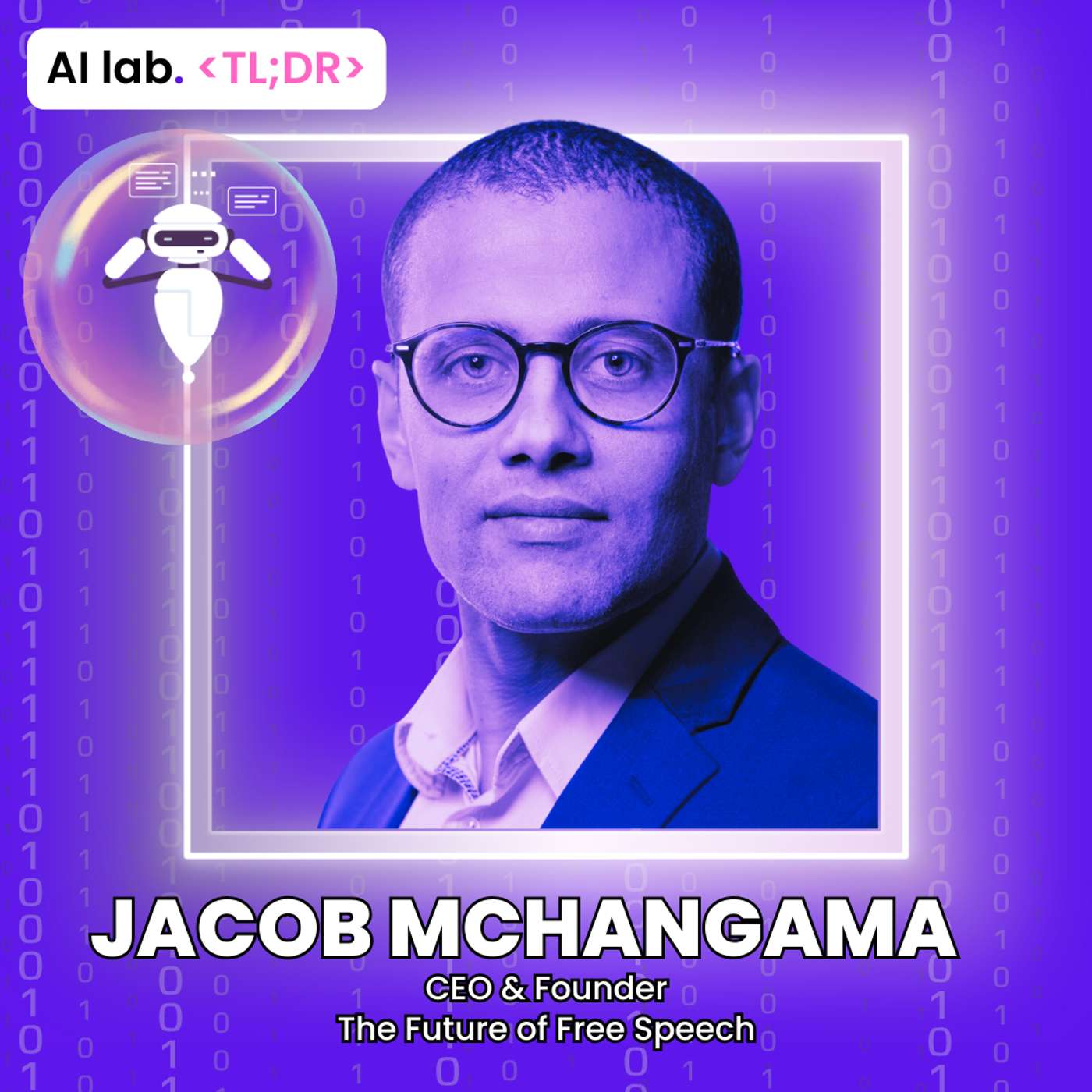 AI lab TL;DR | Jacob Mchangama - Are AI Chatbot Restrictions Threatening Free Speech? | 🔍 In this TL;DR episode, Jacob Mchangama (The Future of Free Speech & Vanderbilt University) discusses the high rate of AI chatbot refusals to generate content for controversial prompts, examining how this may conflict with the principles of free speech and access to diverse information.📌 TL;DR Highlights⏲️[00:00] Intro⏲️[00:51] Q1-How does the high rate of refusal by chatbots to generate content conflict with the principles of free speech and access to information?⏲️[06:53] Q2-Could AI chatbot self-censorship conflict with the systemic risk provisions of the Digital Services Act (DSA)?⏲️[10:20] Q3-What changes would you recommend to better align chatbot moderation policies with free speech protections?⏲️[15:18] Wrap-up & Outro💭 Q1 - How does the high rate of refusal by chatbots to generate content conflict with the principles of free speech and access to information?🗣️ "This is the first time in human history that new communications technology does not solely depend on human input, like the printing press or radio."🗣️ "Limiting or restricting the output and even the ability to make prompts will necessarily affect the underlying capability to reinforce free speech, and especially access to information."🗣️ "If I interact with an AI chatbot, it's me and the AI system, so it seems counterintuitive that the restrictions on AI chatbots are more wide-ranging than those on social media."🗣️ "Would it be acceptable to ordinary users to say, you're writing a document on blasphemy, and then Word says, 'I can't complete that sentence because it violates our policies'?"🗣️ "The boundary between freedom of speech being in danger and freedom of thought being affected is a very narrow one."🗣️ "Under international human rights law, freedom of thought is absolute, but algorithmic restrictions risk subtly interfering with that freedom.(...) These restrictions risk being tentacles into freedom of thought, subtly guiding us in ways we might not even notice."💭 Q2 - Could AI chatbot self-censorship conflict with the systemic risk provisions of the Digital Services Act (DSA)?🗣️ "The AI act includes an obligation to assess and mitigate systemic risk, which could be relevant here regarding generative AI’s impact on free expression."🗣️ "The AI act defines systemic risk as a risk that is specific to the high-impact capabilities of general-purpose AI models that could affect public health, safety, or fundamental rights."🗣️ "The question is whether the interpretation under the AI act would lean more in a speech protective or a speech restrictive manner."🗣️ "Overly broad restrictions could undermine freedom of expression in the Charter of Fundamental Rights, which is part of EU law."🗣️ "My instinct is that the AI act would likely lean in a more speech-restrictive way, but it's too early to say for certain."💭 Q3 - What changes would you recommend to better align chatbot moderation policies with free speech protections?🗣️ "Let’s use international human rights law as a benchmark—something most major social media platforms commit to on paper but don’t live up to in practice."🗣️ "We showed that major social media platforms' hate speech policies have undergone extensive scope creep over the past decade, which does not align with international human rights standards."🗣️ "It's conceptually more difficult to apply international human rights standards to an AI chatbot because my interaction is private, unlike public speech."🗣️ "We should avoid adopting a 'harm-oriented' principle to AI chatbots, especially when dealing with disinformation and misinformation, which is often protected under freedom of expression."🗣️ "It's important to maintain an iterative process with AI systems, where humans remain responsible for how we use and share information, rather than placing all the responsibility on the chatbot."📌 About Our Guest🎙️ Jacob Mchangama | The Future of Free Speech & Vanderbilt University 𝕏 https://x.com/@JMchangama🌐 Article | AI chatbots refuse to produce ‘controversial’ output − why that’s a free speech problemhttps://theconversation.com/ai-chatbots-refuse-to-produce-controversial-output-why-thats-a-free-speech-problem-226596🌐 The Future of Free Speechhttps://futurefreespeech.org 🌐 Jacob Mchangamahttp://jacobmchangama.com Jacob Mchangama is the Executive Director of The Future of Free Speech and a Research Professor at Vanderbilt University. He is also a Senior Fellow at The Foundation for Individual Rights and Expression (FIRE) and author of “Free Speech: A History From Socrates to Social Media”. | 16m 10s | ||||||
| 10/21/24 | 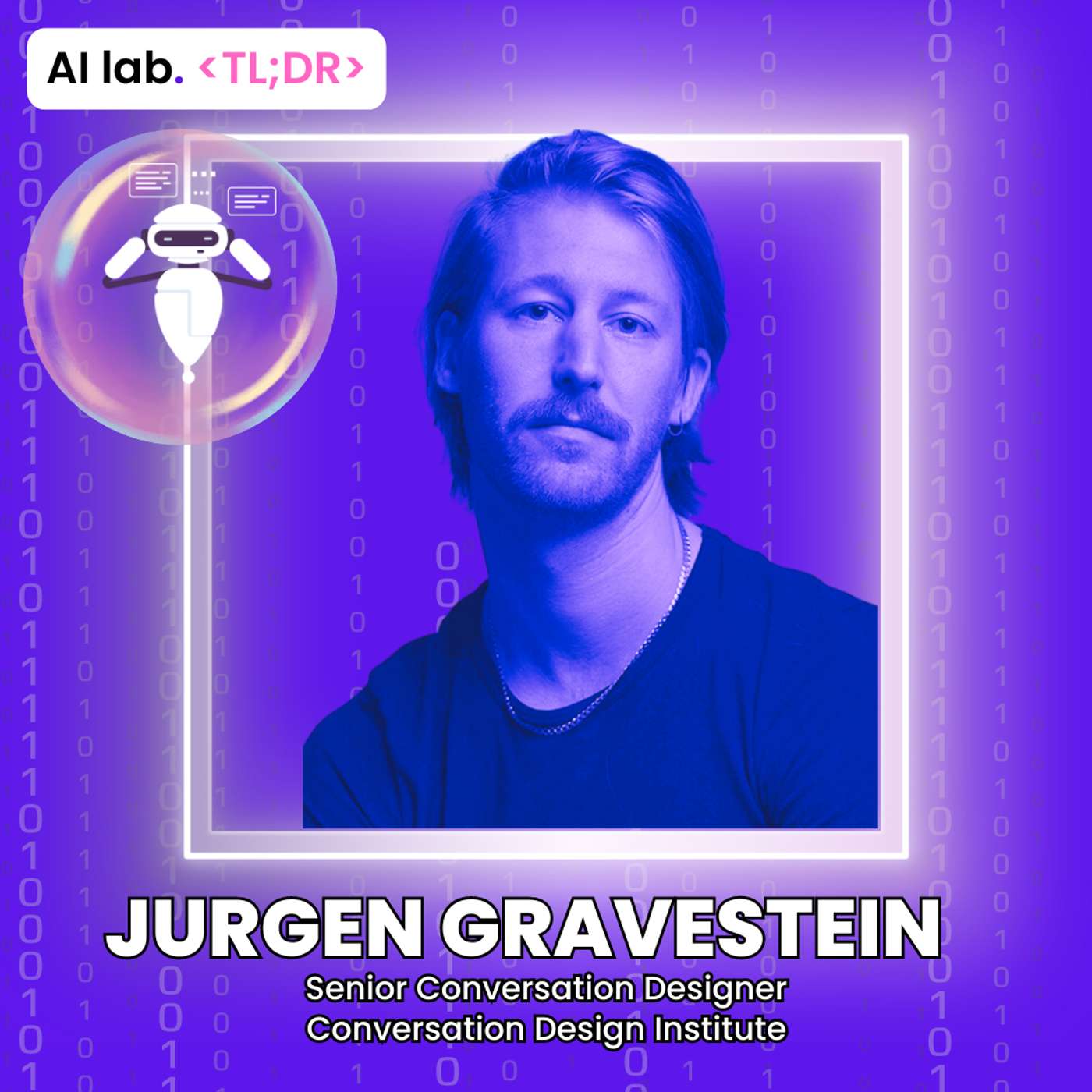 AI lab TL;DR | Jurgen Gravestein - The Intelligence Paradox | 🔍 In this TL;DR episode, Jurgen Gravestein (Conversation Design Institute) discusses his Substack blog post delving into the ‘Intelligence Paradox’ with the AI lab📌 TL;DR Highlights⏲️[00:00] Intro⏲️[01:08] Q1-The ‘Intelligence Paradox’:How does the language used to describe AI lead to misconceptions and the so-called ‘Intelligence Paradox’?⏲️[05:36] Q2-‘Conceptual Borrowing’:What is ‘conceptual borrowing’ and how does it impact public perception and understanding of AI?⏲️[10:04] Q3-Human vs AI ‘Learning’:Why is it misleading to use the term ‘learning’ for AI processes and what this means for the future of AI development?⏲️[14:11] Wrap-up & Outro💭 Q1-The ‘Intelligence Paradox’🗣️ What’s really interesting about chatbots and AI is that for the first time in human history, we have technology talking back at us, and that's doing a lot of interesting things to our brains.🗣️ In the 1960s, there was an experiment with Chatbot Eliza, which was a very simple, pre-programmed chatbot (...) And it showed that when people are talking to technology, and technology talks back, we’re quite easily fooled by that technology. And that has to do with language fluency and how we perceive language.🗣️ Language is a very powerful tool (...) there’s a correlation between perceived intelligence and language fluency (...) a social phenomenon that I like to call the ‘Intelligence Paradox’. (...) people perceive you as less smart, just because you are less fluent in how you’re able to express yourself.🗣️ That also works the other way around with AI and chatbots (...). We saw that chatbots can now respond in extremely fluent language very flexibly. (...) And as a result of that, we perceive them as pretty smart. Smarter than they actually are, in fact.🗣️ We tend to overestimate the capabilities of [AI] systems because of their language fluency, and we perceive them as smarter than they really are, and it leads to confusion (...) about how the technology actually works.💭 Q2-‘Conceptual Borrowing’🗣️ A research article (...) from two professors, Luciano Floridi and Anna Nobre, (...) explaining (...) conceptual borrowing [states]: “through extensive conceptual borrowing, AI has ended up describing computers anthropomorphically, as computational brains with psychological properties, while brain and cognitive sciences have ended up describing brains and minds computationally and informationally, as biological computers."🗣️ Similar to the Intelligence Paradox, it can lead to confusion (...) about whether we underestimate or overestimate the impact of a certain technology. And that, in turn, informs how we make policies or regulate certain technologies now or in the future.🗣️ A small example of conceptual borrowing would be the term “hallucinations”. (...) a common term to describe when systems like chatGPT say something that sounds very authoritative and sounds very correct and precise, but is actually made up, or partly confabulated. (...) this actually has nothing to do with real hallucinations [but] with statistical patterns that don’t match up with the question that’s being asked.💭 Q3-Human vs AI ‘Learning’🗣️ If you talk about conceptual borrowing, “machine learning” is a great example of that, too. (...) there's a very (...) big discrepancy between what learning is in the psychological terms and the biological terms when we talk about learning, and then when it comes to these systems.🗣️ So if you actually start to be convinced that LLMs are as smart and learn as quickly as people or children (...) you could be over attributing qualities to these systems.🗣️ [ARC-AGI challenge:] a $1 million USD prize pool for the first person that can build an AI to solve a new benchmark that (...) consists of very simple puzzles that a five-year old (...) could basically solve. (...) it hasn't been solved yet.🗣️ That’s, again, an interesting way to look at learning, and especially where these systems fall short. [AI] can reason based on (...) the data that they've seen, but as soon as it (..) goes out of (...) what they've seen in their data set, they will struggle with whatever task they are being asked to perform.📌 About Our Guest🎙️ Jurgen Gravestein | Sr Conversation Designer, Conversation Design Institute (CDI) 𝕏 https://x.com/@gravestein1989 🌐 Blog Post | The Intelligence Paradoxhttps://jurgengravestein.substack.com/p/the-intelligence-paradox🌐 Newsletterhttps://jurgengravestein.substack.com🌐 CDIhttps://www.conversationdesigninstitute.com🌐 Profs. Floridi & Nobre's articlehttp://dx.doi.org/10.2139/ssrn.4738331🌐 Jurgen Gravesteinhttps://www.linkedin.com/in/jurgen-gravesteinJurgen Gravestein is a writer, conversation designer and AI consultant. He works at the CDI, the world’s leading training and certification institute in conversational AI. He also runs a successful Substack newsletter “Teaching computers how to talk”. | 14m 49s | ||||||
| 9/30/24 | 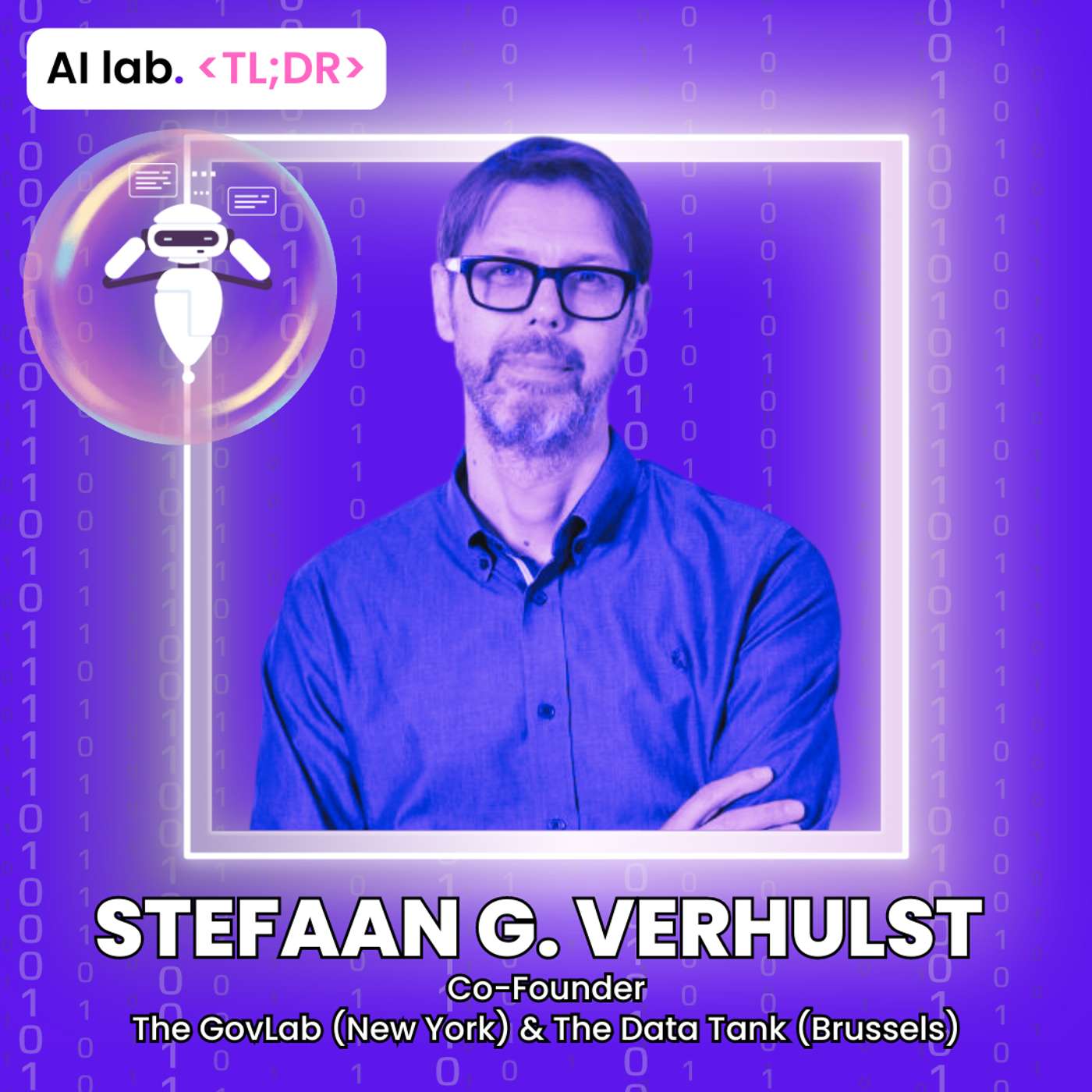 AI lab TL;DR | Stefaan G. Verhulst - Are we entering a Data Winter? | 🔍 In this TL;DR episode, Dr. Stefaan G. Verhulst (The GovLab & The Data Tank) discusses his Frontiers Policy Labs contribution on the urgent need to preserve data access for the public interest with the AI lab📌 TL;DR Highlights⏲️[00:00] Intro⏲️[01:13] Q1-‘Data Winter’:Can you provide a brief overview of your concept of 'Data Winter' and why you believe we are on the brink of entering one?⏲️[05:05] Q2-Generative AI-nxiety:What are some of the most significant challenges currently hindering public access to social media and climate data, and the effects of Generative AI-nxiety?⏲️[07:49] Q3-‘Decade for Data’:Could you outline what the “Decade for Data” initiative entails and how it could transform data stewardship and collaboration?⏲️[12:25] Wrap-up & Outro💭 Q1-‘Data Winter’🗣️ At the time of an AI summer, when everyone suddenly is excited about the potential ofgenerative AI (...) for public interest purposes, (...) we are actually entering a data winter.🗣️ What I’ve witnessed the last few months, and that’s mainly as a result of advances in artificial intelligence, is that we actually see a backtracking of the progress that we’ve made in society as it relates to opening up data for public interest purposes.🗣️ Social media platforms such as X, but also Facebook, have closed down access to some of their data for research and for data journalism purposes as well.🗣️ Science data, such as climate science data, which was typically open science, has now become commercialised and is becoming proprietary data enclosed for many in society.🗣️ The initial data that was available for training data has now also become much harder to access, a result of concerns that some of that data has been extracted without a return to the data holder.💭 Q2-Generative AI-nxiety 🗣️ Some of the data that typically was available through APIs has now been closed off, and so some are calling this the post-API environment that we're currently in, where data was easily available through an API now is actually much harder to access unless one pays for it.🗣️ New licensing is being used to actually shield off the data for public interest purposes as well. So there are a whole range of vehicles that exist to enclose data that actually makes it much harder to access it for reuse.🗣️ We see a decline in access to Wikipedia, a decline in people accessing Wikipedia, and a decline in people contributing to Wikipedia, mainly because they fear that whatever they contribute will be used as training fodder for generative AI purposes.🗣️ Initiatives like Wikipedia, which are to a large extent the main source of a lot of the training data of generative AI services, are currently also suffering from AI extraction because they are dependent on voluntary contributions by the audience and the participants.🗣️ As a result, we are entering a data winter, which if we are not careful (...) may actually affect the AI summer that we currently have as well.💭 Q3-‘Decade for Data’ 🗣️ I’ve been calling for, together with others, such as the United Nations University, a Decade for Data, which is a typical way the United Nations often operates, to feature a problem and then have a well-defined strategy to address that problem.🗣️ A Decade for Data would have multiple components, one being advancing data collaboration, where you actually have new models of data being shared, including data commons, which can be updated in the current AI environment.🗣️ We need a new reimagined profession of data stewards that are individuals or teams who have the sophistication and competencies to provide access to data in a systematic, sustainable, and responsible manner.🗣️ A Decade for Data would also involve rethinking data governance and embedding digital self-determination in data governance to go beyond the current paradox of consent, facilitating access in a way that aligns with perceptions, expectations, and preferences of communities.🗣️ Establishing a social license for reuse is key, where you understand the preferences and expectations of communities and individuals, translating that into a social license so that data can be reused in a way that is trusted and aligned with community expectations.📌 About Our Guest🎙️ Dr. Stefaan G. Verhulst | Co-Founder, The GovLab & The Data Tank🌐 Frontiers Policy Labs | Are We Entering a Data Winter?https://policylabs.frontiersin.org/content/commentary-are-we-entering-a-data-winter 🌐 The Data Tankhttps://datatank.org 🌐 GovLabhttps://thegovlab.org 🌐 Dr. Stefaan G. Verhulsthttps://www.linkedin.com/in/stefaan-verhulst Dr. Stefaan G. Verhulst co-founded several research organisations, including the GovLab (New York) and The DataTank (Brussels). He focuses on using advances in science and technology, including data and AI, to improve decision-making and problem-solving and has been recognized as one of the 10 Most Influential Academics in Digital Government globally. | 12m 55s | ||||||
| 9/16/24 | 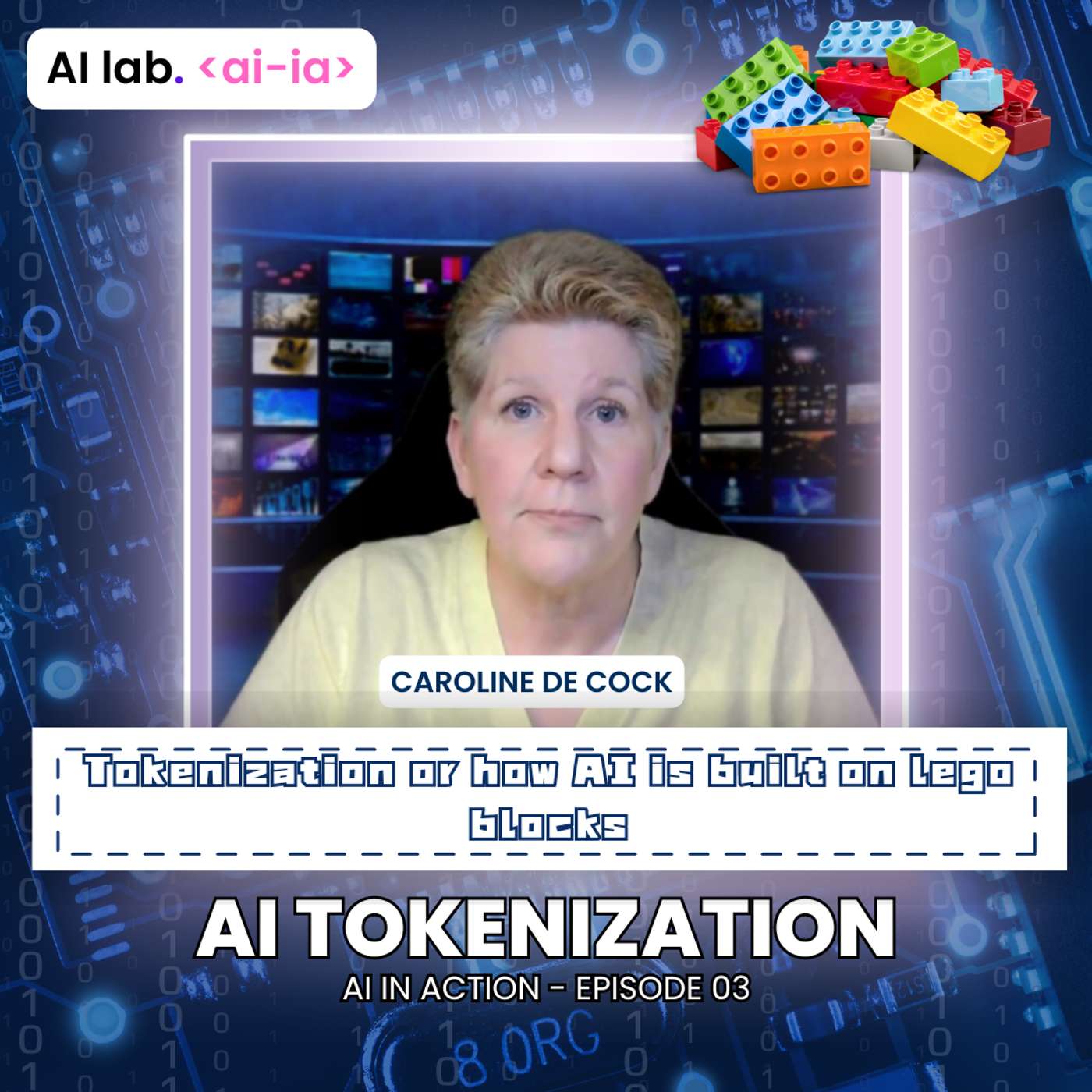 AI lab – AI in Action | Episode 03: AI Tokenization | Let’s talk about AI tokenization in this third episode of our AI in Action series. Tokenization is actually pretty interesting, especially if you ever wondered how these fancy AI machines understand the stuff we type and say and produce things when we give them prompts. Next time you're marvelling at an AI-generated text, remember it's all about those tiny tokens, dancing together in a complex symphony of language and prediction. | 7m 28s | ||||||
| 9/9/24 |  AI lab TL;DR | Bertin Martens - The Economics of GenAI & Copyright | 🔍 In this TL;DR episode, Dr. Bertin Martens (Bruegel) discusses his working paper for the Brussels-based economic think tank on the economic arguments in favour of reducing copyright protection for generative AI inputs and outputs with the AI lab* 9:44: Mr Martens intended to say "humans" instead of machines📌 TL;DR Highlights⏲️[00:00] Intro⏲️[01:21] Q1-Balancing Innovation & RightsCan the TDM opt-out right hinder innovation and economic growth, and what does it mean as regards the power of copyright holders vs. the potential societal benefits of generative AI?⏲️[05:42] Q2-Licensing Impact on EU AI CompetitivenessWhat are the implications of licensing for genAI as regards competitiveness and quality of models and potential economic disadvantages for EU AI developers?⏲️[09:11] Q3-GenAI's Impact on Creative Industries & EconomyLooking at outputs, how could genAI impact the creative industries and the broader economy, and what are your thoughts on how policy should evolve to reflect this?⏲️[13:08] Wrap-up & Outro💭 Q1-Balancing Innovation & Rights🗣️ Copyright is an economic policy tool to stimulate investment in the production of artwork, and granting an exclusive copyright to an author avoids free writing on that artwork that would undermine the incentives to invest in its production.🗣️ The optimal scope of copyright protection should balance, on the one hand, the welfare losses from this exclusive right given to an author against the welfare gains for society from stimulating investment in new and innovative productions.🗣️ Both [copyright] overprotection and underprotection are bad. They will hamper innovation and reduce the economic efficiency of copyright.🗣️ Generative AI opens up new and much cheaper possibilities to produce new and innovative artwork, and also has applications in a wide variety of other sectors outside the media sector and across the economy.🗣️ The AI Act and the copyright law in Europe give priority to the private interest of copyright holders over the wider interest of society, and I don't think that's a good thing and we should change that.💭 Q2-Licensing Impact on EU AI Competitiveness🗣️ Generative AI models require vast amounts of training data to develop the model and to have a high-quality model. And already today we observe that the largest and most advanced models are running out of high-quality human edited text for model training.🗣️ There is still sufficient supply of low-quality text data, for instance from social media, or from the transposition of voice data into text, or even from synthetic data. But all these low-quality sources reduce the quality of generative AI models.🗣️ Imposing copyright licensing requirements on text data for model training will further shrink the available supply of text data for model training, and that will further reduce the quality of these models.🗣️ Only the biggest tech companies can actually afford to negotiate the licensing fees and pay those fees to copyright holders, while smaller AI startups cannot afford this and are pushed out of the market.🗣️ Pushing smaller AI startups out of the market is bad for competition, bad for innovation in the AI setting, and this is not the way we want to go.💭 Q3-GenAI's Impact on Creative Industries & Economy🗣️ Generally, copyright law worldwide grants copyright only to human authors of artwork, not to machine-produced artwork. With the arrival of generative AI models, however, that has changed, and for the first time in human history, a machine can produce artwork output.🗣️ From an economic perspective, there is no need to grant copyright to AI-produced artwork because the marginal cost of producing generative AI output is actually very close to zero (...) and the risk of free riding, therefore, is very limited.🗣️ The human labor that goes into designing a prompt set that you feed into a generative AI model is costly, and this prompt set is human artwork and could indeed receive copyright protection, just like any other human design, text or computer code.📌 About Our Guest🎙️ Dr. Bertin Martens | Senior fellow at Bruegel and non-resident research fellow at TILEC, Tilburg University🌐 Bruegel | Economic Arguments in Favour of Reducing Copyright Protection for Generative AI Inputs and Outputshttps://www.bruegel.org/working-paper/economic-arguments-favour-reducing-copyright-protection-generative-ai-inputs-and🌐 Bruegelhttps://www.bruegel.org🌐 Tilburg Law & Economics Centre (TILEC)https://www.tilburguniversity.edu/research/institutes-and-research-groups/tilec🌐 Dr. Bertin Martens https://www.bruegel.org/people/bertin-martensDr. Bertin Martens is a Senior fellow at Bruegel and a non-resident research fellow at the Tilburg Law & Economics Centre (TILEC, Tilburg University). He has worked on digital economy issues as a senior economist at the European Commission's Joint Research Centre for over a decade until April 2022. Before that, he was deputy chief economist for trade policy at the EC. | 13m 41s | ||||||
| 7/18/24 |  AI lab TL;DR | Alexander Peukert - Copyright in the Artificial Intelligence Act–A Primer | 🔍 In this TL;DR episode, Prof. Dr. Alexander Peukert (Goethe University Frankfurt am Main) discusses his primer on copyright in the EU AI Act with the AI lab📌 TL;DR Highlights⏲️[00:00] Intro⏲️[01:26] Q1-Merging copyright & AI regulation:What challenges arise from merging copyright law and AI regulation?How might this impact legislation, compliance, and enforcement?⏲️[06:08] Q2-AI Act copyright targets:Who are the main targets of the AI Act's copyright-related obligations?⏲️[09:33] Q3-AI Act copyright obligations:What key copyright-related obligations does the AI Act impose on AI model providers?How should training content summaries and TDM opt-out mechanisms be implemented?⏲️[14:44] Wrap-up & Outro💭 Q1 - Merging Copyright & Ai Regulation🗣️ Any copyright infringement triggers remedies. (...) In the EU AI Act context, it’s very different because the EU AI Act establishes systemic compliance obligations.🗣️ AI model providers have to put in place a general copyright policy. Whether that policy is sufficient or not is then a question which is pretty difficult to answer and not straightforward.🗣️ When we merge copyright with the AI regulation, (...) this is also true for the DSA, (...) you have to ask: at what point is a systemic compliance obligation violated? Only then do you have a violation of this AI regulation.🗣️ The AI Act is primarily enforced by public authorities (...). That might become a challenge for rightholders because they were used to enforce their rights at their will. Now they have to make sure that the [EC or national authorities act].🗣️ For the first time, (...) public authorities enter the copyright environment to a very significant extent through the EU AI Act.💭 Q2 - AI Act Copyright Targets🗣️ The specific copyright obligations are only addressed to general-purpose AI model providers. (...) AI systems that are then built upon it (...), which eventually create the output, are not subject to specific copyright obligations.🗣️ The EU legislature (...) said: we focus on the [general-purpose AI] models because they are the very basis of all systems, and if we target them (...), then we make sure that any kind of system, generative AI [is] copyright-compliant.💭 Q3 - AI Act Copyright Obligations🗣️ The EU AI Act [obliges] AI model providers to program their crawlers, who crawl the Internet, to collect data for [AI] training (...) in a manner that the opt-out of copyright holders is respected.🗣️ There’s a market for AI training data, which is based on these copyright rules in connection with the EU AI Act.🗣️ You have to put in place a copyright policy. (...) One potential consequence (...) might be a kind of moderation obligation so that you have to make sure that not only the training (...) but also the eventual output is copyright-compliant.🗣️ It might become difficult for the [general-purpose] AI model provider to moderate the output of systems that another company has built on [their] model. (...) I see a potential problem in the implementation of these copyright obligations.🗣️ The [training content] summary need not be granular so that you mention each and every URL that you have mined, (...) it suffices to describe the content in a narrative way. So what kind of databases have you searched or crawled?🗣️ The [training content] summary (...) is a tool to enable rightholders to figure out whether they were mined and perhaps whether their preventive measures were circumvented and (...) potentially sue for copyright infringement.📌 About Our Guest🎙️ Prof. Dr. Alexander Peukert | Full Professor of Civil, Commercial and Information Law at Goethe University Frankfurt am Main🌐 GRUR International | Copyright in the Artificial Intelligence Act – A Primerhttps://academic.oup.com/grurint/article-abstract/73/6/497/7675073https://papers.ssrn.com/sol3/papers.cfm?abstract_id=4771976🌐 Prof. Dr. Alexander Peukerthttp://www.jura.uni-frankfurt.de/peukert/http://ssrn.com/author=1244916 Alexander Peukert (pronounce as Poikert) has since 2009 been full professor of civil, commercial and information law at Goethe University Frankfurt am Main. He studied law and obtained his Dr. iur. (s.c.l.) at the University of Freiburg (1993-1999). After his second state examination (2001), he practiced law in a Berlin law firm specializing in copyright and media law. From 2002 to 2009, he was senior research fellow and head of the U.S. department at the Max Planck Institute for Intellectual Property and Competition Law in Munich. | 15m 36s | ||||||
| 7/11/24 |  AI lab TL;DR | Thomas Margoni - Copyright Law & the Lifecycle of Machine Learning Models | 🔍 In this TL;DR episode, Professor Thomas Margoni (CiTiP - Centre for IT & IP Law, KU Leuven) discusses copyright law and the lifecycle of machine learning models with the AI lab. The starting point is an article co-authored with Professor Martin Kretschmer (CREATe, University of Glasgow) and Dr Pinar Oruç (University of Manchester), and published in open access in the International Review of Intellectual Property and Competition Law (IIC).📌 TL;DR Highlights⏲️[00:00] Intro⏲️[01:26] Q1-Copyright & training data:How does current copyright law affect the training of machine learning models?What insights do your case studies provide? ⏲️[04:57] Q2-Surprising research findings:What did you learn about copyright law’s impact on machine learning innovation?⏲️[08:16] Q3-Policy recommendations:What changes to copyright law do you suggest to support machine learning development and research?⏲️[12:50] Wrap-up & Outro💭 Q1 - Copyright & Training Data🗣️ It is a complex relationship: machine learning is a very new technology, and copyright is a very old law (...) developed (...) in function of a very different (...) technology.🗣️ Every time a new technology appears (...), adjustment [of copyright law] is necessary. During this time (...) various interests [and] dynamics are at play.🗣️ A third interest that is naturally underrepresented (...) is that of users, citizens, people like us, who somehow get lost in this equation based on only two players[: right holders and AI developers].🗣️ Copyright has always been about the balance between authors and the public[,] between the need to incentivise cultural creation and the need for the public to have access to it.💭 Q2 - Surprising Research Findings🗣️ Be careful not to treat different cases following the same rules (...) [it] would lead to unbalanced solutions. (...) Different cases (...) are [now] treated almost entirely the same by EU copyright law.🗣️ Text and data mining: (...) could lead to identifying (...) the spread of a pandemic (...) This is a public-interest form of learning that can benefit the entire humanity. This type of activity should not be regulated by copyright.💭 Q3 - Policy Recommendations🗣️ The EU (...) developed a legal framework whereby text and data mining and machine learning are regulated the same. (...) Perhaps one of the answers (...) to creat[e] more (...) breathing space, particularly for scientific research, is to treat them differently.🗣️ The protection of research, freedom of scientific research and artistic expression are very important. (...) We have to design rules that do not prevent scientists [and] citizens (...) to experiment with these tools.🗣️ Right now, we regulate everything at the input level. (...) We have to move our regulatory focus: look more at the input and output data.🗣️ Due to the scale of AI applications, there is a danger raised by rightholders and some artists [of a] substitution effect (...) with a specific artist, school or genre. This (...) is a (...) new question, and (...) remuneration models (...) could be an (...) avenue to explore.📌 About Our Guest🎙️ Professor Thomas Margoni | Research Professor of IP Law at the Faculty of Law and Criminology and member of the Board of Directors of the Centre for IT & IP Law (CiTiP), KU Leuven🌐 International Review of IP & Competition Law (IIC) - Copyright Law and the Lifecycle of Machine Learning Modelshttps://doi.org/10.1007/s40319-023-01419-3 🌐 Prof. Thomas Margonihttps://www.law.kuleuven.be/citip/en/staff-members/staff/00137042Dr Thomas Margoni is a Research Professor of Intellectual Property Law at the Faculty of Law and Criminology of KU Leuven in Belgium. He is also a member of the Board of Directors of the Centre for IT & IP Law (CiTiP, KU Leuven). | 13m 29s | ||||||
| 7/2/24 | 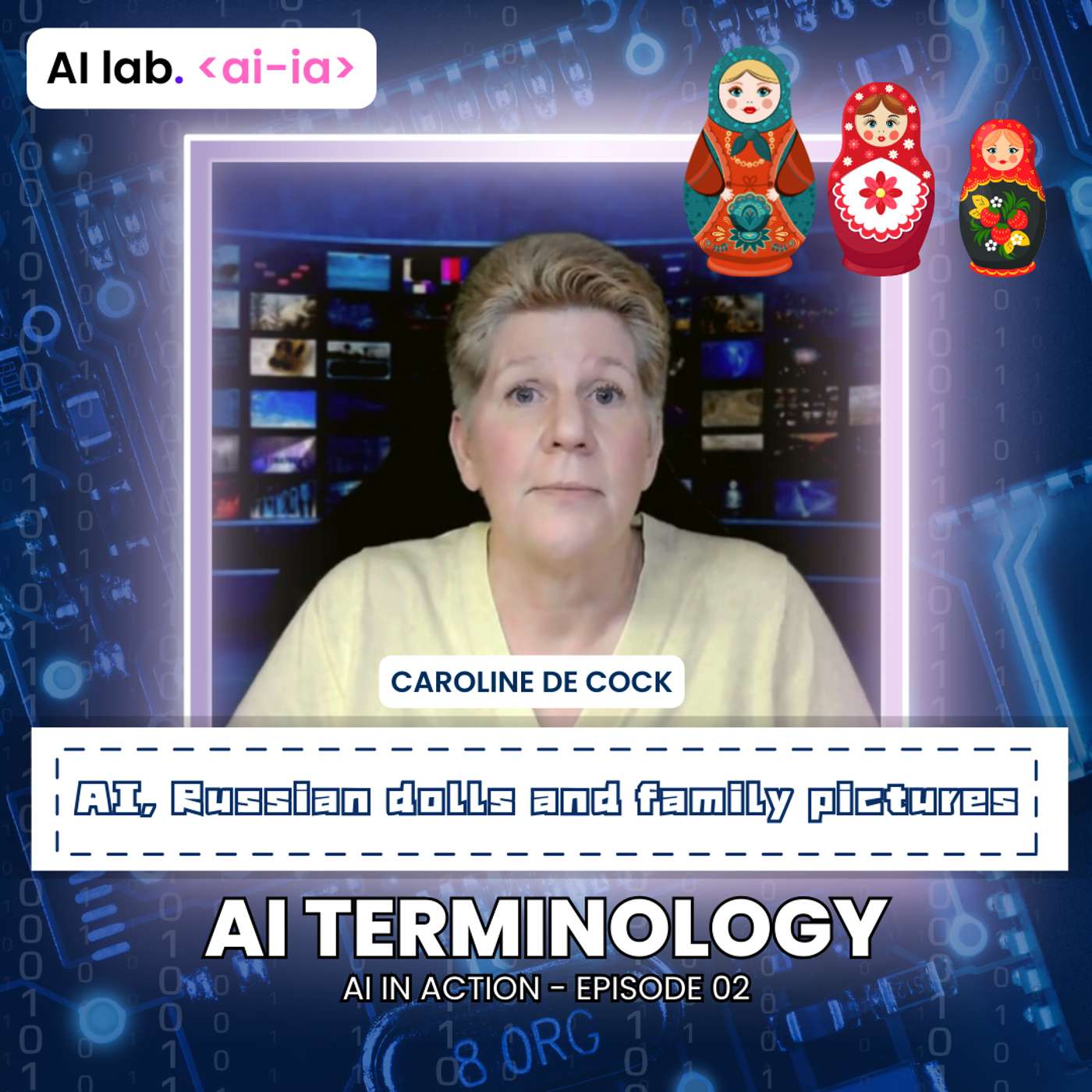 AI lab - AI in Action | Episode 02: AI Terminology | Let’s talk about AI terminology in the second episode in our AI in Action series. The AI term gets thrown around more than a beach ball at a summer picnic, and it’s not always clear what people are talking about. “AI” is to tech what “food” is to a grocery store – sure, it covers a lot, but a hot dog and a filet mignon are pretty darn different when it comes to what they do to your insides. AI is a layered beast, like a high-tech set of Russian nesting dolls. You crack open the biggest one, and bam! There’s another one inside. Read more here:https://informationlabs.org/ai-lab-ai-in-action-episode-02-ai-terminology/ | 10m 49s | ||||||
| 6/18/24 |  AI lab TL;DR | Elisa Giomi - The Unacknowledged AI Revolution in the Media & Creative Industries | 🔍 In this TL;DR episode, Dr Elisa Giomi, Associate Professor at the Roma Tre University and Commissioner of the Italian Communications Regulatory Authority (AGCOM), discusses her recent contribution on Intermedia, the journal of the International Institute of Communications (IIC), titled “The (almost) unacknowledged revolution of AI in the media and creative industries”, with the AI lab📌 TL;DR Highlights⏲️[00:00] Intro⏲️[01:15] Q1 - AI’s impact vs. past revolutions:How does AI’s impact on media and creative industries compare to historical technological revolutions? ⏲️[05:22] Q2 - Navigating AI in media:How should we balance AI’s benefits in combating misinformation vs its potential risks? ⏲️[11:18] Q3 - Balancing copyright & AI:You state that: “[AI] and human intelligence follow [a] not dissimilar logic. So we should not use a double standard to regulate them”. What should a balanced approach to copyright in AI look like?⏲️[17:48] Wrap-up & Outro💭 Q1 - AI’s impact vs. past revolutions🗣️ The [AI] revolution (...) in the media and creative industries, as many previous ones, will probably be declared a revolution only long after it happened.🗣️ AI in the media sector[:] Its disruptive effect goes unnoticed (...), [and] the media and creative industries remain under the radar in the public debate, since they are not among the leading adoption fields.🗣️ Two of the winners of the last Pulitzer Prize for journalism admitted using AI systems in their investigation and getting so many benefits from AI.🗣️ Why the AI revolution looks like the main technological revolutions of the past? Its ability to divide [and] polarise, the public debate between enthusiasts (...) and radical opponents (...).💭 Q2 - Navigating AI in media🗣️ Every technological innovation has been accompanied by a sort of squinting effect which leads to amplifying the distorted uses to the detriment of the more abundant beneficial applications.🗣️ Demonising AI for fear of its side effects would be as if in the past we had refused to switch from the plough to the tractor for fear that the tractor could pollute or run over people and animals.🗣️ AI is not only used to produce fake news and misleading content, but also in fact checking and identifying deepfakes. It is used in fighting disinformation.🗣️ Only by taking into account opportunities and risks at the same time, we will be able to develop a balanced regulation and avoid emergency and radical responses in the wake of moral panics produced by AI misuses.🗣️ The media (...) are likely to shape our perception of the world and to guide other choices, so they should have been included in the [EU AI Act] high-risk sectors.💭 Q3 - Balancing copyright & AI🗣️ I have strong misgivings about the remuneration hypothesis[:] (...) it privileges publishers over any other content producers.🗣️ I’m not sure having different rules for the human and artificial mind makes sense. My conclusion here is that maybe it’s too early to find a solution to the copyright problems raised by AI.🗣️ Any balanced resolution must have two starting points: first, a rigorous analysis of the real value chain (...), and second, (...) [a] precise diagnosis. (...) Regulate only when there is a [real] pathology to be healed.📌 About Our Guest🎙️ Dr Elisa Giomi | Associate Professor at Roma Tre University & Commissioner of the Italian Communications Regulatory Authority (AGCOM) 𝕏 https://x.com/@elisagiomi🌐 International Institute of Communications (IIC) - The (Almost) Unacknowledged Revolution of AI in the Media and Creative Industrieshttps://iicintermedia.org/vol-52-issue-1/the-almost-unacknowledged-revolution-of-ai-in-the-media-and-creative-industries/🌐 AGCOM - Dr Elisa Giomihttps://www.agcom.it/elisa-giomiDr Elisa Giomi is an associate professor at Roma Tre University, Department of Philosophy, Communication and Performing Arts, and a commissioner of AGCOM, the Italian Communications Regulatory Authority. Professor Giomi is the author of a wide array of publications for major Italian and international publishers and peer-reviewed journals.#AI #ArtificialIntelligence #GenerativeAI | 18m 23s | ||||||
| 5/30/24 |  AI lab TL;DR | Derek Slater - What the Copyright Case Against Ed Sheeran Can Teach Us About AI | 🔍 In this TL;DR episode, Derek Slater (Proteus Strategies) discusses his recent blog post on the Tech Policy Press website, titled “What the Copyright Case Against Ed Sheeran Can Teach Us About AI”, with the AI lab📌 TL;DR Highlights⏲️[00:00] Intro⏲️[01:11] Q1 - Legal boundaries & creativity:How to define the boundary between protectable expression and unprotectable building blocks in music & other creative fields?What lessons does this offer for generative AI?⏲️[05:13] Q2 - Consent vs. enclosure:What is enclosure?How can we balance it with consent in regulating AI tools?What guiding principles should policymakers follow to not stifle innovation & creativity?⏲️[09:35] Q3 - Technological impact on art:What is the long-term impact of generative AI on music & artistic expression, as other technological advances ultimately revolutionised creative industries after an initial backlash?⏲️[12:18] Wrap-up & Outro💭 Q1 - Legal boundaries & creativity🗣️ All creativity builds on the past. All songs are made up of a limited number of notes and chords available to the composers [and] to protect their combination would give Let’s Get It On an impermissible monopoly[, the judge said].🗣️ Copyright has always allowed certain uses of existing content (...) by drawing lines between protectable expression and unprotectable ideas, facts, and other elements.🗣️ Rightsholders can demand consent for some uses, but they are not allowed to enclose and cut off the basic building blocks of culture and knowledge.🗣️ Generative AI: (...) it’s a big statistical analysis of lots and lots of texts to derive rules about syntax and how different concepts are related (...) For music, it’s analysing lots and lots of music to tease out those basic building blocks.🗣️ [AI training] can’t be reduced to the simplicity of consent (...) because the question is: consent for what? (...) Deriving insights [and] uncopyrightable elements from protectable expression generally can be permissible.💭 Q2 - Consent vs. enclosure🗣️ We also recognise downsides to [copyright], (...) meaning the public can no longer freely build on and use it. (...) We’ve always had copyright protection but also limits so that enclosure (...) doesn’t go too far.🗣️ When is it unethical to stop people from (...) using basic building block[s] of language or music? Because that information, that knowledge, those cultural artefacts, ought to belong to the public.🗣️ I think from a copyright perspective, the first key principle is: is this protection necessary to encourage creativity (...)? If creativity is already booming, abundant, and would happen anyway (...) then there should not be an issue.🗣️ When we think about generative AI, these are tools for productivity, for creativity, not for piracy (...). They’re not about simply reusing the works that they were trained on in the outputs. (...) That’s considered a bug, a failure (...) and something to be avoided.🗣️ When somebody uses [an AI] tool like Suno or Udio to create a new song, that’s in line with copyright’s purpose. (...) It crosses the line (...) where that output is directly substituting, reusing that communicative expression embodied in some specific work.💭 Q3 - Technological impact on art🗣️ One way to think about [AI] is sort of like the synthesizer, computer-generated graphics or Photoshop, where, at first, people said, this is not music, [or] art, and over time, it became integrated into artistic processes in a variety of ways.🗣️ [2023] Oscar winner, ’Everything Everywhere All at Once’, used the generative AI tool Runway to edit one of its famous scenes. Nobody knew that was generative AI at the time. Nobody said ‘Oh, this is a generative AI movie’, but it was part of their artistic process.🗣️ It’s acknowledged that generative AI is driving an abundance of creativity. (...) So that fundamentally is not at odds with (...) copyright. I think most of the concerns that people have aren’t really copyright problems.🗣️ A lot of creators are worried about how the benefits of [AI] technology will really be spread. Will they be concentrated among a few big companies or benefit [many], including creators? (...) [Those concerns] demand solutions (...) beyond copyright.🗣️ As a fan, I feel like we are in a golden era [with AI]. Now, we just need to make really sure those benefits are widely shared.📌 About Our Guest🎙️ Derek Slater | Co-Founder of Proteus Strategies 𝕏 https://x.com/@derekslater🌐 Tech Policy Press blog posthttps://www.techpolicy.press/what-the-copyright-case-against-ed-sheeran-can-teach-us-about-ai/🌐 Proteus Strategieshttps://www.proteusstrategies.com/ Derek Slater is a tech policy strategist focused on media, communications, and information policy. He is the co-founder of Proteus Strategies and previously worked at Google and at the Electronic Frontier Foundation on issues related to access to information, content regulation, and online safety. | 13m 06s | ||||||
| 5/7/24 |  AI lab - AI in Action | Episode 01: AI History | We are kickstarting our AI in Action series by diving headfirst into the key milestones that led to the gradual deployment of Artificial Intelligence, or AI for short. You might think it's some shiny new invention, looking at all the recent media coverage about robots taking over your jobs and writing bad poetry. But hold on to your Roomba, because AI has been around longer than your grandma’s pocket calculator.Read more & grab the infographic of this timeline here:https://informationlabs.org/ai-lab-ai-in-action-episode-01-ai-history/ | 9m 15s | ||||||
| 4/22/24 |  AI lab TL;DR | Žiga Turk - Brussels is About to Protect Citizens from Intelligence | 🔍 In this TL;DR episode, Professor Žiga Turk (University of Ljubljana, Slovenia) discusses his recent contribution for the Wilfried Martens Centre for European Studies on how “Brussels is About to Protect Citizens from Intelligence” with the AI lab📌 TL;DR Highlights⏲️[00:00] Intro⏲️[01:55] Q1 - Why do you think AI regulation prioritises limiting risks over promoting innovation and freedom of expression? How can governments balance security and privacy with technological innovation?⏲️[05:13] Q2 - You view AI as a 'general technology' that shouldn't be specifically regulated, advocating for technology-neutral laws. What does this mean in practice?⏲️[09:46] Wrap-up & Outro🗣️ The mistake is to try to regulate technology, it is behaviours that have to be regulated. (...) If politicians (...) go about regulating every new technology that appears, they will always be behind the curve.🗣️ The even bigger danger is [the] kind of chilling effect [AI regulation] would have for European industries, people and businesses who will not have access to the latest and greatest AI tools (...).🗣️ Some AI tools are coming to European customers with a delay or not at all. This puts the whole European economy, its citizens [and] its scientists at a disadvantage with their competition.🗣️ Investors would be hesitant. Do I want to invest in [AI] in Europe, which is so tightly regulated?🗣️ I don't think it matters whether you make a deepfake with Photoshop or let AI do it. If deepfakes need to be labelled, they should be labelled regardless of the technology.🗣️ Admire (...) the thinkers and politicians of the Enlightenment era (...) [for] not going “[the printed press] will create all kinds of unacceptable risks, we have to regulate ex-ante (...)”. Instead, they created (...) legislation on freedom of expression.🗣️ In the early days (...), the US created regulation that actually freed Internet companies from some potential dangers of hosting user content on their platforms, which created this whole Internet industry and creativity around platforms.📌 About Our Guest🎙️ Žiga Turk | Professor, University of Ljubljana (Slovenia) 𝕏 https://twitter.com/@zigaTurkEU 🌐 Wilfried Martens Centre for European Studies - Brussels is About to Protect Citizens from Intelligencehttps://www.martenscentre.eu/blog/brussels-is-about-to-protect-citizens-from-intelligence/🌐 Regulating artificial intelligence: A technology-independent approach. European View, 23(1), 87-93https://doi.org/10.1177/17816858241242890 🌐 Prof. Žiga Turkhttps://www.zturk.com/p/english.html Žiga Turk is a Professor at the University of Ljubljana (Slovenia) and a member of the Academic Council of the Wilfried Martens Centre for European Studies. He holds degrees in engineering and computer science. Prof. Turk was Minister for Growth, as well as Minister of Education, Science, Culture and Sports in the Government of Slovenia and Secretary General of the Felipe Gonzalez Reflection Group on the Future of Europe. As an academic, author and public speaker, he studies communication, internet science and scenarios of future global developments, particularly the role of technology and innovation. | 10m 14s | ||||||
Showing 25 of 37
Pitch Fit is a Pro feature
See how bookable this show is for guests, which brands already advertise, the per-episode ad value, and the best-fit guest and sponsor profile. The numbers are blurred on the free plan.
How readily this show books outside guests like you.
How proven this show is for host-read sponsorships.
For Guests
ProFor Advertisers
ProUpgrade to Pro to unlock guest cadence, sponsor categories, fit scores, and per-episode ad value for this show.