

Insights from recent episode analysis
Audience Interest
Podcast Focus
Publishing Consistency
Platform Reach
Insights are generated by CastFox AI using publicly available data, episode content, and proprietary models.
Total monthly reach
Estimated from 1 chart position in 1 market.
By chart position
- 🇺🇸US · Islam#1415K to 30K
- Per-Episode Audience
Est. listeners per new episode within ~30 days
2.5K to 15K🎙 Weekly cadence·176 episodes·Last published 3d ago - Monthly Reach
Unique listeners across all episodes (30 days)
5K to 30K🇺🇸100% - Active Followers
Loyal subscribers who consistently listen
1.5K to 9K
Market Insights
Platform Distribution
Reach across major podcast platforms, updated hourly
Total Followers
—
Total Plays
—
Total Reviews
—
* Data sourced directly from platform APIs and aggregated hourly across all major podcast directories.
On the show
Recent episodes
Shi'a Islam in Colonial India with Prof. Justin Jones | Thinking Islam Ep.15
May 29, 2026
Unknown duration
Who Controls the Story of Power? Islamism & Narrative with Dr Fatemeh Sadeghi | Thinking Islam Ep.14
Apr 16, 2026
Unknown duration
Muslim Rights, Same-Sex Marriage & the Future of Tolerance by Prof. Robert Wintemute | Seminar
Apr 13, 2026
Unknown duration
Why Imam Ali Still Matters: The Prophet’s Heir with Dr Hassan Abbas | Thinking Islam | Ep.13
Mar 9, 2026
Unknown duration
Rumi and the Pure Heart: Reading the Qur’an Existentially with Dr Soroush | Thinking Islam | Ep.12
Feb 20, 2026
Unknown duration
Social Links & Contact
Official channels & resources
Official Website
Login
RSS Feed
Login
| Date | Episode | Description | Length | ||||||
|---|---|---|---|---|---|---|---|---|---|
| 5/29/26 | 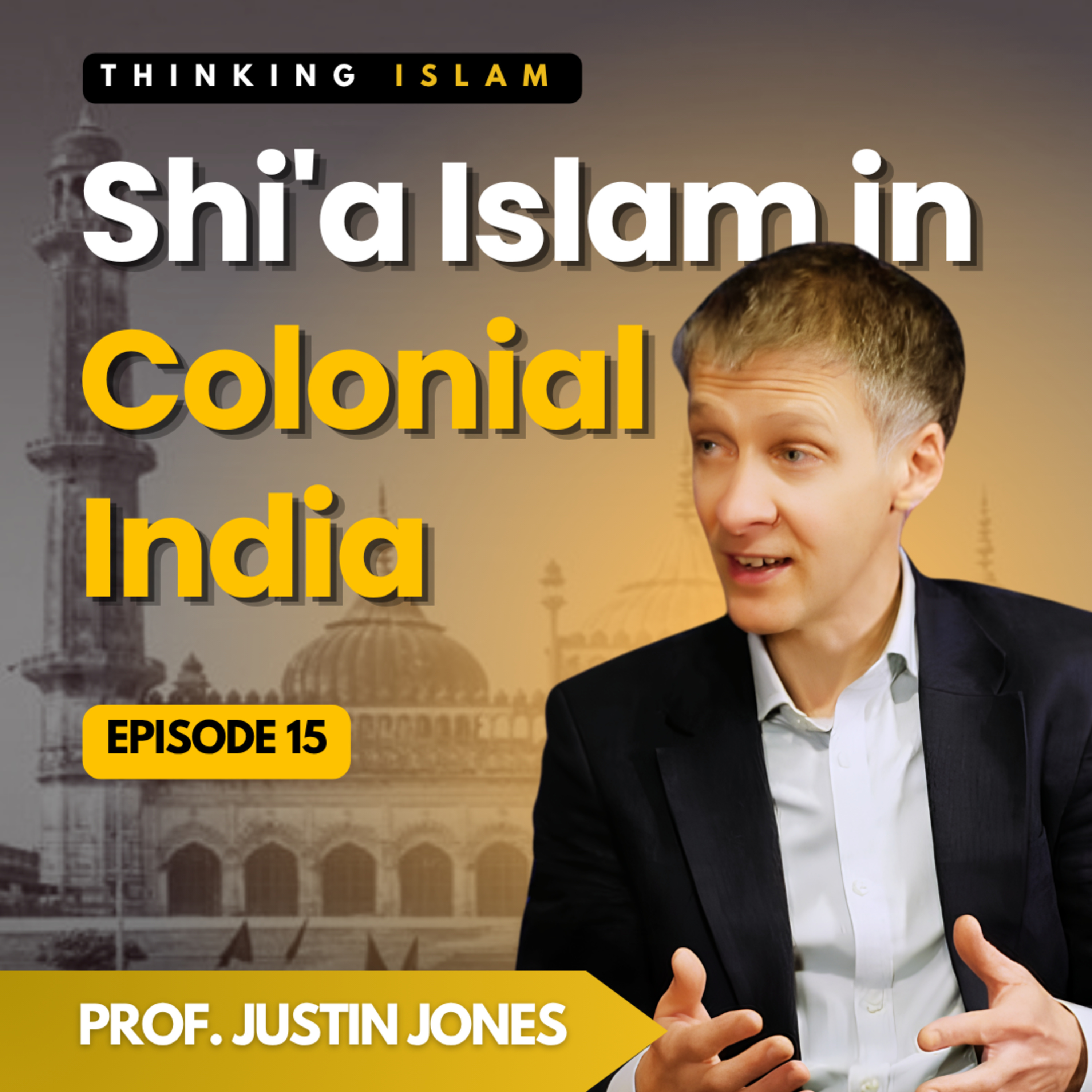 Shi'a Islam in Colonial India with Prof. Justin Jones | Thinking Islam Ep.15 | Were the Shi'as of colonial India at the periphery of the Shi'i religious universe, or did they develop an autonomous identity of their own? What were their hopes and fears about the creation of Pakistan?In this episode of Thinking Islam, we explore the themes of Professor Justin Jones's landmark book Shi'a Islam in Colonial India. The conversation begins by challenging the assumption that Iran and the shrine cities of Iraq form the sole heartland of Shi'ism, and traces the indigenous character of Indian Shi'ism after the fall of Awadh in 1856. We discuss the rise of madrasas, the different categories of ulama and Indian mujtahids who provided autonomous leadership without always looking westward, the consolidation of the Shi'a as a distinct qaum rather than a firqa, and the question of political quietism in their relationship with the British Raj. The discussion then turns to the Pakistan Movement, where Shi'a presence in the Muslim League sat uneasily alongside the deep apprehension that Pakistan would become a "Sunnistan," and the striking alliance between Indian Shi'as and Ambedkar's untouchable movement, where Imam Husain emerged as a universal model for social justice and the struggle against oppression.Professor Justin Jones is a historian of Islam in modern South Asia at the University of Oxford. His research focuses on religious revitalisation, the remaking of religious authority, and the social history of Muslim communities in the subcontinent. His work on Shi'i Islam has opened scholarly conversations on Shi'i religious thought, community formation, and politics from the fall of Awadh to independence in north India.Audio Chapters:0:00 – Highlights01:52 – Why Shi'a Islam in South Asia06:31 – Indian Shi'as in the Shi'i Religious Universe14:00 – Relation with Najaf and Qom25:00 – Role of Ulama and Mujtahids41:27 – Shi'as as a Separate Qaum55:10 – Shi'as and the Pakistan Movement1:03:30 – Imam Husain, Untouchables, & Freedom1:13:43 – Ghulats, Usulis, & Akhbaris in India1:22:00 – Decline of Shi'ism in India?1:32:11 – Thinking Islam Question | — | ||||||
| 4/16/26 | 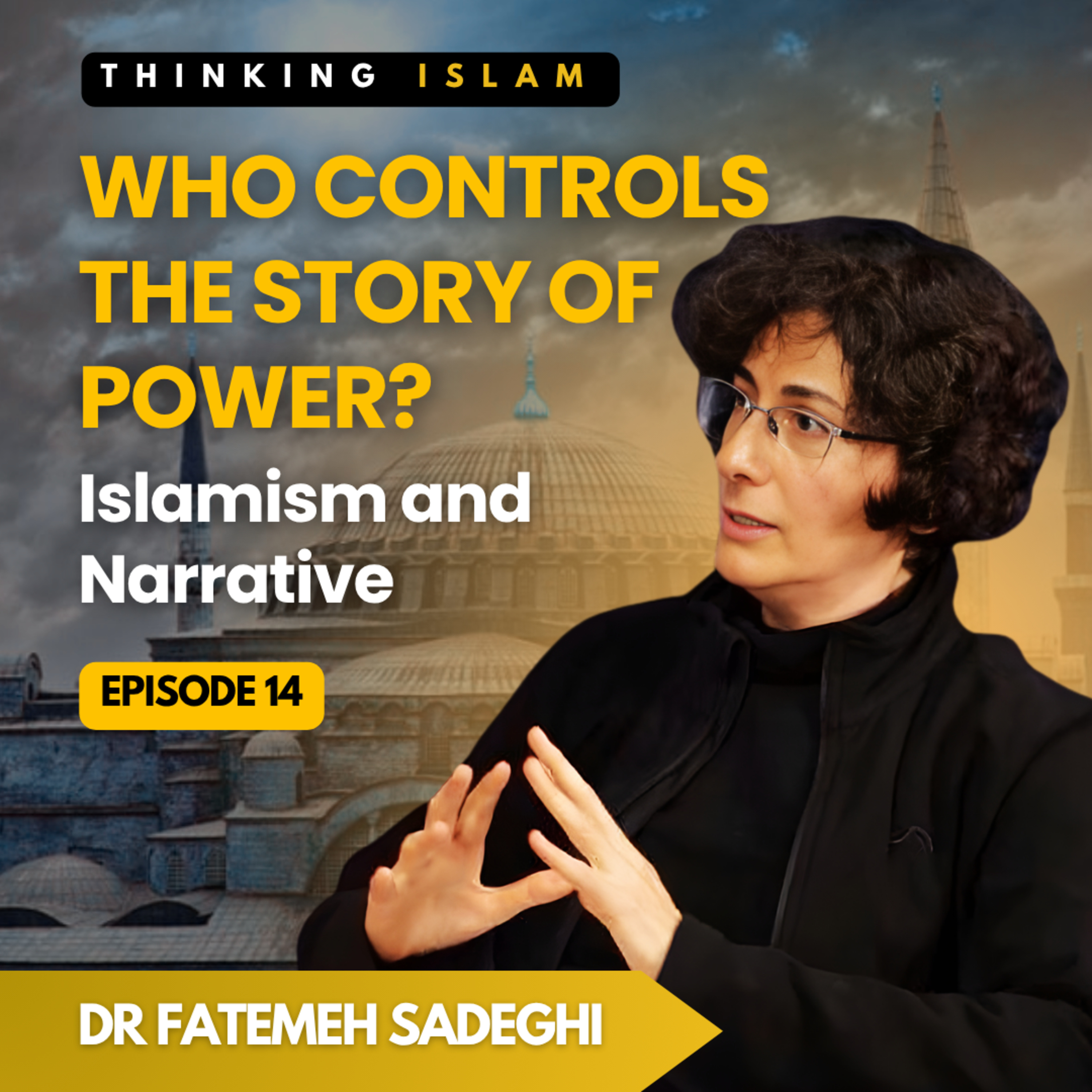 Who Controls the Story of Power? Islamism & Narrative with Dr Fatemeh Sadeghi | Thinking Islam Ep.14 | Is political power built on institutions or on the stories we choose to believe?What is Islamism, and how do political narratives shape power in the Muslim world?In this episode of Thinking Islam, Dr Fatemeh Sadeghi explores Islamism, political narratives, and how storytelling shapes political power and legitimacy. Drawing on both Islamic intellectual traditions and modern social theory, Dr Sadeghi examines how narratives do more than describe reality - they actively shape it. From early Islamic history, where hadith and sīra were used to legitimise authority, to contemporary movements such as Islamism and the far right, we uncover how political stories mobilise people through promises of justice, salvation, and belonging. We also examine the decline of Islamism as a compelling narrative, and the “melancholic condition” it has left behind in many Muslim societies—a space marked by disillusionment, yet still open to new possibilities. The conversation raises a profound question: if all political and even religious commitments are mediated through stories, what kinds of narratives are needed today to sustain hope, dignity, and meaningful collective life?Dr Fatemeh Sadeghi is a sociologist and political theorist at the UCL Institute for Global Prosperity. Her research explores political imagination, gender, and the role of narrative in shaping social order and legitimacy, offering a powerful lens for understanding the moral and political crises of our time.Audio Chapters:00:00 - Highlights01:20 - What is a Narrative?03:05 - Political Narrative: Stories That Shape Power06:39 - Two Kinds of Narratives13:19 - Good vs Evil: ‘Us and Them’17:17 - Isn’t the Quran doing the same thing?23:00 - Nostalgia as a Response to Colonialism30:00 - Can some Narratives Cause more ‘Legitimacy’?36:10 - Living Through a ‘Melancholic’ Moment40:25 - Islamism Moved from Theology to Power43:24 - What Comes After Islamism as a New Narrative?48:30 - Who Creates Narratives when Knowledge is Democratised?56:30 - New ‘Islam’ narratives are still grounded in Morality01:00:50 - Thinking Islam Question | — | ||||||
| 4/13/26 |  Muslim Rights, Same-Sex Marriage & the Future of Tolerance by Prof. Robert Wintemute | Seminar | Can Christian majority societies and Muslim communities find common ground on some of the most contested issues of our time?In this research seminar, Professor Robert Wintemute, Professor of Human Rights Law at King's College London, explores a compelling framework of reciprocal tolerance: if Christian-majority societies continue to legally protect visible Muslim religious practices, can Muslim communities in turn come to accept the secular legal recognition of same-sex marriage?Drawing on landmark case law from the UK, France, Canada, the United States, Germany, and South Africa, Professor Wintemute examines how courts have navigated the tension between institutional neutrality and religious accommodation — from disputes over the niqab and jilbab to the banning of religious symbols in French schools and Québec's public sector. He then turns to the rapid global expansion of same-sex marriage — now legal in 38 countries — and asks what a genuinely pluralistic society might look like when competing rights claims are taken seriously on all sides.Audio Chapters:00:00 Introduction03:12 Majority Acceptance of Visible Muslim Diversity03:24 The Birmingham Case That Changed UK Law10:41 Religious Accommodation in Canada, USA & South Africa13:51 France, Europe & the Secularism Debate24:48 Quebec: Canada's French Exception29:00 Give & Take: Same-Sex Marriage30:08 Criminalisation vs. Recognition Worldwide32:15 Muslim Acceptance of Secular Same-Sex Marriage | — | ||||||
| 3/9/26 | 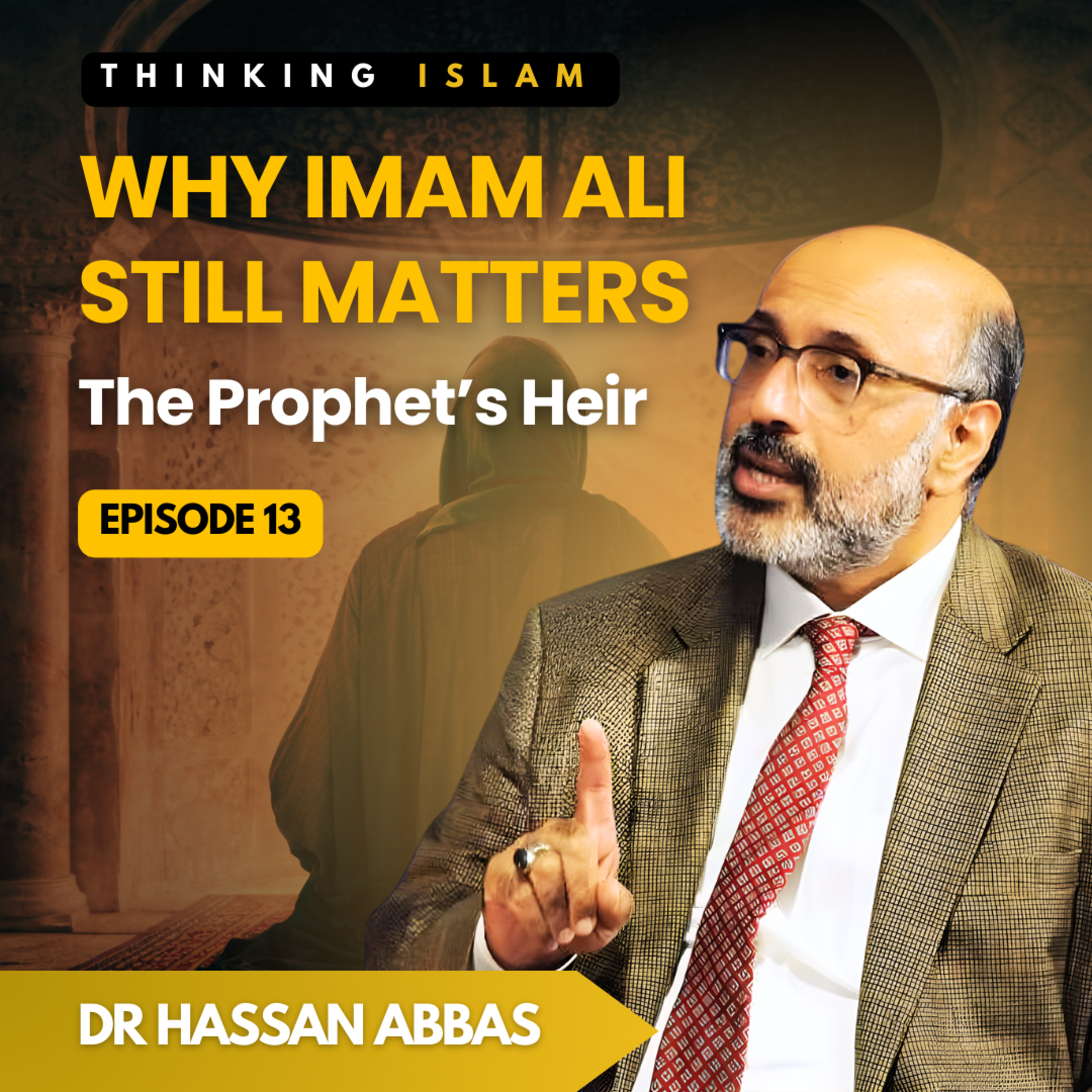 Why Imam Ali Still Matters: The Prophet’s Heir with Dr Hassan Abbas | Thinking Islam | Ep.13 | Is Imam Ali a source of division or the grounds for friendship among Muslims?How did a man who asked that his killer's ropes be loosened in his dying moments become the most contested figure in Islamic history?In this episode of Thinking Islam, we explore Dr Hassan Abbas's acclaimed book, "The Prophet's Heir" through the lens of a policy maker and conflict resolution scholar. Drawing from both Shi'a and Sunni sources, Dr Abbas tells the story of Imam Ali not as a sectarian narrative but as a bridge between traditions. We examine the political dynamics of Saqifa, Ali's radical economic justice, the bias in Western scholarship of Islam, and the paradox of a warrior whose defining qualities were dialogue, selflessness, and forgiveness. In his final moments, struck by a poisoned sword, Ali asked that his killer be treated well, a measure of the justice and forgiveness that Dr Abbas argues makes Ali's legacy not a source of division but a possibility for renewal and unity.Dr Hassan Abbas is Distinguished Professor of International Relations at the National Defence University in Washington, D.C. and a senior adviser at Harvard University's Weatherhead Centre for International Affairs. His research focuses on countering political and religious extremism, rule-of-law reforms, and the intersections of security, politics, and faith in South Asia and the Middle East. "The Prophet's Heir: The Life of Ali ibn Abi Talib," published by Yale University Press, has been widely praised across traditions.Audio Chapters: 0:00 – Highlights 01:32 – Writing a Book on Imam Ali 8:04 – Using Both Shi'a and Sunni Sources 17:23 – The Bias in Western Scholarship 25:35 – An Uncritical Version of Imam Ali? 32:00 – Saqifa Through the Lens of a Policy Maker 43:47 – Did the Companions Fail the Test? 51:28 – Imam Ali as a Diplomat 56:45 – Imam Ali & Economic Justice 1:07:15 – Imam Ali, Dialogue & Egalitarianism 1:16:02 – Imam Ali's Legacy 1:21:05 – Thinking Islam Question | — | ||||||
| 2/20/26 | 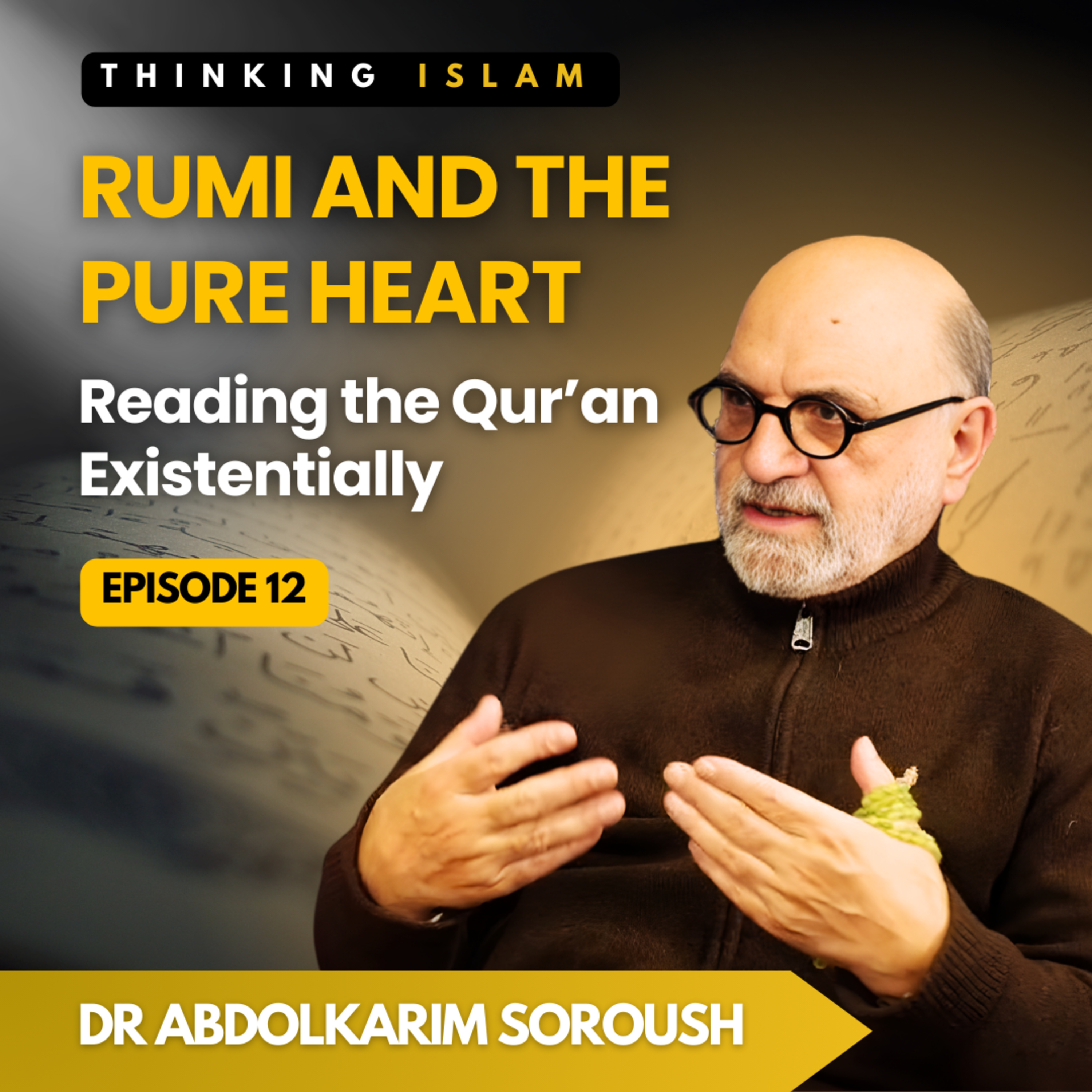 Rumi and the Pure Heart: Reading the Qur’an Existentially with Dr Soroush | Thinking Islam | Ep.12 | How does listening to the Qur'an differ from reading it? What does it mean to approach the Qur'an not with your mind but with your whole existence?In this episode of Thinking Islam, Dr Abdolkarim Soroush proposes an existential encounter with the Qur'an, one that asks us to set aside our assumptions and approach it not as a book of law or philosophy but as maw'iẓa (admonition) that speaks to the whole being. This conversation explores the difference between reading and listening, why Rumi's Mathnawi is called the Persian Qur'an, and what it means to have a pure heart as a precondition for understanding the Qur’an. We delve into how kufr in the Qur'an is not about non-belief but about arrogance before truth, and why, as Dr Soroush tells us, the companion according to Sufis is everything.Dr Abdolkarim Soroush is a distinguished philosopher of religion and a leading voice in Islamic intellectual reform. A Visiting Scholar at the University of Maryland and former Professor at the University of Tehran, he has held visiting positions at Harvard, Princeton, and Yale Universities. Dr Soroush is renowned for his influential work on prophetic experience and his contributions to contemporary Islamic philosophy and Qur'anic hermeneutics.Audio Chapters:0:00 - Highlights01:30 - Relation between Qur’an & Its Reader07:20 - Uneven depth of the Qur’an13:09 - Reading vs Listening to Qur’an24:44 - Existential Reading of the Qur’an32:36 - Losing the Sense of Maw’iza in Translation39:33 - Rumi’s Mathnawi: A Persian Qur’an44:50 - Pure Heart & Qur’an49:17 - Love & Companionship 55:19 - Is Qur’an not a Kitab?58:32 - Thinking Islam Question | — | ||||||
| 1/26/26 | A People's History of Islam: Tales of Mystics, Pilgrims and the Ordinary by Dr Hassan Abbas | Who writes Islamic history — empires and rulers, or ordinary believers?In this research seminar hosted by AMI on 14 January 2026, Dr Hassan Abbas presents insights from his forthcoming book project, A People’s History of Islam. Challenging state-centred and court-sponsored historiography, Dr Abbas explores Islam through the lived faith of pilgrims, mystics, poets, and everyday communities across centuries.Drawing on extensive travels to major pilgrimage sites — from Fez, Konya, and Baku to Lahore, Karbala, and Makkah — the seminar highlights how oral tradition, spirituality, and devotion preserve histories often absent from official archives. Dr Abbas also reflects on the role of mysticism alongside juridical tradition, the challenge of writing accessible yet rigorous scholarship, and the problem of sectarian framing in Western representations of Islam.Speaker:Dr Hassan Abbas is a Distinguished Professor of International Relations based in Washington, DC, and a Senior Advisor at Harvard University’s Project on Shi'ism and Global Affairs. He is the author of The Prophet’s Heir (Yale University Press) and several other widely cited works on Islam and global affairs. | — | ||||||
| 1/15/26 | 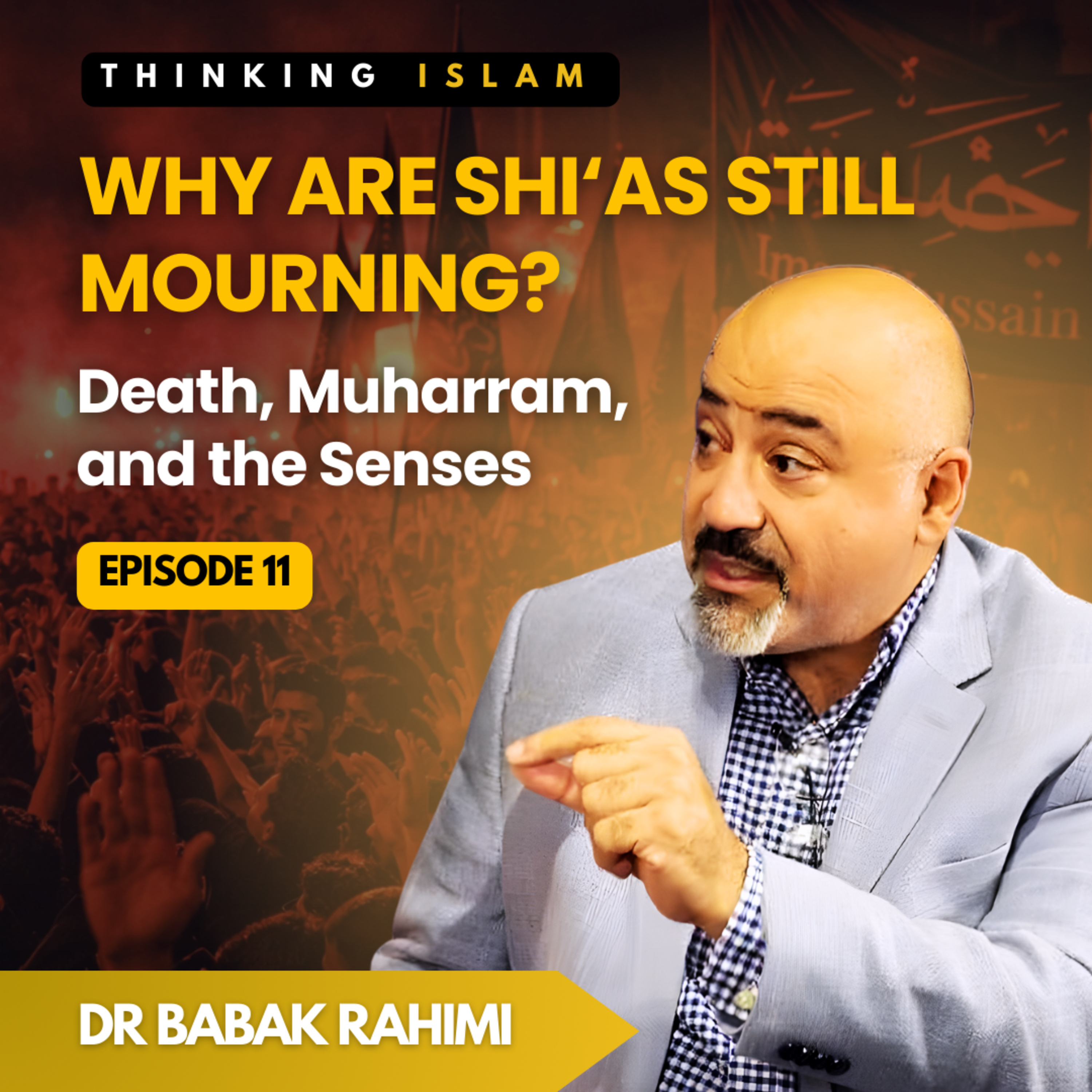 Why Are Shi‘as Still Mourning? Death, Muharram & Senses with Dr Babak Rahimi | Thinking Islam Ep. 11 | Can mourning become a pathway to the divine? Has the modern world sanitised death, and does Muharram insist we don’t look away?Drawing from his forthcoming book Senses of Mourning, Dr Babak Rahimi of UC San Diego asks a question many have wondered, but few have explored: why do Shi'as keep mourning? This episode reveals mourning not as passive grief but as active devotion, a technique for connecting to God through the body, the senses, and collective memory. We explore how modernity's devotion to pleasure has pushed death to the margins, how Muharram insists we confront what modern life conceals, and why the senses are not obstacles to the sacred but pathways toward it. From the festive dimensions of grief to the standardisation of ritual by state and digital platforms, this conversation moves through the space where philosophy meets performance, and where the body becomes a site of hope.Dr Babak Rahimi is an Associate Professor of Communication, Culture and Religion at UC San Diego, where he directs the Program for the Study of Religion and the Middle East Studies Program. His research focuses on sensory religion, public sphere theory, and the historical contexts of early modern Islamicate societies. He is the author of "Theatre-State" and "The Formation of the Early Modern Public Sphere in Iran" (Brill, 2011) and editor of "Performing Iran" (I.B. Tauris, 2021).Audio Chapters: 0:00 – Highlights 01:30 – Why Muharram Performances? 5:50 – Mourning as Religiosity? 18:06 – Mourning as Technique 26:02 – Muharram as Festive Events 36:01 – Role of Senses in Muharram Devotion 46:14 – Panja and Symbolism 51:00 – Memory as a Sense? 57:00 – Gender and Muharram Performances 59:50 – Self-Flagellation as Performance? 1:06:40 – Muharram and the Other 1:11:00 – Why Western Thinkers? 1:19:40 – Modern World and the Sense of Smell 1:24:27 – Digital and the Standardisation of Muharram Rituals 1:38:28 – Thinking Islam Question📖 Get the Book: "Senses of Mourning" by Dr. Babak Rahimi 🔗 Penn Press: https://www.pennpress.org/9781512828344/senses-of-mourning/ 🔗 Amazon UK: https://www.amazon.co.uk/Senses-Mourning-Moharram-Performances-Qajar/dp/1512828343 | — | ||||||
| 12/31/25 | Digital Spiritualism: A New Meaning to Religious Secularism in India by Dr Zairu Nisha | Dr Nisha explores how digital technologies are reshaping religious life in contemporary India. Challenging the strict divide between the secular and the religious, she argues that digital media has given rise to new hybrid forms of belief, practice, and spiritual experience. | — | ||||||
| 12/31/25 | Techno-Gnosticism for the Digital Age: AI, Transhumanism, and the Flight from Embodiment by Professor Michal Valčo | This talk critically examines transhumanism and AI through the lens of Christian theological anthropology. Professor Valčo contrasts visions of technological “optimization” with religious understandings of embodiment, vulnerability, and communion, offering an alternative ethical vision for the digital future. | — | ||||||
| 12/31/25 | Blue Notes and Black Codes: Womanism, Digital Faith, and the Algorithmic Future by Rev. Dr Shonda Nicole Gladden | This talk centres Black women’s digital religious leadership through a Womanist lens. Rev. Dr Gladden explores how digital rituals, online worship, and algorithmic systems intersect with justice, creativity, and resilience in contemporary faith communities. | — | ||||||
Want analysis for the episodes below?Free for Pro Submit a request, we'll have your selected episodes analyzed within an hour. Free, at no cost to you, for Pro users. | |||||||||
| 12/31/25 | Between the ‘Digital’ and the ‘Analogue’: Intergenerational Transformations within Muslim Communities by Professor Sariya Cheruvallil-Contractor | Drawing on major UK and European research projects, this talk explores how digital spaces are reshaping Muslim religious authority, identity, and practice. Professor Cheruvallil-Contractor examines how different generations navigate faith across online and offline worlds. | — | ||||||
| 12/31/25 | Re-making the Human Being according to the Transhumanist’s Image and Likeness by Rev. Ugochukwu Stophynus Anyanwu | This presentation critiques transhumanist visions of remaking humanity through technology. Rev. Anyanwu examines how such ideas challenge religious understandings of human nature, divine providence, and moral limits in an age of rapid technological enhancement. | — | ||||||
| 12/31/25 | Ethics, Human Nature and AI’s Challenge by Dr Rahul Kumar Maurya | This talk explores how classical ethical traditions and religious philosophy can respond to the growing moral challenges posed by artificial intelligence. Drawing on Buddhist thought and contemporary philosophy, Dr Maurya examines whether AI threatens human agency and how ethical frameworks might help safeguard humanity in an increasingly automated world. | — | ||||||
| 12/31/25 | Techno Apocalypse in Islam: Between Utopia and Dystopia by Professor Mahan Mirza | This presentation examines Islamic apocalyptic thought in relation to modern technological change. Professor Mirza explores how digital culture, scientific worldviews, and rapid social transformation shape Muslim imaginaries of the future, offering a balanced theological response beyond fear or utopianism. | — | ||||||
| 12/31/25 | Equivocation and Erosion: How LLMs Undermine Catholic Religious Discourse by Jonathan Karr & Louisa Conwill | This joint presentation investigates how large language models influence Catholic theology and moral reasoning. Karr and Conwill examine how AI systems can blur doctrinal distinctions, while also considering how faith-based ethical frameworks might guide responsible religious uses of AI. | — | ||||||
| 12/31/25 | Technology and the Crisis of Modernity: Romano Guardini, Faith and the Transformations of Power by Professor João J. Vila-Chã | Focusing on the work of Romano Guardini, this talk examines how modern technology reshapes human power, faith, and social structures. Professor Vila-Chã reflects on the loss of authentic human experience and considers how religious thought can help address the dehumanising tendencies of modern technological systems. | — | ||||||
| 12/31/25 | Understanding Digital Othering and Religious Bias in Internet Memes by Professor Heidi A. Campbell | Professor Campbell analyses how internet memes shape public perceptions of religious communities. She explores how humour, stereotypes, and digital culture can reinforce religious bias, while also highlighting how faith communities can critically engage and respond. | — | ||||||
| 12/31/25 | Safeguarding Human Agency in the Age of the Cyber-Leviathan: An Islamic Perspective by Professor Seyed Mohammad Fatemi | Professor Fatemi introduces the concept of the “Cyber-Leviathan” to describe the totalising power of digital surveillance and algorithmic governance. From an Islamic ethical and theological perspective, he argues for rethinking human rights and moral responsibility in order to protect human agency in the digital age. | — | ||||||
| 12/31/25 | On Accountability for the Taking of Human Life: Toward an Interfaith Ethic of Weapons Control by Prof. Esther D. Reed | Professor Reed addresses the ethical challenges of weapons control through Jewish, Christian, and Islamic traditions. She explores how shared moral resources can contribute to contemporary debates on warfare, accountability, and emerging military technologies. | — | ||||||
| 12/31/25 | On the Technicity of Muharram Devotional Performances by Dr Babak Rahimi | Dr Rahimi explores Muharram rituals as embodied, technical practices that shape religious experience and communal life. By examining devotional performance, material culture, and sensory engagement, he shows how religious traditions adapt and endure through specific technologies of practice. | — | ||||||
| 12/31/25 | Engaging Technology from Noodiverse and Local Perspectives by Professor Arvind-Pal S. Mandair | This presentation challenges instrumental views of technology by drawing on Sikh philosophy and global traditions of thought. Professor Mandair explores how alternative models of individuation and spirituality can reshape our relationship with technology beyond modern Western frameworks. | — | ||||||
| 12/29/25 | Infertility, Technology, & Muslim Women in India | Dr Zairu Nisha | Research Seminar | In this Research Seminar, Dr Zairu Nisha (University of Delhi) explores infertility among Muslim women in India through feminist bioethics and phenomenology. She introduces the concept of the body as a site of moral injury, showing how reproductive expectations, religious belief, and assisted reproductive technologies shape women’s moral identities and lived experiences.Drawing on thinkers such as Maurice Merleau-Ponty and Simone de Beauvoir, Dr Nisha challenges mind–body dualism and argues that the body is not separate from the self, but a moral subject formed through relationships with others. When infertility disrupts social and religious expectations of womanhood and motherhood, women experience guilt, shame, and alienation — not because of moral failure, but because they are caught between conflicting moral worlds.Read more or watch the full seminar:Audio Chapters:0:00 - Introduction2:40 - Self and Body Dichotomy04:53 - The Lived-Body in a Lived World07:35 - Embodiment and Moral Injury 12:27 - Female Body and Reproduction15:30 - Infertility and Moral Problem17:55 - Technology and Motherhood22:24 - Muslim Women and Reproduction25:26 - Conclusion: Towards Moral Repair | — | ||||||
| 12/22/25 | The Politics of Narrative: Making & Unmaking Political Legitimacy with Dr Fatemeh Sadeghi | Research Seminar | How do stories create political power? Why do narratives matter in shaping legitimacy, justice, and belonging? In this Research Seminar, Dr Fatemeh Sadeghi (University College London – Institute for Global Prosperity) examines the powerful role of narratives and storytelling in legitimising political authority. Drawing on examples from Islamism, nationalism, and contemporary far-right populism, she shows how political stories do not merely reflect power but actively produce it. The seminar explores how movements mobilise ideas of moral renewal, nostalgia, and collective identity to justify authority, and how these same narratives can both inspire emancipation and reproduce exclusion or authoritarianism. Dr Sadeghi also situates these dynamics within an “age of crisis,” marked by inequality, political disillusionment, and declining trust in institutions, where emotional resonance increasingly replaces ideology as the basis of legitimacy.Read more, or watch the full seminar:https://ami.is/sadeghi-seminarAudio Chapters:0:10 - Introduction01:29 - What is Narrative? 04:02 - Types of Narrative in Islamic Culture08:46 - Storytellers & Storytelling15:10 - Significance of Narratives in Politics17:45 - Examples of Political Narratives 31:49 - The Age of Crisis and the Future of Politics | — | ||||||
| 12/11/25 | 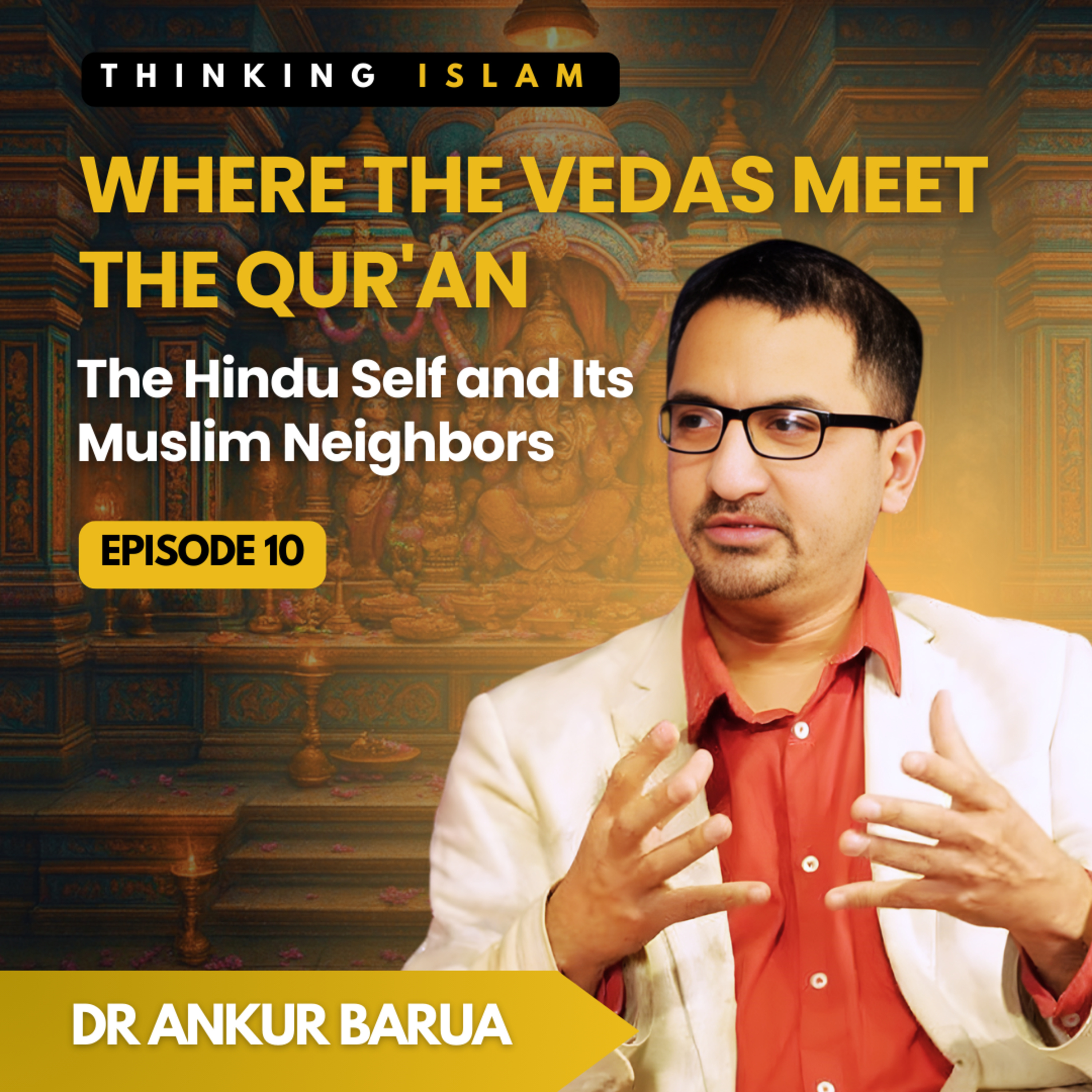 Where Vedas Meet Qur'an: Hindu Self & its Muslim Neighbours with Dr Ankur Barua | Thinking Islam | Ep.10 | If God is everywhere, why can't God be in an image? If devotion dissolves the self before the Beloved, what remains to draw the line between Hindu and Muslim? And can we ever find an answer to suffering that satisfies both the heart and the mind? Drawing from his acclaimed book, "The Hindu Self and Its Muslim Neighbors," Dr Barua guides us through the shared devotional languages of Bhakti and Sufi traditions. He reveals how figures like Kabir, Tagore, Nazrul Islam, and Nusrat Fateh Ali Khan inhabited spaces of “creative ambiguity” that transcended rigid boundaries. This episode explores Dr Barua’s journey from physics to metaphysics, delving into the theology behind “idol worship” and the intersection of quantum mechanics and religious truth. It invites us to discover profound resonances and honest tensions between two great spiritual traditions. Dr Ankur Barua is a Senior Lecturer in Hindu Studies at the Faculty of Divinity, University of Cambridge. He researches the conceptual constellations and the social structures of the Hindu traditions, both in premodern contexts in South Asia and in colonial milieus where multiple ideas of Hindu identity were configured along transnational circuits between India, Britain, Europe, and USA. In recent years, his research focus has moved to an exploration of the intersections between the idioms of bhakti, yoga, tawḥīd, and taṣawwuf on the multiply-stratified postcolonial landscapes of South Asia.Audio Chapters: 0:00 – Highlights 1:23 – From Physics to Metaphysics 12:30 – Language of Science vs Language of Religion 19:10 – Are There Revelations in Hinduism?24:50 – On Infallibility of the Vedas 28:28 – Revelation in Hinduism and Abrahamic Traditions 33:16 – Between Monotheism and Idol Worship in Hinduism 45:07 – Idol Worship and Muslims 47:15 – Why Muslim Neighbours? 55:52 – Muslims as Foreigners 1:04:45 – Bhakti and Sufi Love 1:17:01 – Quantum Mechanics and Truth of Religion 1:23:10 – Religion and Meaning for Modern Individuals 1:28:46 – Thinking Islam QuestionMentioned in This Episode: "Images of the Unimaginable God" by Dr Ankur Barua: https://renovatio.zaytuna.edu/article/images-of-the-unimaginable-god "The Hindu Self and Its Muslim Neighbors" by Dr Ankur Barua: https://www.bloomsbury.com/us/hindu-self-and-its-muslim-neighbors-9781793642585/ "Form and Essence" by Shaykh Arif: https://www.shaykharif.com/blog/impurity?categoryId=24615 | — | ||||||
| 11/14/25 | Ghazālī and Rāzī on Miracles and the Occult by Dr Muhammad Fariduddin Attar | In this episode, Dr Attar explores how two major theologians — al-Ghazālī and Fakhr al-Dīn al-Rāzī — challenged the idea that miracles serve as proof of prophethood. Drawing on their engagement with the occult sciences, Dr Attar shows how both thinkers believed that extraordinary acts could be imitated by magicians and thaumaturges, raising new questions about what truly verifies a prophet. He concludes by proposing an Avicennian reinterpretation of miracles as signs of an elevated prophetic soul rather than evidentiary proofs. | — | ||||||
Showing 25 of 111
Sponsor Intelligence
Sign in to see which brands sponsor this podcast, their ad offers, and promo codes.
Chart Positions
1 placement across 1 market.
Chart Positions
1 placement across 1 market.