

Insights from recent episode analysis
Audience Interest
Podcast Focus
Publishing Consistency
Platform Reach
Insights are generated by CastFox AI using publicly available data, episode content, and proprietary models.
Most discussed topics
Brands & references
Total monthly reach
Estimated from 4 chart positions in 4 markets.
By chart position
- 🇬🇧GB · Parenting#50100K to 300K
- 🇪🇸ES · Parenting#20100K to 300K
- 🇸🇪SE · Parenting#3630K to 100K
- 🇮🇪IE · Parenting#573K to 10K
- Per-Episode Audience
Est. listeners per new episode within ~30 days
117K to 355K🎙 ~2x weekly·59 episodes·Last published today - Monthly Reach
Unique listeners across all episodes (30 days)
233K to 710K🇬🇧42%🇪🇸42%🇸🇪14%+1 more - Active Followers
Loyal subscribers who consistently listen
93K to 284K
Market Insights
Platform Distribution
Reach across major podcast platforms, updated hourly
Total Followers
—
Total Plays
—
Total Reviews
—
* Data sourced directly from platform APIs and aggregated hourly across all major podcast directories.
On the show
From 11 epsHost
Recent guests
Recent episodes
Dean Quinton - My ADHD Story
Jun 26, 2026
Unknown duration
ADHD & Hypermobility: The Body–Brain Link
Jun 12, 2026
54m 17s
Friendship Skills for Neurodivergent Adults
May 29, 2026
59m 26s
Susie Verrill - My Parenting Story
May 15, 2026
41m 00s
My ADHD Story - Battling Menopause
May 1, 2026
40m 27s
Social Links & Contact
Official channels & resources
Official Website
Login
RSS Feed
Login
| Date | Episode | Topics | Guests | Brands | Places | Keywords | Sponsor | Length | |
|---|---|---|---|---|---|---|---|---|---|
| 6/26/26 | 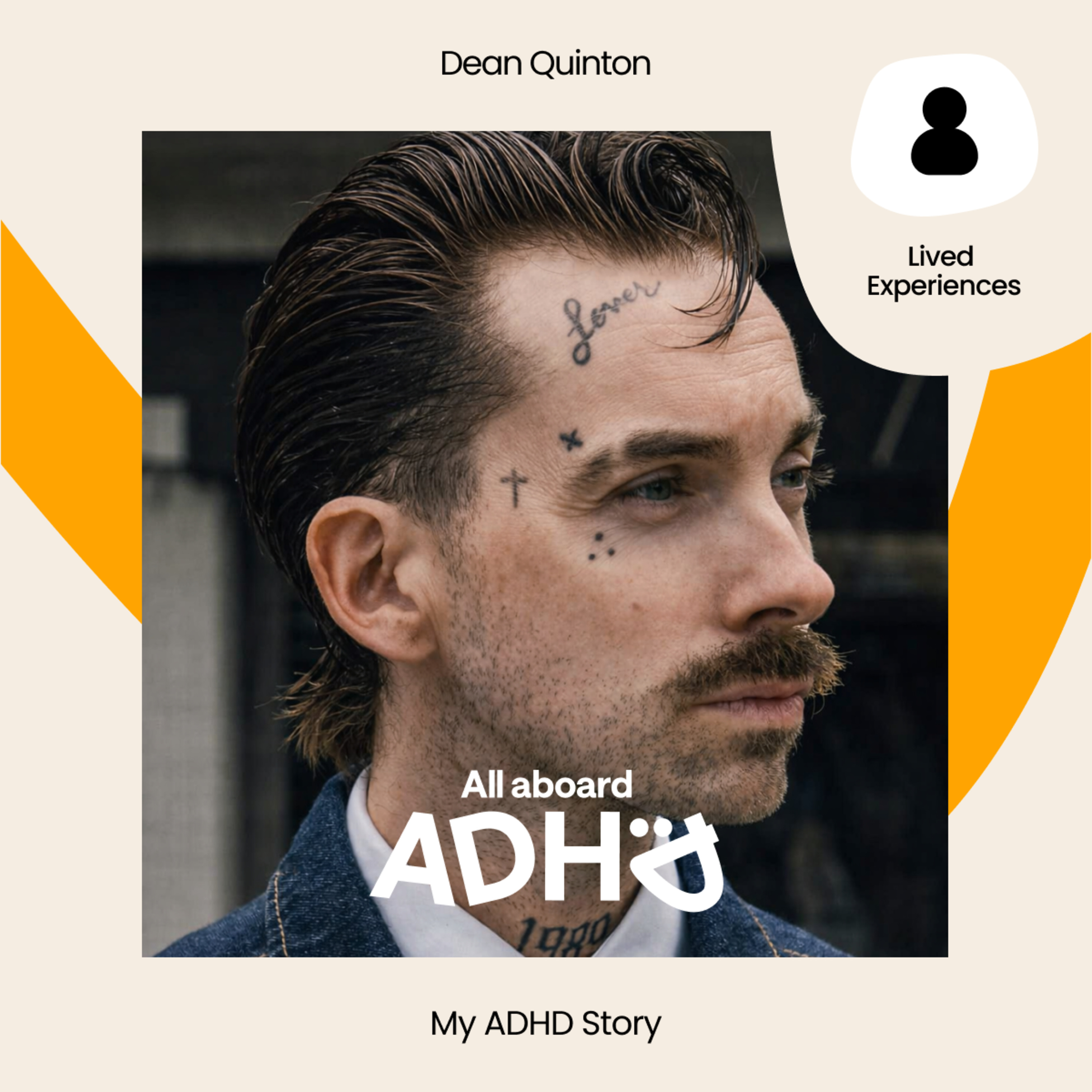 Dean Quinton - My ADHD Story | How can a late ADHD diagnosis reshape your understanding of your childhood, identity, and future - especially when you’re also navigating queerness, creativity, and being “the hyper kid” who never quite fit the school system?In this episode of All Aboard ADHD, Claire talks to Dean Quinton - UK broadcaster, radio presenter, Big Brother 2024 housemate, and LGBTQ+ advocate. Newly diagnosed with ADHD at 37, Dean shares how “everything finally clicked into place,” from school struggles and sleepless nights to creative careers, queer identity, and a deep drive to help young people feel seen. Together they discuss:🧭How Dean first recognised his ADHD: working in a school with SEND students and being affectionately called “obviously ADHD” by both pupils and friends.🎭His school experience as an undiagnosed child: not sitting still, constant talking, being told “he’s intelligent, but he doesn’t listen”, yet thriving in art, drama and music.🏷️Internalised labels and adult self‑doubt: how years of being seen as disruptive or lazy turned into feeling “I’m not intelligent enough”, which held him back from jobs and opportunities.😴Sleep, sensory needs and the ADHD brain at night: lifelong insomnia, racing thoughts, and why background noise like a bedroom fan or ADHD sleep playlists can make all the difference.🎙️Creativity as a superpower from radio to barbering and beyond: hyperfocus, seeking perfection, being entertaining on air, and refusing to live “in a box” - “I can’t do numbers all day, but I can entertain the masses”.🏳️🌈Queer, neurodivergent and finding your chosen family: Pride, representation, and how being open and authentically you, creates visibility that helps others come out and seek support.❤️Parenting, education and what kids really need: why love, acceptance and flexible schooling matter more than grades - “You don’t realise how much just loving and accepting that child will change their entire life”.If you were ever “too much” as a kid, if your child is both neurodivergent and queer, or if you’ve wondered whether a late ADHD diagnosis will help explain your whole life story, Dean’s honest, colourful, and hopeful reflections will leave you feeling seen, and remind you there is nothing wrong with your brain.Further resources & linksFollow Dean on Instagram @deanquinton Youth Charity: It Gets Better UK - positive stories and support for LGBTQ+ young people: https://www.itgetsbetter.org.uk/ GlitterBeam Radio - Proud to be Different: https://www.glitterbeam.co.uk/ADHD coaching and resources from Claire: https://allaboardadhd.comFollow Claire on Instagram and TikTok: @allaboardADHDThe views shared in this episode are those of the guest, based on their professional expertise and personal experience. This content is for informational purposes only and is not a substitute for professional medical, educational, or psychological advice. Please consult a qualified professional for personalised support relevant to your individual circumstances. | — | ||||||
| 6/12/26 |  ADHD & Hypermobility: The Body–Brain Link✨ | ADHDhypermobility+4 | Dr Jessica Eccles | Brighton and Sussex Medical School | — | ADHDhypermobility+7 | — | 54m 17s | |
| 5/29/26 |  Friendship Skills for Neurodivergent Adults✨ | neurodivergent friendshipsADHD+5 | Caroline Maguire | Why Will No One Play With Me?Friendship Skills for Neurodivergent Adults | — | neurodivergentfriendship skills+7 | — | 59m 26s | |
| 5/15/26 |  Susie Verrill - My Parenting Story✨ | parentingADHD+4 | Susie Verrill | NHS | — | ADHDautism+7 | — | 41m 00s | |
| 5/1/26 |  My ADHD Story - Battling Menopause✨ | ADHDmenopause+4 | Sharon Worth | Meno-Wars: Battling the Menopause with ADHD | — | ADHDmenopause+7 | — | 40m 27s | |
| 4/17/26 |  ADHD & OCD✨ | ADHDOCD+3 | Professor Per Hove Thomsen | All Aboard ADHD | — | OCDADHD+7 | — | 54m 55s | |
| 4/3/26 |  Alyssa Kyria - My ADHD Story✨ | ADHD diagnosisself-compassion+4 | Alyssa Kyria | The Funny Mummy | — | ADHDlate diagnosis+6 | — | 37m 20s | |
| 3/20/26 |  ADHD Parental Burnout✨ | parental burnoutADHD parenting+4 | Dr. Claire Plumbly | Burnout | — | parental burnoutADHD+5 | — | 56m 37s | |
| 3/6/26 |  ADHD Masking in Girls & Women✨ | ADHD maskinggirls and women+3 | Ana-Maria Butura | King’s College London | — | ADHDmasking+6 | — | 1h 07m 13s | |
| 2/20/26 |  DJ Fat Tony - My ADHD Story✨ | ADHDrecovery+4 | DJ Fat Tony | I Don't Take RequestsRecover Me | — | ADHDaddiction+5 | — | 49m 47s | |
Want analysis for the episodes below?Free for Pro Submit a request, we'll have your selected episodes analyzed within an hour. Free, at no cost to you, for Pro users. | |||||||||
| 2/6/26 |  GCSE Revision for ADHD Brains✨ | GCSE revisionADHD+5 | Sarah Kennett | Science Cafe | — | ADHDGCSE revision+5 | — | 54m 51s | |
| 1/23/26 |  From ADHD Screening to Support✨ | ADHDneurodivergence+4 | Adam Dance | Liberal DemocratNeurodivergence (Screening and Teacher Training) Bill | — | ADHDneurodivergence+8 | — | 43m 51s | |
| 1/9/26 | 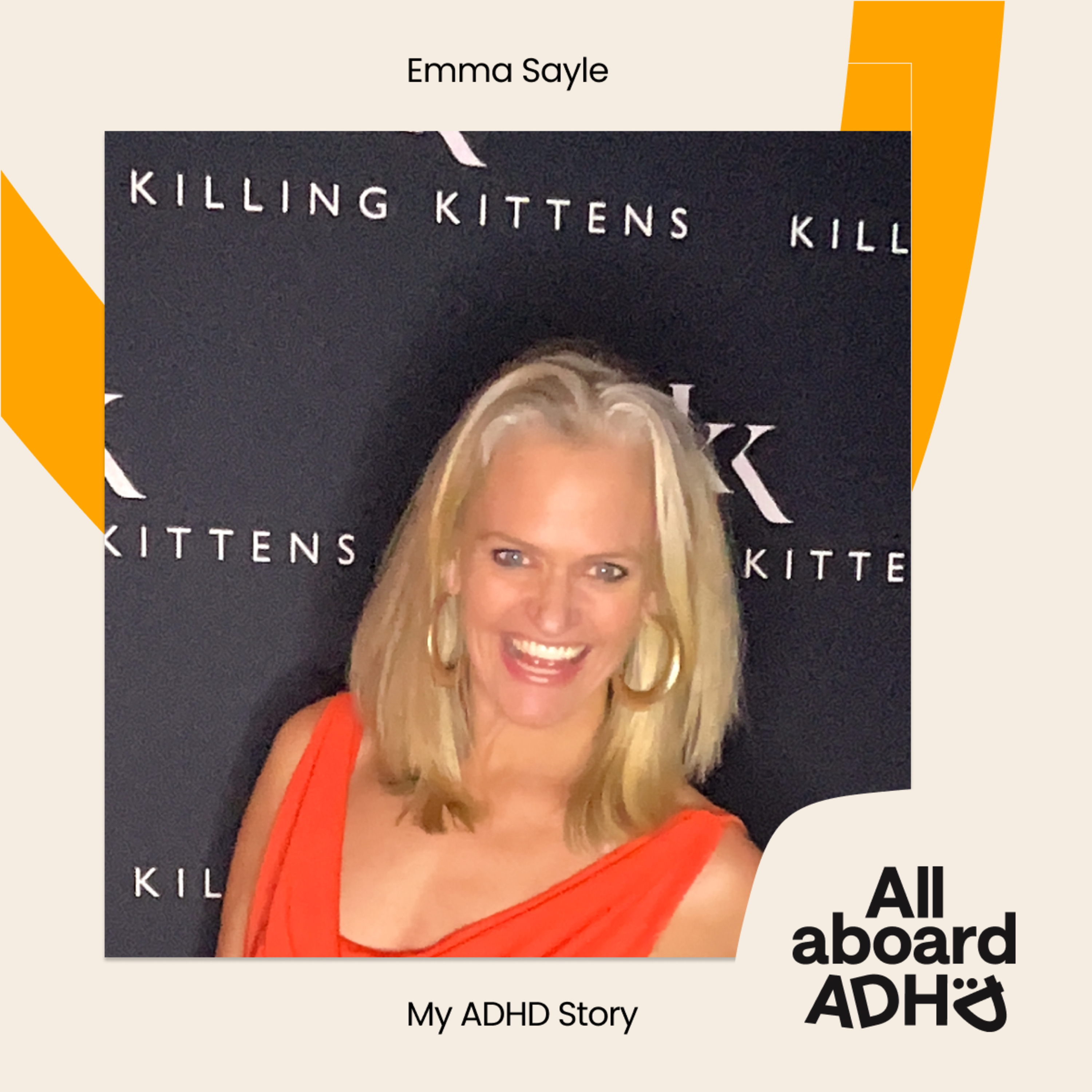 Emma Sayle - My ADHD Story | What happens when you finally understand your ADHD and how can that insight reshape how you see your past, your work, and your parenting?In this episode of All Aboard ADHD, Claire is joined by Emma Sayle, one of the UK’s leading female entrepreneurs and founder of the global female empowerment brand Killing Kittens, which now has over 200,000 members with events across the globe. Diagnosed with ADHD in her early 30s, Emma shares her personal story of growing up undiagnosed, building multiple businesses, and parenting three neurodivergent children, all while learning to understand her own ADHD brain.Emma reflects honestly on how receiving an ADHD diagnosis helped her reframe decades of lived experience, from school and relationships to risk-taking, ambition, and burnout. She explores the cost of masking, the pressure placed on high-achieving women, and how traits once labelled “too much” have become core strengths in her adult life.Together, Claire and Emma explore:What led to Emma’s ADHD diagnosis in adulthood, and how finally having an explanation reshaped her understanding of herselfHow reflecting on childhood and school experiences through an ADHD lens brought clarity, compassion, and perspectiveWhy ADHD in girls and women is so often missed, and how gendered expectations influenced how Emma was perceivedThe ADHD challenges Emma experienced growing up that later became strengths in leadership, creativity, and entrepreneurshipHow stimulation-seeking, future-focused thinking, and high energy shaped Emma’s career path and business successWhy environment plays a crucial role in focus, wellbeing, and balance, often more than motivation or disciplineHow understanding her own ADHD has transformed the way Emma parents her children, particularly around empathy and connectionA reassuring message for parents navigating the ADHD journey, especially those wishing they had answers soonerThis episode is candid, reflective, and deeply reassuring, offering hope to parents and adults who are still making sense of their own ADHD story, while navigating the responsibility of raising neurodivergent children.Learn more about Emma Sayle and her work:Killing Kittens: https://www.killingkittens.comThe Sisterhood: https://www.thesisterhood.co.ukTo order a copy of the book Unstoppable by Design which features chapters on both Emma and Claire’s ADHD stories: https://amzn.to/4qa0t2nADHD coaching and resources from Claire:https://allaboardadhd.comFollow Claire on Instagram & TikTok:@allaboardADHDThe views shared in this episode are those of the guest, based on their professional expertise and personal experience. This content is for informational purposes only and is not a substitute for professional medical, educational, or psychological advice. Please consult a qualified professional for personalised support relevant to your individual circumstances. | — | ||||||
| 12/26/25 | 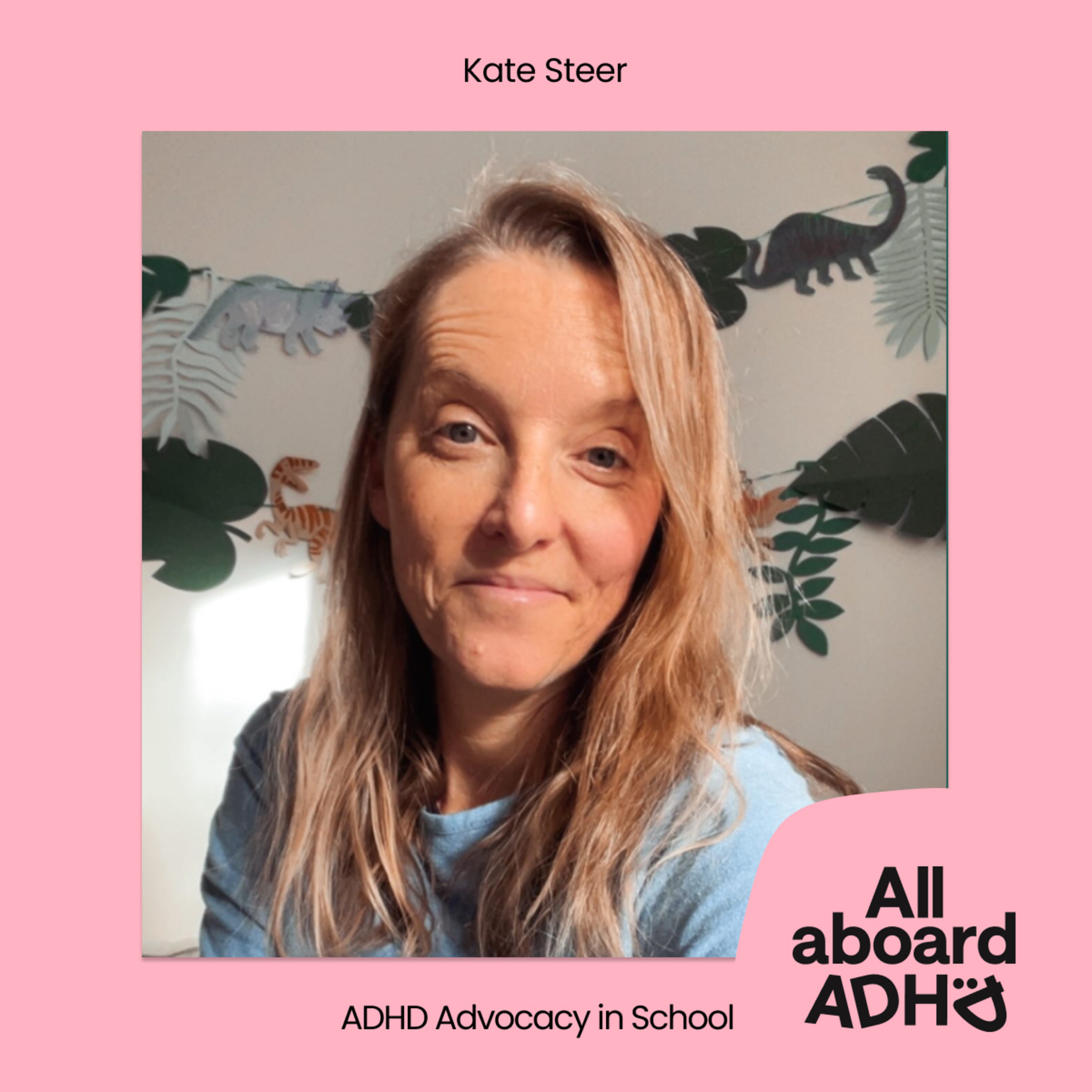 ADHD Advocacy in School | How can parents better partner with schools and protect their kids’ capacity?In this episode of All Aboard ADHD, Claire is joined by expert guest Kate Steer to discuss the daily challenges faced by neurodivergent children in the classroom, and how we as parents can partner positively with schools to better support our children's needs. Kate is a neurodivergent family coach, education consultant, former teacher, and founder of Nurtured Neuro Kids. She specialises in supporting children with autism and ADHD, alongside their families.Claire and Kate discuss:What it’s like being “That Parent” and how a reframe can help to see advocating for your child, as a badge of honourWhy “just coping” through school isn’t good enough for our children and how rigid, one-size-fits-all systems can put neurodivergent kids at a disadvantageThe impact of flexibility and interest-led learning in school, plus why school policy often creates a barrier - for example using children’s interests (e.g. rollercoasters or dinosaurs) to unlock motivation vs how whole-school rules (e.g. no laptops until Year 5) can often block support that could benefit all childrenUnderstanding reasonable adjustments as a legal entitlement under the Equality Act, plus how to identify your child’s biggest challenges and advocate for what they needThe potential sensory triggers our kids encounter throughout the school day and how they can be supported within the classroom to help regulation with accommodations like movement breaks and fidgets (which are “tools, not toys”!)Practical tips to support children with their home routines, capacity and after-school decompression, such as keeping demands low and having lots of snacks available!Ideas for smoother transitions, for example, navigating drop-offs and “making the unfamiliar feel familiar” when going back after the school holidaysThis episode is honest, validating, and essential listening for any parent standing up for their neurodivergent child within a system that often doesn’t fit or suit their needs. Kate encourages parents to trust their instincts, parent the way their child needs, and find their community.Kate’s home-educated neurodivergent son is patiently playing off camera whilst she and Claire recorded this conversation, so you will hear some toy noises in the background.Further resources and linksLearn more about Kate Steer: https://www.nurturedneurokids.com/Follow Kate on Instagram: @nurturedneurokidsFor more information on understanding reasonable adjustments as a legal entitlement under the Equality Act, listen to the All Aboard ADHD Episode “SEN at School” with Laurent Lambert https://www.allaboardadhd.com/blog/sen-at-school-senco-lauren-lambert EBSA is a term used to describe children and young people (CYP) who experience challenges in attending school due to negative feelings (such as anxiety). Find out more here: https://www.supportservicesforeducation.co.uk/page/20029 ADHD coaching & resources from Claire: https://allaboardadhd.comFollow Claire on Instagram & TikTok: @allaboardADHDThe views shared in this episode are those of the guest, based on their personal experience and professional expertise. This content is for informational purposes only and is not a substitute for professional medical, educational, or psychological advice. Please consult a qualified professional for personalised support relevant to your individual circumstances. | — | ||||||
| 12/12/25 | 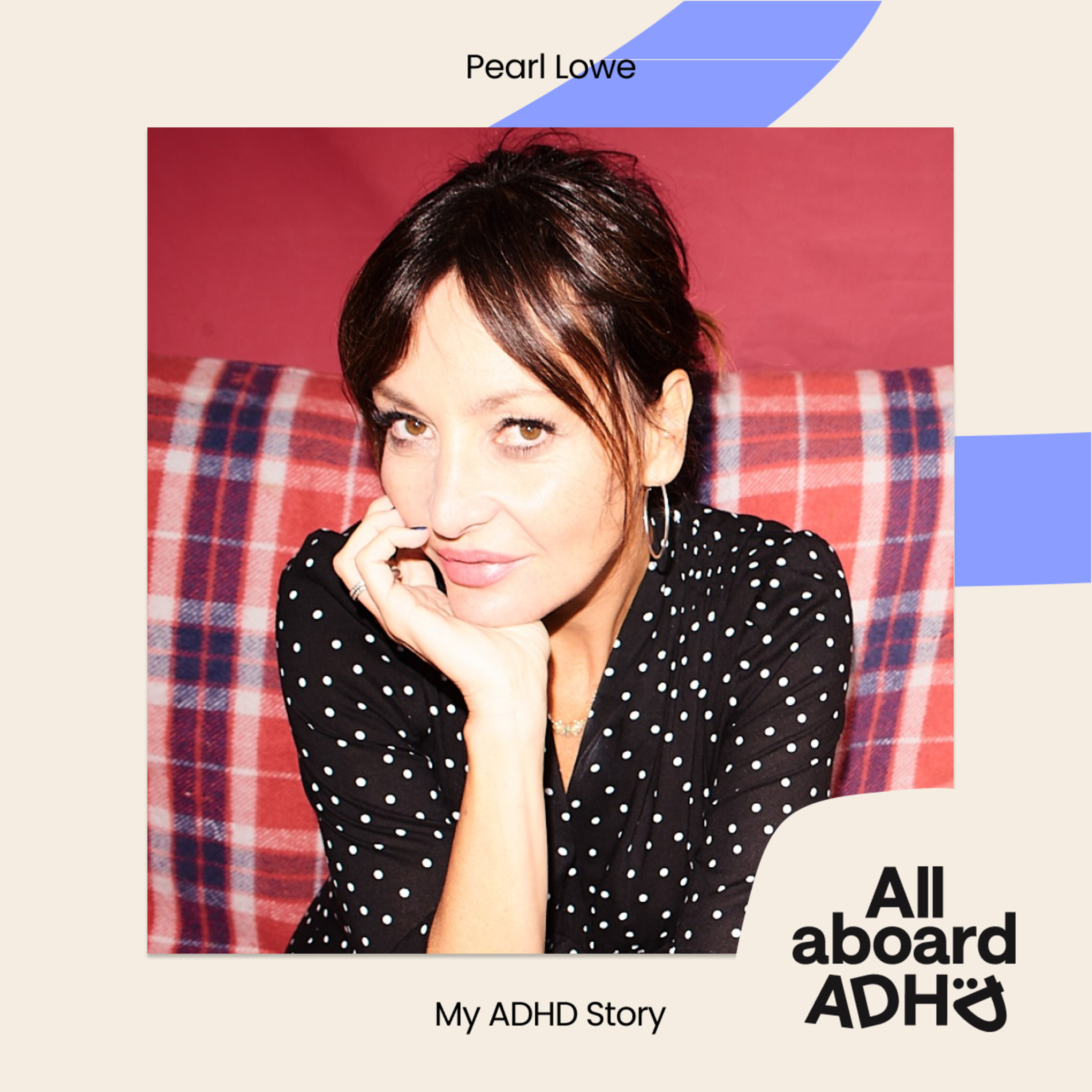 Pearl Lowe - My ADHD Story | How can understanding ADHD later in life reshape everything you thought you knew about yourself, your struggles, your creativity, and the choices that shaped your past?In this episode of the All Aboard ADHD podcast, Claire is joined by Pearl Lowe - designer, author, former musician, and creator of the beloved Faded Glamour interiors books. Known for her distinctive vintage aesthetic and her ability to transform spaces with character and soul, Pearl opens up about an entirely different kind of transformation: receiving an ADHD diagnosis in adulthood and finally making sense of a lifetime of intensity, sensitivity, and creative chaos.Pearl shares her journey from growing up as an undiagnosed neurodivergent child in the 70s and 80s, to navigating the music industry, addiction, motherhood, and years of living at full speed, all without understanding her neurodivergence. Her diagnosis brought clarity, compassion, and a new way of relating to herself, her environment, and her family.Together, Claire and Pearl explore:How Pearl’s ADHD diagnosis in midlife helped her make sense of her childhood, her emotional world, and the overwhelm she experienced navigating school, relationships, and early fameThe impact of growing up as an undiagnosed neurodivergent girl including the masking, misinterpretation, and lack of understanding that shaped her self-beliefWhy environment played a central role in Pearl’s history of addiction, along with how “changing her playground” became a turning point in her recovery and wellbeingThe deep connection between ADHD and creativity, and how Pearl’s impulsivity, imagination, and sensitivity became the foundation of her design and interiors careerThe challenges she faced as a young person that have now become her greatest strengths as an adult, particularly intuition, emotional depth, and a vivid creative visionWhat moving from London to Somerset, and later back to the city, taught her about nervous system regulation, identity, and finding the right pace of lifeHow understanding her neurodivergence has changed the way she parents, connects with her children, and interprets their emotional needsThe message of hope she wants every parent on the ADHD journey to hear, especially those wishing they could see into their child’s futureThis is a beautifully honest, warm, and inspiring conversation about creativity, chaos, self-understanding, and learning to rewrite your story with kindness.Further resources and linksPearl Lowe’s books: • Faded Glamour in the City: https://amzn.to/4oFiZyp • All That Glitters: https://amzn.to/4pANN3R • Faded Glamour by the Sea: https://amzn.to/4puzNJ0 • Faded Glamour: Inspirational Interiors: https://amzn.to/43Vt56JLearn more about Pearl: https://pearllowe.co.ukADHD coaching and resources from Claire: https://allaboardadhd.comFollow Claire on Instagram & TikTok: @allaboardADHDThe views shared in this episode are those of the guest, based on their personal experience and professional expertise. This content is for informational purposes only and is not a substitute for professional medical, educational, or psychological advice. Please consult a qualified professional for personalised support relevant to your individual circumstances. | — | ||||||
| 11/28/25 | 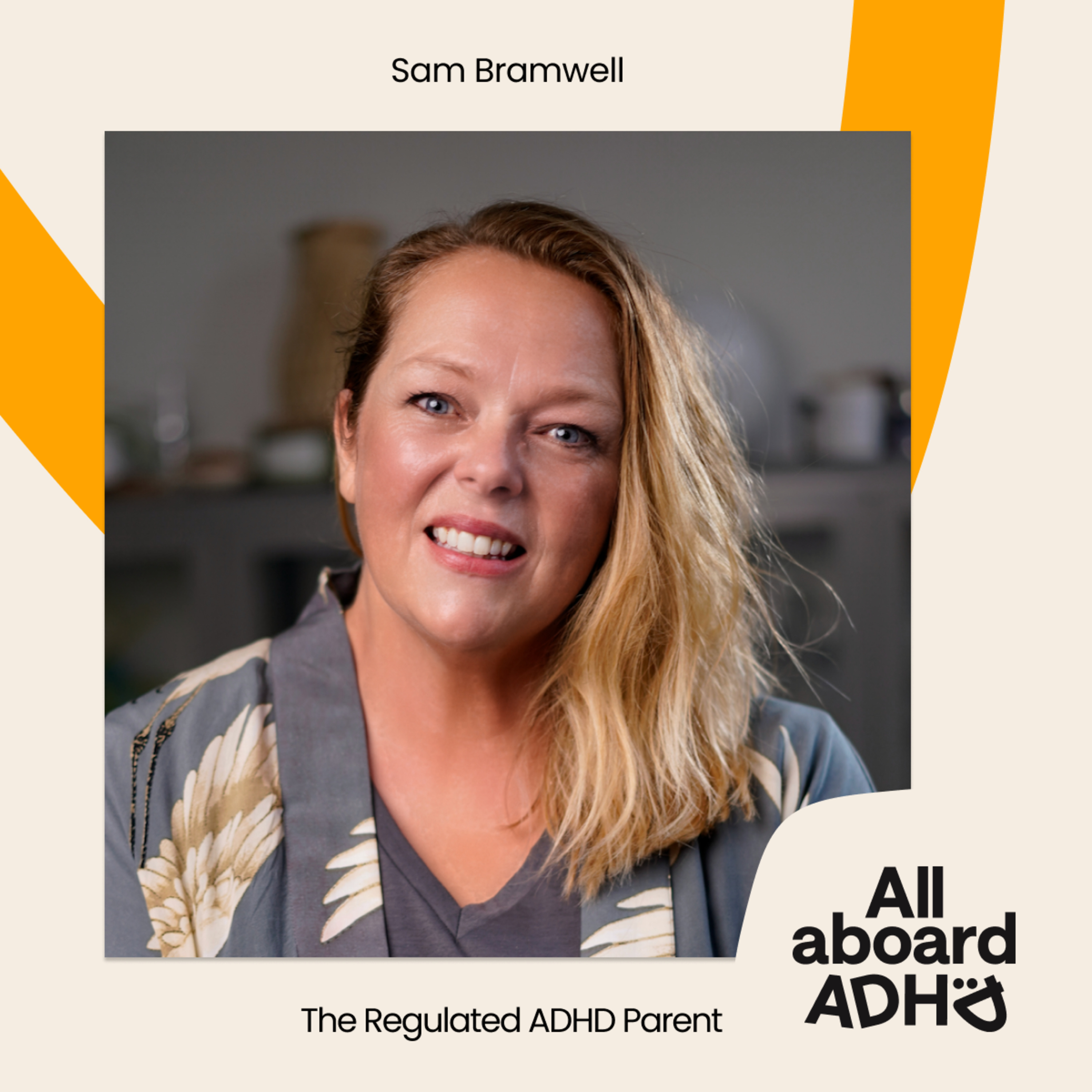 The Regulated ADHD Parent | Why is it so hard for women with ADHD to trust their instincts, and what happens when we finally do?In this episode of All Aboard ADHD, Claire is joined by Sam Bramwell, an ADHD coach, entrepreneur, and expert in polyvagal theory, who was diagnosed with ADHD in her 40s. Sam supports women navigating late-diagnosed ADHD, and her work centres around helping them rebuild self-trust, overcome shame, and find a more compassionate way of living.In this powerful and deeply relatable conversation, Sam shares her journey from years of masking, burnout, and self-doubt to finally understanding her neurodivergence and rebuilding her life around authenticity rather than fear. Together, Claire and Sam unpack why so many girls and women go undiagnosed, the emotional fallout of that process, and the freedom that comes with finally making sense of yourself and tuning into your nervous system’s needs. Their conversation covers:What polyvagal theory is and how the autonomic nervous system's three states can show up in our day-to-day experienceHow ADHD traits in girls and women often go unnoticed, misinterpreted, or attributed to anxiety, perfectionism, or “high functioning” behaviourThe cumulative impact of years of masking, from people-pleasing to chronic overachievement, and why unmasking can feel both frightening and liberatingThe emotional crash that can often follow diagnosis: grief, anger, relief, and the slow rebuilding of identityHow fear-based decision-making develops and why women with ADHD often learn to distrust themselvesHow relationships and parenting shift when you begin to tune into your nervous system, communicate your needs, set boundaries, and stop pretending to be “being fine.”What self-compassion actually looks like in practice, and the importance of slowing down, resting, and listening to your bodyPractical tools for reconnecting with yourself, including values-based decision-making, nervous system regulation, boundaries, and community supportWhether you’ve recently discovered your ADHD or are still unpacking years of confusion, this episode offers validation, insight, and a path toward rebuilding your life with softness rather than self-criticism.Further resources and linksSam Bramwell Coaching: sambramwellcoaching.comFollow Sam on Instagram: @samjbramwellBuy Sam’s Book - Enough is EnoughAll Aboard ADHD coaching & resources: https://allaboardadhd.comFollow Claire on Instagram & TikTok: @allaboardADHDThe views shared in this episode are those of the guest, based on their professional expertise and personal experience. This content is for informational purposes only and is not a substitute for professional medical, educational, or psychological advice. Please consult a qualified professional for personalised support relevant to your individual circumstances. | — | ||||||
| 11/14/25 | 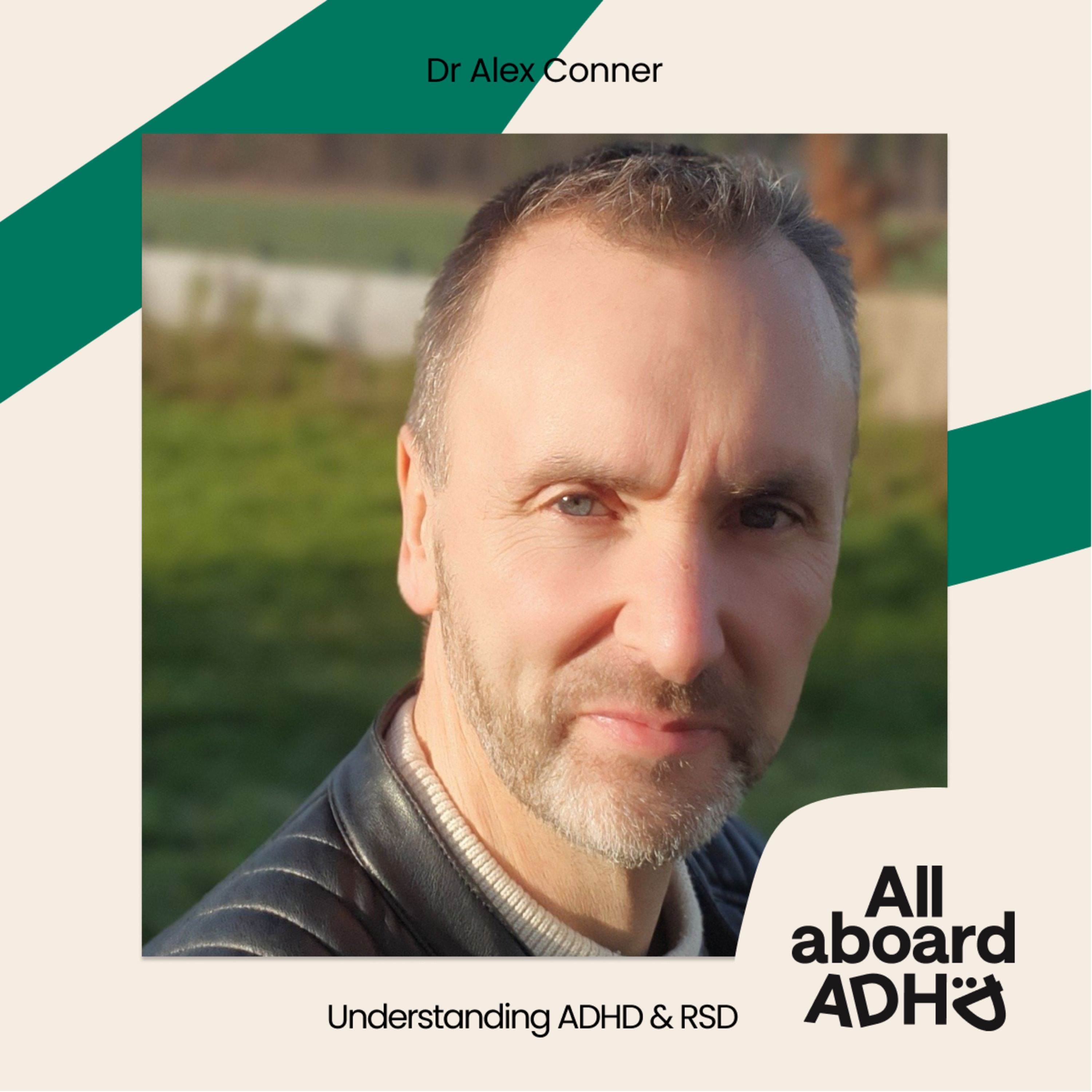 Understanding ADHD & RSD | Why does rejection feel so much more intense for people with ADHD and what can we do about it?In this episode of All Aboard ADHD, Claire is joined by Dr Alex Conner, an ADHD coach, scientist, author, and co-host of The ADHD Adults Podcast, to unpack one of the most painful and often misunderstood experiences within ADHD, Rejection Sensitivity Dysphoria (RSD).Dr Conner combines his lived experience as an adult with ADHD, his academic background in neuroscience, and his practical work training ADHD coaches to shed light on why RSD can be so overwhelming and what helps when it hits. He is also co-author of ADHD Unpacked and co-founder of the charity ADHD Adult UK, dedicated to evidence-based education and advocacy.Together, Claire and Alex explore:What rejection sensitivity dysphoria (RSD) really is and why it’s not an official diagnosis, yet feels profoundly real for so many people with ADHDHow emotional dysregulation connects to RSD and why the ADHD brain can amplify feelings of criticism, rejection, or embarrassmentThe debate around whether RSD is biological, learned, or both and what current science suggestsThe connection between RSD, social anxiety, and hypervigilance, and how to tell them apartThe ways RSD shows up differently in adults and children from people-pleasing to withdrawal and how parents can help children build autonomy and resilienceWhy communication, self-awareness, and emotional acceptance are essential in managing rejection sensitivityThe practical strategies that actually help from CBT and ADHD-informed therapy to “making no an option,” reframing, and creating supportive environmentsWhether you experience RSD yourself or see your child struggle with it, this episode offers science-based clarity, compassion, and real-world strategies to help make those moments of rejection feel a little less defining.Further resources and links:ADHD Unpacked by Dr Alex Conner and Professor James Brown: https://amzn.to/482BlUQThe ADHD Adults Podcast hosted by Dr Alex Conner and Professor James Brown: https://theadhdadults.uk/ADHD Adult UK: adhdadult.ukFocus Mag evidence-based magazine for adults with ADHD: focusmag.ukADHD Coaching Academy: https://www.theadhdcoachingacademy.com/ ADHD coaching and resources from Claire: allaboardadhd.comFollow Claire on Instagram & TikTok @allaboardADHDThe views shared in this episode are those of the guest, based on their professional expertise and personal experience. This content is for informational purposes only and is not a substitute for professional medical, educational, or psychological advice. Please consult a qualified professional for personalised support relevant to your individual circumstances. | — | ||||||
| 10/31/25 | 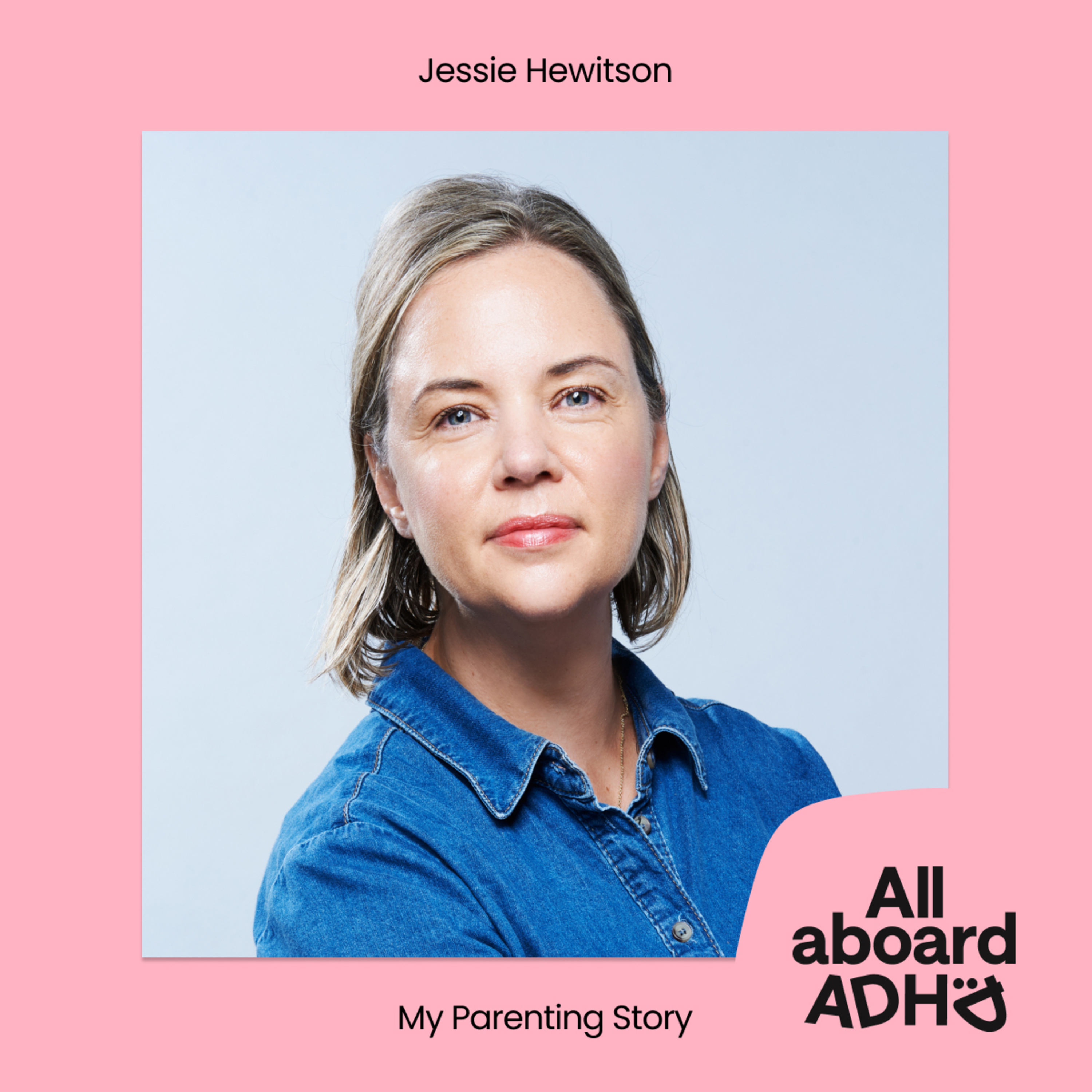 Jessie Hewitson - My Parenting Story | What does it really mean to raise a “happy” neurodivergent child and how can parents redefine success when school, systems, and stigma make that feel impossible?In this episode of All Aboard ADHD, Claire is joined by Jessie Hewitson, multi-talented journalist, author, and mum of two autistic and ADHD children. Jessie is the author of ADHD: How to Raise a Happy ADHD Child - and - Autism: How to Raise a Happy Autistic Child. She is also the Contributing Money Editor at The i Paper, where she writes the weekly column Ask Jessie.Jessie shares her deeply personal journey of parenting two neurodivergent children, leading to discovering her own ADHD and autism diagnosis later in life. Her story is one of honesty, learning, and compassion, as she reflects on the guilt, growth, and constant adaptation that comes with raising children who don’t fit the system’s mold.Together, Claire and Jessie discuss:The challenges of recognising ADHD and autism early on, and how stigma and misinformation can delay diagnosisWhy “late understanding” doesn’t make you a bad parent and the emotional process of unlearning what you thought you knewHow guilt and self-doubt show up for neurodivergent parents, and why compassion and curiosity matter more than perfectionWhat can happen when children experience burnout and can no longer cope in mainstream schoolThe importance of flexible, relationship-based learning and what “low-demand parenting” really looks like in practiceHow Non-Violent Resistance (NVR) parenting can help families de-escalate and reconnect during difficult momentsThe real meaning of raising a “happy” neurodivergent child: helping them understand themselves, recognise their challenges, and give themselves permission to rest and ask for helpWhether you’re at the start of your journey, deep in the chaos, or navigating life after diagnosis, this episode is full of raw honesty, validation, and hope. Jessie’s perspective reminds us that success often looks different, and that the smallest moments of connection can be the biggest signs of progress. Further resources and links:Jessie’s books: ADHD: How to Raise a Happy ADHD Child and Autism: How to Raise a Happy Autistic ChildCheck out Jessie’s article about Screen Time in The Standard: https://www.standard.co.uk/lifestyle/screen-time-children-parenting-adhd-autism-b1232099.html Check out Jessie’s weekly Ask Jessie column in The i Paper https://inews.co.uk/author/jessie-hewitsonFollow Jessie on social media: @jessiehewitsonADHD coaching and resources from Claire: https://allaboardadhd.comFollow Claire on Instagram & TikTok: @allaboardADHDThe views shared in this episode are those of the guest, based on their professional expertise and personal experience. This content is for informational purposes only and is not a substitute for professional medical, educational, or psychological advice. Please consult a qualified professional for personalised support relevant to your individual circumstances. | — | ||||||
| 10/17/25 |  Holistic ADHD Treatment | What does it really mean to treat ADHD through a “whole person” lens and how can parents support their children’s brains and bodies, not just their symptoms?In this episode of the All Aboard ADHD podcast, Claire is joined by consultant child psychiatrist Dr Richard Fry who specialises in integrative psychiatry, an approach that brings together physical, psychological, genetic, and environmental factors to understand each child as a whole person.After years working within the NHS, Dr Fry now helps families explore how nutrition, metabolism, genetics, sleep, stress, and lifestyle all contribute to emotional and cognitive health. His work focuses on supporting brain function and wellbeing holistically, while minimising exclusive reliance on medication.Together, Claire and Dr Fry explore what it means to look beyond the ADHD label and uncover the “why” behind a child’s challenges including:What integrative psychiatry is and how it expands on traditional approaches to child mental healthHow nutrition, sleep, and gut health can influence ADHD symptoms and overall brain functionThe role of stress, cortisol, and “nervous system up-regulation” in children’s behaviour and attentionWhy micronutrients such as magnesium and zinc can make a difference for emotional regulation and focusHow genetics act as a “template, not a fate,” shaping how each child responds to nutrients and medicationPractical ways to combine medical and holistic strategies for better long-term outcomesWhy connection, enjoyment, and small daily wins are just as vital as any treatment planWhether your child is newly diagnosed, already on medication, or you’re just beginning to explore a more holistic path, this conversation offers clarity, curiosity, and compassion for parents wanting to support their child’s ADHD in a whole-person way.Further resources and links:Learn more about Dr Richard Fry’s integrative practice: https://drfry.org.uk/The Brain Brilliance Book by Lucinda Miller with foreword by Dr Richard FryADHD coaching and resources from Claire: https://allaboardadhd.comFollow Claire on Instagram & TikTok: @allaboardADHDFollow Richard on Instagram @drrichardfryThe views shared in this episode are those of the guest, based on their professional expertise and personal experience. This content is for informational purposes only and is not a substitute for professional medical, educational, or psychological advice. Please consult a qualified professional for personalised support relevant to your individual circumstances. | — | ||||||
| 10/3/25 | 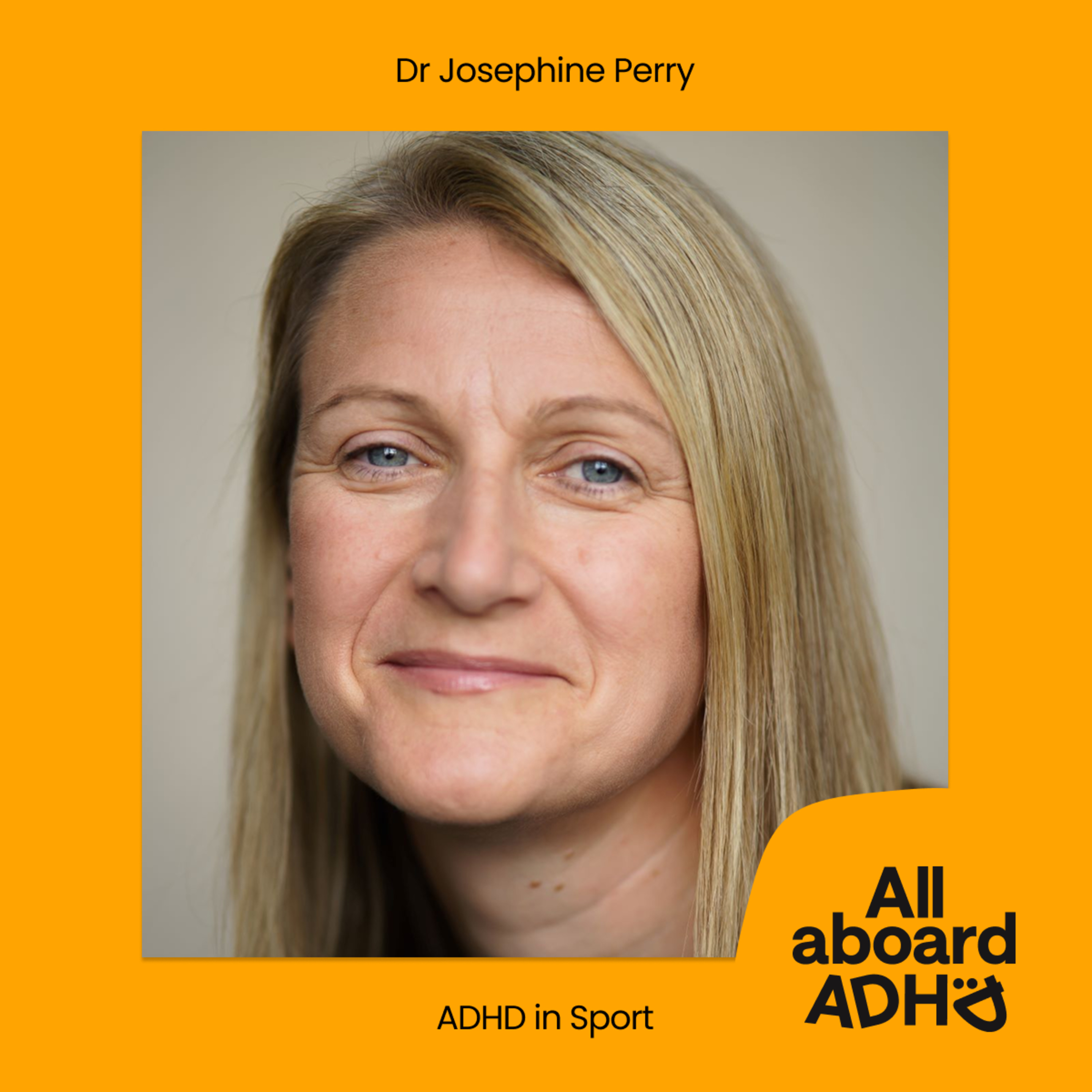 ADHD in Sport | Why are so many children with ADHD drawn to sport and how can parents, teachers, and coaches support them to thrive both on and off the field?In this episode of the All Aboard ADHD podcast, Claire is joined by Dr. Josephine Perry, Chartered Sport and Exercise Psychologist and author of the new book ADHD in Sport: Strategies for Success. Josephine specialises in helping athletes of all levels build confidence, motivation, and resilience. Her work explores the unique role that sport can play in supporting children and adults with ADHD.Claire and Josephine discuss the many ways ADHD traits show up in sport both as strengths and as struggles, alongside what parents and carers can do to encourage their children’s love of sport, while also protecting their wellbeing. Some key highlights of their conversation include:Why ADHD traits such as creativity, energy, and hyperfocus can help athletes shineThe challenges ADHD can bring in sport, including time blindness, emotional regulation, and organisationThe importance of autonomy, novelty, and interest in motivating ADHD brains to keep showing upHow setbacks and mistakes can be reframed as opportunities for growth and resilienceThe role of exercise in regulating the nervous system, improving focus, and boosting mental healthPractical coaching and parenting strategies that make a difference for young athletes with ADHDWhy role models like Simone Biles, Adam Peaty, and Charley Hull matter so much for children with ADHDWhether you’re raising a sporty child with ADHD, looking for ways to support them on the pitch, in the pool, on the court, or you’re simply curious about the powerful connection between movement and the ADHD brain, this episode is packed with insight, encouragement, and practical takeaways.Further resources and links:Josephine’s book: ADHD in Sport: Strategies for Success Learn more about Josephine’s work: https://performanceinmind.co.ukADHD coaching and resources from Claire: https://allaboardadhd.comFollow Claire on Instagram & TikTok: @allaboardADHDThe views shared in this episode are those of the guest, based on their professional expertise and personal experience. This content is for informational purposes only and is not a substitute for professional medical, educational, or psychological advice. Please consult a qualified professional for personalised support relevant to your individual circumstances. | — | ||||||
| 9/19/25 |  My ADHD Story: Untangled Through Yoga | Why do ADHD struggles like impulsivity, hyperactivity, and sensitivity often feel overwhelming and how can they be transformed into strengths?In this episode of All Aboard ADHD, Claire is joined by Rosie Turner, certified ADHD coach specialising in sports and wellness, yoga and pilates instructor, and host of the ADHD Untangled podcast. Rosie has dedicated her life to supporting the ADHD community in rewriting their story of struggle into strength.Rosie shares her powerful personal story from navigating addiction, impulsive decisions, and self-doubt, to finding yoga, ADHD coaching, and community as life-changing sources of healing and hope.This inspiring conversation covers:Rosie’s ADHD diagnosis journey and the relief, grief, and curiosity that followedHow impulsivity and hyperactivity once led to chaos but now fuel her creativity, coaching, and teachingThe role of sensitivity and empathy as powerful tools in her work with clientsWhy focusing on strengths, rather than weaknesses, can transform self-esteem and outcomes for children with ADHDHow environment and role models shape whether ADHD traits show up as struggles or strengthsThe life-changing impact of yoga as a form of movement, meditation, and nervous system regulation for ADHD brainsThe importance of authentic teaching and finding the right style, environment, or teacher when exploring yoga and wellness practicesHow retreats, coaching, and community create momentum and lasting transformation for people with ADHDA message of hope for parents: why failure is part of growth, why every child’s path looks different, and why it’s never too late to reframe the ADHD storyRosie’s honesty and insight offer reassurance for parents, carers, and adults with ADHD alike - the very traits that cause the biggest struggles can, in the right environment, become our greatest strengths.Further resources and links:Rosie’s podcast: ADHD Untangled on SpotifyLearn more about Rosie’s coaching, yoga, and retreats at untangledco.comFollow Rosie on Instagram: @coachrosieturnerADHD coaching and resources from Claire: https://allaboardadhd.comFollow Claire on Instagram & TikTok: @allaboardADHDThe views shared in this episode are those of the guest, based on their professional expertise and personal experience. This content is for informational purposes only and is not a substitute for professional medical, educational, or psychological advice. Please consult a qualified professional for personalised support relevant to your individual circumstances. | — | ||||||
| 9/5/25 | 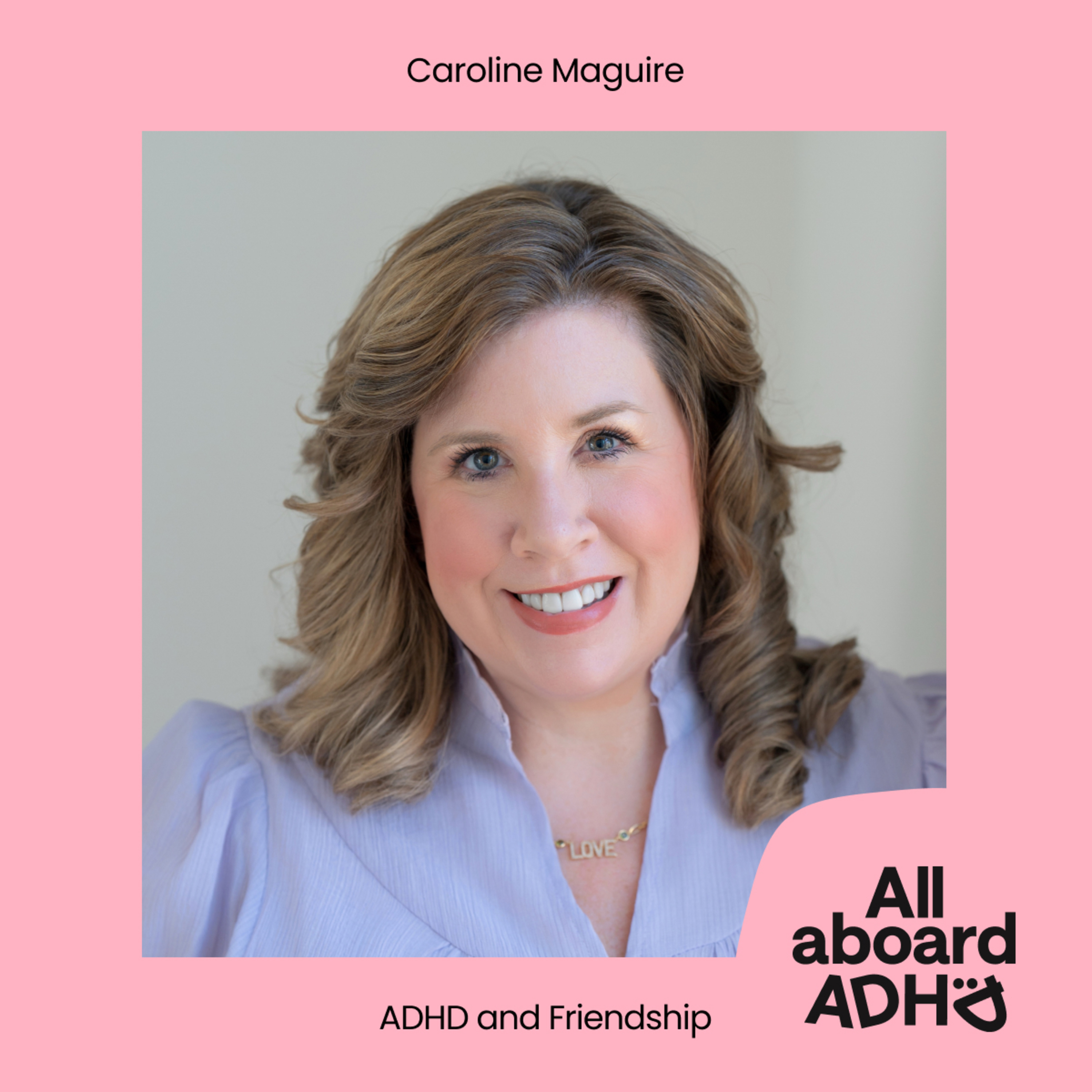 ADHD & Friendship | Why do so many children with ADHD struggle to make (and keep) friends, and what can parents do to support them?In this episode of the All Aboard ADHD Podcast, Claire is joined by award-winning author, coach, and ADHD social skills expert Caroline Maguire to explore one of the most important and often painful aspects of raising a child with ADHD: friendships. Caroline has ADHD herself, is the author of the bestselling book ‘Why Will No One Play With Me?’, and her upcoming book ‘Friendship Skills for Neurodivergent Adults’ (out April 2026) builds on decades of experience helping children, teens, and adults connect socially.Together, Claire and Caroline dive deep into why children with ADHD often struggle socially and more importantly, what parents and carers can do to help. Their conversation covers:How executive function delays affect social skills, including conversation, self-regulation, and perspective-takingWhy environment plays such a huge role in a child’s social success and how parents can seek out spaces where their children feel acceptedThe impact of repeated criticism, rejection, and anxiety on kids’ self-esteem and social confidence, plus practical ways to build their resilienceThe key difference between masking and learning genuine social skills and why teaching children authentic strategies is crucialCore friendship skills ADHD kids need: starting conversations, keeping up with peers, reading social cues, and “dropping pings” to find their peopleWhy practice, persistence, and celebrating small wins are essential to help children build their confidence and lasting connectionsThe importance of strengths-based parenting: helping children recognise the traits that make them great friends, rather than just focusing on challengesHow parents and even adults with ADHD can begin their own “friendship journey,” modelling healthy social growth for their childrenWhether you’re raising a child who is lonely, struggling with rejection, or just beginning to navigate social worlds, this episode is packed with empathy, strategies, and hope. This episode was recorded in August 2025.Further resources and links:Buy Caroline’s book Why Will No One Play With Me? (winner of multiple awards including the Best Book Award from American Book Fest and Mums’ Choice Award)Pre-order Caroline’s new book Friendship Skills for Neurodivergent Adults (out April 2026)Caroline’s podcast: The ADHD Social PlaybookLearn more about Caroline’s work: https://www.carolinemaguireauthor.comFollow Caroline on Instagram @authorcarolinemADHD coaching and resources from Claire: https://allaboardadhd.comFollow Claire on Instagram & TikTok: @allaboardADHDThe views shared in this episode are those of the guest, based on their professional expertise and personal experience. This content is for informational purposes only and is not a substitute for professional medical, educational, or psychological advice. Please consult a qualified professional for personalised support relevant to your individual circumstances. | — | ||||||
| 8/22/25 | 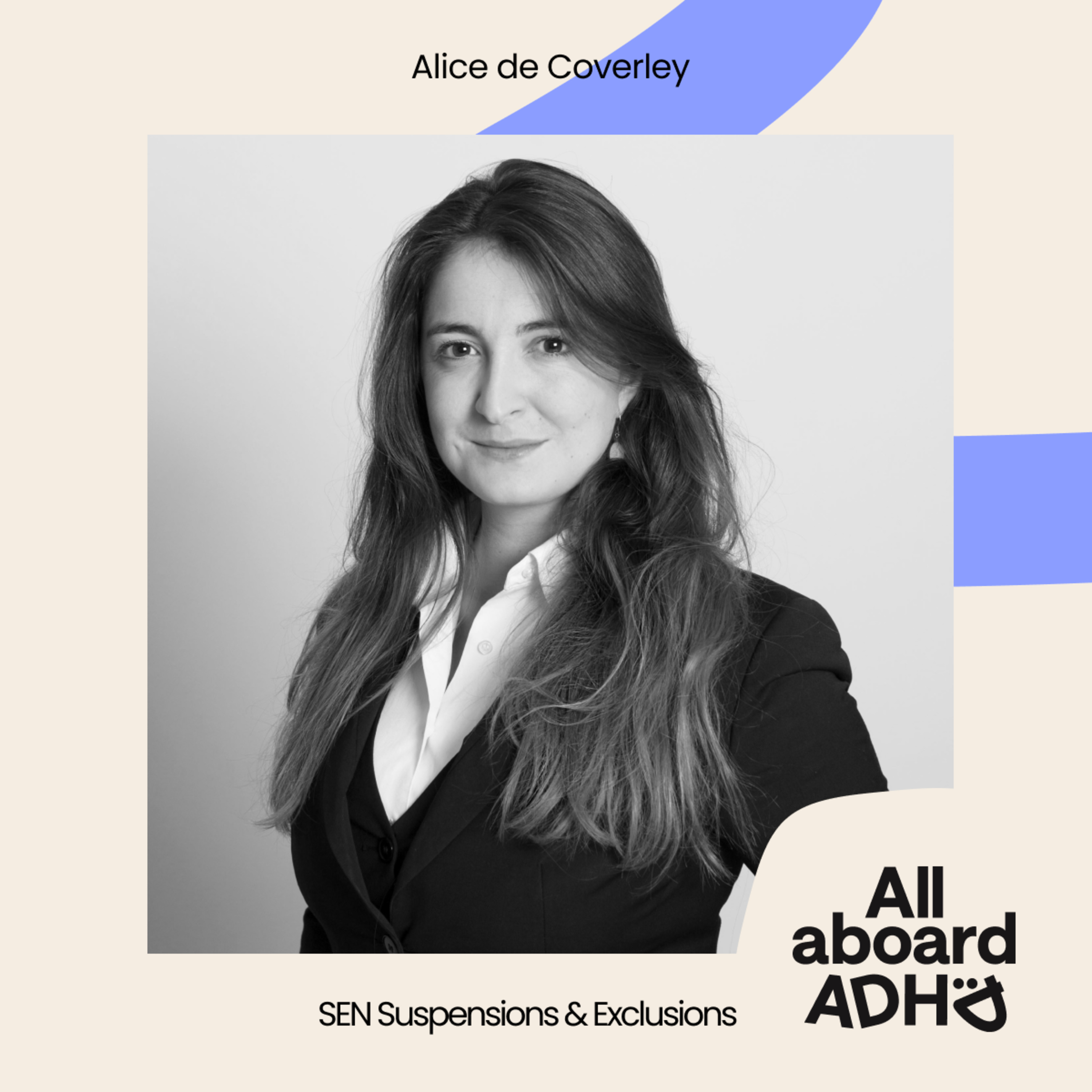 SEN Suspensions & Exclusions | In this episode, Claire is joined by specialist education, equality, and public law barrister Alice de Coverley to tackle a difficult but crucial topic: school exclusions for children with ADHD and your legal rights. Alice is also a trustee for the charity Neurodiversity in Law and was named the Legal 500 ESG 2024 Disability & Neurodiversity Bar Champion of the Year. She co-authored the book A Practical Guide to the Law of School Exclusions.Alice and Claire's discussion provides invaluable advice for parents, covering:⚖️ The legal definition of a school exclusion, plus the difference between fixed-term and permanent exclusions⚖️ How state schools and private schools are governed by different legal frameworks when it comes to exclusion. The Equality Act applies in both cases - often a key piece of law in exclusion cases involving children with disabilities.⚖️ Why children with special educational needs or disabilities, particularly ADHD, are more likely to be at risk of exclusion, plus insight into how ADHD symptoms such as impulsivity, hyperactivity, emotional dysregulation, and distractibility can often be viewed solely as "behavioural problems" by schools. ⚖️ How school exclusions, especially at a young age, lead to a profound feeling of rejection from adults and can be incredibly damaging to a child's self-esteem and mental health in the long term.⚖️ Why exclusion should be a last resort, plus your legal rights under the Equality Act, and why schools are legally required to look at the context behind the behaviour, plus make reasonable adjustments in the lead-up to any disciplinary action for a child with a disability.⚖️The potential impact of children starting titration for ADHD medication and how parents can work with schools during this process to minimise the risk of exclusion.⚖️ The steps to take when a school makes the decision to exclude, including requesting written reasons, gathering relevant documentation (e.g. a recent diagnosis), being aware of the 15 day window to submit your appeal to an Independent Review Panel (IRP), and crucially, the right to ask for a Special Educational Needs (SEN) expert to attend the panel for free. This expert provides an objective view on how your child's SEN is relevant to the exclusion and can be an incredibly useful resource that not many parents are aware of.Whether you're battling your first exclusion or feeling exhausted by repeated challenges, this episode is a must-listen for parents or carers facing exclusion of their child from school, and is packed with practical advice as well as a reassuring look at your legal rights as part of this process.This episode was recorded on 11th July 2025.Further resources for free legal advice and support are available as follows:BBC article quoted in the episode: https://www.bbc.co.uk/news/articles/c784ezdmnp4oThe School Exclusion Project - a free legal support service for parents https://www.schoolexclusionproject.com/ Just for Kids https://www.justforkidslaw.org/contact-usThe School Inclusion project - https://gardencourtchambers.co.uk/event/launch-event-the-school-inclusion-project/ Alice’s book "A Practical Guide to the Law of School Exclusions" https://www.amazon.co.uk/Practical-Guide-Relation-School-Exclusions/dp/1912687518 The first-tier tribunal offers a fast-tracked process for disability discrimination claims related to permanent exclusions https://assets.publishing.service.gov.uk/media/652f92d46b6fbf000db75872/SEND4_0423_access.pdf The views shared in this episode are those of the guest, based on their professional expertise and/or personal experience. This content is for informational purposes only and is not a substitute for professional medical, educational, or psychological advice. Please consult a qualified professional for personalised support relevant to your individual circumstances. | — | ||||||
| 8/8/25 | 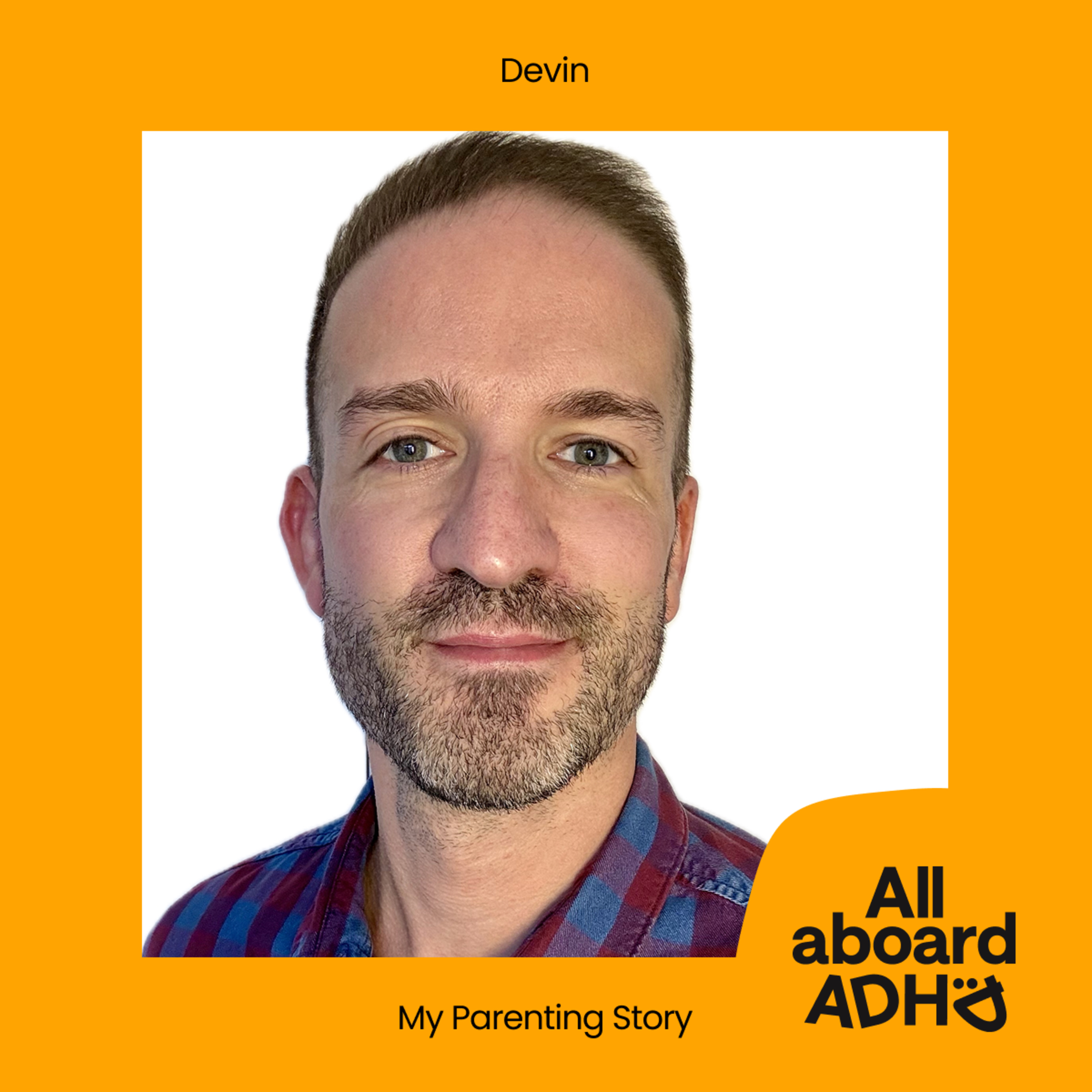 Devin - My Parenting Story | How can parents navigate the many and varied challenges of raising neurodivergent children with ADHD and autism?In this episode of the All Aboard ADHD podcast, Claire is joined by Devin, adoptive father of two neurodivergent children, both of whom are diagnosed with ADHD and autism, and former Head of Technology in the finance industry. Devin also has late-diagnosed ADHD himself and is now a full-time parent carer for his children, as well as supporting other families who are struggling to navigate life as new SEN or Adoptive Parents. Devin shares honestly and openly about his parenting journey, including some of the early signs of neurodiversity in his children, which were harder for him to spot as they can sometimes be mistaken for attachment or trauma-related behaviours in adopted children. He describes their diagnosis process, sharing some of the differences between the two and providing examples of how traits can manifest differently in girls and boys. Devin also shares his feelings of grief and relief around accepting his children’s differences. With a diagnosis in place, Devin discusses the impact of medication and how it has helped both of his children in terms of their mood and behaviour. Many parents will relate to the challenges he describes in terms of daily routines and school refusal, particularly as an ADHD parent himself! Devin also shares some of the challenges he faced advocating for his children and their needs, to ensure they found the right educational environment. Following a challenging period of overwhelm and stress around school avoidance, Devin made the decision to take his son out of school. This led to many challenges navigating the EHCP (Education, Health and Care Plan) process for his son, but he was eventually successful in ensuring his son had the right educational setup to thrive. Devin also shares some incredible examples of how he has taken the time to deeply understand his children and what works for them.Finally, Claire and Devin discuss some of the emotional challenges of parenting and the need to constantly adapt parenting strategies for their children as they grow. They both stress the importance of seeking community support, encouraging parents listening to share their experiences and ultimately feel less alone.The episode is an honest, relatable conversation about how to navigate neurodiversity as a parent, showcasing the power of resilience, acceptance, and unconditional love.Find out more about Devin and his work at: www.thesensibleapproach.com | — | ||||||
| 7/25/25 | 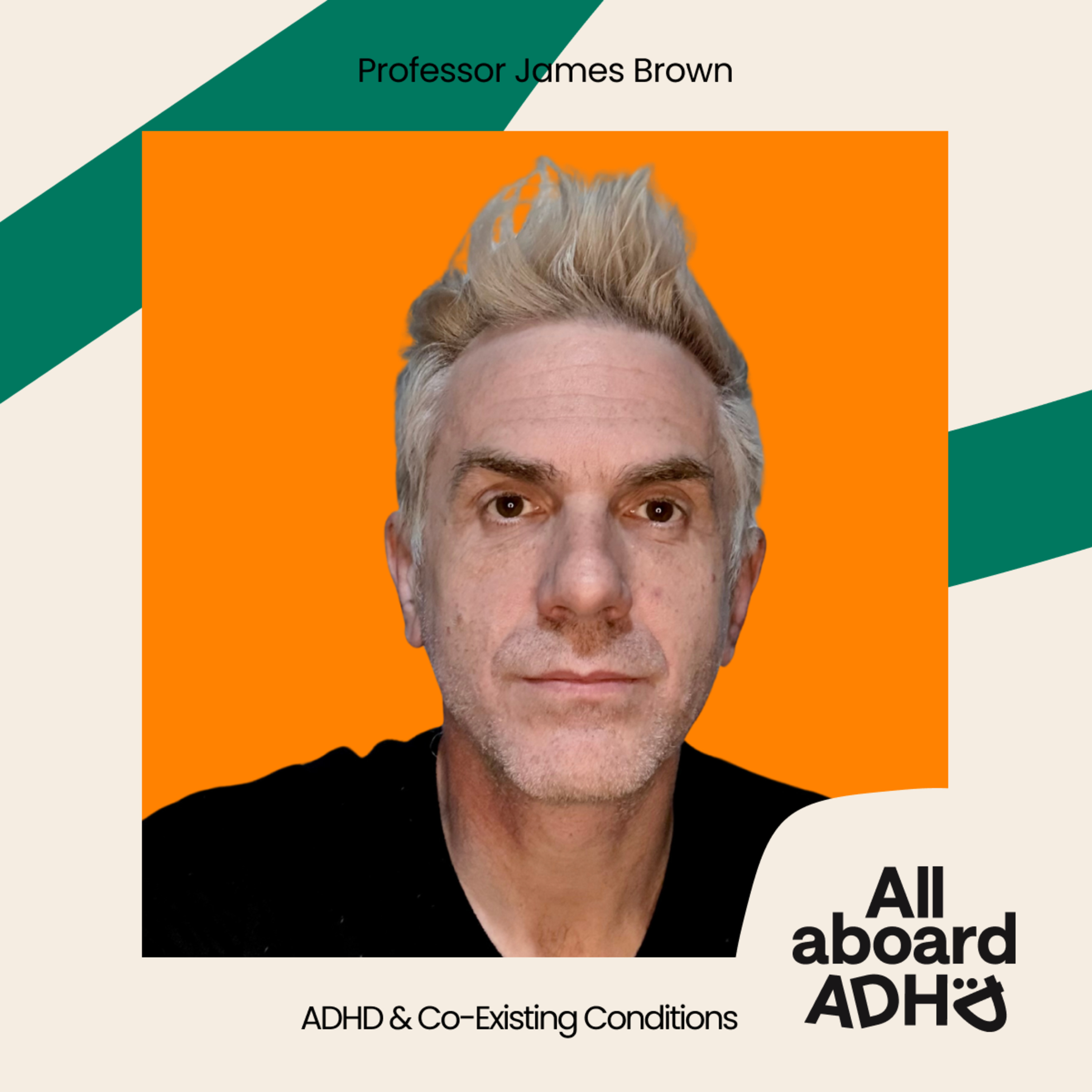 ADHD and Co-Existing Conditions | What are some of the most common co-existing conditions that exist alongside ADHD, and how can parents identify them in their children?Join Claire and expert guest Professor James Brown in this episode of the All Aboard ADHD podcast to understand which conditions most commonly co-exist with ADHD and crucially, why that might be. Professor James is a biomedical scientist, ADHD coach, the co-founder of ADHD Adult UK, and one of the creators of the ADHD adults podcast. Diagnosed with ADHD in adulthood, James brings both academic expertise and personal insight to his work. He is also the co-author of ADHD Unpacked, which provides a practical and honest guide to understanding ADHD in everyday life.Professor James begins by giving some examples of what a co-existing (or co-morbid) condition might look like in children with ADHD, for instance, anxiety disorders, dyspraxia, dyslexia, autism, and mood disorders. Incredibly, 60-70% of children with ADHD will have at least one co-existing condition, with 40% having two or more. Despite the prevalence of co-existing conditions, Professor James sheds light on the challenges around diagnosis, due to overlapping symptoms and the limitations of current diagnostic tools, stressing the need for a more holistic approach to diagnosing neurodivergent conditions.Together they dive deep into some of the fascinating biological and social factors behind ADHD and co-existing conditions, including key insight into how ADHD and mood disorders impact the brain, plus the potential role of inflammation, where research is still very much emerging. Professor James also explains the challenges of diagnosing ADHD in children with other conditions like dyslexia, encouraging a "yes and" mindset in the diagnosis process, rather than “either or.” With the right knowledge, parents are better able to advocate for their children and improve their understanding of ADHD, so Claire and Professor James discuss the need for a more inclusive and accepting understanding of neurodivergent conditions, reducing the shame and stigma around difference. Finally, Professor James emphasises the need to consider multiple domains of a child's life, including sleep, socialisation, and emotional control to ensure the right diagnosis. He also encourages parents to trust their gut and seek deeper understanding if they feel their child is not getting the right support. He and Claire also explore some of the lesser-known conditions that can co-exist with ADHD, such as sensory processing differences, demand avoidance, social anxiety and addiction.This episode is a must-listen for parents looking to understand and support their children with ADHD, especially where they suspect one or more co-occurring conditions.To find out more about Professor James and his work, head to: https://jbhd.uk/ You can find out more about his charity here: https://www.adhdadult.uk/To order a copy of his book - ADHD Unpacked - head to: https://amzn.to/482BlUQ To listen to his podcast The ADHD Adults head to: https://open.spotify.com/show/2oYZwGakl7shJFG0lJ8JMt The views shared in this episode are those of the guest, based on their professional expertise and/or personal experience. This content is for informational purposes only and is not a substitute for professional medical, educational, or psychological advice. Please consult a qualified professional for personalised support relevant to your individual circumstances. | — | ||||||
Showing 25 of 64
Pitch Fit is a Pro feature
See how bookable this show is for guests, which brands already advertise, the per-episode ad value, and the best-fit guest and sponsor profile. The numbers are blurred on the free plan.
How readily this show books outside guests like you.
How proven this show is for host-read sponsorships.
For Guests
ProFor Advertisers
ProUpgrade to Pro to unlock guest cadence, sponsor categories, fit scores, and per-episode ad value for this show.
Chart Positions
8 placements across 4 markets.
Chart Positions
8 placements across 4 markets.