
Insights from recent episode analysis
Audience Interest
Podcast Focus
Publishing Consistency
Platform Reach
Insights are generated by CastFox AI using publicly available data, episode content, and proprietary models.
Most discussed topics
Brands & references
Total monthly reach
Estimated from 1 chart position in 1 market.
By chart position
- 🇩🇰DK · Books#733K to 10K
- Per-Episode Audience
Est. listeners per new episode within ~30 days
900 to 3K🎙 Daily cadence·518 episodes·Last published 5d ago - Monthly Reach
Unique listeners across all episodes (30 days)
3K to 10K🇩🇰100% - Active Followers
Loyal subscribers who consistently listen
1.2K to 4K
Market Insights
Platform Distribution
Reach across major podcast platforms, updated hourly
Total Followers
—
Total Plays
—
Total Reviews
—
* Data sourced directly from platform APIs and aggregated hourly across all major podcast directories.
On the show
From 10 epsHosts
Recent guests
Recent episodes
Revising with the Blueprint: A Summer Challenge Success Story
Jul 3, 2026
32m 15s
Hot Seat Coaching: Pressure-Testing a Story Engine with Two Villains
Jun 26, 2026
1h 00m 00s
Hot Seat Coaching: Reframing a Prostate Cancer Book for Clarity, Voice, and Marketability
Jun 19, 2026
59m 10s
Reframing Success: A New Take on Self-Worth for Writers
Jun 12, 2026
20m 53s
Hot Seat Coaching: From Concept to Page: The Journey of a Thriller with Andrew Parrella
Jun 5, 2026
49m 07s
Social Links & Contact
Official channels & resources
Official Website
Login
RSS Feed
Login
| Date | Episode | Topics | Guests | Brands | Places | Keywords | Sponsor | Length | |
|---|---|---|---|---|---|---|---|---|---|
| 7/3/26 |  Revising with the Blueprint: A Summer Challenge Success Story | Jennie Nash interviews author Meghan P. Browne about her journey from picture-book nonfiction to selling her first middle-grade novel, after participating in the 2022 Blueprint Challenge. Browne began the project in 2019, drafted it during her MFA at Vermont College of Fine Arts, then used the Blueprint framework to “reverse engineer” the manuscript and discover it lacked plot; the inside outline helped her connect scene events to emotional meaning. After tragedy and other commitments, she returned to revise intensively, resubmitted to her agent, and the novel later sold. Browne also describes submitting pages to the podcast’s First Page Lab and learning to absorb both critical and positive feedback. Visit Meghan on her website: https://meghanpbrowne.comThanks for reading #AmWriting! Subscribe for free to receive new posts and support my work.Join the Blueprint Summer ChallengeStarting a book? Stuck in a draft? Planning a revision?The Blueprint Summer Challenge is designed to help you make meaningful progress on your manuscript this summer.Over six weeks, beginning July 10, you’ll use the Blueprint—a proven framework for developing stronger books with greater clarity, purpose, and reader impact—to move your project forward, wherever you are in the process.Whether you’re writing nonfiction, memoir, fiction, or another genre entirely, the goal is simple: spend six focused weeks making your book stronger.Start with the Blueprint CourseWe’re offering an all-new Blueprint course in Teachable, which includes:* The full text of The Blueprint* Fourteen video lessons covering every step of the framework* Real coaching examples that show writers applying the Blueprint to their own projects* Practical guidance you can use immediatelyThe course is designed to help you develop a stronger foundation for your book—whether you’re beginning from a blank page, working through a draft, or planning a revision.Course enrollment: $19👉 Enroll in the Fiction Blueprint Challenge👉 Enroll in the Memoir Blueprint Challenge👉 Enroll in the Nonfiction Blueprint ChallengeJoin the Live Coaching SessionsPaid podcast subscribers will also receive access to six weeks of live coaching sessions featuring me and a variety of Author Accelerator coaches.Each session will focus on a specific Blueprint step and the challenges writers commonly encounter while developing, drafting, or revising their books. You’ll have opportunities to ask questions, learn from expert coaches, and watch hot-seat coaching sessions where writers will receive direct feedback on their work.Some sessions will be led by me, while others will feature experienced Author Accelerator coaches with expertise across genres and stages of the writing process. We’ll hold these sessions at different times to accommodate different schedules, but we know for sure that Jennie will be doing coaching each Monday at 3:00 PST. The first one will be July 13. Other sessions will be slotted in soon.Whether you’re starting a new project, trying to get unstuck, or preparing for revision, these live sessions will help you apply the Blueprint to your own book and make meaningful progress throughout the summer.Become a paid subscriber for $12/monthWin a Blueprint RevisionEveryone who enrolls in the Blueprint Course will be entered to win a personal Blueprint coaching session with me and be featured on the podcast.We’ll award one winner for every 100 course enrollments, so the more writers who join the Challenge, the more opportunities there are to win this Grand PrizeReady for More Support?As you progress, you’ll also have the opportunity to connect with a trained Blueprint coach for personalized guidance, feedback, and accountability. We are rolling out a new coach matching system that will give you an easy and intuitive way to find the coaches who are a great fit for your and your project.There is no charge for this service and no obligation to work with the coaches we match you with – but what a great chance to connect with people who could help you write your best book!Whether you need help clarifying your vision, solving a structural problem, or creating a plan for finishing your manuscript, a coach can help you take the next step.Join us on July 10 and spend six weeks making your book stronger.Learn All About the Summer ChallengeOn July 6th at 9:00 am PT, Jennie will be hosting a live AMA to talk about the Blueprint and the summer challenge, and answer all your questions. We’ll send out an email reminder about this event.TranscriptJennie: [00:00:00] Hey, it’s Jennie and the Blueprint Summer Challenge begins July 10th. I’d love for you to join us. If you’re starting a book, stuck in a draft, or preparing for a revision, this challenge was designed for you. Over six weeks, you’ll have the opportunity to learn the blueprint framework through our new blueprint course.Over six weeks, you’ll have the opportunity to learn the blueprint framework in our new blueprint course. You can also participate in live coaching sessions with me and Author Accelerator coaches and see the blueprint applied to real books and real writing challenges. The course is just $19 and includes the full blueprint book, 14 video lessons, and coaching examples.And remember, everyone who enrolls in the course for the blueprint challenge is automatically entered to win a blueprint revision with me and a live coaching session on the podcast. We’ll select one winner for every hundred enrollments. If you’ve been looking for a reason to recommit to your book this summer, this is your invitation.Visit the link in the [00:01:00] show notes and join the Blueprint Summer Challenge today.Hi, I’m Jennie Nash, and you’re listening to the #AMWriting Podcast, the place where we help writers of all kinds play big in your writing life, love the process, and stickwith it long enough to finish what matters most.I’m so excited today to be talking to Meghan Brown, who has an incredible story connected to some of the things we’ve been doing here at the podcast, including the upcoming Blueprint Challenge.So I’m gonna talk to Meghan about her journey to getting her first novel published and on its way to being on the shelf and in readers’ hands. So welcome, Meghan.Meghan: Hi. Thanks for having me.Jennie: This is such a fun story. I just, I just love it. So we heard about you and your book- Because we chose you to do one of [00:02:00] our First Page Lab readings where we look at the first pages of a novel and give feedback, and we’ll get to that in a minute.But through, through that, we learned that you did our original Blueprint Challenge in the summer of 2022. So can you talk about where you were in your writing life, and why you decided to do that, and what the experience was like for you?Meghan: Sure. I was so excited when y’all ran that challenge in 2022. I actually first started working on this project in 2019, which feels like a bazillion years ago because it was pre-pandemic, of course.And I took a little class at a local place, it was virtual, but called The Writing Barn here in Austin that does a lot of great classes. It was a middle grade class. I had just gotten representation for some picture books I had been working on, and my agent and other people in the industry were telling me that my voice was very middle grade.So I took this class, I wrote 20 pages. [00:03:00] I got nominated for a big award at our local SCBWI, um, conference that spring, and I actually used my very first advance money from my picture books to start at Vermont College of Fine Arts for my MFA in Writing for Children and Young Adults, where I was hoping to learn how to write middle grade.And through the two years that it took in that program, including being in that program during the pandemic, and working with Linda Urban and Anh Nha, who are both very, very incredible, um, authors in their own right, I was able to finish a first draft by the summer of 2021. And I basically, because of a lot of things, just didn’t really touch that work until I heard that you were running this challenge, and I was so excited to kind of dive back in and realize that I needed to kind of reverse engineer the whole project.So I had a first draft, and I just [00:04:00] was looking to fix it.Jennie: Amazing. So the... I just want you to be able to tell our listeners about your picture books because they’re- they’re so beautiful, and we’ll link to your website in the show notes so people can find you. It’s Meghan P. Browe, and it’s Browe with an E on the end.Um, but just, just so we sort of know the vibe of what your work had been, uh, beforehand. Sure. Yeah.Meghan: Um, well, thank you. They are very beautiful, and I did not illustrate any of them. Um, so the, the first one is called Indelible Ann. It’s the larger than life story of Governor Ann Richards. It’s a nonfiction picture book for young readers all about the life of late, great Ann Richards.Um, and that one is illustrated by Carlyn Witt, who is an awesome Texan that lives in LA now And then the second is called Dorothy the Brave. It’s the story of a female aviator from World War II who I got to meet and interview for the first time when I was in eighth [00:05:00] grade.Jennie: What?Meghan: A wild story. And, um, then I ended up writing the book that she got to read just months before she passed at the age of 99.Jennie: What?Meghan: Um, and I know. That one was a, a true book of my heart. Um, that one is illustrated by Brooke Smart, who is based in Utah. And the third book that came out last year was, is called The Bees of Notre Dame, and it’s illustrated by E.B. Goodale, and it’s the true s- survival story of the honeybees that were housed on the rooftop of the cathedral when it burned.Jennie: Wow, that’s so timely, ‘cause the cathedral just opened.Meghan: Yes, yes.Jennie: Wow.Meghan: And I actually got to go back over the summer with my family. We did a huge bucket list trip and went to see the Olympic Games, and so it was really cool to be back there over the summer.Jennie: How did you... Now I’m just curious about this story.Sure. How didMeghan: you hearJennie: about the bees?Meghan: I was at home with a bunch of sick kids right before [00:06:00] Easter, the week leading up to Easter. My kids were really tiny at the time. And, um, I am a beekeeper, and so all of my friends were sending me the link to the article about these honeybees. Everyone was wanting to know if they survived the fire.And I sent the link to my agent, Alyssa Eisner Henkin, and sh- I said, “Is this the bee book?” She had been kind of pushing me, like, “Bees are so in the zeitgeist. What is your bee book?” And I said, “Is this the bee book?” And she said, “How fast can you get it to me?” And I told her I had only ever been to Paris, Texas, so I needed to jump on a plane.And my husband actually flies for Southwest, and so I was able to use his pass privilege to hitchhike there on, like, taxes. It was a miracle. And on the way over, Jennie, on the way over I was, like, googling the email addresses for the people that were interviewed in the USA Today article, and emailing them and telling them, “I’m on my way.Can I please have an interview?” And they were telling me no, like, three times in a row, and finally they relented, and they were so [00:07:00] wonderful. And I got to go beekeeping on the rooftops of Paris. I still can’t believe that that happened.Jennie: This is a crazy story.Meghan: It is wild.Jennie: Wow, that is so cool.Meghan: It was really cool.Okay.Jennie: So this is the, this is the vibe of what you were working on when, when you started to write the novel- Yes ... that you’re, you’re talking about. So-Meghan: Yes ...Jennie: I’m curious about your instinct to come do the Blueprint Challenge with a finished manuscript, because for me that’s actually- One of the most powerful times to use the tool of the blueprint is- Mm-hmmto sort of see, well, what do I have? What’s working? You know, to your, you used the word fix. What, what needs to be fixed? What was your instinct for doing something like that with this finished manuscript?Meghan: Well, I just knew that it wasn’t working, and even after having spent all this time and money on the MFA, I still didn’t know how to fix it.And I [00:08:00] I just was really lost. I knew that there was a good story. I knew that, that this middle grade voice was very much my natural voice. I think that’s the reason why I have fallen into picture book nonfiction, is because that voice kind of trends older anyway. Um, so I knew that what I had written was good, but it just wasn’t working, and I couldn’t figure out how to make it work.And so I thought, “Well, I, I have to try this. W- why not?”Jennie: Wow, okay. So the... Some people think that 10 weeks to do the blueprint is kind of a long time, where you’re very methodically doing each... There are actually 14 steps in the blueprint. Mm-hmm. We combine them into, to making it, um, a 10-week podcast challenge that is coming up again starting in January.Um, was the 10 week, did that feel like a good pace for you to work through this, or did it feel... I imagine you still have pretty little kids, if they [00:09:00] were really, really little in, in the pandemic.Meghan: Yeah. Yeah. So it was interesting because I think that the first time through I needed all of that time to just really marinate.Like, I would, I usually listen to y’all’s podcast when I run, and I would go out with my dog, and I would run, and I would listen to it, and then I would be percolating on it, and throughout the week. I’d even listen to it multiple times before I actually sat down to do the work. Um, but I think the first time through that that was a great pace because I really wanted to learn what the steps were, what was the reasoning behind it, and how could I really do it well.And so the first time through, um, actually I think I only got a few weeks in and had this terrible tragedy in my family, and my father-in-law passed away suddenly. And so I had to kick it down the road, and I didn’t actually, um, finish in time to put my name in the hat for the drawing or whatever. Yeah. And I picked it up and ended up [00:10:00] finishing in, like, late October.But I was really grateful for the inability to, um, to just binge the whole system, because I think it really helped me pace myself and learn each step, and the reasoning behind each step.Jennie: Right. Right. That’s interesting. Um, I’m gonna make a note that maybe we should make that available, um, to people who sign up for it, ‘cause I think we could.I’ll talk to KJ about that. Um, so okay. So it, y- you’d started and then you set it aside and you came back to it, and what did you, what did the blueprint process show you about the story, or, um, what insights did you have at that point?Meghan: Well, my agent had seen ear- like, the, the very first finished draft that I had done during my MFA program, and she was like, “This is great.I love it, but there’s nothing happening here.” And so, like, great setting and great characters, but [00:11:00] what is the plot? And so, um It really helped me figure out that there wasn’t a plot, and people had said that, but I was like, “I don’t know what you’re talking about. I’m not really sure how to, to invent a new thread.”And it really, the inside outline really helped me make those connections. In fact, I’m going to just tell you that I have this Post-it Note that lives on my laptop that says, “Each scene, plot what happens, point the emotional meaning for the main character.” And I just like because of that, and then again, plot and point, plot and point, and this has helped me because since then I have done the blueprint challenge again twice.Once over this past summer I did it for a nonfiction project, and then I actually recently worked through it again for a new novel that I’m hopefully gonna have ready for my editor when I finish edits on this new thing that I just sold. And, um, it’s been [00:12:00] really just such a good tool for me. I think as someone who grew up with an athletic background, I was so used to having a coach and like I’m really good at following directions.I like cooking because a recipe is easy to follow. I just need someone to tell me what to do and then I can do it. So it’s been so good for me to have that roadmap.Jennie: Wow, that just makes me smile so hard, um, to hear that that’s on a Post-it Note on your computer. That’s so cool. Yes. It’s, um, we’re talking about the inside outline, which is the culmination of the fiction blueprint.There are different outlines that culminate the nonfiction and memoir blueprints, but the idea is to have a very small outline that captures the emotional arc of the character or in the other genres of the, of the reader’s transformation and marries it to the plot. Because so often, well, the feedback you got is exactly what often writers encounter is [00:13:00] nothing happens or nothing matters that happens.Exactly. Seems there’s a, there might be a lot of drama or action, but it doesn’t actually impact the protagonist and their movements and decisions. So that’s very cool. That makes me so happy. Okay, so you find out that, um, that nothing’s happening in your story, so then what did you do?Meghan: Well, I was able to...So I did the inside outli- finished the blueprint, including the inside outline, which really was the key for me to understanding that I needed things to happen so that other things could happen. I, I had the idea for what was going to be the, the final scene, like that was maybe one of the first things that had come to me with this idea for the book.But I didn’t know how to get there or how to get there that mattered, like you’re saying, and so that was really illuminating. And once I finished the blueprint, I then, again- Unfortunately or not, set it aside for what [00:14:00] turned out to be like a whole nother year. Wow. And I launched the ... And part of it was because it was really hard for me to emotionally, like launch these picture books out into the world, and market them, and then also be writing this completely different thing, and be a mom, and all the other things that are going on.So, um, I came back to it about a year ago, a little more than a year ago. And, um, I actually had like a week of school visits lined up. Um, my Ann Richards book had made it onto this big state list called the Blue Bonnet List, which in Texas is like the big list, and it’s a big list, um, nationally. I grew up reading the Blue Bonnet List.It was a dream come true. I was, as soon as this happened, I was like, “I could die happy tonight.” Aw. Um, so my Ann Richards book was on the Blue Bonnet List. I was doing lots of school visits, and I had booked a week of visits in the Houston area. But for some reason, a couple [00:15:00] schools backed out, don’t know why.Um, and anyway, I had these two or three days that my, my traveling husband had already like blocked off for vacation so that he could help at home with the kids. And I just booked myself a fancy hotel in downtown Houston, made myself stay there and finish revising according to the blueprint that I had created.And at the end of that process, I was able to send my agent a new revision, and then she and I worked on it for the first half of this year, and it finally went out, um, at the end of the summer.Jennie: Wow. So then that brings us to the, the, the place where the podcast hosts got an email from you saying that we had done your pages on, in the First Page Lab, and that you had, you had sold this novel.And [00:16:00] we It was so funny because we don’t know who the writers are. People are, you know, we don’t know, it’s anonymous, or we don’t look at the names, or we don’t know who they are. We’re just looking at these pages. And so we, we did those pages, and I don’t remember what we said, but do you want to tell us, uh, first of all the name of the novel?Meghan: I would love to. So the, um, this was, I think I renamed it, uh, I don’t even remember. It’s been a long time. It’s called Welcome to Heaven, tentatively, and actually, I was talking to my editor, and it’s not officially announced, and I said, “Is it okay for me to do this podcast?” She was like, “Why don’t you an- officially announce the novel on the podcast?”Amazing. So here it is, the official announcement that Welcome to Heaven is gonna be published by Firewell and Friends, and, um, it’s due out in spring of ‘26. But the funny thing was that, um, in, so in the timeline of things, [00:17:00] I had sent you these pages on a whim because I was feeling really insecure about things.I had just heard back from my agent about things she felt like still needed to be fixed before it went out on submission, and I was like, “I just feel like I should put this in a drawer. I haven’t sold anything in four years. I keep creating stuff and nothing is taking, and maybe I just need to put this away.”And, um, it was at the very beginning of the summer, and y’all had put out the call. Um, I was not in a good space mentally, and so for, like, a kick in the pants, I threw the, the first pages on, and it was actually at an experimental prologue that I had just come up with as, like, something new. I posted them or submitted them to y’all and thought, “Well, maybe this is just the kick in the pants that I need.”And then I heard back after it had already gone out on submission that it was going, and I had finished a bunch of other revisions, that it was going to be [00:18:00] reviewed on the podcast publicly. And I was terrified. Terrified. Truly terrified. I think KJ actually said, “We’re going to read your stuff,” and I responded that I was terrified And unfortunately also, I was unable to, I think I was, like, up late folding laundry, doing something really mundane and boring, and I was up way too late, and I got a notification on my phone that it had gone live, and I should have just waited till the next morning.But I listened to it, and I couldn’t fall asleep that night at all because, to be frank, it wasn’t a great review.Jennie: I’m just laughing because it’s so brutal, actually, what we do. It’s really just awful. Like, we’re just talking about how things land with us. But I remember it was titled Welcome to Heaven at the time, ‘cause I remember then the first lines are that it’s taking place in a place called Heaven, Texas.[00:19:00] Mm-hmm, mm-hmm. And, and I remember loving that, that, um, sort of little twist that the title you think is something different than what it is, um, really, or, or maybe actually not. But, um, I, I remember that part and loving that, and what did we say?Meghan: Well, so I, I mean, what you said was totally true, and part of it is that this, like, experimental prologue needs, like, formatting to really be understood, and there’s no formatting in the form that you send in your first pages.Um, and I was really interested. I actually only got edoto- my editorial letter and my notes back from my editor last Friday. Oh, wow. And I was dying to see if she had excised the prologue, and I, she hasn’t. I’m only, I have only gotten a little bit into it, so she hasn’t yet, but there might be some implications later that’s like, “Maybe we should nix the prologue.”I’m not sure. Yeah. I’m not there yet. Um, but basically what you said was, and it took me a long time to hear the truth of [00:20:00] what was actually being said. Maybe other writers can, uh, and maybe you can relate to this, that sometimes when you get critical feedback, it’s hard to hear any of the positive feedback, too.Jennie: Yeah.Meghan: So the first time, when I listened to it at midnight, I was terrified. I wanted to crawl into a hole and never come out, and I thought, “Wow, what a mistake. I can’t believe this is on the desk of editors. I’m never gonna get a contract ever in my life.”Jennie: Oh, no. “Meghan: What a huge mistake.” But then I went back and made myself listen to it again when the sun had come up, and I, I thought, “Well, there’s actually some really great compliments in here about how I do have good writing chops,” and writing a story is hard, and it takes more than just being able to, to write beautifully.Like, you have to be able to tell the story correctly, and that’s always been something that I feel like I’ve struggled with. So I am so grateful for the critical feedback, and I think that it’s such a lesson and a good reminder to me And hopefully other people that when we receive critical feedback, to really listen to the parts that are positive too, because [00:21:00] that’s just as important as the, as the critical pieces.Which are also really wonderful. I had an advisor, Jane Kurtz, when I was at PCFA, who was helping me with my Notre Dame book, and she had given me some, um, some brutal feedback, and I was really kind of discouraged. And she actually said, “I think I need to get on the phone with you because I can tell that this is hard for you, and let’s talk about it.”And she told me on that phone call that... She said, “You know, what I want you to think about this as is these are, these are opportunities to make it the best that it can be because once it’s published, you can’t change it anymore, and I want you to be so happy with what it is.” And so I try and remind myself of Jane being my little guardian angel on my shoulder just telling me all the time, like, “It’s okay.We’re just making it better.”Jennie: Oh, I love that. So Welcome to Heaven, coming out in spring 2026. Do you want to talk about what the story’s about, or do you want to save that for, um-Meghan: I’ll just, just very [00:22:00] shortly, um, because I don’t know how much is going to change. We’re just start- I’m just starting revisions.Um, but right now we have Maisie, who is a just graduated from sixth grade student. She’s recently lost her father. Her mother’s, um, kind of functional alcoholsm- alcoholism has become not so functional in the wake of her father’s death, and Mom has to head out to rehab. And on the way, Maisie gets dropped off in West Texas for a summer with her aunt.She meets a guy named Walt out there. He’s a couple years older. They run around town solving a small town corruption case, and in the midst of that, find out some big family secrets.Jennie: Ooh, sounds so good. So, um, so this will be your first novel, and it’s, uh, middle grade, and-Meghan: Yes ...Jennie: it sounds like it will sit nicely next to your pic- picture book work in terms of your, your body of work.Meghan: I hope so, yeah. It’s fun to be able to move [00:23:00] into something new and something exciting, and I just feel like I’m learning all the time, and that makes me happy.Jennie: And it sounds like you have another... Did you get a two-book deal, or are you writing this second book on for option, an option?Meghan: Yes. I d- I didn’t get a two-book deal, which is okay with me.It feels like maybe a little less pressure. Um- And I also know that I need to prove myself here. So yes, I’ve, I’ve got this other book that I just finished blueprinting, and I hope to be able to have an pretty easy time doing just submitting my outline and some sample chapters, and maybe could sell that.We’ll see.Jennie: I love that you are using the blueprint so steadfastly. How is it doing it- It’sMeghan: such a great tool.Jennie: So tell me all about how, what you love.Meghan: Well, I will, because I am so amazed that you have come up with this. It really is a fabulous tool, especially for people like me that just need a little hand-holding.[00:24:00]Um, it hasn’t become, like, super intuitive to me yet. I think, you know, I hope that that will come eventually. I was listening to, I don’t remember who it was, I’m sorry, a guest recently talk to you about how they can just hear your voice as they’re blueprinting and even writing now because, um, it comes so naturally, and I’m hoping that that is not far away for me.But I used it last summer to work through a middle-grade nonfiction project that I don’t know when I will get to, but I’m glad that I have something there in case I decide to really go for it. Um, I don’t want to talk too much about it except to say that it’s about a big-time, um, sports hero, and I think that we’re, the middle-grade genre is missing a lot, a lot of, like, sports books, and kids love sports so much, and so I really would love to do that.When I go into schools and I mention that I’m working on this project, the kids are like, [00:25:00] “Oh my gosh, I want that book.” So I think that I will write it at some point, I just don’t know that I’m ready yet. Um, and then theJennie: book- Can I stop you? I’m actually really curious about-Meghan: Yes ...Jennie: the assuredness with which you say that.What, how do you gauge your readiness?Meghan: Hmm. Well, I think because you know what? I- there was one point, I don’t know if it’s like in the written materials that go along with the brup- blueprint or if it’s in the, um, podcast, but you talk about if you’re not super excited about it at the end, maybe something isn’t quite there.And so I think that’s what’s making me feel hesitant is I feel like nervous and not excited.Jennie: Yeah. Interesting. SoMeghan: I think that maybe that’s what’s making me feel not quite ready.Jennie: Interesting. Okay. Sorry, I interrupted you. You were talking about- No ... um, so you had this nonfiction and now you’re thinking about the second, uh, fiction.Meghan: Mm-hmm. Yeah. [00:26:00] And I, this is something that this idea came to me, um, when I was up at my kid’s school working at their, like, student store where the currency is given to them based on behavior, and I just had this idea. I talked to this one kid who was so hysterical, and I told him when he left, I said, “I think you just gave me the next idea for my next book.”And he said, “Well, you’ll have to write my name in the acknowledgments.” I said, “Don’t worry, Robert, you can have that.”Jennie: Aw. That’s so fun. That’s so fun. Well, so for folks who are thinking about doing our January blueprint challenge, it starts on January 6th, and it’s open to anybody who’s a paid subscriber of the podcast.And you get these 10 podcasts, special podcasts where we walk through each step of the blueprint, and there’s a workbook to capture your answers, and you also get a copy of my blueprint book. Um, and people can do it in fiction, [00:27:00] nonfiction, or memoir. And we have a team of coaches, this is new since you did it, Meghan, um, a team of certified Author Accelerator certified coaches who host Ask Me Anything events and write-alongs, and they’re there to guide and answer questions.And they’re ... We have specialists in all the genres, so it’s really exciting. Um, can you talk about why you would recommend this for somebody who’s got a finished, finished manuscript? ‘Cause it works for so- somebody who’s starting something new, but I’d love to hear your thoughts on why you think it would be valuable.Meghan: Well, I think it’s certainly valuable for both, for people who haven’t yet started and for people that, that have already finished a draft, because I’ve done it from both sides, and I am grateful for it in both instances. Um, in fact, people ask me a lot, I’m sure that anybody who’s published gets the question of, “How do I do what you’re doing?”And I always tell them to join SCBWI if they’re interested in children, and then [00:28:00] take a class. And this would be a class that I would advise taking. I would consider it, consider it a class. In fact, I have the m- each blueprint saved under the classes folder in my documents- Oh, amazing ... because I consider it a class.And so I think that this tool for me, if it’s something that I have not yet written, I’m hoping I haven’t yet done the novel that I’m working on. But I feel like it’s gonna help my process be so much smoother. For somebody that has already finished a draft, I think that this tool helps you with something that can feel super unwieldy to actually see it from a, a bird’s-eye view.One of the hardest things for me going from writing picture book to a longer form has been that in picture book, I can really see the whole story pretty easily. It’s not that hard to wrap my head around. But the puzzle of the novel is so [00:29:00] intricate, and it’s so complex, and this tool has helped me really see it, um, in my mind more easilyJennie: Wow, that’s, that’s a great encapsulation of it.Thank you for that. We would love to have anybody who’s eager to do this tool to join us and, um, you’ll be part of a community going through it together, which will be fun. Um, and Meghan, you’re now gonna be somebody that the, the podcast follows and cheers on ‘cause I feel like you’ve had all these touch points with us, um, in doing the blueprint challenge and then the first pages.You were very brave to send those in and, uh, tolerate our, uh, judgment and opinions. So- IMeghan: needed, I needed it. I needed it, for sure.Jennie: I mean, you know, we’re just, we’re just people with, with our opinions, but I guess we do have a lot of experience and the ability to point to evidence in those pages. So we, we have quite a backlog of, uh, first pages that have been submitted.[00:30:00]Um, so we can’t do them all, but we will put out a call in the future to continue to do those because they’re, they’re, they’re fun for us, and I think they’re useful for our listeners. So thank-Meghan: AndJennie: I,Meghan: I, I think if your, if your listeners still would like that experience, I think that there’s something to be said about just getting out and showing your work to people in your writing community or forming that writing community and getting your work in front of other eyes and how important that is.So if you’re having trouble getting through that backlog, just making sure that you get your work in front of other people is super important.Jennie: Yeah. Well, thank you, and thank you for sharing your whole story and, um, sharing your, your books. These, these books really, this bee book looks just incredibly charming.I’m gonna, I’m gonna go snag that for somebody for the holidays for sure. That’s such a, what a fantastic idea, and, um, congratulations on the novel. And- Thank you ... um, I know 2026 seems like a long way away, but it’s really not. [00:31:00] It’s, you know, you’ve got your almost a year to do your launch activities, right?So we know-Meghan: Yes.Jennie: It’ll beMeghan: here very soon ...Jennie: we know what you’ll be doing and, uh, good luck with the new book as well. Um- ThankMeghan: you, Jennie.Jennie: Oh, it’s just really delightful to meet you and to hear your story. Thank you for sharing it. And to our listeners, until next week, keep your butt in the chair and your head in the game.Outro: The hashtag amwriting podcast is produced by Andrew Perilla. Our intro music, aptly titled Unemployed Monday was written and played by Max Cohen. Andrew and Max were paid for their time and their creative output because everyone deserves to be paid for their [00:32:00] work. This is a public episode. If you'd like to discuss this with other subscribers or get access to bonus episodes, visit amwriting.substack.com/subscribe | 32m 15s | ||||||
| 6/26/26 |  Hot Seat Coaching: Pressure-Testing a Story Engine with Two Villains | Jennie Nash introduces a hot seat coaching episode where Author Accelerator coaches Stuart and Margaret work through Margaret’s new Blueprint for a historical novel set in Florence in the 1400s. Stuart helps Margaret pressure-test the story engine by differentiating two opposing forces—an Alchemist experimenting with mercury-based syphilis treatments and Savonarola (whom Stuart nicknames “Rolly”), who seeks to purge Florence to save souls—clarifying how each tempts protagonist Eliana. They explore why Eliana is susceptible to each system, the emotional costs of her shifting allegiances, and how themes of disillusionment, integrity, belonging, and found family drive the plot. Key craft work includes defending character choices, making Eliana’s decisions feel inevitable and proactive, and strengthening Lena’s role as Eliana’s unconditional friend while likely keeping Lena out of POV to avoid narrative sprawl. This is a public episode. If you'd like to discuss this with other subscribers or get access to bonus episodes, visit amwriting.substack.com/subscribe | 1h 00m 00s | ||||||
| 6/19/26 |  Hot Seat Coaching: Reframing a Prostate Cancer Book for Clarity, Voice, and Marketability | In a hot seat coaching session on the #amwriting podcast, Jennie Nash coaches Brenna Humphries on a nonfiction proposal for Where It Hurts: A Couple’s Guide to Kicking Prostate Cancer, noting a disconnect between the proposal’s tone/claims and the sample chapters. They discuss how “salesy” positioning and language that can read as antagonistic toward the medical system may create legal and traditional publishing risks, especially when offering what could be construed as medical advice. Nash suggests shifting authority to lived experience and reframing the book as a framework for how couples navigate diagnosis and decision-making—using structures like key decisions, conversations, or “dates”—while keeping strong scene-based storytelling. Brenna agrees to substantially revise, aiming for a helpful stance that supports patients and partners with questions to ask, teamwork, and process rather than prescriptive medical directives.#AmWriting is a reader-supported publication. To receive new posts and support my work, consider becoming a free or paid subscriber.Join the Blueprint Summer ChallengeStarting a book? Stuck in a draft? Planning a revision?The Blueprint Summer Challenge is designed to help you make meaningful progress on your manuscript this summer.Over six weeks, beginning July 10, you’ll use the Blueprint—a proven framework for developing stronger books with greater clarity, purpose, and reader impact—to move your project forward, wherever you are in the process.Whether you’re writing nonfiction, memoir, fiction, or another genre entirely, the goal is simple: spend six focused weeks making your book stronger.Start with the Blueprint CourseWe’re offering an all-new Blueprint course in Teachable, which includes:The full text of The BlueprintFourteen video lessons covering every step of the frameworkReal coaching examples that show writers applying the Blueprint to their own projectsPractical guidance you can use immediatelyThe course is designed to help you develop a stronger foundation for your book—whether you’re beginning from a blank page, working through a draft, or planning a revision.Course enrollment: $19👉 Enroll in the Fiction Blueprint Challenge👉 Enroll in the Memoir Blueprint Challenge👉 Enroll in the Nonfiction Blueprint ChallengeJoin the Live Coaching SessionsPaid podcast subscribers will also receive access to six weeks of live coaching sessions featuring me and a variety of Author Accelerator coaches.Each session will focus on a specific Blueprint step and the challenges writers commonly encounter while developing, drafting, or revising their books. You’ll have opportunities to ask questions, learn from expert coaches, and watch hot-seat coaching sessions where writers will receive direct feedback on their work.Some sessions will be led by me, while others will feature experienced Author Accelerator coaches with expertise across genres and stages of the writing process. We’ll hold these sessions at different times to accommodate different schedules, but we know for sure that Jennie will be doing coaching each Monday at 3:00 PST. The first one will be July 13. Other sessions will be slotted in soon.Whether you’re starting a new project, trying to get unstuck, or preparing for revision, these live sessions will help you apply the Blueprint to your own book and make meaningful progress throughout the summer.Become a paid subscriber for $12/monthWin a Blueprint RevisionEveryone who enrolls in the Blueprint Course will be entered to win a personal Blueprint coaching session with me and be featured on the podcast.We’ll award one winner for every 100 course enrollments, so the more writers who join the Challenge, the more opportunities there are to win this Grand PrizeReady for More Support?As you progress, you’ll also have the opportunity to connect with a trained Blueprint coach for personalized guidance, feedback, and accountability. We are rolling out a new coach matching system that will give you an easy and intuitive way to find the coaches who are a great fit for your and your project.There is no charge for this service and no obligation to work with the coaches we match you with – but what a great chance to connect with people who could help you write your best book!Whether you need help clarifying your vision, solving a structural problem, or creating a plan for finishing your manuscript, a coach can help you take the next step.Join us on July 10 and spend six weeks making your book stronger.Learn All About the Summer ChallengeOn July 6th at 3:00 PST, Jennie will be hosting a live AMA to talk about the Blueprint and the summer challenge, and answer all your questions. We’ll send out an email reminder about this event. This is a public episode. If you'd like to discuss this with other subscribers or get access to bonus episodes, visit amwriting.substack.com/subscribe | 59m 10s | ||||||
| 6/12/26 |  Reframing Success: A New Take on Self-Worth for Writers | On the #amwriting podcast’s “Margin Notes,” Jennie Nash talks with Dr. Diana Hill (author of Wise Effort) about how the urge to prove yourself—through resumes, accolades, or “pre-order my book” pleas—undermines authenticity and connection, especially when pitching ideas, proposals, or personal brands. Hill describes confronting this while rebranding her website and shifting from listing credentials to articulating the real user experience and who the work is and isn’t for, using specific language that reflects her core value of awareness/attunement rather than generic, AI-like claims. They unpack the psychology behind proving (seeking safety, belonging, and autonomy) and suggest asking which need is driving the behavior, aiming instead to demonstrate value, embrace vulnerability, and rely on trusted “tough love” feedback.Books Mentioned* Wise Effort by Dr. Diana HillJoin the Blueprint Summer ChallengeStarting a book? Stuck in a draft? Planning a revision?The Blueprint Summer Challenge is designed to help you make meaningful progress on your manuscript this summer.Over six weeks, beginning July 10, you’ll use the Blueprint—a proven framework for developing stronger books with greater clarity, purpose, and reader impact—to move your project forward, wherever you are in the process.Whether you’re writing nonfiction, memoir, fiction, or another genre entirely, the goal is simple: spend six focused weeks making your book stronger.Start with the Blueprint CourseWe’re offering an all-new Blueprint course in Teachable, which includes:* The full text of The Blueprint* Fourteen video lessons covering every step of the framework* Real coaching examples that show writers applying the Blueprint to their own projects* Practical guidance you can use immediatelyThe course is designed to help you develop a stronger foundation for your book—whether you’re beginning from a blank page, working through a draft, or planning a revision.Course enrollment: $19👉 Enroll in the Fiction Blueprint Challenge👉 Enroll in the Memoir Blueprint Challenge👉 Enroll in the Nonfiction Blueprint ChallengeJoin the Live Coaching SessionsPaid podcast subscribers will also receive access to six weeks of live coaching sessions featuring me and a variety of Author Accelerator coaches.Each session will focus on a specific Blueprint step and the challenges writers commonly encounter while developing, drafting, or revising their books. You’ll have opportunities to ask questions, learn from expert coaches, and watch hot-seat coaching sessions where writers will receive direct feedback on their work.Some sessions will be led by me, while others will feature experienced Author Accelerator coaches with expertise across genres and stages of the writing process. We’ll hold these sessions at different times to accommodate different schedules, but we know for sure that Jennie will be doing coaching each Monday at 3:00 PST. The first one will be July 13. Other sessions will be slotted in soon.Whether you’re starting a new project, trying to get unstuck, or preparing for revision, these live sessions will help you apply the Blueprint to your own book and make meaningful progress throughout the summer.Become a paid subscriber for $12/monthWin a Blueprint RevisionEveryone who enrolls in the Blueprint Course will be entered to win a personal Blueprint coaching session with me and be featured on the podcast.We’ll award one winner for every 100 course enrollments, so the more writers who join the Challenge, the more opportunities there are to win this Grand PrizeReady for More Support?As you progress, you’ll also have the opportunity to connect with a trained Blueprint coach for personalized guidance, feedback, and accountability. We are rolling out a new coach matching system that will give you an easy and intuitive way to find the coaches who are a great fit for your and your project.There is no charge for this service and no obligation to work with the coaches we match you with – but what a great chance to connect with people who could help you write your best book!Whether you need help clarifying your vision, solving a structural problem, or creating a plan for finishing your manuscript, a coach can help you take the next step.Join us on July 10 and spend six weeks making your book stronger.Learn All About the Summer ChallengeOn July 6th at 9:00 am PST, Jennie will be hosting a live AMA to talk about the Blueprint and the summer challenge, and answer all your questions. We’ll send out an email reminder about this event.#AmWriting is a reader-supported publication. To receive new posts and support my work, consider becoming a free or paid subscriber.TranscriptJennie Nash: [00:00:00] Hi, I’m Jennie Nash, and you’re listening to the #amwriting podcast, the place where we help writers of all kinds play big in your writing life, love the process, and stick with it long enough to finish what matters most.Hey, everyone. This is Margin Notes, the part of the podcast where we’re talking about big decisions writers face in their work and their creative lives.And I’m here today again with Dr. Diana Hill, author of Wise Effort, and I am recording this while sitting on the floor of my grandchild’s nursery. I’ve got my microphone on a box of diapers, and I’m making it work ‘cause that’s what we do. We just make it work. And today, Diana and I wanna talk about this idea of feeling like you need to prove yourself and how that undermines everything, your power and your point.[00:01:00]And the reason that we wanted to talk about this is, well, it was triggered by something that Diana was going through, but I... resonated so much with me as well. I feel like this happens to me all the time, feeling like I need to prove myself, and I see it happening in my clients all the time, particularly when they’re trying to pin their idea down, or they’re trying to work on a book proposal.They’re trying to pitch themselves to something in some way. This idea of having to just prove ourselves, puff ourselves up, um, look at all our accomplishments, all, all of those things. So Diana, do you wanna talk about what happened to you that, that triggered this idea of this conversation?Dr. Diana Hill: Well, I’m working on the...A website rebrand, which I think we all do now. It’s sort of like we have to update our kitchens every 10 years and our websites every five, right? So- Five years? ... I’m updating... Three. Two? How many years do you update your website? How often?Jennie Nash: Like every couple months.Dr. Diana Hill: Yeah, but I’m doing [00:02:00] a full rebrand. Like I’m not just repainting.I’m actually like, you know, doing a little remodel as well. So I’m going through that, the remodel process, and who I was five years ago is very different than who I am now. I’ve evolved as an author. I’ve had a num- number of books come out, and I’ve done the, the adding on little bits, so my website has been updated to include the books that I’ve been, that I’ve...But I’ve changed, and the question became in this, in putting out the, the rebrand is who, who am I gonna put out into the world? And there was this conflict happening where I kept on wanting to prove my academic achievements, prove that I have, that I’m worthy in some way for you to listen to me, and you were helping me on it, and you’re like, “No, this is- that’s actually de- it detracts from actually what you’re gonna guide people to get.”Like, what is, what is the offer? What are people gonna experience in, in reading your books or [00:03:00] working with you? And those are two very different presentations. One is the prove yourself presentation, and then one is actually what am I here for presentation, and you have to dig deeper into the what am I here for oneJennie Nash: That’s a great way of putting it.Yeah, and what I was seeing you do, I just recognize so often it’s almost just like, “Here’s my resume. Let me give you my resume.” Yeah And the accolades, and the honors, and people I’ve worked with, and the stages I’ve been on. And we think that that shorthand is going to convey to people what it’s like to, to work with us, or to read our work, or to be immersed in our ideas or our thoughts, and it...Nobody cares really, right? Like, at the end of the day, in a weird way, it, nobody cares.Dr. Diana Hill: The funny thing about our resume is that we all have things on our resume that we are really proud of because for some reason it was super impressive to us in our little niche thing at that particular time. That [00:04:00] you, when you actually put it out there, like you said, nobody cares.It’s not that impressive a- outside of the context of your personal experience. So keep your resume to yourself.Jennie Nash: You know?Dr. Diana Hill: Re- it’s a great, great reminder of all the things that you’ve accomplished, and been through, and the struggles that you’ve had, but the questioning, but the question for me is, okay, what is the user experience in, in coming to this work?And is the user experience one that is a- actually the experience that they’re gonna have with me when they work with me, or when they read my book, or when they... And that’s, that needs to be true. My resume actually is an, is an, a match for that, um, for that user experience.Jennie Nash: It’s so funny ‘cause while you’re talking about keep your resume for yourself, I’m remembering some times quite recently actually where I’ve had a big thing happen, and I’ve said to my family, actually to the daughter whose house I’m in right now, well, my grandchild’s mother, um, I said to her, “Oh, this really cool thing happened.”And then I found myself having to explain [00:05:00] it because she doesn’t understand my world, or the people, or what it means, or this other thing. And the more I started explaining it, just the s- the kinda sillier it felt. And I just sort of felt so diminished by trying to explain it to her. Like, “This matters.Let me tell you why it matters. Let me explain what it means,” and all the things. And she was just sort of looking at me like, “Okay, Mom.” Yeah. You know? Yeah.Dr. Diana Hill: AndJennie Nash: that’s a little bit what it feels like to try to prove yourself when- It... Yes ... paper, right?Dr. Diana Hill: Yes. It’s like the difference between a optometrist and ophthalmologist.You really don’t know the difference between optometrist and ophthalmologist until you have eye issues and you realize, oh, my gosh, one of them went to medical school and has a million years more expe- experience versus the other one that can just, you know, get your glass- glasses prescription for you.The resume matters in some ways. Your resume does matter, what you’ve done, the experiences and training, and things that, um, certifications and all those things. They do, they do matter i- in some ways. But there’s also a way that [00:06:00] you can just demonstrate it rather than having to prove it. And, and the proving yourself ends up not looking so great, and the demonstrating it- Feels better because then people are act- that’s going back to people are experiencing it.So if you’re having a conversation with a ophthalmologist versus optometrist, the optometrist has the medical degree, the ophthalmologist doesn’t, or maybe it’s the other way around. You will actually feel a- you’ll feel that difference in having a conversation with them about eyes, right, in terms of their training and background.The same can be true for your writing or whatever it is that you’re trying to prove.Jennie Nash: It’s almost like we’re talking about show, don’t tell- Yeah ... except with our online identities or our professional identities, how we’re putting ourself forward, that you can’t just tell somebody, “This is how great I am.This is all the great stuff I’ve done,” or, “This is how great it would be to, to read my work or work with me.” You, you have [00:07:00] to show. You have to own it. You have to embody it. Uh, so when you, you actually completely scrapped a version of your website that was, um... And I feel like this was a little bit my fault, and I’m sorry.‘Cause I was like, “I hate this. Get rid of it.” Um, and you’re very coachable in that way because you understand that that’s holding a mirror up, and you were like, “Yeah, I don’t like it one bit.” And you, so you did that thing that’s very brave, which is you just said, “Okay, it’s... I’m putting it aside. I’m starting fresh.”And, um- What... And then you loved the result. So can you talk about the different feeling of the one versus the other? What, what did it feel like to sit with the one you didn’t like? And then what did it feel like to sit with the one that you loved?Dr. Diana Hill: Yeah. So just to give listeners behind the scenes, what I’m working on is, some people call it a wire frame, which is the background of what you’re gonna say, the copy that you’re, that’s eventually gonna go on the website [00:08:00] with all the photos and the, you know, uh, design aspects of things, which I’m also working on in parallel to make sure it’s a show, don’t tell situation.Uh, but I think what I, what I had before was i- i- it, it had those resume qualities of trying to tell you about every single school that I’d been to and, um, every thing that I’ve done that’s, that’s impressive, and also a bit about my method as opposed to what it is now is really speaking directly to the person that’s coming and what they, the struggle that they’re in, and the experience that they’re gonna have with me.But it’s very, very specific in the, in the wording. It’s not these sort of... And this is where AI can sometimes throw us, um, sideways, is that AI can have these sort of words that applies. You, you had some comments [00:09:00] in there where you’re like, “This could apply to anybody. Isn’t that what everyone would say?”Uh, so for example, in, in, in the wording now, there, I had done, I had done all these, like what are my core values, which people list on their website a lot. And a, a bunch of the core values that were on there, you were like, “Doesn’t everybody have... Isn’t that everyone’s core...” Like, if you have a core value of kindness, who doesn’t have cor- k- kindness as a core value, right?And so I, you know, I, I have other words that are more... You said, “The one thing that really actually is you, Diana, is this word awareness, attunement to what is happening inside, around, and between us.” That’s a very, that’s a very Diana word, awareness, attunement, and this type of attunement that’s inside and around, in between, and that’s nothing that AI would generate.So not that AI is all bad. We can use AI to help us kind of fine-tune things, but there is a element of going inside and asking yourself, like, actually wh- What is true for you? Not what are you trying to prove, but actually what is true for you and what will be the true experience [00:10:00] of the people that, that work with you, whether...or read your work that matches that.Jennie Nash: This connects to what I see a lot of writers do when their books come out and they start posting on social media, “Pre-order my book.” It’s usually at the pre-order stage, right? “Pre-order my book. Pre-order my book. Please pre-order my book.” And, and it’s this- Mm ... sort of, um, uh, grabby, uh, way of talking about them and what they’ve done.And sometimes they’ll say something like, “I’ve been working on this for 10 years.” You know, like, like we care. We don’t care, in a way.Dr. Diana Hill: Right.Jennie Nash: What, what we need to talk about in those circumstances is w- who is this book for? What is the experience of this book going to be? What is your experience of this writer or this, if it’s a nonfiction writer like you, of this idea or these experiences they’re creating?What is that gonna be for the reader? To, to talking, to owning it, rather than saying, “Well, I [00:11:00] worked on it for 10 years, so you have to buy my book.” You know? Like, it’s kinda crazy. So can we... Can you help us understand what’s going on psychologically when, when we’re doing that, trying to prove ourselves?Dr. Diana Hill: Well, yeah. The, the psychology of proving ourselves. So in general, there’s three, there’s three main things that we’re, uh, sort of always trying to protect or always trying to, uh, maintain. We’re trying to maintain our safety, and these are evolutionarily, like, old reasons. We’re trying to maintain our, like, our physical safety.Am I safe in this world, right? We’re trying to maintain our belonging and our connection, which is related to our safety, but our belong conne- connection. Am I part of the group? And then we’re trying to maintain our autonomy. Do I have control? Or somebody else taking control from me. And so what the psychology of proving ourself is that it’s sort of tackling or t- attempting to tackle those three things, but actually doesn’t get you [00:12:00] those three things.So when we’re trying to prove ourself, we’re creating this sense of belonging because if I, if I prove to you that I’m worthy, then you’ll accept me, right? But actually, when you’re trying to prove yourself, it doesn’t look good to people. They, they, they’re off- off-put. It, it doesn’t feel authentic, it feels provey, right?You’re just listing all your accomplishments. We also, when we’re trying to prove ourself, we’re trying to maintain that safety in the sense that, if I prove myself, you can’t hurt me. You can’t... You know, your critiques won’t, won’t damage me. But that, that’s also not true as well. We actually will, um, because we’re...Sort of a weird thing, but if you’re trying to prove yourself and people accept you just by trying to prove yourself, then, then you also can feel like they’re not really accepting all of you, they’re not accepting the messy parts of you. And we actually feel a little bit safer when we show people our vulnerable, messy parts and people still like us, they still find us beautiful with the mess and the flaws, right?[00:13:00]And then the third part around, so we have safety, we have, um, belonging, and then the third aspect of maintaining autonomy and control. This is also, um, a bit of a paradox because the more that you’re trying to prove yourself, actually the less autonomy you have because you are now in the confines of, I can only present this, this, and this as the trying to gain approval, and I have less, um, variability or less ability to be diverse in my, in my presentation.So the, it actually narrows us, but there’s evolutionary reasons why we do it, and it’s all about trying to, you know, our own survival in some ways.Jennie Nash: Oh, that is so interesting. That puts a whole different spin on... ‘Cause I always wonder, why is that people’s instinct to, um, yeah, they wanna be... I mean, it’s what all writers want in a way, right?We wanna be loved, we wanna be chosen, we [00:14:00] wanna be, um, embraced by our readers and by our fans. We wanna have fans. Um, what an interesting way to think about that.Dr. Diana Hill: Yeah. We also wanna be in control, ‘cause it’s scary to let, let go of a little bit of that control or to, like, like you were talking about- Actually, instead of talking about, you know, s- pre-order my book, and you actually start saying, “This is, this is the, this is why this book may be helpful for you,” you’re opening yourself up to more rejection because what if someone doesn’t find it helpful, right?Or doesn’t- Or says- Their, their experience ... you don’t knowJennie Nash: what you’re talking about.Dr. Diana Hill: Yeah, and that’s what I really liked. So when you were coaching me on my, on, um, the wire frame of my, the website or the, the branding, you coached me on these two lines. This work is right for you if... And entering in all the reasons, like who, who is it that you’re, th- is a good match?And this work may not be for you if... [00:15:00] Which is so dangerous to say, right? So it may not be for you if you’re looking for something quick, polished and comfortable. This isn’t that. And so you actually are gonna turn away a few people. That, and in some ways you kind of are proving yourself, but not in a direct way, by saying, “I can own this space and tell you this is who, who it’s gonna work for, this is who it’s not gonna work for, and I don’t need it to work for all of you.”So it ha- it has a little bit of actually more proof to it, but it’s also a little bit more vulnerable.Jennie Nash: That’s so cool. So for a fiction writer, they might think to themselves, “I wrote this particular kind of book.” Uh, well, let’s just take a happily ever after romance. I wrote a happily ever after romance for people who love this type of thing and this type of character and this type of situation.You know, maybe it’s friends to lovers or whatever, and, and it’s not for people who are looking for this other thing. Like to-Dr. Diana Hill: Yeah, if you’re looking for bullet points on how to be a better romantic partner and some self-help, this [00:16:00] book is not it. You know? Like, but it, it is this, you’re gonna get this experience or this journey or the, these, um, the gosh, when you’re, like, on the beach reading this book, you’re not gonna wanna put it down ‘cause you’re so engrossed in it versus the types of book, the s- books that I write, which are much more actionable, bullet-pointy, and, you know, you’ll be able to put it down.You’ll be able to put my books down for a little bit, take a break. So it’s- You haveJennie Nash: to. Let your brain, yeah. You have to. Let your brain process.Dr. Diana Hill: Yeah.Jennie Nash: So what can people do if they feel themselves in that I have to prove it energy? What’s a way to, to get out of it, um, short of having, um, your book coach tell youDr. Diana Hill: that- Yeahthey hate it? Okay, so here’s the bullet points. This is, this is the, the, the bullet point thing. First ask yourself, am I, am I trying to seek safety? Am I trying to experience a sense of autonomy? Am, um, or am I [00:17:00] trying to experience belonging? Is this about wanting to belong? Those three things. Like, am I trying to feel safe?Am I trying... And is that what’s really driving me? And just asking yourself that can help you remember, okay, what’s, what’s driving this desire to prove myself? And when you ask yourself what’s driving this desire to prove yourself, you actually can meet those inner yearnings that are underneath that in a more authentic wayJennie Nash: I love that.I love that Yeah And, and then maybe then own, own your work, um, in a way that’s, I don’t know what the word would be, well, more authentic, but, um, probably just feels better. ‘Cause isn’t that where you landed? Where you j- you s- there was such a sense of relief when you landed on the right way of presenting yourself.Just it was like, “Ah, yes. This is- Yeah ... where I wanna be.”Dr. Diana Hill: Well, yeah. It’s, it’s relief because it feels more congruent so that you know what you’re putting on the page was also, would also be what you’re telling [00:18:00] someone if you’re sitting next to them at dinner. It’s, it’s congruent, it matches, it, it flows, it’s more you than the proving yourself energy where it’s a lot more effort, it’s a lot more, um, contraction, it’s a lot more keeping track of things, ‘cause I have to prove X, Y, and Z, and it’s a lot less connection, ease, and flow.Jennie Nash: Yeah. Uh, which is what happens when you’re in wise effort. That’s what your book is about. So that, that was a neat way to bring it around to your, your, uh, your core thing. I think it’s worth pointing out that even someone like you, who is a world-class expert in these ideas and how to, how to be in wise effort, even you struggle with falling into these traps of proving yourself.And I certainly do every day. Um, so I think it’s just worth noting that nobody, nobody escapes this.Dr. Diana Hill: [00:19:00] Nobody escapes being a human. Of course not. So these are our human, these are our human ten- tendencies.Jennie Nash: Yeah.Dr. Diana Hill: They’re just human tendencies. And when we can see it as that, then we can use our wiser minds to help us with our more human selves that get c- gets caught and trapped.And, uh, and then the, the other part of it that I think is really huge for me is having people like you, Jennie, in my life that help doing this type of point, do the pointing out in the way that you do it, that is I know that you totally have my back, and so that’s why you can give me tough love. So you need some tough love people reading your work, uh, that you trust, that aren’t, aren’t gonna let it just slip through ‘cause it’s not, you know, let the prove y- but actually will point it out to you, but will point out to you in a way that feels like this, this is gonna be better because they see me and know me.Yeah.Jennie Nash: I love that. Well, thank you for coming on to talk about this idea. And for our listeners, until next time, [00:20:00] stop playing small and write like it matters.Outro: The hashtag amwriting podcast is produced by Andrew Perilla. Our intro music, aptly titled Unemployed Monday, was written and played by Max Cohen. Andrew and Max were paid for their time and their creative output because everyone deserves to be paid for their work This is a public episode. If you'd like to discuss this with other subscribers or get access to bonus episodes, visit amwriting.substack.com/subscribe | 20m 53s | ||||||
| 6/5/26 |  Hot Seat Coaching: From Concept to Page: The Journey of a Thriller with Andrew Parrella | Jennie Nash returns to a #amwriting hot seat with novelist Andrew Perella. Building on prior guidance from ThrillerFest’s Samantha Skal, they refine Andrew’s thriller outline—especially antagonist Seward’s motivation, escalating twists, and clue/red-herring sophistication—while acknowledging outline fatigue and treating it as a living document updated alongside drafted scenes. Andrew adds a new opening murder to raise the early body count without revealing the killer, links the victim to Abby, and explores Seward’s conflicted “strategy” to preserve an old-world hierarchy that targets women’s and vampires’ agency. They also discuss Quince as a privileged, unreliable brother and the need to define Mina’s telepathic vampire “magic” so her influence preserves Abby’s agency and makes Mina’s end offer a harder choice. They plan to review drafted chapters next. This is a public episode. If you'd like to discuss this with other subscribers or get access to bonus episodes, visit amwriting.substack.com/subscribe | 49m 07s | ||||||
| 5/29/26 |  Write Big: Rejection as Rocket Fuel | In this #amwriting Write Big session, Jennie Nash discusses managing mindset during the submission process, sharing that her new book project is out with an agent in staged publisher batches and that rejections often arrive faster than acceptances because “yes” decisions take more time and coordination. With four early nos, she feels encouraged because most responses cite familiarity with her and her work and affirm the project’s purpose, offering specific, non-boilerplate feedback. She frames these nos as validation and useful information, emphasizes not relying on external approval, and urges writers pitching or on submission to treat rejections as fuel while focusing on enjoying the journey. This is a public episode. If you'd like to discuss this with other subscribers or get access to bonus episodes, visit amwriting.substack.com/subscribe | 6m 36s | ||||||
| 5/22/26 |  Write Big: Stop Begging to Be Chosen | Jennie Nash shares a #amwriting “Write Big” session on letting go of “pick me” energy in publishing. On the day her new agent submits her new nonfiction proposal, Nash—author of 13 books with both Big Five and self-publishing experience—describes feeling calm because she’s also “picking” her agent and potential publishers, clear on the value she brings and what she wants in a partner. She argues writers aren’t limited to gatekeepers anymore and can give themselves permission and define success. Nash notes pick-me dynamics appear in workshops, writing groups, beta reads, and awards, and urges turning that outward grasping inward by choosing and elevating yourself and your project. This is a public episode. If you'd like to discuss this with other subscribers or get access to bonus episodes, visit amwriting.substack.com/subscribe | 11m 11s | ||||||
| 5/8/26 |  Write Big: The Writer in the Arena | Jennie Nash hosts a Write Big session of the #amwriting podcast introducing an “arena” metaphor for writers, inspired by Brené Brown’s Daring Greatly (and Teddy Roosevelt’s “man in the arena” quote), Priya Parker’s The Art of Gathering, and Taylor Swift’s Eras Tour. Jennie argues that writers, like performers, intentionally gather an audience and should be clear about who they want in the “seats,” what experience they want readers to have, and what energy and feedback they want in return. Using Swift’s deliberate creation of emotionally meaningful, immersive moments and audience delight, Nash urges writers to stop playing safe, claim full creative power, and step into the spotlight with purpose. She emphasizes that internal satisfaction comes from making what matters first, and that external rewards follow from writing big, not the other way around.Books* Daring Greatly by Brené Brown* The Art of Gathering by Priya Parker#AmWriting is a reader-supported publication. To receive new posts and support my work, consider becoming a free or paid subscriber.TranscriptHi, I’m Jennie Nash, and you’re listening to the #amwriting podcast, the place where we help writers of all kinds play big in your writing life, love the process, and stick with it long enough to finish what matters most. This is a Write Big session, where I’m bringing you short episodes about the mindset shifts that help you stop playing small and write like it matters.Today I’m talking about a concept that I haven’t spoken much about before, and it’s a big one for me, and it might take a bit of explaining. The concept is a metaphor, and it has to do with an arena, with being a writer in an arena. And if the image that just came to your mind involves gladiators and bloody battles, that’s not what I’m talking about.What I’m talking about is Taylor Swift. So think of someone who gathers the people to them, who owns the spotlight and captivates the heart and soul of their fans with [00:01:00] intentional content that they make, and who’s so fearless about their work that they’re not gonna let anyone or anything stop them from doing it.Writing doesn’t happen on big stages or in big stadiums obviously, but we’re gonna borrow this image because it’s the vibe I want writers to cultivate, and it’s the heart of writing big. My arena metaphor has a lot of origins. The most obvious one is the quote at the beginning of Brené Brown’s book Daring Greatly, where she’s referencing the Teddy Roosevelt quote about the man in the arena.That Roosevelt quote had to do with politics and not standing on the side and criticizing others, but stepping into the fray and being part of the mix. And what Brené Brown said was this: “If you are not in the arena getting your ass kicked on occasion, I am not interested in or open to your feedback.There are a million cheap seats in the world today filled with people who will never be brave with their own lives, [00:02:00] but will spend every ounce of energy they have hurling advice and judgment at those of us trying to dare greatly. Their only contributions are criticism, cynicism, and fear-mongering. If you’re criticizing from a place where you’re not also putting yourself on the line, I’m not interested in your feedback.”These are obviously powerful words, especially coming from a woman, because I think it’s true that women who dare greatly get more criticism than men who do. So that’s one of the influences for this metaphor. But another is the book The Art of Gathering by Priya Parker. If you haven’t read this book, I highly recommend it.It’s about this whole idea of gathering people, and she’s talking about physically gathering them in meeting rooms and at weddings and at Thanksgiving and things like that. And her main point is that you have to be intentional about the purpose of your gathering. If you don’t know why you’re bringing people together and what experience you want them to have- They’re [00:03:00] not gonna have an experience that’s memorable or transformative.And when I read that book, I thought, “This is true for writers, too.” This is what my blueprint books are all about, being intentional about what you’re doing with your writing, no matter what you’re writing. You have to know why you want people to gather around your words and ideas. You have to know what you’re bringing them together for.And as I began to think about Brené Brown’s Daring Greatly and Priya Parker’s idea of gathering, I began to think about this idea that writers are gathering people, too, and I began to think about an arena. What if you could picture your readers in an arena? And these thoughts were all going down in my mind around the time of Taylor Swift’s Eras Tour.We were seeing these images of 50,000, 60,000 people in these stadiums just packed in with no seat empty, and the lights are low, and they’re holding up their phones. And it [00:04:00] was obviously so moving for all the people in that audience who showed up there and experienced that and took the time and effort and energy to be there in that room or in that space.So Taylor Swift became the other thread of this idea that writers, too, are gathering people, and so you have to think about who you want to be in those seats of your arena. Who do you want to play to? Who do you want to speak to? Who do you want to create this experience for, and what do you want for them?But also, what do you want from them? I didn’t go to one of the Eras Tour concerts, but I watched the six-part documentary about it and the last concert that she filmed as part of that whole endeavor, and there was such a through line about intention to what she was doing on that tour. She talks all the time about creating emotionally meaningful and immersive experiences for her audience, so she’s not just [00:05:00] entertaining them.She wants them to feel something, and she’s so deliberate about that. Her whole thing about secrets and surprises feeds into that, and I loved these parts of the documentary where, where she shows the behind-the-scenes work with the different guests that she would bring onto the show and how they tried to craft some sort of surprise for the audience and tried to keep it a secret, and there was just so much delight in the way that they were approaching this.Taylor Swift would always say things like, “People are gonna lose their minds.” That seems to be a catchphrase of hers, and it’s what she wants. She’s like, “They’re gonna lose their minds, and it’s gonna be so great.” And this joy in creating the experience for those people who have come and this dedication that...I think she did 149 shows on the Eras Tour, that every single one of them was going to be impactful to the people who came. Not just like, we’re [00:06:00] gonna get out there and do a good show and give it our all and put our energy out there, but I wanna blow their minds. I want to make these moments of delight, and that intention is clearly what feeds Taylor Swift.She talks about that very specifically, that she loves the energy and feedback that she gets from that audience. So in the arena, you’re performing or creating for the people you’ve gathered there, but you’re also getting something back from them. You’re getting this communication or this energy that reflects back to you or comes back to you, and that’s obviously why performers do what they do.You would not get up on a stage 149 times in front of 60,000 people and put yourself out in that way if you didn’t love that. And I think writers need to think about this, too. What are we putting out there for our fans or our readers? What do we want to get from them, and what do we want them to get from us, [00:07:00] and what is that energy exchange like?So I want you to think about the arena of your writing life. It’s a place where you’re gonna show up with your whole self with intention, and you’re gonna do the best work that you’re capable of. It’s where you’re gonna stop playing it safe and claim your full creative power. When someone writes with that kind of authority, they feel the satisfaction deep in their bones, the sweet reward in and of itself.It has actually nothing to do with the external rewards of the marketplace. It has to do with what you wanted to make and the fact that you went out there and made it and you called people, you gathered the people around to be part of it with you. And the paradox of this whole thing is that when you decide to step into the arena and play big, it comes across in the writing, and that leads to the exact external rewards that most writers crave.It doesn’t work the [00:08:00] other way around. You can’t go after those external things and feel the internal satisfaction. You have to do the work that’s gonna feed that internal desire that you have and that thing that you want to make and that you want to create for yourself in order to get the things that you want from your writing.So this metaphor of creating the arena for your writing life and stepping into it in your fullest power and learning how to be the person in the spotlight is something that I want you to really think about. All of the 14 questions in my blueprint for a book process are really about this. Why are you writing a book is really why do you want to gather people to you?Why do you want to be heard and seen? And who are you writing for is who do you want to invite into that arena and put in those seats and play for? Your arena is going to be different from every other writer’s arena on the planet because [00:09:00] no one is going to answer these questions the way that you are.Nobody’s going to write what you are. So take this idea of daring greatly and being brave with your own life and putting yourself out there and marry it with this idea of gathering people around you with intention and designing the experience that you want them to have. And no matter what you think of Taylor Swift as a musician or a performer or a human, take from her this incredible delight in showing up and delivering something meaningful to your fans.And those things together are going to transform your writing life. There’s going to be no way that you can’t write big. And if you do that, there’s going to be no way that you can’t derive deep satisfaction from doing this work. Until next time, stop playing small and write like it matters.[00:10:00]The hashtag amwriting podcast is produced by Andrew Perilla. Our intro music, aptly titled Unemployed Monday, was written and played by Max Cohen. Andrew and Max were paid for their time and their creative output because everyone deserves to be paid for their work. This is a public episode. If you'd like to discuss this with other subscribers or get access to bonus episodes, visit amwriting.substack.com/subscribe | 10m 46s | ||||||
| 5/6/26 |  Big Time: How to find time abundance in your writer life | This is a public episode. If you'd like to discuss this with other subscribers or get access to bonus episodes, visit amwriting.substack.com/subscribe | 40m 03s | ||||||
| 5/1/26 |  Hot Seat Coaching: Building a Killer Twist: Going Deeper Inside a Gothic Mystery Blueprint | Andrew returns with his latest blueprint for a gothic mystery, and the coaching quickly zeroes in on what will make it work: a clear, compelling villain and twists that truly land. With help from thriller coach and Thrillerfest executive director Samantha Skal, the discussion unpacks the hidden layer of the story—what the villain is actually doing—and how that contrasts with the protagonist’s assumptions.As they dig in, it becomes clear that strengthening the mystery means making the murders more personal, introducing a convincing false suspect, and mapping both the visible story and the truth underneath it. By the end, Andrew has a sharper path forward: deepen the villain’s motive, raise the stakes earlier, and build each twist so it feels both surprising and inevitable.#AmWriting is a reader-supported publication. To receive new posts and support my work, consider becoming a free or paid subscriber.About Book Coach Sam SkalA fan of the scary, mysterious, and suspenseful, Samantha Skal is the Executive Director of ThrillerFest, the co-founder of Shadows & Secrets writing retreats, and an Author Accelerator-certified book coach who specializes in coaching mystery, thriller, horror, and suspense authors. Sam writes stories that keep her up at night, is a breast cancer survivor, and lives in the beautiful Pacific Northwest. Learn more at www.samanthaskal.com and www.shadowsandsecrets.com. Catch Up on Andrew’s Hot Seat Coaching JourneyTranscriptHi, I’m Jennie Nash, and you’re listening to the #amwriting podcast, the place where we help writers of all kinds play big in your writing life, love the process, and stick with it long enough to finish what matters most.This is a hot seat coaching episode where we work through a real challenge in real time.And today we’re back talking with Andrew Perella, the hashtag am writing podcast producer who has stepped out from behind the mic to work on a novel. And where we left Andrew last time was you’d worked through the whole blueprint and you were tasked with completing. Inside outline. So before we get into our guest and, um, what we’re gonna do today, how was that, what was it like for you?Um, I mean, it was, it was, uh, really hard. Uh, but it was, it was, uh, it was really gratifying and it was, it was a lot of fun to do as well. Um. Because I think, um, part of, part of the assignment, you, you, you left for me, [00:01:00] Jenny, was to also beef out certain elements of certain, certain, the presence of certain characters, um, and certain and certain elements of the book.And so I was trying to do that as well as. As, as crafting the outline. Um, and so yeah, it was, it was a long, it was a struggle. It was a struggle, especially to get it to three, to keep it to three, to get it down to three pages. I know, and I’m very strict about that for reasons you are. Um, and. Did you feel a sense of accomplishment when you did it though?Like, oh, this is a book and I’m writing it, or how did that land? Yeah, I mean, like at first I just started writing. I started writing the scene bullets and the, and the points, and just started like, okay, what are all the, what are all the elements that that. I have in my head that I need to get down onto paper and it was like 6, 7, 8 pages.And I was like, okay, now I gotta get this down to three pages. Um, and, and, and I was like, okay, I can combine these two scenes or maybe I don’t need this. So I just ended up cutting a lot and cutting a lot [00:02:00] and getting it down. So like, yes, there was a sense of like. Completion. Um, that was certainly gratifying, uh, to get that.And, uh, I had a couple of late nights, um, getting that, getting that squared away, but yeah, it also feels, feels more real now. Um, and it’s like, yeah, there’s, there’s, there’s a, there’s a there here, which I’m pretty excited about. I’m excited about too, and I’m also excited because we’re doing something really cool today.Um, and we have with us Samantha Skull, who I will introduce in a hot second. But hi Samantha. Hi. Thanks so much for having me. I’m so excited to be here. Well, I’m excited too because, um. Sam, as I call her, um, I’ve known for quite some time. She’s one of the OG author, accelerator certified coaches. And Sam, you actually don’t know this, but I use you.Probably every day.Oh my God, I’m so flattered as an example of [00:03:00] what a great book coach should do, which is to focus and choose who you’re gonna serve and how you’re gonna serve them, and to really go deep into what you love and what you wanna do all day. Right? The read books all day and get paid for it thing like do what you love and you.Do that. You’ve done that just so powerfully and it’s so visible on your website, which we’ll link to in the show notes so folks can go see, but. Sam loves all the dark and suspenseful and scary mystery, twisty things, which always just cracked me up because I don’t, and that’s what’s so beautiful about book coaching and writing for that matters.Everybody has their own thing and, and that’s part of the work of writing Big is. What is your thing? You know? So the reason that I wanted Sam to come is she’s built a whole business on this type of work and with, um, another author, [00:04:00] accelerator coach, she runs a really cool, uh, writing retreat that is, um, it’s always in Salem.Right. It is in a haunted hotel, which, um, Carrie Savage, who is my co-founder in shadows and secrets, uh, loves being haunted. I do not choose to be haunted, so I choose the non haunted floor. So they have that retreat and they, um, have just started taking it virtual and just all kinds of tools and resources and things for people writing this kind of work.And in addition to that, I. I just am always impressed by your trajectory of having gone from. A volunteer at the Thriller Fest. Well, for a participant at the Thriller Fest conference to being a volunteer, to running the Pitch Fest piece of the thing. And now you’re, well then you were co-director, now you’re running the whole thing.You’re, you’re, yes, I am. You’re running the entire [00:05:00] Thriller Fest conference, which is how many writers every year. Oh, we have around a thousand and I have a team behind me. Just to be clear. This would not happen without a village, but uh, yes, we have around a thousand thriller authors who come to New York and we, uh, we talk about the dark stuff all week.It’s absolutely the, the best time. And it’s in two weeks. I can’t, I mean, when this comes out, it may have already passed, but yeah, can’t wait. No, this is coming out right before, so if anybody wants a quick getaway to New York, they should go. But also just the programming, watch the programming coming out of it and we’re so excited.Yeah, it’s really good. So, um, I just, I love the career you’ve built for yourself. It’s always just really inspiring to me. And, um, also a recent breast cancer survivor, so we’re, uh, always wanna shout out to that. Yes. Get your scans. That’s my PSA. Always love it. Same. Love it. Love it. So I wanted Sam to come look at Andrew’s inside [00:06:00] outline because I knew that the thing he has to work on is this, what I call in my not totally expertise in this area.I call the twisties of it. That there’s a, you know, it’s a mystery. It’s a murder, it’s a gothic, it’s horror. It’s all the things. And it, those twists have to land. And this is so much Sam’s expertise that the whole time I was talking to Andrew about it and guiding him and coaching him, I just kept thinking, we need Sam in here.So, so we got Sam in here. And so, um, Andrew completed his inside outline and Sam very graciously, um, agreed to look through it and to look through his whole blueprint. So before we get into what you saw and what you found, Sam. I just love to hear, I mean, this is so self-serving. I just like nothing more than reading a blueprint.I think it’s so fun. Um, just to like, [00:07:00] kind of peel back the, the cover and see what’s in there. Did, did you have fun with that? Oh my gosh. So much fun. Andrew. This story is, is so cool. And I love the historical elements and the rethinking of, you know, vampires are running around London and everyone’s just like, that’s fine.You know, and then how does, how does this all go down? And we have this very agency filled, moxie filled main character who’s just a delight and yeah, I loved it. I have, I have so many fun questions to ask you. So Andrew, how does that feel? I mean, it feels great and I, I was reading through, uh, through both of your notes, um, in the, in the, in the outline and like you’re asking all of these questions.Um. Some of them that I have not thought of before and like, so I’m, so I’m really excited to kind of dig into these and talk through them. But I’m, I’m, it’s really gratifying to hear that this, that this idea is, is, is, is an interesting one. Yeah. I loved it. I a hundred [00:08:00] percent read this book. I’d, I’d see it and be like, yes, I want, I want to be in that world.Cool. Well that’s why you’re here. Because I would be like, no, too scary. Too scary for me. So, um, I’m gonna let. Sam sort of take it away and, uh, we could talk for days, I’m sure about this, but one of the, the things I love about book coaches who are well trained is they’ll hone in on the most important, the most important things.So. What do you think, Sam? What’s the most important thing Andrew should be thinking about in his next iteration of this outline? Yeah, so my favorite thing to talk about outta the gate with Mr. Thriller and suspense and gothic horror, depending on how dark you wanna make this, um, is who is the person who’s really behind all these murders and why are they committing them?Right? I like to think of MTS mystery full or suspense as the villain’s journey as experienced by the [00:09:00] protagonist. Mm-hmm. Right. So we, we must know what’s going on beneath the surface in order for those twists to land, because twists are just assumptions about what’s going on that the protagonist makes.And when the truth, you know, what’s really going on with the villain is revealed, it’s twisty because it’s unexpected. Mm-hmm. So if we don’t, therefore if we don’t know who’s. Who’s behind, who’s doing all these villainous things. Um, we struggle to make those twists land and we struggle to get a blueprint that we can actually follow.So tell me your thoughts on who this mastermind murderer is and why they’re doing what they’re doing. Um, so. So Jack Seward is the, is the, is the Mastermind behind this. And I’ve been, I’ve been thinking a lot about it this week since I, since I finished the, since I finished the outline. And a lot of other things have occurred to me about who this gentleman is and how he’s doing what he’s doing.But I think the why is, um, he is committed to the status quo. He is committed [00:10:00] to, uh, uh, uh, uh, a, you know, uh. He is committed to the manosphere. He is committed to the patriarchy. He has committed to, um, the previous way of doing things. Um. In, in, in society, in politics, in medicine. And so like he’s seeing this sea change, um, in all of those areas.Um, with the advent of this, of this, um, medical school for women, uh, with the, with this vote, um, vote, uh, that is happening. Um, and he disapproves and so his goal is to disrupt all of those, um. Disruptions di uh, by pitting them against each other. Got it. So if he can, if he can. Create this illusion that vampires are preying on Suffr jets.They will be too busy fighting each other to try and find any sort of, uh, agency for [00:11:00] themselves. Aha. Very, very well thought out. I love that. As a, as a mastermind villain goal. So here’s the other thing, is that mm-hmm. In the genre expectation for any sort of modern mystery, full or suspense, is that we have three twists.We have one at the mid and we can have more. Right. But we have one at the midpoint, which is just the midpoint turn. Like it’s, it’s a classic story thing, which you already have. You have a great midpoint currently. Mm-hmm. Um, and the climactic twist is the reveal of, uh, as, as Carrie, my co-founder and shadows and secrets likes to say, um, the climactic.Confrontation answers the story question, which is presented in the inciting incident and typically in mysteries, the inciting incident is who’s doing the killing? Right? Like, who’s behind this dead body that we have early on? And we’ll talk about that in just a second. Um, so the climactic answers that question, and then we have a final twist, which is typically the reveal of this gentleman who wants to keep things as is.And he [00:12:00] meanwhile. During the course of the story is going to be taking action to stop, uh, our plucky protagonist from stopping him, right? Mm-hmm. So he’s a full antagonist to our protagonist. And in that way we need a fake villain, right? We need someone that he can have set up so that she thinks this is the person behind everything in the climactic scene.And then she gets to the end and is like, oh my gosh, I’ve. You know, I’ve conquered, I’ve brought chaos to order, I’ve solved this thing, and now, oh my God, now there’s somebody else who’s actually behind everything. And actually we’re still in grave danger and we didn’t even know to be worried about this.And that’s how you get that like, you know, 85 to 98% just ripping through the pages readers, you know, being so hooked to figure out what happened. Right. Um, so. Tell me a little bit more about who Seward could have set up or manipulated or something [00:13:00] else to commit these murders so that he gets done what he wants to get done, but he also protects himself.And if you don’t know the answer, that’s okay. We can brainstorm. But if you do, then that’s great. So this is, this is kind of part of the, the, the thought, the idea that I’ve had since I, since I finished the, the, the, uh, the outline is. Because the, the syringe idea mm-hmm. The double-headed syringe idea always felt a little tenuous.Uh, like I, I wasn’t quite sure that that was gonna hold, but, so my new thought about this is, is. Because he is, uh, he is the, uh, director of a mental institution. Um, and so, and so, like, that’s a whole other politic where he has people who are, uh, who are in his thra essentially. And so is there a way that he can coerce, um, a vampire who needs him to commit these murders on his behalf, thereby kind of insulating himself from the actions.Perfect. And [00:14:00] so I think that could, so the climactic twist would then be. It’s a vampire I disco discovering that the, the, this is the vampires committing the murders. But then the, the, the final twist is, oh s**t, he’s been doing this at the behest of, of Seward, who’s her, you know, kind of Yes, yes. As it were in quotation.Okay. Yes. That sounds amazing. And it also, you know, when we step into this story, um, in your initial scene, we have. Vampires feeding on people and Abby’s just like, uh, okay, that’s, that’s normal. Right? And so is that, did I read that right? Is that the world that we’re in? Is that We have vampires existing and Van Helsing, you know, was the one who kept them in check.And we have all that like lore that we’re dealing with that the reader brings in. So tell me more about the world I’m walking into here. So, yeah, I think I’m still developing this world. So we’re 20 years. Around 20 years after the events of Dracula. Okay. The, the, the novel. And so, and I think, I think people are now aware that [00:15:00] vampires exist.And I think, you know, at this, at the same time, they’re being used as like this bogey man or, or, or straw man of like, everything that is wrong with, with British society. Um, but they’re also. Not the monsters, right? They’re, they’re just another, another, um, community that is trying to, uh, eke out, eke out some sort of existence.Um, I love that so much. It’s just such a fun, sort of new twist on. Know a story that’s so well known and has been in our collective conscience for a hundred years. You know, I don’t know when, when Dracula came out. Correct me if I’m wrong, but a long time, right? A little over a hundred years. Yeah. It’s been a minute.It’s been a minute. Um, and so I, so it’s still very much a period of transition as, as you know, London and the world are still trying to figure out what that means, that these things actually exist and live among us. Um, and, uh, and so. There were [00:16:00] some things that didn’t make it into the outline like I had.There was this one scene where they’re walking down the street and there’s someone on the soapbox at speaker’s Corner at Hyde Park who’s railing against, who’s railing against, uh, um, vampires as like a sturge on society and things of that nature. And, and there’ll be things in the newspaper. I think that kind of addressed this new, this new politic, um, that, that the characters interact with.And so I’m still feeling out what exactly it means. That vampires exist and are part of the public consciousness. Yeah. So one sort of logical question that comes up for me there is, you know, if we’re in society and there’s just like monsters living among us who occasionally pick people off on the street, that would create a level of, um, extreme tension.Okay. Right. One might say, right, like, yeah, if I’m wandering down the street and I see a vampire eating somebody that’s not just like a, you know, we would be taking steps to protect ourselves because humans are always going to protect themselves, and so yes. You [00:17:00] know what, if you change it where the vampires are only allowed to feed on like livestock or something.Mm-hmm. Mm-hmm. You know, something that’s like the, nobody’s happy, right? Yeah. Like, like most, uh, um, situations where we, we agree on something and we’re, we’re all giving something up. Yeah. But that allows them to exist in society and live among us. Right? Like the, the veil has been lifted. Vampires are here.But they’ve agreed to only eat livestock, and then the fact that they’re murdering people by eating them then becomes. A huge deal. Right? Because this Deante that we’ve had with them is now broken. Mm-hmm. Um, something like that, because I think if we, if we have it just being casual that they’re, they’re eating people in alleys or whatever, it reduces, I mean, that’s a fun story, don’t get me wrong.Yeah, yeah. But that reduces the impact of the murders that we are seeking to solve with this and Right. You know, you said this was, this was a mystery. And so currently [00:18:00] we don’t have a ton of mystery on the page like we have. The midpoint is where, um, she discovers that things might not be what they seem, which I love.But in order for that to have impact, we need something earlier. And that could be, you know, these murders have been happening for a few days. That could be the last year. It could be she sees the first murder. Um. Something along those lines, but we need something early. So we, we understand the tension and we understand the mystery story question because you have a ton of other story questions in here, but if this is mystery first, the mystery story question needs to be who committed, who is committing these murders and why?Yep. Yeah. Does that kind of, that makes sense? Land? Yes. No, absolutely. Absolutely. Okay. Now as a, as as I was, I was rereading the outline, the other, the other, the, the other night. And I was like, I feel, I feel like there needs to be another murder scene. Yeah. Earlier we gotta up the body count in the, the book.Yeah. You know, it’s a, it’s a, it’s a conversation I have every day. [00:19:00] Yeah. Not, not enough dead bodies. Not enough dead. Not enough dead bodies. Yeah. So, you know, and so if she is, if she’s really worried about, you know, that’s their question is why, why is she so involved in solving these murders? How do we make it personal to her?Mm-hmm. And so could this be a friend? Could this be. You know, um, a sister, could this be an aunt, like some something that’s related to her so that this person is taken out. And then that becomes Seward has targeted her because she’s the, she’s, you know, van sing’s niece, right? Yep. Yeah. So she’s a public figure that if he takes out by having a vampire.Quote, you know, kill her. Then he will have achieved his goal of disrupting this whole thing and be like, look how dangerous it’s for women to be out in the world and you know. Mm-hmm. We should put a stop to this. Like that achieves his goal, but she won’t know. Right. Obviously that [00:20:00] that’s his goal. Right.But he also needs to create the unrest, so it’s not just, you know, she’s the one who’s murdered. That’s going to be the climactic plan and he will have killed other people in the meantime. Right. Okay. Something like that. Like we need to make, yeah. Whatever it is that needs to be personal to her. And if she paint, if she paints a target on her back later on by being a ksky, amateur sleuth, which is classic.Um. That works well as well. But I like, you know, one of the questions I love to ask is, what was your villain doing on the day that their prote, the pro protagonist, decided to ruin their life by deciding to go after and stop them from villain. And so maybe she had nothing to do with any of this and she’s researching and becomes a problem.That’s the other way you could play it. Mm-hmm. Um. But, you know, if he has this grand plan and he’s like, Ooh, Abby would make a great sort of like, figurehead to the end of all these murders, and that’s the one that I’m gonna point at it and be like, [00:21:00] look, we can’t, you know, I, we can’t have these women out here.Right? Something like that could work well. Um, what do you think? What, what’s, what’s your brain do when I say all those things? Um, it’s interesting. I hadn’t considered, I hadn’t considered that her uncle would be targeting her. One of the things I’ve been grappling with was like. One of the reasons he targets people around her is to scare her away from med school to scare her away from the cause, okay.Um, and kind of pin her in further to the existing, to the existing, um, um, status quo. Um, and so I hadn’t considered him using her. Sacrificing her for his, uh, for his ultimate goals. Yeah. Um, and that’s an in, that’s an interesting idea. And, and if she were to discover that would certainly up to stakes, um, that would certainly up to stakes for her.It would. And so if you want him to be a little more [00:22:00] empathetic Right. We don’t need to go like full dark if you don’t want to. Right. Um, he could be trying to protect her. By killing other people, which is misguided. Yeah. But, uh, fun. Right? And then that would make sense. So when she figures out it’s actually him, he could be like, I was doing all of this to protect you because I love you.You’re in my family. Right? Yeah. That also works. But we need to have whatever his, his plan is for causing, you know, using these murders to achieve his goal. If she’s, she needs to be the target of it so that it’s very personal to her as she moves through this story. Um, and upping the stakes is always great.It amps the tension, right? Yeah. And again, she’s not gonna know any of this until she gets to that final twist. And so one of like the most fine chilling, you know, tingly things that you can do with mysteries is that reveal at the very end. We as through the protagonist, understand how much danger we were in [00:23:00] this entire story, and we had no idea.Right? And that moment is the one that we’re seeking with readers and for ourselves, right? It’s like, how do we have that moment that reveal have the biggest impact possible? Yeah, yeah, yeah, yeah. Something like that. Yeah. I, I see Andrew just grinning, like, what are you, whatcha feeling? He’s just like, got his giant grin on his face.I mean, like, and like I said, I’ve been trying to figure out how, because it, because as I was reading, as I was reading through the outline, it did feel like, like abriana was just kind of like adjacent to mm-hmm. All of the murders. Um, and, and Jenny, you and I had talked about whether there was an active investigation and, and, and Sam, I think you kind of alluded to that in, in the notes, is there, is there an active investigation and like, is she, is, is Abriana being.Is, uh, uh, coroner does a suspect by the, by the investigators. Um, is that, why, is that why she is doing her own investigation? Um, [00:24:00] which is another, which is another way to to, to up the stakes. Mm-hmm. Also, um, I, yeah, I’m, I’m, that’s an interest, that’s an interesting way though to, that’s an interesting take on Seward, who’s, um, an avuncular figure.He’s not, like, he’s not a blood relation. To Abriana, but like he is, he is determined in his goal and like, you know, he would, he probably would stop at nothing to get that done, even if it meant, even if it meant, uh, the daughter of a friend of his got killed. Yeah, I mean, just thinking through, and this is your homework, really, is to think through how dark do you want to make him, right?Because you can have a villain who starts off with. A, uh, a goal and decides to achieve it through very ill-advised means, but still wants to protect the people around them, right? Like they can be both. We don’t have to have it be a hundred percent. [00:25:00] This person is so evil and willing to burn it all down, right?And so, but that can also be a series of bad decisions. It’s like bad decision one leads to, oh my God, like people are finding out that these aren’t really vampires. Now I have to really like double down to make it really seem like vampires, so I don’t get caught. Because guess what, if I get caught, my life is ruined.Right? And you know, as Abby gets closer, he realizes. I have to kill her. Right? Yeah. She’s, she’s gonna ruin everything. Yeah. And that sort of angst and that, you know, that would be very painful for him. That could be the thing that when she confronts him at the end, and there will be a de Ma, right? We’re gonna have something where he’s like, I did all these things for this reason.And it doesn’t have to be Yeah. Pages, but we do have a, that’s a classic mystery thing. Mm-hmm. She’ll understand if you like this, that you know, he was trying to protect her and then. He’ll be like, you did this to yourself. You know, like, right. Yeah. You’re the one who got in the way. Um, something like [00:26:00] that.And he’s like, mm-hmm. My only choice now is to kill you. And then of course she will not allow that because she’s our lucky protagonist and will survive because chaos will be brought to order. That’s the other big thing is we wanna wrap this up unless you’re going who, in which case. It gets worse at the very end.Um, is, is that, is that, is that allowed? Yeah, we, yeah. Well, to keep chaos on the chaos, absolutely. We just need it genre bending is. So hot right now, right? Um, and it’s really fun, right? So you can have both, you can have the main mystery wrapped up, like she can, Abby can figure out, okay, this wasn’t actually vampires and someone is posing as a vampire.And so that actually changes your midpoint, by the way. We’ll talk about that in a second. But if that’s the arc, right? She thinks it’s vampires. She is, when she does the climactic confrontation, she’s like, it’s vampires like someone, you know, what are they doing? Why are they doing this? And then realizes [00:27:00] in that, that it wasn’t vampires and it’s actually someone else.Um, the chaos will be brought to order in that way, right? Like we have, we have a right, we have figured out that someone was posing as a vampire. But what if you have a final, final twist where you know, there actually are vampires. Killing people as well. Like seaward only admits to three of these murders and then there’s someone else doing, you know, and it’s just like we end it with like, oh no.You know? Right. Yeah. Or by, maybe there’s something mystical with like by imitating a vampire or that, you know, the vampires have been gathering their energy for the last 20 years by feeding on goats and you know, they’re ready to, we need a new van Helsing to, to keep them under control or something. And Abby takes up that mantle and, you know.You can, you can totally play it where there’s an unanswered. Okay. Oh no, it’s worse at the end, but we do need some sort of wrap up of the story. Gotcha. But there does seem to be some cover resolution. Yeah, yeah, yeah. Okay. I see what you’re saying. That makes sense. Yeah, that makes sense. So it strikes [00:28:00] me, I’m not sure that you picked this up, Sam, and you might not have, but that there’s a.Uh, um, Mina the Vampire. Mina, yeah, yeah, yeah. Is is her mother. Right. I did pick up on that, and that’s a question I have. Okay. Yeah. Great. Because it seems like what you’re all talking about that could play a really important role in any of these twists and arcs. Right. I. Yes. Yes. Plus one. Yeah. Everything you just said.Um, yeah. So Mina being her mother, fantastic. One of your final twists, right? And particularly if you have Seward being like the final confrontation, final twist person, and then, you know, you have this lovely final scene where she’s like, oh my God, it’s my mother. Um, yeah. But the logical question there is why would Mina Hyde, what’s she after?Why would she not have tried to help Abby? Right? Because you’re dealing with reader expectations that mothers will do anything to protect their children. Right? And so you can, we can twist that. Maybe she is trying to protect her from what’s coming, right? [00:29:00] Like what’s actually going on. Maybe she’s the one who’s been protecting her the whole time by warding off the vampires that have been attacking her, her friends at medical school.Um. And that’s why there’s so many mistaken identity things, right? Because you have two where, where Abby’s like, whoops. I think that was supposed to be for me. Yeah. Um, and so the reader’s gonna wonder why are they so bad at killing her, right? Like, if these were assassin attempts, like why wouldn’t what, what’s going on?And so that answers that question. If it’s Mina stepping in, but you know, we need to understand what Mina’s really after and why she didn’t step forward sooner. That’s a huge question that, you know, yeah. Everyone will have. Yeah, it is a huge question. Like, like where has she been for the last 18 years?Mm-hmm. Why has Aubrianna not seen her since, since, since her birth? Um, and I haven’t quite nailed that down yet. Like, is there some sort of like vampire code? I don’t like, I don’t know. Is it, is it that she’s, is that she, that Mina. Knows [00:30:00] Jonathan, her husband too well, and knows that, that he would not allow a vampire, uh, to interact with his children.Like. And so I think there, I think there are a couple of answers to that, but I haven’t like, landed on one yet. Um, but I, like, I, I like the idea of Mina working kind of behind the scenes to protect, to actively protect, um. Abriana, which is what that, that opening that, that, that scene in the alley earlier on is about, is like she comes to her aid at that point.Um, and, uh, and, and and physically puts herself between, between Abri and Abriana and the violence, which Abriana misunderstands, uh, and runs away terrified. But I think, I, I think there are ways to incorporate that, as you say. Elsewhere in the, elsewhere in the story. Yeah. Well, I mean she, to make to a fantastic twist would be, she assumes Mina is the one after her, right?Right. Yeah. Like she recalls in this opening scene that Mina was coming at her and is like, Ooh, that’s the vampire that wants to kill me. Yeah, yeah. And [00:31:00] you know, sees her around. And so that’s her assumption. And this is how you create twists, right? Her assumption is that Nina is the person behind all of this, and why, but.You run the risk of when she starts investigating Mina and figuring out who she is? It would be, we’d figure out we need some very good reason that she couldn’t figure out that was that Mina was her mother, right? Yeah. Yes. So in that case, I would suggest having some other vampire be the one that she thinks is behind everything.Um, which leads me to the midpoint. So currently this is where she discovers that these bite marks are not bite marks at all. They are. Other Marks syringes. Right, right. Like the, yeah. Yeah. Um, so if that’s the midpoint, which I like, again, that means that she’s going to assume that there is a human or a vampire who’s lost her teeth.I don’t know, um, behind all of this. And the climactic confrontation will be with that, [00:32:00] with that knowledge that this is not a vampire doing these villainous things. Um. So how does that feel? Like do if, do we, is there someone in the cast that we can sort of have her assume is that person that’s not Seward.Not, not someone that I’ve identified yet. Um, okay. But I, I, I, I agree with you. We need, we need someone that she, that she’s pursuing and, uh, in, at, in, in that sense. Um, and, and she believed, I, I, I see, I see. Now I see what you’re saying. That the, the importance of her making that, that, that incorrect assumption that this is the person who’s, who’s doing, who’s doing the, the killings.And I don’t know who that is yet. I don’t know if there’s someone actively in the, in the cha in the cast that we have, or if I need, if I need a new character. Okay. I mean, you can also play with, you know, so this is the thing about mysteries, it gets very quickly complicated, is on the surface we have all the assumptions which are incorrect.[00:33:00] Right? Right. And so we have to build up that, those plots and make it plausible. Yeah. Because we need, you know, the example I like to give is like, let’s say you, you come home and you’re expecting that no one else is there and there’s an open window and there is a earring back on the counter and a bloody footprint on your.You know, nice white carpet and you know, um, a knocked over plant and then you recall, oh yes, you know the nab I’ve been babysitting the neighbor’s cat, they knocked over the plant. So that’s solved. But this bloody footprint is really freaking me out because clearly somebody came in here and made a bloody footprint and that’s terrifying.You’re focusing on the bloody footprint because that’s the most obvious thing, but the earring back is the thing that is the villain clue. Right, and that, that’s the person that came in and misled you by putting the bloody footprint on the carpet for reasons, capital R, whatever it is in this story, right?But we have clocked on screen, on the page what the clue is and ignored it. And so yeah, [00:34:00] this is how you can go back in on a revision and you know, you maybe we don’t know who this other person is that’s actually doing this, but they will have a vested interest in not being caught. Right? Mm-hmm. And so these little clues that we put on the page later are ignored, and then we’re following the story that we’ve already created.Mm-hmm. Um, but keeping track of all these layers feels complicated, which is why Jenny’s outline with three pages is so, so useful. Um, right. Because what the, what’s on the page is the, is the story that you already, that we’re focusing on, right? Mm-hmm. And then what really happened? Mm-hmm. Is the thing beneath the surface that we don’t learn until the truth is revealed in one of these twists.Does that make sense? Yeah, yeah. No, that absolutely makes sense. That Absolutely. That also feels like a lot to think about. It is. Yeah. Yeah. Yeah. And I don’t have, I don’t have enough red earrings. I don’t have enough mis, I don’t have enough misdirecting. Misdirecting clues, as it were. Right. Well, those are fun to brainstorm, right?Because we start thinking [00:35:00] about who really, it comes back to Seward. Like what would he be doing to misdirect Abby away from this? Right. To keep her safe, if you like that as a goal. Yeah. And also to make the, make society freak out about how vampires are killing again. Mm-hmm. Um, what would he plant, who would he manipulate?Who would he pay off? You know? Mm-hmm. Maybe there’s a vampire who knows about all of this, and. Is trying to kill the person that Seward is hired to do the syringes because Seward’s not going around and doing this. Abby would’ve seen him or you know mm-hmm. Recognized him or something. So he will have paid someone to, or it has someone in his organization who also believes in the cause.Yeah. And is doing this, and maybe that person’s a vampire. I don’t know. I do love the double syringe. I mean, I hope that stays. Yeah. Yeah. It’s good. It’s good. Is it? Yeah. I heard you say, I heard you kind of dismiss it, Andrew, but it, to me, that would be a perfect misdirection if [00:36:00] somebody finds that and now there’s this whole thread of assumptions about what that means and Yeah, but that it’s not really what it is or it’s not being used the way we think, or so.Oh, okay. Yeah. Okay. Sam, you mentioned something because I was, I was getting close to like throwing that overboard. No, it’s good. No. Okay. Okay. I think it is good. So, so, so, so, but that could still be, that could still be used as a, that could still, I could still use it as a red herring potentially, uh, because it could still be a vampire at Seward’s behest committing the murders.But maybe they’re doing it with the syringe or maybe they’re, and or maybe they’re doing it a little bit with their own or Right. Or not. Yeah. Yeah. I mean, to Jenny’s point, this could be a total, maybe. Maybe it’s not used for what we think. Maybe the double syringe is something completely unrelated and it’s like the best way to draw out the.I don’t know. I mean, depending on, maybe he is drugging the people in the [00:37:00] asylum, like giving them more drugs than they’re supposed to have. Right, right. And, and he devised, I mean, you know, devised a double syringe to deliver it and doesn’t want anybody to know that that’s what he is doing, you know? Yeah, yeah.Okay. Yeah, yeah. But if you wanna play with the idea that there’s also a vampire involved who believes in Seward’s? Cause then that, you know. That’s very interesting because it’s like, well, why? What do they want? You know? Yeah, yeah. Or even just someone who is, is being coerced by him, who does, doesn’t necessarily Yes.Believe in the cause, but is perhaps is, has perhaps been assigned to his asylum. Mm-hmm. And he’s taking advantage of, I love. Which I think, I think really makes sewer to a, a pretty despicable individual on a number of levels, which I, which I can like, well, I mean, he’s already killing people, so, right. You know, slippery slope.But that’s what, you know, it’s, that’s the, [00:38:00] that’s the thing is that his, his goals. We need to make logical sense when we get to the end and Right. You know, Abby figures out what’s going on, but he, he can also be empathetic. Right? Yeah. Like, why is he so scared of women? Yeah. Being in society, what is, what is that deep fear about?And that’s definitely something to explore as well. Yeah. Yeah. Absolutely. Yeah, so we could, like I said, talk for days, for days about these things, but, um, it feels like this is a good place to leave Andrew with a whole bunch of work to do. And I’m just laughing because, um, this is such a perfect example of.Why we do a blueprint, right? There’s so much to work out. There’s so much to think about. There’s so many layers and levels to every story. And, uh, you know, we, we heard you today, Andrew, sort of going, well, I don’t know. I haven’t thought about it. I don’t know. I, I’ll have to see, you know, that’s, that’s the work and being in that.[00:39:00] Discomfort and that not knowing mm-hmm. And the, all the possibilities and making your choices. That’s, that’s a work, right Sam? Like that’s, it is, it’s so fun. But yeah, it’s mysteries are puzzles, right? Yeah. And we wanna guide the reader through the puzzle in a way that gives them maximum impact and maximum joy.For every reveal that we decide to put out there, right? We, we, we don’t want to casually have a reveal. Everything is on purpose. Um, and so I was gonna say on, on the inside outline that you have, um, a parallel one, or, you know, if you make it even tighter just to flow the flow of events, you can have a, what really happened?Um, line which tracks what the villain is actually doing. And I do find that that can be really helpful because it does get overwhelming with figuring out, okay, we have assumptions. Yeah. And those assumptions are, you know, lead to action and this is how we get a repulsive plot. But those assumptions are.Not going to be the [00:40:00] actual thing that is the truth. And so we need to track what the truth is and what our villain is doing to stop our protagonist from stopping them because Yeah, forces of opposition, you know, so just for our listeners to clarify that makes sense. What Sam’s talking about is a parallel inside outline is, is to literally do.An a three page outline for the, the villain? Yes, yes. Or to put a bullet point or a, a subpoint on the protagonists inside. Outline that. Tracks that, um, sometimes people color code that. Mm-hmm. Yeah. You know, but the, that’s why we keep this so tight because if you start making it nine pages or 15 pages and then you layer these things, all of a sudden you have a 30 page outline, and now you’ve just got one of those giant story grid things that I find to be impossible to, to manipulate.Like we still want this to be manipulatable, right. So that you [00:41:00] can. Hold it in your hands and see it and, and then get to a place where you say, I can write that story. I love this story. I can write this story. That’s, so that’s what we’re going for. So, yeah. Um, Sam, could you maybe just summarize, um, Andrew will take some time to work on this next iteration to show me.Can you give him direction on key thing to think about and me direction on the key thing to look for? Yeah, of course. So the biggest thing is figure out what Seward’s really, why he’s really doing what he’s doing and how it relates directly to Abby. Right. What is, what action can he take that is about her, and that’s either protecting her or, you know.Um, killing someone close to her to scare her away, but then why, right? Mm-hmm. So figure out the, figure out what he’s really doing, and then look and see what actions, what other actions would he take about who this other person [00:42:00] is that he’s framing or manipulating, or blackmailing or whatever. And if that’s a vampire, then.You know, why does that work when we, when it’s revealed? Like, what else could be going on? That makes sense. Perhaps the vampires don’t want women and suffragettes to have this power because it threatens the power that they have in society currently, or something like that, or mm-hmm. Whatever it is. But figure out what, what’s really going on.That’s your homework, that’s your big homework. Mm-hmm. And then, you know, for the next iteration. More murder on the page, right? We need the attention to rise and we need to understand why Abby, as she takes her steps based on assumptions, what are those assumptions? Why is she so personally invested in this?Why doesn’t she just give up, right? Because that’s the big logical question that I always ask is for both the antagonist and your protagonist, why don’t they just walk away? Why do they keep doing this when it gets hard, right? Because when someone’s actively trying to [00:43:00] stop you as the protagonist is. For the antagonist, why would the antagonist not just be like, okay, this is too tough, right?Like, I’m, I’m out, uh, this is, my goal isn’t going to be achieved. So why do they both keep going? And the answer is usually we’re in too deep, right? We can’t, the only way out is through, um, which is what the midpoint establishes. Usually. It’s like, well, shoot, you know, I can’t leave this story. I have to keep going.Right? So the three twists, right? We want the assumptions to be present on the inside outline. So we have a midpoint twist. We have an inciting incident that presents the mystery story question, murder usually. Mm-hmm. And then climactic twist, who is this fake villain? And then final villain, Seward. And then final, final twist.Mina is actually involved, right? And has been protecting her the whole time or whatever, right? Yeah. Okay. So on the page, assumptions is second part of that homework, but you have to figure out what really happened in order to have the assumptions, which are Yeah, not [00:44:00] right. Yeah. So drawing, drawing out those two timelines of the, what, what actually happened, timeline, and then the assumptions, timeline and how they, well, the assumptions are gonna be on the page, right?Those will be on your protagonist inside outline, right? Because it, it informs her actions. And so everything you have about her fighting to go to med school and like all these things, all that works. All we’re doing is just tweaking it a little bit so that the mystery is more. Front and center, and she’s taking action based on, okay, I have this clue, what do I do?Now I have this clue. What do I do now? What stands in the way of each time I do this? Oops, I’m wrong about that. So what now? You know? Okay. And in the meantime it’s clear that her personal stakes are rising and she is becoming a target. There’s more attempts on her life and, and you know, then what? Right.Once you have a target on your back, you can’t run. Yeah. Yeah. So. Yeah. Make it scarier. That’s your homework. Yeah, I do. I do. I have to put her in [00:45:00] peril. I have to put her in peril. Right? You do. Yeah. Yeah. And the final thing I’ll mention about this is when you actually get to writing the way that you, even if it’s, even if the actions are a little less intense, right?We don’t actually have an assassin coming at her every page because we’d get bored with that. So through interiority, through inner thought, she’s going to think about what she’s scared of throughout the entire book. Mm-hmm. It’s not just gonna be, oh, I assume this thing. It’s like I assume this thing. And also I’m terrified because you know what, if this is about that, and that’s how you create those red herrings too, is because she’s going to make assumptions about what’s happening, and those assumptions will be based in fear.Right. Love it. Right. That makes sense. Love it. That makes sense. Thank you. My God. You’re so welcome. Love this story. Can’t wait to read it. Are you still with us, Andrew? You’re not. You’re not walking away. Right. You’re not like, I’m in too deep now. No. Yeah. Okay. Okay. Just past the midpoint. Yeah, I was gonna say good.Good. No, that’s why, that’s why I’m, that’s why I’m grinning so [00:46:00] much. It’s like, it’s like, ‘cause we’re talking about this as if it’s an actual, real thing. It’s not just, it’s not just an idea that I’ve, I’ve, I’ve had and been, I’ve been telling my wife about this is an actual, this is an actual thing I’m talking with people about.Um, and so this is, this is real. This is. It is real. It’s exciting. Um, we will, uh, see how this unfolds for Andrew and Sam, I just wanna thank you so much for joining us and talking about all this. Um, and I’m gonna tell our listeners that if you want this kind of twisty help, um, that’s Samantha’s website, which is samantha skull.com and that’s SKAL.She has a really cool, um, very inexpensive twist. Course, which you can, um, take. It’s just awesome. And it’s, um, she got some blueprint stuff on there, all kinds of things. And you can learn also about the retreat that she runs with carrieSavage@shadowsandsecrets.com. And you can go to Thriller [00:47:00] Fest and see all of the big work she’s doing for this community of writers out in the world.So Sam, thank you for coming on. Oh, thank you so much for having me. And I just wanna say, Jenny, the reason that I focused, I mean, yes, I love this stuff and I have, I’ve loved it my whole life, but I listened to you. This was your. To focus in on what I love and I did. And it’s just the best I get to wake up every day and talk about murder, which sounds like a terrible hobby, but I love it.So here we are. I know. That’s why I talk about you all the time. Maybe that’s it. ‘cause you listen toI, I, uh, I push people a lot harder now, let’s put it that way. Um. Amazing. That’s, that is my craft. But thank you Andrew, again, for being so willing to be doing this in public. It’s not easy for those listening just to be on the hot seat like this for so long, so often really hard. So, um, you, [00:48:00] huge, huge shout out to Andrew and shout.Um, just for our listeners, thanks for tuning in and let’s get back to work. This is a public episode. If you'd like to discuss this with other subscribers or get access to bonus episodes, visit amwriting.substack.com/subscribe | 48m 35s | ||||||
Want analysis for the episodes below?Free for Pro Submit a request, we'll have your selected episodes analyzed within an hour. Free, at no cost to you, for Pro users. | |||||||||
| 4/24/26 |  Hot Seat Coaching: Exploring Protagonist Depth with Andrew Parella | Andrew Lands on a Single POV—and Must Choose an EndingJennie Nash coaches podcast producer Andrew Parella through the third “hot seat” session of his Blueprint revision, where he gains clarity that his protagonist should be the sole point-of-view character, with other perspectives delivered through discovered diaries, letters, and papers from her mother Mina and her uncle Van Helsing. After completing a stronger Inside Outline, Andrew understands that each scene’s “point” must be expressed through his protagonist’s meaning-making, which makes the story feel more alive but reveals key issues: an ending that doesn’t yet pay off and several underused setups. Jennie urges Andrew to leverage Mina’s influence earlier, make vampires more present in the world, and more. They focus on raising stakes, making the “all is lost” moment harder, and forcing a decisive, morally resonant ending beyond simply solving the murders.Visit Andrew’s website: https://www.andrewparrella.com#AmWriting is a reader-supported publication. To receive new posts and support my work, consider becoming a free or paid subscriber.Need to play catch-up?Check out Andrew’s first hot seat coaching session with Jennie: Check out Andrew’s second hot seat coaching session with Jennie: TranscriptJennie: [00:00:00] Hi, I’m Jenny Nash and you’re listening to the hashtag am Writing podcast. The place where we help writers of all kinds play big in your writing life, love the process, and stick with it long enough to finish what matters most. This is a hot seat coaching episode where we work through a real writing challenge in real time.Jennie: Today I am joined again by Andrew Perella, who is the podcast producer stepping out from Behind the Mic, and this is the third time we’ve been talking about his blueprint revision. So if you haven’t heard episodes. One and two focused on this. You should definitely go catch up on them. I’ll link to those in the show notes and where we left Andrew, I feel like this is a, um, a soap opera or something.Jennie: Um. You were going to go off and do some exploration in order to decide on your point of view, uh, narrator, [00:01:00] and you were debating lots, lots of different ideas. So let’s just start by asking how that went.Andrew: Uh, it went well. I mean, it was, uh, it was really productive too. Go through the exercise that you played, that you, uh, that you, uh, put to me.Andrew: So the, uh, you had left it to. So to help me identify which POVs were gonna be most important to take the three characters that I had been identifying and kind of draw out an, an outline for each of them. I didn’t do a full inside out, inside outline for, for each character. I just kinda did. Sure, sure. A bunch of bullets.Andrew: Here’s the, here’s the story through this person’s, uh, through this person’s perspective, through this person’s perspective. And as I did that it became very clear that two of the characters, while very important to the story, I think will ultimately Billy Ancillary and the primary. Protagonist Abriana, I think [00:02:00] is going to be, uh, the sole POV for the book.Andrew: Um, so that was kind of exciting to. Get some clarity on that. And now that I know that a lot of other things come in, come into focus a little bit, it’s like, okay, I can spend a little bit less time, you know, developing this scene. That’s something we could do with a letter or a diary entry that she reads or some, or something to that effect.Andrew: And so, as I was listening back to our last session, I was thinking about, you had talked about other devices, um, that we can use to incorporate. Other POVs. Um, and so I think there can be diaries and letters and papers from, um, from the other, from the other characters. A Brianna’s mother, Mina, and uh, and uh, uh, van Helsing, her uncle, her, um.Andrew: And I think that she can discover these papers, these letters, these diaries over the course, uh, [00:03:00] of the story to learn more information, to help her clear certain hurdles, um, that will, uh, that will present themselves to her. Um,Jennie: so, um, I was really curious because. In my mind, I thought one of the people you were considering as the narrator of the story was a Adrianna’s brother.Jennie: And so when I went to review your notes, you know, you’d sketched out these, uh, mini, mini outlines for what, what the scenes or the, you know, story would look like from that. And, and it wasn’t the brother, so that was interesting to me. It was like, okay, so you really were considering a lot of different.Jennie: Characters to tell the story. And the other thing that struck me was, well, I could immediately tell which one had the most heat. That’s the best way I can describe it. Right? Yeah. It’s like there’s an energy or a a, a vibrancy [00:04:00] or the other ones were good, but there was a flatness to them. Did Is that what you felt?Andrew: Yeah, I felt like. There wasn’t enough there it felt like. It felt like there were other stories that I could create that I could invent for these characters, but they were less. Were less relevant to my protagonist.Jennie: Yeah. Yeah.Andrew: And so I felt like that helped me kinda, kinda focus in on her a little bit.Jennie: The other thing that struck me was, um, Mina, who’s a Brianna’s mom.Jennie: Um, hers was really, it felt really whole to me. It, it was like, oh, she’s got a whole story, a whole backstory. Well, it would be a backstory now, um, but. You know, she felt like a really 3D character with Okay. A a lot of, um, like I liked her and I was interested in her and I could [00:05:00] see a lot of places where her story would intersect with Aub Brianna’s that you could use.Jennie: So it felt to me like that was a really useful exercise for you to do. Is that where you landed?Andrew: Absolutely. Yeah, no, it really helped me explore who these characters are, because these characters are gonna be, as I say, integral to the protagonist, integral to the story and to the novel, but they’re just not going to be carrying the weight of, of, of primary POV.Andrew: And so I think it, but it was really helpful to flesh those out, flesh those characters out a little bit more. And I did have a lot of fun. Building out Mina’s timeline, Mina’s outline as it related to the, to the primary events of the novel. So that, so that was, that was a lot of fun. And I’m, I, I think, I think the outlines might have betrayed the fact that I’m still trying to figure out how Van Helsing, what Van Sing’s relation.Andrew: Is to the events of the story.Jennie: Yeah, maybe that, because that one [00:06:00] definitely felt the, the most flat of all of them. Which is interesting because he’s a, an existing character and an existing story in a way. So he’s kind of already been fleshed out a bit. But, um, so it sounded when you reported. The outcome to me, it sounded like you were quite sure that there was no more debate.Jennie: You really felt like this is it, is that true? AreAndrew: you, I am sure there is no more debate this week, uh, about that.Jennie: I was gonna sayAndrew: that question.Jennie: Um, okay. So what you did next was, the next bit of homework was. If you can land on that to flesh out the whole inside outline, which you did. Um, and I was really struck Andrew by how different this was from your first iteration were.Jennie: Do you feel that?Andrew: Yes, yes. Um, and I think part of that is I, I [00:07:00] had an incomplete understanding of. Of the inside outline when I was first rolling through it, and I, I was, I was struggling a little bit, but I also have a much better idea of what the story is now than I did a couple weeks ago when I did, when I, when I, when I wrote that initial, uh, inside outline.Andrew: SoJennie: what did you not understand about it? I’m curious.Andrew: I think, I think some of, like some of the notes you and KJ gave me after that first one kind of, uh, were about the point. So there’s the, there’s the, the, the, the scene or the plot and what is the point of this scene or plot. And I, I had difficulty, I think, expressing what the, what the importance of these, of these plot moments were.Andrew: Um, and I think it was a note that KJ gave me. It’s like, try, try writing the point of the plot. Through the eyes of your protagonist, how does this affect me as the protagonist? How, how [00:08:00] does this affect me? And so I was looking at kind of like, so I think I had a, a more full outline in that regard because I did try and.Andrew: Internalized for Abriana what these po plot points meant for her and how they would change or affect the decision she made next.Jennie: Yeah, I’m glad you mentioned that. Um, because what a lot of people get wrong is they think the point is another chance to explain why they’re writing that scene, why they, the author, um, are writing that scene and it the point.Jennie: Of it is what meaning is this character making of what they’re experiencing in the plot. So, um, you’re having understood that and understood your story. When I say it was so different, the, I mean, this is the progression. The, the first iteration was, okay, this is an interesting plot. These are interesting characters, but they’re not.Jennie: They’re not, there’s no [00:09:00] there, there in a way. Right. And this one I read and I, I was like, oh, there’s, you know, this is good. You’re starting to, to really weave, um, uh, a tail. And, um, it feels weighty. And I was really excited. It felt. Alive to me. Is that, did you have that sense?Andrew: I, I’m really glad to hear you say that.Andrew: ‘cause Yeah, it’s feeling much more alive to me as well. And seeing, and seeing all of these points, seeing, seeing this outline put together, it’s like, oh, this isn’t, this isn’t a gimmick anymore. This isn’t just an idea. This is a real thing that I can, I can turn into a novel that I can turn into a manuscript.Andrew: So, yeah. Yeah. It’s feeling, it’s feeling much more real now.Jennie: So there’s two things that I saw in reading it through, and these are the type of things that will be revealed when you have something solid. One is the ending isn’t [00:10:00] paying off yet, and you know that like you, you said, you know. Some ending scene here or something, you know?Jennie: Yeah. Ending tk. Yeah. And then, um, so that, that ending isn’t landing. And then, um, there’s a under utilization. Of the character setup that you, you’ve, you’ve set something up that you’re then not using, you’re not leveraging, and there’s three places where that’s happening. So I wanna talk about those three places and then we’ll talk about the ending.Jennie: ‘cause those three places are going to inform your ending. Um, so the first one is in fact the mom. Aub Brianna’s mom. Mm-hmm. So now that we know her whole backstory and her unde deadness and, um, that she may in fact be manipulating events in [00:11:00] real time, uh, for Aubrianna in story time, um. She’s got strong opinions, she’s got enemies, she’s got people defending her, she’s got secrets.Jennie: Like she’s got a whole deal going on, and it feels as though she only really enters the story very, very late and, and at a moment when Mina really needs her to enter the story. So it feels a little under earned when that hap when that happens. Mm-hmm. Does that make sense?Andrew: Yeah. I agree. Yeah.Jennie: What’s interesting to me is it’s, it’s all there.Jennie: You have everything there to use. So now it’s just a question of looking at your outline and saying, okay, where earlier can this mom, she’s not gonna appear, but can she have influence? Can she have impact? Even just Mina’s relationship with her absence is not there.Outro: Mm-hmm.Jennie: And it [00:12:00] strikes me well, I’ll let you respond.Andrew: Um, no, I was noticing that like, Mina wasn’t terribly present in, in the outline that I, that I drafted. There were just a couple of scenes that, uh, included or, um, alluded to her. Um, before, before the end and, and to really build that relationship up, I’m like, I need to find other places, as you say, to, to bring her in, to have abriana reflect on her.Andrew: Maybe she finds, maybe she finds the diary earlier in, in the story and learns a little bit more about her over the course of the story. So I think, I think that relationship, um, um, needs to be. Be a little bit more developed, as you say. Yeah.Jennie: Yeah. And, and does Mina Pine for her? She’s not allowed to speak of her in her father’s house.Jennie: Um, but it, the thing that struck me particularly was you have this [00:13:00] fantastic new place, at least new to me, um, to open the story, which is Van ING’s funeral. Do I have that right? Yeah.Andrew: Yes.Jennie: Um, so this, the book opens with this young woman protagonist going to this funeral of someone who she admired and who understood her and who, um, wanted for her, what she wanted for herself.Jennie: So it’s, it’s a really emotional moment. For her, and it strikes me that she would be thinking about her dead mother at a funeral. Yeah. Right. Especially a funeral of this guyOutro: mm-hmm.Jennie: Who played a role in her mother’s life and death.Andrew: Yep.Jennie: Um, and it, so it’s, when I say underutilized and everything’s already there, it’s like you’ve got, you’ve got the opportunity.Jennie: Right. So Right to let us, that’s a [00:14:00] moment we can. Feel Mina’s absence, we can feel a Brianna’s response to that absence. Um, maybe the impact of the, the mom and the situation on her. Mm-hmm. Um, that’s just one example.Andrew: Yeah.Jennie: Um. That was kind of really, uh, neon lights for me. Um, and obviously the inside outline is three sentences about a scene, right?Jennie: It’s not the whole scene. Right. But, um, uh, so do you, do you see. How, what you could do there if you did a pass through the inside outline, just thinking, how can I better use Mina?Andrew: Yes. Yeah, no, absolutely. I think, uh, I think you’re spot on there. ‘cause I really wanna, I really wanna open the, the book with, with a, with the funeral.Andrew: Um, and of course that would bring up. Thoughts, um, of, of, of a deceased [00:15:00] parent to, to anyone. Um, so yeah, I think there’s a lot, a lot to be had there. And maybe there’s even, maybe she even like catches sight of a mysterious, uh, a mysterious veiled woman at the back of the church who is also there to, uh, pay her respects and, you know, maybe.Andrew: Maybe this mysterious, this mysterious figure appears in other places over the course of, uh, over the course of the events, um, and ca and kind of catches, uh, a adrianna’s attention. I think there are, there are a lot of ways to, to, to, to, to manage that.Jennie: Yeah. Or even just a feeling that something is there.Jennie: That you can’t see.Andrew: Mm-hmm.Jennie: Um, you know, uh, that’s a, well, we’ll get to the connection to that other piece in a minute. But the, um, the, the bigger point here is the, the role of anything in a story, an antagonist, a, a character, a situation is [00:16:00] to put pressure on the protagonist. For her to make choices she either doesn’t wanna make or can’t make, right?Jennie: Like stories about choice. So what makes the choice harder? What makes it, um, more potent for that person? What raises the stakes on that choice? So when I say do a pass through the inside outline, just thinking about Mina, it’s like, how can you use Mina to pressure, uh, aubriana and, and pressure can be. My mother would be so disappointed in me, or mm-hmm.Jennie: I, I can’t let my mother down again. Or, um, I’m so pissed she’s not here that I’m gonna do this reckless thing. Like, there’s lots of ways that that can manifest. Um, it doesn’t have pressure to do the right thing. It can be oppositional pressure. Yeah. Yeah. Um, but you know, she’s got, it can’t just be. [00:17:00] The way you have it set up, I think you would be really missing an opportunity if you didn’t use that more.Andrew: Yeah.Jennie: Um, so that’s super connected to the second I said there were three kind of underutilized things and the second is the vampires. So you’ve made a decision about do they exist, um, and. They appear now almost nowhere in the story.Andrew: Yeah, I think only, only in a couple of points. Um,Jennie: yeah. Um, and, and by appear, I don’t mean literally, here are the vampires.Jennie: It, it could be at the suffragette meeting, they’re arguing about the vampires or there’s, um, you know, uh, newspaper article everybody’s talking about, or there’s gonna be a talk. That they have to, you know, uh, disperse early ‘cause there’s gonna be a talk about the vampires [00:18:00] or, you know, like mm-hmm. Just a pres, the presence or the sense of them.Jennie: What are people doing saying, worried about, um, their, that needs to be amped up.Andrew: Mm-hmm.Jennie: And when I say that needs to be amped up, that’s not, that’s not my opinion about your story. It’s the story about vampires. Yes. So, uh, I mean actually it’s not really a story about vampires. I that’s not true. It’s not, but it’s a story with vampires.Jennie: So therefore, story ofvampires.Andrew: Yeah, yeah.Jennie: We gotta have the vampires, right?Andrew: Yes. It’s a primary component of the story. Um, and, and there needs to be more of it. And I, and like, I think. There are a lot of opportunities, as you say, sitting down at breakfast and opening the newspaper. There, there could be articles about, about vampires in the suffragette meetings, there’ll be things about, there’ll be talk about vampires in, in class among her classmates.Andrew: Um, there’ll be, there’ll be gossiping, uh, there’ll be [00:19:00] gossip about vampires, um, and the merits of this community. Um, and so I think, yes, there are a lot of ways that we, I can bring, I can make the vampires more present, um, and. The nuanced conversation happening around the community. Um. To, to, to kind of draw, draw some, and, and help draw some parallels to, to, to modern events as well.Jennie: Well, and that’s why I say underutilized. Yeah. That’s what these topics are because there is such richness there and that your villain is, um, using fear of one to, um, terrorize another. Mm-hmm. Fear of one group to terrorize another group. He, he’s playing these two, um. Um, misunderstood or, um, marginalized groups against each other.Jennie: Mm-hmm. So it, it feels like it’s right. Should be right there, but it’s, yeah, but it’s not.Andrew: Mm-hmm.Jennie: And then s [00:20:00] same topic. Um, my deeper understanding of Mina, which I got through the, your test outline showed me that the undead are, um, have a agency in this world that I was not. I understood better, and so it made me wonder, are there other vampires doing things, appearing trying to influence?Jennie: Are they rising up in any way? Are any of the murdered people connected? Are there rumors? Are there, you know, did any other person around say my. Uh, I don’t know. Mother was a vampire too, or like, I dunno, like is it, is Mina’s role as an intermediary? I mean, she’s in a special situation, but I was just trying to like, is there a hierarchy [00:21:00] of impact that different vampire beings can make?Jennie: Am I, am I asking that?Andrew: Yeah, no, I, I hear what, I hear what you’re saying and you’re, you’re right. I mean, I have been thinking about, um, vampires within the suffragette movement, you know, helping the cause, um. I’ve been playing with the idea of whether, whether there should be a vampire in the school that she’s attending as well, and maybe she, maybe that vampire is trying to keep their identity, her identity hidden.Andrew: Um, but I like your idea about like, how are the victims related to. Vampires. I think I’ve, I think I’ve been, I’ve taken pains to relate them all to the suffragette movement.Jennie: Yeah.Andrew: But I think what would make them really appetizing victims for the murderer [00:22:00] would be for them to have some relation to vampires as well.Jennie: Right. And it doesn’t have to be so on the nose, like I just said, oh, I’m my mother too. It could be,Outro: right? Yeah, yeah, yeah.Jennie: Oh, my, my father’s obsessed with them, or, um, right. My father says, don’t talk about them, or, you know. Mm-hmm. Relationship to the idea of them. That’s something I wanna reflect back to, that I noticed that I thought was really cool.Jennie: And I don’t know how intentional you were about this, but you’ve got this. Medical school, a Brianna’s going to this school for women and the suffragette movement. And there’s an overlap of those two communities. So a lot of the suffragettes are connected to the medical world. And you have a lot of the young women in [00:23:00] medical spaces.Jennie: So there’s, there’s the asylum. There’s, it’s the places people are having internships or being hired to be the receptionist or right, like the people are, which makes total sense. If you have a medical school for women and you’re trying to get them out into the world, they’re gonna be in those roles at all these different spaces and they’re, that was what was interesting to me is that you have a, um, very organic.Jennie: Reason why these young women are brushing up against vampire spaces,Andrew: and I don’t know how intentional that was, but I, I needed them to brush up against the murderer.Jennie: And, and he’s in vampire spacesAndrew: and he’s in vampire and medical spaces.Jennie: Yes.Andrew: And so that, that was my primary rationale, but, um, uh, but [00:24:00] I I, I, I like what you’re saying as well.Andrew: Um,Jennie: I just noticed it, and it also occurred to me that Aubriana could notice it,Andrew: that the victims have, uh, are, are showing up in vampire spaces.Jennie: Yeah. Mm-hmm. Because the way that you have it right now. I actually didn’t write this in my notes, it’s just coming to me while we’re talking. Mm-hmm. Um, her solving of this crime is a little bit, um, circumstantial and physical.Jennie: Yeah. She’s in the right place or she puts herself in the right place, or she gets an object or she sees. See something. Mm-hmm. But I think that there could also be two other drivers of her being the one to solve the problem, uh, which would be intellectual. She’s putting things together that other people are not.Jennie: Yeah. Putting together. And [00:25:00] you, you have her as she’s the top student in this class who’s failing now because she’s so obsessed with this. So she could be putting her intellect. It that would be really natural, but also this other sense connected to her mother, this six sixth sense, if you will, you know, understanding of other worlds, other creatures, other forces that could inform her, um, understanding of the crimes as well.Jennie: So. Now that I’m saying this out loud, I feel like this is a really important part of, um, making the, you know, we want the person to solve this crime to be uniquely qualified to solve this crime. Mm-hmm. So, not to, well, anyone in her position would’ve figured it out. Um, it’s because of her background, ‘cause of her connection to her mom, ‘cause of her dad and [00:26:00] her brother, you know, because of her aptitudes, you know, because of all these things she solves.Jennie: Yeah, the crime. Um, and so that goes back to both her connection to, well, well, amplifying the mother in the story and amplifying the vampires in the story. Um, so, and that actually goes to then one of my other points, and I’m jumping over. Well, I’ll jump over. Okay. So the, the last underutilized. Element is the brother.Jennie: So the brother got seriously demoted from possibly narrating the whole story to sort of being this loser, like spineless, you know, whatever. Which I love because it’s just such a great con. He’s like, oh no, don’t, don’t upset father. And, and you know, she is like, get outta my way. Like, it’s [00:27:00] great. It’s a great um, contrast.Jennie: But I feel like you’ve, you’ve got him positioned to do something really stupid, um, right. Or to do something really insensitive. Um, he can, at the moment, he just reacts, he could make a choice that really impacts her, that really changes the story.Andrew: Mm-hmm.Jennie: Like, does he stand? With Adrianna or their father when it really counts.Jennie: Mm-hmm. That’s, that’s kind of the choice. Yeah. That he’s, you’ve got him, and so I feel like, again, underutilized, where can the brother really throw a wrench into what a adrianna’s trying to do for herself, where he maybe thinks he’s helping, or either that, or he is unable to rise to the occasion and therefore hurts her, but mm-hmm.Jennie: There gonna be a million ways to do that. But you’ve [00:28:00] got, so just like with the mother and the vampires or the brother, you’ve got a set up that you could have a huge payoff from that you, that you’ve sort of just left there. Do you see that?Andrew: Yes. Yeah. No, absolutely. Quince definitely took a back seat from when we were last, when we were last discussing him.Andrew: Um. Yeah. But I feel like there there is more. He can take more weight. He, there is much more, much more we I could do with him. Um, and like I think, I think I definitely see him as letting Aubrianna down at some point and like siding with their father at it at some crucial point instead of with her. Um, I also see him being kind of ultimately the collateral damage.Andrew: From the final decision that Aubriana makes, um, if she chooses to be with her mother at the end, she, [00:29:00] um, is, uh, then choosing, um, to never have contact with her father who has made that ultimatum clear. And Quince is not ready to make that decision. And so. You know, kind of falls in line with, with his, with his father.Andrew: With their father. So I see, I see him playing at this point, he’s playing a small role, but I think he could play a larger role. Um, yeah, yeah. As you say, presenting challenges or trying to help, but actually, actually making things worse or something like that.Jennie: So when you go back through the inside outline.Jennie: So we’re just continuing to tighten the screws and shore up all the holes. Mm-hmm. So for those listening who may be revising their own outlines or their books, um. You wanna think, what do I, what do I have that I’m not using? What thread do I, well, maybe that’s not the right metaphor. It’s like, what seed did I plant that I didn’t harvest?Jennie: Right? Like, what, [00:30:00] what do I have here? What opportunities for tension? Opportunities for, again, pressure on the protagonist, opportunities to make things bad for them, um, and. You know, that, that sense of her, like she doesn’t really suffer very much in this story. Mm-hmm. She doesn’t really, um, lose a lot. Um, and that brings me now finally to, um, the ending.Jennie: So the, the question is, how do you. How do you land on an ending? Um, and, and oftentimes the work that you did before this, the, the sense of, well, where does the story start and where does this end that bookend sense of we’re, we’re trying to, it’s solve a, a murder in this story, but more than that, we’re trying to, there’s a young woman who’s going through a massive [00:31:00] transformation and becoming something that, um.Jennie: She desperately wants to be that everything is keeping her from being. But the choice that you have right now, the story is leading to is to be with her mom or not. And in some ways, that’s a perfect bookend with a story that starts with a funeral. The choice to basically. Live or die, right?Andrew: Mm-hmm.Jennie: But it, um, it struck me as that that’s not the story you’re writing, that that’s, that’s never been the story you’re writing.Jennie: She’s, it’s not a story about, like, this could easily, you could just easily decide to make this a story about a young woman who. The absence of the mom is so profound in their life that they can’t function or, [00:32:00] um, you know, uh, live or love or all the things that one would want to do in life. Um, you know, sort of a yearning to be gone, or a yearning to be with that absent person.Jennie: This could be that story, um, where mm-hmm. You know, it starts with this funeral and maybe there’s a, a yearning there. Like, everybody I love is dead. Everybody who got me is dead. The only way that I’m gonna be with the people who understand me is, is also to to die. You know, like, it, it really obviously would change the texture and shape and everything, the story.Jennie: And I know that’s not the story you wanna write ‘cause it’s. Nothing about your why or your point or, right. So when you’re struggling with the ending, I always go back to those things. To the point. Yeah. And, and re reread them. Why are you doing this? Mm-hmm. What do you wanna say? Why does this matter to you?Jennie: [00:33:00] Mm-hmm. And, you know, it really is a question about, um. Uh, a monster is a person who doesn’t change when the times change or when change is the right thing to do. Um, so it feels to me like the ending still needs to be the choice of who’s, who becomes a monster or right. Or, um, is that the question?Jennie: She’s not in danger of becoming a monster, is she? She’sAndrew: not, I don’t think. Not as, not as the, the story currently stands, but obviously she, she, she goes through change and she can accept or resist that change. Um, obviously to do the change takes, requires a lot of work.Jennie: But [00:34:00] I think you would be short changing what you’ve set up.Jennie: If the change is simply, I wanna be a doctor. Yeah. And Yay, I became a doctor. Doctor and I got the bad guy. Mm-hmm. Right. There’s something thin about that. Yeah. Because at the root of your story are some moral choices,Andrew: right.Jennie: That other people are not making.Andrew: Right.Jennie: Uh, so it feels like something bigger has to be at risk for her.Jennie: So I wanna become a doctor, is the plot level, you know, and my dad doesn’t want to, and, and now all these things are preventing me from doing well in school. And, um, you know, all of that, the. The real story point, the emotional point, the, the thing we’re gonna read [00:35:00] for is, uh, you know, that, um, that moral choice,Andrew: right?Jennie: What am I gonna risk to become the thing that I want? You know what?Andrew: Yeah,Jennie: what, what, um, what do I lose if I become the thing I want?Andrew: Yeah.Jennie: And, and you could lose, um, people you love, you could lose. Um, I mean, there’s so many things that you could lose. You could lose your integrity. You could lose, um, your, uh, innocence.Jennie: You could lose. Um, but I think that, that it shouldn’t be quite so easy for her. Mm-hmm.Jennie: Does that, does that resonate with you?Andrew: Yeah, no, I absolutely hear what you’re saying. I absolutely hear what you’re saying. Uh, and as you, as you’re speaking, I’m trying to think through what some of her other motivations are. And while [00:36:00] yes, she’s motivated to become a doctor, she’s also just motivated to be an independent womanJennie: independent.Jennie: So what does that, that’s, what does that mean?Andrew: I think in her world it means independent of. The choices the men around her are making for her on her behalf and being able to, uh, and being able to embrace her full agency.Jennie: So there’s a moment in this story when she’s lost complete agency. She’s literally locked up.Jennie: She can’t. She cannot do anything.Outro: Yeah.Jennie: Um, and it, and it struck me in that moment. You gave her a super easy out. Did you notice that?Andrew: I, yeah, I think, I think, I think it was a fairly, a fairly easy out, um, I don’t remember exactly what it was.Jennie: Yeah. She contacts her brother and her brother.Andrew: Yeah, that’s right.Jennie: Whatever. And it’s like, okay. But that struck me as the [00:37:00] moment, the all is lost moment. You know? Like, okay, literally this is a young woman who seeks to be independent and have agency, and she’s, yes, her actions have caused her to be in a place where she’s locked, locked up. She cannot leave, she cannot do anything.Jennie: She can’t use her brain. Well, she can use her brain. She can’t. Well, like I was saying before, she can’t put herself in the physical place to solve the. The murders were to now protect herself. So what does she have left? She has her intellect and that other sense. Spiritual, if you, whatever. I’m just calling it spiritual as shorthand.Jennie: Sure. Connection to what, what we can’t, yeah. See or know.Outro: Mm-hmm.Jennie: Um, and what hap what is, what happens in that moment. That’s really, I think that’s where you get your ending.Andrew: Yeah.Jennie: BecauseAndrew: I, I feel like that, yeah, you put your finger out. That is a pivotal scene. Where she’s at her lowest point. And how does she get, and you’re right, I I, I took the easy [00:38:00] way out there.Andrew: I think there needs to be a more difficult way for her to get herself out of there or find some other form of assistance to help her, to help her out of that. And I don’t know what that is yet.Jennie: Yeah. And it, it’s a really typical thing that happens, which is. You created this character and you love her and you don’t want harm to come to her.Jennie: Yeah. And you don’t, you want her to get everything that she wants, you know, you’re fighting for her as you create her. Yeah. But she’s gotta suffer. Mm-hmm. Um, and the, and the more that suffering resonates with, you know, what is at stake here, um, the better. The better it’s gonna be the be the bigger pay emotional payoff it’s gonna be for the reader because the reader, you know, is thinking I too am in a certain [00:39:00] cage.Jennie: You know, I too, uh, you know, am making certain decisions. And if I, if I make these choices and lose these things, like, I don’t know if I can tolerate that, um, or I’ve been tolerating that my whole life. What would it mean to tolerate. Less or um. Right. Right. You know, so if that’s the place where you really, the resonance of your story has to come is what, what is she gonna give up or lose or risk to get what she wants?Jennie: Mm-hmm. And, and if she, if that trade off happens. What sort of peace or not peace does she, does she land in? Mm-hmm. Um, right. So, yeah. Um, you have the plot of level of this story really in good shape. I know. We can make it [00:40:00] much better. The twists can get twist. Sure. And, uh, cl more, is cleverer a word? Maybe clever.Jennie: Like, you know, they’re a little crude right now. Yeah. Um, so they can get, when I being twister, just like, Ooh, I didn’t see that coming. Or, you know, um, and right. Right now it’s little Mina swoops in at the right minute. Mm-hmm. The brother swoops in at the right minute. So when you go back through. So here’s the work.Jennie: Yeah. Ask yourself, how can I use the mother more? How can I use the brother more to put pressure on the protagonist?Andrew: Mm-hmm.Jennie: To make her choice harder, not easier. Um, and how can I use the vampire existence of the vampires and who believes in them? Who’s fighting for them? Who, who gets them? Who doesn’t?Jennie: What does Mina’s relationship to? To those three [00:41:00] entities?Andrew: Yep.Jennie: And then given all that, how can I make the ending be a choice for what the story’s really about and what I really care to convey, and not just a resolution of the murders?Andrew: Yep. That makes sense.Jennie: Um,Andrew: just making some notesJennie: here. There’s so many cheesy ways this story could end.Andrew: Yeah. And obvi. Yeah. I obviously wanna avoid all of those, but, um, yeah.Jennie: So these are, but you might have to, you might have to run through a bunch of cheesy endings Yeah. And reject them. And like, and you know, that’s not a bad exercise to do. Like, okay. Cheesy ending. What number one? You know, she graduates at the top of her class.Jennie: She finds the murderer, um, you know, some handsome, smart, you know, man who thinks she’s awesome, swoops in and marries her instead of her father’s [00:42:00] clerk. LikeAndrew: Right.Jennie: You know, all the things. Yeah. And. She has a portal in her house to connect with her mother all the time. You know, like you could like name every cheesy ending possible and but then de define why that wouldn’t be satisfying.Jennie: Right. OrOutro: Yeah.Jennie: Why you would neverOutro: mm-hmm.Jennie: That’s not a bad way to, to land on an ending. Yeah. Um, ‘cause the satAndrew: iden identify what? I don’t want to help me identify what I do want.Jennie: Yeah. Yeah. And, and to think about this is also where genre comes into it. What is the expectation, right, of a story like this?Jennie: What do you want the reader to feel mm-hmm. At the end? And, um, you know, if you want the reader to feel inspired and uplifted, like, I’m not, I’m just making that up. That doesn’t necessarily mean the ending is. Uplifting. Right. You know, [00:43:00] it, it has to do with the, the choices that character makes. So.Outro: Mm-hmm.Jennie: I mean, it’s a big question of how, of how, how does it end?Jennie: Um, you might, you may, you may or may not get there this time, butAndrew: mm-hmm.Jennie: Um, I would force yourselfOutro: Yeah.Jennie: To put an ending on the outline, even if you don’t like it, even if you know it’s not right. So that, um. You can see the ripples through the whole thing and And that’ll help you make that decision like, yeah, no, that can’t be the ending.Jennie: ‘cause then this cool thing I have set up comes to nothing or Right. What’s the point of having her had to struggle with this thing if she just gets it at the end?Andrew: Mm-hmm. Yep. That makes sense. That makes a lot of sense.Jennie: So what I love about where you are right now is you’ve answered. All the fundamental questions about [00:44:00] the the murder plot.Andrew: Right?Jennie: You know, we, we know who the antagonist is. We know his motivations, we know his, what he does. We know his mo, we know, you know, all of those things. Um, we understand. The physical, like I feel like you’ve done a really good job of almost blocking like a play, like blocking on a stage. Mm-hmm. Mm-hmm. You know, like, okay, this woman and I could really feel that like she left her purse and then the thing, you know, like you’ve got the who’s standing where, when all of that’s in place.Andrew: Yeah.Jennie: So now it’s really, um, um. Tightening these threads. Mm-hmm. Putting the pressure on her. Mm-hmm. So that there’s a gut wrenching choice at the end about, uh, the moral center of, of the story. Yep. [00:45:00] That’s, that’s what the work is. Easy.Andrew: Piece of cake. Piece of cake. I’ll have it on your desk tomorrow morning. Oh myJennie: gosh. Um, I mean, another thing that I would suggest is. Going to look at the books you love.Andrew: Mm.Jennie: And just read through the endings, you know, like books, you know well and love and mm-hmm. Read through the endings and remind yourself why, why was the emotional payoff so big there?Jennie: Why did I love that book? Why did I, you know, just to marinate in, in the, um, in a good ending, how a good ending plays. Yeah. Yeah. Okay. Um, it’ll be fun.Andrew: Can I have more than three pages for my next insight? My next version of the outline?Jennie: Um, I thought you were gonna say, can I have more than three weeks? Um, [00:46:00] so I think the way we have it set up, you’ve got a, a little more than three weeks for this work. Okay. Um, to, to really dig in and do this work. And I’m gonna, I’m gonna go with, um. No. No.Andrew: Oh. Oh, man. That’s cruel. That isJennie: cruel,Andrew: Diddy. I know,Jennie: I know.Jennie: And the reason that I’m gonna go with no is that you don’t have your ending yet. And what’s the point of my saying? Yeah, Andrew, write nine pages. In fact, make your, make your outline. You know, go to 30 pages. Why don’t you just because this, you haven’t solved. Solved it.Andrew: Yeah.Jennie: But here’s, here’s what I’m gonna say.Jennie: Okay? If you can email me and say, this is where I have all the power, I have so much power. If you can email me and say, this is the ending. [00:47:00]Andrew: Yeah.Jennie: Then I will give you permission mission to, and it doesn’t actually even matter what it is. You just have to choose, choose something, because it could change, butAndrew: yeah.Andrew: Yeah. Yeah.Jennie: Something that you feel like obscene in a point. So the point is why it matters to Abriana.Andrew: Mm-hmm.Jennie: That feels like a logical, solid ending then. You could take it, I would say up to 10 pages and you’re gonna love it. It’s gonna be so fun. It’s such a fun moment. You feel so free. You’re like, wait, look, now I can put in all this stuff.Jennie: Um, everybody asks the same question, it’s hilarious. Um, but the point I’ll just for our listeners, the point of this particular tool is to keep it small so you can solve the big building block problems. Before you bake them into something bigger, because [00:48:00] just going bigger with the problems baked in doesn’t solve the problems.Jennie: Having more room to figure out your ending doesn’t help you figure out your ending. ‘cause the work you have to do is in your brain and your heart. It’s not actually on the page. So it’s really a decision you have to make and the failure of many, um, many stories is that the writer didn’t, no, they didn’t decide, they didn’t make a choice.Jennie: They didn’t want their character to suffer. They didn’t wanna, um, put that point so boldly there that some people would despise them for it. Or argue with them or throw the book across the room. Like they don’t wanna, that’s the whole write big thing. They don’t mm-hmm. The writer doesn’t wanna choose. And so therefore they don’t allow their character to choose.Jennie: And, and we don’t wanna choose [00:49:00] because it’s, it’s actually really hard that, and that’s the reason why we love. Novels because they give us the experience of what it would be like to be so decisive in what we believe or think or know or value that we live our lives with that kind of integrity or you know, we don’t have to.Jennie: It’s like we get to sit in an armchair and watch other people suffer to learn about the world and ourselves, and we don’t have to actually really do it. And, and then when it comes down in our lives to our actually really doing it, we realize how very difficult it is to, to choose and to sacrifice. And so that the work is, that’s why I say it’s in your head and your heart.Jennie: It’s, it’s not, um, it’s not just, it’s not the plot. It’s not strategic, it’s not intellectual. It’s really, it’s really what do I, what do I believe? Um. [00:50:00] How, how, how far am I willing to go to stand by this point that I’ve said matters so much to me. So, um, you could send me that email this afternoon. You could send it to me in two days.Jennie: You’ll notbeAndrew: ready this afternoon.Jennie: Uh, you, you should do it, um, soon though, because. My daughter’s about to have a baby, and, and I might not see it then, and you’ll be stuck in purgatory. So I’m putting, so this is the plot, putting pressure on, on you. I, I would say you got about five days.Andrew: Five days. Okay.Andrew: Come up with the ending.Jennie: Come up with the ending and, and like I said, it, it doesn’t, you’re not locked in for all eternity. Yeah. But, um. You gotta put a stake in the ground in order to make it work. Mm-hmm. You can put another stake in the ground later, you can unwind it later.Andrew: Yeah.Jennie: Um, that’s obviously [00:51:00] the work of creativity.Jennie: You know, you might write this entire manuscript and change your mind again. That’s all fine, but you do have to choose, um, because it’s not gonna hold together if you don’t choose. Mm-hmm. All right.Andrew: Okay.Jennie: Sorry.Andrew: That’s alright.Andrew: I knew this wasn’t gonna be easy. I knew this wasn’t gonna be easy.Jennie: If it was easy, I mean.Andrew: What’s, what’s the point? What’s the point of doing it if it’s easy?Jennie: Totally. You’re doing a great job, Andrew. ReallyAndrew: thank you.Jennie: Such a good job. The reason we are able to have such a rich conversation about these characters, this set up this world, is because you’re creating a really rich and nuanced and interesting world.Jennie: I think it’s fantastic. It just keeps getting better and better and better and, um, it’s exciting. It’s alive. It’s great. So you’re not that far. You’re really not that far from being [00:52:00] done and being unleashed to like start writing, which is gonna be so fun. So,Outro: yeah.Jennie: Um, I mean, maybe you’re secretly doing it anyway, and I’m just imagining that I have, I’m the puppet master.Jennie: We will, um, continue to bring our listeners along on this journey. Um. To see what happens, and it’ll be really fun, uh, to, uh, to meet next and, um. And check it out. Um, all right, so for everybody listening, thanks for being here. Now let’s get back to work. This is a public episode. If you'd like to discuss this with other subscribers or get access to bonus episodes, visit amwriting.substack.com/subscribe | 53m 26s | ||||||
| 4/17/26 |  Write Big 16: How to Sound Like Yourself in a Noisy World✨ | writingvoice+2 | — | beatsApple+3 | Santa BarbaraCalifornia | writing voiceauthenticity+1 | — | 7m 43s | |
| 4/10/26 |  The Decision to Keep Writing After Grief, Illness, or Heartbreak✨ | griefillness+4 | Dr Diana Hill | Wise Effort#AmWriting+4 | — | creative capacitynegativity bias+2 | — | 14m 17s | |
| 4/3/26 |  You’re Not Stuck—You’re Holding Back✨ | writingcourage+3 | Jennie Nash | #AmWriting | — | hot seat coachingwriting decisions+1 | — | 8m 00s | |
| 3/23/26 |  Live with Jennie Nash✨ | — | Jennie Nash | Live with Jennie Nash | — | — | — | 38m 16s | |
| 3/20/26 | 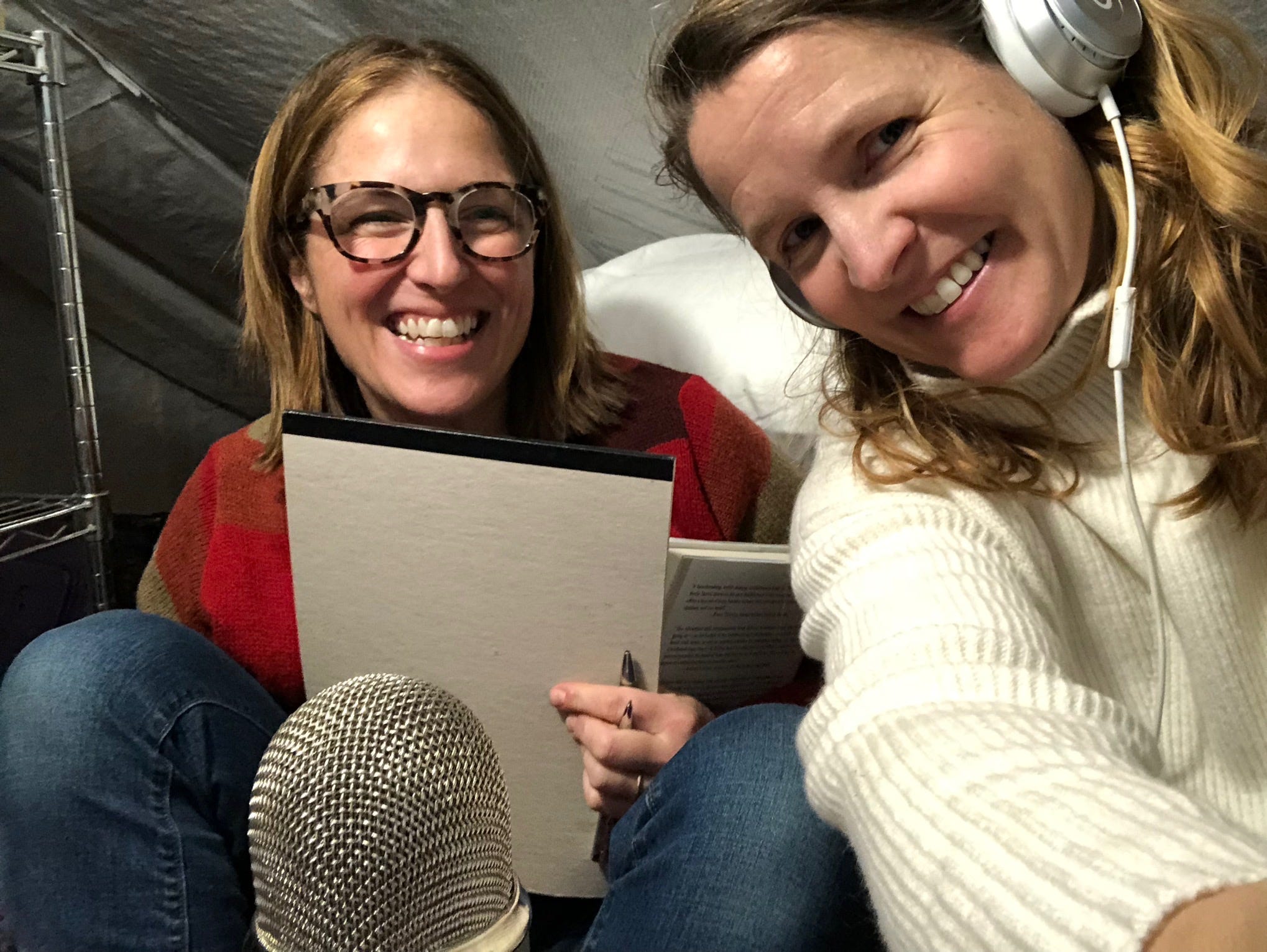 10 Years of #amwriting: Looking Back and Moving Forward✨ | writingpodcasting+1 | Jennie Nash | Write BigBook Lab+2 | — | milestonewriting advice+1 | — | 21m 59s | |
| 3/6/26 |  "I Had the Full Heart of the Question In My Hand."✨ | speculative fictionwriting process+1 | Casey Scieszka | Hashtag AmWritingThe Fountain+7 | PolandNew York+4 | The FountainOpen Throat+2 | — | 24m 23s | |
| 2/27/26 |  Write the Book Readers Can’t Stop Recommending (Write Big, Ep 14)✨ | writingsuccess+2 | AJ Harper | Write a Must-ReadLove Medicine+5 | — | Top Three bookmeaningful success+1 | — | 16m 35s | |
| 2/20/26 |  Ep 492: What book format benefits authors most?✨ | publishing industrybook formats+3 | Sarina Bowen | Kindle Unlimitedhardcover+5 | — | hardcoverpaperback+3 | — | 23m 25s | |
| 2/13/26 |  What Finishing a Book Teaches You About Showing Up (Write Big, Ep 13)✨ | finishing a bookwriting career+2 | Jennie Nash | Write Big | — | anxietypressure+2 | — | 11m 56s | |
| 1/30/26 |  Quit Laughing at My WOTY It's Not Funny.✨ | writing goalslong haul writing career+2 | — | Heated Rivalry booksbook coaching+2 | AustraliaHong Kong+4 | novelwriting career+2 | Jennie Nash | 42m 12s | |
| 1/16/26 |  How to Take the (long, elegant) Gloves Off and Write Like You | Anyone who ever listened to Jenna Blum do interviews on the A Mighty Blaze podcast will not be one bit surprised to hear that we had a great time talking all things writing but most specifically writing BIG—which Jenna has absolutely done with her current book, Murder Your Darlings. Murder Your Darlings is a contemporary thriller and a real departure from Jenna’s very popular historical fiction—a departure that’s totally in keeping with Jenna’s own enthusiastic, passionate personality. As her agent said, her earlier work was elegant and restrained (although still powerful) but in this one Jenna lets herself loose. We had a wonderful time talking about it, and I know you’ll have a great time listening. #AmReadingThe Plot and The Sequel, Jean Hanff Korelitz Last Seen, Christopher CastellaniYou, Caroline KepnesJoin Jenna on tour—she’s absolutely a joy to listen to on writing and probably any other topic! Dates HERE. And do grab Murder Your Darlings—who doesn’t love a tell-all thriller set in this ridiculous industry we all love so much?Hey—if you’re reading this in January 2026, it’s not too late to join our Blueprint Sprint and get in on a rapid-fire roadmap to writing the book you want to write this year (instead of writing 100K words in search of it… ask me how I know!) First Blueprint post below—upgrade your subscription to get started. Episode Transcript Below! SPONSORSHIP MESSAGEHey, this is Jennie. Happy New Year! If you’re a subscriber to the Hashtag AmWriting Podcast, you can join us in our Blueprint Challenge, which is starting on January 12. We’re going to be working on new book ideas, books where we’re stuck, and books that we’re revising, and using the Blueprint framework to help us get unstuck, get clarity, get confidence, and move forward. KJ is leading the charge this time with some write-alongs, some Ask Me Anything sessions, and all kinds of good stuff to help you on your way. I’ll be jumping in as well, and I’ll be cheering you as you get your books into shape and get ready to write forward in 2026. Details are in the show notes, and we’d love to have you join us.EPISODE TRANSCRIPTMultiple SpeakersIs it recording? Now it’s recording—yay. Go ahead. This is the part where I stare blankly at the microphone. I don’t remember what I’m supposed to be doing. All right, let’s start over. Awkward pause. I’m going to rustle some papers. Okay, now—one, two, three.KJ Dell’AntoniaHey, writers, KJ here. I just interviewed Jenna Blum, and any of you who have listened to her when she does the interviews on the A Mighty Blaze Podcast will not be one bit surprised to hear that we had a great time talking all things writing, but most specifically, writing big, which Jenna has absolutely done with her current book, Murder Your Darlings. Murder Your Darlings is a contemporary thriller and a real departure from Jenna’s very popular historical fiction, a departure that is totally in keeping with Jenna’s own enthusiastic, passionate personality. As her own agent said, Jenna’s earlier work was elegant and restrained, although absolutely still powerful, as you know if you’ve read it, but in this one, in Murder Your Darlings, Jenna lets herself loose. We had a wonderful time talking about it, and I think you’re going to have a really good time listening. Jenna, welcome. Thank you so much for joining us for the Hashtag AmWriting Podcast.Jenna BlumYou’re so welcome. I am the one who’s honored to be here. Thanks for having me.KJ Dell’AntoniaI am really excited. So, listeners, as you probably heard in the intro, which I haven’t recorded yet, I asked Jenna to join us because she’s doing a big thing. She’s making a jump into a new genre for her, and I can totally relate, and I suspect many of you can too. Her new book, which is out approximately now, as you hear this, is kill your dollar, Kill your darlings. [intended title: Murder Your Darlings] And it is one of those, like, if somebody wrote a book just for me, it would be this kind of book, or this possibly exact book, which is such a thrill. It’s, you know, that combination of the thing that makes me my buy now list, which is, isn’t a thing like that thing where you’re like, if you tell me the book is about such and such, I’m like, yes, yeah, just, just take my money. So it’s that, plus that really great, commercial, friendly, accessible, like the voice I want to read. It’s not—I mean, I don’t know if any of those adjectives thrilled you—but easy reading is hard writing, and nobody knows that more than me, and you do that very well.Jenna BlumThat is so kind of you, KJ. Thank you. So I’m going to rudely start out by issuing a small correction, but the...KJ Dell’AntoniaOh no.Jenna BlumActually, no, no, it’s fine. It’s Murder Your Darlings. And they’re...KJ Dell’AntoniaOh, okay, sorry.Jenna BlumPopular phrase. And one of the reasons I call the book Murder Your Darlings, as opposed to kill your darlings, which people tend to gravitate to, is that the book is really about writerly appropriation in the biggest way, about story thievery in the biggest possible go big or go home kind of way. And the phrase kill your darlings is itself an appropriation, which I didn’t know until I started writing this. But the original phrase is Murder Your Darlings. It was coined by a gentleman called Sir Arthur Quiller-Couch in 1914, and he was giving a lecture on good writing, and he said, whenever you think you’ve done something exceptionally clever in your manuscript, by all means, put it in, and then go in and take it out: murder your darlings. And then William Faulkner ran with it, and Stephen King ran with it, and it became really popularized. And I thought, how cool to go back to the original in a book about appropriation. So it’s Murder Your Darlings.KJ Dell’AntoniaIt’s also—that’s better. I can’t believe I got it wrong, because it has this great cover with the quill and the blood. And I—it that’s, that’s better. It’s just it, I don’t know, kill your darlings has also become a very glib phrase. So to switch it to Murder Your Darlings kind of makes—kind of gives you that record scratch moment of like, oh, oh wait. Oh! Right? So I like it.Jenna BlumI appreciate that. Thank you. I mean, I myself was thinking, kill your darling, so I love to, sort of like, care what of that phrase, that Murder Your Darlings had a sort of a weightier sound to it. And despite, like, the joy that I had in writing about writing, and I hope all your listeners just like me, I’m—my must order now books are all about writers, about writers about writing, especially fiction about writing. I had so much joy in that, but the book also has some pretty weighty subjects at its heart as well. So I feel like that weightier murder is somehow indicative of...KJ Dell’AntoniaWell, that brings us really well to the next question that I wanted to ask you, which is, what was your intention around this? This is definitely, you—now I think probably we step out with every book, but this is you stepping out and playing big, which is, you know, is a new theme that we’re talking about around here. So what was your intention for Murder Your Darlings? What did you want it to be?Jenna BlumI love that you’re doing the go big or go home theme. I always think that way. I’m not a quiet writer, not probably, not a quiet person.KJ Dell’AntoniaYou’re not really, no, not—that’s not what I would say. Oh, Jenna, she’s so shy and retiring...yeah. Yeah.Jenna BlumSo I had so much joy and so much fun writing Murder Your Darlings, because all I had to do was unpack my life. She’s such a wallflower. My sister saw a photo of me with a megaphone at a—as an activist at a rally, and she’s like, nobody here is surprised. This is what I’ve been living with for all the years. Anyway. So my intent with this was really just to have some fun, honestly. I have been working on historical fiction, and I’m known primarily for historical fiction, and I was working on historical fiction when the idea for Murder Your Darlings came to me, and I felt like I had two books trying to elbow their way through a doorway at the same time. And because I am more known for historical fiction, and my editor had already green lighted that idea, I was very dutifully working along on it—and it was a terrific idea, I have to say, like on paper. It was an idea on paper that should have been good, but it really wasn’t. There was no juice to it. So I kept writing, and then thinking, right, what was the motivation? What did the character actually want in that scene? And then I would realize I had no idea and didn’t care. And so I was thinking about Murder Your Darlings, which is about a female writer—mid career, female writer who falls in love with a stratospherically successful and very charming male writer and then finds out that he may or may not be killing female writers to take their stories, or is it one of the number of women who are stalking him, especially this very persistent stalker named the Rabbit. And so I had this idea kind of elbowing its way into my head, and I thought, I don’t, I don’t know if I’m qualified to write a thriller. I’ve written a thriller. Who am I to do this? And then I read Jean Hanff Korelitz’s The Plot, which is so good, so contemporary, so fresh, so funny, so smart, so everything. And I stalked her. I called her, got her phone number, called her, and said, how was it for you making this pivot, going from quote, literary fiction end quote, to writing a thriller? And she said, I just write what I want to write and let other people market it. You should write what you write. And I thought, Babu, because I had always loved reading about writers. I’ve always wanted to write about writers, and she kind of gave me—well, she literally gave me permission to do it.KJ Dell’AntoniaAnd like you said, it really has some bigger themes around that. Did they come with? Did they come with the idea? Did some of them come with the idea, and some of them had to get pulled in later? Like, how? How did that piece of it play out?Jenna BlumYeah, great question. I am a writer who always knows what her theme is going to be. I would have a mission statement on the board in my study saying, like, here’s what this book is about, and then I hope it reaches the reader through osmosis, as opposed to me being preached. So the plot has to express that idea. But then I am so plot focused when I’m writing and just wanting to get all the blocking down and get this play down so the reader doesn’t get bored that I have to go back through often and shade in the theme and the emotional resonances I hope are there. And one of the very big themes for me in Murder Your Darlings is of codependency, and what makes a smart, successful woman with a stable life, a good community, who’s a teacher, who’s a writer, who has really built her life for herself, fall for somebody who she knows very well may be sketchy AF. It’s like, okay, I’m just going to keep my hand on the hot stove. You know? Why is that? And I feel like, if you know a woman like this, if you were a woman like this, you are a woman like this. I certainly have been this way my whole life, like falling for the sketchy dudes and feeling great shame about it. I thought, I really want to write this book for all of us, or women or men—I should say this is not gender specific.KJ Dell’AntoniaYeah.Jenna BlumOr that person who’s like, don’t open that door, and you open the door anyway.KJ Dell’AntoniaYeah.Jenna BlumWhy?KJ Dell’AntoniaAnd people are like, so many flags, and you’re like, I kind of like flags.Jenna BlumBut he’s... but he’s so cute.KJ Dell’AntoniaHe looks so good in red.Jenna BlumRight? Exactly. And I have to say that the relationship at the center of the book between Sam, the female writer, and William, who’s the male writer, they do have some really rare commonalities too that are hard for Sam to overlook. And she comes from a trauma background, so she can’t trust her own instincts. And so I wanted to, as in all of my novels, work with people who have survived trauma: how they react in the atmosphere and the aftermath, and how their behavior gets kind of torqued or twisted, and sometimes makes it difficult for them to make the healthy decision, which makes...KJ Dell’AntoniaRight!Jenna BlumGood fiction. Good fiction is about people making bad, bad, bad decisions, so...KJ Dell’AntoniaAnd you make him real too. He’s not just bad for the hell of it. You know, it’s not—I— that’s one of the things that is a pet peeve of mine in books, is when you’re like, yeah, that person had really bad parents that really messed them up. But why? Like, yeah. I mean, you can’t have everyone and their parents mess them up. And I would totally do that instantly. That’s my beige flag. Would you like to know how their great, great grandparents screwed everyone up with epigenetics?Jenna BlumIt’s like the poem, right? Is it the Larkin poem? TheyKJ Dell’AntoniaOh, yeah, “They screwed him up,” yeah, yeah. But I always know, like, who screwed them up? And hey, who screwed them up? And who screwed them up?Jenna BlumThat’s a funny thing. Thank you for saying that. So William, and a third of the book is narrated from William’s point of view, and then Sam and the stalker the Rabbit get the other two thirds of the book, and Sam and the Rabbit go back and forth, and William has his own narration at the center of the book. I have to say, I loved writing William. I really did. He’s first person, like, in the guy’s skin. He is really arrogant, like, really narcissistic, and he was, and could never use a, you know, five cent word when a $30,000 word will do. But I really loved writing him, because, as you said, you’re right, like, he doesn’t, he doesn’t mean to be any of those things. And I mean, we all recognize a narcissist, which is such a hot word these days, and I mean, he is a legitimate narcissist, but he doesn’t need to be narcissistic. He just is that way, and he has his reasons that are very clear for being that way. And it wasn’t until—this is when you ask him, before, what did I put in afterwards?—it wasn’t until I was really done writing his first draft, and one of my writer friends said to me, but like, what were his parents like? And I thought, I don’t care. Like, I don’t care what his home life was like. I don’t care about any of that. But when I did go into that room, because I knew I had to, there were things in that room that were a chamber of horrors, that were like, truly grotesque. And I thought, this actually makes sense to help explain why he’s motivated the way he is.KJ Dell’AntoniaAnd why she would be drawn to him. Like, you know, he’s not just—there’s there is more in there. I, you know, not to excuse, not to excuse William. Is he the first character you’ve written that was, that was like that, deeply narcissistic, and in the first person?Jenna BlumThat is a great question. He’s not the first character I’ve written who is narcissistic. In my first novel, Those Who Save Us, there’s a Nazi officer who is deeply narcissistic and also totally unaware of his own qualities, which I guess actually defines a narcissist, like they have...KJ Dell’AntoniaOh yeah, yeah. I think if you know you’re a narcissist, you’re not a narcissist.Jenna BlumRight? Exactly, right, right. Nobody’s going to be like, I’m a narcissist. Who cares? I love being a narcissist. They’re more like the world serves to please me, and if it doesn’t, then the world is wrong. But this is the first I’ve written from the first person, and in fact, this is the first novel I’ve written anything in the first person. So the Rabbit in this book is first person—the stalker—and William is in the first person. Sam is third person. And I haven’t written in first person since graduate school, and when I did, I was kind of soundly spanked for it. And they’re like; there are graduate school scenes in this book as well. And in Murder Your Darlings, the workshop scenes that I love so much, because I pretty much just airlifted them from the [unintelligible].KJ Dell’AntoniaYeah, which is the best. Absolutely.Jenna BlumAnd it’s so fun, so much fun to write, like grad school, boot camp, you know whatever... I’m here for all of that. Murders the people who it doesn’t make stronger, but, but yeah, I remember writing...KJ Dell’AntoniaSo what was that like to—what is it like to switch your normal writing perspective, so the POV to first person? And did you, did you do it from the right away? Or did you, you know, did you write it the wrong way and then switch it? How did—and did it bother you? Were you like, oh, no, I don’t know if I can do this?Jenna BlumNo. I loved it very much. I loved it so much. And William was actually not even supposed to be in the book, so I can talk about that in a minute, but the first, first person character to come in was the Rabbit, and she wasn’t originally supposed to be there either. It was supposed to be Sam narrating, and the third limited, which is my lane, and I’ve been in that for years and years. And I do love it. I love Sam’s voice as well. But the Rabbit came to me on Christmas Day. I want to say 2023, and I was thinking about Sam’s relationship with William, and how Sam, which is still in Murder Your Darlings, gets very jealous, because she knows that William is really opaque about his relationships with other women, and he cannot resist the charms of the opposite gender, shall we say. So Sam is stalking him. She still stalks him a little bit in this book. And I thought, what if one of the other women were also stalking him alongside Sam? And what would that look like? And I was supposed to be at a friend’s house on Christmas Day. Our whole family got the flu. I was lying in my apartment in Boston feeling wretchedly sorry for myself. It was raining. It wasn’t even snowing. It was a sort of Dickensian awfulness. And I was lying around feeling bad for myself and thinking about this, as one does. And then all of a sudden, I jumped up and ran into my study and put my hands on the keyboard and wrote what would become the prologue of the novel. It is unchanged, in that.KJ Dell’AntoniaWow!Jenna BlumAnd she just came out of freaking nowhere. And I will tell you, it was like plugging my hands into a socket. Like, every time I sat down to write the Rabbit, I just felt electrified. Her voice is not my voice. She’s very colloquial. She’s the person who tells it like it is, speaks truth to power, sits down at the kitchen table and says, like, look, here’s what you got to do. You all just follow suit, we’re going to do, blah, blah, blah, blah. And she just really is very plain spoken and very funny and very sarcastic. I think she’s also not me in terms of, like, what she looks like, in terms of her background. She comes from a poverty background. She comes from an abuse background. She’s a bookseller, which actually I was. But it was astonishing that, like, every day, when I looked at my schedule and I knew I had to write the Rabbit, I was like, oh, thank God, because every time I put my hands on the keyboard, she was there. And I just got such a kick out of her—stalking William, stalking Sam. I think she’s amazing. And there’s a big surprise tied up to the Rabbit. So not to spoil anything, but those of you who love, you know, your twists in your fiction will, I think, be—hopefully—be gratified by, by the twist with the Rabbit. William came in about halfway through. I want to say maybe the first draft. I was going Sam, Rabbit, Sam, Rabbit, Sam, Rabbit, and I was going into the second section of the book, act two, and I was going to continue doing that. And I had this whole outline. Sam, Rabbit, Sam, Rabbit, Sam, Rabbit—rising action. I knew all my plot points all sketched out. And then one day, I was like, what if, instead of sort of reheating these leftovers and trying to make the action continue to step ladder up, what if William gets a section in all of his William glory and all of his narcissistic glory? And that kind of gives the reader a little bit more reason to be hopeful for Sam and also scared for her, because we know from his perspective what his life was really like, and he’s not being truthful with her about it. And I called my editor and said, I’m going to do this thing, maybe, with your permission. Like, do you mind if I write, you know, some sample William chapters? And I was so nervous about it. I had this whole defense about it. Here’s why this is going to be good. She was like; I think that’s a brilliant idea. Do the whole section from his point of view, if you want to, if you want to. I think that’s great. And again, sitting down to write, I felt like I plug my hands into this socket. But William grounds the whole book with this sort of dark electricity, I think, because he is...KJ Dell’AntoniaSo you already had it from the other points of view? Did you have it planned, or did you have it written?Jenna BlumI had it planned. I had a plan. I had bits of scenes. I had snippets of scenes and chapters. But I have scenes they dearly love that are not in the book at all because William usurped...KJ Dell’AntoniaBecause he can’t—yeah, he doesn’t—well, and he is not there.Jenna BlumAccess, no. But, I mean, I kind of flipped them inside out in like a pocket, into, like, other parts of the book, so that, like, I know what Sam and the Rabbit are doing during William’s sections. And you see them, of course...KJ Dell’AntoniaYeah, yeah.Jenna BlumFrom his point of view instead. It was not a darling I had to murder. Like, again, like sitting down to write his point of view was a relief, in some ways, to get out of my own skin. Getting into somebody else’s skin, in the first person, is the farthest you can go from yourself if that character is not, in fact, you. And that’s why I love writing fiction. I get out of my own skin into somebody else’s skin; walk around in that virtual reality. I just freaking love it. It’s the best part—kind of insanity there is.KJ Dell’AntoniaSo with this project, what did you love most about the process? Sounds like there’s going to be—sounds like there’s a competition, because it really sounds like you had—I mean, I’m sure there were some hard moments. We’ll get to that. That’s my next question, actually. But what did you love most? What do you love most about how it turned out, and what did you love most about doing it?Jenna BlumI love all the things. I literally have goosebumps when you say this. I mean, it is a competition, because I love this book so much. And I know you’re not supposed to say it about your own books, but I do. I just love this book, and it might be my favorite book that I’ve written. My favorite. I love it so, so much. I hope readers feel the same way. I think one of the reasons I love it so much is I think it’s really funny. Like, there was never a single day where I sat down to work on this book that I didn’t snort laugh, like, in the middle of the scene, because William is so charming and yet so horrible and fatuous and whatever. So he really made me laugh, whether I’m viewing him from the outside or from inside. And the worse he gets the more funny I thought he was. The Rabbit, likewise, in her speaking truth to power kind of way. And then Sam sections allowed me to spill the tea about the weirdness and the wonderfulness of the writer life, much of which is just so peculiar, whether you’re on tour or you’re trying to, you know, zhuzh an idea into being and you can’t quite get it, or, you know, being in a relationship with another writer. I mean, all of those things are just—they’re just nuts. And so every day I sat down and laughed and laughed and laughed and, like, cackled in my apartment, scaring the dog. And I thought it was so much fun. And now looking at the book and, like, holding it in my hands, I can open it to any page and be like, yeah, oh my God, I totally remember that line that was so great. So I hope people have fun with it. The early reviews that have come in have been, thank God, you know, Inshallah, they were great. And that’s what people have been saying. It’s a delicious book. It’s a fun book. It’s a delightful book. Nobody’s ever said this about my books before.KJ Dell’AntoniaIt’s totally very different. It’s totally, really different than your other work, right?Jenna BlumYes. Well, I mean, I think so. Like, when you’re not writing historical fiction, fiction requires—or at least it did for me—because I’m writing about big, serious things, you’re writing about World War Two, it’s probably not going to be all that funny. But I feel like the third person voice that I’ve been using most of my authorial career has been hopefully elegant and restrained, because I really, you know, working with my word choices—every author does—but I’m trying to maintain a very even narrative tone. This one is just so freaking off the chain, because I got to write in a contemporary way. I got to get into the first person, other people’s voices, other people’s experiences. It was interesting. My agent, who’s very, very smart, and she is French, and when I came to her and said, you know that historical fiction that you thought I was writing, it’s actually not that. It’s a thriller. That’s something different. She read it, and I was, again, sort of terrified of what she would say. And she called me, and she was like, [imitating her French accent] “Jenna, I think what you are doing is smart, but more than that, I think it is brave, because your whole life you have hide behind this voice you use for your historicals. And instead, this is like, really, you taking the gloves off. This is your voice. This is you.” And I just felt so validated and empowered by that observation.KJ Dell’AntoniaThat is exactly why we were—we are here. If this is—it’s so, so meet. We are meeting for the first time. Lots of times when I get somebody on the podcast, we’ve never encountered each other, and your vibe is so Murder Your Darlings. And really, you know, at this point in your life and in your career, this is really, you know, who you’re presenting as. And I, of course, don’t know how you presented, you know—maybe we should go back seven years to before a lot of things that have evolved in your life. I don’t know whether you were maybe a little more elegant and restrained yourself. I have no idea.Jenna BlumUh uhh, never.KJ Dell’AntoniaNo?Jenna BlumNope.KJ Dell’AntoniaI mean, it must feel so great to have released that part of yourself into this much, you know, loved part of your world.Jenna BlumIt just feels so much easier in a lot of ways. I remember—and I’m thinking about this while we’re talking—lying on the couch and watching the You series by Caroline Kepnes, like, based on a series of books that she’s written that are really tremendously good. And I remember I was looking for a binge at the time. I just finished something that was fantastic. And, like, you know, what am I going to watch? And I clicked into You, and I was so happy that I did because I thought, this woman writes the way people actually speak. Her dialogue is so smart. It’s so Cracker Jack. It’s so spot on. And I am now friends with Caroline. Caroline is amazing, and I remember saying that to her the first time I met her, just as a total fangirl. Like, how did you do that? She was like, this is just how I write, and I have not been giving myself permission for years and years to do that.But in fact, again, my agent would say to me, you know, [imitating her French accent] “You write these, these book, and you go to your readings and people think they’re going to meet, like, Margaret Thatcher or something, because books are very serious and very heavy and very, you know, weighty about this big topic, and then you are a goofball.” And I am!KJ Dell’AntoniaI love the French accent you are giving us here. As a student of French, I’m particularly enjoying it.Jenna BlumOh, I’m so sorry then, because my agent hates when I do this. She hates it. She’s like; please don’t use the French accent. I’m like, I have to use it. And she’s in the book, and her name is Mireille, and I wrote her exactly as she speaks. And she—my editor, whose name is Sara Nelson—is in the book as Patricia, and I pulled no punches or even tried to disguise them whatsoever. And they like to bicker over who is more important in the book, Mireille or Patricia. So that’s super fun. But I mean, I do think there is something really liberating about entering a scene, entering a chapter, and thinking, I don’t have to fancify this language. I don’t have to smooth over its edges. If I want to say somebody is sketchy AF, I say they’re sketchy AF.KJ Dell’AntoniaYeah, I don’t have to figure out how someone would have said that in 1942, which is—I mean, I do—I don’t want to—your past work, which I haven’t read all of, but what I have read is very much infused with a humanity and a female power. It may be elegant and restrained, but it’s in there. It’s like, you know, coiled, but it’s in there. So I don’t want to propose that those books aren’t really you. But this is, you know, this is definitely more who you come out of the box as.Jenna BlumYeah, there won’t be such a mismatch with this for readers who are coming to my work for the first time. If you do that and then you see me in person, you’ll be like, oh, this totally tracks, as opposed to... And I think one of the great things about writing fiction is you can be in that sort of disguise. And my previous fiction, the historical fiction—and I did have one contemporary novel in there as well—I think the topics were just not as funny to me. Like, writing life is very funny, and contemporary life is funny. But I think that writing historical fiction enables you to get in a time machine and go back and put on a different set of clothes, and that is reflected in the narration. And this, I think, shares some commonality with my other fiction, in that, like William, I am a friend of big vocabulary. Like, I love my vocabulary. I love to deploy. But it just feels more bouncy to me. Like, it just feels buoyant and super energized. And I love it. Like, I have three more thrillers lined up in my head on the runway that I would love to write.KJ Dell’AntoniaThat’s amazing.Jenna BlumSo I’m really excited about—I hope this book does well. So everybody should buy it, please, so I can write more thrillers. Please.KJ Dell’AntoniaEveryone do that. We’re going to put all the links for that in the show notes. So one more question before we turn to me asking you about other people’s books. What was the hardest thing about writing this? I have a guess for what you’re going to say, but I want to hear what you say first.Jenna BlumI don’t know if there was a hard thing about writing this book.KJ Dell’AntoniaI was going to say; maybe it was giving yourself permission to do it in the first place.Jenna BlumOh, interesting. No. I mean, that’s more about marketing, in some ways. I had to get permission. I didn’t want my agent to be like, no, this sucks. I mean, she would try to sell it no matter what, but I really...KJ Dell’AntoniaOh, you’re such a disappointment.Jenna BlumRight? If we must write it. Nash, my editor as well—I’ve been with my agent for 24 years, and I had been with my editor for, like, almost 10 years now, which is pretty amazing.KJ Dell’AntoniaYeah, that’s the dream.Jenna BlumSo glad to have one on one shoulder and one on the other shoulder. So I didn’t want them to both be like, oh gosh, she’s writing a thriller, everybody writing a thriller. What was the hard thing about writing this book? I think the fact that I’m no longer writing it, honestly. It’s one of those, like, tough act to follow books. You know, I think about other ideas and I’m like, but they’re not darlings, though. So, like, I really had so much fun with this book that when I was done, I was really bummed. I will say that there is a paragraph toward the end of the book that is, for me, the heart and the soul of the entire book. And I’m always curious about other writers, whether they have these paragraphs that are really the sort of nut graph of the whole piece, to use a journalistic term—like, the whole, the heart of it. And I cannot read that paragraph without crying. And I revised this book eleventy-two times, and I could never get through it without weeping. I read the whole thing aloud when I was in the copy edit stage, and I was like, you know. So, I mean, is that hard? I don’t know if that’s hard, but it was like a part that stabbed me, I think. And then the rest of it is just, like, a pure freaking joy. And I really hope people feel the same way, because, I mean, it’s just—why not bring joy?KJ Dell’AntoniaWhy not bring joy? That is the thing that has stuck with me most about stuff I’ve read most recently about writing. And unfortunately, I’ve already forgotten where I saw it, but someone was saying, if you’re read, why should people read your book? What are you—what are you giving them? They were like, if, if your whole point is, but I worked so hard, that is not how this works. But yeah, like, great. I mean yay. But also, I mean, what’s in it for me, man? I’m the reader, and what’s in it for me? And joy is the answer that I want. So I think it’s going to be the answer everyone else wants too.Jenna BlumAnd, like deliciousness and fun and hopefully—I mean, I write all of my books at the bottom line, at the common denominator, to help people feel less alone in their experiences. So if people read this book and they’re like, oh my God, I was totally—say I’m walking into this relationship—oh my God, oh my God, that’s me, oh my God. Like, I really hope that people see themselves in her.KJ Dell’AntoniaYeah, it’s the gift of getting yourself, getting out of your head and also seeing yourself more clearly.Jenna BlumYeah.KJ Dell’AntoniaThat, to me, is the hope with fiction.Jenna BlumYep, totally agree. You get to escape. You get to have an adventure. You get to feel the work through somebody else’s experience. And then you also get to feel like, whatever your weirdo experience—all weirdos—like, you’re not alone in that experience. We are here.KJ Dell’AntoniaI love it. All right. Well, switching gears completely, tell me what you’ve read recently where, again, we’ve talked really hard about this—this book was a leap. It was a great leap for you. You’re playing big. What have you read recently where you could tell that the writer was also playing big, going, going to the outside of their abilities?Jenna BlumYeah, I think—I mean, I know so many talented writers. I think they’re just trying out different keys the same way I am. And my answer really runs along my own track, because there are a lot of writers I know who are writing thriller or true crime disguised as fiction type of stuff, who have been primarily and previously known as quote literary fiction, end quote, and just, like, a term that that I don’t like. But when I say that, I really mean when the attention is paid so much to the language and the characters, and you can be a little more experimental in form, et cetera. But I think really, like Jean Hanff Korelitz, who I mentioned earlier.KJ Dell’AntoniaYep, I loved The Plot and The Sequel. They’re both great.Jenna BlumI love The Plot and The Sequel. I did not have the pleasure of interviewing Jean for The Plot, although somebody on [unintelligible] did. But I did have the pleasure of interviewing her for The Sequel. And I was fascinated by, like, that is a go big thing, because everybody’s like, oh, The Sequel is not as good as the original. So even to write a sequel in the first place is going really big in my work.KJ Dell’AntoniaAnd then to, to have it be what it was. I actually, in some ways, thought it was better. But, I mean, they were both great. I really enjoyed both of them, but The Sequel was just like, “ooohh, oooww,” in the way it just... Anyway. It was, it was very skillful.Jenna BlumI loved that it was really ingenious. And I loved talking to her about thrillers. I was like, how do you do this when you have a plot and you need to figure out, you know, at the end, how do you surprise the reader? And she said, it’s like going down a long hallway filled with doors, and you keep opening a door and closing the door. You know, that’s not the answer to the plot problem. That’s not the answer. That’s not the answer. That’s not the answer. And at the end, you have only one door left, and that is your thriller solution. Like, that’s the twist ending. And I was like, people plan that? I mean, I have to plan everything. I plan going to the market, you know. I’m like that person. And, you know, she didn’t. She doesn’t plan it. And I thought that was [unintelligible].KJ Dell’AntoniaYeah, I too am a planner. And that boggles my mind. I don’t mind if the plan then changes, but without—I could not. I cannot operate without the plan.Jenna BlumI can’t write without the plan, even if I’m not writing a thriller. So to write a thriller that is still satisfying and not have that delicate calibration of, yes, this is the surprise that I’m going to plant in chapter 39—that’s astonishing. So she is one. And my friend Chris Castellani, who has the book coming out February 17—I want to say its called Last Seen. And Chris is a beautiful literary writer. He had a book called A Kiss from Maddalena that grew into a series of three books. His last book was called Leading Men, and he got a review in The New York Times that said his prose was—I memorized this, not because I’m jealous, don’t worry—was opaline, and likened him to F. Scott Fitzgerald. And I remember calling out that review, and I was like, sir, you should get that as a tramp stamp. I certainly would. And so he has this reputation as this fine, fine literary writer, and he decided to go into true crime slash thriller territory alongside me. And I’m so glad our books are out at almost the same time so we can kind of keep each other company in this venture. So Chris’s book, Last Seen, is about the victims of the smiley face killer, and they are all of these young men who are killed by the smiley face killer, narrating from within the frozen rivers in which they are trapped, dead. So they’re, like, sort of narrating from beyond.KJ Dell’AntoniaWell, that’s still experimental. He did not fully leave his form.Jenna BlumHe didn’t, and it’s...KJ Dell’AntoniaHe’s taking his form with him.Jenna BlumYeah, he is, in a way that I don’t know if I have or not. And I would leave that for greater minds to determine. I mean, I hope that what I’m writing is still smart. And again, there’s the big vocabulary, but, but there does seem to be more of a jump in some ways. But Chris—it is a little sort of Virgin Suicides, I guess, but from the point of view of all of these lost boys. But you also get what their family members are saying, or the people who love them, the last time they saw them. And it’s this beautiful, sort of kaleidoscopic endeavor that also provides satisfying answers as to who did this. So he’s taking his craft and applying it to almost a whodunit in a way. And I think it’s really ingenious and really fascinating to watch this track change from the outside, where I feel like it’s almost like T. S. Eliot is writing a thriller—like that’s kind of how it reads—except with more sex and death. And Chris and I are going to speak together at Politics and Prose on March 5, I want to say, and we...KJ Dell’AntoniaNow I can put that in the show notes, because this will be out. If anybody’s in the DC area, you could hit Politics and Prose.Jenna BlumYeah, come on down.KJ Dell’AntoniaThat would be amazing.Jenna BlumWe are calling our panel the sex and death panel, or the sex and death conversation, because both our books are so sexy and so deathly. And then my friend Alex George, who I love, said, well, you should invite an accountant to be on your panel, and then it could be sex, death, and tax.KJ Dell’AntoniaYes.Jenna BlumWhich we’re not going to do, but...KJ Dell’AntoniaOh well.Jenna BlumBut that’s funny.KJ Dell’AntoniaOh well, they’ll, they’ll charge sales tax or something. It’ll—they’re still taxes. Taxes will always be with us.Jenna BlumRight. Exactly. Sex, death, and taxes. So come on out for sex, death, and taxes. And the book Last Seen. And it’s just—it’s really haunting. It’s a very haunting book.KJ Dell’AntoniaI love this. Well, I know that what’s next for you is a pretty big tour for this, which I will put all the links to in the show notes, not to raise the bar. But are you? Are you already working at—this is sort of, this is actually more like a craft question. Are you already working on something new? Are you noodling something new? How do you manage this process part of your writing?Jenna BlumI’m noodling something new. For all of the ventures into new territory, I haven’t been able to change my spots yet in terms of process, which, for somebody writing thrillers, is not great, because you can, you know, hopefully turn them out faster than fiction. To me, the historical fiction requires so much research that took me much longer to write. But I do have those ideas lined up. I think what I like to do with ideas is I kind of roll them around in my head like marbles to see if they are going to stick around, or if they’re going to roll down a hole and disappear somewhere, like a little rabbit hole. And then you know that they don’t have stick-to-itiveness. All three of the ideas that I’m thinking about are still there. The thing for me is I’m a very single-task person, and when I’m promoting, I’m really promoting. Like, my tour—amazingly bananas. Like, I am going to be in a different place every single day connecting with readers, like Sam in Murder Your Darlings, the heroine. I write to connect with readers. I don’t write for the joy of the writing, although I love this book and enjoyed writing it so much. Like, I write because I want it to meet you guys and be out there, like talking about my book, talking about other books. So when I’m on tour, I don’t actually write. And I was saying this to my friend the other day, Dawn Tripp, who’s also an amazing writer, who wrote Jackie, and has been on tour. She did something like 162—I’m making it up—but she...KJ Dell’AntoniaI actually saw her at... outside Boston, the Newburyport Book Festival. Oh, I know, which is amazing, which I also will be at. Yeah. That’s a great festival.Jenna BlumYeah, it’s so good. And I’m going to be in conversation with my editor, so if you have any...KJ Dell’AntoniaOh, there? At the Newburyport festival? I’m sure—I usually go. So that sounds great.Jenna BlumPlease come, please come. Because that’ll be really fun, because she can spill the tea on, on, like, how disorganized I might actually be. But Dawn—I was saying—she’s like, oh, I’m home now. I’m so happy I can write. I was like; I can’t imagine how you would have written on that tour. And she said, oh, no, I write every day, because if I don’t, I don’t feel great, you know, I don’t feel great in my own skin. And I was like, that’s just nuts, man. Like, I’m going—I’m done with this book. I’m going to Nordstrom Rack. I’m going to go shopping. I’m not touching another book for five years. But I do, I’m kind of looking forward to being back this summer. I have a couple of months that I think are slower, and I want to develop those ideas. So let’s see if I can, you know...KJ Dell’AntoniaLet him audition a little more loudly.Jenna BlumYeah, I love that audition. That’s so great. I’m going to steal that, but I’ll credit you.KJ Dell’AntoniaYeah, yeah. It’s all yours. All right. This was so great. Thank you so much. This was a super fun conversation, and I’m going to enjoy creating the intro and writing up the show notes for it. And, gosh, I hope everybody goes out and buys this too. It is a wholly enjoyable experience, a great way to cleanse your palate from your January, your December, whatever, whatever that may have been. And now in January, you know, come Murder Your Darlings with Jenna. You’ll—you won’t be sorry.Jenna BlumThank you so much. Thank you for having me. This is a sheer, pure delight. Thank you.KJ Dell’AntoniaThank you. Okay, writers, until next week, keep your butt in the chair and your head in the game.NarratorThe Hashtag AmWriting Podcast, is produced by Andrew Perrella. Our intro music, aptly titled Unemployed Monday, was written and played by Max Cohen. Andrew and Max were paid for their time and their creative output, because everyone deserves to be paid for their work. This is a public episode. If you'd like to discuss this with other subscribers or get access to bonus episodes, visit amwriting.substack.com/subscribe | 41m 26s | ||||||
| 1/10/26 |  Finding the Ideal Reader: How the Blueprint Shaped a Physician’s Next Project (Bonus Episode) | This is a Bonus Episode, which means that it doesn’t have any of the beautiful audio engineering from our amazing team.In this Bonus Episode, Jennie Nash talks with physician-writer Carolyn Roy Bornstein about how one Blueprint exercise brought clarity to a long-stalled book project. By identifying a single ideal reader, Carolyn was able to see exactly who she was writing for and shape A Prescription for Burnout with purpose and focus.They discuss why audience clarity matters and how the Blueprint can unlock momentum at the right moment in the writing process.Our guest, Carolyn Roy Bornstein, MD is a retired pediatrician, narrative medicine teacher, and author whose work explores the healing power of reflective writing. Her forthcoming book, A Prescription for Burnout: Restorative Writing for Healthcare Professionals, will be published by Johns Hopkins University Press. Carolyn draws on her clinical experience, her own journey through trauma and recovery, and her work with healthcare trainees to help writers—and caregivers—find voice, purpose, and resilience through the written word.Join Us for the Blueprint Challenge Starting January 12Hi there supporters and subscribers! Many of you are joining the Winter Blueprint for a Book, and if that’s you, you must opt-in to receive posts, AMAs, write-alongs and podcasts. In 10 weeks, future you will be thanking current you for all the work you put in to figure out what you want this book to be—and how to best get it there, whether you’re starting fresh with a new draft or revising something that still hasn’t come together.If you don’t opt in (how-to below), this will be the only Blueprint-related email that comes your way. (So no worries and no extra emails for those of us having a normal chaotic writing season!)And for those of you who haven’t yet signed up—WHAT are you waiting for? This is a killer deal—put in an hour a week (okay, maybe more some weeks) and you could have a blueprint in hand by March—with a cohort, AMAs, write-alongs and plenty of help. Last chance—or at least, this is the last time we’ll prod you. If you decide to jump in next week, we’ll be here.Want to learn more? We published a whole series about the joys and benefits of the Blueprint:* What the Blueprint is and why Jennie made it* Introducing the winter book coach hosts* Overcoming Pantsing Pitfalls: How the Blueprint Method Can Save Your Story* The Blueprint is the Solution for Time-Strapped Writers* How to Use a Blueprint for Revision* Befriending the Blueprint* Using Mindfulness to Master the BlueprintNot yet a paid subscriber? There’s still time—in fact, there’s still a special deal in place for those who want to jump in: 20% off an annual subscription until 1/15/25, and you can spend the next ten weeks figuring out what you want this book to be, instead of writing 250K words over the course of the year to achieve the same thing. Ask me how I know.To join Blueprint for a Book, you must opt-in and set up your podcast feed. Don’t worry, it’s simple! Click here to go to your #AmWriting account, and when you see this screen, do two things:* Toggle “Blueprint for a Book” from “off” (grey) to “on” (orange).* Click “set up podcast” next to Winter 2025 Blueprint for a Book and follow the easy instructions. (It is MUCH easier to do this step on your phone.)Once you set those things up, you’ll get all the future Blueprint emails and podcasts (and if you’re joining the party a bit late, just head to our website and click on Blueprint for a Book Winter 2025 in the top menu). This is a public episode. If you'd like to discuss this with other subscribers or get access to bonus episodes, visit amwriting.substack.com/subscribe | 29m 52s | ||||||
| 12/23/25 |  December Booklab | It’s the December Booklab, and while our booklabs are normally only for subscribers, we’ve made this one free as a little present to you—something to listen to while all the other pods are having a well deserved break.How this works: we’ve chosen two among the brave souls who have submitted their first pages (i.e. first 350 words) to us. As always, we read the page aloud, with no other information other than genre and (sometimes) title. We talk about what we read, how it was received, what we think we do and don’t know about the book and what we should know. We offer constructive comments to these writers, and to all writers, on how to make that first page work as hard for you as it can.And then we answer the question: would we turn the page?Kids, those first pages have to WORK. People download a book, or grab an audio sample, often without the benefit of your flap copy or the beautiful cover, and you need to sell them on sticking around from that first minute. The two entries for this episode:* The Burning Truth is a commercial thriller centered on a woman whose sister’s death is reopened when a teenage true-crime podcaster starts investigating a case that hits dangerously close to home.* Camil and Bloom is contemporary literary fiction about a middle-aged woman at a bar grappling with being ghosted, using sharp observational detail to explore loneliness, aging, and stalled lives.Our takeaway is that a first page must work with extreme efficiency: it needs to establish character, stakes, and story direction all at once. Vivid details and strong writing aren’t enough on their own; those details have to be focused and clearly tied to the protagonist’s emotional core so readers understand whose story this is and why it matters. A compelling hook helps, but clarity of perspective and purpose is what ultimately makes a reader turn the page.#AmWriting is a reader-supported publication. To receive new posts and support my work, consider becoming a free or paid subscriber. This is a public episode. If you'd like to discuss this with other subscribers or get access to bonus episodes, visit amwriting.substack.com/subscribe | 35m 02s | ||||||
Showing 24 of 530
Pitch Fit is a Pro feature
See how bookable this show is for guests, which brands already advertise, the per-episode ad value, and the best-fit guest and sponsor profile. The numbers are blurred on the free plan.
How readily this show books outside guests like you.
How proven this show is for host-read sponsorships.
For Guests
ProFor Advertisers
ProUpgrade to Pro to unlock guest cadence, sponsor categories, fit scores, and per-episode ad value for this show.
Chart Positions
1 placement across 1 market.
Chart Positions
1 placement across 1 market.