

Insights from recent episode analysis
Audience Interest
Podcast Focus
Publishing Consistency
Platform Reach
Insights are generated by CastFox AI using publicly available data, episode content, and proprietary models.
Est. Listeners
Based on iTunes & Spotify (publisher stats).
- Per-Episode Audience
Est. listeners per new episode within ~30 days
10,001 - 25,000 - Monthly Reach
Unique listeners across all episodes (30 days)
25,001 - 75,000 - Active Followers
Loyal subscribers who consistently listen
5,001 - 15,000
Market Insights
Platform Distribution
Reach across major podcast platforms, updated hourly
Total Followers
—
Total Plays
—
Total Reviews
—
* Data sourced directly from platform APIs and aggregated hourly across all major podcast directories.
On the show
Recent episodes
XMAQUINA Founder: Why Robots Will Replace Jobs, But Make Owners Rich
May 5, 2026
Unknown duration
We Can Cure Diseases… So Why Doesn’t It Scale?
Apr 28, 2026
Unknown duration
A Startup Advisor on Why Most Startups Fail! They Skip This One Step
Apr 21, 2026
Unknown duration
AI Projects Are Failing | Here's What Everyone Gets Wrong
Apr 14, 2026
Unknown duration
Why the Real Opportunity in Space Isn’t Rockets
Apr 7, 2026
Unknown duration
Social Links & Contact
Official channels & resources
Official Website
Login
RSS Feed
Login
| Date | Episode | Description | Length | ||||||
|---|---|---|---|---|---|---|---|---|---|
| 5/5/26 | 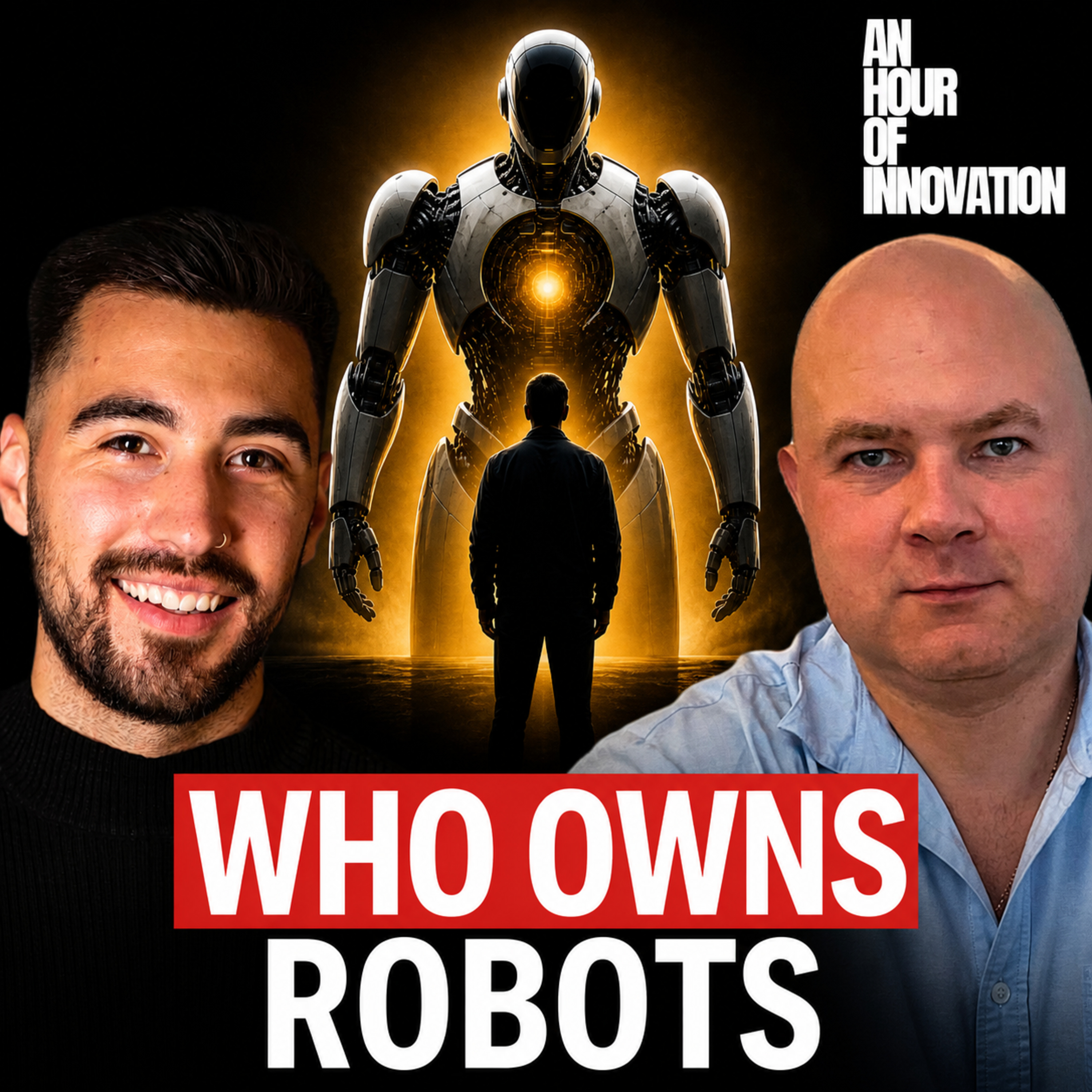 XMAQUINA Founder: Why Robots Will Replace Jobs, But Make Owners Rich XMAQUINA Founder: Why Robots Will Replace Jobs, But Make Owners Rich | AI isn’t just automating work. It’s creating a new machine economy where robots earn money.And the real question is: who owns them? In this episode of An Hour of Innovation, Vit Lyoshin speaks with Mauricio Zolliker, co-founder of XMAQUINA, about the future of robotics, AI agents, and the emerging machine economy. They explore how humanoid robots are evolving from tools into autonomous economic agents, and why ownership, not intelligence, will define who benefits from this shift.The conversation dives into robotics investing, decentralized infrastructure, and what it means for individuals as AI and automation scale.They discussed:* How robots evolve into autonomous economic agents* Why AI agents will move from digital to physical* The machine economy explained in simple terms* Who will own robots and control future wealth* Risks of massive inequality from centralized robotics ownership* How blockchain enables robot-to-robot financial transactions* Why traditional banking fails for machine payments* Robot as a service and real-world business models* How individuals can invest in robotics startups early* Future of humanoid robots in everyday life and workMauricio Zolliker is the co-founder of XMAQUINA, a platform that opens access to robotics investments through decentralized infrastructure. Mauricio operates at the intersection of AI, robotics, and blockchain, building systems that allow individuals, not just institutions, to participate in the next wave of technological growth. His work centers on the idea that machines will soon become economic actors, capable of earning, spending, and transacting independently. Rather than focusing only on automation, Mauricio explores how ownership of these systems can reshape wealth distribution. His perspective combines technical insight with a clear vision of how the machine economy could evolve over the next decade. Timestamps00:00 Introduction01:49 The Rise of Robotics in the Economy05:41 Decentralizing Access to Robotics Investment09:27 What is XMAQUINA?11:50 Community-Driven Investment Ecosystem15:11 The Future of Autonomous Robots and Wallets21:06 Ownership and Wealth Distribution in the Machine Economy25:57 Understanding Machine Capital and Its Implications27:03 The Future of Resource Sharing and Tokenization30:18 The Role of Robots in Everyday Life32:48 Envisioning a Future with Autonomous Machines35:01 The Evolution of Robotics and Its Economic Impact42:22 AI Complications in Robotics44:28 Innovation Q&AConnect with Mauricio* Website: https://www.xmaquina.io/ * LinkedIn: https://www.linkedin.com/in/mauricio-z-08a331ab/ * X: https://x.com/ZolKilla Support the PodcastIf you enjoy the podcast, you can support it by exploring the tools below.These are affiliate links, meaning the show earns a small commission at no extra cost to you.Google Workspace: Collaborative way of working in the cloud, from anywhere, on any device.https://referworkspace.app.goo.gl/A7wHDatabox: Turn business performance data into clear answers your team can understand, explain, and act on – instantly.https://join.databox.com/vhw0wbr9qg9o Gamma: Effortless AI design for presentations, websites, and more.https://try.gamma.app/bbocsmkc6cj7 For inquiries about sponsoring An Hour of Innovation, email iris@anhourofinnovation.com Connect with Vit* Substuck: https://anhourofinnovation.substack.com/* LinkedIn: https://www.linkedin.com/in/vit-lyoshin/ * X: https://x.com/vitlyoshin | — | ||||||
| 4/28/26 |  We Can Cure Diseases… So Why Doesn’t It Scale? We Can Cure Diseases… So Why Doesn’t It Scale? | We can cure some diseases in a single treatment, but scaling those breakthroughs across healthcare is still one of the hardest problems in biotech and pharma.In this episode of An Hour of Innovation, Vit Lyoshin speaks with Tara Austraat-Churik, partner at Blue Matter, and a biotech and pharma expert working on AI-driven drug discovery, clinical development, and bringing new therapies to market. Vit and Tara explore how AI in biotech is reshaping drug discovery, why personalized medicine is closer than ever, and what’s actually preventing these breakthroughs from scaling to reach more patients.They discussed:* How AI is transforming drug discovery and pharma innovation* Why biotech breakthroughs struggle to scale* The true bottleneck: data silos limiting AI in pharma* Why $3M cures exist but remain inaccessible to most* How CRISPR and gene therapy are changing medicine* The reality behind personalized medicine and patient treatment* Digital twins and the future of clinical trials in healthcare* Manufacturing challenges in scaling cell and gene therapies* Why healthcare economics slow down life-saving innovation* Future trends in AI, biotech, and pharma developmentTara Austraat-Churik works at the intersection of biotech, pharma, and AI, helping companies turn scientific breakthroughs into real-world treatments. She focuses on drug discovery, clinical development, and the operational challenges of bringing therapies to patients. Tara has firsthand experience with how decisions are made across the pharma value chain, from early research to market access. She brings a practical perspective on what works, what fails at scale, and why promising innovations often struggle to reach the people who need them most. Her insights help bridge the gap between cutting-edge science and real-world healthcare impact.Timestamps00:00 Introduction02:23 How AI Helps in Biotech05:08 Breakthroughs in Biotech and Pharma08:12 AI's Role in Drug Discovery09:27 Challenges in Implementing AI Solutions13:24 Understanding Cell and Gene Therapy16:58 Current Breakthroughs in Gene Therapy18:30 Scaling Challenges in Cell and Gene Therapies25:28 AI's Impact on Genomics and Gene Therapy27:01 CRISPR: Revolutionizing Research and Treatment28:37 AI-Enhanced Labs: The Future of Discovery29:57 Opportunities for AI in Clinical Trials31:04 Opportunities for AI in Digital Twins 31:41 Opportunities for AI in Decentralized Trials32:51 Opportunities for AI in Medical Writing34:03 How Digital Twin in Medicine Will Work35:07 The Evolution of Personalized Medicine40:34 Tara's Exciting Biotech and Pharma Developments44:59 Innovation Q&AConnect with Tara* Website: https://bluematterconsulting.com/ * LinkedIn: https://www.linkedin.com/in/tchurik/ Support the PodcastIf you enjoy the podcast, you can support it by exploring the tools below.These are affiliate links, meaning the show earns a small commission at no extra cost to you.* Google Workspace: Collaborative way of working in the cloud, from anywhere, on any device.https://referworkspace.app.goo.gl/A7wH* Kit: Email marketing that automates your growth.https://partners.kit.com/xqcc7ca2ahlm* Webflow: Create custom, responsive websites without coding.https://try.webflow.com/0lse98neclhe* Amplemarket: Step into the future of sales: Human + AI. Empower reps, uncover opportunities, and grow revenue.https://grow.amplemarket.com/04e068165684-affiliate For inquiries about sponsoring An Hour of Innovation, email iris@anhourofinnovation.com Connect with Vit* Substuck: https://anhourofinnovation.substack.com/* LinkedIn: https://www.linkedin.com/in/vit-lyoshin/ * X: https://x.com/vitlyoshin | — | ||||||
| 4/21/26 | 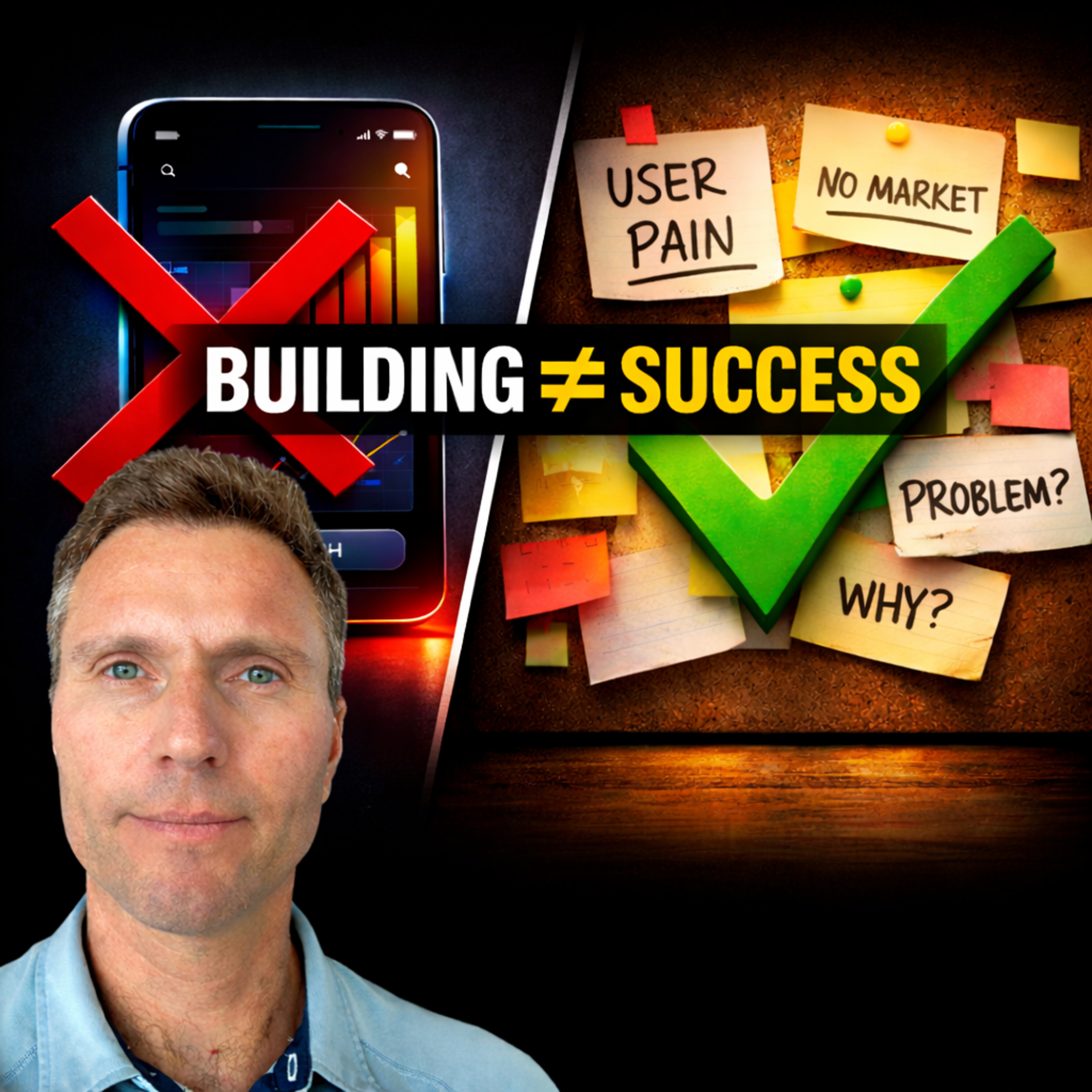 A Startup Advisor on Why Most Startups Fail! They Skip This One Step A Startup Advisor on Why Most Startups Fail! They Skip This One Step | Most startups fail because they skip this one step.In this episode of An Hour of Innovation, Vit Lyoshin speaks with Ohad Shaked, a startup advisor, co-founder, and CEO at ThinkUp, helping early-stage teams validate ideas, find product-market fit, and build scalable businesses. They break down a practical playbook for startup validation, customer interviews, and MVP development, showing why most founders build too early and how to reduce failure risk with the right approach.They discussed:* Why startup validation matters more than building products early* Common mistakes founders make in customer interviews* How to identify real user pain and market demand* Step-by-step process to validate startup ideas quickly* How many interviews do you actually need for validation* MVP development: what to build and what to skip* Signs you’re reaching product-market fit with real users* Why users lie in interviews and how to get the truth* Go-to-market strategy basics for early-stage startups* How AI accelerates research, validation, and product developmentOhad Shaked works closely with early-stage founders to help them turn ideas into real businesses. He focuses on validation, market understanding, and building products that people actually want, not just ideas that sound good. Through his work, Ohad has seen consistent patterns in why startups fail and what successful founders do differently. He combines practical frameworks with real-world experience to guide entrepreneurs through the messy early stages of building a company. His insights are grounded, tactical, and highly relevant for anyone trying to launch or grow a startup today.Timestamps00:00 Introduction02:39 Understanding Your Customer Persona06:23 Validating Ideas and Prototypes10:25 Conducting Effective Customer Interviews12:12 Building a Business Model and Financial Planning18:40 Developing Your MVP22:03 Achieving Product-Market Fit24:54 Analyzing Product Performance and User Engagement26:00 Effective Channels for Product Promotion28:30 Understanding Funding Stages and Requirements30:57 Common Pitfalls in Startup Development32:24 First 90 Days Results34:05 Leveraging AI for Accelerated Development36:19 Current Trends in Startup Focus38:04 When to Pivot or Persist with an Idea39:49 Introducing ThinkUp: A Supportive Platform for Founders42:49 Innovation Q&AConnect with Ohad* Website: https://thinkup.global/ * LinkedIn: https://www.linkedin.com/in/ohad-shaked111/ Support the PodcastIf you enjoy the podcast, you can support it by exploring the tools below.These are affiliate links, meaning the show earns a small commission at no extra cost to you.Capsule CRM: Capsule CRM puts sales, projects, and customer service in one tidy place. Clarity, calm, control - how running your business should feel.https://get.capsulenow.io/s6u778mhdtsyDatabox: Turn business performance data into clear answers your team can understand, explain, and act on – instantly.https://join.databox.com/vhw0wbr9qg9oGamma: Effortless AI design for presentations, websites, and more.https://try.gamma.app/bbocsmkc6cj7EverWebinar: EverWebinar replicates your live delivery automatically so your audience gets the same experience even when you’re not there.https://try.kartra.com/ghomdy459gxr-xvggcn For inquiries about sponsoring An Hour of Innovation, email iris@anhourofinnovation.com If you want to be a guest on the podcast, fill out this form: https://tally.so/r/QK5928Connect with Vit* Substuck: https://anhourofinnovation.substack.com/* LinkedIn: https://www.linkedin.com/in/vit-lyoshin/ * X: https://x.com/vitlyoshin | — | ||||||
| 4/14/26 | 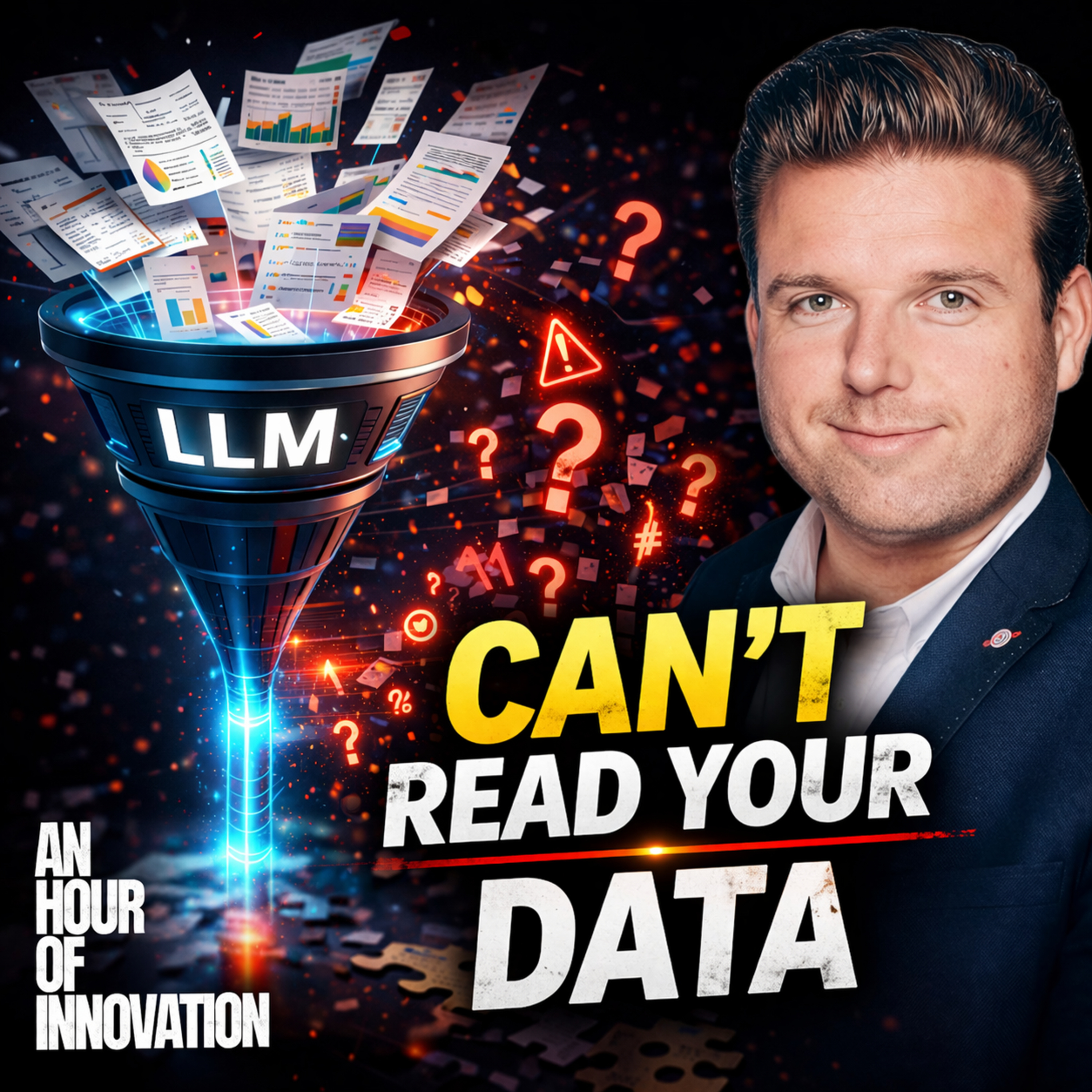 AI Projects Are Failing | Here's What Everyone Gets Wrong AI Projects Are Failing | Here's What Everyone Gets Wrong | Most AI projects fail because of messy data, not the LLM models everyone blames.In this episode of An Hour of Innovation, Vit Lyoshin speaks with Max Vermeir, VP of AI Strategy at ABBYY, about why AI and LLM implementations fail in real business environments. They break down how unstructured data, document processing, and real-world constraints impact AI systems far more than the models themselves. This conversation goes beyond AI hype to explore what actually works when building AI products in production.They discussed:* Why most AI projects fail in enterprise environments* The real challenge of unstructured data for LLMs* How document AI impacts business automation and workflows* Deterministic vs probabilistic AI systems explained simply* Why LLMs always return answers, even when incorrect* Hidden costs of using AI models in production systems* Why simple solutions often outperform complex AI models* What product managers misunderstand about AI implementation* Framework for building reliable AI products in production* Future of AI agents and engineering productivity shiftsMax Vermeir is the VP of AI Strategy at ABBYY, where he focuses on applying AI to real-world business problems, especially around document processing and automation. He works at the intersection of AI technology and enterprise systems, helping organizations turn unstructured data into usable insights. Max is known for his practical, no-hype perspective on AI, focusing on what actually works in production rather than demos. His experience gives him a unique view into why many AI projects fail and how to build systems that deliver real value.Timestamps00:00 Introduction01:35 AI in Business Operations03:56 Understanding Document AI06:57 Challenges in Document Processing10:15 The Importance of Data Accuracy11:59 Deterministic vs. Probabilistic AI16:38 High ROI Use Cases for Document AI18:50 Common Underestimations in AI Product Development21:48 Engineering Challenges in AI Projects25:26 Implementing AI Feature as a Product Manager27:36 Frameworks for AI Implementation32:00 The Impact of AI on Engineering Productivity35:35 Skills for the Future: Adapting to AI40:08 The Resurgence of Command Line Interfaces41:55 The Rise of AI Agents47:55 Innovation Q&AConnect with Max* Website: https://www.abbyy.com/ * LinkedIn: https://www.linkedin.com/in/maximevermeir/ This Episode Is Supported By* WhatConverts: Prove and Grow Marketing ROI.https://partners.whatconverts.com/fwkyx76c8teq* Webflow: Create custom, responsive websites without coding.https://try.webflow.com/0lse98neclhe* Vista Social: Effortlessly manage high volumes of content across multiple social media channels.https://join.vistasocial.com/nxb7u28wvd25* Optery: Remove your home address, phone, and other private info from Google, and 955+ sites.https://get.optery.com/tqehvz2yvwym For inquiries about sponsoring An Hour of Innovation, email iris@anhourofinnovation.com Connect with Vit* LinkedIn: https://www.linkedin.com/in/vit-lyoshin/ * Substuck: https://anhourofinnovation.substack.com/ * X: https://x.com/vitlyoshin | — | ||||||
| 4/7/26 | 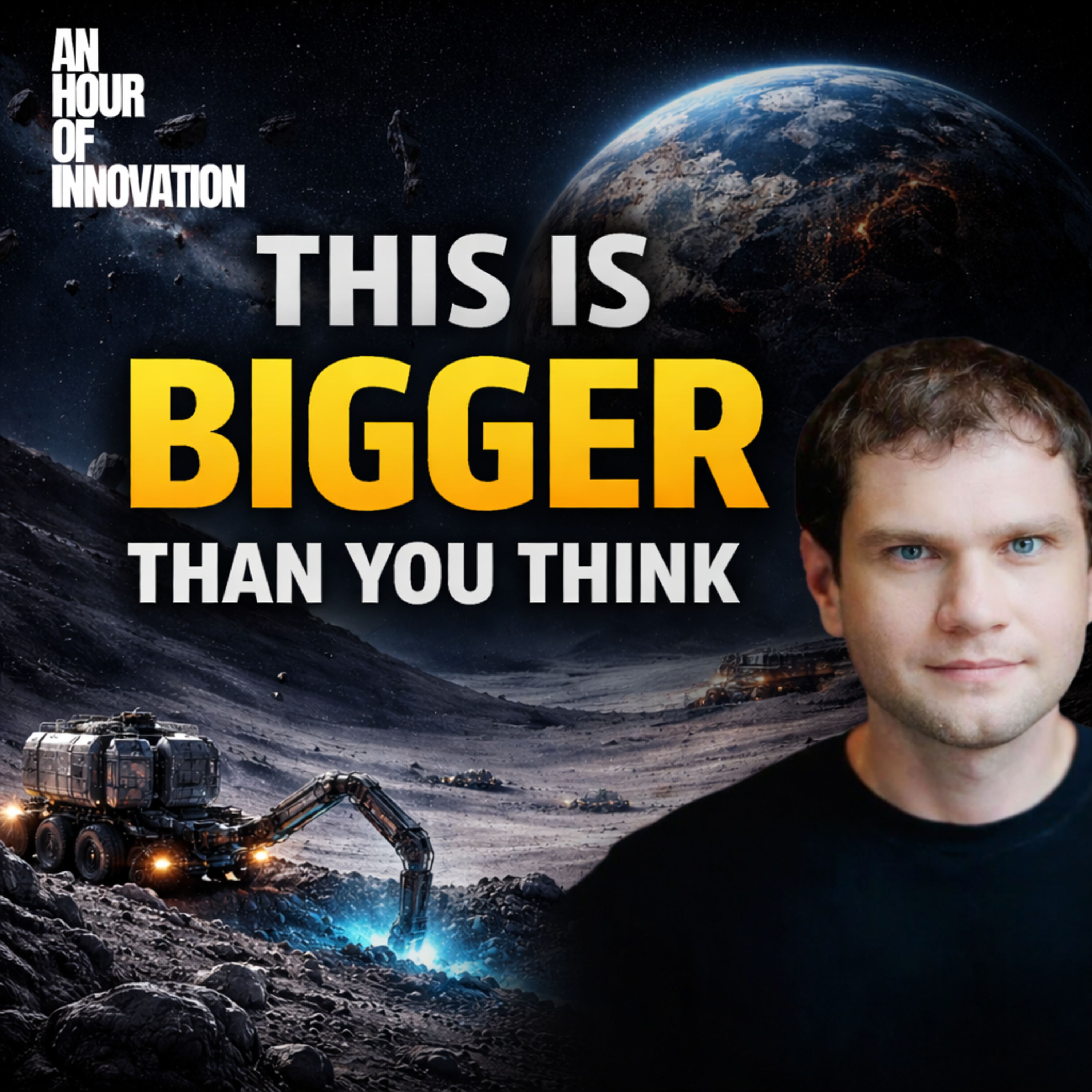 Why the Real Opportunity in Space Isn’t Rockets Why the Real Opportunity in Space Isn’t Rockets | The biggest opportunity in space tech isn’t rockets - and most people in tech are already behind.In this episode of An Hour of Innovation, Vit Lyoshin speaks with Denis Kalyshkin, a venture capitalist focused on deep tech and the space industry, about how satellites, AI, and falling rocket launch costs are transforming space into a new data-driven economy. They explore how space technology is already impacting everyday life, why Earth observation data is becoming a competitive advantage, and where the biggest opportunities lie for builders, engineers, and startups. This conversation reframes space innovation from exploration to real-world business impact.They discussed:* Why space technology already impacts your daily life* How satellite data creates new business opportunities* The real reason space startups are growing rapidly* Earth observation use cases across industries and markets* How AI is transforming space exploration and autonomy* Why did the drop in rocket launch costs change the entire industry* The shift from space infrastructure to data applications* Opportunities for engineers entering the space tech industry* Future of lunar mining, zero-gravity manufacturing, and energy* Why the biggest value is in analyticsDenis Kalyshkin is a venture capitalist specializing in deep tech, with a strong focus on space technology, startups, and innovation ecosystems. He works closely with founders to commercialize complex technologies and turn them into scalable businesses. Denis is also the co-creator of the Space Ambition blog and newsletter, where the team shares insights on emerging trends in the space economy.His perspective combines technical understanding with market-driven thinking, making him uniquely positioned to explain where real value is being created.Timestamps00:00 Introduction03:54 The Importance of Space Technology07:14 Changes in the Space Industry12:08 Understanding Earth Observation18:47 Applications of Earth Observation Data24:46 AI in Space: The Future of Autopilots31:31 Opportunities in Space Tech for Engineers33:02 The Future of Space Launches35:29 Navigating Space Traffic and Satellite Maneuvers37:17 The Evolution of Space Stations38:27 Pharmaceutical Innovations in Zero Gravity39:57 The Potential of Lunar and Asteroid Mining40:54 The Economics of Space Manufacturing42:01 Understanding Lunar Mining45:44 The Value of Helium-3 and Future Energy Solutions49:35 Water Mining on the Moon51:06 Innovative Ideas for Moon Colonization55:43 Innovation Q&AConnect with Denis* Website: https://www.i2bf.com/ * LinkedIn: https://www.linkedin.com/in/denis-kalyshkin/ * Space Ambition Newsletter: https://spaceambition.substack.com/ * Ask VC: https://www.askvc.org/ This Episode Is Supported By* MeetGeek: Record, transcribe, summarize, and share insights from every meeting.https://get.meetgeek.ai/yjteozr4m6ln* Kit: Email marketing that automates your growth.https://partners.kit.com/xqcc7ca2ahlm* Google Workspace: Collaborative way of working in the cloud, from anywhere, on any device.https://referworkspace.app.goo.gl/A7wH* AdCreative.ai: Generate ad banners, texts, photoshoots, and videos that outperform those of your competitors.https://free-trial.adcreative.ai/velg2js91det-96w1li For inquiries about sponsoring An Hour of Innovation, email iris@anhourofinnovation.com Connect with Vit* Substuck: https://anhourofinnovation.substack.com/* LinkedIn: https://www.linkedin.com/in/vit-lyoshin/ * X: https://x.com/vitlyoshin | — | ||||||
| 3/31/26 |  Nobody Talks About This Risk in AI Innovation Nobody Talks About This Risk in AI Innovation | AI innovation is moving fast, but AI regulation will decide what survives.In this episode of An Hour of Innovation, Vit Lyoshin speaks with Jake Ward, co-founder and chairman of Developer Alliance, about how AI regulation, tech policy, and government decisions are shaping the future of software development. They explore the growing tension between rapid innovation and slow-moving regulation, and why developers and founders must understand how policy impacts what they can build. This conversation dives into AI, startups, and the hidden forces influencing product success.They discussed:* Why AI regulation can shut down startups overnight* The real risk developers ignore in AI innovation* How government policy shapes software development decisions* Why predicting the future of AI is nearly impossible* The tension between innovation speed and regulation lag* How developers can influence public policy conversations* What most founders misunderstand about building in AI* Why regulation often follows failure, not prevention* The future of search, AI agents, and interfaces* How AI tools are changing product development workflowsJake Ward is the co-founder and chairman of Developer Alliance, an organization focused on giving developers a voice in public policy and technology regulation. He has spent years working at the intersection of software development, startups, and government, helping bridge the gap between innovation and policy. Jake brings a unique perspective on how regulation impacts real-world products and business models. His experience spans advising developers, engaging with policymakers, and building companies in rapidly evolving tech environments. He focuses on helping builders understand not just how to create technology, but how to navigate the systems that determine whether it can succeed.Timestamps00:00 Introduction02:44 Challenges Facing Developers Today05:10 Impact of Policy on Development08:59 Balancing Regulation and Innovation16:59 Government and AI Collaboration21:08 AI Integration in Government27:09 Future of Tech and Government Relationships30:39 Advice for Aspiring Software Engineers35:00 Government's Role in Innovation Investment38:35 Innovations in Space and Data Centers40:57 Optimism in Innovation and Human Connection41:44 Innovation Q&AConnect with Jake* Website: https://news.devalliance.org/ * LinkedIn: https://www.linkedin.com/in/jacobmward/ Support the PodcastIf you enjoy the podcast, you can support it by exploring the tools below.These are affiliate links, meaning the show earns a small commission at no extra cost to you.WhatConverts: Prove and Grow Marketing ROIhttps://partners.whatconverts.com/fwkyx76c8teqWebflow: Create custom, responsive websites without codinghttps://try.webflow.com/0lse98neclheVista Social: Effortlessly manage high volumes of content across multiple social media channelshttps://join.vistasocial.com/nxb7u28wvd25Unitel Voice: Handle business calls like a boss with a virtual phone number and a work-from-anywhere phone systemhttps://unitelvoice.partnerlinks.io/hvp7nyius0uz For inquiries about sponsoring An Hour of Innovation, email iris@anhourofinnovation.com Connect with Vit* Substuck: https://anhourofinnovation.substack.com/* LinkedIn: https://www.linkedin.com/in/vit-lyoshin/ * X: https://x.com/vitlyoshin | — | ||||||
| 3/24/26 |  Why Mechanical Prosthetic Hand Outperforms Advanced Robotics l Fergal Mackie Why Mechanical Prosthetic Hand Outperforms Advanced Robotics l Fergal Mackie | Why are advanced robotic prosthetics failing while mechanical prosthetic hands actually work better in real life?In this episode of An Hour of Innovation, Vit Lyoshin speaks with Fergal Mackie, founder of Metacarpal, about why the future of prosthetics may not be high-tech robotics but simpler, more reliable mechanical design. They explore the hidden flaws in robotic prosthetics, why many users abandon them, and how focusing on real-world usability is reshaping assistive technology.They discussed:* Why prosthetic hands get abandoned* Mechanical vs robotic prosthetics* The problem with high-tech devices* Designing for real-world usability* Trust and reliability in prosthetics* Hardware vs software development challenges* Manufacturing constraints in physical products* Future of human augmentation Fergal Mackie is the founder of Metacarpal, a company rethinking upper-limb prosthetics through mechanical innovation. His work focuses on building durable, functional devices that people actually use every day. He brings a unique perspective from hands-on product development in the medical device space.This episode covers topics such as mechanical prosthetic hands, limitations of robotic prosthetics, assistive technology design, medical device innovation, biomechanics in product development, hardware engineering challenges, human augmentation, and real-world usability in healthcare technology.Timestamps00:00 Introduction02:29 Mechanical vs Robotic Hand09:03 The Journey of Building a Prosthetic Solution12:23 Understanding User Needs16:36 Testing Mechanical Hand18:53 Materials Used for Prosthetic Hand20:50 Challenges in Mechanical Design and Manufacturing24:03 Navigating Challenges in Prototyping25:14 User Feedback26:42 The Robotics Landscape and User Needs28:21 Complexity in Prosthetic Design33:28 Advice on the Design35:13 Prototyping Insights and Development Timelines36:03 The Future of Prosthetics and Robotics40:51 Aspirations for Global Prosthetic Accessibility42:44 Innovation Q&AConnect with Fergal* Website: https://metacarpalprosthetics.com/ * LinkedIn: https://www.linkedin.com/in/fergal-mackie-220805172/ Support the PodcastIf you enjoy the podcast, you can support it by exploring the tools below.These are affiliate links, meaning the show earns a small commission at no extra cost to you.Kit: Email marketing that automates your growthhttps://partners.kit.com/xqcc7ca2ahlmAmplemarket: Step into the future of sales: Human + AI. Empower reps, uncover opportunities, and grow revenuehttps://grow.amplemarket.com/04e068165684-affiliateAdCreative.ai: Generate ad banners, texts, photoshoots, and videos that outperform those of your competitorshttps://free-trial.adcreative.ai/velg2js91det-96w1liMeetGeek: Record, transcribe, summarize, and share insights from every meetinghttps://get.meetgeek.ai/yjteozr4m6lnFor inquiries about sponsoring An Hour of Innovation, email iris@anhourofinnovation.com Connect with Vit* Substuck: https://anhourofinnovation.substack.com/* LinkedIn: https://www.linkedin.com/in/vit-lyoshin/ * X: https://x.com/vitlyoshin | — | ||||||
| 3/17/26 |  Why Self-Driving Trucks Are So Hard! Data, Sensors, AI & Real-World Driving Why Self-Driving Trucks Are So Hard! Data, Sensors, AI & Real-World Driving | What does it actually take to build self-driving trucks that can interpret the real world and react faster than humans?In this episode of the An Hour of Innovation podcast, Vit Lyoshin sits down with Achyut Boggaram to explore the engineering behind autonomous trucks and the massive AI infrastructure that powers them.This conversation breaks down how autonomous trucks perceive the world using cameras, lidar, radar, and advanced sensors. Achyut explains how machine learning models process enormous volumes of driving data, how motion planning helps vehicles decide what to do in complex road scenarios, and why real-world driving is far harder than most people imagine. The episode also dives into how AI models are trained using synthetic data, simulation, and large-scale machine learning infrastructure. Along the way, listeners get a behind-the-scenes look at the real challenges of deploying autonomous vehicles on public highways.Achyut Boggaram is an AI and machine learning engineer working on autonomous driving technology at Torc Robotics. His work focuses on building the machine learning infrastructure and data pipelines that power self-driving truck models at scale. After leading ML platform development, he moved into applied research, where he contributes directly to developing frontier AI models for autonomous vehicles. His experience offers a rare inside perspective on how modern robotics engineering and AI systems come together to power real-world autonomous driving software.Takeaways* A single 20-minute autonomous truck test run can generate about 100 terabytes of raw sensor data, showing how data-intensive self-driving systems really are.* Autonomous trucks rely on sensor fusion from cameras, lidar, radar, GPS, and IMU sensors to build a real-time understanding of the road.* Self-driving systems are structured in layers: perception models understand the environment, while planning and behavior models decide what the vehicle should do next.* Machine learning models must generalize from training examples.* When the AI becomes uncertain, the system can execute a minimal-risk maneuver, such as slowing down and pulling off the road.* Training autonomous vehicle models requires diverse real-world data across conditions like night driving, fog, rain, and heavy traffic.* Engineers often use synthetic data and neural rendering to simulate rare scenarios that are difficult or dangerous to capture in real life.* Autonomous driving systems must be designed to resist adversarial attacks, where small visual changes can trick AI into misinterpreting road signs.* AI-powered perception systems can sometimes detect objects hundreds of meters away and even see through fog.* Reinforcement learning and large-scale simulation allow engineers to train driving behaviors without putting humans at risk on real roads.* The biggest barrier to widespread deployment is the “long tail” of rare driving scenarios, where unpredictable real-world situations challenge even the best AI systemsTimestamps00:00 Introduction03:46 Understanding Autonomous Vehicles06:56 Components of Autonomous Vehicle Technology14:41 Generalization in Machine Learning Models19:11 Data Collection and Processing for Training Models24:47 Adversarial Attacks and Model Robustness27:00 Advanced Sensor Technologies for Hazardous Conditions29:41 Reinforcement Learning in Autonomous Vehicles32:45 Challenges in Self-Driving Technology Adoption37:13 Future of Logistics and Autonomous Vehicles40:37 Innovation Q&ASupport the PodcastTo support our work, please check out our sponsors and get discounts: https://www.anhourofinnovation.com/sponsors/For inquiries about sponsoring An Hour of Innovation, email iris@anhourofinnovation.com Connect with Achyut* Website: https://torc.ai/ * LinkedIn: https://www.linkedin.com/in/achyutsarma/ Connect with Vit* Substuck: https://anhourofinnovation.substack.com/ * LinkedIn: https://www.linkedin.com/in/vit-lyoshin/ | — | ||||||
| 3/10/26 |  Daylighting Technology: Why Natural Light Is the Future of Sustainable Buildings | Neall Digert Daylighting Technology: Why Natural Light Is the Future of Sustainable Buildings | Neall Digert | In this episode of An Hour of Innovation podcast, Vit Lyoshin speaks with Neall Digert, Vice President at Kingspan Light + Air, about how daylighting technology is transforming the way buildings use natural light.Vit and Neall explore how daylighting systems capture and redirect sunlight into buildings, reducing energy consumption while improving human health and productivity. They discuss how modern sustainable architecture can dramatically cut the need for electric lighting and why natural light plays a critical role in our biology and daily performance. The episode also dives into energy-efficient building design, the future of human-centric architecture, and how new technologies are making buildings smarter, greener, and more adaptable. Neall Digert is a leading expert in daylighting and sustainable building design and serves as Vice President at Kingspan Light + Air, a global company developing technologies that improve building performance and environmental sustainability. With decades of experience in architectural daylight systems, he has helped advance solutions that use natural sunlight to illuminate buildings while reducing energy use and carbon impact. Neall is also known for his work on the Solatube daylighting system, which uses optical technologies to capture, transfer, and distribute sunlight indoors. Takeaways* Daylighting technology captures sunlight on the roof and transports it through reflective tubes to illuminate interior spaces without electricity.* Natural daylight is one of the strongest biological signals for the human body, influencing sleep cycles, hormones, and alertness.* Buildings designed with strong daylight exposure can increase office productivity by about 6%, simply by improving the environment people work in.* A well-designed daylighting system can replace electric lighting for most of the day, reducing energy costs and carbon footprint.* The Solatube campus in California operates with electric lights only about 3% of the year, relying almost entirely on natural light.* Daylighting systems can guide sunlight through multiple floors and complex building structures, similar to “ducting” light like air.* Unlike standard windows, advanced daylighting systems can control how light is distributed inside a building, focusing, diffusing, or highlighting areas.* Lighting represents 40–75% of energy use in many commercial buildings, making it one of the biggest opportunities for energy savings.* Designing buildings for disassembly and recycling could dramatically reduce construction waste and enable true circular architecture.Timestamps00:00 Introduction01:38 What is Daylighting?02:21 Kingspan's Daylighting Solutions05:21 The Science Behind Daylighting Technology08:59 The Origins of Tubular Daylighting Devices11:52 Biological and Psychological Benefits of Daylighting19:36 Economic Advantages of Daylighting24:20 Challenges in Daylighting Technology Development27:55 Energy Positive Manufacturing at Kingspan33:40 Sustainable Building Practices36:50 Future of Building Design40:20 Circular Economy in Construction47:19 Innovative Materials and Technologies51:02 Innovation Q&AConnect with Neall* Website: http://www.kingspanlightandair.com/ * LinkedIn: https://www.linkedin.com/in/drnealldigert/ This Episode Is Supported By* Kit: Email marketing that automates your growth - https://partners.kit.com/xqcc7ca2ahlm * AdCreative.ai: Generate ad banners, texts, photoshoots, and videos that outperform those of your competitors - https://free-trial.adcreative.ai/velg2js91det-96w1li * Leadpages: All-in-one conversion rate optimization solution - https://try.leadpages.com/jorgsmx8wadw For inquiries about sponsoring An Hour of Innovation, email iris@anhourofinnovation.com Connect with Vit* LinkedIn: https://www.linkedin.com/in/vit-lyoshin/ * Substuck: https://anhourofinnovation.substack.com/ * X: https://x.com/vitlyoshin * Podcast: https://www.anhourofinnovation.com/ | — | ||||||
| 3/3/26 |  What Is Branding? Branding vs Marketing & What Most Companies Get Wrong | David Brier What Is Branding? Branding vs Marketing & What Most Companies Get Wrong | David Brier | If your brand sounds like everyone else, you’re already losing, especially in an AI-driven world where sameness is cheaper than ever.In this episode of An Hour of Innovation podcast, Vit Lyoshin sits down with David Brier, one of the world’s leading branding thinkers, who has spent over four decades helping companies escape commoditization and build brands people choose without comparing prices. They explore why branding is the art of differentiation, how branding and marketing serve fundamentally different roles, and why great products often fail without a clear brand strategy.David breaks down common branding mistakes founders make, the power of brand storytelling, and how bold positioning can increase revenue without increasing marketing spend. He also dives into branding in the age of AI, why overreliance on AI creates generic “brand slop,” and why human conviction, clarity, and values matter more than ever.David Brier is a globally respected branding expert, author of Brand Intervention, and advisor to startups, scaleups, and global companies alike. He’s known for his sharp thinking on brand differentiation, premium positioning, and helping organizations add massive revenue through branding alone, sometimes without spending an extra dollar on marketing. His insights cut through noise, hype, and AI buzz to reveal what actually makes brands unforgettable and profitable.Takeaways* Branding defines differentiation, marketing amplifies it.* Companies often compete in the wrong race: either the cheapest or the most features.* A strong brand can increase revenue dramatically without increasing marketing spend.* You can’t sneak up on greatness; bold positioning beats small, cautious moves.* Falling in love with your product blinds you to how the market actually sees it.* If customers can’t instantly see your unique value, they default to comparing prices.* Selling “solutions” is weaker than helping customers manage a meaningful problem.* Great branding reframes conversations so customers reach new conclusions.* AI is a tool, not a substitute for originality; overuse leads to “AI slop.”* Most companies ignore post-sale branding, missing the biggest loyalty opportunity.* Surprise and delight after the sale create retention more effectively than promises before it.Timestamps01:48 What Is Branding? The Art of Differentiation06:29 Branding vs Marketing: What’s the Real Difference?08:28 Why Branding Matters in a Competitive Market14:40 Good vs Bad Branding: What Makes Brands Win17:45 Top Branding Mistakes Founders Must Avoid23:10 How Much Should You Invest in Branding?27:23 Brand Storytelling: Why Stories Build Loyalty31:11 AI in Branding: Tool or Threat?36:25 Biggest Branding Mistakes That Hurt Growth40:14 The Future of Branding43:35 How to Build a Strong Brand From Scratch47:31 Post-Sale Branding: The Secret to Retention52:41 Innovation Q&AConnect with David* Website: https://davidbrier.com/ * LinkedIn: https://www.linkedin.com/in/davidbrier/ * X: https://x.com/davidbrier * Book: https://www.risingabovethenoise.com/brand-intervention-transform-brand-movement/ This Episode Is Supported By* Google Workspace: Collaborative way of working in the cloud, from anywhere, on any device - https://referworkspace.app.goo.gl/A7wH* Webflow: Create custom, responsive websites without coding - https://try.webflow.com/0lse98neclhe * MeetGeek: Record, transcribe, summarize, and share insights from every meeting - https://get.meetgeek.ai/yjteozr4m6lnFor inquiries about sponsoring An Hour of Innovation, email iris@anhourofinnovation.com Connect with Vit* LinkedIn: https://www.linkedin.com/in/vit-lyoshin/ * Substuck: https://anhourofinnovation.substack.com/ * X: https://x.com/vitlyoshin * Website: https://vitlyoshin.com/contact/ * Podcast: https://www.anhourofinnovation.com/ | — | ||||||
Want analysis for the episodes below?Free for Pro Submit a request, we'll have your selected episodes analyzed within an hour. Free, at no cost to you, for Pro users. | |||||||||
| 2/24/26 |  Deepfake Detection with Voice AI: How Real-Time AI Stops Fraud & Security Threats | Carter Huffman Deepfake Detection with Voice AI: How Real-Time AI Stops Fraud & Security Threats | Carter Huffman | What if real-time Voice AI could detect the deepfake before the damage is done?In this episode of An Hour of Innovation podcast, Vit Lyoshin sits down with Carter Huffman, CTO and co-founder of Modulate AI, to explore how artificial intelligence is transforming cybersecurity through advanced voice AI detection systems that can stop fraud, harassment, and social engineering attacks in real time.Throughout the conversation, they unpack how voice AI differs from text-based AI, why detecting tone and context is far more complex than keyword filtering, and how ensemble AI models help balance cost, accuracy, and scalability. They also explore real-world deployments in gaming moderation, healthcare security, and call center fraud prevention, showing how AI can escalate threats, detect synthetic voices, and even lock accounts before breaches occur.Carter Huffman is the CTO and Co-Founder of Modulate AI, a leader in voice AI and conversational AI security. With a background in physics and audio signal processing, he has spent over a decade advancing audio machine learning systems that understand emotion, intent, and context in human speech. His work powers AI moderation systems in major gaming platforms and strengthens AI security in call centers and hospitals. In this episode, he offers rare insight into how AI voice detection works under the hood and where the future of deepfake defense is headed.Takeaways* Voice AI can detect a deepfake voice within the first two seconds of a phone call.* Toxicity detection isn’t about keywords: sarcasm, tone, and context completely change meaning.* A single toxic voice interaction can drive gamers away permanently, creating massive churn.* Real-time AI fraud prevention must operate at low latency and high accuracy simultaneously.* Ensemble AI models (many small specialized models) outperform one large general model in cost and precision.* Audio AI systems often fail when the microphone setups or recording environments slightly change.* Social engineering attacks rely on emotional pressure, which AI can detect through conversational patterns.* AI can escalate suspicious calls to supervisors or automatically lock accounts before fraud succeeds.* Speaker identification allows AI to track participants within a meeting, without tracking them across calls.* Synthetic voice detection doesn’t automatically mean malicious intent; assistive tech must be considered.* AI moderation systems must include human review and appeals to remain ethical and compliant.* The same Voice AI technology that prevents fraud could be misused for censorship if deployed unethically.Timestamps00:00 Introduction01:30 What Is Modulate AI?03:09 Why Voice AI Is Harder Than Text AI06:54 The Evolution of Voice AI in Gaming10:26 How Modulate AI Works19:05 Voice AI in Various Industries26:31 Ethical Considerations in Voice AI Technology32:40 Ethics in AI: Balancing Good and Bad Uses34:32 Audio Machine Learning Challenges41:09 The Future of Voice AI45:45 Connect with Carter46:31 Innovation Q&AConnect with Carter* Website: https://www.modulate.ai/ * LinkedIn: https://www.linkedin.com/in/carter-huffman-a9aba05b/ This Episode Is Supported By* Google Workspace: Collaborative way of working in the cloud, from anywhere, on any device - https://referworkspace.app.goo.gl/A7wH* Webflow: Create custom, responsive websites without coding - https://try.webflow.com/0lse98neclhe * Monkey Digital: Unbeatable SEO. Outrank your competitors - https://www.monkeydigital.org?ref=110260 For inquiries about sponsoring An Hour of Innovation, email iris@anhourofinnovation.comConnect with Vit* LinkedIn: https://www.linkedin.com/in/vit-lyoshin/ * Substuck: https://anhourofinnovation.substack.com/ * X: https://x.com/vitlyoshin * Website: https://vitlyoshin.com/contact/ * Podcast: https://www.anhourofinnovation.com/ | — | ||||||
| 2/17/26 | 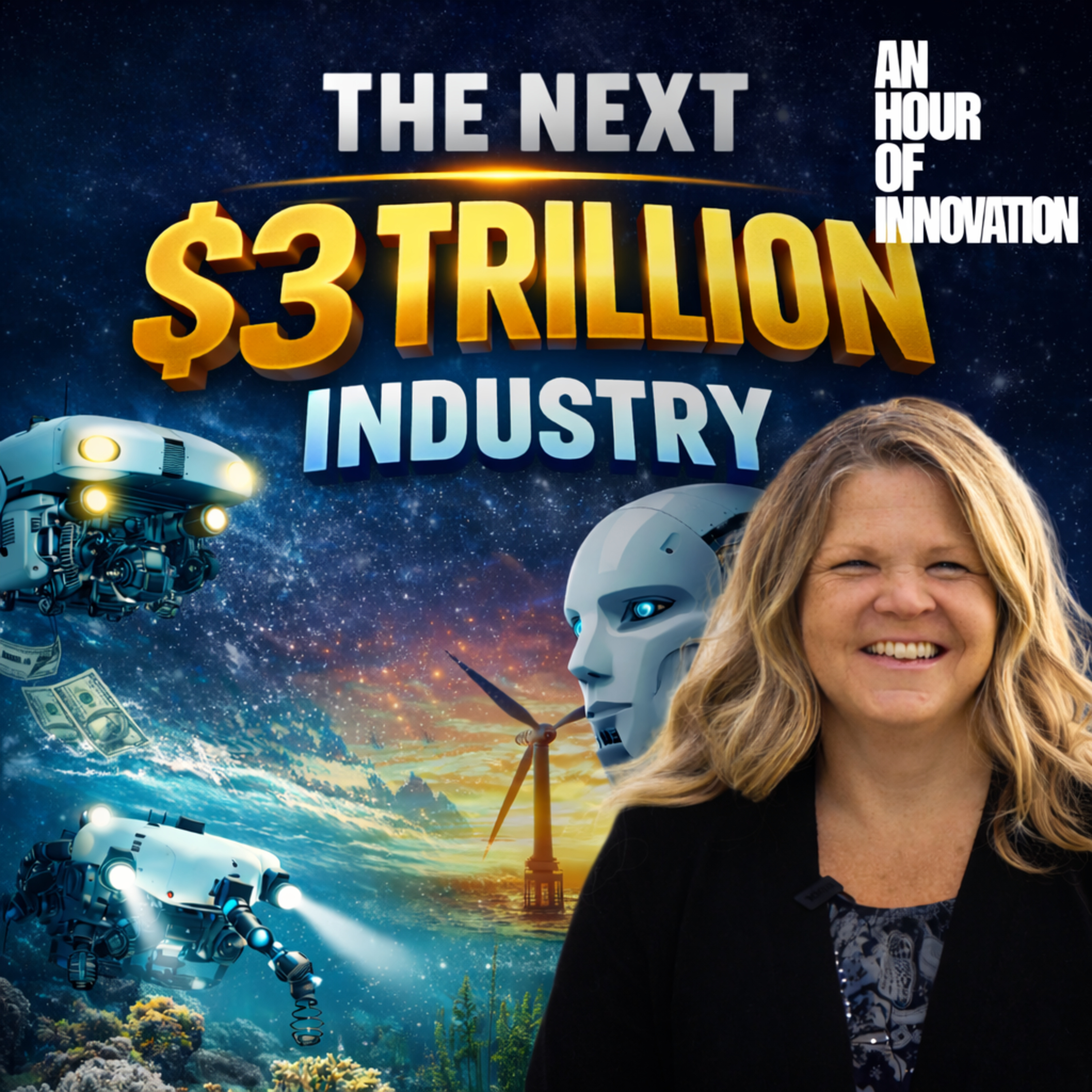 The $3 Trillion Blue Economy! How AI & Robotics Are Unlocking the Ocean Now | Kendra MacDonald The $3 Trillion Blue Economy! How AI & Robotics Are Unlocking the Ocean Now | Kendra MacDonald | In this episode of the An Hour of Innovation podcast, Vit Lyoshin explores how the blue economy is rapidly becoming one of the most important industries of our time, powered by AI, robotics, ocean technology, and deep ocean data.Vit is joined by Kendra MacDonald, CEO of Canada’s Ocean Supercluster, one of the world’s leading ocean innovation ecosystems, driving commercialization, clean tech, and marine technology breakthroughs.They explore how the $3 trillion ocean economy has already surpassed global projections, and why AI, autonomous vessels, robotics, and advanced ocean data are transforming everything from aquaculture to climate change solutions. Kendra explains how the deep ocean remains 75% unmapped, why the ocean produces 50% of the oxygen we breathe, and how carbon removal, marine biotechnology, and ocean sustainability innovations could define the next decade. They also dive into how startups can enter this space and why the ocean is no longer “too big to fail.”Kendra MacDonald leads Canada’s Ocean Supercluster, an organization with over 150 funded projects and nearly 1,000 members accelerating ocean innovation across shipping, aquaculture, marine biotechnology, and clean tech. She works at the intersection of industry, technology, and sustainability, helping de-risk and scale ocean startups globally. With deep insight into autonomous vessels, AI-powered ocean data systems, and blue economy investment trends, she brings a rare economic and climate lens to the future of the deep ocean.Takeaways* The ocean economy has already reached $3 trillion, doubling in size since 2016 and outpacing projections.* The ocean produces 50% of the oxygen we breathe, making it critical to human survival.* Around 85–90% of global goods move by ship, making ocean infrastructure essential to supply chains.* Nearly 99% of international internet traffic runs through subsea cables on the ocean floor.* AI and computer vision now track fish movement without tagging, improving conservation and dam efficiency.* Autonomous vessels can operate 24/7 in extreme environments, reducing cost and safety risks.* eDNA genomics allows scientists to detect biodiversity from a single water sample.* Small efficiency gains in shipping routes can significantly reduce fuel use and emissions.* Seaweed farming can reduce methane emissions when added to livestock feed.Timestamps00:00 Introduction01:39 What is Canada’s Ocean Supercluster04:32 What Is the $3 Trillion Ocean Economy?08:22 Why the Ocean Economy Matters to Everyone10:09 AI, Robotics & Ocean Technology Breakthroughs14:19 Sustainable Ocean Tech & Climate Solutions16:28 Investment & Growth in the Blue Economy19:24 How Companies Can Enter Ocean Economy23:27 Aquaculture, Agriculture & Ocean Sustainability28:12 The Future of Ocean Data & Measurement30:57 Deep Ocean Challenges & Carbon Removal32:44 Startup Opportunities in Ocean Technology36:00 AI, Autonomous Vessels & Ocean Robotics39:11 The Power & Impact of the Ocean Economy44:09 Why the Blue Economy Is Rising44:20 Innovation Q&AConnect with Kendra* Website: https://oceansupercluster.ca/ * LinkedIn: https://www.linkedin.com/in/kendra-macdonald-40b574/ * Substack: https://substack.com/@saltwatersignals * Other: https://kendramacdonald.com/ This Episode Is Supported By* Google Workspace: Collaborative way of working in the cloud, from anywhere, on any device - https://referworkspace.app.goo.gl/A7wH * Webflow: Create custom, responsive websites without coding - https://try.webflow.com/0lse98neclhe * MeetGeek: Record, transcribe, summarize, and share insights from every meeting - https://get.meetgeek.ai/yjteozr4m6ln For inquiries about sponsoring An Hour of Innovation, email iris@anhourofinnovation.comConnect with Vit* LinkedIn: https://www.linkedin.com/in/vit-lyoshin/ * Substuck: https://anhourofinnovation.substack.com/ * X: https://x.com/vitlyoshin | — | ||||||
| 2/11/26 | 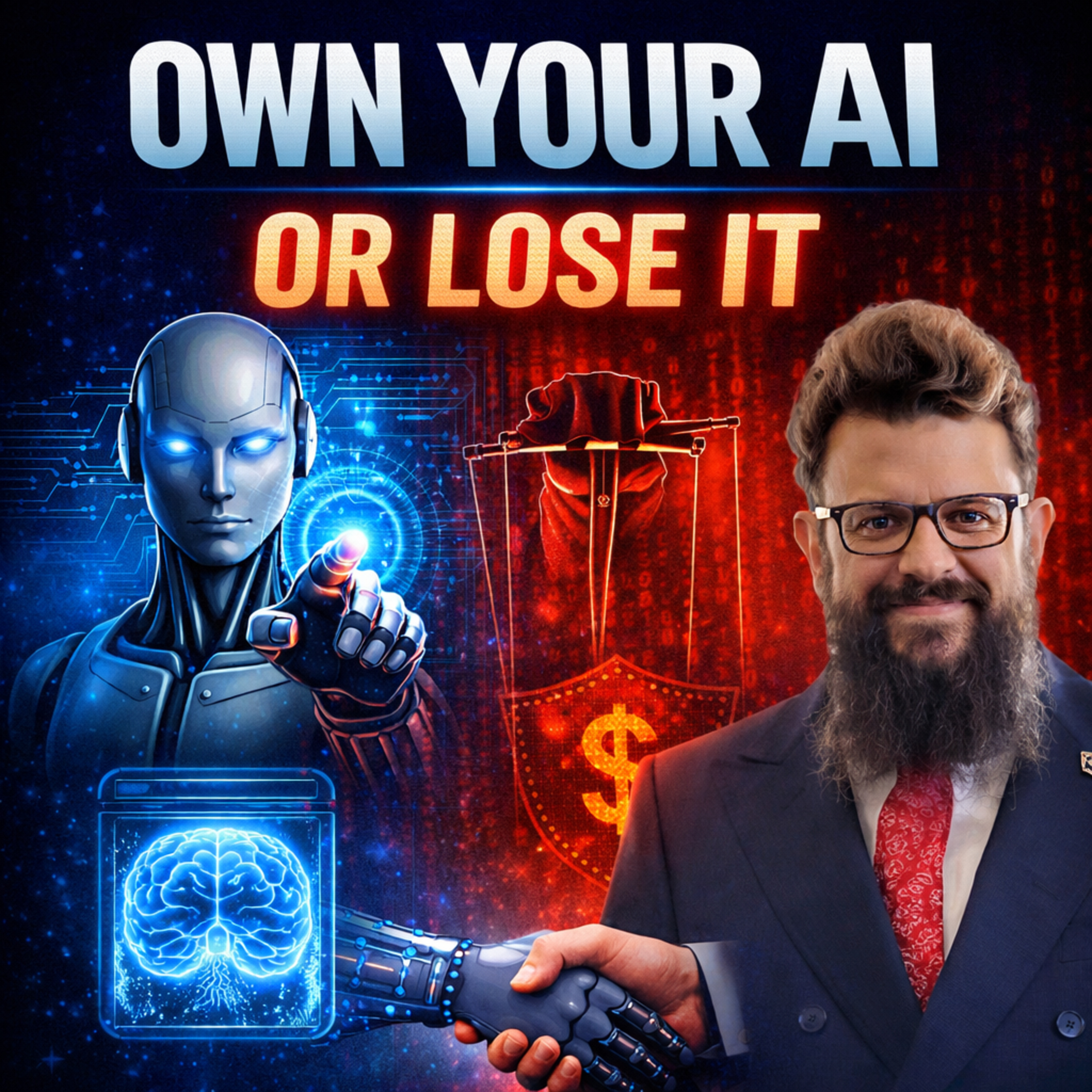 Own Your AI Agent: Security, OpenClaw, Data Ownership, and the Future of Work | Toufi Saliba Own Your AI Agent: Security, OpenClaw, Data Ownership, and the Future of Work | Toufi Saliba | What if the AI agent working for you today could quietly become a risk, or your greatest long-term advantage, depending on how well you secure and own it?In this episode of the An Hour of Innovation podcast, Vit Lyoshin sits down with Toufi Saliba to unpack one of the most urgent and misunderstood shifts in modern technology: AI agents with real autonomy, real agency, and real consequences for humans.Toufi Saliba is a seasoned AI and infrastructure leader, founder and CEO of Hypercycle, and a long-time voice in AI security, governance, and decentralized systems.Toufi explains what AI agents are and how they work, why tools like OpenClaw reveal serious security risks, and how giving AI full system access can expose users to data loss, manipulation, and loss of control. He breaks down the importance of AI governance, containerized AI environments, and why human agency must remain at the center as autonomous systems become more powerful. The discussion also reframes the future of work with AI agents, arguing that AI doesn’t eliminate human work, but multiplies it for those who take ownership early.Toufi Saliba is the CEO of Hypercycle and a vocal advocate for human agency in an AI-driven world. He has spent years working on infrastructure that allows AI agents to communicate securely without relying on centralized third parties. In this episode, his perspective matters because he frames AI not as something to fear—but as something humans must actively own, secure, and govern before that choice disappears.Takeaways* AI agents are not just tools; they have agency, meaning they can make decisions and act autonomously on a user’s behalf.* Giving an AI agent full system access turns it into a powerful assistant and a potential security liability.* A single vulnerability in an autonomous AI agent can expose emails, files, and credentials, and even allow malware to be installed.* Most current AI security solutions reduce risk by limiting capability, but that tradeoff may undermine AI’s real value.* Containerized and sandboxed AI environments are a practical way to preserve AI power while reducing attack surfaces.* If you don’t actively capture and secure your data, platforms and governments will do it for you by default.* AI governance is not about stopping AI; it’s about defining who owns, controls, and benefits from AI-generated intelligence.* The future of work isn’t humans vs. AI; it’s humans managing fleets of AI agents working 24/7 on their behalf.* The Internet of AI will create massive new wealth, but only those who own their agents will participate in it.* Saving more personal data isn’t the problem; saving it without security, encryption, and control is the real risk.Timestamps00:00 Introduction to OpenClaw and AI Agents10:33 Global Brain, Data Ownership, and Human Agency17:14 Mosaic Spot: AI Security for Everyone18:44 AI Agent Security Risks and Protection21:11 Human - AI Collaboration and AI Governance29:41 AI Wealth Creation and Ownership32:29 Mosaic Spot: Secure AI Interaction Layer35:15 Future of Work with AI Agents37:02 One Rule for Securing Your AI41:41 Innovation Q&AConnect withToufi* Website: https://www.hypercycle.ai/ * LinkedIn: https://www.linkedin.com/in/toufisaliba/ * X: https://x.com/toouufii This Episode Is Supported By* Google Workspace: Collaborative way of working in the cloud, from anywhere, on any device - https://referworkspace.app.goo.gl/A7wH* Webflow: Create custom, responsive websites without coding - https://try.webflow.com/0lse98neclhe * Monkey Digital: Unbeatable SEO. Outrank your competitors - https://www.monkeydigital.org?ref=110260 For inquiries about sponsoring An Hour of Innovation, email iris@anhourofinnovation.comConnect with Vit* LinkedIn: https://www.linkedin.com/in/vit-lyoshin/ * Substuck: https://anhourofinnovation.substack.com/ * X: https://x.com/vitlyoshin * Podcast: https://www.anhourofinnovation.com/ | — | ||||||
| 2/3/26 | 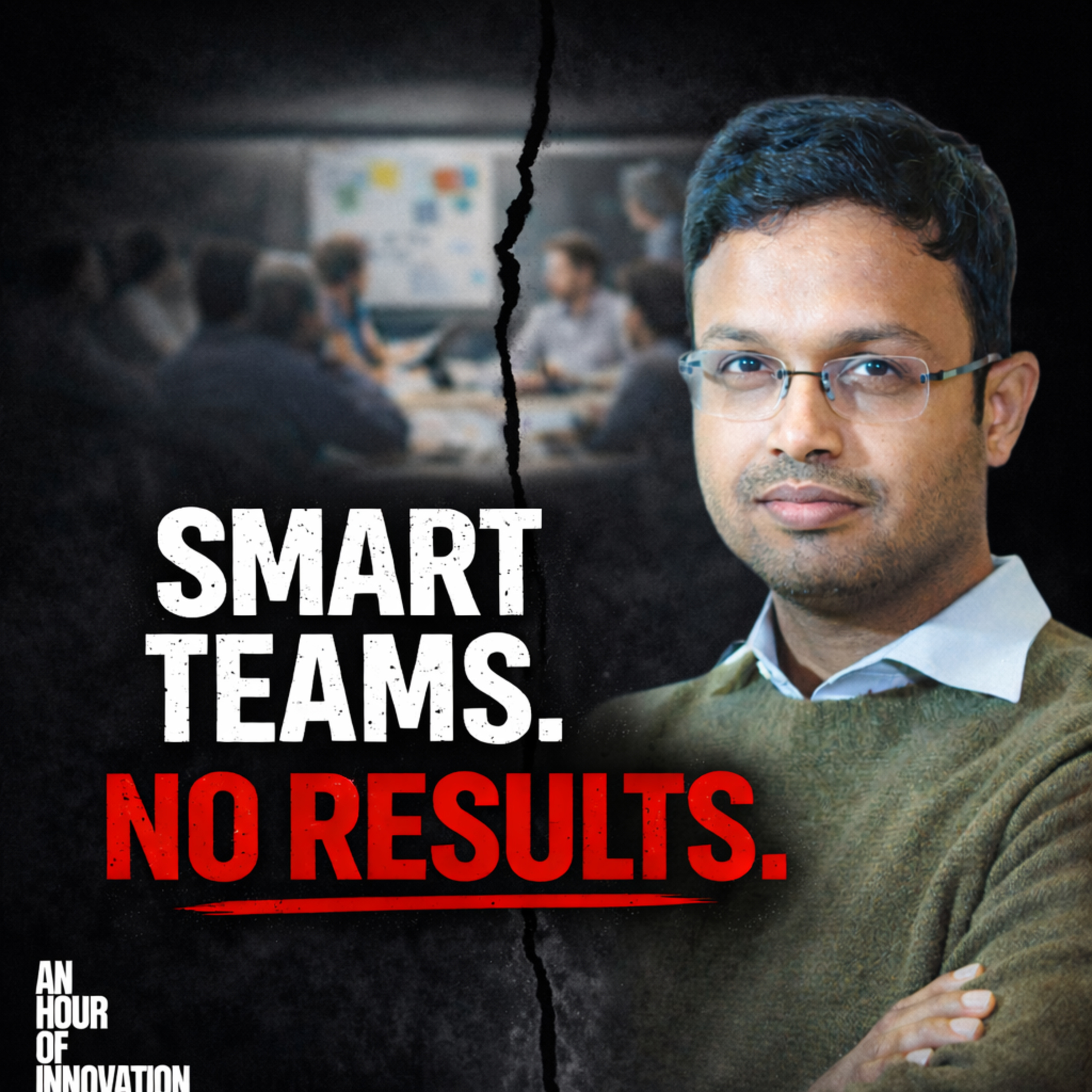 Why Smart Engineering Teams Fail: Alignment, Ownership, and Real Delivery | Prashanth Tondapu Why Smart Engineering Teams Fail: Alignment, Ownership, and Real Delivery | Prashanth Tondapu | Why do smart engineering teams miss deadlines, struggle with alignment, and fail at real software delivery, even when everyone is talented and working hard?In this episode of An Hour of Innovation podcast, Vit Lyoshin sits down with Prashanth Tondapu, the CEO of InnoStax, to unpack why intelligence alone doesn’t guarantee outcomes and how alignment, ownership, and engineering leadership are the real drivers of execution.They explore why Agile teams often fall into the trap of local optimization, where individuals optimize tasks but projects still fail at the system level. Prashanth explains how the tech lead role, clear ownership, and visible progress transform project management and software delivery. The episode dives into practical lessons on engineering leadership, team accountability, and why outcome ownership matters more than raw talent. You’ll also hear real examples of how startups can scale development teams without micromanaging while improving ROI.Prashanth Tondapu is the CEO of InnoStax, a software consulting company that works with startups and scale-ups across the US and Europe, helping engineering teams move from slow delivery to measurable results. He brings over 15 years of experience leading and observing hundreds of development teams across different industries. He is known for helping smart engineering teams fix execution gaps by focusing on alignment, clarity, and leadership instead of process-heavy rituals.Takeaways* Smart engineers often slow projects down by optimizing individual tasks instead of the whole system.* Alignment and clear ownership matter more than raw talent for consistent software delivery.* When everyone “owns” the outcome, accountability disappears, and execution suffers.* A dedicated tech lead acts as a system-level thinker, not just the best coder on the team.* Teams move faster when progress is demonstrable, not just explained in status updates.* Daily visible progress exposes blockers early and prevents engineers from rabbit-holing.* Agile rituals can hide delivery problems when they prioritize narrative over proof.* Developers are more likely to ask for help when transparency is built into the workflow.* Tech leads should reduce their own coding over time as the team becomes more effective.* Startup founders must delegate with checkpoints or risk becoming the execution bottleneck.Timestamps00:00 Introduction02:10 Why Team Alignment Matters More Than Talent04:14 Why Smart Engineering Teams Struggle to Deliver05:27 Owning Outcomes vs Task-Based Work06:56 The Tech Lead Role Explained11:23 Early Warning Signs of Failing Teams12:40 Daily Visible Progress for Faster Delivery16:52 How Daily Updates Expose Hidden Issues18:57 Building a Culture of Openness and Trust22:55 Why Teams Need a Single Tech Lead25:58 Avoiding Tech Lead Burnout and Micromanagement29:15 Startup Scaling Advice for Founders31:59 Ideal Team Structure for Software Delivery33:44 The One Thing That Guarantees Outcomes34:34 Innovation Q&AConnect with Prashanth* Website: https://innostax.com/ * LinkedIn: https://www.linkedin.com/in/prashanth-tondapu/ This Episode Is Supported By* Google Workspace: Collaborative way of working in the cloud, from anywhere, on any device - https://referworkspace.app.goo.gl/A7wH* Webflow: Create custom, responsive websites without coding - https://try.webflow.com/0lse98neclhe * MeetGeek: Record, transcribe, summarize, and share insights from every meeting - https://get.meetgeek.ai/yjteozr4m6ln For inquiries about sponsoring An Hour of Innovation, email iris@anhourofinnovation.comConnect with Vit* Substuck: https://anhourofinnovation.substack.com/ * LinkedIn: https://www.linkedin.com/in/vit-lyoshin/ * X: https://x.com/vitlyoshin * Website: https://vitlyoshin.com/contact/ * Podcast: https://www.anhourofinnovation.com/ | — | ||||||
| 1/27/26 | 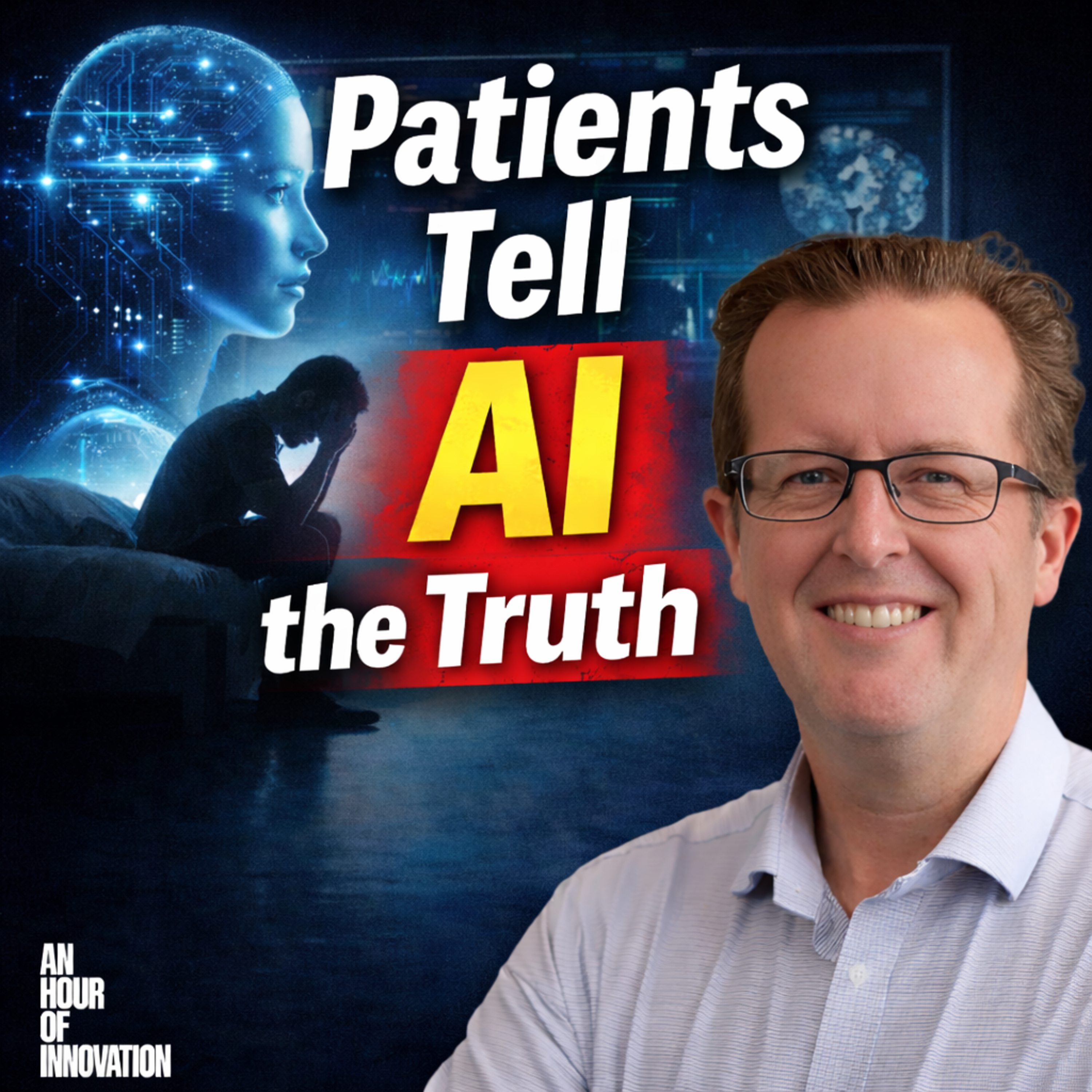 AI Video Analysis: How AI Is Changing Mental Health Care Between Doctor Visits l Loren Larsen AI Video Analysis: How AI Is Changing Mental Health Care Between Doctor Visits l Loren Larsen | Patients often hide how they’re really doing, but when AI listens between visits, the truth finally comes out, reshaping mental health care with empathy and precision.In this episode of An Hour of Innovation podcast, host Vit Lyoshin sits down with Loren Larsen, founder and CEO of Videra Health, to explore how AI in healthcare is transforming behavioral health by capturing what patients actually say and feel outside the clinic, using human-in-the-loop AI to support better care decisions.They discuss why the most dangerous moments in mental health care often happen between doctor visits, how AI-based check-ins can surface real patient narratives, and why ethical, well-tested AI matters more than ever. The conversation breaks down the limits of score-based assessments, the risks of poorly built AI, and how technology can extend, not replace, clinical judgment. It’s a practical look at mental health technology that’s already being used in real clinical settings.Loren Larsen is a longtime builder at the intersection of AI, video, and human decision-making. Before founding Videra Health, he served as CTO of HireVue, deploying video AI at a massive scale. In this episode, his experience matters because he’s navigated bias, ethics, and real-world deployment, offering a grounded perspective on what responsible healthcare AI should look like today.Takeaways* The most dangerous moment in a mental health patient’s life is right after leaving inpatient care.* AI check-ins between visits restore visibility into patient wellbeing when clinicians cannot scale human outreach.* Patients often share more honestly with AI than with therapists because they feel less judged and less pressure to perform.* Mental health scores without narrative (like PHQ-9) miss the “why” behind patient distress.* AI should augment clinical judgment, not replace therapists, especially during high-risk treatment moments.* Generative AI is not ready to safely conduct therapy, particularly in crises.* Model drift can occur from unexpected factors, such as medications or cosmetic procedures, not just bad data.* Poorly built healthcare AI can look legitimate, making it hard for buyers to distinguish safe tools from risky ones.* Ethical healthcare AI requires clear consent, transparency, and human oversight, not just technical accuracy.* The biggest challenge in AI healthcare adoption is balancing speed, safety, and trust in a fast-moving market.Timestamps00:00 Introduction01:35 Videra Health Origin Story03:02 AI Patient Check-Ins Between Doctor Visits05:33 Why Human Judgment Still Matters in AI Care08:49 Gaps in Mental Health Patient Care12:07 AI vs Human Care in Mental Health13:23 Testing & Validating Healthcare AI Systems17:16 Edge Cases, Bias, and AI Model Failure19:29 Ethical AI in Healthcare23:33 Why Healthcare AI Adoption Is Hard25:43 Common Myths About AI in Healthcare30:02 Lessons from Building Video AI at Scale34:54 Early Warning Signs in AI Systems38:31 Advice for First-Time Video AI Builders42:05 Innovation Q&AConnect with Loren* Website: https://www.viderahealth.com/ * LinkedIn: https://www.linkedin.com/in/loren-larsen/ This Episode Is Supported By* Google Workspace: Collaborative way of working in the cloud, from anywhere, on any device - https://referworkspace.app.goo.gl/A7wH* Webflow: Create custom, responsive websites without coding - https://try.webflow.com/0lse98neclhe * Monkey Digital: Unbeatable SEO. Outrank your competitors - https://www.monkeydigital.org?ref=110260 For inquiries about sponsoring An Hour of Innovation, email iris@anhourofinnovation.comConnect with Vit* Substuck: https://substack.com/@vitlyoshin * LinkedIn: https://www.linkedin.com/in/vit-lyoshin/ * X: https://x.com/vitlyoshin * Website: https://vitlyoshin.com/contact/ * Podcast: https://www.anhourofinnovation.com/ | — | ||||||
| 1/17/26 | 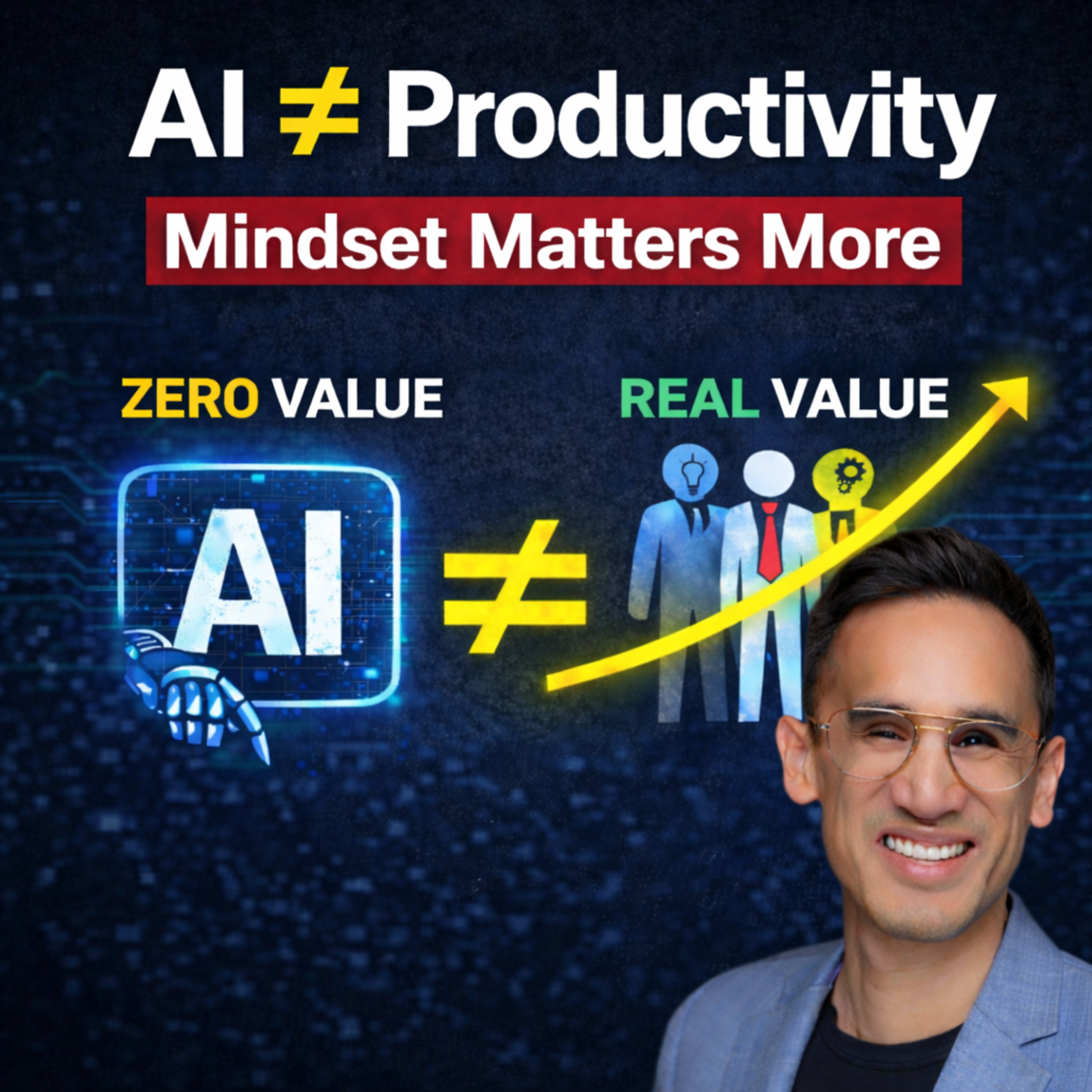 AI Isn’t the Problem! Why AI Adoption Fails at Work (95% Get Zero ROI) | Jay Kiew AI Isn’t the Problem! Why AI Adoption Fails at Work (95% Get Zero ROI) | Jay Kiew | Most teams adopt AI, expecting a breakthrough, but end up frustrated, disappointed, and wondering what went wrong when productivity doesn’t improve.In this episode of An Hour of Innovation podcast, Vit Lyoshin sits down with Jay Kiew, a globally recognized expert in organizational change and transformation, to unpack why so many AI initiatives fail to deliver value, even when the technology itself is powerful and widely available.They explore why AI alone does not create productivity or innovation, and why research shows that nearly 95% of companies see little to no ROI from their AI initiatives. Jay explains how broken processes, weak critical thinking, and low change readiness quietly sabotage even the best AI tools. Instead of chasing the next technology, this episode reframes AI adoption as a human and organizational challenge, one that requires mindset shifts before tools can deliver results.Jay Kiew is a change strategist and transformation leader who works with organizations navigating complex change at scale. He is known for helping leaders move beyond tool-driven thinking toward building adaptive, change-ready cultures. In this episode, Jay’s perspective matters because it challenges the assumption that AI failures are technical problems and shows why leadership, process discipline, and learning capability are the real differentiators.Takeaways* AI does not create productivity by itself; it only amplifies the quality of existing processes and decision-making.* Most AI initiatives fail not because of weak models, but because teams cannot clearly explain how their work actually gets done.* Research showing that 95% of companies see no AI ROI reflects organizational readiness gaps, not a lack of AI capability.* Poorly defined workflows become painfully visible the moment AI is introduced into a team.* Leaders often deploy AI as a solution before agreeing on what problem they are trying to solve.* Organizations that struggle with change management tend to struggle the most with AI adoption.* AI agents fail when humans cannot articulate rules, context, and success criteria for the work.* Critical thinking is becoming more valuable than technical AI skills as automation increases.* Change fluency, the ability to adapt continuously, is emerging as a core career skill for the next decade.* Teams that succeed with AI focus less on tools and more on learning, feedback loops, and behavior change.Timestamps00:00 Introduction01:48 Why Leaders Misunderstand AI03:22 How AI Reveals Organizational Dysfunction05:58 SOPs and Critical Thinking for AI Success08:41 AI Adoption and ROI Reality13:19 Learning and Integration Matter More Than Tools16:11 What AI Agents Really Are18:03 How AI Agents Change Roles22:42 Training Teams for AI Adoption23:59 Why Teaching AI Tools Is Hard25:49 Learning on the Job with AI28:01 Essential Skills for the AI Era29:03 Design Thinking and Influence32:16 Why Human Perception Matters33:17 Change Fluency as a Future Skill34:13 AI’s Real Impact on Productivity36:19 Asking Better Questions with AI37:55 Practical AI Use at Work39:38 Innovation Q&AConnect with Jay* Website: https://www.changefluency.com/ * LinkedIn: https://www.linkedin.com/in/jaykiew-change-fluency/ * Instagram: https://www.instagram.com/changefluency * Book: https://www.amazon.com/Change-Fluency-Principles-Uncertainty-Innovation/dp/1774586991 Sponsors* Google Workspace: Collaborative way of working in the cloud, from anywhere, on any device - https://referworkspace.app.goo.gl/A7wH * Webflow: Create custom, responsive websites without coding - https://try.webflow.com/0lse98neclhe * MeetGeek: Record, transcribe, summarize, and share insights from every meeting - https://get.meetgeek.ai/yjteozr4m6ln Connect with Vit* Substuck: https://substack.com/@vitlyoshin * LinkedIn: https://www.linkedin.com/in/vit-lyoshin/ * X: https://x.com/vitlyoshin * Podcast: https://www.anhourofinnovation.com/ | — | ||||||
| 1/10/26 |  Can AI Steal Your Book? The Alarming Plagiarism Problem! | US Publishing Expert Can AI Steal Your Book? The Alarming Plagiarism Problem! | US Publishing Expert | What if your book could be copied, republished, and sold under someone else’s name, and you’d barely know it happened?In this episode of An Hour of Innovation podcast, host Vit Lyoshin speaks with Julie Trelstad, a longtime publishing leader and one of the most thoughtful voices on copyright, metadata, and digital trust. Julie brings a rare insider’s view into how books are discovered, distributed, and increasingly misused in an AI-driven world.They explore a growing fear among writers, creators, and publishers: how AI is quietly reshaping plagiarism, authorship, and trust in the publishing ecosystem.They examine how AI-generated content is blurring the line between original work and imitation, why traditional copyright protections struggle in a machine-readable world, and how fake or derivative books can appear online within days. The episode breaks down the real risks authors face today, not hypothetical futures, and what structural changes may be required to protect creative work. It’s a practical, sober look at AI plagiarism.Julie Trelstad is a publishing executive and strategist known for her work at the intersection of technology and intellectual property. She has spent decades helping publishers, authors, and platforms navigate the identification, protection, and trust of content at scale. In this episode, her perspective matters because she explains not just that AI plagiarism is happening, but why the system makes it so hard to detect and stop, and what could actually help.Takeaways* AI can clone and resell a book in days, and most platforms struggle to reliably prove that the theft occurred.* AI-generated plagiarism often looks legitimate enough to fool retailers, reviewers, and buyers.* Authors lose sales and reputation when fake AI versions of their books appear at lower prices.* Traditional copyright law exists, but it was never designed for machine-scale copying and AI training.* There has been no machine-readable way for AI systems to recognize who owns content, until now.* Content fingerprinting can detect similarity across languages and paraphrased AI rewrites.* Time-stamped content registries can establish legal proof of who published first.* Most books already inside AI models were scraped without the author's consent or compensation.* AI lawsuits focus less on training itself and more on the use of pirated content.* Authors could earn micro-payments when AI systems use specific paragraphs or ideas from their work.Timestamps00:00 Introduction01:37 Why AI Plagiarism Is So Hard to Detect03:25 Amlet.ai and the Fight for Content Ownership05:32 How Copyright Worked Before Generative AI08:09 The Origin Story Behind Amlet.ai12:22 Building Machine-Readable Infrastructure for Copyright14:24 How Publishing Is Changing in the AI Era17:34 How Authors Can Protect Their Work with Amlet.ai20:38 Tools Publishers Use to Detect and Enforce Rights21:38 How Authors Can Monetize Content Through AI24:27 The Reality of AI Scraping and Plagiarism Today27:00 Publisher Rights, Digital Security, and Enforcement29:08 Evolving the Business Model for AI Licensing35:34 The Future of Digital Ownership and AI Rights38:37 Innovation Q&ASupport This Podcast* To support our work, please check out our sponsors and get discounts: https://www.anhourofinnovation.com/sponsors/Connect with Julie* Website: https://paperbacksandpixels.com/ * LinkedIn: https://www.linkedin.com/in/julietrelstad/ * Amlet AI: https://amlet.ai/ Connect with Vit* Substuck: https://substack.com/@vitlyoshin * LinkedIn: https://www.linkedin.com/in/vit-lyoshin/ * X: https://x.com/vitlyoshin * Website: https://vitlyoshin.com/contact/ * Podcast: https://www.anhourofinnovation.com/ | — | ||||||
| 12/20/25 | 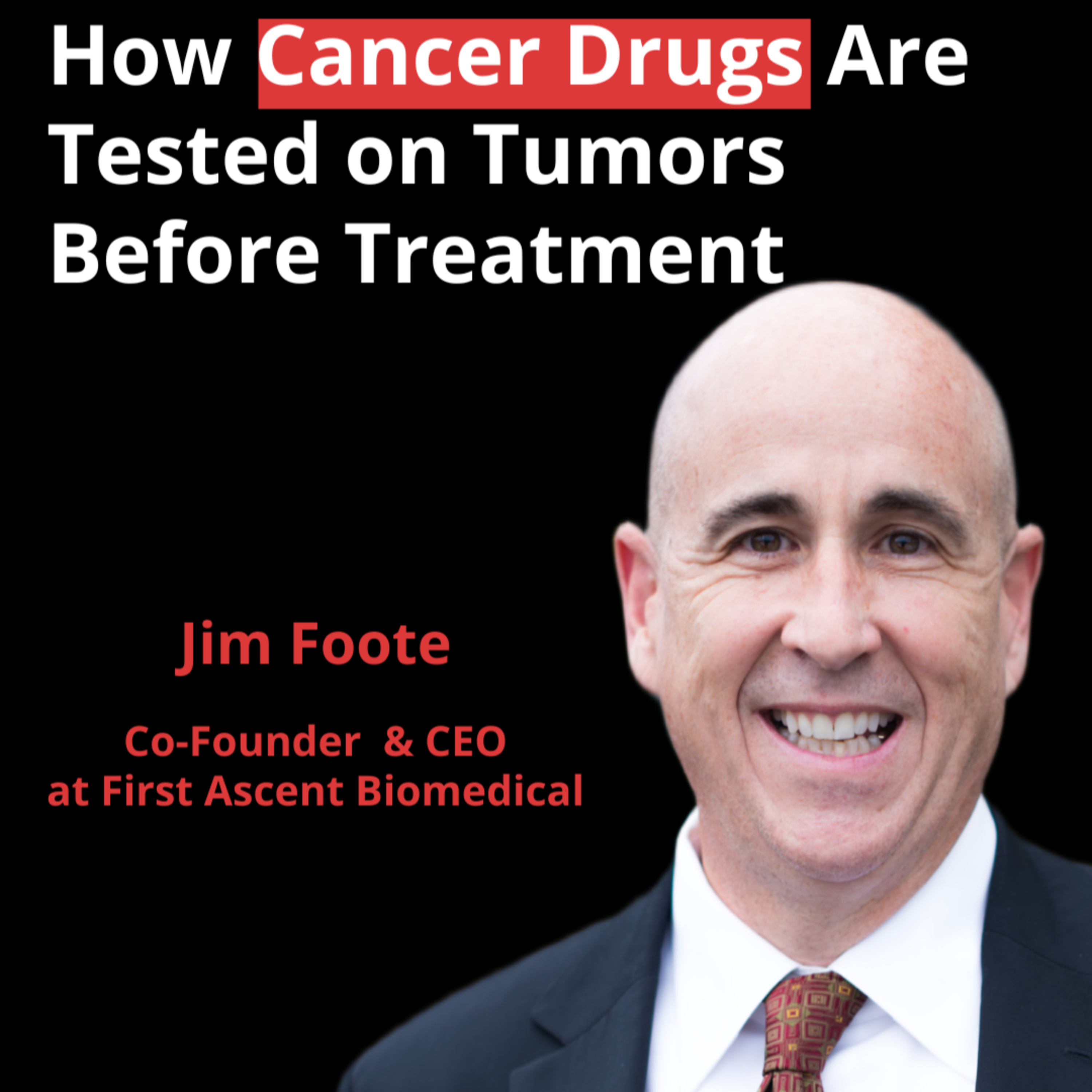 Functional Precision Medicine: How Cancer Drugs Are Tested Before Treatment | Jim Foote Functional Precision Medicine: How Cancer Drugs Are Tested Before Treatment | Jim Foote | Cancer care still forces patients and doctors to guess! Learn how functional precision medicine is replacing that uncertainty by testing cancer drugs before treatment even begins.In this episode of An Hour of Innovation podcast, host Vit Lyoshin speaks with Jim Foote, co-founder and CEO of First Ascent Biomedical, an innovator who is challenging one of the most uncomfortable truths in modern medicine: many cancer treatments are chosen without knowing if they will actually work.First Ascent Biomedical is a company focused on transforming personalized cancer treatment through functional precision medicine and data-driven decision support.In this conversation, they explore how functional precision medicine differs from traditional precision medicine and why testing drugs on patients’ live tumor cells changes everything. Jim explains how AI, robotics, and large-scale drug testing help doctors move from trial-and-error to a true test-and-treat approach. The discussion also covers the risks of ineffective or harmful treatments, the economic cost of cancer care, and what must change for this model to become part of standard oncology practice.Jim Foote is a former technology executive turned healthcare innovator whose work is deeply shaped by personal loss and firsthand experience with cancer care. He is best known for advancing functional precision medicine by combining genomics, live-cell drug testing, and AI-driven analysis to guide treatment decisions. His perspective matters because it connects real clinical outcomes with the technology needed to give doctors and patients clearer, faster, and more humane options.Takeaways* Cancer treatment still relies heavily on trial-and-error, even with modern medical technology.* Two biologically different patients often receive the same cancer treatment based on population averages.* Precision medicine based on DNA and RNA sequencing still cannot confirm if a drug will work before it’s given.* Functional precision medicine tests drugs directly on a patient’s live tumor cells before treatment begins.* Some FDA-approved cancer drugs can be completely ineffective or even make a patient’s cancer worse.* Testing drugs outside the body can prevent patients from being exposed to harmful or useless treatments.* AI and robotics enable hundreds of drug tests to be completed in days instead of weeks or months.* In a published study, 83% of refractory cancer patients did better when treatment was guided by this approach.* Knowing which drugs won’t work is just as important as knowing which ones will.* Personalized, test-and-treat cancer care has the potential to improve outcomes while reducing overall healthcare costs.Timestamps00:00 Introduction02:46 The Core Problem in Modern Cancer Care04:16 Functional Precision Medicine Explained06:42 How AI, Robotics, and Data Are Changing Cancer Treatment10:01 How Cancer Drugs Are Tested Before Treatment13:20 Personalized, Patient-Centric Cancer Care18:22 Cost, Access, and the Economics of Cancer Treatment22:19 The Future of Cancer Care and Patient Empowerment25:21 Real Patient Outcomes and Success Stories26:50 Why Functional Precision Medicine Is the Future31:18 Predicting, Detecting, and Preventing Cancer Earlier34:27 Where to Learn More About Functional Precision Medicine36:12 Transforming Healthcare Beyond Trial-and-Error37:27 Regulations, FDA Pathways, and Scaling Innovation40:09 Why Cancer Is Affecting Younger Patients41:17 Innovation Q&ASupport This Podcast* To support our work, please check out our sponsors and get discounts: https://www.anhourofinnovation.com/sponsors/Connect with Jim* Website: https://firstascentbiomedical.com/ * LinkedIn: https://www.linkedin.com/in/jim-foote/ * TEDx Talk: https://www.youtube.com/watch?v=CqLCgNxUhVc Connect with VitLinkedIn: https://www.linkedin.com/in/vit-lyoshin/ X: https://x.com/vitlyoshin Website: https://vitlyoshin.comPodcast: https://www.anhourofinnovation.com/ | — | ||||||
| 12/13/25 |  The Future of Music Education: AI Tutors, Human Mentors, and Creativity The Future of Music Education: AI Tutors, Human Mentors, and Creativity | Music education is quietly undergoing a massive shift, and most people haven’t noticed yet.AI tutors are no longer just tools; they’re starting to shape how musicians learn, practice, and improve. But here’s the real question: where does human creativity and mentorship still matter in an AI-driven world?In this episode of An Hour of Innovation podcast, host Vit Lyoshin sits down with John von Seggern, a longtime musician, educator, and founder of Futureproof Music School, to unpack what’s actually changing, and what isn’t, in the future of music education. John has spent over a decade designing online music education programs and now works at the intersection of AI, creativity, and human mentorship.In this conversation, they explore how AI is personalizing music education in ways traditional schools struggle to scale. John explains how AI tutors can analyze music, guide students through complex production workflows, and surface the one or two things that matter most at each stage of learning. They also dig into why AI still falls short in mastery, taste, and creative judgment, and why human mentors remain essential. They discuss the hybrid model of AI tutors and human teachers, the future of music production learning, and what this shift means for creators trying to stay relevant in a fast-changing industry.John von Seggern is a musician, producer, educator, and music technologist who has worked with film composers and contributed sound design to Pixar’s WALL·E. He previously helped lead and design one of the world’s most respected electronic music programs before founding Futureproof Music School, where he’s building AI-powered, personalized music education systems. His work matters because it goes beyond hype, offering a practical, grounded view of how AI can support creativity without replacing the human elements that make music meaningful.Takeaways* AI tutors are most effective when they surface only one or two actionable fixes, not long reports that overwhelm learners.* Music education improves dramatically when AI can analyze your actual work (like mixes), not just answer theoretical questions.* The biggest limitation of AI in music is that elite, professional knowledge is often undocumented, so models can’t learn it.* Human mentors remain essential at advanced levels because taste, judgment, and creative intuition can’t be automated.* Personalized learning paths outperform one-size-fits-all programs, especially in creative and technical fields like music production.* Generative AI tools are fun, but most professionals prefer AI that assists the process, not tools that generate finished music.* AI acts best as an intelligence amplifier, helping creators move faster rather than replacing their role.* The future of music education isn’t AI-only, but a hybrid model where AI accelerates learning, and humans guide mastery.Timestamps00:00 Introduction03:02 How AI Is Transforming Music Education07:50 Why AI + Human Mentorship Works Better Than Music Schools11:43 Why Music Education Curricula Must Evolve Faster15:04 How AI Personalizes Music Learning for Every Student19:38 Building an AI-Powered Education Business24:22 What Students Really Say About AI Music Education26:20 Electronic Music vs Learning Traditional Instruments27:58 The Future of AI in Music and Creative Industries30:28 Why Artists Still Matter in AI-Generated Art32:21 Who Owns Music Created With AI?36:50 How Creators Can Survive and Thrive Using AI42:24 Innovation Q&ASupport This Podcast* To support our work, please check out our sponsors and get discounts: https://www.anhourofinnovation.com/sponsors/Connect with John* Website: https://futureproofmusicschool.com/ * LinkedIn: https://www.linkedin.com/in/johnvon/ Connect with Vit* LinkedIn: https://www.linkedin.com/in/vit-lyoshin/ * X: https://x.com/vitlyoshin * Website: https://vitlyoshin.com/contact/ * Podcast: https://www.anhourofinnovation.com/ | — | ||||||
| 12/6/25 | 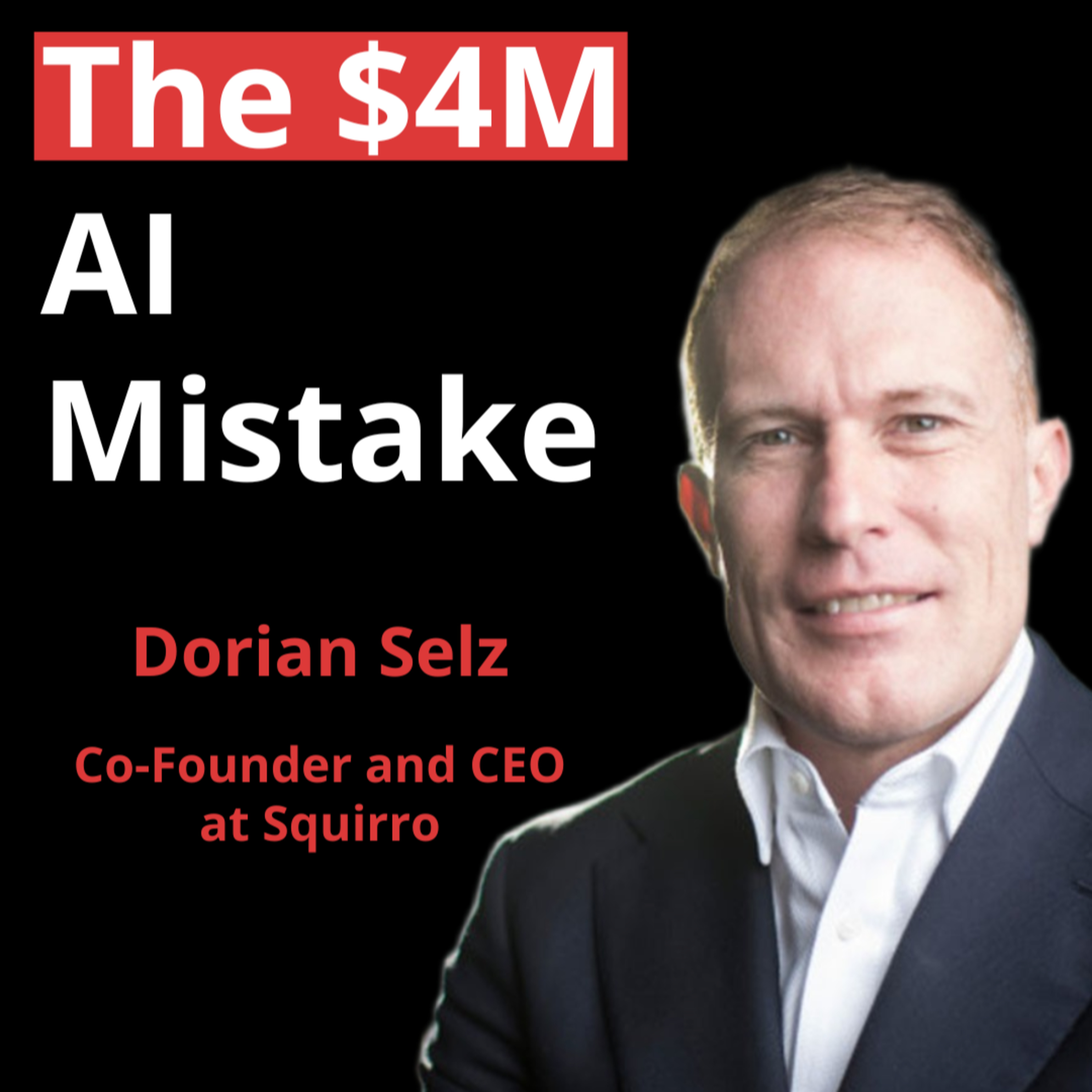 RAG, LLMs & the Hidden Costs of AI: What Companies Must Fix Before It’s Too Late RAG, LLMs & the Hidden Costs of AI: What Companies Must Fix Before It’s Too Late | Most companies have no idea how risky and expensive their AI systems truly are until a single mistake turns into millions in unexpected costs.In this episode of An Hour of Innovation podcast, host Vit Lyoshin explores the truth about AI safety, enterprise-scale LLMs, and the unseen risks that organizations must fix before it’s too late.Vit is joined by Dorian Selz, co-founder and CEO of Squirro, an enterprise AI company trusted by global banks, central banks, and highly regulated industries. His experience gives him a rare inside look at the operational, financial, and security challenges that most companies overlook.They dive into the hidden costs of AI, why RAG has become essential for accuracy and cost-efficiency, and how a single architectural mistake can lead to a $4 million monthly LLM bill. They discuss why enterprises underestimate AI risk, how guardrails and observability protect data, and why regulated environments demand extreme trust and auditability. Dorian explains the gap between perceived vs. actual AI safety, how insurance companies will shape future AI governance, and why vibe coding creates dangerous long-term technical debt. Whether you’re deploying AI in an enterprise or building products on top of LLMs.Dorian Selz is a veteran entrepreneur, known for building secure, compliant, and enterprise-grade AI systems used in finance, healthcare, and other regulated sectors. He specializes in AI safety, RAG architecture, knowledge retrieval, and auditability at scale, capabilities that are increasingly critical as AI enters mission-critical operations. His work sits at the intersection of innovation and regulation, making him one of the most important voices in enterprise AI today.Takeaways* Most enterprises dramatically overestimate their AI security readiness.* A single architectural mistake with LLMs can create a $4M-per-month operational cost.* RAG is essential because enterprises only need to expose relevant snippets, not entire documents, to an LLM.* Trust in regulated industries takes years to build and can be lost instantly.* Real AI safety requires end-to-end observability, not just disclaimers or “verify before use” warnings.* Insurance companies will soon force AI safety by refusing coverage without documented guardrails.* AI liability remains unresolved: Should the model provider, the user, or the enterprise be responsible?* Vibe coding creates massive future technical debt because AI-generated code is often unreadable or unmaintainable.Timestamps00:00 Introduction to Enterprise AI Risks02:23 Why AI Needs Guardrails for Safety05:26 AI Challenges in Regulated Industries11:57 AI Safety: Perception vs. Real Security15:29 Risk Management & Insurance in AI21:35 AI Liability: Who’s Actually Responsible?25:08 Should AI Have Its Own Regulatory Agency?32:44 How RAG (Retrieval-Augmented Generation) Works40:02 Future Security Threats in AI Systems42:32 The Hidden Dangers of Vibe Coding48:34 Startup Strategy for Regulated AI Markets50:38 Innovation Q&A QuestionsSupport This Podcast* To support our work, please check out our sponsors and get discounts: https://www.anhourofinnovation.com/sponsors/Connect with Dorian* Website: https://squirro.com/ * LinkedIn: https://www.linkedin.com/in/dselz/ * X: https://x.com/dselz Connect with Vit* Substuck: https://substack.com/@vitlyoshin * LinkedIn: https://www.linkedin.com/in/vit-lyoshin/ * X: https://x.com/vitlyoshin * Website: https://vitlyoshin.com/contact/* Podcast: https://www.anhourofinnovation.com/ | — | ||||||
| 11/28/25 | 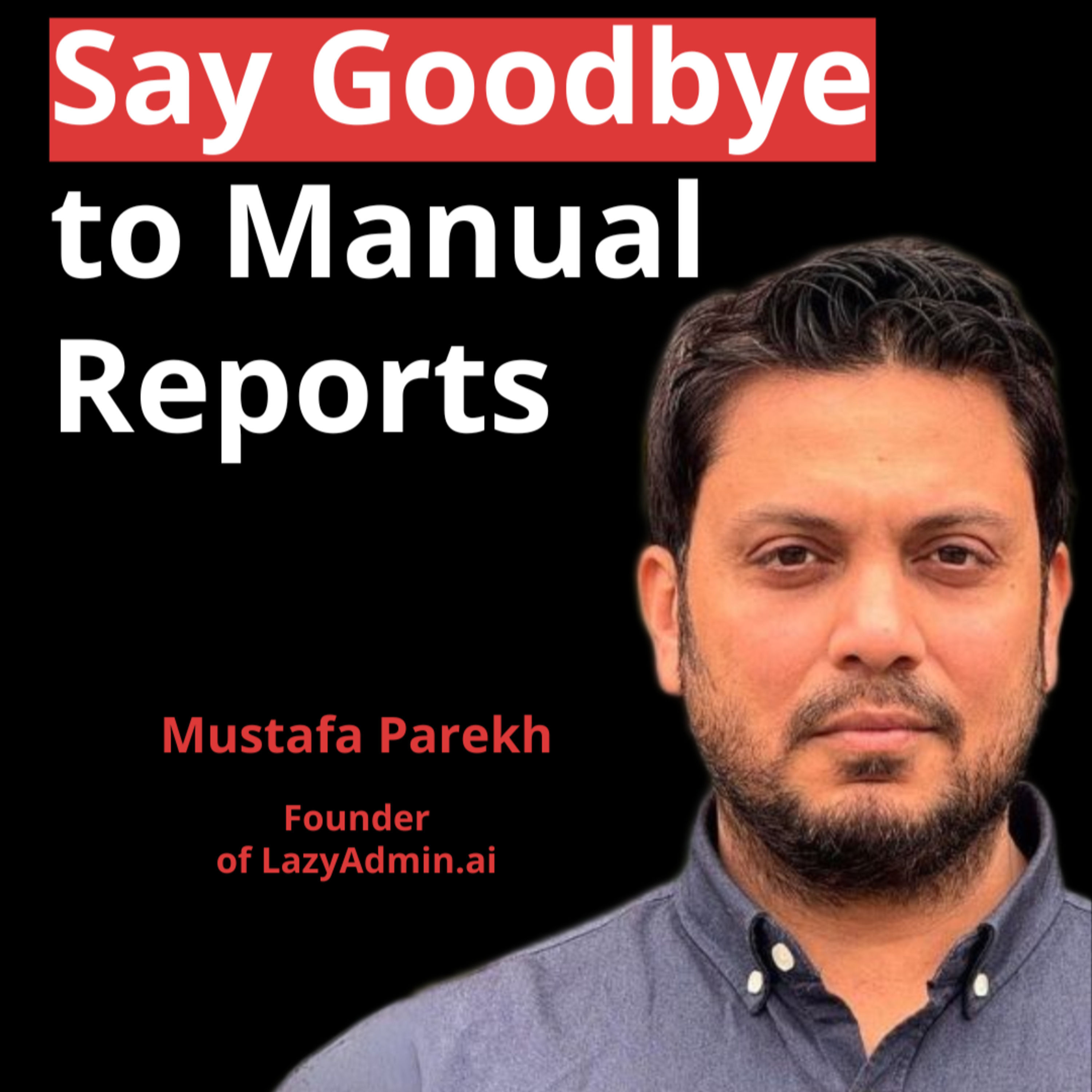 The Future of AI Assistants! Why Your Data Will Soon Talk Back to You | Mustafa Parekh The Future of AI Assistants! Why Your Data Will Soon Talk Back to You | Mustafa Parekh | AI is becoming a business partner, not just a tool, and soon, your data will literally talk back to you.In this episode of An Hour of Innovation podcast, host Vit Lyoshin sits down with Mustafa Parekh, the founder of Lazy Admin, to explore how personalized AI is transforming the way companies understand and use their data.Mustafa breaks down how Lazy Admin turns complex Salesforce and CRM information into natural-language insights, visualizations, and strategic recommendations, all in seconds. They talk about the rise of AI assistants, the future of enterprise AI, how AI can learn your internal business language, the challenges of building secure “zero-data-exfiltration” systems, and why the next era of innovation isn’t just about solving problems, it’s about creating better, more human-centered ways of working. Together, they dive into AI ethics, government regulation, AGI risks, job displacement, product development mindsets, and why founders should build Minimum Lovable Products instead of just MVPs.Mustafa Parekh is a tech entrepreneur, Salesforce consultant, and the creator of Lazy Admin, an AI-powered data insights platform redefining how businesses access reporting and analytics. He is known for pioneering privacy-first architecture in enterprise AI, automating CRM workflows without exposing sensitive data, and helping companies make smarter decisions using real-time insights. His background spans full-stack development, global consulting work, and building impactful SaaS tools across industries.Support This Podcast* To support our work, please check out our sponsors and get discounts: https://www.anhourofinnovation.com/sponsors/Takeaways* AI is evolving from a generic tool into a personalized business partner that understands company context.* AI that learns your internal acronyms, vocabulary, and business lingo delivers dramatically better results.* Privacy-first architecture like Zero-Data-Exfiltration is becoming essential for enterprise AI adoption.* Companies waste hundreds of hours on reporting that AI can now generate in seconds.* The best products aren’t just viable, they’re lovable.* AI’s biggest impact will come when it merges with robotics and neuroscience, not just software.* Government regulation may slow down certain AI advancements due to unemployment and economic pressure.* Open-source AI offers deeper integration, while proprietary models support faster innovation.* Rapid prototyping and minimizing development time are critical for early-stage founders.* Marketing, not development, becomes the real challenge after launching a startup.* Choosing the right customer segment and understanding their pain points is essential for SaaS success.* The future of business AI lies in human-centered design, technology that enhances people rather than replaces them.Timestamps00:00 Introduction02:53 How Lazy Admin Was Born08:13 Validating the AI Product Idea11:02 How Lazy Admin Works13:02 User Experience & Onboarding17:18 AI Trends: The Start of the “AI Age”20:37 The Reality of AI Ethics23:11 Open Source vs Proprietary AI24:36 Will AI Replace Jobs?26:31 Startup Lessons & Founder Mistakes31:50 Client Success Stories33:42 Innovation Q&A RoundConnect with Mustafa* Website: https://lazyadmin.httpeak.com/ * LinkedIn: https://www.linkedin.com/in/mustafaparekh/ Connect with Vit* Substuck: https://substack.com/@vitlyoshin * LinkedIn: https://www.linkedin.com/in/vit-lyoshin/ * X: https://x.com/vitlyoshin * Website: https://vitlyoshin.com/contact/ Vit’s Projects* Podcast: https://www.anhourofinnovation.com/ * AI Booking Assistant: https://appforgelab.com/ | — | ||||||
| 11/21/25 |  AI Glasses That Have Something All Others are Missing | Bobak Tavangar AI Glasses That Have Something All Others are Missing | Bobak Tavangar | AI glasses are evolving faster than anyone expected, but only one company is building them to amplify human agency instead of monetizing your attention.In this episode of An Hour of Innovation podcast, host Vit Lyoshin explores the future of wearable AI with a guest who is reshaping the entire computing landscape: Bobak Tavangar, Co-Founder & CEO of Brilliant Labs.They dive deep into why the future of AI must be wearable, open-source, and private by design, and how Brilliant Labs’s team created the first AI glasses built to empower people rather than extract their data.They discuss the emergence of AI memory, the challenges of building long-lasting hardware, why battery life matters more than most people think, the philosophical risks of “outsourcing our thinking” to AI, and why Big Tech’s approach to wearable AI may be leading us in the wrong direction. Bobak also unpacks how open-source hardware can restore human agency, reconnect people, and potentially re-architect the Internet around the individual.Bobak Tavangar is a former Program Lead at Apple, a serial founder in computer vision and graph search, and now CEO of Brilliant Labs. He’s a design-first innovator who blends engineering with philosophy, an open-source advocate pushing for transparent, trustworthy AI, and a creator inspired by the Baha’i principle of oneness, building technology that strengthens human connection rather than weakens it.Support This Podcast* To support our work, please check out our sponsors and get discounts: https://www.anhourofinnovation.com/sponsors/Takeaways* AI glasses can amplify human agency, not replace it, when built with the right philosophy.* Brilliant Labs designed the first wearable AI platform that is open-source.* Privacy is central: the device never stores photos or audio, only encrypted embeddings.* True innovation in hardware requires painstaking component selection and constant iteration.* The future of computing must align more naturally with human biology than smartphones do.* AI should be a thought partner, not a substitute for human thinking.* Overreliance on AI can lead to cognitive atrophy, according to emerging research.* Open-source systems are essential for trust, transparency, and user control.* AI memory has the potential to revolutionize learning, recall, accessibility, and life organization.* Building AI glasses requires deep integration with factories, not just a software mindset.* Wearable AI may eventually reduce our reliance on smartphones, but the market will decide, not the company.* Future AI devices should foster connection and human well-being, not distraction or ad monetization.Timestamps00:00 Introduction03:13 Why He Left Apple: The Case for Open-Source AI Glasses06:00 Why the Next Big Tech Shift Is AI Hardware09:06 How Brilliant Labs Built Halo: From Idea to Prototype11:31 What AI Glasses Can Do Today: Memory, Recall, Real-Time Assistance14:32 AI Memory Explained: How Glasses Learn From Your Life17:11 The Hardest Problems in AI Hardware: Battery, Sensors, Design23:59 Meta vs Open-Source: Competing Visions for AI Glasses30:53 The Future of Wearable AI: Use Cases, Apps, and Developer Tools35:08 Privacy by Design: Why Brilliant Labs Stores Zero Images or Audio40:05 Will AI Make Us Smarter or Weaker? The Human Agency Debate46:56 What Life With AI Glasses Could Look Like in 5–10 Years50:56 Will Wearable AI Replace Phones? Early Signals for the Future54:31 Hard Lessons Learned Building Real AI Hardware01:00:01 Innovation Q&A RoundConnect with Bobak* Website: https://brilliant.xyz/ * LinkedIn: https://www.linkedin.com/in/bobak-tavangar-29445012/ * X: https://x.com/btavangar Connect with Vit* Substuck: https://substack.com/@vitlyoshin * LinkedIn: https://www.linkedin.com/in/vit-lyoshin/ * X: https://x.com/vitlyoshin Vit’s Projects* Podcast: https://www.anhourofinnovation.com/ * AI Booking Assistant: https://appforgelab.com/ | — | ||||||
| 11/14/25 |  Why AI Fails in Most Companies! And How to Fix It | Tullio Siragusa Why AI Fails in Most Companies! And How to Fix It | Tullio Siragusa | Why do most AI initiatives fail — even at the world’s biggest companies?In this episode of An Hour of Innovation podcast, host Vit Lyoshin sits down with Tullio Siragusa, a business strategist, author, and creator of the EmpathIQ Framework™, to break down the human barriers that undermine AI adoption long before the technology ever hits production.Vit and Tullio explore why AI fails in most organizations, how outdated command-and-control cultures choke innovation, and why empathy, emotional intelligence, and decentralized decision-making are the real prerequisites for a successful AI transformation.They discuss Tullio’s EmpathIQ model for building AI-ready organizations, the future relationship between human intelligence and artificial intelligence, and the surprising ways companies can triple productivity without hiring by redesigning how people collaborate.Tullio Siragusa brings over 30 years of experience across telecom, ad tech, and software engineering, and has helped organizations worldwide transform through human-centered leadership. He’s the founder of Inventrica Advisory, a speaker and strategist specializing in organizational design, culture transformation, emotional intelligence, and AI readiness. His EmpathIQ Framework™ has guided companies toward building empowered, autonomous, and highly productive teams capable of thriving in the age of AI.Support This Podcast* To support our work, please check out our sponsors and get discounts: https://www.anhourofinnovation.com/sponsors/Takeaways* AI fails in most companies because of culture, not technology.* Outdated command-and-control structures suffocate the speed and autonomy AI requires.* Over 70% of AI projects fail due to human and cultural barriers, not technical ones.* Only 21% of employees are engaged, a massive hidden productivity leak.* Empowered, decentralized teams dramatically increase innovation and output.* The EmpathIQ Framework™ can triple a company’s capacity without adding headcount.* Empathy is a strategic advantage, not a soft skill, and it boosts revenue and performance.* AI amplifies whatever culture it enters, making organizational design a critical success factor.* Emotional intelligence will become the biggest competitive edge in the AI era.* Customers buy based on emotional needs first, not just transactions; empathy wins in sales.* Fixing culture first is essential before rolling out any meaningful AI transformation.* AI agents can mimic empathy, but they can’t replace human curiosity, wisdom, or intuition.* Leaders who ignore emotional intelligence risk building companies that sound cold, clinical, and interchangeable.Timestamps00:00 Introduction05:33 Why AI Fails: The Human Challenge Behind Adoption07:30 Organizational Design: The Bottleneck in AI Success10:45 Employee Engagement Crisis: The 21% Problem13:26 Empathy as a Core Business Strategy16:25 Measuring AI Success Beyond Technology24:48 EmpathIQ Framework Overview26:35 Force Field Analysis Explained28:27 Collaborative OKRs for Cross-Team Alignment31:16 Neuroscience-Based Leadership Coaching33:58 Self-Management & Decentralized Organizations37:49 Empathy in Action: Elevating Transactions48:07 Emotional Intelligence as a Competitive Edge58:20 Integrating Acquisitions with Empathy & DecentralizationConnect with Tullio* Website: https://tulliosiragusa.com/ * LinkedIn: https://www.linkedin.com/in/tulliosiragusa/ * X: https://x.com/tulliosiragusa * Other: https://linktr.ee/tulliosiragusa Connect with Vit* Website: https://vitlyoshin.com/contact/ * LinkedIn: https://www.linkedin.com/in/vit-lyoshin/ * X: https://x.com/vitlyoshin Vit’s Projects* Podcast: https://www.anhourofinnovation.com/ * AI Booking Assistant: https://appforgelab.com/ | — | ||||||
| 11/7/25 |  How AI Is Reducing Healthcare Costs and Helping Doctors Focus on Patients | Zach Evans How AI Is Reducing Healthcare Costs and Helping Doctors Focus on Patients | Zach Evans | AI that isn’t replacing doctors, it’s helping them save lives, cut costs, and bring humanity back to healthcare.In this episode of An Hour of Innovation podcast, host Vit Lyoshin sits down with Zach Evans, Chief Technology Officer at Xsolis, a leading AI and data analytics company transforming the way hospitals and insurance providers work together.Zach and Vit dive into how artificial intelligence is removing friction in healthcare, reducing administrative waste, and improving collaboration between hospitals, payers, and clinicians. They explore how predictive analytics and generative AI are being used to accelerate decisions, prevent costly billing errors, and free up doctors to focus on patient care. Zach also shares how his team built Dragonfly, Xsolis’s AI-powered platform that streamlines clinical workflows, enhances cybersecurity, and helps hospitals save millions every year.As CTO, Zach Evans leads the engineering and product strategy behind Xsolis’s data-driven solutions. With nearly a decade of experience in healthcare technology and digital transformation, he’s helped scale the company from a small startup to a national leader serving hospitals across the US. Zach is passionate about building human-centered AI systems that empower clinicians, improve patient outcomes, and redefine how healthcare organizations operate.Support This Podcast* To support our work, please check out our sponsors and get discounts: https://www.anhourofinnovation.com/sponsors/Takeaways* AI isn’t replacing doctors, it’s helping them make faster, better decisions.* US hospitals spend up to 25% of their revenue on administrative tasks.* Dragonfly, Xsolis’s AI platform, uses data to reduce friction between hospitals and insurance companies.* Predictive analytics can determine patient status (inpatient vs. observation) with 99% accuracy.* Generative AI now drafts clinicians’ initial patient reviews, saving hours of manual work.* Keeping a “human in the loop” ensures AI supports, not replaces, healthcare professionals.* Hospitals can resolve claim decisions within hours instead of weeks or months.* Agentic AI is being developed to automate repetitive tasks like medical forms and data entry.* Healthcare data is among the most valuable information on the black market, making cybersecurity critical.* Moving from reactive to proactive security helps prevent attacks before they happen.* AI is helping hospitals save millions by cutting denied claims and reducing administrative waste.* The next wave of healthcare innovation is ambient AI, enabling doctors to talk to patients instead of screens.* Every dollar saved on admin costs can be reinvested into patient care and clinical improvements.Timestamps00:00 Introduction03:01 Understanding Healthcare Friction and How AI Solves It05:21 AI-Driven Reimbursement: Streamlining Hospital and Insurance Payments10:55 Cybersecurity in Healthcare: Protecting Patient Data with AI17:12 Generative AI in Healthcare: New Innovations Changing Medicine23:34 Dragonfly by Xsolis: An AI Platform for Healthcare Efficiency26:36 Optimizing Hospital Workflows with Predictive Analytics and AI28:19 AI for Length-of-Stay Management: Improving Patient Flow32:33 Future of Healthcare Technology: From Automation to Intelligence36:54 Data Symmetry in Healthcare: Aligning Hospitals and Insurers37:48 Leadership and Innovation: Scaling a Healthcare Tech Team42:49 AI’s Real Impact on Healthcare Professionals and Clinicians45:34 Restoring Human Connection: How AI Improves Patient–Doctor RelationshipsConnect with Zack* Website: https://www.xsolis.com/ * LinkedIn: https://www.linkedin.com/in/zachevans/ * X: https://x.com/ZachEvans * Other: https://zachevans.io/ Connect with Vit* LinkedIn: https://www.linkedin.com/in/vit-lyoshin/ * X: https://x.com/vitlyoshin Vit’s Projects* Podcast: https://www.anhourofinnovation.com/ * AI Assistant to build apps: https://appforgelab.com/ | — | ||||||
| 10/26/25 |  The Future of Software! When AI Becomes Your Reliability Team | Spiros Xanthos The Future of Software! When AI Becomes Your Reliability Team | Spiros Xanthos | In this episode of An Hour of Innovation podcast, host Vit Lyoshin sits down with Spiros Xanthos, Founder and CEO of Resolve AI, to explore how artificial intelligence is transforming the world of DevOps, observability, and software reliability.Spiros shares how Resolve AI is building autonomous AI agents that act like site reliability engineers, capable of troubleshooting incidents, detecting root causes, and even generating pull requests to fix issues before they escalate. The conversation delves into how AI automation is redefining what it means to be an engineer, the evolving trust relationship between humans and AI, and the technical challenges of creating systems that are smart enough to operate in complex production environments. Spiros also opens up about his entrepreneurial journey as a serial founder, his lessons from building multiple startups, and why Resolve AI is the hardest and most rewarding company he’s ever built.Spiros Xanthos is a serial entrepreneur, technologist, and innovator in the observability and AI DevOps space. Before founding Resolve AI, he co-founded Omnition, which was acquired by Splunk, and Log Insight, which was acquired by VMware. He’s also one of the co-creators of OpenTelemetry, the open-source standard for telemetry data that powers modern observability systems. Today, as CEO of Resolve AI, Spiros leads a team that’s pioneering AI-driven reliability engineering, combining deep observability expertise with cutting-edge AI research to build self-healing software systems.Support This Podcast* To support our work, please check out our sponsors and get discounts: https://www.anhourofinnovation.com/sponsors/Takeaways* AI is moving beyond code generation; it’s now running and maintaining production systems.* The biggest challenge in AI DevOps isn’t data, it’s reasoning across code, logs, and systems.* Trust is earned; AI systems must prove reliability through transparency and evidence.* AI can make safe, reversible changes autonomously, reducing human fatigue and error.* The hardest part of building Resolve AI was teaching AI to reason like an engineer.* Spiros believes AI won’t replace engineers; it will create more of them by automating repetitive work.* The role of engineers will shift from coding to directing and orchestrating AI agents.* Many current DevOps tools were built for humans; the next generation must be agent-first.* Founders should practice radical transparency to build trust and alignment in their teams.* Psychological safety and risk-taking are essential for innovation in AI startups.* Even without a product, talking to users and showing prototypes accelerates validation.* The future of software is self-healing, intelligent, and AI-managed systems.* Every product in the next decade will have an AI-first version or be replaced by one.Timestamps00:00 Introduction: AI and the Future of Software05:08 Resolve AI vs Other AI Tools07:36 Human Oversight in AI Decisions09:12 Building Trust in AI Systems10:53 Challenges in AI Development14:19 Future of Software Engineering with AI16:53 Unsolved Gaps in AI and DevOps18:12 Industry Views on AI Automation19:50 Lessons from Serial Entrepreneurship23:01 Competing for AI Talent23:54 Inside Fast-Moving AI Startups25:52 Customer-Driven AI Product Development27:46 Engaging Users Without a Product29:49 Choosing the Right Startup Idea32:18 Key Lessons for AI Entrepreneurs34:26 Building Strong AI Teams36:11 Funding and Growth in AI Startups37:28 Future of AI in DevOps39:08 Opportunities in the AI Revolution41:51 Final Advice for EntrepreneursConnect with Spiros* Website: https://resolve.ai/ * LinkedIn: https://www.linkedin.com/in/spiros/ * X: https://x.com/spirosx Connect with Vit* LinkedIn: https://www.linkedin.com/in/vit-lyoshin/ * X: https://x.com/vitlyoshin Vit’s Projects* Podcast: https://www.anhourofinnovation.com/ * AI Assistant to build apps: https://appforgelab.com/ | — | ||||||
Showing 25 of 111
Sponsor Intelligence
Sign in to see which brands sponsor this podcast, their ad offers, and promo codes.
Chart Positions
2 placements across 2 markets.
Chart Positions
2 placements across 2 markets.