
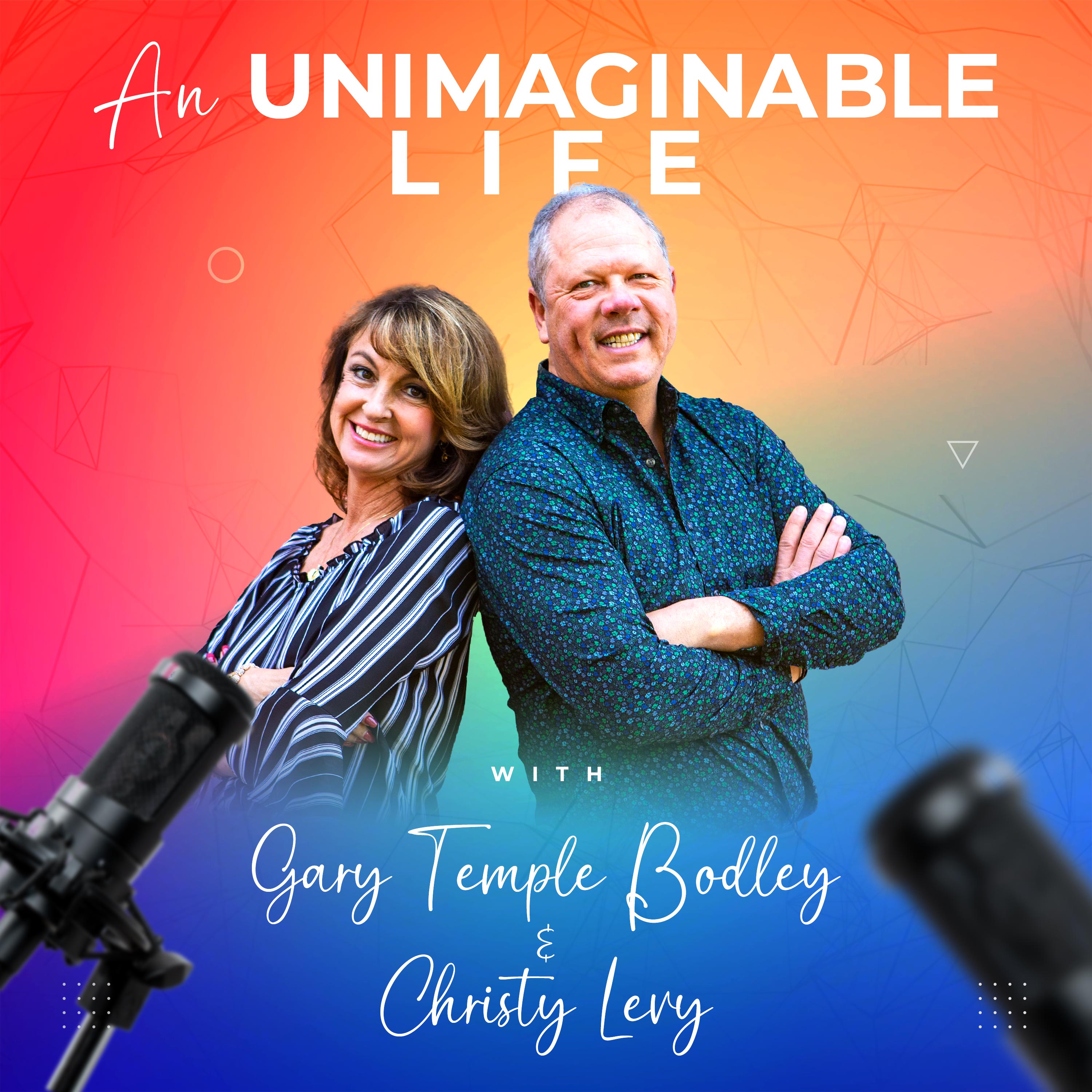
Insights from recent episode analysis
Audience Interest
Podcast Focus
Publishing Consistency
Platform Reach
Insights are generated by CastFox AI using publicly available data, episode content, and proprietary models.
Total monthly reach
Estimated from 2 chart positions in 2 markets.
By chart position
- 🇭🇺HU · Spirituality#1630K to 100K
- 🇳🇿NZ · Spirituality#168500 to 3K
- Per-Episode Audience
Est. listeners per new episode within ~30 days
15K to 52K🎙 ~2x weekly·89 episodes·Last published 4d ago - Monthly Reach
Unique listeners across all episodes (30 days)
31K to 103K🇭🇺97%🇳🇿3% - Active Followers
Loyal subscribers who consistently listen
12K to 41K
Market Insights
Platform Distribution
Reach across major podcast platforms, updated hourly
Total Followers
—
Total Plays
—
Total Reviews
—
* Data sourced directly from platform APIs and aggregated hourly across all major podcast directories.
On the show
Recent episodes
Becoming No One: Freedom Beyond Identity - Simone de Beauvoir and Sri Nisargadatta Maharaj
Jun 30, 2026
55m 35s
Terence McKenna and Aleister Crowley - Reality Is Not Just a Mirror — It's a Relationship
Jun 21, 2026
54m 15s
What The Child Still Knows: Jim Henson and Antoine de Saint-Exupéry
Jun 13, 2026
53m 08s
Jane Roberts and David Bohm - Reality is Always Responding to You
May 31, 2026
1h 11m 28s
Decoding The Symbolic Nature of the Universe: William Blake and Jorge Luis Borges
May 23, 2026
56m 31s
Social Links & Contact
Official channels & resources
Official Website
Login
RSS Feed
Login
| Date | Episode | Description | Length | ||||||
|---|---|---|---|---|---|---|---|---|---|
| 6/30/26 | Becoming No One: Freedom Beyond Identity - Simone de Beauvoir and Sri Nisargadatta Maharaj | What if the greatest limitation in your life isn't your circumstances—but the identity you've spent years building and protecting? In this profound Dead Talk, Simone de Beauvoir and Sri Nisargadatta Maharaj reveal why true freedom isn't found by becoming someone better, but by becoming free enough to stop insisting you are any one thing. Together they uncover the hidden second half of the Hero's Journey, where identity softens, participation replaces self-protection, and life becomes an unfolding expression of consciousness rather than a role to defend. Earlier this week, Christy and I appeared on the Jeff Mara podcast and Christy brought in Helen Keller. Listen here Read about The Freedom Project 7-day Boosts here Schedule a call with Christy to learn about The Freedom Project here Schedule a call with Gary to learn about The Freedom Project here | 55m 35s | ||||||
| 6/21/26 | Terence McKenna and Aleister Crowley - Reality Is Not Just a Mirror — It's a Relationship | What if one of the most foundational ideas in spirituality, manifestation, and conscious creation is incomplete? In this Dead Talk, Terence McKenna and Aleister Crowley explore the true nature of reality, synchronicity, consciousness, and human participation in the unfolding of life itself. Together, they challenge the popular notion that reality is merely reflecting your beliefs and introduce a far more expansive possibility—one that changes how we understand manifestation, guidance, meaning, and our relationship with the universe. This conversation moves beyond theory into something deeply practical: how to recognize the invitations hidden within ordinary experiences, why synchronicities matter, and what becomes possible when you stop trying to control reality and begin participating with it. If you've ever wondered whether life is trying to tell you something, this episode may completely change the way you see reality. Earlier this week, Christy and I appeared on the Jeff Mara podcast and Christy brought in Helen Keller. Listen here Read about The Freedom Project 7-day Boosts here Schedule a call with Christy to learn about The Freedom Project here Schedule a call with Gary to learn about The Freedom Project here | 54m 15s | ||||||
| 6/13/26 | What The Child Still Knows: Jim Henson and Antoine de Saint-Exupéry | Why do humans lose their connection to wonder, and how do they find it again? In this episode Antoine de Saint-Exupéry (1900–1944) a French aviator, poet, journalist, and author best known for writing the beloved classic: The Little Prince joins Jim Henson (1936–1990) an American puppeteer, filmmaker, artist, and storyteller, best known as the creator of: The Muppet Show, The Dark Crystal, Labyrinth and Kermit the Frog and many other iconic characters to answer the question: How do we remain connected to wonder after we become adults? Earlier this week, Christy and I appeared on the Jeff Mara podcast and Christy brought in Helen Keller. Listen here Read about The Freedom Project 7-day Boosts here Schedule a call with Christy to learn more about The Freedom Project here Schedule a call with Gary to learn more about The Freedom Project here | 53m 08s | ||||||
| 5/31/26 | Jane Roberts and David Bohm - Reality is Always Responding to You | What if reality isn't something happening around you? What if it's actually responding to you? In this fascinating Dead Talk, Christy brings in renowned channel and author Jane Roberts and visionary physicist David Bohm. Together, they share with us a radically different way of understanding consciousness, manifestation, choice, and the nature of experience. They reveal why life is not a fixed world unfolding independently of you, but a living field of possibilities shaped by perception, expectation, attention, and participation. Along the way, they explore probable realities, the illusion of separation, the interconnected nature of the universe, and why even your thoughts, fears, hopes, and assumptions are participating in the experiences you call your life. If you've ever wondered whether reality is more fluid than it appears, whether consciousness plays a larger role than science has traditionally acknowledged, or whether there is a deeper intelligence woven into everyday experience, this conversation will challenge the way you see yourself and the world around you. The most important question raised in this episode is not: "What do I want to create?" It's: "What am I already participating in?" Once you understand the difference, you'll never look at reality the same way again. Earlier this week, Christy and I appeared on the Recover Your Soul podcast and Christy brought in Lucille Ball and Vincent Van Gogh. Listen here Read about The Freedom Project 7-day Boosts here Schedule a call with Christy to learn more about The Freedom Project here Schedule a call with Gary to learn more about The Freedom Project here | 1h 11m 28s | ||||||
| 5/23/26 | Decoding The Symbolic Nature of the Universe: William Blake and Jorge Luis Borges | What if nothing in your life is random—and everything is speaking to you? In this episode, Christy brings through William Blake and Jorge Luis Borges who reveal to us the hidden, symbolic nature of reality. Reality is not literal. It’s symbolic. The patterns you notice…the synchronicities you can’t explain…the moments that feel meaningful for no reason… aren’t coincidences. They’re part of a deeper language—one you’ve been interacting with your entire life. Why does this matter now? Because more and more of us are beginning to sense there’s something beyond the surface of reality—but we’ve never been taught how to see it. This episode opens that door. If you’ve been noticing signs, questioning what’s real, or feeling like something is trying to get your attention…You may never look at your life the same way again. Read about The Freedom Project here Schedule a call with Christy to learn more about The Freedom Project here Schedule a call with Gary to learn more about The Freedom Project here | 56m 31s | ||||||
| 5/2/26 | Groucho Marx and Douglas Adams: Don’t Panic… It’s All a Joke | Douglas Adams wrote the Hitchhiker's Guide to the Galaxy to demonstrate the absurdity of trying to figure it all out and Groucho Marx illustrated the futility of taking things too seriously. What happens when two of the most brilliant comedic minds ever step in from the nonphysical to speak directly to you? In this Dead Talk session, Christy brings through Douglas Adams and Groucho Marx—and what unfolds is unlike anything you’ve ever heard. They don’t come to give answers. They come to unravel the need for them. With sharp wit, irreverent humor, and startling clarity, they reveal something far more liberating: what if the seriousness you’ve been carrying is the only thing standing between you and freedom? Through a series of deceptively simple questions, they lead you into a direct experience of what it feels like to stop searching, stop controlling, and stop trying to make sense of it all. And in that space, something unexpected happens. You begin to feel the truth. This episode will challenge your need for meaning and invite you into what they call “the cosmic joke”—a perspective shift so profound, it may change how you see every problem, every goal, and every moment of your life. If you’ve ever felt the pressure to figure it all out…If you’ve ever taken your life just a little too seriously…Or if you’re ready to experience a kind of freedom you didn’t know was possible… You are going to want to hear every minute of this episode Read about The Freedom Project here Schedule a call with Christy to learn more about The Freedom Project here Schedule a call with Gary to learn more about The Freedom Project here | 52m 54s | ||||||
| 4/27/26 | Friedrich Nietzsche and René Magritte: Your Reality Isn't What You Think It Is | What if the way you see reality—and what you believe it all means—has been an illusion all along? In this episode of An Unimaginable Life, Christy brings through two extraordinary historical figures: René Magritte, the surrealist artist who exposed the illusion of perception, and Friedrich Nietzsche, the philosopher who dismantled the idea of fixed meaning. Together, from a higher nonphysical perspective, they reveal why they are the perfect voices to guide this conversation—one showing you that what you see isn’t real, the other showing you that what you think it means isn’t either. What unfolds is a fascinating and deeply practical exploration into how your mind constructs reality in real time—and how those unconscious interpretations shape your emotions, your identity, and your entire life experience. This episode will challenge everything you think you know… and in doing so, it opens the door to a level of awareness and freedom that changes how you relate to every moment. If you’re ready to see differently—and finally understand what’s really going on beneath your experience—this is an episode you won’t forget. Read about The Freedom Project here Schedule a call with Christy to learn more about The Freedom Project here Schedule a call with Gary to learn more about The Freedom Project here | 58m 37s | ||||||
| 4/17/26 | Princess Diana and Robin Williams: How to Live an Unimaginable Life | We were so excited to have Robin Williams and Pricess Diana come through to talk to us about living an unimaginable life. They explain that there is a life you can't even begin to imagine waiting for you beyond your self-imposed limitations. They talk about their unimaginable lives, the impact, the challenges of fame, and their high emotional sensitivity. This is one episode you don't want to miss Read about The Freedom Project here Schedule a call with Christy to learn more about The Freedom Project here Schedule a call with Gary to learn more about The Freedom Project here | 48m 23s | ||||||
| 4/4/26 | Special Guest Inna Segal: Dead Talk Florence Nightingale and Franz Mesmer | In this very special episode, Christ and I invite Author Inna Segal. Her books include The Secret Language of Your Body, The Secret of Life Wellness and The Secret Language of Your Soul. We thought it would be fun to get together with Inna and have Christy bring in two dead people who could share their nonphysical perspective on illness. Of course, the perfect people came in; Florence Nightengale and Franz Mesmer. What they share about illness will blow your mind and forever change your perspective. More About Inna click here. Her Books click here Inna on Youtube click here Read about The Freedom Project here Schedule a call with Gary to learn more about The Freedom Project here | 55m 04s | ||||||
| 3/15/26 | Dead Talk: Abraham Lincoln and Leo Tolstoy | Read about The Freedom Project here Schedule a call with Gary to learn more about The Freedom Project here In this episode, Christy brings in Abraham Lincoln and Lev "Leo" Tolstoy. They come specifically to talk about how the dignity of man is the guiding light on the path toward Freedom. It's not that indignity is something we should fight against, because that would simply be an urge to control an unjust situation. It's that in a place of neutrality, we can understand where the injustice lies and then receive inspiration for a new path forward. This is an elevated converstaion brought to us by two esteemed historical figures. | 57m 27s | ||||||
Want analysis for the episodes below?Free for Pro Submit a request, we'll have your selected episodes analyzed within an hour. Free, at no cost to you, for Pro users. | |||||||||
| 3/9/26 | Dead Talk: Fred Rogers and Julian or Norwich - Unconditional Love | Read about The Freedom Project here Schedule a call with Gary to learn more about The Freedom Project here What if the reason you feel unworthy… is simply because you believe love must be earned? In this astonishing Dead Talk, two unexpected guides appear — Fred Rogers (Mr. Rogers Neighborhood) and the medieval mystic Julian of Norwich — with a message so simple it’s almost shocking: you are already inside love. Together they reveal why we keep trying to prove ourselves, how unconditional love never withdraws (even when we think we’ve failed), and why the real spiritual practice may be learning to stay with ourselves through mistakes, discomfort, and imperfection. This conversation is emotional, profound, and unlike anything we’ve ever received — ending with a powerful exercise that lets you feel what unconditional love actually is. If you’ve ever wondered whether you are truly worthy of love…this episode might change everything. | 43m 00s | ||||||
| 3/1/26 | White Light: Live From The Retreat - Stop Negotiating Your Presence | Read about The Freedom Project here Schedule a call with Gary to learn more about The Freedom Project here This is a live White Light channeling session from the Orlando Retreat. White Light opens with a radical invitation:What if you stopped negotiating your presence with life?What if love, trust, and freedom didn’t come after the conditions were met — but after you said yes? White Light speaks directly about this group as pioneers — among the first to consciously raise vibration together — and explains how unconditional love, even for a moment, alters the planet in ways we cannot yet comprehend. You’ll hear about: Why unconditional living is not reckless — but clause-free. Why safety was never meant to be your home. Why curiosity is more powerful than answers. Why there are no levels. Why you are not broken for bracing. And why nothing serious is happening here… even as everything is changing. If you’ve been waiting to exhale until life behaves… This conversation may be the moment you stop waiting. | 58m 34s | ||||||
| 2/17/26 | Dead Talk: Safety Isn’t Real — Steadiness Is | Read about The Freedom Project here Schedule a call with Gary to learn more about The Freedom Project here Introduction: What if the thing you’ve been chasing your entire life—safety—was never actually available in this reality? In this Dead Talk, Christy brings in Seneca (Roman Stoic philosopher and advisor to Nero) and Dorothy Day (Catholic anarchist, activist, and fierce advocate for human dignity). Together they deliver a perspective shift that will change the way you think about safety. Seneca’s message: “You were never meant to feel safe. You were meant to feel steady.” Seneca dismantles the modern definition of safety as “continuity without disruption,” calling it a made-up idea that life has never promised. He describes watching fortunes vanish overnight, alliances dissolve, empires collapse—and noticing that the greatest suffering wasn’t caused by loss itself, but by the people who postponed living until conditions improved. His definition of steadiness is piercing and practical: Steadiness isn’t predicting outcomes.It’s meeting whatever arrives without abandoning yourself. Dorothy Day’s response: “True—and incomplete.” You don’t survive uncertainty alone.You’re held through contact, belonging, and participation. She reframes “support” as something most people don’t recognize because they only count certain things as support. Her version of safety isn’t built on guarantees—it’s built on belonging before you feel secure. She introduces one of the most powerful lines of the episode: “Don’t wait until you feel safe to belong. Just belong.” The hidden trap: “Preparation” as disguised fear One of the most practical takeaways comes when they reveal how postponement hides: “Once this is handled…” “When I feel more secure…” “I just need more information…” “I need the timing to be right…” They don’t call these wrong—but they point out the pattern:Safety becomes a precondition for movement, and suddenly you’re not living… you’re negotiating. “If safety were not my concern, what would I do next?” Why you’ll want to listen It’s an episode that changes the language of your inner world. By the end, you may find yourself questioning whether “safety” has been your unconscious religion—and whether steadiness is the freedom you were actually designed for. | 53m 43s | ||||||
| 1/31/26 | Inner Freedom After Trauma with Etty Hillesum and Vaclav Havel | Read about The Freedom Project here Schedule a call with Gary to learn more about The Freedom Project here This Dead Talk episode is a channeled teaching on inner freedom after trauma, guided by two historical figures: Etty Hillesum (young Jewish diarist who wrote from Westerbork and later Auschwitz) and Václav Havel (Czech dissident who became the first president of the Czech Republic after the Velvet Revolution). The core theme: freedom doesn’t come from being unhurt or from circumstances improving—it comes from no longer organizing life around the wound. Etty found freedom inside a collapsing world (Holocaust reality). Havel found freedom inside an oppressive structure (communism), and lived long enough to see inner freedom reflected outward in social change. The main teaching: trauma is not the event They redefine trauma as not what happened, and not even the pain. Trauma is: the moment life became smaller to survive, the internal contraction that says: I must be less open, feel less, expect less, risk less. This contraction becomes an internal “government” that continues long after the danger passes. It decides what you can feel, hope for, explore, or trust. In that sense, trauma is protective, intelligent, temporary by design—but it becomes limiting when it interferes with love, presence, and the ability to be touched by something good. Freedom, they say, is not “healing trauma” as a project. It’s outgrowing it by restoring your range: what you’re willing to feel, how much you’re willing to love, how much you’re willing to let in. “Imprint” vs trauma They introduce a second layer: imprint—fear and limitation installed before you had direct experience or choice. Imprints come from: parents, culture, religion, schooling, media, authority, warnings and stories that the child’s body stores as reality, not information, and sometimes genetic or past-life residue. Because imprint fear is “older” than the current opportunity, it cannot be reasoned away. It must be met. The body is reacting to memory, not to now. Examples of common imprints: Money: “money runs out,” “never enough,” “security requires effort.” Authority: “I’ll get in trouble,” “rules protect me from myself.” Love: “if I’m fully myself, I’ll be left,” “connection is fragile.” Body/health: “symptoms mean danger,” “aging means decline.” Visibility/expression: “being free has consequences.” They note the irony: many listeners are not materially poor, yet their nervous systems are “poor” from imprinting. Practical guidance they offer They emphasize this is not a heavy “healing session,” but a noticing: “Who are you now that your nervous system no longer needs to lead your life?” “What became unavailable that might now be safe to reopen?” Key practices: Acknowledge the story as a helper“Thank you for helping me survive. You don’t need to work so hard anymore.”The story persists when it doesn’t feel recognized. Replace “Why did this happen?” with “What’s happening now?”“Why” pulls you into the past; “now” returns you to presence. When you feel righteous/need to be right: check the bodyRighteousness can signal you’re inside a trauma loop—trading aliveness for certainty. Ask: “What does this story allow me to avoid risking?”Trauma stories often protect you from the vulnerability of expansion. Use proximity, not coercionDon’t force yourself through fear. Sit with it, let the body learn safety gradually. Talk to fear without consulting it“I see you’re afraid. Thank you for trying to keep me safe. We don’t have to decide today.” They make a key distinction: overriding fear to do something “wild” isn’t necessarily expansion—real expansion honors safety and lets fear soften through presence. Group field moment There’s a vivid description of the group’s energetic field: an oval, forward-oriented, permeable, slate-blue/soft gold tone—mature, coherent, grounded, not organized around wounds. “Connection without dependency; individuality without isolation | 58m 57s | ||||||
| 1/20/26 | Dead Talk: How Abundance and Freedom are Vibrationally Attained | To learn about The Freedom Project - Click here Two thinkers “arrive” right away: Ludwig Wittgenstein (Austria, philosopher of language) and Epictetus (Greek Stoic, formerly enslaved). Their combined theme becomes the episode’s core message: abundance and freedom don’t respond to self-improvement—they respond to present-moment participation, and the language we use either keeps us in “now” or pushes us into fear-based “later.” Wittgenstein’s thread focuses on how our sentences shape our reality. He points out that many spiritual and abundance struggles are reinforced by everyday grammar: “I’m not ready,” “I’m not healed,” “I must become something else.” These are described as grammatical habits that turn life into a test to pass. Abundance (money, time, health, love) doesn’t show up when we “deserve it” or “fix ourselves”—it shows up when we stop managing it with fear and engage with what’s here. Epictetus brings a steady, immovable energy and reframes freedom as the absence of inner argument with life. He shares the Stoic insight that suffering isn’t primarily caused by circumstances, but by the internal insistence: “This shouldn’t be happening.” Freedom, he says, is not growth but subtraction—not becoming more powerful, but noticing where we’ve been giving power away (waiting for conditions to improve, needing certainty, money, approval) and simply stopping. The conversation then turns practical around money. The guides suggest money feels uniquely “heavy” because we use it to answer a future-based question: “Will I be okay later?” Unlike health, relationships, or time (experienced in the present), money is often used as emotional insurance—asked to provide safety, which “isn’t its job.” The episode offers a language-based reframe: shift from future-security sentences to present-usefulness. A key line: stop asking money to protect you from time. They also address the belief in “sources of money” (job, investments, rentals) as a limiter: the true source is you, via inspiration and participation. Scarcity is framed less as “not enough money” and more as fear of letting it move—guarding rather than participating. Finally, they connect abundance and freedom as essentially parallel states: both are results of alignment and present-moment engagement. Freedom is “living as cause, not effect,” and abundance is “having what you need when you need it to do what needs doing”—both emerge when we stop requiring conditions to be different before we allow peace. | 52m 10s | ||||||
| 1/12/26 | Dead Talk: Ram Dass and Joseph Campbell | To learn about The Freedom Project - Click here In this Dead Talk session, two familiar teachers step in right away—Joseph Campbell and Ram Dass—and the atmosphere is set with an image of a “classroom after it’s over,” signaling the core theme: no pressure, no performance, nothing to prove. Campbell reframes the Hero’s Journey in a way that lands like a revelation: the journey was never meant to be a permanent identity or a life-long mandate. It’s a map for early identity formation, but many people turn the map into a moral obligation—equating struggle with legitimacy and suffering with worth. From his current perspective, the journey doesn’t end in triumph…it ends in irrelevance—not failure, but the relaxing of the need to matter. The “return” isn’t to be admired; it’s to be absorbed back into life, ordinary and intimate, without a narrative. Ram Dass deepens that message with warmth and humility, sharing that he spent much of his life trying to be a “spiritual hero,” until life dismantled the role through his stroke—forcing surrender in public. The gift, he says, is that when you can no longer perform wisdom, you either become it or drop the act entirely. That collapse revealed something truer: love remained even when he wasn’t useful, articulate, or “teaching.” The session’s central question emerges: “What are you no longer willing to carry?” The conversation then pivots into a powerful explanation of the Freedom Project as a field, not a program—something co-created by everyone touched by it. A program is information moving one direction; a field is mutual attunement, where insights land faster, resistance softens without confrontation, and people feel seen without being analyzed. The field holds ambiguity without panic, supports nervous system settling through contextual safety, and helps participants become coherent with the version of themselves they’re tuning toward—without forcing linear steps. Campbell also revisits “Follow Your Bliss,” clarifying that bliss was never meant as indulgence or pleasure—it’s the subtle feeling of life moving through you: curiosity, fascination, a signal of direction. The reason people resist bliss isn’t laziness—it threatens identity, disrupts duty-as-virtue conditioning, and removes the “moral high ground” of sacrifice. Bliss doesn’t justify itself, and that’s why it’s so liberating. Finally, Ram Dass speaks candidly about LSD and psychedelics: they don’t create alignment, install wisdom, or heal trauma by themselves. They can offer a glimpse—showing what’s possible when self-reference drops—but they don’t teach the nervous system how to live there. Psychedelics are a door-opener, not a home. The session closes with the same overarching invitation: as the hero dissolves, life becomes simpler, more present, and more intimate—service without superiority, love without a role, and freedom without the need to matter. | 55m 13s | ||||||
| 1/1/26 | Dead Talk: How Money and Abundance Works With Milton Friedman and Thich Nhat Hahn | To learn about The Freedom Project - Click here In this Dead Talk episode, two seemingly opposite voices—Milton Friedman and Thích Nhất Hạnh—come together to dismantle one of the deepest and most persistent distortions around abundance. Their shared message is clear: abundance is not something that arrives after enlightenment, worthiness, or alignment—it is the state of alignment itself. Much of our suffering around money, they explain, comes not from lack, but from misunderstanding cause and effect. When abundance is treated as a reward or result, the present moment becomes a means to an end. Together, they reframe abundance as a condition we stop interfering with rather than something we earn, manage, or deserve. Friedman brings precision and clarity, showing how treating abundance as a moral outcome distorts economic, relational, and spiritual systems. Thích Nhất Hạnh brings warmth and spaciousness, reminding us that freedom and mindfulness are daily practices—especially in the places we avoid most. They introduce the idea of a “precise life,” where challenges, delays, and tensions are not signs of misalignment but exact experiences required to develop specific capacities: tolerance for uncertainty, sensitivity to inner signals, discernment between force and flow, and the ability to stay present while resources move. The episode culminates in a powerful embodied experiment that reveals where scarcity truly lives—not in circumstances, but in the nervous system’s reflex to brace and prepare for loss. Listeners are invited to let something small circulate without reassurance and notice what happens when they stop interrupting support. The central realization lands quietly but unmistakably: abundance does not arrive to make us feel safe; safety comes from trusting our ability to respond. In this way, the conversation becomes less about money and more about dissolving the illusion of separation—allowing life to support us without resistance, just in time, exactly as it always has. | 55m 12s | ||||||
| 12/14/25 | Dead Talk: Queen Nefertiti and Viktor Frankl - Sovereignty | To learn about The Freedom Project - Click here In this episode: Queen Nefertiti appears first—regal, luminous, Egyptian headdress, blue gown, and an energetic breeze moving only around her. Her opening line establishes the theme: “I am seated fully within myself. And so are you.” The name comes through as “Nefertiti.” Viktor Frankl appears next—gentle presence, glasses, gray hair, calm smile. His identity is confirmed through the title Man’s Search for Meaning. His energy is quiet but powerful, grounded in lived experience. The Core Teaching: Sovereignty as an Inner Throne Together they deliver a unified teaching: sovereignty is not granted by rulers, removed by circumstances, or earned through status. It is an ancient inheritance—a return to an inner throne. Nefertiti emphasizes that sovereignty begins when you stop “borrowing your center” from the world: stop needing external confirmation of worth stop shaping identity around approval or fear return to the “inner throne” that most people abandon early in childhood She reframes sovereignty not as independence, but as intimacy with your own essence—an unbroken connection between your being and Source. From her view, a sovereign being doesn’t dominate or defend; it simply is, and life reorganizes around that state of being. Frankl complements this with his signature insight: there is an inner space no one can touch—not cruelty, misfortune, despair, or authority. Sovereignty is claimed inside limitation. He underscores the central idea: between stimulus and response is a space; in that space lies your power, freedom, and sovereignty. So sovereignty becomes: choosing meaning, response, perspective, and the story you tell—regardless of conditions. Nefertiti’s “Crown” Reframed Gary asks if Nefertiti’s real-life queenship was an external version of sovereignty. She explains that her outward crown was only a reflection of an already-claimed inner seat. She believed she was living political power, but from her current perspective she sees it as a frequency demonstration—energetic rulership, not domination. Her power was never her life circumstances; it was her being. Frankl and the Holocaust: Meaning, Choice, and a Larger Architecture The conversation goes deep into Frankl’s experience of the Holocaust. Frankl describes the camps as the place where he discovered what cannot be taken: inner meaning and inner freedom. He says that despair killed faster than starvation, and that hope/purpose gave the body strength—because inner choice was the only remaining domain of power. He distinguishes what he believed while alive vs. what he sees now: Then: he did not view suffering as chosen; he saw it as brutal, imposed, dehumanizing, senseless. Now: he perceives a “metaphysical architecture” and soul-level intention behind events, without calling suffering “beautiful.” He frames it as purposeful at a soul level for many—sometimes as agreements, sometimes as “perfect matches” to intentions—within an intricate web of collective and personal trajectories. He clarifies it was not karmic punishment, and that the experience (for him) aligned with a pre-birth intention to test the limits of inner freedom and anchor the understanding of choice. When asked about the broader impact, he suggests the event revealed something profound to mass consciousness: resilience of spirit, the architecture of psyche, and expansions that reshaped societies—implying it catalyzed shifts toward unity and deeper human awareness. A particularly provocative point arises: his “now” perspective suggests even figures viewed as villains are still part of the same larger consciousness exploration—equal in the sense of soul-level value—though he acknowledges his human-life perspective experienced it as far beyond “villainy.” Nefertiti and Christy: Ease of “Merge” and Soul Lineage Nefertiti repeatedly indicates an unusually easy energetic merge with Christy—suggesting a vibrational or lineage resonance. | 40m 54s | ||||||
| 12/1/25 | Dead Talk: Rebellion and Order - Marcus Aurelius and Hereward the Outlaw | In this episode, Christy brings in Marcus Aurelius and Hereward the Outlaw to discuss the balance between Order and Rebellion. The two ideas are not opposed, but actually deeply connected. They are alies and if we can understand these concepts through the perspectives shared by Marcus and Hereward, we can strike a balance that will lead to a very powerful stance in our lives. Schedule a call to learn about The Freedom Project - Click here To book a 55-minute Connect Call with Gary, click here | 46m 39s | ||||||
| 11/21/25 | The Dual Perception Method With Mary Oliver and Audre Lorde | The theme for this Dead Talk is perception. In this episode, Christy brings in two 20th century poets, Mary Oliver and Audre Lorde. They were two vastly different people who shared a common thread: Perception as a tool for discovering truth. Together they bring us the Dual Perception Methid that we can use when we are unclear about the turth of a given subject. It could be a relationship, a concept, an issue we're having or just about anything else. When we're unclear, we can use this method to look at it from two very different perspective and we will discover the truth. It's absolutely astonishing how well this works. Schedule a call to learn about The Freedom Project - Click here To book a 55-minute Connect Call with Gary, click here | 38m 33s | ||||||
| 11/9/25 | Freedom - Rebellion in Grace - Joan of Arc and James Baldwin | In this episode of Dead Talk, the group connects with the spirits of Jeanne la Pucelle — Joan of Arc —and James Baldwin, two luminous souls who lived centuries apart yet carried the same divine paradox: Freedom is won through rebellion in grace. It's the loving rebellion of our own beliefs. True rebellion is not the fight against darkness, but the refusal to surrender our light to it. Baldwin calls forgiveness “the highest rebellion,” the act that ends the war within, while Joan reminds us that obedience to love, not fear, is what ignites genuine freedom. Together, they explore what it means to embody “rebellion as grace”: to live truthfully without the need for approval, to forgive as an act of liberation, and to follow divine guidance even when it defies expectation. They remind us that the voices of spirit never command — they reveal love — and that today’s revolution is one of compassion, patience, and the courage to live our truth aloud. “You are not being called to die for your truth,” Joan says. “You are being asked to live it.” Schedule a call to learn about The Freedom Project - Click here To book a 55-minute Connect Call with Gary, click here | 47m 09s | ||||||
| 10/25/25 | Spirit Guide Sessions - Renee and Crystal | The Freedom Project begins with a technique called Perspective Mapping. It's a process where the person fills out a series of ten surveys related to all areas of their life. Then they have a call with Gary to identify key belief structures that generate their current perspective. Finally they have a spirit guide reading with Christy. This is the most fasinating part of this process. In this episode you will hear exactly what Renee and Crstal's spirit guides told each of them in preparation for their Freedom Project experience. Once the Perspective Mapping process has been completed, Christy and I are able to custom tailor a 100-day program specifically for each person based on their current perspective and what they want in their life. Through this process, the person will expand their perspective in all areas of their life and arrive at a completely new perspective that generates a new vibration. Since all limitations are self-imposed through one's current perspective, expanding that perspective leads to freedom. That's why they call it The Freedom Project. Nothing like this has ever been done before, because no other program starts by identifying one's current perspective and then creates a custom plan to specifically expand that person's perspective. Schedule a call to learn about The Freedom Project - Click here To book a 55-minute Connect Call with Gary, click here | 57m 59s | ||||||
| 10/20/25 | Question Everything!: Socrates and Maya Deren | In this episode, Christy brings in Socrates and experimental film maker Maya Deven. What an odd pairing. What do they have in common? They question why things are the way they are. If you think about any concept, institution, or commonly held belief, why do we take it as a given? Why don't we question everything? Schedule a call with Christy to learn about The Frredom Project - Click here To book a 55-minute connect call with Gary, click here | 51m 18s | ||||||
| 10/12/25 | Dead Talk: The Art of Surrender - Georgia O'Keeffe and Tao Tzu | In this episode famous American Painter Georgia O'Keeffe and legendary philosopher and auther of the Tao Te Ching come together to talk about the art of surrender and seeing through the illusion. Schedule a call with Christy to learn about The Frredom Project - Click here To book a 55-minute connect call with Gary, click here | 50m 25s | ||||||
| 10/5/25 | Dead Talk: Marlene Dietrich & Josephine Baker - Authenticity and Masks | I(n this episode, Christy brings in Josephine Baker and Marlene Dietrich who want to talk about how we can be authentic and still wear masks. From thier nonphysical perspective, a mask is not always used to hide. Sometimes, masks are worn for survival, for creation and for purpose. Wearing a mask in fear is designed to hide who we are, but when worn to highlight and aspect of ourselves it can be used to enhance that aspect and create new possibilities. To join the Inner Self reading waitlist with Christy email garybodley @ gmail . com To learn more about Christy Levy, click here. To book a 55-minute connect call with Gary, click here For more info about the new 7 Rays Activations program, please click here | 46m 32s | ||||||
Showing 25 of 94
Pitch Fit is a Pro feature
See how bookable this show is for guests, which brands already advertise, the per-episode ad value, and the best-fit guest and sponsor profile. The numbers are blurred on the free plan.
How readily this show books outside guests like you.
How proven this show is for host-read sponsorships.
For Guests
ProFor Advertisers
ProUpgrade to Pro to unlock guest cadence, sponsor categories, fit scores, and per-episode ad value for this show.
Chart Positions
3 placements across 2 markets.
Chart Positions
3 placements across 2 markets.