Insights from recent episode analysis
Audience Interest
Podcast Focus
Publishing Consistency
Platform Reach
Insights are generated by CastFox AI using publicly available data, episode content, and proprietary models.
Most discussed topics
Brands & references
Est. Listeners
Insufficient chart data. Estimates will improve as the show charts.
- Per-Episode Audience
Est. listeners per new episode within ~30 days
N/A🎙 ~2x weekly·519 episodes·Last published today - Monthly Reach
Unique listeners across all episodes (30 days)
N/A - Active Followers
Loyal subscribers who consistently listen
N/A
Market Insights
Platform Distribution
Reach across major podcast platforms, updated hourly
Total Followers
—
Total Plays
—
Total Reviews
—
* Data sourced directly from platform APIs and aggregated hourly across all major podcast directories.
On the show
From 15 epsHost
Recent guests
Recent episodes
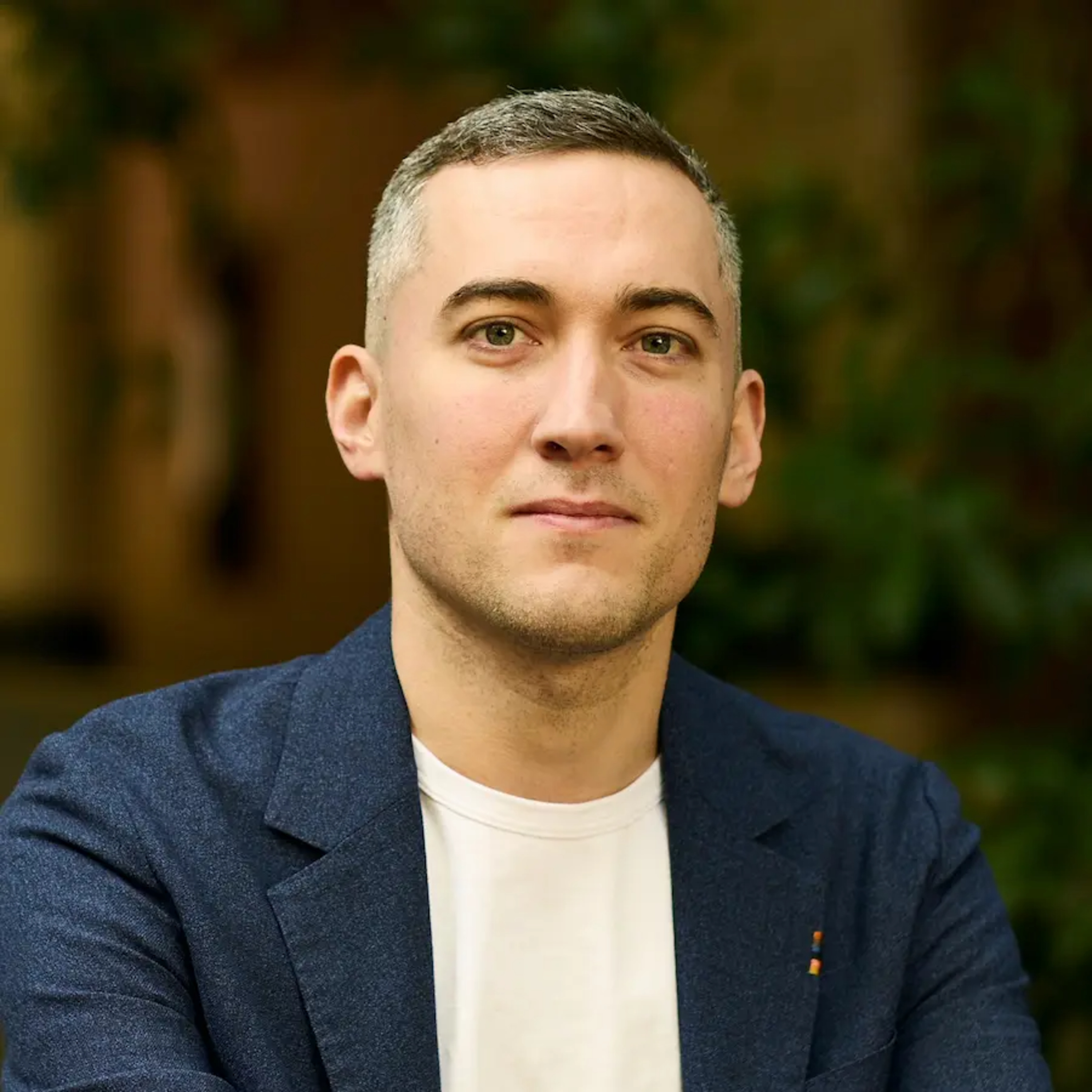
If AI Models Have No Moat, What Are Investors Buying? with Benedict Evans
Jun 24, 2026
Unknown duration
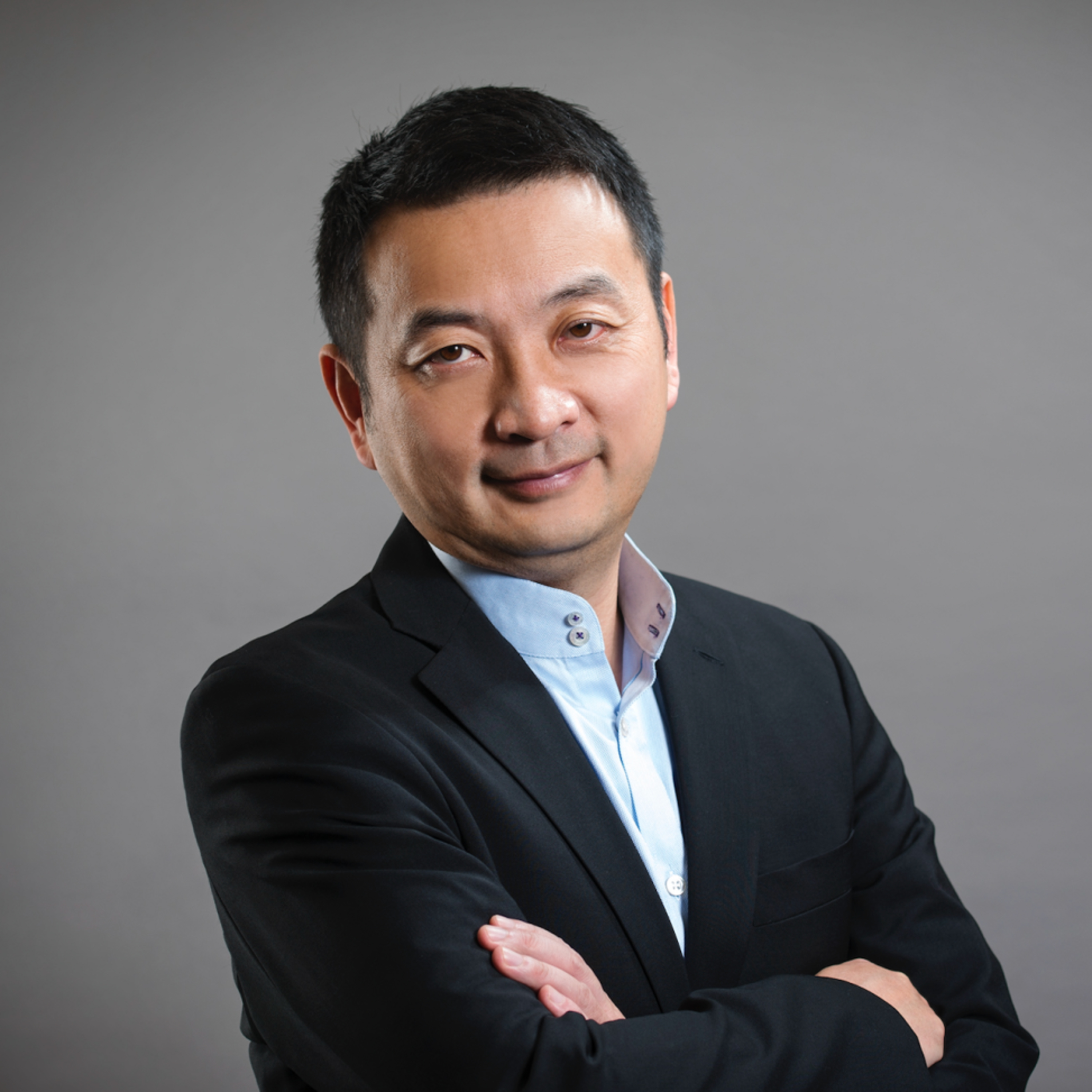
Inside "Defending Taiwan": How to prevent a war between China and the US with Eyck Freymann
Jun 16, 2026
Unknown duration
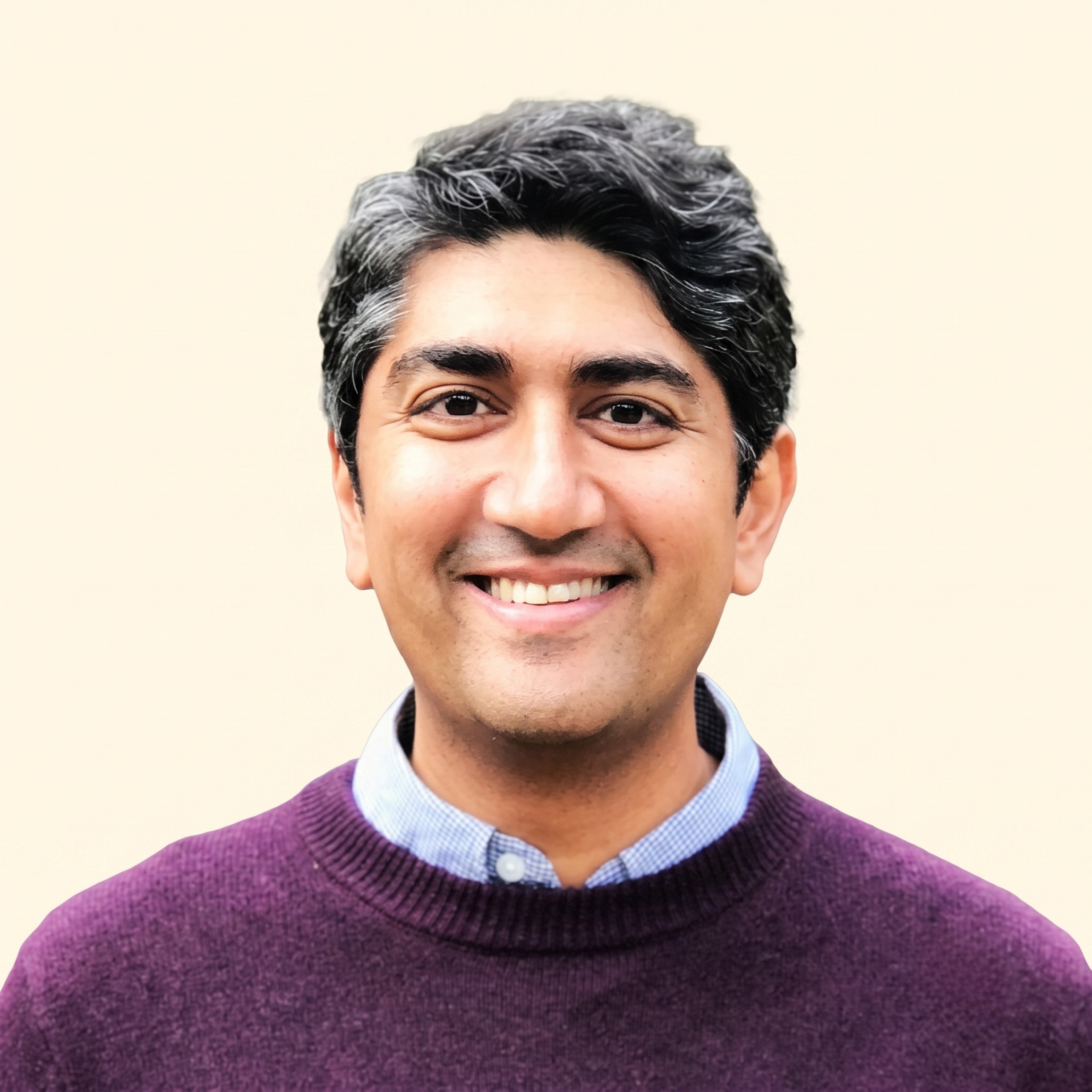
Innovationism: A New Philosophy for the Age of AI with James Liang
Jun 10, 2026
1h 01m 56s
Incorruptible: The Chapter The Lean Startup Missed with Eric Ries
Jun 3, 2026
46m 56s
Steve Jobs in Exile with Geoffrey Cain
May 27, 2026
1h 02m 59s
Social Links & Contact
Official channels & resources
Official Website
Login
RSS Feed
Login
| Date | Episode | Topics | Guests | Brands | Places | Keywords | Sponsor | Length | |
|---|---|---|---|---|---|---|---|---|---|
| 6/24/26 | ![]() If AI Models Have No Moat, What Are Investors Buying? with Benedict Evans | Fresh out of the studio, Benedict Evans, independent technology analyst and author of AI Eats the World, returns to explore whether the AI model layer is becoming commodity infrastructure. Benedict argues there is no winner-takes-all effect in models yet, drawing parallels to telecoms, cloud, chips and the fiber bubble to ask where durable value actually accrues when everyone runs similar infrastructure on similar tokens. He unpacks why the chatbot remains a poor interface, introduces the "blank screen" and "jagged frontier" problems that keep software companies alive, and explains why large language models inherently give you "the average." Closing the conversation, Benedict reflects on the indicators that would show AI has truly eaten the world — and why the answer is better products, not better models."When you automate away work, you can always see the jobs that are going away because they're right there. And you don't know what the new jobs are going to be. Human needs are infinite. How many people are earning a living from making podcasts now? Imagine predicting that 10 years ago. There's a stage in the evolution of the market where like if you're still arguing about that, you're an idiot. But there's a stage at the beginning where you might have opinions about some of these questions, you're probably not even asking the right questions. That, I think, is where we are with this stuff today." — Benedict EvansEpisode Highlights: [00:00] Quote of the Day by Benedict Evans from AI Eats the World[01:16] The public market test: what are investors buying?[04:21] How far up the stack can models go?[05:30] Models can't build all the apps themselves[06:00] The thesis: models as commodity infrastructure[07:52] "All the value went up the stack"[08:24] Chips and Rock's Law: down to three players[11:23] The 1999 reseller story: one-time sales[13:28] The S-curve framing of technology[16:38] You're probably not asking the right questions on AI[18:02] "If this works, we're competing with a Mac"[20:25] Incumbents make it a feature[22:14] Big tech "killing startups" is overstated[24:39] Cowork as the new spreadsheet[26:01] The blank-screen and jagged-frontier problems[29:00] The hard part isn't writing the code[31:25] "What a good answer would probably look like"[33:38] The job displacement debate[37:38] Jevons paradox and the lump-of-labour fallacy[40:30] LLMs inherently give you the average[42:36] Why you really hire McKinsey[45:33] Punk versus prog rock: outside the training data[49:00] Automating ever-higher human functions[49:55] Why this is unanswerable: no theory of scaling[51:30] Indicators that AI has eaten the world[54:53] The solution isn't a better model[56:39] Where to find Benedict EvansProfile: Benedict Evans, Independent Technology AnalystLinkedIn: https://www.linkedin.com/in/benedictevans/Website: https://www.ben-evans.com/newsletterPodcast Information: Bernard Leong hosts and produces the show. The proper credits for the intro and end music are "Energetic Sports Drive." G. Thomas Craig mixed and edited the episode in both video and audio format.Here are the links to watch or listen to our podcast.Analyse Podcast Main Site: https://analysepodcast.comAnalyse Podcast Spotify: https://open.spotify.com/show/1kkRwzRZa4JCICr2vm0vGl Analyse Podcast Apple Podcasts: https://podcasts.apple.com/us/podcast/analyse-asia-with-bernard-leong/id914868245 Analyse Podcast LinkedIn: https://www.linkedin.com/company/analyse-podcast/Sign Up for Our This Week in Asia Newsletter: https://www.analysepodcast.com/#/portal/signup Subscribe Newsletter on LinkedIn https://www.linkedin.com/build-relation/newsletter-follow?entityUrn=7149559878934540288 | — | ||||||
| 6/16/26 | ![]() Inside "Defending Taiwan": How to prevent a war between China and the US with Eyck Freymann | Fresh out of the studio, Eyck Freymann, Hoover fellow at Stanford and author of Defending Taiwan: A Strategy to Prevent War with China, joins us to explore why the Taiwan question will be decided by economics and coercion, not by invasion. Eyck unpacks the Thucydides Trap as a warning, not a prophecy, traces how Xi Jinping's Belt and Road statecraft shapes his approach to Taiwan, and contrasts a kinetic invasion with the "quarantine" scenario he fears most. He reframes 2027 as a capability milestone, recasts TSMC as a "silicon magnet" binding America to Taiwan, and flags Taiwan's 2028 election as the real flashpoint. Last but not least, Eyck argues the real task is to deter the crisis, not the war."For Beijing, I hope they will say: the United States actually does have a strategy to use every element of its national power to preserve peace and stability without provoking us, and we should not assume the United States is incapable of an effective response. In Taiwan, I think the lesson is: the United States trusts the people of Taiwan to choose the best future for themselves, and ultimately Taiwan's fate is up to the people of Taiwan to choose. That is the heart of what the American One China policy is about and must be about. The people of Taiwan must choose, and the United States will respect their choices. That is a profound insight that doesn't get said often enough." - Eyck FreymannEpisode Highlights:[00:00] Quote of the Day by Eyck Freymann from the Hoover Institution at Stanford[01:18] Eyck's origin story[04:02] When Taiwan deterrence pulled the threads together[06:33] Why the CCP embraces the Thucydides Trap[07:36] Belt and Road as decentralized statecraft[10:18] How Belt and Road consolidated Xi's power[11:39] Xi's legacy project: why Taiwan comes next[12:17] What gets lost without untranslated Chinese sources[14:12] China's unexplained nuclear breakout[16:23] Applied history: lessons from three mentors[19:50] Reframing the timeline: 2027 vs 2049[22:49] Declassifying the Davidson window[24:27] Is 2049 bound by Xi's resolution?[27:34] Cross-strait history and the counterintuitive lesson[29:28] Two scenarios: kinetic invasion vs customs quarantine[34:00] The TSMC financial-shock trigger[36:48] Strategic ambiguity vs structured ambiguity[42:39] The one thing few understand: it's all economic[44:39] The right and wrong asks of Southeast Asian neutrals[47:17] The silicon shield paradox and chip onshoring[50:19] Why the CHIPS Act won't replace Hsinchu[53:49] The January 2028 Taiwan election as a flashpoint[55:24] Meta-question: the neglected domestic politics of Taiwan[58:07] What success looks like for the book[60:14] ClosingProfile: Eyck Freymann, author of "Defending Taiwan" and Hoover FellowLinkedIn: https://www.linkedin.com/in/eyck-freymann/Personal Site: https://www.eyckfreymann.com/Podcast Information: Bernard Leong hosts and produces the show. The proper credits for the intro and end music are "Energetic Sports Drive." G. Thomas Craig mixed and edited the episode in both video and audio format. /Here are the links to watch or listen to our podcast.Analyse Podcast Main Site: https://analysepodcast.comAnalyse Podcast Spotify: https://open.spotify.com/show/1kkRwzRZa4JCICr2vm0vGl Analyse Podcast Apple Podcasts: https://podcasts.apple.com/us/podcast/analyse-asia-with-bernard-leong/id914868245 Analyse Podcast LinkedIn: https://www.linkedin.com/company/analyse-podcast/Sign Up for Our This Week in Asia Newsletter: https://www.analysepodcast.com/#/portal/signup Subscribe Newsletter on LinkedIn https://www.linkedin.com/build-relation/newsletter-follow?entityUrn=7149559878934540288 | — | ||||||
| 6/10/26 | ![]() Innovationism: A New Philosophy for the Age of AI with James Liang✨ | AIinnovation+4 | James Liang | Trip.com GroupInnovationism: A New Philosophy for the Age of AI | — | AIinnovationism+5 | — | 1h 01m 56s | |
| 6/3/26 | ![]() Incorruptible: The Chapter The Lean Startup Missed with Eric Ries✨ | business ethicsgovernance+4 | Eric Ries | Long-Term Stock ExchangeAnswer.AI+5 | — | IncorruptibleLean Startup+6 | — | 46m 56s | |
| 5/27/26 | ![]() Steve Jobs in Exile with Geoffrey Cain✨ | Steve JobsNeXT+5 | Geoffrey Cain | AppleNeXT+4 | Carnegie MellonStanford | Steve JobsGeoffrey Cain+8 | — | 1h 02m 59s | |
| 5/18/26 | ![]() Inside Singapore's AI Bet for 2030 with Kiren Kumar✨ | AI developmentSingapore economy+3 | Kiren Kumar | Model AI Governance FrameworkAgentic AI framework+1 | Singapore | AISingapore+6 | — | 48m 02s | |
| 5/14/26 | ![]() Inside Pulse ID's Playbook for AI-Driven Banking with Alex Topaloski✨ | AI in bankingcustomer engagement+4 | Alex Topaloski | Pulse IDVisa | Asia PacificAustralia+2 | AI-driven bankingcustomer engagement+6 | — | 42m 21s | |
| 5/4/26 | ![]() From Copier to Innovator: The Tech Titans of China with Rebecca Fannin✨ | AI advancementsChina's tech innovation+5 | Rebecca Fannin | Silicon Dragon VenturesTech Titans of China | ChinaU.S.+5 | AIChina+6 | — | 37m 30s | |
| 4/29/26 | ![]() How AI Is Rewriting the Future of Trust and Safety with Yoel Roth✨ | trust and safetyAI governance+4 | Yoel Roth | Match GroupTwitter+3 | AmericanEuropean+1 | trust and safetyAI+4 | — | 54m 24s | |
| 4/20/26 | ![]() From Token2049 to SuperAI: Architecting Global Tech Convergence with Peter Noszek✨ | AI convergenceSilicon Valley+5 | Peter Noszek | SuperAITOKEN2049+2 | Silicon ValleyAsia+2 | AISilicon Valley+6 | — | 48m 18s | |
Want analysis for the episodes below?Free for Pro Submit a request, we'll have your selected episodes analyzed within an hour. Free, at no cost to you, for Pro users. | |||||||||
| 4/13/26 | ![]() The Agentic SOC: How Splunk Security Transforms Enterprises in the Age of AI with John Morgan✨ | AI in securityagentic SOC+3 | John Morgan | Splunk SecurityCisco | — | AIsecurity operations+5 | — | 23m 13s | |
| 4/1/26 | ![]() Building the World's Largest Podcast Studio Network: Poddster & Podyx with Borko Kovacevic✨ | podcast studio networkentrepreneurship+4 | Borko Kovacevic | PoddsterPodyx+1 | DubaiSingapore+3 | podcaststudio network+7 | — | 1h 02m 56s | |
| 3/24/26 | ![]() Elastic: From Search Recipes to AI Infrastructure at Scale with Ken Exner✨ | AI infrastructuresearch engine+4 | Ken Exner | ElasticAmazon+1 | — | ElasticAI applications+6 | — | 38m 29s | |
| 3/9/26 | ![]() Beliefs Are Tools, Not Truths: Beyond Belief with Nir Eyal✨ | beliefsmotivation+4 | Nir Eyal | DuolingoFitbod+3 | — | motivation trianglebehavior+5 | — | 53m 27s | |
| 2/3/26 | ![]() Arize AI in Asia Pacific: LLM Evaluation, Observability & Scale with Patrick Kelly✨ | AI observabilityAI evaluation+5 | Patrick Kelly | Arize AIDatabricks+3 | Asia PacificKorea+2 | AIobservability+6 | — | 38m 58s | |
| 1/26/26 | ![]() This Week in Asia: Is the AI Bubble About to Pop? with Daniel Cerventus and Michael Smith Jr✨ | AI infrastructureSoutheast Asia tech landscape+5 | Michael Smith Jr.Daniel Cerventus Lim | The GeneralistPine Labs+3 | MalaysiaSoutheast Asia+1 | AI bubbleSoutheast Asia+5 | — | 58m 56s | |
| 1/8/26 | ![]() Raise Your Level of AI Ambition - Microsoft's AI Strategy for Developers with Jay Parikh✨ | AI strategysoftware development+5 | Jay Parikh | GitHub CopilotMicrosoft+3 | — | AIMicrosoft+5 | — | 49m 52s | |
| 12/22/25 | ![]() Solving Asia's Private Market Information Crisis with Raghav Kapoor | "Public markets are behaving more like private markets. Private markets want to behave more like public markets. So actually, they're just one market.What's not the same is the level of research, information, data disclosure. Correct. That's the only difference. It's this information gap that, to us, is the single biggest opportunity now.We think over the course of the next five to 10 years, there'll be more trading venues, more liquidity providers, more market makers, more investor types—all of that. And I think what Smartkarma has always done is be the information flow for part of capital markets.In fact, that sort of 74 billion number, I think, is quite conservative. I've seen other estimates that are close to 120 billion. So it depends on what you see as sort of growth and what you see beyond. But regardless, I think it’s very large numbers, and the ratio of exit to invested capital is extremely low. A 50 billion hole is a pretty big hole." - Raghav Kapoor, CEO of SmartkarmaRaghav Kapoor, CEO & co-founder of Smartkarma, joined us for a conversation on the launch of PvtIQ and the structural transformation of Asia's private markets. Drawing from his experience building Smartkarma's independent research platform, Raghav explained how client demand for pre-IPO coverage led to creating PvtIQ, an intelligence platform designed to bridge the critical information gap in Southeast Asia's private markets. We discussed the striking imbalance where $74 billion has been invested into the region's tech ecosystem but only $23 billion has been returned through exits, highlighting the urgent need for better data infrastructure and price discovery. Raghav shared unique insights on how families dominate the region's investment landscape, why private and public markets are converging into one, and his vision for PvtIQ to become the intelligence backbone supporting companies, investors, and regulators in bringing more transparency and efficiency to Asia's rapidly evolving private market ecosystem.Episode Highlights:[00:00] Quote of the Day by Raghav Kapoor[00:57]] Smartkarma launches PvtIQ for Asia's private markets[03:11]] Investors requesting coverage three years before IPO[04:08]] Supporting MAS equity market development program[05:24]] Singapore's public markets languished despite private growth[06:13]] Path from fundraising to public listing explained[08:37]] $74 billion invested, only $23 billion exits[09:45]] Companies need support to achieve IPO readiness[11:00]] Capital chasing deals shifted to improving disclosure[11:57]] Southeast Asia's extreme market fragmentation challenges[13:23]] Families dominate and influence Southeast Asian markets[14:38]] Lack of data creates serious structural challenges[19:01]] Private market investors transitioning from momentum investing[20:18]] Digital banks provide disclosure model for research[21:24]] Late stage private rounds resemble public IPOs[23:26]] Liquidity without information is just volatility[24:06]] Private and public markets converging into one[25:30]] Information gap is the single biggest opportunity[27:00]] Private market research TAM already $8 billion[28:57]] What great looks like: intelligence backbone for Asia's private markets[30:57]] ClosingProfile: Raghav Kapoor, CEO and co-founder, SmartkarmaLinkedIn: https://www.linkedin.com/in/ragkap/Podcast Information: Bernard Leong hosts and produces the show. The proper credits for the intro and end music are "Energetic Sports Drive." G. Thomas Craig mixed and edited the episode in both video and audio format. Recorded in Poddster Singapore | — | ||||||
| 12/9/25 | ![]() The AI Industry Is Building Modern Empires with Karen Hao | Fresh out of the studio, Karen Hao, investigative journalist and author of "Empire of AI" joined us in a conversation to unravel how companies like OpenAI, Anthropic, and xAI have become modern empires reshaping society, labor, and democracy itself. Karen traces her journey from mechanical engineering at MIT to becoming one of the tech industry's most critical voices, sharing how Silicon Valley's innovation ecosystem has distorted toward self-interest rather than the public good. She unpacks the four characteristics that make AI companies mirror colonial empires: resource extraction through data scraping, labor exploitation of annotation workers, knowledge monopolies where most AI researchers are industry-funded, and quasi-religious quests to build an "AI God." Throughout the conversation, Karen reveals OpenAI's governance dysfunction stemming from its contradictory non-profit-for-profit structure and shares the inspiring story of Chilean water activists who successfully blocked Google's data center from draining their community's freshwater resources. She explains how Sam Altman's plans for 250 gigawatts of data center capacity—equivalent to four dozen New York Cities—would be environmentally catastrophic, while demonstrating how China's export restrictions paradoxically spurred more efficient AI innovation. Last but not least, she argues that empathy-driven journalism remains irreplaceable and calls for global citizens to hold these companies accountable to the broader public interest."These empires are amassing extraordinary amounts of resources by dispossessing a majority of the world. That includes like the data that they're extracting from people by just scraping it from online or intellectual property that they're taking from artists and creators. Most AI researchers now work for the AI industry and/or are funded in part by the AI industry. Even academics that have stayed within universities are often funded by the AI industry, and the effect that that has had on knowledge production is akin to the effect we would imagine if most climate scientists were bankrolled by the fossil fuel industry. I cannot stress enough how much they genuinely believe that they are on the path to creating something akin to an AI god, and that this is going to have cataclysmic shifts on civilization." - Karen Hao, Author of Empire of AIEpisode Highlights:[00:00] Quote of the Day by Karen Hao[00:47] Introduction: Karen Hao, Author of "Empire of AI"[01:44] From MIT engineering to investigating AI journalism[02:51] Silicon Valley distorts innovation toward self-benefit[04:12] AI companies as modern empires of power[06:00] Four traits of Empire: extraction, exploitation, monopolies, ideology[09:01] Quasi-religious movements driving Silicon Valley AI development[10:04] AGI believers speak specialized fanatical vocabulary[11:16] OpenAI founding: nonprofit facade, profit ambitions[13:53] Sam Altman firing: board's failed governance attempt[17:13] Fragmentation: every billionaire building their own AI[19:06] China's export controls sparked efficient AI innovation[21:57] Silicon Valley lacks American democratic values entirely[25:06] Chilean activists successfully blocked Google's water extraction[28:51] Sam Altman's 250 gigawatts: four dozen New York cities[31:21] Scaling continues despite base model asymptote reached[32:53] Benchmarks faulty: training data unknown, results unreliable[39:11] Success: sparking conversation about AI's human costs[39:40] ClosingProfile: Karen Hao, Author of Empire of AI and Investigative Journalist LinkedIn: https://www.linkedin.com/in/karendhao/Personal Site: https://karendhao.com/Podcast Information: Bernard Leong hosts and produces the show. The proper credits for the intro and end music are "Energetic Sports Drive." G. Thomas Craig mixed and edited the episode in both video and audio format. | — | ||||||
| 12/2/25 | ![]() Open Source AI: Faster Innovation Through Community Across Asia Pacific with Simon Milner | Simon Milner, Vice President of Public Policy for Asia Pacific at Meta, joins us to explore how Meta's deliberate commitment to open source AI is reshaping innovation across the world's most diverse and dynamic region. He shares his journey from the BBC to nearly 14 years at Meta, where he built policy teams from the ground up to lead Meta's Asia Pacific strategy. Simon unpacks Meta's open source philosophy behind the Llama models, explaining how openness accelerates innovation through community scrutiny, provides governments greater control over sensitive data, and enables local developers to fine-tune models for languages like Korean, Vietnamese, and Bahasa Indonesia. He highlights compelling use cases across the region in Japan and Korea. Looking ahead, Simon reveals why the future of AI is not on our phones but in wearables like AI-enabled glasses that create always-on assistants seeing what we see and hearing what we hear, enabling us to be more present in the world while Meta supercharges its family of apps serving billions globally. Last but not least he shares what great looks like for Meta in the Asia Pacific on open source AI."We believe that openness is actually a really key feature of accelerating innovation because it fosters inclusion, it builds trust, and it ensures that the benefits of AI are more evenly distributed around the world.The openness of models allows other people to, as they were, push and pull and prod at the models at a fundamental level in order to see where might the problems be. And so that kind of community, the developer community scrutiny around open source is fundamental to spotting issues and addressing them quickly.Actually, the story of AI is about yes... that is important. The investments that companies like Meta and others are making is important, but actually, it's really about local ownership and local innovation." - Simon MilnerEpisode Highlights: [00:00] Quote of the Day by Simon Milner from Meta[01:37] Simon's journey: BBC, BT, Meta's 14-year evolution[03:12] Navigating diverse regulatory landscapes across global markets[05:24] Career advice: Take risks, embrace unexpected opportunities[07:54] Open source AI democratizes access and innovation[10:21] Meta sparked open model trend, others followed[14:49] Open models enable faster innovation through community[16:21] Government control and data sovereignty with open[19:13] Governance mechanisms: transparency, red teaming, community engagement[22:49] Meta learned responsible AI through 20 years experience[25:49] Singapore, Japan, Korea developers using Lama locally[28:26] AI isn't just big companies and includes local innovation[31:15] Keeping AI open prevents fragmented national bubbles[34:01] Governments balancing open innovation with national interests[37:00] Future AI: wearables and glasses, not phones[38:19] Always-on AI assistants seeing and hearing you[41:35] Supercharging Meta apps and building new products[42:00] ClosingPodcast Information: Bernard Leong hosts and produces the show. Proper credits for the intro and end music: Energetic Sports Drive and the episode is mixed and edited in both video and audio format by G. Thomas Craig. Visit our Analyse main site: https://analyse.asia | — | ||||||
| 11/24/25 | ![]() How Oracle Became the Backbone of Enterprise AI with Chris Chelliah | Fresh out of Oracle AI World 2025, Chris Chelliah, Senior Vice President of Technology and Customer Strategy for Japan and Asia Pacific at Oracle, joins us to unpack how Oracle is positioning itself as the definitive enterprise AI platform across the region. He shares his career journey from a computer science geek working on distributed databases to leading technology strategy across a market representing two-thirds of the world's population. Chris explains Oracle's comprehensive four-tier AI stack—infrastructure, data platform, applications, and agentic orchestration—emphasizing how this unique full-stack ownership enables enterprises to consume AI out of the box and extend seamlessly without ripping and replacing existing systems. He highlights compelling use cases from financial fraud detection and healthcare automation to precision agriculture and energy grid optimization. Closing the conversation, Chris shares his vision for what great Oracle will look like in Asia Pacific, continuing its 50-year legacy as the behind-the-scenes platform provider powering everything from OpenAI and TikTok to global banking infrastructure. What's been consistent for Oracle is to be a platform provider that helps organizations unlock full value of their data. Today it is all about AI and unlocking the value of your data in AI, and cloud is a mandatory enabler. With AI and agentic AI, an agent is effectively an employee—it's an automated employee, a process, a workflow. You want your employees to be within your ecosystem, within your firewall. AI thrives at the edge because that's where inference happens. With AI and agentic AI, an agent is effectively an employee—it's an automated employee, a process, a workflow. You want your employees to be within your ecosystem, within your firewall. AI thrives at the edge because that's where inference happens. - Chris ChelliahProfile: Chris Chelliah, Senior Vice President of Technology and Customer Strategy for Japan and Asia Pacific at Oracle https://www.linkedin.com/in/chrischelliah/Episode Highlights: [00:00] Quote of the day by Chris Chelliah[02:10] Chris's journey from computer science to enterprise tech[03:13] Technology tinkering and Oracle's innovation culture explained[04:17] Two-thirds world population drives APJ market potential[05:06] Career advice: Find passion, own your brand[06:54] Oracle's mission: Unlocking data value for enterprises[07:58] 47,000 customers, 44% yearly consumption growth in JPAC[08:51] Oracle AI World 2025: AI changes everything announcement[09:12] Four-tier stack: Infrastructure, data, applications, agents[11:25] AI Data Platform enables production-grade AI systems[14:14] AI Agent Studio and Marketplace solve scaling challenges[15:12] Agents as higher-level abstraction for enterprise automation[16:27] Real-world AI use cases across industries shared[18:49] Multi-cloud strategy accelerates enterprise AI adoption[21:16] Partners enable scale with 100 marketplace solutions[23:01] Convergent AI: Consume applications then extend capabilities[26:51] Multi-cloud and multi-model future requires strong governance[27:31] Four-tier security isolation from infrastructure to applications[29:57] AI agents need enterprise-level data residency controls[31:02] Using AI to accelerate cloud migration skills[[33:08] Design thinking to working prototype in days[36:10] Success metrics: Beat your personal best daily[39:55] Why Oracle differs: Only four-tier stack player[43:01] What great looks like for Oracle in the Asia Pacific[45:51] Closing Podcast Information: Bernard Leong hosts and produces the show. The proper credits for the intro and end music are "Energetic Sports Drive." G. Thomas Craig mixed and edited the episode in both video and audio format. | — | ||||||
| 11/18/25 | ![]() Southeast Asia's $300B Digital Economy: How They Exceeded Everyone's Expectations with Sapna Chadha, Florian Hoppe & Cassie Wu | Fresh out of the studio, we commemorated the 10th anniversary of the e-Conomy SEA [Southeast Asia] Report with Sapna Chadha from Google, Florian Hoppe from Bain & Company, and Cassie Wu from Temasek, celebrating a decade of tracking Southeast Asia's digital transformation. The panel reflected on the region's remarkable achievement of reaching $300 billion in GMV—exceeding the original $200 billion goal by 1.5x—alongside revenue growth of 11x over the past decade. The panellists examined pivotal themes including Southeast Asia's position as the world's most AI-curious region with three times more interest than elsewhere, the explosive rise of video commerce and the maturation of digital financial services. The conversation explored the expansion from SEA-6 to 10 ASEAN countries, the ecosystem's resilience through multiple crisis cycles, and the shift from growth-at-all-costs to sustainable profitability. The episode concludes with each panellist sharing their vision for 2030, emphasizing building trust in AI adoption, creating an inclusive AI economy that benefits SMEs alongside large platforms, and navigating the AI transition gracefully to unlock innovation while addressing employment challenges—underscoring Southeast Asia's evolution from digital catch-up player to global innovation leader rewriting the playbook for digital adoption."We set this audacious goal of 200 billion by 2025. People told us we were crazy. In 2016 when we put that ambition out there, we've actually reached 1.5x that and we've hit 300 billion. And so it's just reflective of this incredible economy." - Sapna Chadha"Indonesia e-commerce still I think is larger or about the same size as all of India e-commerce. And yet the attention tends to be a little bit veering away from Southeast Asia, but this is actually a real economic powerhouse I think for all of Asia Pacific." - Florian Hoppe"Southeast Asia as a region, as we think about digital economy adoption, we are not playing catch up anymore. In many ways we're leading the digital adoption. We're writing how digital economy, how digital adoption could look like for a population and demographic like us." - Cassie WuProfiles: Sapna Chadha, Vice President Southeast Asia and South Asia Frontier, Google Asia PacificFlorian Hoppe, Partner at Bain & CompanyCassie Wu, Director, Southeast Asia at Temaseke-Conomy SEA 2025: https://economysea.withgoogle.com/Episode Highlights:[00:00] Quote of the Day by Sapna Chadha, Florian Hoppe & Cassie Wu[01:17] 10th anniversary of e-Conomy SEA Report[03:00] Digital economy hits 300 billion, exceeding goals[04:09] Ecosystem resilience through multiple crisis cycles[06:10] Report expands from SEA-6 to ASEAN-10[08:13] Southeast Asia most underappreciated AI opportunity[09:31] Indonesia e-commerce matches all of India[10:04] Region leading digital adoption, not catching up[12:13] Cash no longer king, payments fully inverted[13:00] Revenue growth 11x over past decade[15:00] 300 billion GMV despite headwinds and tariffs[16:00] Video commerce grew 5x in three years[19:03] Digital payments north of 60% of transactions[23:32] Super apps unique to Southeast Asia ecosystem[25:45] Data center capacity growing faster than anywhere[27:01] Lower labor costs delayed AI adoption initially[31:00] Ecosystem healthier than ever before[33:08] Talent is the critical AI bottleneck[35:19] Digital infrastructure must align with green economy[39:00] Southeast Asia remains globally underappreciated[40:39] Can Southeast Asia leapfrog into AI era[43:00] ClosingPodcast Information: Bernard Leong hosts and produces the show. The proper credits for the intro and end music are "Energetic Sports Drive." G. Thomas Craig mixed and edited the episode in both video and audio format. | — | ||||||
| 11/12/25 | ![]() The Sentient Startup: Building Companies in the Age of AI with Arnaud Frade | Fresh out of the studio, Arnaud Frade, Managing Partner at Mesh Advisory and author of the upcoming book The Sentient Startup, joins us to explore how AI is fundamentally transforming entrepreneurship through the radical concept of AI as a true co-founder rather than merely a tool. He distinguishes between startups that are merely "AI-onboard" versus true sentient startups where AI operates as part of how the business is run, and introducing the concept of Machine Resources (MR) as a new organizational function alongside Human Resources to manage evolving AI models and maintain knowledge integrity. He emphasizes the co-intelligence model over the sterile human-versus-machine debate, highlighting how the 95% AI project failure rate stems from organizational issues rather than technology problems—a reality perfectly captured by the Banani framework (Brittle, Anxious, Non-linear, Incomprehensible) that explains why companies struggle with AI readiness. Closing the conversation, Arnaud shares what great looks like for The Sentient Startup: being part of the essential conversation about AI governance, accessibility across income levels, child safety, and building better regulations."The entire debate on human versus machine is extremely in a way sterile because it very quickly veers towards the science fiction, the movies, the images we have, and it forgets the point about what can we gain. but what can we gain in the context of having accountability and integrity with it? I think this is where the debate becomes more complex. So for me that's the bigger point is this is not about having less people. It's about having people doing better things and using their talent to really scale what they can do in that model of co-intelligence. " - Arnaud FradeEpisode Highlights:[00:00] Quote of the Day by Arnaud Frade[01:00] Introduction: Arnaud Frade [02:49] Arnaud's career journey [05:27] Advice: stick to values and volunteer for opportunities [07:21] Arnaud's story on his first book about algorithmic marketing [09::32] Sam Altman's solopreneur unicorn comment was the epiphany [10:04] Sentient startup: AI as co-founder, enhanced by co-intelligence [12:15] AI onboard versus AI as true co-founder distinction[16:45] Barriers to entry reducing with AI and agentic models[23:40] MIT report: 95% of AI pilots fail organizationally[28:15] Need overlay systems for effective agentic AI[30:45] Culture: retain humanity when engaging with AI[36:10] Governance frameworks for AI decision-making transparency [40:10] Banani framework: brittle, anxious, non-linear, incomprehensible[42:16] Co-intelligence model versus human versus machine debate[43:19] Goal: be part of the conversation on AI[44:15] Focus on regulations, access equity, and child safety[45:00] ClosingProfile: Arnaud Frade, author of "The Sentient Startup" which will launch on May 19, 2026 via Penguin Random House. Register at thesentientstartup.com for community updatesLinkedIn Profile: https://www.linkedin.com/in/arnaudfrade | — | ||||||
| 11/5/25 | ![]() Microsoft's Global Partner Strategy: 400M Businesses & 1 Platform with Ralph Haupter | Fresh out of the studio, Ralph Haupter, President & CRO, Small Medium Enterprises and Channels at Microsoft, joins us to explore how Microsoft is empowering 400 million small and medium businesses globally across 56 counties through a partner-first strategy that combines platform standardization with deep specialization. He shares his career journey spanning over 20 years at Microsoft, from running Europe to leading Greater China, building Asia's geographical operations in Singapore, and eventually taking on global SME strategy. Ralph explains that Microsoft's unique advantage lies in being a platform company at its finest, offering a complete technology stack from productivity to infrastructure, security, and applications—all with core AI integration—while relying on a specialized partner ecosystem to deliver local expertise and support. He highlights how partners are creating entirely new business models on agentic AI while emphasizing the four critical partnership moments from transaction to ongoing support that most companies neglect. Closing the conversation, Ralph shares what great looks like for Microsoft. “The partner program for us is a place where we want to have expertise for our customers. The only way to make that happen is to standardize on portfolio and standardize on offering.If you don’t provide standardized offers — if the experience in Word, for example, is different in one country than in another — you can’t build an ecosystem that helps partners scale with expertise. I call that a platform company at its finest.We have the full assortment — from the productivity world to infrastructure, security, and applications. And if you’re a small or medium enterprise, the last thing you want is to have four meetings with four people, serving four different types of coffee to four different vendors, just to get a full-stack solution for your business.” - Ralph HaupterEpisode Highlights: [00:00] Quote of the Day by Ralph Haupter [00:54] Ralph's 20+ year Microsoft career journey from Europe to China to Global [02:19] Ralph's Experience in Microsoft Greater China [04:24] Giving space to local country leaders [06:16] Career advice: Get out of comfort zone [08:02] Microsoft's 400 million SME customer opportunity [11:00] AI accessibility for small business competitiveness [13:09] Satya's vision: Empower every organization globally [15:00] Microsoft as AI platform company strategy [17:24] Standardization enables partner ecosystem at scale [21:22] Security partners drive consultative innovation [25:15] Full stack portfolio simplifies SME technology [28:00] Training investment for partners and customers [32:00] Four critical partnership moments: Sales to support [35:00] Local partner presence matters by geography [40:36] Scale requires clarity, simplicity, and standards [42:36] Global Leadership Lessons: Learning from positive performance signal deviations [45:22] Customers should ask partners for expertise [47:34] What does Great Look Like for Microsoft SME & Channel Globally [48:00] ClosingProfile: Ralph Haupter, President and CRO, Small Medium Enterprises and Channel (SME&C), Microsoft LinkedIn: https://www.linkedin.com/in/ralphhaupter/Podcast Information: Bernard Leong hosts and produces the show. The proper credits for the intro and end music are "Energetic Sports Drive." G. Thomas Craig mixed and edited the episode in both video and audio format. | — | ||||||
| 11/3/25 | ![]() 500 Episodes Later: What I Learned From 11 Years of Podcasting with Bernard Leong | Fresh out of the studio and we hit our 500th episode milestone, guest host Yana Fry from Yana TV turns the tables on Bernard Leong, CEO of Dorje AI and host of Analyse Asia, in a special ask-me-anything format. We start with Bernard's journey from finding his first guest to navigating 11 years of podcasting, revealing his 12-word life philosophy: "Learn from everyone, follow no one, observe the patterns, work like hell." Following on, Bernard shares how his theoretical physics background provides the tools on everything from digital transformation to building Dorje AI's vision of reimagining ERP systems. The conversation dives deep into Bernard's pragmatic idealist worldview, product management philosophy and focus on the future. Bernard announces a major rebrand: Analyse Asia is dropping "Asia" to become the Analyse Podcast as it expands to a global audience, marking a new chapter in the show's evolution."For Dorje AI, what great looks like is being able to solve the ERP problem for businesses. It could take five years, ten years, or even two decades — because every technology adoption cycle takes time. We’re at the beginning of a massive shift, but many still cling to the old ways of doing things. The one thing I’ve learned about digital transformation is this: everyone loves transformation, but they hate to change. Everything that people say will happen in two years usually takes five.When I think about Analyse Asia, greatness for me is being able to do an interview without looking at a set of questions — to tease out a guest’s story authentically, without prejudice, without being a fanboy. Just getting the story out. If I can do that, that’s great. Of course, hitting a million subscribers would be fantastic — that’s the next milestone I’m chasing. But for me, it’s always: ‘I’ve reached this milestone — what’s next?’When you think about frugality at the highest level, it’s not about resources — it’s about time. The real measure is how much time you can spend doing what truly matters. That’s what great looks like for me: asking, what’s the minimum amount of time I can make the maximum impact? Maybe I’ll never fully get there. But if we can say we lived this life without regret — that’s enough." - Bernard LeongEpisode Highlights:[00:00] Quote of the Day by Bernard Leong[01:00] Introduction: Yana Fry (Guest Host) and Bernard Leong[02:05] Early Days of Analyse Asia Finding first guest was biggest initial challenge[04:30] Looking at Everything from a corporate executive like a theoretical physicist[06:23] Podcast interviews are combinations of science and art[08:19] Pragmatic idealist philosophy shapes Bernard's worldview[10:17] 12 Word Advice: Learn from Everyone, Follow No One, Observe the Patterns & Work like Hell[13:00] Dorje AI solving fundamental ERP ledger problems[16:15] Attacking competitors' strongest strength - Lessons of history from Kublai Khan[21:34] New is Easy and Right is Hard for Product Management[24:00] Audio to video was hardest podcast pivot[29:25] Japanese craftsman approach keeps Bernard going[33:09] Analyse Asia rebranding to Analyse Podcast globally[39:55] Father's 50-year loyalty shaped Bernard's management philosophy[44:00] Asia is diverse cities, not monolithic continent[46:00] Most problems aren't AI problems after questioning[51:00] What does Great Look Like for Dorje AI, Analyse Asia and Bernard Leong?[52:10] ClosingProfile: - Bernard Leong, Host of Analyse Asia Podcast, CEO of Dorje AI https://dorje.ai, Adjunct Associate Professor from NUS Business School & Institute of Systems Science. - Guest Host: Yana Fry from @yanatvsg which we highly recommend and subscribe to: https://www.youtube.com/@yanatvsgLinkedIn: https://www.linkedin.com/in/yanafry/Podcast Information: Bernard Leong hosts and produces the show. The proper credits for the intro and end music are "Energetic Sports Drive." G. Thomas Craig mixed and edited the episode in both video and audio format. | — | ||||||
Showing 25 of 529
Pitch Fit is a Pro feature
See how bookable this show is for guests, which brands already advertise, the per-episode ad value, and the best-fit guest and sponsor profile. The numbers are blurred on the free plan.
How readily this show books outside guests like you.
How proven this show is for host-read sponsorships.
For Guests
ProFor Advertisers
ProUpgrade to Pro to unlock guest cadence, sponsor categories, fit scores, and per-episode ad value for this show.