
Anglotopia Podcast | Discussing UK British Travel, History, Culture, London, British Slang, and More!
by Anglotopia LLC
Is this your podcast?Insights from recent episode analysis
Audience Interest
Podcast Focus
Publishing Consistency
Platform Reach
Insights are generated by CastFox AI using publicly available data, episode content, and proprietary models.
Total monthly reach
Estimated from 6 chart positions in 6 markets.
By chart position
- 🇩🇪DE · Places & Travel#1825K to 30K
- 🇫🇮FI · Places & Travel#3610K to 30K
- 🇸🇦SA · Places & Travel#122500 to 3K
- 🇮🇱IL · Places & Travel#137500 to 3K
- 🇹🇭TH · Places & Travel#162500 to 3K
- Per-Episode Audience
Est. listeners per new episode within ~30 days
5.1K to 22K🎙 Daily cadence·94 episodes·Last published 5d ago - Monthly Reach
Unique listeners across all episodes (30 days)
17K to 72K🇩🇪42%🇫🇮42%🇸🇦4%+3 more - Active Followers
Loyal subscribers who consistently listen
6.8K to 29K
Market Insights
Platform Distribution
Reach across major podcast platforms, updated hourly
Total Followers
—
Total Plays
—
Total Reviews
—
* Data sourced directly from platform APIs and aggregated hourly across all major podcast directories.
On the show
Recent episodes
Anglotopia Podcast: Episode 100 – Britain, America & Chicago: A Conversation with His Majesty’s Consul General Richard Hyde
Jun 19, 2026
Unknown duration
Anglotopia Podcast: Episode 99 – Churchill’s Secret Life as a Painter — Dr. Lucy Davis on a Once-in-a-Lifetime Exhibition at Wallace Collection
Jun 12, 2026
Unknown duration
Anglotopia Podcast: Episode 98 – Best British History Books with Brendan Dowd from the History Nerds United Podcast
Jun 5, 2026
Unknown duration
BONUS EPISODE: What’s on in London in June 2026, Royal Events, Exhibitions, Theatre, Heatwave Travel Tips
Jun 4, 2026
Unknown duration
Anglotopia Podcast: Episode 97 – City of Dreaming Spires – The Anglotopia Guide to Oxford – Travel, Tips, and Tricks
May 29, 2026
Unknown duration
Social Links & Contact
Official channels & resources
Official Website
Login
RSS Feed
Login
| Date | Episode | Description | Length | ||||||
|---|---|---|---|---|---|---|---|---|---|
| 6/19/26 |  Anglotopia Podcast: Episode 100 – Britain, America & Chicago: A Conversation with His Majesty’s Consul General Richard Hyde | In this special on-location episode of the Anglotopia Podcast, recorded at the Chicago History Museum on the occasion of His Majesty the King's official birthday, Jonathan Thomas sits down with Richard Hyde — His Majesty's Consul General in Chicago and the senior British diplomatic representative across 14 states in the American Midwest. Speaking just before the British Consulate's King's Birthday Garden Party, Richard explains what a Consul General actually does, why Britain doesn't have a National Day, how he approaches representing modern Britain to the heartland of America, and what King Charles's address to a joint session of Congress meant for the Special Relationship. The conversation also uncovers a remarkable piece of Anglo-Chicago history: after the Great Chicago Fire of 1871, Queen Victoria and 8,000 British donors — including Disraeli, Tennyson, and John Stuart Mill — sent books to Chicago, directly founding the Chicago Public Library. Plus: the Beatles, Frank Lloyd Wright's Welsh roots, Abraham Lincoln's North Wales ancestry, and why Chicago is Richard's favorite city in the world. Note: We had originally planned to do a 100th Q&A for our 100th episode, but a much bigger opportunity arose last week, which we thought was more fitting. We'll do the Q&A soon! Links British Consulate General Chicago Website UK In Chicago on Instagram British Consulate General Chicago on X/Twitter British Embassy Washington DC UK Government in the USA Chicago History Museum Chicago Public Library Foundation Hawksmoor Chicago Celtic Crossings Chicago Chicago Shakespeare Theater America 250 Friends of Anglotopia Club Takeaways The United Kingdom is one of the only countries in the world without an official National Day — which is why British consulates abroad use the King's official birthday in June as their annual celebration, conveniently timed to coincide with Trooping the Colour. Richard Hyde covers 14 American states as Consul General — roughly 25% of the entire United States — including 105 members of the House of Representatives and 28 senators, making the Midwest a critical region for understanding where American politics is heading. After the Great Chicago Fire of 1871, Queen Victoria personally led a donation drive that saw 8,000 British donors — including Benjamin Disraeli, Alfred Lord Tennyson, and John Stuart Mill — send books to Chicago, directly founding the Chicago Public Library. Victoria's personally signed copy of a biography of Prince Albert is still in the library's special collection. King Charles's address to a joint session of Congress during his America 250 visit was, in Richard's assessment, a masterclass in diplomatic communication — speaking to shared values rather than political divisions and reminding both nations of the deep historical thread connecting Magna Carta to the US Constitution. Frank Lloyd Wright's family were Welsh; Abraham Lincoln's great-great-grandfather came from a small village in North Wales just 40 miles from Richard's hometown of Liverpool; and Anish Kapoor — who designed Chicago's Cloud Gate Bean — is British. Britain's cultural fingerprints are everywhere in Chicago. The British Consulate deliberately chose the Chicago History Museum and the Chicago Public Library Foundation as partners for this year's King's Birthday event to honor the Victorian book donation story — and encouraged guests to donate to the Foundation in the spirit of Queen Victoria's original gesture. Richard argues that British culture in America is simultaneously everywhere and invisible — so deeply embedded in American music, film, language, and history that most Americans don't register it as foreign. The Beatles are the perfect example: four working-class kids from Liverpool whose music plays in every country in the world, including a Chinese restaurant in Somalia in 1998. The Special Relationship, Richard says, is ultimately about | — | ||||||
| 6/12/26 |  Anglotopia Podcast: Episode 99 – Churchill’s Secret Life as a Painter — Dr. Lucy Davis on a Once-in-a-Lifetime Exhibition at Wallace Collection | Did you know that in addition to saving the free world, Churchill was also an accomplished painter? In this episode of the Anglotopia Podcast, Jonathan Thomas sits down with Dr. Lucy Davis — curator of paintings at the Wallace Collection in London and co-curator of Winston Churchill the Painter, the first major retrospective of Churchill's art in over 60 years and the first substantial UK exhibition devoted to his paintings since his death in 1965. The exhibition brings together nearly 60 works, roughly half from private collections rarely accessible to the public, and traces the full arc of Churchill's artistic life: from the tentative canvases he made during the darkest moment of his World War I career, through the luminous Mediterranean harbors and Moroccan cityscapes of his mature period, to the bold late works of a man who found in painting one of the greatest solaces of his life. Lucy walks Jonathan through the story of how Churchill came to paint, the three major artists who shaped his style — John Lavery, Walter Sickert, and William Nicholson — the single painting he made during World War II, the extraordinary Hallmark Cards world tour, and why the Wallace Collection is the perfect home for this once-in-a-lifetime show. The exhibition runs until November 29, 2026. Book your tickets now. Lucy is very grateful to her colleagues at Hallmark Cards, Inc. for their research into the World Tour of Churchill's paintings, which she has referenced in this podcast. Links The Exhibition Winston Churchill the Painter — Wallace Collection (open until November 29, 2026 — book tickets in advance) The Wallace Collection, London Wallace Collection E-Newsletter (Over 60% of subscribers are US-based — talks and courses available remotely) Wallace Collection Events & Remote Courses The Wallace Collection at War — companion display (open until end of October) Gallery of Some of Churchill’s Paintings in the Exhibition Books Painting as a Pastime by Winston Churchill — New Edition with intro by Paul Rafferty Winston Churchill the Painter — Exhibition Catalog, edited by Dr. Lucy Davis (Philip Wilson Publishers) Churchill's Citadel by Katherine Carter — Chartwell and the Wilderness Years Churchill Sites Chartwell, Kent — National Trust Blenheim Palace, Oxfordshire Churchill Archives Centre, Cambridge America's National Churchill Museum, Fulton MO Also Mentioned Darkest Hour (2017) — Gary Oldman as Churchill Friends of Anglotopia Club Takeaways Winston Churchill the Painter at the Wallace Collection is the first major retrospective of Churchill's art in over 60 years — nearly 60 works, roughly half from private collections that are rarely if ever accessible to the public. This is a genuinely once-in-a-lifetime opportunity. Churchill took up painting in 1915 at the lowest point of his life, following the catastrophic failure of the Dardanelles campaign. His wife Clementine later said she thought he would die of grief — and it was painting that gave him back his spark. Churchill was never formally trained, but worked closely with at least three leading professional artists: John Lavery (portraiture and plein air painting), Walter Sickert (modernist techniques and working from photographs), and William Nicholson (still life, tonal restraint, and simplified composition). Churchill's single painting during World War II was a view of Marrakesh, painted the day after he took President Roosevelt to see the sunset over the Atlas Mountains following the Casablanca Conference. He gave it to Roosevelt as a gift — it is in the exhibition, facing the painting he later gave to President Eisenhower. The Wallace Collection's connection to Churchill runs deeper than the exhibition: Odette Pol Roger was born Odette Wallace as great-granddaughter of Sir Richard Wallace, became Churchill's close friend, and reserved an entire vintage of Pol Roger champagne for him. A qua | — | ||||||
| 6/5/26 |  Anglotopia Podcast: Episode 98 – Best British History Books with Brendan Dowd from the History Nerds United Podcast | In this episode of the Anglotopia Podcast, Jonathan Thomas is joined by Brendan Dowd — West Point graduate, Iraq War veteran, government consultant, and host of History Nerds United, one of the most respected history book podcasts in the business with over 220 episodes — for a pure, unfiltered book nerd conversation. Both hosts came with a stack of their favorite British history books and took turns sharing their picks, debating the merits, going gloriously off-topic about Darkest Hour, the new Wuthering Heights film, Bridgerton, and Dan Jones's upcoming castles book, and building what amounts to a British history reading list that will keep you busy for years. Between them, Jonathan and Brendan recommend over 20 books spanning Alfred the Great, the Tudors, the Regency, Victorian London, World War II, Thatcher, the Iranian Embassy Siege, and the hidden history of English wolves — plus a peek at what's sitting on each of their TBR piles right now. Links History Nerds United ~History Nerds United Podcast~ ~History Nerds United on YouTube~ ~Brendan's Top Episode: Helen Castor on Joan of Arc~ (update with direct episode link) ⠀Jonathan's Picks ~Notes from a Small Island by Bill Bryson~ ~The Road to Little Dribbling by Bill Bryson~ ~Churchill: Walking with Destiny by Andrew Roberts~ ~My Early Life by Winston Churchill~ ~A Very English Scandal by John Preston~ ~London: The Biography by Peter Ackroyd~ ~Citizens of London by Lynne Olson~ ~Empireland by Sathnam Sanghera~ ~Empireworld by Sathnam Sanghera~ ~The Iron Lady by John Campbell~ ~The Last Wolf by Robert Winder~ ~The Decline and Fall of the British Aristocracy by David Cannadine~ ~Brideshead Revisited by Evelyn Waugh~ ~The Regency Years by Robert Morrison~ ~Churchill's Citadel by Katherine Carter~ ⠀Brendan's Picks ~Alfred the Great by Justin Pollard~ ~The Six Loves of James I by Gareth Russell~ ~Battle for the Island Kingdom by Don Hollway~ ~Once a King: The Lost Memoir of Edward VIII by Jane Marguerite Tippett~ ~The Greatest Knight by Thomas Asbridge~ ~Henry V by Dan Jones~ ~Thomas More: A Life by Joanne Paul~ ~The Stolen Crown by Tracy Borman~ ~The Crown's Silence by Brooke Newman~ ~The Eagle and the Hart by Helen Castor~ ~The Invention of Charlotte Brontë by Graham Watson~ ~London Falling by Patrick Radden Keefe~ ~The Siege by Ben Macintyre~ ⠀Also Mentioned ~Say Nothing by Patrick Radden Keefe~ ~Empire of Pain by Patrick Radden Keefe~ ~Secrets of Great British Castles with Dan Jones on Netflix~ ~Darkest Hour (2017)~ ~Young Winston (1972)~ ⠀Anglotopia ~101 Oxford Travel Tips and Tricks by Jonathan Thomas~ (update with direct product link) ~Anglotopia Guide to the World of Bridgerton~ (update with direct product link) ~Friends of Anglotopia Club~ (update with correct URL) ⠀ Takeaways Both Jonathan and Brendan started their podcasts for exactly the same reason — frustration at the quality of existing coverage in their field — and both were shocked to discover how generous, enthusiastic, and collegial the history author community turned out to be. Brendan's gateway into British history was Alfred the Great by Justin Pollard — a compact, accessible biography of the only English monarch to earn the title "the Great," which he recommends as the perfect gateway drug for readers who think history books are intimidating. Jonathan's most-reread British book is Bill Bryson's Notes from a Small Island — a definitive outsider's portrait of British culture from the early 1990s that remains beloved by British readers themselves, and the book that most shaped his vision for Anglotopia. Andrew Roberts's one-volume Churchill biography is both Jonathan and Brendan's recommended starting point for anyone wanting a modern, comprehensive, and myth-busting account of Churchill — and Roberts's Napoleon biography is equally essential. H | — | ||||||
| 6/4/26 |  BONUS EPISODE: What’s on in London in June 2026, Royal Events, Exhibitions, Theatre, Heatwave Travel Tips | In this special bonus episode of the Anglotopia Podcast, Jonathan Thomas launches an experimental new monthly format: a London events guide covering what's actually on in the city this month. June is arguably London's finest month — 16 to 17 hours of daylight, the longest evenings of the year, and an events calendar absolutely bursting at the seams. Jonathan walks through everything worth knowing about June in London: the major royal events including Trooping the Colour and Royal Ascot, the blockbuster summer exhibitions at Tate Modern, Tate Britain, the Royal Academy, the National Portrait Gallery, the V&A, and more, plus what's on in London theater from Shakespeare's Globe to the West End, live music at Wembley and the Roundhouse, and practical tips for surviving — and thriving in — a London heat wave. If this episode proves popular, Jonathan will make it a monthly fixture. Let him know what you think in the comments. Links Royal Events ~Trooping the Colour — Official Info~ ~Royal Ascot~ ~Wimbledon Tickets & Ballot~ ⠀Exhibitions — Book Ahead ~Frida Kahlo at Tate Modern~ ~Royal Academy Summer Exhibition (opens June 16)~ ~Anish Kapoor Retrospective at Hayward Gallery (opens June 16)~ ~Marilyn Monroe at National Portrait Gallery~ ~Barbara Hepworth at the Courtauld Gallery (from June 1)~ ~Schiaparelli: Fashion Becomes Art at the V&A~ ~Wes Anderson Exhibition at the Design Museum~ ~James McNeill Whistler Retrospective at Tate Britain~ ~The Queen's Fashion at The King's Gallery~ (sold out through 2026 — book 2027 dates now) ~Inside Aardman: Wallace & Gromit at Young V&A~ ~Hokusai: 36 Views of Mount Fuji at Dulwich Picture Gallery~ (closes June 30) ⠀Theater ~A Midsummer Night's Dream at Regent's Park Open Air Theatre (from June 20)~ ~Much Ado About Nothing at Shakespeare's Globe (from June 11)~ ~To Kill a Mockingbird — New West End Adaptation (opens June 25)~ ~Cyrano de Bergerac — West End (opens June 13)~ ~Buy West End Tickets via Anglotopia's Link~ (supports Anglotopia) ~TKTS Booth at Leicester Square — Half-Price Day Tickets~ ⠀Long-Running West End Shows The Lion King Hamilton Wicked Les Misérables Matilda Mamma Mia Six Harry Potter and the Cursed Child (almost always sold out — book well ahead) Sinatra — The Musical ⠀Live Music Harry Styles at Wembley Stadium (from June 12) Olivia Dean at the O2 (from June 12) Orville Peck at the Roundhouse, Camden ⠀Practical Resources ~National Gallery Extended Summer Hours (from July 1)~ ~Londontopia London Events Calendar~ ~Argos UK — Buy a Fan on Arrival~ ~Anglotopia June London Events Article~ (link to article) ~Friends of Anglotopia Club~ ⠀ Takeaways June is arguably London's best month to visit — 16 to 17 hours of daylight, reliably pleasant weather, and the richest events calendar of the year, though it is also peak tourist season with hotel prices running 20 to 40 percent above spring rates. Trooping the Colour — the monarch's official birthday parade — is the major royal event of the year in 2026. Even without a ballot ticket to Horse Guards Parade, you can experience the procession on the Mall and the balcony appearance at Buckingham Palace by arriving very early and staking out a good spot. Every major summer blockbuster exhibition in London requires advance booking — some, like The Queen's Fashion at The King's Gallery, are already sold out through 2026. Book tickets as soon as you finish listening, even if your trip dates aren't confirmed yet. The Frida Kahlo survey at Tate Modern, the James McNeill Whistler retrospective at Tate Britain, and the Marilyn Monroe exhibition at the National Portrait Gallery are Jonathan's top three must-book exhibition picks for the month. The Royal Academy Summer Exhibition — the world's largest open submission art show, running since 1769 — is a uniquely chaotic, d | — | ||||||
| 5/29/26 |  Anglotopia Podcast: Episode 97 – City of Dreaming Spires – The Anglotopia Guide to Oxford – Travel, Tips, and Tricks | In this solo episode of the Anglotopia Podcast, Jonathan Thomas delivers his definitive guide to Oxford — his favorite city in England outside of London and the subject of his guidebook 101 Oxford Travel Tips and Tricks. From the bleary-eyed chaos of his first visit in 2012 with an angry 16-month-old and the Mini Cooper factory ring road at midnight, to two stays as a student on the Oxford Experience program, Jonathan brings nearly 15 years of personal history with the city to bear on a comprehensive, enthusiastic, and practically useful travel guide. The episode covers how to get there, how long to stay, the Oxford Experience immersive student program, the colleges you must see, the Bodleian Library's remarkable layers, the essential museums, the unrivaled bookstore scene led by Blackwell's and its famous five-mile Norrington Room, Oxford's extraordinary literary connections from Lewis Carroll to Tolkien to Philip Pullman, the day trips that demand your time — including Blenheim Palace and the Cotswolds — and the practical tips that will make your visit infinitely more enjoyable. Links 101 Oxford Travel Tips and Tricks by Jonathan Thomas — [Anglotopia Store link] Oxford Experience at Christchurch English-Speaking Union Oxford Course Bodleian Library Tours — bodleian.ox.ac.uk Blackwell's Bookshop Oxford — blackwells.co.uk Oxford University Press Bookshop Scriptum, Turl Street Ashmolean Museum — ashmolean.org Pitt Rivers Museum — prm.ox.ac.uk Blenheim Palace — blenheimpalace.com Rousham House & Garden — rousham.org Didcot Railway Centre — didcotrailwaycentre.org.uk Oxford Walking Tours Morse Walking Tour Oxford The Randolph Hotel (now Graduate Oxford) Friends of Anglotopia ⠀ Takeaways Oxford is Jonathan's favourite city in England outside London — and most Americans either skip it or see it in a rushed half-day bus tour that barely scratches the surface. Two days minimum is the right call; three is better. Oxford is just 60 miles and 40-45 minutes by direct train from London Paddington, making it one of the easiest day trips or overnights in Britain — and you can also get there direct by bus from Heathrow without going into London at all. The Oxford Experience — a residential immersive programme at Christchurch offering one-week courses for adults in July and August — is Jonathan's single highest recommendation for anyone who wants to truly inhabit the city. Courses cost £1,500–£2,000 all-in and include room, board, lectures, and excursions; book in November when the schedule is released as popular courses fill within hours. The Bodleian Library is not one library but several — the Divinity School, Duke Humphrey's Library, the Radcliffe Camera, and the Weston Library — and the best way to see them properly is to book a guided tour well in advance, as they sell out. Blackwell's bookshop on Broad Street is arguably the greatest bookshop in the world — the underground Norrington Room alone has five miles of shelving beneath Trinity College — and Jonathan has never left without spending several hundred pounds. Staff will package books in brown paper and ship them back to the US at reasonable rates. Oxford's literary connections are extraordinary: Lewis Carroll wrote Alice in Wonderland at Christchurch (Alice was the Dean's daughter); Tolkien and C.S. Lewis met with the Inklings at the Eagle and Child every Tuesday through the 1930s and 40s; Philip Pullman set His Dark Materials here; Oscar Wilde studied at Magdalen; and Inspector Morse has made every corner of the city feel like a crime scene. The Eagle and Child — the Inklings' famous pub on St. Giles' Street — has been closed since COVID and is currently being refurbished by new owners. It must reopen as a pub by heritage law, and is expected to reopen either in 2026 or 2027; keep an eye on the show notes link for updates. If you're in Oxford for even one day, you must go to Blenheim Palace — j | — | ||||||
| 5/22/26 |  Anglotopia Podcast: Episode 96 – Churchill the Writer – Gary Stiles on My Early Life and the Craft Behind the Legend | In this episode of the Anglotopia Podcast, Jonathan Thomas sits down with Dr. Gary L. Stiles — physician, medical researcher, former Distinguished Professor of Cardiovascular Research at Duke University, and lifelong Churchill scholar — to discuss his new book A Prelude to Immortality, published by Unicorn Publishing Group. Gary's book is the definitive study of Churchill's most beloved work, My Early Life — his only autobiography, written in 1930 when Churchill was in his mid-fifties, and never out of print in nearly a century. Drawing on previously unpublished letters from the Churchill Archives, Gary walks Jonathan through the five specific reasons Churchill wrote the book, the remarkable ambulatory dictation process by which he composed it, the POW escape from the Boers that made him internationally famous, the strategic gifting of inscribed copies to over 100 influencers including T.E. Lawrence, Churchill's Nobel Prize for Literature and his complicated feelings about it, and the surprisingly human, vulnerable side of Churchill that his nanny shaped and that the history books rarely capture. The episode closes with a Churchill lightning round — favorite quotes, anecdotes, books and films — including the extraordinary story of Churchill reciting Hamlet from memory alongside Richard Burton at the Old Vic. Links A Prelude to Immortality by Gary L. Stiles (Unicorn Publishing Group) My Early Life by Winston Churchill Savrola by Winston Churchill (Churchill's only novel) Churchill: A Life by Martin Gilbert The Churchill Archives, Cambridge — chu.cam.ac.uk Chartwell, Kent (National Trust) — nationaltrust.org.uk/chartwell Darkest Hour (2017 film) Young Winston (1972 film) Friends of Anglotopia Takeaways My Early Life, published in 1930 when Churchill was 55, is his only autobiography — covering only the first 27 years of his life — and has never gone out of print in nearly a century. It was also the book most prominently cited when Churchill was awarded the Nobel Prize for Literature in 1953. Churchill wrote My Early Life for five specific reasons: to reinvigorate his public persona as the wilderness years approached; to describe the Victorian era that formed him; to tell his story in his own voice for posterity; to generate desperately needed income; and to inspire a post-WWI generation he felt was paralyzed by fear and disengagement. Churchill's writing method was "ambulatory dictation" — he would pace his library at Chartwell, mumbling and testing sentences aloud for cadence, rhythm, and word sound, while secretaries stood ready to transcribe. He never wrote My Early Life by hand; every word was dictated. The book is deliberately written in the voice of Churchill at the age of each event — as a frightened schoolboy, a cavalry officer, an escaped prisoner of war — not as a 55-year-old man looking back. This was a conscious literary choice to make readers feel what he felt, not intellectualize it. Churchill's escape from a Boer prisoner of war camp in 1899 — a 400-mile solo journey through hostile territory — was the pivotal moment that made him internationally famous and launched both his writing career and his political one. Captain Haldane never forgave him for it, calling him a cad; Churchill's two chapters on the escape in My Early Life are, in large part, a carefully crafted defense of his honor. Churchill kept fresh flowers on his nanny Mrs Everest's grave from her death until his own in 1965 — over 90 years — and kept her photograph at his bedside at Chartwell, where it can still be seen today. Gary argues it was Mrs. Everest, not Churchill's famously neglectful parents, who taught him humanity, empathy, and the capacity to care for others. Churchill was nominated for the Nobel Prize over 27 times in both the Peace and Literature categories. He won the Literature prize in 1953 — beating Hemingway, who came second — though he would have preferred the Pea | — | ||||||
| 5/15/26 |  Anglotopia Podcast: Episode 95 – Lights, Camera, Britain: A Film Scholar on What Makes British Cinema So Distinctively British | In this episode of the Anglotopia Podcast, Jonathan Thomas sits down with Spencer Murphy — Assistant Professor in Media and Communications at Coventry University, specialist in film theory and cross-cultural cinema, and founder of the Coventry East Asian Film Society — for a wide-ranging, enthusiastic, and genuinely entertaining conversation about British film. What is a British film, exactly? Is it about the money, the cast, the crew, the story, or the setting? How does class permeate almost every British film ever made, from Ealing comedies to Harry Potter? Why does the British landscape function as a character in its own right? And why do Americans connect so deeply with British cinema when its sensibility — restrained, ironic, self-deprecating — is so different from Hollywood's? Jonathan and Spencer also trade their top five British films each, debate the new Wuthering Heights adaptation (neither of them liked it), and discuss why British cinema's literary inheritance is both its greatest strength and, sometimes, its creative limitation. Links Spencer Murphy at Coventry University BFI Top 100 British Films Dead Man's Shoes (2004, Shane Meadows) The Full Monty (1997) The Remains of the Day (1993) Rebecca (1940, dir. Alfred Hitchcock) Tamara Drewe (2010, dir. Stephen Frears) Friends of Anglotopia Takeaways Defining what constitutes a British film is genuinely one of the hardest questions in film studies — it can't be reduced to funding source, shooting location, cast, or director alone. Both Jonathan and Spencer agree the most satisfying answer involves who is behind the artistic vision, but even that gets complicated fast. The "Mary Poppins test" is Spencer's shorthand for films that feel very British on the surface but aren't authentically so — the tourist's vision of Britain, the chocolate-box version that meets an expectation rather than reflecting a reality. British film has a deep and complicated two-way relationship with how Britain represents itself to tourists — Hollywood's vision of Britain shapes what visitors expect, and British places have increasingly adapted to meet those expectations, from Harry Potter shops in York's Shambles to the way villages brand themselves around filming locations. Class is the single most persistent thread running through British cinema across every decade and genre — from Ealing comedies to Downton Abbey to Trainspotting — and Spencer argues it's almost impossible to think of a major British film that isn't, consciously or not, about the class system. British cinema's literary inheritance — the endless cycle of Jane Austen, Brontë, and Robin Hood adaptations — is both a commercial lifeline and a creative constraint. Spencer sees it as potentially reducing the space for new voices and contemporary stories, though he acknowledges the money it generates can fund smaller, more singular films. The British landscape is not just a setting in British cinema — it functions as a character, carrying regional pride and identity in a way that Hollywood rarely matches. Spencer notes that British location managers and production designers feel a deep obligation to get place right in a way their American counterparts don't always have. Spencer's explanation for why Americans love British film comes down to one word: self-deprecation. British culture — and British cinema — is not afraid to ridicule itself, to see its own shortcomings, and to raise them with others in a way that doesn't quite offend. He sees this as the quality Hollywood fundamentally cannot replicate. The new Wuthering Heights adaptation was a near-universal disappointment for both Jonathan and Spencer — not for lack of visual quality, but for failing the fundamental question every film must answer: who is this for? Spencer's most unexpected recommendation is Dead Man's Shoes (2004) by Shane Meadows — a harrowing, masterful, deeply regional Midlands film that he shows stude | — | ||||||
| 5/1/26 |  Anglotopia Podcast: Episode 94 – The Tudor Podcast Pioneer – Heather Teysko on Obsession, Community & TudorCon 2026 | In this episode of the Anglotopia Podcast, Jonathan Thomas is joined by Heather Teysko — host of the Renaissance English History Podcast, founder of TudorCon, and one of the true pioneers of independent history podcasting. Heather started her podcast back in 2009 on a Labor Day weekend whim, with a cheap microphone and no idea how to edit audio, and has since built it into one of the longest-continuously-running independent history podcasts in the world, alongside a book community, online summits, a Tudor planner, and TudorCon — the world's first Tudor history convention, now in its seventh year. Jonathan and Heather swap stories about falling in love with Britain, building history audiences online, resisting the shiny lure of algorithm-chasing, and why genuine passion is the only thing that makes any of this work. They also dig into TudorCon 2026 — taking place October 23rd–25th at the extraordinary Agecroft Hall in Richmond, Virginia, a genuine 15th-century English manor house that was disassembled and shipped to America piece by piece — where Anglotopia is proud to be a sponsor. Anglotopia Listeners can use the code ANGLOTOPIA to get 15% off the Tudorcon ticket price or Tudorcon from home. For Tudorcon, they can go to https://tudorcon.englandcast.com; that's the full Tudorcon site. For Tudorcon From Home, you can go to englandcast.com/tudorconfromhome and get a Tudorcon from home ticket. Use the code ANGLOTOPIA to save 15% on both pages. Links Renaissance English History Podcast — englandcast.com TudorCon 2026 (October 23–25, Richmond VA) — tudorcon.englandcast.com Agecroft Hall, Richmond Virginia — agecrofthall.org Heather's book — The Tudor Fan Guide (Countryman Press/WW Norton, coming Summer 2027) Churchill Conference 2026 Philadelphia Friends of Anglotopia Takeaways Heather Teysko launched the Renaissance English History Podcast in 2009 — the only Tudor history podcast in existence at the time — and very nearly canceled it in 2013 when she discovered it was getting 40,000 downloads a month without her having posted a new episode in nearly a year. The spark for Heather's Tudor obsession was singing William Byrd's Ave Verum Corpus in a high school choir and realising that Byrd was writing secret Catholic music in Latin while serving Elizabeth I's Protestant court — a teenage existential crisis that never really ended. TudorCon, which began as an online summit and went in-person in 2019, is now expanding significantly for 2026 — moving from a single-track event at Agecroft Hall to a multi-track conference with five classrooms and a reception hall, thanks to a new partnership with Randolph-Macon College in Ashland, Virginia. Agecroft Hall is a genuine 15th-century Lancashire manor house that was purchased, disassembled stone by stone, and shipped to Richmond, Virginia in the 1920s by a wealthy tobacco entrepreneur who wanted to live in an authentic English manor — including the original medieval glass, which had to be transported separately by road to avoid cracking. TudorCon is deliberately designed to sit between an academic conference and a Renaissance fair — costume-friendly, open to non-academics, and built around the idea that passionate enthusiasts with deep knowledge of a specific corner of Tudor history have just as much to contribute as credentialed scholars. TudorCon From Home is a full live-streamed experience with its own host, dedicated talks, special events, and a real community feel — the online attendees even took a group screenshot last year to include in the official TudorCon group photo. Heather lived in England for two years in her mid-20s on a BUNAC visa, spending weekends picking random train destinations and exploring — including accidentally attending the Durham Miners' Parade without knowing what it was. After nearly 16 years treating her Tudor work as a hobby, Heather made a deliberate mental shift 18 months ago t | — | ||||||
| 4/24/26 |  Anglotopia Podcast: Episode 93 – 600 Years in One House – Magnus Throckmorton on Coughton Court & Its Extraordinary History | In this episode of the Anglotopia Podcast, Jonathan Thomas is joined by Magnus Birch Throckmorton, the latest custodian of Coughton Court — a Tudor manor house in Warwickshire that has been home to the Throckmorton family for over 600 years. Coughton Court is one of England's most historically charged houses: its great gatehouse was built during the reign of Henry VIII, its walls conceal a double priest hole from the Reformation, and on the night the Gunpowder Plot collapsed in 1605, it was the very house where the plotters' families waited for news. Magnus walks Jonathan through six centuries of survival, faith, and family — from Sir George Throckmorton's audacious confrontation with Henry VIII over Anne Boleyn's marriage, to the sacking of the house during the English Civil War, to the remarkable women of Coughton who kept it alive through every crisis. Magnus also shares what it's like to raise his young children in this living, breathing house, what he and his wife Imogen have introduced since taking over direct management in March 2026, and why American Anglophiles should make Coughton a priority stop on any Midlands itinerary. Links Coughton Court — coughtoncourt.co.uk Historic Houses Association — historichouses.org Harvington Hall (mentioned for priest holes) — harvingtonhall.com Doddington Hall, Lincolnshire (mentioned) — doddingtonhall.com Shakespeare's Birthplace, Stratford-upon-Avon — shakespeare.org.uk Friends of Anglotopia ⠀ Takeaways The Throckmorton family has lived at Coughton Court since 1409 — predating Columbus's voyage to America — making it one of the longest unbroken family occupancies of any historic house in England. Sir George Throckmorton, who built the great gatehouse around 1530, was audacious enough to confront Henry VIII directly over his marriage to Anne Boleyn — and somehow survived by throwing himself on the king's mercy. Coughton Court has a double priest hole: a decoy chamber above a hidden second chamber, designed so that searchers would find the first and assume it empty, never discovering the one below. The Throckmorton family were connected to — but not directly implicated in — the Gunpowder Plot of 1605. The plotters' wives and Father Garnet waited at Coughton for news of whether the plan had succeeded or failed. During the English Civil War, Coughton was sacked and plundered, leaving it in a state of ruin that took generations to rebuild. Among the most remarkable objects in the house are a chemise believed to have been worn by Mary Queen of Scots at her execution in 1587, and a cape attributed to Catherine of Aragon and her ladies-in-waiting. The award-winning gardens were designed from scratch in 1991 by Magnus's mother for his grandmother, including a rose labyrinth deliberately full of dead ends, designed to slow visitors down and make them appreciate the colours and scents. Since taking over direct management from the National Trust in March 2026, Magnus and Imogen have introduced a café using hyper-local producers, a charity bookshop, artist residencies, workshops from willow weaving to botanical pottery, Tai Chi, yoga, a monthly supper club, and a summer programme of outdoor theatre. Coughton is just 20 minutes from Stratford-upon-Avon and easily reachable from the Cotswolds — making it a natural addition to any Shakespeare Country itinerary. The property includes two churches — one Catholic, one Protestant — with Throckmorton ancestors buried in both, a quirk that speaks directly to the family's extraordinary journey through five centuries of English religious history. ⠀ Soundbites "It's incredibly exciting — quite scary that your ancestors are looking down at you judging every step of the way. They've got the lovely portraits as you walk up the stairs, so you can't get away from them." — Magnus on being the latest custodian of Coughton. "It's still a family home. It's not a statue in time. It's still br | — | ||||||
| 4/20/26 |  We Want Your Questions about Britain for our 100th Episode Q&A | A quick but exciting announcement from Jonathan: the Anglotopia Podcast is approaching its 100th episode, and to celebrate, Jonathan and Jackie — Mrs. Anglotopia herself — are sitting down together for a special no-script, no-agenda Q&A episode, just like they did for Episode 50. Anything goes: the history of Anglotopia, upcoming trips, favorite corners of Britain, TV recommendations, the monarchy, British culture — you name it. Submit your questions now using the link in the show notes, or drop them in the comments on here, YouTube, Instagram, or Facebook. Don't wait — they're recording soon! Link Click here to ask your question! | — | ||||||
Want analysis for the episodes below?Free for Pro Submit a request, we'll have your selected episodes analyzed within an hour. Free, at no cost to you, for Pro users. | |||||||||
| 4/17/26 |  Anglotopia Podcast: Episode 92 – Tudor 101 – A Complete Crash Course in England’s Most Dramatic Dynasty With Sarah Morris | In this episode of the Anglotopia Podcast, Jonathan Thomas is joined by Sarah Morris — creator of the Tudor Travel Guide, author of multiple Tudor books, including her novel about Anne Boleyn, and co-founder of Simply Tudor Tours — for a sweeping, entertaining, and deeply informative crash course in Tudor Britain. Calling it Tudor 101, Jonathan and Sarah walk through the full arc of the dynasty: from the unlikely origins of Henry VII emerging from exile to win the crown at Bosworth, through the world-altering reign of Henry VIII and the break with Rome, the short and turbulent reigns of Edward VI and Mary I, and the remarkable story of Elizabeth I and how she turned vulnerability into a kind of genius. Along the way, they tackle the most misunderstood Tudor wife, untangle the confusing web of Marys in the family tree, explain the real-world devastation of the dissolution of the monasteries, and map out the social hierarchy of Tudor England from vagabonds to dukes. Sarah also shares her essential must-visit Tudor sites for American Anglophiles, gives insider tips on getting the most from historic houses and ruins, makes a passionate case for the Mary Rose Museum, and reveals which controversial Tudor drama she secretly loves — and why it launched her writing career. Links Tudor Travel Guide — tudortravelguide.com Simply Tudor Tours — simplytudortours.com Le Temps Viendra (Sarah's Anne Boleyn novel) Sarah's Tudor books on Amazon Hampton Court Palace — hrp.org.uk/hampton-court-palace Hever Castle — hevercastle.co.uk Tower of London — hrp.org.uk/tower-of-london Westminster Abbey — westminster-abbey.org National Portrait Gallery — npg.org.uk Mary Rose Museum, Portsmouth — maryrose.org Portsmouth Historic Dockyard — historicdockyard.co.uk Hatfield House — hatfield-house.co.uk Hardwick Hall — nationaltrust.org.uk/hardwick Penshurst Place — penshurstplace.com Haddon Hall — haddonhall.co.uk Kenilworth Castle — english-heritage.org.uk/kenilworth Fountains Abbey — nationaltrust.org.uk/fountains-abbey Rievaulx Abbey — english-heritage.org.uk/rievaulx Weald & Downland Living Museum — wealddown.co.uk Little Moreton Hall — nationaltrust.org.uk/little-moreton-hall Adam Pennington episode Friends of Anglotopia ⠀ Takeaways The Tudor dynasty was a genuinely unlikely outcome — Henry VII spent 12 years in exile before winning the crown at the Battle of Bosworth Field in 1485, and his claim | — | ||||||
| 4/10/26 |  Anglotopia Podcast: Episode 91 – Roundabouts, Speed Cameras & Country Lanes – Driving in Britain Explained With a Retired UK Traffic Cop | In this episode of the Anglotopia Podcast, Jonathan Thomas sits down with Ben Pearson — retired West Yorkshire Police traffic officer, Police Interceptors TV veteran, bestselling author, and mental health advocate — for the ultimate American's guide to driving in the UK. Ben spent 19 years on one of Britain's elite roads policing units, handling high-speed pursuits, fatal collisions, and serious organized crime, and he brings that expertise to bear on every question American drivers have about navigating Britain's roads. The pair cover the most common mistakes tourists make, how roundabouts actually work (and why signaling is advisory, not legally binding), the truth about speed cameras and the 10% rule, how the UK's "ghost licence" system means your speeding history follows you every time you return to Britain, what to do if you're stopped by police, how to handle narrow country lanes without panic, and why you should never — ever — touch your phone while driving. Ben also opens up about his diagnosis with complex PTSD after 19 years on the front line, the Code Zero mental health app he co-created for emergency service workers, and his life since leaving the force. Links Ben Pearson on YouTube Ben Pearson's books on Amazon Code Zero Emergency Service Mental Health App 1965 PTSD Awareness Charity Ben Pearson on Instagram/social media Police Interceptors (Channel 5) Friends of Anglotopia Takeaways Always carry your driving licence and documents when driving in the UK — police can't issue a ticket without ID, which means you may be summoned to court instead, and non-compliance complicates everything significantly. UK speed limits are a maximum, not a target. The national speed limit sign (white circle with a diagonal black line) means 70mph on motorways and dual carriageways, but drops to 60mph on single carriageway roads — and vans have different limits again. Speed cameras allow a 10% plus two mph tolerance due to speedometer variance — but this is not a green light to speed, and a traffic officer can still stop and deal with you regardless. The UK operates a "ghost licence" system for foreign visitors — a record that accumulates points each time you're caught. Hit 12 points across multiple visits and you can be disqualified from driving in the UK and potentially arrested on your next trip. Roundabout rule: give way to traffic from your right, choose your lane based on your exit (left lane for left, middle for straight on, right lane for right), and always indicate. But treat all indicators as advisory — never assume another driver will follow through on their signal. Narrow country lanes require a completely different mindset to American roads — go slower than you think you need to, never cut corners, hug the left kerb line, and if in doubt, pull over and wait. No one will be angry with you for being cautious. Never touch your phone while driving in the UK — the law is extremely strict, members of the public can film and report you (as Cycling Mikey does in London), and the consequences include points, fines, and potential prosecution. If you're stopped by a UK police officer, stay in your car, be calm and polite, and have your documents ready. British | — | ||||||
| 4/3/26 |  Anglotopia Podcast: Episode 90 – The Real Yorkshire – A Blue Badge Guide’s Insider Guide to England’s Biggest County | In this episode of the Anglotopia Podcast, Jonathan Thomas sits down with Tim Barber, Yorkshire Blue Badge guide and founder of Real Yorkshire Tours, for an in-depth traveler's guide to one of England's most captivating and varied regions. Tim brings over a decade of guiding experience and a background in geography, geology, and marketing to the conversation, explaining why Yorkshire — at 6,000 square miles — deserves far more than a single day stopover between London and Edinburgh. The pair cover everything from the dramatic differences between the Yorkshire Dales and the North York Moors, to the best way to experience York Minster, to why the Yorkshire Wolds is the region's best-kept secret. Tim also unpacks his hugely popular All Creatures Great and Small filming locations tour, explains what the Blue Badge qualification actually means for travelers, shares his personal recommendations for how many days to spend and where to stay, and offers practical advice for Americans planning their first Yorkshire adventure — including the one language misunderstanding that left him without his lunch. Links Real Yorkshire Tours — realyorkshiretours.co.uk Institute of Tourist Guiding (Blue Badge info) — itg.org.uk York Minster — yorkminster.org Fountains Abbey & Studley Royal — nationaltrust.org.uk World of James Herriot, Thirsk — worldofjamesherriot.org The Brontë Parsonage Museum, Haworth — bronte.org.uk Castle Howard — castlehoward.co.uk Keighley and Worth Valley Railway (steam train to Haworth) — kwvr.co.uk North Yorkshire Moors Railway (Pickering to Whitby) — nymr.co.uk Grantley Hall Hotel, near Ripon — grantleyhall.co.uk Friends of Anglotopia Takeaways The Blue Badge is the gold standard qualification for British tour guides — an 18-month course equivalent to a foundation degree, requiring practical exams, written tests, and specialist site accreditations. Always look for it when booking a guide. Yorkshire is England's largest region at 6,000 square miles, with more landscape variety than almost anywhere else in the country — from wild Pennine moorland and rolling Dales to a hundred miles of coastline and the little-known chalk uplands of the Yorkshire Wolds. If you only have one day in the countryside, Tim recommends the Yorkshire Dales over the North York Moors — not because the Moors aren't spectacular, but because the Dales offer slightly more varied scenery and you'll still get a taste of moorland driving over the tops. York Minster is the largest Gothic cathedral in Northern Europe and contains 65% of all medieval stained glass in England — saved during the Civil War by a Yorkshireman who threatened his troops with death if they touched it. The All Creatures Great and Small new series has overtaken Downton Abbey in US viewing figures on PBS Masterpiece — and Tim's filming locations tour takes in Grassington (Darrowby), Helen's Farm, the church where James and Helen married, and more. The Yorkshire Wolds — a chalk upland area east of York — is Tim's top hidden gem recommendation: barely known even to locals, with picture-postcard villages, chalk streams, and stunni | — | ||||||
| 3/27/26 |  Anglotopia Podcast: Episode 89 – Inside the Brontë Parsonage – The Museum, the Moors & the Wuthering Heights Moment | In this episode of the Anglotopia Podcast, Jonathan Thomas is joined by Mia Ferullo, Digital Engagement Officer, and Sam, Programme Officer at the Brontë Parsonage Museum in Haworth, Yorkshire — and co-hosts of the museum's own acclaimed podcast, Behind the Glass: A Parsonage Podcast. Together they explore what makes the Parsonage one of Britain's most atmospheric and emotionally resonant literary destinations, from the world's largest collection of Brontë artefacts to the wild moorland that inspired the novels themselves. The conversation spans the remarkable story of three sisters who published against the odds under male pseudonyms, the often-overlooked legacy of Anne Brontë and patriarch Patrick Brontë, the concept and standout episodes of Behind the Glass, and the swirling cultural moment around Emerald Fennell's new big-screen adaptation of Wuthering Heights starring Margot Robbie and Jacob Elordi. Mia and Sam also share practical advice for American Anglophiles planning their first visit to Haworth, including the best time of year to go and how to get there. Links Brontë Parsonage Museum — bronte.org.uk Behind the Glass: A Parsonage Podcast Keighley and Worth Valley Railway — kwvr.co.uk Visit Yorkshire — visityorkshire.com Friends of Anglotopia Takeaways The Brontë Parsonage Museum in Haworth is home to the world's largest collection of Brontë artefacts, including handwritten manuscripts, first editions, writing desks, and extraordinary miniature books the sisters made as children. Almost everything on display in the Parsonage is genuine Brontë furniture and objects — not set dressing — making it one of the most authentically preserved literary homes in Britain. The Brontë sisters published their novels under male pseudonyms not just for anonymity, but to avoid the prejudice that would have greeted female authors — and the books were still considered shocking and coarse when they appeared. Anne Brontë is widely regarded as the most overlooked of the three sisters, lacking the pop culture adaptations and name recognition that Jane Eyre and Wuthering Heights have accumulated over generations. Patrick Brontë, often cast as a footnote or even a villain in the family story, played a significant role in his daughters' development — educating them in the classics and sparking their imaginative lives by bringing home a set of toy soldiers for Branwell. Behind the Glass: A Parsonage Podcast invites guests to choose a single object from the collection as a jumping-off point, allowing deep dives into rarely seen items — including Charlotte's tea cosy and its fascinating gendered history. Emerald Fennell's new Wuthering Heights film has driven a surge of visitors to the museum, with people noting in the visitor book that the film brought them to Haworth for the first time. Controversy around Wuthering Heights is nothing new — the original 1847 novel was condemned as vulgar and depraved by contemporary reviewers, making modern critical debate very much in keeping with Emily Brontë's legacy. A new television adaptation of Jane Eyre has been announced, which the museum is already looking ahead to as potentially another major cultural moment. August is the best month to visit Haworth when the heather is in full purple bloom on the moors, though autumn's fog and mist give the village | — | ||||||
| 3/20/26 |  Anglotopia Podcast: Episode 88 – Castles, Crime & Cake – A Retired British Copper’s Accidental Guide to History | In this episode of the Anglotopia Podcast, host Jonathan Thomas sits down with retired British police officer, military veteran, and author John Donoghue to discuss his remarkable journey from the Royal Navy and British Army to 40 years in the police — and then, in retirement, accidentally becoming a castle guide at Pembroke Castle in Wales. John's new book, *Castles, Crime and Cake: A Policeman's Accidental Guide to History*, blends laugh-out-loud stories from the beat with medieval history, bizarre forgotten British laws, and surprisingly profound reflections on finding purpose in later life. Along the way, Jonathan and John explore how British policing differs from American policing, the absurdity of some 999 emergency calls, what it means to police without firearms, the infamous Salmon Act of 1986, and the ghost of a murderous monkey haunting a Welsh castle. Links Castles, Crime and Cake by John Donoghue — Amazon Link John's police memoir trilogy Pembroke Castle, Wales — pembrokcastle.co.uk Durham Constabulary — durham.police.uk Friends of Anglotopia Takeaways John Donoghue served in the Royal Navy, British Army, and police across a 40-year career before retiring to become an accidental castle guide. British police operate without firearms in most situations, relying instead on communication, humor, and patience to defuse confrontations. The UK has 43 regional police forces, each covering a defined geographic area and handling all crimes within it — unlike America's layered federal, state, and local system. "Policing by consent" means British officers see themselves as part of the community, earning authority through trust rather than force. The 999 emergency line receives some truly baffling calls — including reports of stolen snowmen, dogs looking at people funny, and complaints about McDonald's breakfast hours. John accidentally became a Pembroke Castle guide after sending a CV that included a photo of his dog eating birthday cake — and still got the job. The Obscure Crime Preservation Society (membership: two, including Jonathan) was founded to highlight Britain's forgotten and bizarre laws still on the statute books. The Salmon Act of 1986 makes it illegal to handle a salmon in suspicious circumstances — and John tried to get himself arrested under it. Police humor and dark comedy are genuine coping mechanisms for officers exposed to high levels of trauma and PTSD. The biggest life lesson John took from policing: approach everything with a sense of humor — it won't always work, but it's the best tool you have. Soundbites "I could either go to university like my brothers had, or do something more exciting. For me it was a choice between more schoolwork or a life of adventure — so I chose the latter." — John on why he joined the Royal Navy at 18. "I thought, what other job would you have where a dog comes into the room and just does a poo and nobody says a word? So I thought, I've got to start writing these stories down." — John on the incident that convinced him to write his police memoirs. "I've been punched, kicked, had broken bones, been stabbed in the face, put in hospital. That's the downside — but we don't carry guns because our public don't carry guns." — John on the realities of unarmed polici | — | ||||||
| 3/13/26 |  Anglotopia Podcast: Episode 87 – How to Walk Hadrian’s Wall – Tips from the Man Who’s Done Every National Trail | In this episode of the Anglotopia podcast, host Jonathan Thomas welcomes back photographer and adventurer Quintin Lake to discuss the Hadrian's Wall National Trail. They explore Quintin's experiences walking the trail, its historical significance, the unique landscapes, and the challenges of photography along the route. The conversation also touches on memorable moments, iconic sites, and practical advice for those planning to walk the trail themselves. Links Quintin Lake: Website: quintinlake.com The Perimeter Project: theperimeter.uk Instagram: @quintinlake The Perimeter book (Hutchinson Heinemann) Quintin’s Article on Walking Hadrian's Wall Quintin Hadrian's Wall Pictures he shared with us ⠀Hadrian's Wall Resources: Walk the Wall with Macs Adventure Hadrian's Wall Path National Trail Vindolanda Roman Fort Takeaways Quintin Lake has walked all 16 of Britain's national trails. Hadrian's Wall is a unique trail steeped in Roman history. The trail offers a rich experience with museums and historical sites. Walking the trail can be both contemplative and physically challenging. The landscape varies from flat agricultural land to rugged moorland. Photography along the wall requires attention to light and distance. The best time for photography is during golden hours. Planning for resupply is crucial when walking the trail. Memorable moments often come from unexpected encounters with history. The experience of walking connects you to the past in profound ways. Soundbites "It's more like walking an idea than walking a trail. You're in the Roman world from beginning to end and that's really exciting." — Quintin on what makes Hadrian's Wall unique among all 16 national trails. "I kind of thought it'd be a bunch of old stones and after half a day I would have had enough. But actually it was so rich and deep and they're all different. It's way more fascinating than I thought." — Quintin on being surprised by the wall's depth. "There were these huge blocks of stone with Roman drill holes where they've tried to wedge them apart. And they've clearly given up. That was the moment I felt most connected to history on the journey." — Quintin on finding abandoned Roman quarrying at Limestone Corner. "The notes they're writing home were things like, 'Please send me new socks.' It's very domestic stuff — saying how boring it is, how wet it is. They're looking forward to seeing their wives." — Quintin on the Vindolanda tablets. "I remember as a young man seeing it as quite a small tree and then seeing it again as a full tree. It's like a measure of one's own | — | ||||||
| 3/6/26 | 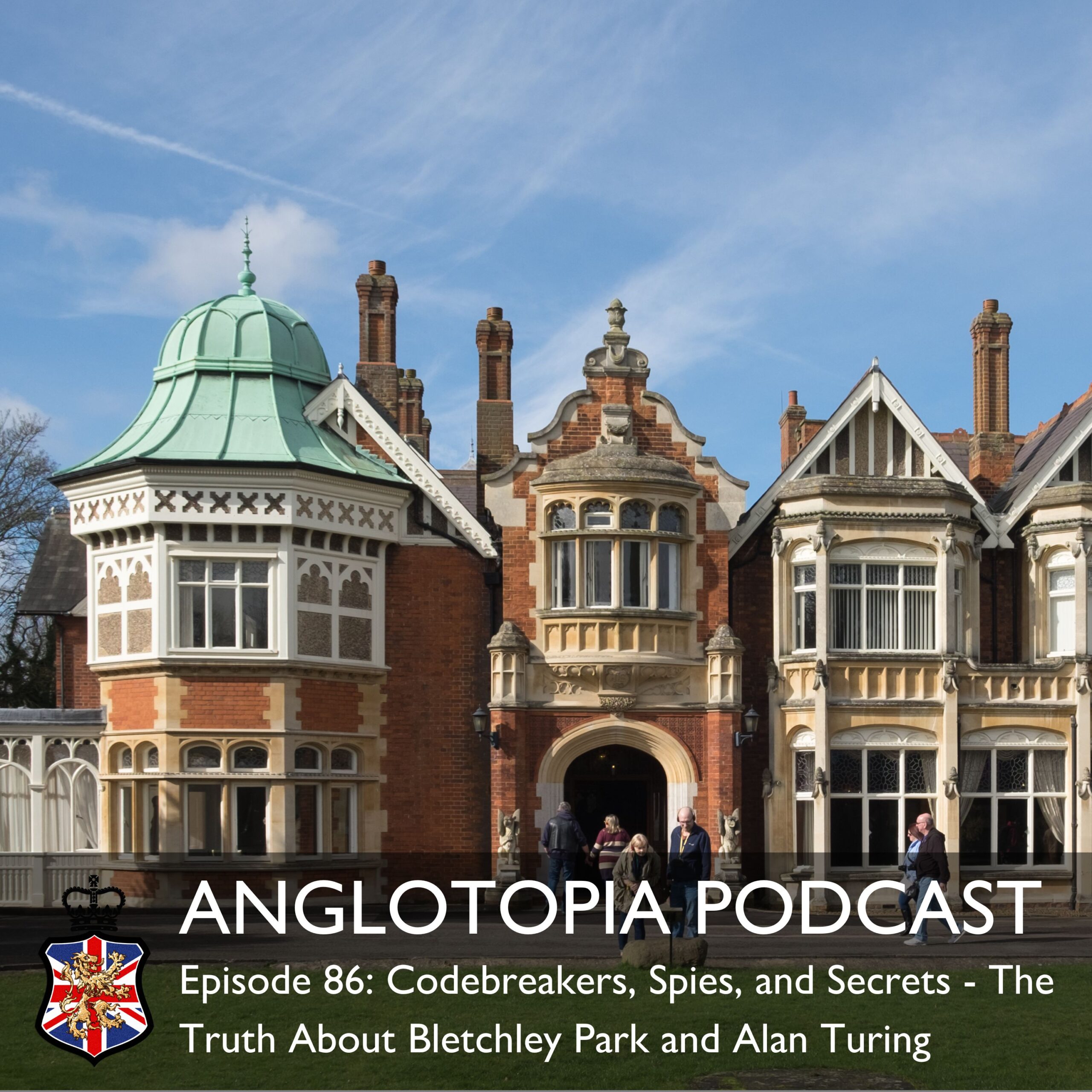 Anglotopia Podcast: Episode 86: Codebreakers, Spies, and Secrets – The Truth About Bletchley Park and Alan Turing | This episode of the Anglotopia Podcast delves into the hidden history of Bletchley Park, exploring its origins, growth, and the significant role it played during World War II. Dr. Chris Smith joins us to discuss the secrecy surrounding the operations, the organizational structure, and the cryptanalysis processes that led to the breaking of the Enigma code. The discussion also highlights the impact of Bletchley Park's intelligence on military operations, the social dynamics and gender roles within the workforce, and the legacy of this crucial establishment in British history. We also unpack some of the myths around Bletchley Park, Alan Turing, and the development of the first computers. Links Chris Smith at Coventry University “The Last Cambridge Spy: John Cairncross, Bletchley Codebreaker and Soviet Double Agent” by Chris Smith Friends of Anglotopia Club "The Hidden History of Bletchley Park" (Palgrave Macmillan, 2015) Episode 78: "Did Churchill Know? Unraveling the Myths of the Coventry Blitz" Bletchley Park Museum Takeaways Bletchley Park grew rapidly due to the demands of war. The workforce at Bletchley Park was predominantly women. Secrecy was maintained through strict measures and the Official Secrets Act. Bletchley Park's structure was organized into specialized huts for efficiency. The Enigma machine was a complex cipher system with vulnerabilities. Intelligence from Bletchley Park significantly influenced military strategies. Alan Turing's contributions were pivotal but not the sole focus of Bletchley Park's success. The legacy of Bletchley Park continues to be relevant in discussions of intelligence and secrecy. Social dynamics at Bletchley Park reflected broader class and gender issues in British society. Bletchley Park is now a museum, preserving its history and contributions. Sound Bites "Churchill says that Bletchley is his goose which lays these golden eggs and never cackles. Well, actually some of them did cackle, but on the whole it's a remarkable feat that they kept it as secret as they did." — Chris on the limits of wartime secrecy. "If you wanted to produce an accurate movie about Bletchley Park, it would probably be a woman working on a typewriter for ten hours a day. That doesn't produce a very interesting narrative for the audience." — Chris on Hollywood vs. reality. "159 quintillion possible settings. If you tried to brute force this one letter at a time, that period of time is longer in seconds than the universe has existed." — Chris on the power of Enigma. "Enigma can never encipher a letter into itself. You can press A 26 times and you'll never get A again. That's an inherent weakness." — Chris on how the unbreakable code was broken. "The person who sort of handed them the Official Secrets Act had a gun on the table. The implication was that if you break this secret, this could carry the death penalty." — Chris on how secrecy was enforced. "The British basically sell Enigma machines to other countries after the war but | — | ||||||
| 2/27/26 | 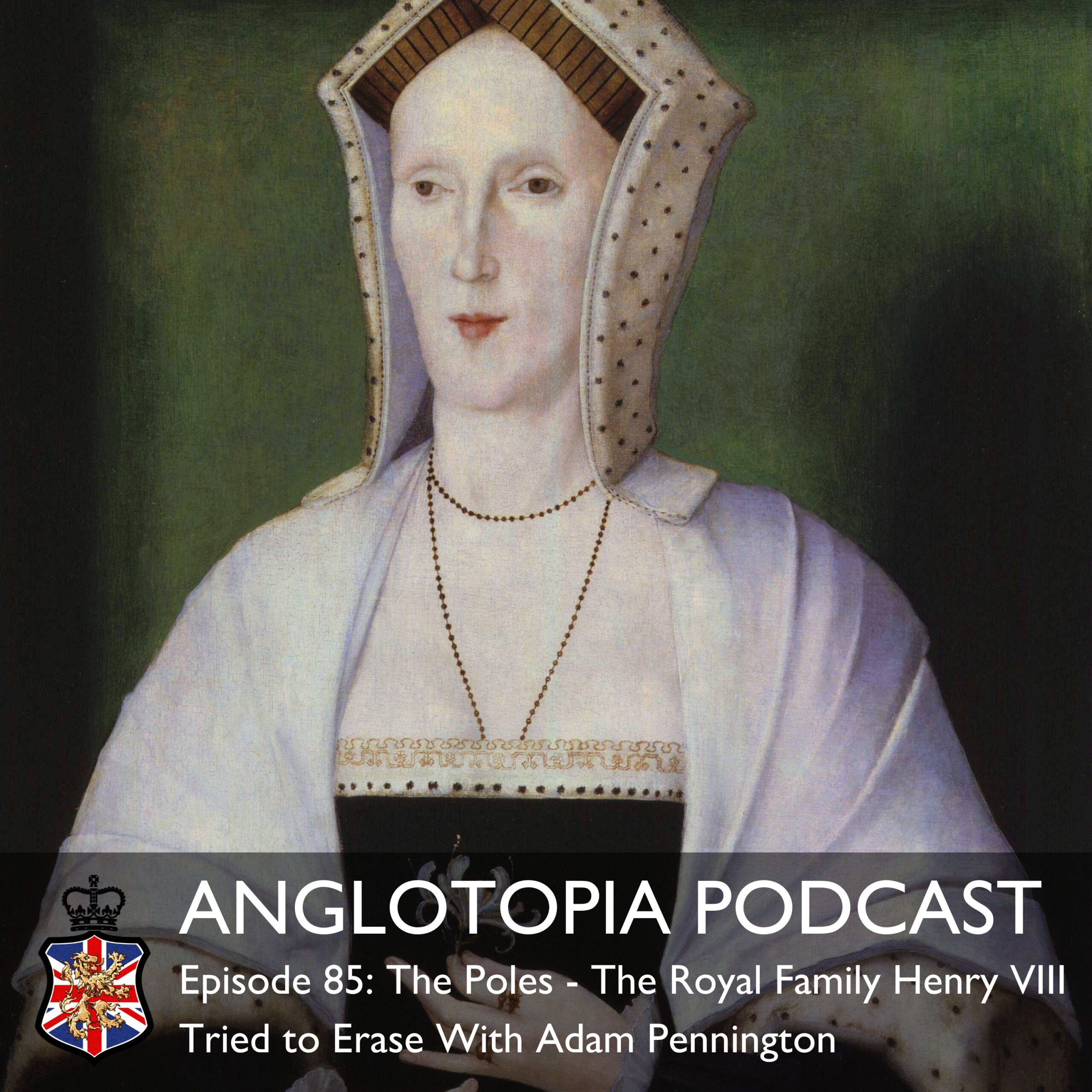 Anglotopia Podcast: Episode 85 – The Poles – The Royal Family Henry VIII Tried to Erase With Adam Pennington | In this engaging conversation, Adam Pennington, a Tudor and Plantagenet historian, shares his journey from a corporate media consultant to a full-time historian. He discusses his passion for Tudor history, particularly the story of Margaret Pole and her family's tumultuous relationship with Henry VIII. The conversation delves into the complexities of the Exeter Conspiracy, the brutal execution of Margaret Pole, and the significance of the Plantagenet bloodline. Adam also highlights his work with Simply Tudor Tours, aiming to bring history to life through immersive experiences. He concludes with insights into his upcoming projects, including a book on royal consorts. Links The Tudor Chest: Website: thetudorchest.com Podcast: The Tudor Chest (available on major platforms) Instagram: @thetudorchest Simply Tudor Tours: Website: simplytudortours.com Instagram: @simplytudortours The Book: "Henry VIII and the Plantagenet Poles: The Rise and Fall of a Dynasty" Publisher: Pen and Sword (2024) Takeaways History is always present in Adam's life. Films can ignite a passion for history. Margaret Pole was a significant historical figure. The Tudor claim to the throne was tenuous. The Exeter Conspiracy involved complex family dynamics. Margaret Pole's execution was a tragic event. Reginald Pole survived as a key figure. Simply Tudor Tours aims to make history accessible. The role of consorts in history is often overlooked. Adam's upcoming projects will explore royal history. Soundbites "The House of Tudor was one which should never have been, let alone taken the throne." — Adam on how tenuous the Tudor claim really was. "Margaret was a niece in the male line of two of England's kings. She had a lot of royal blood, and that royal blood was passed on to her children." — Adam introducing Margaret Pole. "Anne Boleyn has become the poster girl of the 16th century for many Tudor history fans. For me, it was the film Anne of a Thousand Days that really introduced me to her." — Adam on his gateway into Tudor history. "He compared Henry VIII to ancient dictators like Caligula and Nero. He accused him of being worse than a rotting beast. Understandably, this did not go down well." — Adam on Reginald Pole's blistering attack on the king. "They can find absolutely nothing against Margaret Pole. She absolutely nails it. But even so, an act of attainder is passed against her." — Adam on the injustice of Margaret's conviction. "She's woken on the morning of the 27th of May 1541 and told, 'You're to die within the hour.' It was so rushed that there hadn't been a scaffold prepared." — Adam on Margaret Pole's brutal end. "Even thinking about the King's death made you guilty of high treason. So speaking of the King's death was categorically treason." — Adam on the 1534 T | — | ||||||
| 2/24/26 | 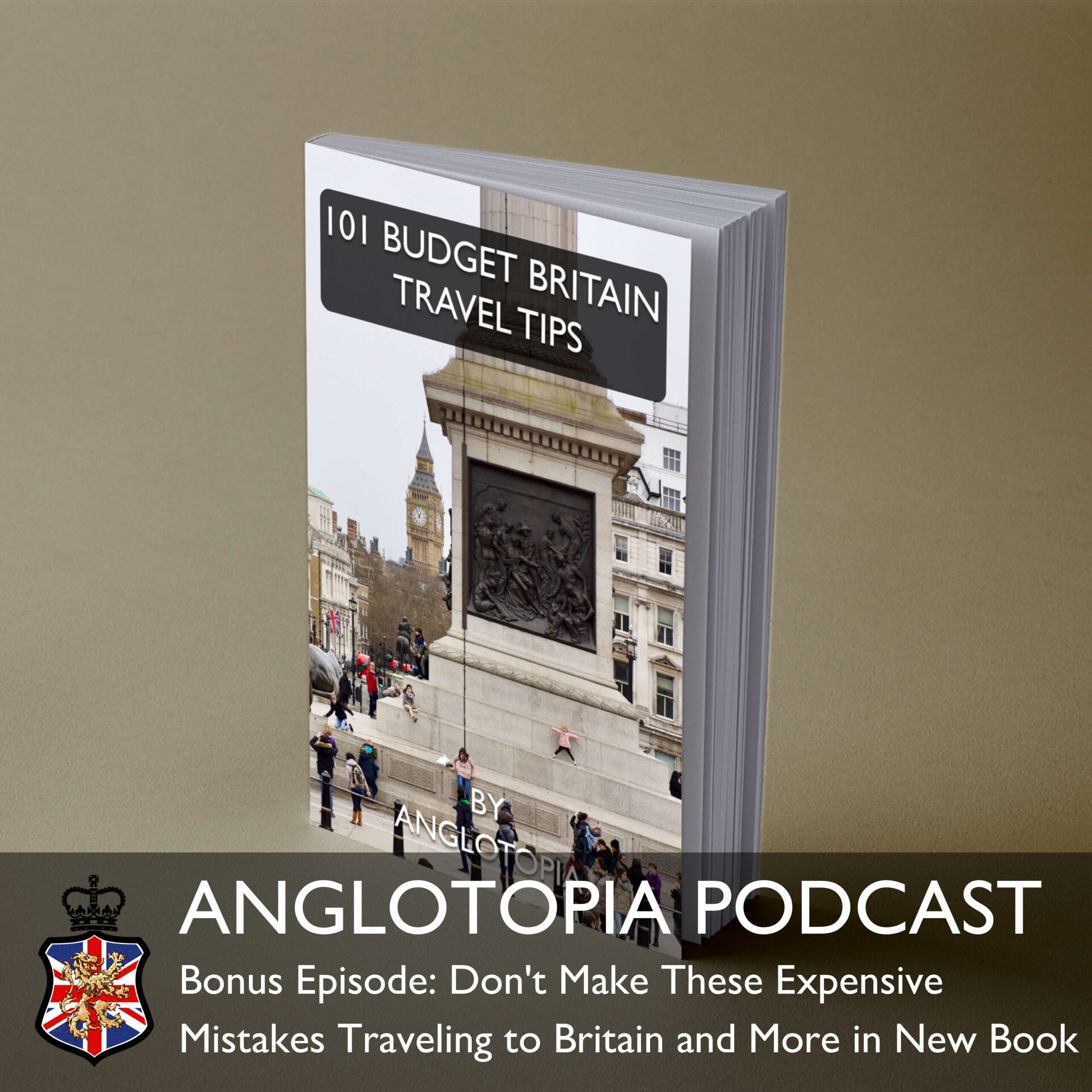 Anglotopia Podcast: Bonus Episode – Don’t Make These Expensive Mistakes Traveling to Britain | After 25 years and roughly 25 trips across the Atlantic — including one where he ran out of money and had to beg his parents from a London phone box and another that ended with a $1,200 phone bill — Jonathan Thomas has learned how to travel Britain without going broke. In this special bonus episode, he introduces the completely rewritten third edition of 101 Budget Britain Travel Tips, walks through what's new (including 30–40 tips that have never been in the book before), and reads 10 of his favorite tips covering everything from the mandatory new Electronic Travel Authorization to the airport drop-off fee that cost him £140, why you don't need an Oyster card anymore, and the supermarket meal deal hack that saves his family hundreds every trip. Whether you're planning your first visit or your twentieth, this is the episode to listen to before you book. Links 101 Budget Britain Travel Tips, 3rd Edition — Anglotopia Store product page (paperback, ebook pack, and bundle with 101 London Travel Tips) 101 Budget Britain Travel Tips on Amazon — Paperback, Kindle, and Audible audiobook 101 London Travel Tips — Companion book (link to store page and/or Amazon) 101 Budget Britain Travel Tips + 101 London Travel Tips Bundle — Anglotopia Store UK ETA Official App — iOS App Store / Google Play (official UK government app, not third-party services) Royal Oak Foundation — royaloak.org (US membership for free National Trust admission). Friends of Anglotopia Club — Anglotopia membership for early podcast access and exclusive content Previous Anglotopia Podcast Episode on the UK ETA Takeaways This is a complete rewrite, not just an update. The 3rd edition has 30–40 brand new tips never in the book before, the free attractions lists have been consolidated into a master appendix by country, and the book is roughly twice as thick as the previous edition. The UK's Electronic Travel Authorization is now mandatory. As of February 24, 2026, it is being strictly enforced. If you don't have one, you're not boarding the plane. Use the official UK government app — it costs £16. Anyone charging more is a third-party service skimming money. Airport drop-off fees can sting you badly. Jonathan got hit with a £140 total charge (£100 penalty + £40 rental car processing fee) for forgetting to pay the Heathrow drop-off fee within 24 hours. The cameras scan your license plate and the bill goes to the rental car company. You don't need an Oyster card anymore. Contactless credit/debit cards now work on London's entire transport network with the same daily fare caps. Just tap in and tap out — it settles up at the end of the day at no more than about £7–8. Book trains up to 12 weeks out to save money. A same-day journey can cost 4–5 times more than one booked a month or two in advance. Jonathan recommends op | — | ||||||
| 2/20/26 | 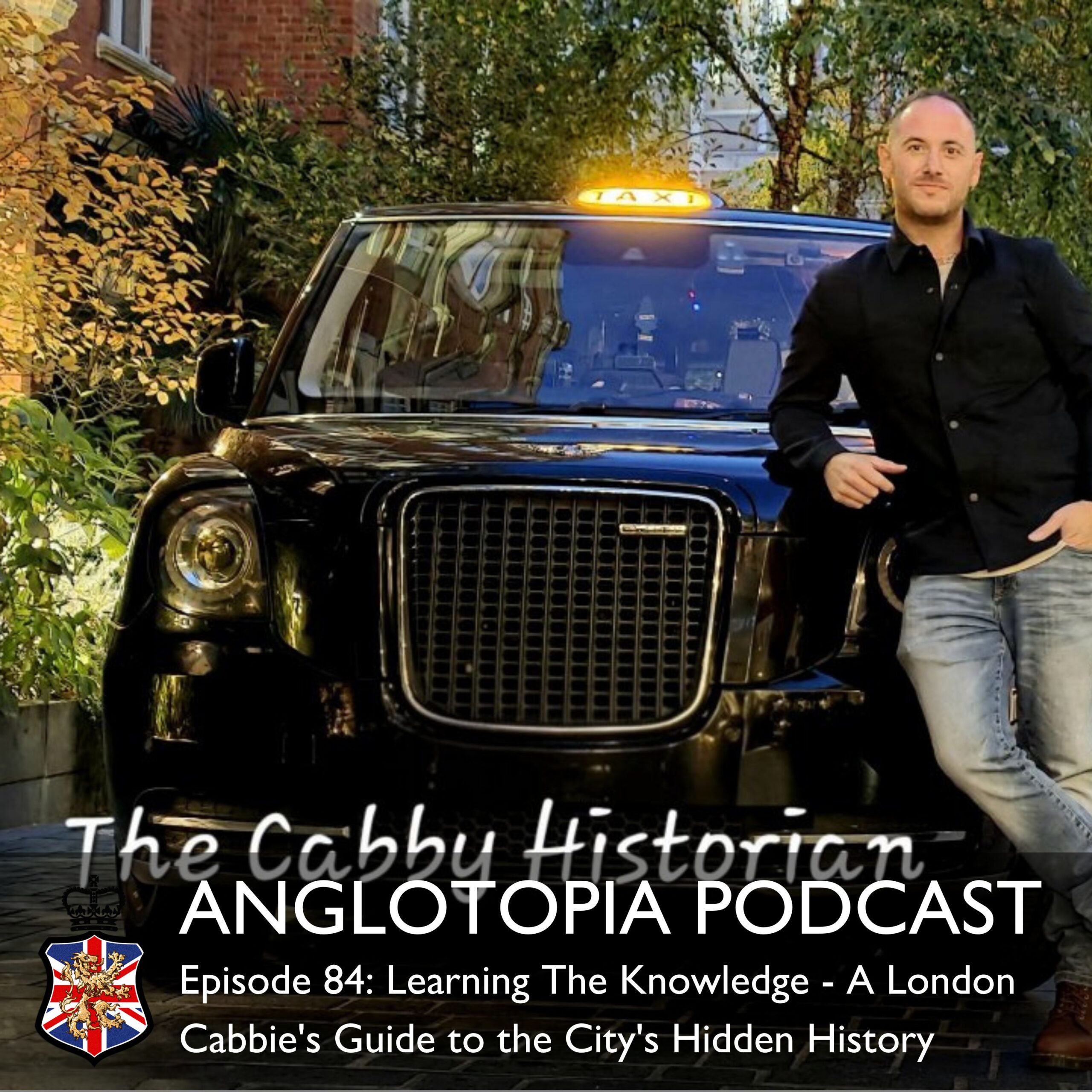 Anglotopia Podcast: Episode 84 – Learning The Knowledge – A London Cabbie’s Guide to the City’s Hidden History | In this episode of the Anglotopia podcast, host Jonathan Thomas speaks with Billy Cullen, a London taxi driver and history enthusiast, about the unique experience of navigating London's rich history through the lens of the iconic black cab. They discuss the rigorous training known as 'The Knowledge,' the challenges of being a tour guide, and the impact of modern technology like Uber on the traditional taxi industry. Billy shares insights on hidden gems in London, the importance of supporting local businesses, and the evolving landscape of tourism in the city. Links Website: londonhistorytaxitours.com Billy's Black Cab Tour: londonhistorytaxitours.com/book-now/details/372561/billys-black-cab-tour-of-london/ Instagram: @londonhistorytaxitours Transport for London: tfl.gov.uk/info-for/taxis-and-private-hire/licensing/learn-the-knowledge-of-london Takeaways The Knowledge is a rigorous training process for London taxi drivers. Billy Cullen combines his passion for history with his taxi driving. London's history spans over 2000 years, offering endless exploration. The black cab experience provides a personal connection to the city. Supporting local businesses is crucial for the economy. Uber has changed the landscape of the taxi industry in London. Layover tours offer a unique way to experience London in a short time. Hidden gems like Greenwich are often overlooked by tourists. Film and TV locations are increasingly popular among visitors. The future of London's museums is promising with new developments. Soundbites "I started thinking about doing the knowledge for freedom, working for myself. Freedom and a cool city." — Billy on why he became a cabbie. "You have to see the map of London in your head." — Billy on what the Knowledge actually requires. "They say you can't fail the knowledge, you can only quit." — Billy on the grueling examination process. "Some driver drove past and shouted out the window, 'Don't bother mate, the game's dead, give it up.' I was furious. After about five minutes, I shrugged it off and carried on my run." — Billy on nearly being discouraged. "It's a proven fact that the London black cab driver has a significantly larger hippocampus than the average person." — Billy on what the Knowledge does to your brain. "You'll be on Regent Street and someone will come out in front of you and just start taking loads of pictures and you feel like you're a celebrity." — Billy on driving an iconic black cab. "99% of the time, people are amazed by the stuff they weren't expecting. It's the secret things that also make up London, not just the stuff you see on pamphlets." — Billy on what surprises American tourists. "If there's one reason why you should use a black cab rather than Uber, it's because we actually care. Our badge is worth millions of pounds. It's a lifetime of employment." — Billy defending the trade. "Support local, support the local businesses. Don't pay up to a multi-billion company t | — | ||||||
| 2/13/26 |  Anglotopia Podcast: Episode 83 – How the Beatles Built the Greatest Team Ever (And What We Can Learn) | In this episode of the Anglotopia podcast, host Jonathan Thomas speaks with Dan Absher, a lifelong Beatles fan and CEO, about the cultural impact of the Beatles and the insights he has drawn from their success for his upcoming book, 'The Fab Four Pillars of Impact: Building Dynamic Teams the Beatles' Way.' They discuss Dan's early memories of the Beatles, his experiences in Liverpool, and the lessons that modern businesses can learn from the Beatles' journey, including the importance of unity, vision, and adaptability. Links Dan's book — The Fab Four Pillars of Impact: Building Dynamic Teams the Beatles Way (Greenleaf Book Group Press, February 2026) fab4academy.com — Dan's website The Beatles on Ed Sullivan, February 9, 1964 Cliveden (National Trust) Strawberry Fields Forever Friends of Anglotopia Club Takeaways Dan Absher's lifelong passion for the Beatles began at age five. The Beatles' charisma and humor were key to their early success. Ringo's role was essential as the steady drummer of the group. Family traditions often incorporate Beatles music, especially at milestone birthdays. Cliveden, where the Beatles filmed, was a significant experience for Dan. Liverpool has transformed into a vibrant city with a Beatles economy. Freda Kelly provided unique insights into the Beatles' personalities. The Beatles' success was driven by the right people and a catalytic vision. Internal conflicts and differing visions contributed to the Beatles' breakup. The Beatles' legacy continues to influence modern business practices. Soundbites Here are 10 interesting soundbites from the episode: "It wasn't until much later that I started to realize how great of musicians they were too. Right then it was their charisma, their personalities, their humor." — Dan on watching the Ed Sullivan show at age five. "I might have been coerced into picking Ringo because they needed a drummer and not another guitar player. But I fully embraced the Ringo role." — Dan on childhood Beatles roleplay with his brother and cousin. "Every occasion I can think of, particularly in my life, a Beatles song gets played a lot at family outings." — Dan on how the Beatles are woven into his family traditions. "John's vision was to save the world. George's was to save his soul and be close to God. Paul wanted to remain relevant in music his whole life. And Ringo — his vision was, have fun with my buddies." — Dan on how their diverging visions fractured the band. "It sounds absurd to think of the four of them having a strategic planning retreat, but that's what they needed." — Dan on what could have saved the Beatles. "Paul was clinging so hard to try to keep them together. I think that clinging itself had | — | ||||||
| 12/26/25 |  Anglotopia Podcast: Episode 82 – Your Travel Guide to Britain in 2026 – Major Events, Exhibitions, Museums, and More! | In this episode of the Anglotopia podcast, host Jonathan Thomas discusses exciting plans for 2026, including his personal goal of walking Hadrian's Wall, the revival of Anglotopia's online store, and major cultural events happening across Britain. He highlights significant Royal anniversaries, exhibitions, and theatre performances to look forward to, emphasizing the importance of planning ahead for Anglophiles. The episode concludes with a call to support Anglotopia through the Friends of Anglotopia Club. Links Friends of Anglotopia Cornish Smuggler's Tea Anglotopia Store Macs Adventure Shadowlands with Huge Bonneville Sorry, Prime Minister Tickets The Unlikely Pilgrimage of Harold Fry Takeaways Walking Hadrian's Wall is a personal goal for Jonathan. Anglotopia is reviving its online store after ceasing imports. 2026 marks Queen Elizabeth II's 100th birthday with special events. The Bayeux Tapestry will be exhibited at the British Museum. Celebrations for Beatrix Potter and other British icons are planned. New museums, including V&A East, will open in 2026. Winston Churchill's paintings will be featured in an exhibition. Theatre performances in London's West End are highly anticipated. Planning ahead is crucial for Anglophiles traveling to Britain. Joining the Friends of Anglotopia Club supports British culture. Sound Bites 1. The Big Commitment (Line 38) "So we closed this deal about a month or two ago and that's a big deal because now I have to do it. There's people counting on me to do this. Macs Adventure is counting on me doing it, my business is counting on me to do it, so I have to do it. I don't have a choice." 2. The Challenge Ahead (Line 14) "It involves physically preparing to walk 84 miles on purpose. And I, as you can see, I'm not in the best of shape. So the idea of walking so many miles is kind of daunting to me." 3. You're All Coming Along (Line 44) "That's the big thing for Anglotopia in 26 is I'm walking Hadrian's Wall. I don't have a choice and you're all coming along for the ride with me." 4. Personal Health Stakes (Lines 26-28) "It's for my own health. I'm not in great health. Preparing training for the walk will improve my health and having done it will also improve my health, and I'm hoping that it kind of ushers in a new era where hopefully once a year I do one of these famous long distance walks in Britain." 5. The Bayeux Tapestry Coup (Lines 105-106) "I don't know how they got the French to agree to this. Apparently it took years of negotiations, but the Bayeux Tapestry is gonna leave France and come to the British Museum for a special | — | ||||||
| 12/19/25 |  Anglotopia Podcast: Episode 81 – British vs American Christmas – 40 Years of Festive Culture Shock with Expat Amanda Graves | In this engaging Christmas episode of the Anglotopia podcast, host Jonathan Thomas and guest and Anglotopia columnist Amanda Graves explore the fascinating differences between British and American Christmas traditions. Amanda shares her experiences of celebrating Christmas in both cultures, discussing everything from the timing of decorations and Christmas dinner to the significance of Boxing Day and the King's speech. The conversation highlights the unique aspects of each tradition, the challenges of blending cultures, and the joy of preserving cherished customs while adapting to new ones. Links Spilling the Tea Column on Anglotopia British Christmas Articles Friends of Anglotopia Takeaways Amanda shares her first culture shock during her first American Christmas. The tradition of opening presents on Christmas Day is a significant difference between the UK and the US. Christmas dinner in the UK typically includes turkey, stuffing, and Christmas pudding, while Americans often opt for ham or beef. Amanda has adapted to American traditions while still trying to maintain some British customs. Christmas crackers are a fun British tradition that Amanda tries to introduce to her American friends. The misconception of fruitcake in America differs greatly from the British version, which is often enjoyed. Boxing Day is a day of recuperation and charity in the UK, but is largely unknown in America. The King's Christmas speech is an important tradition for Amanda, providing a moment of reflection during the holiday. Christmas television specials are a cherished part of British culture that Amanda misses. Amanda enjoys the festive spirit of Texas, where Christmas decorations are often extravagant. Sounds Bites Here are 10 compelling sound bites from the episode with timestamps: 1. The Decoration Culture Shock (02:22-02:51) "Suddenly everybody had tons of decorations up. Everybody had wreaths on their door. Everybody was putting lights into their bushes outside their door. And I'm thinking, I didn't know that we were supposed to do that." 2. Tree Timeline Shock (02:51-03:18) "A lot of people put their Christmas trees up super early, right after Thanksgiving. That was a bit baffling to me because at home we really didn't put up our Christmas tree until the week of Christmas." 3. The Cactus Christmas (04:12-05:02) "When I first met my husband, he had a large cactus and he would put some really funny ornaments on the cactus. He has some funny ornaments like the Oscar Mayer Wienermobile, which hangs from that. We still have a small Christmas tree that we put the tacky ornaments on as a nod to his previous indifference of Christmas." 4. The Breakfast in Bed Disaster (06:48-07:37) "We decided to make my mother breakfast in bed. We had no way of knowing that very late the night before she'd gone to midnight mass and had trod dog poo all the way up the stairs and had to spend two hours scrubbing the stairs, had fallen into bed at about three o'clock in the morning and we woke her at | — | ||||||
| 12/12/25 |  Anglotopia Podcast: Episode 80 – The Magic, History, and Nostalgia of British Christmas Television with Tom Salinsky | In this episode of the Anglotopia Podcast, host Jonathan Thomas and British TV expert Tom Salinsky delve into the rich tradition of British Christmas television specials. They explore the cultural significance of these specials, the evolution of Christmas Day TV schedules, and highlight some of the most beloved and memorable Christmas episodes from shows like Wallace & Gromit, Doctor Who, Only Fools and Horses, and Gavin and Stacey. The conversation also touches on the nostalgia associated with classics like The Snowman and the impact of streaming on traditional viewing habits. Salinsky shares insights into the history of Morecambe and Wise, the role of sports in Christmas TV, and the unique approach of shows like EastEnders during the festive season. The episode concludes with a discussion on the importance of the Radio Times Christmas double issue and a promotion for Salinsky's new podcast, All British Comedy. Links AllBritishComedy.com Tom Salinsky Tom Salinsky's Red Dwarf books Radio Times Christmas Double Issue BBC Genome Project The Snowman Friends of Anglotopia Club Takeaways British Christmas television specials are a cultural institution. Christmas specials often feature nostalgia and beloved characters. The Snowman is a quintessential part of British Christmas. Only Fools and Horses Christmas specials are highly anticipated events. Gavin and Stacey's serialization contributed to its popularity. Christmas Day TV schedules have evolved over the years. The Radio Times Christmas double issue is a cherished tradition. Not all Christmas specials are successful or well-received. EastEnders often delivers dramatic and intense Christmas episodes. Streaming has changed how audiences engage with Christmas specials. Sound Bites 1. On why British Christmas TV became a tradition: "I think it was EastEnders that made the difference. In 1986, EastEnders devoted its Christmas episode to the Den and Angie storyline absolutely coming to boiling point... The viewing figures were phenomenal—something like 30 million. Half the population was watching." — Tom Salinsky 2. On the unique appeal of Christmas specials: "The difference between writing a regular episode of Doctor Who and a Christmas special is there will be non-fans watching at Christmas. The 14-year-old says, everybody has to shut up so I can watch this. And then uncle and auntie and grandma and grandpa are all in the room anyway." — Tom Salinsky 3. On nostalgia and Christmas television: "Nostalgia and Christmas, certainly for British television, seem very intertwined. It's a time when we want to hark back to the past... Even Vengeance Most Foul, which is a brand new piece of work, feels old-fashioned, has that old-fashioned charm about it." — Tom Salinsky 4. On why EastEnders goes dark at Christmas: "If what we tune in for is misery and torment and betrayal, then at Christmas it needs to be maximum misery and maximum betrayal. No one is starved o | — | ||||||
| 12/5/25 |  Anglotopia Podcast: Episode 79 – Celebrating British Christmas as a British Expat Living in the USA – Jolly Posh Foods | In this episode of the Anglotopia Podcast sponsored by Jolly Posh Foods, host Jonathan Thomas speaks with Lucy Pask, a British expat in Chicago, about the significance of British food during Christmas. They discuss the offerings of Jolly Posh Foods, Lucy's journey from the UK to the US, and the unique aspects of British Christmas dinner traditions, including the importance of specific dishes and the cultural nuances that come with being an expat. The conversation also touches on Boxing Day traditions and the challenges of finding authentic British food in America. Links Jolly Posh Foods British American Business Council Chicago Friends of Anglotopia Club Takeaways British food is a significant comfort for expats during the holidays. Jolly Posh Foods provides authentic British food to expats in America. Lucy Pask's journey reflects the passion for British culture in the US. Christmas dinner in Britain includes unique dishes like pigs in blankets and roast potatoes. Boxing Day is a day for leftovers and family traditions. The importance of Yorkshire pudding in British cuisine cannot be overstated. Mince pies are a staple of British Christmas, despite their acquired taste. Ordering British food early is crucial for expats during the holiday season. Cultural differences in food can lead to humorous misunderstandings. The joy of sharing British food traditions with American family members. Sound Bites "The correct answer is always to say my family. But the honest answer, Jonathan, is that I really miss Waitrose and Marks and Spencer." "When you're in the UK, the whole of the UK, not just England, you're never more than about six foot away from a bacon butty." "When you have a proper breakfast sausage in the UK for the first time, it's almost like a revelation. You're like, I've been doing sausage wrong my whole life." "Being able to access this food and share it with them is one of my greatest joys in life." "I honestly don't think I could eat a Christmas dinner if I wasn't wearing a paper crown. I've never tried it and I don't want to." "Over 750 million pigs in blankets are eaten in the UK during Christmas... every citizen eats 13 pigs in blankets on Christmas Day." "We thought, well, what can we take to Thanksgiving? Why don't we take a Christmas pudding? We'll set fire to it and it'll make them laugh. And now we have to do it every year." "There's something about Chicago and a Midwestern attitude that's actually very British. It's a little self-effacing, fun, open to being humble and funny about yourselves." "It is treated with the same reverence and panic as booking Coachella tickets or Eras Tour tickets." "Full disclosure, I messed the whole thing up... Christmas Eve in the UK is one of the biggest nights out of the year. It is a full-on festival of going out to the pub. All the pubs and bars were shut at 10." Chapters 00:00 Introduction to British Christmas Food 04:11 Lucy Pask's Journey to Chicago 19:58 Exploring British Christmas Dinner Traditions 25:54 The Quintessential British Christmas Dinner 34:54 Christmas Pudding and Its Traditions 38:25 Understanding Mince Pies 50:17 Boxing Day: The Day of Leftovers 54:56 Ordering British Foods | — | ||||||
Showing 25 of 105
Sponsor Intelligence
Sign in to see which brands sponsor this podcast, their ad offers, and promo codes.
Chart Positions
6 placements across 6 markets.
Chart Positions
6 placements across 6 markets.