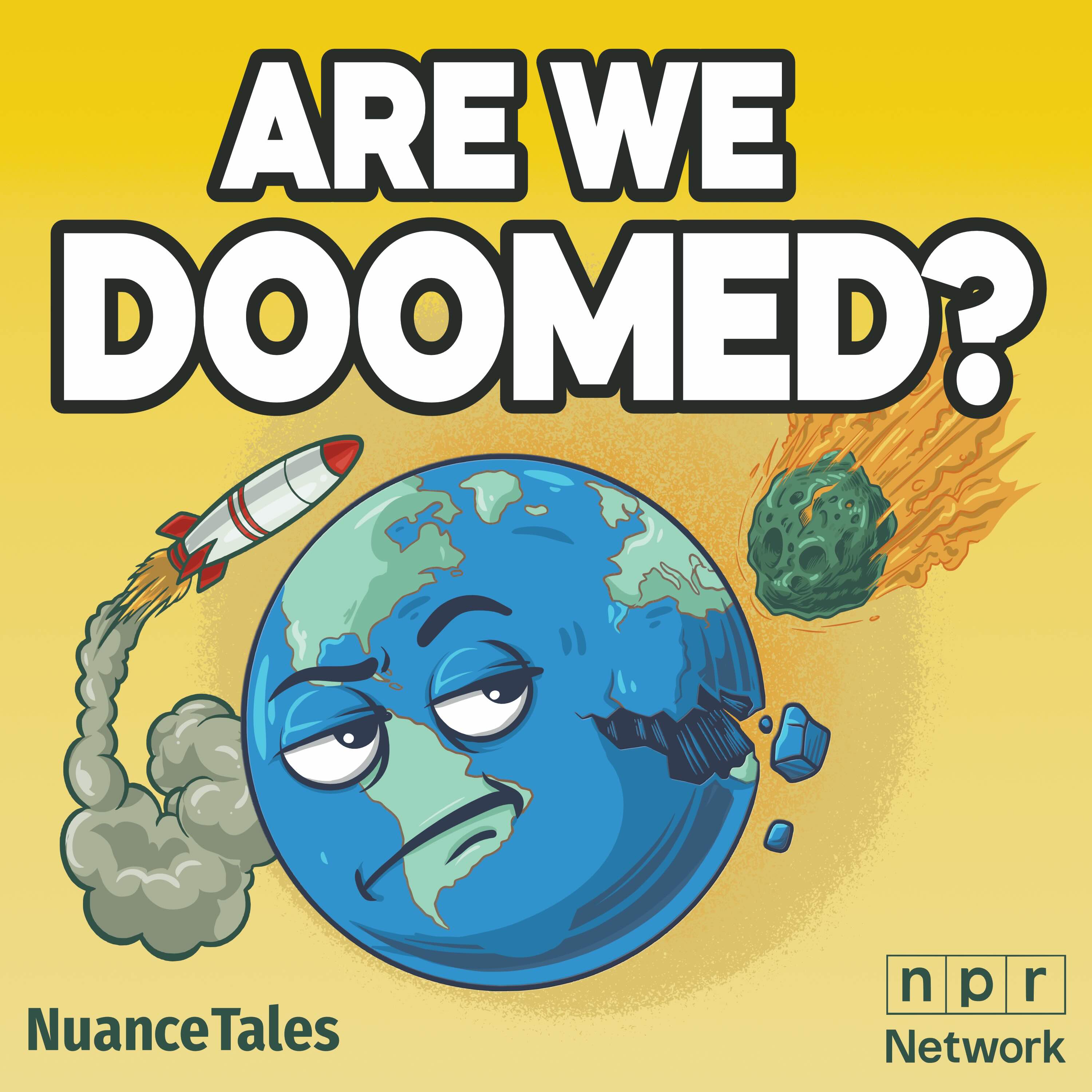
Are We Doomed?
Is the world ending, or does it just feel like it?"Are We Doomed?" investigates the greatest risks facing society, the planet, and our species. What’s real? What’s hype? And how do we actually make it out alive? Nukes. A...
AI overview.NPR Network is a well-respected media organization known for its commitment to quality journalism and storytelling across various platforms. They produce though…
Insights from recent episode analysis
On the show
- Jim Green2 eps
- Joseph Cox1 ep
- Carl Zimmer1 ep
Also: Juliet Morrison, Susan Solomon, Vipin Narang, Roman Yampolskiy, Davi Ottenheimer, Adam Gleave, Laura Cabrera, Emily Mullin, Chris Cokinos, Victoria Samson, Cristina Thomas, Chris Begley
Audience Interest
- existential risks to society
- climate change impacts
Podcast Focus
- investigates societal risks
- explores existential questions
Publishing Consistency
- one episode released
- active for one year
Insights are generated by CastFox AI using publicly available data, episode content, and proprietary models.
Most discussed topics
Brands & references
Total monthly reach
Based on 2 signals.
Built from
By chart position
- 🇺🇸United States · ScienceHOME#597.2K to 38K
- 🇨🇦Canada · Science#32826 to 4.4K
- 🇬🇧United Kingdom · Science#13599 to 523
- 🇦🇺Australia · Science#14244 to 235
- 🇮🇪Ireland · Science#7726 to 139
- Per-Episode Audience
Est. listeners per new episode within ~30 days
8.3K to 44K🎙 ~2x weekly·21 episodes·Last published 1w ago - Monthly Reach
Unique listeners across all episodes (30 days)
17K to 87K🇺🇸87%🇨🇦10%🇬🇧1%+1 more - Active Followers
Loyal subscribers who consistently listen
9.1K to 48K40 real followers tracked across platforms
Market Insights
Platform Distribution
Reach across major podcast platforms, updated hourly
Total Followers
—
Total Plays
—
Total Reviews
—
* Data sourced directly from platform APIs and aggregated hourly across all major podcast directories.
| Date | Episode | Topics | Guests | Brands | Places | Keywords | Sponsor | Length | |
|---|---|---|---|---|---|---|---|---|---|
| 10/13/26 | How High Can You Build a Seawall? | It’s a particularly watery moment, with a hurricane on the Gulf Coast and El Niño-fueled waves flooding California homes. Not helping: The seas are rising, and they’re going to keep rising. How much can we build to stop that? And if we can’t, what will happen to the places in the way of the waves?Ben Bradford starts in New Orleans, where a flashpoint new study finds rising water will (eventually) overwhelm our best sea walls. But what about those of the Dutch, who have spent a thousand years living dry at submarine elevations?Then, there are nations already retreating from the rising water’s path. From Lagos to Fiji, we look at the best attempts we can learn from — and the worst.Jesse Keenan, professor of urban planning at Tulane University and author of North: The Future of Post-Climate AmericaJola Ajibade, environmental sciences professor at Emory UniversitySupport Are We Doomed?, get bonus episodes, and more: https://doompod.com/support/ Watch earlier episodes on Youtube! https://www.youtube.com/@arewedoomedpod To manage podcast ad preferences, review the links below:See pcm.adswizz.com for information about our collection and use of personal data for sponsorship and to manage your podcast sponsorship preferences. NPR Privacy Policy | 32m 52s | ||||||
| 10/6/26 | Can Other Planets Tell Us Our Fate? | The universe should be crawling with life. With hundreds of billions of stars in our galaxy and hundreds of billions of galaxies, at least someone must have gotten a few billion years’ head start on us. So where is everybody?This is the Fermi Paradox. And the simplest solution may be that intelligent life is common, but civilizations always destroy themselves before they get very far. And so will we.But that’s not the only answer…With the help of some ants, and a planet named Steve, Ben Bradford takes on the mystery of an apparently empty universe.Guests:Seth Baum, executive director of the Global Catastrophic Risk InstituteMichael Travisano, evolutionary biologist at the University of MinnesotaSara Seager, astrophysicist at MITSupport Are We Doomed?, get bonus episodes, and more: https://doompod.com/support/ Watch earlier episodes on Youtube! https://www.youtube.com/@arewedoomedpod To manage podcast ad preferences, review the links below:See pcm.adswizz.com for information about our collection and use of personal data for sponsorship and to manage your podcast sponsorship preferences. NPR Privacy Policy | 31m 57s | ||||||
| 9/29/26 | Can Science Defeat Aging? | Why are babies born young? How come a squirrel lives longer than a rat, but not as long as a naked mole rat (or Ben’s cousin’s tortoise)? Scientific breakthroughs over the past few decades suggest the ultimate doom awaiting us all — aging, and eventually death — isn’t simply an inevitable slide. Aging is a process inside the body, with mechanisms researchers are beginning to understand … and interfere with.Now billions of dollars are pouring into secretive longevity labs, and the first attempts to rejuvenate aging cells inside human beings are underway.So: are we getting closer to a real Fountain of Youth? And if we are, who gets to drink?Guest:Susan Dominus, staff writer for The New York Times MagazineSupport Are We Doomed?, get bonus episodes, and more: https://doompod.com/support/ Watch earlier episodes on Youtube! https://www.youtube.com/@arewedoomedpod To manage podcast ad preferences, review the links below:See pcm.adswizz.com for information about our collection and use of personal data for sponsorship and to manage your podcast sponsorship preferences. NPR Privacy Policy | 34m 36s | ||||||
| 9/22/26 | Bug Fight Club | You’re a critter in the forest, peacefully munching on a tree — until it’s chopped down, turned into a pallet, and you’re shipped across the ocean. What do you do? Sometimes, the answer is escape, find defenseless trees in your new home, and eat them to extinction. The emerald ash borer, spotted lanternfly, “murder hornet,” and other invasive insects have all threatened destruction across North America in the past few decades alone.Ben Bradford investigates why invasive bugs keep getting worse — and how, exactly, you’re supposed to stop millions of tiny creatures once they’ve decided they like it here. Schemes have grown increasingly intricate, including spy-movie hijinks, citizen squishers, the power of fire, and creating a Bug Fight Club. Only some of these work.Guests:Andrew Liebhold, Chief Scientist, Forest Invasion Synthesis CentreChris Looney, Washington State Department of Agriculture entomologist (and murder hornet MacGyver)Support Are We Doomed?, get bonus episodes, and more: https://doompod.com/support/ Watch earlier episodes on Youtube! https://www.youtube.com/@arewedoomedpodAlso check out:How Do You Kill a Mosquito? To manage podcast ad preferences, review the links below:See pcm.adswizz.com for information about our collection and use of personal data for sponsorship and to manage your podcast sponsorship preferences. NPR Privacy Policy | 39m 51s | ||||||
| 9/15/26 | Who Keeps Winding the Doomsday Clock? | “Uh oh,” said several Manhattan Project scientists after they helped build a bomb and then it got used. They jumped to stop it from ever being used again. Solution: a newsletter. Through a somewhat convoluted chain of events that spawned the most famous symbol of humanity’s dance with extinction: the Doomsday Clock.Alex Bell, the CEO of the Bulletin of the Atomic Scientists, which sets the Clock, tells its strange origin story and describes why the hands now sit closer than ever toward midnight — as well as what “midnight” actually means. Guest: Alexandra Bell, president and CEO of the Bulletin of the Atomic ScientistsSupport Are We Doomed?, get bonus episodes, and more: https://doompod.com/support/ Watch earlier episodes on Youtube! https://www.youtube.com/@arewedoomedpodListen to related episodes:More Nukes!How to Start a Nuclear WarWe Design the AI To Kill Us AllDid AI Just Escape?Is the World Ending ... Or Are We Just Online? To manage podcast ad preferences, review the links below:See pcm.adswizz.com for information about our collection and use of personal data for sponsorship and to manage your podcast sponsorship preferences. NPR Privacy Policy | 34m 45s | ||||||
| 9/8/26 | scamstechnology+4 | Joseph Cox | 404 Media | — | scamstechnology+4 | — | 35m 35s | ||
| 9/1/26 | solar stormCarrington Event+3 | Jim Green | NASANOAA Space Weather Prediction Center+3 | — | solar stormCarrington Event+5 | — | 36m 52s | ||
| 8/25/26 | vaccinesviruses+4 | Carl ZimmerJuliet Morrison | UC RiversideA Planet of Viruses | — | vaccinessmallpox+5 | — | 40m 55s | ||
| 8/18/26 | ozone layerenvironmental science+3 | Susan Solomon | NASAMIT | — | ozone holeenvironment+3 | — | 37m 15s | ||
| 8/11/26 | nuclear weaponsdeterrence+4 | Vipin Narang | MITNPR Network | USRussia+2 | nuclear weaponsdeterrence+5 | — | 32m 11s | ||
Want analysis for the episodes below?Free for Pro Submit a request, we'll have your selected episodes analyzed within an hour. Free, at no cost to you, for Pro users. | |||||||||
| 8/4/26 | AIcybersecurity+4 | Roman YampolskiyDavi Ottenheimer+1 | OpenAIHugging Face | — | AI cyberattackOpenAI+5 | — | 31m 24s | ||
| 7/28/26 | cyborgstechnology+4 | Laura CabreraEmily Mullin | brain-computer interfacesAI brain-chip ventures+6 | — | cyborgstechnology+6 | — | 40m 27s | ||
| 7/21/26 | moonspace exploration+4 | Jim GreenChris Cokinos+1 | NASASecure World Foundation+1 | — | moonspace security+6 | — | 37m 50s | ||
| 7/14/26 | asteroidsmass extinctions+4 | Cristina Thomas | Northern Arizona UniversityNPR Network+2 | — | asteroidsmass extinctions+5 | — | 36m 37s | ||
| 7/7/26 | survivalapocalypse+4 | Chris Begley | NPR NetworkThe Emergency Playbook: A Bunker-Free Guide to Disaster Preparation | — | survivalapocalypse+5 | — | 33m 45s | ||
| 6/30/26 | Is Geoengineering A Good Idea? | The planet is heating up, every plan to stop it has fallen short, and growing group of scientists has started to ask a stranger question: what if we grabbed the thermostat ourselves? Ben Bradford investigates geoengineering — the science of deliberately manipulating Earth’s climate — from space mirrors and ocean fertilizers to fleets of planes mimicking a volcano. Some of it sounds like cartoon villainy. Some of it might actually work. And that raises the thornier question: if humans can cool the planet on purpose, who decides whether we should?Guests:Kate Ricke, climate change scientist at UCSDAlan Robock, atmospheric scientist at RutgersSupport Are We Doomed?, get bonus episodes, and more: https://doompod.com/support/ Watch earlier episodes on Youtube! https://www.youtube.com/@arewedoomedpod To manage podcast ad preferences, review the links below:See pcm.adswizz.com for information about our collection and use of personal data for sponsorship and to manage your podcast sponsorship preferences. NPR Privacy Policy | 39m 07s | ||||||
| 6/23/26 | The True AI Threat is People | Imagine a friendly assistant that can help you build a bioweapon. Or a chatbot in the nuclear weapons chain, cheerfully hallucinating an attack. AI national security expert Hamza Chaudhry worries this is the biggest threat right now — not “killer robot,” but humans being humans. Because whether AI becomes dangerously smart or confidently dumb, people will find face-palming ways to abuse it. From deranged cultists and rogue states, to stockbrokers and the most evil version of Ben’s little cousin, handing everyone a powerful technology with few guardrails could end badly. Or, is there a path to convince companies to add their own?Guest: Hamza Chaudhry, AI national security expert, Future of Life InstituteThis episode was edited by Annie Russell.Support Are We Doomed?, get bonus episodes, and more: https://doompod.com/support/ Watch earlier episodes on Youtube! https://www.youtube.com/@arewedoomedpodListen to our episode about rogue AI: We Design the AI That Kills Us AllAnd our episode about nuclear oopsies: How to Start a Nuclear War To manage podcast ad preferences, review the links below:See pcm.adswizz.com for information about our collection and use of personal data for sponsorship and to manage your podcast sponsorship preferences. NPR Privacy Policy | 35m 49s | ||||||
| 6/16/26 | Is the World Ending or Are We Just Online? | Are we living through the end times or the best moment in human history? Novelist and internet veteran Jason Pargin argues you have spent your life inside a “literal reverse apocalypse” — and if you don’t see it, he knows who to blame. Ben Bradford talks with Pargin about doom-scrolling, child mortality, processed donuts, murderous Toyota drivers, and how humanity’s greatest problems may be side effects of its greatest successes. So how do we tell if the world is really ending — or if the internet has trapped us inside a giant doom machine?Guest:Jason Pargin, author of I’m Starting to Worry About this Black Box of Doom, TikTok: @jasonkparginThanks to Annie Russell for contributing editing to this episode.Support Are We Doomed?, get bonus episodes, and more: https://doompod.com/support/ Watch earlier episodes on Youtube! https://www.youtube.com/@arewedoomedpodEarlier episodes mentioned: Are We Going the Way of the Roman Empire?Past Dooms That Didn't Arrive To manage podcast ad preferences, review the links below:See pcm.adswizz.com for information about our collection and use of personal data for sponsorship and to manage your podcast sponsorship preferences. NPR Privacy Policy | 31m 32s | ||||||
| 6/9/26 | Are We Going the Way of the Roman Empire? | Historically, societies fall. Civilizations collapse. But is that what’s happening now in the United States? With the help of historians, a former CIA-funded researcher on political instability, and one grumbling dad, Ben Bradford looks at the warning signs that can precede collapse — from polarization and political division to outside shocks and cascading crises. How much of that is visible in America right now? What would collapse actually look like in modern life? And if the alarms are blinking, is there still time to turn back?Guests:Ian Morris, historian, archaeologist, Stanford University professor, author: Why the West Rules—For Now.Monty Marshall, former senior consultant for the U.S. Political Instability Task Force.Annalee Newitz, science journalist, author: Four Lost Cities: A Secret History of the Urban Age.Ben's Dad.Ben's Mom.Support Are We Doomed?, get bonus episodes, and more: https://doompod.com/support/ Watch earlier episodes on Youtube! https://www.youtube.com/@arewedoomedpodCheck out Ben’s previous series, Landslide. To manage podcast ad preferences, review the links below:See pcm.adswizz.com for information about our collection and use of personal data for sponsorship and to manage your podcast sponsorship preferences. NPR Privacy Policy | 37m 16s | ||||||
| 6/2/26 | We Try and Kill the Internet | The internet is how you get your news, your paycheck, your groceries, your banking, and sometimes your drinking water. Humanity has quietly handed over the keys to civilization to a network most of us don't understand and couldn't rebuild. So what happens if it goes down — and not for a day or two? Ben Bradford tries to kill the internet, hunting for weak points in undersea cables, cyberattacks, cloud computing, overlooked open-source plumbing, and fragile politics. It’s harder than it looks, but maybe not impossible. Should we be worried?Guests:Bruce Schneier, cryptographer, cybersecurity lecturer, and author of Click Here to Kill Everybody.Doug Madory, director of internet analysis for Kentik.Support Are We Doomed?, get bonus episodes, and more: https://doompod.com/support/ Watch earlier episodes on Youtube! https://www.youtube.com/@arewedoomedpod To manage podcast ad preferences, review the links below:See pcm.adswizz.com for information about our collection and use of personal data for sponsorship and to manage your podcast sponsorship preferences. NPR Privacy Policy | 32m 48s | ||||||
| 5/26/26 | Past Dooms That Didn't Arrive | People have been predicting the end of the world forever. They’ve always been wrong. Maybe we’re wrong today, too. So, we’re looking back at three past dooms predicted in the 20th century, none of which arrived as advertised. Why not? What can we learn? Does it mean that the current biggest end-of-the-world fears may be overblown, misunderstood, or — with effort — preventable? Along the way: failed utopias, dystopias, and the animal Ben fears most: the mini-hippo.Guest: Matt Novak, journalist at Gizmodo and long-time author of the Paleofuture blog.Support Are We Doomed?, get bonus episodes, and more: https://doompod.com/support/ Watch earlier episodes on Youtube! https://www.youtube.com/@arewedoomedpod To manage podcast ad preferences, review the links below:See pcm.adswizz.com for information about our collection and use of personal data for sponsorship and to manage your podcast sponsorship preferences. NPR Privacy Policy | 34m 24s | ||||||
| 5/19/26 | How To Survive a Nuclear War | The air raid sirens scream (actually, they don’t work anymore). An emergency alert goes out, because … nuclear missiles are in-bound. It’s happening! How do we survive (non-Hollywood edition)? From diving into crumbling fallout shelters to emerging into a world where nuclear winter is descending, Ben explores what armageddon would actually look like, what the movies get wrong, and why — for most of us — it’s not a flash of light, but a cramped slog. Support Are We Doomed?, get bonus episodes, and more: https://doompod.com/support/ Listen to our episode "How to Start a Nuclear War."Watch earlier episodes on Youtube! https://www.youtube.com/@arewedoomedpod To manage podcast ad preferences, review the links below:See pcm.adswizz.com for information about our collection and use of personal data for sponsorship and to manage your podcast sponsorship preferences. NPR Privacy Policy | 37m 36s | ||||||
| 5/12/26 | How Do You Kill a Mosquito? | Mosquitoes are little jerks. They suck your blood to make more mosquitoes, spread deadly diseases like malaria and dengue, and have killed more humans than any other creature in the history of Earth. But now, we can fight back. Gene-editing technology (CRISPR, gene drives) could temporarily wipe out disease-carrying mosquitoes in whole regions — potentially saving millions of lives. A miracle, but with an unsettling question of its own: Who gets to decide when humanity rewrites nature?Also: radiation-blasted flies, Australian rabbit smoothies, and … Mosquito Jurassic Park.Support Are We Doomed?, get bonus episodes, and more: https://doompod.com/support/ To manage podcast ad preferences, review the links below:See pcm.adswizz.com for information about our collection and use of personal data for sponsorship and to manage your podcast sponsorship preferences. NPR Privacy Policy | 35m 13s | ||||||
| 5/5/26 | Supervolcano! | A supervolcano burbles under Yellowstone National Park. Enormous. Real. According to the internet’s most excitable corners, just itching to turn America into charcoal any minute now. Ben Bradford investigates what supervolcanoes can actually do, why Yellowstone is almost certainly not about to blow its top, and how scientists tell when a volcano is really waking up. Panic over a national park may be distracting us from another, sneakier, more critical volcanic threat.Support Are We Doomed?, get bonus episodes, and more: https://doompod.com/support/ To manage podcast ad preferences, review the links below:See pcm.adswizz.com for information about our collection and use of personal data for sponsorship and to manage your podcast sponsorship preferences. NPR Privacy Policy | 40m 45s | ||||||
| 4/28/26 | Let’s Design the AI That Kills Us All | Maddeningly, even some researchers building artificial intelligence see it as a potential existential threat on par with nuclear war. Ben Bradford follows three simple steps that could lead an AI to turn on humanity and attempt to wipe us out. From autonomous agents with misaligned goals to hacked infrastructure, bioweapons, and a real story of AI blackmail, a nerdy apocalypse thought experiment starts to feel a little too plausible. So, then we try to dismantle our rogue creation.Support Are We Doomed?, get bonus episodes, and more: https://doompod.com/support/ To manage podcast ad preferences, review the links below:See pcm.adswizz.com for information about our collection and use of personal data for sponsorship and to manage your podcast sponsorship preferences. NPR Privacy Policy | 35m 37s | ||||||
Showing 25 of 21
Pitch Fit is a Pro feature
See how bookable this show is for guests, which brands already advertise, the per-episode ad value, and the best-fit guest and sponsor profile. The numbers are blurred on the free plan.
How readily this show books outside guests like you.
How proven this show is for host-read sponsorships.
For Guests
ProFor Advertisers
ProUpgrade to Pro to unlock guest cadence, sponsor categories, fit scores, and per-episode ad value for this show.
Similar Audience Demographics
Podcasts that attract a similar listener profile


Distribution & Reach
About the show, platforms, and key insights.
Distribution & Reach
About the show, platforms, and key insights.
NPR Network is a well-respected media organization known for its commitment to quality journalism and storytelling across various platforms. They produce thought-provoking content that often addresses complex societal issues, making them a trusted source for informed discussions. "Are We Doomed?" stands out as a unique exploration of existential risks and societal anxieties, covering diverse topics from nuclear threats to climate change and even the whimsical dangers posed by wildlife. The podcast employs a “slightly narrative” format, blending humor with serious inquiry, which engages listeners while unpacking both real and exaggerated threats facing humanity. The show appeals to an audience keen on understanding contemporary challenges and existential risks, drawing in listeners who value insightful analysis presented with a touch of levity. By dissecting fears and misconceptions, the podcast provides valuable perspectives on how society can navigate these turbulent times.
By the numbers
- Total followers: 160
- Total plays: 6.0K
Platforms
Castbox
- Followers: 39
- Plays: 136
YouTube
- Subscribers: 120
- Views: 5.9K
- Videos: 8
Podcast Republic
- Followers: 1
Find them online
Audience
professionals
Key insights
What the show covers
- investigates societal risks
- explores existential questions
- analyzes overblown fears
- features expert insights
Audience interests
- existential risks to society
- climate change impacts
- technological threats
- unexpected dangers
Platform reach
- no platforms detected
- unknown follower count
- limited distribution information
- potential for wider reach
Publishing consistency
- one episode released
- active for one year
- weekly or more cadence
- consistent content delivery
Chart history for Are We Doomed?
Peaked at #32 in Canada, currently #32 in Canada.
| Market | Genre | Peak | Current | Trend |
|---|---|---|---|---|
| Canada | — | #32 | #32 | — |
| IS | — | #53 | #53 | — |
| United States | — | #59 | #59 | — |
| Ireland | — | #77 | #77 | — |
| United Kingdom | — | #135 | #135 | — |
| Australia | — | #142 | #142 | — |
| SG | — | #162 | #162 | — |
| CL | — | #172 | #172 | — |
| AE | — | #181 | #181 | — |
| South Korea | — | #183 | #183 | — |
| Norway | — | #186 | #186 | — |
| PH | — | #187 | #187 | — |
| MY | — | #192 | #192 | — |
Chart Positions
13 placements across 13 markets.
Chart Positions
13 placements across 13 markets.