

Insights from recent episode analysis
Audience Interest
Podcast Focus
Publishing Consistency
Platform Reach
Insights are generated by CastFox AI using publicly available data, episode content, and proprietary models.
Est. Listeners
Based on iTunes & Spotify (publisher stats).
- Per-Episode Audience
Est. listeners per new episode within ~30 days
1 - 1,000 - Monthly Reach
Unique listeners across all episodes (30 days)
1 - 5,000 - Active Followers
Loyal subscribers who consistently listen
1 - 500
Market Insights
Platform Distribution
Reach across major podcast platforms, updated hourly
Total Followers
—
Total Plays
—
Total Reviews
—
* Data sourced directly from platform APIs and aggregated hourly across all major podcast directories.
On the show
Recent episodes
Lets put carbon where it belongs, in the ground!
Jul 29, 2022
Unknown duration
Buying textiles without heating the Planet is possible!
Jul 29, 2022
Unknown duration
Prairie Fires: Can a Controlled Burn Act as a Natural Process and Make Biochar as Soil Carbon?
Jul 3, 2022
Unknown duration
20 Metric tons of CO₂ Sequestered: 40 Yards (8,000 gallons) Of Biochar On The Way!
Jun 3, 2022
Unknown duration
ARTi Wear! Check Our New Line of CO2 Fighting Apparel
May 28, 2022
Unknown duration
Social Links & Contact
Official channels & resources
Official Website
Login
RSS Feed
Login
| Date | Episode | Description | Length | ||||||
|---|---|---|---|---|---|---|---|---|---|
| 7/29/22 | 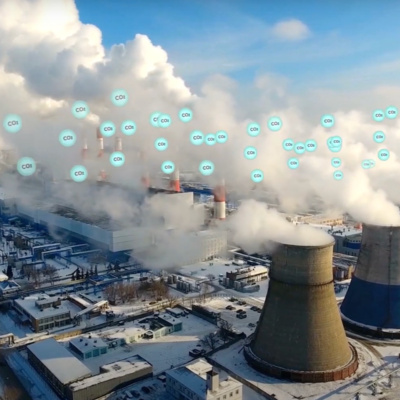 Lets put carbon where it belongs, in the ground! Lets put carbon where it belongs, in the ground! | As we know, climate change is due to too much carbon in our atmosphere. But carbon is not our enemy, it’s the building block of life. Every living thing is made of carbon. But the way we are managing it is disrupting the natural balance, heating our planet and destroying nature. During the last centuries we have been burning too much fossil fuels and clearing our forests. Even the way we manage lands and do agriculture is releasing even more carbon into the atmosphere, destroying our soils and disrupting the natural balance. Of course, we need to stop burning fossil carbon and change to sustainable practices, but the big question is: Where do we put all this excess carbon that is already in the atmosphere to balance this natural cycle again? The answer is literally under our feet: in the soil! Carbon in the ground is good for us! It makes healthy soils hold more water and bring nutrients and life back. We’ve been studying Biochar for almost a decade and we know its huge potential to reduce CO2 concentrations in a natural, long-term and more effective way. This is why we launched iTRAp CO2! A carbon removal project that connects people who want to help reduce CO2, with farmers who want to put carbon back into the soil. It’´s on us whether we stop waiting and start working to slow climate change! If we reach a massive transformation, we can help reduce global warming! iTRAP CO2 .. and you? TOGETHER we can do much more than reducing Carbon Dioxide, we can also restore our soils! | — | ||||||
| 7/29/22 | 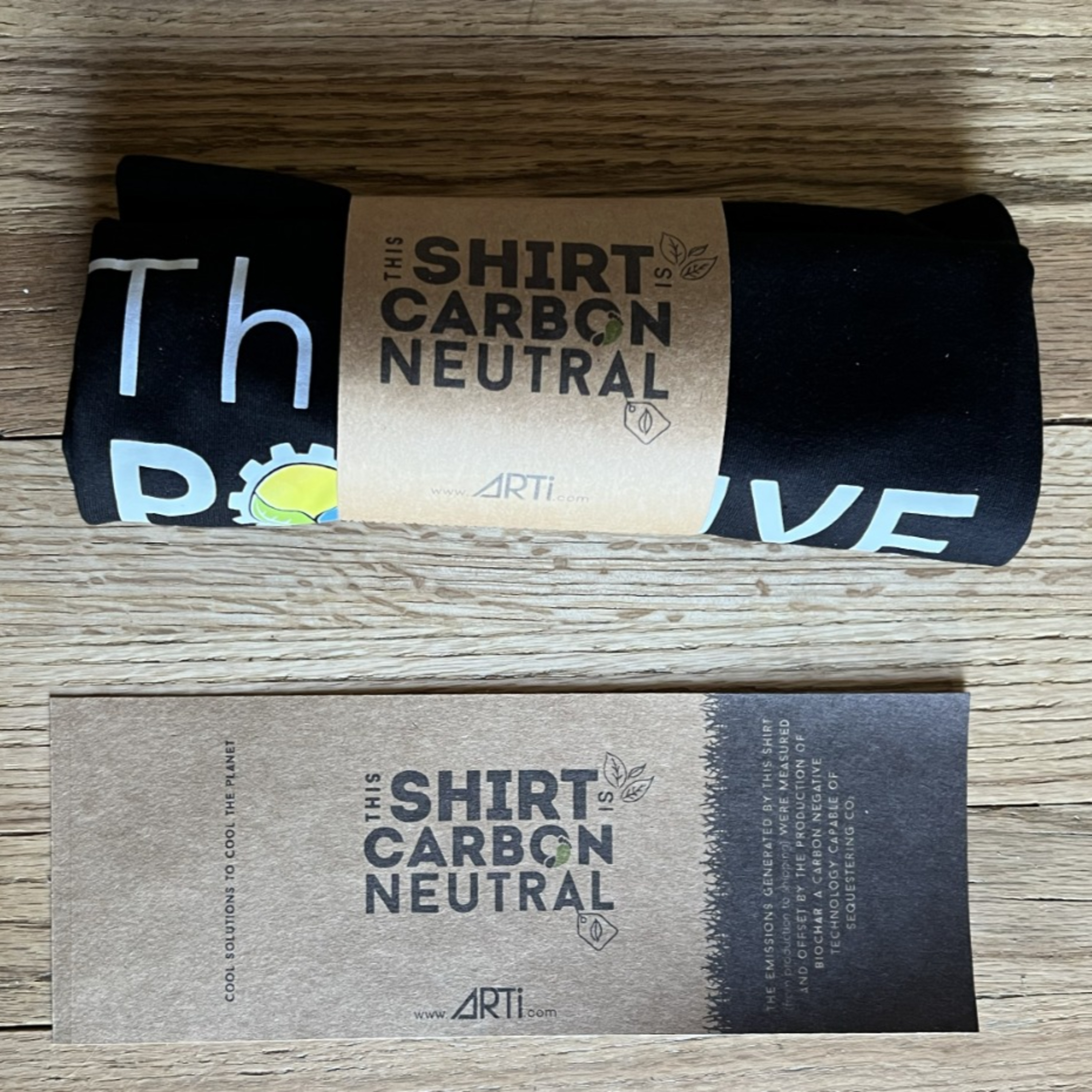 Buying textiles without heating the Planet is possible! Buying textiles without heating the Planet is possible! | Small changes that make a difference! The fashion industry is the second most polluting after oil. These shirts are Carbon Neutral… what does it mean? Through an LCA (Life Cycle Assessment) we calculate the environmental impact generated by producing a t-shirt: from the cotton harvest, to industrialization, manufacturing, transportation and commercialization until it reaches the consumer. Through the production of Biochar, a Carbon Negative technology, we sequester the same amount of CO2 emissions, so for each purchase of a t-shirt, Biochar is donated to green projects! Buying textiles without heating the planet is possible! Annually, 2 billion t-shirts are sold globally. CO2 emissions are unavoidable, but we can compensate them to reduce the impact on the environment! If we achieve a massive transformation, we can reduce the impact of clothing on the environment!! | — | ||||||
| 7/3/22 | 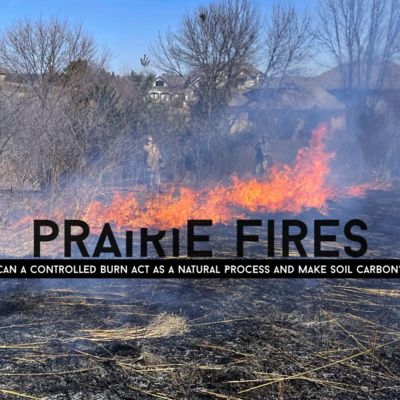 Prairie Fires: Can a Controlled Burn Act as a Natural Process and Make Biochar as Soil Carbon? Prairie Fires: Can a Controlled Burn Act as a Natural Process and Make Biochar as Soil Carbon? | Wildfires were and are still common in the North American Prairie lands, and the flowers and grasses that make up this amazing ecosystem evolved as a result. For those that live in prairie regions, controlled prairie fires are a sign of spring. Non-native plants are burned away during each burn, giving prairie species more nutrients and space to develop. Because prairie plants have deep roots and develop from a place underground, they can withstand fires. In prairie restoration, a prescribed burn is essential. As this is a burn process, there is resulting carbon. | — | ||||||
| 6/3/22 | 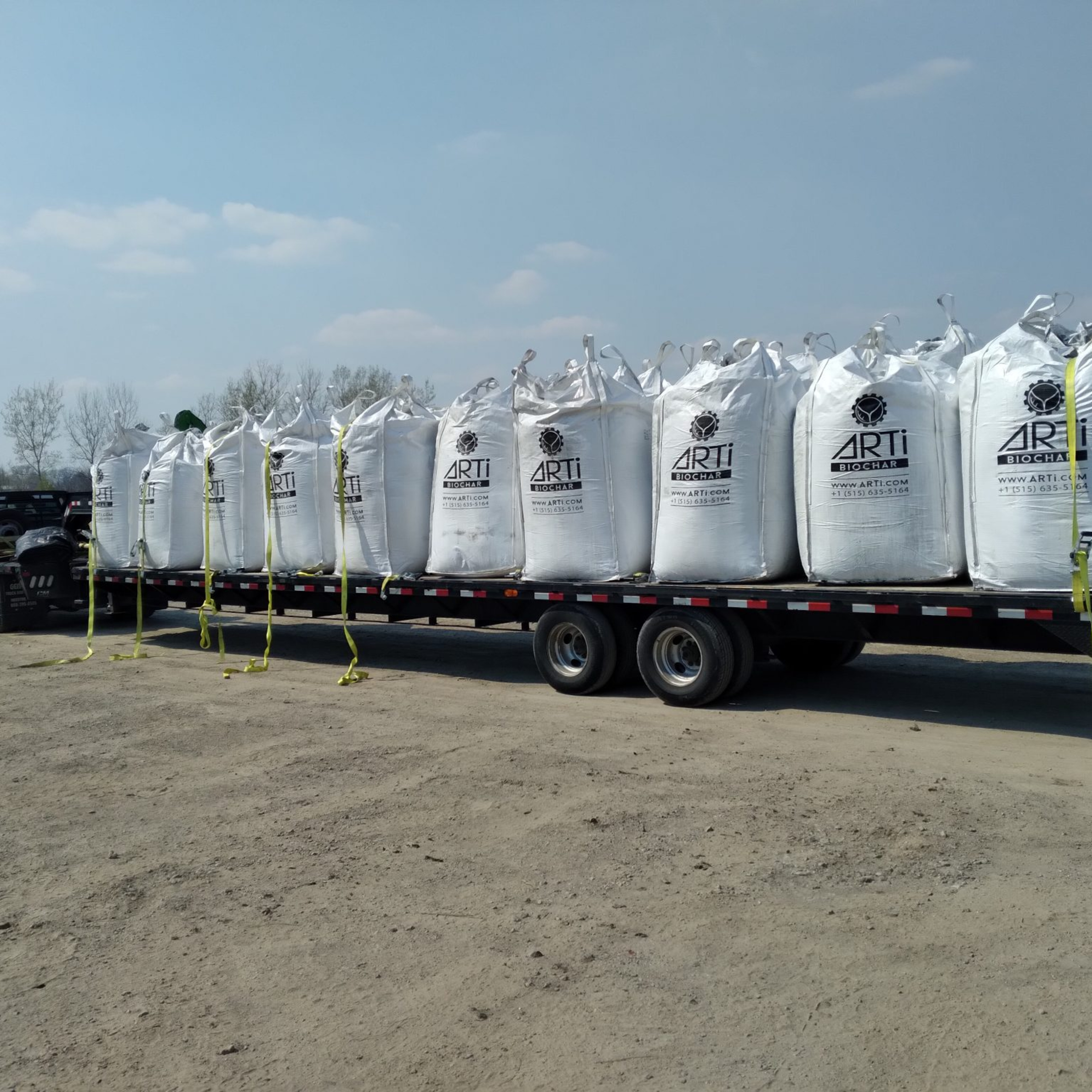 20 Metric tons of CO₂ Sequestered: 40 Yards (8,000 gallons) Of Biochar On The Way! 20 Metric tons of CO₂ Sequestered: 40 Yards (8,000 gallons) Of Biochar On The Way! | In April of 2021 ARTi had the chance to sell and ship 40 cubic yards of biochar. 40 cubic yards weighed at approximately 16k lb of biochar which would represent (if the conversion is x3) 48,000 lb of CO₂ or 20 Metric tons of CO₂ sequestered . With 1 gallon of biochar able to sequester 6 lbs of CO₂ this shipment represents 48,473.76 lbs (3.84 metric tonnes) of CO₂ capture! | — | ||||||
| 5/28/22 |  ARTi Wear! Check Our New Line of CO2 Fighting Apparel ARTi Wear! Check Our New Line of CO2 Fighting Apparel | Want to get closer to the Real ARTi feeling everyday? You prefer to let the world know that you’re engaged in practical climate change solutions. One great way to do so is to show off carbon-neutral clothing from our new ARTi wear T-shirt line. Biochar sequesters CO2, the primary driver of climate change. These shirts can be purchased with biochar carbon offsets so you will know you’re wearing an item that has successfully addressed its climate change impact. You can even go an extra step beyond carbon neutral by donating to iTRApCO2. Through this initiative, we will produce more biochar than what is needed to offset the CO2 emissions coming from the production of your shirt. This is carbon negative which goes further than carbon neutral. ARTi conducted a Life Cycle Analysis (LCA) on the greenhouse gas emissions (GHG) involved in the production of our shirts. | — | ||||||
| 5/24/22 |  Ral Lopez with Juan Proano & Esteban Trujillo: Simulation of forest fire spread using firebreak barriers in Ecuador Ral Lopez with Juan Proano & Esteban Trujillo: Simulation of forest fire spread using firebreak barriers in Ecuador | The ARTi Team includes researchers. Indeed, this does mean studies into topics that directly revolve around biochar such as pyrolysis and numerous aspects of soil science. However, a large number of topics can be found not too far from biochar itself. One of these is wildfire behavior studies. In fact, the idea of wildfire prevention through turning dead fuel wood into biochar has generated projects in California and Washington State, US. Nevertheless, better understanding of how wildfires behave can add to better practices. | — | ||||||
| 4/29/22 |  ARTi Pleased to Announce Placement Within the Top 60 of 1132 teams for XPRIZE Carbon Removal! ARTi Pleased to Announce Placement Within the Top 60 of 1132 teams for XPRIZE Carbon Removal! | It is with great pride that we are able to share that ARTi was among the top 60 best teams out of 1132 registered entrants into the world’s largest incentive prize seeking to address climate change: This puts ARTi in the top 5.30% of contenders! The XPRIZE Carbon Removal competition sponsored by Elon Musk and the Musk Foundation is a $100 million competition aimed to address humanity’s greatest challenge: combating climate change and restoring the carbon cycle on Earth. ARTi entered the competition through our project called iTRApCO2. Our project offers biochar and pyrolysis as a Land-Based solution to remove Carbon. We design Pyrolysis Reactors capable of sequestering between 4 and 20 tons of CO2 per day. Our cost-effective, proven and highly scalable land-based solution of biochar and pyrolysis is a real rival for this prize and for fighting climate change. Our reactors will prove to be the most cost-effective pyrolysis systems in the world. What’s even better is that when the Biochar generated is applied to soil it helps to recover soil health, fertility and structure. As biochar retains water and nutrients in its porous structure, it also promotes beneficial microorganisms. Together, this all adds up to healthier soils. Please follow us on our social medias to get updates on our journey. | — | ||||||
| 4/8/22 |  What Materials Has ARTi Successfully Pyrolysed (Turned into biochar)? What Materials Has ARTi Successfully Pyrolysed (Turned into biochar)? | ARTi is consistently working on Research and Development for biochar and pyrolysis under the direction of PhD. Bernardo Del Campo. Dr. del Campo is a biochar expert and co-author of Chapters 3 and 4 of the book Biochar for Environmental Management: Science, Technology and Implementation published in 2015 by Routledge. Dr. del Campo’s chapters focus on Biochar production technology. The study of biochar production technology or pyrolysis technology includes testing out many varieties of biomass feedstock to produce biochar material for various uses and with different characteristics based on the original materials. There are also differences in processing techniques and in the lengths of production times as well. These procedures include tests such as biomass analysis (CHON-S), biochar composition and characterization, surface area analysis for adsorption, filter media performance analysis, and emission testing. At ARTi we have our own laboratory and we communicate and work regularly with other laboratories and researchers in the field. | — | ||||||
| 3/9/22 | 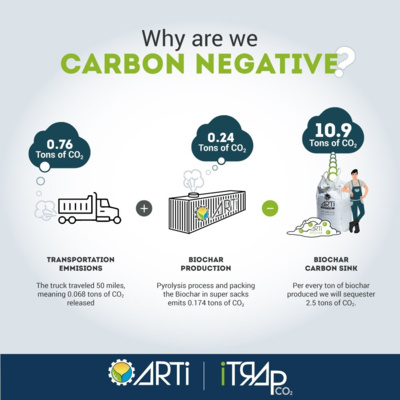 ARTi Team Sequesters +10 Tons of CO₂ in One Trip! ARTi Team Sequesters +10 Tons of CO₂ in One Trip! | We all know we need to mitigate our carbon dioxide emissions to the atmosphere to fight climate change. It has been a great challenge to accept that climate change is a real and serious problem. It has then been a great challenge to accept that humanity’s activities, that have made life easier in many ways, are by far the largest contributors to global warming. Well, we have good news! We all know we need to mitigate our carbon dioxide emissions to the atmosphere to fight climate change. It has been a great challenge to accept that climate change is a real and serious problem. It has then been a great challenge to accept that humanity’s activities, that have made life easier in many ways, are by far the largest contributors to global warming. Well, we have good news! | — | ||||||
| 12/8/21 | 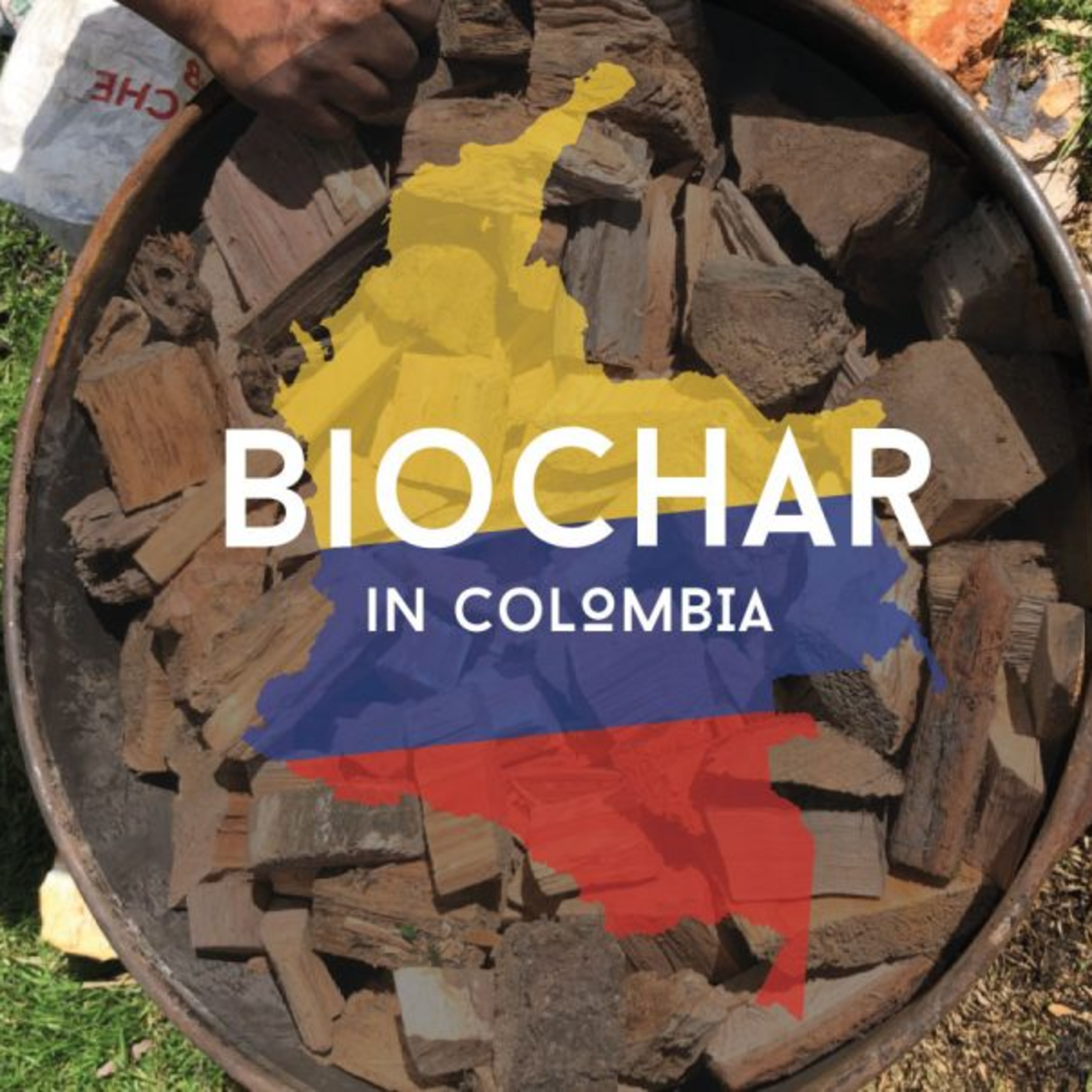 Biochar in Colombia: Calidad de Biochar de Colombia Biochar in Colombia: Calidad de Biochar de Colombia | Thirty years ago the father of Enrique Sanz planted trees and in 2021 it was now time to harvest them for their timber. The process of cutting trees for timber generates a great deal of excess wood that can be converted to biochar. Instead of allowing the extra wood to decompose or otherwise go to waste, the wood residues will become biochar with the intention of improving the soils. The improved soil will make for better grass which will be fed to the cows that also live on the farm. For over 20 years, no chemical products have been used on the grass eaten by the livestock and there are no plans to change this. Biochar was chosen as an instrument to increase the quality of the farm’s soil because of its numerous beneficial properties but also because it aligns with the elder Sanz’s vision for the farm. A vision that entails minimal impact on the land and circular resource usage. | — | ||||||
Want analysis for the episodes below?Free for Pro Submit a request, we'll have your selected episodes analyzed within an hour. Free, at no cost to you, for Pro users. | |||||||||
| 11/23/21 |  The ARTi Success Story The ARTi Success Story | ARTi’s is as compelling as the topics the company deals with. Characteristically, there always is a unique combination of the down-to-Earth and the global. Juan Proano, Edson Vendrusculo, Matthew Kieffer, and Bernardo del Campo founded ARTi in 2013. We came together as a group of graduate engineers and began working on ways to help farmers and gardeners make a healthier soil. ARTi has been working on developing renewable environmental technology and agricultural solutions since the beginning. ARTi and subsidiaries have grown to make up an international team of more than 30 team members from Argentina, Brazil, Ecuador, Germany, Mexico, US and Uruguay with a multitude of academic backgrounds. Mechanical, agricultural, chemical, and electrical engineers, as well as economists, physicists, agronomists, and lifelong farmers are part of the ARTi team dedicated to creating a variety of biochar-based products and improving our technology day by day to help more companies to accelerate its journey to a greener future. | — | ||||||
| 7/28/21 | 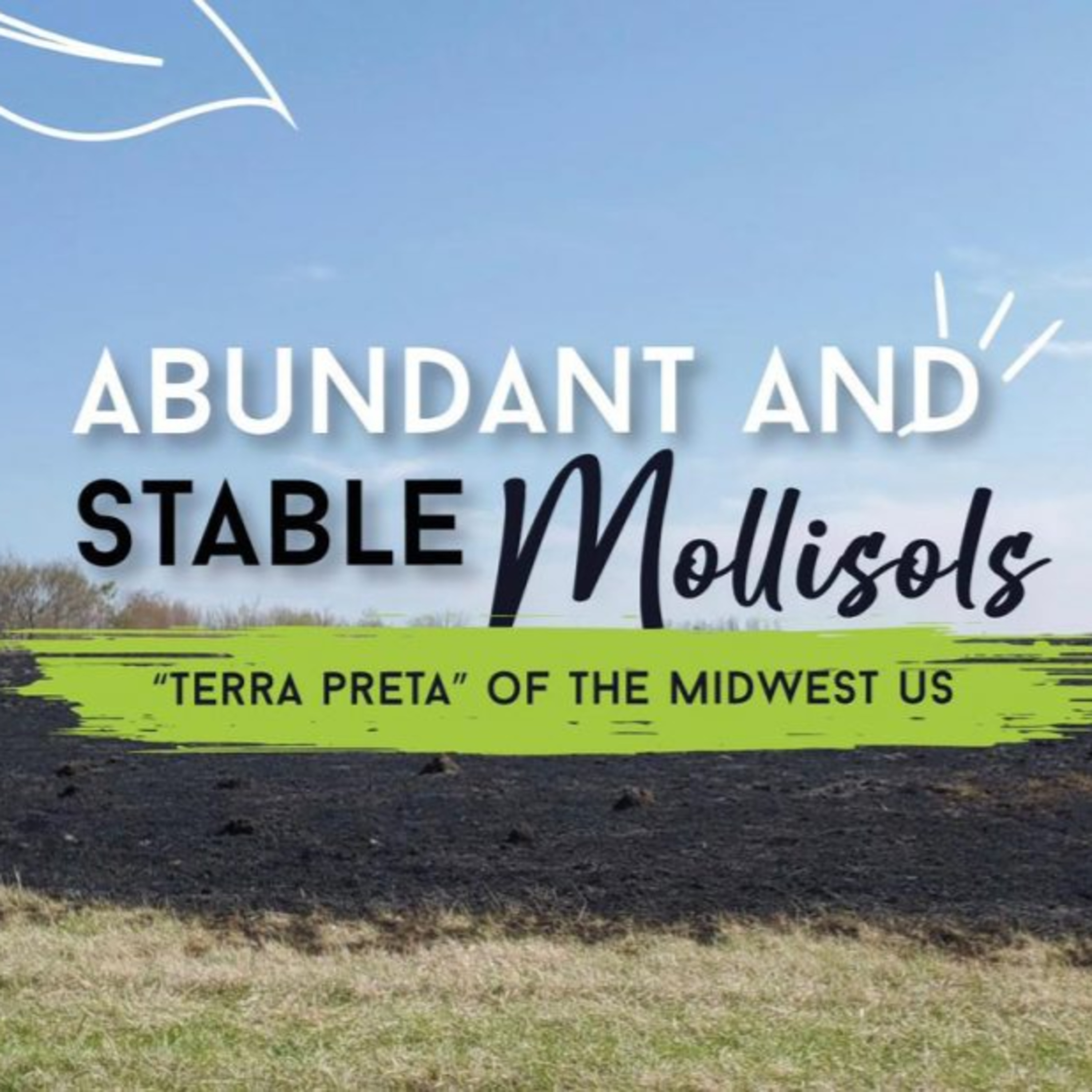 Abundant and Stable Mollisols: The “Terra Preta” of the Midwest US Abundant and Stable Mollisols: The “Terra Preta” of the Midwest US | Central to the story of biochar is Amazoinian Terra preta, fertile anthropogenic (meaning human made) dark earths in Amazonia that were enriched with char more than 8000 years ago. 1 Terra preta is the result of char and household waste (bone, broken pottery, compost and manure) mixed into the native soil, Oxisol, which transformed this otherwise low fertility soil into a more productive soil. But is Terra preta, ancient carbon rich soil only found in the Amazon basin? | — | ||||||
| 3/23/21 |  ARTi accomplishes patent in pyrolysis “Thermochemical conversion system and method” ARTi accomplishes patent in pyrolysis “Thermochemical conversion system and method” | On February 2nd this year, 2021 ARTi Team led by president Dr. Bernardo del Campo successfully acquired a patent in pyrolysis “Thermochemical conversion system and method” del Campo, B., 2021, US 10907827B2. The patent can be viewed here as well as on the Google Patent page. | — | ||||||
| 7/6/20 |  Four Winds Farm Grows Hemp with Biochar & Compost Mixture Four Winds Farm Grows Hemp with Biochar & Compost Mixture | Scott Booher’s Four Winds Farm began in April 2020 to amend their soil with compost and biochar to improve soil carbon content (increase organic matter) nutrient availability, structure, and biology. ARTi is assisting in this ongoing effort with soil analysis, biochar and compost analysis, and preparation, monitoring as well as the application. To add to this, the carbon sequestration levels anticipated at Scott’s farm through ARTi’s biochar show great promise. Essentially, the project is about the integration of biochar to improve soil quality and likewise, with the added compost. | — | ||||||
Showing 14 of 14
Sponsor Intelligence
Sign in to see which brands sponsor this podcast, their ad offers, and promo codes.
Chart Positions
1 placement across 1 market.
Chart Positions
1 placement across 1 market.