
Insights from recent episode analysis
Audience Interest
Podcast Focus
Publishing Consistency
Platform Reach
Insights are generated by CastFox AI using publicly available data, episode content, and proprietary models.
Total monthly reach
Estimated from 1 chart position in 1 market.
By chart position
- 🇦🇺AU · Self-Improvement#8330K to 100K
- Per-Episode Audience
Est. listeners per new episode within ~30 days
9K to 30K🎙 Daily cadence·17 episodes·Last published 5d ago - Monthly Reach
Unique listeners across all episodes (30 days)
30K to 100K🇦🇺100% - Active Followers
Loyal subscribers who consistently listen
12K to 40K
Market Insights
Platform Distribution
Reach across major podcast platforms, updated hourly
Total Followers
—
Total Plays
—
Total Reviews
—
* Data sourced directly from platform APIs and aggregated hourly across all major podcast directories.
On the show
Recent episodes
Ep26. AuDHD, Joy & Monotropism with Steph
Jun 21, 2026
Unknown duration
Ep25. AuDHD & External Cues That It's Regulation Time with Joanne
Jun 21, 2026
Unknown duration
Ep24. AuDHD IRL and PDA with Sharmayne
Jun 14, 2026
Unknown duration
Ep23. AuDHD & Immigrant Realities with Sandhya Menon
Jun 7, 2026
Unknown duration
Ep22. AuDHD & Internalised Ableism with Jacinta
May 23, 2026
Unknown duration
Social Links & Contact
Official channels & resources
Official Website
Login
RSS Feed
Login
| Date | Episode | Description | Length | ||||||
|---|---|---|---|---|---|---|---|---|---|
| 6/21/26 | 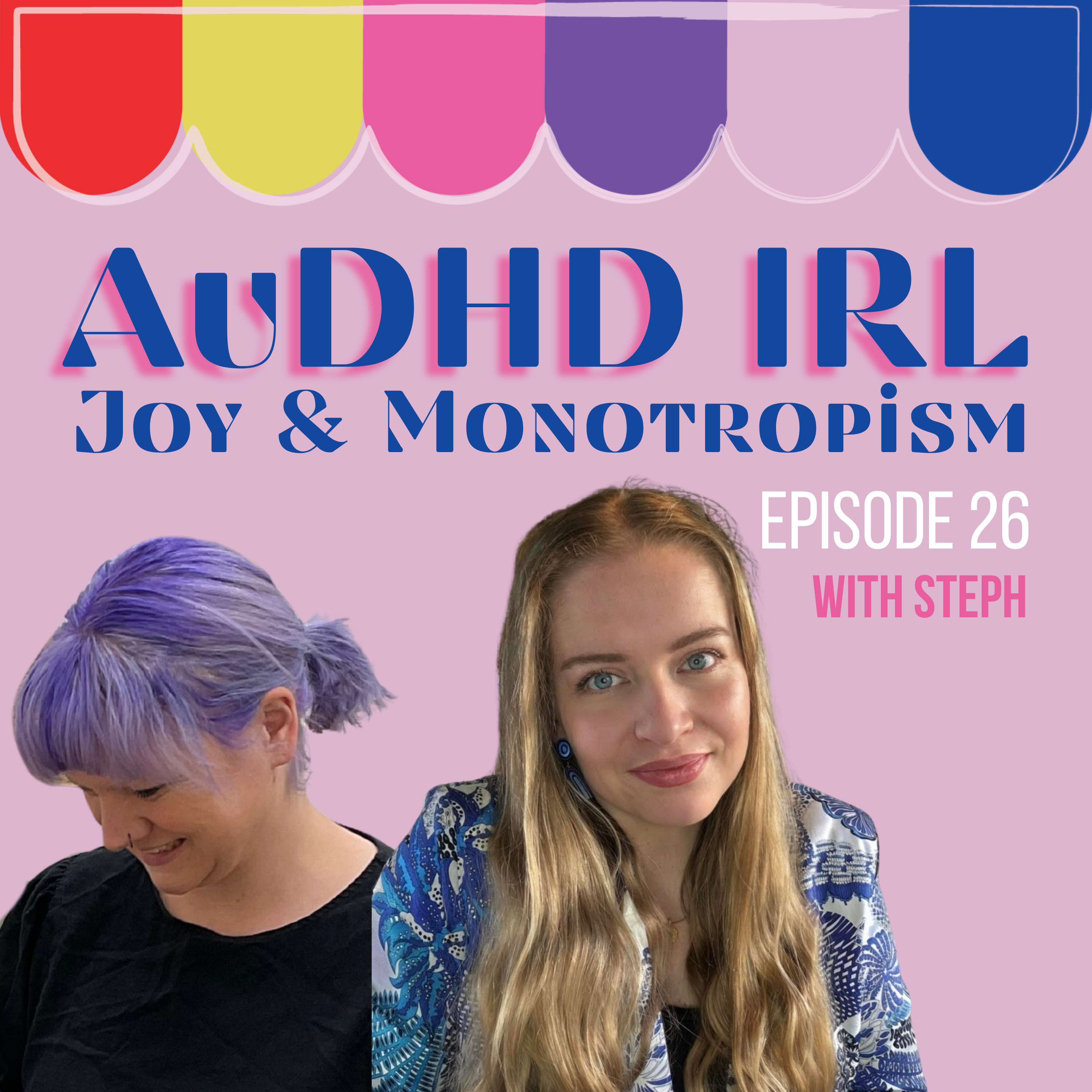 Ep26. AuDHD, Joy & Monotropism with Steph | SummaryThis week I'm joined by Steph Robertson, a neurodivergent occupational therapist, speaker and advocate whose work centres trauma-responsive, neurodiversity-affirming care. Steph is autistic, ADHD, complex PTSD and a plural system, and brings their professional, research and lived experience to everything they do.We dig into the overlap between joy and monotropism: why a monotropic flow state and autistic joy can be such a beautiful recipe together, and how the people around us so often interrupt that flow without meaning to. Steph shares the refrain that came to her while building a presentation on this topic ("not all meaningful occupations are joyful, but all joyful occupations are meaningful"), unpacks the tendril theory in a powerful way, and offers genuinely useful ways to work with a monotropic brain instead of against it, from getting through the hard self-care tasks to giving yourself proper transition time. This one really did light us both up.TakeawaysJoy is foundational, not a bonus. It's not a reward at the end of a session or an added extra, it's an evidence-based way of supporting wellbeing and the actual therapeutic work.A monotropic flow state doesn't have to feel joyful to be valuable. It can be deeply satisfying and grounding even when it isn't "fun."Joy and monotropism can amplify each other. If we're not interrupting someone's flow, we increase the likelihood of joy, and both joy and flow boost learning capacity.We so often interrupt joy without realising. Polytropic environments like schools and busy workplaces ask monotropic minds to task-switch fast, which can "rip the tendrils out" and cause real distress.Work with monotropism, not against it. Often it's less about facilitating flow and more about not getting in the way, plus giving gentle time to transition.Couple hard tasks with something joyful. Steph starts a podcast before she's even out of bed so she can "auto-drive" through the morning routine.Transition time isn't wasted time. Monotropism and transitions are deeply linked, and giving yourself space between tasks may protect you from burnout down the line.Stop policing how joy looks. Stimming, routines, rituals and "childlike" joy at any age all count. Challenging neuronormativity means letting joy be whatever it needs to be for the individual.Resources mentionedTendril theory credited to Erin Human. Read more here.You can find Steph on Instagram at @sgroccupationaltherapy. | — | ||||||
| 6/21/26 | 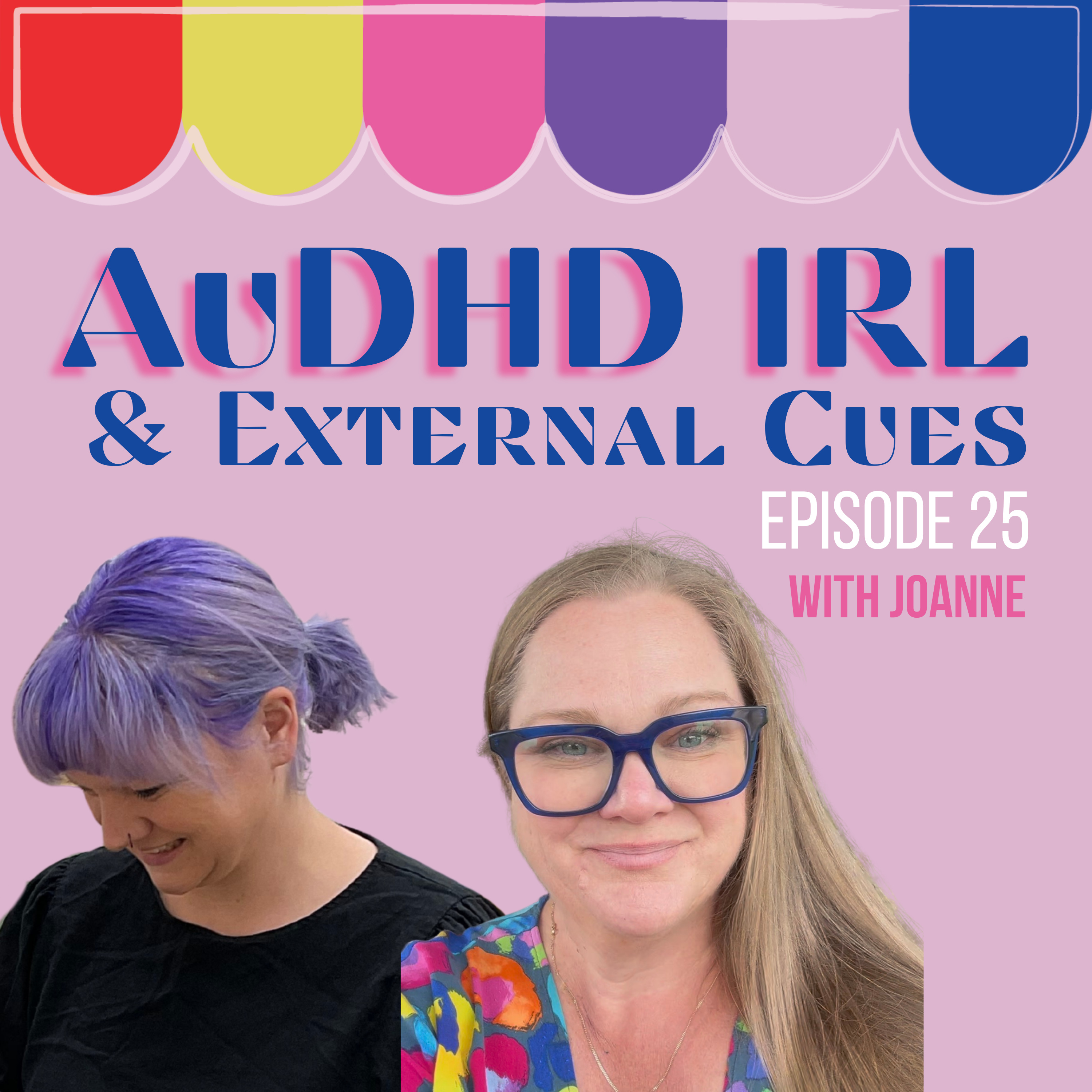 Ep25. AuDHD & External Cues That It's Regulation Time with Joanne | Content warning: If you don't like swearing, scroll on bySummary:This week I'm joined by Joanne Hatchard: award-winning neurodivergent therapist, social worker, parent and founder of Better Being Me (and host of the wonderful Talking Twaddle). I'll be honest, when Joanne first pitched this topic I said "heck yes" and then immediately thought "wait, I have no idea what that means." So this episode is me asking a lot of genuine questions while Joanne generously info-dumps a framework that turns out to be one of the most useful reframes I've come across in ages.Here's the big idea. When you go fishing you can't see the fish, because they're underwater. But you can see the birds circling overhead, and the birds tell you where the fish are. Our internal cues (the "fish") are notoriously unreliable when we're AuDHD, especially when we're stressed, and our interoception has quietly left the building. But the external cues (the "birds") are right there for us, and for the people around us, to spot.We get into the seven areas Joanne watches: decision-making and the dreaded dithering, outsourcing your choices to other people's opinions, executive functioning weaknesses like a working memory that ghosts you mid-sentence, stress behaviours mapped through the OCEAN traits, attachment that shifts depending on whether it's your mum or your mates at the door, masking as a safety tool rather than a knee-jerk, and connection through the lens of polyvagal safety. There's also a penguin that made Joanne cry, which turns out to be a perfectly valid bird.The thread tying it together is language. This stuff doesn't work alone in your own head. It works when you and a trusted person build a shared vocabulary for what your stress looks like from the outside, so someone can gently flag it before the meltdown that supposedly "came out of nowhere."Takeaways Your internal radar is the least reliable thing to lean on when you're stressed, because stress is exactly when it stops working. The external cues are easier to catch, and other people often see them first.A "bird" is anything observable that flags your capacity is dropping: dithering over a simple decision, losing your words, crying at a penguin, suddenly hearing the electrical hum, chewing your cheek, looping on the same sentence. Once you can name them, you can act on them.Naming the birds out loud changes everything. It moves you from "life is happening to me" to "I'm stressed and I can do something about that," and it gives the people who love you a kind way to flag it instead of slowly drifting away confused.You don't have one attachment style, you have a different one for nearly every relationship. Mum at the door versus friends at the door can produce two completely different versions of you.Masking isn't the enemy. Used intentionally, when you've got the reserves for it, it's a powerful tool. The problem is when it's a default instead of a choice, and you've got nothing left by the time you get home.The trusted person matters more than the perfect system. It can be a friend, a partner, or a professional you pay to be honest with you. What you need is someone willing to tell you the truth.And the gentlest one to finish on: it doesn't need to be fucking hard. The supports that actually stick are usually the simplest ones, and you're allowed to cherry-pick the bits that work for you and leave the rest.You can find Joanne on Instagram at @betterbeingme_bbme. | — | ||||||
| 6/14/26 | 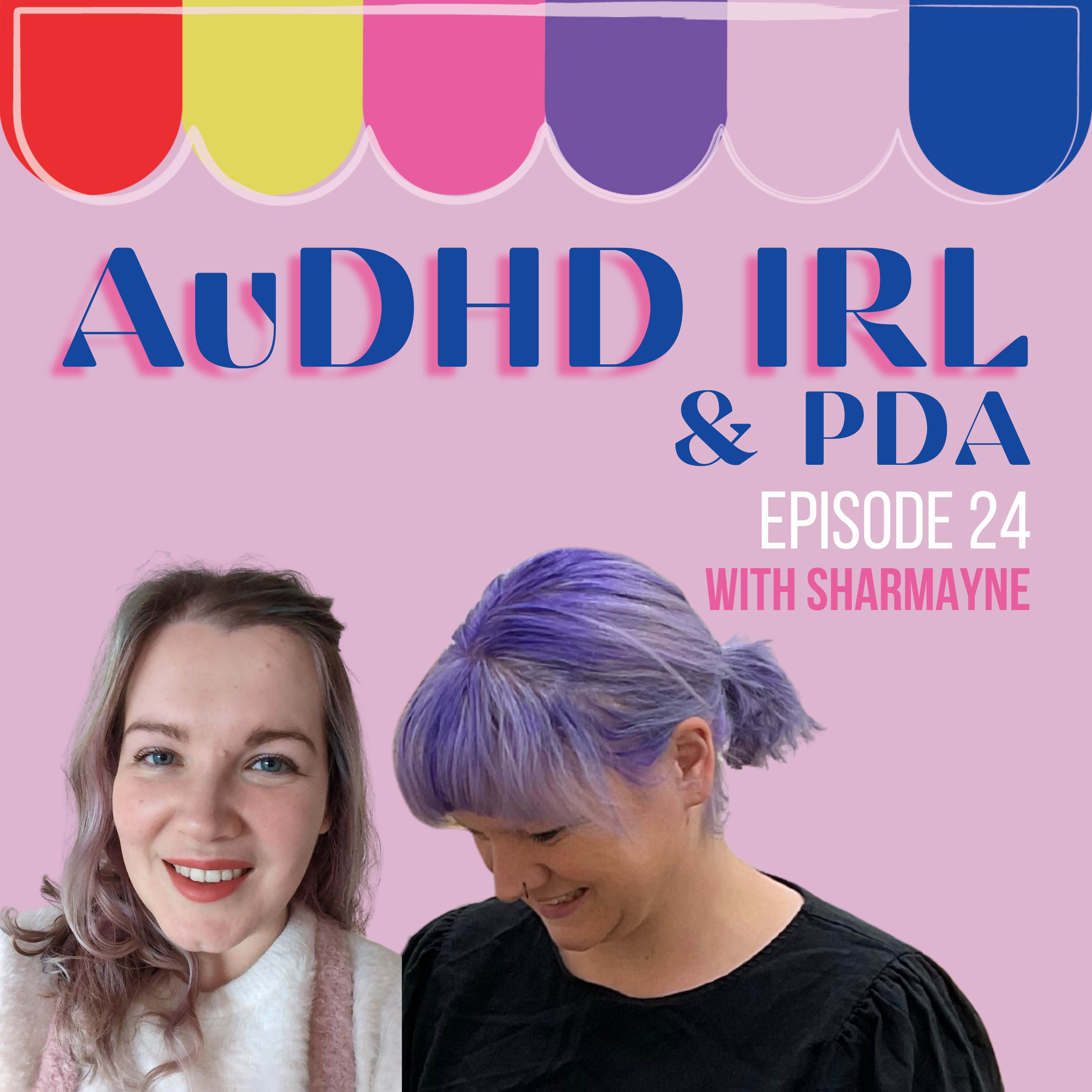 Ep24. AuDHD IRL and PDA with Sharmayne | This episode is for my fellow PDAers (and the people who love us and are quietly very confused by us). Sharmayne and I had never met before we hit record, which felt weirdly perfect for an episode about nervous systems that do their own thing in real time. What followed was the info dump I have been waiting for.Sharmayne Bennett is a non-binary, neuroqueer, 2E, AuDHD PDA-er and psychologist, founder of Wonderfully Wired Psychology and co-creator of ND AffirmEd. Her glimmers include squirrels, Lego and Shrek, which honestly tells you everything you need to know about why this chat was so good. Her puppy also made a cameo and then point-blank refused to be perceived, which is the most PDA thing I have ever witnessed on camera.We get into what PDA actually is, beyond the tired "rejects every demand" myth, and why the P in pathological has a lot to answer for. Sharmayne walks us through a morning in a PDA brain, where opening your eyes is a demand, moving the bedsheet is a demand, and brushing your teeth is roughly nine demands in a trench coat. We talk about why behaviour is communication but never the whole story, why regulating is itself a demand (rude), and why meltdowns are not the enemy. Picture a shaken Coke bottle: you let the lid off, or it goes flat and fizzes inside anyway.Then we go where it really lands. The 2E perfectionism that makes asking for help feel like failure. The myth that independence is the goal. Self-compassion for a capacity that changes daily, because disability is dynamic, not something you nailed yesterday so must nail today. And co-regulation as adults, including the gift and the weight of being someone's safe person.I could have kept going for three more hours. PDA 2.0 is officially on the cards.TakeawaysPDA is a spectrum, not a switch. Some days the demand is doable, some days it absolutely is not, and both are valid.Every step is a demand. A meltdown is never about that one moment, it is the hours of demands stacked underneath it."Take it off your plate, or is that worse?" Sometimes removing a task helps. Sometimes it just hands you the demand of remembering it later.You cannot manipulate a PDAer. That nervous system clocks everything, so collaboration beats clever tricks every single time.Regulated does not mean calm. You can feel big feelings and still be grounded.If someone says they are PDA, believe them. No research card, no "but maybe you are just demand avoidant." Believe them.Find Sharmayne on Insta at @wonderfullywiredpsychology and through @nd_affirmed. | — | ||||||
| 6/7/26 | 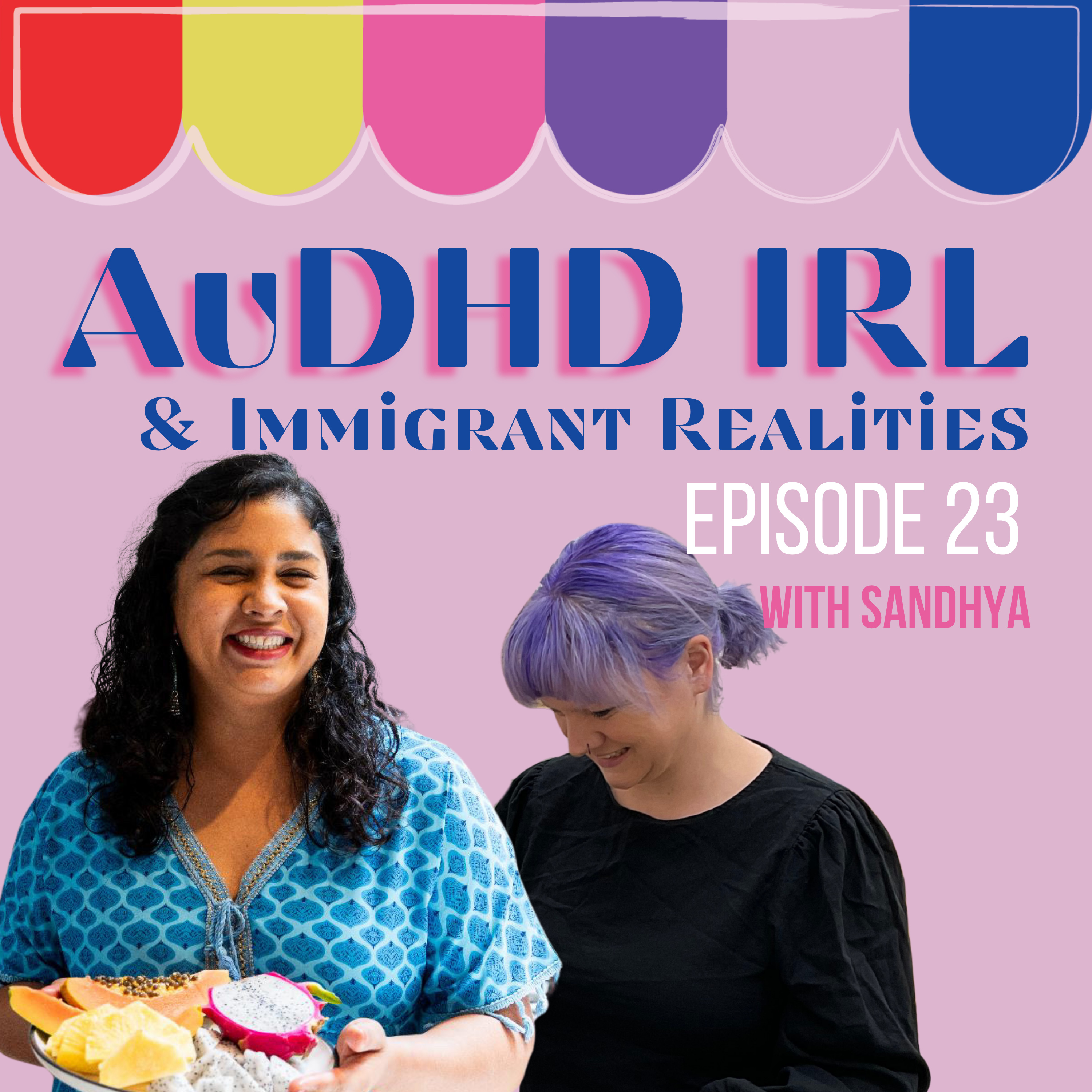 Ep23. AuDHD & Immigrant Realities with Sandhya Menon | Bri sits down with Sandhya Menon, AuDHD developmental psychologist, author of The Brain Forest, The Rainbow Brain, and My Body's Power Pack, and one of Australia's most trusted voices in neurodivergent affirming practice. Together, they explore a topic that doesn't get nearly enough airtime: what it actually means to be AuDHD and an immigrant, and why the dominant narrative in neurodivergent spaces still has a long way to go.Sandhya shares her own story of moving from Singapore to Melbourne in 2007, arriving in winter without a coat, navigating racism, Australian slang, and a culture where "how you going?" felt like a rude question. She speaks candidly about what it took to settle her nervous system, how cultural context gets lost in clinical translation, and why her own ADHD diagnosis took three years because her presentation was misread as trauma.This conversation is warm, honest, and genuinely challenging in the best way.Key TakeawaysCultural lens matters in assessment. Existing diagnostic frameworks carry assumptions that aren't universally applicable: that people are naturally help-seeking, that English fluency equals English thinking, that emotional expression looks the same across cultures. It often doesn't.Compensation isn't masking. For many people from collectivist cultures, what looks like masking is actually deeply ingrained cultural expectation around family roles, hierarchy, and "saving face." These are not the same thing, and conflating them causes diagnostic blind spots.Language doesn't just translate. Sandhya shares the example of garang, a word that captures fierceness rooted in love and discipline, something "anger" simply can't hold. When we lose the untranslatable, we lose context that matters clinically.Notice before you fix. When discomfort arises, the instinct is to move to action. Sandhya invites us to pause, sit with it, and ask what the discomfort is trying to teach us before reaching for a solution or a statement.Do the work. The resources already exist. Scroll back through the archives. Borrow diverse books from the library. Use the tools you already have. Asking marginalised people to educate you is labour. Doing the work first is respect.Sharing power is a practice. Whether that's stepping aside from a speaking opportunity, buying extra conference tickets for people who can't afford it, or asking whose voice is actually needed in the room, equity is built in the everyday decisions.Find Sandhya: @onwardsandupwardspsych on InstagramBooks: The Brain Forest, The Rainbow Brain, My Body's Power Pack can be found at her website, www.onwardsandupwardspsychology.com.au. | — | ||||||
| 5/23/26 | 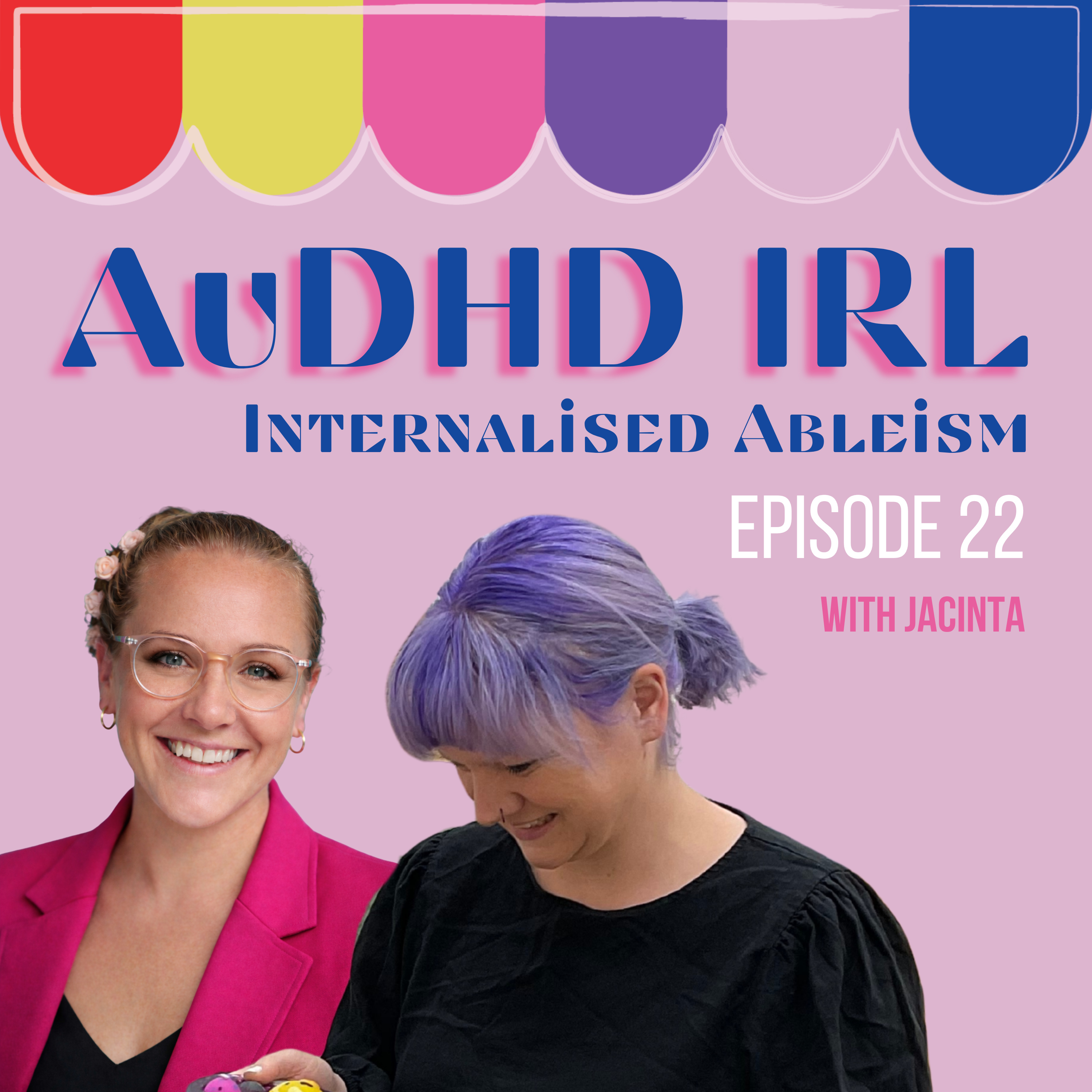 Ep22. AuDHD & Internalised Ableism with Jacinta | Summary: Bri sits down with Dr Jacinta Thomson, clinical psychologist, AuDHDer, and director of Time to Untangle Clinical Psychology Services, for one of those conversations where you spend half the time laughing in recognition and the other half going "wait, that's been happening to me this whole time?"The topic is internalised ableism, which sounds like a very serious academic concept and is also the reason you spent twenty minutes yesterday beating yourself up for not being able to do a phone call. Jacinta breaks it down with the kind of clarity and warmth that only comes from someone who is both deeply trained in this space AND regularly hides inside her own dress at professional networking events. She's one of us.Together, Bri and Jacinta explore where internalised ableism actually comes from (spoiler: the world, not you), why it's so easy to compare your worst self to your best self and declare yourself a disaster, and what it looks like to function brilliantly in one context while completely falling apart in another. Jacinta shares some wonderfully honest personal examples, including what it's like to run a successful psychology practice while being completely unable to call the mechanic.There's also a genuinely useful thread about how to catch yourself in a "should" spiral, question where that rule came from, and figure out whether you've just been carrying it around like a bag of bricks that belongs to someone else. The takeaway is not "everything is fine." It's more like: you're not failing at life. You might just be a person with a nervous system, doing a remarkable job of making it work anyway.Key TakeawaysInternalised ableism is absorbed, not invented. Societal messages about "normal" functioning get turned inward and eventually feel less like someone else's rule and more like a fact about who you are.Functioning is contextual, not global. Doing well in one setting doesn't mean you should do well everywhere. Context, structure, predictability and sensory environment all shape capacity enormously.We compare ourselves to ourselves, and that's its own trap. The gap between your "performing well" self and your "struggling" self isn't a character flaw. It reflects how different your capacity can be depending on what accommodations are in place."What's wrong with me?" is the wrong question. When we can't meet an expectation, we tend to question ourselves rather than question the expectation. Asking "where did this rule even come from?" opens the door to a lot more self-compassion.Hidden disability means invisible cost. High-masking AuDHDers may look like they're coping, but there's often significant cost happening behind the scenes that others don't see and systems don't account for.Capacity changes over time and circumstance. Comparing your current functioning to a past version of yourself with fewer demands is neither fair nor useful. Capacity fluctuates, and that's not a failure.The tyranny of the shoulds is real. Those "I should just be able to..." thoughts are worth catching. Pressure is often a signal that someone else's should has landed on you as if it were yours.Ask "but why?" like a persistent five-year-old. Questioning the origin of a rule can reveal how arbitrary many norms actually are and make space for approaches that genuinely work for your brain.Diagnosis doesn't erase support needs. Being a psychologist or running a business does not mean you're not AuDHD. Functioning well in some areas can mask significant support needs in others.You're not lazy, flaky, or not trying hard enough. You might just be operating at capacity in a particular context. Curiosity and compassion, for yourself and for others, is where the real work begins.You can find Jacinta at her website: www.timetotheuntangle.com.au. | — | ||||||
| 5/10/26 | 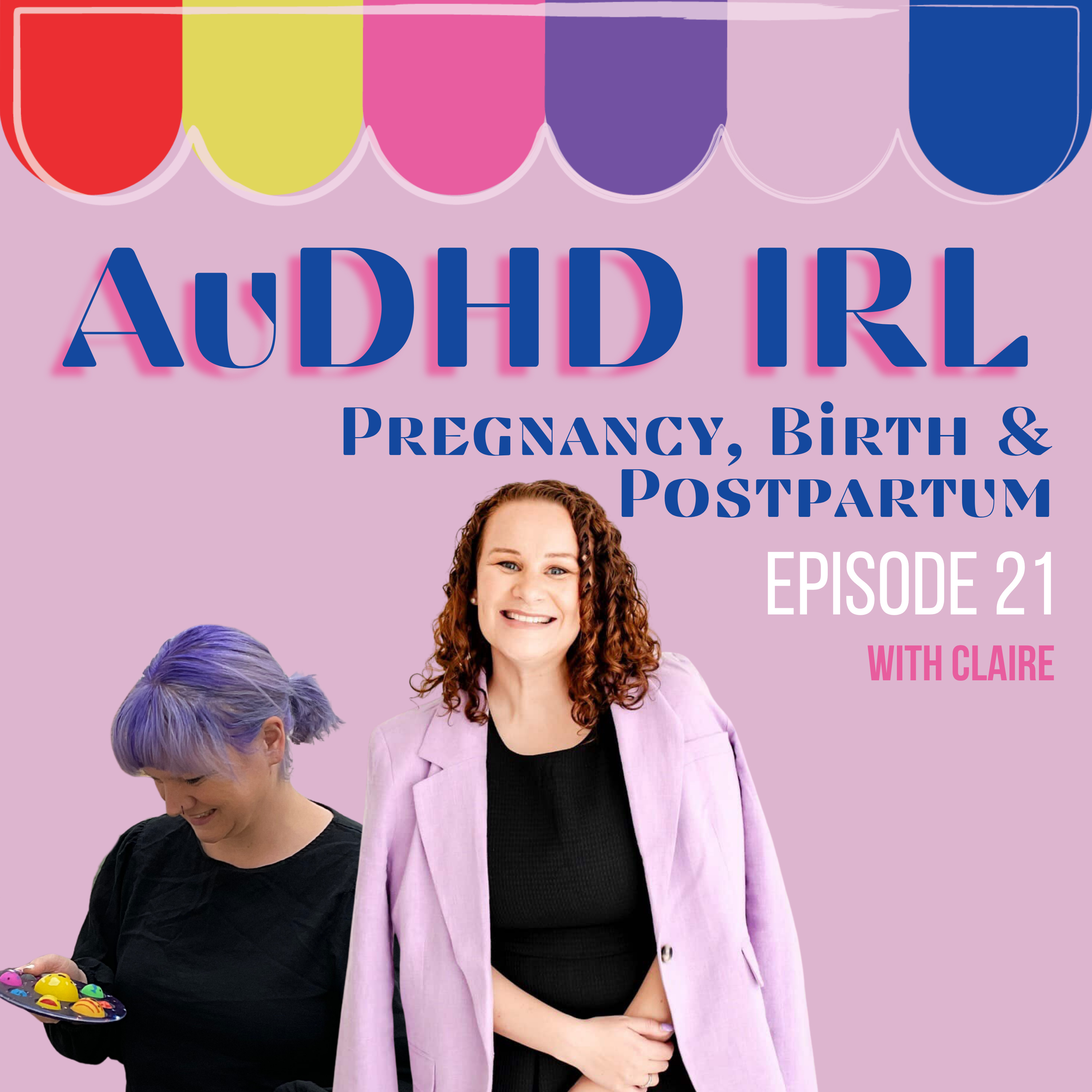 Ep21. AuDHD, Pregnancy, Birth & Postpartum with Claire | Content warning: This episode contains discussion of postpartum depression and anxiety, intrusive thoughts, and a brief reference to maternal mortality statistics. Please take care of yourself while listening.Summary:Bri sits down with Claire Britton, occupational therapist, university lecturer, founding director of Neuroinclusion, mum of two (nearly three) and proudly AuDHD, for a conversation that genuinely hasn't been had enough. Claire shares how she didn't receive her diagnosis until she was 28, and how it was the stillness of newborn life during COVID lockdown that finally made everything click. From there, the conversation opens up into the under-researched world of neurodivergence and the perinatal experience: why so many AuDHDers get diagnosed for the first time around pregnancy or postpartum, what sensory and executive functioning changes actually look like across trimesters, and why Claire (a self-described catastrophiser) genuinely loves giving birth. This one's warm, funny, practical and genuinely eye-opening.Takeaways:Big life transitions (pregnancy, postpartum, puberty, perimenopause) are often when neurodivergence becomes impossible to ignore - not because something has gone wrong, but because the scaffolding that masked it has shifted.Sensory sensitivity in pregnancy is one of the few times society validates and honours sensory differences without question. Claire uses this as a powerful entry point when educating parents about their children's sensory processing.Many AuDHDers actually cope well with labour because it's predictable, time-limited and has a known outcome - it's the uncontrollable unknowns (like finding a car park) that are harder on the nervous system.The relationship with your care provider matters more than the model of care. Safety, consistency and feeling genuinely understood are more therapeutic than any specific clinical approach.Knowing your needs before you're in crisis (ideally written down) gives your support network something to actually work with. "I need to survive" is not a helpful answer in the moment, but you can get there ahead of time.The stigma that neurodivergent people aren't equipped to be parents does real harm. For many, having children provides structure, purpose and motivation that genuinely improves their functioning.Find Claire on Instagram at @neuroinclusion.au, or search Neuroinclusion on Facebook and LinkedIn. | — | ||||||
| 5/5/26 | 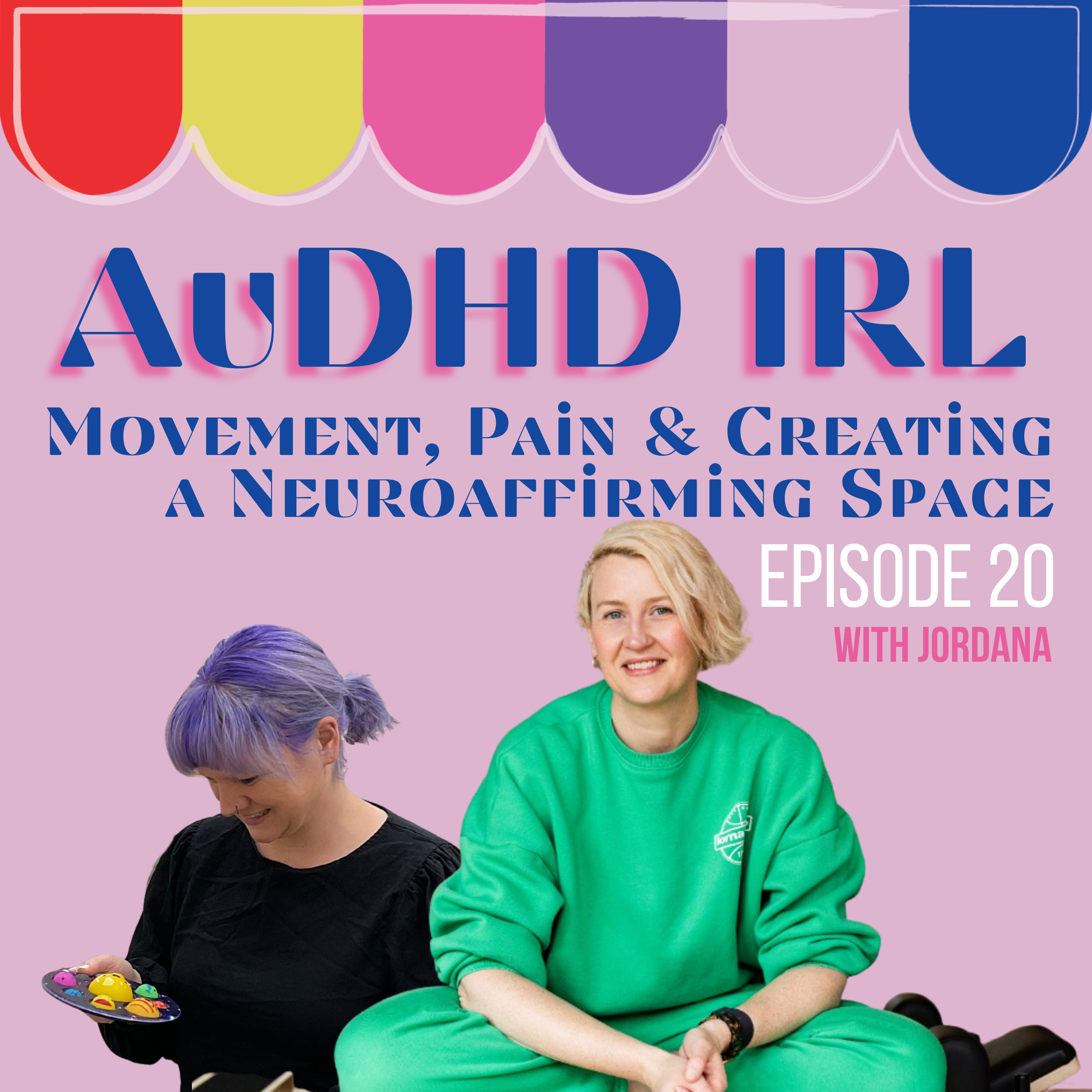 Ep20. AuDHD, Movement, Pain and Creating a Neuroaffirming Space with Jordana | Content Warning: This episode contains discussions of chronic pain, injury, disordered health behaviours and addiction, as well as references to neurodivergent experiences including RSD (rejection sensitive dysphoria), sensory sensitivities, and the process of autism diagnosis. There is also a brief mention of nocebo effects and catastrophising language in healthcare settings.Summary: Bri sits down with Jordana Martin, founder of Feel Better Pilates in Canberra (where Bri enjoys Pilates classes), for a wide-ranging and genuinely joyful conversation about movement, neurodivergence, and what it looks like to build a space that actually works for brains like ours.Jordana shares her own ND story - identified as ADHD since childhood in a family full of ND folk, an autism diagnosis she suspects, and how she went from not seeing herself as a sporty person at all to becoming a powerlifter and Pilates teacher. She talks candidly about how movement became her version of meditation and regulation, and why that matters so much for neurodivergent people who live a lot of life up in their heads.The conversation takes some brilliant side quests into pain science (including the nocebo effect and why the words a care provider uses can genuinely shape a patient's recovery), the biopsychosocial model of health, hypermobility in the ND community, the boom-and-bust movement patterns many of us fall into, and why "correct form" is largely a myth.Jordana also unpacks the deliberate choices she made in designing Feel Better Pilates, from dim lighting and low-smell environments to rethinking hands-on touch in classes, and why she built it the way she did.Key TakeawaysMovement is regulation. Repetitive, rhythmic movement is inherently soothing for neurodivergent nervous systems, and getting into the body can offer relief from the mental churn that many of us live in.Words matter in healthcare. The nocebo effect is real! A care provider's catastrophising language can worsen outcomes. Jordana's own experience with a physio who told her she'd never lift weights again (she now powerlifts) is a powerful reminder to seek out providers who use empowering, evidence-based language."Correct form" is mostly a myth. Human bodies are robust and designed for varied movement. The goal is progressive strength and feeling good, not aesthetic perfection.Sensory environment matters. A movement space that works for ND people considers lighting, sound, smell, touch consent, and the language used by instructors. If a studio's website makes you uncomfortable, trust that signal.Find the lowest barrier to entry. Go with a friend, book online (eww to no phone calls!), ask for a private intro session if that helps - just remove as many friction points as possible and give yourself one concrete deadline to show up once.The social biopsy is real. Both Bri and Jordana reflect on the experience of enjoying social situations in the moment but paying for it in the 48 hours after - a very common experience for those socialised as girls with ND profiles.You can find Jordana on Instagram at @feelbetterpilates or through her website www.feelbetterpilates.com.au. | — | ||||||
| 4/26/26 |  Ep19. AuDHD Dating and Friendships with Phoebe | Content Warning: This episode contains discussions of relationship trauma, emotional distress following breakups and rejection, a period of depression and questioning one's sense of purpose, and calling off a wedding. There is also mention of over-the-counter sleep medication. Please take care if any of these topics are sensitive for you.Summary: In this episode, Bri sits down with Sydney-based Clinical Psychologist and couples therapist Phoebe Rogers — author of When Will It Happen For Me? — for a warm, funny and deeply honest conversation about AuDHD, relationships, dating, and the long road to self-acceptance.Phoebe shares her own late diagnosis journey: first identified with ADHD around a year before the recording, and autism shortly after reading Is This Autism? — both discoveries that reframed decades of personal and relationship experiences. She reflects on how she'd always "vibed" with neurodivergent clients and colleagues without realising she was one of them, and how her own painful relationship history — including calling off a wedding at 36 — ultimately drove her to study couples therapy and develop frameworks to help others.Together, Bri and Phoebe explore how AuDHD shapes the way we date, attach, communicate, and connect — including the intensity of crushes and hyperfocus on a person, rejection sensitivity dysphoria (RSD), anxious attachment patterns, and the particular challenges of two neurodivergent people communicating with each other. They also celebrate the beautiful sides: deep loyalty, emotional expressiveness, playfulness, and the capacity to love fiercely.The conversation moves into friendship too — how "little worlds" work for neurodivergent people, why the neurotypical expectation of large social circles rarely fits, and how self-acceptance opens the door to accepting others as they are. The episode closes with Phoebe's core message: be yourself, and you will find your people.Takeaways:1. Late diagnosis can reframe everything — especially relationships.2. Anxious attachment and RSD are common in AuDHD — and they're workable. 3. "If they cared, they would" is a myth that needs retiring. 4. Love is not supposed to be easy — but it shouldn't require you to hide yourself. 5. Neurodivergent couples often need a "translator." 6. "Little worlds" are valid — and worth protecting. 7. Be yourself — that's the whole dating tip. | — | ||||||
| 4/12/26 |  Ep18. AuDHD & Fostering Emotional and Felt Safety with Christina | Content Warning:Discussion of emotional distress and dysregulationExperiences of feeling unsafe (including in school and home environments)Masking, people-pleasing, and chronic invalidationInner child work (including references to early childhood experiences)Trauma (including developmental / “little t” trauma)Systemic barriers impacting neurodivergent peopleSummary:In this episode, Bri is joined by Christina Schmidt to explore what it truly means to cultivate a felt sense of safety as an AuDHD person, both internally and within the environments we move through.Together, they unpack how safety is not just a cognitive concept, but a deeply embodied, nervous system experience, one that is shaped over time through our relationships, environments, and the ways our needs are responded to (or dismissed).Christina shares powerful reflections from her clinical work, particularly in school settings, highlighting how seemingly small changes, like a new teacher, classroom, or unmet sensory need, can significantly disrupt a child’s sense of safety and capacity to engage. The conversation explores how many AuDHDers grow up experiencing chronic invalidation, being told to “push through,” ignore discomfort, or prioritise others’ needs, and how this can lead to disconnection from self, high masking, and difficulty accessing safety in adulthood.Bri and Christina also introduce pathways back toward safety, including co-regulation, meeting sensory needs, reconnecting with the inner child, and gently shifting attention back toward self.At its core, this episode is a compassionate invitation to move away from self-blame and toward understanding:that safety is not something we “should just have,” but something that is built, supported, and deeply relational.Takeaways:Safety is a felt, embodied experience, not just a thought. It lives in the nervous system, not just the mind.Chronic invalidation disrupts safety. Being told to ignore sensory, emotional, or relational needs teaches AuDHDers that their experience doesn’t matter. Masking often develops to maintain external safety. Many people learn to prioritise others’ comfort over their own, even at a significant internal cost.Environmental changes can deeply impact regulation. Things like new teachers, different tones of voice, lighting, seating, or social dynamics can significantly affect felt safety. You are not “overreacting”; your nervous system is responding. Sensory and emotional sensitivity play a key role in how safety is experienced.Co-regulation is powerful. Safe people can help us access regulation when we can’t do it alone.You don’t have to do it all yourself. Reaching safety can involve others, environments, and supports, not just internal effort.Your needs deserve to come first, too. Shifting away from constant people-pleasing is part of building safety.Inner child work can support healing. Many experiences of unsafety are rooted in early life, and can be gently met with compassion and validation now.Safety is shaped by systems, not just individuals. Social structures, expectations, and environments can either support or block access to safety.There is no one way to feel safe. For some, it might feel like warmth, stillness, softness, or “amber light”, for others, something entirely different.Safety can start small. Meeting sensory needs, softening expectations, or connecting with one safe person can be a starting point.You can find Christina on Instagram at @freetobeme.speech. | — | ||||||
| 4/6/26 |  Ep17. AuDHD & Multi-Exceptionality with Caitlin | Content Warning:Discussion of burnout and overwhelmExperiences of feeling misunderstood or “not fitting”Academic and school-related stressPerfectionism and pressure around potentialMental health challenges (including anxiety and low self-worth)If these are prickly for you today, go have a cuppa instead!Summary:In this episode, Bri sits down with Caitlin to explore multi-exceptionality — the experience of being both gifted and multiply disabled (aka AuDHD).Together, they unpack the complexity of having strengths and challenges that can mask each other. High intelligence, strong verbal skills, or creativity can often hide support needs, while struggles with executive functioning, emotional regulation, or sensory experiences can be misunderstood as a lack of effort or inconsistency.The conversation explores how many twice-exceptional individuals grow up feeling “out of sync” — excelling in some areas while quietly struggling in others — and how this can impact identity, self-worth, and access to support.Bri and Caitlin also challenge the idea that capability equals coping, highlighting the invisible effort it can take to keep up, mask difficulties, and meet expectations.At its core, this episode is about recognising and validating the full picture — and creating space for both strengths and support needs to exist at the same time.Takeaways:You can be gifted and still need support. Strengths don’t cancel out challenges — both can exist at the same time.Capability ≠ coping. Just because someone is achieving or performing well doesn’t mean it feels easy or sustainable.Twice exceptionality can be invisible. Strengths can mask difficulties, and difficulties can mask strengths — leading to missed or delayed understanding.“Inconsistency” often has an explanation. Fluctuating performance is not a character flaw — it reflects underlying differences in processing, energy, and support needs.The pressure of “potential” can be heavy. Being seen as capable or “bright” can create unrealistic expectations and internalised pressure.Many multi-exceptional individuals feel out of sync. Being ahead in some areas and behind in others can lead to confusion, frustration, and disconnection from peers.Masking can come at a cost. Trying to maintain a capable or “put together” image can contribute to burnout and identity confusion.Support should be based on need, not visibility. You don’t have to struggle more obviously to deserve help.Understanding changes everything. Having language for your experience can shift self-blame into self-compassion.You are allowed to be both. Both capable and struggling. Both strong and needing support.You can find Caitlin on Instagram at @cathartic.collaborations, at her website www.catharticcollaborations.com.au, and listen to her podcast Divergent Dialogues. | — | ||||||
Want analysis for the episodes below?Free for Pro Submit a request, we'll have your selected episodes analyzed within an hour. Free, at no cost to you, for Pro users. | |||||||||
| 4/5/26 |  Ep16. AuDHD & Making Your Business Right for You | Content Warning:Burnout and chronic exhaustionWorkplace stress and misalignmentPeople-pleasing and self-sacrificeParenting stress (including early childhood challenges)Internal pressure, overwhelm, and productivity strugglesSummary: In this episode, Bri sits down with Adina to explore what it really looks like to build a life and business that actually fits an AuDHD brain, not one shaped by neurotypical expectations.Adina shares her journey from speech pathology private practice owner to burnout, and the pivotal moment where everything “collided”, forcing her to completely rethink how she worked, led, and lived. Through that process, she began deeply examining her needs, energy, and capacity, realising that the “expected” path (growing a team, scaling a business, pushing through) wasn’t sustainable for her neurotype. Instead, she rebuilt a business model centred around autonomy, flexibility, and alignment. The conversation explores the tension between internal drives (like urgency, hyperfocus, and overwork) and the need for rest, boundaries, and self-compassion. It also highlights how tools like AI can act as accessible supports for decision-making, boundary-setting, and reducing cognitive load.At its core, this episode is about letting go of “shoulds” and moving toward small, intentional steps that honour your actual brain and capacity.Takeaways:You don’t have to follow the “expected” path. The traditional progression (grow, scale, lead a team) isn’t right for everyone, especially for many neurodivergent brains. Burnout can be a turning point, not just a breaking point. Moments where everything “collides” can create space to rebuild something more aligned. Self-examination is the foundation of an aligned life. Regularly asking “what actually works for me?” is what allows meaningful change — not guessing or copying others.Autonomy isn’t a luxury, it’s often a need. Many AuDHDers thrive when they can control environment, schedule, communication, and workflow.Internal demands can be louder than external ones. ADHD urgency + autistic deep focus can create intense internal pressure, even without external deadlines. You don’t need to do everything at once. Small, iterative changes are often safer and more sustainable than “all or nothing” leaps.AI can be an accessibility tool — not a replacement for thinking. It can help with decision-making, scripting boundaries, and reducing overwhelm, while you stay in control. People-pleasing and self-advocacy can coexist. You can care about others and still set boundaries that honour your needs.Time-for-money work can be limiting (and exhausting). Diversifying income (even slightly) can create more flexibility, capacity, and sustainability.Creativity and joy matter, even without productivity. Doing things just because they feel good (not because they’re useful or profitable) is regulating and necessary.The goal isn’t perfection, it’s alignment. You don’t need a perfect system, just one that fits you better over time.“Little steps toward something that fits you better” is the work. Sustainable change happens through small, ongoing adjustments, not overnight transformation. Adina can be found on Instagram at @differently.aligned (Business Coaching) and @play.learn.chat (Therapy focus). | — | ||||||
| 4/4/26 | 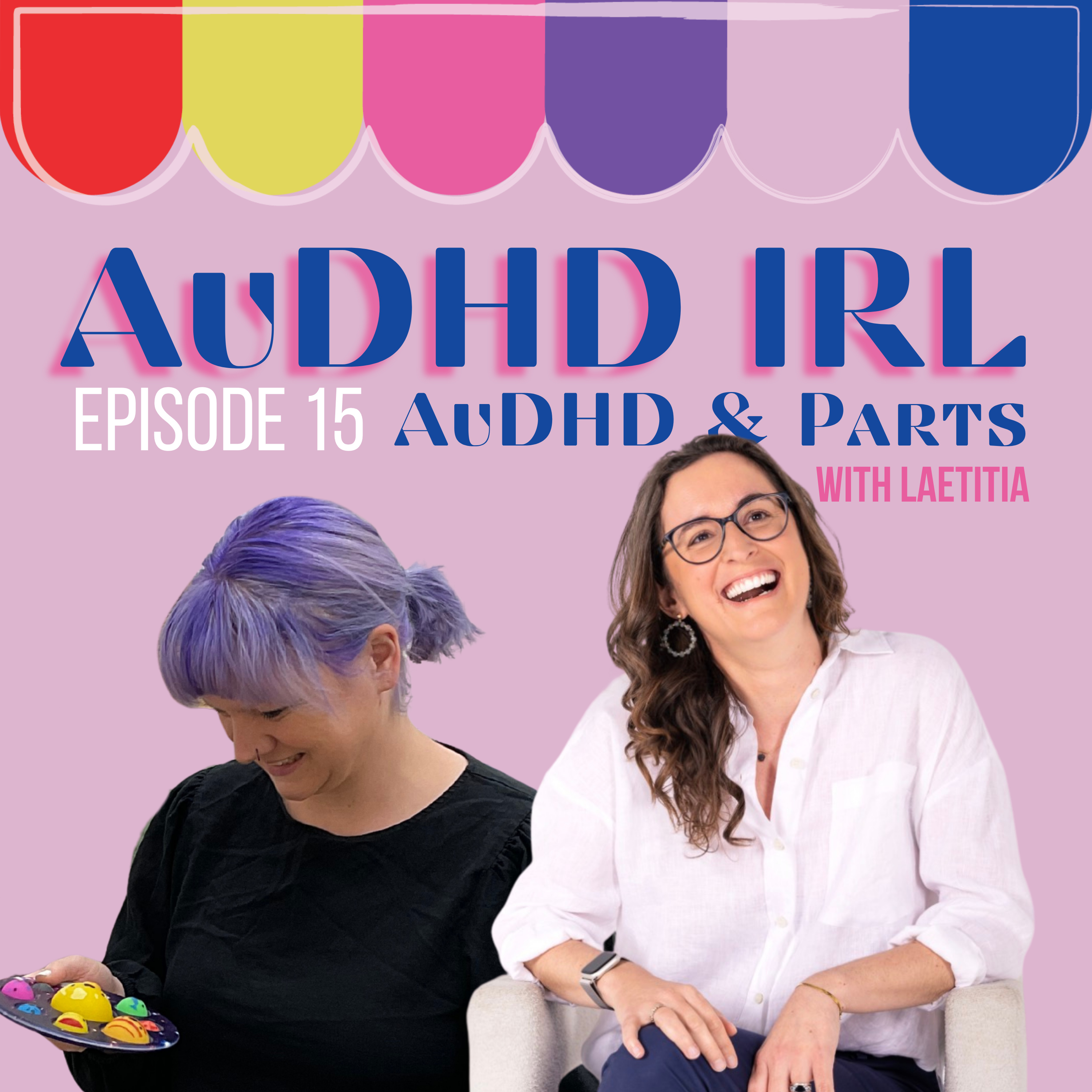 Ep15. AuDHD and Parts with Laetitia | Content Warning:Burnout and shutdownMasking and identity confusionPeople-pleasing and self-sacrificeDiscussion of childhood experiences and labelsSocial pressure, fitting in, and internalised expectationsGo gently if these topics are dysregulating for you. Summary:In this episode, Bri sits down with Laetitia Andrac to explore AuDHD through the lens of parts, identity, and the roles we develop to survive and succeed.Laetitia shares her journey from high-achieving strategy consultant to burnout, and how discovering her daughter’s neurodivergence led to her own late diagnosis. Together, they unpack how growing up without the “right” label often leads to collecting harmful ones instead: shaping identity through external expectations rather than self-understanding. The conversation dives deeply into parts work, from Internal Family Systems to psychodrama, exploring how certain parts (like the “get shit done” achiever or the selfless leader) are highly rewarded, while others (like the need for silence, rest, or deep interests) are pushed to the back of the bus. Laetitia introduces a powerful analogy:👉 AuDHD as your operating system, and your parts as apps.The episode ultimately invites listeners to move away from “fixing” themselves and toward building relationships with all parts, even (and especially) the ones that have been hidden, dismissed, or shamed.Takeaways:If you don’t get the right label, you collect the wrong ones. Growing up without understanding your neurotype can lead to harmful identity narratives and reduced self-worth. Some parts are rewarded, others are rejected. Productivity, selflessness, and high achievement are often praised, while rest, quiet, and deep internal worlds are dismissed.The “get shit done” part can come at a cost. Capable parts often dominate until burnout forces other needs to the surface. People-pleasing is often relational intelligence, not a flaw. Being attuned to others can be valued socially, but can lead to self-abandonment when it becomes the dominant role.Masking can disconnect you from who you are. Many AuDHDers develop a strong “masking part” that performs externally while internal distress goes unseen. Burnout can reconnect you with lost parts. Experiences like shutdown or burnout can bring forward parts that were previously ignored, like the need for stillness, silence, or non-productivity.Special interests are often dismissed, but deeply protective. They bring joy, meaning, and regulation, yet are frequently minimised because they don’t align with social norms. AuDHD is the operating system, and parts are the apps. Your neurotype is your wiring, but your parts (roles, adaptations, identities) are layered on top and can be understood and reshaped.You don’t need to delete parts; you need relationships with them. Trying to “get rid of” parts doesn’t create change; it creates disconnection. Healing comes from understanding their role and intention.Befriending your parts is an act of rebellion. In a world that prioritises performance and conformity, choosing authenticity and internal connection is powerful and countercultural. You can find Laetitia on Instagram at @understanding.zoe and on the web at www.understandingzoe.com. | — | ||||||
| 4/3/26 | 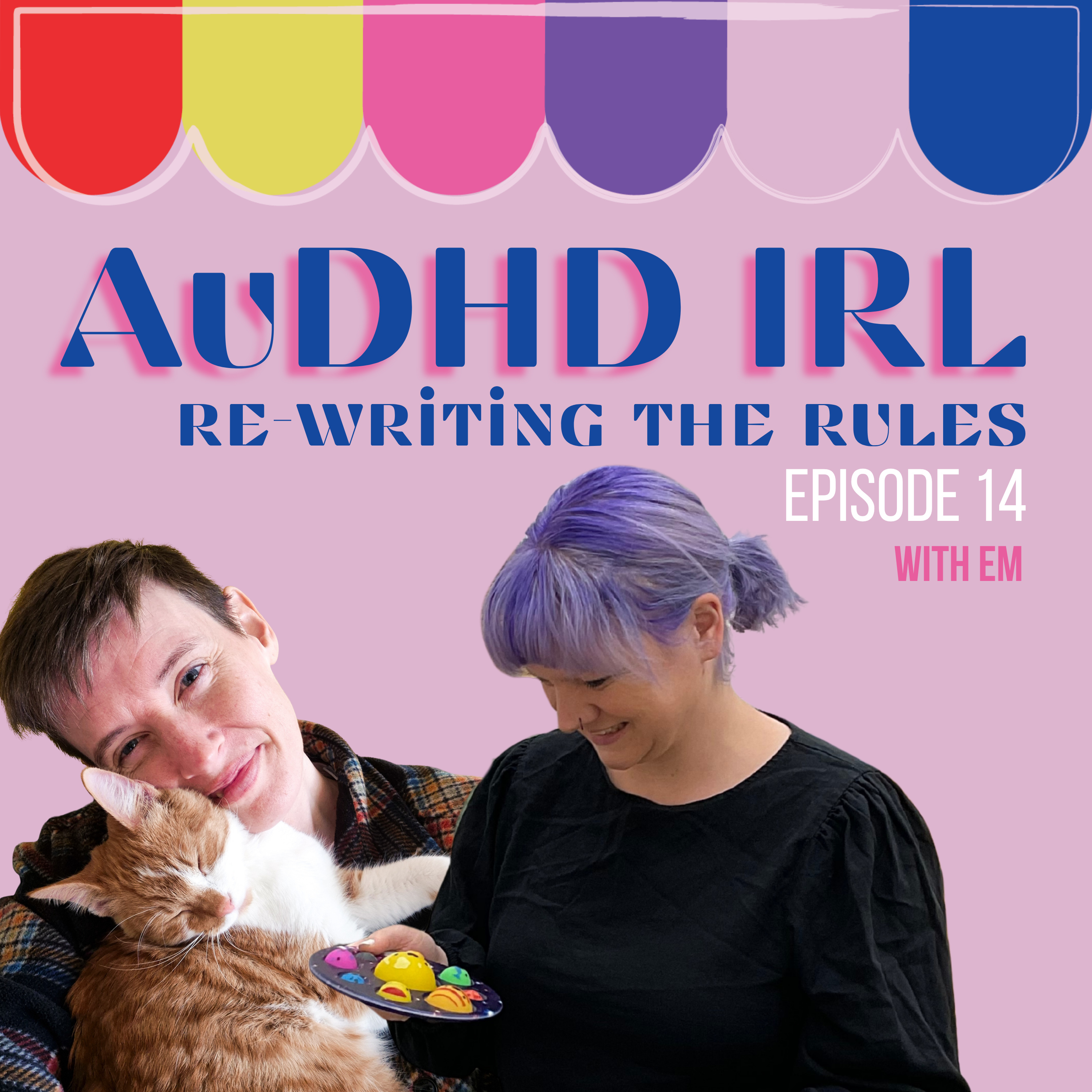 Ep14. AuDHD & Rewriting the Rules with Em, NeuroWild | Content Warning:Discussion of trauma (including “little t” developmental trauma)People-pleasing, masking, and burnoutEmotional overwhelm and RSDGender expectations and systemic pressuresBrief mention of distressing childhood experiencesSummary: In this deeply validating and expansive conversation, Bri sits down with Em from NeuroWild (an autistic ADHD speech pathologist, illustrator, and advocate) to explore what it really means to grow up, parent, and exist in a neuronormative world.Together, they unpack the hidden costs of being the “easy,” “good,” or “pleasing" child, and how patterns like people-pleasing, perfectionism, and masking follow many AuDHDers into adulthood.Em shares the realities behind NeuroWild, from creative bursts and burnout cycles, to raising neurodivergent kids in a way that centres safety, autonomy, and connection over compliance.The episode challenges common therapeutic ideas (like “big vs small problems”), questions the push for independence, and reframes emotional intensity as something meaningful, not something to suppress.At its core, this is a conversation about unlearning: unlearning “shoulds,” unlearning sameness, and learning to build lives, and families, grounded in safety, authenticity, and the long game.Takeaways:You’re not “too much”, your environment might be too mismatched. Emotional intensity isn’t a flaw. It’s information.“Big reactions” aren’t the problem. Trying to suppress them for convenience often causes more harm than good.People-pleasing is learned, not inherent. Many AuDHDers were rewarded for being “easy,” and are now unlearning it.We need to stop teaching compliance and start teaching safety. Kids (and adults) thrive when they feel safe, not when they’re forced to perform.Independence isn’t the ultimate goal, connection is. Interdependence is human. Needing support is not failure.We’re playing the long game. The goal isn’t a “well-behaved child”, it’s a safe, self-aware adult.Not everything deserves a “yes”. It’s okay to leave, cancel, or opt out, even if you’ve paid, planned, or committed.Start asking: “whose expectation is that?”. A lot of what we chase isn’t ours, it’s inherited from systems that don’t fit us.You can find Em on instagram at @neurowild_, on facebook as NeuroWild, and online at www.neurowild.com.au. | — | ||||||
| 3/29/26 | 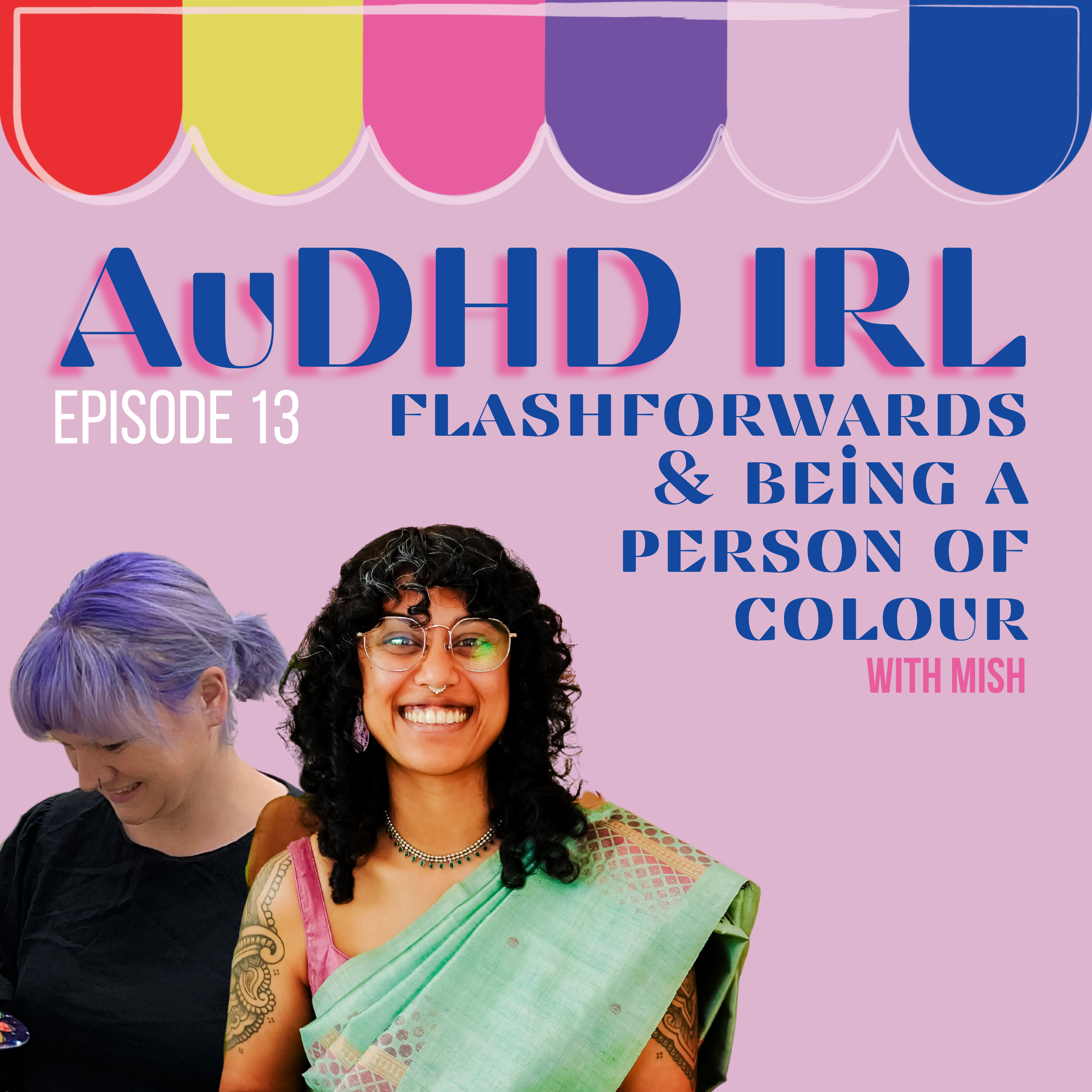 Ep13. AuDHD Flashfowards & Being a Person of Colour with Mish | Content Warning: This episode contains discussions of...Trauma and systemic oppressionRacism, colonisation, and minority stressMisdiagnosis (including BPD) and mental health stigmaBrief mention of self-concept distressPlease take care while listening and pause if needed.Summary: In this deeply thoughtful and expansive conversation, Bri sits down with Mish - a non-binary, neurodivergent, South Indian mental health social worker - to explore what it really means to live as an AuDHD person at the intersection of culture, identity, and systems.Together, they unpack the concept of flash forwards - a lesser-discussed but powerful experience of anticipatory dread - and how AuDHDers may vividly “pre-live” the future in ways that feel intensely real.Mish shares their lived experience of being misdiagnosed with BPD, the impact of stigma, and the relief and rage that can come with finding more accurate, affirming frameworks.The conversation expands into how neurodivergence is always filtered through culture, and how people of the global majority experience compounding layers of minority stress, masking, and misinterpretation.They explore:Why safety is not universal, but can be “safe enough”How identity shapes both trauma and healingThe role of flash forwards in burnout, anxiety, and survivalAnd what it means to move toward your “favourite self”, rather than your “best” or “most productive” selfThis episode is an invitation to stay curious, to listen deeply, and to rethink what we’ve been taught about both neurodivergence and healing.Takeaways:Flash forwards are real and valid. Not just “overthinking”. They can feel like vividly living a feared future, with full-body responses.Your brain is trying to protect you. Flash forwards are often your system attempting to anticipate and prevent harm.The “where self” matters. Reorienting to where you are (not just what you feel) can help anchor you in the present.Neurodivergence is shaped by culture. It is never experienced in isolation. Race, gender, queerness, and systems all shape how it shows up and how it’s perceived.Minority stress compounds everything. Being neurodivergent and part of marginalised communities amplifies burnout, masking, and anticipatory anxiety.Same traits, different judgments. Behaviour seen as “leadership” in some may be labelled “too much” or “intimidating” in others.Masking is not the enemy. It can be a survival tool. The goal isn’t always to unmask, but to have choice.“Safe enough” is the goal. Healing doesn’t require perfect safety, just moments where your system can soften.Find your “favourite self”. Not your most productive, healed, or optimised self, just the version of you that feels most like you.The greatest privilege is not having to know. And the invitation is to choose curiosity anyway.Mish can be found via email at mishma@niram.com.au and on Insta at @neuroqueer.emdrtherapist. | — | ||||||
| 3/22/26 | 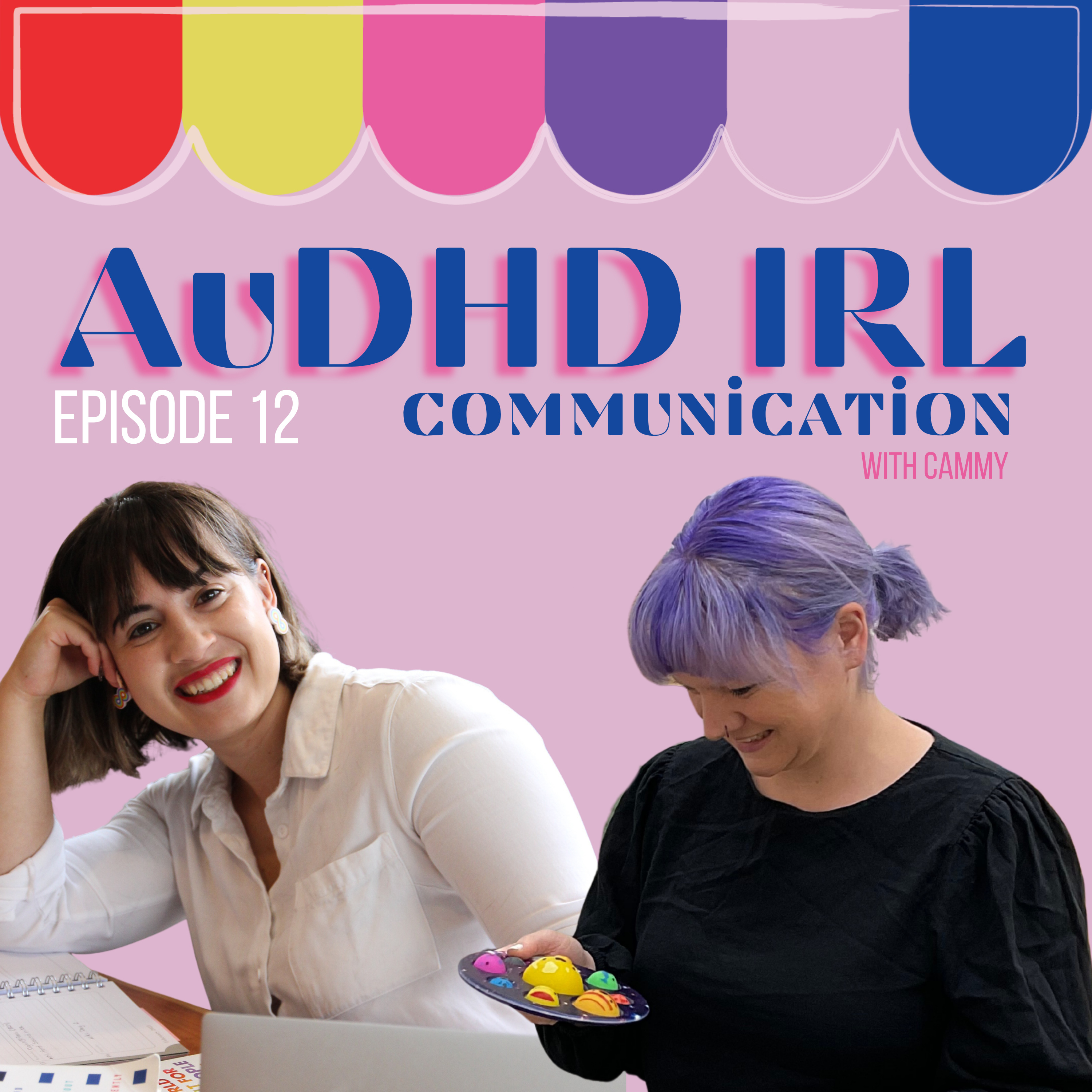 Ep12. AuDHD Communication Preferences with Cammy | Content Warning - This episode includes discussion of:Experiences of being misunderstood, shamed, or corrected for communication differencesNeurodivergent masking and social challengesWorkplace and school-based communication difficultiesPlease take care while listening and pause if needed.Summary: In this episode, Bri sits down with AuDHD speech pathologist Cammy to explore the nuanced, often overlooked world of communication preferences in AuDHDers. Together, they unpack how communication is far more than just “talking and understanding”, it includes how we tell stories, ask for help, process language, use tone, and navigate relationships.Cammy shares insights from both her lived experience and clinical work, highlighting how many AuDHDers have been misunderstood or even shamed for the way they communicate. The conversation dives into directness, sensitivity, scripting, and the push-pull of AuDHD traits, while emphasising that communication is dynamic, relational, and deeply personal.They also explore the importance of self-awareness, collaboration, and accommodations, from communication profiles to visual supports, and how both neurodivergent people and their environments share responsibility in creating understanding.Ultimately, this episode is an invitation to move away from “fixing” communication, and toward honouring, understanding, and supporting it. Key Takeaways:Communication is more than speech. It includes storytelling style, tone, pacing, literal vs non-literal language, help-seeking, and more. There is no “right” way to communicate. Differences are neutral. What matters is understanding and supporting them, not correcting them. Directness and sensitivity can co-exist. Many AuDHD people are both direct and deeply sensitive, which can create relational tension that needs open conversation. Relationships are the foundation. Communication works best when there is reciprocity, repair, and ongoing dialogue about what works for each person. Scripting is a valid and helpful tool. It can act as a starting point - “copy, paste, then personalise” - rather than something rigid or inauthentic. Self-awareness comes first. Clinicians (and everyone!) need to understand their own communication preferences before supporting others. Accommodations support authentic communication. Tools like communication profiles, visual supports, and environmental adjustments help people communicate the way they want to. AuDHDers shouldn’t carry all the load. Communication is a shared responsibility. Environments, clinicians, teachers, and peers all play a role. If in doubt… ask. The most powerful (and often underused) tool: ask the person about their communication preferences.You can get in touch with Cammy via email at cammy@letstalksp.com.au and over Instagram at @lets.talkneurodiversity. | — | ||||||
| 3/15/26 | 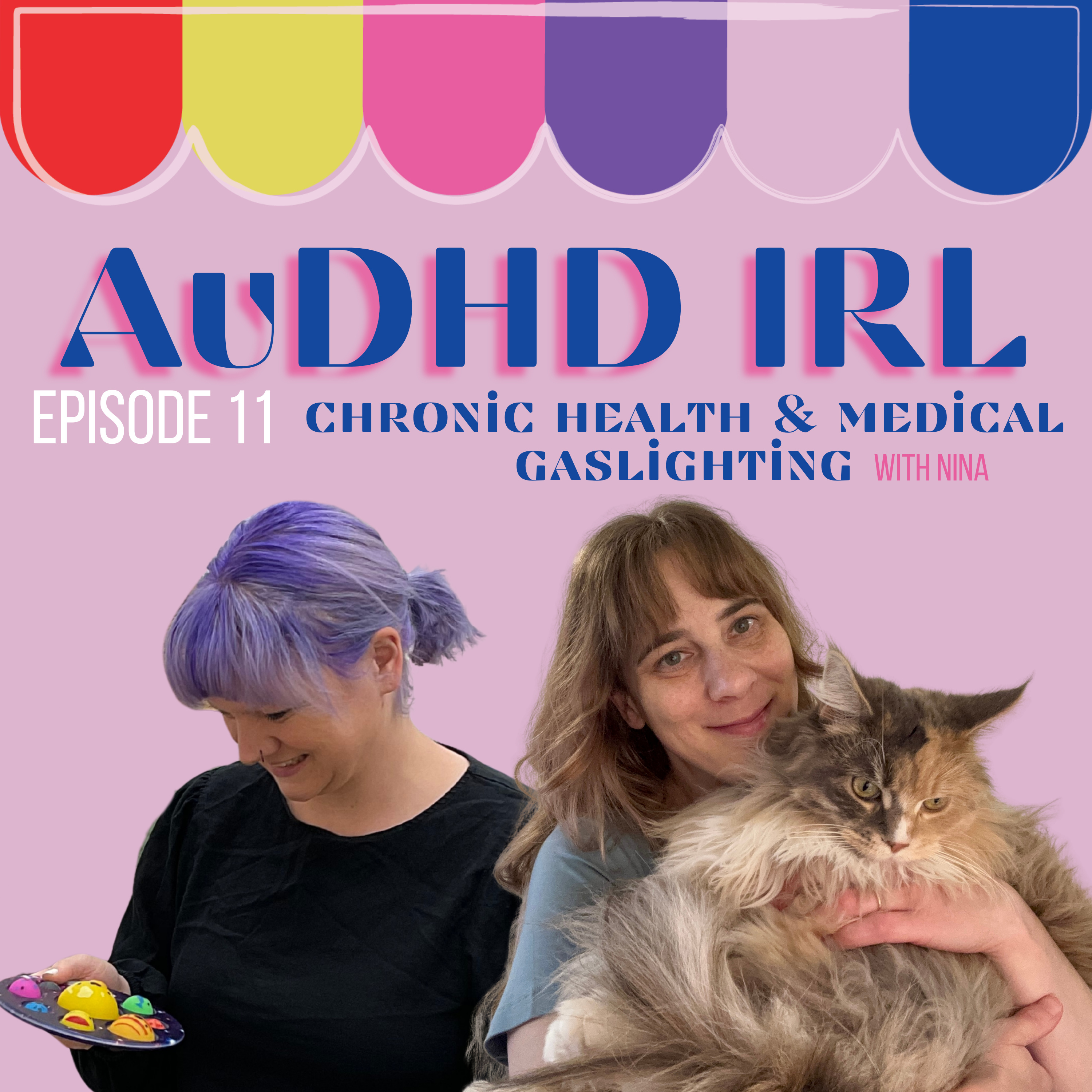 Ep11. AuDHD, Chronic Health and Medical Gaslighting with Nina | Content Warning: This episode discusses chronic illness, medical gaslighting, healthcare discrimination, trauma within healthcare systems, and brief references to medical neglect and historical misogyny in medicine. Listener discretion is advised.Summary: In this episode of AuDHD IRL, Bri sits down with provisional psychologist Nina Buchborn, who shares her lived experience of AuDHD alongside chronic, invisible illnesses. Nina’s thesis explored medical gaslighting in the healthcare experiences of neurodivergent women with chronic pain, and this conversation dives into the deeply personal and systemic issues behind that research. Together, Bri and Nina unpack the complex intersection between autism, ADHD, connective tissue disorders, dysautonomia, MCAS, chronic pain, fatigue, and more, and why so many people who are autistic and/or ADHD experience multiple health conditions at once. They discuss how these conditions are frequently misunderstood or dismissed in healthcare settings, particularly for women and gender-diverse people.Nina shares stories from her own life and research participants about the impact of medical gaslighting, the emotional toll of being repeatedly dismissed by doctors, and the hidden reality of living with invisible illness. The conversation also explores the concept of masking on steroids, where Autistic people and ADHDers' masking overlaps with the pressure to appear well despite chronic illness.Alongside the challenges, this episode also offers practical insights into self-advocacy in healthcare, navigating complex medical systems, and learning to trust your own body and experiences.Takeaways:1. Autism/ADHD and chronic illness often overlap.Emerging research suggests a strong connection between autism/ADHD and conditions such as connective tissue disorders, dysautonomia (including POTS), MCAS, and chronic pain. These links are increasingly recognised but still poorly understood in mainstream medicine.2. Medical gaslighting is a systemic issue.Many people, particularly women and autistic/ADHD individuals, report their symptoms being dismissed as anxiety, stress, or exaggeration. This can delay diagnosis for years or decades.3. Invisible illness creates layers of masking.People with chronic conditions often feel pressure to appear “well” in social and medical settings. For autistic/ADHD individuals, this can mean masking both their neurodivergence and their physical illness at the same time.4. Chronic illness often involves grief.Losing access to activities, work, social life, and identity can bring significant grief. Validating this emotional experience is an important part of both psychological care and personal healing.5. Self-advocacy in healthcare matters.Navigating the healthcare system can be exhausting, but asking questions, seeking second opinions, bringing support people to appointments, and requesting documentation can help patients advocate for themselves.6. Trust your body.If something feels wrong, it deserves attention. Nina encourages listeners to trust their own bodily experiences and keep searching for answers and support.7. Kindness toward yourself is essential.Living with chronic illness means adjusting expectations and recognising limits. Self-compassion is a crucial part of navigating health challenges. | — | ||||||
| 3/11/26 | 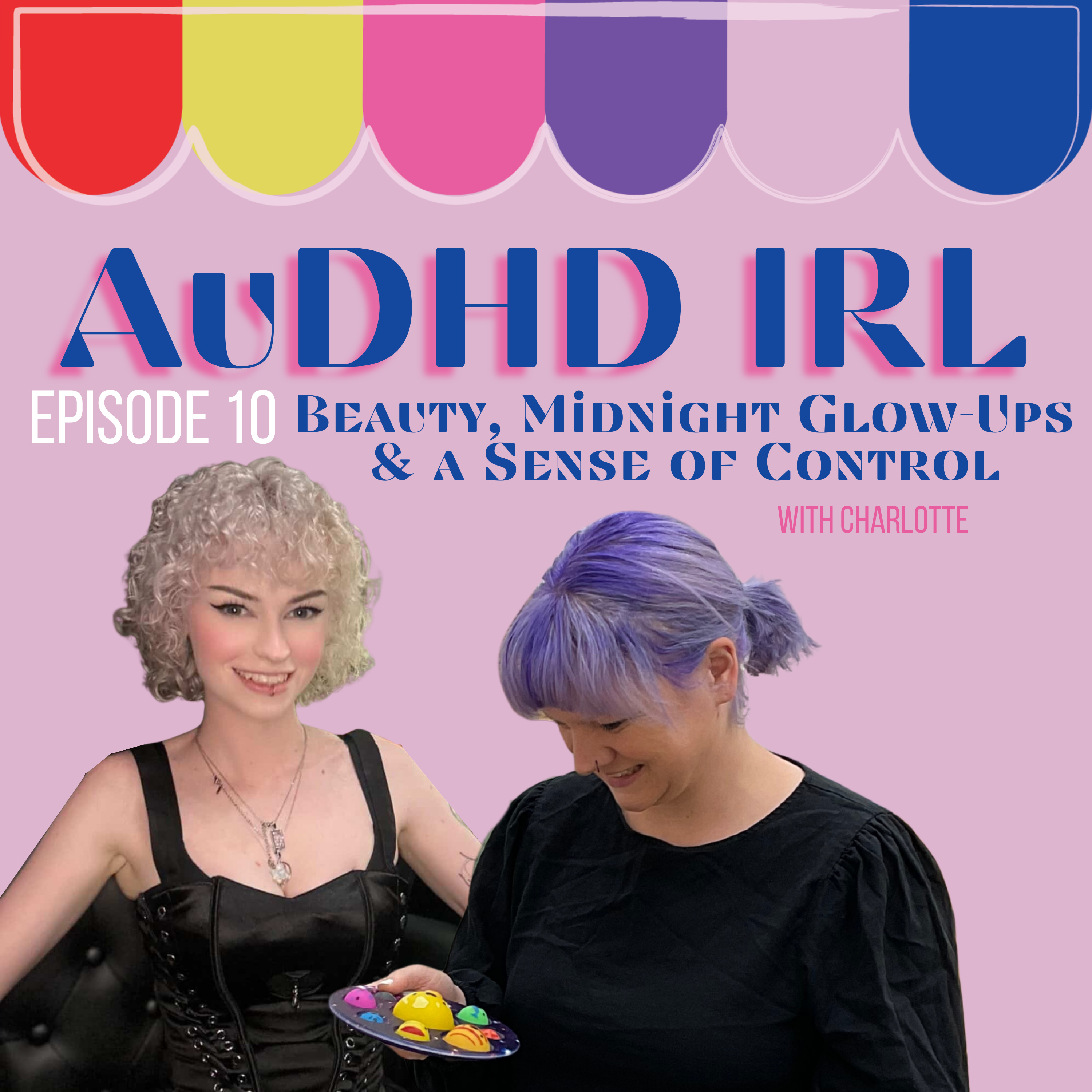 Ep10. AuDHD, Beauty, Midnight Glow-Ups and a Sense of Control with Charlotte | Summary: Dive into a lively conversation about how AuDHD, identity, and self-expression intertwine through hair, fashion, and everyday choices. Charlotte (a hairdresser) and Bri explore how embracing our differences can foster confidence, control, and community. They discuss how being proud of our differences and showing it on the outside can signal safety to others. They also discuss parenting AuDHDers who want to experiment with their looks, how experimenting with looks can be regulating, and how being in control of something like your hairstyle can help with transitions and change. Charlotte also shares what it's like to give someone their first ever haircut, and gives advice to those who are nervous to get a cut.Takeaways: AuDHD and Self-Expression: Embracing your AuDHD identity can significantly influence personal style and self-image, allowing individuals to express their identity authentically.Dopamine Dressing: This concept highlights the joy and confidence that come from wearing clothes that stimulate positive emotions.Creating Safe Spaces: It's crucial to provide environments where AuDHD individuals, especially children and teens, can express themselves freely and feel understood.Practical Accommodations: Offering tailored experiences, such as sensory-friendly haircuts, can make a significant difference for autistic or ADHD clients.Autonomy and Identity: Encouraging autonomy in style choices helps reinforce a sense of control and self-acceptance, fostering a positive self-image.You can find Charlotte on Instagram at @charlotte_thehairstylist, or through @brushnbroom. | — | ||||||
| 3/8/26 | 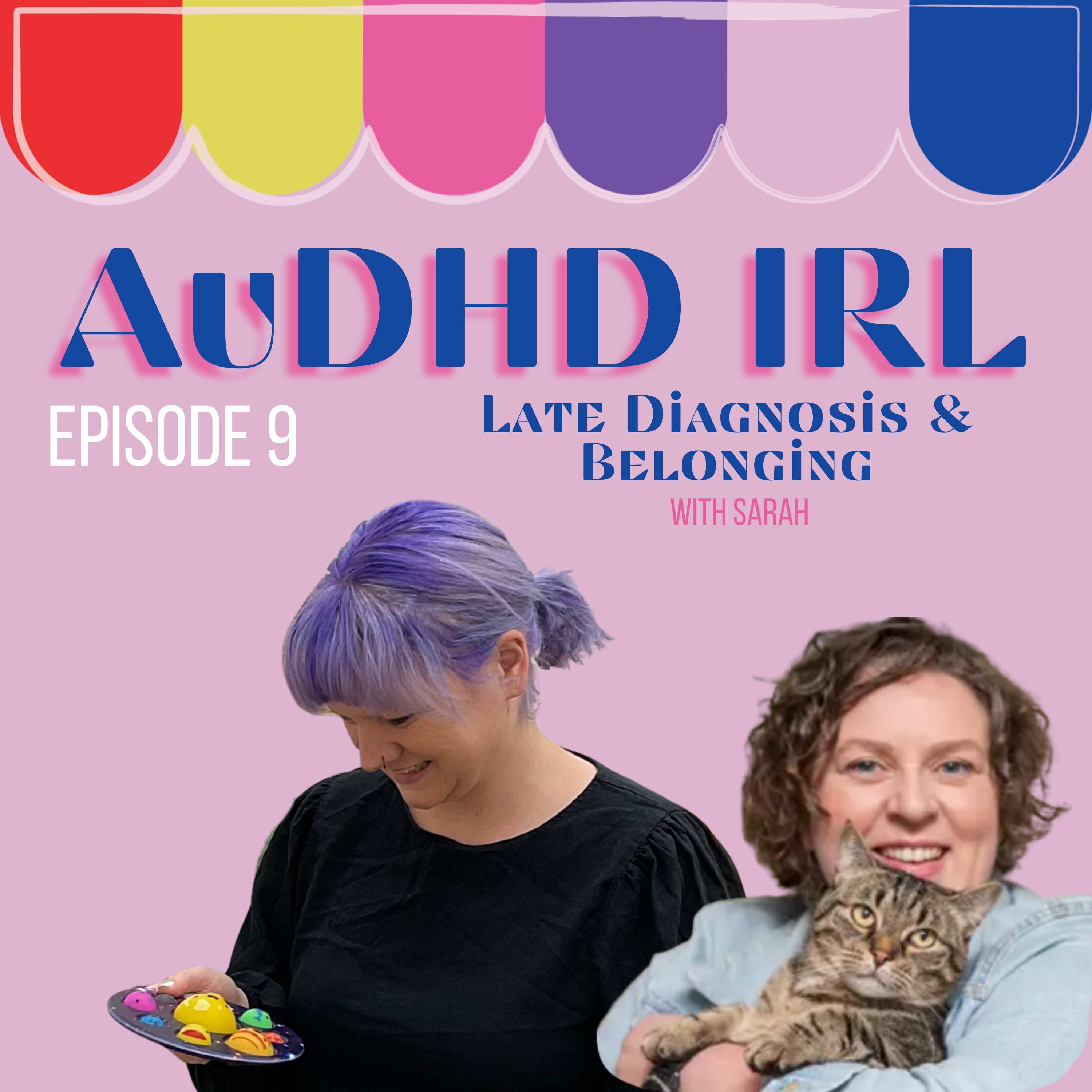 Ep9. AuDHD, Late Diagnosis and Belonging with Sarah | Content Warning:This episode discusses topics related to being AuDHD, late diagnosis, and societal stigma. There is mention of suicidality and trauma, which may be sensitive for some listeners. Go gently. Summary: In this episode, we explore the transformative power of understanding our neurotype, and cultivating genuine belonging, both personally and socially. Sarah Eagle, a passionate advocate and late-diagnosed AuDHDer herself, shares her journey, mental models, and practical steps towards building inclusive communities where all brains can thrive. She is fabulous, and you will love her!Takeaways:The transformative power of late diagnosis: understanding oneself and fostering self-compassionMoving beyond deficit models to a belonging-focused framework based on relationshipsThe importance of rupture and repair skills in society for authentic connectionHow societal beliefs from moral failing to justice and belonging models impact stigmaPractical strategies for individual regulation and sensory lifestyle medicine to prevent burnoutThe role of gentle advocacy: creating demand for inclusive environments without burnoutThe significance of neurokin communities in cultivating a sense of belongingSteps for systems change: policies, community awareness, and relational skillsEmbracing the grief and anger as natural parts of the diagnosis journeyUtilising mental health models that prioritise enrichment, community, and self-literacyYou can find Sarah on Instagram at @neurodivergent_joydiving_sarah. | — | ||||||
| 3/1/26 | 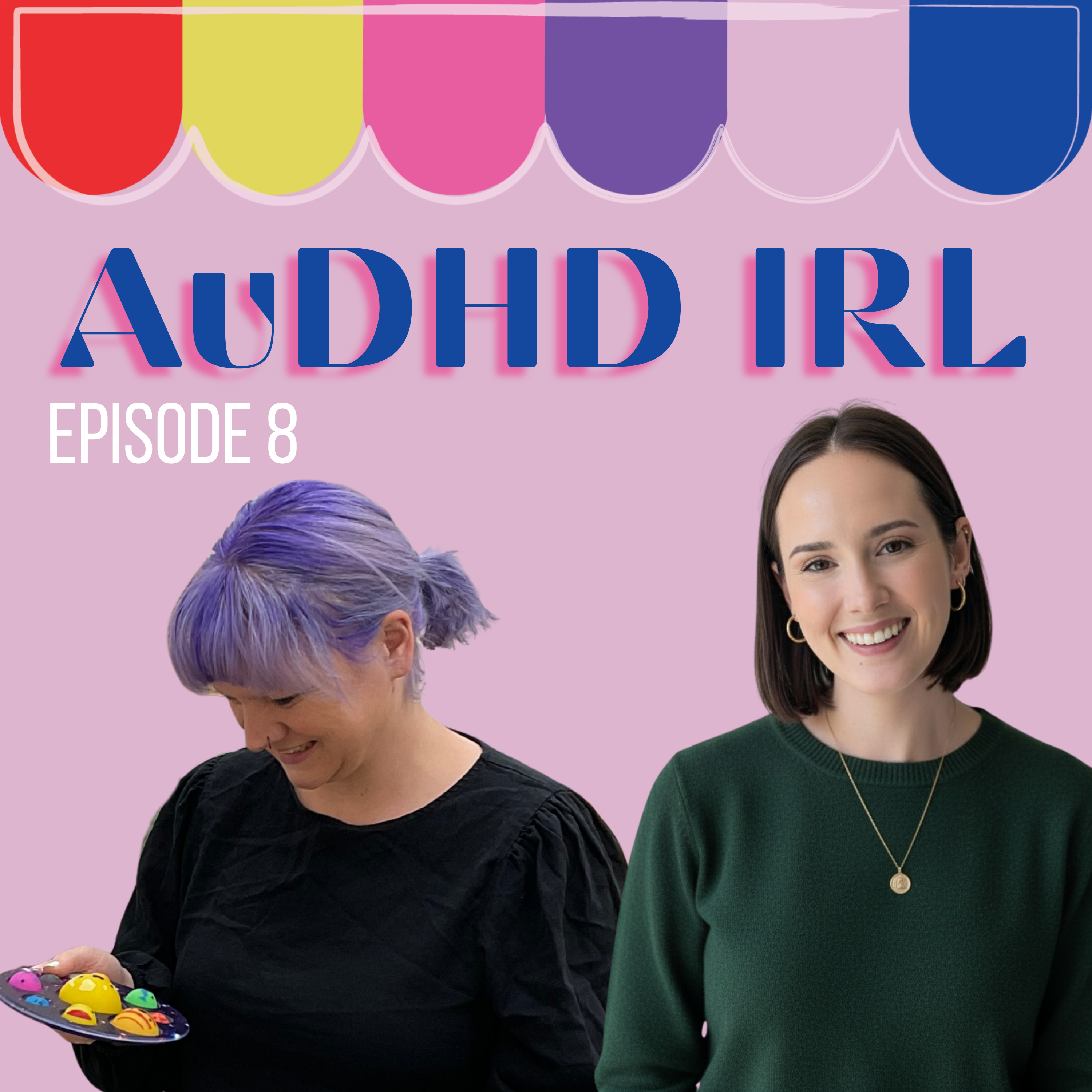 Ep8. AuDHD and Motherhood with Hollie-Ann | Content warning: mention of suicidality, parental burnout, trauma and stress. Listen with care.Summary: In this heartfelt episode, Hollie-Ann shares her experience as an AuDHD mother navigating diagnosis, parenting, advocacy, and self-care with host Bri Thomas. Hollie-Ann's story highlights the importance of community, self-awareness, and embracing strengths on the parenting journey. She is honest about the tough stuff, and encouraging exactly where it's needed. This episode addresses societal taboos, intersectionality, parenting strategies, and community building within neurodivergent and queer spaces. It offers actionable insights for parents, caregivers, and advocates aiming to foster understanding and self-compassion.Takeaways:The impact of being AuDHD on identity and parenthoodBuilding community and advocating for neurodivergent familiesThe challenges of parenting with additional support needs and navigating systemsStrategies for self-care, energy management, and co-regulationAddressing societal taboos: ableism, loneliness, and mental health in parentingThe importance of parenting to strengths and modelling regulationRecognising and honouring fluctuating capacities and micro-moments of self-careYou can find Hollie-Ann on Instagram at @neuroinclusiveeducation. | — | ||||||
| 2/22/26 |  Ep7. AuDHD, Relationships, Intimacy & Sex | Content warning: Don't listen to this one with the kids in the back seat... and discern whether it's going to be safe for your nervous system to hear Lil and Bri talk about relationships, sex, intimacy and pleasure at this time. Keywords: ADHD, autism, AuDHD, relationships, intimacy, neurodivergent, sex education, communication, sensory experiences, self-acceptanceSummary: In this engaging conversation, Bri Thomas and Lil explore the themes of authenticity, neurodivergence, and intimacy. Lil shares their personal journey with ADHD and autism, discussing how these experiences shape their understanding of relationships and sexual intimacy. The discussion delves into the importance of communication, the impact of sensory experiences, and the need to challenge societal norms surrounding sex. Lil emphasizes the significance of self-discovery and pleasure, advocating for a more open dialogue about sexuality to reduce shame and foster connection.Takeaways:AuDHDers often have unique experiences in intimacy.Communication is essential for understanding needs in relationships.Sensory experiences can greatly impact sexual intimacy.Breaking societal taboos around sex is necessary.Self-discovery is crucial for understanding personal pleasure.Shame around sexuality can hinder personal growth and connection.Creating supportive systems in relationships can alleviate stress.Pleasure is a birthright!You can find Lil on Instagram at @neurokinnection. | — | ||||||
| 2/15/26 |  Ep6. AuDHD, the Tug of War, and Masking with Jess | Overview: In this engaging conversation, Jess, a registered psychologist, shares her journey of discovering her autism and ADHD. She discusses her early career experiences, the importance of lived experience in psychology, and the challenges of masking in social situations. Jess emphasises the push-pull dynamic between autism and ADHD, exploring how it affects her daily life and interactions. The conversation highlights the significance of self-advocacy, understanding one's own needs, and the importance of going with the tussle in your own brain.Takeaways:Understanding one's neurodivergent identity can lead to greater self-acceptance.Masking is a common coping mechanism for AuDHDers.The push-pull dynamic between autism and ADHD can be exhausting.Self-advocacy is crucial in navigating social situations.Community support enhances well-being for neurodivergent individuals.Recognising bodily cues can help manage overwhelm.It's important to lean into one's thoughts and feelings.Working with the tug of war rather than fighting it leads to better outcomes.You can find Jess on instagram at @pinkzebra.psychology | — | ||||||
| 2/8/26 |  Ep5. AuDHD, Food and All That Goes With It with Margo | Keywords (Please consider this when listening to this podcast; make sure you're in an okay place to hear these topics): Food, AuDHD, eating disorders, ARFID, OCD, trauma, safety, nutrition, sensory processing, mental health.Overview: In this conversation, Margo White and Bri Thomas explore the intricate relationship between food, AuDHD, and safety. Margo shares her personal journey with eating disorders and how her experiences shape her professional practice as a nutritionist. They discuss the complexities of ARFID, the impact of trauma on eating, and the intersection of OCD and food. The importance of predictability and self-compassion in navigating these challenges is emphasised, along with the need for support and accommodations to foster happier relationships with food.Takeaways:Food is a significant part of our lives and eating is deeply sensory.ARFID presents differently in each individual, and there is no "one look".Safety and predictability are crucial for AuDHD individuals.Trauma can significantly impact one's relationship with food, and is remembered in the body.Self-compassion is essential in navigating food challenges.Understanding the intersection of OCD and ARFID is important.Support and accommodations can help improve eating experiences.Margo can be found on Instagram at @margo_wholebodynutrition. | — | ||||||
| 2/1/26 |  Ep4. AuDHD, Perfectionism & RSD with Rosie | In this conversation, Bri and Rosie (from Uniquely Wired) explore the themes of perfectionism and rejection sensitivity, particularly in the context of being AuDHD. Rosie shares her personal experiences as an autistic ADHDer and how these influence her life and work. They discuss the pressures of perfectionism, the emotional costs associated with it, and practical strategies for managing these experiences. The conversation emphasises the importance of self-compassion, understanding one's inner child, and the value of community support in navigating these challenges.You can find Rosie on instagram at @rosie.uniquelywired.Takeaways:Perfectionism can lead to self-inflicted pressure and disappointment.Rejection sensitivity often accompanies perfectionism, creating a cycle of anxiety.It's important to recognise and validate one's feelings about grades and achievements.Self-compassion is crucial in managing perfectionism and RSD.Creating a rubric that includes personal values can help alleviate pressure.Celebrating small wins and progress is essential for mental well-being.Having supportive people around can help identify perfectionistic tendencies.Exploring the origins of perfectionism can provide insight and healing.It's okay to feel disappointed about unmet expectations; those feelings are valid.Being gentle with oneself is a necessary part of the journey. | — | ||||||
| 2/1/26 | 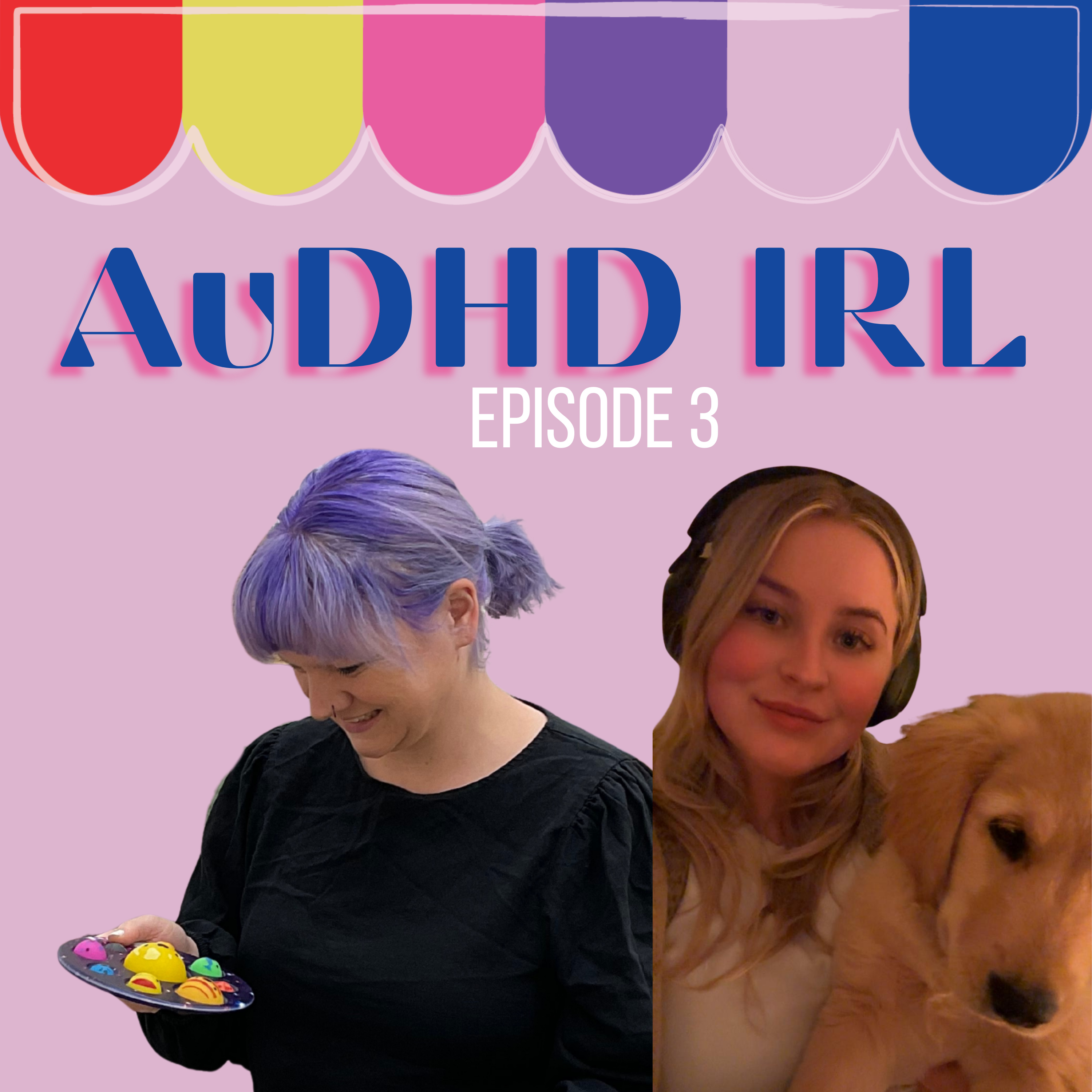 Ep3. AuDHD Anxiety with Chloe | In this enlightening conversation, Chloe, an AuDHD psychologist, shares her insights on the intersection of anxiety and having an autistic + ADHD brain. The discussion explores the impact of sensory experiences on anxiety, the importance of understanding interoception, and the role socialising and communication have on our everyday anxiety. Chloe emphasises the need for compassion towards oneself and others in navigating the complexities of AuDHD-related anxiety.Chloe can be found on instagram at @chloehulse.psychology. Takeaways:Anxiety can be a common experience for those who are AuDHD - not just a separate anxiety diagnosis, but the daily, ongoing experience of anxiety. Understanding the difference between autistic anxiety and anxiety disorders is helpful.Sensory experiences can significantly impact anxiety levels.Interoception plays a key role in recognising internal body cues, and is related to our feeling anxious.Missing information can heighten anxiety in uncertain situations.Information processing challenges can lead to anxiety in academic settings.Social situations can be particularly anxiety-provoking for AuDHD individuals.Structured social interactions can alleviate some anxiety (we give an example of our Christmas party)Compassion for oneself and others is essential in managing anxiety. | — | ||||||
| 2/1/26 | Ep2. What even is this thing? with Beth | In this deep, real and silly interview between Bri and her wife Beth, Beth helps Bri uncover some truths about her experience with masking, burnout, small talk and more. They chat AuDHD origin stories and coming out as AuDHD (which for Bri was her second coming out). Bri loved being interviewed by someone who knew her so well, and the laughter is off the chain. You'll feel like you're in the room with them. | — | ||||||
Showing 25 of 26
Pitch Fit is a Pro feature
See how bookable this show is for guests, which brands already advertise, the per-episode ad value, and the best-fit guest and sponsor profile. The numbers are blurred on the free plan.
How readily this show books outside guests like you.
How proven this show is for host-read sponsorships.
For Guests
ProFor Advertisers
ProUpgrade to Pro to unlock guest cadence, sponsor categories, fit scores, and per-episode ad value for this show.
Chart Positions
2 placements across 1 market.
Chart Positions
2 placements across 1 market.