

Insights from recent episode analysis
Audience Interest
Podcast Focus
Publishing Consistency
Platform Reach
Insights are generated by CastFox AI using publicly available data, episode content, and proprietary models.
Total monthly reach
Estimated from 2 chart positions in 2 markets.
By chart position
- 🇦🇺AU · Language Learning#1235K to 30K
- 🇵🇭PH · Language Learning#133500 to 3K
- Per-Episode Audience
Est. listeners per new episode within ~30 days
3.9K to 23K🎙 Weekly cadence·137 episodes·Long inactive - Monthly Reach
Unique listeners across all episodes (30 days)
5.5K to 33K🇦🇺91%🇵🇭9% - Active Followers
Loyal subscribers who consistently listen
1.6K to 9.9K
Market Insights
Platform Distribution
Reach across major podcast platforms, updated hourly
Total Followers
—
Total Plays
—
Total Reviews
—
* Data sourced directly from platform APIs and aggregated hourly across all major podcast directories.
On the show
Recent episodes
EP 136: Foodie
May 4, 2025
Unknown duration
EP 135: Simpson and His Donkey
Apr 21, 2025
Unknown duration
EP 134: Down Under
Mar 16, 2025
Unknown duration
EP 133: Fairy Bread
Feb 17, 2025
Unknown duration
EP 132: Muso
Jan 27, 2025
Unknown duration
Social Links & Contact
Official channels & resources
Official Website
Login
RSS Feed
Login
| Date | Episode | Description | Length | ||||||
|---|---|---|---|---|---|---|---|---|---|
| 5/4/25 | 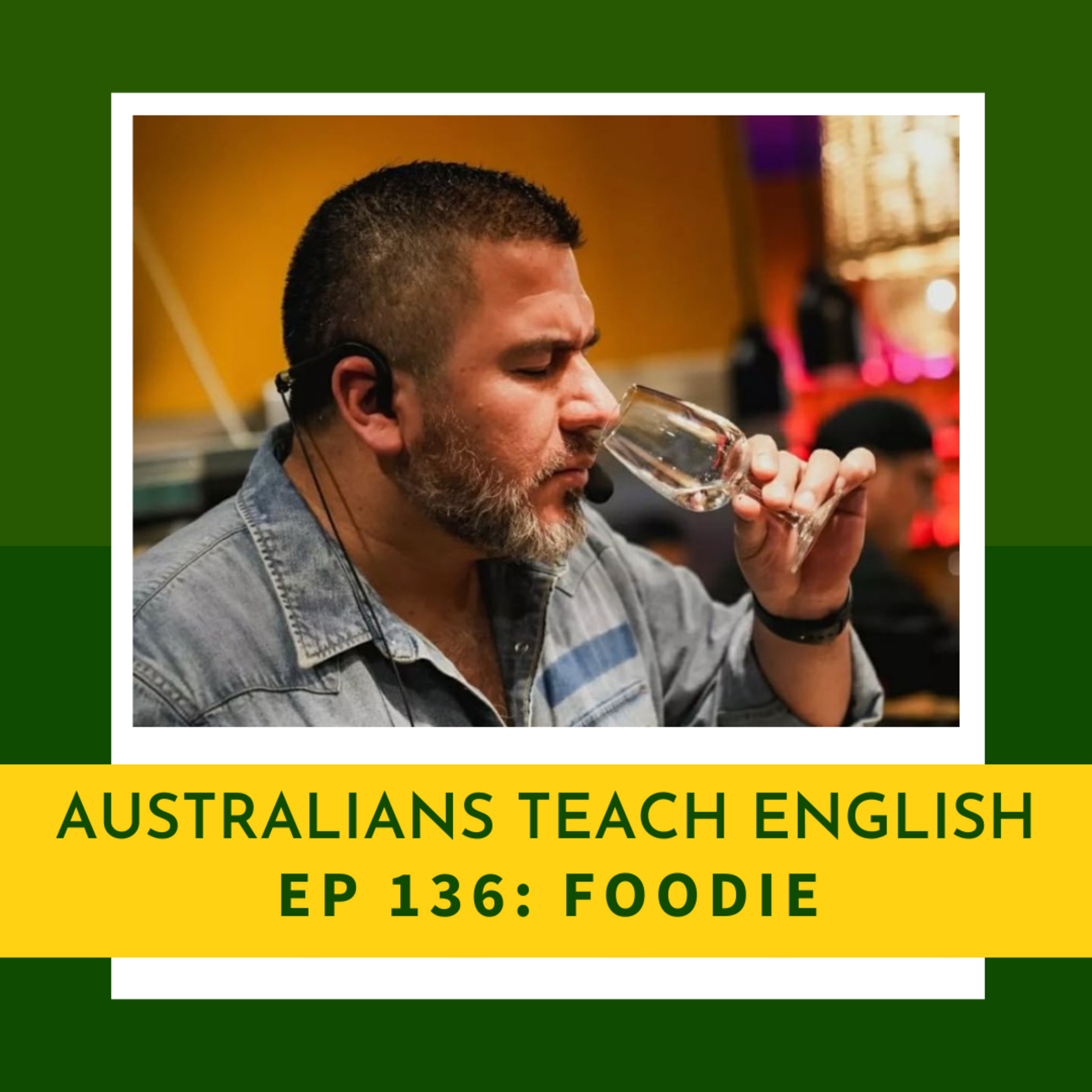 EP 136: Foodie | In this episode I interview Miguel, co-owner of Lima Cantina in Perth, and massive foodie. We talk about his journey in the hospitality industry and how food, drinks and music have helped him learn, teach and share culture over time. Miguel, a Peruvian who moved to Spain in 2001, fell in love with the industry and eventually opened a tapas bar in Barcelona. He met his wife, Mel, in Barcelona, and they moved to Melbourne before settling in Perth. We talk about the establishment of Lima Cantina, which focuses on authentic Peruvian cuisine and is the only Pisco bar in Western Australia. Miguel emphasizes the importance of passion in hospitality and the unique cultural fusion in Peruvian food, highlighting the significance of Pisco and the evolution of Peruvian cuisine.Finally, we use this as an excuse to talk about food related slang and expressions and different variations in both Spanish and English.If you would like a transcript for this episode, find all content and have a say in the creative process, think about becoming a patron:patreon.com/AustraliansTeachEnglishOr check out my other podcast - IELTS in the Sun - the podcast to help you prepare your English exam: https://open.spotify.com/show/7wVfUn2wKiQxlE47vLudmc?si=VWsuUzo-T4esfb1KnjW3aA | — | ||||||
| 4/21/25 | 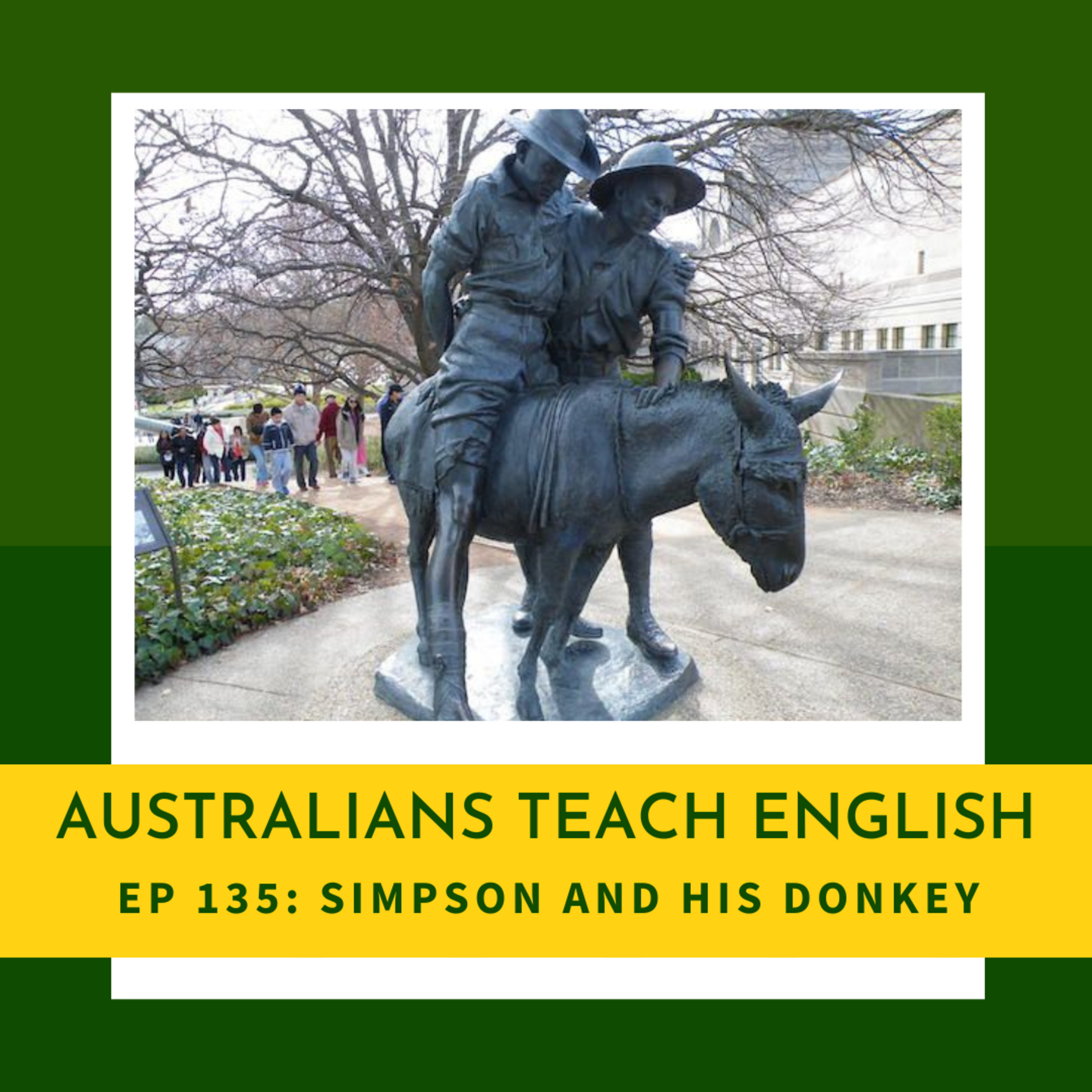 EP 135: Simpson and His Donkey | You might remember Ashley Kalagian Blunt from the previous episode, “Down Under”. In this episode, I talk to Ashley about her academic work on the Armenian Genocide and genocides in general. In her novella, ‘My Name is Revenge’, she uses the tale of Simpson and His Donkey as a way of understanding different viewpoints of history.Given this week is ANZAC Day, I invited her on the show to talk about the links between the ANZAC invasion of Gallipoli and the links to the Armenian Genocide.Ashley highlights the parallels between the Armenian Genocide and the Holocaust. We also discuss the Armenian Diaspora, the influence of Armenian language and culture, and the importance of recognising historical atrocities to prevent future genocides.Genocide is a feature of human history and Australian history is not immune from that. We talk about the Tasmanian genocide, The Conquest of the Desert, The Armenian Genocide and the Holocaust, as well as genocides currently occurring. We discuss what they have in common and what are some of the features of these inhumane events.We leave with commentary about what we can possibly do to make this world a safer and more positive place, using Simpson and His Donkey as an example.If you would like a transcript for this episode, find all content and have a say in the creative process, think about becoming a patron:patreon.com/AustraliansTeachEnglishOr check out my other podcast - IELTS in the Sun - the podcast to help you prepare your English exam: https://open.spotify.com/show/7wVfUn2wKiQxlE47vLudmc?si=VWsuUzo-T4esfb1KnjW3aA | — | ||||||
| 3/16/25 | 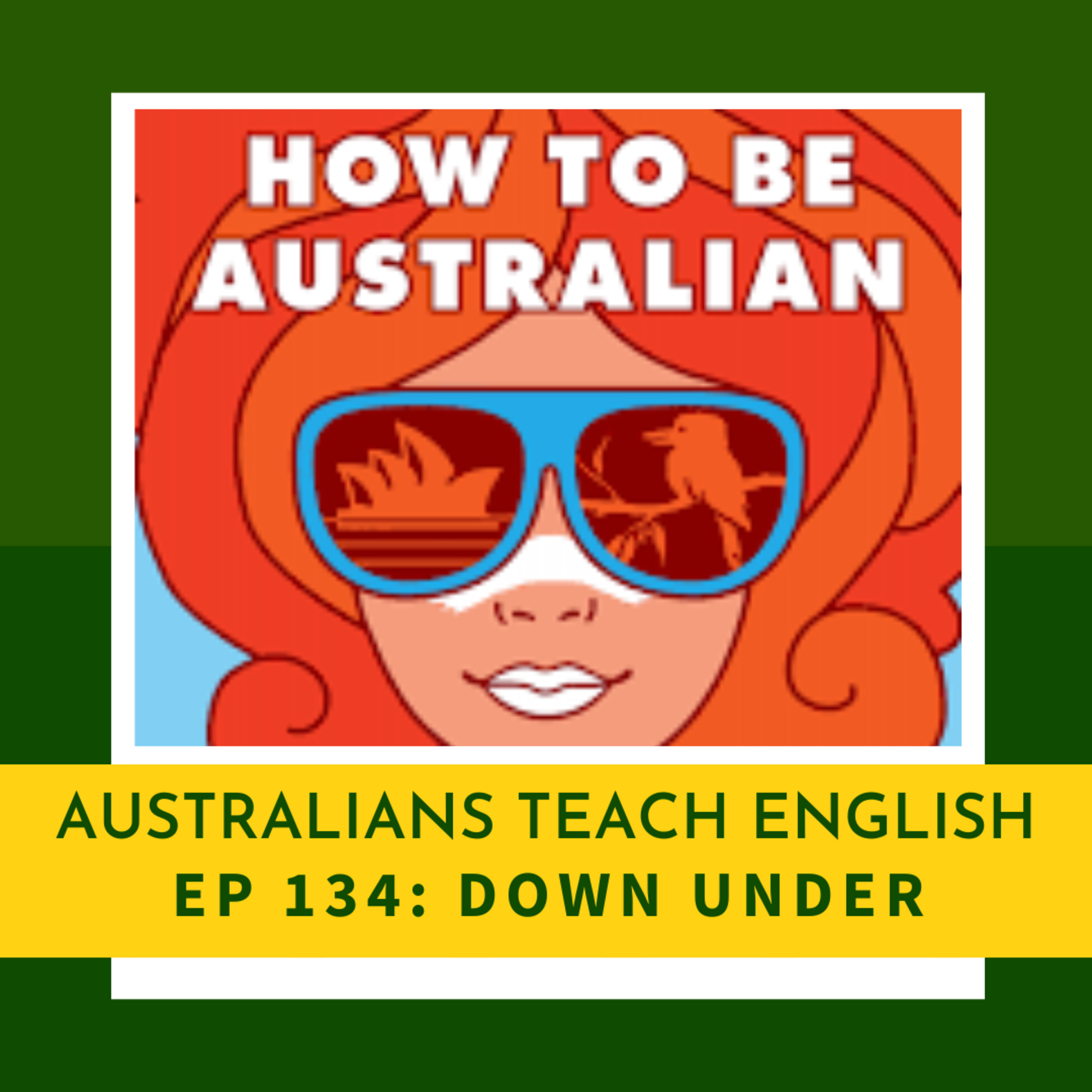 EP 134: Down Under | It might seem that coming “down under” from “up over” would seem an easy transition for a fellow English speaker. Especially if that person is from Canada. After all, it’s just Australia with snow, right? But that’s not the case.When I was browsing my local library, I came across a fascinating book – How to be Australian. It is the best book I’ve read on culture shock, and it happens to be explained by an English speaker in Australia.I decided to invite the author, Ashley Kalagian Blunt, to the show to talk about her experiences in Australia. In this episode, we talk about the similarities and differences between Australia and Canada, and some key aspects that might help you if you are trying to adjust to Australia.If you would like a transcript for this episode, find all content and have a say in the creative process, think about becoming a patron:patreon.com/AustraliansTeachEnglishOr check out my other podcast - IELTS in the Sun - the podcast to help you prepare your English exam: https://open.spotify.com/show/7wVfUn2wKiQxlE47vLudmc?si=VWsuUzo-T4esfb1KnjW3aA | — | ||||||
| 2/17/25 | 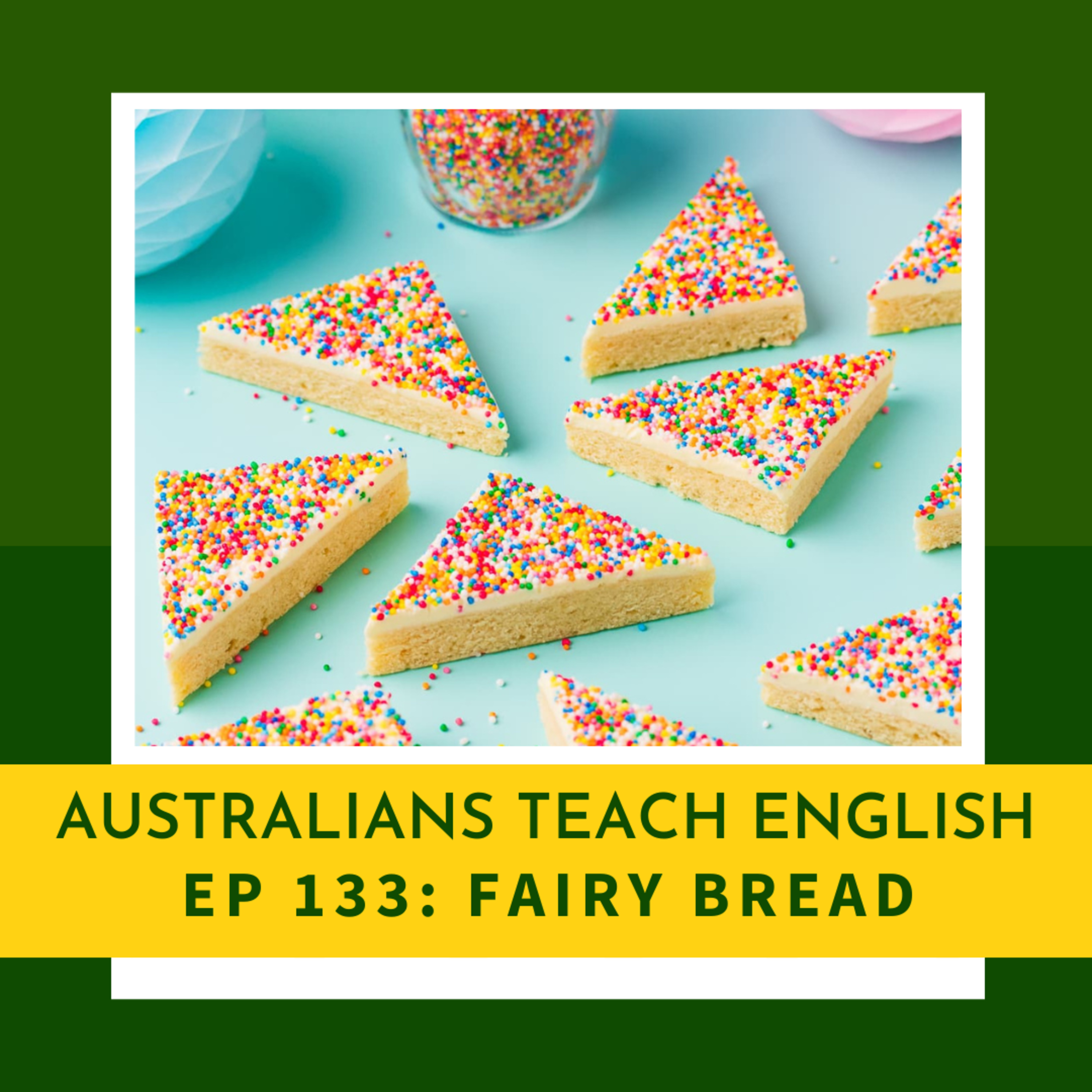 EP 133: Fairy Bread | When people go to a kid’s party for the first time in Australia, they might be confronted with something called “fairy bread”. So, I thought I’d invite an expert on kids to the show, Erika Deery, to help explain some of these oddities.Erika is the author of several bilingual children's books featuring a character called Millie. While she is on the show to talk about this, we take the opportunity to discuss some different philosophies about bilingualism and raising bilingual kids.And of course, we talk about what to expect at a kid’s party and explain the history of fairy bread.Erika’s work can be found at: https://www.milliebooks.com/And on social media with the same name.If you would like a transcript for this episode, find all content and have a say in the creative process, think about becoming a patron:patreon.com/AustraliansTeachEnglishOr check out my other podcast - IELTS in the Sun - the podcast to help you prepare your English exam: https://open.spotify.com/show/7wVfUn2wKiQxlE47vLudmc?si=VWsuUzo-T4esfb1KnjW3aA | — | ||||||
| 1/27/25 | 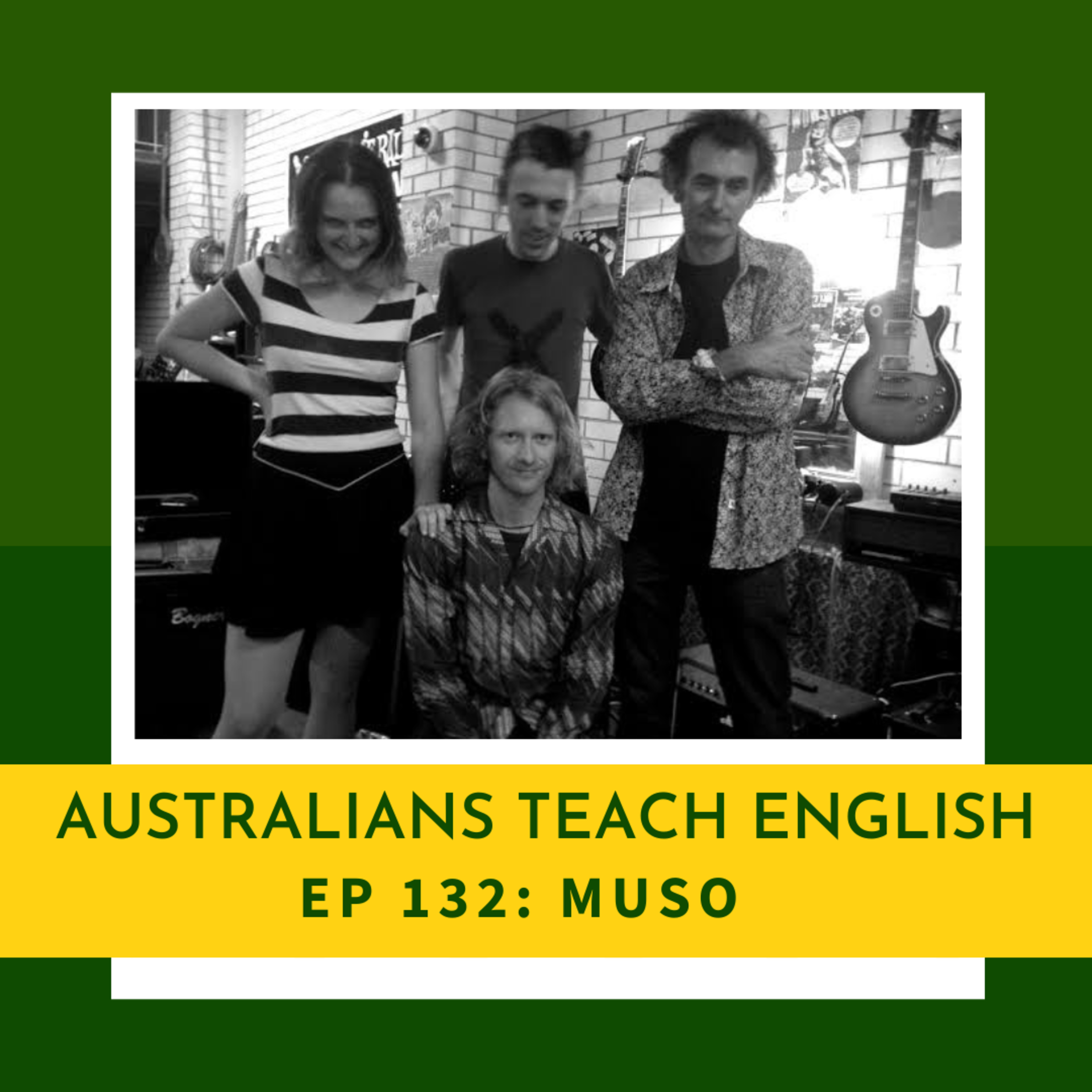 EP 132: Muso | Did Punk and Grunge originate in Australia? I’ll let you be the judge. But they certainly had their roots in Australia. Michael is my oldest friend, the creator of the music in my podcasts, and a muso. So, I invited him on the show to talk about one of our favourite themes – Australian music. We talk about the culture of Australian music and how sleepy towns like Perth and Brisbane have gone on to shape music history across the world. We talk about our favourite bands and give you some pointers as to where to go if you want to listen to music to improve your English. We also discuss what it is like to be so “un-Australian” and to be born on Australia Day, as Michael is. If you love music, then this is another episode for you! If you would like a transcript for this episode, find all content and have a say in the creative process, think about becoming a patron: patreon.com/AustraliansTeachEnglish Or check out my other podcast - IELTS in the Sun - the podcast to help you prepare your English exam: https://open.spotify.com/show/7wVfUn2wKiQxlE47vLudmc?si=VWsuUzo-T4esfb1KnjW3aA | — | ||||||
| 1/13/25 | 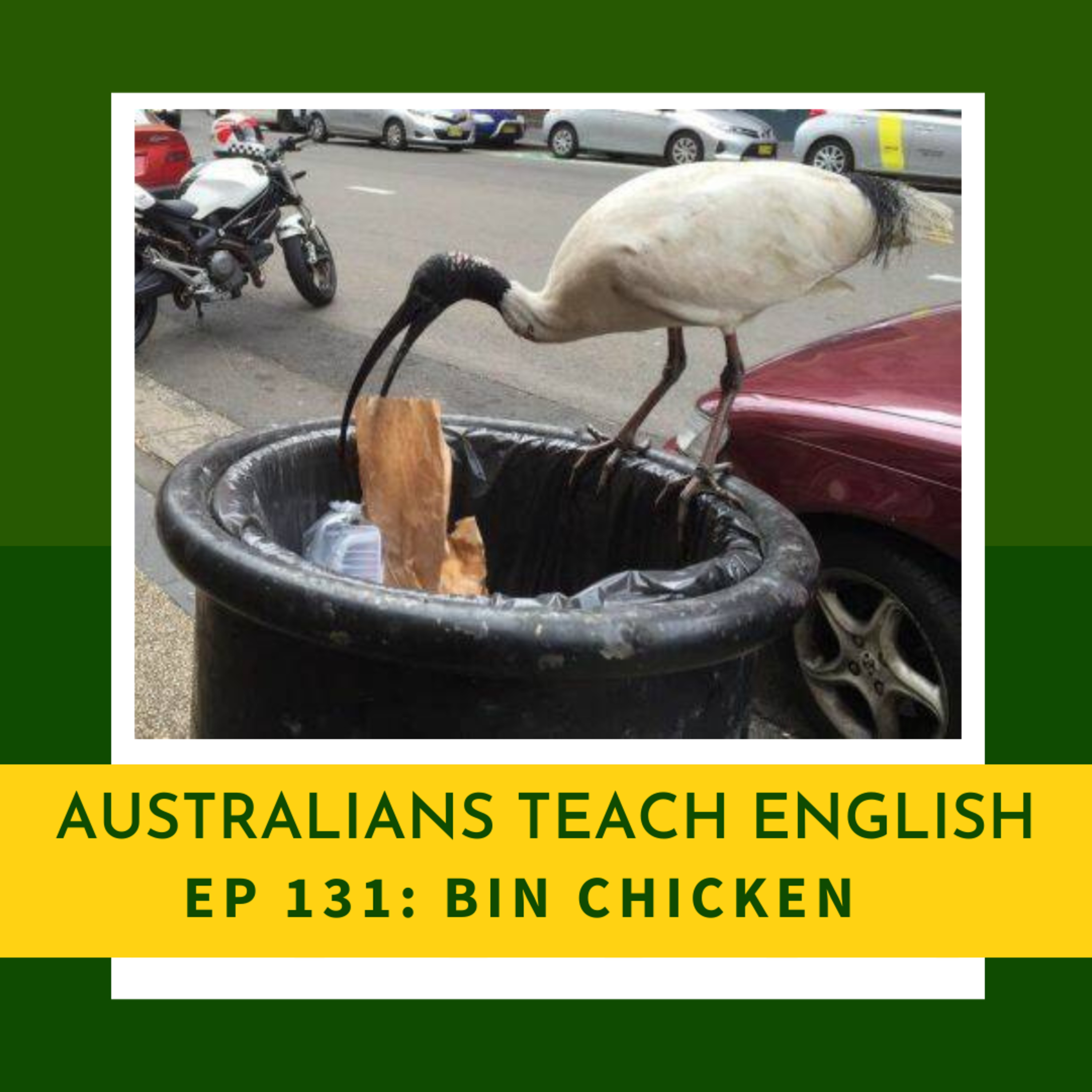 EP 131: Bin Chicken | When people first arrive in Australia, one of the first locals they are likely to meet is the “Bin Chicken”. So, I invited the expert on ‘Bin Chickens’ to the show. John Martin became fascinated with the Ibis whilst studying “pest” species in Australia. And they are an incredibly interesting bird in urban ecology. In this episode, learn about the ‘Bin Chicken’, how they came to be known as such, and their adaptability to new environments and experiences – just like a language learner. It is also an excellent opportunity to get involved in citizen science, which is a great way to reduce culture shock, and to acclimatise to a new environment. If you would like a transcript for this episode, find all content and have a say in the creative process, think about becoming a patron: patreon.com/AustraliansTeachEnglish Or check out my other podcast - IELTS in the Sun - the podcast to help you prepare your English exam: https://open.spotify.com/show/7wVfUn2wKiQxlE47vLudmc?si=VWsuUzo-T4esfb1KnjW3aA | — | ||||||
| 12/15/24 |  EP 130: Hooroo | Earlier this year, Francisco starred in a short video that went viral. In it, he used a couple of classic Australianisms to say good-bye. So, naturally, being the last episode of the year, I invited him on the show to talk about it. Francisco reflects on his shock when first arriving in Australia and gives some great advice for others when arriving. I hope you enjoy this episode and it is hooroo for another year from me, Glen. If you would like a transcript for this episode, find all content and have a say in the creative process, think about becoming a patron: patreon.com/AustraliansTeachEnglish | — | ||||||
| 12/1/24 |  EP 129: Stacks | My brother Paul is fresh off competing in the green and gold, lifting stacks of weight and winning a world championship in powerlifting. You might remember him from a previous episode - heaps, so I thought it was an opportune time to talk about his recent achievement in lifting stacks. We talk about the different ways we can use the word stack or stacks and related terms. We also talk about his professional role in the health and safety industry and his previous role as a safety inspector for worksafe. I wanted to have him on my show for this reason, to give advice to any workers in Australia struggling to have difficult conversations about safety in the workplace. There are strategies for you in this episode if you are one of those people. Paul also shares his experience with a shoulder injury that required him to reassess his goals, leading to a more realistic approach to competing in the world championships, and how this approach is applicable to learning. I hope you enjoy this fun and practical episode! If you would like a transcript for this episode, find all content and have a say in the creative process, think about becoming a patron: patreon.com/AustraliansTeachEnglish | — | ||||||
| 11/17/24 | 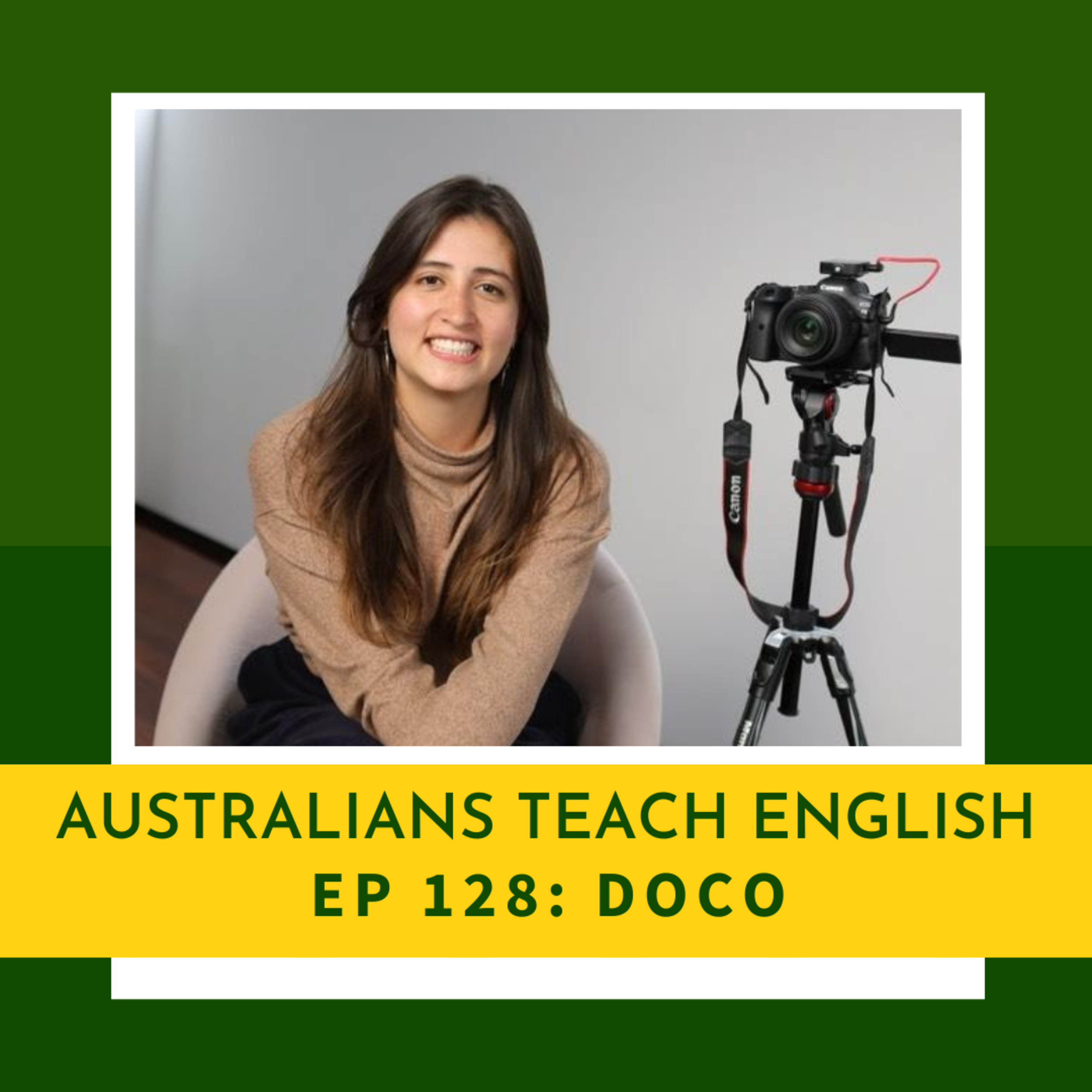 EP 128: Doco | Diana Paez, a documentary filmmaker from Colombia, discusses her journey to Australia, where she studied filmmaking at Deakin University. She highlights her passion for docos and human stories, particularly around identity and migration. Diana's recent work, "Nuestras Voces," explores the lives of Spanish-speaking migrants in Australia from the 1960s to 1980s. Diana emphasizes the importance of embracing accents and using them as a strength. She is currently working on a new doco focusing on migrant women and their experiences with accents. We talk about how docos can be an extremely useful tool in learning language through being exposed to comprehensible input. If you would like a transcript for this episode, find all content and have a say in the creative process, think about becoming a patron: patreon.com/AustraliansTeachEnglish | — | ||||||
| 11/4/24 | 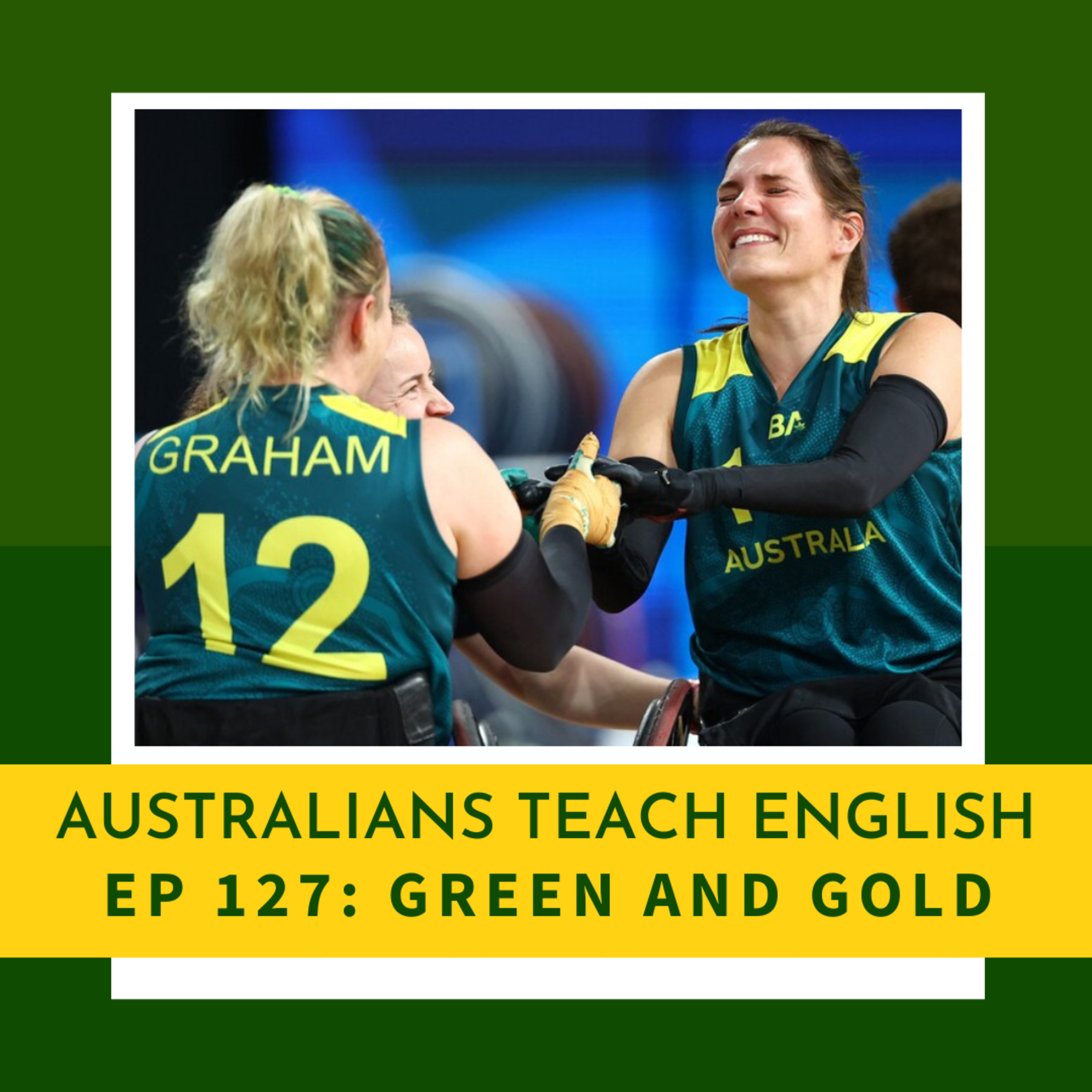 EP 127: Green and Gold | Ella Sabljak is a two-time Paralympian, rose gold medal winner, educator, and proud representative of the green and gold amongst many other things. I invited her on the show to discuss her journey in wheelchair sports and to talk about her work to promote inclusivity in schools. Ella shares her experience transitioning from wheelchair basketball to wheelchair rugby, highlighting her bronze medal win at the Paris 2024 Paralympics. She explains the unique aspects of wheelchair rugby, including its classification system and the bonus points for female players. Ella also discusses her role in promoting disability awareness and inclusion through education and her involvement with the World Anti-Doping Agency. We also talk about how the "Green and Gold" came to be our national colours and what wearing these colours means to Ella. If you would like a transcript for this episode, find all content and have a say in the creative process, think about becoming a patron: patreon.com/AustraliansTeachEnglish | — | ||||||
Want analysis for the episodes below?Free for Pro Submit a request, we'll have your selected episodes analyzed within an hour. Free, at no cost to you, for Pro users. | |||||||||
| 10/21/24 |  EP 126: A Do | In this podcast I talk to Margo who is an expert at organising "dos". We talk about everything you need to know about the language for talking about and describing events in Australia. Margo shares her story about how she came to be living in Australia, and specifically Adelaide, and her project in organising dos. She offers great advice for people wanting to stay in Australia and pursuing the permanent residency pathway. We also talk about how the word "do" can be used, and why it is so tricky for English learners. We offer some tips and tricks about how English learners can sound more natural by using the word do more regularly. You can find Margo and her project at @mambo.adelaide and @scrts.au If you would like a transcript for this episode, find all content and have a say in the creative process, think about becoming a patron: patreon.com/AustraliansTeachEnglish | — | ||||||
| 9/23/24 |  EP 125: Bush Chook | One of my close mates and beer connoisseur, Ben, is a fellow Bestern Australian. He is also a product of the wheatbelt, so I thought it was about time he came on the show to talk about his people's shame in losing the "Emu Wars" to the mighty bush chooks. Ben and I discuss the term "Bush Chook," which refers to an emu and the beer "Emu Export." We also explore the beer's history, its reputation, and its association with Western Australia. Ben and I also delve into the cultural and historical context of emus in the wheat belt, including the military's unsuccessful attempt to control them in the infamous "Emu Wars". We talk about our experience with eating different bush foods and bush tucker, including bush chooks. The conversation shifts to language learning, with Ben sharing his struggles to learn Estonian, his wife's language. We touch on the challenges of learning languages with unique sounds and the importance of cultural pride in preserving languages. The episode concludes with a light-hearted discussion about Australian slang and beer preferences. If you would like a transcript for this episode, get access to exclusive content, get express releases, and have a say in the creative process, or would just like to support the show, think about becoming a patron: patreon.com/AustraliansTeachEnglish | — | ||||||
| 9/9/24 | 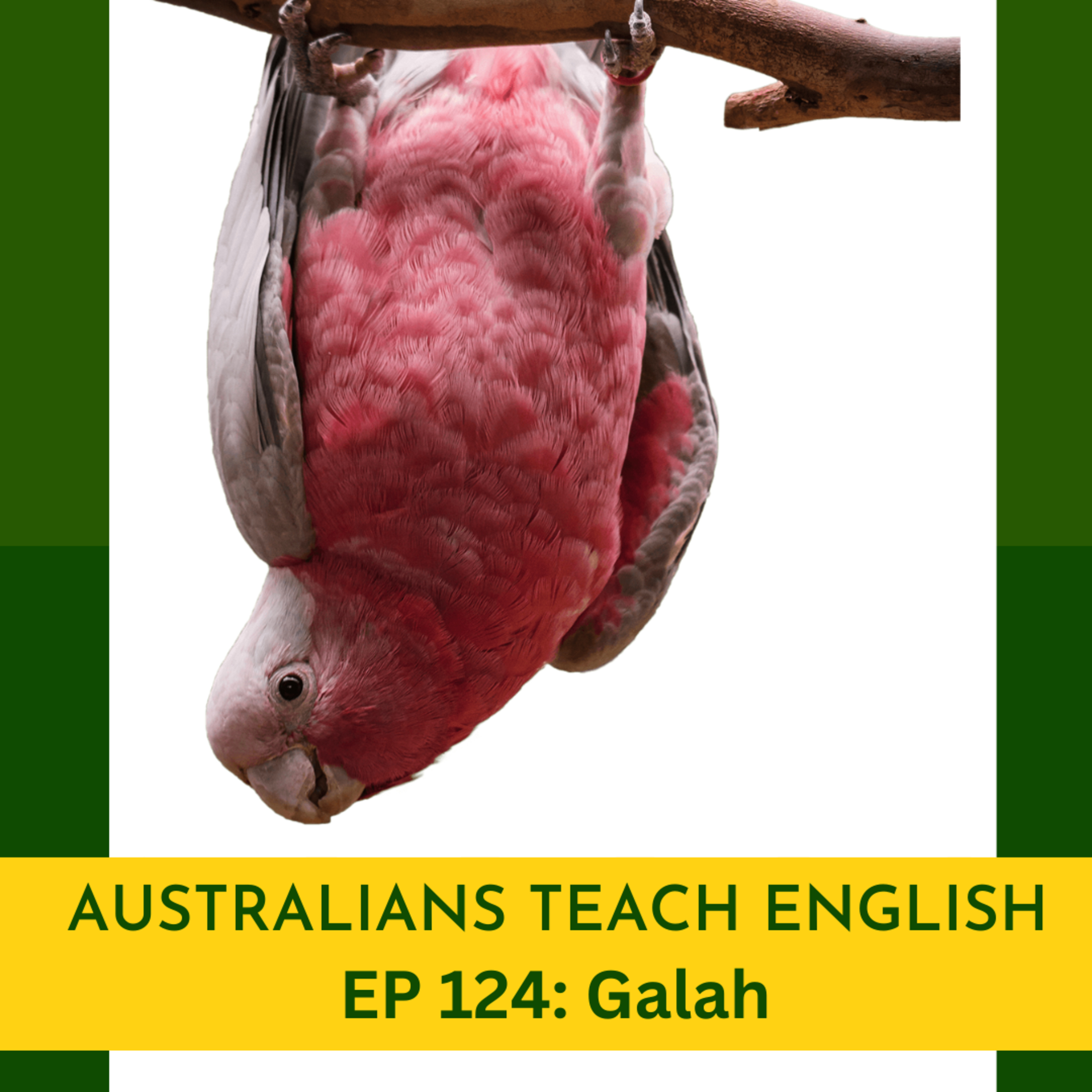 EP 124: Galah | I had been following this galah for quite a while, due to our mutual love of Australian birds, and in particular, cockatoos. But it wasn't until I saw this galah making videos of crochet Olympic events that I knew what I would invite her on the show to talk about. In this epsiode, Adele, known as cro with the flow on social media, shares her passion for crochet and Australian birds, emphasising the uniqueness of Australian wildlife. We talk about the term "galah," which in Australia is used to describe someone acting foolishly, and Adele clarifies that she embraces the term positively. Adele explains her journey into crochet, starting from a corporate background in human resources, and how she developed her business. We also talk about the differences between crochet and knitting and the process of creating crochet patterns and how it relates to language learning. The etymology of the word crochet is discussed and how it relates to other terms in English. We also talk about how embracing your inner galah can help you learn language, and just about anything, really! If you would like a transcript for this episode, get access to exclusive content, get express releases, and have a say in the creative process, or would just like to support the show, think about becoming a patron: patreon.com/AustraliansTeachEnglish | — | ||||||
| 8/26/24 | 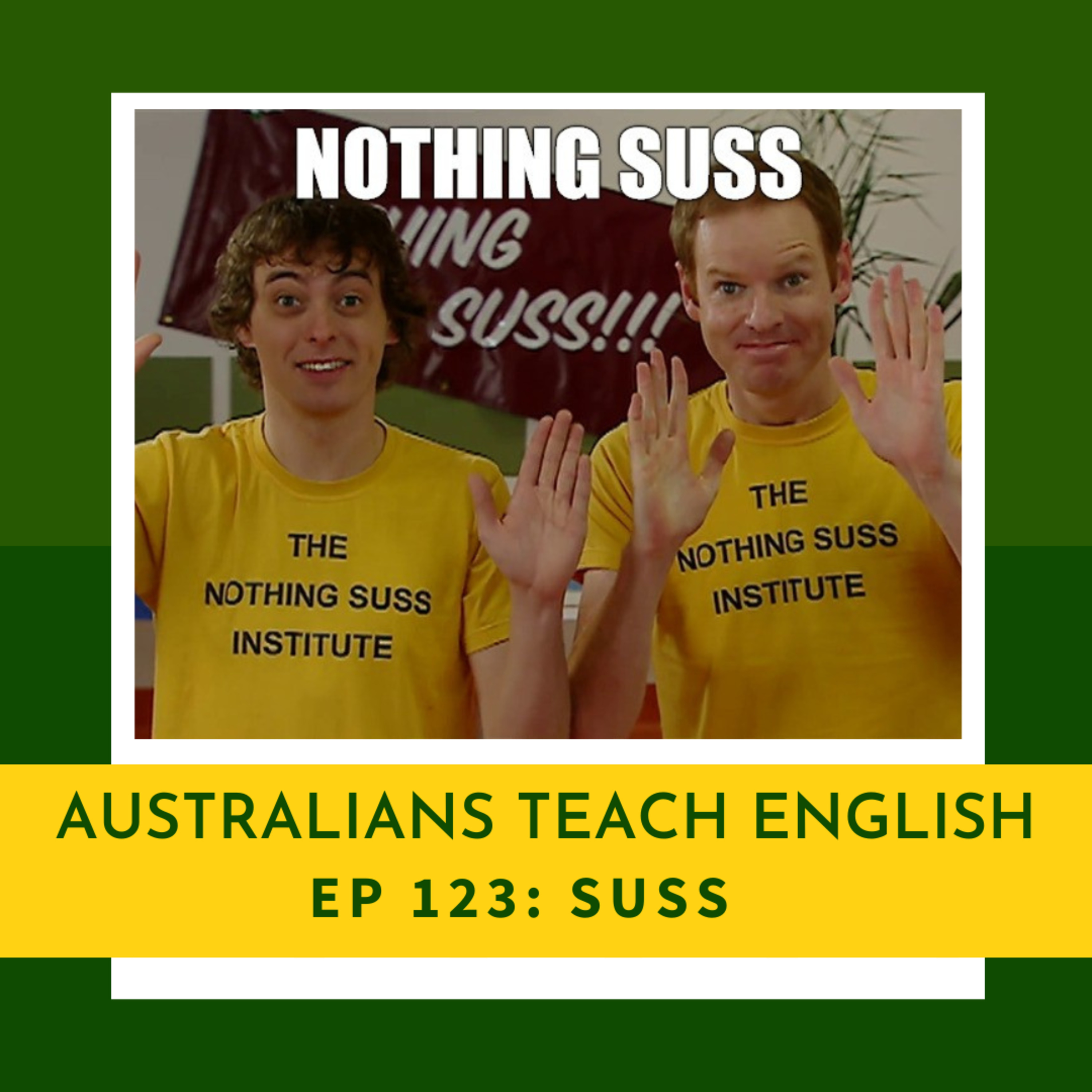 EP 123: Suss | I see a lot of people who come to Australia and join groups, that seem to me, a little suss. So, I invited an expert on the show, someone who knows all about suss groups in Australia - Sarah Steel. Sarah Steel is the host of the "Let's Talk About Sects" podcast, where she does a deep dive into suss groups, cults and sects. We discuss our personal experiences with cults and suss groups in Australia, highlighting the importance of recognising red flags and avoiding potential risks. We explore the psychological dynamics of cults, their relationship with religion, and the prevalence of cults in specific regions. We also discuss common tactics employed by suspicious groups to isolate and control members, and the power and corrupting influence of religious groups in Australian politics. We talk about language usage related to cults and how manipulative behaviour can be present in any teacher-student relationship. Finally, we emphasise the importance of questioning language and behavior in religious and secular contexts to promote critical thinking and avoid manipulation. If you would like a transcript for this episode, get access to exclusive content, get express releases, and have a say in the creative process, or would just like to support the show, think about becoming a patron: patreon.com/AustraliansTeachEnglish | — | ||||||
| 8/12/24 | 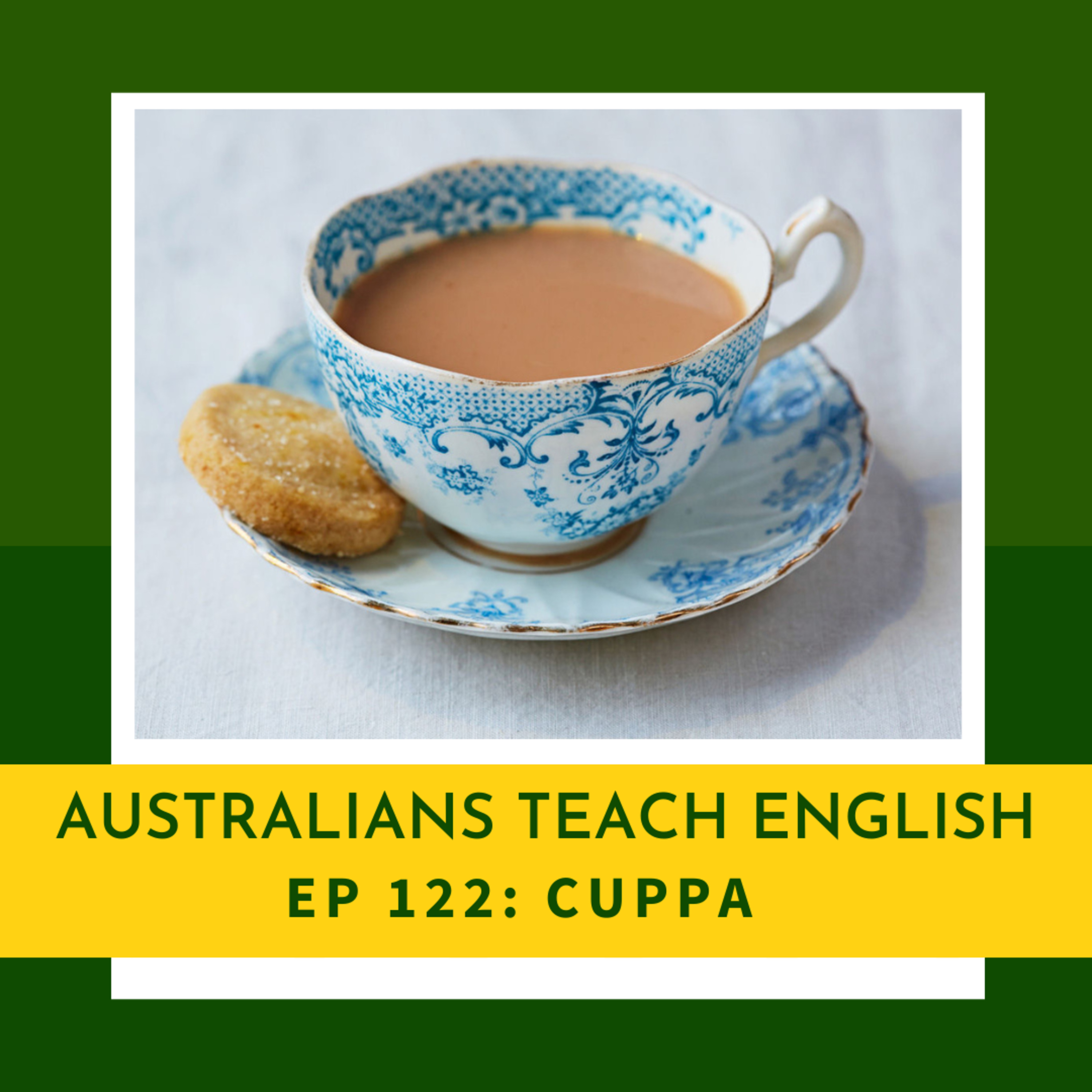 EP 122: Cuppa | I reckon it's always time for a cuppa - a nice warm drink and a bit of a chinwag. So, I invited my friend Lucas, from Materoo, on the show for a cuppa and a bit of a chat. In this episode, we talk about the importance of drinking (non-alcoholic) culture in Australia and different places around the world. We talk about the cultural significance of tea, coffee and mate drinking in Australia and Argentina, respectively, as well as the niche market for Argentinean drinks in Australia. Lucas shares his experiences of introducing a mate related small business to Australia. We also discuss the cultural etiquette and traditions related to drinking mate in Argentina and Australia, and explore the idiomatic expression 'cuppa' in English, examining its cultural significance and challenges of explaining and learning it. We highlight the opportunities for cultural exchange and entrepreneurship and the possibilities of using a cuppa as a way to improve your language skills. Dependent propositions are also a difficult topic and we explain the use of "of" in this expression as well, which forms the "a" pronounciation in this expression. So, get yourself a cuppa, and enoy the listen! If you would like a transcript for this episode, get access to exclusive content, get express releases, and have a say in the creative process, or would just like to support the show, think about becoming a patron: patreon.com/AustraliansTeachEnglish | — | ||||||
| 7/29/24 | 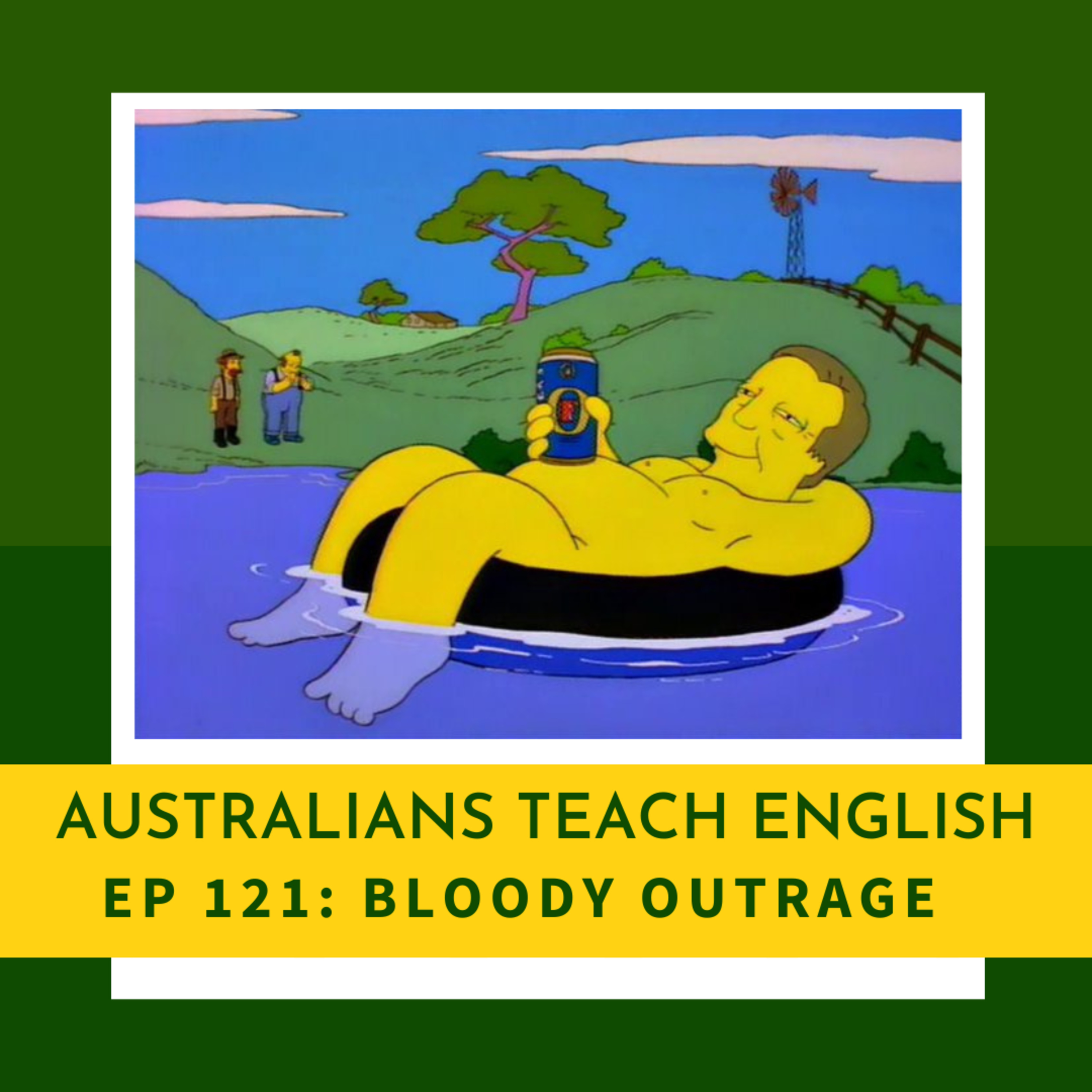 EP 121: Bloody Outrage | Nearly 30 years ago, The Simpsons arrived in Australia, causing a bloody outrage. We were offended at how they portrayed our culture, but more importantly, how badly they tried to create Australian accents. As time has gone on, the Bart v Australia episode has become a source of national pride, especially amongst Simpsons fans in Australia. To talk about this phenomenon, I invited one of my favourite Australian linguists and co-host of Lingthusiasm, on the show, Lauren Gawne. Lauren and I discuss the portrayal of Australian accents in media, highlighting inaccuracies in The Simpsons and noting the informality and lack of respect for authority in Australian English. We talk about things that The Simpsons actually did get right and how this is part of how Australian English is viewed outside of Australia. We also discuss cross-cultural politeness in language and how tolerance for profanity (for example "bloody") can be a hurdle for learners of Australian English and for Australians when learning other languages. I emphasize the importance of understanding intersections between linguistics and other areas of study, while Lauren stresses the value of intrinsic motivation in language learning. There's all that and more and it's a bloody outrage I can't write it all here! If you would like a transcript for this episode, get access to all content and have a say in the creative process, or would just like to support the show, think about becoming a patron: patreon.com/AustraliansTeachEnglish | — | ||||||
| 7/15/24 | 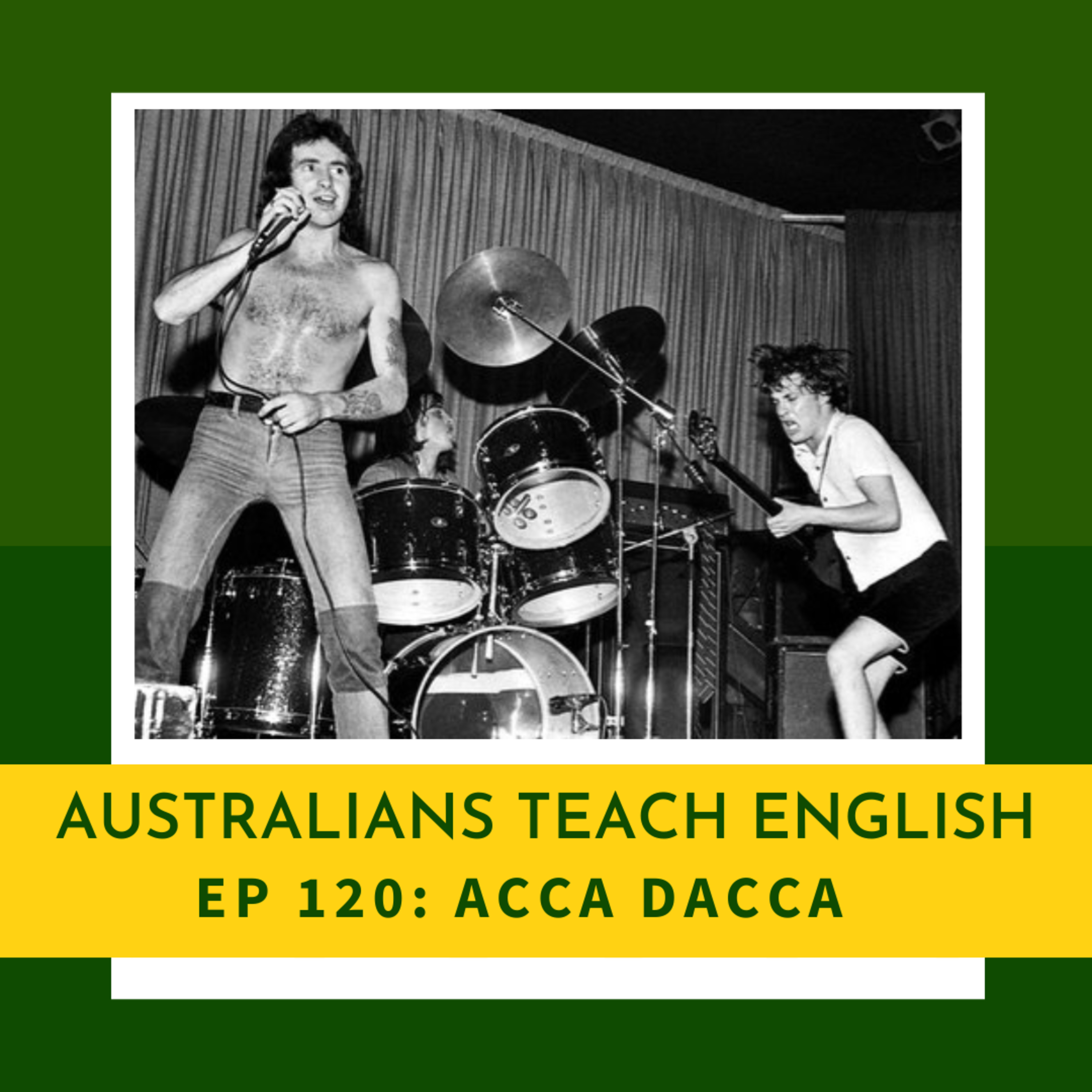 EP 120: Acca Dacca | If there is one band from Australia that you'll recognise, it's Acca Dacca. But you might not know that Acca Dacca is what we say instead of AC/DC. So, I invited Johnny from rocklatino.com.au on the show to talk about this phenomenon and rock music in general. Johnny and I discuss the global popularity of AC/DC and its local significance in Australian rock music. I share my experience of discovering that people overseas associate AC/DC with Australian music more than Australians do themselves, while Johnny shared his passion for the band and their resonance with Argentinian rock enthusiasts. Later, Johny and I discuss our favourite Australian bands, with Glen recommending Midnight Oil, The Saints, and Crowded House, while Johnny recommending Powderfinger to help listeners engage more with language learning and Australian rock music. We also discuss our experiences with language barriers in Australia and how music can help people to learn about and navigate their new environment. Finally, we explore the similarities and differences between Australian and Argentinian rock music, highlighting historical context, political influences, and the growing interest in Latin rock music in Australia. If you would like a transcript for this episode, get access to all content and have a say in the creative process, or would just like to support the show, think about becoming a patron: patreon.com/AustraliansTeachEnglish | — | ||||||
| 7/1/24 |  EP 119: Maralinga Part 2 | In the second episode of this two part series, Liz Tynan and I discuss the controversies surrounding nuclear testing in Australia in the 1950s and 1960s, that still linger today. We also talk about the importance of media scrutiny and how that played a role in uncovering the disaster. We also talk about the growing movement and need for Australia to break free from its colonial past as a result. Liz works at James Cook University in Townsville, and helps students and academic improve their academic writing. We talk about the difficulties for english learners, and students in general, in writing, and give our best tips for how to improve your writing skills. If you would like a transcript for this episode, get access to all content and have a say in the creative process, or would just like to support the show, think about becoming a patron: patreon.com/AustraliansTeachEnglish | — | ||||||
| 6/12/24 |  EP 118: Maralinga | If you hear the word, "Maralinga", you may well be confused. You may see Australians reacting with a mixture of embarassment, shame and regret. It is one of the darkest chapters in Australian history. You may not know that Australia has some of the most radioactive and contaminated sites in the world. It was the result of extensive and destructive nuclear testing in the 1950s and early 190s. And "Maralinga" has become a catch-all term for this. None of this was widely known until the Mclelland Royal Commission in 1984 attempted to get to the bottom of the issue. Given it is the 40th anniversary of this Royal Commission, I decided to invite Professor Liz Tynan to the show. She is the leading historian on the subject and has written several books on the topic. In the first part of this two part episode, we talk about the background of nuclear testing in Australia, and how Australia came to be in this awful position. We talk about the wider issues, the likely killing of indigenous Australians due to the tests, and general warnings to visitors to Australia. If you would like a transcript for this episode, get access to all content and have a say in the creative process, or would just like to support the show, think about becoming a patron: patreon.com/AustraliansTeachEnglish | — | ||||||
| 5/20/24 |  EP 117: Bum Steer | There is lots of advice out there when it comes to living, working and staying in Australia, and some times you might get a bum steer. A lot of the advice might not be accurate, and actually detrimental to your goals if you plan on moving to Australia permanently. Especially if you are a professional. I thought I'd do my part and make sure that you don't get a bum steer when it comes to advice. This week's guest is Caro Monroy, who I describe as a professional migrant. She is a psychologist who has lived and worked in different parts of the world, in different roles. She is now a career coach who specialises in helping professionals to build their careers and profiles in Australia. She gives some great advice for people interested in the Australian labour market and some differences between the spanish speaking world, and Australia. Listen for more. We hope that this episode gives you some helpful pointers without giving you a bum steer! If you would like a transcript for this episode, get access to all content and have a say in the creative process, or would just like to support the show, think about becoming a patron: patreon.com/AustraliansTeachEnglish | — | ||||||
| 4/24/24 | 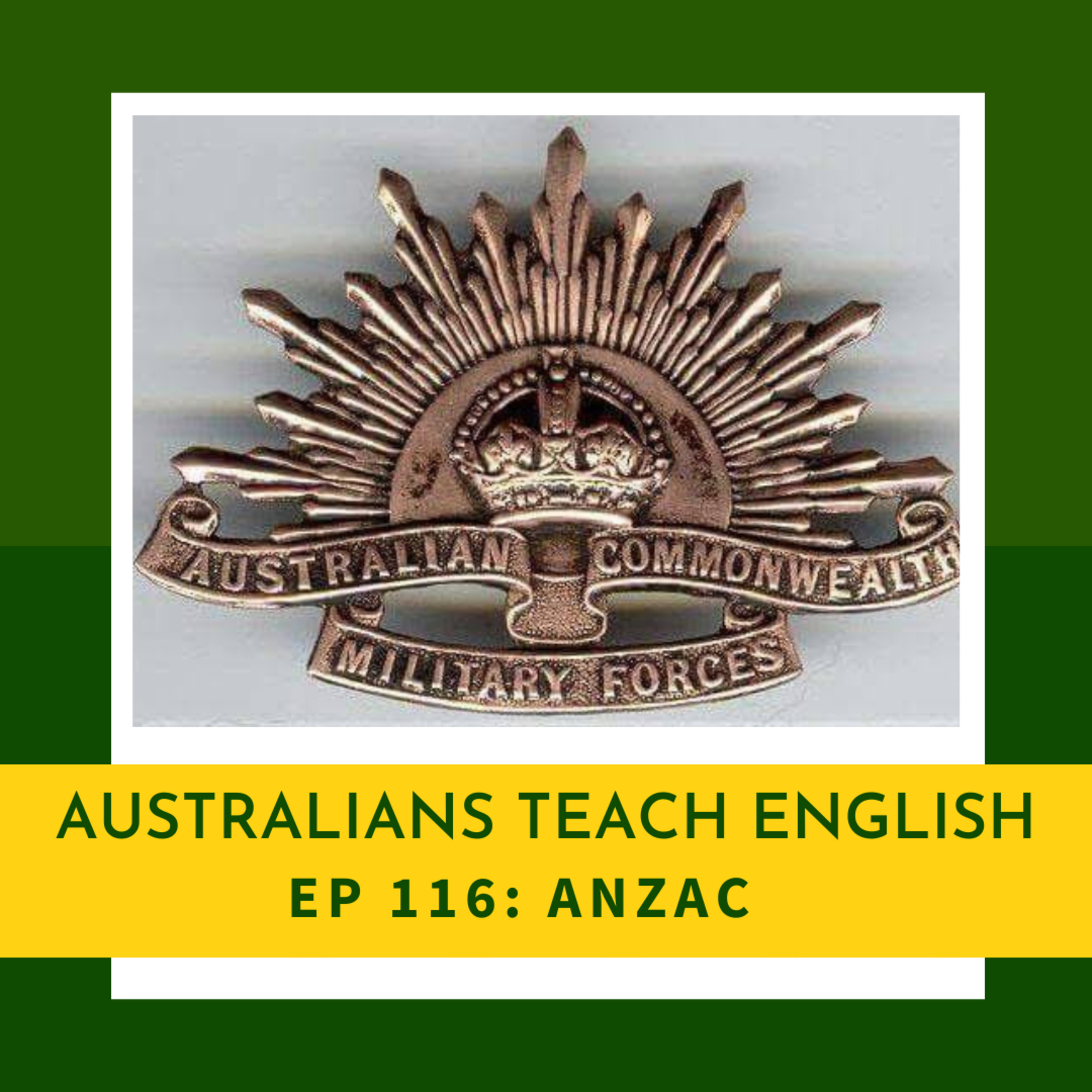 EP 116: ANZAC | ANZAC Day is the most solemn and one of the most special days in the Australian and New Zealand calendar. And that's why I bring you this special episode. Our guest this week is carrying on the tradition of the ANZACs. But it's not someone you'd expect. I met Ronnie whilst playing cricket in Darwin. His brother, Rocky, is a gun cricketer, and asked if he could bring his brother down to play as well. And so, the story of how a group of cricketers became mates with a pair of Bangladeshis began. As we moved away, we've all kept in touch. But I think we were all surprised when Ronnie decided to join the Australian Defence Force. I don't think anyone had heard of a Bangladeshi doing so, but as it turns out, he's led the charge on many foreign born Australians joining the armed forces. This episode is the story of how Ronnie decided to carry on this tradition, and why it is so important for Australians. We talk about how learning a language can be a lot like being in trenches. We also talk about how we can use the ANZAC spirit to help guide our way and continue to make positive contributions to the country. If you would like a transcript for this episode, get access to all content and have a say in the creative process, or would just like to support the show, think about becoming a patron: patreon.com/AustraliansTeachEnglish | — | ||||||
| 4/15/24 |  EP 115: Grouse | I came across this week's guest because she could do a grouse Australian accent. Which was unusual because it's not often a seppo can actually do an Australian accent correctly. After finding out a bit more about Paula, I realised why she had this talent - she is an accent coach for actors and voice actors in video games and animations, specialising in training US based actors in these roles. She is also a polyglot, which gives us lots of material to talk about when it comes to language learning and pronunciation. As with the word grouse, a lot of differences in accents comes down to the vowel sounds, and it is also what makes it difficult to learn pronunciation, depending on your first language. We debate the merits of learning the IPA chart, and in what circumstances it is most beneficial. We also explore the main differences between accents from the southern hemisphere and the vowel shifts that have taken place. Enoy this grouse episode and let us know what you think. Paula can be found on instagram @accentcolors . If you would like a transcript for this episode, get access to all content and have a say in the creative process, or would just like to support the show, think about becoming a patron: patreon.com/AustraliansTeachEnglish | — | ||||||
| 3/25/24 | 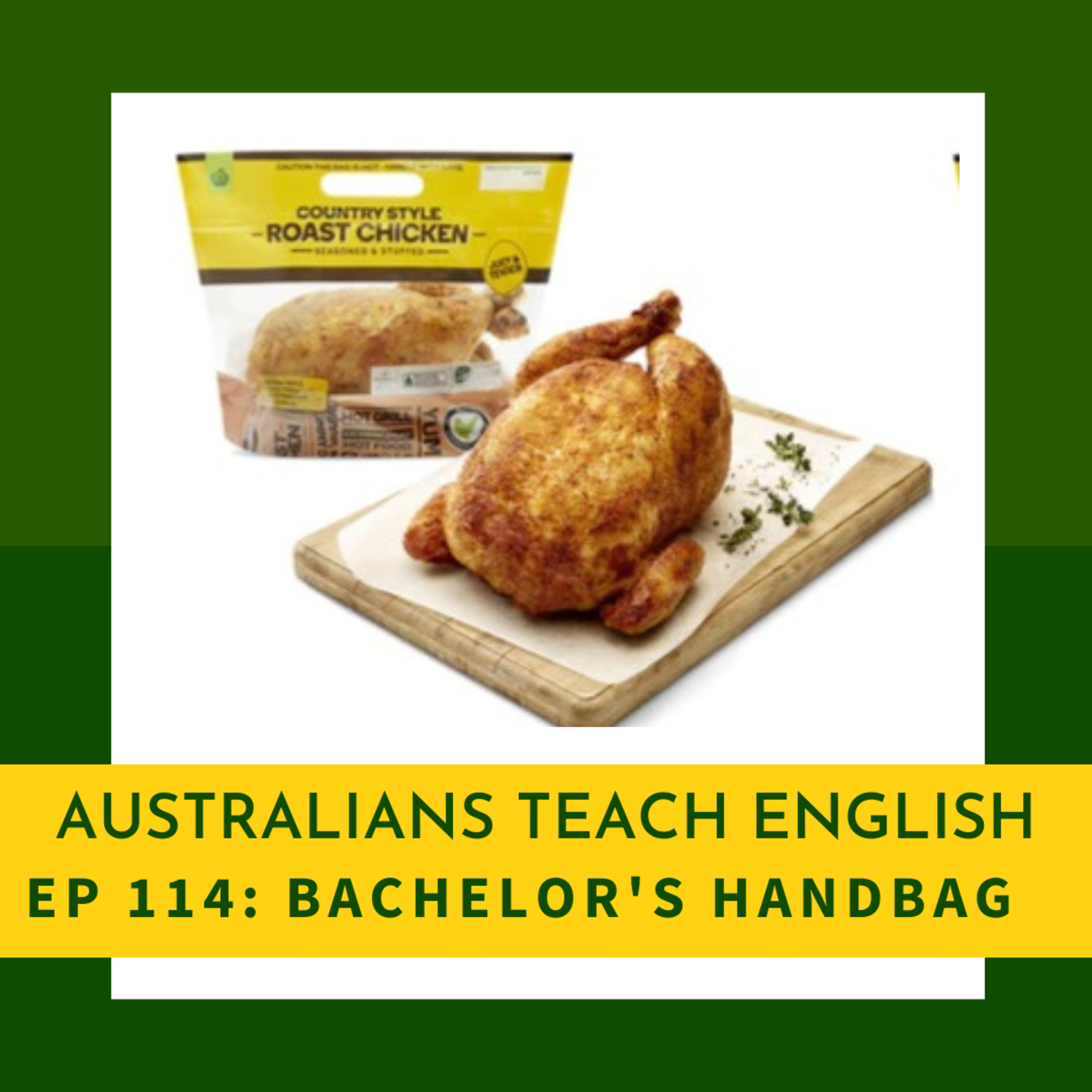 EP 114: Bachelor's Handbag | After a long day of work, or if you are just feeling lazy, and you can't be f*d cooking dinner, you may head down to the shops to pick up one of these - a bachelor's handbag. The bachelor's handbag is a very recent addition to Australian slang, and was one of the most popular contenders for Australian word of the year in 2022. For a while I had noticed that our guest Emilia Terzon, was an afficionado and connoisseur of the bachy handbag. So I invited her on to the show to talk about her area of expertise. She is also a business and economics reporter for ABC News. So not only do we talk about the bachy handbag, but lots of vocabulary related to supermarkets and "Business English". Her work for the ABC has been extremely broad, but her most recent areas include the housing market, and the Coles and Woolies duopoly. If you are interested in improving your vocabulary related to business, or need to expand your general understanding of economics for english exams, then this is the episode for you. If you would like a transcript for this episode, get access to all content and have a say in the creative process, or would just like to support the show, think about becoming a patron: patreon.com/AustraliansTeachEnglish | — | ||||||
| 3/11/24 |  EP 113: Schmick | One of the most common jobs people first get when they come to Australia is as a cleaner - or a job that involves cleaning. You may be asked to make things look schmick. In this episode, we talk with Sophia, who began her career as a cleaner when she came to Australia - and has now gone onto bigger and better things. We talk about expressions related to all things dirty and clean, and of course, schmick. If you are looking for work tips, vocabulary to help you in your job, or some help if you feel a bit deflated by your work opportunities, this is the episode for you. If you would like a transcript for this episode, get access to all content and have a say in the creative process, or would just like to support the show, think about becoming a patron: patreon.com/AustraliansTeachEnglish | — | ||||||
| 2/19/24 | 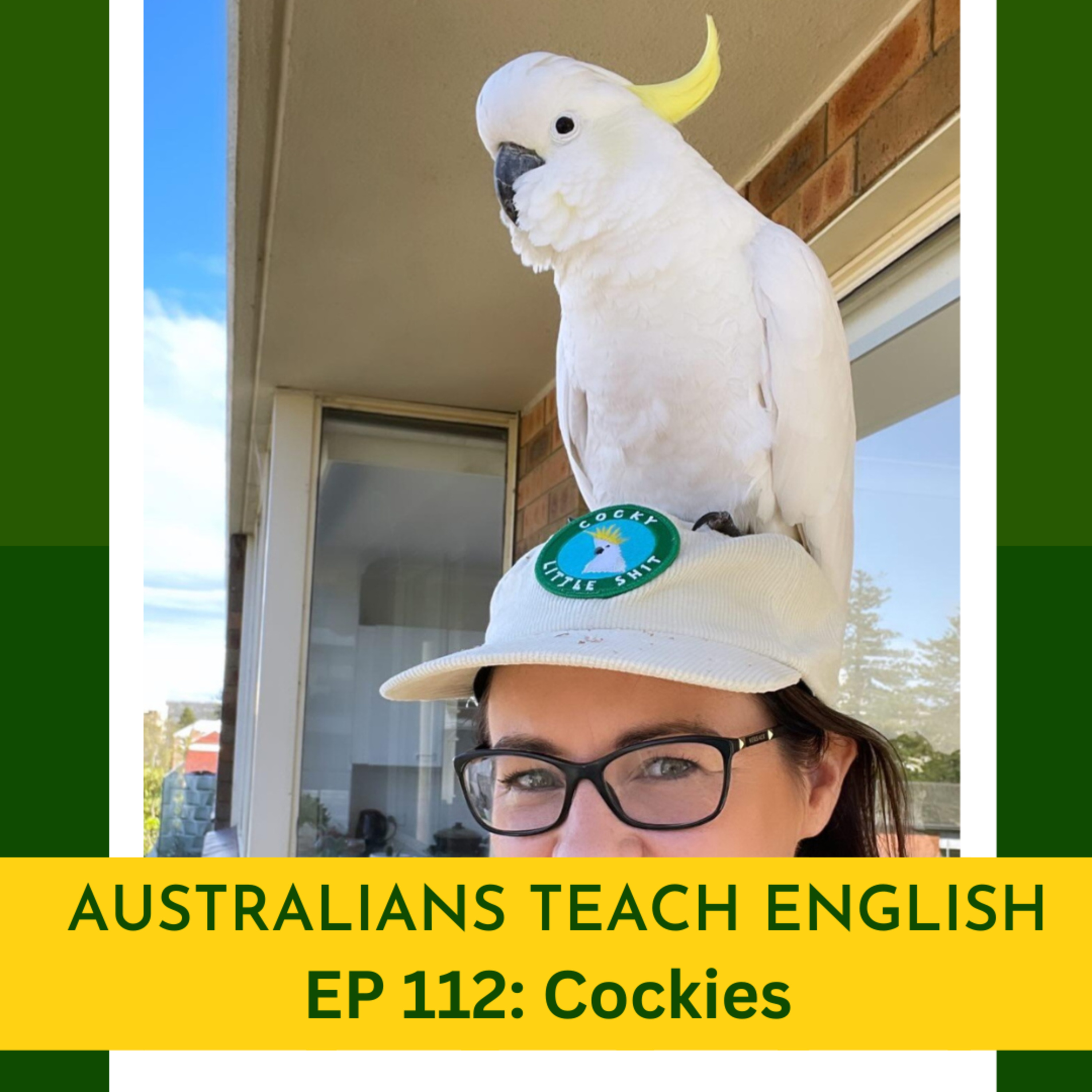 EP 112: Cockies | Welcome back to the Australians Teach English Podcast for 2024. We're feeling a little bit cocky, which is funny, because that's the name of this episode. You might have noticed that the mascot is a white bird - he's actually a cockie or cocky. So, I thought it was about time to do an episode on cockies. And who better to talk about cockies than the true cockie lady herself, Suzy from @thealmondcafe ? Over the years, Suzy's balcony has become the second home to a flock of cockies, and we talk about her experiences with them. We talk about different cockatoos and the various conservation status that each has. We also talk about the origin of the word cockatoo, and how variations can be used differently. And of course, we talk about the language of cockatoos, and what we can learn from them. If you would like a transcript for this episode, get access to all content and have a say in the creative process, or would just like to support the show, think about becoming a patron: patreon.com/AustraliansTeachEnglish | — | ||||||
Showing 25 of 107
Pitch Fit is a Pro feature
See how bookable this show is for guests, which brands already advertise, the per-episode ad value, and the best-fit guest and sponsor profile. The numbers are blurred on the free plan.
How readily this show books outside guests like you.
How proven this show is for host-read sponsorships.
For Guests
ProFor Advertisers
ProUpgrade to Pro to unlock guest cadence, sponsor categories, fit scores, and per-episode ad value for this show.
Chart Positions
2 placements across 2 markets.
Chart Positions
2 placements across 2 markets.