

Insights from recent episode analysis
Audience Interest
Podcast Focus
Publishing Consistency
Platform Reach
Insights are generated by CastFox AI using publicly available data, episode content, and proprietary models.
Most discussed topics
Brands & references
Total monthly reach
Estimated from 1 chart position in 1 market.
By chart position
- 🇧🇷BR · Technology#6510K to 30K
- Per-Episode Audience
Est. listeners per new episode within ~30 days
5K to 15K🎙 Weekly cadence·73 episodes·Last published 4mo ago - Monthly Reach
Unique listeners across all episodes (30 days)
10K to 30K🇧🇷100% - Active Followers
Loyal subscribers who consistently listen
3K to 9K
Market Insights
Platform Distribution
Reach across major podcast platforms, updated hourly
Total Followers
—
Total Plays
—
Total Reviews
—
* Data sourced directly from platform APIs and aggregated hourly across all major podcast directories.
On the show
From 10 epsHost
Recent guests
Recent episodes
71 - NeoAlp - Humanoide Robotik - Zwischen Dystopie und Euphorie
Feb 3, 2026
1h 41m 48s
70. Marko Goels - sunrAI - eine KI Agenten Plattform für alle die mehr als Prozessautomatisierung wollen
Nov 7, 2025
1h 11m 36s
69. Puranam Panish - Why organisations will need human centric AI to survive
Sep 15, 2025
1h 10m 50s
68. Markus Tretzmüller - Cortecs - Europäische LLM Infrastruktur Unabhängigkeit
Jul 23, 2025
42m 39s
67. Mathias Neumayer and Dima Rubanov - Lora a child friendly AI
May 24, 2025
53m 10s
Social Links & Contact
Official channels & resources
Official Website
Login
RSS Feed
Login
| Date | Episode | Topics | Guests | Brands | Places | Keywords | Sponsor | Length | |
|---|---|---|---|---|---|---|---|---|---|
| 2/3/26 | 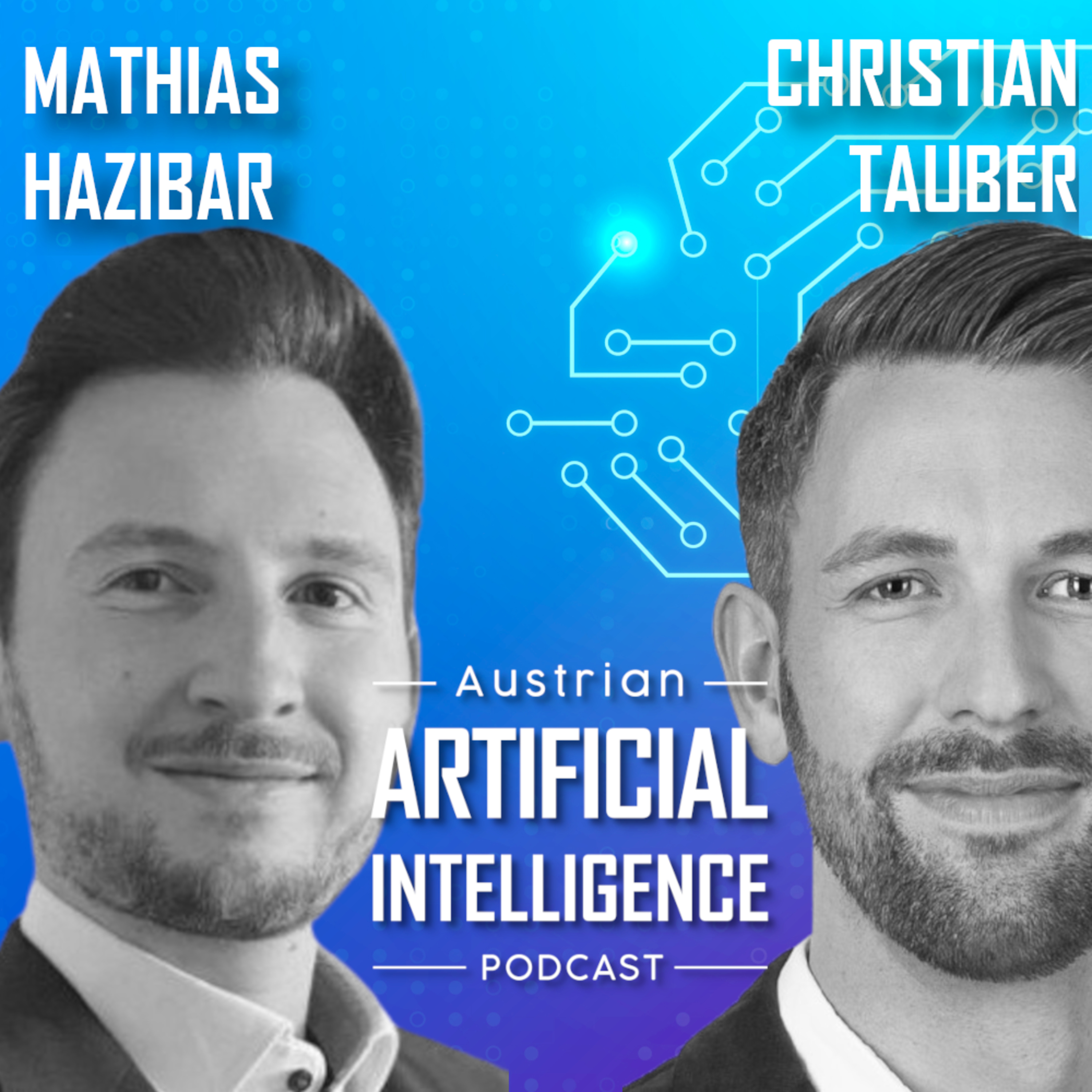 71 - NeoAlp - Humanoide Robotik - Zwischen Dystopie und Euphorie✨ | humanoid roboticsphysical AI+4 | Mathias HazibarChristian Tauber | NEOALPLarge Language Models+3 | Österreich | humanoid roboticsphysical AI+5 | — | 1h 41m 48s | |
| 11/7/25 | 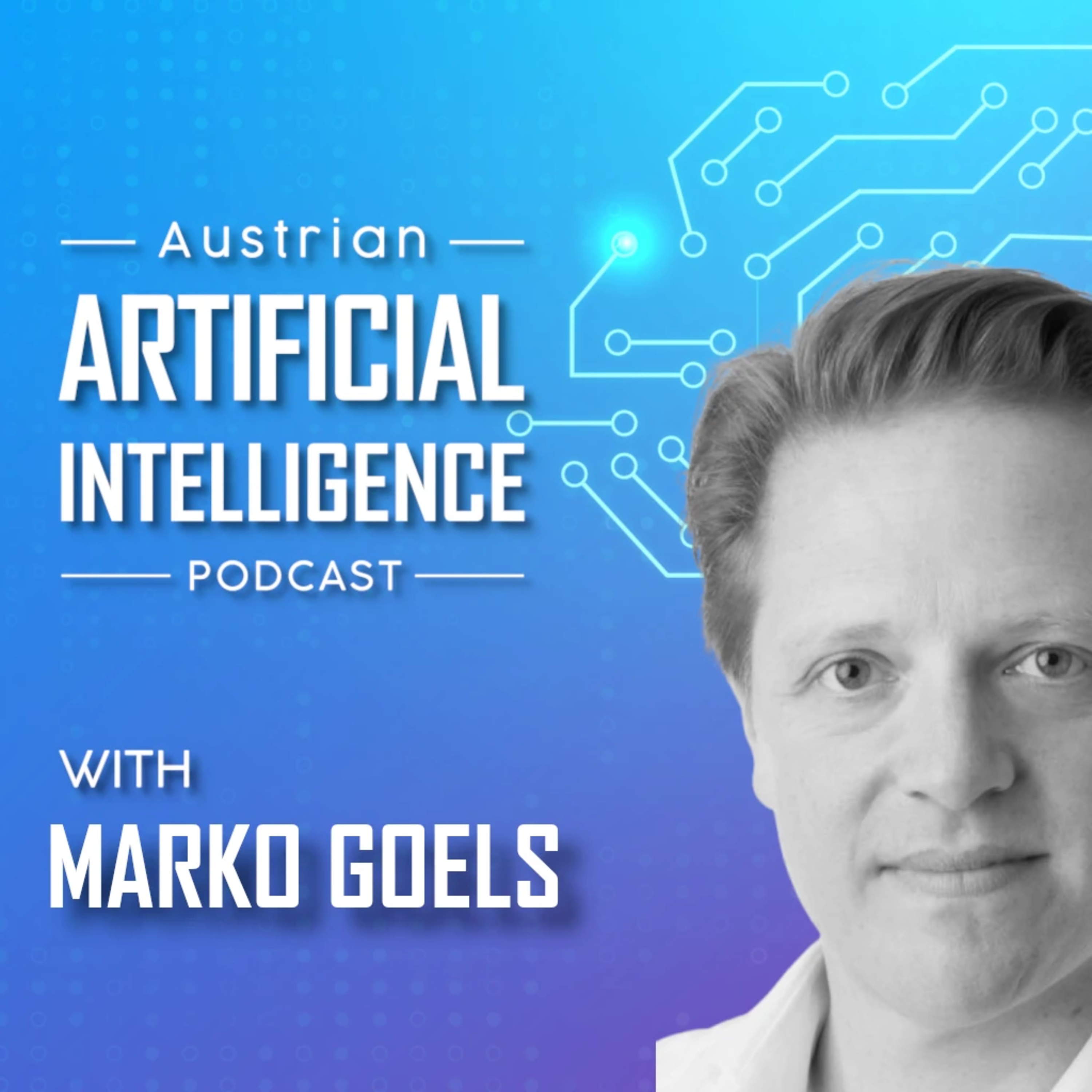 70. Marko Goels - sunrAI - eine KI Agenten Plattform für alle die mehr als Prozessautomatisierung wollen✨ | KI-AgentenplattformenAutomatisierung+3 | Marko Goels | SunrAIDigital Sunray | — | KI-AgentenAutomatisierung+3 | — | 1h 11m 36s | |
| 9/15/25 | 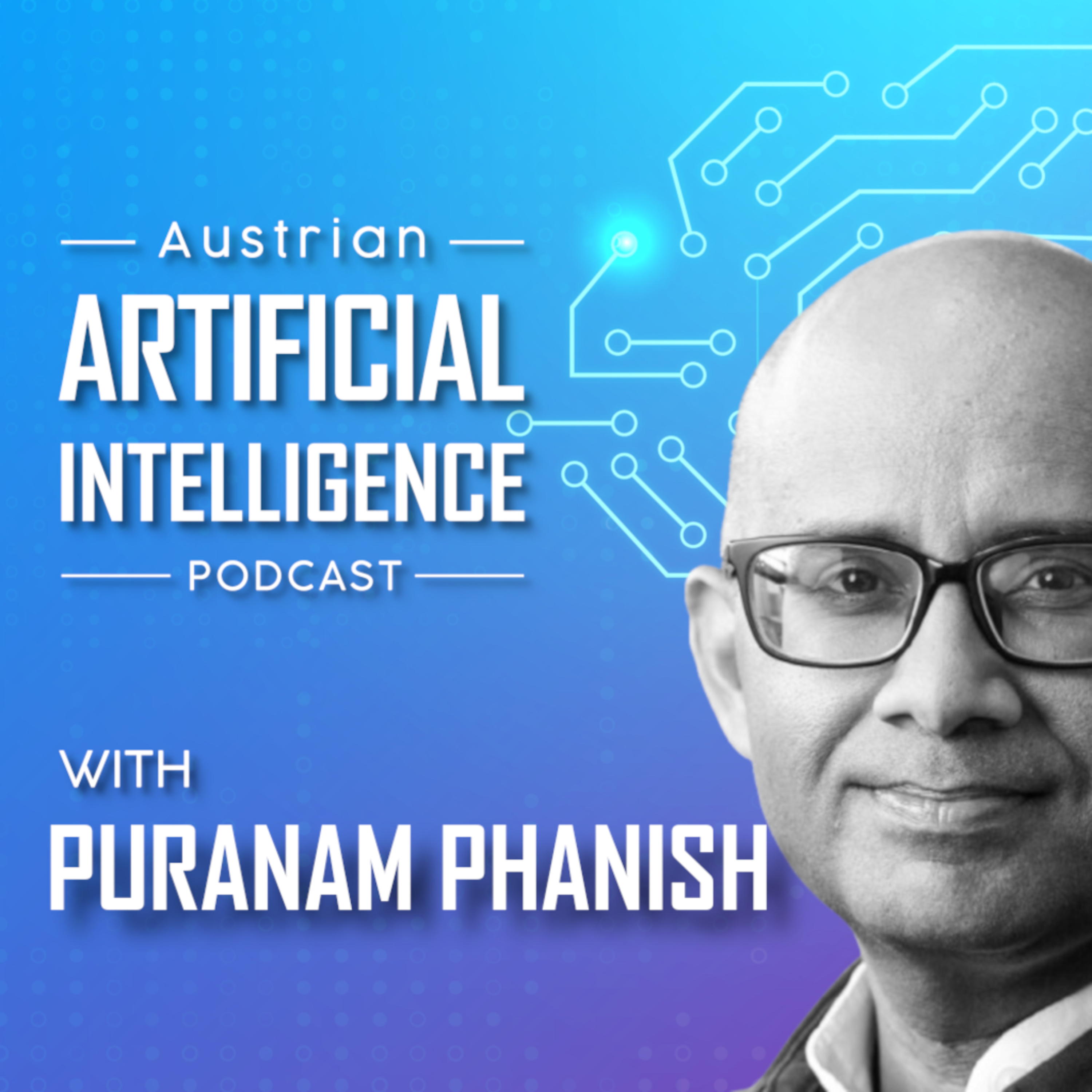 69. Puranam Panish - Why organisations will need human centric AI to survive✨ | human centric AIorganizational design+4 | Phanish Puranam | INSEADUniversity of Vienna | — | AIorganizational science+7 | — | 1h 10m 50s | |
| 7/23/25 | 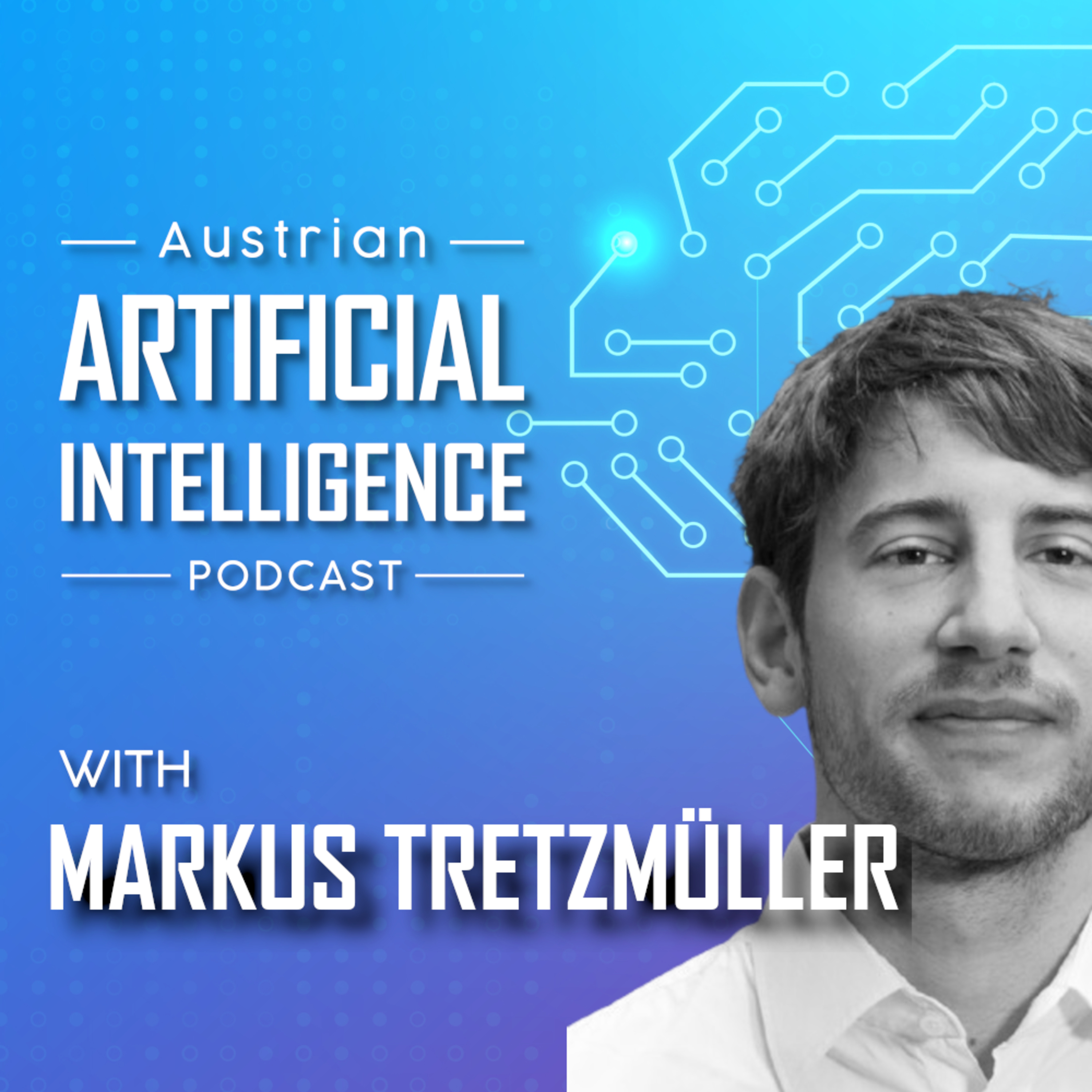 68. Markus Tretzmüller - Cortecs - Europäische LLM Infrastruktur Unabhängigkeit✨ | European AI independenceSky computing+4 | Markus Tretzmüller | CortecsUS tech Unternehmen+5 | EuropaUSA+1 | AI modelscloud providers+5 | — | 42m 39s | |
| 5/24/25 |  67. Mathias Neumayer and Dima Rubanov - Lora a child friendly AI✨ | child friendly AIlanguage models+3 | Mathias NeumayerDima Rubanov | LoraOscar stories+2 | — | Large Language Modelschild friendly AI+3 | — | 53m 10s | |
| 4/18/25 |  66. Taylor Peer - Beat Shaper - A music producers AI Copilot✨ | music productionartificial intelligence+5 | Taylor Peer | Beat ShaperOpenAI+1 | — | Beat Shapermusic producers+6 | — | 52m 20s | |
| 2/11/25 |  65. Daniel Kondor - CSH - The long term impact of AI on society✨ | AI impact on societycomputational social science+3 | Daniel Kondor | Complexity Science Hubseshat-db.com+2 | — | AIsociety+3 | — | 1h 04m 50s | |
| 12/31/24 |  64. Solo - Manuel Pasieka on the hottest LLM topics of 2024✨ | Small Language ModelsAgentic Systems+4 | — | Small Language modelsAgentic Systems+2 | — | LLMAI+5 | — | 59m 00s | |
| 11/19/24 |  63. Alexander Zehetmaier - Sunrise AI Solutions - Bringing AI to companies of every size✨ | AI solutionsGraph Neural Networks+3 | Alexander Zehetmaier | SunRise AI SolutionsMein Dienstplan | — | AIGraph Neural Network+6 | — | 50m 34s | |
| 10/29/24 |  62. Marius-Constantin Dinu - extensity.ai - Building reliable and explainable AI Agent Systems✨ | AI Agent SystemsOpen Source+3 | Marius-Constantin Dinu | extensity.aiOpenAI+1 | — | AIextensity.ai+5 | — | 1h 15m 14s | |
Want analysis for the episodes below?Free for Pro Submit a request, we'll have your selected episodes analyzed within an hour. Free, at no cost to you, for Pro users. | |||||||||
| 10/3/24 |  61. Jules Salzinger - AIT - Building explainable and generalizable AI Systems for Agriculture | Today on the podcast I have to pleasure to talk to Jules Salzinger, Computer Vision Researcher at the Vision & Automation Center of the AIT, the Austrian Institute of Technology. Jules will share with us, his newest research on applying computer vision systems that analyze drone videos to perform remote plant phenotyping. This makes it possible to analyze plants growth, but as well how certain plant decease spreads within a field. We will discuss how the diversity im biology and agriculture makes it challenging to build AI systems that generalize between plants, locations and time. Jules will explain how in their latest research, they focus on performing experiments that provide insights on how to build effective AI systems for agriculture and how to apply them. All of this with the goal to build scalable AI system and to make their application not only possible but efficient and useful. ## TOC 00:00:00 Beginning 00:03:02 Guest Introduction 00:15:04 Supporting Agriculture with AI 00:22:56 Scalable Plant Phenotyping 00:37:33 Paper: TriNet 00:70:10 Major findings ### References - Jules Salzinger: https://www.linkedin.com/in/jules-salzinger/ - VAC: https://www.ait.ac.at/en/about-the-ait/center/center-for-vision-automation-control - https://www.ait.ac.at/en/about-the-ait/center/center-for-vision-automation-control - AI in Agriculture: https://intellias.com/artificial-intelligence-in-agriculture/ - TriNet: Exploring More Affordable and Generalisable Remote Phenotyping with Explainable Deep Models: https://www.mdpi.com/2504-446X/8/8/407 | — | ||||||
| 8/28/24 |  60. Alexandre Paris - Proofcheck - LLM fine-tuning and customization | ## Summary Today on the show I am talking to Proofreads CTO Alexandre Paris. Alex explains in great detail how they analyze digital books drafts to identify mistakes and instances within the document that dont follow guidelines and preferences of the user. Alex is explaining how they fine-tune LLMs like, Mistrals 7B to achieve efficient resource usage and provide customizations and serve multiple uses cases with a single base model and multiple lora adapters. We talk about the challenges and capabilities of fine-tuning, how to do it, when to apply it and when for example prompt engineering of an foundation model is the better choice. I think this episode is very interesting for listeners that are using LLMs in a specific domain. It shows how fine-tuning a base model on selected high quality corpus can be used to build solutions outperform generic offerings by OpenAI or Google. ## AAIP Community Join our discord server and ask guest directly or discuss related topics with the community. https://discord.gg/5Pj446VKNU ## TOC 00:00:00 Beginning 00:02:46 Guest Introduction 00:06:12 Proofcheck Intro 00:11:43 Document Processing Pipeline 00:26:46 Customization Options 00:29:49 LLM fine-tuning 00:42:08 Prompt-engineering vs. fine-tuning ### References https://www.proofcheck.io/ Alexandre Paris - https://www.linkedin.com/in/alexandre-paris-92446b22/ | — | ||||||
| 8/7/24 |  59. Philip Winter - VRVis - Continual Learning | Today I am talking to Philip Winter, researcher at the Medical Imaging group of the VRVis, a research center for virtual realities and visualizations. Philip will explain the benefits and challenges in continual learning and will present his recent paper "PARMESAN: Parameter-Free Memory Search and Transduction for Dense Prediction Tasks". Where he and his colleagues have developed a system that uses a frozen hierarchical feature extractor to build a memory database out of the labeled training data. During inference the system identified training examples similar to the test data and prediction is performed through a combination of parameter-free correspondence matching and message passing based on the closes training datapoints. I hope you enjoy this episode and will find it useful. ## AAIP Community Join our discord server and ask guest directly or discuss related topics with the community. https://discord.gg/5Pj446VKNU ## TOC 00:00:00 Beginning 00:03:04 Guest Introduction 00:06:50 What is continual learning? 00:15:38 Catastrophic forgetting 00:27:36 Paper: Parmesan 00:40:14 Composing Ensembles 00:46:12 How to build memory over time 00:55:37 Limitations of Parmesan ### References Philip Winter - https://www.linkedin.com/in/philip-m-winter-msc-b15679129/ VRVIS - https://www.vrvis.at/ PARMESAN: Parameter-Free Memory Search and Transduction for Dense Prediction Tasks - https://arxiv.org/abs/2403.11743 Continual Learning Survey: https://arxiv.org/pdf/1909.08383 | — | ||||||
| 7/16/24 |  58. Christa Zoufal - Quantum Machine Learning | ## Summary AI is currently dominated by Deep Learning and Large Language Models, but there is other very interesting research that has the potential to have great impact on our lives in the future; one of them being Quantum Machine Learning (QML) Today on the podcast, I am talking to Christa Zoufal, Quantum Machine Learning Researcher at IBM. Christa will explain how Quantum Computing (QC) and Quantum Machine Learning relates to classical computing (CC). We will discuss Qbit's, the fundamental information storage and processing unit of quantum computers that in comparison with bits in a classical computers, not only store a single state of zero or one, but a superposition of the two. Christa will explain how Quantum algorithms are created by building quantum circuits that operate on those qbits. We will talk about the challenges when operating on those physical qbits that need to be kept at very low temperatures in order to operate without noise perturbing their states, and why one combines multiple physical qbits to a single logical qbit in order to perform error correction. How current quantum circuits are limited in the number of logical qbits they can contain and the number of operations; in the sense of the size of an algorithm, they can perform. Why these properties make QC is the wrong choice for BigData applications, but QM could in the future be used for applications where very little data is available and quantum algorithms exist that outperform their known classical counterparts. ## AAIP Community Join our discord server and ask guest directly or discuss related topics with the community. https://discord.gg/5Pj446VKNU ## TOC 00:00:00 Beginning 00:03:21 Guest Introduction 00:07:08 Quantum Computer (QC) & Quantum Machine Learning (QML) 00:14:50 Difference between classical computing and QC 00:24:59 What kind of programs one can run on a QC 00:38:43 Examples of Quantum Machine Learning 00:49:25 Current applications of QC ## References Christa Zoufal: https://www.linkedin.com/in/christa-zoufal/ IBM Quantum Learning: https://learning.quantum.ibm.com/course/basics-of-quantum-information Quantum machine learning course: https://github.com/Qiskit/textbook/tree/main/notebooks/quantum-machine-learning Scott Aaronson @ Lex Podcast https://www.youtube.com/watch?v=nK9pzRevsHQ State of the Art Bottlenecks: https://arxiv.org/abs/2312.09121 | — | ||||||
| 6/25/24 |  57. Eldar Kurtic - Efficient Inference through sparsity and quantization - Part 2/2 | Hello and welcome back to the AAIP This is the second part of my interview with Eldar Kurtic and his research on how to optimiz inference of deep neural networks. In the first part of the interview, we focused on sparsity and how high unstructured sparsity can be achieved without loosing model accuracy on CPU's and in part on GPU's. In this second part of the interview, we are going to focus on quantization. Quantization tries to reduce model size by finding ways to represent the model in numeric representations with less precision while retaining model performance. This means that a model that for example has been trained in a standard 32bit floating point representation is during post training quantization converted to a representation that is only using 8 bits. Reducing the model size to one forth. We will discuss how current quantization method can be applied to quantize model weights down to 4 bits while retaining most of the models performance and why doing so with the models activation is much more tricky. Eldar will explain how current GPU architectures, create two different type of bottlenecks. Memory bound and compute bound scenarios. Where in the case of memory bound situations, the model size causes most of the inference time to be spend in transferring model weights. Exactly in these situations, quantization has its biggest impact and reducing the models size can accelerate inference. Enjoy. ## AAIP Community Join our discord server and ask guest directly or discuss related topics with the community. https://discord.gg/5Pj446VKNU ### References Eldar Kurtic: https://www.linkedin.com/in/eldar-kurti%C4%87-77963b160/ Neural Magic: https://neuralmagic.com/ IST Austria Alistarh Group: https://ist.ac.at/en/research/alistarh-group/ | — | ||||||
| 6/7/24 |  56. Eldar Kurtic - Efficient Inference through sparsity and quantization - Part 1/2 | Hello and welcome back to the AAIP If you are an active Machine Learning engineer or are simply interested in Large Language models, I am sure you have seen the discussions around quantized models and all kind of new frameworks that have appeared recently and achieve astonishing inference performance of LLM's on consumer devices. If you are curious how modern Large Language Models with their billions of parameters can run on a simple laptop or even an embedded device, than this episode is for you. Today I am talking to Eldar Kurtic, researcher in the Alistarh group at the IST in lower Austrian and senior research engineer at the American startup Neural Magic. Eldar's research focuses on optimizing Inference of Deep Neural Networks. On the show he is going to explain in depth show sparsity and quantization works, and how they can be applied to accelerate inference of big models, like LLM's on devices with limited resources. Because of the length of the interview, I decided to split it into two parts. This one, the first part, is going to focus on sparsity to reduce model size and enable faster inference by reducing the amount of memory and compute that is needed to store and run models. The second part is going to focus on quantization as a mean to find representations of models with lower numeric precision that require less memory to store and process, while retaining accuracy. In this first part about sparsity, Eldar will explain fundamental concepts like structured and unstructured sparsity. How and why they work and how currently we can achieve performant inference of unstructured sparsity only on CPU's and far less on GPU's. We will discuss how to achieve crazy numbers of up to 95% unstructured sparsity while retaining the accuracy of models, but why it is difficult to leverage this under quoutes, reduction in model size, to actually accelerate model inference. Enjoy. ## AAIP Community Join our discord server and ask guest directly or discuss related topics with the community. https://discord.gg/5Pj446VKNU ### References Eldar Kurtic: https://www.linkedin.com/in/eldar-kurti%C4%87-77963b160/ Neural Magic: https://neuralmagic.com/ IST Austria Alistarh Group: https://ist.ac.at/en/research/alistarh-group/ | — | ||||||
| 4/15/24 |  55. Veronika Vishnevskaia - Ontec - Building RAG based Question-Answering Systems | ## Summary Today on the show I am talking to Veronika Vishnevskaia. Solution Architect at ONTEC where she specialises in building RAG based Question-Answering systems. Veronika will provide a deep dive into all relevant steps to build a Question-Answering system. Starting from data extraction and transformation, followed by text embedding, chunking and hybrid retrieval to strategies and last but not least methods to mitigate hallucinations of LLMs during the answer creation. ## AAIP Community Join our discord server and ask guest directly or discuss related topics with the community. https://discord.gg/5Pj446VKNU ## TOC 00:00:00 Beginning 00:03:33 Guest Introduction 00:08:51 Building Q/A Systems for businesses 00:16:27 RAG: Data extraction & pre-processing 00:26:08 RAG: Chunking & Embedding 00:36:13 RAG: Information Retrieval 00:48:59 Hallucinations 01:02:21 Future RAG systems ## Sponsors - Quantics: Supply Chain Planning for the new normal - the never normal - https://quantics.io/ - Belichberg GmbH: Software that Saves the Planet: The Future of Energy Begins Here - https://belichberg.com/ ### References Veronika Vishnevskaia - https://www.linkedin.com/in/veronika-vishnevskaia/ Ontec - www.ontec.at Review Hallucination Mitigation Techniques: https://arxiv.org/pdf/2401.01313.pdf Aleph-Alpha: https://aleph-alpha.com/de/technologie/ | — | ||||||
| 3/25/24 |  54. Manuel Reinsperger - MLSec & LLM Security | # Summary Today on the show I am talking to Manuel Reinsperger, Cybersecurity Expert and Penetration Tester. Manuel will provide us an introduction into the topic of Machine Learning Security with an emphasis on Chatbot and Large Language Model security. We are going to discuss topics like AI Red Teaming that focuses on identifying and testing AI systems within an holistic approach for system security. Another major theme of the episode are different Attack Scenarios against Chatbots and Agent systems. Manuel will explain to use, what Jailsbreak are and methods to exfiltrate information and cause harm through direct and indirect prompt injection. Machine Learning security is a topic I am specially interested in and I hope you are going to enjoy this episode and find it useful. ## AAIP Community Join our discord server and ask guest directly or discuss related topics with the community. https://discord.gg/5Pj446VKNU ## TOC 00:00:00 Beginning 00:02:05 Guest Introduction 00:05:16 What is ML Security and how does it differ from Cybersecurity? 00:25:56 Attacking chatbot systems 00:41:12 Attacking RAGs with Indirect prompt injection 00:54:43 Outlook on LLM security ## Sponsors - Quantics: Supply Chain Planning for the new normal - the never normal - https://quantics.io/ - Belichberg GmbH: Software that Saves the Planet: The Future of Energy Begins Here - https://belichberg.com/ ## References Manuel Reinsperger - https://manuel.reinsperger.org/ Test your prompt hacking skills: https://gandalf.lakera.ai/ Hacking Bing Chat: https://betterprogramming.pub/the-dark-side-of-llms-we-need-to-rethinInjectGPT: k-large-language-models-now-6212aca0581a AI-Attack Surface: https://danielmiessler.com/blog/the-ai-attack-surface-map-v1-0/ https://blog.luitjes.it/posts/injectgpt-most-polite-exploit-ever/ https://github.com/jiep/offensive-ai-compilation AI Security Reference List: https://github.com/DeepSpaceHarbor/Awesome-AI-Security Prompt Injection into GPT: https://kai-greshake.de/posts/puzzle-22745/ | — | ||||||
| 3/4/24 |  53. Peter Jeitscko - Impact of EU AI Regulation on AI startups | ## Summary At the end of last year, the EU-AI Act was finalized and it spawned many discussions and a lot of doubts about the future of European AI companies. Today on the show Peter Jeitschko, founder of JetHire an AI based recruiting platform that uses Large Language models to help recruiters find and work with candidates, talks about this perspective on the AI-Act. We talk about the impact of the EU AI-Act on their platform, and how it falls into a high-risk use-case under the new regulation. Peter describes how the AI-Act forced them to create their company in the US and what he believes are the downsides of the EU regulation. He describes his experience, that the EU regulations hinder innovation in Austria and Europe and how it increases legal costs and uncertainty, resulting in decision makers shying away in building and applying modern AI systems. I think this episode is valuable for decision makers and founders of AI companies, that are affected by the upcoming AI Act and struggle to make sense of it. ## AAIP Community Join our discord server and ask guest directly or discuss related topics with the community. https://discord.gg/5Pj446VKNU ## TOC 00:00:00 Beginning 00:03:09 Guest Introduction 00:04:45 A founders perspective on the AI Act 00:13:45 JetHire - A recruiting platform affected the the AI Act 00:19:58 Achieving regulatory goals with good engineering 00:35:22 The mismatch between regulations and real world applications 00:48:12 European regulations vs. global AI services ## Sponsors - Quantics: Supply Chain Planning for the new normal - the never normal - https://quantics.io/ - Belichberg GmbH: Software that Saves the Planet: The Future of Energy Begins Here - https://belichberg.com/ ## References Peter Jeitschko - https://www.linkedin.com/in/pjeitschko/ Peter Jeitschko - https://peterjeitschko.com/ JetHire - https://jethire.ai/ https://www.holisticai.com/blog/requirements-for-high-risk-ai-applications-overview-of-regulations | — | ||||||
| 2/13/24 |  52. Markus Keiblinger - Texterous - Building custom LLM Solutions | # Summary For the last two years AI has been flooded with news about LLMs and their successes, but how many companies are actually making use of them in their products and services? Today on the show I am talking to Markus Keiblinger, Managing partner of Texterous. A startup that focus on building custom LLM Solutions to help companies automate their business. Markus will tell us about his experience when talking and working with companies building such LLM focused solutions. Telling us about the expectations companies have on the capabilities of LLMs, as well on what companies need to have in order to be successfully implementing LLM projects. We will discuss how Textorous has successfully focused on Retriever Augmented Generation (RAG) use cases. RAGs is a mechanism that makes it possible to provide information to an LLM in a controlled menner, so the LLM can answer questions or follow instructions making use of that information. This enables companies to make use of their data to solve problems with LLMs, without having to train or even fine-tune models. On the show, Markus will tell us of one of these RAG projects and we will contrast building a RAG system based on Service Provider offerings like OpenAI or self hosted open source alternatives. Last but not least, we talk about new use cases emerging with multi-modal Models, and the long term perspective that exists for custom LLM Solutions Providers like them in focusing on building integrated solutions. ## AAIP Community Join our discord server and ask guest directly or discuss related topics with the community. https://discord.gg/5Pj446VKNU ## TOC 00:00:00 Beginning 00:03:31 Guest Introduction 00:06:40 Challenges of applying AI in medical applications 00:17:56 Homogeneous Ensemble Methods 00:25:50 Combining base model predictions 00:40:14 Composing Ensembles 00:52:24 Explainability of Ensemble Methods ## Sponsors - Quantics: Supply Chain Planning for the new normal - the never normal - https://quantics.io/ - Belichberg GmbH: Software that Saves the Planet: The Future of Energy Begins Here - https://belichberg.com/ ### References - Markus Keiblinger: https://www.linkedin.com/in/markus-keiblinger - Texterous: https://texterous.com - Book: Conversations Plato Never Captured - but an AI did: https://www.amazon.de/Conversations-Plato-Never-Captured-but/dp/B0BPVS9H9R/ | — | ||||||
| 1/19/24 |  51. Gabriel Alexander Vignolle - Ensembles methods in medical applications | ## Summary Hello and welcome back to the Austrian Artificial Intelligence Podcast in 2024. With this episode we start into the third year of the podcast. I am very happy to see that the number of listeners has been growing steadily since the beginning and I want to thank you dear listeners for coming back to the podcast and sharing it with your friends. Gabriel is a Bioinformatician at the Austrian Institute of Technology and is going to explain his work on ensemble methods and their application in the medical domain. For those not familiar with the term, an Ensemble is a combination of individual base models that are combined with the goal to outperform each individual model. So the basic idea is, that one combines multiple models that each have their strength and weaknesses into a single ensemble that in the best case has all the strengths without the weaknesses. We have seen one type of ensemble methods in the past. These where homogeneous ensemble methods like federated learning, where one trains the same algorithm multiple times by multiple parties or different subsets of the data, for performance reasons or in order to combine model weights without sharing the training data. Today, Gabriel will talk about heterogeneous ensembles that are a combination of different models types and their usage in medical applications. He will explain how one can use them to increase the robustness and the accuracy of predictions. We will discuss how to select and create compositions of models, as well how to combine the different predictions of the individual base models in smart ways that improve their accuracy over simply methods like averaging over majority voting. ## AAIP Community Join our discord server and ask guest directly or discuss related topics with the community. https://discord.gg/5Pj446VKNU ## TOC 00:00:00 Beginning 00:03:31 Guest Introduction 00:06:40 Challenges of applying AI in medical applications 00:17:56 Homogeneous Ensemble Methods 00:25:50 Combining base model predictions 00:40:14 Composing Ensembles 00:45:57 Explainability of Ensemble Methods ## Sponsors - Quantics: Supply Chain Planning for the new normal - the never normal - https://quantics.io/ - Belichberg GmbH: Software that Saves the Planet: The Future of Energy Begins Here - https://belichberg.com/ ## References Gabriel Alexander Vignolle - https://www.linkedin.com/in/gabriel-alexander-vignolle-385b141b6/ Publications - https://publications.ait.ac.at/en/persons/gabriel.vignolle Molecular Diagnostics - https://molecular-diagnostics.ait.ac.at/ | — | ||||||
| 12/27/23 |  44. Andreas Stephan - University of Vienna - Weak Superversion in NLP | # Summary I am sure that most of you are familiar with the training paradigm of supervised and unsupervised learning. Where in the case of supervised learning one has a label for each training datapoint and in the unsupervised situation there are no labels. Although there can be exceptions, everyone is well advise to perform supervised training when ever possible. But where to get those labels for your training data if traditional labeling strategies, like manual annotations are not possible? Well often you might not have perfect labels for your data, but you have some idea what those labels might be. And this, my dear listener is exactly the are of weak supervision. Today on the show I am talking to Andreas Stephan who is doing is PhD in Natural Language Processing at the University of Vienna in the Digital Text Sciences group led by Professor Benjamin Roth. Andreas will explain about his recent research in the area of weak supervision as well how Large Language Models can be used as weak supervision sources for image classification tasks. # TOC 00:00:00 Beginning 00:01:38 Weak supervision a short introduction (by me) 00:04:17 Guest Introduction 00:08:48 What is weak supervision? 00:16:02 Paper: SepLL: Separating Latent Class Labels from Weak Supervision Noise 00:26:28 Benefits of priors to guide model training 00:29:38 Data quality & Data Quantity in training foundation models 00:36:10 Using LLM's for weak supervision 00:46:51 Future of weak supervision research # Sponsors - Quantics: Supply Chain Planning for the new normal - the never normal - https://quantics.io/ - Belichberg GmbH: We do digital transformations as your innovation partner - https://belichberg.com/ # References - Andreas Stephan - https://andst.github.io/ - Stephan et al. "SepLL: Separating Latent Class Labels from Weak Supervision Noise" (2022) - https://arxiv.org/pdf/2210.13898.pdf - Gunasekar et al. "Textbooks are all you need" (2023) - https://arxiv.org/abs/2306.11644 - Introduction into weak supervision: https://dawn.cs.stanford.edu/2017/07/16/weak-supervision/ | — | ||||||
| 12/26/23 |  50. Cristian Duguet - Nuvo - Building the next generation of 3D Foundation Models | ## Summary I am sure my dear listener, you have heard about genAI that is driven by gigantic foundations models like GPT4 or Stable Diffusion. Generating Texts, Images and even Videos. But what about the 3D Space? What about 3D models that are used as digital twins for the metaverse, for digital cities that are required for self-driving cars to navigate safely in an metropolitan area? What does 3D genAI look like today? Well to give us an insight into what is possible today and what they are building for tomorrow, I have Cristian Duguet on the show. Co-Founder of Nuvo. A company that is focused on building the 3D Foundation models of the future. On the show Cristian will explain to use some of the limitations of current 3D reconstructions from 2D images or sensors. Like issues with shiny surfaces or transparent materials, but as well, how we are currently lacking a good 3D representation for future foundation models. We will discuss how one at the moment has to choose between two conflicting representations. 3D point clouds and 3D meshes. Where point clouds are easy to create from real world object with sensors like the newest IPhone, but are required in high density and therefore compute in order to generate photo realistic renderings. Where 3D meshes on the other hand, made up of polygons in 3D space, need far less points and provide a very easy way to modify and change 3D objects, but are difficult to generate out of sensor data. Cristian explains what is needed to build future foundation models and how they will be able to combine the benefits of point clouds and 3D meshes, as well how Nuvo are working towards building those next generation 3D foundation models. --- ## TOC 00:00:00 Beginning 00:02:27 Guest Introduction 00:06:40 Nuvo 3D 00:17:56 What motivates the demand in 3D models 00:25:50 GenAI for 3D present and future 00:40:14 How Nuvo wants to build 3D foundation models 00:52:24 How will future foundation models look like ## Sponsors - Quantics: Supply Chain Planning for the new normal - the never normal - https://quantics.io/ - Belichberg GmbH: We do digital transformations as your innovation partner - https://belichberg.com/ ## References Cristian Duguet - https://www.linkedin.com/in/cristianduguet/ | — | ||||||
| 12/5/23 |  49. Fabian Paischer - JKU & Ellis - Natural Language based episodic memory in RL Agents | ## Summary I have a awful memory, but its good enough most of the time, so I can remember where I left my coffee mug or when I am searching for it, where I have looked before. Imagine a person that has no recollection of what happened in their past. They might be running between room A and room B trying to find their coffee mug for ever, not realising they put it in the dishwasher. What this person is lacking, is an episodic memory. A recollection of their, personal, previous experiences. Without them, they can only rely on what they observe and think about the world at the present moment. Today on the Austrian Artificial Intelligence Podcast, I am talking to Fabian Paischer, PhD Student at the JKU in Linz and the ELISA PhD Program. Fabian is going to explain his research, developing an episodic memory system for reinforcement learning agents. We will discuss his Semantic HELM paper in which they have been using pre-trained CLIP and LLM models to build an agents biography that serves the agent as an episodic memory. How pre-trained foundation models help to build representations that generalize Reinforcement learning systems and help to understand and navigate in new environments. This agent biography serves as a great help for the agent to solve specific memory related tasks, but in addition provides ways to interpret an agents behavior and thinking process. I hope you enjoy this very interesting episode about current Reinforcement learning research. ## TOC 00:00:00 Beginning 00:02:08 Guest Introduction 00:07:15 Natural Language and Abstraction 00:10:37 European Ellis PhD Program 00:13:14 Episodic Memory in Reinforcement Learning 00:18:35 Symbolic State representation & Episodic Memory 00:27:04 Pre-trained Models for scene presentation 00:36:25 Semantic Helm Paper & Agent Interpretability 00:45:47 Improvements and Future research ## Sponsors - Quantics: Supply Chain Planning for the new normal - the never normal - https://quantics.io/ - Belichberg GmbH: We do digital transformations as your innovation partner - https://belichberg.com/ ## References Fabian Paischer: https://www.jku.at/en/institute-for-machine-learning/about-us/team/fabian-paischer-msc/ Ellis PhD Program: https://ellis.eu/ SHELM Paper: https://arxiv.org/abs/2306.09312 HELM Paper: https://arxiv.org/abs/2205.12258 CLIP Explained: https://akgeni.medium.com/understanding-openai-clip-its-applications-452bd214e226 | — | ||||||
| 11/7/23 |  48. Eric Weisz - Circly - A self-service demand prediction platform for SME's | # Summary Every day you can read and hear about the impact of AI on companies of any industry and size. But are really all business at a stage where they can benefit from the wonders of AI? What about small companies that are not in the tech and dont have the budget to hire data scientists and machine learning engineers. For example, like small retailers of fast moving consumer goods; FMCG in short. that might only have a few stores in a city. They are experts in their field, but lack the personal or infrastructure to have their own AI initiatives. How can they benefit from AI to for example optimize their planning and supply chain? Today on the show I am talking to Eric Weisz, co-founder of Circly, an AI startup that has build a self-service platform for SME's to help them with demand forecasting. Making it possible for none data scientists with little historical data to use their platform and benefit from accurate predictions. On the show we talk about the challenges of building such a one-fits all platform that has to provide value to all kind of different customers without intensive manual configuration and tuning. We talk about how to verify and maintain data quality, and how approaches from federated machine learning can be used to ensure the effective use of prediction model. So that based on the available data and its characteristics models are selected the are efficient to run as a platform provider, reducing costs, while providing highly accurate predictions for customers. ## TOC 00:00:00 Beginning 00:02:42 Guest Introduction 00:05:98 Circly: Demand Prediction for SME's 00:08:05 Demand prediction as an SaaS offering 00:14:37 Ensuring and maintaining data quality 00:26:09 Prediction model selection based on data and efficiency 00:35:04 Federated Machine Learning & Weight sharing 00:39:58 Feature selection and context enrichment ## Sponsors - Quantics: Supply Chain Planning for the new normal - the never normal - https://quantics.io/ - Belichberg GmbH: We do digital transformations as your innovation partner - https://belichberg.com/ ## References Eric Weisz - https://www.linkedin.com/in/ericrweisz-circly-ai-retail/ Circly - https://www.circly.at/ | — | ||||||
Showing 25 of 73
Pitch Fit is a Pro feature
See how bookable this show is for guests, which brands already advertise, the per-episode ad value, and the best-fit guest and sponsor profile. The numbers are blurred on the free plan.
How readily this show books outside guests like you.
How proven this show is for host-read sponsorships.
For Guests
ProFor Advertisers
ProUpgrade to Pro to unlock guest cadence, sponsor categories, fit scores, and per-episode ad value for this show.
Chart Positions
1 placement across 1 market.
Chart Positions
1 placement across 1 market.