
Insights from recent episode analysis
Audience Interest
Podcast Focus
Publishing Consistency
Platform Reach
Insights are generated by CastFox AI using publicly available data, episode content, and proprietary models.
Most discussed topics
Brands & references
Total monthly reach
Estimated from 1 chart position in 1 market.
By chart position
- 🇳🇱NL · Entrepreneurship#1611K to 10K
- Per-Episode Audience
Est. listeners per new episode within ~30 days
500 to 5K🎙 Weekly cadence·62 episodes·Last published 4mo ago - Monthly Reach
Unique listeners across all episodes (30 days)
1K to 10K🇳🇱100% - Active Followers
Loyal subscribers who consistently listen
300 to 3K
Market Insights
Platform Distribution
Reach across major podcast platforms, updated hourly
Total Followers
—
Total Plays
—
Total Reviews
—
* Data sourced directly from platform APIs and aggregated hourly across all major podcast directories.
On the show
From 10 epsHost
Recent guests
Recent episodes
The case for context graphs | Aaron Levie (Co-founder & CEO, Box)
Feb 20, 2026
36m 04s
Why context graphs are the missing layer for AI
Jan 15, 2026
48m 43s
How to Build Artificial Superintelligence | Jonathan Siddharth, Founder & CEO of Turing
Sep 15, 2025
1h 02m 16s
How to Turn Research Into Real Companies | Ion Stoica, Co-founder and Executive Chairman, Databricks
Jun 23, 2025
1h 03m 11s
How to Lead with Empathy and Resilience (Ramesh Srinivasan, Senior Partner, McKinsey)
Jun 6, 2025
37m 00s
Social Links & Contact
Official channels & resources
Official Website
Login
RSS Feed
Login
| Date | Episode | Topics | Guests | Brands | Places | Keywords | Sponsor | Length | |
|---|---|---|---|---|---|---|---|---|---|
| 2/20/26 |  The case for context graphs | Aaron Levie (Co-founder & CEO, Box)✨ | context graphsenterprise software+3 | Aaron Levie | BoxFoundation Capital | — | context graphdecision traces+4 | — | 36m 04s | |
| 1/15/26 | 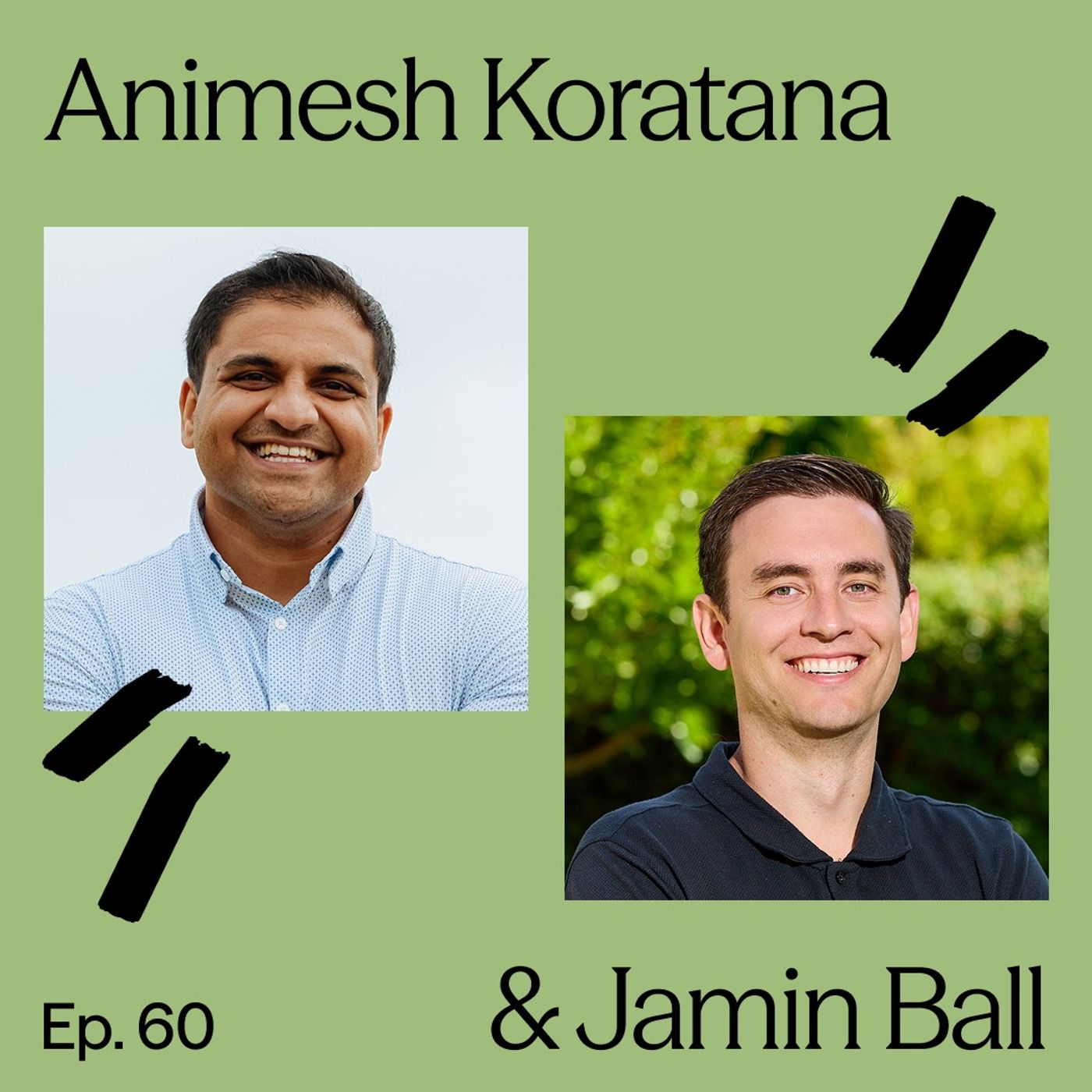 Why context graphs are the missing layer for AI✨ | AIenterprise software+4 | Animesh KoratanaJamin Ball | PlayerZeroAltimeter Capital+2 | — | context graphsAI production engineers+5 | — | 48m 43s | |
| 9/15/25 | 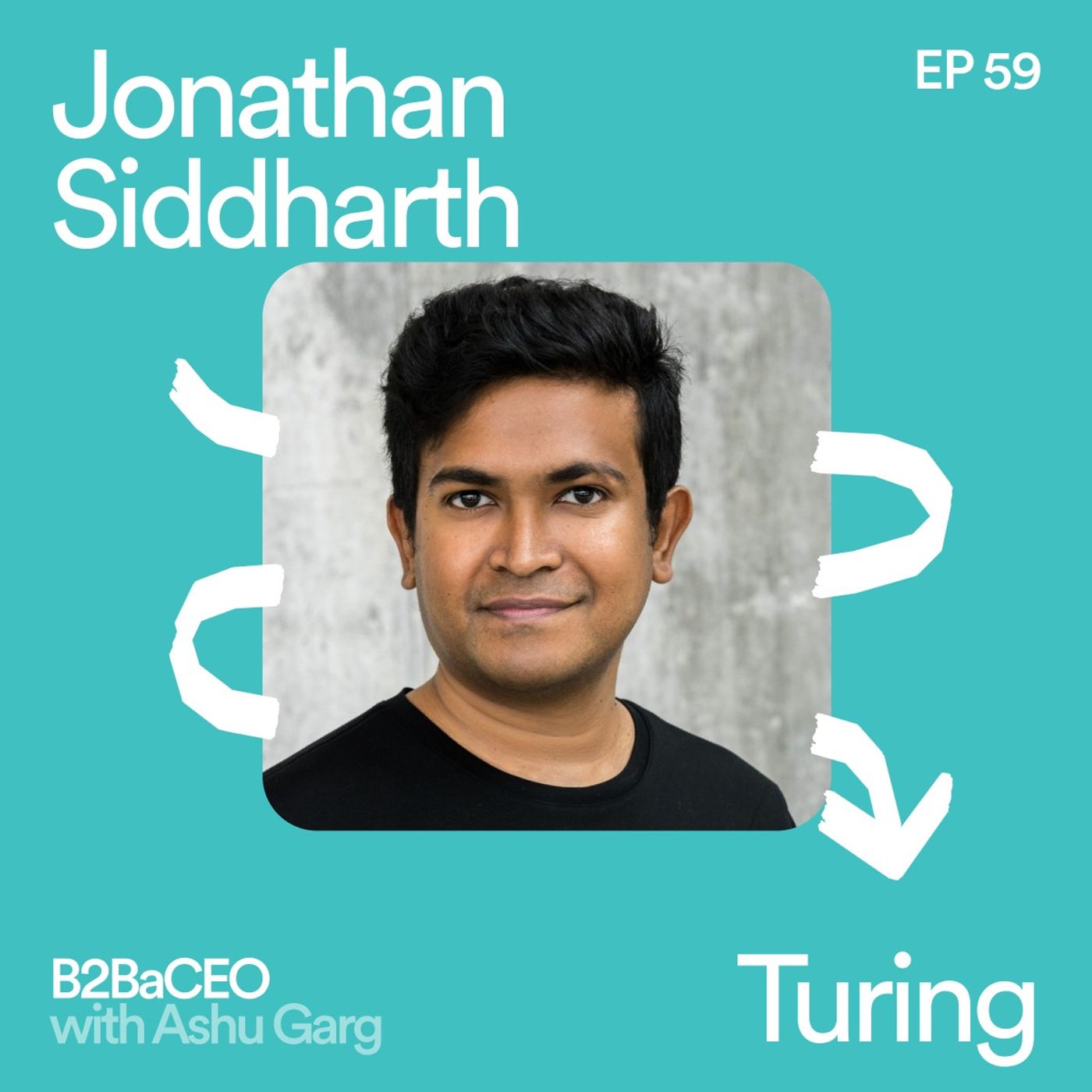 How to Build Artificial Superintelligence | Jonathan Siddharth, Founder & CEO of Turing✨ | artificial superintelligenceAI automation+3 | Jonathan Siddharth | TuringFoundation Capital+5 | — | artificial intelligenceautomation+5 | — | 1h 02m 16s | |
| 6/23/25 |  How to Turn Research Into Real Companies | Ion Stoica, Co-founder and Executive Chairman, Databricks✨ | research commercializationentrepreneurship+3 | Ion Stoica | DatabricksConviva+2 | — | researchentrepreneurship+3 | — | 1h 03m 11s | |
| 6/6/25 |  How to Lead with Empathy and Resilience (Ramesh Srinivasan, Senior Partner, McKinsey)✨ | leadershipempathy+3 | Ramesh Srinivasan | McKinseyCognizant+3 | — | leadershipempathy+5 | — | 37m 00s | |
| 1/24/25 |  How to Solve AI-Powered Search (Arvind Jain, founder and CEO of Glean)✨ | AI-powered searchenterprise search+3 | Arvind Jain | GleanGoogle+1 | — | AIsearch infrastructure+6 | — | 42m 41s | |
| 11/1/24 |  How to Rewrite the Rules of 'Founder Mode' (Frank Slootman, Chairman, Board of Directors, Snowflake)✨ | founder modemanager mode+3 | Frank Slootman | Snowflake | — | founder modemanager mode+5 | — | 51m 22s | |
| 10/11/24 |  How to Adapt and Win in Enterprise Software (Aaron Levie, Co-Founder & CEO of Box)✨ | enterprise softwarecloud computing+3 | Aaron Levie | BoxFoundation Capital+1 | — | BoxAaron Levie+3 | — | 42m 40s | |
| 7/16/24 |  How to Build a Company Around Cutting-Edge AI (Srinath Sridhar, Founder of Regie.ai)✨ | AIsales prospecting+3 | Srinath Sridhar | Regie.aiFoundation Capital+1 | — | AIsales automation+4 | — | 32m 44s | |
| 6/14/24 |  How to Build a Multi-Billion-Dollar Software Business (Mohit Aron, Founder of Cohesity)✨ | enterprise softwarestartup frameworks+3 | Mohit Aron | CohesityNutanix | — | startup ideasMVP+3 | — | 1h 07m 59s | |
Want analysis for the episodes below?Free for Pro Submit a request, we'll have your selected episodes analyzed within an hour. Free, at no cost to you, for Pro users. | |||||||||
| 5/3/24 |  How to Grow from Ph.D. to Two-Time Startup CEO (Sanjit Biswas, Co-Founder & CEO of Samsara) | My guest today is Sanjit Biswas, the co-founder and CEO of Samsara, a platform that helps companies digitize their physical operations. In 2023, Samsara reached $1 billion in annual recurring revenue, making it one of the fastest startups in history to hit this milestone. | — | ||||||
| 3/29/24 |  How to Win Your First Enterprise Customer (Doug Winter, Founder and CEO at Seismic) | My guest today is Doug Winter, the founder and CEO of Seismic, a leading enterprise sales enablement platform. Today, Seismic has a team of 1,500 people and nearly $400 million in recurring revenue. We start the conversation with Doug explaining what sales enablement actually means. From there, we turn to the early days of Seismic and unpack Doug’s approach to finding product-market fit, positioning, and targeting enterprise customers from day one. He speaks candidly about the challenges of scaling and closes with actionable advice for founders in 2024. Fewer than 1% of B2B software companies reach Seismic’s scale. Doug’s story offers a valuable blueprint for founders with similarly audacious ambitions. I hope you find this conversation as inspiring as I did. Let’s dive in! (00:00) Cold open (2:21) Doug explains what sales enablement is (3:39) Genesis of the idea for Seismic (7:08) Seismic's scrappy early days (13:10) Lessons from fundraising (18:23) Targeting large enterprises from day one (22:32) Scaling a GTM engine (28:23) Making proactive leadership changes (37:12) Running great board meetings (40:59) Impact of AI on Seismic's business (44:42) Advice for founders starting in 2024 | — | ||||||
| 12/22/23 |  How to Shape the Future of AI (Naveen Rao, VP of Generative AI at Databricks) | My guest this month is Naveen Rao, the co-founder of MosaicML and current head of Generative AI at Databricks. Naveen's journey is unique, as it echoes the evolution of AI itself. He’s best known for founding and selling two successful companies. The first, Nervana, an AI-focused chip company, was acquired by Intel for $400 million in 2016. The second, MosaicML, was acquired by Databricks in June for $1.3 billion. In our conversation, we unpack the insights and frameworks that led Naveen to make these bets in the first place. We begin by exploring his long history in AI research and startups, from his early days at Qualcomm, his founding of Nervana, and the genesis of MosaicML. We then turn to the complexities of the ever-changing AI landscape and go behind the scenes of MosaicML’s acquisition by Databricks. We close with Naveen’s takes on the most urgent questions in AI, including the recent tumult at OpenAI, the road to AGI, the role of regulation, and where he thinks generative AI will go next. What struck me most is Naveen’s remarkable ability to not only anticipate the future but also actively pave the path toward it. For founders looking to navigate our current AI moment, this episode is full of valuable lessons. | — | ||||||
| 11/17/23 |  How to Power the AI Boom (Robert Nishihara, Co-Founder & CEO of Anyscale) | In this episode of B2BaCEO, I speak with Robert Nishihara, co-founder and CEO of Anyscale. Anyscale’s aspiration is to build the fastest, most cost-efficient infrastructure for running LLMs and AI workloads. When it is successful, Anyscale will be to the AI era what Microsoft was for the PC era: the underlying operating system on which all AI applications are developed and run. Anyscale is built on Ray, an open-source compute framework that Robert and his co-founders developed as PhD students at UC Berkeley. Under the guidance of Professor Ion Stoica, who also co-founded Conviva and Databricks, the team sought to make distributed computing broadly accessible. Anyscale was then launched as a fully managed platform for Ray, making even the toughest problems in distributed computing easy for developers to tackle. Today, Anyscale is a billion-dollar business powering mission-critical AI use cases at companies like Amazon, Cohere, Hugging Face, NVIDIA, OpenAI, and Visa. If you’ve been a PhD student at UC Berkeley, created a popular open-source framework, and built a billion-dollar business on top of it, you’ve likely learned a thing or two along the way. Robert’s story offers valuable lessons for fellow founders and builders at all stages of the startup journey. | — | ||||||
| 9/15/23 |  How to Build, Scale, and Sell a Startup (Tracy Young, Co-Founder of TigerEye & PlanGrid) | My guest this month is Tracy Young, the co-founder and former CEO of PlanGrid, a productivity tool for construction companies. From going through YC and losing a co-founder to cancer, to being acquired by Autodesk for $875 million, Tracy has picked up many valuable lessons that other founders and CEOs can learn from. Our conversation unpacks these lessons, including finding (and keeping!) product-market fit, navigating startup growing pains, showing up effectively to board meetings, and managing the emotional toll of fundraising. We also speak about Tracy’s new venture, TigerEye, and what she’s doing differently the second time around. After having countless conversations with founders over the years, I thought I’d heard it all. Tracy proved me wrong. Her story serves as an inspiration for aspiring entrepreneurs in any industry. | — | ||||||
| 6/2/23 |  How to Deploy AI in Your Company (Matei Zaharia, CTO & Co-Founder of Databricks) | If you’re not hardcore about AI, then stop the podcast now — because this episode for real technology nerds. Ashu’s guest is Matei Zaharia, CTO and cofounder of Databricks, and a professor of computer science at Stanford University. Ashu and Matei cover a lot of ground — most of it technical, all of it very relevant for anyone who’s serious about building with artificial intelligence. They start with a discussion of Databricks’ early days: how the startup established a foothold in a market dominated by entrenched incumbents and some of the challenges Matei and his cofounders faced. The rest of the conversation is all about AI. Matei breaks down the most common challenges that enterprises run into when attempting to adopt AI. He shares tips for how startups can best deploy foundation models. And he speculates on what the game-changing new use cases for AI will be over the next two years. Matei also pulls back the kimono on some of the cutting-edge machine-learning research he and his team at Stanford are working on. Finally, listen to the end for a fascinating exchange about artificial intelligence beyond large language models. | — | ||||||
| 4/26/23 |  How to Capture the AI Moment (Bobby Yerramilli-Rao, Chief Strategy Officer at Microsoft) | As everyone listening to this podcast knows, the release of ChatGPT last November ushered in a new age of AI and catalyzed a wave of AI startups. For this episode of B2BaCEO, Ashu goes deep on AI with Bobby Yerramilli-Rao, former serial entrepreneur and investor, and current Chief Strategy Officer at Microsoft. Ashu picks Bobby’s brain on what sectors and problem spaces he thinks are ripe for innovation with AI and what the opportunities for startups are. They then dissect the four layers of the AI stack, from applications to platforms to infrastructure to models. Lastly, they talk about flavors of artificial intelligence beyond large language models. If you’re a founder or executive who wants to understand the AI moment and all the opportunities it holds for enterprises and society — listen to this conversation. | — | ||||||
| 12/16/22 |  How to Grow in a Bear Market (Beerud Sheth, Co-Founder & CEO of Gupshup) | Beerud Sheth is the Co-Founder and CEO of Gupshup, a leading platform for cloud messaging. Prior to that he was the cofounder of what is now Upwork, a pioneer of online freelancing and remote work. Beerud took the slow and steady pace to winning the race, building two unicorns over 25 years. On the show, he and Ashu draw from Beerud’s depth of experience and break down how a company can achieve capital-efficient growth in the current economic environment. They also lay out the case for why India might be the Silicon Valley of the future. | — | ||||||
| 10/25/22 |  How to Build a Hundred Billion Dollar Company (Jonathan Siddharth, Co-Founder & CEO of Turing) | Jonathan Siddharth is cofounder and CEO of Turing, the platform that helps companies source, vet, match, and manage the world's best software developers remotely. Jonathan started Turing in Foundation Capital’s offices four years ago and he’s since grown it into a $4B company. On this episode of B2BaCEO, Ashu gets him to talk about how he did it: from best practices for hiring execs and communicating with investors, to the unique fundraising machine that Turing’s built, to navigating through choppy economic waters. Jonathan is one of the most methodical, forward-thinking entrepreneurs active today. For four wild years, he’s been living the startup life, and fighting the founder’s fight, and embodying this show’s ideal of growing from engineer to CEO. | — | ||||||
| 9/22/22 |  How to Build an Organization (Alex Bouaziz, Co-Founder & CEO of Deel) | Alex Bouaziz is the guest for this edition of the show. He is the Co-founder and CEO of Deel, a global payroll solution that helps businesses hire anyone, anywhere. Founded in 2019, Alex and his team have grown the company into a unicorn with almost a thousand employees in just three short years! In this conversation, he opens up about the thrills and perils of scaling Deel so rapidly: from the things he got right, like how to hire and how to foster a culture of excellence; to where he got it dead wrong, including titles and product development. Alex and Ashu hit every angle of what it takes to build an organization. | — | ||||||
| 7/27/22 |  How to Be a SaaS Wunderkind (Christian Owens, Founder & CEO of Paddle) | On this episode, Ashu is coming to you from London, where he’s spending the summer. His guest is Christian Owens, founder and CEO of Paddle, a B2B payments infrastructure platform. Christian is a fascinating fellow. He dropped out of high school at 16 to run his first software company, which he scaled to $5 million in revenue — not a bad lemonade stand! He started his second company, Paddle, when he was 18 and, in the ten years since, he’s scaled it to a unicorn with over $55M in revenue. In this wide-ranging conversation, recorded in person at Paddle’s offices, Ashu and Christian cover everything from Christian’s brief and wondrous career, to how to scale an enterprise company when you’re starting as a complete novice, to what the current economic environment means for “growth at all costs.” | — | ||||||
| 6/24/22 |  How to Hire People Better Than Yourself (Ashutosh Garg, Founder & CEO of Eightfold) | On this episode, it’s Ashu Garg vs. Ashu Garg. Our guest is his good friend Ashu Garg, who also goes by Ashutosh. Ashutosh is the founder and CEO of Eightfold, an AI-powered talent-acquisition and -management platform, where our Ashu is a board member and early investor in the company. In this conversation, the two Ashus trace Eightfold’s not-always-easy path from altruistic mission to Silicon Valley unicorn. They spend much of their time discussing how to hire the best people. And CEO Ashu shares everything he wished he knew at the beginning of his startup journey. | — | ||||||
| 4/26/22 |  How to Sell Software (Yamini Rangan, CEO of HubSpot) | On this episode, Ashu’s guest is Yamini Rangan, the CEO of HubSpot. The tagline of the B2BaCEO podcast is “from engineer to CEO,” and that’s exactly the path that Yamini took. She started out as an engineer, then moved to sales, and then eventually to running go-to-market operations as an executive. Less than a year ago, Yamini became the CEO of HubSpot, under unexpected and trying circumstances, which she details in the conversation. Ashu and Yamini spend most of their time discussing how to make the transition from engineering to sales and how to build a customer-focused organization. | — | ||||||
| 3/28/22 |  How to Be a One-Man C-Suite (Nikesh Arora, CEO of Palo Alto Networks) | Nikesh Arora began his career at Fidelity Technologies, where he served as VP Finance. He then went onto T-Mobile, where he was CMO and then in 2004 joined Google, initially running Europe and was ultimately the Chief Business Officer of the company before he left in 2014. He was then president and COO of Softbank Corp before becoming CEO of Palo Alto Networks in 2018. Nikesh has held so many different functional leadership roles that it’s small wonder we’ve dubbed him the “One Man C-Suite.” On this episode, Ashu and Nikesh explore the importance of culture, and how it separates the great companies from the also-rans. Nikesh explains how he went about defining the culture at Palo Alto Networks and then translated that aspiration into reality, including how he approaches hiring. | — | ||||||
| 3/3/22 |  How to Lead With Gusto (Josh Reeves, Co-Founder & CEO of Gusto) | On this episode, Ashu interviews Josh Reeves, founder and CEO of Gusto, which is reimagining payroll, benefits, and HR for modern companies. Josh joins Ashu to celebrate Gusto’s 10th anniversary. Josh explains Gusto’s atypical focus on building for “durability and accountability,” as against the usual Silicon Valley dogma of grow fast or die. He walks listeners through how he scaled the company in stages and the new muscles he had to build at each stage. Ashu delves into how Josh successfully made the transition from founder to CEO, how Josh’s leadership style evolved over time, and how has this translated to Gusto's culture. | — | ||||||
Showing 25 of 62
Pitch Fit is a Pro feature
See how bookable this show is for guests, which brands already advertise, the per-episode ad value, and the best-fit guest and sponsor profile. The numbers are blurred on the free plan.
How readily this show books outside guests like you.
How proven this show is for host-read sponsorships.
For Guests
ProFor Advertisers
ProUpgrade to Pro to unlock guest cadence, sponsor categories, fit scores, and per-episode ad value for this show.
Chart Positions
1 placement across 1 market.
Chart Positions
1 placement across 1 market.