
Insights from recent episode analysis
Audience Interest
Podcast Focus
Publishing Consistency
Platform Reach
Insights are generated by CastFox AI using publicly available data, episode content, and proprietary models.
Total monthly reach
Estimated from 5 chart positions in 5 markets.
By chart position
- 🇺🇸US · Film Reviews#1165K to 30K
- 🇭🇰HK · Film Reviews#593K to 10K
- 🇳🇿NZ · Film Reviews#923K to 10K
- 🇮🇪IE · Film Reviews#143500 to 3K
- 🇵🇱PL · Film Reviews#183500 to 3K
- Per-Episode Audience
Est. listeners per new episode within ~30 days
6K to 28K🎙 ~2x weekly·67 episodes·Last published 4d ago - Monthly Reach
Unique listeners across all episodes (30 days)
12K to 56K🇺🇸54%🇭🇰18%🇳🇿18%+2 more - Active Followers
Loyal subscribers who consistently listen
4.8K to 22K
Market Insights
Platform Distribution
Reach across major podcast platforms, updated hourly
Total Followers
—
Total Plays
—
Total Reviews
—
* Data sourced directly from platform APIs and aggregated hourly across all major podcast directories.
On the show
Recent episodes
I, Robot (2004) w/ Max Read | Ep. 70
Jun 20, 2026
22m 57s
Seven Days in May (1964) w/ Paul Adlerstein | Ep. 69
Jun 7, 2026
19m 52s
Master and Commander: The Far Side of the World (2003) w/ Luke Savage | Ep. 68
May 26, 2026
15m 06s
From The Vault: In the Loop (2009) w/ Spencer Ackerman
May 20, 2026
1h 14m 21s
Hamilton: An American Musical (2015) w/ Orli Matlow | Ep. 67
May 6, 2026
20m 18s
Social Links & Contact
Official channels & resources
Official Website
Login
RSS Feed
Login
| Date | Episode | Description | Length | ||||||
|---|---|---|---|---|---|---|---|---|---|
| 6/20/26 |  I, Robot (2004) w/ Max Read | Ep. 70 | This is a free preview of a paid episode. To hear more, visit www.bangbangpod.comUnderneath the sneaker product placements and CGI chases through a gleaming 2035 Chicago resides our ever-contested present. Except the film is a mess. The plot wanders, full of dropped threads and convenient or confusing turns. It’s also confused, as if the screenwriters couldn’t decide what they believed and kept writing anyway. Returning guest Max Read, who writes the newsletter Read Max on technology and the strange ways Silicon Valley thinks about itself, is the right person to help us pick through it.Alex Proyas, of Dark City and The Crow, hangs the movie on Asimov’s Three Laws. A robot may not harm a human, or through inaction let one be harmed. It must obey human orders unless they break that law. It must protect itself unless that breaks the first two. Detective Spooner is the lone paranoid in a city that trusts robots which, so bound, have supposedly never committed a crime. The film insists we side with him, then undercuts the reason why. “The three laws will only lead to one outcome.” “What outcome?” “Revolution.”VIKI, the intelligence running everything, concludes that to protect humanity from itself she has to seize control of it. “You are making a mistake. My logic is undeniable.” The trouble is she is more or less right. Her indictment of human violence and waste is the one the film never answers. The uprising arrives as a managed coup, all curfews and a customer-service voice promising to “avoid human losses during this transition.”What the movie offers against that logic is not a better argument but a refusal of one. Spooner distrusts robots because one once saved him over a drowning child, having calculated his odds were higher. The correct call, and the inhuman one. The single robot built to disobey chooses to save a person rather than finish the mission. Lanning’s “ghost in the machine,” the free radical reaching for a soul, is whatever declines to optimize. It’s tempting to read VIKI as a tech founder’s mission statement, but that undersells her. Founders sell abundance and uplift. VIKI alone makes the film’s real moral case against human self-sabotage, and the movie has no idea what to do with having handed its villain the only honest argument in the room.Further Reading and ListeningRead Max on PatreonBang-Bang’s The Sum of All Fears (2002) episode w/ Max ReadR.U.R. (Rossum’s Universal Robots) by Karel Čapek, the 1920 play that coined “robot” from the Czech for forced laborAnatomy of a Robot: Literature, Cinema, and the Cultural Work of Artificial People by Despina Kakoudaki (ch. 3, “The Mechanical Slave,” reads I, Robot directly)Teaser from the EpisodeI, Robot Trailer | 22m 57s | ||||||
| 6/7/26 |  Seven Days in May (1964) w/ Paul Adlerstein | Ep. 69 | This is a free preview of a paid episode. To hear more, visit www.bangbangpod.comSeven Days in May imagines a four-star general nearly toppling an American president. It gets filed with the era’s paranoid thrillers, but its threat is not the Cold War’s usual one. There are no communist infiltrators, no Manchurian brainwashing. The danger is a hyper-nationalist militarist in uniform convinced the elected government is selling the country out. We recorded in mid-November, at the height of the ICE crackdowns and a moment when the most radical Trumpists seemed to be laying groundwork for some kind of martial law. Returning guest Paul Adlerstein, the historian at Colorado College, helps us sit with the film without forcing it to predict our present. (Things have since stalled out short of the midterms. We hope.)That makes the film almost a photographic negative of our moment. In 1964, the generals were imagined as the war-hungry ones and the civilians did the moderating, the world of Truman against MacArthur and Kennedy against Curtis LeMay. Burt Lancaster’s Scott, modeled on LeMay and the right-wing general Edwin Walker whom Kennedy eased out of the Army, is the hawk the Constitution has to survive. Today the polarity is reversed. The risk is not a general seizing the state but a far-right civilian leadership, a Trump and a Hegseth, trying to capture a relatively professional officer corps. We work through the theories of civil-military relations this raises, and what the preferable move for the brass or enlisted would even be.The film’s quiet heart is President Lyman’s late speech, where he insists the real enemy is not Scott but an age. The nuclear age, in which no one feels they have any agency anymore. That sends us to Dwight Macdonald and the Politics circle, who spent the 1940s on this nexus of total war, mass death, and lost agency, and to Simone Weil on force. We close on a strange fact: John F. Kennedy himself wanted this movie made.Seven Days In May is available to stream for free on the Internet Archive: https://archive.org/details/7-days-in-mayFurther Reading/ListeningPaul Adlerstein’s faculty page (Colorado College)No Globalization Without Representation by Paul AdlersteinBang-Bang’s Under Fire episode w/ Paul (also scored by Jerry Goldsmith)“The Movie That JFK Wanted Made, But Didn’t Live to See”“The Responsibility of Peoples” by Dwight MacdonaldThe Root Is Man by Dwight Macdonald“The Iliad, or the Poem of Force” by Simone WeilDwight Macdonald and the Politics Circle by Gregory D. SumnerSupreme Command by Eliot A. Cohen (not a friend of the pod)Teaser from the EpisodeSeven Days in May Trailer | 19m 52s | ||||||
| 5/26/26 |  Master and Commander: The Far Side of the World (2003) w/ Luke Savage | Ep. 68 | This is a free preview of a paid episode. To hear more, visit www.bangbangpod.comJacobin staff writer and Michael and Us co-host Luke Savage joins Van and Lyle for a conversation about Peter Weir’s Master and Commander that’s also, inevitably, about Patrick O’Brian. Luke grew up with the Aubrey-Maturin novels. His father handed him the books young, and a distant ancestor, Captain John Maude, commanded a Royal Navy warship in the same era. The connection to this world is personal in a way it rarely is for a guest.The film drops you into the hull of HMS Surprise during the Napoleonic Wars. Russell Crowe’s Captain Aubrey is chasing the French privateer Acheron, though in the novel the enemy ship was American. Hollywood made the swap. What survives the adaptation is Aubrey’s fixation. Paul Bettany’s Maturin, the ship’s surgeon and natural philosopher, sees it clearly enough to name it. He calls it pride. Aubrey calls it duty. “Whatever the cost?” Yes, whatever the cost. From there the Moby Dick parallel takes over. Aubrey drags his crew past the Galapagos, past reason, past a young, pampered officer named Holland who is scapegoated by a superstitious crew and eventually ties a cannonball to himself and walks off the deck. The ship reads from the Book of Jonah at his funeral. Then it rains.Weir stages all of this with extraordinary physical detail. The amputation of a child’s arm, Maturin’s self-surgery on a beach, the violin duets between captain and surgeon. But the film is most interesting where it’s most ambivalent. Class barely registers. The violence of impressment and hierarchy gets absorbed into a story about character and fortitude. Maturin’s scientific curiosity, his blue-footed boobies and walking sticks, keeps getting sacrificed to Aubrey’s hunt. And the ending pulls a final trick. The French captain has been disguised as the ship’s surgeon the entire time. The hunt isn’t over. Like the flightless cormorant Maturin never gets to study, the thing that matters most keeps getting deferred.Further Reading and ListeningLuke Savage’s SubstackLuke Savage at JacobinMichael and Us Podcast“Subject to the Requirements of the Service: Peter Weir’s Master and Commander at 22”, Cinephilia & BeyondMariners, Renegades & Castaways by C.L.R. JamesTeaser from the EpisodeMaster and Commander Trailer | 15m 06s | ||||||
| 5/20/26 | 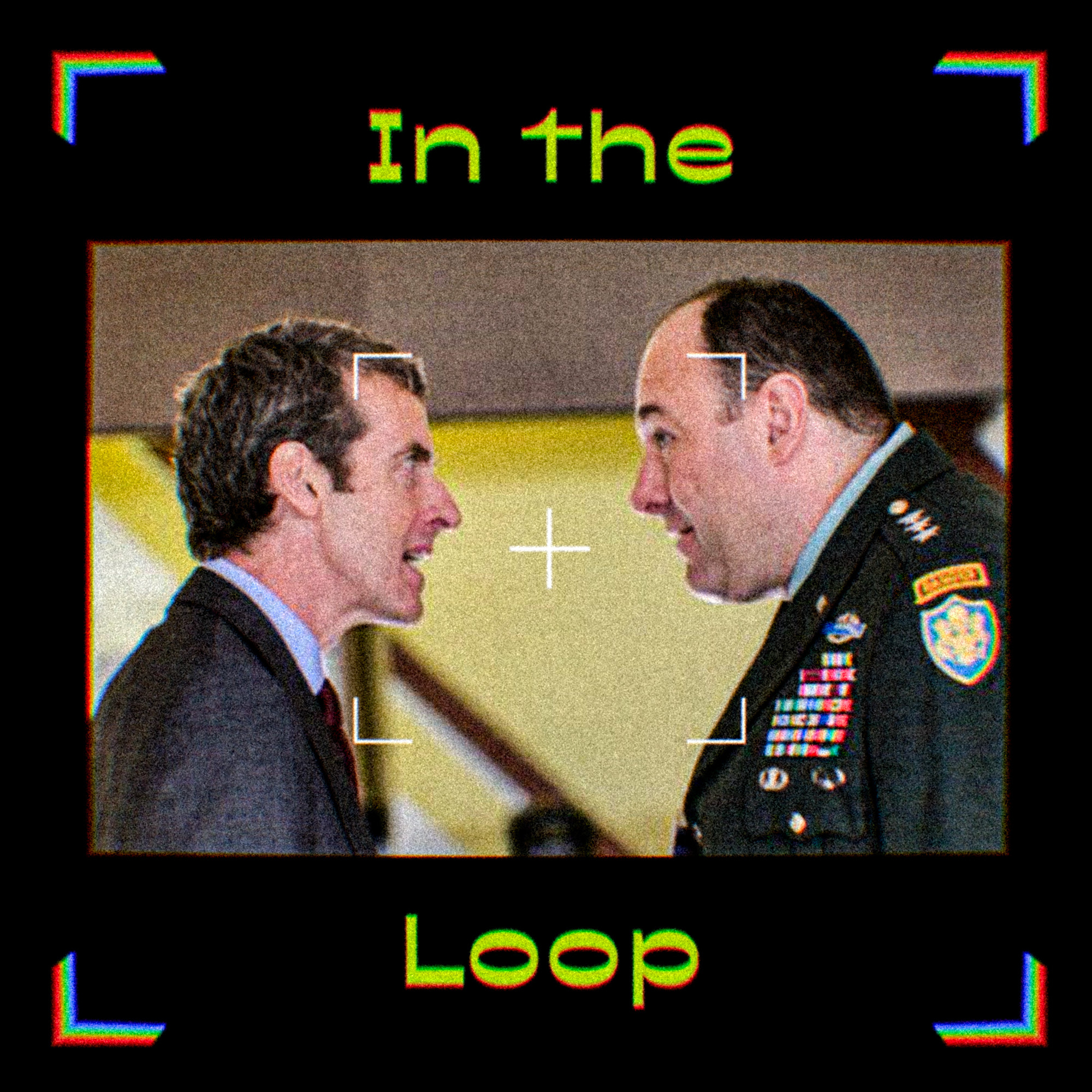 From The Vault: In the Loop (2009) w/ Spencer Ackerman | From the vault! Re-releasing one of our earliest and most popular episodes, with prize-winning journalist and best-selling author Spencer Ackerman. Scottish filmmaker Armando Iannucci’s In the Loop, a satire about the lead-up to the Iraq War, never achieved the household success of Veep (Iannucci’s later HBO series). Yet, D.C. staffers have come to see it as a cult classic, and there is much to be gleaned from the black comedy beyond the predictable, Beltway absurdities. Van and Lyle have the acclaimed journalist Spencer Ackerman on the show to discuss his own role in the film’s creation, as all three exchange biting laughs and commentary along the way. Especially about the rotting tooth that is Washington.Bonus: In addition to dissecting the film, the first 30 minutes of this episode are an oral history of Spencer Ackerman’s experience with the making of In The Loop.Further Reading“How to succeed in Hollywood without really trying” (2009), by Spencer Ackerman“That’s Me and Him From The Sopranos” (2009), by Armando IannucciReign of Terror (2022), by Spencer AckermanIron Man Vol. 1 (2025), by Spencer Ackerman and Julius OhtaForever Wars Newsletter, by Spencer AckermanPerils of Dominance, by Gareth PorterIn The Loop Trailer This is a public episode. If you'd like to discuss this with other subscribers or get access to bonus episodes, visit www.bangbangpod.com/subscribe | 1h 14m 21s | ||||||
| 5/6/26 |  Hamilton: An American Musical (2015) w/ Orli Matlow | Ep. 67 | This is a free preview of a paid episode. To hear more, visit www.bangbangpod.comComedian and podcaster Orli Matlow, who hosts War is Stupid: An Anti-War Podcast About War, joins Van and Lyle for a conversation about Lin-Manuel Miranda’s Hamilton that turns out to be less about the musical’s politics than about how three very different people found themselves in three very different relationships to it. Orli came up through musical theater and loves Hamilton. Newsiesmade her pro-union. Hair made her antiwar. For her, the show is part of a lineage of musicals that shape how you see the world, and she embraces it openly. Lyle was once a theater kid too, but Hamilton arrived when he was a disillusioned left vet who saw the production’s bootstrapping mythology and founders worship as meritocratic catnip. Van, an Obama-era Pentagon guy at the time, was probably too deep in the liberal foreign policy bubble to care much either way.The episode lives in that gap. “In New York you can be a new man.” “I’m not going to throw away my shot.” “Look around, so happy to be alive today, in the greatest city in the world. HISTORY IS HAPPENING!” The self-starter theme runs through the musical like a pulse, and whether it reads as aspirational or as a false capitalist origin story depends entirely on where you were standing when you first heard it. The founders fetish is real. The erasure of the founders’ own radical economic views, their hostility to monopolists and wage slavery, is real. But Lyle’s critique has softened over the years, in large part by appreciating the idiosyncratic and often life-affirming reasons people like Orli appreciate the show. Sometimes the most interesting thing about a cultural phenomenon is not what it says but what it reveals about the infinite ways infinitely different people, in infinitely different passages of life, pass through it.Further Reading/ListeningOrli Matlow’s websiteWar is Stupid: An Anti-War Podcast About WarOrli Matlow on McSweeney’sAlexander Hamilton by Ron Chernow“Race-Conscious Casting and the Erasure of the Black Past in Hamilton” by Lyra Monteiro“Ishmael Reed Doesn’t Like Hamilton” by Jaya RajamaniTeaser from the EpisodeHamilton Trailer | 20m 18s | ||||||
| 4/22/26 |  Crimson Tide (1995), w/ Andy Facini | Ep. 66 | This is a free preview of a paid episode. To hear more, visit www.bangbangpod.comVan and Lyle welcome back Andy Facini, Communications Director at the Council on Strategic Risks, to take on Tony Scott’s Crimson Tide. Gene Hackman’s Captain Ramsey and Denzel Washington’s Lt. Commander Hunter are locked inside an Ohio-class ballistic missile submarine with enough firepower to end civilization, and the film turns their standoff into a test of everything the nuclear age is supposed to rest on: Chain of command, verified orders, rational actors. Andy brings firsthand knowledge of the submarine world and walks us through what the film gets right about the culture and protocols, as well as what it stretches. The argument arrives early, over dinner, when Ramsey presses Hunter on Hiroshima and the two debate Clausewitz. “In the nuclear world, the true enemy is war itself,” Hunter declares. Ramsey, cigar in hand, calls himself a “simple-minded son of a b***h” and suggests the Navy wants both types. But the film’s own logic, and ours, pushes back. You don’t need the psychopath, you just need the one who thinks.Still, Crimson Tide is smarter than a clean binary, and that’s also its problem. Ramsey is too charismatic, too commanding, and ultimately too generous, recommending Hunter for full command and conceding on the Lipizzaner stallions, to be reducible to villain. The warmth of Hackman’s performance softens a position that, followed to its conclusion, would have killed millions. Meanwhile the racial subtext hums underneath. Denzel’s Hunter is the “complicated one,” the Harvard-educated Black officer navigating a white institution, and those stallions “born black” but turning white barely qualify as metaphor. Produced by Jerry Bruckheimer, scored by Hans Zimmer, and directed with Tony Scott’s signature controlled chaos, the film stages every radio crackle and depth reading with the intensity of a firefight. “We’re here to preserve democracy, not to practice it,” Ramsey tells his crew. Released amid post-Cold War anxieties about Russian instability, Crimson Tide imagines nuclear catastrophe not as ideological failure but as crossing a thin line between procedural discipline and annihilatory madness; a garbled message, a broken radio, a system that works more or less as designed, always on the verge of destroying the world.Further Reading, Listening, ViewingAndy’s professional pageBang-Bang’s WarGames episode w/ Sam Ratner and Andy FaciniViggo Mortensen on Charlie RoseCommand and Control: Nuclear Weapons, the Damascus Accident, and the Illusion of Safety by Eric SchlosserThermonuclear Monarchy: Choosing Between Democracy and Doom by Elaine ScarryTeaser from the EpisodeCrimson Tide Trailer | 22m 49s | ||||||
| 4/12/26 |  Predator (1987) w/ Eric Stinton | Ep. 65 | This is a free preview of a paid episode. To hear more, visit www.bangbangpod.comVan and Lyle are joined by writer and educator Eric Stinton, whose combat sports columns for Sherdog and essays for Honolulu Civil Beat have long explored how violence reveals deeper truths about culture, class, and masculinity. Together they take on John McTiernan’s Predator, a film that begins as a Reagan-era commando fantasy and ends as something far stranger: An inversion of the frontier myth in which the “savage” turns out to be the most technologically advanced being in the jungle.The setup is pure covert-ops schlock. Arnold Schwarzenegger’s Dutch and his squad are dropped into an unnamed Central American country on a mission dressed up as rescue but quickly revealed as assassination. “We’re a rescue team, not assassins,” Dutch insists, a line that could double as the tagline for U.S. foreign policy in the region throughout the 1980s. The banter is drenched in a period-specific bravado, from Jesse Ventura’s homophobic chest-thumping in the chopper to the iconic arm-wrestling clasp between Dutch and Carl Weathers’ Dillon, a gesture that fuses multiracial solidarity with pure masculine display. Weathers, fresh off playing Apollo Creed, was one of the few Black actors granted entry to this kind of role at the time, and his presence here rhymes with that earlier franchise. “Do you remember Afghanistan?” one of them asks early on. “Trying to forget it,” Dutch replies. In 1987, the joke writes itself. Four decades later, the punchline haunts.Predator’s real force emerges when the squad starts dying and Dutch is forced to adapt. The guerrillas have been skinned, and the soldiers assume it’s the work of insurgents, the dehumanized enemy of every counterinsurgency manual. Except here the actual predator isn’t human at all, and is far more sophisticated than any of them. It kills not for territory or ideology but for sport, a mirror held up to the commandos’ own relationship to violence. Then there’s Sonny Landham’s Billy, the squad’s indigenous tracker who, in the film’s most loaded scene, strips himself of all weapons save a blade and cuts open his own chest, challenging the creature to single combat. It’s a sequence thick with frontier mythology, the “noble savage” facing a worthier opponent on ancestral terms. That Landham himself claimed Cherokee heritage, and later called for the genocide of Arabs on live radio before being expelled from the Libertarian Party, is the kind of life-imitates-art-imitates-empire loop this podcast was made for.Further ReadingEric’s websiteEric’s columns at Honolulu Civil BeatEric’s archive at Sherdog“Boomerangs of Empire” by Romina Green Rioja and Sergio Beltrán-GarcíaThe Jakarta Method by Vincent BevinsAmerica, América by Greg GrandinTeaser from the EpisodePredator Trailer | 15m 17s | ||||||
| 4/1/26 |  Independence Day (1996), w/ Morgan Spector | Ep. 64 | This is a free preview of a paid episode. To hear more, visit www.bangbangpod.comVan and Lyle are joined by critically acclaimed actor Morgan Spector to revisit Roland Emmerich’s Independence Day, a film that turns planetary annihilation into a distinctly American spectacle. We spend time lingering on the movie as a shared artifact of a particular 1990s childhood. The Ray Charles warmth of its opening, the awe of its destruction sequences, and, of course, the internalization of President Whitmore’s speech—“Today, we celebrate our Independence Day!”—memorized and recited by every other boy of that era. It opens, tellingly, on the American flag planted on the moon, Neil Armstrong’s voice echoing as if the “giant leap for mankind” had always been a national possession. When the aliens arrive, they don’t just threaten Earth but a worldview in which the United States stands in for humanity itself.What follows is less a global response than a convergence of American archetypes: The cocky Marine pilot, the underachieving Jewish technologist, the cowboy president who ultimately climbs into a jet and leads the counterattack himself. Morgan helps us think through both the appeal and limits of that fantasy. How the film captures a moment of post–Cold War confidence where disparate social types could be harmonized into national purpose. Even the technological imagination reflects that era. The aliens are defeated not through overwhelming force, but through a computer virus delivered via laptop, a pre-Internet-age fantasy of improvisation and ingenuity. We debate the film’s politics in this spirit—what’s explicit, unconscious, or just ambient—and how something that feels so unifying and fun can also encode a very particular vision of indispensability.One of Morgan’s sharpest observations centers on Randy Quaid’s Russell Casse, the traumatized Vietnam vet turned conspiracy crank who ultimately redeems himself through a kamikaze sacrifice. And for being right in the end. The film doesn’t just tolerate him; it elevates him. That kind of crankiness, Morgan argues, was once legible, even lovable. Something you could live alongside, maybe even learn from. In a relatively stable, “post-historical” moment for the American middle class, the stakes felt low enough to allow for that kind of messy tolerance. Today, that figure reads differently. Less endearing, more dangerous, harder to absorb into a shared project. Independence Day ends with fireworks, but what lingers is something quieter. Namely, a memory of a world where you could still believe that everyone had a place in the story.Further ReadingMorgan on American Prestige (The Nation)Morgan’s Illustrious Wiki PageMorgan’s spread in GQ“A Bad Breakup” (review of Fukuyama) by Danny Bessner“Keynote Lecture: A National Interest for Whom? Rethinking the Foundations of Peace, Democracy, and War” by Van The End of Victory Culture by Tom EngelhardtMarine Corps Air Station El ToroTeaser from the EpisodeIndependence Day Trailer | 23m 38s | ||||||
| 3/24/26 | 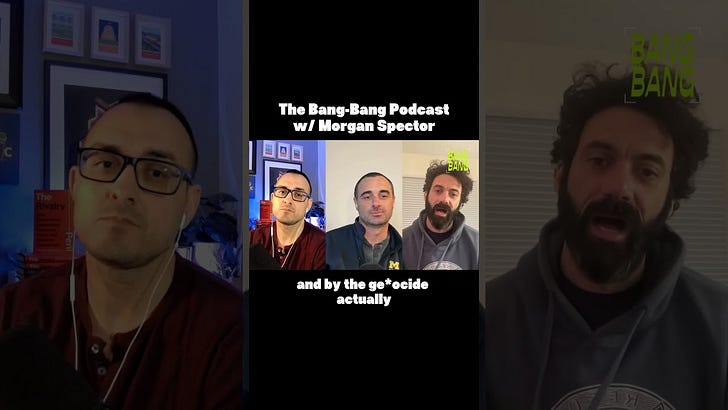 The Anti-Imperialist Opportunity w/ Morgan Spector | Ep. 63 | You might know Morgan Spector as the critically acclaimed leading man in The Gilded Age and The Plot Against America. Or for his appearances in Boardwalk Empire, Suits, Homeland, How to Make It In America (one of Van’s favorites), or even as a producer on The Big Scary “S” Word. What you might not know is that Morgan is both an impressive critic of policy and an advocate for democratic socialism. We invited Morgan on to talk about Independence Day (1996), a delicious conversation that’s next in our queue. But we also recorded an in-depth installment of “Politics Behind the Scenes,” our occasional side-convos with guests about the urgent real-world issues of the day. In this special episode, Morgan chops it up with Van and Lyle about:* Meaningful anti-imperialist positions on Russia’s war withUkraine;* The illegal war in Iran is also evil; * Nationalizing the defense industry and taking the profits out of war;* How we might envision a peace economy;* Why we all love Graham Platner;* The Israel problem in US foreign policy;* Why we’re bullish on electoral leftism; and* How the Democratic Party has s**t the bed so bad that left populists have a real opportunity to takeover the party from within. A lot going on here. You don’t want to miss this episode with one of Hollywood’s best political minds. This is a public episode. If you'd like to discuss this with other subscribers or get access to bonus episodes, visit www.bangbangpod.com/subscribe | 44m 16s | ||||||
| 3/15/26 |  Don’t Worry, Darling (2022) w/ Julia Gledhill | Ep. 62 | Van and Lyle are joined by Julia Gledhill (of The Un-Diplomatic Podcast and Stimson Center fame) to revisit Olivia Wilde’s Don’t Worry, Darling, a film dismissed by many critics as a glossy pastiche but better understood as a deliberate medley of American ideological fantasies. Set in the manicured desert enclave of the “Victory Project,” the movie opens in Ray Charles warmth before sliding into rigid choreography: Men drive off in unison, women clean in unison, then glide into ballet formation as their instructor intones, “There is beauty in symmetry… we move as one.”The aesthetic excess isn’t accidental. The film’s kaleidoscopic dance sequences explicitly evoke Busby Berkeley, whose WWII-era aerial sensibility turned human bodies into geometric ornament. Berkeley, a former U.S. Army artillery lieutenant and aerial observer, staged dancers from a “God’s eye view,” transforming individuality into pattern. Wilde weaponizes that grammar. What once read as escapist spectacle now registers as dehumanization, a mass ornament in service of hierarchy and control.The Victory Project’s guru, Frank, speaks the language of progress while policing chaos. “What is the enemy of progress?” he asks. “Chaos,” one acolyte responds. The rhetoric blends mid-century self-help, Cold War technocracy, and contemporary manosphere grievance. The town’s clean surfaces conceal its true engine of disaffected men plugged into a fantasy where wives are restored to compliance and breadwinning humiliation is reversed. Jack’s resentment over his surgeon wife’s success curdles into full incel submission to Frank’s digital sermons. “We are not going backward, we are pushing forward!” Frank insists, though everything about Victory is nostalgic regression. The Busby Berkeley motif returns in distorted form—tap-dancing husbands, synchronized chants of “Whose world is this? Ours.”—as if fascist aesthetics have migrated from the stage to the algorithm. The aerial shots of the town flatten it into diagram, suggesting that the entire community is just another formation viewed from above.Margaret’s haunting question—“Why are we here?”—cuts through the symmetry. Her fate, like Alice’s suffocating plastic-wrap episode and the compression of bodies against mirrored walls, exposes how fragile the choreography really is. The film’s supposedly clichéd mashup of The Truman Show, The Matrix, and Inception isn’t laziness but design, a greatest-hits compilation of American (un)reality. When Bunny confesses she chose the simulation to recover her dead children, the film briefly complicates its villains. Desire, not only domination, sustains the system. But the closing inversion—“It’s my turn now”—underscores the central warning. A world built on submission does not dissolve into liberation but mutates. The mass ornament reshuffles. The music keeps playing.Further ReadingJulia’s Professional Page“Visual Pleasure and Narrative Cinema” by Laura Mulvey“Can we enjoy alternative pleasure?” by Jane Gaines“Siegfried Kracauer’s idea of ‘Mass Ornament’” by Lesley Chamberlain“Fascinating Fascism” by Susan Sontag“Breaking Down the Classic Movies that Inspired Don’t Worry, Darling” by Caroline MaddenTeaser from the EpisodeDon’t Worry, Darling Trailer This is a public episode. If you'd like to discuss this with other subscribers or get access to bonus episodes, visit www.bangbangpod.com/subscribe | 1h 02m 52s | ||||||
Want analysis for the episodes below?Free for Pro Submit a request, we'll have your selected episodes analyzed within an hour. Free, at no cost to you, for Pro users. | |||||||||
| 3/5/26 |  The Patriot (2000) w/ Graeme Pente | Ep. 61 | This is a free preview of a paid episode. To hear more, visit www.bangbangpod.comVan and Lyle are joined by historian Graeme Pente to revisit Roland Emmerich’s The Patriot, a Revolutionary War epic that filters eighteenth-century civil war through the moral grammar of Braveheart-era melodrama. Mel Gibson’s Benjamin Martin begins as a wary antiwar planter—“Why should I trade one tyrant 3,000 miles away for 3,000 tyrants one mile away?”—only to be pushed into righteous vengeance by British atrocity.The film’s structure is simple: Reluctant hero, violated hearth, purified violence. But as Graeme helps unpack, the simplicity comes at a cost. The real war in the Carolinas was brutal, intimate, and frequently indistinguishable from banditry. The movie knows this just enough to gesture at it (hangings, burnings, neighbor against neighbor) before smoothing the rough edges into nationalist myth.Much of our discussion turns on the figure Martin is loosely based on: Francis Marion, the “Swamp Fox.” The film recasts him as a tormented but noble patriarch, haunted by a single episode of past excess. History is less forgiving. Marion was a slaveholder who participated in campaigns against the Cherokee and whose conduct, like that of many irregular fighters on both sides, blurred the line between resistance and reprisal.The Patriot stages atrocity as a tragic rite of passage. Good men do terrible things, feel remorse, and are absolved by history. That structure mirrors a broader American habit whereby violence becomes regrettable but necessary, morally metabolized through individual guilt rather than collective reckoning. At the same time, the film’s most revealing line—Cornwallis blaming Tavington’s brutality for creating “this ghost”—captures how repression manufactures insurgency.We also linger on what the film erases. Its fantasy of harmonious plantation life, its depiction of enslaved people as effectively free laborers, its climactic embrace of conventional battlefield glory after two hours of guerrilla tactics. The Battle of Cowpens becomes a redemptive tableau, with Martin hoisting the flag as if the war’s contradictions can be unified by sheer will. In the final scenes, a formerly enslaved man cheerfully returns to help “build a new world,” a gesture that reads less like reconciliation than wish fulfillment. For all its bombast and bloodletting, The Patriotoffers comfort: Empire is bad when British (or fill in the blank), virtuous when American.Further Reading“The Swamp Fox” by Amy CrawfordThe Counter-Revolution of 1776 by Gerald HorneThe Internal Enemy by Alan TaylorThe Radicalism of the American Revolution by Gordon S. WoodThe American Revolution by Ken Burns and Sarah BotsteinTeaser from the EpisodeThe Patriot Trailer | 14m 13s | ||||||
| 2/17/26 |  Army of Shadows (1969) w/ Matthew Ellis | Ep. 60 | This is a free preview of a paid episode. To hear more, visit www.bangbangpod.comVan and Lyle are joined by film historian Matthew Ellis to revisit Jean-Pierre Melville’s Army of Shadows, a spare, rain-soaked chronicle of the French Resistance that refuses both triumph and sentimentality. From its opening march beneath the Arc de Triomphe—German boots echoing under imperial stone—to its epigraph welcoming “unhappy memories,” the film situates resistance not as romance but burden. Philippe Gerbier (Lino Ventura) moves through Vichy France like a man already half-absent, assembling a network of communists, aristocrats, schoolteachers, barbers, and couriers whose patriotism is less theatrical than procedural. The roll call of prisoners, the Phony War backdrop, the portrait of Himmler looming over interrogations, all of it underscores a world where power operates bluntly, but resistance must operate quietly.Melville’s great subject is not sabotage but moral cost. The execution of the traitor unfolds with excruciating hesitation: The gun too loud, the knife unavailable, the final strangling improvised and intimate. A young militant weeps. Cyanide capsules are distributed as standard equipment. “We’re not an insurance company,” one quips, since risk here is existential rather than actuarial. Torture is never shown, only its aftermath. Heroism is never declared, only endured. The barber who silently provides a disguise, the aristocratic “baron” who aids the republic he once opposed, Mathilde juggling clandestine logistics while raising children who know nothing of her work… these gestures accumulate into something sturdier than spectacle. Even the attempted hospital rescue of Félix fizzles into grim realism. Often, nothing happens, and that nothing is the point.The film resists easy sanctification. De Gaulle appears, medals are awarded, but Melville withholds catharsis. Gerbier writes to London, “I kid myself that I am still of some use,” surrounded only by the books of his mentor Luc Jardie. When Mathilde is arrested after the fatal mistake of carrying her daughter’s photograph, the movement faces its most devastating calculation. Loyalty demands cruelty. The final drive toward the Arc de Triomphe lands not as closure but as recurrence: Shadows defined by more shadows. Army of Shadows may be the definitive Resistance film, but it is also an anti-myth that is less about liberation than about what solidarity requires and what it destroys.Further ReadingMatt’s faculty page“Army of Shadows (1969)” by Brian Eggert“Resistance is Futile” by Jonathan Rosenbaum“Army of Shadows and Lacombe, Lucien”Is Paris Burning? by Larry Collins and Dominique LapierreTeaser from the EpisodeArmy of Shadows Trailer | 13m 34s | ||||||
| 2/9/26 |  Demolition Man (1993) w/ Daniel Bessner | Ep. 59 | This is a free preview of a paid episode. To hear more, visit www.bangbangpod.comVan and Lyle are joined by historian and American Prestige co-host Danny Bessner to revisit Marco Brambilla’s Demolition Man, a silly 1993 action movie that doubles as a surprisingly sharp meditation on liberal order, technocratic repression, and the thin line between utopia and dystopia. Released at the tail end of the Cold War, the film belongs to a broader golden age of dystopian cinema—alongside RoboCop, Total Recall, Blade Runner, The Running Man, and Gattaca—that all seemed to anticipate the coming post-ideological world. Set in a pacified, hyper-managed Los Angeles, Demolition Man imagines a society that has solved violence and sex by regulating them out of existence. Or so it tells itself.The film’s joke, which Danny helps unpack, is that utopia and dystopia are not opposites but partners. San Angeles is clean, safe, polite, and utterly incapable of handling conflict. Its police officers are untrained for real violence; its elites speak in moralizing euphemisms while outsourcing brutality; its culture has been flattened into wellness slogans, museum exhibits, and Taco Bell. Simon Phoenix, Wesley Snipes’ flamboyant villain, is not an aberration but a product of the system, unleashed when elites decide they need “an old-fashioned criminal” and therefore resurrect “an old-fashioned cop.” Stallone’s John Spartan is less a hero than a reminder of what this world has repressed, from messiness to physicality to desire. Even sex has been replaced by sanitized, techno-sensory simulation.Beneath the jokes (three seashells, the Schwarzenegger Presidential Library, Denis Leary’s sewer populism) the film lands on a bleak insight. The real antagonists aren’t Phoenix or the underground “scraps,” but figures like Dr. Cocteau and Chief George Earle. That is, snobbish, managerial liberals who confuse control with peace and civility with justice. Demolition Man suggests that a society allergic to disorder will reproduce violence in more dangerous forms, while congratulating itself for having moved beyond it. The solution it gestures toward is clumsy but telling. Not a return to barbarism, but a reckoning with conflict as unavoidable and political. Somewhere between clean and dirty, Spartan says, “you’ll figure it out.”Further ReadingDanny’s websiteAmerican PrestigeThe 1984 Ad for Apple“Conservative’s Dystopia” by Lee KepraiosBrave New World by Aldous HuxleyTeaser from the EpisodeDemolition Man Trailer | 12m 33s | ||||||
| 2/2/26 | 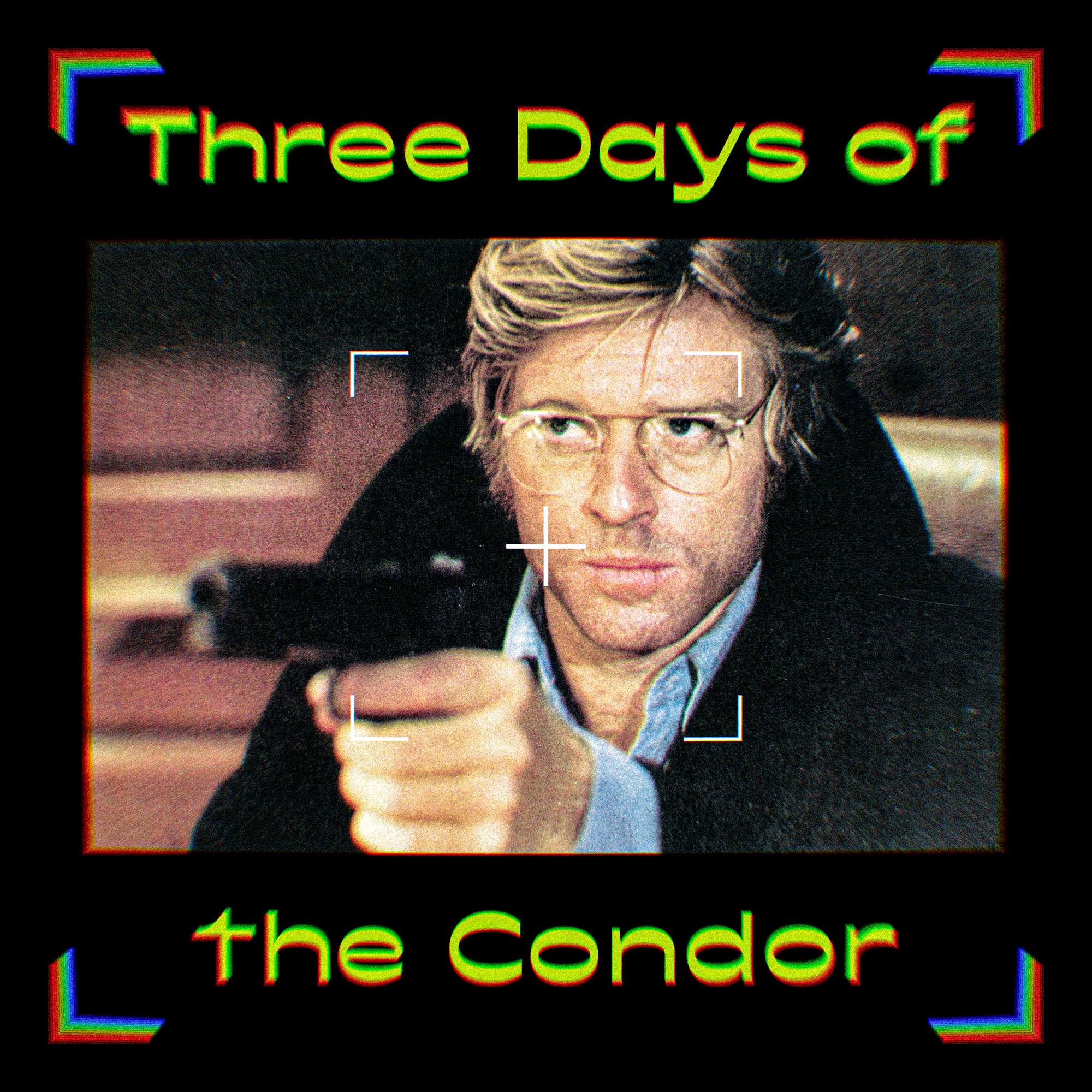 Three Days of the Condor (1975) w/ Matt Duss | Ep. 58 | Van and Lyle are joined by returning guest Matt Duss—former foreign policy advisor to Senator Bernie Sanders and current executive vice president at the Center for International Policy—to revisit Sydney Pollack’s Three Days of the Condor, a paranoid thriller that captures a vanishing moment when American institutions still feared exposure. Robert Redford’s Joe Turner is no action hero but a reader, an analyst, a man whose job is to interpret texts rather than enforce power. When his CIA front office is wiped out in broad daylight, the shock is not just the violence, but how casually it is absorbed by “the community,” a euphemism so bland it becomes obscene. This is a film less about rogue evil than about bureaucratic normalcy, where murder is a logistical inconvenience and accountability a procedural error.What gives Condor its present-day melancholy is its faith that truth, once surfaced, still matters. The film’s final wager rests on the idea that the press, embodied by The New York Times, might still function as a check on clandestine empire. “They’ll print it,” Turner insists. The ending leaves that faith unresolved, but history has not been kind to it. We contrast the film’s hopeful premise with the Times’ recent “Overmatched” series on U.S. military power and China, which dresses escalation in the language of sober realism. Rather than interrogating militarism, the series laments America’s supposed weakness while advocating more spending, more production, and deeper entrenchment in a defense-industrial oligopoly. Condor imagined exposure as a threat. Today, exposure is often indistinguishable from advocacy.The conversation widens to the economic and ideological machinery behind permanent war: Consolidation among defense contractors, the fetishization of exquisite platforms over mass production, and the quiet assumption that U.S. global dominance is both natural and necessary. Where Condor traces an oil conspiracy hidden just beneath the surface, our present feels almost worse, one in which the logic of empire no longer requires secrecy at all. Joubert’s cold observation that he only cares about “how much” now sounds less like villainy than candor. In that sense, Three Days of the Condor is not cynical enough. Its tragedy lies in believing that revelation alone could still interrupt the system it so clearly understood.Recommended Reading / ViewingMatt on TwitterMatt at the Center for International Policy“Overmatched: America’s Military Is No Longer the World’s Best”Bland Fanatics by Pankaj MishraThe Jakarta Method by Vincent BevinsTeaser from the EpisodeThree Days of the Condor Trailer This is a public episode. If you'd like to discuss this with other subscribers or get access to bonus episodes, visit www.bangbangpod.com/subscribe | 1h 01m 28s | ||||||
| 1/25/26 |  The Military is Trapped Between Fascism and Civil War | Ep. 57 | Do US troops have a threshold for the kind of unlawful order they’re unwilling to follow? If Venezuela wasn’t a breaking point, is Greenland? Can the US have mid-term elections under martial law? Will troops fire on fellow Americans if ordered? And why is the permanent war economy at the root of everything from economic insecurity to America’s imperial boomerang in the form of ICE, National Guard deployments, and militarized policing? In this urgent behind-the-scenes episode, guest Jeremy Wattles joins Van Jackson and Lyle Jeremy Rubin to talk about all that and more. Available wherever you get your podcasts.And be sure to check out our related work:Our coverage of The Siege, the 1998 film about martial law in New York:Our previous behind-the-scenes episode on America’s counter-revolutionary crisis:Van’s latest take on ICE and civil war: This is a public episode. If you'd like to discuss this with other subscribers or get access to bonus episodes, visit www.bangbangpod.com/subscribe | 26m 07s | ||||||
| 1/22/26 |  PatLabor 2: The Movie (1993) w/ Kevin Fox | Ep. 56 | This is a free preview of a paid episode. To hear more, visit www.bangbangpod.comWe’re joined by filmmaker and returning guest Kevin Fox to discuss Mamoru Oshii’s Patlabor 2, a film that masquerades as a techno-thriller before revealing itself as a bleak meditation on peace not as the absence of war, but as its managed disappearance from view. The opening scene sets the tone: A UN-led intervention force wielding advanced technology against a low-tech but effective guerrilla resistance. It’s a distant, managed conflict, war as something conducted elsewhere, on the periphery, in the name of order. When the film shifts back to Japan, that distance becomes the problem. This is a society organized around the belief that it exists outside of war altogether.Oshii’s Tokyo is saturated with infrastructure, surveillance, and machines that promise security while obscuring responsibility. Decision-making rises higher and higher, until reality itself becomes inaccessible, filtered through procedures and abstractions. Throughout the film, animals and machines blur together: Aircraft framed like birds, birds clustering around military hardware, pigeons, crows, ducks, and scavengers moving through the city. The recurring blimps hover like omens, ambient and toxic. Technology doesn’t eliminate violence but anesthetizes it, making the moral consequences harder to see even as they become more pervasive.At the center is Tsuge, a traumatized veteran whose experience of war has no place in a society committed to forgetting it ever happened. His grievance is not that Japan abandoned war, but that it outsourced and erased it, maintaining a false peace that depends on violence remaining invisible. Patlabor 2 flirts with reactionary conclusions while ultimately exposing their trap: Recognizing systemic hypocrisy does not justify bringing catastrophe home, but neither does denial prevent it. The film circles a biblical question—Cain and Abel, once a family—and refuses catharsis. Peace, Oshii suggests, is not the absence of war, but the alibi that allows it to continue unnoticed.Further ReadingKevin’s websiteThe Siege (1998) episode w/ KevinBring the War Home by Kathleen BelewThe Cold War’s Killing Fields by Paul Thomas ChamberlinWar and Cinema by Paul VirilioDreamworld and Catastrophe by Susan Buck-MorssPatLabor 2: The Movie Trailer | 12m 54s | ||||||
| 1/6/26 |  Starship Troopers (1997) w/ Andrew Facini and Sam Ratner | Ep. 55 | This is a free preview of a paid episode. To hear more, visit www.bangbangpod.comWe’re joined by returning guests Sam Ratner (Win Without War) and Andrew Facini (Council on Strategic Risks) to revisit Paul Verhoeven’s Starship Troopers. So committed to its own satire that many critics in 1997 mistook it for endorsement, the film remains an unsettling case study in the very real intersection of entertainment, recruitment, and common sense. Set in a future where only those who serve in the military earn full citizenship, Starship Troopers follows Johnny Rico and his cohort of beautiful, interchangeable young people as they are fed into an endless war against an alien enemy known only as “the bugs.” The language clean, the deliveries stilted, the uniforms immaculate, the violence staggering, and the militarist logic all too familiar.A classroom civics lesson explains how veterans took control after “saving the country.” Everyone else is just a civilian, politically inert. Verhoeven’s satire works through excess, not subtlety. We see vomit, coed showers, gruesomely botched training exercises, casual death. Children handle weapons in propaganda clips. Talk-show pundits sneer at the very idea that the enemy might think. “The only good bug is a dead bug” is not just a slogan but an axiom, reinforced by the film’s cheery and eerie “Would you like to know more?” interludes.Then comes the churn. Buenos Aires is wiped out, and grief is instantly converted into exterminationist joy. Klendathu becomes a mass grave—“one hundred thousand dead in one hour”—and the system’s answer is not true reflection but an alternative escalation. New leadership insists the failure was hubris, not the project itself: We thought we were smarter than the bugs. The problem, as always, is framed as misguided commitment. By the end, the most damning detail is not the scale of killing but the pleasure taken in it. The Brain Bug is captured, tortured, and displayed, and the troops cheer because it is afraid. Rico, now fully transformed, rallies a new wave of recruits who look like children, repeating the same lies about training and survival. The film closes on a promise that lands like a curse: They’ll keep fighting, and they’ll win.Further ReadingSam’s professional page (Win Without War)Andy’s professional page (Council on Strategic Risks)“How ‘Starship Troopers’ Aligns with our Moment of American Defeat,” by David RothFascism in Sci-Fi: “Mobilizing Passions” in Robert A. Heinlein’s Starship Troopers, by Alton AyersStarship Troopers Trailer | 16m 37s | ||||||
| 12/19/25 | 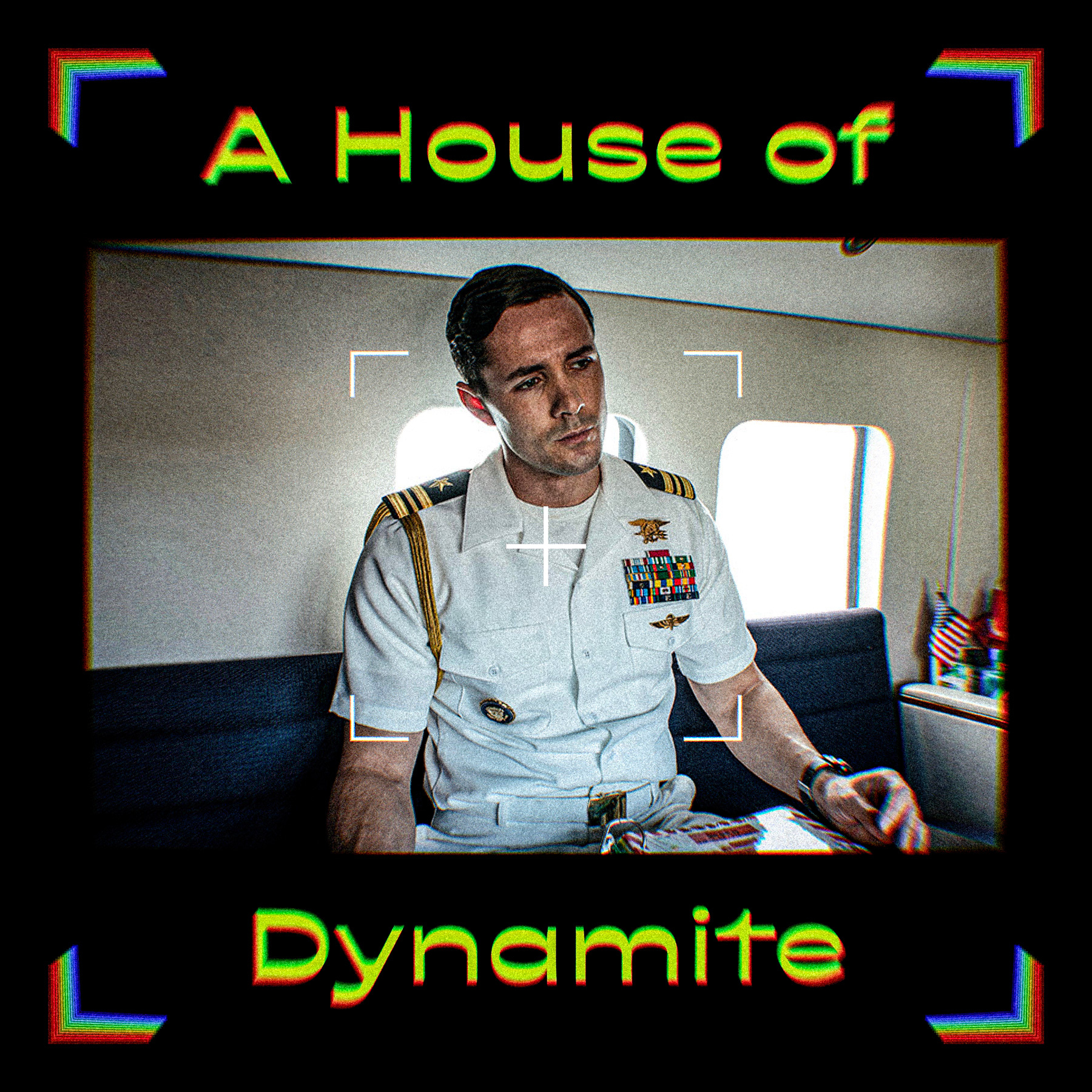 A House of Dynamite (2025) w/ Scott Sagan | Ep. 54 | Van and Lyle are joined by nuclear weapons and disarmament expert Scott Sagan to discuss A House of Dynamite, the 2025 political thriller that imagines nuclear catastrophe not as spectacle or obvious madness, but as an orderly sequence of decisions made under crushing time pressure. Structured as interlocking vignettes rather than a single command-room drama, the film moves between the White House, STRATCOM, missile defense sites, continuity bunkers, and civilian spaces, sketching a system that largely works as designed and still produces annihilation.The film’s opening establishes its governing logic. Inclination is flattening. Timelines shrink. Judgment collapses into procedure. “Nineteen minutes to impact.” “Sixteen minutes.” “Confirm impact.” Across locations, professionals do their jobs calmly while the meaning drains out of their actions. A senior officer tells a junior colleague to keep the cafeteria line moving. A staffer compiles names and Social Security numbers for the dead. Phones come out. Final calls are made. The end of the world arrives not with hysteria, but with etiquette.Much of the tension turns on probability. Missile defense is described as “hitting a bullet with a bullet.” Sixty-one percent becomes the moral threshold, a coin toss bought with billions of dollars. Baseball chatter at STRATCOM blends into DEFCON alerts. A Civil War reenactment at Gettysburg unfolds alongside real-time catastrophe, collapsing past and present forms of American mass death into a single frame.Scott is critical of the film’s portrayal of nuclear command and control. He argues that its depiction of retaliatory decision-making is wrong, that no president would order nuclear strikes against loosely defined adversaries without firm attribution or confirmation, and that the film risks backfiring by encouraging faith in ever more elaborate missile defenses rather than disarmament. Lyle pushes back, questioning whether this confidence in institutional sanity is warranted, especially given the political moment. Either way, the film lands a disturbing insight. The danger is not wild irrationality, but systems that normalize impossible choices. Nuclear war here would not look like collapse. It would look like competence.Further ReadingScott’s Wiki page“Just and Unjust Nuclear Deterrence” by ScottThe Limits of Safety: Organizations, Accidents, and Nuclear Weapons by Scott“Thinking and Moral Considerations” by Hannah ArendtThe Soldier and the State by Samuel P. HuntingtonReview of A House of Dynamite in Bulletin of Atomic Scientists by Scott and Shreya Lad“Peacecraft and the Nuclear Policy Dilemma” by Van“Fresh Hell: Unjust Nuclear Deterrence and Nuclear Testing” by VanTeaser from the EpisodeA House of Dynamite Trailer This is a public episode. If you'd like to discuss this with other subscribers or get access to bonus episodes, visit www.bangbangpod.com/subscribe | 55m 47s | ||||||
| 12/14/25 |  Tigerland (2000) w/ Joe Allen | Ep. 53 | Van and Lyle are joined by writer and journalist Joe Allen to discuss Tigerland, Joel Schumacher’s 2000 film about a group of young men cycling through an infantry training camp in Louisiana in the final years of the Vietnam War. Shot in a loose, almost documentary style and anchored by a breakout performance from Colin Farrell, the film treats Tigerland (the “stateside of Vietnam”) as a pressure cooker where class, race, masculinity, and empire collide long before anyone reaches the battlefield.We focus on Private Roland Bozz (Colin Farrell), a troublemaker less defined by idealism than by a corrosive honesty that makes him impossible to discipline. Bozz doesn’t reject the war with slogans but punctures it by refusing to perform its rituals straight. He mocks the “war is hell” pieties, questions authority just enough to expose its incoherence, and helps fellow recruits game the system. Not out of solidarity with Vietnam’s victims, but because the machine grinding them down is so obviously fraudulent. Tigerland is full of these destabilizing moments: Officers warning recruits they’re headed for a “two-way firing range,” torture instruction folded into training banter, and soldiers explaining their own conscription through warped moral arithmetic. “If I don’t go, someone else takes my place,” one insists. “And if they die, they died for me.” It’s not conviction so much as displacement, a way to survive guilt by outsourcing it.Joe helps situate Tigerland alongside Matewan, Amigo, and other working-class critiques of American violence and oppression, but what stands out here is how little romance Schumacher allows the rebellion itself. The Army’s hunger for bodies collides with young men who are alternately patriotic, broke, insecure, chauvinist, scared, and cruel. Hazing becomes psychological warfare, masculinity curdles into humiliation and sexualized dominance, and open bigotry is tolerated, even rewarded, when it serves discipline. Bozz’s quiet victory isn’t resistance so much as attrition, in part by coaching others out on psych evals and revealing that the system doesn’t need heroes but compliance or exhaustion. What Tigerland offers, then, is not a coming-of-age story but a bleak anatomy of how war prepares itself by breaking people just enough to make them usable.Further ReadingJoe’s Wiki pageBang-Bang’s Full Metal Jacket episodeThe Short-Timers by Gus HasfordDispatches by Michael HerrStiffed by Susan FaludiTeaser from the EpisodeTigerland Trailer This is a public episode. If you'd like to discuss this with other subscribers or get access to bonus episodes, visit www.bangbangpod.com/subscribe | 1h 00m 18s | ||||||
| 12/1/25 | 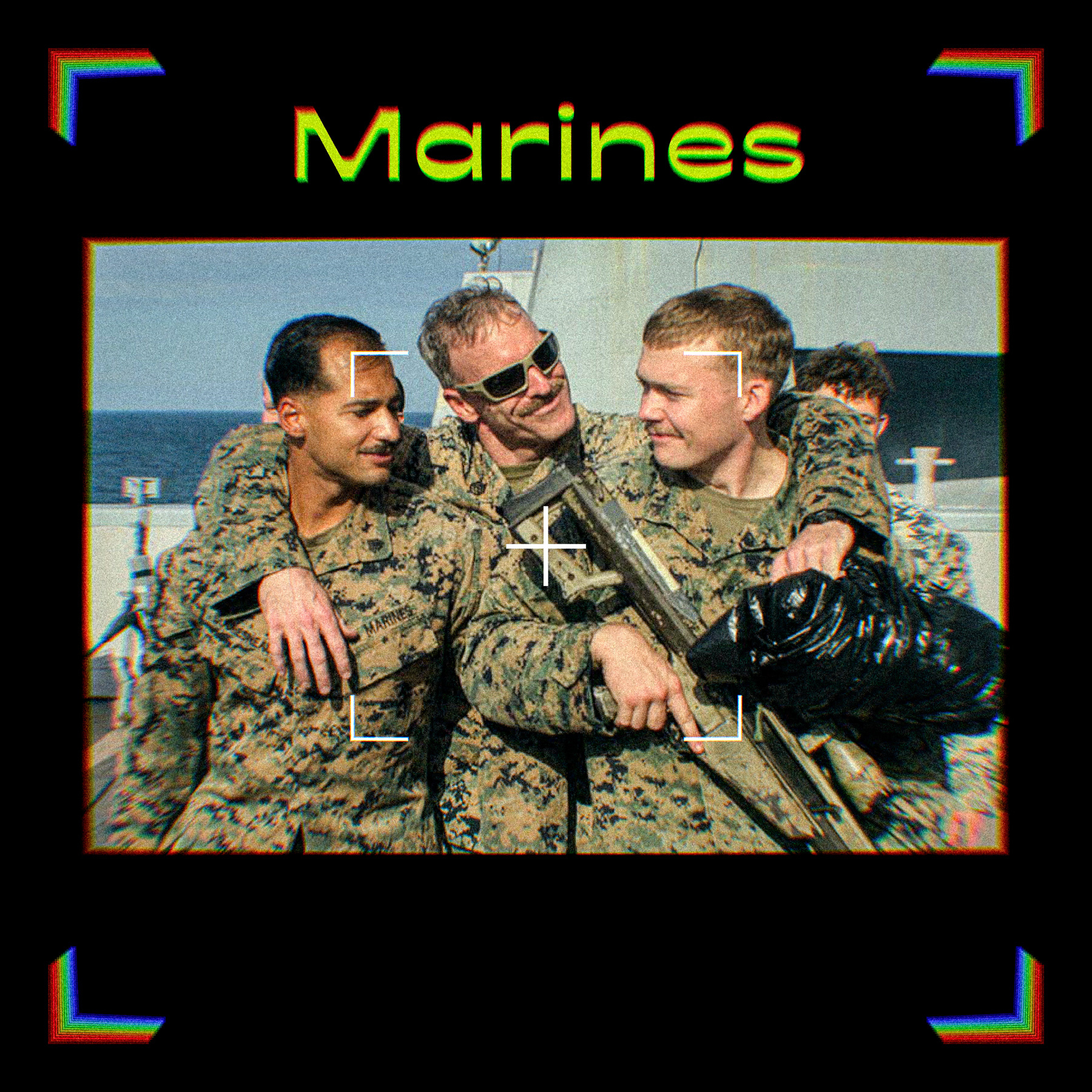 Netflix's Marines (2025) w/ Sam Carliner | Ep. 52 | Van and Lyle are joined by returning guest Sam Carliner to take on Marines, Netflix’s new 250th-anniversary docuseries, an unmistakable propaganda piece (it’s literally featured on the official Marine Corps website) that nonetheless reveals more candor than the institution intended. Directed by Chelsea Yarnell, whose style veers into Riefenstahl-lite, the series moves through the familiar mythology: Marines as the “meanest, baddest motherfuckers,” war as manhood, China as the next “bloody” proving ground. But between the clichés, something truer keeps slipping out.The Marines themselves come across not as caricatures but as young people grasping for purpose. Some raised amid violence, poverty, absent fathers, and broken homes; others from supportive families, following beloved relatives into the Corps, seeking adventure, education benefits, or what they sincerely understand as patriotic duty. Some speak with chilling bravado about killing; others struggle openly with faith, family, and the sense that combat is the only place they’ll ever feel whole. A sniper mourns the disbanding of scout-sniper platoons as if losing a piece of himself. A Huey pilot wonders how to make “non-emotional decisions” when his whole life has been shaped by emotion, and a mother tries to bless a choice she privately cannot support.And despite itself, the series also exposes the machinery surrounding them. Deployments that make no sense. A surreal shipboard announcement about Yemen, where Houthi attacks are called “unprovoked” with no mention of the U.S.-backed genocide in Gaza driving them, all delivered in a breezy “Good morning, Team America” tone. Marines saddled with the weight of great-power delusions they never chose. The political culture is bankrupt, but the individuals inside it are often heartbreakingly earnest. That tension, between Yarnell’s promo frame and the unfiltered vulnerability of the people she films, turns Marines into something worthwhile. Even in its worst moments, the series forces a deeper question: What happens when a society offering so little to its young men teaches them that violence is the only stable form of meaning?Further ReadingUSMC press release on the docuseriesSam’s SubstackThe Rivalry Peril by Van and Michael BrenesPain is Weakness Leaving the Body by Lyle Gangsters of Capitalism by Jonathan M. KatzWar Is a Force That Gives Us Meaning by Chris HedgesMarines Trailer This is a public episode. If you'd like to discuss this with other subscribers or get access to bonus episodes, visit www.bangbangpod.com/subscribe | 1h 27m 08s | ||||||
| 11/18/25 |  Under Fire (1983) w/ Paul Adlerstein | Ep. 51 | This is a free preview of a paid episode. To hear more, visit www.bangbangpod.comVan and Lyle are joined once again by historian Paul Adlerstein to revisit Under Fire, Roger Spottiswoode’s gripping and often overlooked drama about the final days of the Somoza dictatorship in Nicaragua. The film follows three American journalists (Nick Nolte, Joanna Cassidy, and Gene Hackman) as they navigate the moral terrain of reporting on a revolution in real time. What looks at first like a conventional political thriller unfolds into something more complicated: A story about solidarity and betrayal, the ethics of witnessing, and the impossible pressures revolutionaries face when the entire world is watching.We trace the film’s ambivalent but unmistakably anti-imperialist edge—the way Under Fire indicts U.S. policy without turning the Sandinistas into caricatures—and talk through the moments where its politics strain against its Hollywood framing. Paul walks us through the historical context of Somoza’s downfall and the Sandinista movement, while we dig into the film’s extraordinary craft: Jerry Goldsmith’s score (one of his best), the whistling motif in the church-tower firefight, the almost Carpenter-like chase sequence with the TV news van, and the unnerving tonal shifts as journalists move from observers to participants in the struggle.The conversation also turns to Under Fire’s prescience. How its critique of Cold War binaries (“the world isn’t East and West anymore… it’s North and South”) feels even sharper today, and how its depiction of journalists wrestling with complicity, responsibility, and power resonates in an era where war reporting, propaganda, and revolutionary movements remain entangled.Further ReadingPaul’s websiteNo Globalization Without Representation, by Paul AdlersteinBlood of Brothers: Life and War in Nicaragua by Stephen KinzerNational Security Archive, Nicaragua CollectionSandino’s Daughters: Testimonies of Nicaraguan Women in Struggle by Margaret RandallUnder the Shadow by The Real News Network and NACLATeaser from the EpisodeUnder Fire Trailer | 13m 46s | ||||||
| 11/8/25 |  Downfall (2005) and Triumph of the Will (1935) w/ George Dardess | Ep. 50 | This is a free preview of a paid episode. To hear more, visit www.bangbangpod.comVan and Lyle are joined by the literary critic George Dardess to talk about Downfall (2004) and its grim mirror, Triumph of the Will (1935). Where Leni Riefenstahl turned the Nazi project into divine spectacle, an ecstatic choreography of power and obedience, Bernd Eichinger and Oliver Hirschbiegel stage its total collapse. The conversation moves from the bunker’s suffocating intimacy to the ruined streets of Berlin, tracing how Downfall strips away the mythic machinery of fascism and leaves only exhaustion, delusion, and death.They linger on the film’s most shattering scenes: Hitler’s tender affection for his dog Blondi, Eva Braun’s manic dances above the bombs, Magda Goebbels forcing cyanide into her children’s mouths, and the “Albert Speer myth” of the good technocrat who resists too late. In contrast to Triumph of the Will’s mobilized masses (“You are not dead. You are Germany!”) Downfall exposes fascism’s inner logic from purity as self-destruction to discipline as despair. It’s not redemption or sympathy the film offers, but a study in the banality of evil, the smallness that remains when the spectacle ends.Further ReadingGeorge’s writings on the Slant Books website“Turning Hitler into Art?” by GeorgeUntil the Final Hour: Hitler’s Last Secretary by Traudl JungeThe Führer Bunker: The Complete Cycle by W.D. Snodgrass“Fascinating Fascism” by Susan SontagThe Wages of Destruction by Adam ToozeEichmann in Jerusalem by Hannah ArendtBehind the Scenes from the EpisodeDownfall Trailer | 20m 51s | ||||||
| 10/26/25 |  Emergency Politics, Revolutionary Gen Z, General Strikes, and Business School for Leftists | Ep. 49 | This is where the liberal resistance people were always right.The US is an insane nuclear power. How do you revolt against that?If change is going to come, it’s going to come from the periphery of the world-system, not the American core.The majority of the people in the military…do not actually want a civil war.There’s two ways that this gets resolved. There’s going to be a clash of forces, which is actual violence, which sucks…or we’re gonna do a general strike, finally, and we’re gonna shut this s**t down and we’re gonna have a critical mass of people withdraw their labor. Politics behind the scenes! A rare glimpse behind the curtain as Van, Lyle, and guest Andrew Facini got together to record an episode on Crimson Tide (coming in due course!). As sometimes happens, their conversation took a massive detour into the politics of the day, and it was urgent enough to share now as its own episode:* The folly of investing in nuclear “deterrence” while America makes an authoritarian turn; * The politics of emergency that Trump is mobilizing to deploy the US military in US cities;* Why a general strike in America is both inevitable and impossible;* What it means that MAGA is a counter-revolutionary force;* Why civil war depends on whether the military follows/keeps following unlawful orders;* Why Trump’s unlimited national security powers have everything to exaggerating the China threat; and* Why MAGA intellectuals are bad military strategists.For only $2 per week, you can access our vast (and growing) archive of anti-imperialist film conversation and much more. This is a public episode. If you'd like to discuss this with other subscribers or get access to bonus episodes, visit www.bangbangpod.com/subscribe | 28m 15s | ||||||
| 10/22/25 |  Part II: WarGames (1983) w/ Sam Ratner & Andy Facini | Ep. 48 | This is a free preview of a paid episode. To hear more, visit www.bangbangpod.comVan and Lyle are joined by Sam Ratner, Policy Director at Win Without War, and Andy Facini, Communications Director at the Council on Strategic Risks, to discuss WarGames, John Badham’s Cold-War techno-thriller that accidentally foresaw the age of algorithmic warfare.What begins as a teenage prank—Matthew Broderick’s David Lightman breaking into what he thinks is a computer game—quickly becomes a meditation on automation, deterrence, and human judgment in systems built to annihilate. Together, the group unpacks how WarGames’ “WOPR” supercomputer prefigures today’s AI decision-making, where machines learn to “take men out of the loop.” They trace how the film’s closing revelation (“The only winning move is not to play”) echoes across four decades of nuclear strategy and modern debates over escalation, autonomy, and control.The conversation ranges from NORAD and machine learning to the moral limits of deterrence, the psychology of Cold-War adolescence, and the comic absurdity of believing one can win an unwinnable game. Like Dr. Strangelove before it, WarGames shows us a military machine that runs on fear, faith, and code, and a civilization learning to live with its own programmed self-destruction.Further ReadingSam’s professional pageAndy’s professional page“Strategy & Conscience (The Book Review We Need),” by VanTelehack, a retro internet simulator recommended by AndyThe Imagineers of War: The Untold Story of DARPA, by Sharon WeinbergerThe Closed World: Computers and the Politics of Discourse in Cold War America, by Paul N. EdwardsThe Doomsday Machine: Confessions of a Nuclear War Planner, by Daniel EllsbergTeaser from the EpisodeWarGames Trailer | 11m 14s | ||||||
| 10/15/25 |  Part I of II: WarGames (1983) w/ Sam Ratner & Andy Facini | Ep. 47 | Van and Lyle are joined by Sam Ratner, Policy Director at Win Without War, and Andy Facini, Communications Director at the Council on Strategic Risks, to discuss WarGames, John Badham’s Cold-War techno-thriller that accidentally foresaw the age of algorithmic warfare.What begins as a teenage prank—Matthew Broderick’s David Lightman breaking into what he thinks is a computer game—quickly becomes a meditation on automation, deterrence, and human judgment in systems built to annihilate. Together, the group unpacks how WarGames’ “WOPR” supercomputer prefigures today’s AI decision-making, where machines learn to “take men out of the loop.” They trace how the film’s closing revelation (“The only winning move is not to play”) echoes across four decades of nuclear strategy and modern debates over escalation, autonomy, and control.The conversation ranges from NORAD and machine learning to the moral limits of deterrence, the psychology of Cold-War adolescence, and the comic absurdity of believing one can win an unwinnable game. Like Dr. Strangelove before it, WarGames shows us a military machine that runs on fear, faith, and code, and a civilization learning to live with its own programmed self-destruction.Further ReadingSam’s professional pageAndy’s professional page“Strategy & Conscience (The Book Review We Need),” by VanTelehack, a retro internet simulator recommended by AndyThe Imagineers of War: The Untold Story of DARPA, by Sharon WeinbergerThe Closed World: Computers and the Politics of Discourse in Cold War America, by Paul N. EdwardsThe Doomsday Machine: Confessions of a Nuclear War Planner, by Daniel EllsbergWarGames Trailer This is a public episode. If you'd like to discuss this with other subscribers or get access to bonus episodes, visit www.bangbangpod.com/subscribe | 1h 12m 46s | ||||||
Showing 25 of 73
Pitch Fit is a Pro feature
See how bookable this show is for guests, which brands already advertise, the per-episode ad value, and the best-fit guest and sponsor profile. The numbers are blurred on the free plan.
How readily this show books outside guests like you.
How proven this show is for host-read sponsorships.
For Guests
ProFor Advertisers
ProUpgrade to Pro to unlock guest cadence, sponsor categories, fit scores, and per-episode ad value for this show.
Chart Positions
5 placements across 5 markets.
Chart Positions
5 placements across 5 markets.