Insights from recent episode analysis
Audience Interest
Podcast Focus
Publishing Consistency
Platform Reach
Insights are generated by CastFox AI using publicly available data, episode content, and proprietary models.
Most discussed topics
Brands & references
Total monthly reach
Estimated from 3 chart positions in 3 markets.
By chart position
- 🇦🇺AU · History#1985K to 30K
- 🇦🇪AE · History#3910K to 30K
- 🇭🇰HK · History#993K to 10K
- Per-Episode Audience
Est. listeners per new episode within ~30 days
9K to 35K🎙 ~2x weekly·106 episodes·Last published yesterday - Monthly Reach
Unique listeners across all episodes (30 days)
18K to 70K🇦🇺43%🇦🇪43%🇭🇰14% - Active Followers
Loyal subscribers who consistently listen
7.2K to 28K
Market Insights
Platform Distribution
Reach across major podcast platforms, updated hourly
Total Followers
—
Total Plays
—
Total Reviews
—
* Data sourced directly from platform APIs and aggregated hourly across all major podcast directories.
On the show
From 11 epsHosts
Recent guests
Recent episodes
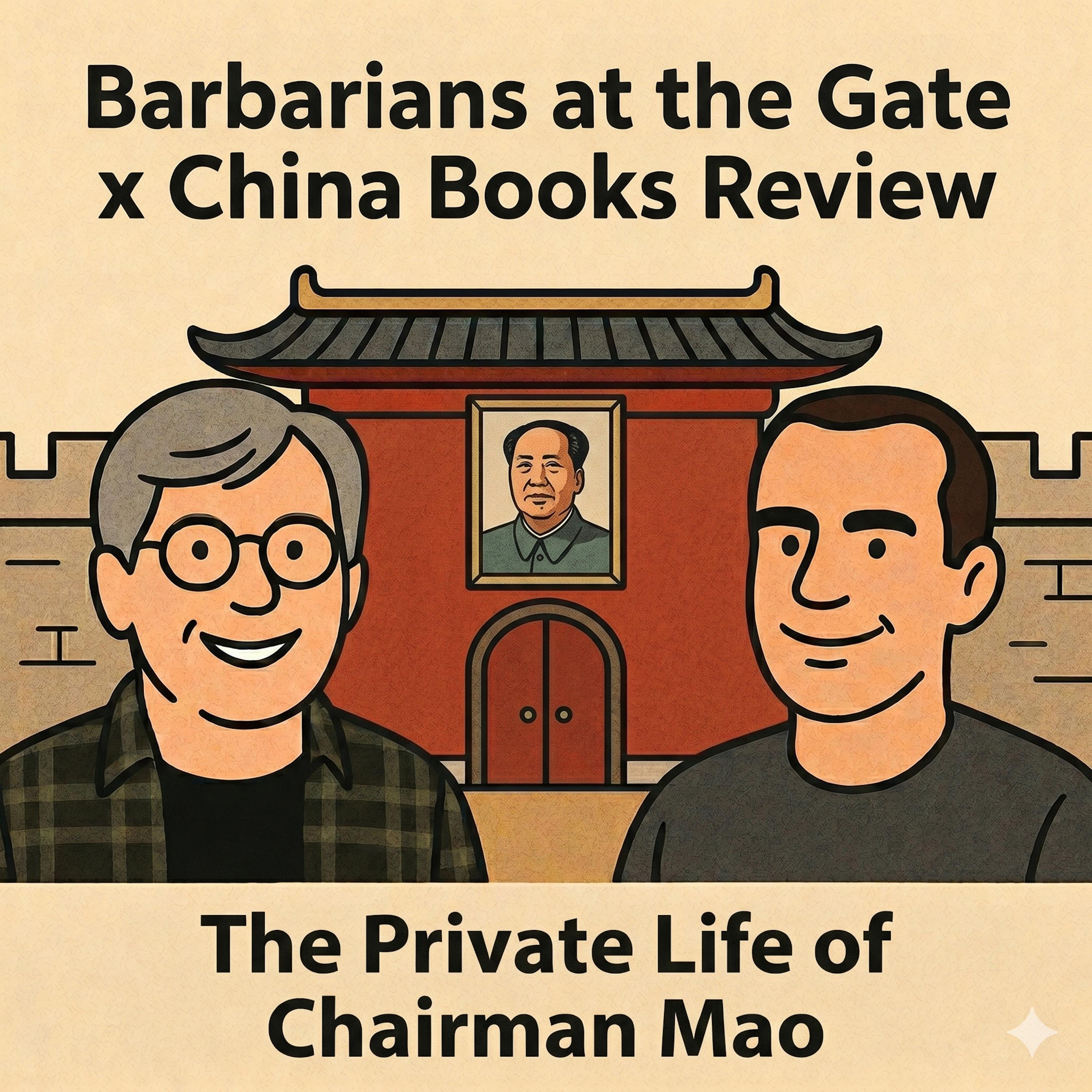
China Books Review x Barbarians at the Gate: The Private Life of Chairman Mao
Jun 4, 2026
Unknown duration
This Was Funnier in China: Jesse Appell's Cross-Cultural Comedy Journey
May 5, 2026
48m 45s
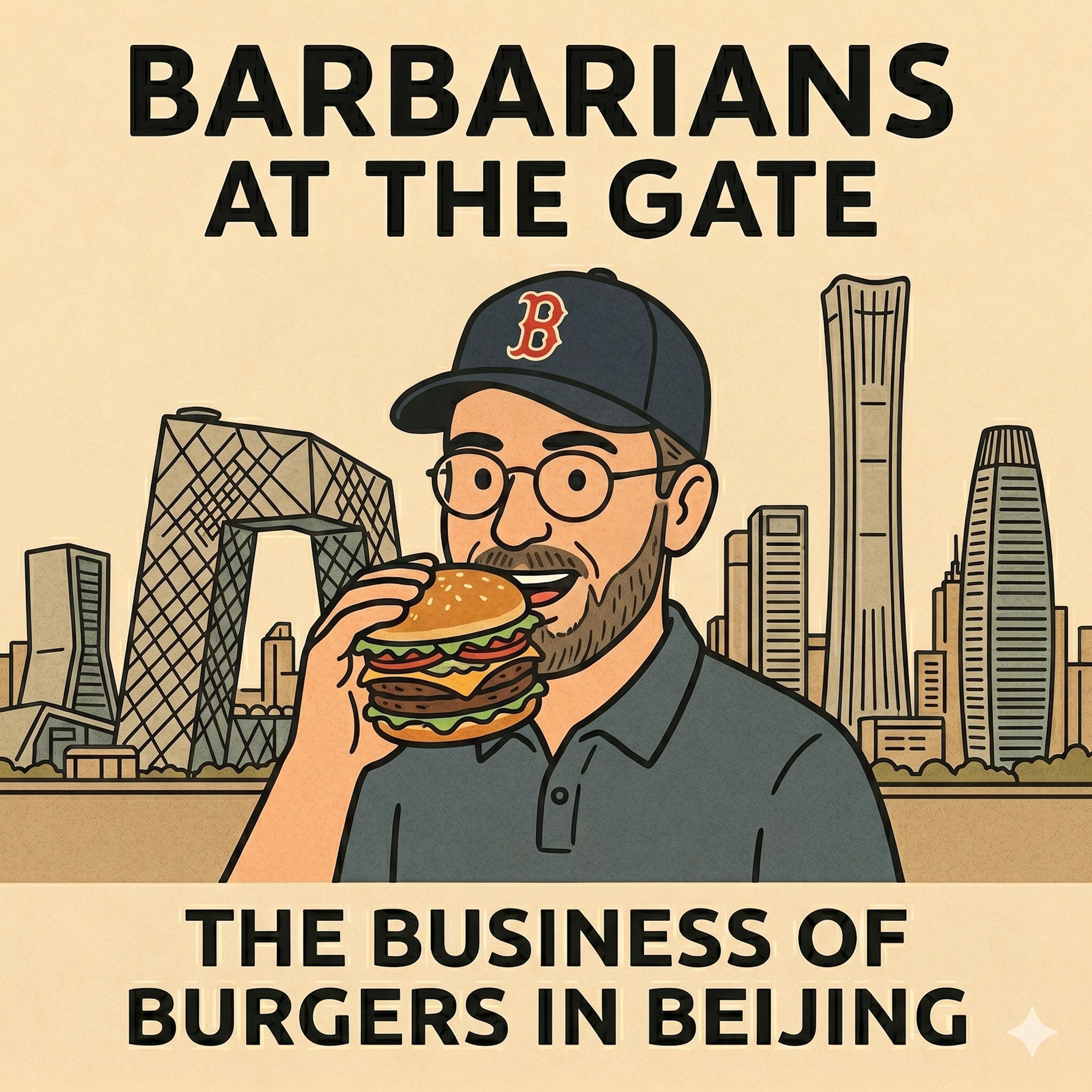
The Business of Burgers in Beijing: What Fast Food Festivals Reveal About China's Economy
Apr 21, 2026
33m 22s
Barbarians Remix: Do you really need to learn to write characters to study Chinese?
Apr 7, 2026
27m 43s
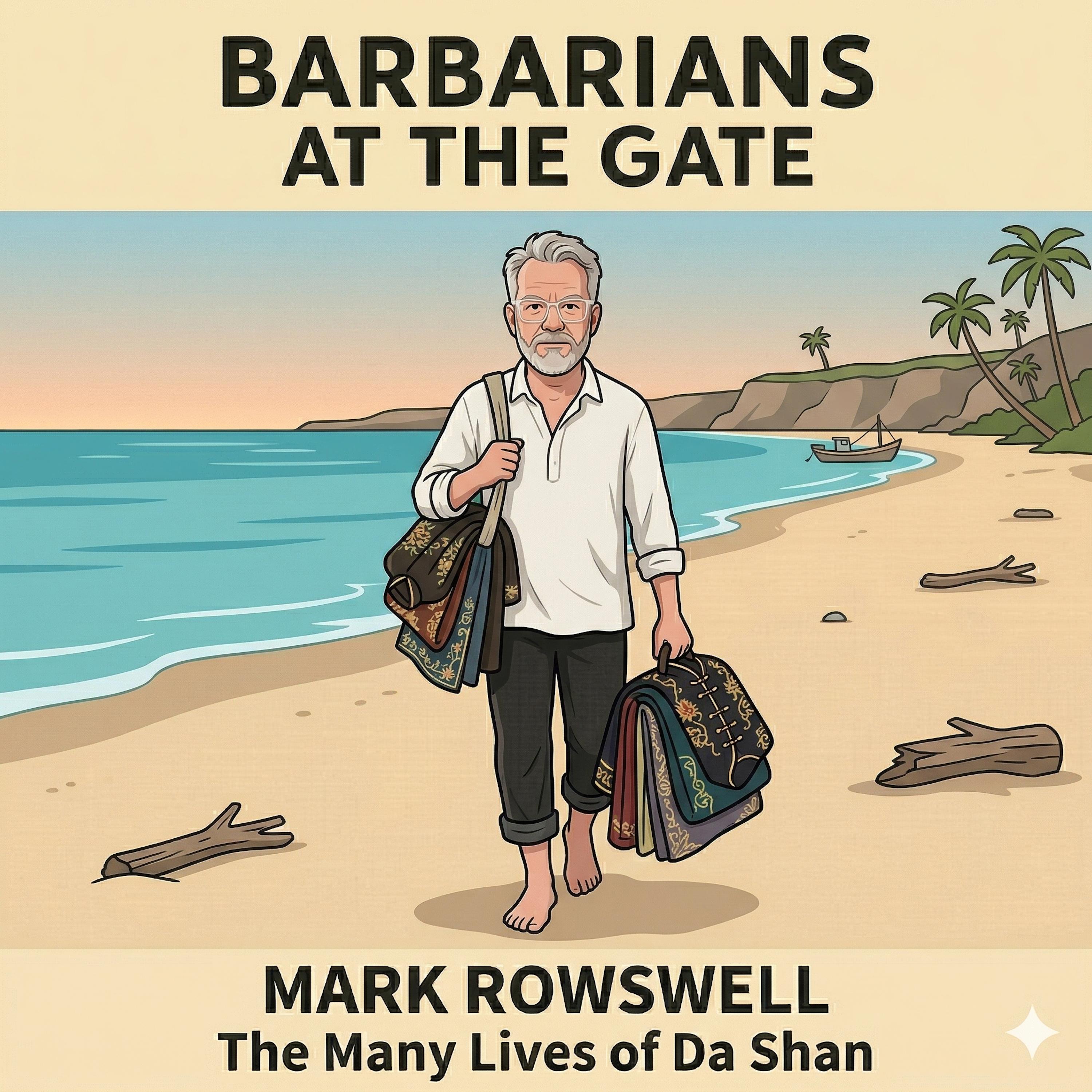
The Many Lives of Da Shan: Mark Rowswell on Chinese Poetry, Performing Live, and Staging Shawshank in Mandarin
Mar 24, 2026
45m 43s
Social Links & Contact
Official channels & resources
Official Website
Login
RSS Feed
Login
| Date | Episode | Topics | Guests | Brands | Places | Keywords | Sponsor | Length | |
|---|---|---|---|---|---|---|---|---|---|
| 6/4/26 | ![]() China Books Review x Barbarians at the Gate: The Private Life of Chairman Mao | The Politburo had given Mao Zedong’s personal physician Li Zhisui a direct order: prepare the Chairman’s body so that he can be on permanent display. Li was aghast. It was not what Mao had wanted, and besides, “How to pickle your country’s leader” wasn’t one of the courses he studied in medical school. But after the turbulence of the Cultural Revolution, Mao’s death meant a potential political showdown between the Gang of Four, including Mao’s wife, Jiang Qing, and Mao’s chosen successor, Hua Guofeng. Dr. Li did not want to be caught in the middle. So Li and his team did the best they could. Spoiler alert: it involved a massage that nobody would want to give. Li Zhisui’s controversial memoir, The Private Life of Chairman Mao, was published in 1994. Readers were titillated by Mao’s sex life, questionable hygiene regime, and gruesome medical maladies. Defenders of Mao labeled the book pure propaganda. Dr. Li was a disloyal liar, and his collaborators and publishers were pushing anti-Mao agendas. Jeremiah is joined by Alexander Boyd, Associate Editor of the China Books Review, to discuss Mao Zedong, Li Zhisui, and Jeremiah’s recent retrospective essay about The Private Life of Chairman Mao. Who was Dr. Li? What did it take to survive in the courtyards of power at the peak of Mao’s paranoia? And did Dr. Li really witness all of the major events he described in his book? | — | ||||||
| 5/5/26 | ![]() This Was Funnier in China: Jesse Appell's Cross-Cultural Comedy Journey✨ | cross-cultural comedyUS-China cultural exchange+4 | Jesse Appell | Fulbright Fellowshipcrosstalk | — | Jesse Appellcrosstalk+6 | — | 48m 45s | |
| 4/21/26 | ![]() The Business of Burgers in Beijing: What Fast Food Festivals Reveal About China's Economy✨ | fast foodChina's economy+3 | Mike Wester | McDonald'sKFC+4 | BeijingHefei | burger festivalsChina+5 | — | 33m 22s | |
| 4/7/26 | ![]() Barbarians Remix: Do you really need to learn to write characters to study Chinese?✨ | Chinese language learningdigital revolution+3 | Matt Coss | ChatGPT | — | Chinese characterslanguage pedagogy+3 | — | 27m 43s | |
| 3/24/26 | ![]() The Many Lives of Da Shan: Mark Rowswell on Chinese Poetry, Performing Live, and Staging Shawshank in Mandarin✨ | Chinese poetryperforming arts+4 | Mark Rowswell | Toronto Symphony OrchestraWinnipeg Symphony Orchestra+2 | — | Mark RowswellDashan+7 | — | 45m 43s | |
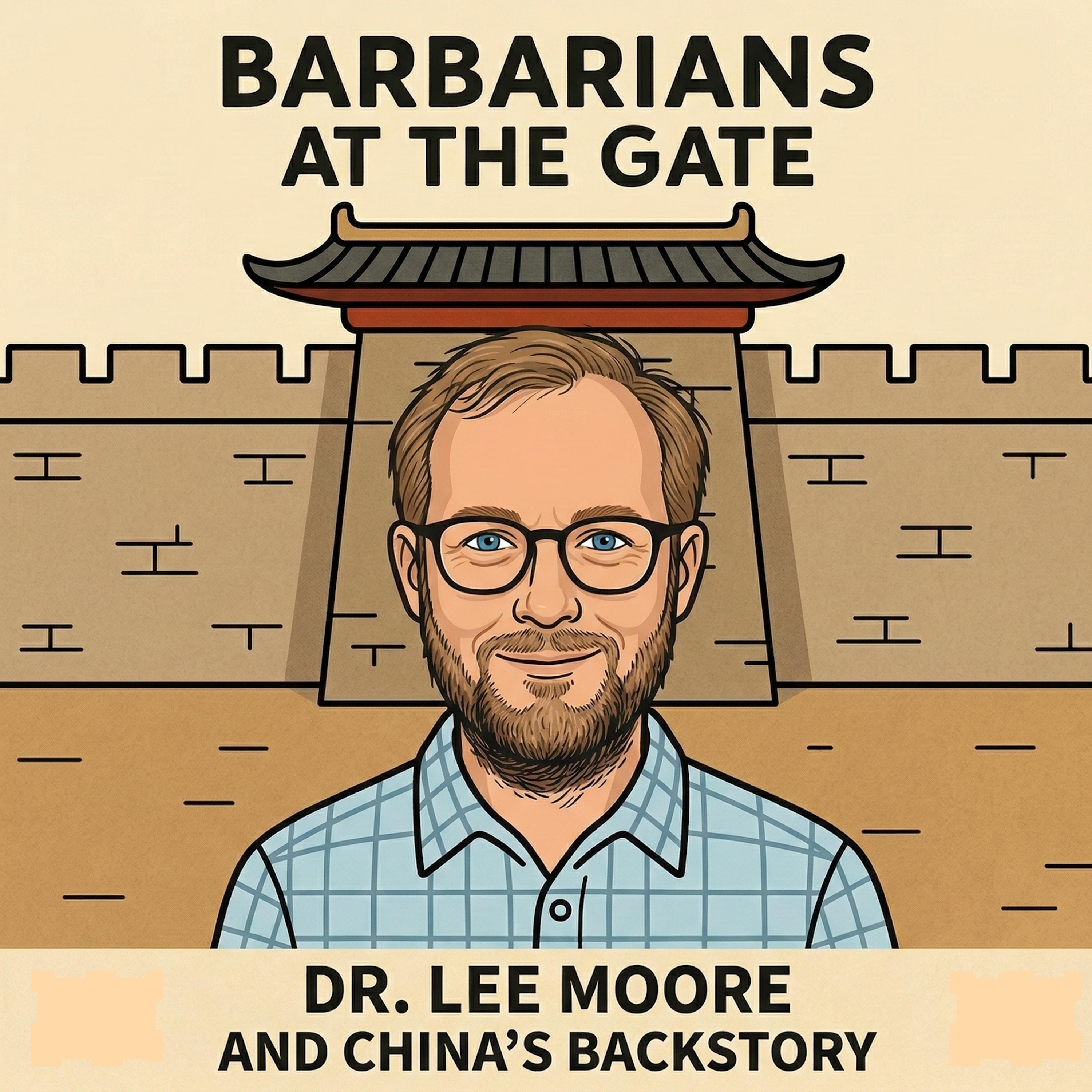
| 3/10/26 | ![]() Lee Moore's China Backstory: Why Saying "History Proves" Actually Means "I Haven't Done the Reading"✨ | Chinese historyTaiwan+4 | Lee Moore | China’s Backstory: The History Beijing Doesn’t Want You to Read | TaiwanXinjiang+2 | ChinaTaiwan+6 | — | 42m 35s | |
| 2/24/26 | ![]() Décadence Mandchoue: The wild (and almost certainly fictional) affair between Sir Edmund Backhouse and Empress Dowager Cixi✨ | Chinese historymemoirs+4 | Alexander Boyd | China Books ReviewBarbarians at the Gate | — | Edmund BackhouseEmpress Dowager Cixi+7 | — | 39m 33s | |
| 2/10/26 | ![]() Barbarians at the Gate x By Their Own Compass: Emily Hahn's Shanghai✨ | Emily HahnChina travels+4 | Sarah Keenlyside | By Their Own CompassChina to Me+3 | — | Emily HahnShanghai+5 | — | 1h 01m 10s | |
| 1/27/26 | ![]() Lost in Thailand: The New Chinese Diaspora from Bangkok to Addis Ababa✨ | Chinese tourismtravel trends+4 | Thomas BirdYajun Zhang | WeChatHarmony Express | ThailandBangkok+3 | Chinese mass tourismtravel writer+5 | — | 35m 51s | |
| 1/13/26 | ![]() Perilous Prognostications for China in 2026 with Yajun Zhang✨ | China's policiesAI impact+4 | Yajun Zhang | World Economic Forum | ChinaAmerica | China DreamAI+4 | — | 47m 31s | |
Want analysis for the episodes below?Free for Pro Submit a request, we'll have your selected episodes analyzed within an hour. Free, at no cost to you, for Pro users. | |||||||||
| 12/30/25 | ![]() Barbarians Remix: Horse Racing, History, and the Final Champion's Day in Old Shanghai✨ | horse racinghistory+4 | James Carter | Shanghai Race ClubChampions Day: The End of Old Shanghai | ShanghaiInternational Settlement | Champions DayShanghai+6 | — | 31m 36s | |
| 12/16/25 | ![]() The Dowager and the Dynasty: How did Empress Dowager Cixi rule China and should we blame her for bringing down an empire?✨ | Empress Dowager CixiChinese history+4 | David | — | — | CixiQing dynasty+6 | — | 51m 40s | |
| 11/14/25 | ![]() Barbarians at the Gate x China Books Review: From Heaven Lake | In 1981, the Indian writer and poet Vikram Seth traveled from Nanjing, where he was studying literature, to his hometown of Delhi. Moving by train across China to Gansu, then hitchhiking southwest through Qinghai and Tibet, it was an itinerary that makes sense when a traveler has a surfeit of curiosity but a shortage of funds. Armed with half-decent Mandarin, a fistful of foreign exchange certificates, and a scrap of paper authorizing his route, he negotiated China just as it was emerging from the Maoist era. No WeChat. No Trip.com. No Google Translate. Just a student improvising his way home as the date on his travel pass crept ever closer: fording rivers in rickety trucks, suffering altitude sickness, dealing with roadside thieves and the occasional military checkpoint. From Heaven Lake, the book that came out of that trip, still hits hard. It’s sharp, observant, funny in places, bleak in others. A snapshot of a country trying to reinvent itself while one traveler tries to get home before his paperwork expires. In this Barbarians at the Gate crossover with China Books Review, Jeremiah sits down with Alexander Boyd to talk about Seth’s strange, scrappy journey, what travel in China looked like in 1981, and how a writer from India saw things Western visitors of the same era tended to miss in the early 1980s. | — | ||||||
| 10/29/25 | ![]() The Destruction of the Old Summer Palace (Remix) | Yuanmingyuan, the "Garden of Perfect Brightness," commonly referred to as the Old Summer Palace, was a Qing Dynasty imperial residence comprised of hundreds of buildings, halls, gardens, temples, artificial lakes, and landscapes, covering a land area five times that of the Forbidden City and eight times the size of Vatican City. This expansive compound, once referred to by Victor Hugo as "one of the wonders of the world," now exists only as a sprawl of scattered ruins on the northern outskirts of Beijing, having been thoroughly burned and looted by the French and British over three days in October 1860, in the aftermath of the Second Opium War. The razed remnants of the glorious gardens have been left in place by the Chinese government as an outdoor museum of China's "Century of Humiliation" at the hands of foreign powers. On the 160th (now 165th) anniversary of the destruction of Yuanmingyuan, Jeremiah and David discuss the political and cultural clashes that led to the action, the significance of the incident for China's national self-image, and the government's attempts to repatriate the massive amounts of looted artifacts found scattered among the museums of Europe and the West. The conversation also explores the changing symbolic significance of the ruins in the context of a rejuvenated and economically powerful China. | — | ||||||
| 10/16/25 | ![]() The Voyages of Zheng He | It’s just two guys talking China's naval history. In this episode, David and Jeremiah dig into the story of Zheng He, the 15th-century admiral who took China's treasure fleets halfway around the world as Western Europe was just starting to figure out ocean navigation. Here's a Muslim eunuch who went from prisoner to running the emperor's treasure fleets. The man brought giraffes home as diplomatic gifts and offered up Sri Lankan kings as trophies to his boss. His fleets dwarfed anything Europe had, yet China wasn't really interested in claiming territory, just showing up, trading, and reminding everyone who ran the seas. Then Beijing killed the whole program. Just like that. Done. Why'd they stop? That's the question. Because when China bailed on blue-water sailing, Portugal and Spain filled the gap. Different game plan entirely. Flash forward to 2025, David is in Addis Ababa this month watching Chinese construction projects in Ethiopia and he's drawing lines between Zheng He's trade missions and today's Belt and Road. Same waters, same connections, five centuries apart. What can a eunuch, a giraffe, and a fleet of enormous ships can teach us about the history of globalization? | — | ||||||
| 9/29/25 | ![]() Barbarians at the Gate x China Books Review: The Records of the Grand Historian | Picture this: You’re 45 years old, halfway through writing the definitive history of your civilization. Writing this history is the family business, and you’ve made a promise to your dying father to finish his work no matter what, when your boss, who happens to be the Emperor of China, gives you a choice. You can be executed or, if that doesn’t work for your schedule, how about castration? Sima Qian picked door number two. If you enjoyed this tale of commitment, consider subscribing or supporting the Substack. Your subscription will cost far less than what Sima Qian paid. We promise. In this special episode of Barbarians at the Gate, Jeremiah teams up with China Books Review’s Associate Editor Alexander Boyd to dig into the story of history’s most committed writer. Sima Qian didn’t just compile China’s first great historical work—he literally sacrificed his manhood to complete it after defending a friend got him sideways with Emperor Han Wudi. Jeremiah and Alexander explore what it means to speak truth to power when the consequences are real, why Sima Qian’s model of moral courage feels especially relevant in our current moment of “spiritual castrations,” and whether anyone today has the stones (so to speak) to make that kind of sacrifice for their work. Sometimes the classics hit different when the world’s gone sideways. | — | ||||||
| 9/16/25 | ![]() Barbarians Remix: Seeking News, Making China | In this encore episode of Barbarians at the Gate, first broadcast in March 2024, John Alekna talks about his fascinating new book Seeking News, Making China: Information Technology and the Emergence of Mass Society. In 20th-century China, the gradual importation and development of information technology had an enormous impact on the way news was disseminated and accessed by the general public. When radio first appeared in the early 1920s, fewer than 8 in 1,000 people had access to newspapers, whereas by the Mao period hundreds of millions of citizens were receiving daily news and information via radio, TV, and shortwave technology. This book provides an enlightening “meta-historical” account of the evolving communications technologies that fueled the May Fourth Movement, KMT and CCP propaganda campaigns during WWII, and the mass information campaigns of the Mao era, such as the Cultural Revolution. The book describes how the various interlocking information technologies, infrastructure, and communication channels—what Alekna calls the “newsscape”—affected popular opinion, politics, and state power. John Alekna is an Assistant Professor in the History of Science, Technology, and Medicine at Peking University. | — | ||||||
| 8/31/25 | ![]() AI-Laoshi Will See You Now: How Artificial Intelligence is Transforming Chinese Language Learning | Teachers are an excitable lot prone to excessive consumption of caffeine and loudly proclaiming that [Insert New Technology Here] will doom a generation to intellectual oblivion. Whether it was television, computers, the Internet, Wikipedia, or now AI, we've seen this panic before. But in this episode, Jeremiah and David try to do a few deep knee bends and discuss what AI actually means for Chinese language learning. How do we teach when near-perfect translations are waiting on students' phones? How do we integrate AI into our work while putting guardrails on classroom use? AI might be the greatest learning tool since Pleco, but how do we keep the focus on connecting with actual humans, not impressing silicon tutors? An episode for language teachers, students, and anyone wondering if robots will eventually make them fluent in Mandarin. | — | ||||||
| 8/14/25 | ![]() Calling all China Nerds | Where are our nerds at? David Moser is on summer holiday, and stepping into David's seat for this episode is literary translator Brendan O'Kane. It takes about two minutes for Jeremiah and Brendan to go off the rails, over the edge, and back to the Amilal Courtyard in Beijing ca. 2010 (if you know, you know). In this wide-ranging conversation, Brendan and Jeremiah rate different levels of dynastic decline on the "fuckery" scale, Brendan reads a translation from Chinese philosopher Mencius, there's discussion of how to best gloss "laowai," if Xi Jinping is "president," "chairman," or something else entirely, a quick debate on whether Matteo Ricci had an eidetic memory or was just really, really smart, and Brendan's adventures battling ICE. Come with us for a wild ride of Sinological geekdom and summer-style freeflow scholarship. | — | ||||||
| 7/29/25 | ![]() Barbarians Remix: The Year of the Boxers with historian Jeffrey Wasserstrom | Jeremiah and David are joined by Jeffrey Wasserstrom, historian of modern China and a longtime interpreter of the country’s shifting place in the world. Originally recorded in 2020, this conversation revisits the Boxer War of 1900—not through the usual lens of siege and rescue, but by examining what followed: the punitive occupation, the fractured international memory, and the long shadow cast by a global media frenzy. Wasserstrom’s reading reframes the Boxers not as an isolated burst of anti-foreign violence, but as part of a cycle of uprisings and reprisals that shaped modern China’s encounter with the West. He discusses why the term “Boxer Rebellion” obscures more than it reveals, and why “Year of the Boxers” may be a better way to understand the crisis—and its aftershocks. The episode also explores deeper patterns in Chinese history, including the 60-year cyclical mindset that links 1900 to 1960 and, by some accounts, to 2020. It’s a conversation about repetition, media distortion, and the uneasy symmetry between violence and remembrance. | — | ||||||
| 7/15/25 | ![]() Is America Beginning to Look More Like China? | In this episode we chat with Shanghai-based author and editor Jacob Dreyer, a China watcher who writes with great insight and nuance about the shifting landscape of China-US relations. We touch on questions such as: Is the China model of governance outperforming Western liberal democracy? Is China winning the AI and technology wars? (Spoiler alert: That ship has sailed.) How do the architecture and logic of surveillance and information control systems differ between the U.S. and China? Is the current China-US geopolitical chill drifting toward a hot war? And finally, we unpack the question posed in Jacob’s guest op-ed in the New York Times: Is Trump’s America beginning to look more like China? | — | ||||||
| 7/1/25 | ![]() Raiders, Rulers, and Traders: The Horse and the Rise of Empires | This week on the podcast, we explore the role of the horse in Chinese culture with author David Chaffetz, whose new book Raiders, Rulers, and Traders traces the sweeping impact of horse domestication across world civilizations. Chaffetz explains how equestrian cultures not only transformed warfare and mobility in China, but also reshaped the very boundaries of empire and cultural identity. Our conversation follows China’s long and complex relationship with the horse, from defending against nomadic cavalry along the northern frontier to importing prized horses through Silk Road diplomacy. Chaffetz recounts the challenges faced by Chinese dynasties in breeding horses to match the superior mounts of Mongol raiders. We also explore the echoes of China’s horse culture preserved in relics, from paintings and artifacts to the horse statues unearthed among the Terracotta Warriors. | — | ||||||
| 6/17/25 | ![]() Barbarians Remix: Mandarin Mayhem I | In this classic episode from 2020, we look at Putonghua, the spoken language most people refer to as Mandarin. David wrote a book in 2016 on the evolution of Putonghua in China. What's the point of Putonghua? What is a dialect and what is a language in China? And what's the difference between Mandarin as spoken during the dynastic period, "Guoyu" (National Speech) in the Republican Period, and Putonghua in the PRC? We also get an assist from Zhang Yajun who talks with David about the differences between the spoken language of Northern China, especially around Beijing, and "Standard" Putonghua. | — | ||||||
| 6/2/25 | ![]() Emergency Pod: The Trump Administration restricts Harvard International Enrollment as State Department Reviews Chinese Student Visas | In this special episode, we examine the Trump administration's ongoing attacks on higher education in America and their implications for the future of US-China academic exchanges. On May 29, the Department of Homeland Security banned Harvard from enrolling international students—a decision that is now being challenged in the courts even as the educational plans of nearly 7,000 students and post-grads are thrown into jeopardy. This announcement comes on the heels of US Secretary of State Marco Rubio's announcement last Wednesday that the State Department will start "aggressively" revoking the visas of Chinese students, starting with those with connections to the ruling Chinese Communist Party or studying in critical fields.David and Jeremiah convene an emergency meeting of the podcast to unpack these developments and how these announcements will affect the future of US-China educational exchanges, America's global influence in higher education, and economic competitiveness.Spoiler alert: They're both quite salty about the subject. | — | ||||||
| 5/20/25 | ![]() The Six: Recovering the Lost Story of the Titanic's Chinese Survivors | In this episode of Barbarians at the Gate, hosts Jeremiah Jenne and David Moser interview Steven Schwankert about his groundbreaking research into the forgotten story of the Chinese survivors of the Titanic disaster. Schwankert, author of The Six: The Untold Story of the Titanic's Chinese Survivors, details how he uncovered the remarkable tale of six Chinese men who survived the sinking in 1912—a story largely erased from historical records. The conversation explores how these third-class passengers achieved an extraordinary survival rate despite their disadvantaged position on the ship. Schwankert explains how their maritime experience as professional sailors working for the Donald Steamship line may have helped them make crucial life-saving decisions during the disaster. We talk to Steve about the thorough detective work he and his team carried out researching the lives of the six surviving Chinese passengers, including their challenges in identifying Romanized Chinese names that had been misread for decades. They also got hands-on, using a full-scale replica of a Titanic collapsible lifeboat built by students and teachers from the Western Academy of Beijing to test historical claims about how the Chinese survivors escaped. Throughout the episode, Schwankert addresses the discrimination and false narratives these men faced in the aftermath of the disaster, including libelous newspaper accounts claiming they had dressed as women or stowed away. The documentary based on this research received a wide theatrical release in China in 2021, bringing this important historical correction to audiences worldwide. Finally, we discuss racism, official policy, and historical bias, as well as Steven and his team’s work to recover the lost stories of the six Chinese men who survived the sinking of the Titanic. | — | ||||||
Showing 25 of 109
Sponsor Intelligence
Sign in to see which brands sponsor this podcast, their ad offers, and promo codes.
Chart Positions
3 placements across 3 markets.
Chart Positions
3 placements across 3 markets.