
Insights from recent episode analysis
Audience Interest
Podcast Focus
Publishing Consistency
Platform Reach
Insights are generated by CastFox AI using publicly available data, episode content, and proprietary models.
Total monthly reach
Estimated from 1 chart position in 1 market.
By chart position
- 🇨🇦CA · Technology#1925K to 30K
- Per-Episode Audience
Est. listeners per new episode within ~30 days
1.5K to 9K🎙 Daily cadence·179 episodes·Last published today - Monthly Reach
Unique listeners across all episodes (30 days)
5K to 30K🇨🇦100% - Active Followers
Loyal subscribers who consistently listen
2K to 12K
Market Insights
Platform Distribution
Reach across major podcast platforms, updated hourly
Total Followers
—
Total Plays
—
Total Reviews
—
* Data sourced directly from platform APIs and aggregated hourly across all major podcast directories.
On the show
Recent episodes
The token math ain't mathin', so time to get back to what makes us human
Jun 1, 2026
40m 56s
Why your network is shallower than you think, and how to change it
May 25, 2026
41m 18s
What the AI datacenter build out looks like from the ground up
May 18, 2026
42m 19s
Best of: What leaders get wrong about AI rollouts and employee adoption
May 11, 2026
40m 33s
The Everything Machine and the Trillion-Dollar Bet [Replay]
May 4, 2026
1h 02m 02s
Social Links & Contact
Official channels & resources
Official Website
Login
RSS Feed
Login
| Date | Episode | Description | Length | ||||||
|---|---|---|---|---|---|---|---|---|---|
| 6/1/26 | 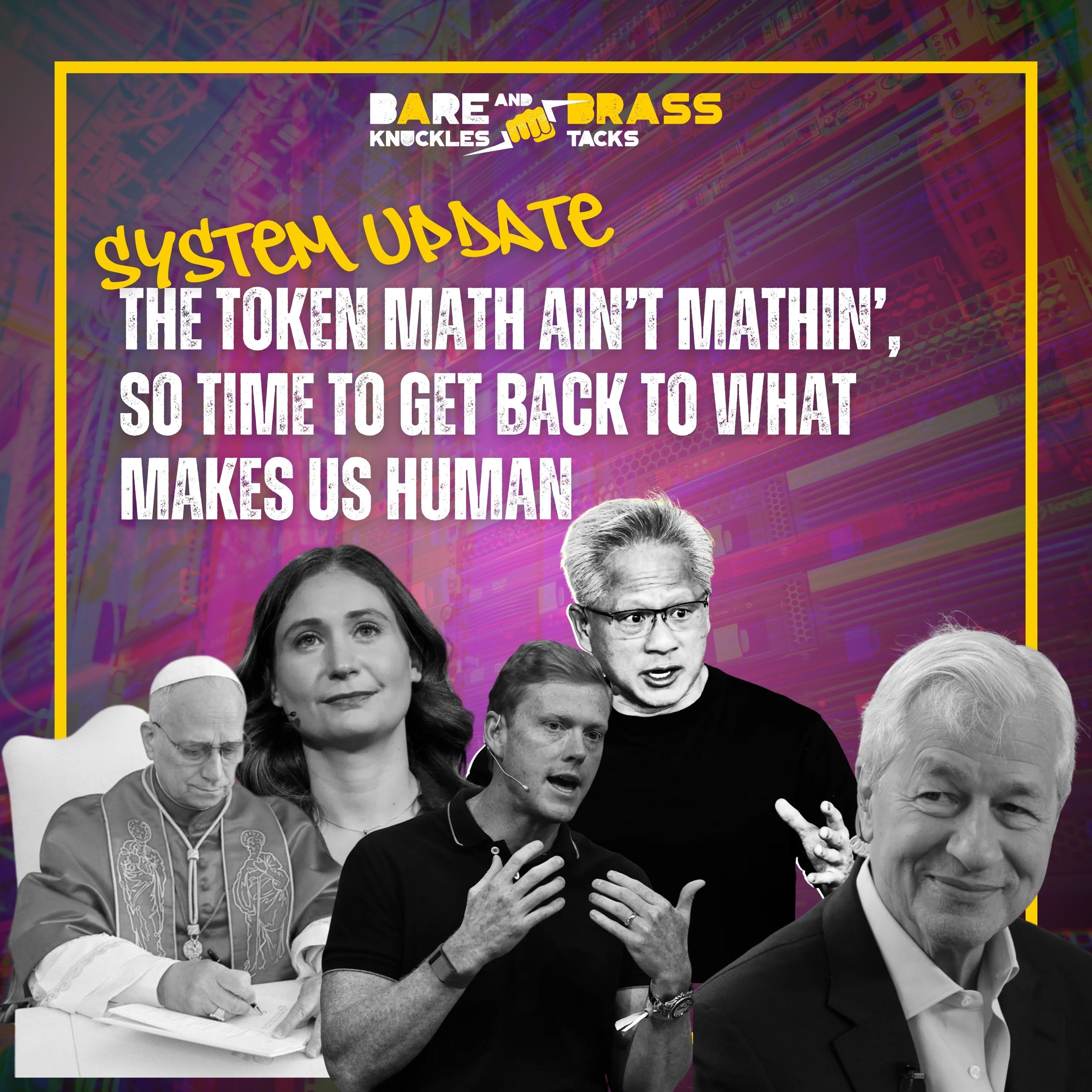 The token math ain't mathin', so time to get back to what makes us human | The hype machine spent two years telling us AI was coming for your job. Now it's quietly walking that back. Why now? Follow the money. On this week's system update, George K. and George A. pull apart the vibe shift happening at the top of the AI economy: from Uber's COO admitting he can't draw a line between token spend and shipped features, to the broader reckoning hitting every CFO who signed a three-year AI contract without modeling what agentic workflows actually cost. The subsidized era is over. The bill is due. And nobody has a clean answer. But the harder question underneath all of it isn't economic. It's human. What happens when an industry skips straight from "how big can we make it" to "what are humans even for" without stopping to answer either? The two Georges reckon with soft skills being repackaged as vital skills, the neoliberal bargain sold to a generation of college graduates, and what Pope Leo's 42,000+word encyclical on human dignity in the age of AI gets right that most boards and governments haven't. A tech podcast about humans. This week, more than ever. Mentioned: * Jensen Huang on irresponsible proclamations [https://futurism.com/artificial-intelligence/nvidia-ceo-begs-execs-stop-fired-ai] * Uber COO on lack of ROI from tokenmaxxing [https://www.businessinsider.com/uber-coo-andrew-macdonald-ai-token-spending-harder-justify-2026-5] * Ed Zitron on OpenAI and potential collapse of Oracle [https://www.youtube.com/watch?v=NHtGXCWXyZs] * Daniela Amodei on the importance of the humanities [https://fortune.com/2026/02/07/anthropic-cofounder-daniela-amodei-humanities-majors-soft-skills-hiring-ai-stem/] * Jamie Dimon on future job skills [https://www.cnbc.com/2025/12/11/jamie-dimon-ai-will-eliminate-jobs-but-these-skills-will-get-you-opportunities.html] * What 2026 hiring managers are looking for [https://www.msn.com/en-us/news/insight/experts-urge-shift-to-human-skills-as-job-market-tightens/gm-GMF1A41634] * Pope Leo XIV's encyclical, Magnifica Humanitas [https://www.vatican.va/content/leo-xiv/en/encyclicals/documents/20260515-magnifica-humanitas.html] * Marissa Alert on business outcomes planning first [https://open.spotify.com/episode/7ABtVkMeFEFVkJ0YVXjRXV?si=a10dec23e96f450a] * David Homan on how to build real human networks [https://open.spotify.com/episode/4iPxqxL69EKDCox6FuSK0X?si=b564db6ac39e4d35] * Sharon Goldman on the small town impact of the datacenter buildout [https://open.spotify.com/episode/3oiUrqViDUNpRtWTPgfLN3?si=w5XsbmbSQ--CbxhtdjLR-Q] | 40m 56s | ||||||
| 5/25/26 | 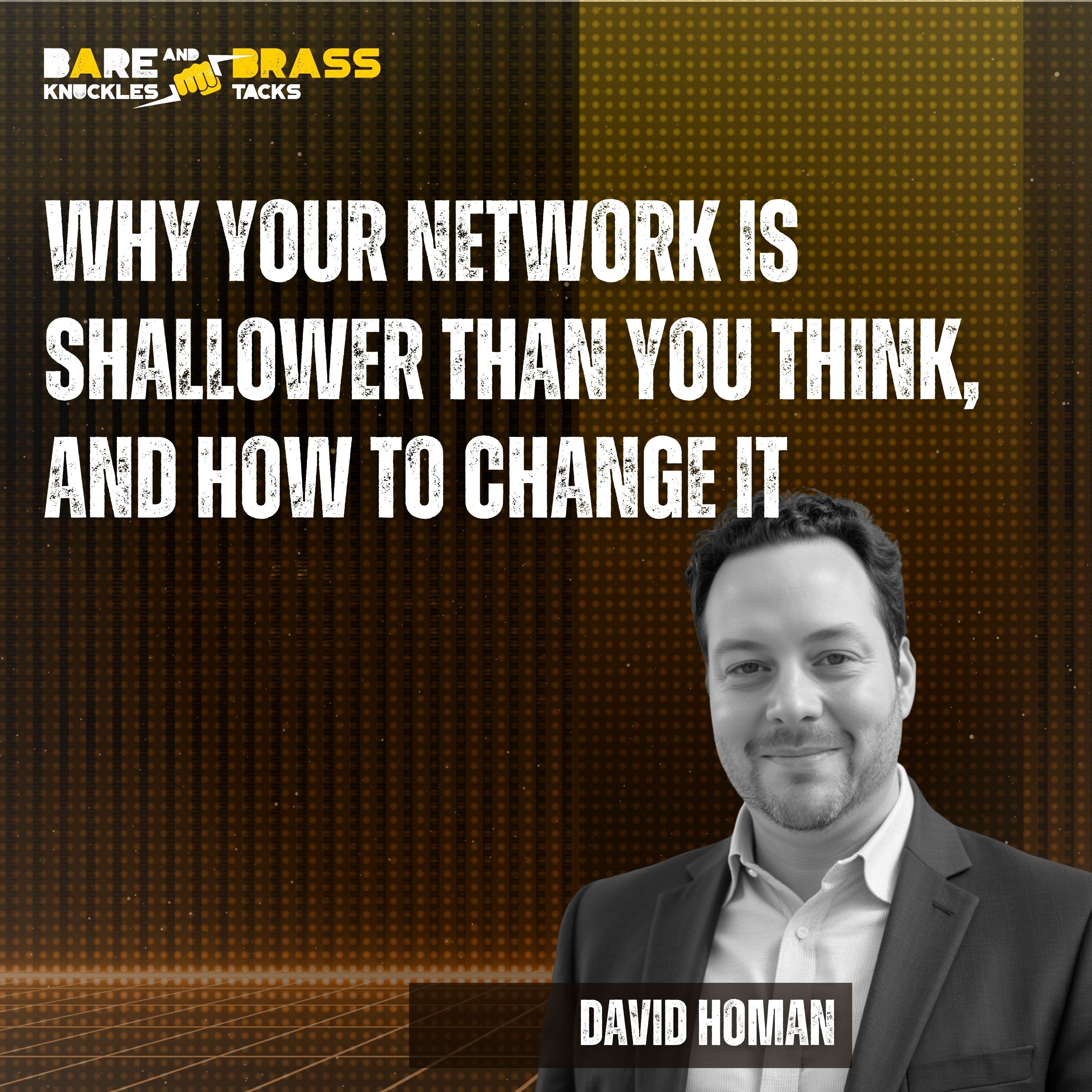 Why your network is shallower than you think, and how to change it | What if the reason most people struggle to build meaningful professional relationships isn't effort — it's that they've mistaken a transaction for a foundation? David Homan [https://orchestratedconnecting.com/about/] has spent thirteen years building the largest private network of super connectors on the planet. Not by being the most impressive person in the room, but by being the most useful one — long before anyone asked. His thesis is that trust operates on a time horizon most people aren't patient enough to respect. That the introductions that change lives rarely pay off in weeks. They pay off in years, through chains of three to five people that no existing technology has ever been able to track — until now. In this episode, David walks us through the architecture of real community: why action is the only currency that matters, what it actually means to honor a chain of connections, and how a moment of genuine vulnerability can outperform a hundred polished elevator pitches. He also makes a case that most of us have at least two phone calls we should have made by now — and haven't. Learn more about David's work: * Orchestrating Connection [https://orchestratingconnection.com/] * SOAR Connect [https://soarconnect.ai/] | 41m 18s | ||||||
| 5/18/26 | 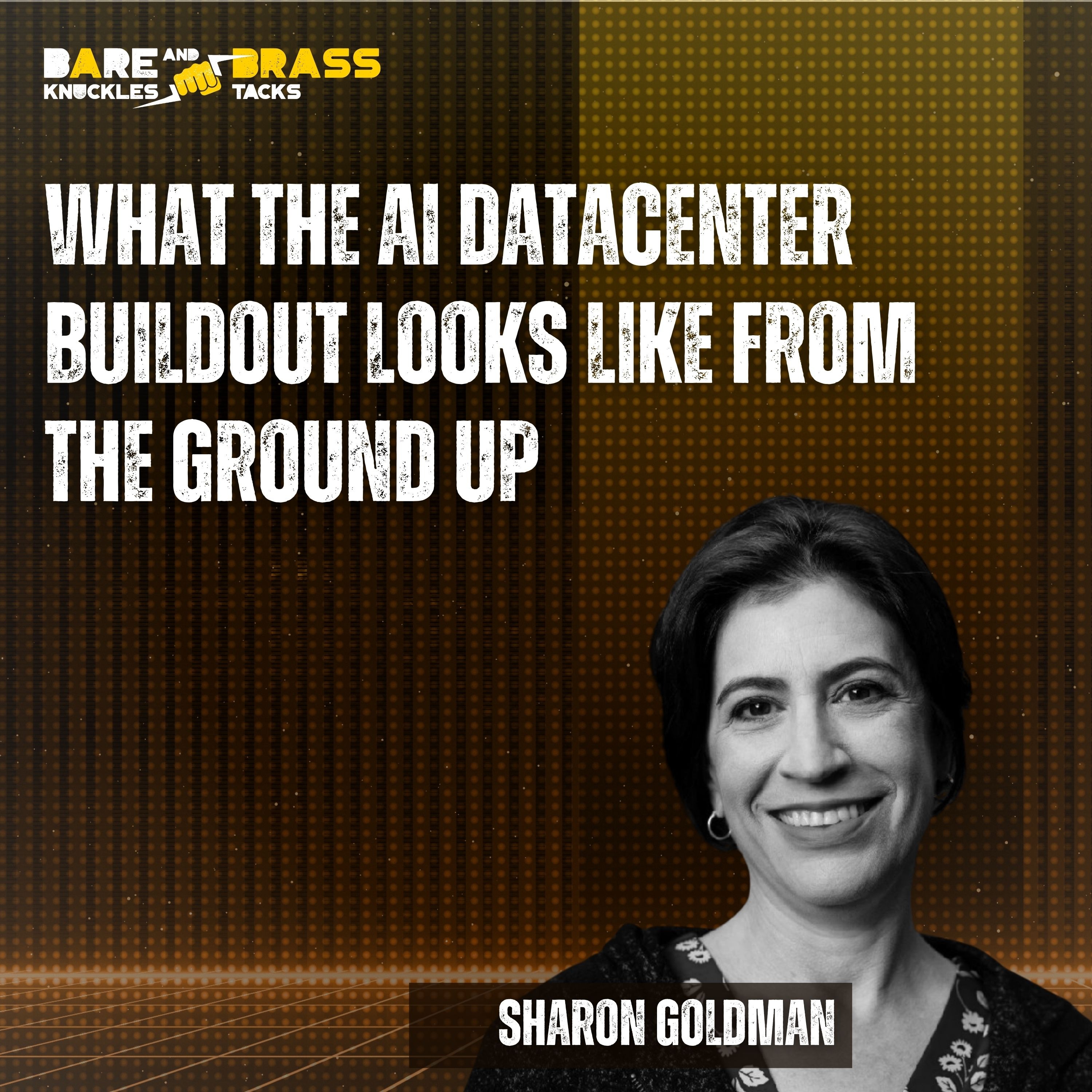 What the AI datacenter build out looks like from the ground up | What happens when a community votes no…but the #AI datacenter construction starts anyway? That is not a hypothetical. It's what happened in Saline Township, Michigan, when a $16 billion OpenAI-Oracle data center was rejected by the local planning commission, rejected again by the township board, and broke ground weeks later anyway. The developer sued. The town settled. They had no real choice. Sharon Goldman [https://fortune.com/author/sharon-goldman/]has been covering the AI data center buildout for Fortune — not from boardrooms, but from township halls, planning commission meetings, and rural communities that had never imagined something like this landing in their midst. What she's found is a story that the technology press largely isn't telling: the buildout is a bottom-up crisis dressed up as a top-down triumph. The numbers tell part of it. Saline Township received $14 million in community benefits from a $16 billion project, against an annual budget of $1 million. In Richland Parish, Louisiana, the land where Meta's Hyperion facility now sits was once pitched for an auto plant that would have created two to three thousand permanent jobs. The data center is promising 500. The construction workers are mostly from out of state. And the justifying ideologies — the race with China, the national security imperative — has no finish line. This race has a vague one-upsmanship and a $700 billion spend with no clear end in sight. What Sharon sees coming, and what she thinks the press is missing, is the backlash that is quietly becoming a political force — showing up in recall elections, in governor's races, and in the kind of conspiratorial thinking that emerges when people have lost trust and no longer believe that democracy is working for them. You can read more of Sharon's reporting here: * A Michigan farm town voted down plans for a giant OpenAI-Oracle data center. Weeks later, construction began | Fortune [https://fortune.com/2026/05/06/ai-data-center-michigan-saline-politics-farmland/?sge456] * Meta's $27 billion AI data center is causing chaos in small town Louisiana | Fortune [https://fortune.com/2026/03/26/meta-ai-data-center-hyperion-louisiana/?sge456] * At the edges of the AI data center boom, rural America is up against Silicon Valley billions [https://fortune.com/2025/12/27/ai-data-centers-arizona-hassayampa-ranch/?sge456] * Huge AI data centers are turning local elections into fights over the future of energy [https://fortune.com/2025/10/22/ai-data-centers-politics-elections-energy/?sge456] * Elon Musk is pushing to build data centers in space. But they won't solve AI's power problems anytime soon [https://fortune.com/2026/02/19/ai-data-centers-in-space-elon-musk-power-problems/?sge456] * Big Tech will spend nearly $700 billion on AI this year. No one knows where the buildout ends [https://fortune.com/2026/04/30/big-tech-hyperscalers-will-spend-700-billion-on-ai-infrastructure-this-year-with-no-clear-end-in-sight-eye-on-ai/?sge456] * Inside a multibillion dollar AI data center powering the future of the American economy [https://fortune.com/2026/01/27/data-centers-ai-meta-microsoft-google-amazon-openai-gpu/?sge456] | 42m 19s | ||||||
| 5/11/26 | 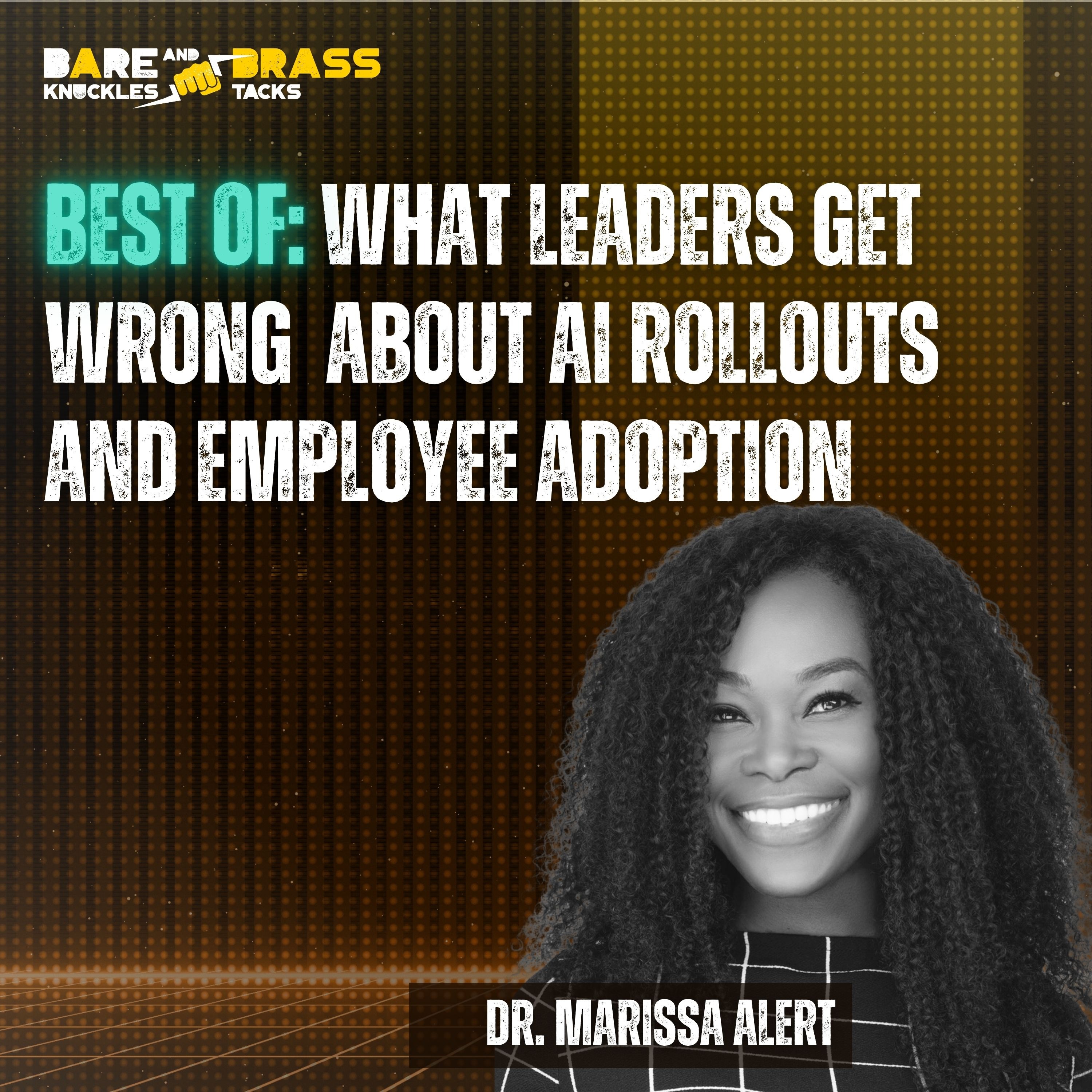 Best of: What leaders get wrong about AI rollouts and employee adoption | In the wake of more layoffs attributed to "AI," we thought it worthwhile to revisit this conversation from earlier in the year. Increasingly, AI is being used as a catch-all excuse to justify layoffs without clear return on business value, other than the stock price...so it's time to dig deeper. What if your AI rollout isn't failing because of the technology, but because no one asked your employees how they feel about it? Dr. Marissa Alert is a clinical psychologist who works with organizations scaling AI. Her argument is deceptively simple: the resistance leaders keep running into isn't a change management problem. It's a diagnostic failure. And until you treat it like one, AI rollouts turn into guesswork. High usage doesn't mean successful adoption. It might just mean fear-driven compliance. In this episode, we get into what business leaders and organizations consistently get wrong: the assumptions made about how employees will respond, the gap between leadership alignment at the top and the confusion that trickles down, and why layering an AI mandate onto a workforce already running on empty is a very different problem than a training rollout. We also got into something harder: what it means when employees are being asked to integrate tools that might replace them, and why most leaders don't have a good answer for that question. If your organization is tracking adoption rates and still seeing 20%, this episode is worth your time. Mentioned * Jack Dorsey's Block cuts nearly half of its staff in AI gamble [https://www.theverge.com/tech/885710/jack-dorsey-block-layoffs-job-cuts-ai] | 40m 33s | ||||||
| 5/4/26 | ![The Everything Machine and the Trillion-Dollar Bet [Replay] episode artwork](https://media.zencastr.com/image-files/6322f03255d97a700020586e/f0ee1901-e926-4895-9598-4c323bd806cb.jpg) The Everything Machine and the Trillion-Dollar Bet [Replay] | What if the story we're being told about AI's inevitability is hiding something underneath? That's the question Jessica Parker and Kimberly Becker put to George K. on their podcast, Women Talking 'Bout AI [https://www.womentalkinboutai.com/]. This conversation is a replay from their feed. It followed the money: the special purpose vehicles, the obfuscatory financing, the concentration of risk in a handful of companies and a single island in the Taiwan Strait. But what they kept arriving at wasn't really a financial question. It was a human one. Who has skin in the game? And what happens to the rest of us when the people building this technology can't answer what outcome they're actually trying to produce? The conversation covers why the dot-com analogy is the wrong frame for the current investment craze, why an AI crash could starve the narrow applications that actually work, and why the "everything machine" promise was probably never going to pay for itself. It also gets into what chatbot tutors get wrong about teaching, why we keep analogizing ourselves to whatever technology we just built, and what it might mean that generalists could be the ones who come out of this ahead. The kind of conversation where you leave with more questions than you came in with. Which is exactly what we're after. | 1h 02m 02s | ||||||
| 4/27/26 |  AI is doing real good and real harm, but the hype is hiding both | The AI hype machine is taking up all the oxygen we need to actually stop the harm happening today. This month we heard from three guests who didn't compare notes. Didn't coordinate. And all three circled the same thing: the #AI hype machine isn't just wrong, it's actively making things worse. Capital flows going to "everything machines" instead applications that actually accomplish tasks. Gas turbines burning methane next to communities already carrying four times the national cancer rate. AI chatbots mathematically, not metaphorically, mathematically, engineered to reinforce delusional thinking in vulnerable users. Deepfake abuse still expanding, still mostly targeting women and minors, still unsolved. This is the real harm inventory. This month. Right now. Meanwhile the discourse is about whether a model might hypothetically stage a coup in five years. We're not doing doomer porn. We're saying watch the industry's hands, not the mouth. The boring risks are already here. The extraordinary stuff — the farmer in Morocco beating generalist models with expert-annotated field data, the researcher finding antibiotics with true wet lab work — that's also already here! It's just not getting same headlines and the funding. System Check. This month's episodes, broken down against current events and whatever's rattling around our brainboxes. Mentioned: * Smaller models find the same bugs as Mythos [https://the-decoder.com/the-myth-of-claude-mythos-crumbles-as-small-open-models-hunt-the-same-cybersecurity-bugs-anthropic-showcased/] * Stanford HAI 2026 AI Index [https://hai.stanford.edu/assets/files/ai_index_report_2026.pdf] * Discovering a new class of antibiotics [https://news.mit.edu/2023/using-ai-mit-researchers-identify-antibiotic-candidates-1220] * Dmitri Alperovitch's testimony on compute [https://chinaselectcommittee.house.gov/committee-activity/hearings/china-s-campaign-to-steal-america-s-ai-edge] * Baidu robotaxi outage [https://www.wired.com/story/robotaxi-outage-in-china-leaves-passengers-stuck-in-cars-on-highways/] * MIT CSAIL study on AI psychosis [https://the-decoder.com/sycophantic-ai-chatbots-can-break-even-ideal-rational-thinkers-researchers-formally-prove/] * NAACP lawsuit against xAI [https://naacp.org/articles/naacp-sues-xai-illegal-pollution-data-center-power-plant] * XAI gas turbines polluting rural communities [https://www.nbcnews.com/news/us-news/musks-ai-power-plant-generates-sound-fury-mississippi-rcna258594] * Northern Virginia datacenter health impacts [https://www.nbcwashington.com/news/local/northern-virginia/amid-constant-data-center-noise-sterling-residents-also-worry-about-health-impact/4091393/] * Human Line Project [https://pulitzercenter.org/stories/ai-psychosis-mental-health-crisis-21st-century] | 41m 16s | ||||||
| 4/20/26 | 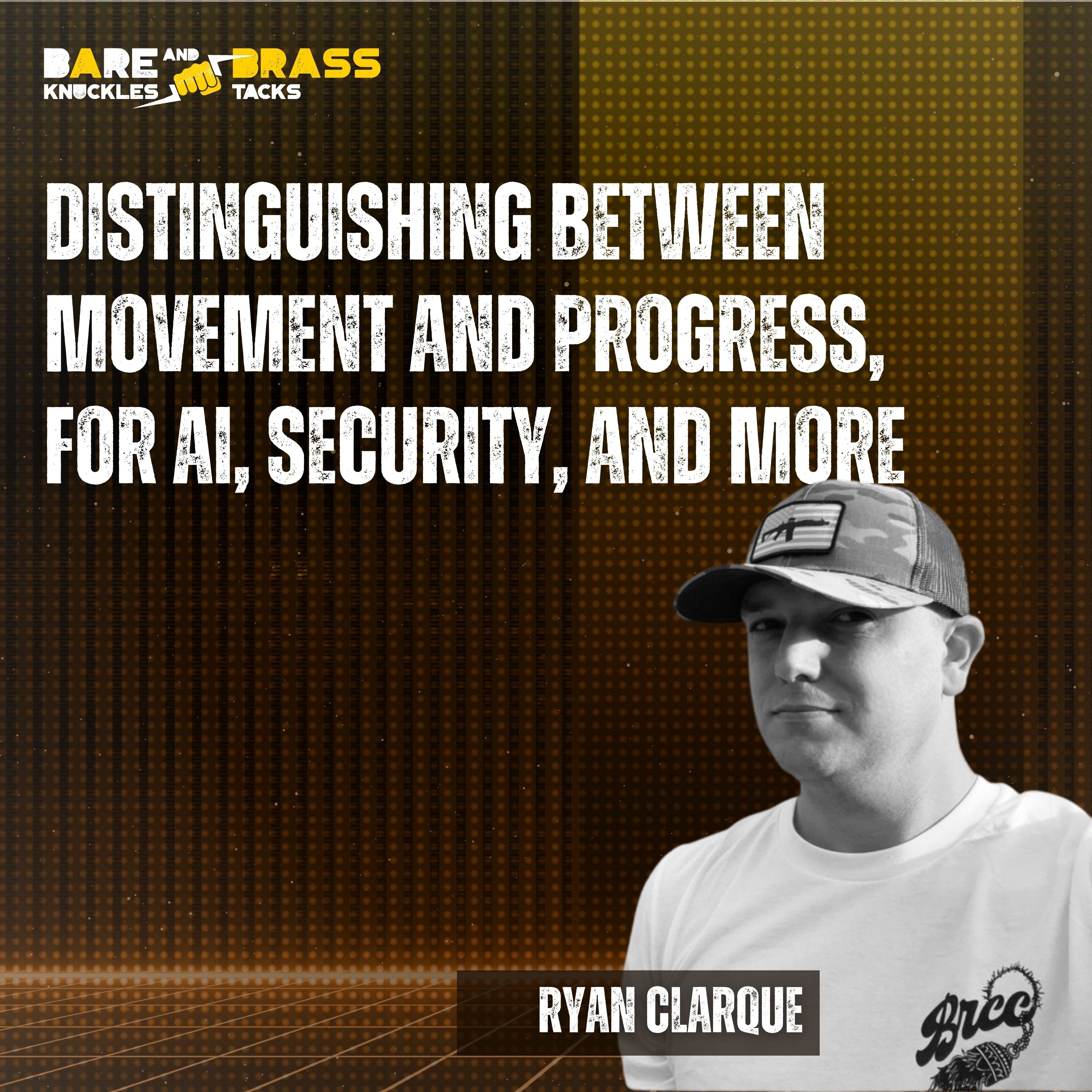 Distinguishing between movement and progress, in AI, security, and more | Are tech industries selling us a problems they invented? Ryan Clarque, CSO at Black Rifle Coffee Company [https://www.blackriflecoffee.com/], doesn't flinch at the big provocations. When Claude's Mythos model showed up in every LinkedIn feed promising a software apocalypse, Ryan's take was blunt: the basics were broken before Mythos, and they'll still be broken after it. The real question about a powerful AI model, it's whether you've built a program capable of doing anything about them when it does. But the conversation doesn't stop at hype-busting. Ryan has quietly done something the industry insists can't be done: built a lean, two-person security operation that ditched the big-ticket SIEM vendors, took control of its own telemetry, and outperformed programs with ten times the headcount and budget. When one of those vendors found out, they sent their "heavy hitter" to prove Ryan wrong, who left agreeing Ryan didn't need them. What emerges is a portrait of a practitioner who learned to distinguish progress from movement — and who thinks most of the industry is confusing the two. The procurement cycle, the Gartner roadmap, the sequence of investments you're told you must make: Ryan's argument is that inertia dressed up as strategy has left small security teams demoralized and over-leveraged, and that the fix is less about budget and more about the willingness to build your own way out. And then, at the end of a week of planes and conferences, Ryan says something that reframes all of it. The reason he doesn't chase the car or the watch or the title isn't asceticism — it's that working in security means observing the worst of what people do to each other, and the only way to stay functional is to invest hard in what actually holds. Time. Trust. People who remember how you made them feel. Mentioned: * Cal Newport on Mythos vs other LLMs in finding software vulnerabilities [https://www.youtube.com/watch?v=k-8stQCeQiE] | 44m 39s | ||||||
| 4/13/26 | 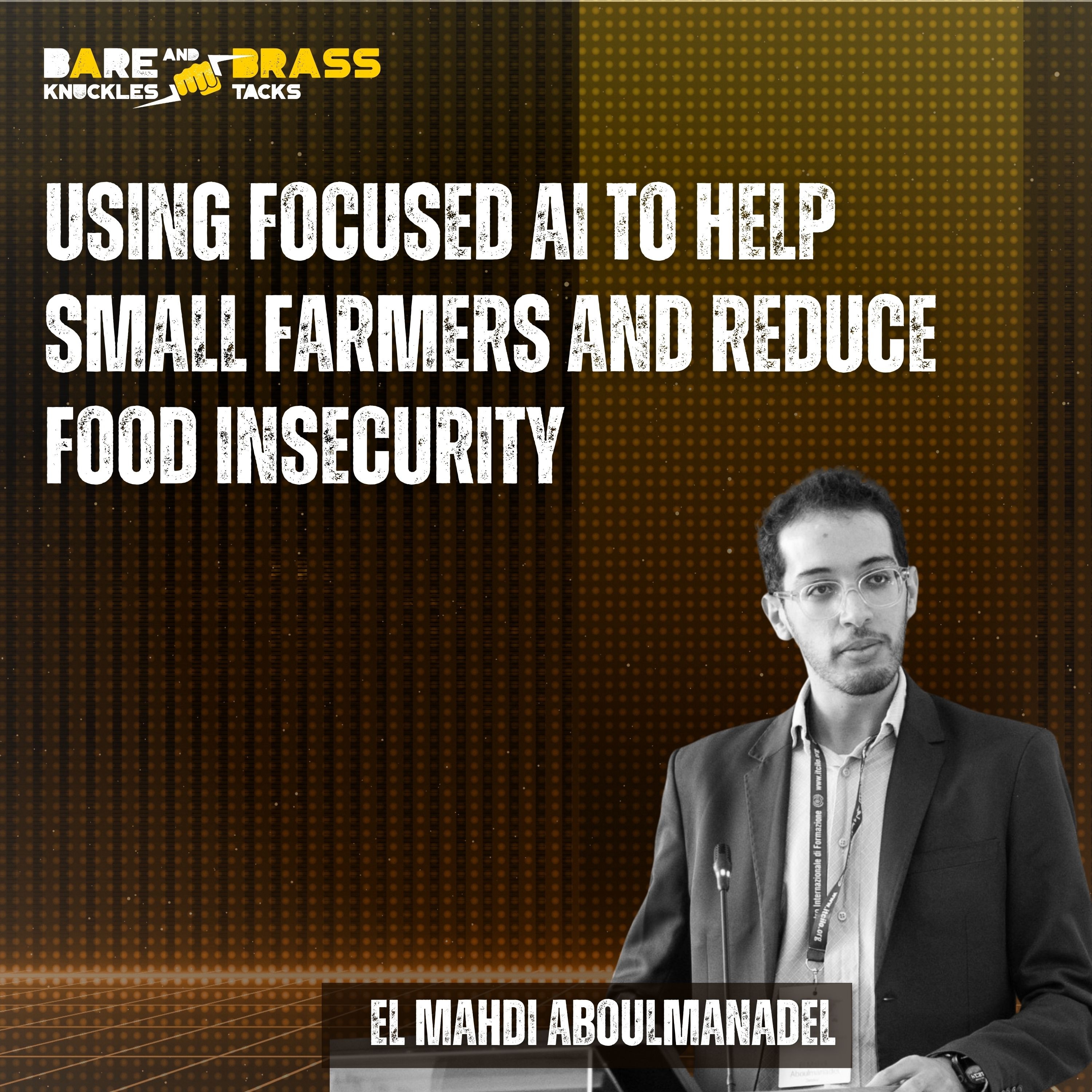 Using focused AI to help small farmers and reduce food insecurity | What if narrow #AI, rather than imagined AGI through scaling will be what changes the world? In some places, that's already happening. El Mahdi Aboulmanadel founded DeepLeaf [https://deepleaf.io/] after watching smallholder farmers in Morocco misdiagnose crop disease because three distinct conditions can look identical to the human eye. Wrong diagnosis, wrong treatment, chemical residue on food. Best case scenario? Export crops rejected at customs. Worst case scenario? Food scarcity for communities that can't afford it. DeepLeaf's answer is deliberate focus: one problem, field-validated data, models trained on hyperspectral and RGB image pairs across 57 crops. The accuracy doesn't come from scale. It comes from specificity. Fine-tuned continuously on new field data. The result is less compute, faster iteration, and outcomes closer to the ground truth. DeepLeaf has both cloud inference for large or multi-crop operations and lightweight edge models downloaded per crop for farmers running on Android phones in areas with no connectivity. The architecture fits the user, not the other way around. We get into economic potential for farmers, and of course, the effects of the war in Iran. This episode is about what new AI perspectives than the ones taking up all the oxygen in the West. This is technology that's built for communities that Silicon Valley usually ignores. | 35m 46s | ||||||
| 4/6/26 |  AI Security Is Just as vague as "Cloud Security", but With Sparkle Emojis | Amber Bennoui calls it like she sees it: most of what gets sold as "AI security" is just cloud security with sparkle emojis on it. She's co-founder of AISECA, a veteran product leader, and a more honest voices in a space that isn't exactly famous for honesty right now. We sat down with her fresh off RSA, and the conversation got very real: The real AI risk isn't the sci-fi scenario. It's the DevOps engineer at a 900-person company arguing they should be able to send commands via a remote control feature, with three security people in the building who don't even know the conversation is happening. It's the tools already embedded in software your finance and HR teams use every day, making decisions nobody gave explicit permission for. Amber's argument is simple and uncomfortable: most organizations have a discoverability problem they haven't solved yet, and vendors are selling dashboards to people who don't even know what's running in their own house. That's not security. That's theater. We also got into what it actually takes to build something vendor-agnostic and practitioner-led when the companies with the biggest budgets are also the ones racing to define what AI security means. And whether the tension between speed and safety is even something security teams get to resolve — or whether that decision has already been made for them. Mentioned: * MIT Paper, "Sycophantic Chatbots Cause Delusional Spiraling, Even in Ideal Bayesians" [https://arxiv.org/pdf/2602.19141] | 40m 41s | ||||||
| 3/30/26 |  The lawsuit that could reclaim the internet, and the AI hype cycle is eating its own tail | When was the last time a news headline about AI actually told you something true? George K. and George A. recorded this one from opposite sides of the planet — George K. fresh off RSA in San Francisco, George A. embedded at a global trust and safety conference in London. The distance didn't slow them down. This month's System Check has a theme: we're living inside a story that powerful institutions are writing for us, and most of us aren't stopping to ask who's holding the pen. Meta and YouTube just lost a landmark lawsuit — not over what they published, but over how they designed their products to keep you hooked. The legal strategy that finally worked was the one used against Big Tobacco. Meanwhile, 82% of journalists now use some form of AI tool in their work. The people covering AI are increasingly shaped by it. The snake is eating its tail. The arms race math doesn't add up either. Forty billion dollar bridge loans. Circular investments. Credit-based bets assuming a revenue base that doesn't yet exist. And somewhere in rural Mississippi, kids are developing breathing problems because gas turbines got trucked in to power a datacenter the community never voted for. The question running underneath all of it: are we making decisions based on outcomes, or based on vibes? And if it's vibes — whose vibes are they, and how did they get there? Mentioned: * Meta and YouTube verdict news coverage [https://www.nytimes.com/2026/03/25/technology/social-media-trial-verdict.html?unlocked_article_code=1.V1A.wqyR.v21PP8eaW4dc&smid=url-share] * Center for Humane Technology's podcast "Your Undivided Attention" episode on the Meta and YouTube lawsuit verdicts [https://www.humanetech.com/podcast/why-the-meta-verdicts-are-a-big-deal-and-what-it-was-like-to-testify] * Ed Zitron's recent monologue [https://youtu.be/D0q7qMKbBcc?si=2NORoOT0GBuTHJwt] * Research into how media covers AI [https://www.niemanlab.org/2024/05/how-uncritical-news-coverage-feeds-the-ai-hype-machine/] * UK Study on AI media coverage [https://reutersinstitute.politics.ox.ac.uk/video/research-finds-60-uk-media-coverage-about-artificial-intelligence-industry-led] * Muck Rack's 2026 State of Journalism Report [https://media.muckrack.com/documents/State_of_Journalism_2026_1.pdf] * WSJ: CFOs expect to reduce headcount because of AI [https://www.wsj.com/tech/ai/ai-admin-job-market-6a1c3436] * Anthropic co-founder Jack Clark on not being able to idle AI systems [https://youtu.be/no9ACSFUMsU?si=-Ds_bQH-atVYuSL7&t=2878] * Iran War affects world helium supply, creating semiconductor bottleneck [https://www.nytimes.com/2026/03/27/business/helium-chips-iran-war.html] * Environmental effects of Elon Musk using gas turbines to power data centers in rural communities [https://tennesseelookout.com/2026/03/18/a-battle-over-data-centers-heats-up-along-the-mississippi-tennessee-state-line/] | 40m 48s | ||||||
Want analysis for the episodes below?Free for Pro Submit a request, we'll have your selected episodes analyzed within an hour. Free, at no cost to you, for Pro users. | |||||||||
| 3/23/26 |  Deep Learning vs Intuition: AI models and venture capital investing | What if the best investment decision is one where no human is involved? Brant Meyer, partner at Trac VC [https://www.trac.vc/] joins the show this week to talk about the firm's approach, where algorithms — not partners in puffer vests — make every single call. Over 115 investments to date with zero human investment decisions. An 8.5% loss ratio, orders of magnitude less than traditional VC, would seem to suggest they're on to something. George K. and George A. wanted to know, if machines make the decision, what exactly is Brant's job? But the more interesting conversation isn't about the wins. It's about what the model forces you to confront. We assume removing the human removes the bias — but Trac's algorithms are trained on data with its own biases. Then there's the psychological dimension. Brant makes the case that most resistance to algorithmic investing is emotional rather than rational. VCs resist algorithms because the discretionary call is the whole point. The juice, as he puts it, is the feeling of knowing. Strip that away and you're threatening an identity. Which raises the question George K. and George A. keep circling: how did venture capitalists acquire oracular status in the first place? The hit rate doesn't justify it. The pattern recognition, Brant argues, was never really theirs to claim. And yet , no founder wants to take money from a robot. The relationship still matters. The question is just whether we've been confusing that relationship with the thing it was never actually doing. Mentioned: Trac VC's video [https://www.youtube.com/watch?v=OkDJnBrEX2k] | 47m 14s | ||||||
| 3/16/26 |  Best Of: What are we building? And the future of human flourishing... | We've spent the last several months talking to people who live at the intersection of technology and the humans on the receiving end of it. A data privacy attorney. A corpus linguist. A clinical psychologist. A performance coach. An entrepreneur who built a business on failure. They don't all agree with each other. But they're all pointing at the same thing: the gap between how technology gets built, deployed, and sold — and what it's actually doing to people. This week's episode is our attempt to pull that thread. * Mike McLaughlin — The AI ecosystem is running on bad data, has no real mechanism to fix it, and the next wave of cybercrime will target the training data itself. * Kimberly Becker, PhD — AI-generated text is structurally overconfident, and a corpus linguist traced that pattern all the way back to how decontextualized certainty language helped fuel the opioid epidemic. * Dr. Marissa Alert — What organizations call employee resistance to AI is, clinically, a fear and identity threat response that most rollouts are spending millions to ignore. * Tychon Carter — Winning is often where the real crisis begins, and the goalpost never stops moving until you decide your value isn't determined by your output. * The "Bad Hombre" — A solopreneur who built a business on public failure makes the case that the willingness to fail more than most people even try is the only real competitive advantage. Every one of these conversations eventually arrives at the same place: the distance between what we're building and who it's landing on. | 38m 10s | ||||||
| 3/9/26 |  Why cybersecurity is broken and time is the enemy | Why do your friends and parents still get breach notification letters from companies they've never heard of? John Watters aka "The Cowboy" joins the show this week for a hard look at information security. In the early 2000s, he built iDefense from a bankruptcy buyout into one of the most influential threat intelligence companies in the world, pioneered responsible disclosure before the term even existed, and has watched the attack surface evolve from nation-state espionage into something that hits your credit card at a restaurant on a Tuesday. His answer to the breach question? The industry's been losing the clock. Attackers can move from target selection to exploitation in days. Defenders are still operating in weeks. And the gap isn't closing, not by a long shot. If anything, it's widening. This conversation goes from the living rooms of people who've stopped trusting cybersecurity to the boardrooms of Fortune 500 CISOs who still can't explain their third-party risk exposure in plain English. We talk time compression, threat intelligence architecture, the AI arms race that only one side seems to be taking seriously, and the uncomfortable truth about analysis paralysis in a field where the cost of inaction is terminal. John's closing advice to defenders: automate yourself out of a job before someone else does it for you. That one's worth the price of admission alone. Mentioned: This is How They Tell Me the World Ends [https://bookshop.org/p/books/this-is-how-they-tell-me-the-world-ends-the-cyberweapons-arms-race-nicole-perlroth/62372aa66ee6e45e], by Nicole Perlroth CISO Mike Melo's post on security theater [https://www.linkedin.com/posts/cisomike_staytuned-cybersecurity-ciso-activity-7434637121044402176-xSLc] | 48m 55s | ||||||
| 3/2/26 |  What leaders get wrong about AI rollouts and employee adoption | What if your AI rollout isn't failing because of the technology, but because no one asked your employees how they feel about it? Dr. Marissa Alert is a clinical psychologist who works with organizations scaling AI. Her argument is deceptively simple: the resistance leaders keep running into isn't a change management problem. It's a diagnostic failure. And until you treat it like one, AI rollouts turn into guesswork. High usage doesn't mean successful adoption. It might just mean fear-driven compliance. In this episode, we get into what business leaders and organizations consistently get wrong: the assumptions made about how employees will respond, the gap between leadership alignment at the top and the confusion that trickles down, and why layering an AI mandate onto a workforce already running on empty is a very different problem than a training rollout. We also got into something harder: what it means when employees are being asked to integrate tools that might replace them, and why most leaders don't have a good answer for that question. If your organization is tracking adoption rates and still seeing 20%, this episode is worth your time. Mentioned * Jack Dorsey's Block cuts nearly half of its staff in AI gamble [https://www.theverge.com/tech/885710/jack-dorsey-block-layoffs-job-cuts-ai] | 40m 33s | ||||||
| 2/23/26 |  The art and Science of grit, ambition, & betting on yourself | The voices telling you it won't work usually belong to people who never tried. Nobody gives you permission to take a chance. You just do it. Chris built a 50K MRR business without a formal education, a tech background, or a plan. As an actor, a car dealership paid him $400 to be in a commercial and he thought, "If I can pretend to do this, what happens if I just actually do it?" From there it was taking on teaching himself APIs, webhooks integrations, and enough failures to make most people quit. He's now responsible for 40% of some dealerships' bottom lines, working remotely from Ottawa, heading to Costa Rica. We talked about why people don't take that first step. Chris's take is it's mostly the room you're in. When you move somewhere nobody knows you, the risk calculus changes. The voices telling you you're going to look stupid usually belong to people who never left. We also got into social media, the throttled notification drip sequences designed to keep you coming back, the rage bait economy, the positive reinforcement loop that rewards the most outrageous behavior. His advice was simple: put your phone down and tackle your life goals head on. Chris also hosts Bad Hombres TV [https://www.youtube.com/@BADHOMBRESTV] on YouTube. | 35m 57s | ||||||
| 2/16/26 |  Finding meaning and community in tech-fueled hustle culture | What happens when you get everything you thought you wanted and still feel empty? Tychon Carter won Big Brother Canada, gained fame and followers overnight, and felt completely lost. The success arrived before he was ready for it. The external validation didn't fill the internal void. In this conversation, we dig into the gap between looking successful and actually feeling whole. Tychon walks through his journey from urban planner to reality TV winner to performance coach, and the hard lessons about self-worth that came with it. We explore the masks we wear in professional spaces, the cost of performative confidence we don't feel, and why so many high-achievers feel stuck despite checking all the boxes. Tychon's "Start With You" framework breaks down three critical areas most of us keep out of balance: * Power (accessing your authentic self) * Play (creating and enjoying life beyond work) * and Peace (finding internal harmony) The conversation gets real about mental health, the isolation trap of self-reliance, and why giving to community might be more rewarding than the endless pursuit of more. Mentioned * Johann Hari, Lost Connections [https://bookshop.org/p/books/lost-connections-johann-hari/33248fe6585d4c88?ean=9781632868312&next=t&next=t&affiliate=12476] * On prescribing community work to treat depression [https://www.lucksyardclinic.com/lost-connections-and-social-prescribing-in-nature/] * More on Adam Grant and Jane Dutton's study of contribution journals [https://www.inc.com/jessica-stillman/star-psychologist-adam-grant-for-motivation-and-happiness-a-contribution-journal-beats-a-gratitude-journal/91193347] More about Tycoon Carter https://www.tychoncarter.com/ | 41m 47s | ||||||
| 2/9/26 |  AI market jitters, post-truth reality, data, and safeguarding what makes us human | This week we're taking stock of conversation trends to let it rip on AI market jitters and what happens when the math stops math-ing. We start with the numbers that have investors nervy: Amazon's $200 billion capex projection for 2026, and the uncomfortable reality of building an entire economy on depreciating GPU infrastructure with a three-year shelf life. Why the dot-com bubble comparison are incomplete, and questioning what happens when billions flow into overwhelming into transformer model architecture while research into others starves. Then we shift from market corrections to attention economics, unpacking how AI tools promise productivity while actually training us to outsource thinking itself. The cost is both financial and experiential. When was the last time you sat alone without reaching for your phone? Can you still read sentences that run four lines long? The episode lands on an uncomfortable question about who gets to have unmediated experiences anymore, and whether we're living our own lives or just consuming other people's. Mentioned: * Ed Zitron 's "Better Offline" podcast [https://www.youtube.com/@BetterOfflinePod] * Derek Thompson's Plain English podcast interview with Paul Kedrosky on market conditions and signs of a bubble [https://www.theringer.com/podcasts/plain-english-with-derek-thompson/2025/09/23/this-is-how-the-ai-bubble-could-burst] * Stephen Colbert on "truthiness" [https://www.c-span.org/clip/white-house-event/user-clip-stephen-colbert-on-truthiness/4293026] * Enshittification, coined by Cory Doctorow [https://en.wikipedia.org/wiki/Enshittification] * MIT on the philosophical puzzle of AI [https://news.mit.edu/2026/philosophical-puzzle-rational-artificial-intelligence-0130] * Netflix's main competition is sleep [https://www.fastcompany.com/40491939/netflix-ceo-reed-hastings-sleep-is-our-competition] * Point of view: Gen Z will remember more of other people's memories [https://www.instagram.com/reel/DPIG_7sDfsp/] than their own * Blaise Pascal writing about attention in 1670 [https://en.wikipedia.org/wiki/Pens%C3%A9es] | 38m 01s | ||||||
| 2/2/26 |  AI vs Human writing and what it means for our thinking | What happens when AI-generated text masquerades as human research? Kimberly Becker, PhD, [https://www.linkedin.com/in/kimberlypacebecker/] a corpus linguist joins the show this week to talk about her study comparing human-written versus AI-generated abstracts in high-stakes healthcare research. The findings reveal something unsettling about how LLMs may potentially reshape scientific communication. ChatGPT's outputs showed higher informational density, formulaic patterns, and a lack of hedging, the linguistic uncertainty that marks careful scientific thinking. The AI doesn't say "may suggest" or "could indicate." It asserts. Confidently. Even when it's wrong. This matters beyond academia. When we optimize for speed and polish over depth and precision, we're changing how we write, and therefore changing how we think. We're externalizing cognition to systems trained on Reddit threads and blog posts, then wondering why the output feels sterile and an inch-deep. Becker's work raises uncomfortable questions: * Are we training ourselves to accept confident wrongness? * What happens when a generation of researchers doesn't communicate uncertainty? * And fundamentally, can a predictive text model ever replicate the pause, the breath, the examination that Neil Postman argued was essential to meaningful thought? This episode is about whether we're paying attention to what we're losing while we chase efficiency. Mentioned: * James Marriott, Dawn of the Post-Literate Society [https://jmarriott.substack.com/p/the-dawn-of-the-post-literate-society-aa1] * Neil Postman's seminal work, Amusing Ourselves to Death [https://bookshop.org/p/books/amusing-ourselves-to-death-public-discourse-in-the-age-of-show-business-neil-postman/ebe4569d9072fac7] * Derek Thompson, The End of Thinking [https://www.derekthompson.org/p/the-end-of-thinking] • • Linguistics Relevance Theory [https://en.wikipedia.org/wiki/Relevance_theory] | 41m 02s | ||||||
| 1/26/26 |  Protecting data as the critical supply line for AI Applications | We need to stop treating our data like something to be stored and more like a mission critical supply lines. Andrew Schoka [https://www.linkedin.com/in/andrew-schoka/] spent his military career in offensive cyber, including stints in the Joint Operations Command and Cyber Command. Now he's building Hardshell to solve a problem most organizations don't even realize they have yet. Here's the thing: AI is phenomenal at solving problems in places where data is incredibly sensitive. Healthcare, financial services, defense—these are exactly where AI could make the biggest impact. But there's a problem. Your ML models have a funny habit of remembering training data exactly how it went in. Then regurgitating it. Which is great until it's someone's medical records or financial information or classified intelligence. Andrew makes a crucial point: organizations still think of data as a byproduct of operations—something that goes into folders and filing cabinets. But with machine learning, data isn't a byproduct anymore. It's a critical supply line operating at speed and scale. The question isn't whether your models will be targeted. It's whether you're protecting the data they train and interpret like the supply lines they actually are. Mentioned: * Destruction of classified tech in downed helicopter during Osama bin Laden raid [https://www.britannica.com/event/Killing-of-Osama-bin-Laden] | 39m 51s | ||||||
| 1/19/26 |  Securing nuclear energy systems on all fronts with Audrey Crowe | Are we sleepwalking into a security crisis that makes ransomware look quaint? Nuclear security expert Audrey Crowe joins the show to talk about the convergence of grey zone warfare, critical infrastructure, and nuclear security. This isn't your parents' Cold War nuclear threat, this is about adversaries who've figured out they don't need missiles when they can manipulate our infrastructure through cyber operations, disinformation, and coercion that lives in the murky space below armed conflict. While our adversaries operate in the grey zone with zero institutional friction, democratic nations tie themselves in bureaucratic knots. We demand attribution, legal frameworks, and perfect evidence before we can even acknowledge a threat. It's like showing up to a knife fight with a permission slip. Audrey walks us through how Stuxnet changed everything, why the nuclear sector spans energy, transportation, healthcare, and government regulation, and why she's on a mission to get nuclear industry stakeholders share more information with one another. We also get into the elephant in the room: Big Tech's sudden hunger for nuclear power to feed AI data centers. When profit-driven actors start controlling nuclear infrastructure, will safety remain sacred? Or will we sacrifice long-term security for short-term computational power? | 35m 54s | ||||||
| 1/12/26 |  Why future applications of AI will need higher quality data | What if the real AI revolution isn't about better models—but about unlocking the data we've been sitting on? Mike McLaughlin [https://www.linkedin.com/in/michael-g-mclaughlin/]—cybersecurity and data privacy attorney, former US Cyber Command—joins us to discuss something most people miss in the AI conversation: we're building the infrastructure for a completely new asset class. The conversation moves past today's headlines and LLM limitations into what becomes possible when we solve the data access problem: Research acceleration at unprecedented scale. Imagine biotech startups accessing decades of pharmaceutical failure data, every null result, every experiment that didn't work. That's years cut from development cycles. That's drugs to market faster. That's lives saved. Universities as innovation accelerators. Right now, research institutions pay to store petabytes of data collecting dust on servers. Mike argues they're sitting on billions in untapped assets to fuel innovation. Beyond synthetic training. The next generation of AI won't be trained on Reddit threads and scraped websites. It'll be trained on high-quality, provenance-verified research data from institutions that have incentive to participate in the ecosystem. Mike's vision isn't just about compliance or risk mitigation. It's about creating the conditions for AI to actually deliver on the promise everyone keeps talking about. The compute exists. The capital exists. The models are improving. What we need now is the mechanism to turn decades of institutional research into fuel for the next wave of moonshot innovation. Mentioned Google licensing deal with Reddit [https://www.reuters.com/technology/reddit-ai-content-licensing-deal-with-google-sources-say-2024-02-22/] Poisoning Attacks on LLMs Require a Near-constant Number of Poison Samples [https://arxiv.org/abs/2510.07192] MIT researchers discover new class of antibiotics using machine learning [https://news.mit.edu/2023/using-ai-mit-researchers-identify-antibiotic-candidates-1220] Reducing bacterial infections from hospital catheters using machine learning [https://www.caltech.edu/about/news/aided-by-ai-new-catheter-design-prevents-bacterial-infections] | 35m 44s | ||||||
| 1/5/26 |  Translating security and tech concepts for the everyday consumer | When did we stop asking how things work? Rich Greene joins the show to talk about his new podcast Plaintext with Rich [https://open.spotify.com/show/2DCglwZU8zBxzZgy8iHRCa], and we get into something that matters more than any tech: curiosity itself. Rich spent 20 years in Special Operations before becoming a SANS instructor. Now he's taking complex tech topics and breaking them down for people who need to understand, not just use. There's a tension building between the tech sector and society at large. AI promises to make everything easier, and maybe it does. But easier can become a trap when it stops us from asking the fundamental questions. When convenience replaces comprehension, we don't just lose technical skill, we lose the ability to think critically about the systems we're building and trusting. The conversation pushes on a deeper problem: we're creating a generation that believes technology is magic. That you can "vibe code" production software. That prompts replace understanding. And when everything becomes a black box, we've surrendered more than we realize. Communication and curiosity - those are the skills that matter when the tools change every six months. Find Plaintext with Rich: * Spotify [https://open.spotify.com/show/2DCglwZU8zBxzZgy8iHRCa] * Apple Podcasts [https://podcasts.apple.com/us/podcast/plaintext-with-rich/id1864969176] * Blog on Medium [https://medium.com/@plaintextwithrich] | 34m 46s | ||||||
| 12/29/25 |  Stay sharp, stay real: Wishing you a kickass 2026! | Wishing you a very happy and prosperous New Year! We'll be back in 2026! | 2m 06s | ||||||
| 12/22/25 |  Happy Holidays! Our listeners are the greatest gift! | It's a holiday week, so turn off this podcast! But if you'd like to tune in all the same, then we're here to say think you. You, the listeners, have been the greatest gift this season as we've made this turn in our format from security to looking more broadly at the human impact of technology. You've stuck with us. We've gotten a lot of great messages of support, and we love the direction of the show and love that you love it! Happy holidays from BKBT! May your time off be peaceful and energizing for the new year. | 7m 19s | ||||||
| 12/15/25 |  Best Of: Confronting big tech's abuses as a question of human rights | We're off this week, deep into planning and scheduling for next year. Please enjoy this Best Of episode, originally released in October. Hannah Storey, Advocacy and Policy Advisor at Amnesty International [https://www.amnesty.org/], joins the show to talk about her new brief that reframes Big Tech monopolies as a human rights crisis, not just a market competition problem. This isn't about consumer choice or antitrust law. It's about how concentrated market power violates fundamental rights—freedom of expression, privacy, and the right to hold views without interference or manipulation. Can you make a human rights case against Big Tech? Why civil society needed to stop asking these companies to fix themselves and start demanding structural change. What happens when regulation alone won't work because the companies have massive influence over the regulators? Is Big Tech actually innovating anymore? Or are they just buying up competition and locking down alternatives? Does scale drive progress, or does it strangle it? What would real accountability look like? Should companies be required to embed human rights due diligence into product development from the beginning? Are we making the same mistakes with AI? Why is generative AI rolling forward without anyone asking about water usage for data centers, labor exploitation of data labelers, or discriminatory outcomes? The goal isn't tweaking the current system—it's building a more diverse internet with actual options and less control by fewer companies. If you've been tracking Big Tech issues in silos—privacy here, misinformation there, market dominance over here—this episode is an attempt to bring those conversations together in one framework. Mentioned: Read more about the Amnesty International report and download the full report here: "Breaking Up with Big Tech: a Human Rights-Based Argument for Tackling Big Tech's Market Power" [https://www.amnesty.org/en/documents/pol30/0226/2025/en/] Speech AI model helps preserve indigenous languages [https://it-online.co.za/2024/01/22/speech-ai-model-helps-preserve-indigenous-languages] Empire of AI, [https://www.penguinrandomhouse.com/books/743569/empire-of-ai-by-karen-hao/] by Karen Hao Cory Doctorow's new book, "Enshittification: Why Everything Suddenly Got Worse and What To Do About It" [https://www.versobooks.com/products/3341-enshittification] | 43m 39s | ||||||
Showing 25 of 186
Sponsor Intelligence
Sign in to see which brands sponsor this podcast, their ad offers, and promo codes.
Chart Positions
1 placement across 1 market.
Chart Positions
1 placement across 1 market.