
Insights from recent episode analysis
Audience Interest
Podcast Focus
Publishing Consistency
Platform Reach
Insights are generated by CastFox AI using publicly available data, episode content, and proprietary models.
Total monthly reach
Estimated from 15 chart positions in 15 markets.
By chart position
- 🇬🇧GB · Earth Sciences#8830K to 100K
- 🇩🇪DE · Earth Sciences#1205K to 30K
- 🇨🇦CA · Earth Sciences#1335K to 30K
- 🇦🇺AU · Earth Sciences#1905K to 30K
- 🇲🇽MX · Earth Sciences#2300K to 800K
- Per-Episode Audience
Est. listeners per new episode within ~30 days
269K to 792K🎙 ~2x weekly·27 episodes·Last published today - Monthly Reach
Unique listeners across all episodes (30 days)
539K to 1.6M🇲🇽51%🇰🇪19%🇬🇧6%+12 more - Active Followers
Loyal subscribers who consistently listen
215K to 633K
Market Insights
Platform Distribution
Reach across major podcast platforms, updated hourly
Total Followers
—
Total Plays
—
Total Reviews
—
* Data sourced directly from platform APIs and aggregated hourly across all major podcast directories.
On the show
Recent episodes
The Missing Link in African Agriculture: Law, Accountability and Governance| Dr. David Kabanda
Jun 24, 2026
48m 25s
Can Parliament Save Africa's Food Systems? | Hon. Françoise Uwumukiza
Jun 13, 2026
40m 19s
Reclaiming Africa’s Food Future: Agroecology, Power & Resistance | Pat Mooney
May 22, 2026
45m 16s
Gene Editing, AI & Synthetic Biology: Corporate Capture of African Agriculture
May 8, 2026
36m 19s
How the world lost control of seeds with Pat Mooney.
Apr 29, 2026
1h 03m 37s
Social Links & Contact
Official channels & resources
Official Website
Login
RSS Feed
Login
| Date | Episode | Description | Length | ||||||
|---|---|---|---|---|---|---|---|---|---|
| 6/24/26 |  The Missing Link in African Agriculture: Law, Accountability and Governance| Dr. David Kabanda | In this episode of The Battle for African Agriculture, host Dr. Million Belay sits down with Ugandan lawyer, policy advocate, and food systems activist Dr. David Kabanda to unpack one of the most overlooked dimensions of African agriculture: law and governance.From food sovereignty and corporate concentration to the East African Agroecology Bill and the urgent need for legal frameworks that protect farmers, biodiversity, and indigenous food systems, Dr. Kabanda argues that agriculture is far more than food production—it is about power, justice, and the future of Africa itself.Together, they explore why agroecology remains contested, how industrial agriculture shapes policy and narratives, the role of accountability in food governance, and why reclaiming African food systems is essential for health, sovereignty, and resilience. This conversation offers a compelling vision for an Africa where food systems are built on agroecology, farmers' rights, and democratic control. | 48m 25s | ||||||
| 6/13/26 |  Can Parliament Save Africa's Food Systems? | Hon. Françoise Uwumukiza | In this episode of The Battle for African Agriculture Million Belay sits down with Hon. Françoise Uwumukiza, Member of the East African Legislative Assembly and Deputy Secretary-General of the African Food Systems Parliamentary Network, for a candid conversation about the future of African food systems. From climate change and the struggles of smallholder farmers to agroecology, women's cross-border trade, corporate influence, ultra-processed foods, and the loss of indigenous food knowledge, Hon. Uwumukiza argues that Africa's greatest challenge is not a lack of policies, but the failure to implement them. She calls for stronger support for farmers, protection from hazardous chemicals, and a return to food systems rooted in African cultures, traditions, and food sovereignty. | 40m 19s | ||||||
| 5/22/26 |  Reclaiming Africa’s Food Future: Agroecology, Power & Resistance | Pat Mooney | In this episode of The 3-Part Conversation on The Battle for African Agriculture Podcast with, Pat Mooney, we explore the deepening crisis in the global food system and the opportunities embedded within it, unpacking how corporate control of seeds and food systems continues to reshape agriculture, while also examining the future of agroecology, multilateral institutions, and Global South solidarity. The discussion reveals why food is ultimately about power and justice, and why agroecology must be understood not only as a science but also as a movement, with African actors holding more influence than is often recognized. It further reflects on corporate power and fragile global supply chains, the evolving role of UN food agencies, the importance of territorial food systems, and the need to connect food struggles with broader movements around climate, labor, health, and biodiversity, alongside the strategic role of African governments and civil society | 45m 16s | ||||||
| 5/8/26 |  Gene Editing, AI & Synthetic Biology: Corporate Capture of African Agriculture | In this episode of The Battle for African Agriculture, Million Belay sits down once again with Pat Mooney, founder of the ETC Group and long-time mentor in global struggles for food sovereignty. They unpack the hidden dangers of gene editing, synthetic biology, and AI in agriculture technologies promoted as “solutions” but often deepening dependency and corporate control. Pat reflects on Africa’s biodiversity, the scramble for seeds, and the role of Big Tech in reshaping farming. He also shares a powerful story of resistance: how global civil society defeated “Terminator seeds.” This conversation is a call to vigilance and collective action to defend African agency in food systems. | 36m 19s | ||||||
| 4/29/26 |  How the world lost control of seeds with Pat Mooney. | In this opening episode of a 3-part series, Million Belay sits down with legendary activist, ETC Group co-founder Pat Mooney to uncover the hidden history of corporate control over agriculture. From the 1960s to today, Pat traces how seeds once shared by farmers across the world became privatized, patented, and concentrated in the hands of a few powerful corporations. He reveals how the Global South supplied the genetic foundation of global agriculture, only to lose control over it through systems of intellectual property, policy shifts, and what he famously called “biopiracy.” This conversation breaks down the key turning points that reshaped food systems from global policy battles to the rise of seed monopolies and asks a critical question: who really controls our food? This is Part 1 of a 3-part series. In the next episodes, we go deeper into biotechnology, digital agriculture, and the future of corporate power. | 1h 03m 37s | ||||||
| 4/17/26 |  The battle of narratives and how it shapes African food systems today | Professor Molly Anderson | In this episode of The Battle for African Agriculture, Million Belay sits down with food systems scholar and activist Professor Molly Anderson to unpack the hidden power structures shaping global agriculture. She draws out linkages from colonial legacies and corporate influence to donor-driven agendas and the politics of food sovereignty. Molly also exposes how dominant narratives continue to shape who controls food, land, and agricultural policy across Africa and beyond. They also explore why the Green Revolution model continues to dominate despite mounting evidence of its failures, how institutions like the World Bank and IMF influence agricultural policy through debt and structural adjustment, and why agroecology is a political struggle for justice, dignity, and power. | 41m 45s | ||||||
| 4/7/26 |  A farmer's answer to whether Africa can feed itself without high-input conventional agriculture. | In this episode of Battle for African Agriculture, Million Belay talks with Christopher Wali Magala, the Team Leader at Alwana Natural Farms, a veteran farmer and former government Agricultural Extension officer, about his shift from conventional farming to agroecology. He shares how biodiversity, intercropping, and local knowledge transformed his farm in Mukono, restoring soil and ensuring food security. He also boldly challenges the dominant narratives around GMOs and monoculture. | 49m 50s | ||||||
| 3/17/26 |  How Corporations Captured Global Agriculture | Jennifer Clapp | In this episode of Battle for African Agriculture, Million Belay speaks with Jennifer Clapp, Canada Research Chair in Global Food Security and Sustainability and Professor in the School of Environment, Resources and Sustainability at the University of Waterloo, Canada, and a member of the International Panel of Experts on Sustainable Food Systems. She explains how a handful of corporations came to dominate seeds, fertilizers, pesticides, and farm machinery, locking farmers into industrial systems built on monocultures. The conversation examines the technological and policy “lock-ins” shaping farming choices, the financialization of food and its impact on price volatility, and trade rules that disadvantage African farmers. Clapp argues that confronting corporate concentration is key to advancing food sovereignty and creating space for agroecology and territorial markets. | 58m 01s | ||||||
| 3/6/26 |  How big tech and big Ag are colliding to rob African farmers in the name of innovation. | In this episode of Battle for African Agriculture, Million Belay speaks with researcher and global policy expert Lim Li Ching about the rapid rise of digital agriculture. Drawing from the IPES-Food report “Head in the Cloud,” they explore how alliances between Big Tech and agribusiness are reshaping farming through data platforms, AI, and cloud computing. They examine data extractivism, farmer autonomy, seed sovereignty, and the political nature of innovation. | 37m 13s | ||||||
| 2/20/26 |  Digital Colonialism: Is AI the New Frontier of the Battle for African Agriculture? | In this episode of Battle for African Agriculture, Million Belay speaks with ETC Group researcher Jim Thomas about the powerful shift from GMOs to digital platforms, artificial intelligence, and biodigital technologies. As corporations move from selling inputs to harvesting data, African farmers risk being locked into new systems of dependency disguised as innovation. | 40m 26s | ||||||
Want analysis for the episodes below?Free for Pro Submit a request, we'll have your selected episodes analyzed within an hour. Free, at no cost to you, for Pro users. | |||||||||
| 2/8/26 |  The Digital Battle for Africa’s Farms: Resistance vs Big Tech | In this episode of The Battle for African Agriculture, Million Belay speaks with tech critic and journalist Edward Ongweso Jr. about biodigitalisation, data extraction, and corporate power in food systems. They unpack how “smart agriculture” can lock farmers into platforms, shift control to corporations, and threaten food sovereignty unless Africa charts its own path. | 24m 15s | ||||||
| 1/2/26 |  Why Africa’s Future Depends on Its Traditional Food | Tunisian Chef Wafik Belaid | In this episode of the Battle for African Agriculture, Million Belay speaks with Tunisian executive chef and writer Wafik Belaid on food, culture, and sovereignty in North Africa. They explore how the Sahara, spice traditions, and deep regional influences of the Ottoman, Andalusian, Berber, Jewish, and Roman shape Tunisian food. He challenges colonial narratives, urging schools, youth, chefs, and governments to centre local cuisine, support farmers, and preserve authenticity for generations. | 29m 10s | ||||||
| 12/25/25 |  Why Losing African Food Means Losing Africa | Chef Njathi Kabui | In this episode of The Battle for African Agriculture podcast, Million Belay speaks with renowned Kenyan chef Njathi Kabui about African food as culture, resistance, and power. Drawing from his upbringing on a subsistence farm near Mount Kenya and his work across Africa and activism in the United States, Chef Kabui explains how African cuisine shapes identity, health, and sovereignty. He challenges ultra-processed and “programmed” foods, explores food justice and statecraft, and argues that reclaiming African food systems is essential for Africa’s future. | 43m 01s | ||||||
| 12/18/25 |  Decolonizing the African Plate with Chef SKA Mirriam Moteane | In this episode of The Battle for African Culture, host Million Belay sits down with Chef Sekamotho Mirriam Moteane from Lesotho to explore food as memory, identity, and resistance. From childhood lessons in her mother’s kitchen to documenting disappearing Basotho recipes, Mariam reflects on sorghum, traditional grains, and the cultural knowledge passed down through elders, women, and community rituals. She shares a powerful story of a “wind whisperer,” challenges the dominance of Western food systems, and reminds us that reclaiming food sovereignty begins with valuing our own cuisine. #BattleForAfricanAgriculture#MyFoodIsAfrican#Agroecology#SeedSovereignty#FoodSovereignty | 23m 12s | ||||||
| 12/4/25 |  The Battle for African Agriculture Podcast || Episode 16 Timothy A. Wise | In this episode of the podcast, Million Belay speaks with global food policy expert Timothy A Wise to unpack the failures of the Green Revolution, AGRA’s unfulfilled promises, and Mexico’s powerful stand against GMOs. Drawing on decades of research and his book Eating Tomorrow, Tim reveals how corporate and donor influence continue to shape African agriculture while small-scale farmers offer proven, sustainable solutions. This conversation explores the political forces behind industrial agriculture, the growing evidence of health and environmental risks, and the urgent need to shift toward agroecology and farmer-led approaches. | 38m 48s | ||||||
| 11/27/25 | 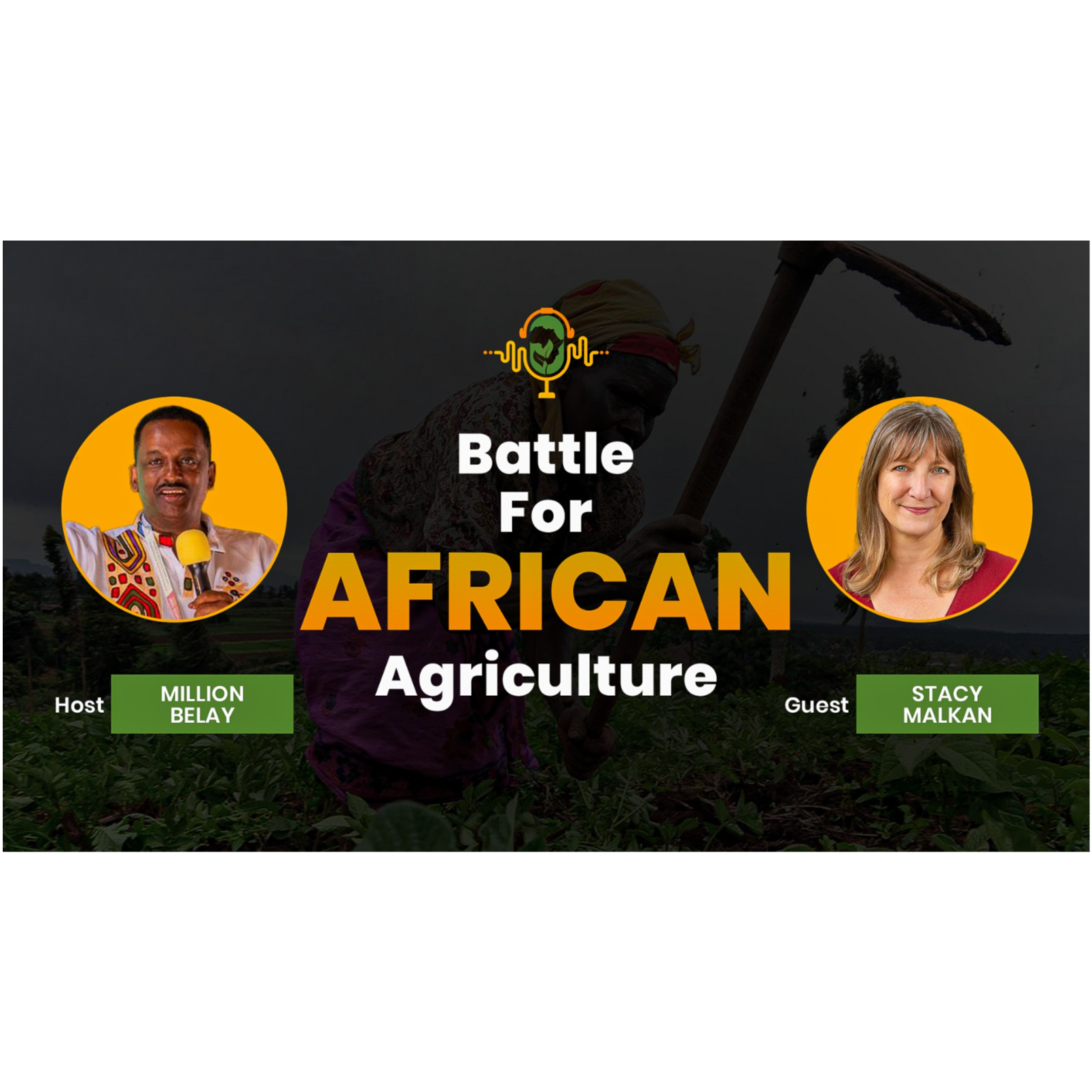 The Battle for African Agriculture Podcast || Episode 15 Stacy Malkan | In this episode of The Battle for African Agriculture, Million Belay speaks with Stacy Malkan a journalist, public health advocate, and co-founder of U.S. Right to Know to uncover how agrochemical corporations have shaped global food systems through propaganda, scientific manipulation, and political influence. Drawing from years of investigative work, Stacy reveals the hidden tactics behind GMO promotion, the health and environmental impacts of glyphosate, the corporate capture of universities and regulators, the lessons from Mexico’s fight to protect native corn, and the growing push to impose similar models in Africa. This conversation offers essential insights for anyone concerned about food sovereignty, public health, and the future of agriculture on the continent. | 41m 27s | ||||||
| 11/20/25 | 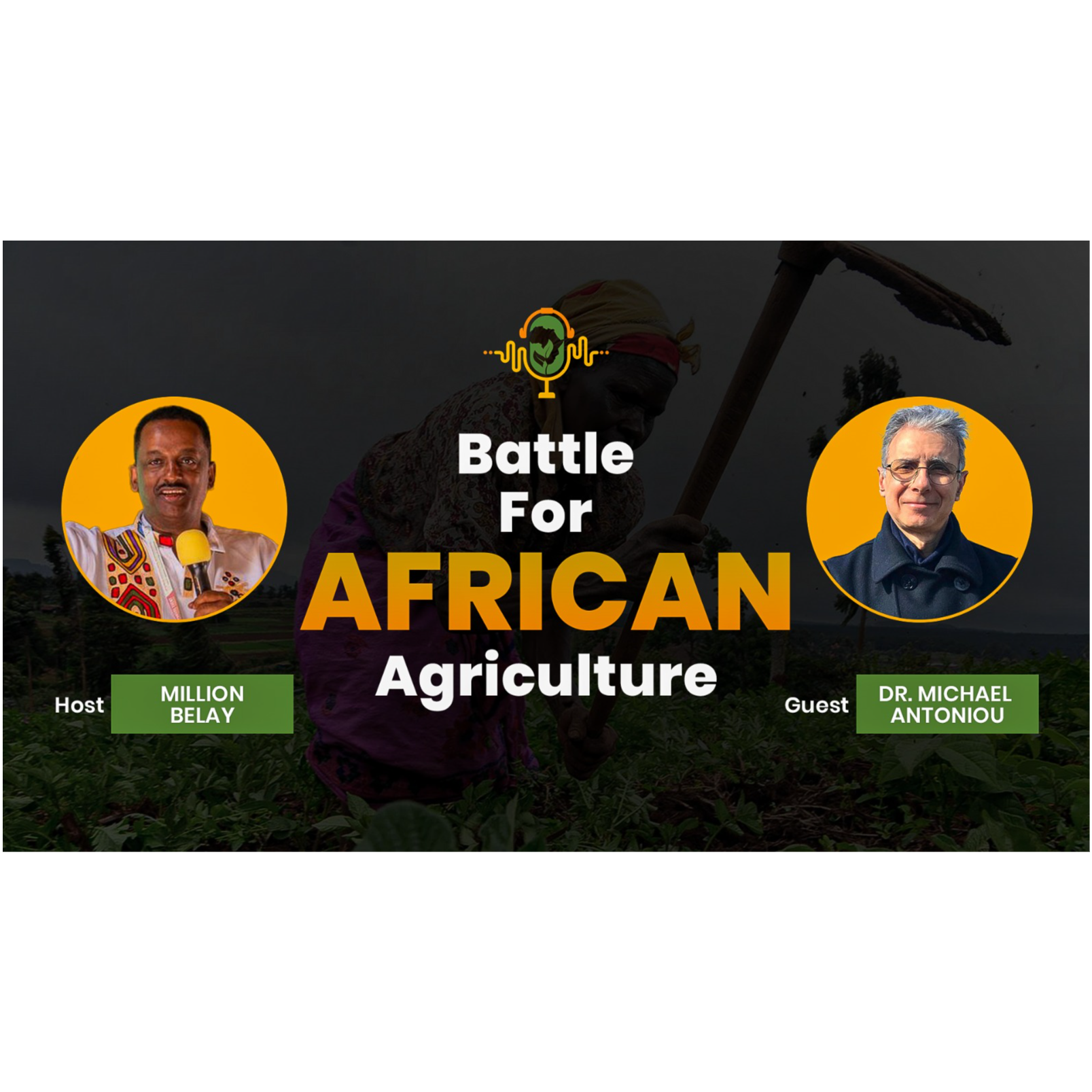 The Battle for African Agriculture Podcast || Episode 14 Micheal Antoniou | In this episode of The Battle for African Agriculture, Dr. Million Belay speaks with Professor Michael Antoniou, a molecular geneticist whose decades of work in medical biotechnology give him a rare insider view on the limits and dangers of applying genetic engineering to agriculture. Although he uses gene technologies in tightly controlled clinical settings, he explains why releasing genetically modified and gene-edited crops into the environment is scientifically risky, poorly regulated, and fundamentally different from their use in medicine. | 1h 01m 22s | ||||||
| 11/13/25 | 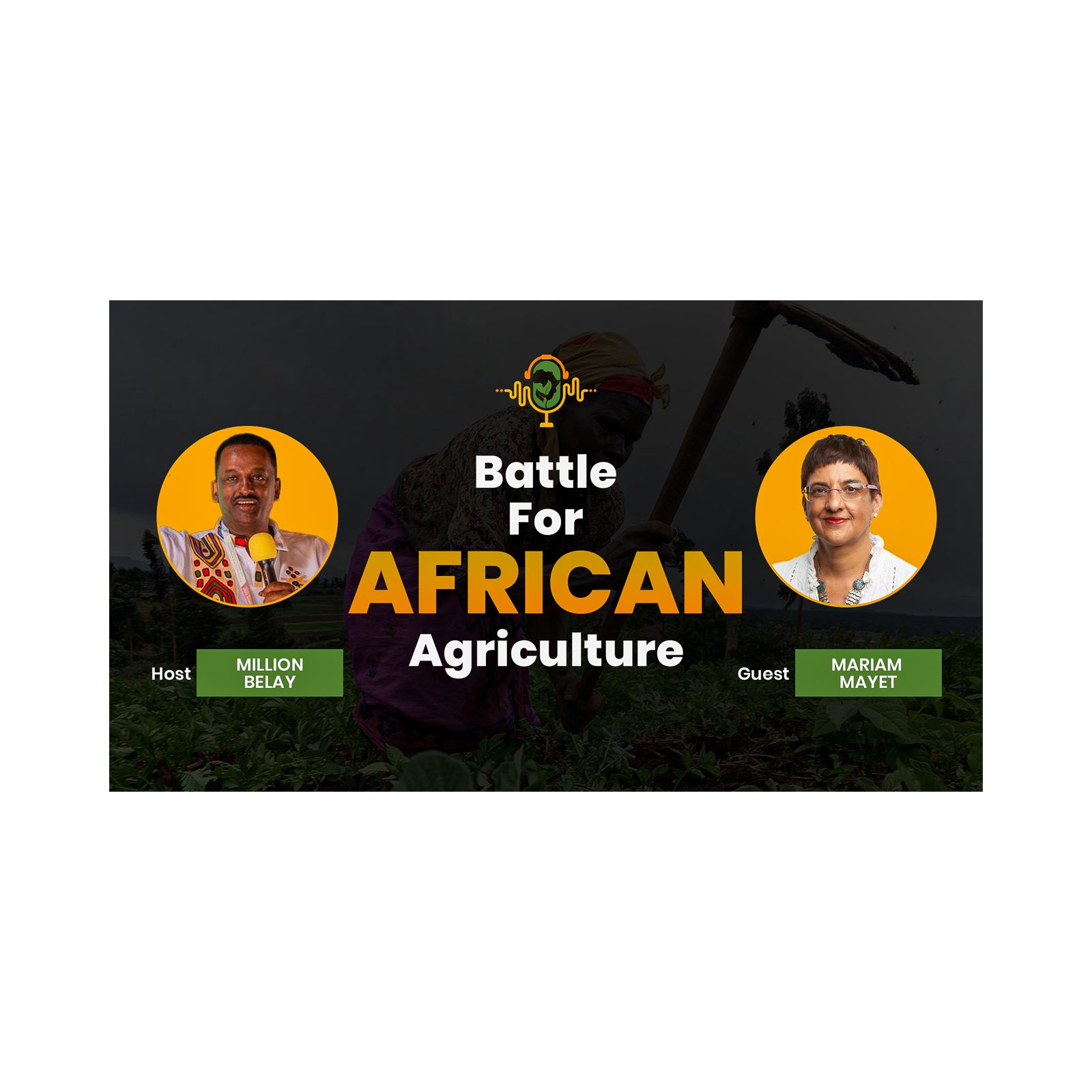 The Battle for African Agriculture Podcast || Episode 13 Mariam Mayet | In this episode, Million Belay speaks with Mariam Mayet, founder of the African Centre for Biodiversity, about Africa’s decades-long resistance to GMOs and corporate control of food systems. They trace the history of anti-GMO activism, the rise of philanthrocapitalism, and the failures of industrial agriculture across the continent. Mariam shares powerful insights on protecting Africa’s seed sovereignty and why agroecology rooted in traditional knowledge and small-scale farming is the continent’s path to a just, sustainable, and self-reliant food future. | 45m 11s | ||||||
| 11/6/25 | 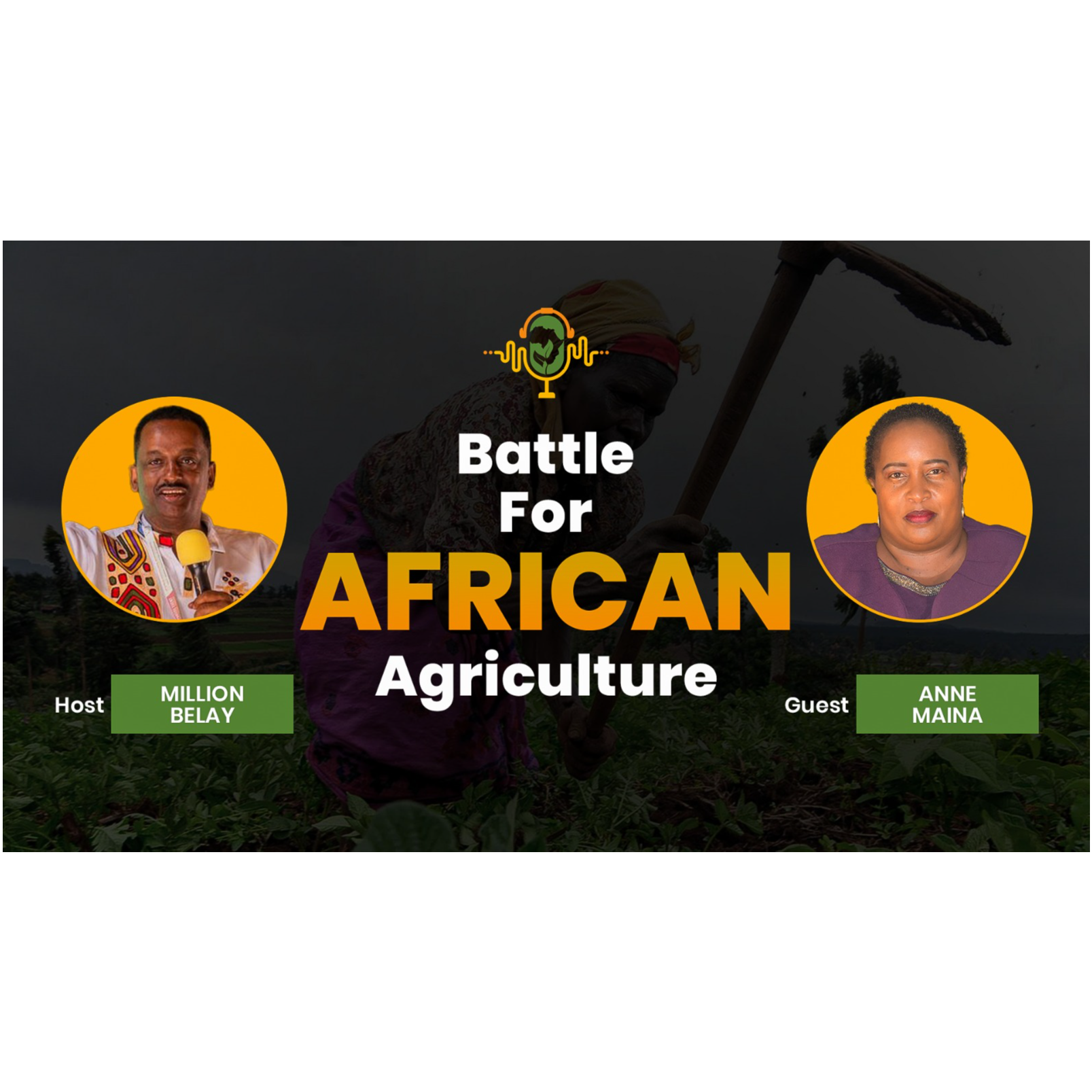 The Battle for African Agriculture Podcast || Episode 12 Anne Maina | In this episode of the Battle for African Agriculture podcast, Million Belay speaks with Anne Maina, the National Coordinator of the Biodiversity and Biosafety Association of Kenya (BIBA Kenya). Anne shares her journey into advocacy and the work BIBA does to promote biosafety and food sovereignty. She explains how the organization pushes back against the influence of GMOs in Kenya, which are often backed by corporate and philanthropic interests. The conversation covers the health, legal, and policy issues surrounding GMOs in Kenya. Anne stresses that true food security is about access, not just availability. She highlights the importance of legal advocacy, coalition-building through networks like AFSA, and the need for youth and scientists to join the movement. The episode is a strong call to defend Africa’s food systems through agroecology and local solutions. | 25m 07s | ||||||
| 10/30/25 |  The Battle for African Agriculture Podcast || Episode 11 Michael Hansen | In this sharp and thought-provoking episode of Battle for African Agriculture, Dr. Million Belay is joined by Dr. Michael Hansen—Senior Scientist at Consumer Reports and globally respected authority on genetic engineering and food safety. Drawing on over two decades of work in policy advocacy and international regulation, Dr. Hansen breaks down the science and politics behind genetic modification, highlighting the risks of GMOs, pesticide reliance, and the corporate control of seeds. He explains how the global push for industrial agriculture—under the guise of innovation—is eroding biodiversity, endangering food safety, and undermining seed sovereignty, particularly in the Global South. | 53m 30s | ||||||
| 10/23/25 |  The Battle for African Agriculture Podcast || Episode 10 Micheal Tettey | In this episode of The Battle for African Agriculture, Million Belay speaks with theologian and activist Michael Tettey about how colonialism disrupted African spirituality, identity, and food systems. Tettey reflects on the deep ties between indigenous beliefs and traditional food practices, and how missionary churches altered these connections—labeling sacred foods as taboo and weakening communal rituals around food. The conversation explores how colonial religious teachings reshaped African ecological ethics and cultural identity.Together, they discuss the need to decolonize African minds and food systems by reconnecting with indigenous spirituality and values. Tettey emphasizes the importance of youth in bridging traditional knowledge with modern agroecological practices. This powerful conversation calls for a revival of African ethics, environmental responsibility, and community cohesion as key steps toward a more just and sustainable future for African agriculture. | 49m 42s | ||||||
| 10/16/25 |  The Battle for African Agriculture Podcast || Episode 9 Raj Patel | In this hard-hitting episode of Battle for African Agriculture, Dr. Million Belay speaks with renowned activist and economist Raj Patel to unpack the deep-rooted structural forces that drive Africa’s dependency on food imports. From the legacy of colonial trade routes to the enduring grip of institutions like the IMF, World Bank, and WTO, Raj lays bare how global trade rules have been rigged to benefit the Global North—leaving African nations rich in arable land paradoxically dependent on imported staples. This is more than a policy failure—it’s a neocolonial trap disguised as development. Raj and Million explore how structural adjustment programs hollowed out local production, how “free trade” continues to undermine food sovereignty, and why agroecology holds the key to a more just and self-sufficient future. With clarity and urgency, Raj calls for a radical reimagining of global trade, spotlighting grassroots resistance and policy shifts that can restore agency to African farmers and communities. | 53m 06s | ||||||
| 10/9/25 | The Battle for African Agriculture Podcast || Episode 8 Nnimmo Bassey | Nnimmo Bassey is one of Africa’s most respected environmental defenders and a leading voice for ecological justice and food sovereignty. An architect, poet, and lifelong activist, he co-founded Environmental Rights Action in Nigeria, led Friends of the Earth International, and now directs the Health of Mother Earth Foundation (HOMEF). His fearless resistance to oil multinationals and his defense of local communities have earned him international acclaim, including the 2010 Right Livelihood Award. Bassey has spent decades confronting the extractive industries and corporate systems that threaten Africa’s people, ecosystems, and food systems. In this episode of The Battle for African Agriculture, Bassey joins Million Belay for an in-depth conversation on neocolonialism, seed sovereignty, and the growing resistance to corporate capture of African food systems. Together, they unpack the colonial legacy behind industrial agriculture, expose how global corporations continue to shape African agricultural policy, and explore the radical potential of agroecology as both an ecological and political response. | 45m 24s | ||||||
| 10/7/25 |  The Battle for African Agriculture Podcast || Episode 7 William G Mosley (Part 2) | In this second part of Battle for African Agriculture with Professor William G. Moseley, Dr. Million Belay continues a powerful exchange that began in their first conversation. Building on the themes introduced in Part One, Moseley dives deeper into the colonial legacies shaping African food systems and the urgent need to reclaim indigenous agronomy and agroecology. Together, they push the discussion further—examining how political choices, power structures, and global market forces continue to undermine smallholder farmers while highlighting pathways toward food sovereignty rooted in African contexts. This follow-up episode sharpens both the critique and the call to action, offering listeners not only analysis but also hope for a future where African agriculture flourishes on its own terms. | 45m 33s | ||||||
| 9/25/25 | 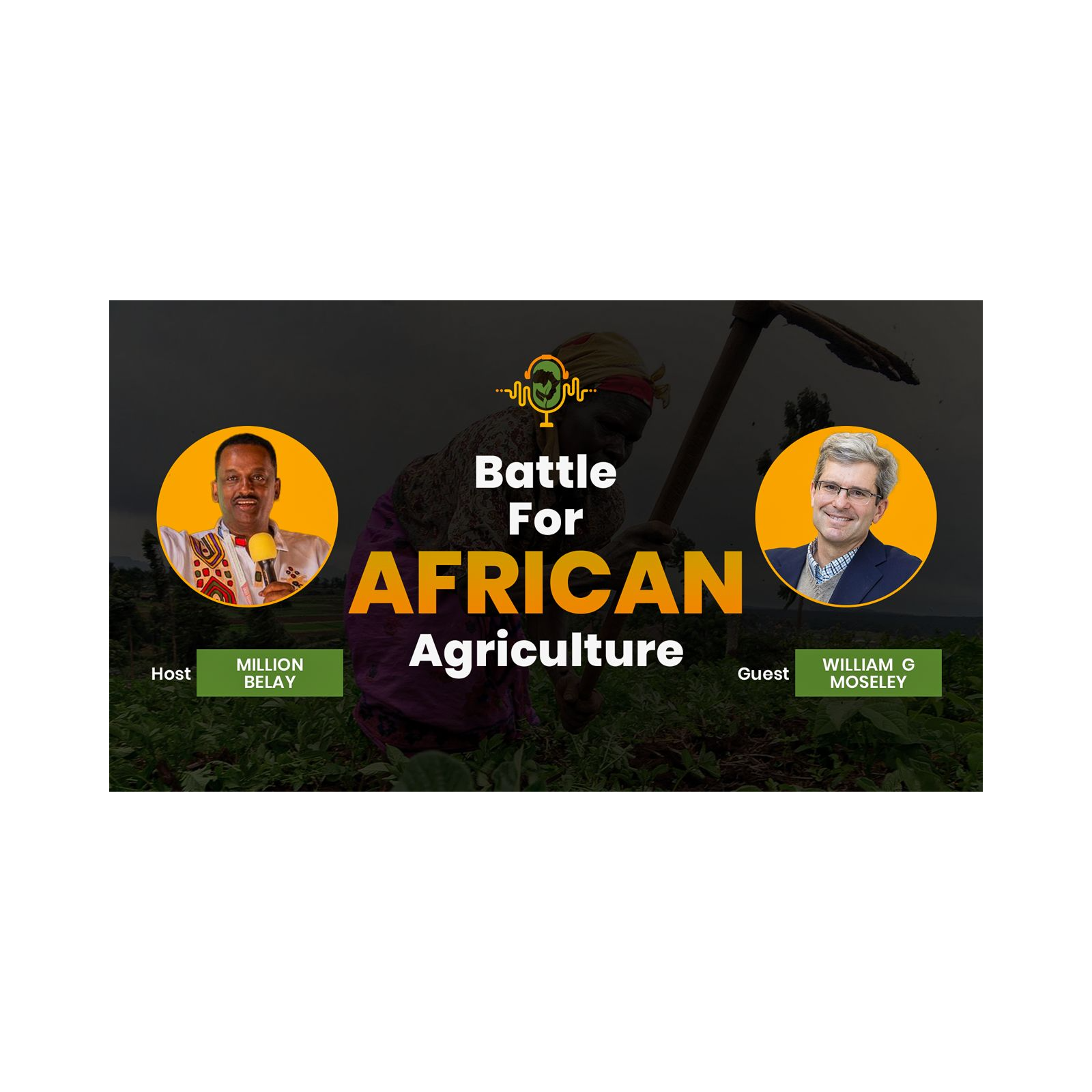 The Battle for African Agriculture Podcast || Episode 7 William G Mosley | In this thought-provoking episode of Battle for African Agriculture, Dr. Million Belay sits down with Professor William G. Moseley—geographer, author, and outspoken critic of colonial agricultural models—to unpack the urgent need to decolonize African food systems. Drawing from his landmark book Decolonizing African Agriculture, Moseley explains how the failures of food security efforts across Africa are rooted in Western agronomic paradigms imposed through colonial and neocolonial institutions. Through decades of fieldwork in Mali, Burkina Faso, South Africa, and Botswana, he reveals how political power—not just scientific logic—has shaped agricultural policy, often to the detriment of smallholder farmers.Together, they explore the promise of indigenous agronomy and agroecology as not only scientific alternatives but political and cultural acts of resistance. Moseley calls for a bold shift away from top-down, export-driven agricultural development toward locally rooted systems that nourish rural livelihoods, promote ecological health, and support food sovereignty. This episode is both a critique and a call to action—inviting listeners to imagine a radically different future where African food systems thrive on their own terms. | 40m 09s | ||||||
Showing 25 of 33
Sponsor Intelligence
Sign in to see which brands sponsor this podcast, their ad offers, and promo codes.
Chart Positions
17 placements across 15 markets.
Chart Positions
17 placements across 15 markets.