
Insights from recent episode analysis
Audience Interest
Podcast Focus
Publishing Consistency
Platform Reach
Insights are generated by CastFox AI using publicly available data, episode content, and proprietary models.
Total monthly reach
Estimated from 1 chart position in 1 market.
By chart position
- 🇯🇵JP · Technology#1421K to 10K
- Per-Episode Audience
Est. listeners per new episode within ~30 days
500 to 5K🎙 ~2x weekly·12 episodes·Last published 1w ago - Monthly Reach
Unique listeners across all episodes (30 days)
1K to 10K🇯🇵100% - Active Followers
Loyal subscribers who consistently listen
400 to 4K
Market Insights
Platform Distribution
Reach across major podcast platforms, updated hourly
Total Followers
—
Total Plays
—
Total Reviews
—
* Data sourced directly from platform APIs and aggregated hourly across all major podcast directories.
On the show
Recent episodes
Why Python is Slow: Antonio Cuni on SPy and Statically Compiled Python
Apr 30, 2026
26m 30s
Trailer – Why Python is Slow: Antonio Cuni on SPy and Statically Compiled Python
Apr 30, 2026
0m 32s
Maintaining 80 OSS Projects: Anthony Sottile on pre-commit and Developer Tooling
Mar 30, 2026
16m 13s
Trailer – Maintaining 80 OSS Projects: Anthony Sottile on pre-commit and Developer Tooling
Mar 25, 2026
0m 42s
AI-Written Code: Armin Ronacher on AI Agents and the Future of Programming
Feb 13, 2026
36m 58s
Social Links & Contact
Official channels & resources
Official Website
Login
RSS Feed
Login
| Date | Episode | Description | Length | ||||||
|---|---|---|---|---|---|---|---|---|---|
| 4/30/26 |  Why Python is Slow: Antonio Cuni on SPy and Statically Compiled Python | Antonio Cuni (principal engineer at Anaconda, author of SPy, developer of PyScript and PyPy, co-founder of the HPy project, and creator of PDB++, Fancy Completer, and VMProf) shares why Python is slow and how SPy, a new statically compiled variant of Python, aims to be as fast as C while staying as Pythonic as Python. We discuss the trade-off between dynamic features and performance, how SPy's "red and blue" code model replaces best-effort JIT with predictable errors, why PyPy struggles with C extensions, and what "Pythonic" really means.Outline 00:00 - Episode highlights and introduction 00:40 - Why is Python so slow? 01:31 - Would a static Python be fast? 02:13 - What is SPy? 02:28 - What motivated you to create SPy? (Spoiler: frustration) 03:52 - Which ideas from PyPy and HPy went into SPy? 06:36 - Biggest challenges of building SPy 07:49 - What does "Pythonic" actually mean? 10:39 - Current roadmap and the two-level language idea 12:24 - Walking through the SPy compilation pipeline 13:57 - Red-shifting and the blue/red AST nodes 14:40 - Why blue and red? (No, it's not from The Matrix) 15:52 - PyPy vs SPy: when to use which 19:34 - C extensions and the C API problem 20:04 - How to actually make your Python code faster 23:34 - Memory management and garbage collection in SPy 24:44 - When will SPy be production-ready? 25:44 - How to contribute to SPy 26:26 - Where does the name "SPy" come from?Note: the episode was recorded in July 2025 and some features, such as list type, garbage collector, and documentation, have been implemented in the meantime. In the section below you can find the links to those features. Episode links – SPy on GitHub: https://github.com/spylang/spy – PyPy: https://pypy.org/ – HPy project: https://hpyproject.org/ – PyScript: https://pyscript.net/ – Anaconda: https://www.anaconda.com/ – decorators in SPy: https://github.com/spylang/spy/pull/225 – SPy roadmap: https://github.com/spylang/spy/blob/main/ROADMAP.md – list type in SPy: https://github.com/spylang/spy/blob/main/stdlib/_list.spy – garbage collector in SPy: https://github.com/spylang/spy/pull/390 – SPy documentation: https://spylang.github.io/docs/dev/ – series of blog posts on SPy: https://antocuni.eu/2025/10/29/inside-spy-part-1-motivations-and-goals/ | 26m 30s | ||||||
| 4/30/26 |  Trailer – Why Python is Slow: Antonio Cuni on SPy and Statically Compiled Python | In this upcoming episode, I chat with Antonio Cuni, the creator of SPy and long-time PyPy developer. We discuss why Python is slow, how a statically compiled Python variant can be as fast as C while still feeling Pythonic, and the "red and blue" model behind SPy's compilation pipeline.Full episode coming out soon! | 0m 32s | ||||||
| 3/30/26 |  Maintaining 80 OSS Projects: Anthony Sottile on pre-commit and Developer Tooling | In this episode, I'm chatting with Anthony Sottile — creator of pre-commit, primary maintainer of flake8, core contributor to pytest, and maintainer of around 80 open source projects across the Python ecosystem. He's also a GitHub Star and a popular live coding streamer on Twitch under the name "anthonywritescode". We dig into how he actually manages all of it, the origin story of pre-commit, the psychological side of open source maintenance, and how to get started contributing.Outline00:00 Episode highlights & Intro0:59 The all-repos tool — distributed refactoring across repos2:04 Where the idea came from (Yelp's microservices explosion)2:42 Tools for managing multiple repositories3:34 How pre-commit got started (a college group project)4:15 Rewriting pre-commit for Yelp in 20184:46 Hardest technical challenge: supporting 13 programming languages6:07 Surprising bugs found in NPM and Git7:05 GitHub Stars and open source funding8:10 How Sentry approaches funding open source8:43 The psychological challenges of open source maintenance10:06 What would you tell your past self?11:32 How to start contributing to open source13:05 Why Anthony started streaming on Twitch13:52 What motivates him to keep streaming14:58 Has community interaction changed how you design code?15:48 Where to find Anthony onlineEpisode links– pre-commit: https://pre-commit.com– all-repos: https://github.com/asottile/all-repos– Anthony's YouTube: https://www.youtube.com/@anthonywritescode– Anthony's Twitch: https://www.twitch.tv/anthonywritescode | 16m 13s | ||||||
| 3/25/26 |  Trailer – Maintaining 80 OSS Projects: Anthony Sottile on pre-commit and Developer Tooling | In this upcoming episode, I chat with Anthony Sottile — creator of pre-commit and maintainer of around 80 open source projects. We talk about how he actually manages it all, the surprising bugs he's found in NPM and Git along the way, and the psychological side of open source that nobody talks about. | 0m 42s | ||||||
| 2/13/26 | 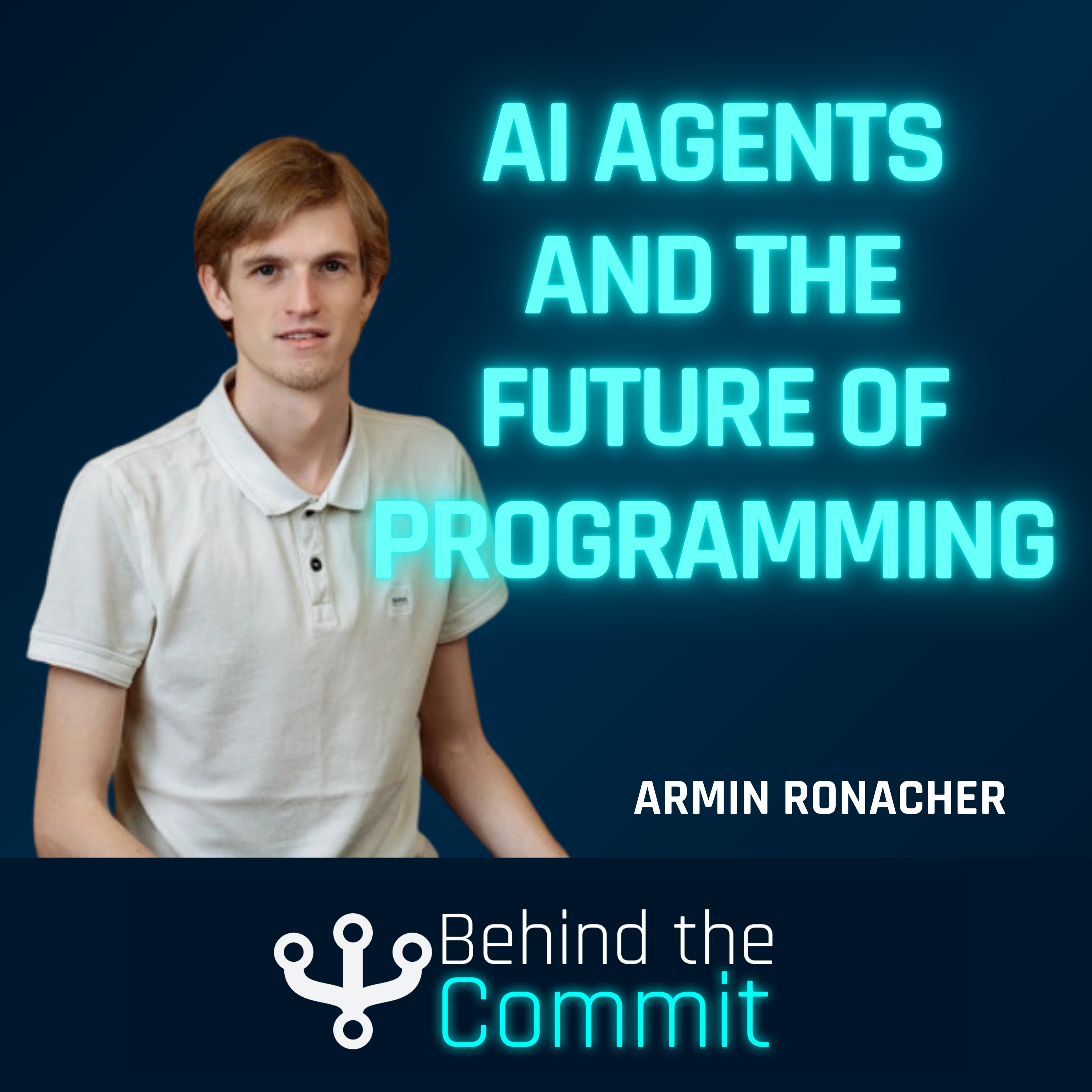 AI-Written Code: Armin Ronacher on AI Agents and the Future of Programming | Armin Ronacher (creator of Flask, previously Sentry’s VP of Platform, and currently founder of a startup Earendil) shares his experience building a startup where 90% of the code is AI-generated. We discuss which programming languages work best with AI agents, why Python's ecosystem makes life harder for AI, and what skills programmers need to stay relevant in the age of AI.Outline00:00 Episode highlights and introduction0:43 - How much code do you write yourself vs AI agents?2:03 - What kind of problems are suitable for AI and what do you solve yourself?4:02 - Why do AI agents work better with certain languages like Go vs Python?7:15 - How to steer AI agents in certain directions?12:01 - What patterns can AI agents handle well?15:28 - When starting a new project, what language do you use now?16:27 - Do you monitor agents and what safeguards do you have?18:48 - How do you handle parallelization with multiple agents?19:34 - How should we handle licenses for AI-generated open source libraries?24:07 - What is the future of programming jobs?26:31 - What skills should programmers learn to stay competitive?31:05 - Tips on how to get started with AI agents?33:44 - How to stay up to date with all the recent changes?36:16 - Where can people find you online?Episode links– Claude Code: https://claude.ai/ – UV (Python package manager): https://github.com/astral-sh/uv– Simon Willison's blog: https://simonwillison.net/– Armin's blog: https://lucumr.pocoo.org/ | 36m 58s | ||||||
| 2/12/26 |  Trailer – AI-Written Code: Armin Ronacher on AI Agents and the Future of Programming | In this upcoming episode, I chat with Armin Ronacher, the creator of Flask. We discuss which programming languages work best with AI agents, why Python's ecosystem makes life harder for both humans and AI, and what skills programmers need to stay relevant in the age of AI. | 1m 05s | ||||||
| 12/3/25 |  AI-Generated Music: Tech, Copyright & Real-World Applications with Mateusz Modrzejewski | In this episode, I talk with Mateusz Modrzejewski, a professional musician and AI researcher and assistant professor at the Warsaw University of Technology, about AI-generated music: how it works, what artists think about it, the big copyright questions, and where AI tools can genuinely support the creative process instead of replacing it.Outline00:00 Episode highlights and introduction00:49 Thoughts on AI-generated music02:09 The good sides of AI03:40 The bad sides of AI 04:43 How do professional musicians feel?08:03 The data scraping problem and data poisoning research11:33 How AI music generation actually works 15:04 How to start experimenting with AI music18:26 Future of the music industry25:22 The AI song contest29:15 Resources to learn more 🎙️ This episode was recorded live at the Venture café at PyWaw in Warsaw.Episode linksAI song contest: https://www.aisongcontest.com/ Librosa library: https://github.com/librosa/librosa Pedalboard library: https://github.com/spotify/pedalboardIntelligent Instruments Lab: https://iil.is/PanGenerator: https://pangenerator.com/Pyo library: https://github.com/belangeo/pyo ISMIR tutorials: https://ismir.net/resources/tutorials/ Beyond supervised learning book: https://music-classification.github.io/tutorial/landing-page.html Fundamentals of Music Processing book: https://www.researchgate.net/publication/288774112_Fundamentals_of_Music_ProcessingNIME conference: https://www.nime.org/ ZAiKS Lab https://www.zaikslab.techWarsaw University of Technology https://www.pw.edu.pl | 31m 47s | ||||||
| 12/2/25 |  Trailer – AI-Generated Music: Tech, Copyright & Real-World Applications with Mateusz Modrzejewski | AI-generated music is on the rise, but what does that mean from a technical and creative perspective? In this upcoming episode, I talk with Mateusz Modrzejewski, a professional musician and AI researcher, about AI-generated music: how it works, what artists think about it, the big copyright questions, and where AI tools can genuinely support the creative process instead of replacing it. | 1m 26s | ||||||
| 11/14/25 |  How To Make Web More Sustainable? – Chat with Thibaud Colas | In this episode, I’m chatting with Thibaud Colas — Product Lead & Engineering Manager at Torchbox, Wagtail product lead, and current President of the Django Software Foundation. We talk about digital sustainability: why the internet’s energy use matters, how to measure it, why performance is important for emissions, whether rewriting everything in Rust is the only solution, and why we should keep AI businesses more accountable.Outline0:00 — Episode highlights0:58 — Guest intro1:21 — Is carbon footprint a popular topic among developers?3:44 — What’s the carbon impact of the web and software in general?5:35 — How can we measure a website’s carbon footprint?8:26 — What are Django’s and Wagtail’s plans to reduce their footprint?9:35 — Does the programming language we use (e.g., Python or Rust) make a difference?11:42 — What practical steps can developers take to lower their software’s impact?12:25 — How do we raise awareness and make sustainability a mainstream topic in tech?15:34 — Should businesses be accountable for their software’s footprint?16:59 — What should AI companies and cloud providers be more transparent about?Episode links– Sustainable Web Design (methodology): https://sustainablewebdesign.org/ – Wagtail CMS (Torchbox): https://wagtail.org/ – Django Software Foundation: https://www.djangoproject.com/foundation/– Climate Action Tech community: https://climateaction.tech/ – W3C work on web sustainability: https://w3c.github.io/sustainableweb-wsg/ | 17m 39s | ||||||
| 11/14/25 |  Trailer – How To Make Web More Sustainable? – Chat with Thibaud Colas | What is digital sustainability and why does it matter?In this upcoming episode, I chat with Thibaud Colas, Product Lead & Engineering Manager at Torchbox, Wagtail product lead, and current President of the Django Software Foundation. We talk about digital sustainability: why the internet’s energy use matters, how to measure it, why performance is important for emissions, whether rewriting everything in Rust is the only solution, and why we should keep AI businesses more accountable. | 0m 49s | ||||||
Want analysis for the episodes below?Free for Pro Submit a request, we'll have your selected episodes analyzed within an hour. Free, at no cost to you, for Pro users. | |||||||||
| 10/30/25 | 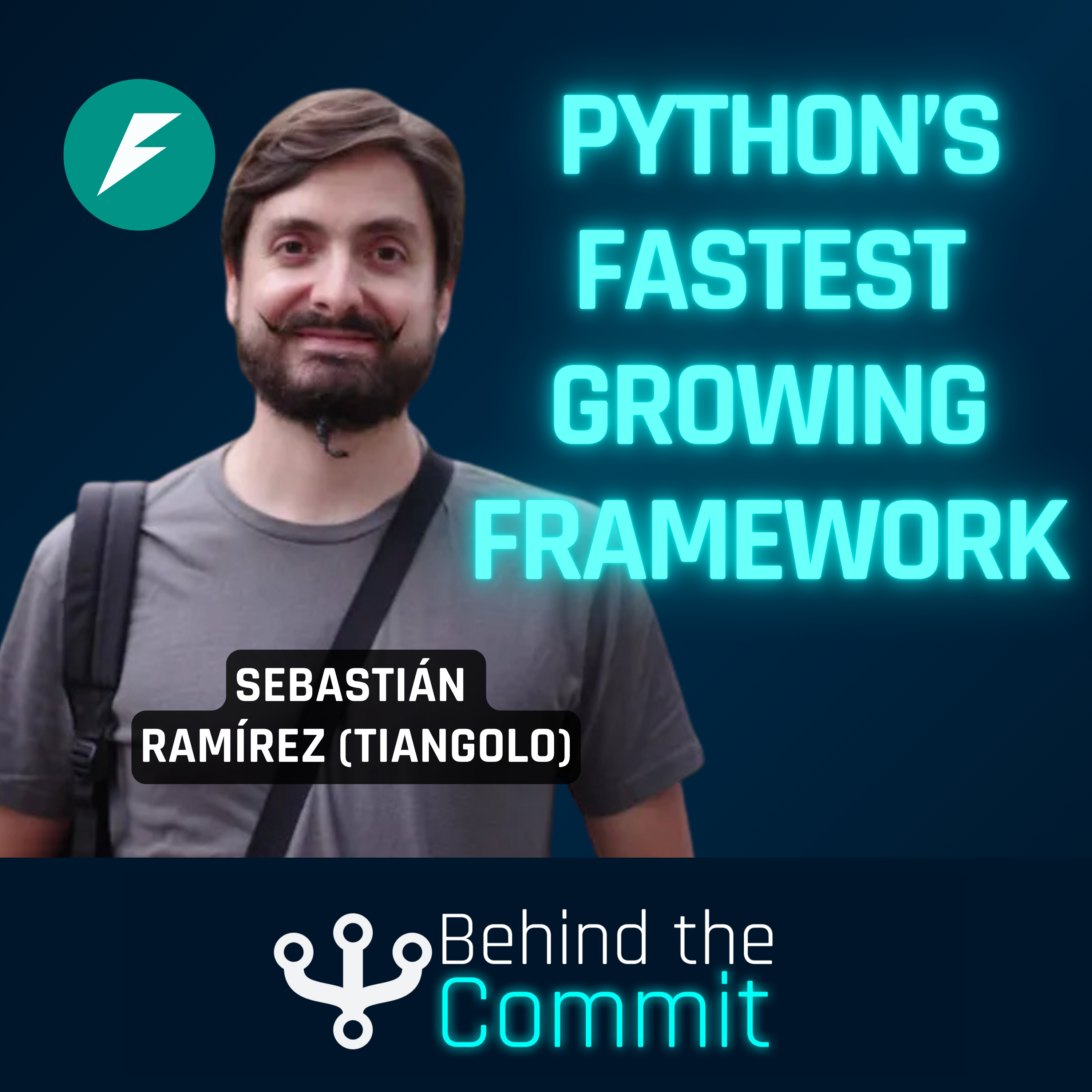 Why FastAPI Became Python’s Fastest‑Growing Framework – Chat with Sebastián Ramírez | In this episode, I’m chatting with Sebastián Ramírez — the creator of FastAPI, Typer, and SQLModel, and founder of FastAPI Labs. FastAPI has become one of Python’s fastest-growing web frameworks (adoption jumped from 14% to 25% among developers between 2021 and 2023!), and we dig into how it got here and what’s next on the roadmap. Sebastián shares behind-the-scenes insights into its success, his take on developer experience, the story behind FastAPI Labs and FastAPI Cloud, and how he handles life in open source.Outline0:00 Why FastAPI Became So Popular1:43 The Philosophy Behind FastAPI Development3:18 Challenges of Maintaining a Popular Open Source Project5:50 Community Contributions & Recognition System8:42 FastAPI Roadmap 11:13 Amazing Use Cases - From Particle Accelerators to Space Research12:29 FastAPI's Performance Architecture & Python Core Team15:19 Meeting Your Heroes & Being Popular in the Community16:30 Dealing with Negative Comments & Online Criticism23:25 FastAPI Cloud & FastAPI Labs Announcement28:08 Deployment Challenges & Platform as a Service Solution31:17 The SQLModel Challenge - Combining Old and New Magic34:29 Thoughts on Education & Self-Taught Development40:22 How to Contribute to FastAPI42:33 Closing ThoughtsEpisode links– JetBrains Developers Survey 2023: https://www.jetbrains.com/lp/devecosystem-2023/python/#python_web_libs_two_years– FastAPI documentation: https://fastapi.tiangolo.com– Sebastián Ramírez’s website: https://tiangolo.com– FastAPI Labs (FastAPI Cloud): https://fastapilabs.com/ | 42m 36s | ||||||
| 10/23/25 |  Trailer - Why FastAPI Became Python’s Fastest‑Growing Framework – Chat with Its Creator | FastAPI has become one of Python’s fastest-growing web frameworks!In this upcoming episode, I chat with Sebastián Ramírez, the creator of FastAPI, Typer, and SQLModel, and founder of FastAPI Labs. We talk about why FastAPI became so popular, the challenges of maintaining a fast-growing open source project, and what’s next for FastAPI and FastAPI Cloud.Full episode coming out next week! | 2m 05s | ||||||
| 10/14/25 | 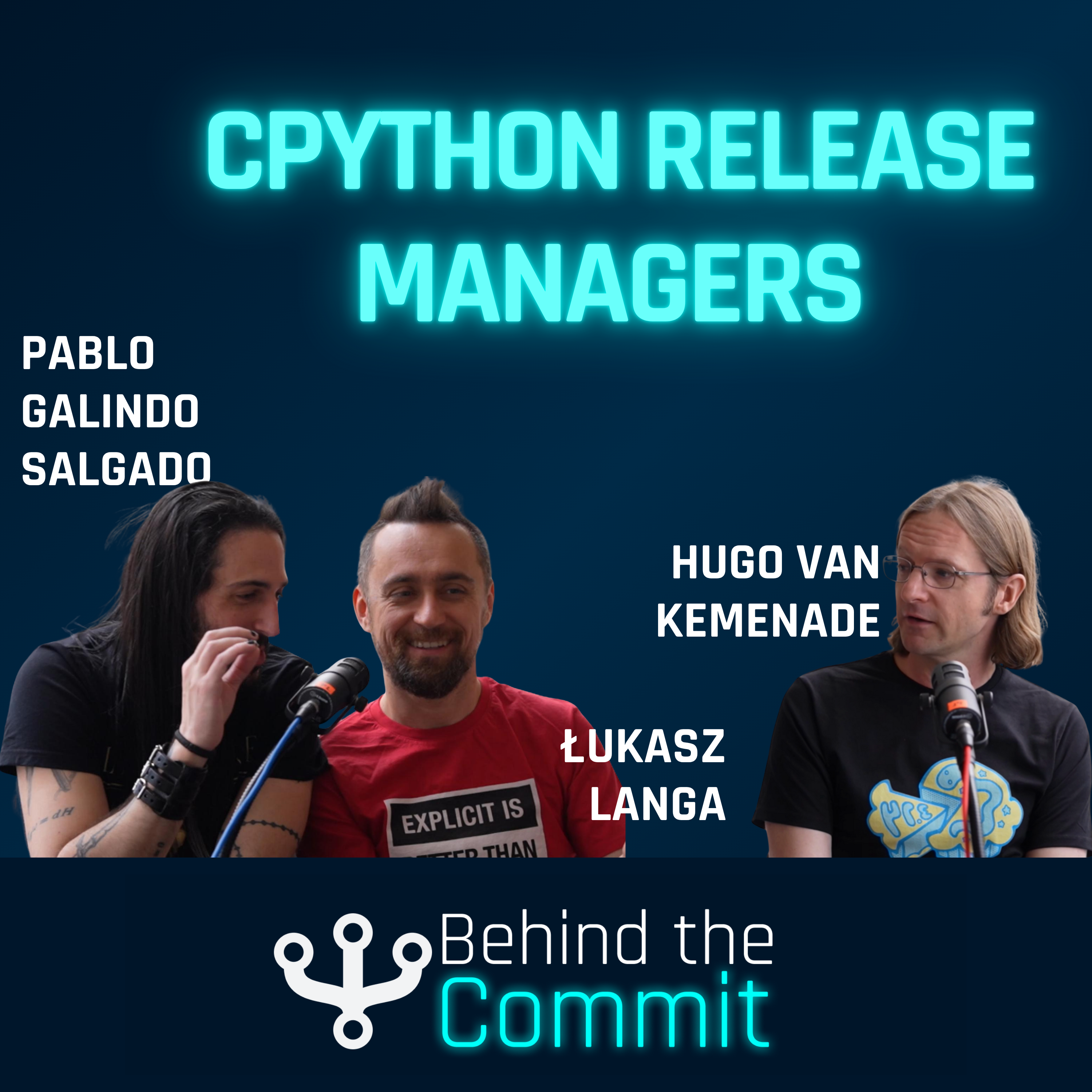 Behind the Python Release: Motivation, Fails & Rituals with Łukasz, Pablo & Hugo | Have you ever wondered how a CPython release works? In this episode, I talk with Hugo van Kemenade, Pablo Galindo Salgado, and Łukasz Langa about CPython release management.About the guestsHugo van Kemenade – Release Manager for Python 3.14 & 3.15, currently employed at the Sovereign Tech Agency as a fellow. Maintainer of open-source projects such as Pillow. Co-organizer of local Python events in Helsinki. Pablo Galindo Salgado – Core Python developer, currently employed in the Software Infrastructure department at Bloomberg. Release Manager for Python 3.10 & 3.11, and a member of the Steering Council. Co-host of the core.py podcast. Łukasz Langa – Python’s Developer in Residence at the PSF and Release Manager for Python 3.8 & 3.9. Creator of Black, the opinionated Python code formatter, and co-host of the core.py podcast.Outline01:34 Most & Least Successful Releases05:34 Evolution of Release Process11:37 Release Schedule and Annual Releases15:05 Handling PRs and Reverts18:07 Becoming a Python Release Manager25:24 Motivation and Time Zone Challenges29:36 Release Rituals and YouTube Party 35:11 Sustainable Open Source Funding Models42:10 Getting Involved & Further Listening🎙️ This episode was recorded live at EuroPython in July 2025 in Prague.Episode links- core.py podcast https://open.spotify.com/show/1PGRfdrLEwgXjQbPBNk1pW - Python’s Developer Guide https://devguide.python.org/ - PEP 101 https://peps.python.org/pep-0101/ | 45m 12s | ||||||
| 10/11/25 |  Trailer – Behind the Python Release: Motivation, Fails & Rituals with Łukasz, Pablo & Hugo | Sneak peak of the episode about CPython release. Have you ever wondered how a CPython release works? In this episode, we talk with Hugo van Kemenade, Łukasz Langa, and Pablo Galindo Salgado about Python release management. About the guests Hugo van Kemenade – Release Manager for Python 3.14 & 3.15, currently employed at the Sovereign Tech Agency as a fellow. Maintainer of open-source projects such as Pillow. Co-organizer of local Python events in Helsinki. Pablo Galindo Salgado – Core Python developer, currently employed in the Software Infrastructure department at Bloomberg. Release Manager for Python 3.10 & 3.11, and a member of the Steering Council. Co-host of the core.py podcast. Łukasz Langa – Python’s Developer in Residence at the PSF and Release Manager for Python 3.8 & 3.9. Creator of Black, the opinionated Python code formatter, and co-host of the core.py podcast. | 2m 45s | ||||||
Showing 14 of 14
Sponsor Intelligence
Sign in to see which brands sponsor this podcast, their ad offers, and promo codes.
Chart Positions
1 placement across 1 market.
Chart Positions
1 placement across 1 market.