

Insights from recent episode analysis
Audience Interest
Podcast Focus
Publishing Consistency
Platform Reach
Insights are generated by CastFox AI using publicly available data, episode content, and proprietary models.
Most discussed topics
Brands & references
Est. Listeners
Insufficient chart data. Estimates will improve as the show charts.
- Per-Episode Audience
Est. listeners per new episode within ~30 days
N/A🎙 ~2x weekly·500 episodes·Last published 3mo ago - Monthly Reach
Unique listeners across all episodes (30 days)
N/A - Active Followers
Loyal subscribers who consistently listen
N/A
Market Insights
Platform Distribution
Reach across major podcast platforms, updated hourly
Total Followers
—
Total Plays
—
Total Reviews
—
* Data sourced directly from platform APIs and aggregated hourly across all major podcast directories.
On the show
Recent episodes
Ancient Faith Orthodox Study Bible: A Comprehensive Summary
Mar 26, 2026
3m 03s
A Hope More Powerful Than the Sea: A Summary
Mar 26, 2026
3m 03s
A Mercy: Exploring Themes of Love and Sacrifice in Morrison
Mar 20, 2026
2m 25s
Antifragile: Embracing Chaos for Growth and Resilience
Mar 19, 2026
2m 56s
All About Love: Understanding Bell Hooks' Insightful Perspectives
Mar 13, 2026
2m 56s
Social Links & Contact
Official channels & resources
Official Website
Login
RSS Feed
Login
Resolving iTunes ID\u2026 if this persists, the podcast may not be indexed on Apple Podcasts.
| Date | Episode | Topics | Guests | Brands | Places | Keywords | Sponsor | Length | |
|---|---|---|---|---|---|---|---|---|---|
| 3/26/26 |  Ancient Faith Orthodox Study Bible: A Comprehensive Summary✨ | Orthodox ChristianityScripture+3 | — | Ancient Faith Orthodox Study Bible | — | Orthodox Study BibleJ.N. Sparks+5 | — | 3m 03s | |
| 3/26/26 | 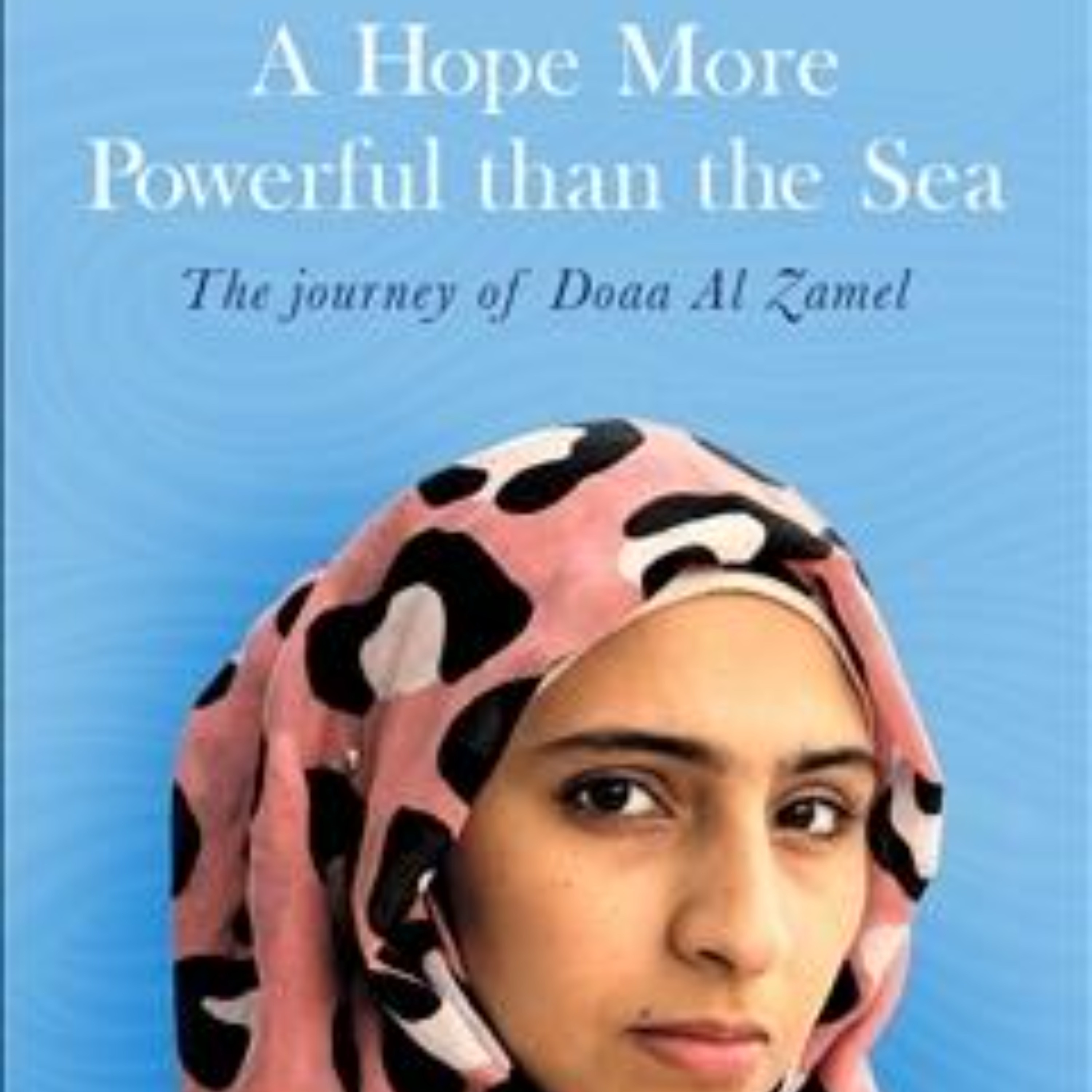 A Hope More Powerful Than the Sea: A Summary | Chapter 1 What's A Hope More Powerful Than the Sea "A Hope More Powerful Than the Sea" by Melissa Fleming tells the harrowing true story of Doaa Al Zamel, a young Syrian woman who embarks on a perilous journey to escape war and seek refuge in Europe. The narrative captures her struggles, resilience, and the desperation faced by many refugees while highlighting the themes of hope and humanity amidst the chaos of migration. Through Doaa's journey, the book emphasizes the strength of the human spirit and the enduring quest for safety and a better life, showcasing both the dangers of the sea and the unwavering hope that drives individuals to risk everything for their dreams. Chapter 2 The Background of A Hope More Powerful Than the Sea "A Hope More Powerful Than the Sea" by Melissa Fleming is set against the backdrop of the contemporary refugee crisis, particularly focusing on the harrowing journey of Syrian refugees fleeing war and violence. The book tells the true story of Doaa Al Zamel, a young woman who risks everything in search of safety and a better future for herself and her family. Fleming's intention in writing this book was to humanize the statistics surrounding the refugee experience, offering a poignant narrative that emphasizes the resilience and hope that persist even in dire circumstances. By sharing Doaa's story, Fleming aims to foster empathy and awareness regarding the plight of refugees, encouraging readers to recognize their shared humanity amidst the struggles faced by those forced to flee their homes. Chapter 3 Quotes of A Hope More Powerful Than the Sea A Hope More Powerful Than the Sea quotes as follows: Sure! Here are some notable quotes from "A Hope More Powerful Than the Sea" by Melissa Fleming: "In the deepest depths of despair, hope is a lifeline that can pull us back to the surface." "Stories have the power to change the world, one heart at a time." "The sea can be both beautiful and terrifying; it represents the journey of so many seeking a better life." "In the face of unimaginable adversity, the strength of the human spirit shines brightest." "Hope is not just a feeling; it is a choice we make every day." "For those who risk everything for a chance at a better life, the journey itself becomes a testament to their courage." "Love and family are what give life meaning, and they can be found even in the most harrowing of circumstances." "The refugee experience is one of loss, but it can also be one of resilience and rebirth." "Every person has a story worth telling, and every story has the power to inspire change." "Empathy connects us all; understanding one another is the first step toward healing." These quotes capture the essence of hope, resilience, and the human experience depicted in the book. Book Summary Audio Bookey https://www.bookey.app/audiobook/a-hope-more-powerful-than-the-sea Quotes https://www.bookey.app/book/a-hope-more-powerful-than-the-sea/quote YouTube https://www.youtube.com/watch?v=6k6SEkVPaHQ Amazon https://www.amazon.com/Hope-More-Powerful-Than-Sea/dp/1250105994 Goodreads https://www.goodreads.com/book/show/30078650-a-hope-more-powerful-than-the-sea | 3m 03s | ||||||
| 3/20/26 | 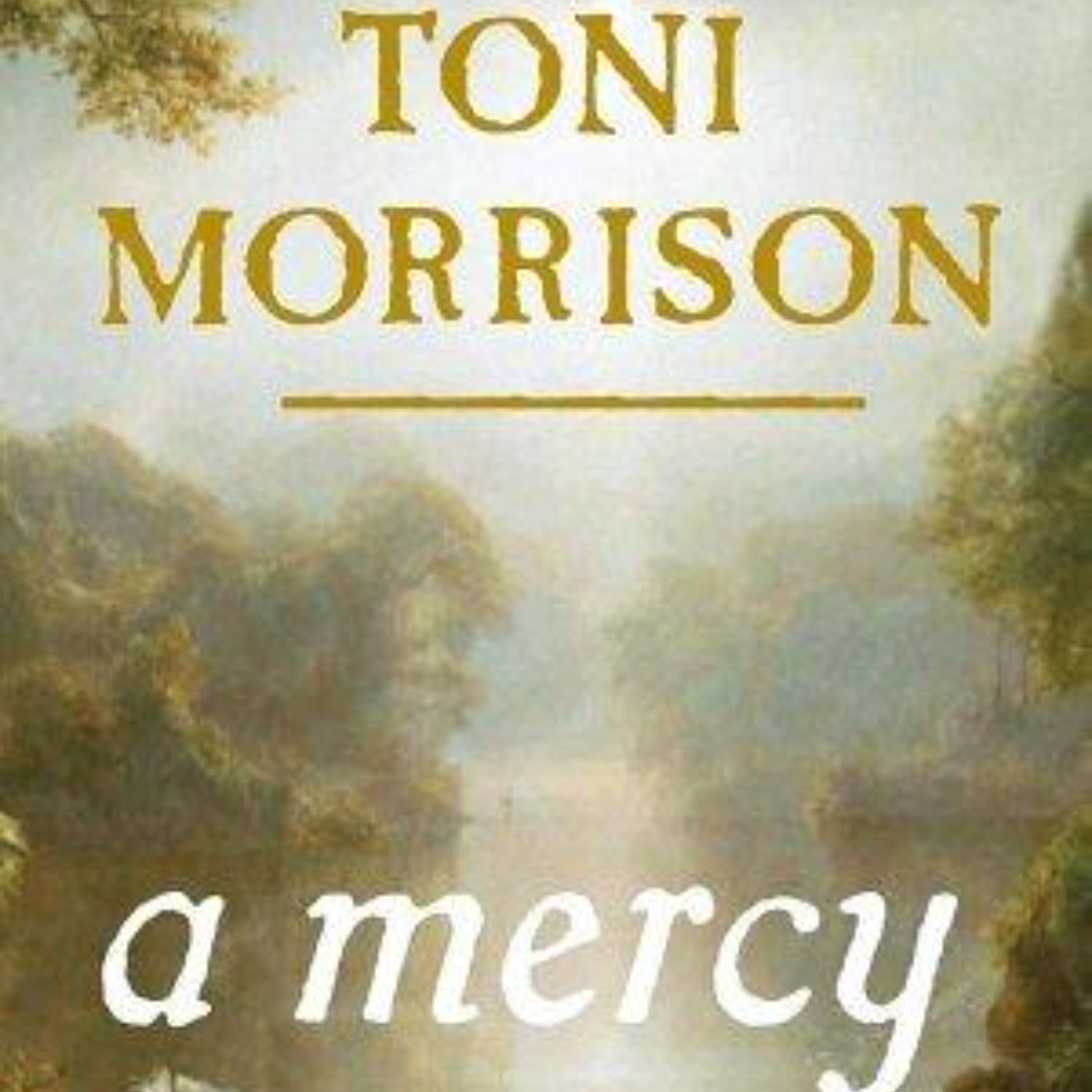 A Mercy: Exploring Themes of Love and Sacrifice in Morrison | Chapter 1 What's A Mercy "A Mercy" by Toni Morrison explores the complex themes of slavery, motherhood, and identity in 17th-century America. Through the intertwining lives of various characters—including a young slave named Florens, her enslaved mother, and a white landowner—the novel delves into the impact of systemic oppression on personal relationships and the struggle for autonomy. Morrison's lyrical prose captures the emotional landscape of each character, revealing how love and sacrifice shape their lives amidst the brutal realities of colonial life. Ultimately, "A Mercy" underscores the enduring complexities of human connection in the face of adversity. Chapter 2 The Background of A Mercy "A Mercy," published in 2008 by Toni Morrison, is set in the late 17th century America, a period characterized by the nascent development of colonial society and the complex intersections of race, class, and gender. This time was marked by the early emergence of African slavery, European settler colonialism, and the struggles of women within both indigenous and colonial frameworks. Morrison's intention in writing this novel was to explore themes of motherhood, sacrifice, and the human consequences of systemic injustice, particularly how these dynamics affect the lives of marginalized individuals. Through the intertwining stories of women who navigate a harsh and often brutal world, Morrison sheds light on the historical roots of contemporary social issues, emphasizing the resilience and agency of those often rendered voiceless in history. Chapter 3 Quotes of A Mercy A Mercy quotes as follows: Here are ten notable quotes from "A Mercy" by Toni Morrison: "I cannot be the only one to have made choices and lost everything." "In the end, a part of me had already left, safe in the knowledge that I was free." "What do you do when you’ve lost everything, you just keep living." "The price of freedom is always too high." "She knew that what the eye saw, the heart could not forget." "To be without a name is to be without a past." "There is no thing as being born and not needing a mother." "We are all born of the same tree, separate branches with the same roots." "Memory is the thing that gives us meaning; without it, we are nothing." "Love does not merely exist; it is an active choice we make every day." These quotes reflect the themes of identity, freedom, motherhood, and the complexity of human relationships in Morrison's work. Book Summary Audio Bookey https://www.bookey.app/audiobook/a-mercy Quotes https://www.bookey.app/book/a-mercy/quote YouTube https://study.com/academy/lesson/video/toni-morrisons-a-mercy-summary.html Amazon https://www.amazon.com/Mercy-Toni-Morrison/dp/0307276767 Goodreads https://www.goodreads.com/book/show/3009435-a-mercy | 2m 25s | ||||||
| 3/19/26 |  Antifragile: Embracing Chaos for Growth and Resilience | Chapter 1 What's Antifragile "Antifragile: Things That Gain from Disorder" by Nassim Nicholas Taleb explores the concept of antifragility, a term he coined to describe systems, entities, or individuals that not only withstand chaos, uncertainty, and volatility but actually thrive and improve because of them. Unlike fragile things that break under stress and robust ones that resist it, antifragile systems benefit from shocks and challenges. Taleb uses examples from various domains, including economics, health, and philosophy, to illustrate how embracing uncertainty and learning from mistakes can lead to greater resilience and success. The book advocates for a mindset that recognizes the value of disorder and adaptability over traditional approaches that seek security and predictability. Chapter 2 The Background of Antifragile "Antifragile: Things That Gain from Disorder," published in 2012 by Nassim Nicholas Taleb, emerges from a backdrop of increasing global uncertainty and complexity, marked by economic crises, technological disruptions, and sociopolitical instability. Taleb's original intention was to introduce the concept of antifragility—things that benefit and grow stronger in the face of chaos and adversity—contrasting it with fragility and robustness. His work challenges conventional risk management and decision-making approaches, advocating for systems and individuals that embrace uncertainty and volatility rather than simply seeking stability. Through a philosophical lens, Taleb draws from various disciplines, including philosophy, economics, and complex systems, to explore how embracing unpredictability can lead to greater resilience and growth. Chapter 3 Quotes of Antifragile Antifragile quotes as follows: Here are 10 thought-provoking quotes from "Antifragile: Things That Gain from Disorder" by Nassim Nicholas Taleb: "Antifragility is beyond resilience or robustness. The resilient resists shocks and stays the same; the antifragile gets better." "The three categories of goods and systems: fragile, robust, and antifragile. We need to aim for the third." "Some things benefit from shocks; they thrive and grow when exposed to volatility, randomness, disorder, and stressors." "The fragile wants tranquility, the resilient barely withstands it, and the antifragile loves it." "You should never take advice from someone who doesn’t have to suffer the consequences of their actions." "It is not what you know but what you don’t know that matters." "The more you know, the less you can be sure." "Mistakes should be expected and inspected, not confined to the status of embarrassment." "What is fragile should break early and loudly." "Antifragility is not just about health and wealth; it extends to the way we live our lives." Each of these quotes captures a key concept from Taleb’s exploration of how systems (and individuals) can thrive in the face of uncertainty and chaos. Book Summary Audio Bookey https://www.bookey.app/audiobook/antifragile Quotes https://www.bookey.app/book/antifragile/quote YouTube https://www.youtube.com/watch?v=6kVgIfMMeWM Amazon https://www.amazon.com/Antifragile-Things-That-Disorder-Incerto/dp/0812979680 Goodreads https://www.goodreads.com/book/show/13530973-antifragile | 2m 56s | ||||||
| 3/13/26 | All About Love: Understanding Bell Hooks' Insightful Perspectives | Chapter 1 What's All about Love "All About Love" by bell hooks is a profound exploration of the concept of love, challenging conventional notions often intertwined with romantic ideals. In the book, hooks advocates for a more expansive understanding of love that includes care, respect, trust, and commitment, emphasizing its transformative power in personal and societal contexts. She critiques the ways in which cultural norms and societal pressures distort our perceptions of love and highlights the importance of self-love as a foundation for healthy relationships. Through a blend of personal narrative, critical theory, and cultural analysis, hooks calls for a reevaluation of love in order to foster deeper connections and cultivate a more compassionate world. Chapter 2 The Background of All about Love Published in 2000, "All About Love: New Visions" by bell hooks emerged during a time when discussions about love, relationships, and emotional well-being were gaining visibility in both popular culture and academic circles. The late 1990s and early 2000s saw a growing interest in self-help and wellness literature, as well as a critical examination of traditional gender roles and societal norms. bell hooks, a prominent feminist theorist, sought to challenge conventional notions of love, arguing that it is not merely a romantic or sentimental feeling but a transformative force that requires commitment, understanding, and accountability. Her intention was to provide a radical redefinition of love that encompasses not only personal relationships but also broader social and political implications, urging readers to consider love as a practice that can heal individuals and communities alike. Chapter 3 Quotes of All about Love All about Love quotes as follows: Here are ten quotes from bell hooks' "All About Love" that capture the essence of her thoughts on love, relationships, and personal growth: "Love is a combination of care, commitment, knowledge, responsibility, respect, and trust." "To know love is to know joy. To live and care for ourselves and others is how we learn love." "Many people assume that everyone knows how to love, but we are not taught how to love." "Love is a choice and we can choose to love." "Love allows us to see and be seen; it transforms the self." "Without love, our lives are meaningless." "True love is not about possession or control but rather about mutual growth and support." "In a culture of perfectionism, love becomes a powerful form of resistance." "Self-love is the foundation of all love." "The practice of love is not the same as falling in love; it is a conscious choice that requires effort and intention." These quotes reflect bell hooks' profound insights into the nature of love and its importance in our lives. Book Summary Audio Bookey https://www.bookey.app/audiobook/all-about-love Quotes https://www.bookey.app/book/all-about-love/quote YouTube https://www.youtube.com/watch?v=wSEIYx9jui0 Amazon https://www.amazon.com/All-About-Love-New-Visions/dp/0060959479 Goodreads https://www.goodreads.com/book/show/17607.AllAboutLove | 2m 56s | ||||||
| 3/5/26 | 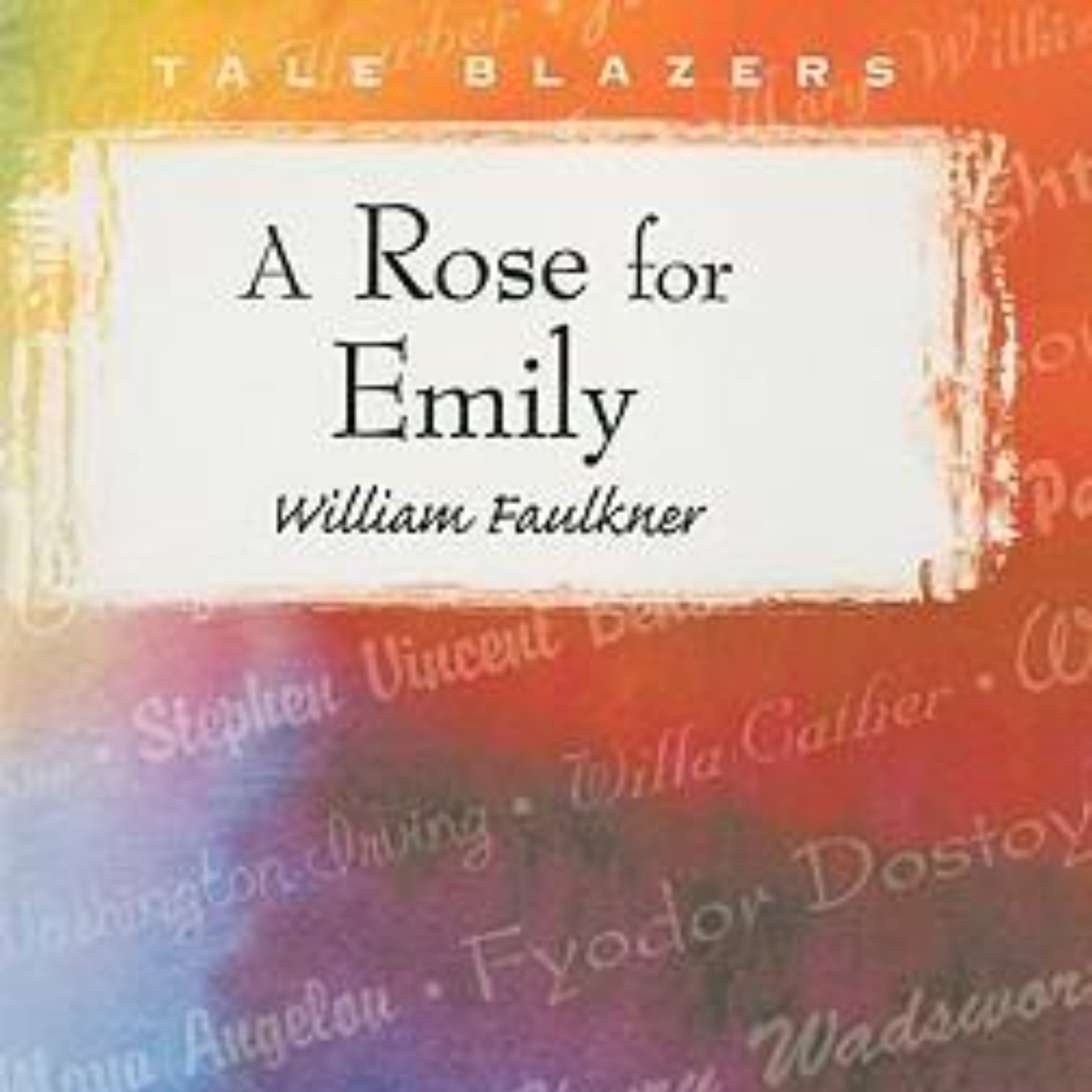 A Rose for Emily: A Summary of Southern Gothic Tragedy | Chapter 1 What's A Rose for Emily "A Rose for Emily" is a short story by William Faulkner that explores themes of time, isolation, and the struggle between tradition and change in the American South. The narrative follows the life of Emily Grierson, a reclusive woman who becomes a local curiosity after her father's death and the decline of her family's prominence. As the townspeople observe her increasingly eccentric behavior, including her relationships and eventual isolation, the story reveals dark secrets surrounding her past. The use of a non-linear timeline and shifting perspectives creates a complex portrait of Emily, culminating in a shocking revelation that underscores the story's themes of love, loss, and the impact of societal expectations. Chapter 2 The Background of A Rose for Emily "A Rose for Emily," written by William Faulkner and published in 1930, is set in the post-Civil War American South, particularly in the fictional town of Jeffersontown, Mississippi. This period was marked by significant social and cultural changes as the South grappled with the legacy of the Civil War, the decline of aristocratic families, and the encroachment of modernization. Faulkner's intention in this short story was to explore themes of isolation, resistance to change, and the impact of tradition, using the character of Emily Grierson as a symbol of the Old South's struggles against the inevitable transformations of society. The story reflects the complexities of Southern identity, the tension between past and present, and critiques the romanticism surrounding Southern heritage. Chapter 3 Quotes of A Rose for Emily A Rose for Emily quotes as follows: Here are ten notable quotes from "A Rose for Emily" by William Faulkner, which capture the themes of isolation, tradition, and the passage of time: "When Miss Emily Grierson died, our whole town went to her funeral." "It was no wind; it was the great knot of the world that had come undone." "She looked bloated, like a body long submerged in motionless water, and of that pallid hue." "After her father’s death, she went out very little; after her sweetheart went away, people hardly saw her at all." "She carried her head high enough—and she was a tradition, a duty, and a care; a sort of hereditary obligation upon the town." "The house was left vacant, and it was not a vacant lot; the neighborhood was silent, broken only by the occasional line of laughter." "The odor was a long-standing complaint, but it was only after her death that the mystery was solved." "We did not even know the intricacies of her sorrow until we found the true depths of the tragedy in her living circumstance." "Only people from the town would know what that means: a miss, a woman who had been a part of the fabric of their lives." "And in the end, they found in the upstairs room a man who had been loved and lost, surrounded by the remnants of a solitary life." These quotes reflect the haunting atmosphere and rich themes within the story, as well as Faulkner's unique narrative style. Book Summary Audio Bookey https://www.bookey.app/audiobook/a-rose-for-emily Quotes https://www.bookey.app/book/a-rose-for-emily/quote YouTube https://www.youtube.com/watch?v=ydkeXKFtUGs Amazon https://www.amazon.com/Rose-Emily-William-Faulkner/dp/B09GJG6JMF Goodreads https://www.goodreads.com/book/show/2984286-a-rose-for-emily | 2m 51s | ||||||
| 2/28/26 | 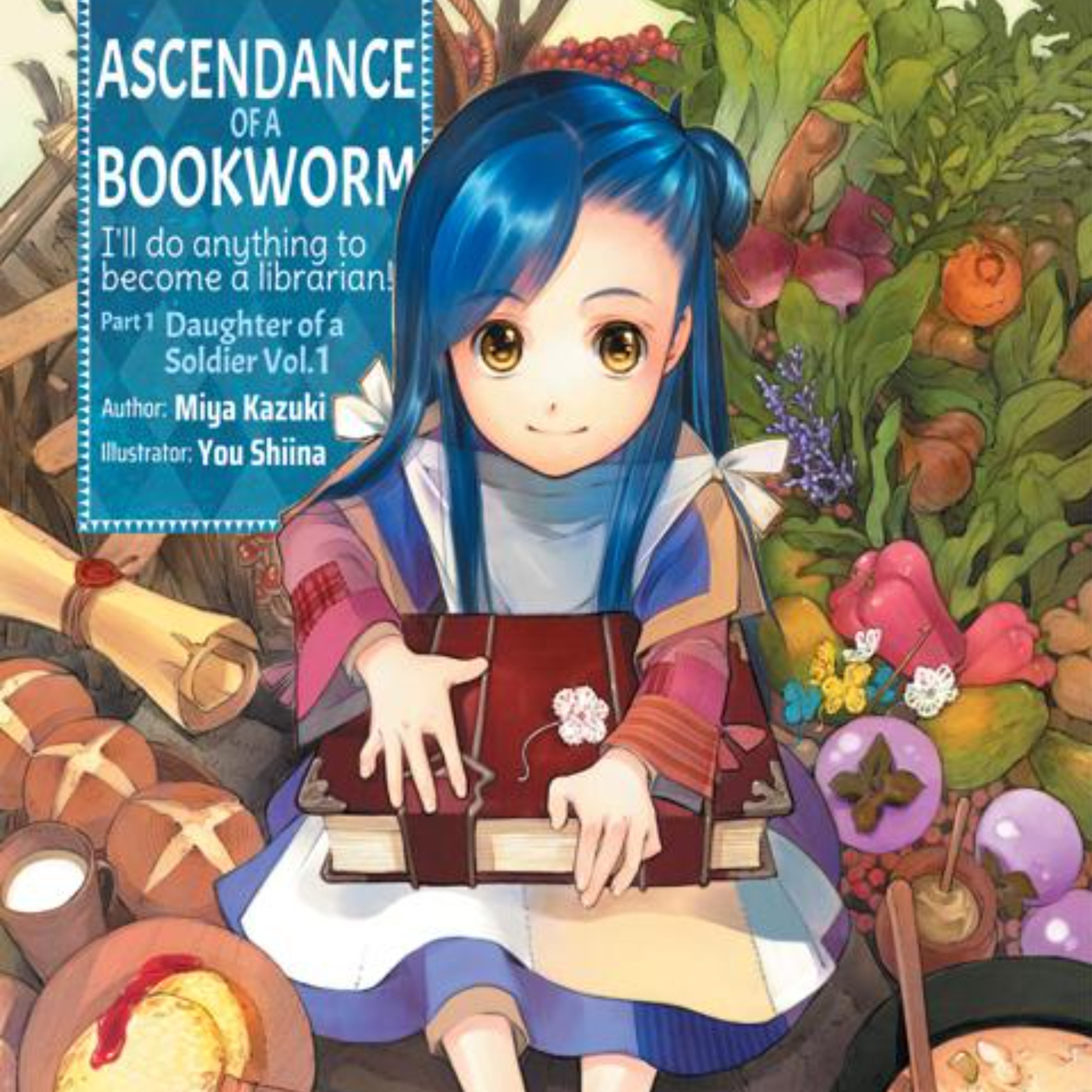 Ascendance of A Bookworm: A Journey Through Literature | Chapter 1 What's Ascendance of A Bookworm "Ascendance of a Bookworm" is a light novel series by Miya Kazuki that follows the story of Urano Motosu, a devoted book lover who, after dying in a tragic accident, is reincarnated as a young girl named Myne in a medieval world where books are scarce and literacy is limited to the elite. Determined to fulfill her passion for reading, she embarks on a quest to create and obtain books, facing numerous challenges in a society that undervalues knowledge. The series explores themes of bibliophilia, ambition, and the importance of education, all while combining elements of fantasy and slice-of-life. Chapter 2 The Background of Ascendance of A Bookworm "Ascendance of a Bookworm," written by Miya Kazuki, is a light novel series initially published in Japan in 2013. The story is set in a medieval European-inspired fantasy world where books are scarce and literacy is limited to a privileged few. This context reflects broader themes of knowledge and access to learning, mirroring real-world historical periods where education was often restricted to certain classes. Kazuki's original intention was likely to explore the importance of books and education, emphasizing how access to knowledge can empower individuals, as the protagonist, a book lover reincarnated in this world, strives to create a life filled with literature despite societal barriers. Chapter 3 Quotes of Ascendance of A Bookworm Ascendance of A Bookworm quotes as follows: "Ascendance of a Bookworm" by Miya Kazuki is a beloved light novel series with many memorable quotes that capture its themes of knowledge, perseverance, and a love for books. Here are ten quotes from the series: "In a world where books are scarce, I’ll become the one who makes them." "Knowledge is power, and I refuse to live in ignorance." "Even if it’s a small step, as long as I keep moving forward, I’m making progress." "Every book is like a door to another world, and I will open as many as I can." "What’s the use of being born with talent if you don’t work hard to improve it?" "I may be small and powerless, but my determination is limitless." "Books don’t just contain stories; they hold the wisdom of the ages." "To change the world, sometimes all it takes is a single idea." "If I can’t find a way to read, then I’ll make a way to create." "The journey of a thousand pages begins with a single word." These quotes reflect the protagonist's passion for reading and her determination to overcome obstacles in a world where access to knowledge is limited. Book Summary Audio Bookey https://www.bookey.app/audiobook/ascendance-of-a-bookworm Quotes https://www.bookey.app/book/ascendance-of-a-bookworm/quote YouTube https://www.youtube.com/watch?v=j4-wmVo9Ipo Amazon https://www.amazon.com/Ascendance-Bookworm-Short-Story-Collection-ebook/dp/B0BTT2YWGB Goodreads https://www.goodreads.com/book/show/44643642-ascendance-of-a-bookworm-light-novel-part-1-volume-1 | 2m 34s | ||||||
| 2/11/26 |  Anything But Typical: A Unique Journey Through Autism | Chapter 1 What's Anything But Typical "Anything But Typical" by Nora Raleigh Baskin is a poignant coming-of-age novel that explores the life of a 12-year-old boy named Jason Blake, who has autism. Through Jason's perspective, the story delves into his struggles with social interaction, his profound love for writing, and his yearning for acceptance. When he participates in an online writing community, he finds solace and a sense of connection, but he grapples with the challenge of revealing his true self to others. The narrative beautifully captures the complexities of communication, friendship, and the quest for understanding in a world that often feels overwhelming. Chapter 2 The Background of Anything But Typical "Anything But Typical" by Nora Raleigh Baskin was published in 2009, during a time when there was a growing awareness and discussion surrounding neurodiversity and autism spectrum disorders. This period saw an increasing emphasis on understanding and representing the experiences of individuals with autism in literature, particularly in children's and young adult fiction. Baskin's intention in writing the book was to provide an authentic voice to the inner thoughts and feelings of a young autistic protagonist, Jason Blake, highlighting the complexities of his experiences both in navigating social situations and expressing his own identity. By presenting these themes, she aimed to foster greater empathy and understanding among readers, particularly those who may have had limited exposure to the autistic experience. Chapter 3 Quotes of Anything But Typical Anything But Typical quotes as follows: Here are some notable quotes from "Anything But Typical" by Nora Raleigh Baskin that encapsulate its themes and characters: On Identity and Understanding: "Just because I see the world differently doesn’t mean I am any less of a person." On Communication: "Words can be difficult, but they can also be a bridge to understanding." On Friendship: "True friends are the ones who can see the beauty in your differences." On Acceptance: "It’s okay to be different; it’s what makes us unique and special." On Aspiration: "I want to be more than just what people expect of me." On Empathy: "Understanding starts with listening and trying to walk in someone else’s shoes." On Love: "Love is not defined by how people perceive you, but by how you feel inside." On Overcoming Challenges: "Each day is a new chance to show who I am, beyond the labels." On Belonging: "Everyone craves a place where they feel they belong, and sometimes that place is not where you expect." On Self-Discovery: "The journey to understanding oneself can be the most challenging yet rewarding adventure." These quotes reflect the main character's struggles, growth, and journey toward self-acceptance and understanding in the face of adversity. Book Summary Audio Bookey https://www.bookey.app/audiobook/anything-but-typical Quotes https://www.bookey.app/book/anything-but-typical/quote YouTube https://www.youtube.com/watch?v=JpV0447TmA_ _Amazon https://www.amazon.com/Anything-Typical-Nora-Raleigh-Baskin/dp/1416995005_ _Goodreads https://www.goodreads.com/book/show/5168689-anything-but-typical_ | 2m 09s | ||||||
| 2/10/26 |  A Book of Dreams: A Summary of Peter Reich's Journey | Chapter 1 What's A Book Of Dreams "A Book of Dreams" by Peter Reich is a poignant memoir that explores themes of loss, memory, and the bond between a father and son. It chronicles the author's experiences in the wake of his father's tragic death, intertwining personal memories with surreal and dreamlike narratives that reflect on their relationship and the impact of grief. The book paints a vivid picture of the emotional landscape that accompanies both the joy of childhood and the sorrow of loss, ultimately seeking to find meaning and solace in the complexities of life and death. Chapter 2 The Background of A Book Of Dream s "A Book of Dreams" by Peter Reich, published in the early 1970s, emerges from a tumultuous social context marked by the countercultural movements of the 1960s and early 1970s. This period was characterized by widespread social upheaval, including anti-war protests, the civil rights movement, and a growing interest in alternative lifestyles and spirituality. Peter Reich's narrative, which intertwines personal grief with a broader exploration of consciousness and dream interpretation, reflects these cultural currents. The author, seeking to process the loss of his father, the influential and unconventional scientist and psychiatrist Wilhelm Reich, aimed to bridge the gap between reason and emotion, science and mysticism, in a quest for understanding the nature of existence and the human experience. Chapter 3 Quotes of A Book Of Dreams A Book Of Dreams quotes as follows: Here are some notable quotes from "A Book of Dreams" by Peter Reich: "Dreams are the touchstones of our character." "In the realm of dreams, I found a clarity that the waking world often obscured." "The act of dreaming is the act of shifting reality." "Memories interlace with dreams, creating a tapestry of the soul." "Each dream is a whisper from the depths of our being." "To dream is to be alive in ways the waking world does not allow." "In the landscape of dreams, we confront our deepest fears and wildest hopes." "Dreams can guide us when reality feels too heavy." "Through dreams, I learned to navigate the labyrinth of my emotions." "The narratives of our dreams weave together the threads of our existence." These quotes encapsulate some of the themes found in Reich's work, touching on the nature, meaning, and significance of dreams. Book Summary Audio Bookey https://www.bookey.app/audiobook/all-summer-in-a-day YouTube https://www.youtube.com/watch?v=qmm1TAy55B4 Amazon https://www.amazon.com/All-Summer-Day-Short-Story-ebook/dp/B0BF5C7DXL Goodreads https://www.goodreads.com/book/show/45306054-all-summer-in-a-day | 3m 10s | ||||||
| 2/9/26 |  All Your Perfects: A Heartfelt Journey Through Love and Loss | Chapter 1 What's All Your Perfects "All Your Perfects" by Colleen Hoover is a poignant and emotional novel that explores the complexities of love and the struggles of maintaining a relationship under the weight of expectations and heartbreak. The story follows Quinn and Graham, a couple facing challenges related to infertility, which tests the foundation of their love. Through a series of flashbacks and present-day struggles, Hoover delves into themes of hope, resilience, and the reality of imperfect relationships, ultimately highlighting the importance of communication and understanding in overcoming life's obstacles. Chapter 2 The Background of All Your Perfects "All Your Perfects" by Colleen Hoover was published in 2018 and explores contemporary issues surrounding love, marriage, and infertility within the context of modern relationships. Set against a backdrop of societal pressures and expectations, the novel delves into the complexities of romantic partnerships, the emotional toll of unmet desires, and the importance of communication and vulnerability. Hoover's original intention was to shed light on the struggles many couples face, reflecting on the impact of societal norms on personal happiness. Through her characters' journeys, she aims to foster understanding and empathy for those dealing with similar challenges, emphasizing the need for connection and support in overcoming life's obstacles. Chapter 3 Quotes of All Your Perfects All Your Perfects quotes as follows: Here are ten notable quotes from "All Your Perfects" by Colleen Hoover that encapsulate its themes of love, loss, and the complexities of relationships: "You don’t have to be perfect to be loved." "Some people are meant to be in your life forever. Some are only meant to be there for a short time." "Love can be a beautiful thing, but it can also be painful when it feels like it’s slipping away." "We are all imperfect people trying to navigate through life and love." "The biggest fight is always with yourself, not the person you love." "Every love story is beautiful, but ours is my favorite." "It’s okay to not have a perfect relationship, as long as you have a relationship that works." "Sometimes, the hardest part about loving someone is letting them see your vulnerabilities." "What matters most is how you make each other feel—every single day." "Our love isn’t perfect, but our moments together are unforgettable." These quotes highlight the emotional depth and realism that Colleen Hoover is known for in her writing. Book Summary Audio Bookey https://www.bookey.app/audiobook/all-your-perfects Quotes https://www.bookey.app/book/all-your-perfects/quote YouTube https://www.youtube.com/watch?v=BbeJ1WDUv7Y Amazon https://www.amazon.com/All-Your-Perfects-Colleen-Hoover/dp/1501193325 Goodreads https://www.goodreads.com/book/show/38926487-all-your-perfects | 2m 31s | ||||||
Want analysis for the episodes below?Free for Pro Submit a request, we'll have your selected episodes analyzed within an hour. Free, at no cost to you, for Pro users. | |||||||||
| 2/6/26 |  American Psycho: A Dark Satire of 1980s Consumerism | Chapter 1 What's American Psycho "American Psycho" is a satirical novel by Bret Easton Ellis, published in 1991, that explores the morally vacant and consumer-driven culture of the 1980s through the eyes of Patrick Bateman, a wealthy investment banker in Manhattan who leads a double life as a serial killer. The novel is known for its graphic depictions of violence, sexual encounters, and the superficiality of the yuppie lifestyle, serving as a critique of the era's obsession with materialism and identity. Bateman's unreliable narration blurs the lines between reality and insanity, prompting readers to question the nature of morality and the human condition. Chapter 2 The Background of American Psycho "American Psycho," written by Bret Easton Ellis in 1991, is set against the backdrop of the 1980s' excessive consumerism and materialism in Manhattan. The novel explores the shallow, hedonistic lifestyles of yuppies, emphasizing the moral vacuity and alienation within a society obsessed with wealth and status. Ellis intended the book as a satirical critique of this culture, using the character of Patrick Bateman, a wealthy investment banker who leads a double life as a serial killer, to illustrate the dehumanizing effects of capitalism and the disconnect between appearance and reality. The graphic violence and dark humor in the novel elicited significant controversy, prompting discussions about misogyny, violence, and the role of art in reflecting societal issues. Chapter 3 Quotes of American Psycho American Psycho quotes as follows: Here are ten notable quotes from "American Psycho" by Bret Easton Ellis: "I simply am not there." "I don't want to be part of society's problems. I want to be part of its solutions." "This is not an exit." "It's very liberating to be able to be so completely unselfconscious." "I have to return some videotapes." "I want to be able to wake up in the morning and look at myself in the mirror." "I’m into, uh, well, murders and executions mostly." "I have all the characteristics of a human being—flesh, blood, skin; but not a single, clear, identifiable emotion." "What I do is not a reflection of my values; it is an expression of my will." "This is the life I lead, you see." Book Summary Audio Bookey https://www.bookey.app/audiobook/american-psycho Quotes https://www.bookey.app/book/american-psycho/quote YouTube https://www.youtube.com/watch?v=j0Ev5ClG7c4 Amazon https://www.amazon.com/American-Psycho-Bret-Easton-Ellis/dp/0679735771 Goodreads https://www.goodreads.com/book/show/28676.AmericanPsycho_ | 2m 38s | ||||||
| 2/5/26 |  Wait for It: A Heartfelt Journey of Love and Patience | Chapter 1 What's Wait for It "Wait for It" by Mariana Zapata is a contemporary romance novel that tells the story of Diana Casillas, a hardworking and independent woman who finds herself grappling with her feelings for her enigmatic neighbor, the quiet and reserved baseball player, Hamilton. As they navigate their personal struggles, their relationship evolves slowly, filled with emotional depth and heartwarming moments. With Zapata's signature style of slow-burn romance, the novel explores themes of patience, self-discovery, and the complexities of love, ultimately leading to a satisfying and poignant conclusion. Chapter 2 The Background of Wait for It "Wait for It" by Mariana Zapata is set in a contemporary social context that reflects the complexities of modern relationships, emphasizing themes of patience and personal growth. The story unfolds in a world where work-life balance and the challenges of single parenthood are prevalent, resonating with readers who value deep emotional connections over fleeting romances. Zapata's intention was likely to explore the intricacies of slow-burn romances, illustrating that love often requires time, effort, and an understanding of one's own needs and past, which allows readers to connect with the characters' journeys on a more profound level. The book embodies a slice of life that underscores the importance of resilience and hope amidst life's challenges. Chapter 3 Quotes of Wait for It Wait for It quotes as follows: "Wait for It" by Mariana Zapata is a popular contemporary romance novel known for its slow-burn story and engaging characters. Here are ten memorable quotes from the book that capture its essence: "You don’t have to be afraid of what’s next, just take a deep breath and jump." "Sometimes I feel like the universe is playing a joke on me, and I’m just the punchline." "Love isn’t always easy, but it’s worth every hard moment." "The best relationships start with friendship, and that’s what makes them last." "You can wait for the right moment, or create one for yourself." "Patience isn’t just a virtue; it’s a necessity in love." "When you find someone worth waiting for, time becomes irrelevant." "It’s okay to be a little lost; sometimes the journey is what leads you home." "Every moment we spend together is another reason to believe in love." "In the end, it’s the little things that make the biggest impact." These quotes reflect themes of love, patience, and the beauty of building relationships over time. Book Summary Audio Bookey https://www.bookey.app/audiobook/wait-for-it Quotes https://www.bookey.app/book/wait-for-it/quote YouTube https://www.youtube.com/watch?v=Dd4H7WBatt4 Amazon https://www.amazon.com/Wait-Mariana-Zapata-ebook/dp/B01N2RJFW1 Goodreads https://www.goodreads.com/book/show/33288638-wait-for-it | 2m 50s | ||||||
| 2/4/26 |  Why Nations Fail: A Summary of Economic Disparities | Chapter 1 What's Why Nations Fail "Why Nations Fail," authored by Daron Acemoglu and James A. Robinson, explores the role of political and economic institutions in shaping the fate of nations. The authors argue that inclusive institutions that promote democracy, property rights, and equal opportunities lead to prosperity, while extractive institutions that concentrate power and wealth in the hands of a few hinder economic growth and foster inequality. Through historical case studies, the book illustrates how the choices made by political leaders can determine the trajectory of a nation’s development, emphasizing the importance of institutional framework in the success or failure of nations. Chapter 2 The Background of Why Nations Fail "Why Nations Fail," co-authored by Daron Acemoğlu and James A. Robinson, was published in 2012 against a backdrop of global economic disparities and political upheaval, particularly in the wake of the 2008 financial crisis and the Arab Spring. The authors seek to explore the fundamental reasons behind the stark differences in economic prosperity and political stability among nations. Their primary intention is to challenge the notion that geography, culture, or ignorance are the main factors behind wealth inequality, positing instead that inclusive political and economic institutions foster prosperity, while extractive institutions lead to failure. This work promotes a critical examination of how political power structures influence economic outcomes, making it highly relevant in discussions about governance and development in a rapidly changing world. Chapter 3 Quotes of Why Nations Fail Why Nations Fail quotes as follows: Here are ten notable quotes from "Why Nations Fail: The Origins of Power, Prosperity, and Poverty" by Daron Acemoglu and James A. Robinson: "Political institutions are the key to economic institutions." "Nations fail because those in power make choices that create poverty." "Inclusive economic institutions are those that allow and encourage participation by the great mass of people in economic activities." "Extractive institutions are those that are structured to extract resources from the many by the few." "The fundamental causes of economic development are the political institutions that create economic institutions." "Geography, culture, and ignorance are not the fundamental causes of poverty." "When a nation has inclusive political institutions, it also tends to have inclusive economic institutions." "Political centralization and pluralism are vital for the establishment of inclusive economic institutions." “History is littered with cases where nations have failed to prosper due to extractive institutions.” “Inclusive institutions create a level playing field, while extractive institutions create a rigged game.” These quotes encapsulate the essence of Acemoglu and Robinson's argument that political and economic institutions are crucial in determining a nation's prosperity or failure. Book Summary Audio Bookey https://www.bookey.app/audiobook/why-nations-fail Quotes https://www.bookey.app/book/why-nations-fail/quote YouTube https://www.youtube.com/watch?v=A4eVoOlIuis Amazon https://www.amazon.com/Why-Nations-Fail-Origins-Prosperity/dp/0307719227 Goodreads https://www.goodreads.com/book/show/12158480-why-nations-fail | 3m 04s | ||||||
| 2/3/26 |  Unsouled: A Journey Through Identity and Redemption | Chapter 1 What's Unsouled "Unsouled" is the third book in Neal Shusterman's "Unwind Dystology," set in a future where unwanted teenagers are "unwound," a process that harvests their organs for transplantation. The story follows the characters Connor, Risa, and Lev as they navigate a world filled with moral dilemmas about life, autonomy, and the value of human beings. As they confront various factions, including a group of teenage rebels, the narrative explores themes of identity, society's often utilitarian views on youth, and the struggle to assert one's individuality in a dehumanizing system. The book combines action and philosophical questions, making it a thought-provoking read within the dystopian genre. Chapter 2 The Background of Unsouled "Unsouled" is the third book in Neal Shusterman's "Unwind Dystology," a series that explores themes of morality, identity, and societal ethics in a near-future world where adolescents can be "unwound" for organ harvesting. The series emerged during a time of growing interest in bioethics and the implications of medical technologies, particularly surrounding debates about life, autonomy, and the value of human beings. Shusterman's intention was to provoke thought about the moral ramifications of dehumanizing practices and the importance of individual identity and choice, making readers reflect on broader societal issues such as parental rights, government control, and the commodification of life. Through this narrative, he invites readers to consider the consequences of detaching humanity from ethical considerations in technological advancement. Chapter 3 Quotes of Unsouled Unsouled quotes as follows: Here are ten significant quotes from "Unsouled" by Neal Shusterman that capture key themes and character insights: "The past is a ghost; it’s always with you, waiting to haunt you, no matter how fast you run." "Sometimes the hardest decisions are the ones that make you who you are." "You can’t take away someone’s future without changing who they are." "Freedom isn’t the absence of control; it’s the ability to make your own choices." "People are more than the sum of their parts; every life has value, no matter how it was formed." "Our choices define us; it’s not just the actions we take, but the intentions behind them." "In a world where everything is calculated, sometimes the most reckless act is to choose compassion." "Hope is a fragile thing, easily shattered by fear and despair." "Rebellion doesn’t come from hatred; it often springs from the desire for something better." "The line between right and wrong can blur when survival is at stake." These quotes reflect the complex themes of identity, morality, and the nature of humanity explored in the novel. Book Summary Audio Bookey https://www.bookey.app/audiobook/unsouled-by-neal-shusterman Quotes https://www.bookey.app/book/unsouled-by-neal-shusterman/quote YouTube https://www.youtube.com/watch?v=Wa75bZVNsbk Amazon https://www.amazon.com/UnSouled-Unwind-Dystology-Neal-Shusterman/dp/144242369 Goodreads https://www.goodreads.com/book/show/12792658-unsouled | 3m 06s | ||||||
| 2/2/26 |  Waiting For The Barbarians: A Deep Dive into Coetzee | Chapter 1 What's Waiting For The Barbarians "Waiting for the Barbarians" by J.M. Coetzee is a powerful allegorical novella that explores themes of colonialism, power, and moral ambiguity through the story of an unnamed magistrate in a remote colonial outpost. As he grapples with the oppressive regime's treatment of the local "barbarians"—indigenous people perceived as threats—the magistrate undergoes a profound internal conflict between his duties and his growing empathy for those marginalized by imperial authority. The narrative delves into profound ethical and philosophical questions, challenging the reader to reflect on issues of justice, authority, and the human capacity for cruelty and compassion. Chapter 2 The Background of Waiting For The Barbarians "Waiting for the Barbarians," published in 1980, is set against the backdrop of apartheid-era South Africa, a period characterized by systemic racial oppression and colonial injustice. J.M. Coetzee, an outspoken critic of apartheid, uses the narrative to explore themes of power, colonialism, and the moral complexities of oppression. The story reflects the tensions between the imperial authorities and the marginalized "barbarians," serving as an allegory for the struggles faced by colonized peoples and the moral ambiguities inherent in the exercise of power. Coetzee’s intent was to provoke readers to examine ethical dilemmas and the human capacity for cruelty, encouraging a deeper understanding of the consequences of colonialism and the importance of empathy and justice. Chapter 3 Quotes of Waiting For The Barbarians Waiting For The Barbarians quotes as follows: Here are ten thought-provoking quotes from J.M. Coetzee's novel "Waiting for the Barbarians": "The magistrate has a power to make judgments about people, but true understanding may lie outside those judgments." "The events of the past cannot simply be erased; they remain as scars that shape our identities." "In the end, what matters is what we choose to do with our knowledge and how we use it to affect the lives of others." "The line between civilization and barbarism is often drawn by those in power to serve their own interests." "To confront the other, to understand the other, one must first confront oneself." "Justice is a matter of interpretation, and the interpretation can be colored by one’s own biases and experiences." "The empire's view of the so-called 'barbarians' is a reflection of its own fears and insecurities." "Humanity is not defined by nationality or borders but by the capacity for empathy and understanding." "The act of waiting can be both a passive state and an active pursuit of truth and meaning." "Freedom is not simply the absence of chains; it is the presence of choice and the ability to act on that choice." These quotes capture some of the major themes of the book, such as colonialism, power dynamics, justice, and the human experience. Book Summary Audio Bookey https://www.bookey.app/audiobook/waiting-for-the-barbarians Quotes https://www.bookey.app/book/waiting-for-the-barbarians/quote YouTube https://www.youtube.com/watch?v=u9beP3sgV2E Amazon https://www.amazon.com/Waiting-Barbarians-Novel-J-M-Coetzee/dp/014006110X Goodreads https://www.goodreads.com/book/show/6194.WaitingfortheBarbarians_ | 2m 58s | ||||||
| 1/30/26 | 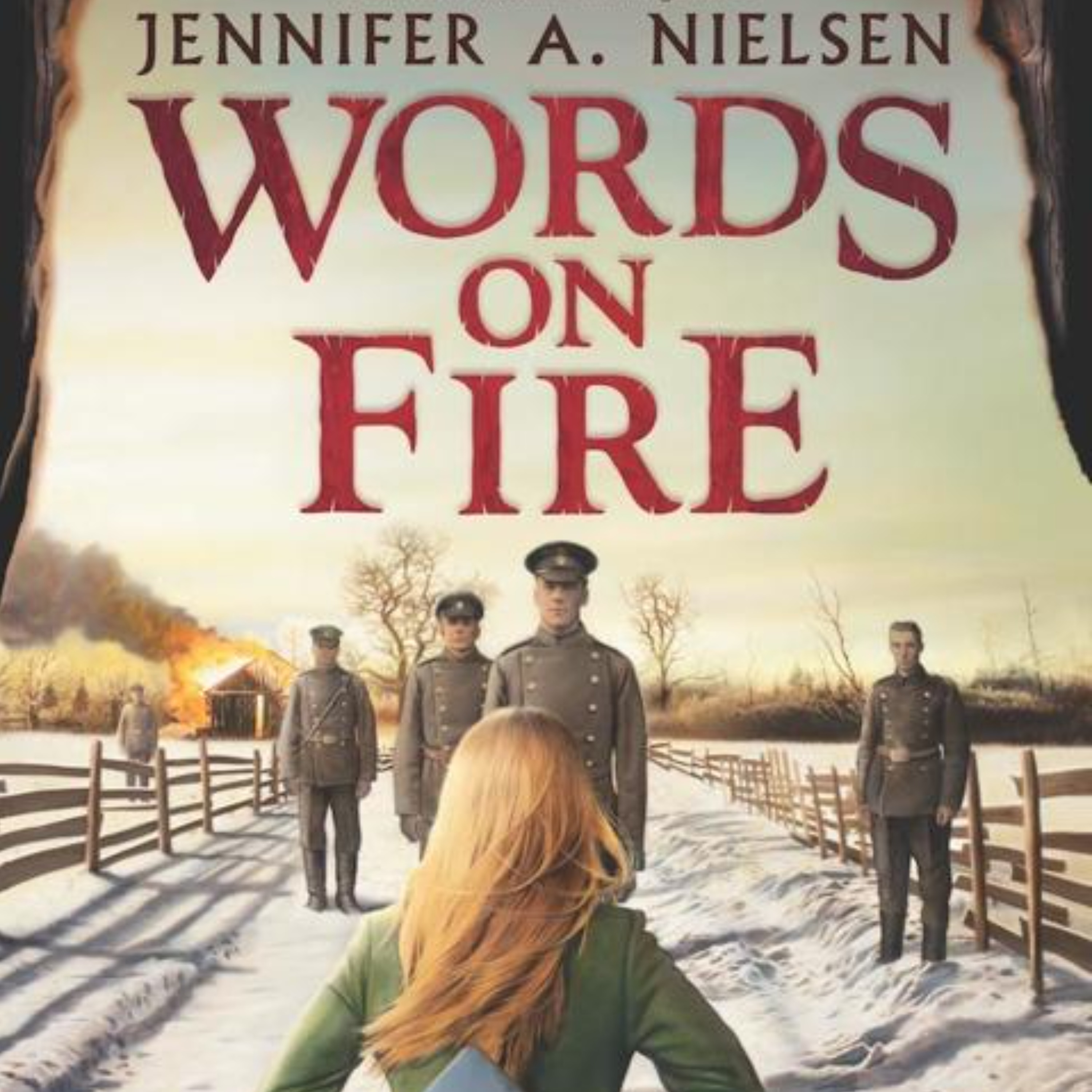 Words On Fire: A Captivating Journey of Courage and Resistance | Chapter 1 What's Words On Fire "Words On Fire" by Jennifer A. Nielsen is a compelling historical fiction novel set in 19th-century Lithuania during the oppressive Russian rule. The story follows a young girl named Audra, who becomes embroiled in the resistance against the regime that seeks to erase her culture and language. When her parents are taken away, Audra must navigate a dangerous journey filled with courage, friendship, and the power of words as she fights to protect her family's legacy and the identity of her people. Through Audra's struggles, Nielsen explores themes of bravery, identity, and the importance of storytelling in the face of tyranny. Chapter 2 The Background of Words On Fire "Words on Fire" by Jennifer A. Nielsen is set against the backdrop of the Lithuanian resistance during World War II, a time marked by the struggle against oppression and the fight for cultural identity. The story captures the intense socio-political climate of the era, where Nazi and Soviet occupations sought to erase local languages and cultures. Nielsen's intention in writing this historical fiction was to highlight the resilience of the human spirit and the crucial importance of language and storytelling as forms of resistance and identity preservation. Through her characters' brave actions, she aims to inspire readers to appreciate their own freedoms and the power of the written word in shaping personal and collective narratives. Chapter 3 Quotes of Words On Fire Words On Fire quotes as follows: "Words on Fire" by Jennifer A. Nielsen is a historical fiction novel that captures themes of bravery, resistance, and the power of words. Here are some notable quotes that highlight the essence of the story: "Words can ignite a fire that burns through silence." "When freedom is at stake, every voice matters." "Courage isn't the absence of fear but the determination to act despite it." "Books can be a light in the darkest of times." "Hope is the spark that fuels our resistance." "Stories have the power to change hearts and minds." "In a world of oppression, every whispered word is rebellion." "The truth is a weapon more powerful than any sword." "To speak out is to stand up for those who cannot." "Love and loyalty can light the way through the shadows." These quotes encapsulate the struggle and resilience depicted in the novel. Book Summary Audio Bookey https://www.bookey.app/audiobook/words-on-fire Quotes https://www.bookey.app/book/words-on-fire/quote YouTube https://www.youtube.com/watch?v=fR9pRmffw0E Amazon https://www.amazon.com/Words-Fire-Jennifer-Nielsen/dp/133827547X Goodreads https://www.goodreads.com/book/show/43319615-words-on-fire | 2m 18s | ||||||
| 1/29/26 |  Verbal Advantage: Unlocking the Power of Language Mastery | Chapter 1 What's Verbal Advantage "Verbal Advantage" by Charles Harrington Elster is a vocabulary-building program designed to enhance language skills and improve communication. The book presents a series of carefully selected words, each accompanied by definitions, contextual examples, and exercises to reinforce learning. Elster emphasizes the importance of vocabulary in effective expression and comprehension, aiming to empower readers to articulate their thoughts more precisely and confidently. The program's structured approach makes it accessible to learners of all levels, helping them expand their linguistic repertoire and enhance their verbal proficiency. Chapter 2 The Background of Verbal Advantage "Verbal Advantage," published by Charles Harrington Elster in 1994, emerges from a context in which effective communication skills are increasingly valued in both professional and personal realms. During the 1990s, there was a growing emphasis on education, self-improvement, and lexical precision, influenced by a cultural tide that favored articulate expression as a marker of intelligence and competence. Elster's original intention was to provide readers with a user-friendly guide to enhance their vocabulary and verbal skills, promoting the idea that a strong command of language can empower individuals in various aspects of life, from career advancement to social interactions. By blending engaging exercises and rich word histories, he aimed to make the learning process both enjoyable and impactful. Chapter 3 Quotes of Verbal Advantage Verbal Advantage quotes as follows: Here are ten notable quotes from "Verbal Advantage" by Charles Harrington Elster, which emphasizes the importance of vocabulary and the power of words: "The mastery of words is the key to the mastery of ideas." "Words are the tools of thought." "An expanded vocabulary enables us to express ourselves with greater precision and clarity." "Language is not merely a means of communication; it is a living entity that shapes our perceptions." "A rich vocabulary allows for a richer life." "The words we choose reflect our thoughts, our feelings, and ultimately, who we are." "Building a strong vocabulary is a journey, not a destination." "Understanding the nuances of language can enhance our understanding of the world." "Words have the power to inspire, to persuade, and to convey complex ideas." "Learning new words is not just about memorization; it's about understanding their meanings in context." These quotes encapsulate the themes of language, vocabulary, and personal growth found within Elster’s work. Book Summary Audio Bookey https://www.bookey.app/audiobook/verbal-advantage YouTube https://www.youtube.com/watch?v=XdNbDt-GLIk Amazon https://www.amazon.com/Verbal-Advantage-Steps-Powerful-Vocabulary/dp/0375709320 Goodreads https://www.goodreads.com/book/show/89531.VerbalAdvantage_ | 3m 19s | ||||||
| 1/28/26 |  We Dream of Space: A Journey of Hope and Friendship | Chapter 1 What's We Dream of Space "We Dream of Space" by Erin Entrada Kelly is a middle-grade novel set in 1986 that follows the lives of three siblings—Calvin, Data, and their sister, who are each navigating personal challenges against the backdrop of the impending launch of the Space Shuttle Challenger. The story weaves together themes of family dynamics, dreams of exploration, and the conflicts of adolescence, as the children grapple with their relationships and aspirations. Through their experiences, the novel highlights the importance of hope, resilience, and the bonds that tie us together, all while drawing inspiration from the excitement and tragedy of space exploration. Chapter 2 The Background of We Dream of Space "We Dream of Space" by Erin Entrada Kelly is set in 1986, during a pivotal time in American history marked by cultural shifts, technological advancements, and significant events such as the Challenger disaster. The backdrop of the story mirrors the hesitations and hopes of the characters, who face personal challenges and the complexities of adolescence, reflecting broader societal themes of resilience and aspiration amidst uncertainty. Kelly, an author of Filipino descent, aims to explore themes of family, identity, and coping with change, drawing from her own experiences to illustrate the rich tapestry of childhood emotions and the way they resonate within a historical framework. Through the lens of this specific period and the characters' journeys, she invites readers to reflect on their dreams and the factors that shape them. Chapter 3 Quotes of We Dream of Space We Dream of Space quotes as follows: Here are ten notable quotes from "We Dream of Space" by Erin Entrada Kelly, which reflect the themes, characters, and emotions in the story: "Sometimes you have to break before you can become whole again." "The universe is full of chaos, but it’s also full of possibilities." "Dreams are like stars; they can seem far away, but they guide us through the darkness." "In the midst of struggle, we can find strength we didn’t know we had." "Family is a peculiar kind of universe where love and conflict coexist." "Hope is the light that keeps us moving forward, even when the path is not clear." "Every heartbeat carries a story, and every story has the power to change the world." "We all have our own galaxies to explore, even if they’re not in outer space." "Courage doesn’t always roar; sometimes, it’s the quiet voice at the end of the day that says, 'I’ll try again tomorrow.'" "Together, we can reach for the stars, even when it feels like we’re stuck on the ground." Book Summary Audio Bookey https://www.bookey.app/audiobook/we-dream-of-space Quotes https://www.bookey.app/book/we-dream-of-space/quote YouTube https://www.youtube.com/watch?v=-d5aFnJDmo_ _Amazon https://www.amazon.com/Dream-Space-Erin-Entrada-Kelly/dp/0062747304_ _Goodreads https://www.goodreads.com/book/show/52515165-we-dream-of-space_ | 2m 55s | ||||||
| 1/27/26 | 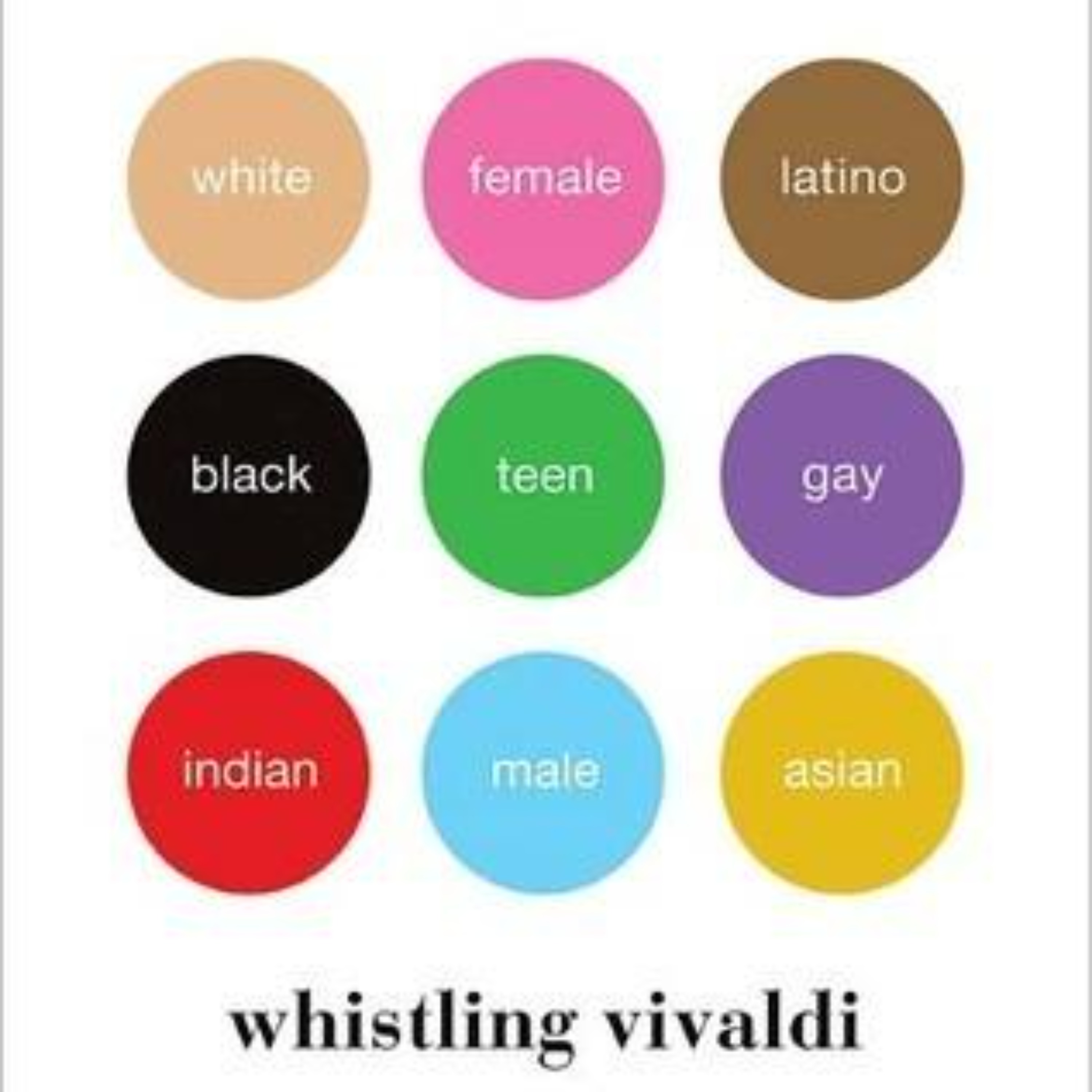 Whistling Vivaldi: Understanding Identity and Stereotype Threat Dynamics | Chapter 1 What's Whistling Vivaldi "Whistling Vivaldi" by Claude M. Steele is a compelling exploration of identity, stereotype threat, and the psychological effects of social categorization. Through a combination of personal anecdotes and empirical research, Steele illustrates how being aware of negative stereotypes related to one's race, gender, or socioeconomic status can impact performance and behavior. He delves into the profound implications these dynamics have in educational and professional settings, advocating for greater awareness and strategies to mitigate the adverse effects of stereotype threat. Overall, the book provides valuable insights into how societal perceptions shape individual experiences and opportunities. Chapter 2 The Background of Whistling Vivaldi "Whistling Vivaldi," published in 2010 by social psychologist Claude M. Steele, explores the concept of stereotype threat and its impact on African Americans and other marginalized groups in educational and professional settings. Written against the backdrop of ongoing discussions about race, identity, and social justice in the United States, Steele's work draws upon his own experiences and research to illustrate how negative stereotypes can undermine performance and perpetuate inequities. His original intention was to shed light on these psychological mechanisms while advocating for greater awareness and interventions to reduce the deleterious effects of stereotype threat, ultimately promoting a more equitable society. Chapter 3 Quotes of Whistling Vivaldi Whistling Vivaldi quotes as follows: Here are ten notable quotes from "Whistling Vivaldi: How Stereotypes Affect Us and What We Can Do" by Claude M. Steele: "Our identities are shaped in important ways by the stereotypes that surround us." "Stereotypes can produce powerful effects on performance, causing people to fulfill the expectations that society has set for them." "The mere presence of a stereotype can introduce anxiety and self-doubt, leading to a cycle of underperformance." "Whistling Vivaldi is a metaphor for the strategies we use to cope with the pressures of social identity." "In an environment where stereotypes are active, people are likely to disidentify with the domain in which the stereotype is invoked." "The interplay between identity and performance is a fundamental aspect of human psychology." "The way we define ourselves is influenced by how we believe others see us." "Recognizing and navigating stereotypes can empower individuals to reclaim their narratives." "For many, the act of performing one’s identity in a stereotype-laden society can feel like a survival mechanism." "We can counteract stereotypes by fostering environments that emphasize personal stories and shared humanity." These quotes encapsulate the core themes of identity, stereotypes, and the implications for performance and psychological well-being in Steele's work. Book Summary Audio Bookey https://www.bookey.app/audiobook/whistling-vivaldi Quotes https://www.bookey.app/book/whistling-vivaldi/quote YouTube https://www.youtube.com/watch?v=-YbE3ljT3t4 Amazon https://www.amazon.com/Whistling-Vivaldi-Stereotypes-Affect-Issues/dp/0393339726 Goodreads https://www.goodreads.com/book/show/6649312-whistling-vivaldi | 3m 11s | ||||||
| 1/26/26 | 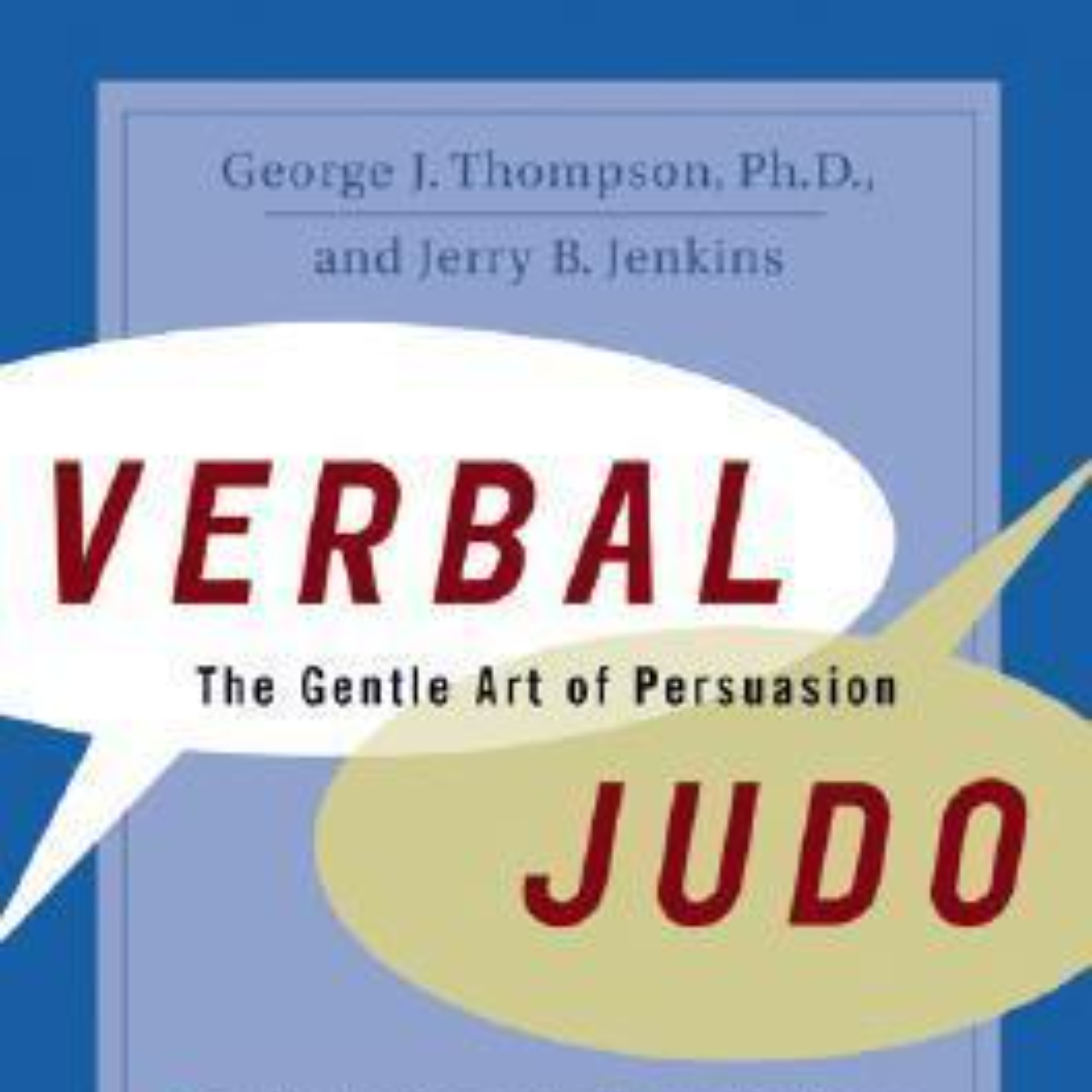 Verbal Judo: Mastering Communication to Defuse Conflicts Effectively | Chapter 1 What's Verbal Judo "Verbal Judo: The Gentle Art of Persuasion" by George J. Thompson is a communication technique that focuses on using words to defuse conflict and foster cooperation. Drawing on principles of martial arts, Thompson emphasizes the importance of understanding the psychology behind communication, advocating for empathetic listening, and employing strategic verbal responses to guide conversations in a positive direction. The goal is to create a more constructive dialogue while minimizing tension and resistance, ultimately leading to better conflict resolution in various settings, from law enforcement to everyday interpersonal interactions. Chapter 2 The Background of Verbal Judo "Verbal Judo," authored by George J. Thompson and published in the early 1990s, emerged during a time when effective communication and conflict resolution were increasingly recognized as essential skills in law enforcement and interpersonal relations. The book reflects a growing awareness of the need for non-violent de-escalation techniques, particularly as concerns about police-community relations and the efficacy of physical force in confrontational situations gained prominence. Thompson, a former police officer and trained expert in communication, aimed to provide practical tools for officers and others in high-stress roles to manage confrontations verbally, promoting understanding and cooperation rather than aggression, thereby enhancing public safety and mutual respect. Chapter 3 Quotes of Verbal Judo Verbal Judo quotes as follows: Here are 10 notable quotes from "Verbal Judo" by George J. Thompson: "The best way to get the response you want is to give people a sense of control." "Words are powerful; they can either build bridges or create barriers." "In communication, it's not what you say that matters most; it's how you say it." "The most important thing in communication is hearing what isn't said." "You can’t control how others react, but you can control how you respond." "Always assume that people are motivated by the best of intentions." "The essence of Verbal Judo is showing respect; when people feel respected, they are more likely to cooperate." "Redirecting aggression with words is a skill; practicing it makes you more effective." "Empathy emphasized textcan defuse even the most difficult situations." "Effective communication involves not just speaking, but active listening." These quotes emphasize the importance of respectful communication, empathy, and the skillful use of words in conflict resolution. Book Summary Audio Bookey https://www.bookey.app/audiobook/verbal-judo Quotes https://www.bookey.app/book/verbal-judo/quote YouTube https://www.youtube.com/watch?v=wctHSKxHJrI Amazon https://www.amazon.com/Verbal-Judo-Gentle-Persuasion-Updated/dp/0062107704 Goodreads https://www.goodreads.com/book/show/865508.VerbalJudo_ | 2m 50s | ||||||
| 1/22/26 | 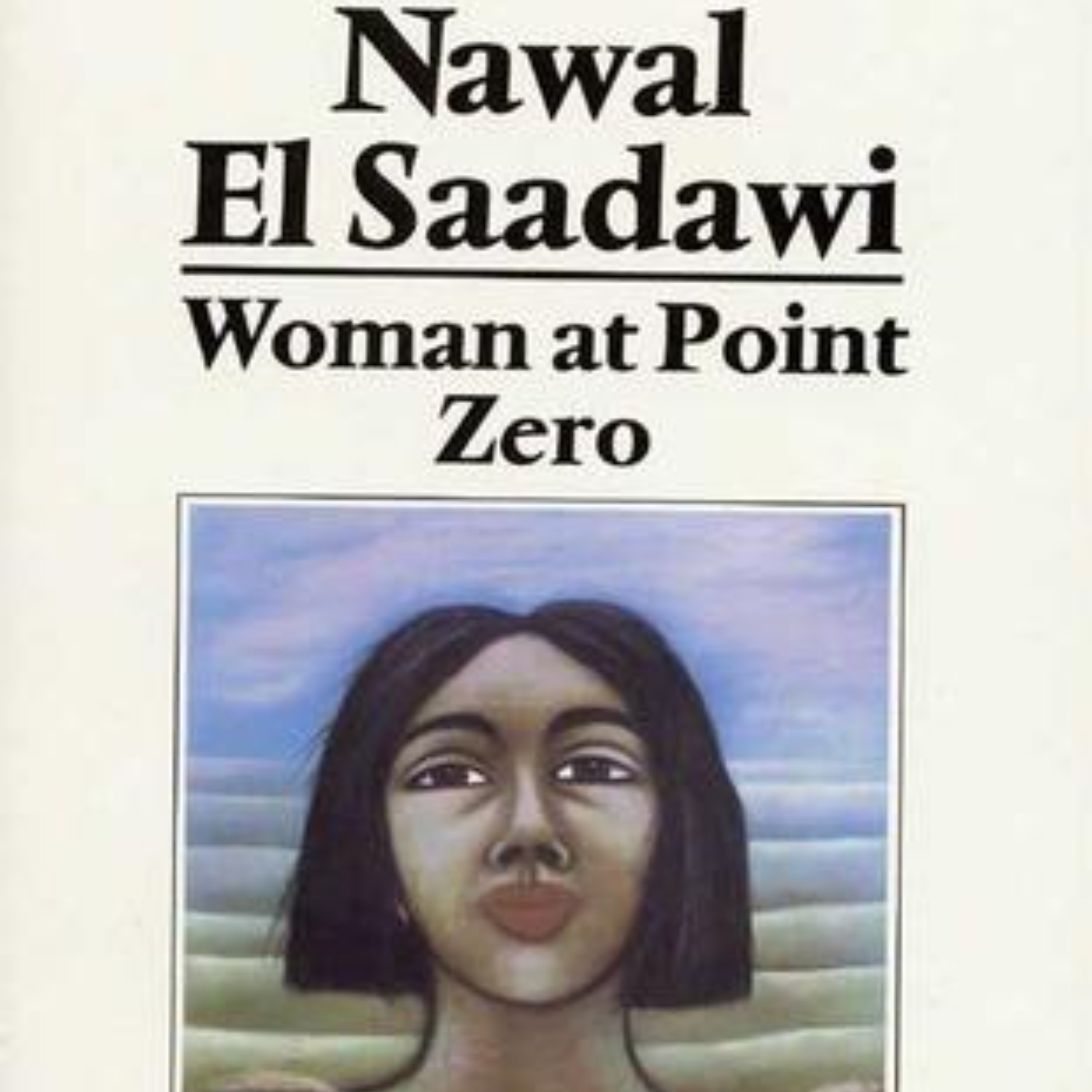 Woman at Point Zero: A Struggle for Freedom and Identity | Chapter 1 What's Woman at Point Zero "Woman at Point Zero" is a powerful novella by Egyptian feminist writer Nawal El Saadawi, published in 1975. The story revolves around Firdaus, a woman on death row for murder, who reflects on her life filled with oppression, abuse, and the struggle for autonomy in a patriarchal society. Through her experiences, the novella critiques the systemic injustices faced by women in Egypt and delves into themes of power, sexuality, and rebellion. El Saadawi’s poignant narrative exposes the harsh realities of female oppression while also celebrating resilience and the quest for identity. Chapter 2 The Background of Woman at Point Zero "Woman at Point Zero," written by Nawal El Saadawi and published in 1975, is set against the backdrop of 1970s Egypt, a period marked by political turmoil, social change, and a growing awareness of women's rights in the Arab world. The novel is based on the true story of Firdaus, a woman imprisoned for murder, and it explores the systemic oppression faced by women in a patriarchal society. El Saadawi, a prominent feminist writer and activist, intended to shed light on the struggles of women in a male-dominated culture, highlighting issues such as gender inequality, sexual violence, and the quest for autonomy. Her work aims to provoke critical discourse around women's rights and inspire social change in a region where these issues are often marginalized. Chapter 3 Quotes of Woman at Point Zero Woman at Point Zero quotes as follows: Here are ten notable quotes from "Woman at Point Zero" by Nawal El Saadawi that reflect the themes of the novel, including feminism, oppression, and empowerment: “I am a woman, and I want to tell my story.” This quote reflects the protagonist's desire for autonomy and the importance of women's voices. “Men use women to get to heaven.” This illustrates the exploitation of women under patriarchal systems and the socio-religious contexts that define gender roles. “To be born a woman is to be born into a situation of oppression.” A powerful statement about the universal struggles women face in various societies. “I desired to live, to see, to feel, to think.” This highlights the protagonist's yearning for freedom and self-discovery. “Every woman is capable of a crime.” This quote speaks to the desperation women may feel under oppressive circumstances leading them to rebellion. “I am not afraid of death; I am afraid of living a life without meaning.” A profound reflection on the importance of purpose and agency in life. “What is the value of a life spent in servitude?” This raises questions about the worth of lives constrained by social and gender expectations. “I will not be a victim; I will be the one who decides my fate.” An empowering declaration that emphasizes taking control of one’s life. “The most dangerous thing a woman can do is to speak the truth.” A comment on the power of truth and the risks faced by women who dare to voice their experiences. “I looked up to the stars and saw the woman in the sky.” This symbolizes hope and the backdrop of a larger continuum of women's experiences and resistance. These quotes not only encapsulate the essence of the novel but also resonate with broader themes related to women's rights and social justice. Book Summary Audio Bookey https://www.bookey.app/audiobook/woman-at-point-zero Quotes https://www.bookey.app/book/woman-at-point-zero/quote YouTube https://study.com/academy/lesson/video/woman-at-point-zero-summary-analysis-quotes.html Amazon https://www.amazon.com/Woman-Point-Zero-Nawal-Saadawi/dp/1842778730 Goodreads https://www.goodreads.com/book/show/159604.WomanatPointZero_ | 2m 57s | ||||||
| 1/21/26 |  Trade Your Way To Financial Freedom: Key Insights Revealed | Chapter 1 What's Trade Your Way To Financial Freedom "Trade Your Way to Financial Freedom" by Van K. Tharp is a comprehensive guide that focuses on developing a successful trading mindset and strategy. Tharp emphasizes the importance of psychological factors in trading, advocating for a personalized approach that aligns with an individual's life goals and risk tolerance. The book provides practical tools for creating robust trading plans, understanding market behaviors, and managing risk, while highlighting the need for continuous self-improvement and adaptability in the ever-changing financial landscape. Chapter 2 The Background of Trade Your Way To Financial Freedom "Trade Your Way to Financial Freedom," written by Van K. Tharp and first published in 1998, emerged during a period marked by increasing interest in personal finance and stock market trading, particularly after the bull market of the 1990s. Tharp, a psychologist and trading coach, aimed to provide traders with a psychological framework alongside practical trading strategies, emphasizing the importance of mindset and personal psychology in achieving financial success. His intention was to help individuals develop a disciplined approach to trading, encouraging them to understand their own risk tolerance, emotional responses, and the underlying principles of trading, rather than solely focusing on technical analysis or market predictions. This holistic approach reflected a broader shift in the financial literature toward self-awareness and personal empowerment within the trading community. Chapter 3 Quotes of Trade Your Way To Financial Freedom Trade Your Way To Financial Freedom quotes as follows: Here are ten notable quotes from "Trade Your Way to Financial Freedom" by Van K. Tharp that encapsulate its key themes and principles: "The most important factor in successful trading is the trader's mindset." "Your beliefs about money and trading may be the most important part of your success." "There are no limits to what you can achieve, except the limits you impose on your own mind." "Trading is not about what you know, but how well you apply what you know." "You must develop a trading system that suits your personality." "Risk management is not just a part of trading; it’s the essence of trading." "Successful traders are able to control their emotions and maintain discipline." "Your trading system is merely a tool; the real challenge lies in managing your psychology." "There is no Holy Grail in trading; success comes from consistent work and improvement." "To become a successful trader, you must embrace learning as an ongoing process." These quotes emphasize the psychological and strategic aspects of trading while advocating for a personalized approach that considers individual risk tolerance and mindset. Book Summary Audio Bookey https://www.bookey.app/audiobook/trade-your-way-to-financial-freedom Quotes https://www.bookey.app/book/trade-your-way-to-financial-freedom/quote YouTube https://www.youtube.com/watch?v=fBU67m-o6iw Amazon https://www.amazon.com/Trade-Your-Way-Financial-Freedom/dp/007147871X Goodreads https://www.goodreads.com/book/show/161791.TradeYourWaytoFinancialFreedom_ | 2m 58s | ||||||
| 1/20/26 |  Turtles All The Way Down: A Journey of Anxiety and Love | Chapter 1 What's Turtles All The Way Down "Turtles All the Way Down" is a thought-provoking novel by John Green that explores themes of mental illness, love, and the complexities of human relationships. The story follows 16-year-old Aza Holmes, who struggles with obsessive-compulsive disorder while navigating her feelings for a childhood friend, Davis. As she delves into a mystery involving his missing billionaire father, the narrative intertwines Aza's personal battles with profound philosophical questions, ultimately highlighting the challenges of connection and understanding in a world filled with uncertainty. Chapter 2 The Background of Turtles All The Way Down "Turtles All the Way Down," written by John Green, was published in 2017 and is set against a backdrop of contemporary issues faced by young adults, including mental health, friendship, and the complexities of love. Green's intention was to create a relatable narrative that addresses the struggles of living with anxiety and obsessive-compulsive disorder (OCD), drawing on his own experiences with mental health challenges. The novel emphasizes the importance of connection and understanding in a world where social media often complicates relationships, reflecting a period of heightened awareness and discussion around mental health among young people. Chapter 3 Quotes of Turtles All The Way Down Turtles All The Way Down quotes as follows: "Turtles All the Way Down" is a novel written by John Green, rather than an anonymous author. The book explores themes of mental illness, love, and the complexities of life through the story of a young girl, Aza Holmes, who struggles with obsessive-compulsive disorder. Here are some notable quotes from the book: "Your place in the world is not a place at all, but a story." "The thing about a spiral is that if it’s going down, it just keeps going." "You don’t have to be the person you were five minutes ago." "You can live your whole life not realizing that what you’re looking for is right in front of you." "We are all broken, and that’s how the light gets in." Book Summary Audio Bookey https://www.bookey.app/audiobook/turtles-all-the-way-down Quotes https://www.bookey.app/book/turtles-all-the-way-down/quote YouTube https://www.youtube.com/watch?v=t9yN4LBXDTM Amazon https://www.amazon.com/Turtles-All-Way-Down-Vaccine/dp/9655981045 Goodreads https://www.goodreads.com/work/quotes/97163953-turtles-all-the-way-down-vaccine-science-and-myth | 3m 24s | ||||||
| 1/19/26 | 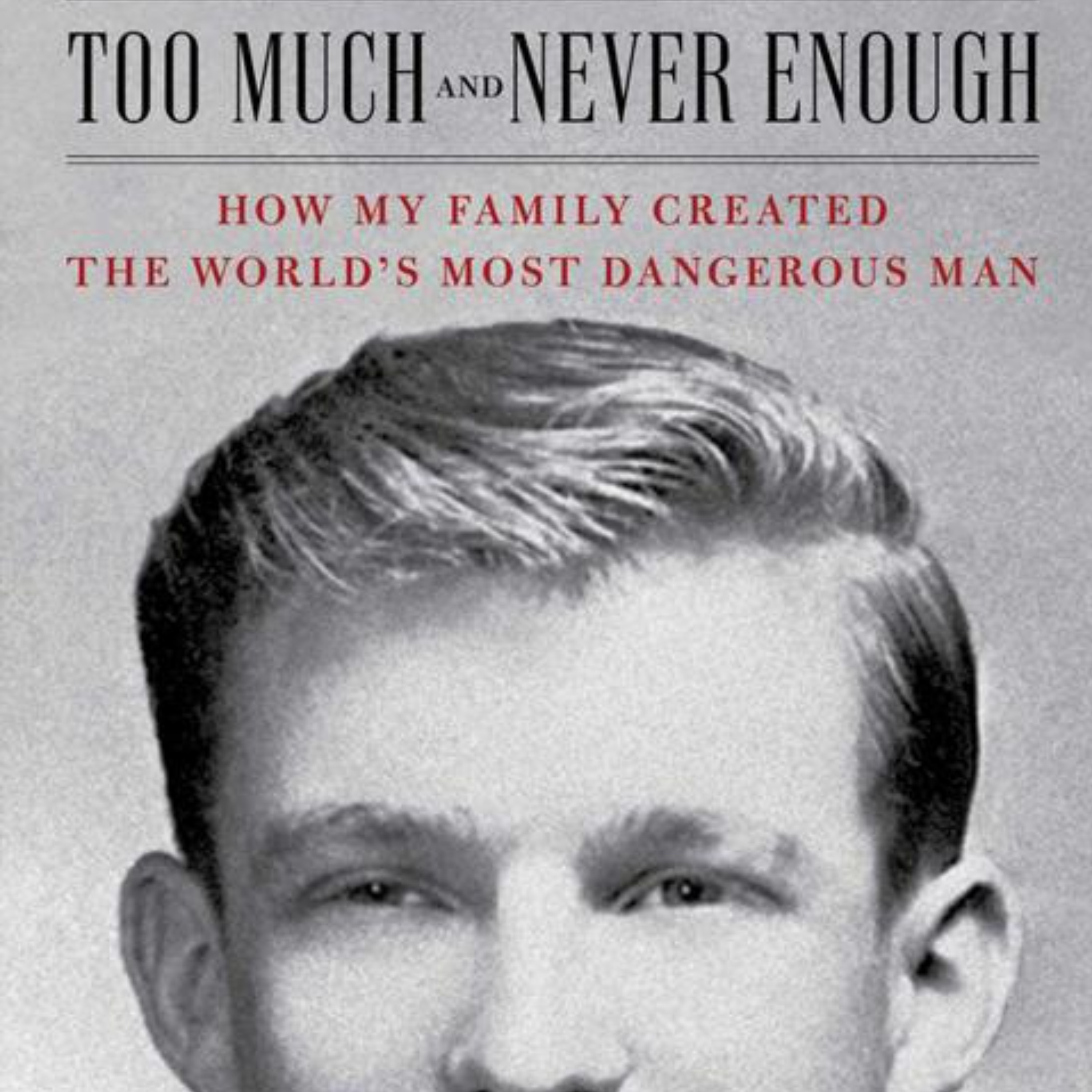 Too Much and Never Enough: Insights into Trump's Family Dynamics | Chapter 1 What's Too Much and Never Enough "Too Much and Never Enough: How My Family Created the World's Most Dangerous Man" by Mary L. Trump is a revealing memoir that offers an intimate look at the Trump family dynamics and how they shaped the personality of former President Donald Trump. Drawing from her experiences as a psychologist and her observations of her family's dysfunction, Mary Trump delves into the psychological factors that contributed to her uncle's tumultuous behavior and leadership style. The book combines personal anecdotes with a critical analysis of the toxic family environment, ultimately portraying how deep-seated issues of inadequacy and craving for validation can manifest in extreme ways, influencing not just individual lives but also the broader political landscape. Chapter 2 The Background of Too Much and Never Enough "Too Much and Never Enough: How My Family Created the World’s Most Dangerous Man" by Mary L. Trump was published in July 2020 during a politically charged era in the United States, marked by deep divisions and the presidency of Donald Trump, her uncle. The book provides an insider's perspective on the Trump family dynamics, which Mary describes as toxic and shaped by emotional neglect and dysfunctional relationships. Her intention is to illuminate how these familial patterns influenced Donald Trump's personality and behavior, offering insights into the psychological roots of his controversial leadership style. Mary's background as a clinical psychologist informs her analysis, adding a layer of psychological interpretation to the sociopolitical context of her narrative. Chapter 3 Quotes of Too Much and Never Enough Too Much and Never Enough quotes as follows: Here are ten notable quotes from "Too Much and Never Enough: How My Family Created the World's Most Dangerous Man" by Mary L. Trump: "Donald is a man who has never known true affection, who has never had to work harder than his father did to earn respect." "The family dynamic that shaped Donald was one in which love was conditional, and the only way to receive it was to achieve." "He has always been in a competition for his father's love and approval, a battle that has never ended." "Denial is a way of life in our family. It’s easier to ignore the unpleasant than to face it." "One of the most tragic aspects of his upbringing is that he never learned to deal with failure." "Donald’s behavior is a direct result of his upbringing, rooted in a cycle of dysfunction." "People around him are often used, discarded, and betrayed in the process." "He is unable to view the world with empathy or compassion, which makes him a dangerous person." "The need for validation drives him to extremes, leading to the manipulative tactics he employs." "Understanding the family that raised him is key to understanding the man he has become." These quotes capture the main themes of the book, including familial dynamics, psychological development, and personal behavior. Book Summary Audio Bookey https://www.bookey.app/audiobook/too-much-and-never-enough Quotes https://www.bookey.app/book/too-much-and-never-enough/quote YouTube https://www.youtube.com/watch?v=A9xZt5QnKo4 Amazon https://www.amazon.com/Too-Much-Never-Enough-Dangerous/dp/1982141468 Goodreads https://www.goodreads.com/book/show/54114950-too-much-and-never-enough | 3m 16s | ||||||
| 1/17/26 |  The Goal: A Summary of Elle Kennedy's Compelling Journey | Chapter 1 What's The Goal "The Goal" by Elle Kennedy is a contemporary romance novel that centers around the evolving relationship between college students and athletes, specifically the headstrong and ambitious protagonist, Sabrina, and the charming yet commitment-shy hockey player, John. Set against the backdrop of their academic and sports commitments, the story explores themes of personal growth, love, and the challenges of balancing romance with aspirations. As Sabrina and John navigate their feelings and confront their pasts, they learn about the importance of vulnerability, trust, and the risks involved in opening their hearts to one another. The novel is part of Kennedy's popular "Off-Campus" series, blending humor and emotion in a compelling love story. Chapter 2 The Background of The Goal "The Goal" by Elle Kennedy, published in 2016, is part of her "Off-Campus" series, which explores themes of romance, personal growth, and the complexities of young adulthood within the context of college life. Set against the backdrop of a contemporary university, the novel delves into the challenges and aspirations of its characters, reflecting the pressures of academic performance, relationships, and the transition into adulthood. Kennedy's intention was to create a relatable and emotional narrative that resonates with readers navigating similar experiences, blending humor and drama to highlight the importance of love, responsibility, and self-discovery during this pivotal life stage. Chapter 3 Quotes of The Goal The Goal quotes as follows: "You have to make a choice. You can’t have it all." "Sometimes love is about letting go and being happy for the one you care about." "You know you’re in trouble when it’s not the grades that keep you awake at night, but the boy." "Life isn’t just about the big moments; it’s about all the little ones, too." "You can’t live your life for someone else. You have to find your own path." "What’s the point of having a heart if you don’t use it?" "I thought I knew what I wanted until I found something better." "You can’t keep running from your fears; eventually, you have to face them." "Love isn’t always perfect. Sometimes it’s messy and complicated." "In the end, you have to choose the life you want." These quotes capture the themes of love, choices, and personal growth prevalent throughout the book. Book Summary Audio Bookey https://www.bookey.app/audiobook/the-goal Quotes https://www.bookey.app/book/the-goal/quote YouTube https://www.youtube.com/watch?v=yWhbsvP5NmM Amazon https://www.amazon.com/Goal-Off-Campus-Book-4-ebook/dp/B01FTC8I84 Goodreads https://www.goodreads.com/book/show/32315591-the-goal | 2m 21s | ||||||
Showing 25 of 500
Pitch Fit is a Pro feature
See how bookable this show is for guests, which brands already advertise, the per-episode ad value, and the best-fit guest and sponsor profile. The numbers are blurred on the free plan.
How readily this show books outside guests like you.
How proven this show is for host-read sponsorships.
For Guests
ProFor Advertisers
ProUpgrade to Pro to unlock guest cadence, sponsor categories, fit scores, and per-episode ad value for this show.