
Insights from recent episode analysis
Audience Interest
Podcast Focus
Publishing Consistency
Platform Reach
Insights are generated by CastFox AI using publicly available data, episode content, and proprietary models.
Est. Listeners
Insufficient chart data. Estimates will improve as the show charts.
- Per-Episode Audience
Est. listeners per new episode within ~30 days
N/A🎙 Biweekly cadence·40 episodes·Long inactive - Monthly Reach
Unique listeners across all episodes (30 days)
N/A - Active Followers
Loyal subscribers who consistently listen
N/A
Market Insights
Platform Distribution
Reach across major podcast platforms, updated hourly
Total Followers
—
Total Plays
—
Total Reviews
—
* Data sourced directly from platform APIs and aggregated hourly across all major podcast directories.
On the show
Recent episodes
Tracing the Trails of India's Prized Heritage- The Nizams' Enigmatic Jewels
Jul 23, 2023
59m 00s
It's Dakhni Not Urdu! - Understanding the Deccan's (spoken) language
Jan 12, 2023
1h 10m 15s
An extraordinary life: How a Hyderabadi helped set up CMC (now TCS)
Oct 30, 2022
1h 34m 20s
Who were the Razakaars of the Hyderabad state? A brief history
Sep 30, 2022
48m 45s
Tales from Indian independence: Bose, INA and the man who coined our 'Jai Hind' slogan
Aug 31, 2022
37m 30s
Social Links & Contact
Official channels & resources
RSS Feed
Login
| Date | Episode | Description | Length | ||||||
|---|---|---|---|---|---|---|---|---|---|
| 7/23/23 |  Tracing the Trails of India's Prized Heritage- The Nizams' Enigmatic Jewels | One of the biggest enigmas of Hyderabad's heritage are the famed Nizams jewels, a portion of which are with the Reserve Bank of India. The collection, which includes the infamous 186 carat Jacob diamond, is always a topic when we talk about the Nizams of Hyderabad. To understand how big the entire collection is, and the stories surrounding it, host Yunus Lasania speaks with art historian Deepthi Sasidharan is an art historian. Deepthi is also a curator and founder Director at Eka Archiving, a cultural advisory and works on heritage and museum projects across India with the government, private and corporate clients. Deepthi, has led Eka projects have been path-breaking in India, including setting up museums, seminal exhibitions, and the creation of several important archives across India. This past year she curated the celebratory AD Museum – Design in 75 years and curated the Dr. Savita N Museum and Library at Porbandar, Gujarat.See sunoindia.in/privacy-policy for privacy information. | 59m 00s | ||||||
| 1/12/23 |  It's Dakhni Not Urdu! - Understanding the Deccan's (spoken) language | Language is a means of communication, which often is shaped (or changes) based on our socio-cultural and political milieu. In India's Deccan region, the spoken language (widely) today is in fact Dakhni, and not Urdu. The former, often mistaken to be a dialect of Urdu, is actually older and was at one point of time the mainstay of literary culture in the 16th and 17th centuries, especially in the Deccan.In spite of Urdu eventually becoming the official language over a century ago, Dakhni has still persisted and remained as our spoken tongue. To decode that host Yunus Lasania speaks with researcher and upcoming author Karthik Malli, and also Mohd Affan aka Pasha Bhai, a Bangalore-based hip-hop artist who released his maiden and the first ever Dakhni rap album 'Pasha Bhai'. Affan had earlier released a few singles, but his latest album, which is chosen to sing in Dakhni, is a must listen for anyone looking to understand language dynamics.See sunoindia.in/privacy-policy for privacy information. | 1h 10m 15s | ||||||
| 10/30/22 |  An extraordinary life: How a Hyderabadi helped set up CMC (now TCS) | Most of us today know of software giant TCS (Tata Consultancy Services). It's part of Hyderabad's Hitec City that emerged in the 21st century. However, many aren't aware that TCS in fact was originally a government Public Sector Unit called CMC (Computer Maintenance Corporation) that came up after IBM was asked to leave India. IBM used to maintain PCs and databases in India and when IBM was asked to leave, the government hired individuals who would set up an alternative.Among those who were hired was BK Gupta, who was one of the founding employees of the CMC, India's first software company, which he helped set up in Hyderabad. Host Yunus Lasania speaks with Mr Gupta for this episode, whose eventful journey also includes a ship journey from India to the UK at a very young age for his studies. See sunoindia.in/privacy-policy for privacy information. | 1h 34m 20s | ||||||
| 9/30/22 |  Who were the Razakaars of the Hyderabad state? A brief history | Off-late, the word Razakaars is being thrown around in political circles quite often in Telangana. Referring to the militia under ex-MIM Leader Qasim Razvi in the Hyderabad state during its last Nizam, the Razakars have once resurfaced in the state's politics. The Hyderabad state, under its last Nizam Osman Ali Khan (1911-48), became part of India on Sept 17, 1948, more than a year after the British left. What happened in the last two years before that is needed to understand the Razakars, the Nizam and the annexation. Rakesh Kamal, Co-founder of Suno India, speaks with host Yunus Lasania to unravel the entire saga of the Hyderabad state in 1948. See sunoindia.in/privacy-policy for privacy information. | 48m 45s | ||||||
| 8/31/22 |  Tales from Indian independence: Bose, INA and the man who coined our 'Jai Hind' slogan | When it comes to our freedom struggle from the British, one doesn't think of Hyderabad. More importantly, we're seldom taught about how the 'Jai Hind' slogan came about.Abid Hasan Safrani, a Hyderabadi, was one of those rare individuals who had gone to Germany to study in the 20th century before independence.A chance encounter with Netaji Subhash Chandra Bose eventually ended up with him undertaking a submarine journey with Bose as an Indian National Army personnel.How that went and how Abid Hasan Safrani came back is perhaps one of the most important stories from Hyderabad of the freedom struggle.For this episode of Beyond Charminar, host Yunus Lasania speaks with sisters Dr Ismat Mehdi and Bizeth Banerjee, both nieces of Safrani, about his life, INA and the freedom struggle from a different perspective. See sunoindia.in/privacy-policy for privacy information. | 37m 30s | ||||||
| 7/30/22 |  The story of Chermas and Hyderabad's oldest fire temple | 2022 July marks the 175th anniversary of the Seth Viccaji - Seth Pestonji Meherji Parsi (Zoroastrian) fire temple in Hyderabad. Founded by the two brothers in 1847, it's also the oldest fire temple in south India.Once bankers under the Nizams of Hyderabad, the brothers built the temple and set up infrastructure for cotton traders in the 19th century. More importantly, descendants of Seth Pestonji eventually ended up setting up Chermas, one of the largest retail clothing business in the country, in Hyderabad.For this episode, host Yunus Lasania speaks to Capt KF Pestonji, who founded Chermas in the 1970s, to understand Parsi history in Hyderabad.See sunoindia.in/privacy-policy for privacy information. | 47m 30s | ||||||
| 6/30/22 |  Tale of the Charminar's Bhagyalakshmi temple | Over the last few decades, the Bhagyalakshmi temple on the Charminar, which is Hyderabad's foundation, has become a matter of heated debate given the fact that the religious structure is an unauthorised structure. Today, the temple has taken centre stage as it has now become a focal point for mainstream political parties to begin their programmes from. However, in terms of history, there is ambiguity about its origins, and many theories are afloat about it. To address that, host Yunus Lasania speaks with Oudesh Rani Bawa, a Hyderabadi from a Kayasth family, who has been seeing both Charminar and the temple since her childhood. Ms Bawa, 81, is an Urdu aficionado, and someone who has been deeply involved in the city's socio-political happenings. See sunoindia.in/privacy-policy for privacy information. | 41m 00s | ||||||
| 5/31/22 |  Understanding Telangana: The story of how the demand for a separate state was born | For many, the demand for a separate state of Telangana was something new when they first heard of it in 2009. It was perhaps out of context, given that school textbooks also barely mentioned the name.However, the origins of Telangana's creation and demand as a separate state in fact go back to when the state was part of the erstwhile Hyderabad state, which was under the Nizams.To understand how, from there, the state was first merged with the Andhra areas and then became separate, host Yunus Lasania speaks to Prof Kodandaram, who led the statehood struggle as chairman of the Telangana Joint Action Committee, and with Vijay Burgula, son of Burgula Narsing Rao, a freedom fighter from the Nizam era who was a staunch pro-Telangana voice.See sunoindia.in/privacy-policy for privacy information. | 53m 26s | ||||||
| 4/30/22 |  King Kothi Palace and Hyderabad's Last Nizam: An unfortunate legacy | Earlier in April, Hyderabad woke up to the shocking news that over 100 goons tried to siege the Nazri Bagh complex, the only remaining part of the historic King Kothi Palace. It was followed by an alleged demolition attempt, which has seemingly been thwarted thanks to government intervention. Unfortunately, the issues related to the King Kothi palace are also what plague Hyderabad's heritage in general. More importantly, it is an important site where the city's last Nizam lived and died. In this episode of Beyond Charminar, host Yunus Lasania sits with author and journalist Serish Nanisetti to decode/explain why the palace is in the situation it is today, aside from also decoding who the last Nizam was. See sunoindia.in/privacy-policy for privacy information. | 30m 50s | ||||||
| 3/31/22 |  Khajaguda Rocks: How activists saved one of our most ancient historical sites from destruction | When we talk of heritage, old buildings usually pop up in our minds. However, more than monuments, or anything else, our most precious historical sites are our rocks which have been around for millions of years.And sadly, rapid urbanization has caused a lot of our old sites to become victims of destruction. The Khajaguda heritage site, which is a protected site, has now become a bone of contention between activists and the state government, it has fallen prey to local developers and others who have been actively destroying rocks and causing other damage there.Host Yunus Lasania talks to Ritwik Reddy, one of the activists who filed a petition with the Telangana High Court and managed to stop the destruction, about the site's importance and why it must be preserved.See sunoindia.in/privacy-policy for privacy information. | 32m 00s | ||||||
Want analysis for the episodes below?Free for Pro Submit a request, we'll have your selected episodes analyzed within an hour. Free, at no cost to you, for Pro users. | |||||||||
| 2/28/22 |  Untold history: Deccan empires of the South | When we talk about Indian history, the Deccan and South India's narratives are largely missing from popular narratives, given that most of it is looked at from a prism of Delhi.Breaking away from that is author Anirudh Kanisetti's latest book, Lords of the Deccan, which gives a comprehensive idea of what went on in the Deccan between the 6th and 11th centuries.Host Yunus Lasania speaks with Anirudh for this episode of Beyond Charminar, to understand how the Deccan functioned and developed as a separate entity throughout centuries.See sunoindia.in/privacy-policy for privacy information. | 36m 10s | ||||||
| 1/31/22 |  Secunderabad: The Cosmopolitan Twin City of Hyderabad you didn't know much about | When we talk about Hyderabad or its history, one major aspect people often miss out on is Secunderabad. A former British cantonment, its 216 years of history is rich and much lesser known about. Host Yunus Y. Lasania sits with Secunderabad historian Pankaj Sethi to discuss at length its origins, and how the cantonment area was built and former over a century.See sunoindia.in/privacy-policy for privacy information. | 1h 45m 50s | ||||||
| 12/22/21 |  Connected histories: Hyderabad and the Arab world | Hyderabad’s connection with both the Persian and Arab worlds is well-known. In fact, Barkas in the city is considered as a ‘mini Yemen’ because of the Arab soldiers who came to work under the Nizams of Hyderabad. However, many don’t know that Hyderabad’s ties to Yemen during the Nizam or Asaf Jahi period was very strong. So much so that part of present-day Yemen under the Al-Qaiti family was essentially considered as an extension of the Hyderabad princely state. Host Yunus Lasania who’s writing an oral history account of Operation Polo (the annexation of Hyderabad to India in 1948) speaks with Sam Dalrymple (who is also working on a book which looks at ‘five partitions’) about this deep connection between Hyderabad and Yemen.See sunoindia.in/privacy-policy for privacy information. | 55m 50s | ||||||
| 11/16/21 |  Understanding Golconda fort and the origins of Hyderabad | The Golconda fort is one of Hyderabad's major tourist attractions, but many don't know that the ticketed area they go to is just one part of the fort - the royal area.And beyond that, there's a massive 6.5 km area of the fort which lies completely unexplored. The fact that the Golconda fort has (or at least had) 87 bastions and eight gates, is massively underrated.Moreover, years of neglect have led to many historical parts of the fort either getting encroached upon as well. Host Yunus Lasania speaks with his former colleague and fellow journalist Serish Nanisetti about the history of the Golconda fort, and how years of neglect by authorities led to the destruction of many important sites within it.See sunoindia.in/privacy-policy for privacy information. | 36m 45s | ||||||
| 9/16/21 |  Sept 17, 1948: Operation Polo - Understanding Hyderabad's annexation to India. the importance of oral history and trauma | September 17 this year (2021), will mark 73 years since the annexation of the princely state of Hyderabad to India in 1948. The major historical event is remembered for the violence that people in the state witnessed after partition, and also post annexation. For a better understanding of Operation Polo, oral history’s importance and partition, host Yunus Y. Lasania speaks with authors Aanchal Malhotra (Remnants Of A Separation, on the partition) and Narayani Basu (VP Menon: The Unsung Architect of Modern India).See sunoindia.in/privacy-policy for privacy information. | 1h 25m 45s | ||||||
| 8/24/21 |  Will Hyderabad's Qutub Shahi tombs make it as a UNESCO World Heritage site? | If there is one place in Hyderabad that can usurp the Charminar and Golconda fort and replace both as the main tourist attraction in Hyderabad, it’s the Qutb Shahi tombs. The Qutb Shahi tombs are the royal necropolis of the Qutb Shahi or Golconda dynasty (1518-1687), which ruled from the Golconda fort, and later founded Hyderabad in 1591. The complex has nearly 100 structures, including tombs, gardens, pavilions and mosques. The site is currently being restored by the Aga Khan Trust for Culture (AKTC) in association with the Telangana Department of Heritage. In a detailed conversation, AKTC CEO and well-known conservation architect Ratish Nanda discusses the ongoing work on the Qutb Shahi tombs and how it has the potential to even surpass the Charminar, which is considered to be Hyderabad’s main tourist attraction.See sunoindia.in/privacy-policy for privacy information. | 27m 30s | ||||||
| 7/20/21 |  House of Memories | When we think of history, we often ignore the most important and closest things – our own material possessions which connect us to our past. And one such person who has treasured his family heirlooms, and had literally preserved his own past in the form of small priceless possessions, is 74-year-old BS Prakash. An ex-banker who worked for SBI his whole life, he comes from a family which had formally educated persons even four generations ago, a rarity in the pre-independence period. Between his book collection of thousands of books, Mr Prakash has also seen Hyderabad evolve from the quiet city it used to once be, into the metropolis it is today. We went down memory lane with him to understand how our city grew, just as he did alongside it.See sunoindia.in/privacy-policy for privacy information. | 46m 40s | ||||||
| 6/29/21 |  Is the historic Moula Ali Hill shrine in danger? | Many Hyderabadis often go to the Moula Ali shrine, sometimes with religious intent, and otherwise just to go up the huge hill for its view. However, many are perhaps unaware that the shrine is in fact one of the city’s oldest historic or heritage sites, that even predates Hyderabad. Not only does it go back to the time of the third Qutb Shahi (Golconda) king, Ibrahim Qutb Shah, the Moula Ali hill shrine has been in use since as far as the city has existed. Keeping that in mind, it may be noted that some years ago a ramp was built for vehicles to make it easier for people to reach halfway up the shrine. And the site’s original structure is about to be changed once again, as another ramp is being built by the state government, which heritage activists say will endanger the shrine. In this episode, host Yunus Lasania speaks with budding architect Mohd. Sibgatullah, who also runs the Instagram handle The Deccan Archive, about how the ongoing work at Moula Ali hill will impact the heritage site.See sunoindia.in/privacy-policy for privacy information. | 37m 00s | ||||||
| 5/26/21 |  How Hyderabad under the Nizam dealt with a pandemic 100 years ago | The corona virus pandemic today has changed the world, and one by one, country after country, is dealing with challenges. While most of the problems are unique to what's happening, Hyderabad in fact also dealt with a similar situation a century ago under the last Nizam Mir Osman Ali Khan, in the first half of the 20th century. The city, and the erstwhile state of Hyderabad, was first hit by the bubonic plague, and later the Spanish Flu. Tune in to this latest episode, where host Yunus Lasania speaks with journalist, author and former colleague Serish Nanisetti about it.See sunoindia.in/privacy-policy for privacy information. | 38m 25s | ||||||
| 4/24/21 |  How to survive patriarchy, the Fatima Ahmed way | In a city where students are still expected to study engineering, anyone choosing arts and social sciences is a step away from the norm. One can hardly imagine how difficult it must have been for anyone, especially women, to take up arts and pursue their own path. And artist Fatima Ahmed, who left Hyderabad long ago to carve out her own destiny, is a fine example of how difficult life can be when surrounded by patriarchy and convention. But she broke the barrier and did what she set out to do. This is her story.See sunoindia.in/privacy-policy for privacy information. | 31m 39s | ||||||
| 3/23/21 |  When old is real gold: How Mahboob Radio Service survived the test of time | Gone are the days when owning a radio even registered in our minds. Over the years, as we moved from tape recorders, LED TVs, to finally smartphones, the physical manifestation of radio has been long forgotten. But not at Mahboob Radio Service, a shop that has been repairing radio running from around Indian independence. Set up by Shaik Mahboob, the store has been fixing old radios for decades, and it has still not stopped. The two siblings who run the place continue to do what their father taught them. Truly stuck in time, Yunus Y. Lasania, speaks to one of the siblings to understand the history of the place, and how its owners manage to fix radios from generations ago in this day and age. See sunoindia.in/privacy-policy for privacy information. | 35m 36s | ||||||
| 1/31/21 |  Let's talk Dakhni Part 3 | One of the idiosyncrasies in Hyderabad is its language – Dakhni. Known as ‘Hyderabadi’, ‘Hyderabadi Hindi’ or even ‘Hyderabadi Urdu’, people in general, in Hyderabad and even the Deccan region, don’t actually know what it is called due to lack of awareness. Many in fact are even unaware that modern Urdu is in fact younger than Dakhni. Host Yunus Y. Lasania did a three-part mini-series on the history of Dakhni, and how the language has managed to remain as a spoken vernacular over the last few centuries, and even till today. For the final part of the mini-series, Let’s talk Dakhni, host Yunus Lasania converses with Prof. Zaubiulla, a faculty member from Bangalore University’s Urdu department, who has in fact recently written a book on Dakhni sayings, called ‘Dakhni Muhavre’. Prof. Zaubiulla also reads out a few literary verses from well known historical poems to make the case for Dakhni as a separate language, and for it to not be seen as a dialect (as many wrongly assume it is)See sunoindia.in/privacy-policy for privacy information. | 27m 43s | ||||||
| 1/31/21 |  Let's talk Dakhni Part 2 | One of the idiosyncrasies in Hyderabad is its language – Dakhni. Known as ‘Hyderabadi’, ‘Hyderabadi Hindi’ or even ‘Hyderabadi Urdu’, people in general, in Hyderabad and even the Deccan region, don’t actually know what it is called due to lack of awareness. Many in fact are even unaware that modern Urdu is in fact younger than Dakhni. Host Yunus Y. Lasania did a three-part mini-series on the history of Dakhni, and how the language has managed to remain as a spoken vernacular over the last few centuries, and even till today. For part 2 of the mini-series, Let’s talk Dakhni, Yunus and Karthik Nalli continue their conversation about Dakhni, and talk about how the language evolved through the 16th and 17th centuries in the Deccan states like Golconda and Bijapur.See sunoindia.in/privacy-policy for privacy information. | 30m 00s | ||||||
| 1/31/21 | 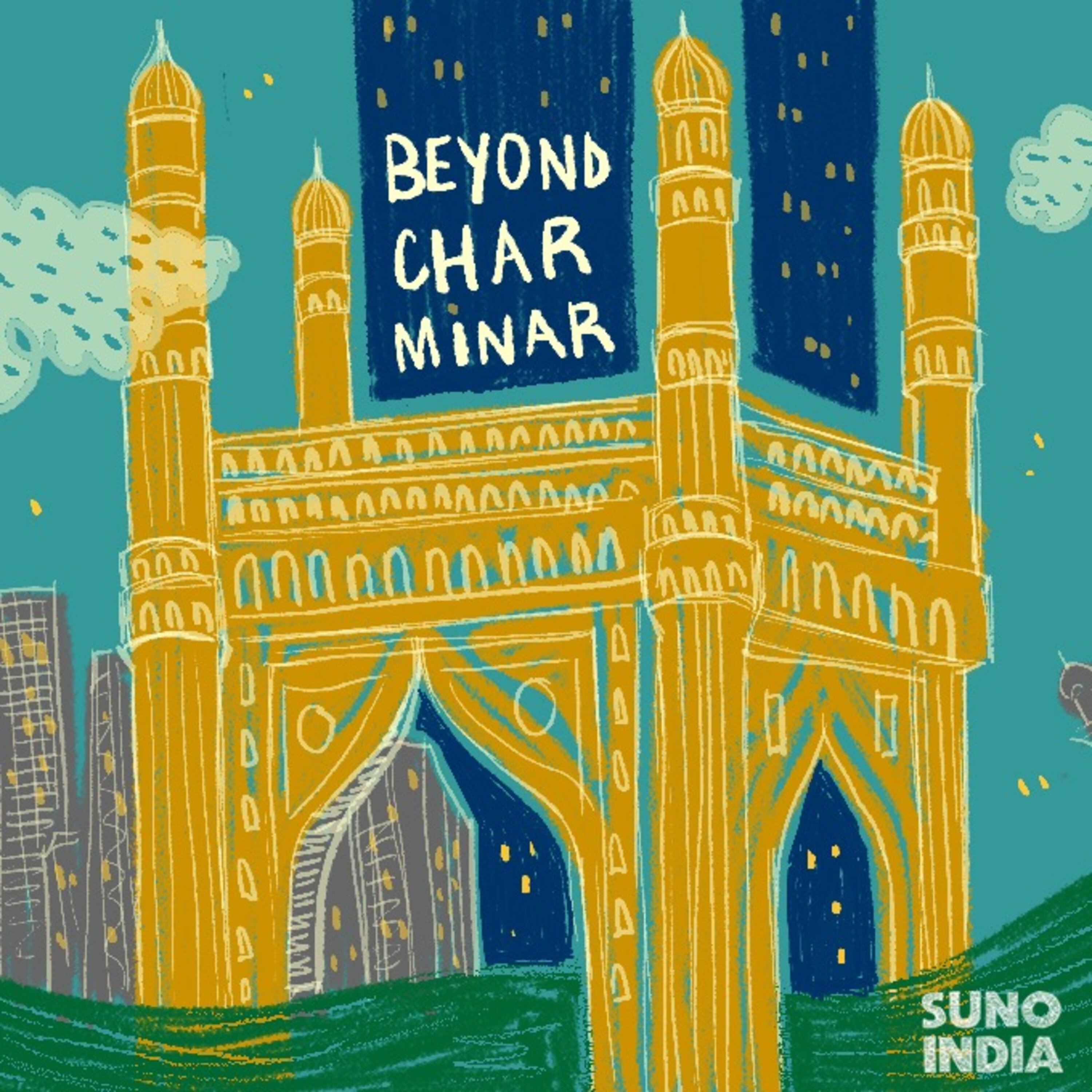 Let's talk Dakhni Part 1 | One of the idiosyncrasies in Hyderabad is its language – Dakhni. Known as ‘Hyderabadi’, ‘Hyderabadi Hindi’ or even ‘Hyderabadi Urdu’, people in general, in Hyderabad and even the Deccan region, don’t actually know what it is called due to lack of awareness. Many in fact are even unaware that modern Urdu is in fact younger than Dakhni. Host Yunus Y. Lasania did a three-part mini-series on the history of Dakhni, and how the language has managed to remain as a spoken vernacular over the last few centuries, and even till today. In the first part of the mini-series, Yunus and Karthik Nalli speak about the evolution of Dakhni in the Deccan and how the language forms from the 14th century onwards under the Bahamani Empire which spans parts of Karnataka, Maharashtra and even the Telugu speaking regions of Telangana and Andhra Pradesh.See sunoindia.in/privacy-policy for privacy information. | 37m 00s | ||||||
| 12/24/20 | 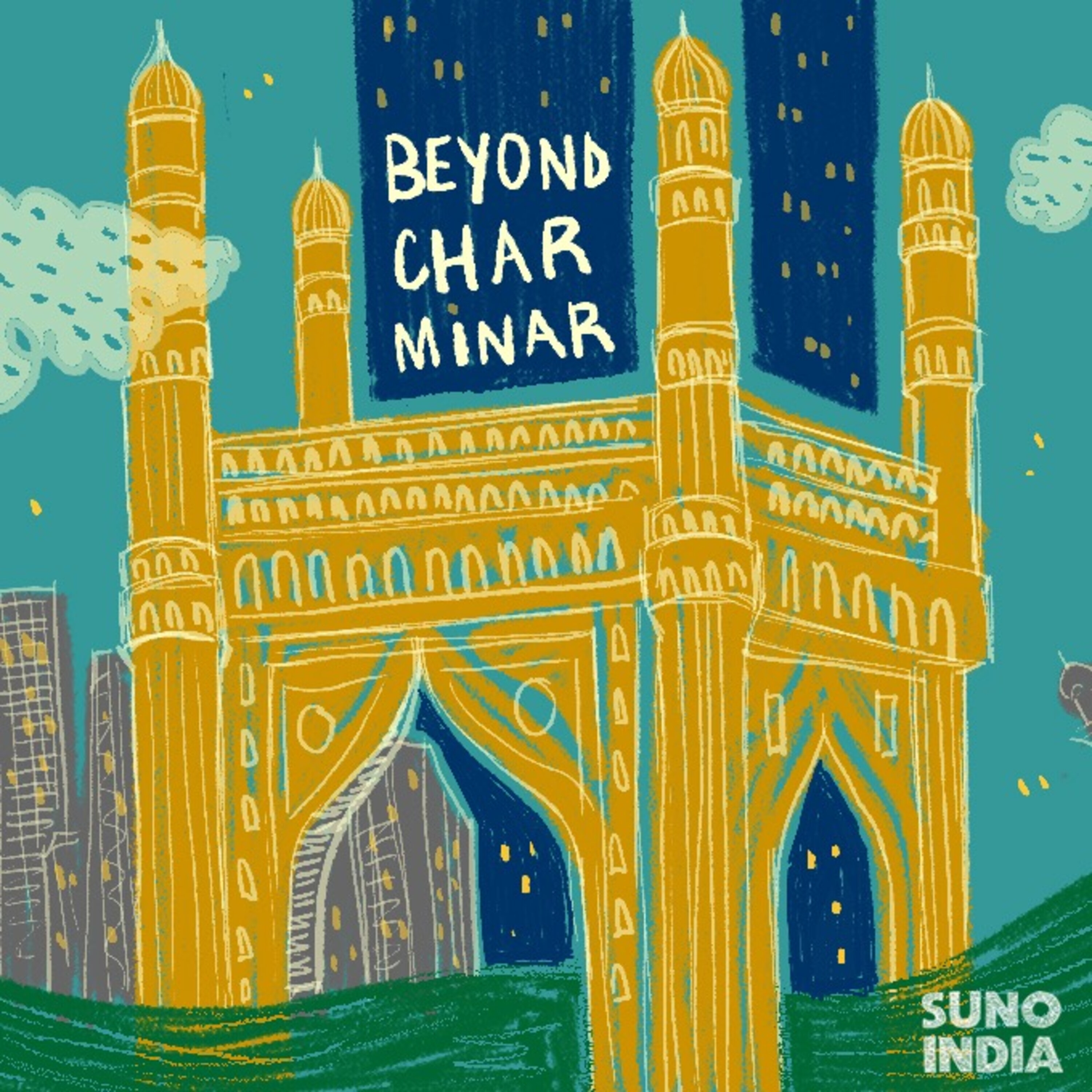 Hidden Treasures: Hyderabad's historic churches | Most people identify Hyderabad as the "city of Nizams and Nawabs", but that's only one side of the story. While the city has a rich history on that front, there's another side to Hyderabad in terms of its colonial heritage as well.From having a church going back to 1813, to another having its service in Urdu, host Yunus Lasania talks to Suno India co-founder Rakesh Kamal and a very special guest in this episode, wherein they explore and talk about Hyderabad-Secunderabad's historic churches.See sunoindia.in/privacy-policy for privacy information. | 38m 55s | ||||||
Showing 25 of 40
Pitch Fit is a Pro feature
See how bookable this show is for guests, which brands already advertise, the per-episode ad value, and the best-fit guest and sponsor profile. The numbers are blurred on the free plan.
How readily this show books outside guests like you.
How proven this show is for host-read sponsorships.
For Guests
ProFor Advertisers
ProUpgrade to Pro to unlock guest cadence, sponsor categories, fit scores, and per-episode ad value for this show.