Big Brain Channel
by Auscast Network
Is this your podcast?Insights from recent episode analysis
Audience Interest
Podcast Focus
Publishing Consistency
Platform Reach
Insights are generated by CastFox AI using publicly available data, episode content, and proprietary models.
Most discussed topics
Brands & references
Est. Listeners
Insufficient chart data. Estimates will improve as the show charts.
- Per-Episode Audience
Est. listeners per new episode within ~30 days
N/A🎙 Weekly cadence·387 episodes·Last published 1mo ago - Monthly Reach
Unique listeners across all episodes (30 days)
N/A - Active Followers
Loyal subscribers who consistently listen
N/A
Market Insights
Platform Distribution
Reach across major podcast platforms, updated hourly
Total Followers
—
Total Plays
—
Total Reviews
—
* Data sourced directly from platform APIs and aggregated hourly across all major podcast directories.
On the show
From 13 epsHost
Recent guests
Recent episodes
Episode 40: Dr Selena Fisk - Building a Data-Informed School Culture - Around the School Table by Xuno Suite
Aug 2, 2026
35m 12s
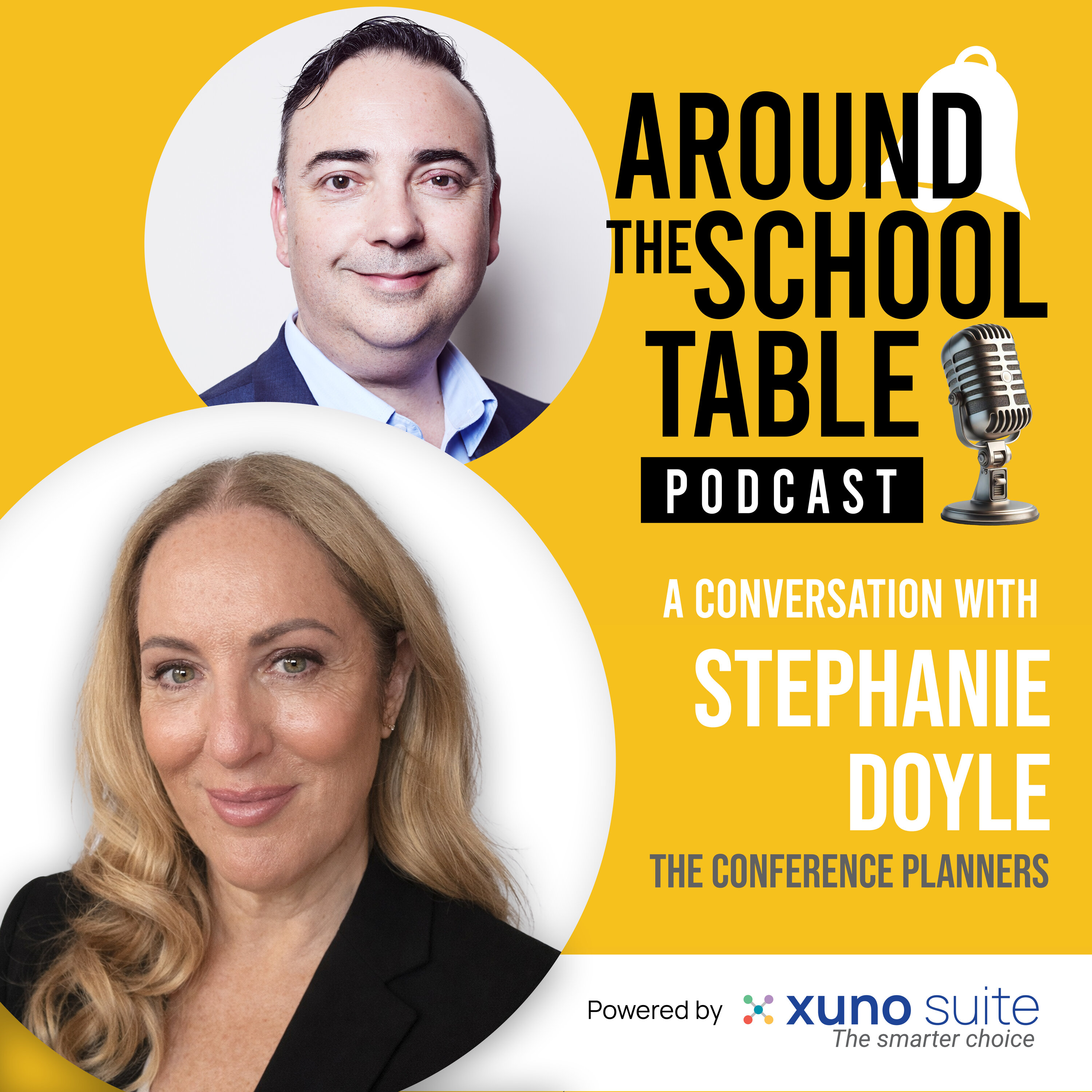
Episode 39: Stephanie Doyle, Founder of The Conference Planners - Designing Conferences That Create Lasting Impact - Around the School Table by Xuno Suite
Jul 19, 2026
38m 08s
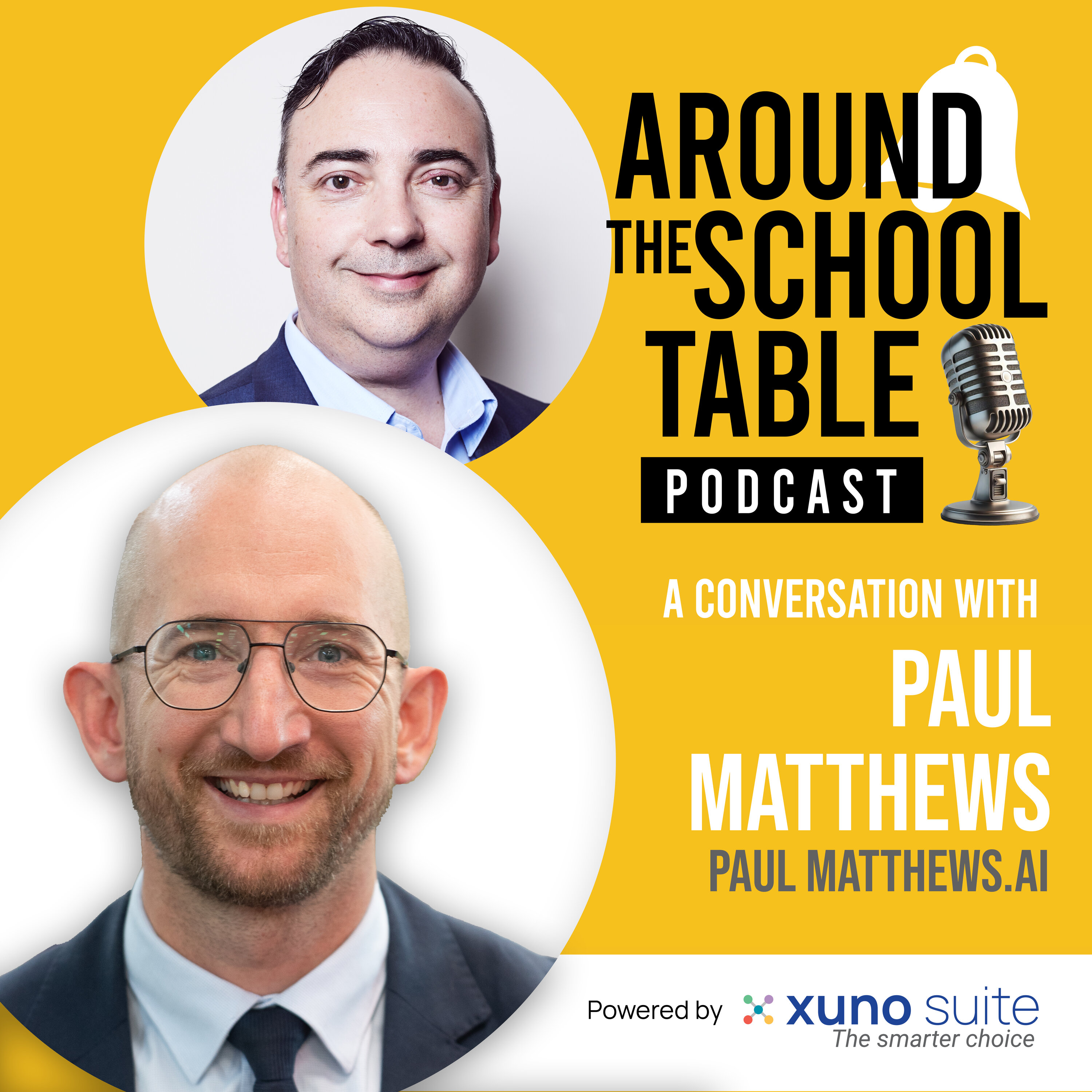
Episode 38: Paul Matthews - Wise AI and the Future of Human Intelligence - Around the School Table by Xuno Suite
Jun 21, 2026
34m 25s
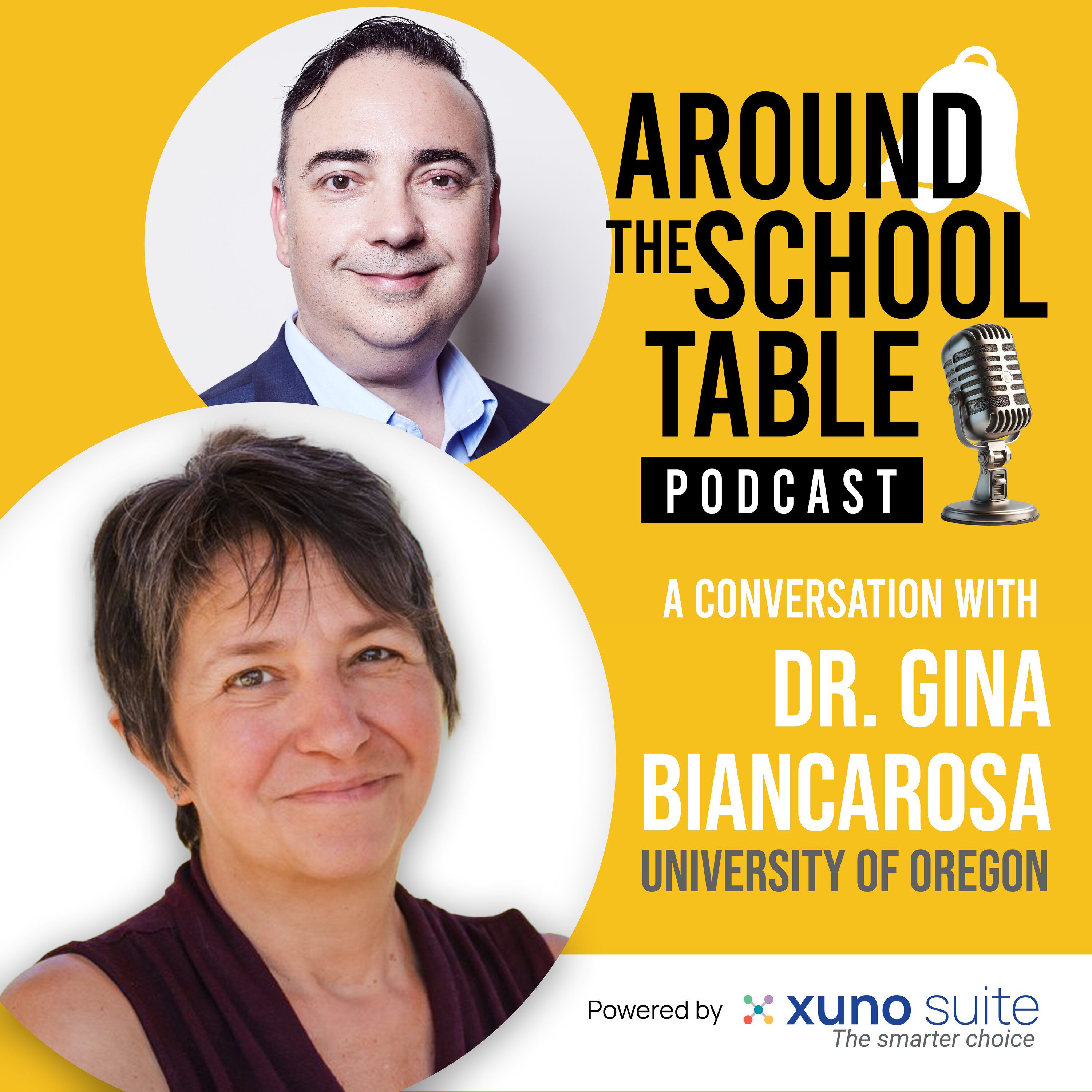
Episode 37: Dr. Gina Biancarosa - Measuring Reading Growth with DIBELS - Around the School Table by Xuno Suite
Jun 14, 2026
43m 09s
Episode 36: David Loader OAM - Rethinking Student Engagement in Australian Schools - Around the School Table by Xuno Suite
May 17, 2026
39m 04s
Social Links & Contact
Official channels & resources
RSS Feed
Login
| Date | Episode | Topics | Guests | Brands | Places | Keywords | Sponsor | Length | |
|---|---|---|---|---|---|---|---|---|---|
| 8/2/26 |  Episode 40: Dr Selena Fisk - Building a Data-Informed School Culture - Around the School Table by Xuno Suite | In this episode of Around the School Table (xuno.com.au/podcasts), host Steve Davis is joined by Dr Selena Fisk, a Data Storyteller and Founder of SelenaFisk.com, to explore how schools can move beyond simply collecting data and instead build a culture where evidence supports better teaching, stronger leadership, and improved student outcomes. Drawing on her experience as a former teacher, researcher, and education consultant, Selena explains why schools should strive to become data-informed rather than data-driven. Throughout the conversation, Selena reflects on her early teaching career in the United Kingdom, where school performance was judged heavily against a single achievement metric. Consequently, she shares how that experience shaped her belief that data should never become a tool for compliance or fear. Instead, it should encourage curiosity, professional conversations, and thoughtful decision-making. She also explains why every dataset contains limitations and why triangulation, using multiple sources of evidence, helps educators develop a more accurate understanding of student learning. The discussion also explores Selena's doctoral research into student perceptions of feedback. She reveals that many students genuinely want to understand where they sit within their learning journey. However, they also value meaningful conversations that help them interpret feedback rather than simply receiving grades. Furthermore, she explains how schools can foster confidence by encouraging dialogue between teachers and students while ensuring data remains connected to the people behind the numbers. The conversation examines how school leaders can improve data conversations by creating practical frameworks that guide staff from analysing evidence through to prioritising actions. Rather than allowing meetings to become compliance exercises, Selena demonstrates how curiosity, structured questioning, and clear priorities can transform school improvement conversations into purposeful action. The episode also discusses simplifying school data systems, reducing technology barriers, and making information more accessible for teachers. In addition, Selena highlights why educators should use data to celebrate progress, identify strengths, and recognise growth instead of focusing solely on gaps or deficiencies. Practical examples illustrate how recognising improvement can positively influence student identity, motivation, and engagement. Finally, the conversation examines responsible interpretations of NAPLAN results and the importance of understanding school performance within its broader community context. Selena also shares inspiring examples from her work with remote Australian schools, demonstrating how careful analysis of attendance, engagement, and community feedback can lead to meaningful educational change. This episode provides valuable insights for teachers, school leaders, and education professionals seeking to create ethical, evidence-informed school cultures where data prompts better questions, stronger collaboration, and more confident decisions. Powered by: xuno.com.au.See omnystudio.com/listener for privacy information. | 35m 12s | ||||||
| 7/19/26 | conference designprofessional learning+3 | Stephanie Doyle | The Conference PlannersXuno Suite+1 | — | conferenceseducation+5 | — | 38m 08s | ||
| 6/21/26 | artificial intelligenceeducation+4 | Paul Matthews | Paul Matthews.aiXuno Suite+1 | — | artificial intelligenceeducation+5 | — | 34m 25s | ||
| 6/14/26 | reading growthDIBELS+3 | Dr. Gina Biancarosa | University of OregonXuno | — | DIBELSreading comprehension+3 | — | 43m 09s | ||
| 5/17/26 | student engagementAustralian education+4 | David Loader OAM | Institute of Education ReformMethodist Ladies’ College+4 | — | student disengagementeducation reform+3 | — | 39m 04s | ||
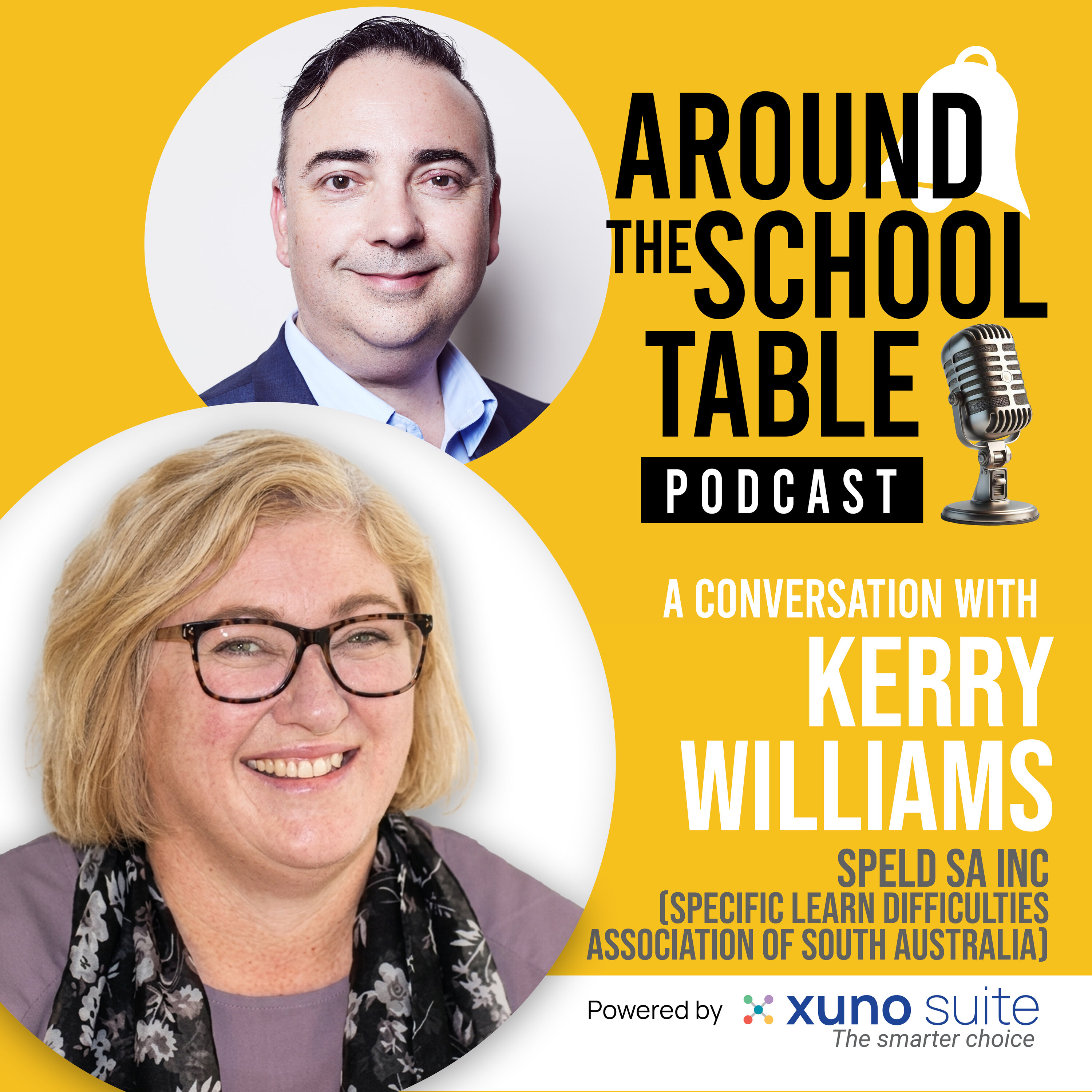
| 4/26/26 | literacy instructioneducation challenges+4 | Kerry Williams | SPELD SA IncXuno Suite+2 | Australia | literacy gapeducation+5 | — | 33m 36s | ||
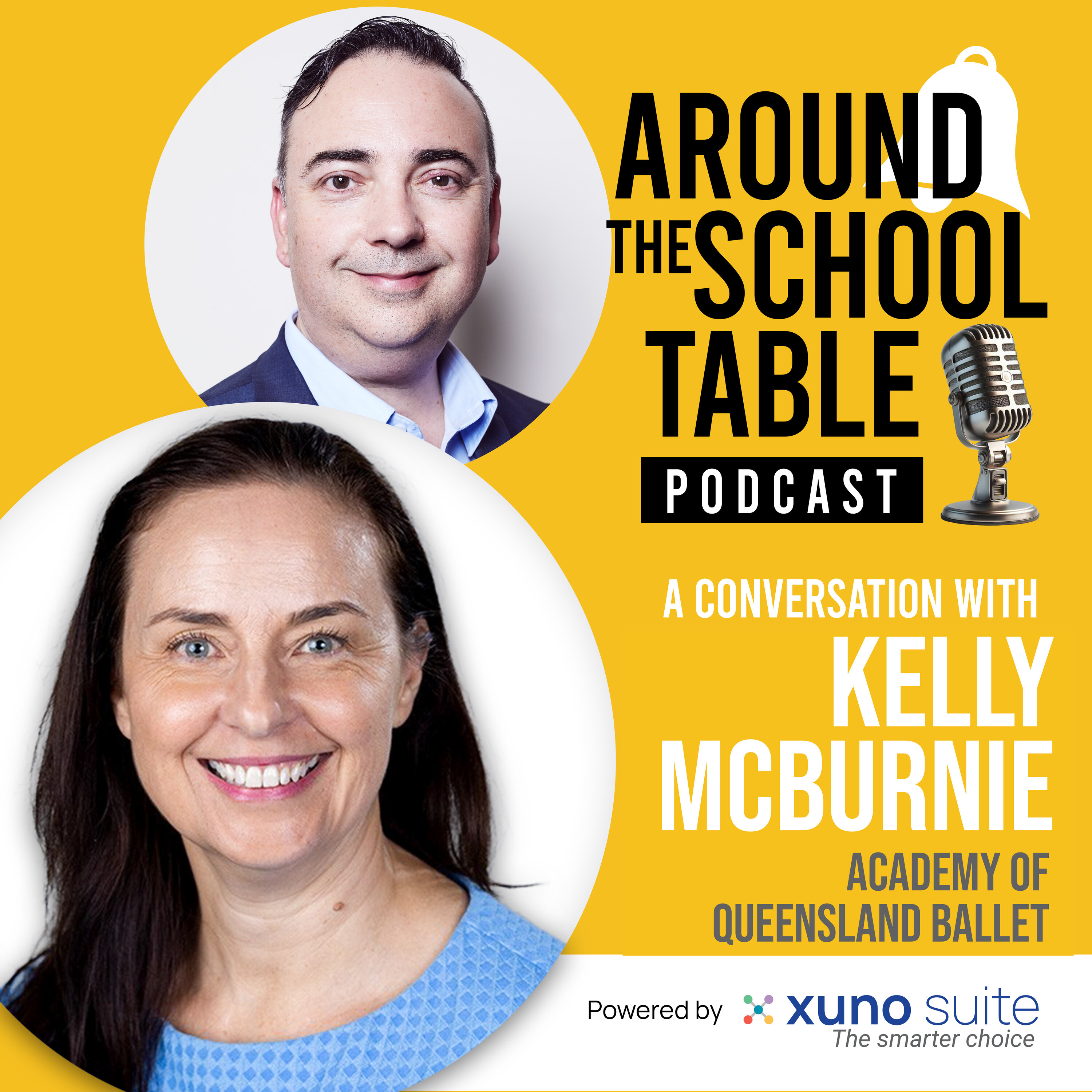
| 3/1/26 | ballet educationwellbeing+3 | Kelly McBurnie | Academy of Queensland BalletXuno+1 | QueenslandAustralia | balleteducation+5 | — | 26m 46s | ||
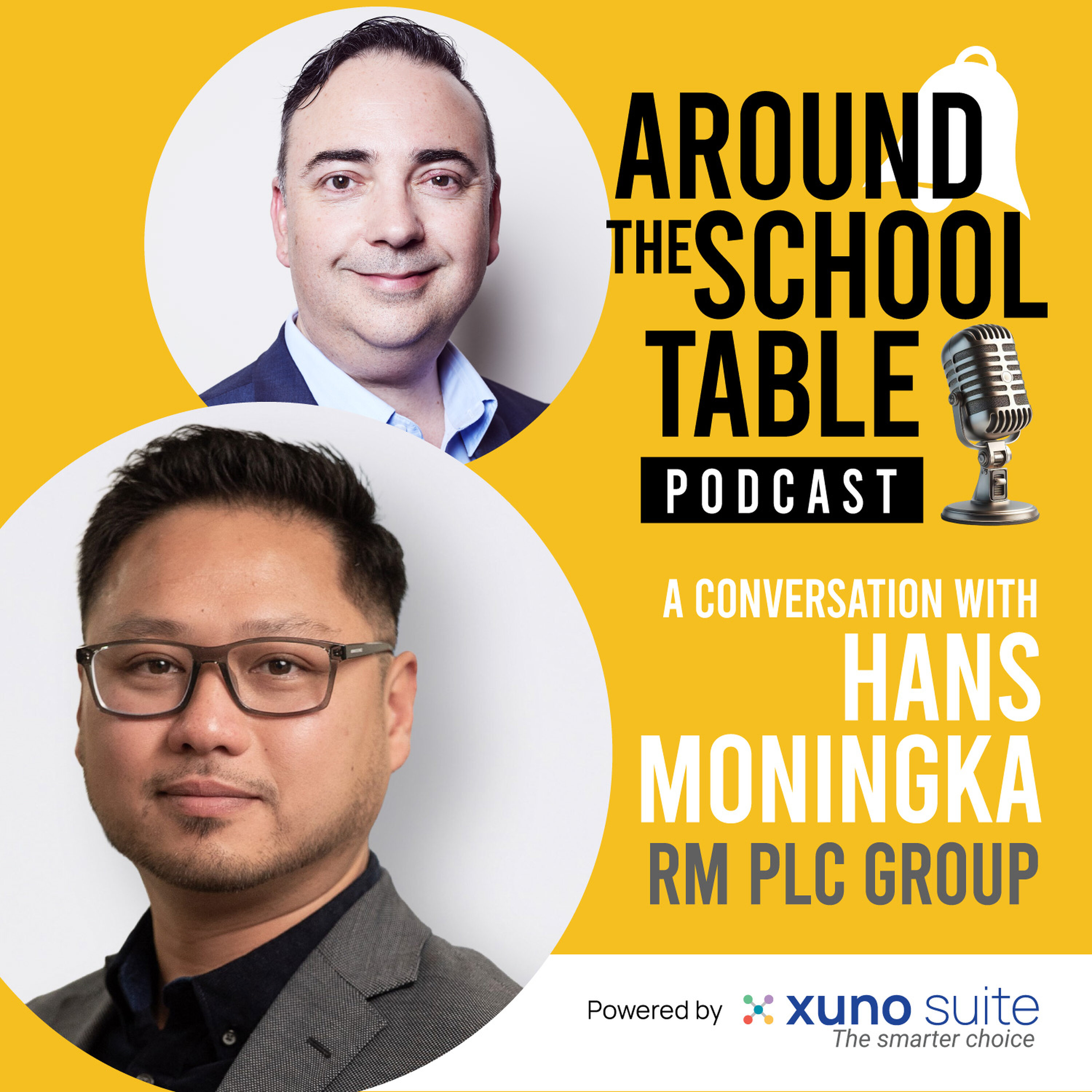
| 2/22/26 | digital assessmentintegrity+4 | Hans Moningka | RM PLC GroupXuno Suite+2 | — | digital examsassessment integrity+5 | — | 33m 38s | ||
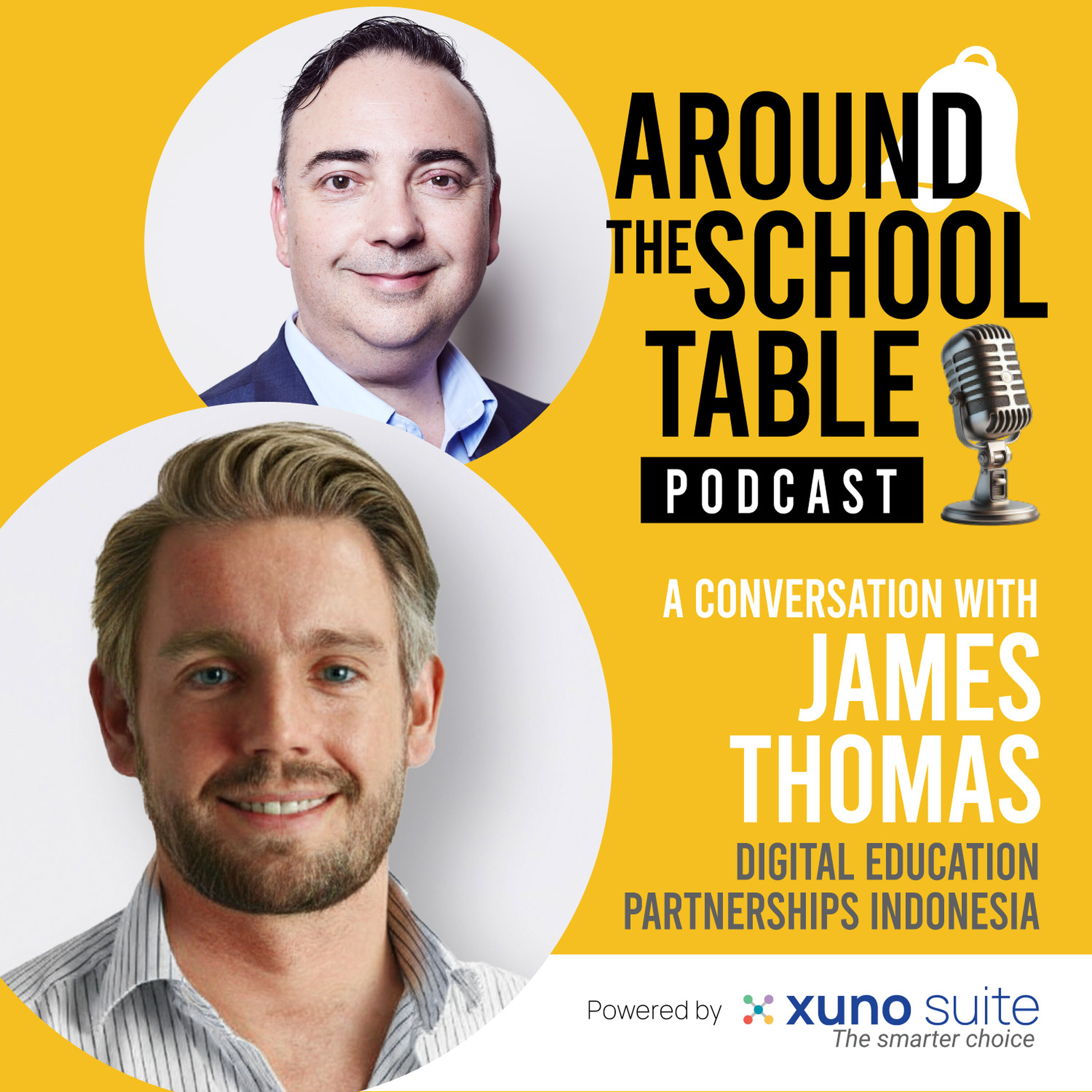
| 2/16/26 | Indonesian education systemedtech in Indonesia+3 | James Thomas | Digital Education Partnerships IndonesiaXuno Suite | IndonesiaSPK schools | educationIndonesia+6 | — | 24m 26s | ||
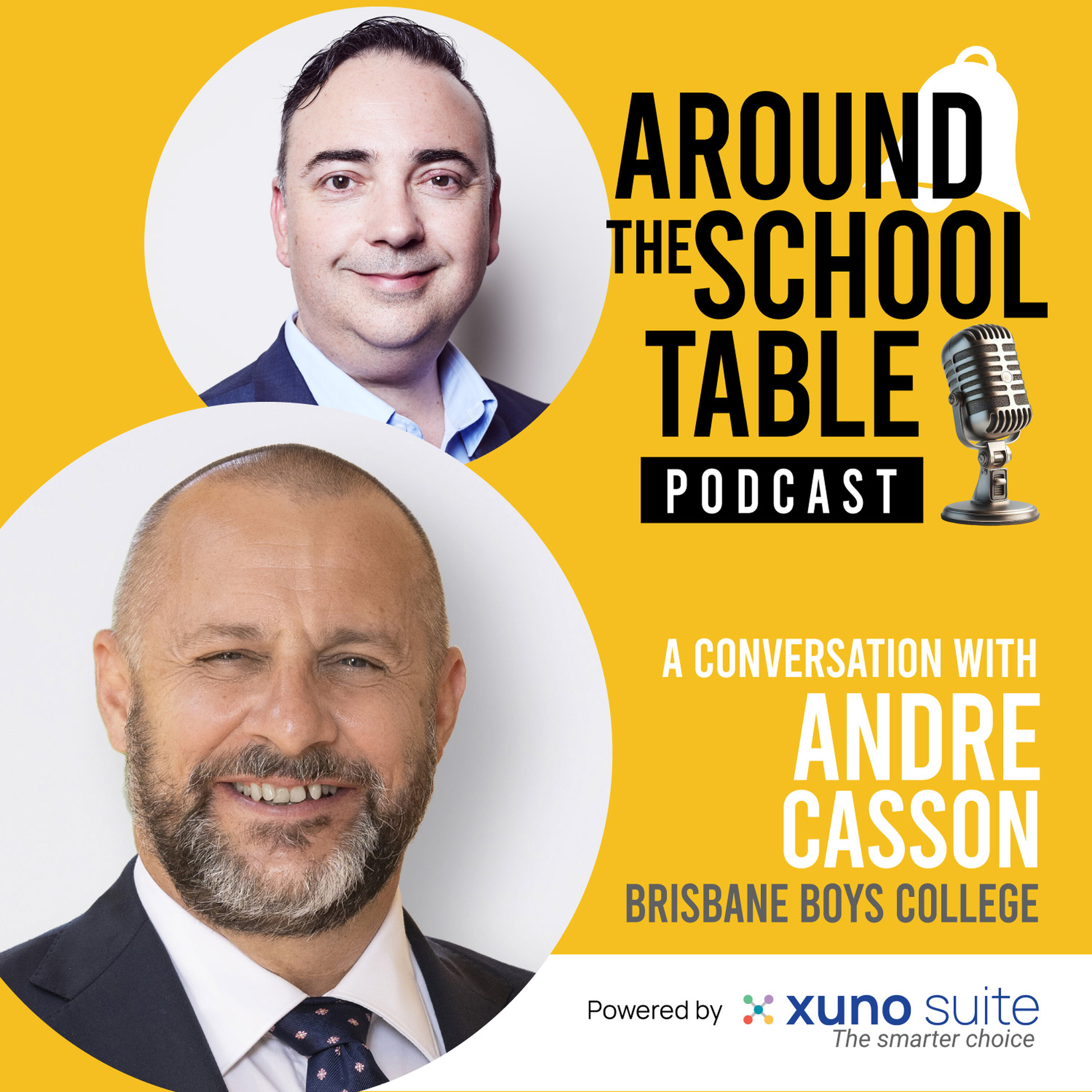
| 2/8/26 | active learningboys' education+4 | Andre Casson | Brisbane Boys’ CollegeXuno Suite+2 | AustraliaUK+1 | active learningBrisbane Boys’ College+6 | — | 35m 50s | ||
Want analysis for the episodes below?Free for Pro Submit a request, we'll have your selected episodes analyzed within an hour. Free, at no cost to you, for Pro users. | |||||||||
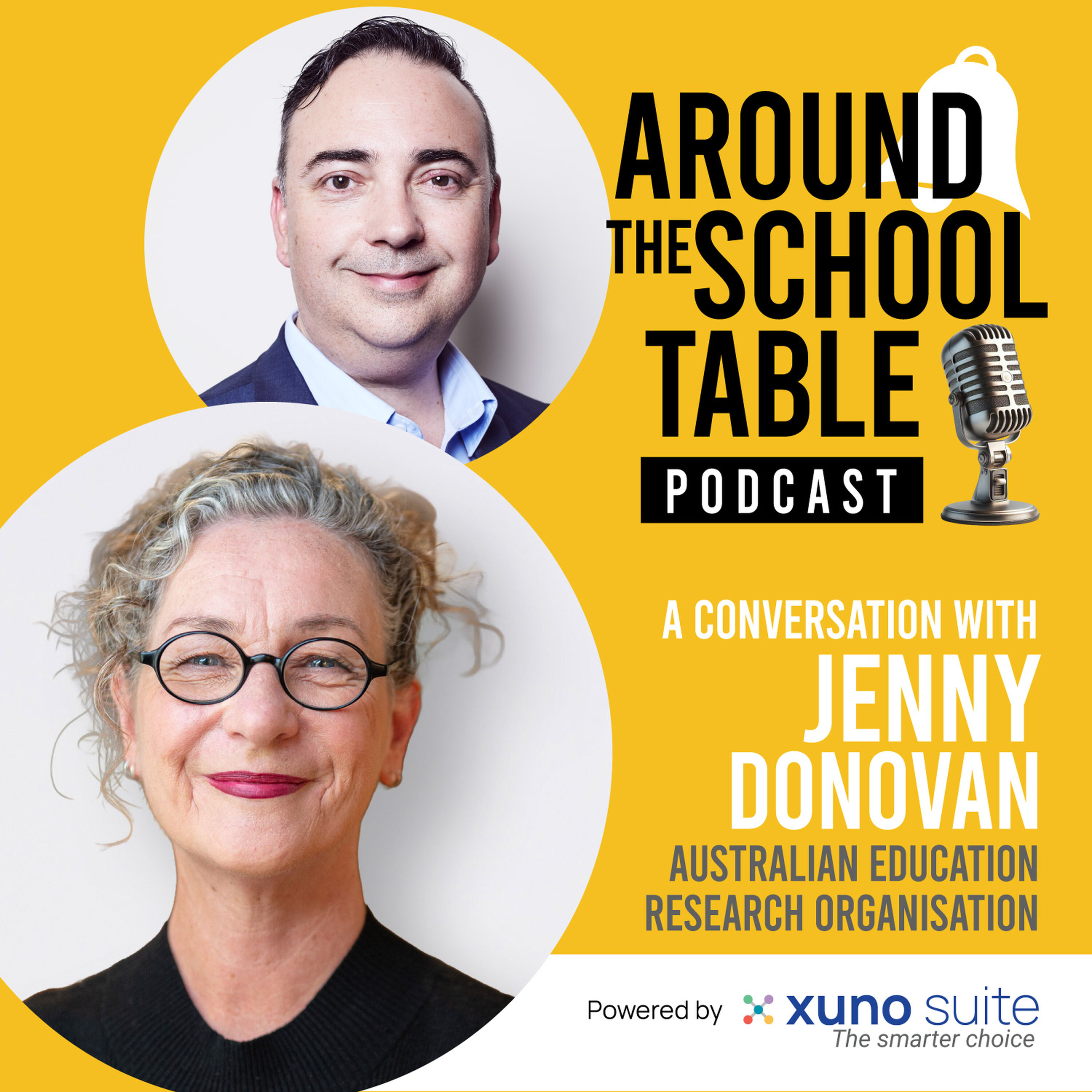
| 2/1/26 | education reformevidence-based teaching+4 | Dr Jenny Donovan | Australian Education Research OrganisationAERO+2 | Australia | educationAERO+5 | — | 41m 35s | ||
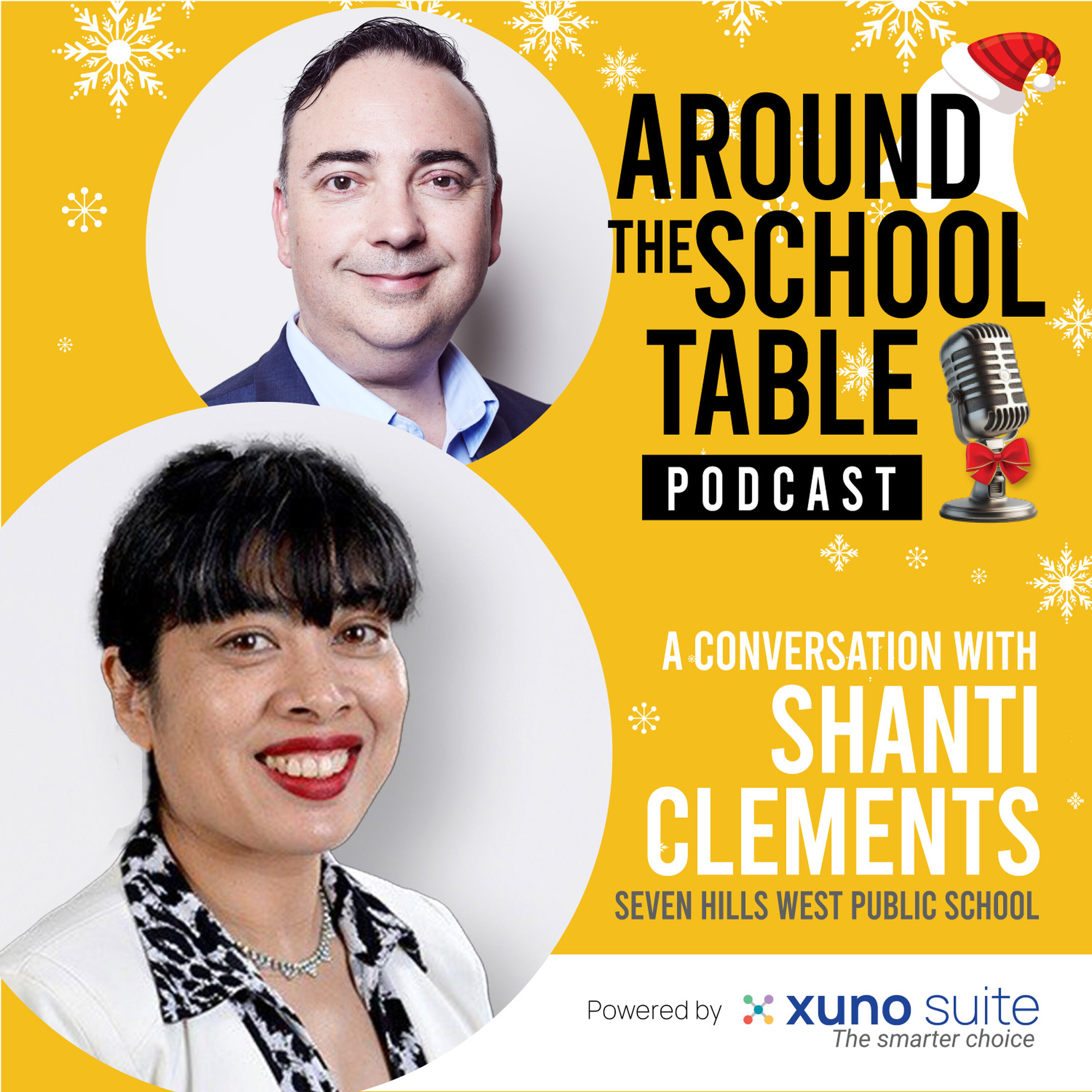
| 12/21/25 | educationstudent leadership+3 | Shanti Clements | Seven Hills West Public SchoolXuno Suite+2 | Western SydneyAustralia | educationleadership+3 | — | 38m 02s | ||
| 12/14/25 | visual reportinginternational teaching+4 | James Wright | Garden International SchoolXuno Suite+5 | Kuala Lumpur | visual reportinginternational education+5 | — | 32m 38s | ||
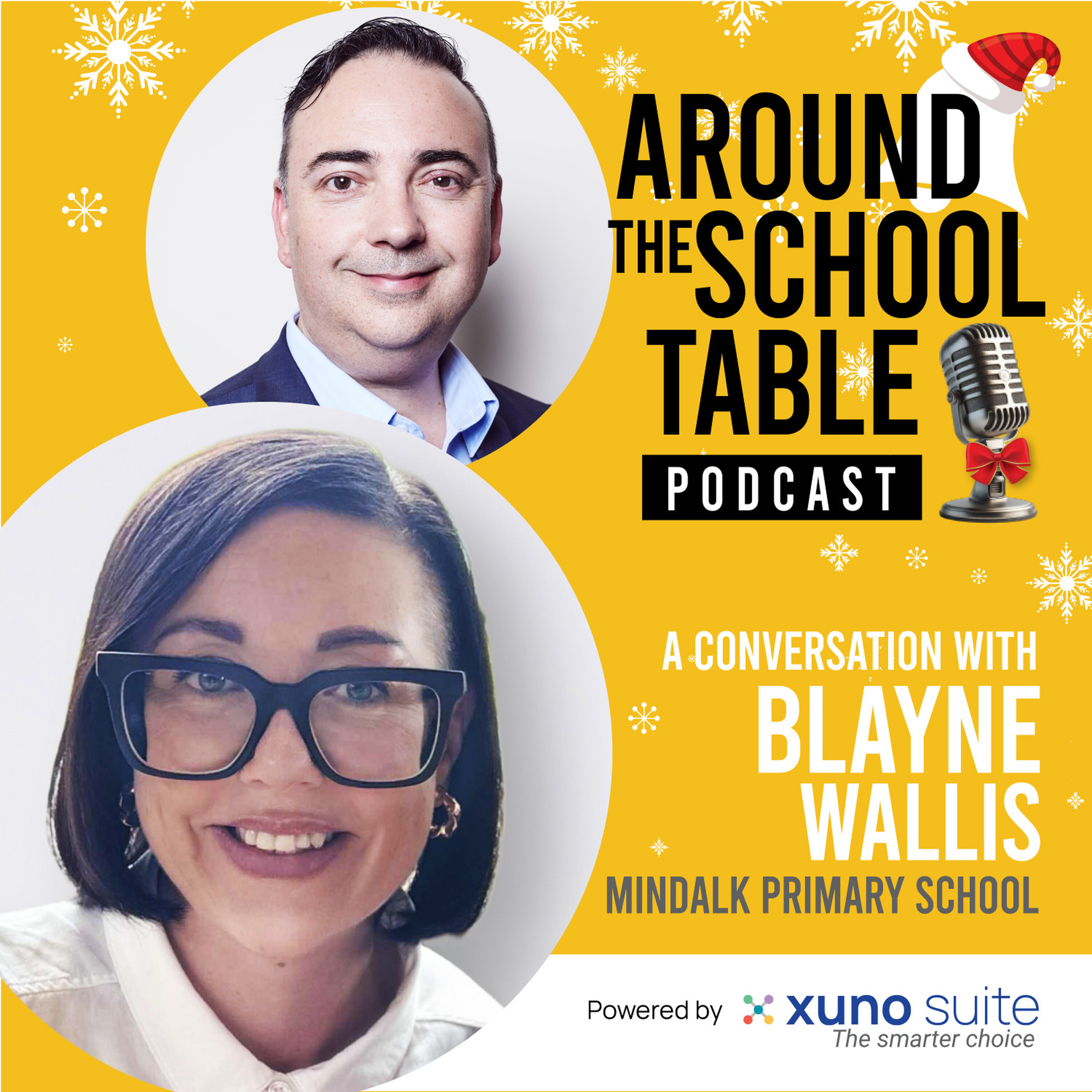
| 12/7/25 | inclusive educationleadership+3 | Blayne Wallis | Mindalk Primary SchoolXuno Suite | MelbourneBallarat | inclusive schooleducation leadership+3 | — | 31m 32s | ||
| 12/2/25 |  Episode 26: Stephen Crockford - A Principal’s Journey of Purpose and Possibility - Around the School Table by Xuno Suite | Stephen Crockford has spent 55 years in education, leading change and lifting expectations in Melbourne’s northwest. In this episode of Around the School Table (www.xuno.com.au/podcasts), host Steve Davis talks with Stephen about his long career and his final weeks as principal of St Albans Meadows Primary School (www.samps.vic.edu.au). Together, they trace his journey from classroom teacher to community leader, shaped by humility, consistency, and a deep belief in children’s potential. The conversation offers a rare long view of how one principal can help transform a school over decades. It also reveals how culture, not quick fixes, keeps improvement alive. Rather than start with test scores, Stephen focused first on joy, belonging, and pride. Sport became a powerful lever to get students turning up, trying hard, and seeing themselves as part of something bigger. Performing arts followed, with concerts, choirs, bands, and dance groups reshaping how the community saw the school. As a result, students who once felt behind began to stand tall on stage and on the field. Then explicit teaching and careful curriculum work ensured that high expectations in literacy and numeracy matched the growing confidence. Technology was never a gimmick for Stephen. Instead, he backed a one-to-one laptop model in a low socio-economic context, using leasing and clear educational purpose to make devices accessible. At the same time, he kept pen and paper, rich experiences, and front-loaded vocabulary at the centre of learning. Behind the scenes, he built a leadership “pyramid”, with emerging and emerging-emerging leaders always ready to step up. Consequently, the school now has deep curriculum expertise and a strong bench of future principals. Listeners will hear practical insights on building culture through consistency, calmness, and respect. They will also discover how a free parent gym, kitchen garden and clubs for chess, Lego, sport, writing and more help families feel welcome without turning parents into unpaid teachers. Whether you are a new principal, an aspiring leader, or a classroom teacher, this episode with Stephen Crockford will spark reflection on legacy, resilience, and what it means to stay a “teacher first”. Powered by: xuno.com.au.See omnystudio.com/listener for privacy information. | 35m 29s | ||||||
| 11/23/25 |  Episode 25: Lisa Burt - Rethinking Small Schools Through Inclusive Leadership - Around the School Table by Xuno Suite | In this episode of Around the School Table (www.xuno.com.au/podcasts), Lisa Burt joins host Steve Davis to explore how inclusive leadership reshapes learning within a small school setting. As principal of Knox Central Primary School (www.knoxcentral.vic.edu.au), she leads a school community of 74 students and demonstrates how relationships, predictability and calm environments support every learner. From the outset, Lisa explains how her move from a large suburban school to Knox Central changed her approach to leadership. With fewer staff layers, she is often the person who responds when challenges arise. However, this close connection means families and students see her as approachable and available. Her daily walk through each classroom builds trust and reinforces a strong sense of community. Because Lisa also teaches PE, students see her as both principal and active participant in school life. This relatability helps families who previously felt uncertain about school to re-engage with confidence. Her visible presence also supports staff wellbeing, as teachers know she understands the pressures of the classroom. The discussion turns to inclusive classrooms, where predictable routines and structured spaces help students, especially those with autism, feel secure. Daily schedules, quiet zones and Schoolwide Positive Behaviours create a consistent and supportive learning environment. Literacy improvement is another key focus. After discovering gaps in early reading skills, the school adopted explicit phonics instruction and tools like DIBELS. As a result, students develop phonemic awareness and reading confidence, while teachers gain clearer data to guide instruction. Technology also supports personalised learning at Knox Central. Google Classroom, Mathletics and Reading Eggs allow teachers to tailor tasks and help students practise skills beyond school hours. Finally, Lisa reflects on funding, perception and the unique strengths of boutique schools. She highlights the importance of reframing “small schools” as environments rich in connection, opportunity and individual support. This episode offers practical ideas for leaders and teachers seeking to strengthen inclusion and rethink what small schools can achieve. Powered by: xuno.com.auSee omnystudio.com/listener for privacy information. | 28m 36s | ||||||
| 11/16/25 | 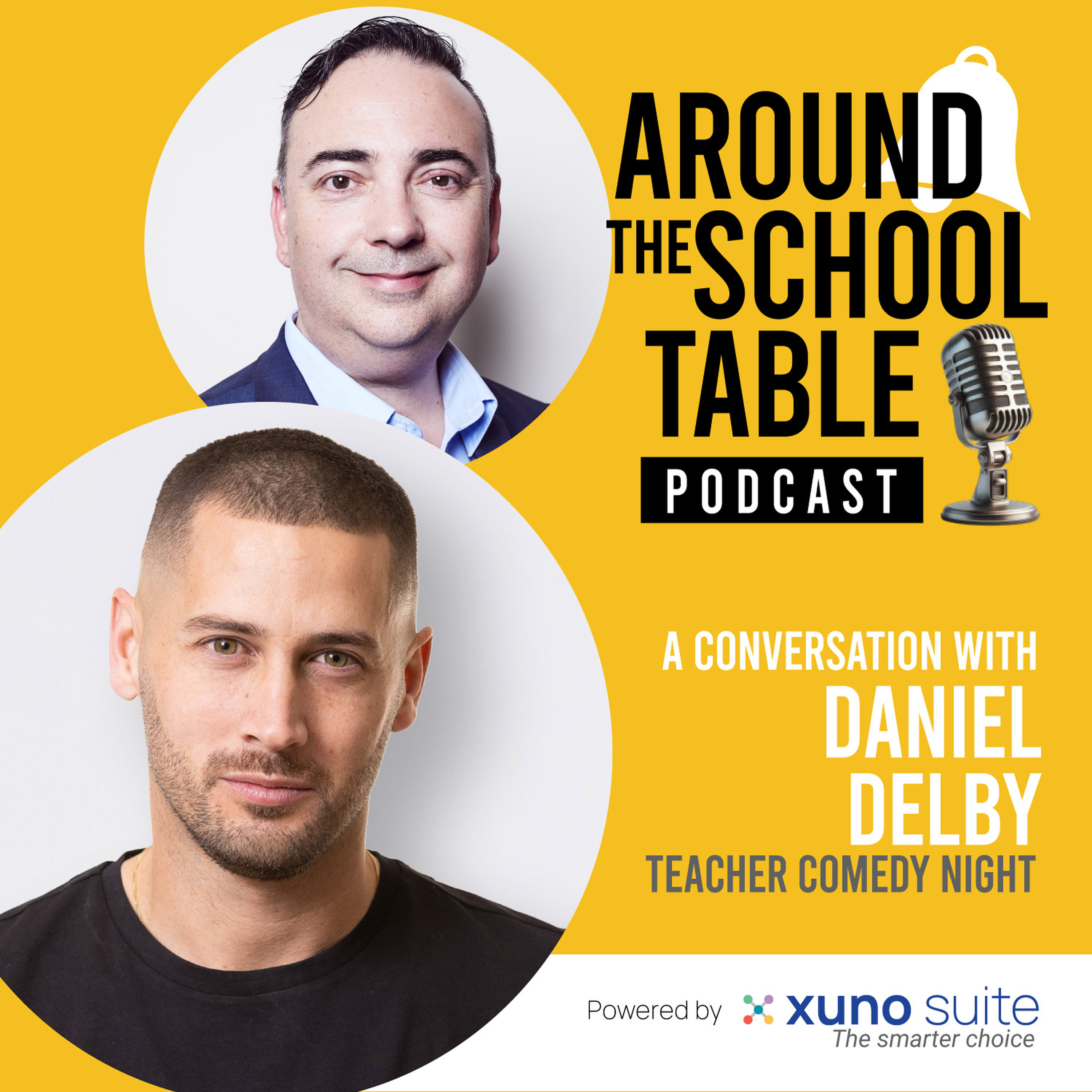 Episode 24: Daniel Delby - Laughing Through Classroom Management - Around the School Table by Xuno Suite | **Listener warning: This episode contains mild swearing and a brief reference to adult themes.** In this episode of Around the School Table (www.xuno.com.au/podcasts), host Steve Davis is joined by comedian and action learning coach Daniel Delby to unpack how humour can transform classroom management and teacher wellbeing. Drawing on his journey from drama and phys-ed teaching into science and special needs support, Daniel shows how laughter can keep both students and teachers engaged for the long haul. As the creator of Teacher Comedy Night (teachercomedynight.com), Daniel has turned everyday school stories into a space where educators can connect, unwind and realise they are not alone. Teachers come for the laughs; however, they also leave with fresh perspective on behaviour, relationships and classroom management strategies. Along the way, Daniel shares how a professional learning course in Classroom Management Strategies (CMS) shifted his mindset from “these kids are the problem” to “what can I do differently?” Throughout the conversation, Daniel explains why humour works so powerfully in the classroom. Teachers are constantly performing in front of up to 34 students. Therefore, they must learn to hold attention, break the ice and win the class over. Yet he is clear that not every teacher needs to be a stand-up comic. Instead, he argues that authenticity, clear boundaries and genuine interest in students matter just as much as punchlines. The episode also explores how Daniel uses freestyle rap and improvisation to hook students into learning. From rapping about classes at assemblies to encouraging students to expand their vocabularies so they can rhyme, he demonstrates how creativity can sit alongside curriculum goals. As a result, humour becomes more than a gimmick; it becomes a tool for connection, confidence and student voice. Listeners will also hear about Daniel’s touring Teacher Comedy Night shows, his links to major comedy festivals and the growing community of teachers who are discovering comedy as a way to stay in the profession. Ultimately, this episode is for any educator who loves their students, feels the strain of the job and wants practical, light-hearted ideas to bring joy back into teaching. Powered by: xuno.com.auSee omnystudio.com/listener for privacy information. | 30m 25s | ||||||
| 11/9/25 | 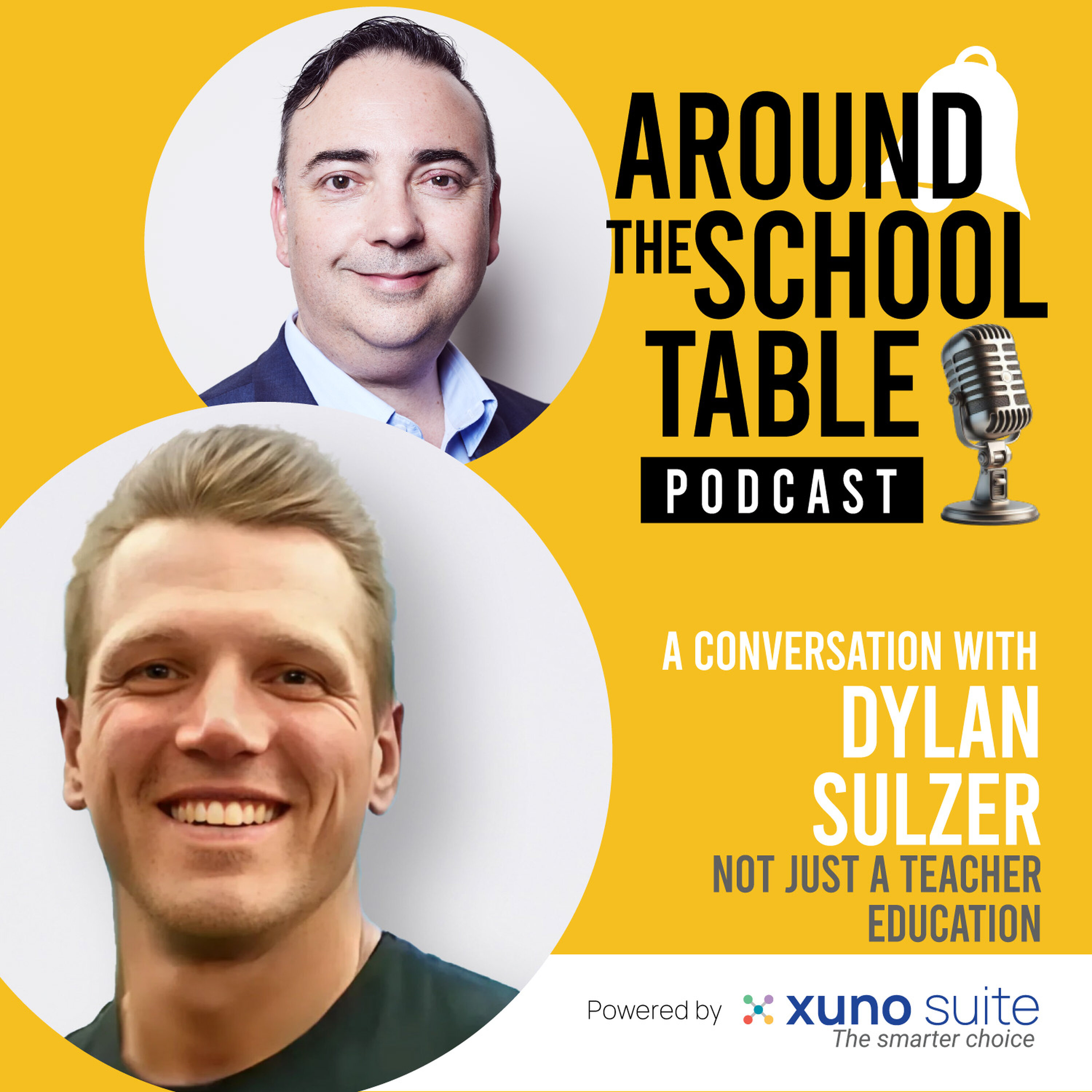 Episode 23: Dylan Sulzer – Emotional Intelligence in the Classroom – Around the School Table by Xuno Suite | In this episode of Around the School Table (www.xuno.com.au/podcasts), host Steve Davis is joined by Dylan Sulzer, founder of Not Just Teacher Education (www.notjustateachereducation.com), to explore how Dylan’s unique journey—from Port Lincoln to the Northern Territory and even mustering cattle—has shaped his deep understanding of emotional intelligence in education. Dylan brings practical tools and insights to help teachers and students navigate tricky behaviour, build emotional regulation, and foster a positive classroom culture. He reframes defiance as a bid for independence and examines the balance between happiness and purpose, offering educators a fresh way to connect, support and empower young people both inside and outside the classroom. Throughout the episode, Dylan explains the five domains of emotional intelligence — self-awareness, self-regulation, motivation, empathy and relational communication — and shows how educators can apply them in the real world. He shares simple, applicable strategies such as breathing techniques and naming tasks to re-engage teachers’ thinking brains in stressful moments.Furthermore, Dylan’s student-brand program demonstrates how young people can identify their character strengths, develop a sense of identity and shift from external rewards to intrinsic motivation. The conversation also touches on the role of choice in managing student independence, why banning social media might be a band-aid solution, and the importance of being more impressive in person than online. This episode is ideal for teachers, school leaders and anyone interested in shaping classroom culture with emotional intelligence at the heart. Powered by: xuno.com.auSee omnystudio.com/listener for privacy information. | 46m 39s | ||||||
| 11/2/25 | 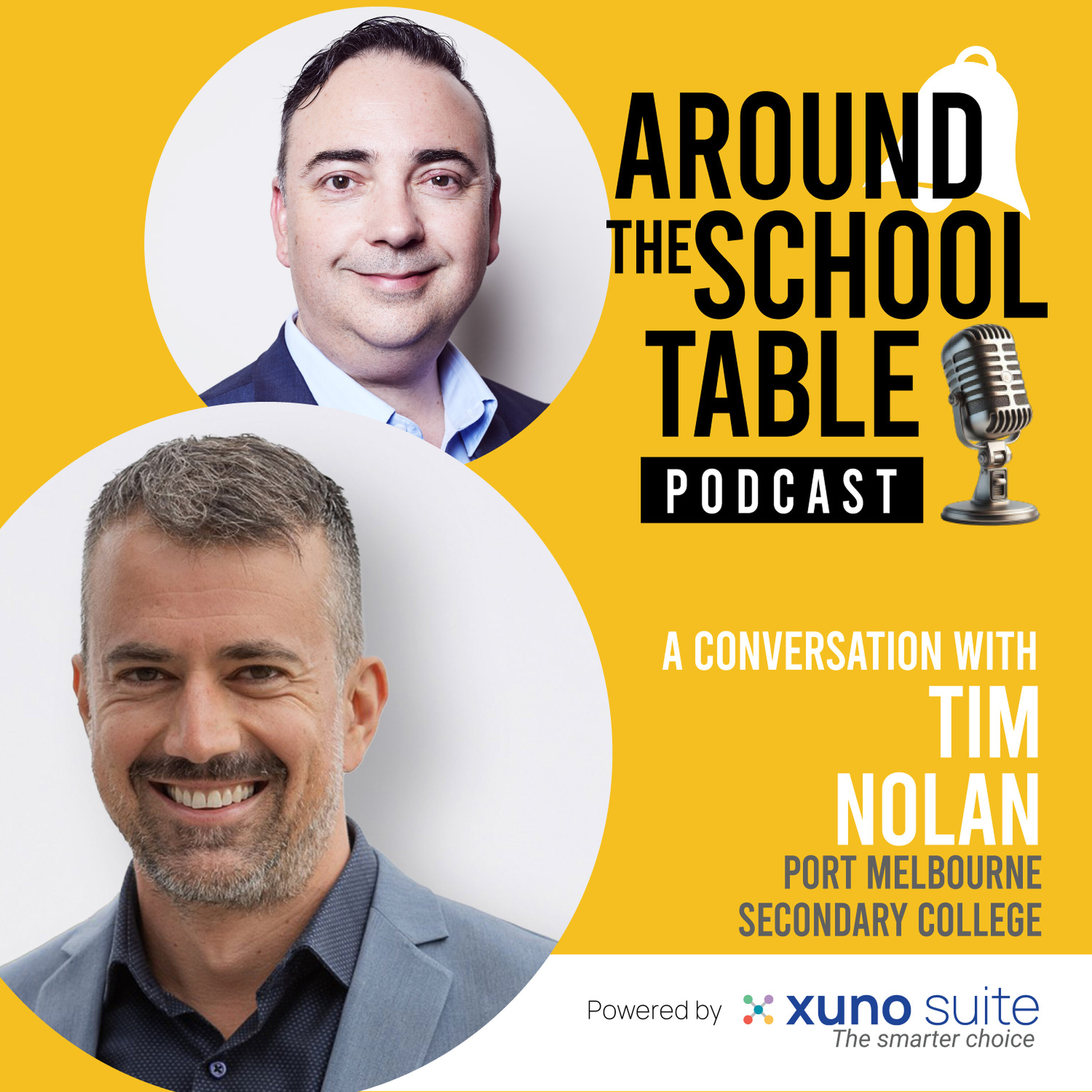 Episode 22: Tim Nolan – Leadership, Culture and Creativity at Port Melbourne Secondary College – Around the School Table by Xuno Suite | In this episode of Around the School Table (www.xuno.com.au/podcast), host Steve Davis is joined by Tim Nolan, Principal of Port Melbourne Secondary College (www.portmelbournesc.vic.edu.au) to explore how leadership, vision, and creativity shape a school’s culture and community. Tim leads one of Melbourne’s most distinctive schools, a striking campus inspired by the maritime character of Port Melbourne. From shipping containers to cruise-liner flair, the design mirrors a philosophy that values innovation, inclusivity, and connection. Throughout the conversation, Tim shares insights on leading with purpose amid rapid educational change and how culture and positivity drive effective teams. Listeners will hear how Tim’s leadership journey across Catholic, arts-focused, and STEM-driven schools has helped him understand what makes communities thrive. He explains why aspiring leaders should “do the job of the person above you” to build capacity and confidence. This episode also explores the importance of cultural fit in hiring, the role of creativity in teaching, and why trust and communication remain the cornerstones of strong school culture. The discussion turns to hands-on, real-world learning; from boat restoration projects to partnerships with community mentors at the local Men’s Shed. These programs help students discover confidence and purpose beyond the classroom while fostering intergenerational learning. Tim also reflects on how schools can stay visionary within regulatory frameworks, finding their “true north” by always asking what’s best for students. From navigating funding and growth at Fishermans Bend to building pathways for vocational and inclusive education, Tim highlights how adaptability and collaboration future-proof modern schools. The conversation closes with his vision for graduates who feel supported, inspired, and ready to lead others with empathy and curiosity. This episode offers practical inspiration for educators, school leaders, and policymakers seeking to balance innovation with community connection in Australian education. Powered by: xuno.com.auSee omnystudio.com/listener for privacy information. | 29m 56s | ||||||
| 10/26/25 |  Episode 21: Tim Bullard - The Pulse of Australia’s Teachers - Around the School Table by Xuno Suite | In this episode of Around the School Table (xuno.com.au/podcasts), host Steve Davis is joined by Tim Bullard, CEO of the Australian Institute for Teaching and School Leadership (AITSL) (aitsl.edu.au), to explore the state of the teaching profession across Australia. With more than half a million registered teachers, Tim shares how the latest Australian Teacher Workforce Survey is helping policymakers, educators, and communities understand the evolving challenges and opportunities shaping schools today. The conversation uncovers what the data reveals about teacher well-being, retention, and professional growth, and how education systems can better support teachers through every career stage. Tim discusses the importance of recognising teaching as a human endeavour, one grounded in connection, trust, and lifelong learning. He also highlights how returning teachers bring valuable life experience back into classrooms, enriching student learning and strengthening school communities. Steve and Tim explore how AI can reduce teacher workload without losing the essential human connection that defines effective teaching. From workload management and flexible career pathways to national initiatives like the Better and Fairer Schools Agreement, the discussion offers a clear-eyed look at how evidence-based policy and innovation can improve outcomes for both teachers and students. As World Teachers’ Day approaches, Tim shares why celebrating educators year-round is essential to building a culture of trust, respect, and appreciation across the nation. This episode is a timely reminder of how teachers’ voices and data-driven insights can shape the future of Australian education. Powered by: xuno.com.auSee omnystudio.com/listener for privacy information. | 26m 01s | ||||||
| 10/19/25 | 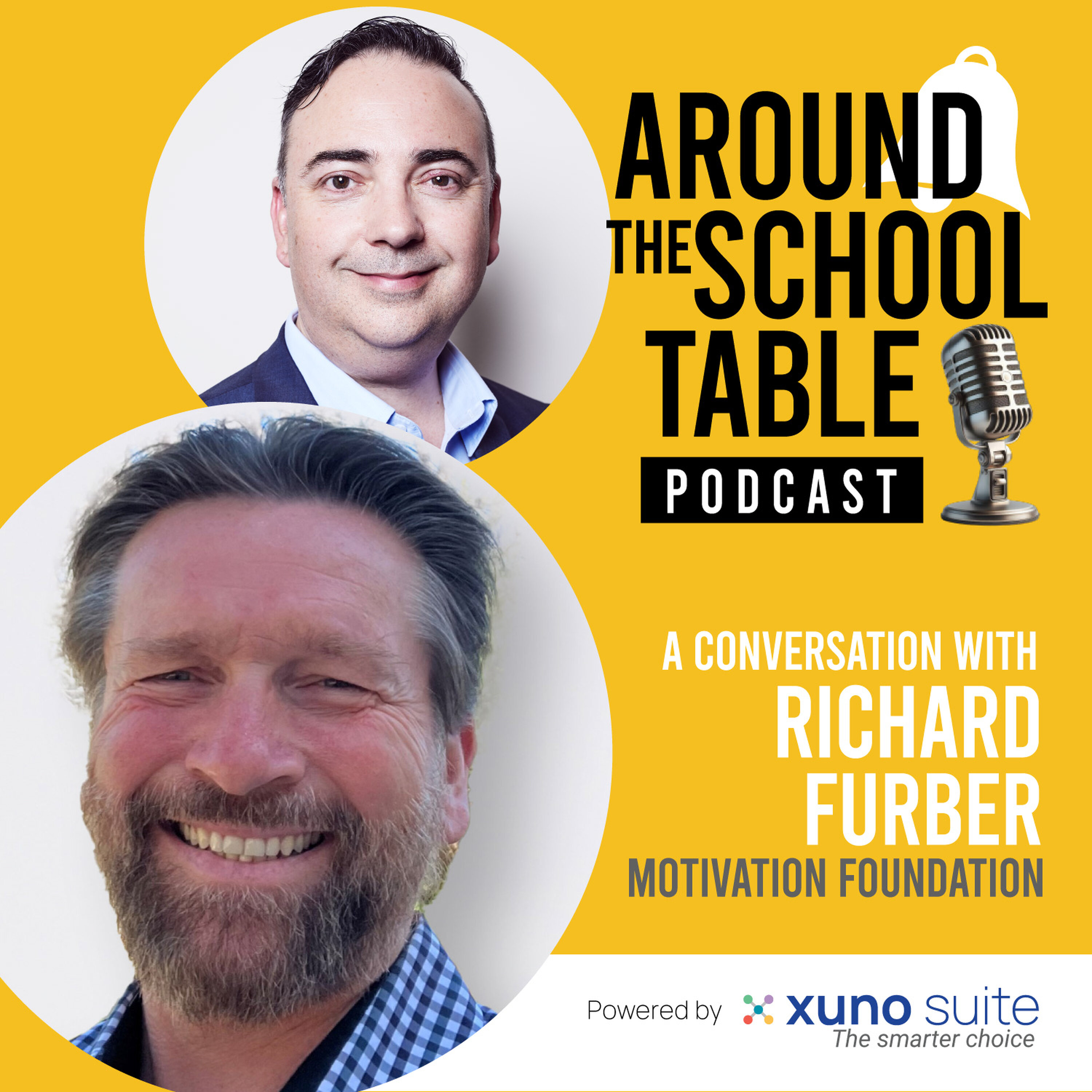 Episode 20: Richard Furber - Real Skills and Hope Through Motivation Foundation - Around the School Table by Xuno Suite | In this episode of Around the School Table (xuno.com.au/podcast), host Steve Davis is joined by Richard (Richie) Furber, Principal Consultant at the Motivation Foundation (motivationfoundation.com.au) and leader of the soon-to-launch Motivation Education Career School in Perth. Together, they explore how innovative education models are connecting learning with real-world industry opportunities. Richie shares how Motivation Foundation is transforming outcomes for students at academic risk by combining practical training, strong industry partnerships, and a deep belief in belonging and hope. Students graduate with recognised VET qualifications in civil construction, mining, and workplace skills—equipping them for meaningful, long-term employment. The conversation uncovers the school’s holistic approach: from teaching employability habits and professional behaviour to fostering resilience through trauma-informed practice. Richie explains how data-driven case management ensures each learner receives individualised support, while collaboration with organisations like the Construction Training Fund (CTF) and local employers builds confidence and purpose. Listeners will also hear how the Motivation Foundation creates industry-simulated environments where students develop practical competence, re-engage with learning, and find hope in achievable futures. This inspiring discussion offers educators and school leaders valuable insights into alternative pathways that empower young Australians to thrive beyond the classroom. Whether you’re an educator, policymaker, or training provider, this episode highlights how attitude, belonging, and authentic partnerships can change lives—and strengthen communities. Powered by: xuno.com.auSee omnystudio.com/listener for privacy information. | 33m 12s | ||||||
| 10/12/25 | 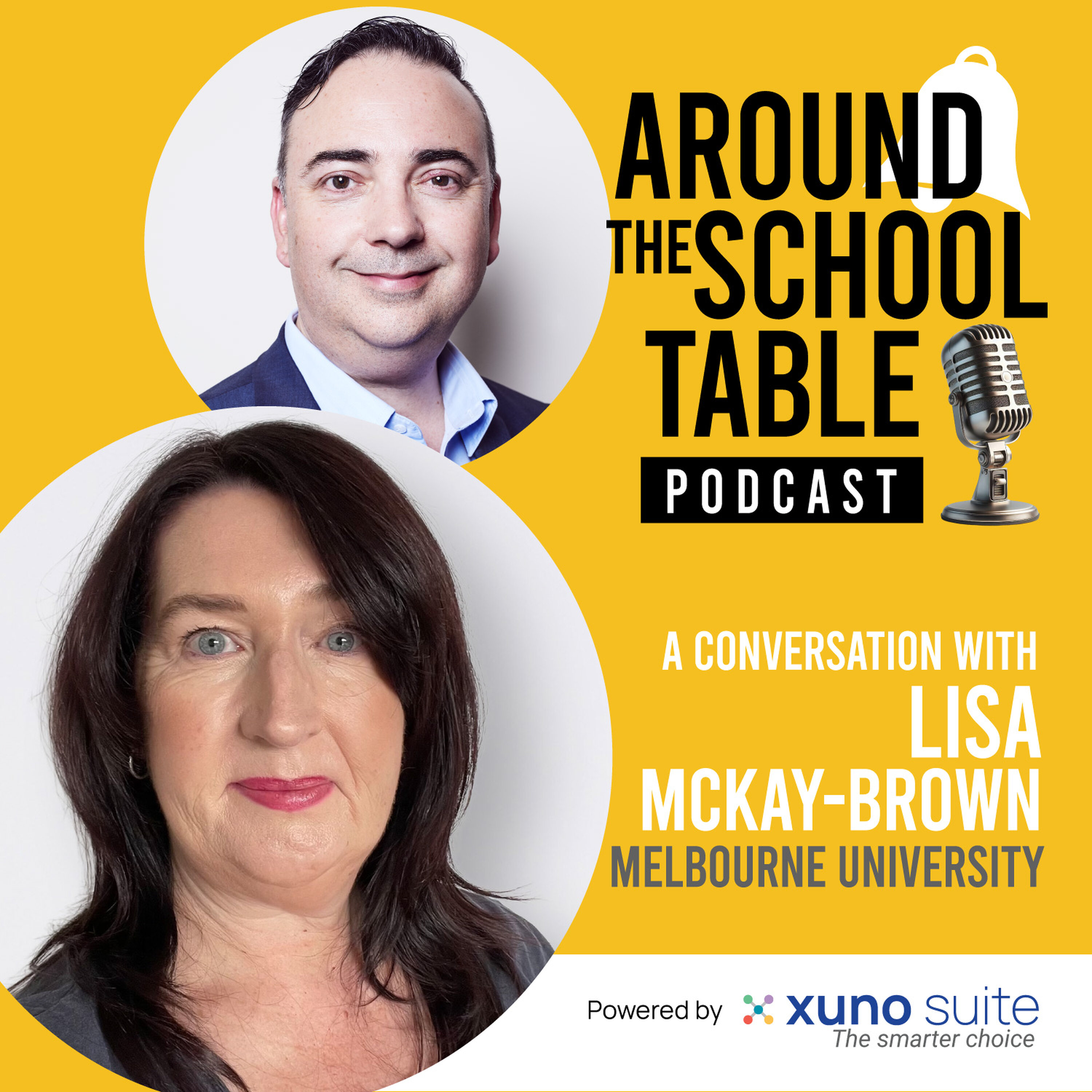 Episode 19: Lisa McKay-Brown - School Avoidance, MTSS & Data-Informed Care - Around the School Table by Xuno Suite | Associate Professor Lisa McKay-Brown from Faculty of Education at the University of Melbourne (education.unimelb.edu.au) joins host Steve Davis on Around the School Table (xuno.com.au/podcast) for a practical, compassionate look at school avoidance. This audio episode explores why attendance challenges are rarely a simple choice, and how schools can respond with care, clarity, and data-informed action. As Associate Dean of Diversity and Inclusion, Lisa offers grounded strategies that teachers and leaders can apply straight away. First, the conversation addresses common myths about “wagging” and explains the differences between avoidance, truancy, withdrawal, and exclusion. Then, we consider early warning signs. For example, small shifts like late arrivals, early departures, or missed periods can signal growing barriers. Consequently, routine checks of attendance patterns—especially in the 90–95% range—become essential. Moreover, listeners hear how data systems such as Xuno help staff spot patterns quickly and start supportive conversations with families. Importantly, Lisa highlights neuro-affirming practice. Clear routines, predictable expectations, and strong adult connections help neurodivergent students; in fact, they benefit everyone. Furthermore, flexible regulation supports—like planned breaks or headphones for focus—can reduce anxiety and increase engagement. Yet schools cannot carry the load alone. Therefore, respectful partnerships with families and allied professionals are vital. We also step into multi-tiered systems of support. Lisa explains how MTSS for attendance builds universal, targeted, and intensive responses over time. In addition, she reflects on international collaborations and OECD insights linking belonging, safety, and achievement. As a result, listeners gain a broader perspective on what works here in Australia and abroad. Finally, the episode calls for national leadership. A coordinated plan would amplify local innovations, reduce duplication, and elevate voices that are often missed. Teachers, leaders, and system thinkers will find actionable ideas, thoughtful nuance, and renewed confidence to tackle attendance with empathy and evidence. Powered by: xuno.com.auSee omnystudio.com/listener for privacy information. | 30m 13s | ||||||
| 10/5/25 | 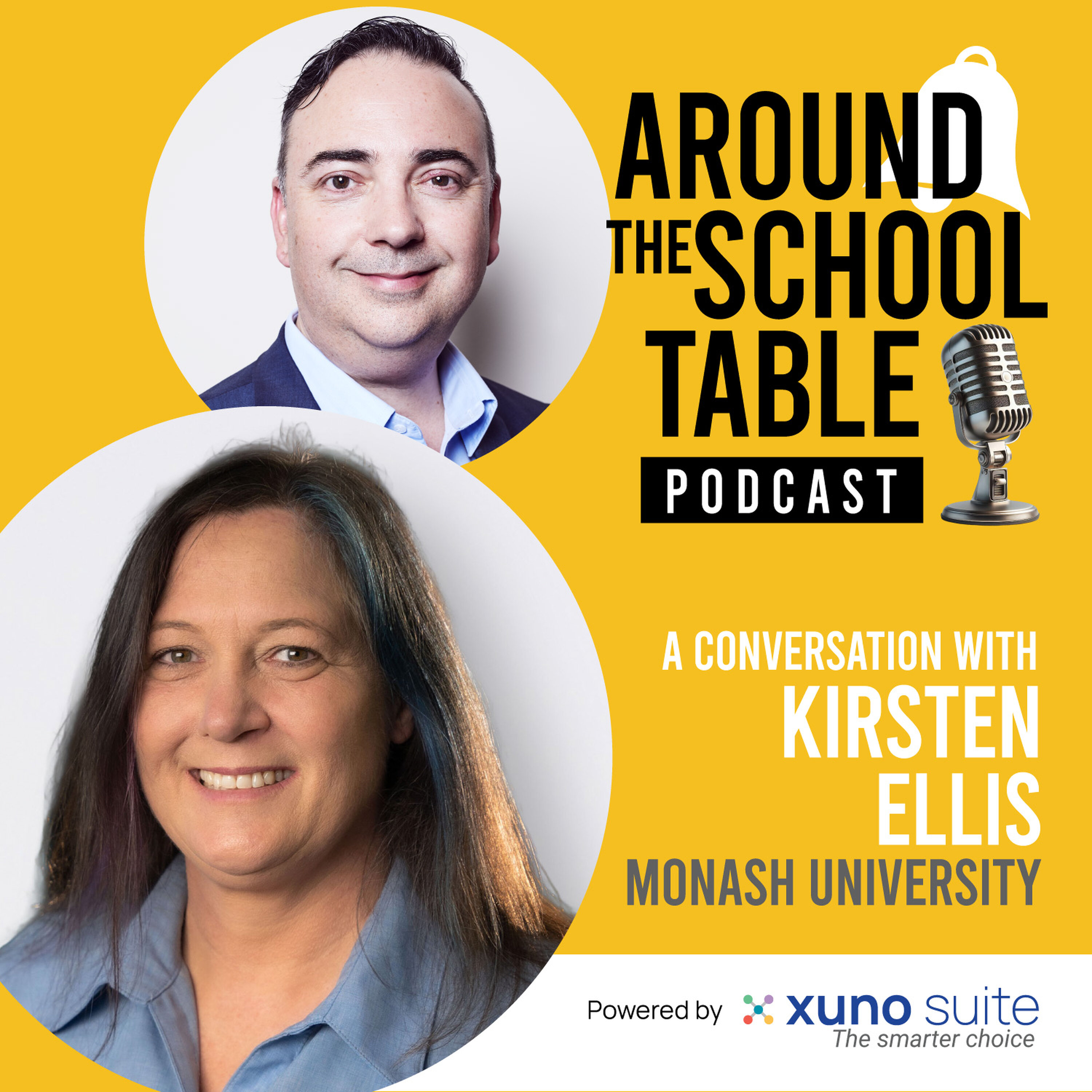 Episode 18: Kirsten Ellis - Sparking Imagination through Inclusive STEM Learning - Around the School Table by Xuno Suite | In this episode of Around the School Table (www.xuno.com.au/podcast), host Steve Davis is joined by Kirsten Ellis, Associate Professor in the Faculty of Information Technology at Monash University (www.monash.edu/it) to explore how her creation, TapeBlocks (www.tapeblock.com), is reshaping STEM learning for students of all abilities. These vibrant, foam-based circuit blocks help children build electronic circuits using simple conductive tape—no soldering, no fear, just curiosity and creativity. Kirsten shares how her journey began with conductive jigsaw puzzles and evolved into a hands-on, accessible STEM resource that empowers every child to create, connect, and collaborate. Designed with inclusivity at its heart, tape blocks allow students with vision or motor skill challenges to build working circuits independently, experiencing both visual and tactile feedback. The conversation uncovers how Kirsten combines engineering ingenuity with educational insight to spark imagination in classrooms. Teachers can use the blocks to introduce fundamental electronic concepts while promoting teamwork and problem-solving. Colour-coded components—red for power, yellow for switches, green for light or vibration, and blue for fans—make learning intuitive and engaging for mixed-ability classrooms. Beyond accessibility, the episode explores the broader philosophy of natively built accessible design—creating tools that are inclusive from the start, not adapted as an afterthought. From integrating tape blocks with LEGO and micro:bits to inspiring creative classroom projects, Kirsten demonstrates that inclusive design benefits every learner, not just those with additional needs. Listeners will also hear how initiatives supported by Google and National Science Week helped bring tape blocks into hundreds of Australian schools, empowering educators to make STEM more tactile, playful, and inclusive. This episode offers practical inspiration for teachers seeking to blend accessibility with innovation—proving that when creativity meets inclusion, every student can shine. Powered by: xuno.com.auSee omnystudio.com/listener for privacy information. | 24m 48s | ||||||
| 9/28/25 | 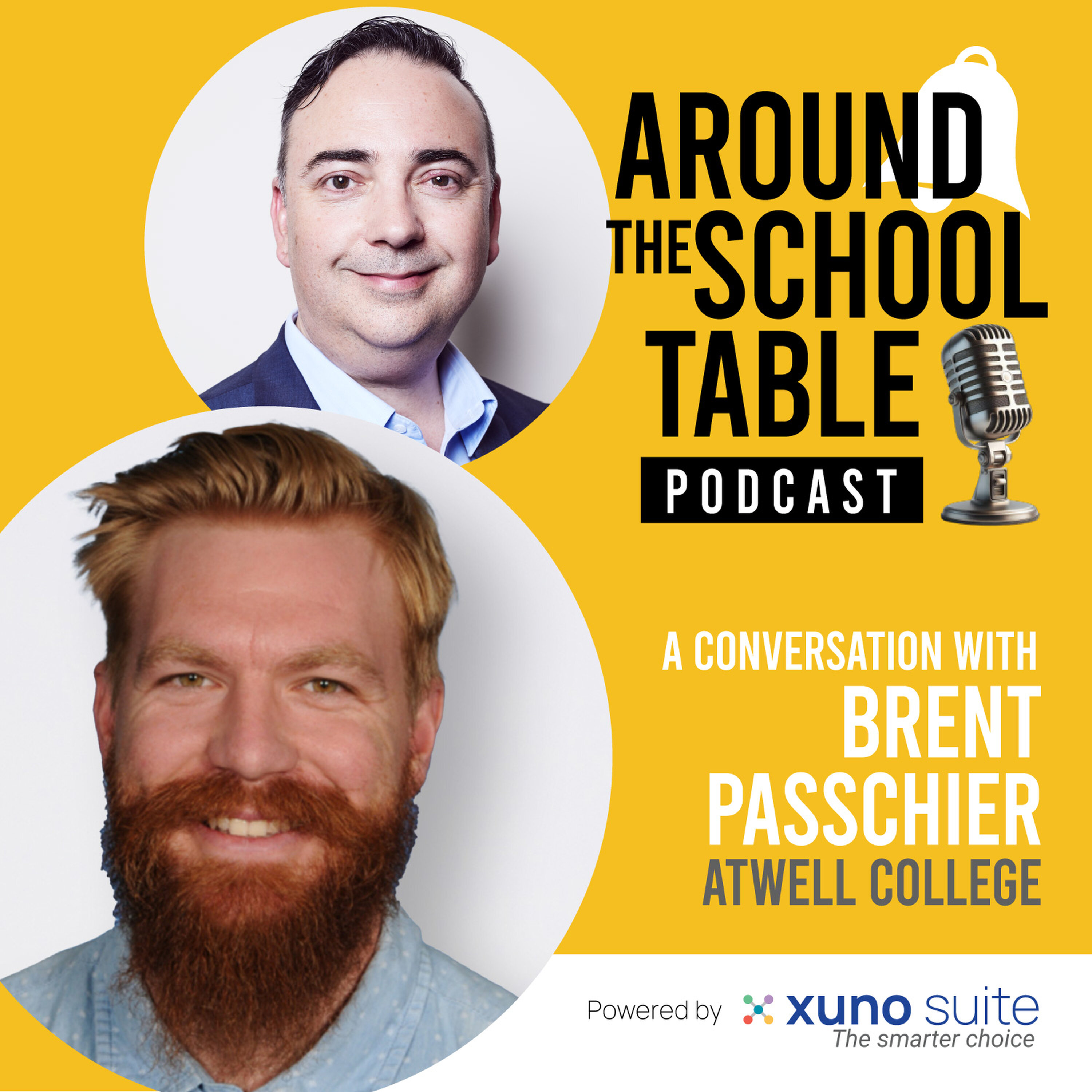 Episode 17: Brent Passchier - Inclusion by Design - Around the School Table by Xuno Suite | Deputy Principal - Education Support, Brent Passchier joins Around the School Table (xuno.com.au/podcasts) to unpack a practical blueprint for inclusive education at Atwell College (atwellcollege.wa.edu.au) in Western Australia. From sensory rooms and hydrotherapy to music programmes and smart use of technology, he explains how schools can widen access without always adding more staff. The conversation begins with a mindset shift. Instead of “more hands”, Atwell focuses on “valued hands” and clear structures. Education assistants are redeployed to run targeted small-group sessions, which lightens teacher load and deepens impact. Moreover, the college embeds inclusion in the timetable: sensory engagement, literacy groups, and life skills are planned, not improvised. Atwell’s three-pathway model sits at the core. Centralised learning supports students with higher medical, communication, or sensory needs. The Universal pathway offers a home base for core subjects while encouraging electives in mainstream classes. Meanwhile, students working at typical academic rigour receive needs-based check-ins from inclusive EAs. Consequently, support is flexible and evidence-informed. Teacher workload is addressed head-on. Simple tech streamlines admin. Furthermore, QR-code workflows trigger assessment adjustments and scheduling, ensuring equitable access with minimal friction. General adjustments; preferential seating, scaffolded templates, and alternative outputs—are normalised. Therefore, teachers can focus on pedagogy, not paperwork. Peer culture also matters. Health students design expos with differentiated activities, quiet spaces, and AAC options. As a result, learners support learners, and inclusion becomes a whole-school habit. Brent returns to a central theme: value over volume. Programmes succeed when they prioritise what each student needs to participate and progress. For leaders and teachers, the takeaways are concrete. Start with what already works, then systemise it. Use data to direct FTE, not the other way round. In addition, make collaboration between mainstream and ed support staff routine. Ultimately, Brent shows that inclusion by design can lift outcomes and reduce cognitive load—while keeping passion for teaching front and centre. Powered by: xuno.com.auSee omnystudio.com/listener for privacy information. | 35m 24s | ||||||
| 9/21/25 | 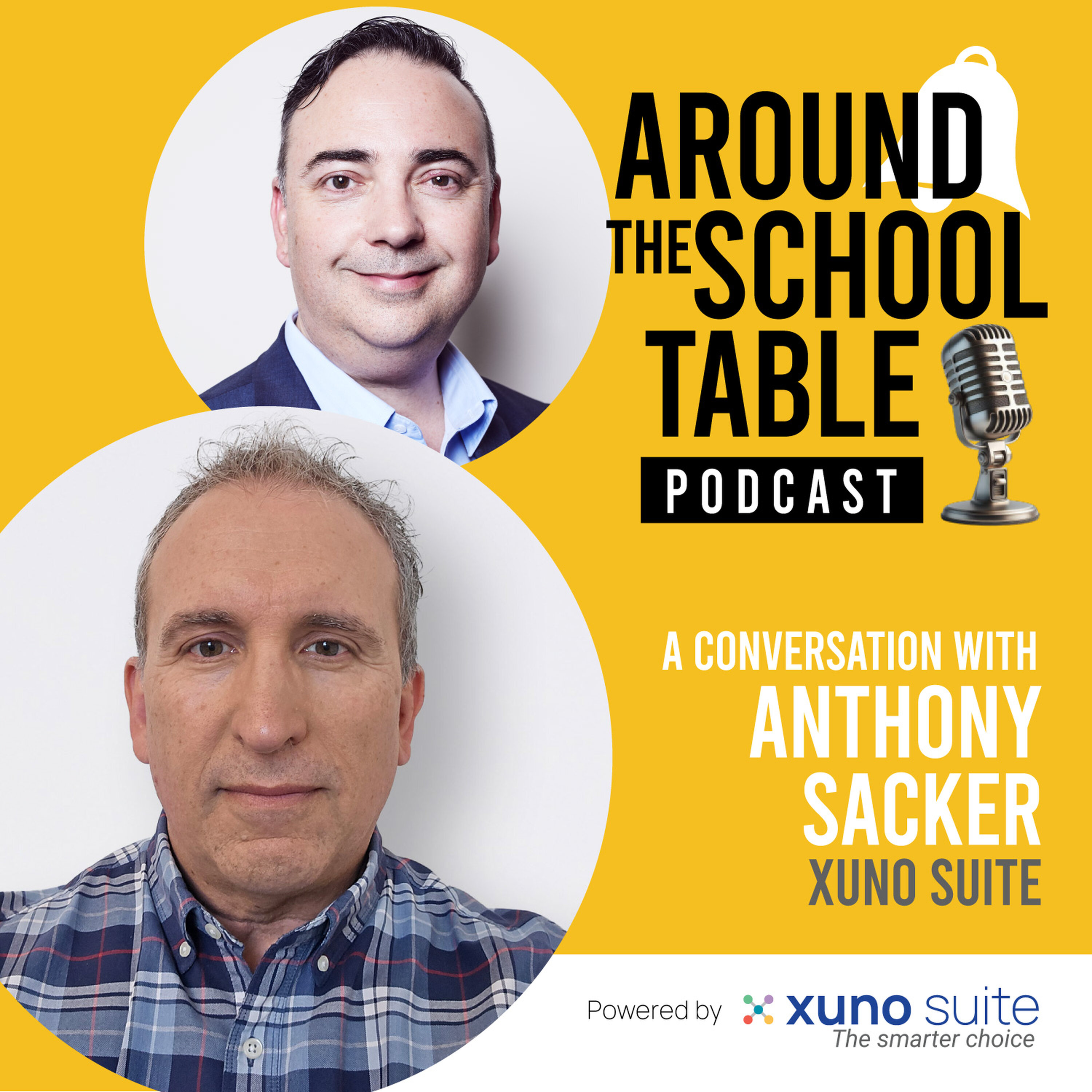 Episode 16: Anthony Sacker – Turning DIBELS Data into Action – Around the School Table by Xuno Suite | Senior Leader at XUNO Suite (xuno.com.au) and driving force behind the Student Maps platform, Anthony Sacker, joins Around the School Table (xuno.com.au/podcasts) to unpack how DIBELS can move from raw scores to real classroom action. In this interview, we explore how smart visualisations and simple workflows help teachers identify risk early and respond with confidence. From pronunciation myths to progress monitoring, Anthony explains why consistent screening, clear benchmarks and collaborative review can lift literacy for every learner. First, we demystify DIBELS: what it measures, why it matters and how often to use it across year levels. Then, we shift to practice. Teachers gather accuracy rates, composite scores and fluency checks; however, those numbers only shine when they’re easy to read and share. That’s where student maps come in. With colour-coded results, distribution views and progress-over-time graphs, teams can see who needs intervention, who needs extension and which strategies to try next. Moreover, Anthony outlines how schools can combine DIBELS with PAT, NAPLAN and other assessments without drowning in spreadsheets. Instead of copy-paste chaos, teachers use a single space to store results, add comments, attach work samples and prepare for handovers. As a result, Year 5 teams begin the year with a clear picture of strengths, gaps and goals. Parents also benefit, because one view shows growth, next steps and expected levels. Beyond literacy, the episode considers career guidance. When counsellors view longitudinal data, conversations become concrete. Students see the link between habits, skills and aspirations. Meanwhile, leaders gain a dependable way to track cohort trends and evaluate support plans. Crucially, we discuss pace and practicality. Data should help, not hinder. Therefore, the episode focuses on quick wins: setting thresholds, using dashboards, and choosing graphs that tell a story in seconds. Finally, we cover trials, so schools can try the tools with sample data before committing. If you want a clear path from assessment to action, this episode delivers. And yes, we settle the pronunciation debate early. It’s DIBELS! Powered by: xuno.com.auSee omnystudio.com/listener for privacy information. | 26m 05s | ||||||


Showing 25 of 393
Pitch Fit is a Pro feature
See how bookable this show is for guests, which brands already advertise, the per-episode ad value, and the best-fit guest and sponsor profile. The numbers are blurred on the free plan.
How readily this show books outside guests like you.
How proven this show is for host-read sponsorships.
For Guests
ProFor Advertisers
ProUpgrade to Pro to unlock guest cadence, sponsor categories, fit scores, and per-episode ad value for this show.