Insights from recent episode analysis
Audience Interest
Podcast Focus
Publishing Consistency
Platform Reach
Insights are generated by CastFox AI using publicly available data, episode content, and proprietary models.
Most discussed topics
Brands & references
Est. Listeners
Insufficient chart data. Estimates will improve as the show charts.
- Per-Episode Audience
Est. listeners per new episode within ~30 days
N/A🎙 ~2x weekly·184 episodes·Last published today - Monthly Reach
Unique listeners across all episodes (30 days)
N/A - Active Followers
Loyal subscribers who consistently listen
N/A
Market Insights
Platform Distribution
Reach across major podcast platforms, updated hourly
Total Followers
—
Total Plays
—
Total Reviews
—
* Data sourced directly from platform APIs and aggregated hourly across all major podcast directories.
On the show
From 13 epsHost
Recent guests
Recent episodes
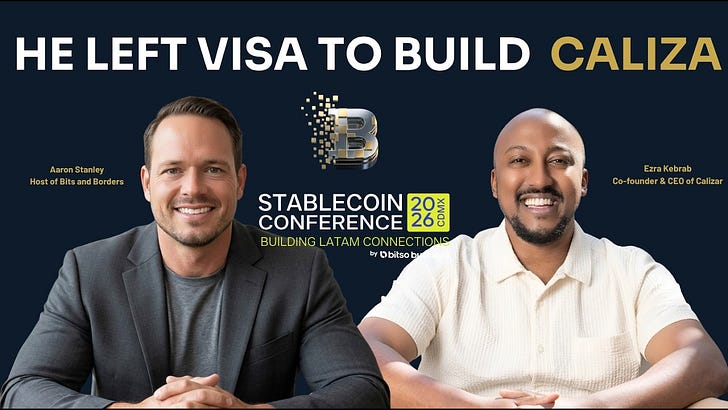
#187: He Left Visa to Build Caliza with Ezra Kebrab
Jun 26, 2026
15m 48s
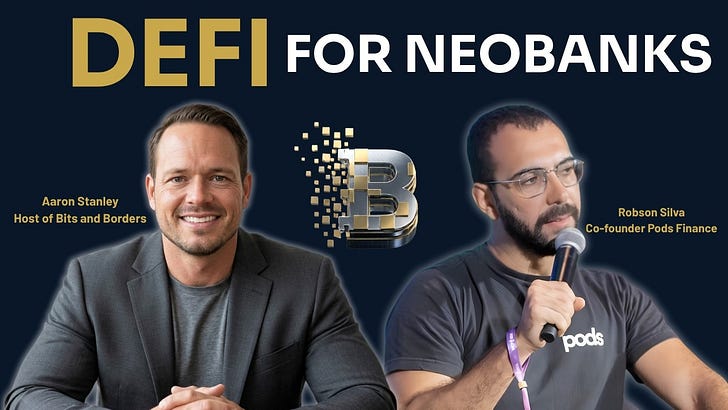
Episode #186: Unbundling the SuperApp with Pods CTO Robson Silva
Jun 19, 2026
34m 04s
Episode #185: Unlocking Stablecoin Liquidity with Checker CEO Jack Chong
Jun 10, 2026
35m 15s
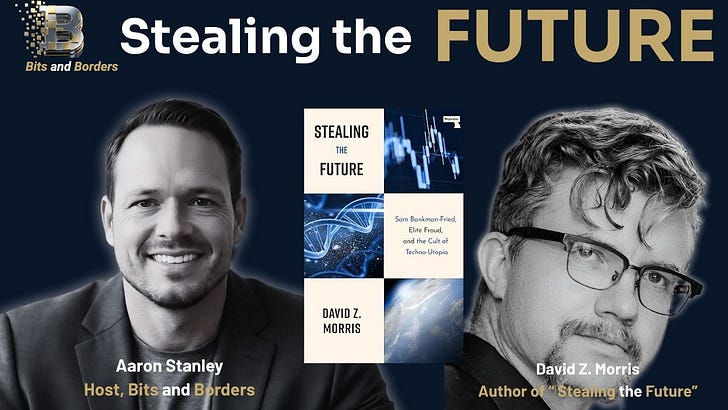
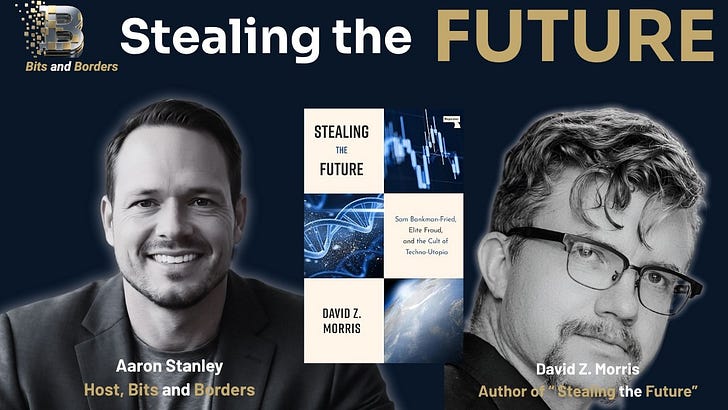
Episode #184: David Z. Morris on Effective Altruism and the Inner Workings of Sam Bankman-Fried
Jun 5, 2026
1h 06m 23s
Episode #183: Tokenized Credit for Brazil's Creative Economy with DUX
May 26, 2026
58m 08s
Social Links & Contact
Official channels & resources
Official Website
Login
RSS Feed
Login
Resolving iTunes ID\u2026 if this persists, the podcast may not be indexed on Apple Podcasts.
| Date | Episode | Topics | Guests | Brands | Places | Keywords | Sponsor | Length | |
|---|---|---|---|---|---|---|---|---|---|
| 6/26/26 | ![]() #187: He Left Visa to Build Caliza with Ezra Kebrab | Hey everyone! I caught up with Caliza CEO Ezra Kebrab at the Bitso Stablecoin Conference in Mexico City earlier this month. We sat down to discuss how Caliza is helping companies move cross-border supplier and treasury payments, with most volume originating in Brazil and Mexico and flowing to China, Hong Kong, and the US.Kebrab’s path ran through a peer-to-peer wallet startup sold to Square in 2013, then Visa, where he watched Pix and real-time payments take off in Brazil.🙌 You can listen to Bits and Borders on your favorite podcast platform YouTube | Spotify | Apple Podcasts🔥 Join our English language Telegram group to continue the conversationThat experience exposed a gap: domestic rails kept improving while cross-border payments stayed stuck, which became the founding insight behind Caliza five years ago.* Caliza started as a traditional payments company, and the model has always been to marry stablecoin rails with traditional banking infrastructure rather than replace it.* After the 2023 banking crisis, Caliza decided to build its own licenses and banking partnerships rather than rely on intermediaries.* The company has grown consistently above 40% month over month, with 60% growth last month.* Customers range from customs and FX brokers without engineering teams to global API clients like Flutterwave, Skydo, and LianLian.* Kebrab pushes back on framing stablecoin players as “the Swift killer.” Swift has built strong standardization for supplier payments, and the real differentiation in cross-border isn’t the rail, it’s the workflow: tax codes, payment messaging, and local compliance criteria that determine whether goods clear customs.* On agentic commerce, Kebrab sees the near-term opportunity in back-office reconciliation, not consumer payments, helping treasury teams abstract away the work of tracking cash across a dozen markets and currencies. He argues“If you do not have any form of agentic commerce in how you think about building your company, you’re becoming a relic very fast.”Caliza is expanding further into Africa and building out collections to Asia in the coming months.I really enjoyed this conversation with Ezra and I hope you do as well. You can connect with him on LinkedinHave a great weekend everyone,-AWSRecent Episodes Get full access to Brazil Crypto Report at brazilcrypto.substack.com/subscribe | 15m 48s | ||||||
| 6/19/26 | ![]() Episode #186: Unbundling the SuperApp with Pods CTO Robson Silva | Hi everyone!Robson Silva is Co-Founder of Pods.He joins the show to discuss how DeFi’s lack of traction with retail pushed Pods toward building modular yield infrastructure for Latin America’s neobanks.The conversation was recorded live at the TokenNation event in São Paulo.It lands at a moment when neobanks and traditional banks alike are racing to bolt yield products onto their stacks without retrofitting their core infrastructure.Silva trained as a naval engineer before finding crypto in 2017, then spent a year in Singapore working on early AMM research during the ICO era.He returned to Brazil and co-founded Pods as a DeFi options protocol, building toward almost $10 million in TVL without ever launching a token.Along the way, Pods also ran a zero-knowledge privacy pilot for Brazil’s CBDC, tokenized construction debt with the registry notary Núclea, and tokenized Brazilian government bonds with Mercado Bitcoin.🙌 You can listen to Bits and Borders on your favorite podcast platform YouTube | Spotify | Apple Podcasts🔥 Join our English language Telegram group to continue the conversationKey takeways from the conversation:* Pods spent two and a half years building a DeFi options protocol before realizing retail flows weren’t coming through MetaMask.* The team built a zero-knowledge privacy pilot for Brazil’s central bank digital currency project, working alongside competing approaches from Microsoft and EY.* Programmable privacy for composable DeFi remains unsolved. Silva argues AMMs may need to be rebuilt from scratch rather than patched with a privacy layer on top.* Pods pivoted to B2B, letting neobanks plug into insured, cross-chain yield vaults through an API instead of building that infrastructure themselves.* Crypto wallet Picnic moved more than 10% of its idle-asset user base into a Pods-powered savings account within 10 days of launch.* Pods’ cross-chain USDC-to-BRLA product is now running close to $2 million in monthly volume in Brazil.I enjoyed this wide-ranging conversation with Rob and I hope you do as well. You can connect with him on LinkedinHave a great weekend, everyone-AWSRecent Episodes Get full access to Brazil Crypto Report at brazilcrypto.substack.com/subscribe | 34m 04s | ||||||
| 6/10/26 | ![]() Episode #185: Unlocking Stablecoin Liquidity with Checker CEO Jack Chong✨ | stablecoin liquidityfinancial infrastructure+3 | Jack Chong | CheckerUSDT+9 | Hong KongNew York | stablecoinliquidity+8 | — | 35m 15s | |
| 6/5/26 | ![]() Episode #184: David Z. Morris on Effective Altruism and the Inner Workings of Sam Bankman-Fried✨ | effective altruismSam Bankman-Fried+3 | David Z. Morris | CoinDeskProtos+3 | — | effective altruismSam Bankman-Fried+5 | — | 1h 06m 23s | |
| 5/26/26 | ![]() Episode #183: Tokenized Credit for Brazil's Creative Economy with DUX✨ | tokenized creditcreative economy+4 | Luiz Octavio Gonçalves Neto | DUXCoca-Cola+3 | — | tokenized creditcreative economy+5 | — | 58m 08s | |
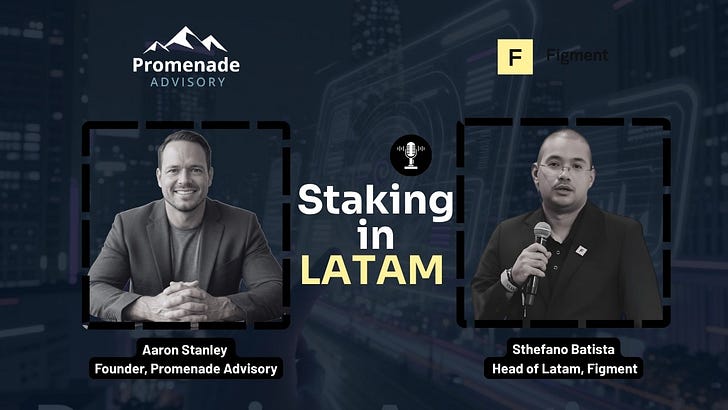
| 4/1/26 | ![]() Episode #182: Live from Merge Sao Paulo: Staking Goes Global with Figment's Sthefano Batista✨ | stakinginstitutional finance+4 | Sthefano Batista | FigmentBlackRock+2 | Merge Sao PauloBrazil | stakingEthereum+3 | — | 33m 23s | |
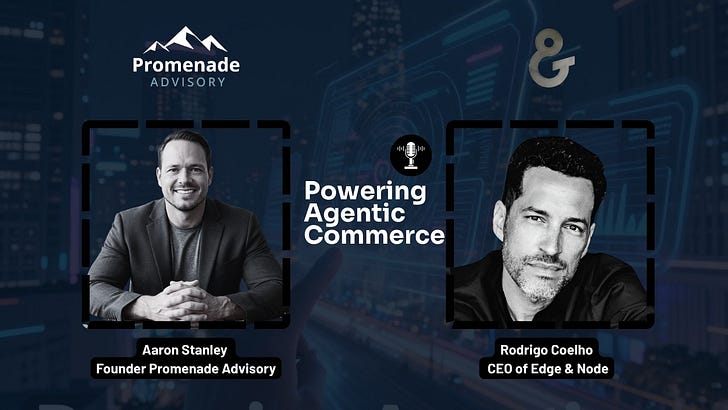
| 3/26/26 | ![]() Episode #181: Live from Merge Sao Paulo with Edge & Node CEO Rodrigo Coelho✨ | blockchainWeb3+3 | Rodrigo Coelho | Edge & NodeThe Graph | BrazilSan Francisco+1 | blockchainEdge & Node+5 | — | 41m 20s | |
| 3/12/26 | ![]() Episode #180: Why Brazil is a World Class Blockchain Talent Hub with Owen Healy✨ | blockchain talentcrypto job market+4 | Owen Healy | Owen Healy Blockchain Talent | BrazilIreland | blockchaincrypto+6 | — | 42m 28s | |
| 1/1/26 | ![]() Episode 179: BRL Stablecoin Deep Dive with Rodrigo Trindade✨ | stablecoinscrypto adoption+3 | Rodrigo Trindade | Iporanga VenturesBCR | BrazilLatin America | stablecoinBrazil+5 | — | 45m 45s | |
| 12/18/25 | ![]() Episode 178: Can Crown Become the Circle of Brazil?✨ | stablecoindigital assets+3 | John Delaney | CrownParadigm+1 | BrazilBrazilian | Crownstablecoin+6 | — | 49m 15s | |
Want analysis for the episodes below?Free for Pro Submit a request, we'll have your selected episodes analyzed within an hour. Free, at no cost to you, for Pro users. | |||||||||
| 12/14/25 | ![]() Episode #177: No Place To Hide: Brazil's New Crypto Tax Regime with Thiago Barbosa✨ | crypto taxregulatory changes+4 | Thiago Barbosa | USDTUSDC+3 | BrazilBrazilian | crypto taxBrazil+5 | — | 51m 28s | |
| 12/1/25 | ![]() Episode #176: What's ACTUALLY Driving Stablecoin Adoption in Latam with Justin Norman✨ | stablecoin adoptionLatin America+3 | Justin Norman | The Flip | ArgentinaLatin America | stablecoinsArgentina+3 | — | 58m 03s | |
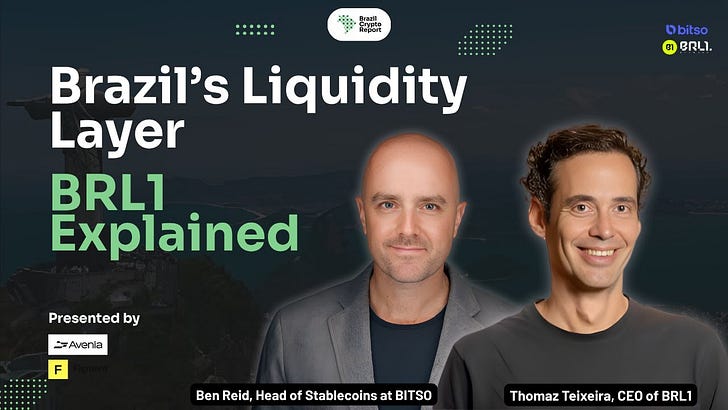
| 11/19/25 | ![]() Episode #175: Inside BRL1 - Brazil's Liquidity Layer with Thomaz Teixeira and Ben Reid✨ | stablecoinliquidity+4 | Thomaz TeixeiraBen Reid | BRL1Bitso+4 | BrazilBrazilian | BRL1stablecoin+7 | — | 51m 15s | |
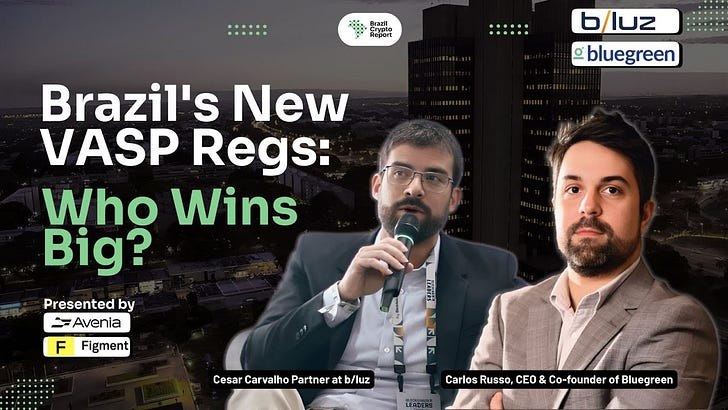
| 11/15/25 | ![]() Episode #174: Winners and Losers of Brazil’s New VASP Rules with Carlos Russo and Cesar Carvalho✨ | VASP regulationscrypto market+3 | Carlos Eduardo RussoCesar Carvalho | BluegreenBaptista Luz Advogados+2 | — | VASP regulationsBrazil Central Bank+3 | — | 1h 07m 54s | |
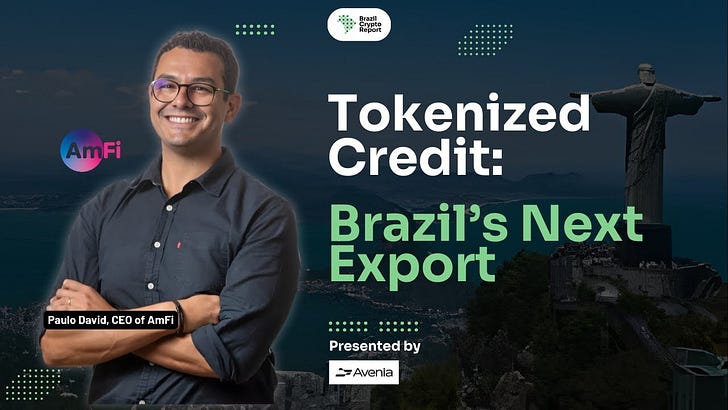
| 11/11/25 | ![]() Episode #173: Brazil's Next Export: Tokenized Credit with Paulo David✨ | tokenizationcredit markets+4 | Paulo David | AmFiGrafeno | Brazil | tokenized creditBrazil+5 | — | 50m 33s | |
| 10/30/25 | ![]() Episode #172: Brazil's Oranje Pill with Gui Gomes | 🙌 You can listen to BCR on your favorite podcast platform YouTube | Spotify | Apple Podcasts🔥 Join the BCR English language Telegram group to continue the conversationOlá pessoal!For today’s episode I talk to Gui Gomes, CEO and founder of OranjeBTC, which became Latin America’s largest bitcoin treasury company and the 26th largest in the world when it publicly listed on Brazil’s B3 exchange earlier this month.We discuss how Oranje aims to be more than just a vehicle for acquiring bitcoin. Rather, Gui sees Oranje as a bitcoin-native company that will catalyze mass adoption of bitcoin across Latin America. Key Takeaways:* From Bridgewater to Bitcoin: Prior to joining Swan Bitcoin in 2022, Gomes spent several years at Ray Dalio’s Bridgewater Associates, where exposure to Dalio’s “Changing World Order” research helped crystallize his conviction that bitcoin represents the future of reserve currencies. The parallels between Dalio’s thesis on currency cycles and bitcoin’s value proposition were impossible to ignore.* Purpose-Built, Not Dabbling: Unlike other companies simply adding bitcoin to their balance sheets as a hedge, OranjeBTC is built from the ground up to operate on the bitcoin standard. Every aspect — from capital structure to hiring to cost basis — is designed around bitcoin accumulation and education.* Latin America’s Unique Opportunity: The region’s history with currency devaluation and inflation makes bitcoin particularly compelling solution. As Gomes puts it: “If bitcoin is good for Americans, bitcoin is great for Latin Americans.” With nearly a billion people and abundant natural resources held back by monetary instability, moving to a bitcoin standard could be transformational for the region.* US vs Brazil Adoption Gap: While US institutional understanding of bitcoin is more advanced, Brazil leads in regulatory clarity. Brazilian banks have been selling bitcoin directly from checking accounts since before US ETF approval—a capability American banks still don’t have.* Aggressive Growth Plans: Orange holds approximately 3,700 BTC and continues buying weekly. The company plans to deploy multiple capital instruments — equity offerings, convertible notes, and other tools — to accelerate treasury growth while creating value for shareholders.* Education as Mission: OranjeBTC is releasing comprehensive research papers on treasury companies, bitcoin fundamentals, and Latin American economic opportunities. It will be hosting institutional events and building educational content for both newcomers and sophisticated investors.Gomes brings a unique perspective shaped by traditional finance experience and hardcore bitcoin conviction. His vision extends beyond corporate treasury strategy to national-level adoption, believing Brazil’s 215 million people could set a transformative example for emerging markets worldwide.Gui also weighs in on the “debasement trade,” why digital natives will accelerate adoption, and how nation-states are just beginning to recognize bitcoin’s strategic importance.You can connect with Gui on Linkedin.Have a great week everyone,-AWSBrazil Crypto Report is presented byAvenia is the programmable financial infrastructure for Latin America. Connect to local payment rails like PIX, SPEI and CBU — using stablecoins as settlement — and unlock real-time, cross-border payments without banks, FX desks, or SWIFT.Whether you’re building a wallet, a crypto card, or a global treasury solution, Avenia gives you the APIs and compliance-ready infrastructure to scale in LatAm. Move money between BRL, USD, MXN and more — fast, transparent, and fully on-chain.https://avenia.io/Recent Episodes Get full access to Brazil Crypto Report at brazilcrypto.substack.com/subscribe | 45m 31s | ||||||
| 10/22/25 | ![]() Episode #171: Can Stablebonds Bring Brazil On-Chain? with David Taylor of Etherfuse | 🙌 You can listen to BCR on your favorite podcast platform YouTube | Spotify | Apple Podcasts🔥 Join the BCR English language Telegram group to continue the conversationOlá pessoal!Today’s episode is with David Taylor, CEO and co-founder of Etherfuse, where we explore what might be the most overlooked infrastructure gap in crypto: tokenized sovereign debt.Taylor’s thesis is compelling: while crypto has created an explosion of speculative assets, it lacks the foundational building block that underpins all traditional finance: the risk-free rate. In TradFi, everything is measured against government bonds. But onchain? That benchmark simply doesn’t exist, creating a critical missing link between the blockchain and traditional finance worlds.His mission is to bring nations “onchain” by tokenizing their sovereign debt, starting with Mexico and now expanding into Brazilian Tesouro bonds. Key Takeaways:* Infrastructure for onchain sovereign debt: Etherfuse positions itself as the AWS-like infrastructure layer for tokenized government bonds, handling regulatory compliance, security, and collateralization so builders can simply integrate and create financial products without recreating this complex foundation* The non-USD opportunity: While most attention focuses on dollar-denominated assets, emerging markets like Brazil, Mexico, and Argentina offer clearer regulatory pathways and stronger incentives for innovation with local currency stablebonds* Solving the liquidity problem: By combining yield-bearing sovereign debt with blockchain rails, stablebonds create natural incentives for liquidity in non-USD stablecoins - something the market has desperately needed* Democratizing access to sovereign yields: By tokenizing government bonds as interest-bearing stablecoins, Etherfuse removes the traditional barriers that limited sovereign debt access to institutions and high-net-worth investors, allowing anyone with a crypto wallet to earn these yields* Historical precedent matters: Taylor points out that successful economies historically started with bonds (Venice, Amsterdam, France), not just currency. Crypto needs to follow the same playbookI really enjoyed this conversation with David and I hope you do as well. You can connect with him on Linkedin.Have a great week everyone,-AWSBrazil Crypto Report is presented byAvenia is the programmable financial infrastructure for Latin America. Connect to local payment rails like PIX, SPEI and CBU — using stablecoins as settlement — and unlock real-time, cross-border payments without banks, FX desks, or SWIFT.Whether you’re building a wallet, a crypto card, or a global treasury solution, Avenia gives you the APIs and compliance-ready infrastructure to scale in LatAm. Move money between BRL, USD, MXN and more — fast, transparent, and fully on-chain.https://avenia.io/Recent Episodes Get full access to Brazil Crypto Report at brazilcrypto.substack.com/subscribe | 49m 12s | ||||||
| 10/17/25 | ![]() Episode #170: Tokenizing Brazil: Onigiri Capital's $50 Million Bet | 🙌 You can listen to BCR on your favorite podcast platform YouTube | Spotify | Apple Podcasts🔥 Join the BCR English language Telegram group to continue the conversationOlá pessoal!Today we’re talking to Qin En Looi, Managing Partner at Onigiri Capital and Partner at Saison Capital, about why his Singapore-based venture fund is making a major bet on Brazil’s tokenization and stablecoin ecosystem.Backed by Credit Saison, a 75-year-old Japanese financial institution with US$30 billion in assets, Onigiri Capital recently launched a US$50 million fund focused exclusively on blockchain-powered financial services. Latin America — and specifically Brazil — will be key areas of focus for deploying this capital. What makes Brazil particularly attractive? According to Qin en, it starts with the Central Bank. “I don’t think any government or central bank in the world comes close to what the Brazilian Central Bank has done in terms of innovation,” he explains, pointing to initiatives like Drex and the country’s track record with PIX and open finance.But the regulatory environment is just one piece of the puzzle. Qin en notes that he has been impressed by how Brazilian blockchain founders are delivering metrics at Series A that rival Series C companies in other markets—often with profitability already achieved. “For the same valuation, I can get a company making two to three million dollars ARR, whereas elsewhere you’d have an unpaid pilot,” he notes.Key Takeaways:* Focused verticals: Onigiri is focusing primarily on stablecoins, payments, tokenized assets, financial markets infrastructure, and DeFi* Local-first approach: The firm is partnering with local funds like Norte Ventures, OneVC, and Valor Capital to better connect with the ecosystem* Institutional advantage: Portfolio companies gain access to Credit Saison’s extensive network of banks and asset managers across Asia* Capital efficiency: Brazilian startups demonstrate stronger revenue focus and resilience compared to peers in developed marketsI really enjoyed this conversation with Qin en and I hope you do as well. It will be exciting to see how his thesis plays out in the coming years. You can connect with Qin en on Linkedin.Have a great week everyone,-AWSBrazil Crypto Report is presented byAvenia is the programmable financial infrastructure for Latin America. Connect to local payment rails like PIX, SPEI and CBU — using stablecoins as settlement — and unlock real-time, cross-border payments without banks, FX desks, or SWIFT.Whether you’re building a wallet, a crypto card, or a global treasury solution, Avenia gives you the APIs and compliance-ready infrastructure to scale in LatAm. Move money between BRL, USD, MXN and more — fast, transparent, and fully on-chain.https://avenia.io/Recent Episodes Get full access to Brazil Crypto Report at brazilcrypto.substack.com/subscribe | 37m 39s | ||||||
| 10/2/25 | ![]() Episode #169: Live from Stellar Meridian 2025: Stablecoins for Local Solutions and Global Impact | 🙌 You can listen to BCR on your favorite podcast platform YouTube | Spotify | Apple Podcasts🔥 Join the BCR English language Telegram group to continue the conversationOlá pessoal!Last month at Stellar Meridian in Rio de Janeiro, I had the privilege of moderating a super interesting panel exploring how stablecoins are solving real problems in emerging markets. Joining me were: * Sebastian Siseles, CEO of Vesseo* Ibrahim Abdulhussein, CEO of Digibank* Camila Rioja, Executive Director of Plexus Institute* Justin Norman, founder of The FlipThe conversation revealed that successful crypto adoption isn’t just about the technology - it’s about successfully pairing the technology with local operators and users to create the ideal localized solution.Ibrahim’s story exemplifies this perfectly. After struggling to send money to his father in war-torn Syria, he built Digibank - a network of 2,000+ physical cash-out points across the MENA region serving 31,000 users. The innovation? Users receive a PIN code via SMS or print, walk to a local merchant, and collect cash. No wallet required. No blockchain knowledge needed. Just simple access to remittances in countries where Western Union doesn’t operate.Sebastian shared how Vesseo is building a non-custodial wallet that prioritizes real-world usability over crypto education. Their mission: “earn global, spend local.” In the coming weeks, they’ll be launching the first Stellar wallet with crypto-to-fiat cards, allowing users to convert USDC at point-of-sale. As Sebastian put it, comparing a traditional $35 wire transfer to near-instant, near-free Stellar transactions is “no brainer” territory. Camila’s work with Plexus Institute showcases how existing systems can be enhanced with blockchain. Brazil already has 180+ community currencies serving municipalities across a country 205 times the size of Switzerland. Their Aratu project is piloting transparent, on-chain distribution of social benefits to communities of mainly women harvesting crabs in Brazil’s northeast.Justin, fresh from a three-week documentary tour across South America, emphasized what ties these stories together: last-mile user experience matters more than infrastructure hype. The excitement around stablecoins often focuses on volumes and new layer-ones, but real adoption happens when solutions are deeply localized for each context.Key Takeaways:* Context matters more than infrastructure - Each market has unique drivers: Bolivia’s dollar shortages, Argentina’s capital controls, Syria’s lack of banking infrastructure, Brazil’s community currency networks.* Abstract away the complexity - The best projects hide blockchain entirely. Users don’t need crypto knowledge to benefit from crypto rails.* Trust takes time - Digibank’s Syrian health workers initially cashed out salaries immediately; seven months later, many now hold USDC voluntarily.* Build on what exists - Don’t create new behaviors from scratch. Enhance existing financial practices with blockchain’s benefits.The future of stablecoins isn’t purely on-chain or off-chain. Rather, it’s intertwined with existing financial behaviors and meeting users where they are.Have a great week everyone,-AWSBrazil Crypto Report is presented byAvenia is the programmable financial infrastructure for Latin America. Connect to local payment rails like PIX, SPEI and CBU — using stablecoins as settlement — and unlock real-time, cross-border payments without banks, FX desks, or SWIFT.Whether you’re building a wallet, a crypto card, or a global treasury solution, Avenia gives you the APIs and compliance-ready infrastructure to scale in LatAm. Move money between BRL, USD, MXN and more — fast, transparent, and fully on-chain.https://avenia.io/P2P.me is the fastest way to buy and sell crypto in Brazil using Pix: direct, secure, and fully onchain.Backed by Multicoin and Coinbase Ventures, P2P.me offers a compliant on and off ramp with, ZK-KYC, and no hidden fees.You can easily use P2P.me to pay PIX QR codes in Brazil using your USDc balance. Topup, scan and pay.Visit br.p2p.me to get started and earn $50 per operation limit.Recent Episodes Get full access to Brazil Crypto Report at brazilcrypto.substack.com/subscribe | 28m 03s | ||||||
| 9/30/25 | ![]() #168: How KAST Became Latam's Stablecoin Neobank with Raagulan Pathy | 🙌 You can listen to BCR on your favorite podcast platform YouTube | Spotify | Apple Podcasts🔥 Join the BCR English language Telegram group to continue the conversationOlá pessoal!Raagulan Pathy is CEO and founder of KAST, the stablecoin neobank has been spreading like wildfire since launching 14 months ago, particularly in emerging markets like Brazil and Latin America. Raags is known across the industry as “The Stablecoin Guy” dating back to his previous role leading Circle’s Asia operations, and he joins to shares insights into building a truly global banking alternative for the crypto-native generation.KAST represents a fundamental shift in how we think about digital banking infrastructure. Rather than simply offering another crypto card or wallet, the platform provides a comprehensive bank-like experience that bridges traditional finance with decentralized assets. Users can deposit stablecoins across multiple chains, earn yield on their holdings, and spend globally through integrated card services.Key Market Insights* Exceptional user engagement metrics: KAST has achieved 500,000 app downloads with 64% weekly active users and 30% daily active users, demonstrating strong product-market fit in the neobanking space* Rapid growth trajectory: The platform processes over US$20 million in monthly volume while maintaining 20% month-over-month growth, suggesting sustainable scaling momentum* Strategic market positioning: Latin America represents 30% of KAST’s global business, with Brazil emerging as a particularly strong market due to demand for global banking alternatives* Four distinct customer segments: The platform serves crypto natives, stablecoin-first users from the Global South, remote workers, and mobile affluent individuals who operate across multiple jurisdictionsRaags’ perspective on the stablecoin ecosystem challenges conventional wisdom about where value creation occurs. While many focus on building new stablecoin protocols, he argues the real opportunity lies in creating usable infrastructure on top of existing stablecoin rails. This insight reflects a broader maturation as the industry advances from pure infrastructure development toward consumer-focused applications.The conversation also reveals important dynamics in Latin American crypto adoption, where stablecoins serve not just as remittance tools but as premium financial products for upwardly mobile consumers seeking global banking alternatives. This represents a significant market opportunity that extends well beyond traditional financial inclusion narratives.I really enjoyed this fascinating conversation and I hope you do as well. You can connect with Raags on LinkedinHave a great week everyone,-AWSBrazil Crypto Report is presented byAvenia is the programmable financial infrastructure for Latin America. Connect to local payment rails like PIX, SPEI and CBU — using stablecoins as settlement — and unlock real-time, cross-border payments without banks, FX desks, or SWIFT.Whether you’re building a wallet, a crypto card, or a global treasury solution, Avenia gives you the APIs and compliance-ready infrastructure to scale in LatAm. Move money between BRL, USD, MXN and more — fast, transparent, and fully on-chain.https://avenia.io/P2P.me is the fastest way to buy and sell crypto in Brazil using Pix: direct, secure, and fully onchain.Backed by Multicoin and Coinbase Ventures, P2P.me offers a compliant on and off ramp with, ZK-KYC, and no hidden fees.You can easily use P2P.me to pay PIX QR codes in Brazil using your USDc balance. Topup, scan and pay.Visit br.p2p.me to get started and earn $50 per operation limit.Recent Episodes Get full access to Brazil Crypto Report at brazilcrypto.substack.com/subscribe | 45m 21s | ||||||
| 9/25/25 | ![]() Episode #167: The Latam Road to Devconnect with Nathan Sexer and Romina Sejas | 🙌 You can listen to BCR on your favorite podcast platform YouTube | Spotify | Apple Podcasts🔥 Join the BCR English language Telegram group to continue the conversationOlá pessoal!Mark your calendars because Latin America will be the center of the crypto universe this November.Devconnect, Ethereum’s premier developer-focused event takes place this year in Buenos Aires from November 17-22. This gathering attracts talent from across the Ethereum world as well as competing ecosystems.Prior to that, ETH Latam will take place in Sao Paulo November 6-9 and will bring showcase the best talent and projects that the region has to offer. For today’s episode of BCR we talk to Nathan Sexer, head of Devcon and Devconnect at the Ethereum Foundation and Romina Sejas of ETH Kipu and ETH Latam to talk about how these events showcase the leading, though under-appreciated, role that Latin America plays in the growth of crypto globally. Why Latin America, Why Now?The timing couldn't be better. Argentina boasts one of the world's highest crypto adoption rates, with 5 million people - 10% of the population - using crypto daily. Meanwhile, Brazil is experiencing a a flurry of activity at the institutional level, with banks and regulators conducting deep blockchain research and exploring real-world tokenization projects.As Romina noted, "In Brazil, you don't need to explain what blockchain or Ethereum is anymore. They're already doing the research."ETH LATAM: Brazil's Institutional MomentNovember 6-9, São PauloETH Latam returns to Brazil with a focus on bridging the gap between crypto's grassroots community and institutional stakeholders. This year's event features:* Hackathon component (Nov 6-7) partnered with ETH Samba* Main conference (Nov 8-9) with multiple specialized tracks* Arbitrum Day highlighting the L2's strong Brazilian presence* Staking Forum and AI stage for specialized discussions* Institutional focus targeting banks, regulators, and corporate leadersThe event serves as the perfect "stopover before Devconnect," allowing international attendees to experience both Brazil's corporate crypto landscape and Argentina's grassroots innovation.Devconnect: Reimagining Ethereum GatheringsNovember 17-22, Buenos AiresDevconnect differs from Devcon (also hosted by the Ethereum Foundation) and other crypto events in that it breaks the traditional conference mold, offering a hybrid experience that combines:* 30-40 coordinated events in one massive venue in Palermo* World's Fair component showcasing production-ready Ethereum applications* Co-working spaces for real-time collaboration* Gaming, privacy, and Layer 2 districts for hands-on experiences* Pay-with-crypto functionality throughout the venueThe Ripple EffectThe Ethereum Foundation's return to Latin America just three years after Devcon Bogotá demonstrates the region's sustained impact. The 2022 event catalyzed community growth that's still expanding today, with projects like Hardhat and OpenZeppelin originating from Argentina's vibrant builder ecosystem.Both events represent a pivotal moment: crypto's evolution from experimental technology to practical infrastructure that serves real-world needs across diverse markets.Be sure to visit ethlatam.org and devconnect.org for tickets and updates.You can connect with Romina and Nathan on X/Twitter. Have a great week everyone,-AWSBrazil Crypto Report is presented byAvenia is the programmable financial infrastructure for Latin America. Connect to local payment rails like PIX, SPEI and CBU — using stablecoins as settlement — and unlock real-time, cross-border payments without banks, FX desks, or SWIFT.Whether you're building a wallet, a crypto card, or a global treasury solution, Avenia gives you the APIs and compliance-ready infrastructure to scale in LatAm. Move money between BRL, USD, MXN and more — fast, transparent, and fully on-chain.https://avenia.io/P2P.me is the fastest way to buy and sell crypto in Brazil using Pix: direct, secure, and fully onchain.Backed by Multicoin and Coinbase Ventures, P2P.me offers a compliant on and off ramp with, ZK-KYC, and no hidden fees.You can easily use P2P.me to pay PIX QR codes in Brazil using your USDc balance. Topup, scan and pay.Visit br.p2p.me to get started and earn $50 per operation limit.Recent Episodes Get full access to Brazil Crypto Report at brazilcrypto.substack.com/subscribe | 37m 03s | ||||||
| 9/16/25 | ![]() Episode #166: Thamilla Talarico on Drex and Polygon's Growth in Brazil | 🙌 You can listen to BCR on your favorite podcast platform YouTube | Spotify | Apple Podcasts🔥 Join the BCR English language Telegram group to continue the conversationOlá pessoal!Today’s episode is with Thamilla Talarico, head of on-chain finance growth for Brazil at Polygon Labs. You may recall that she previously represented Ernst & Young in the Central Bank’s Drex pilot. We talk about Polygon’s deliberate investment in Brazilian market expansion, recognizing the country's unique position in the Latin American digital asset ecosystem.We also dive into several important changes to Polygon’s growth strategy. Gone are the days when Starbucks and Nike were issuing NFTs on the platform. Nowadays, they are laser focused on payments and on-chain finance (RWAs).Thamilla also reflects at length about her experience working on the Drex pilot with EY. We explore about the good, bad and ugly aspects of the project, and how, ultimately blockchain privacy technology is just not ready to be deployed at the scale required by the Central Bank. Key Takeaways Regarding Polygon’s Pivot* Laser-focused vision: Polygon has shifted from being a general-purpose blockchain to specifically targeting real-world assets and payments, moving away from the scattered approach that previously included NFT partnerships and various enterprise initiatives* Market dominance in BRL stablecoins: Brazilian Real stablecoins represent the second-largest non-USD stablecoin volume on Polygon, with major issuers including BRL1 (Bitso, Mercado Bitcoin, Foxbit consortium), BRLA (Avenia), and BRZ (Transfero)* Technical infrastructure improvements: The Giga gas roadmap promises significant performance enhancements, scaling from 1,000 TPS currently to 5,000 TPS by October 2024, with eventual targets of 100,000 TPS* Geographic expansion strategy: Brazil represents one of four key markets receiving dedicated business development resources, alongside Hong Kong, India, and the UKDrex Project Reflections and Market Implications* Privacy vs. composability trade-offs: The fundamental challenge wasn't scalability, but rather balancing blockchain's inherent transparency with privacy requirements and regulatory compliance under Brazilian data protection laws* Technical maturity gaps: None of the three privacy solutions tested in Phase One met the Central Bank's production-ready standards, highlighting the nascent state of enterprise-grade privacy technologies* Regulatory complexity: The Central Bank struggled to reconcile blockchain's transparency with compliance requirements, particularly around data protection and the balance between audit capabilities and broad surveillance powers* Positive externalities: Despite the pivot, the project successfully matured Brazil's digital assets ecosystem, creating technical expertise, fostering collaboration between competitors, and establishing business relationships that will continue beyond DrexMoving forward, Thamilla emphasizes that the infrastructure, knowledge, and business cases developed during the Drex pilot remain valuable. The focus should shift toward private sector initiatives using stablecoins as settlement instruments for tokenized assets, leveraging the collaborative frameworks and technical expertise developed during the pilot program.The Central Bank's decision represents a natural transition from public sector experimentation to private sector implementation, she argues, positioning Brazil to maintain its leadership in tokenization while building on the substantial groundwork laid by the Drex initiative.You can connect with Thamilla on Linkedin. Have a great week everyone,-AWSBrazil Crypto Report is presented byAvenia is the programmable financial infrastructure for Latin America. Connect to local payment rails like PIX, SPEI and CBU — using stablecoins as settlement — and unlock real-time, cross-border payments without banks, FX desks, or SWIFT.Whether you're building a wallet, a crypto card, or a global treasury solution, Avenia gives you the APIs and compliance-ready infrastructure to scale in LatAm. Move money between BRL, USD, MXN and more — fast, transparent, and fully on-chain.https://avenia.io/P2P.me is the fastest way to buy and sell crypto in Brazil using Pix: direct, secure, and fully onchain.Backed by Multicoin and Coinbase Ventures, P2P.me offers a compliant on and off ramp with, ZK-KYC, and no hidden fees.You can easily use P2P.me to pay PIX QR codes in Brazil using your USDc balance. Topup, scan and pay.Visit br.p2p.me to get started and earn $50 per operation limit.Recent Episodes Get full access to Brazil Crypto Report at brazilcrypto.substack.com/subscribe | 57m 15s | ||||||
| 9/11/25 | ![]() Episode #165: Stablecoins Reshaping Global Commerce - Onsite from the Bitso Stablecoin Conference | 🙌 You can listen to BCR on your favorite podcast platform YouTube | Spotify | Apple Podcasts🔥 Join the BCR English language Telegram group to continue the conversationOlá pessoal!Today’s podcast episode is a panel discussion I moderated at Bitso Business’ Stablecoin Conference in Mexico City, featuring Monica Ramirez (Anchorage Digital), Nick Philpott (Zodiac Markets), and Peter Wexler (Visa). Our conversation explored how stablecoins have evolved from crypto trading tools to essential infrastructure for global commerce.We highlight critical regulatory developments, particularly the U.S. Genesis Act, which have opened doors for mainstream adoption by providing the regulatory clarity banks and institutions have long sought. This legislation, combined with similar frameworks like Europe's MiCA, is creating a foundation for global stablecoin commerce.Key Themes Discussed:* Commodities Financing Revolution: Zodia Markets processes $30-40 billion annually in USD stablecoins, with individual transactions reaching $155 million for oil cargo purchases, demonstrating stablecoins' capacity for large-scale commodity trading* Correspondent Banking Decline: The retreat of traditional banking networks has created opportunities for stablecoin infrastructure to fill critical gaps in cross-border payments* Emerging Market Innovation: Non-USD stablecoins like Turkish Lira (TRYB) are finding product-market fit, with Zodiac processing nearly $3 billion in TRYB year-to-date* Banking Strategy: Rather than issuing stablecoins directly, banks should focus on providing services to issuers—custody, treasury management, and minting/burning operations* User Experience: The panel emphasized creating "Uber-like" transparency in cross-border payments to reduce psychological costs and uncertaintyMarket predictions ranged from $1-9 trillion in stablecoin market cap by 2030, with consensus around $2-5 trillion representing a 10x growth from current levels.Huge thanks to the Bitso Business team for the opportunity to participate in this great event! Feel free to connect with Monica, Nick and Peter on Linkedin. Have a great week everyone,-AWSBrazil Crypto Report is presented byAvenia is the programmable financial infrastructure for Latin America. Connect to local payment rails like PIX, SPEI and CBU — using stablecoins as settlement — and unlock real-time, cross-border payments without banks, FX desks, or SWIFT.Whether you're building a wallet, a crypto card, or a global treasury solution, Avenia gives you the APIs and compliance-ready infrastructure to scale in LatAm. Move money between BRL, USD, MXN and more — fast, transparent, and fully on-chain.https://avenia.io/P2P.me is the fastest way to buy and sell crypto in Brazil using Pix: direct, secure, and fully onchain.Backed by Multicoin and Coinbase Ventures, P2P.me offers a compliant on and off ramp with, ZK-KYC, and no hidden fees.You can easily use P2P.me to pay PIX QR codes in Brazil using your USDc balance. Topup, scan and pay.Visit br.p2p.me to get started and earn $50 per operation limit.Recent Episodes Get full access to Brazil Crypto Report at brazilcrypto.substack.com/subscribe | 33m 26s | ||||||
| 9/5/25 | ![]() Episode #164: Reshaping Money Movement in Latam with Matheus Moura | 🙌 You can listen to BCR on your favorite podcast platform YouTube | Spotify | Apple Podcasts🔥 Join the BCR English language Telegram group to continue the conversationOlá pessoal!This week’s episode is with Matheus Moura, co-founder and CEO of Avenia (formerly BRLA Digital), where we discuss how the company is building out cross-border payments and financial infrastructure across Latin America. We touch on the need for this infrastructure under the thesis that every company will eventually become a financial services company in some capacity. We also explore the role of stablecoins in the embedded finance landscape and why Latin America has emerged as ground zero for this transformation.Avenia is also a sponsor of Brazil Crypto Report so be sure to check them out 🔥BRLA Digital → AveniaAvenia started off as a quantitative crypto hedge fund, but quickly transitioned in 2023 to focus on financial infrastructure upon realizing the strong product market fit opportunity in the crypto payments space. What started as an idea to create dollar savings accounts for Brazilians has evolved into a comprehensive platform that enables any company to offer financial services through a single API integration.The company's rebrand to Avenia (from "avenida" - avenue in Spanish/Portuguese) perfectly captures their mission: building financial highways for seamless money movement across borders. This infrastructure approach addresses a critical market need, as evidenced by the fact that 90% of Avenia's current revenue comes from cross-border FX transactions.Key Takeaways* The End of "Not Moving Money": Matheus describes how traditional solutions like Wise rely on maintaining cash pools across markets to avoid actual money movement. Stablecoins enable real-time, low-cost transfers that eliminate the need for inefficient balance sheet management.* Latin America's Perfect Storm: The region's combination of instant payment systems (Pix, SPEI), sophisticated user expectations for real-time transfers, and complex correspondent banking relationships creates ideal conditions for stablecoin adoption.* Embedded Finance at Scale: Avenia's vision extends beyond FX to recreating all financial primitives (credit, investing, escrow) through stablecoins, enabling any company to become a financial services provider. Matheus sees this as similar to how cloud computing has democratized tech infrastructure over the last 20 years. * Regulatory Readiness: Brazil's central bank's collaborative approach to innovation, combined with upcoming VASP regulations, positions the country as a leader in crypto-friendly financial infrastructure development.* Regional Expansion Strategy: Success in Brazil provides the foundation for Avenia’s expansion across Latin America, with Argentina, Colombia, and Mexico identified as priority markets based on client demand and regulatory frameworks.Pushing ForwardAvenia's roadmap includes expanding payment methods, card issuance capabilities, and additional financial primitives while maintaining focus on reducing complexity for companies entering Latin American markets. As Matheus noted, the goal is creating an environment where "everyone can pay like a local in any country of Latin America" regardless of their native currency.The company's approach represents a fundamental shift in how we think about cross-border payments - from managing liquidity pools to enabling actual money movement through blockchain rails. For financial services stakeholders, Avenia's growth trajectory offers valuable insights into the future of embedded finance in emerging markets.I really enjoyed this conversation with Matheus and I hope you do as well. You can connect with him on Linkedin. Have a great week everyone,-AWSBrazil Crypto Report is presented byAvenia is the programmable financial infrastructure for Latin America. Connect to local payment rails like PIX, SPEI and CBU — using stablecoins as settlement — and unlock real-time, cross-border payments without banks, FX desks, or SWIFT.Whether you're building a wallet, a crypto card, or a global treasury solution, Avenia gives you the APIs and compliance-ready infrastructure to scale in LatAm. Move money between BRL, USD, MXN and more — fast, transparent, and fully on-chain.https://avenia.io/P2P.me is the fastest way to buy and sell crypto in Brazil using Pix: direct, secure, and fully onchain.Backed by Multicoin and Coinbase Ventures, P2P.me offers a compliant on and off ramp with, ZK-KYC, and no hidden fees.You can easily use P2P.me to pay PIX QR codes in Brazil using your USDc balance. Topup, scan and pay.Visit br.p2p.me to get started and earn $50 per operation limit.Recent Episodes Get full access to Brazil Crypto Report at brazilcrypto.substack.com/subscribe | 43m 10s | ||||||
| 8/27/25 | ![]() Episode #163: Base in Brazil with Guilherme Bettanin | 🙌 You can listen to BCR on your favorite podcast platform YouTube | Spotify | Apple Podcasts🔥 Join the BCR English language Telegram group to continue the conversationOlá pessoal!This week’s episode is with Guilherme Bettanin, Brazil country manager for Base - the Coinbase-incubated Ethereum Layer 2 blockchain that has become the largest network of its kind based on transaction volume, users and total value locked. We discuss Gui’s ambitious expansion strategy designed to establish Brazil as a cornerstone of Base’s Latin America ecosystem. The goal is to position Base as Brazil's largest blockchain community while addressing the diverse needs of the local ecosystem. This approach includes supporting various sophistication levels within the Brazilian market, from established enterprise projects to emerging individual developers seeking entry points into decentralized finance, for example. Objectives Include: * Market Positioning: Establish Base as the dominant blockchain community platform in Brazil* Ecosystem Development: Support both large-scale institutional projects and grassroots innovation* Educational Infrastructure: Provide guidance and resources for newcomers to the cryptocurrency space* Regional Expansion: Leverage growth in Brazil to drive broader Latin American adoptionAmbassador Network and Specialized ExpertiseGui is also making a big push to expand the Base community via ambassador programs that taps into specialized knowledge areas. These include:* Ambassador Program: Curated selection of regional experts and thought leaders* Builder Network: Direct support system for developers and technical contributors* Creator Economy Focus: Specialized guidance for content creators and digital entrepreneurs* Knowledge Exchange: Facilitated learning between experienced and emerging participantsCommunity Engagement StrategyBase brings a multi-channel approach to community development, combining digital presence with direct engagement opportunities. This includes a big focus on in-person events and virtual programming, an aggressive social media presence with active content distribution on social networks, a buzzing Discord community and open collaboration with participants from other blockchain ecosystems. I really enjoyed this conversation with Guilherme and I hope you do as well. You can connect with him on X/Twitter. Be sure to follow Based Brasil on X as well, and join the Base Brasil Discord server to follow this exciting ecosystem. Have a great week everyone,-AWSBrazil Crypto Report is presented byAvenia is the programmable financial infrastructure for Latin America. Connect to local payment rails like PIX, SPEI and CBU — using stablecoins as settlement — and unlock real-time, cross-border payments without banks, FX desks, or SWIFT.Whether you're building a wallet, a crypto card, or a global treasury solution, Avenia gives you the APIs and compliance-ready infrastructure to scale in LatAm. Move money between BRL, USD, MXN and more — fast, transparent, and fully on-chain.https://avenia.io/P2P.me is the fastest way to buy and sell crypto in Brazil using Pix: direct, secure, and fully onchain.Backed by Multicoin and Coinbase Ventures, P2P.me offers a compliant on and off ramp with, ZK-KYC, and no hidden fees.You can easily use P2P.me to pay PIX QR codes in Brazil using your USDc balance. Topup, scan and pay.Visit br.p2p.me to get started and earn $50 per operation limit.Recent Episodes Get full access to Brazil Crypto Report at brazilcrypto.substack.com/subscribe | 41m 33s | ||||||
Showing 25 of 189
Pitch Fit is a Pro feature
See how bookable this show is for guests, which brands already advertise, the per-episode ad value, and the best-fit guest and sponsor profile. The numbers are blurred on the free plan.
How readily this show books outside guests like you.
How proven this show is for host-read sponsorships.
For Guests
ProFor Advertisers
ProUpgrade to Pro to unlock guest cadence, sponsor categories, fit scores, and per-episode ad value for this show.