
C2: Critical Conversations that Lie at the Heart of Health Justice
by BUSPH CoE in Maternal and Child Health
Is this your podcast?Insights from recent episode analysis
Audience Interest
Podcast Focus
Publishing Consistency
Platform Reach
Insights are generated by CastFox AI using publicly available data, episode content, and proprietary models.
Most discussed topics
Brands & references
Est. Listeners
Insufficient chart data. Estimates will improve as the show charts.
- Per-Episode Audience
Est. listeners per new episode within ~30 days
N/A🎙 Weekly cadence·38 episodes·Last published 8mo ago - Monthly Reach
Unique listeners across all episodes (30 days)
N/A - Active Followers
Loyal subscribers who consistently listen
N/A
Market Insights
Platform Distribution
Reach across major podcast platforms, updated hourly
Total Followers
—
Total Plays
—
Total Reviews
—
* Data sourced directly from platform APIs and aggregated hourly across all major podcast directories.
On the show
From 10 epsHosts
Recent guests
Recent episodes
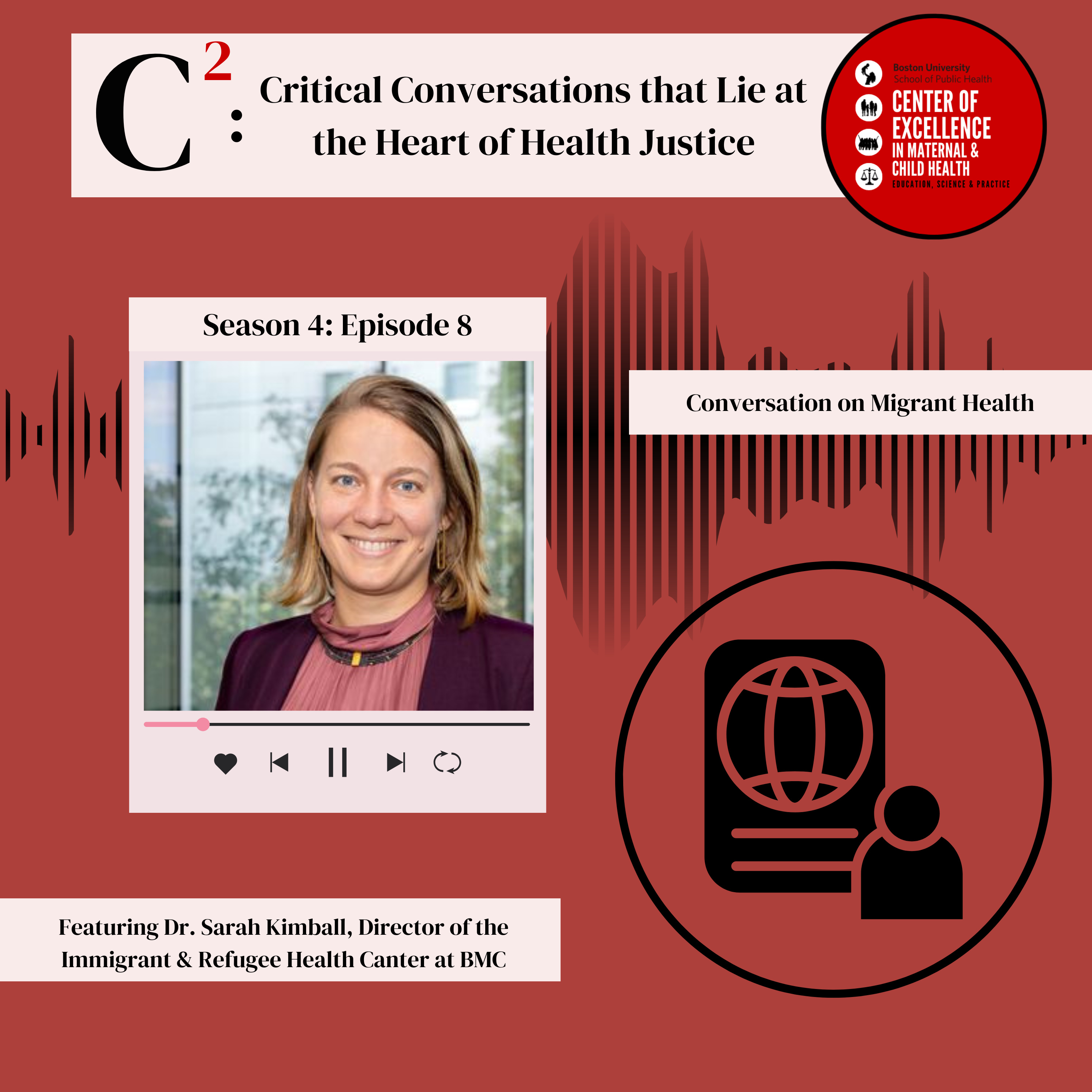
Conversation on Migrant Health with Dr. Sarah Kimball
Dec 11, 2025
39m 53s
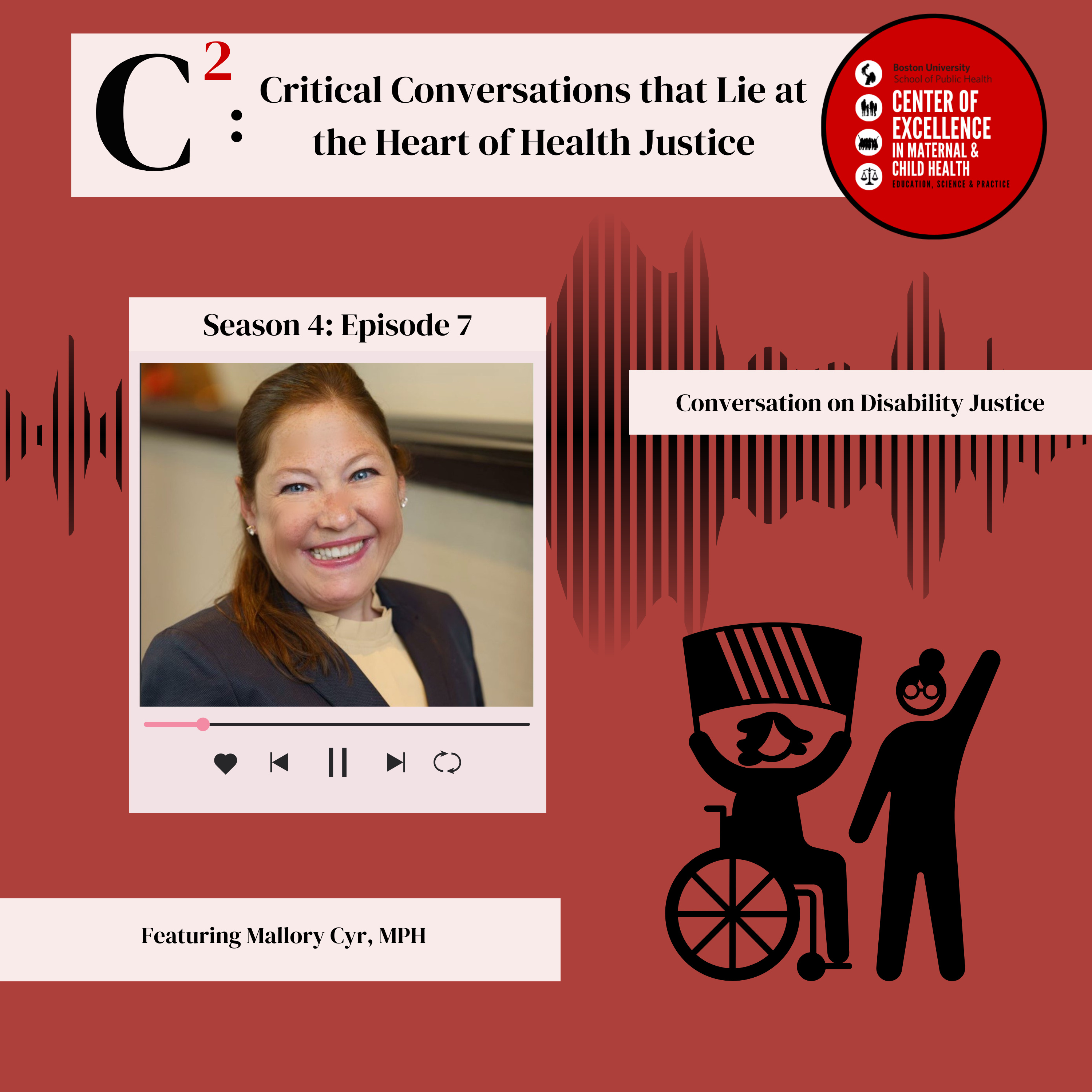
Conversation on Disability Justice with Mallory Cyr
Nov 11, 2025
46m 16s
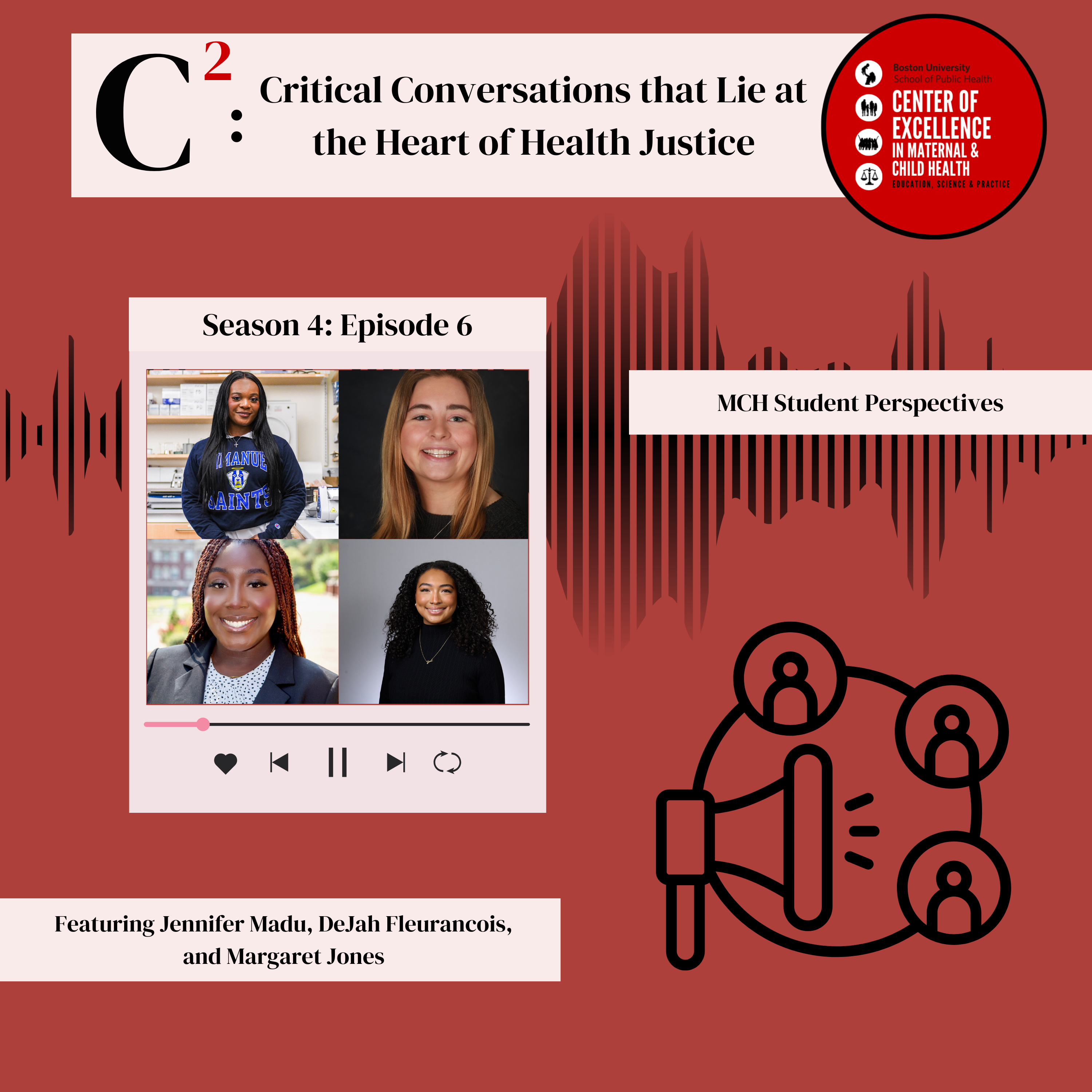
MCH Student Perspectives
Sep 10, 2025
34m 41s
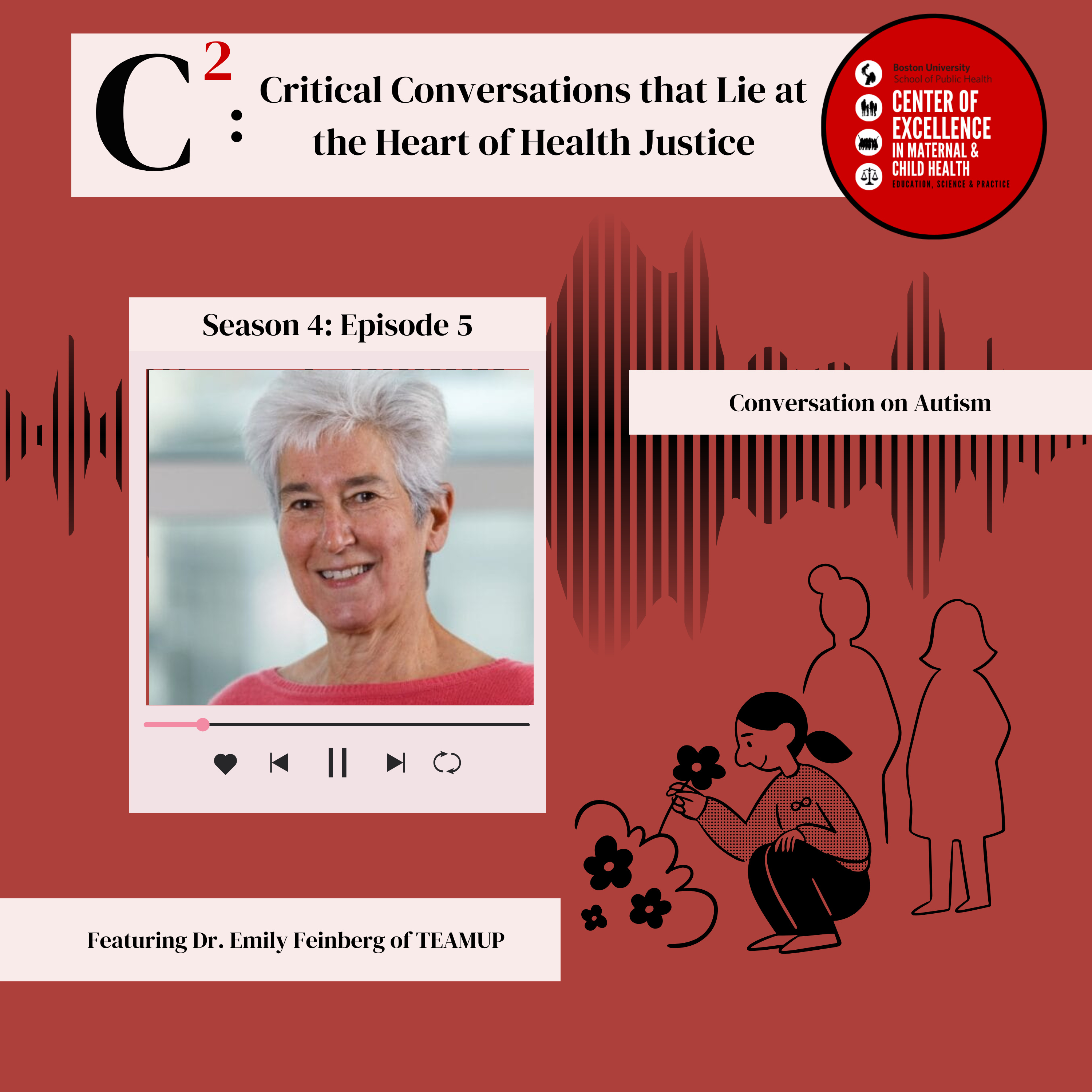
Conversation on Autism with Emily Feinberg, ScD, CPNP
Jul 16, 2025
47m 19s
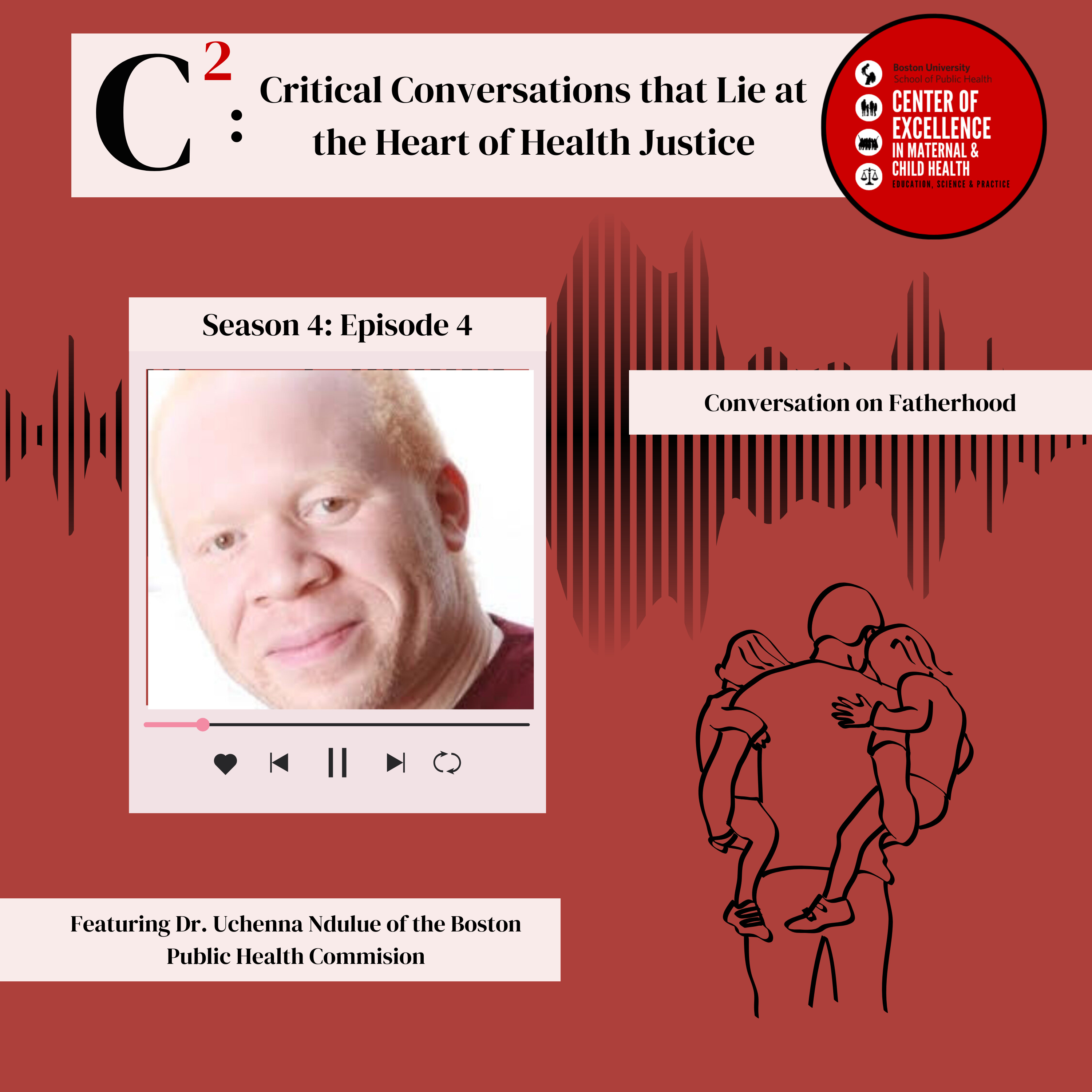
Conversation on Fatherhood with Dr. Uchenna Ndulue
Jun 18, 2025
39m 36s
Social Links & Contact
Official channels & resources
Official Website
Login
RSS Feed
Login
| Date | Episode | Topics | Guests | Brands | Places | Keywords | Sponsor | Length | |
|---|---|---|---|---|---|---|---|---|---|
| 12/11/25 | migrant healthhealth equity+3 | Dr. Sarah Kimball | Boston Medical CenterBoston University School of Medicine+2 | Harvard University | immigrantshealth care+5 | — | 39m 53s | ||
| 11/11/25 | Disability JusticeSocial Justice+3 | Mallory Cyr | Boston UniversityColorado Medicaid+2 | — | Disability Justicesocial justice+5 | — | 46m 16s | ||
| 9/10/25 | fellowshipspublic health+3 | Jennifer MaduDeJah Fleurancois+1 | Center of ExcellenceBUSPH | — | fellowshipspublic health+4 | — | 34m 41s | ||
| 7/16/25 | AutismPublic Health+3 | Emily Feinberg | Brown University School of Public HealthDotHouse Health+2 | — | Autism Spectrum Disorderpublic health+3 | — | 47m 19s | ||
| 6/18/25 | fatherhoodpublic health+4 | Dr. Uchenna Ndulue | Boston Public Health CommissionPeer Health Exchange Boston+3 | — | fatherhoodpublic health+5 | — | 39m 36s | ||
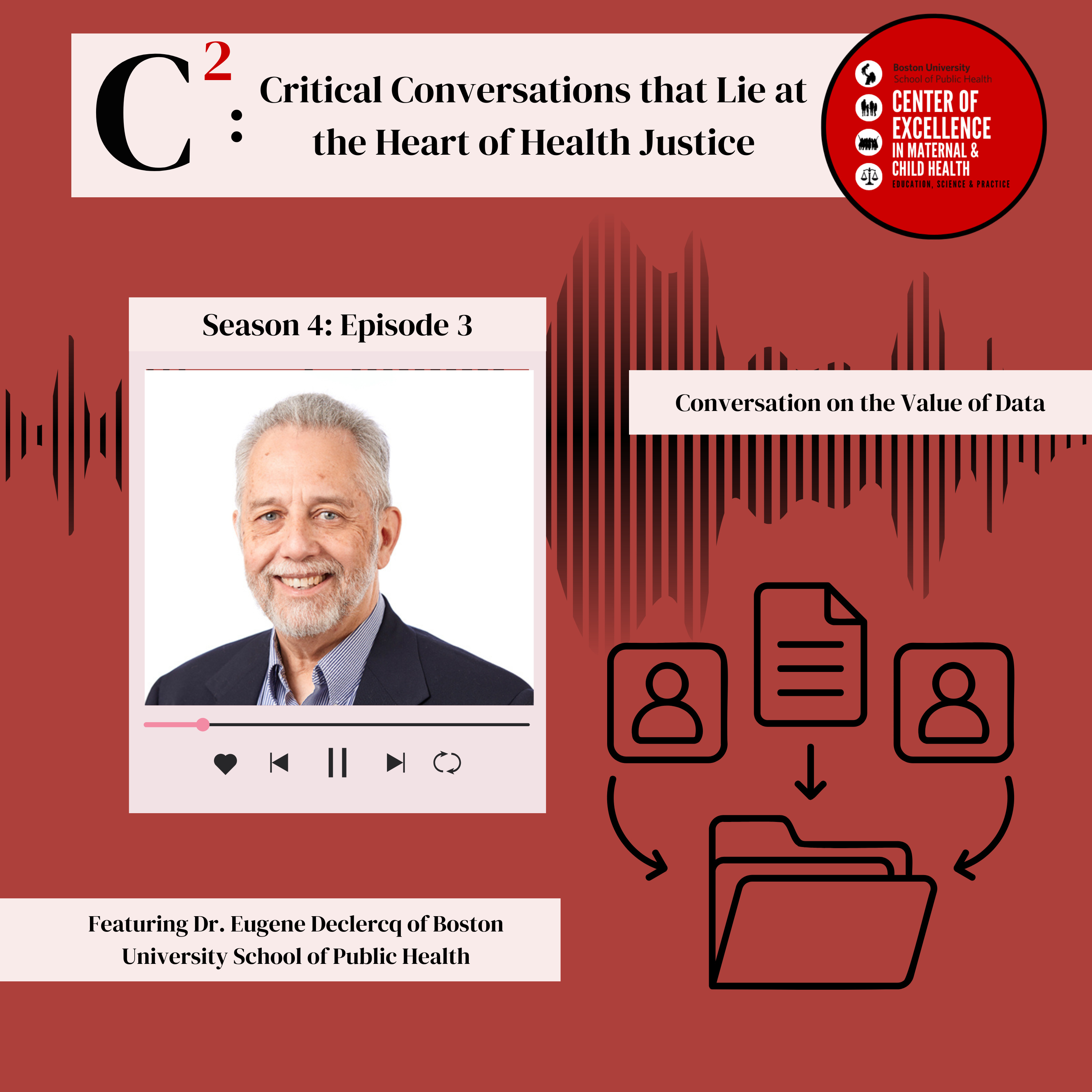
| 5/16/25 | data in maternal healthpublic health+3 | Dr. Eugene Declercq | www.birthbythenumbers.orgBU SPH+2 | — | maternal healthdata analysis+3 | — | 45m 46s | ||
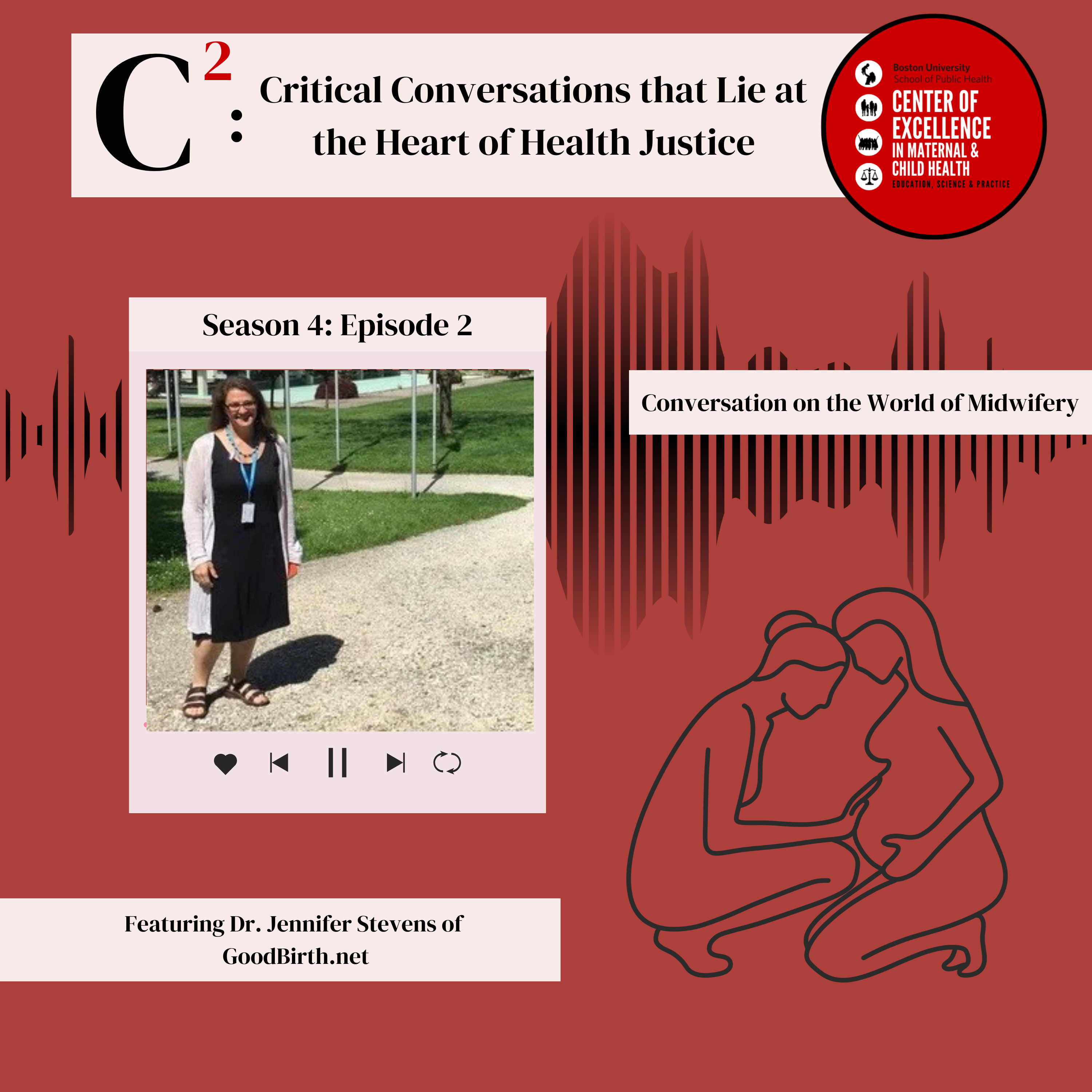
| 4/9/25 | midwiferywomen's health+4 | Dr. Jennifer Stevens | Goodbirth.netBoston Medical Center+1 | — | midwiferywomen's health+5 | — | 45m 23s | ||
| 3/11/25 | BreastfeedingWomen's Health+3 | Emily Swisher-Rosa | Breastfeeding Medicine Equity CenterBoston Medical Center | Boston | breastfeedingwomen's health+3 | — | 48m 48s | ||
| 3/11/25 | Maternal HealthChild Health+3 | — | C2: Critical Conversations that Lie at the Heart of Health JusticeBUSPH CoE in Maternal and Child Health | — | health justicematernal health+3 | — | 0m 52s | ||
| 2/11/25 | menstrual equitychemical exposures+4 | Alexandra Scranton | Women’s Voices for the EarthAmerican Lung Association+2 | Cheyenne, WY | menstrual productstoxic chemicals+5 | — | 39m 47s | ||
Want analysis for the episodes below?Free for Pro Submit a request, we'll have your selected episodes analyzed within an hour. Free, at no cost to you, for Pro users. | |||||||||
| 12/17/24 | 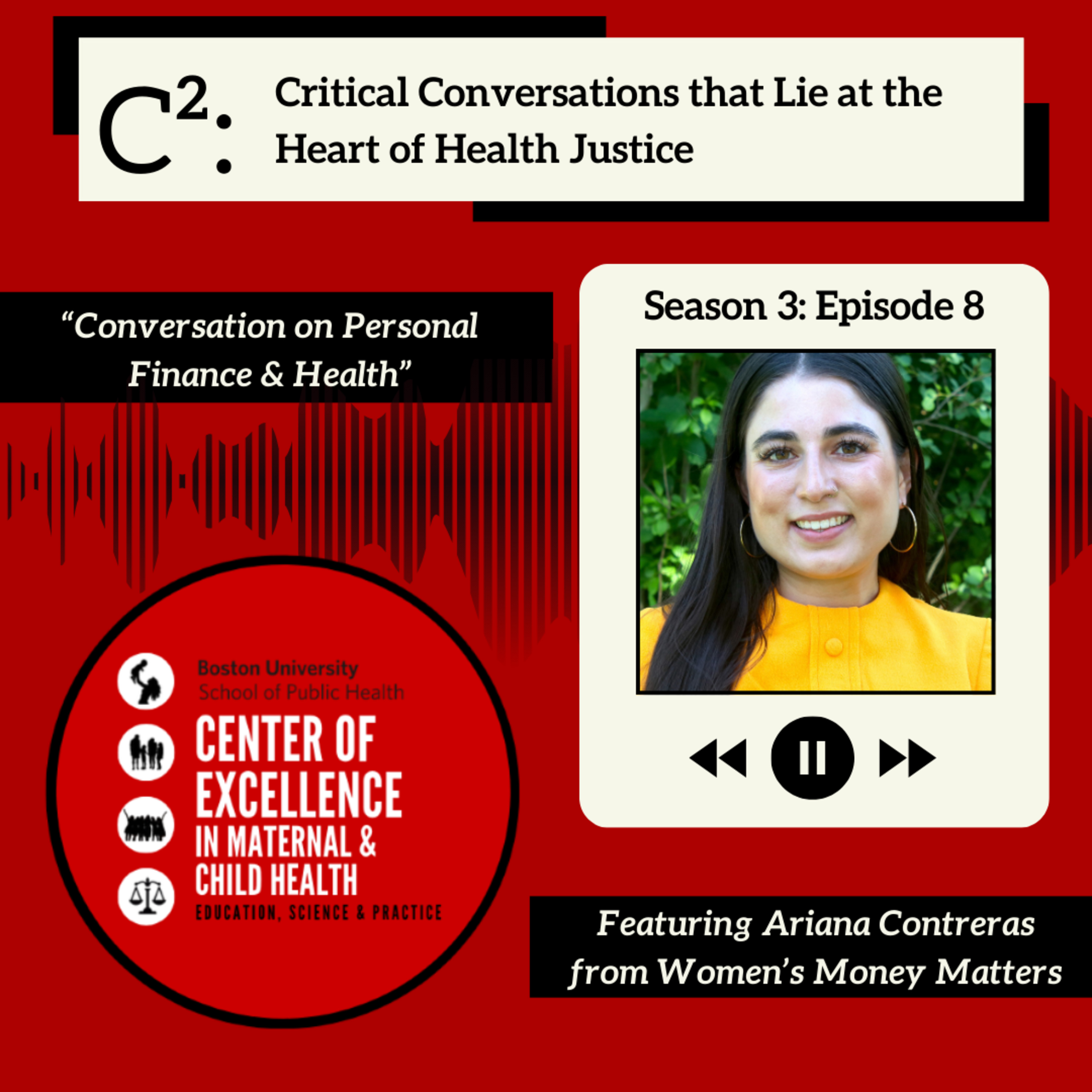 Conversation on Personal Finance & Health with Ariana Contreras | Money is a taboo subject in general, but it’s even more off-limits for women. How does the gendering of personal finance affect women’s financial and physical health? And, what roles do stigma and shame play in achieving financial wellness? Ariana Contreras from Women’s Money Matters joins us to answer these questions, as well as talk about her organization’s approach to a women centered and empowered solution. Ariana Contreras is the Senior Community Engagement Manager at Women’s Money Matters. Women’s Money Matters is a Massachusetts-based nonprofit dedicated to building financial wellness, confidence, and security for women and girls living on low-incomes. Ariana blends her experience in non-profit communication and programming with her background in education to bring a vibrant energy to Women’s Money Matters. Growing up in a small, resource-limited town in rural Arizona, where opportunities for women, mothers, and people of color were scarce, she found her passion for empowering change through Women’s Money Matters. With an International Affairs degree from Northern Arizona University, Ariana is driven to create a more equitable future. Outside of work, you'll find her sweating it out in exercise classes, exploring new culinary delights, hanging out with her tuxedo cat, Cherie, or soaking up the great outdoors of New England. For more information about Women’s Money Matters, check out these links: To learn more about volunteering: https://womensmoneymatters.org/volunteer-opportunities/ To learn more about joining a program or referring a woman or girl to the program (at no cost for participants): https://womensmoneymatters.org/join-a-program/ Listen to WMM’s volunteer and supporter Stacy talk about money shame in a Level-Up workshop: https://youtu.be/KlvMqKCK51M Hear from graduate-turned-coach Ramonia Henderson share her experience https://youtu.be/z56gbfYWYyg The production of this podcast was supported by Grant 6-T76MC00017-27-01 from the Health Resources and Services Administration (HRSA) of the U.S. Department of Health and Human Services (HHS). Its contents are solely the responsibility of the host and guests of this podcast episode and do not necessarily represent the official views of HRSA or HHS. | — | ||||||
| 11/12/24 | 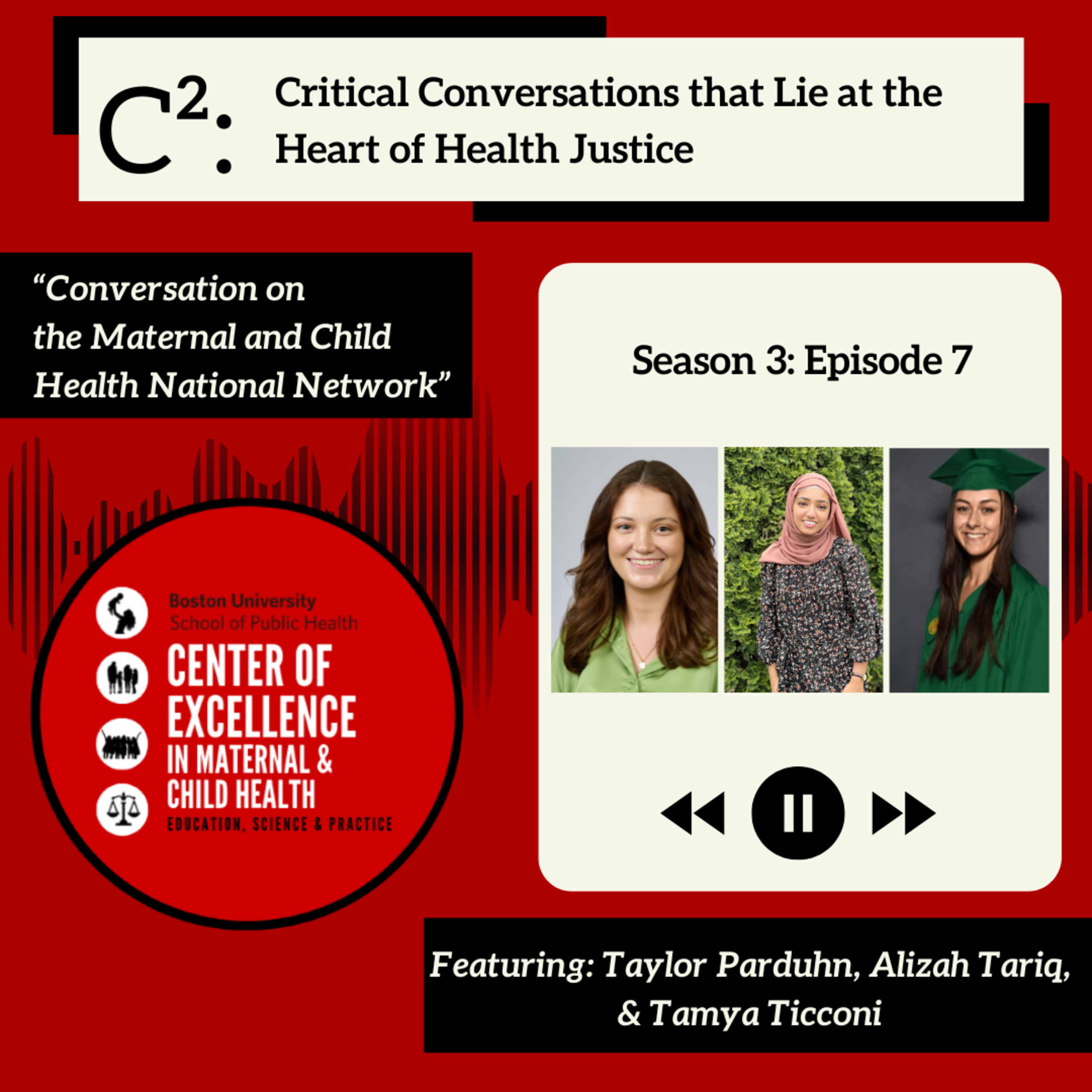 Conversation on the Maternal and Child Health National Network | What do you get when you mix MCH students & early professionals, passion for advocacy and awareness, and an online platform to bring it all together? The answer looks something like the Maternal and Child Health National Network. MCHNN Leadership Board members Taylor, Tamya, and Alizah talk with us to explain what the MCHNN is, where it's going, and what it hopes to do for those interested in and affected by MCH topics. Taylor Parduhn is a second year graduate student at BostonUniversity School of Public Health where she is concentrating in Community Assessment, Program Design, Implementation, and Evaluation (CAPDIE) andMaternal and Child Health. Taylor is the director of the Maternal and Child Health National Network and is an intern at the National Ovarian Cancer Coalition. Tamya Ticconi is a second year MPH student at Florida International University. She graduated from the University of South Florida in 2022 with a Bachelor of Science in Health Sciences. Currently, Tamya is the Advocacy Coordinator for the Maternal and Child Health National Network. She also works in the Tampa Bay Area at a Behavioral Health facility where she provides services relating to pregnancy and substance use. Prior to her current position, Tamya established herself as an active member in her community in the reproductive justice and advocacy space. Alizah Tariq is a recent MPH graduate from the University at Albany where she concentrated in Epidemiology and pursued a certificate in Maternal & Child Health. She currently is a New York State Public Health Fellow working in the asthma control team at the state health department. Alizah is passionate about health equity and leveraging digital data for overall health and well-being. She loves public health because it has the power to create meaningful, large-scale change by addressing the root causes of health disparities and improving the well-being of entire communities. For more information about the MCHNN check out these links: Website: https://sites.google.com/view/mch-national-network **where you can sign up for the newsletter! LinkedIn : https://www.linkedin.com/company/maternal-child-health-national-network/ Instagram: https://www.instagram.com/mchnetwork/ Twitter: https://x.com/MCHNetwork?prefetchTimestamp=1731438840737 The production of this podcast was supported by Grant 6-T76MC00017-27-01 from the Health Resources and Services Administration (HRSA) of the U.S. Department of Health and Human Services (HHS). Its contents are solely the responsibility of the host and guests of this podcast episode and do not necessarily represent the official views of HRSA or HHS. | — | ||||||
| 9/10/24 | 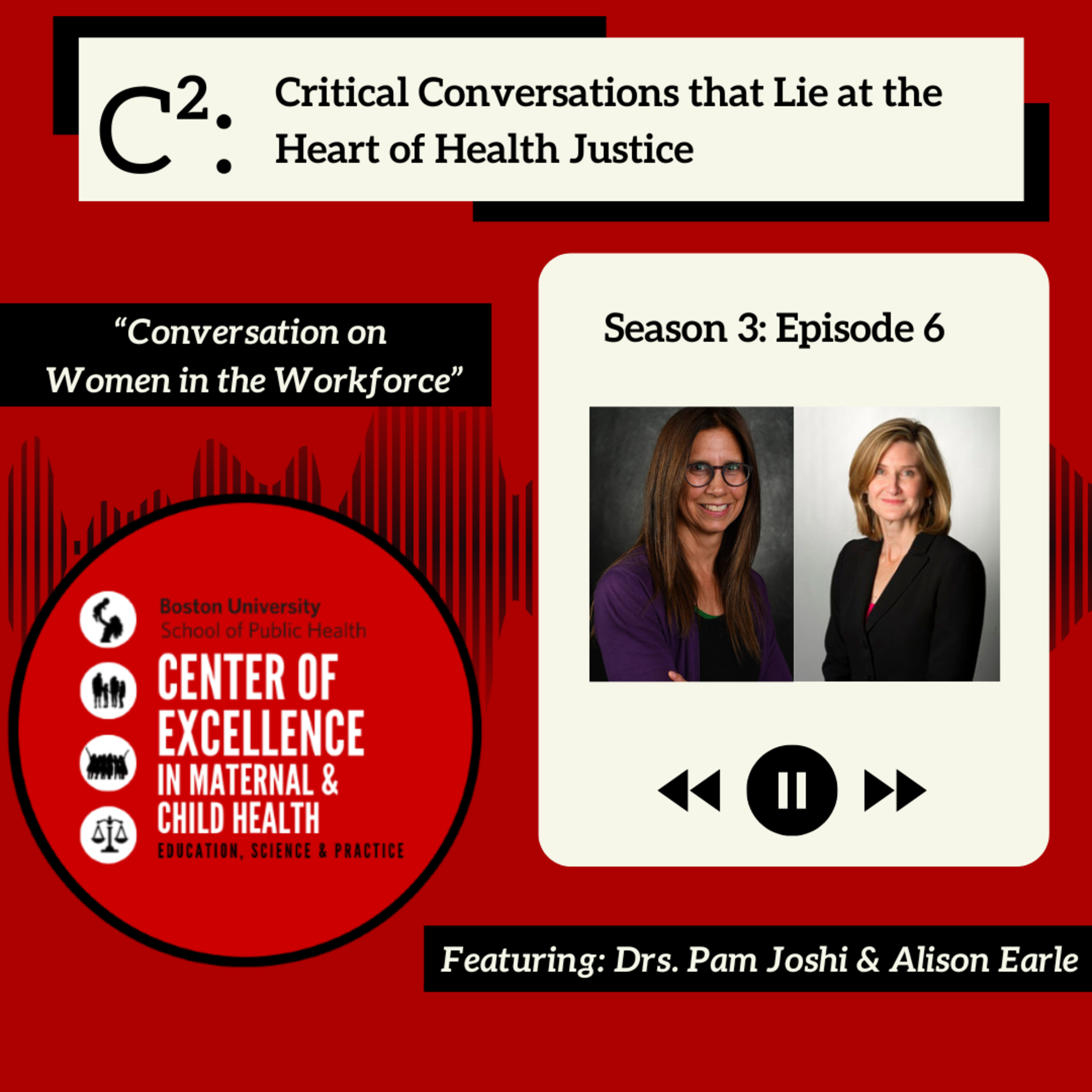 Conversation on Women in the Workforce with Drs. Pam Joshi & Alison Earle | So much of our lives revolve around work. And in the U.S., so do our benefits. Drs. Pamela Joshi and Alison Earle join us to talk about how workplace policies affect women and their families. We explore work as a social determinant of health, the impact of caregiving on women, and international differences in paid leave policies. Dr. Pamela Joshi is a senior scientist and the associate director of the Institute for Child, Youth and Family Policy at the Heller School for Social Policy and Management at Brandeis University. Joshi's research investigates how early care and education, paid family and medical leave, and anti-poverty policies advance children’s equitable access to opportunities and influence family and child health and economic outcomes. She is an expert in equity research methods and has published several policy equity assessments including, most recently, Hispanic and immigrant working families' access to paid family and medical leave programs. She has served on several expert panels including the National Academies of Sciences, Engineering and Medicine, Closing the Opportunity Gap for Young Children Consensus Study and currently serves on the Federal Reserve Bank of Boston’s Community Development Research Advisory Council. Dr. Joshi received her Ph.D. in Social Welfare Policy from Brandeis University and a Master of Public Policy from the University of Michigan. Dr. Alison Earle is a senior research analyst in work-family policy at the WORLD Policy Analysis Center at the School of Public Health at UCLA, where she leads research projects on how labor and social policies affect the health and economic security of working families in the U.S. and worldwide. Previously, Dr. Earle served as the co-director of the Project on Global Working Families at the Harvard School of Public Health where she managed a research team developing the first truly global database of national labor policies in 193 countries. She conducted some of the first national studies on disparities in access to paid leave and schedule flexibility in the United States, and the first globally comparative analysis of paid sick leave policies. Earle has over 60 publications and has provided expert testimony at Massachusetts congressional hearings on proposed paid family and medical leave and paid sick days legislation. Dr. Earle received a master’s in public policy from the Ford School of Public Policy at the University of Michigan, and a doctorate in Public Policy from Harvard University. For more information about the policies discussed on the show, check out these resources: Drs. Earle and Joshi received the Lawrence R. Klein Award from the US Department of Labor's Bureau of Labor Statistics. Read about their winning research here! DiversityDataKids’—a research program housed at the Institute for Child, Youth, and Family Policy at the Heller School for Social Policy and Management at Brandeis University—research on inequitable access to the FMLA by gender and race/ethnicity. This National Academies report which focused on reducing child opportunity gaps. Dr. Joshi served on this committee and the report includes strong policy recommendations. This article (co-authored by Drs. Joshi and Earle) which shows that paid FML can decrease, but not eliminate, racial disparities in black and Hispanic working mothers’ capability to take up parental leave and use leave for longer durations due to affordability constraints associated with lost wages. WorkRise, a research-to-action network, with more resources about policies and employer practices that can improve working conditions and job quality. The production of this podcast was supported by Grant 6-T76MC00017-27-01 from the Health Resources and Services Administration (HRSA) of the U.S. Department of Health and Human Services (HHS). Its contents are solely the responsibility of the host and guests of this podcast episode and do not necessarily represent the official views of HRSA or HHS. | — | ||||||
| 7/9/24 | 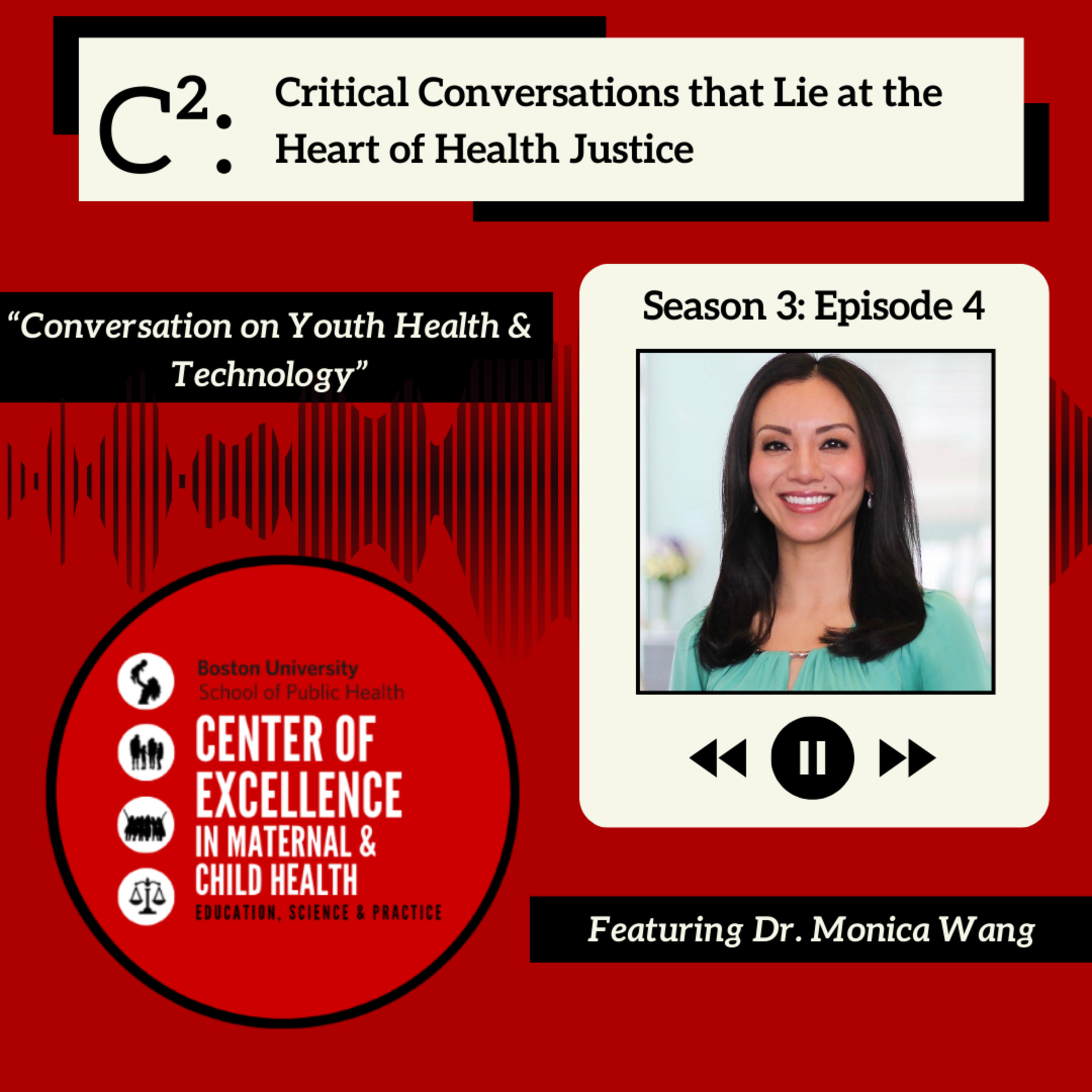 Conversation on Youth Health & Technology with Dr. Monica Wang | We often hear that kids today “are always on their phones”—but aren’t adults also spending increased amounts of time online? Dr. Monica Wang joins us to talk about how technology has changed lives across all generations and how it can be used to change our health (for better and for worse). We specifically explore digital redlining and health misinformation as two facets of technology that have an impact on youth health. Dr. Monica Wang is Associate Professor at the Boston University School of Public Health and an Adjunct Associate Professor at the Harvard T.H. Chan School of Public Health. She is a globally recognized and award-winning researcher, educator, and thought leader on health equity, racial justice, and community-based research targeting chronic diseases. Dr. Wang has generated over $6 million in federal and foundation funding for her program of research and published over 70 peer-reviewed manuscripts and policy documents. Her prior leadership roles included serving as Chair of the Narrative Office at the BU Center for Antiracist Research and Chair of the Civic and Public Engagement Committee at the Society of Behavioral Medicine. Dr. Wang has received numerous national, regional, and institutional awards for her research, teaching, and service, including the 2023 40 Under 40 Leaders in Health from the National Minority Quality Forum and the 2022 Society of Behavioral Medicine’s Leading the Narrative Award for her op ed on COVID-19 vaccine equity. She served as a consultant to one of the largest social media companies in the world on COVID-19 health misinformation management. Her work and insights have been featured in The New York Times, The Washington Post, National Public Radio, The Boston Globe, and CBS. She obtained her doctoral and master's degrees from the Harvard T.H. Chan School of Public Health and completed her postdoctoral training at the University of Massachusetts Medical School. For more information about digital redlining check out these resources: Dr. Wang’s recently published JAMA article: https://jamanetwork.com/journals/jama/article-abstract/2816265 The production of this podcast was supported by Grant 6-T76MC00017-27-01 from the Health Resources and Services Administration (HRSA) of the U.S. Department of Health and Human Services (HHS). Its contents are solely the responsibility of the host and guests of this podcast episode and do not necessarily represent the official views of HRSA or HHS. | — | ||||||
| 6/13/24 |  Conversation on Sex Education: Focus on LGBTQIA Communities with Dr. Sophie Godley | Sex education, colloquially referred to as “sex ed,” carries a variety of meanings depending on when and where you grew up in the United States. Why is there so much variance in what is taught and how does this affect young folks, especially those belonging to the LGBTQIA community? Dr. Sophie Godley joins us to answer these questions and more as we try to make sense of the good, the bad, and the politics of sex ed. Dr. Sophie Godley is a Clinical Associate Professor in the Department of Community Health Sciences at the Boston University School of Public Health. She also serves as the Associate Director of the Kilachand Honors College at Boston University. Her areas of expertise include implementing science-based prevention programs and incorporating popular media into public health education. Dr. Godley has served as the director of the Office of Adolescent Health and Youth Development at the Massachusetts Department of Public Health and Deputy Director of the AIDS Action Committee in Massachusetts. For more information about sex education check out these resources: Advocates for Youth. https://www.advocatesforyouth.org/ SIECUS. https://siecus.org/ GoAskAlice @ Columbia University: https://goaskalice.columbia.edu/ The production of this podcast was supported by Grant 6-T76MC00017-27-01 from the Health Resources and Services Administration (HRSA) of the U.S. Department of Health and Human Services (HHS). Its contents are solely the responsibility of the host and guests of this podcast episode and do not necessarily represent the official views of HRSA or HHS. | — | ||||||
| 5/14/24 |  Conversation on Weight Stigma (Part 2) with Dr. Lisa Erlanger | In the second episode of this 2-part series, we continue our conversation with Dr. Lisa Erlanger. Join us as we explore the foundations of weight-inclusive primary care and “peel back the onion” that is diet culture. We also discuss how research and everyday discourse about weight can be misleading and what we can do to fix these misconceptions. Dr. Lisa Erlanger is a board-certified family physician and Clinical Professor of Family Medicine at the University of Washington. She is a leader in the growing movement for weight-inclusive primary care and speaks nationally about anti-fat bias, weight-inclusive primary care, and eating disorders. For more information about Dr. Erlanger and her work you can find here: https://sites.google.com/view/drlisaerlanger For more related information go here: Association for Size Diversity and Health: https://asdah.org/ The production of this podcast was supported by Grant 6-T76MC00017-27-01 from the Health Resources and Services Administration (HRSA) of the U.S. Department of Health and Human Services (HHS). Its contents are solely the responsibility of the host and guests of this podcast episode and do not necessarily represent the official views of HRSA or HHS. | — | ||||||
| 4/9/24 |  Conversation on Weight Stigma (Part 1) with Dr. Lisa Erlanger | You walk into a doctor’s office for an appointment, and what is the first thing you are asked to do? Step on a scale. For some, this experience or number fails to generate a heightened response. However, most of us have complicated and deeply personal relationships with our body and weight. Have you ever stopped to question why all doctor’s visits start this way? Or, have you ever wondered why you have been made to feel so preoccupied with your body and size in the first place? Dr. Lisa Erlanger joins us to help explore these questions and more in the Season 3 premiere. Dr. Lisa Erlanger is a board-certified family physician and Clinical Professor of Family Medicine at the University of Washington. She is a leader in the growing movement for weight-inclusive primary care and speaks nationally about anti-fat bias, weight-inclusive primary care, and eating disorders. Join us as we dive into weight stigma’s definition, history, and impact on marginalized populations in this first part of a 2-episode series. For more information about Dr. Erlanger and her work you can find here: https://sites.google.com/view/drlisaerlanger Find out more about the organization mentioned during the podcast here: Medical Students for Size Inclusivity: https://sizeinclusivemedicine.org/ For more related information go here: Association for Size Diversity and Health: https://asdah.org/ The production of this podcast was supported by Grant 6-T76MC00017-27-01 from the Health Resources and Services Administration (HRSA) of the U.S. Department of Health and Human Services (HHS). Its contents are solely the responsibility of the host and guests of this podcast episode and do not necessarily represent the official views of HRSA or HHS. | — | ||||||
| 4/3/24 | Introduction to Season 3 from Becca Rohac | Welcome to Season 3 of C2: Critical Conversations that Lie at the Heart of Health Justice! Becca Rohac introduces the season as the new host and shares what listeners can expect from Season 3. We hope these episodes serve you in learning and carrying conversations around health justice issues with your peers, families, and communities. Hello again to those returning and welcome to those joining! We hope you enjoy listening! | — | ||||||
| 1/9/24 |  Conversation on Substance Use Disorders in Adolescents with Noel Vest, PhD | There exists an alluring public perception of substance misuse among young adults in high school and college. Drugs and alcohol are strategically marketed to adolescents, and this has profound public health consequences. Various examples from television, film, and social media highlight a glamorous and glorified portrayal of substance abuse. We welcome Dr. Noel Vest, PhD to the podcast to discuss the implications of substance use disorders on the development and well-being of adolescents. Dr. Vest is an assistant professor at the Boston University School of Public Health. As a formerly incarcerated scholar, Dr. Vest advocates for social justice issues and public policy concerning substance use disorder recovery and prison reentry. Join us as we discuss what puts adolescents at a heightened risk of developing a substance use disorder, what the current state of research is, and Dr. Vest’s personal and professional motivations for doing work in this field. Resources used in the production of this podcast: https://bjs.ojp.gov/library/publications/drug-and-alcohol-use-reported-youth-juvenile-facilities-2008-2018-statistical https://www.psychiatry.org/patients-families/addiction-substance-use-disorders/what-is-a-substance-use-disorder The production of this podcast was supported by Grant G-T76MC00017-27-01 from the Health Resources and Services Administration (HRSA) of the U.S. Department of Health and Human Services (HHS). Its contents are solely the responsibility of the host and guests of this podcast episode and do not necessarily represent the official views of HRSA or HHS. | — | ||||||
| 12/12/23 |  Conversation on Intergenerational Trauma with Alicia Mendez, PhD | Over the last two decades, there have been profound advancements in what we know about the implications of ancestral trauma on the health and wellbeing of future generations. The question we investigate today: how is intergenerational trauma relevant to public health? We welcome Dr. Alicia Mendez to help answer this question. Dr. Mendez is a research assistant professor at Boston University’s school of social work. She studies child welfare and intergenerational trauma with a focus on mother-offspring relationships. Join us as we discuss what intergenerational trauma is, the current state of research in this field, and her own stories and motivations as to what encouraged her to perform her own research on this topic. For resources for parents, click here: https://www.childwelfare.gov/topics/responding/trauma/caregivers/ The production of this podcast was supported by Grant G-T76MC00017-27-01 from the Health Resources and Services Administration (HRSA) of the U.S. Department of Health and Human Services (HHS). Its contents are solely the responsibility of the host and guests of this podcast episode and do not necessarily represent the official views of HRSA or HHS. | — | ||||||
| 11/14/23 |  Conversation on Sexual Violence with Emily Rothman, ScD and Gina Scaramella, MSW | *Various sensitive topics that may be triggering for some listeners will be discussed in this production, so listener discretion is advised.* The topic of this month’s episode is sexual violence. Women in the United States suffer from sexual violence at alarming rates. According to the U.S. Centers for Disease Control and Prevention, over half of women have experienced sexual violence involving physical contact during their lifetimes. We welcome Dr. Emily Rothman and Gina Scaramella MSW to the podcast to explore this public health concern. Join us as we discuss an important and sensitive issue that impacts the health of individuals, mothers, families, and communities. Follow this link to access the autism training platform recently developed by Rothman and Scaramella: https://sites.bu.edu/autismsa/ If you or someone you know is in need of sexual violence resources, please see the following information: National Sexual Assault Hotline: 1-800-656-4673 https://www.nsvrc.org/ The production of this podcast was supported by Grant G-T76MC00017-27-01 from the Health Resources and Services Administration (HRSA) of the U.S. Department of Health and Human Services (HHS). Its contents are solely the responsibility of the host and guests of this podcast episode and do not necessarily represent the official views of HRSA or HHS. | — | ||||||
| 10/10/23 |  Conversation on Doula Care with Cara Salon (Pt. 2): Leveraging Research to Promote Equitable Accessibility | This episode is the second part of our Season 2 Doula Series. Doula care has been proven to improve the health outcomes of birthing individuals, yet access to this service remains limited. We welcome Cara Safon, a fourth-year PhD candidate at BUSPH, to discuss the mechanisms behind the benefits of doula care and ways to improve accessibility to this type of care. Tune in as we continue our Doula Care Series which was inspired by the recent partnership between doula agency Birthing Gently and Massachusetts General Brigham as part of its United Against Racism Project. Visit these websites for more information about doula care and to reference the information addressed in this episode: MA doula bill Maternal mortality in the US Maternal health terminology Doula care benefits More doula care benefits National Health Law Program-Doula Medicaid Project National Academy for State Health Policy-State Medicaid Approaches to Doula Service Benefits The production of this podcast was supported by Grant G-T76MC00017-27-01 from the Health Resources and Services Administration (HRSA) of the U.S. Department of Health and Human Services (HHS). Its contents are solely the responsibility of the host and guests of this podcast episode and do not necessarily represent the official views of HRSA or HHS. | — | ||||||
| 9/12/23 |  Conversation on Doula Care with Katia Powell-Laurent, PhD: How Certain Hospitals are Making Doula Care More Accessible | Doula care has been proven to improve the health outcomes of birthing individuals, yet access to these services remains limited. Birthing Gently recently partnered with Massachusetts General Brigham as part of its United Against Racism Project. The goal of the program is to match Birth Doulas with low-income and at-risk patients. We welcome Katia Powell-Laurent, PhD to our podcast to discuss the forged partnership, the role of birth doulas on a collaborative care team, and general strategies for addressing maternal mortality. For more information on the partnership between MGB and Birthing Gently, follow this link: https://www.birthinggently.com/bgmh-program The production of this podcast was supported by Grant G-T76MC00017-27-01 from the Health Resources and Services Administration (HRSA) of the U.S. Department of Health and Human Services (HHS). Its contents are solely the responsibility of the host and guests of this podcast episode and do not necessarily represent the official views of HRSA or HHS. | — | ||||||
| 7/11/23 | 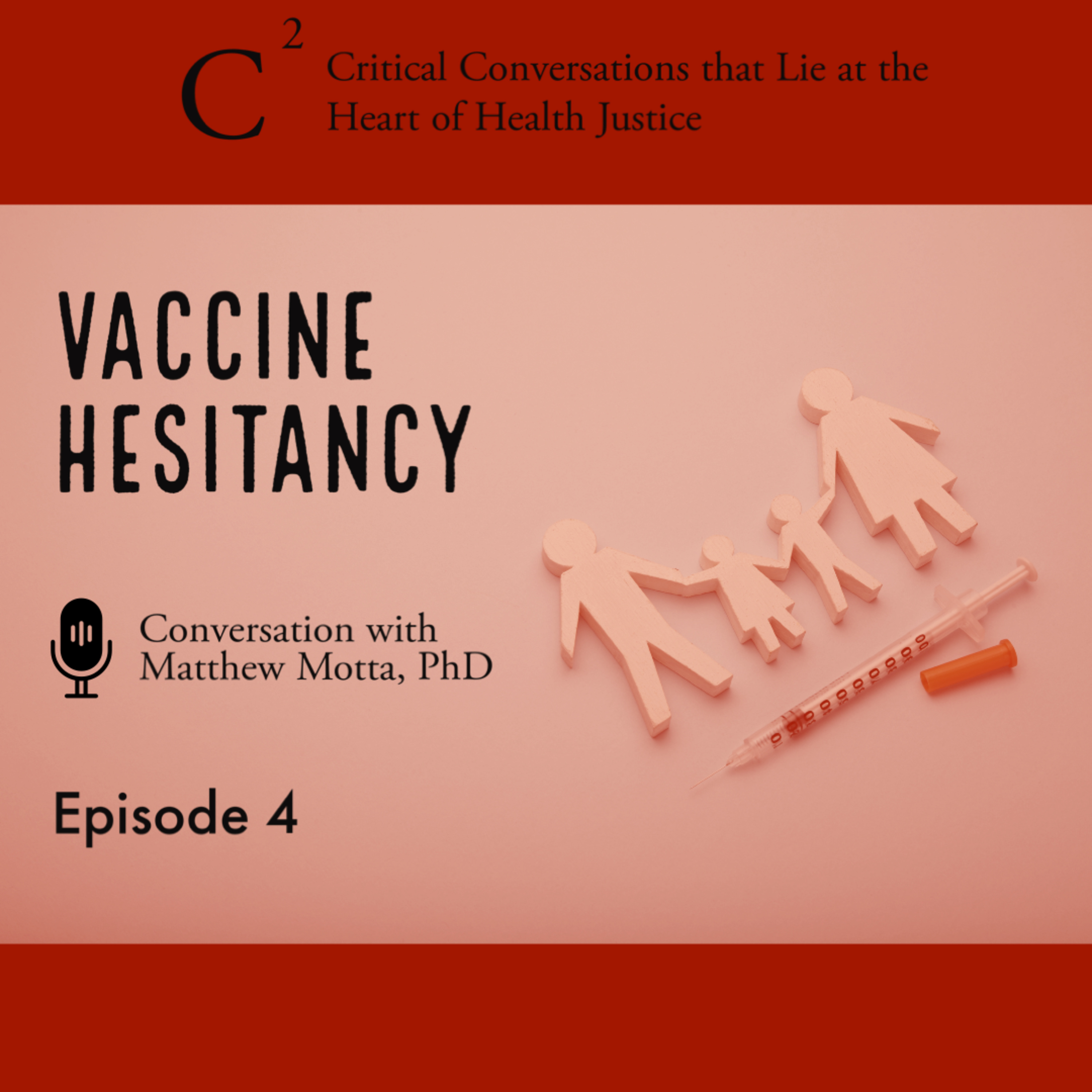 Vaccine Hesitancy: Tracing Anti-Vaccination Sentiments from America's Founding to a Modern Reluctance | The phenomenon of vaccine hesitancy has escalated significantly over the last decade. Skepticism surrounding immunization, however, is not a new reality in the United States. In Episode 4 of our second season, we welcome Professor Matthew Motta, PhD to the podcast as we trace vaccine hesitancy back to our nation's founding. We discuss the various triggers that have fueled anti-vaccination sentiments with a focus on parental and maternal immunization. Tune in to hear more about politics and motivated reasoning, federal versus state immunization legislation, the controversy surrounding the Gardasil vaccine, and more. For more information about vaccine-preventable diseases and vaccine confidence strengthening efforts at the national level: https://www.cdc.gov/vaccines/covid-19/vaccinate-with-confidence.html For more information about getting vaccinated against HPV: https://www.cdc.gov/vaccines/vpd/hpv/public/index.html The production of this podcast was supported by Grant G-T76MC00017-27-01 from the Health Resources and Services Administration (HRSA) of the U.S. Department of Health and Human Services (HHS). Its contents are solely the responsibility of the host and guests of this podcast episode and do not necessarily represent the official views of HRSA or HHS. | — | ||||||
| 6/14/23 |  Conversation on Gun Violence in the United States: Firearm-related Violence as a Public Health Crisis | Gun violence poses profound threats to the health of children, women, mothers, and communities across the United States. In 2020 firearms became the leading cause of death among children ages 19 and below. Additionally, women in the United States who are pregnant or have recently given birth are more likely to die from murder than from obstetric causes. 68% of these homicides involved firearms. Michael Ulrich, professor at Boston University School of Law and School of Public Health, shares his academic expertise with us as we explore the scope and reality of gun violence in America. Visit these sources for more information about the statistics listed in the episode description and to learn more about the implications of gun violence: https://www.kff.org/global-health-policy/issue-brief/child-and-teen-firearm-mortality-in-the-u-s-and-peer-countries/ https://www.hsph.harvard.edu/news/hsph-in-the-news/homicide-leading-cause-of-death-for-pregnant-women-in-u-s/ The production of this podcast was supported by Grant G-T76MC00017-27-01 from the Health Resources and Services Administration (HRSA) of the U.S. Department of Health and Human Services (HHS). Its contents are solely the responsibility of the host and guests of this podcast episode and do not necessarily represent the official views of HRSA or HHS. | — | ||||||
Showing 25 of 31
Pitch Fit is a Pro feature
See how bookable this show is for guests, which brands already advertise, the per-episode ad value, and the best-fit guest and sponsor profile. The numbers are blurred on the free plan.
How readily this show books outside guests like you.
How proven this show is for host-read sponsorships.
For Guests
ProFor Advertisers
ProUpgrade to Pro to unlock guest cadence, sponsor categories, fit scores, and per-episode ad value for this show.