
Insights from recent episode analysis
Audience Interest
Podcast Focus
Publishing Consistency
Platform Reach
Insights are generated by CastFox AI using publicly available data, episode content, and proprietary models.
Total monthly reach
Estimated from 1 chart position in 1 market.
By chart position
- 🇳🇬NG · Science#4110K to 30K
- Per-Episode Audience
Est. listeners per new episode within ~30 days
7K to 21K🎙 Biweekly cadence·172 episodes·Last published 2d ago - Monthly Reach
Unique listeners across all episodes (30 days)
10K to 30K🇳🇬100% - Active Followers
Loyal subscribers who consistently listen
3K to 9K
Market Insights
Platform Distribution
Reach across major podcast platforms, updated hourly
Total Followers
—
Total Plays
—
Total Reviews
—
* Data sourced directly from platform APIs and aggregated hourly across all major podcast directories.
On the show
Recent episodes
Somebody here needs to say this before an investigative journalist does. I’d rather it be one of us.
Sep 1, 2026
18m 11s
Hype and a gold rush followed by contraction and consolidation
Aug 25, 2026
7m 34s
It feels like there’s nobody to celebrate with if the whole industry is hurting
Aug 18, 2026
5m 34s
A skeleton crew whose sole remaining purpose is to invoice their two repeat customers, post thought leadership on LinkedIn, and attend conference dinners holding court as the "buyer"
Aug 11, 2026
2m 47s
I should have used my retirement funds for retirement instead of assuming the future of our planet is of interest to its inhabitants
Aug 4, 2026
3m 54s
Social Links & Contact
Official channels & resources
Official Website
Login
RSS Feed
Login
| Date | Episode | Description | Length | ||||||
|---|---|---|---|---|---|---|---|---|---|
| 9/1/26 | 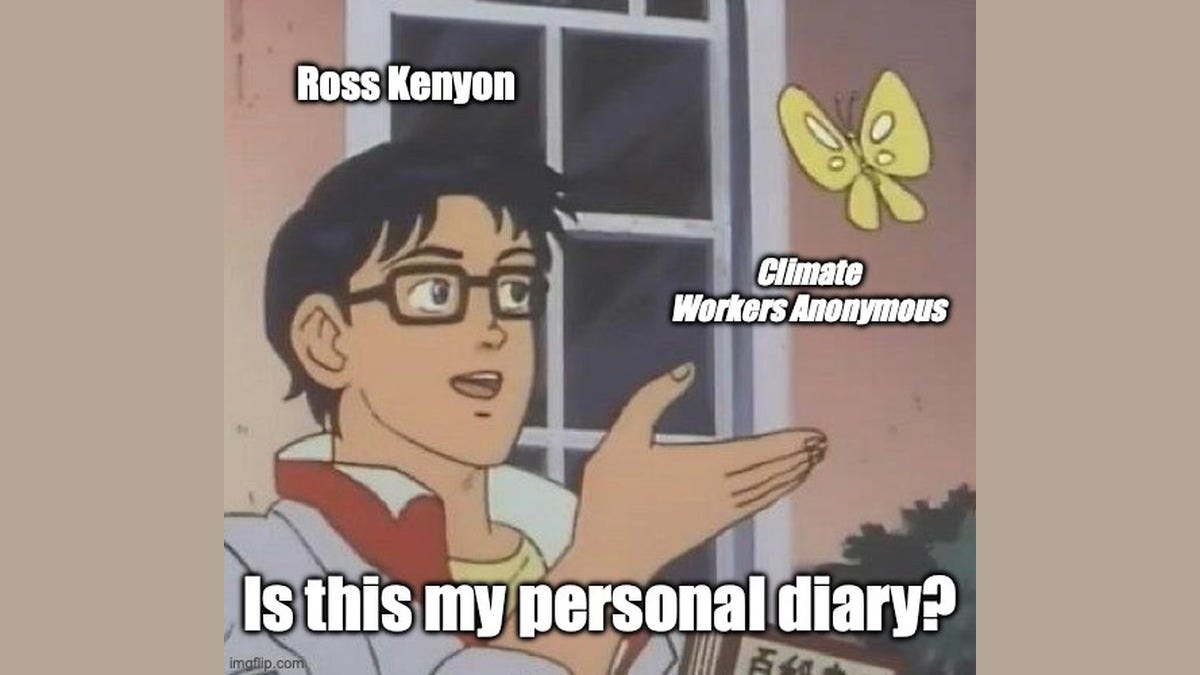 Somebody here needs to say this before an investigative journalist does. I’d rather it be one of us. | Today's submission is about why perhaps less scrutiny is shown to artisanal biochar than industrial, and how that actually may be harmful to these artisanal biochar project developers. Will dMRV providers notice? But first...Is this a diary?I intended for Climate Workers Anonymous to be a conduit for the submissions of others, but reading them always make me think. When they are simple calls for a better world, I love it. When you decry hypocrisy, I’m at the barricades with you. When you’re staring into the scale of our climate work and the resulting feelings of hopelessness, I’ll match you sentiment for sentiment.Do you not have all of these inside of you too? Do you not show them or hide them depending upon the social context?Climate Workers Anonymous is at least partially an attempt to widen the context of climate and carbon dioxide removal work beyond toxic positivity and taking corporate climate action at face value. But I’m wondering if there is room enough in this project to bring some of my own feelings in sometimes.Maybe it’s a one-off. But I’m going to share with you today where I am.Sometimes you show up to make a show and there’s a beginning, a middle, and an end. Sometimes you’re going through a hard personal time and have to smile through your work calls. Sometimes you might be extremely concerned for the future of your country let alone species let alone the more-than-human world. And sometimes it can all just burst out without necessarily having the right headings and spacings and sequencing. Right now, it’s all laid out.If that’s how you’re feeling today, let it rip. I have these days too as is plain to see.Thanks so much to today's submitter and for being brave in your work in carbon dioxide removal.Sincerely,Ross Kenyon--------------------------Thank you for listening to and reading Climate Workers Anonymous. Subscribe to Substack below, and be sure to subscribe in whichever podcast app you use. An amazing rating and review on those podcast apps does a world of good. Would you please do that for me now? Here’s Apple Podcasts, Spotify, and YouTube.If you’d like submit your anonymous hopes, fears, or experiences to Climate Workers Anonymous, you can use this Tally survey or email climateworkersanonymous[at]protonmail.com, though I believe the Tally survey is more secure. Do not communicate anything you wouldn’t want a hacker to have access to, including an email address that could be linked to you if you email the account on Protonmail.Did you connect with this edition of Climate Workers Anonymous? Share this out with your network and help it get seen.Here are some things the audio referenced that didn’t make it into the essay above:* Daniel Schmachtenberger’s work.* Childhood’s End by Arthur C. Clarke Get full access to Climate Workers Anonymous at climateworkersanonymous.com/subscribe | 18m 11s | ||||||
| 8/25/26 |  Hype and a gold rush followed by contraction and consolidation | When is your startup’s failure your fault?Saying your startup failed because of macroeconomic conditions is a bit like saying your marriage failed because being married is hard. Yes, but is that really all the analysis you’ve got handy? It can’t all be the business cycle and macroeconomics, right?Today’s submission to Climate Workers Anonymous is about what to do with macro conditions and the business cycle from within your particular climate tech or carbon dioxide removal company.One part of it is about offering grace to one another and ourselves. It’s hard to go wrong in over-applying grace. But another part of it is an encouragement to remain counter-cyclical. If everyone is panicking, you be the calm one looking for acquisition and growth opportunities. If the good feelings of the endless summer of expansionary times are being felt by all, you be the cautious one and note that this too shall pass. If you believe what everyone else believes, you will broadly end up in the same place. And if you lead a company, your job isn’t to end up with everyone else (or at least under capitalism as normally played.) So you should have a counter-cyclical default at least as one way of seeing among many.But for your own sake, it doesn’t need to be the only tool you have. If it is, it’s no longer the millstone as a the tool but a millstone as the sinker around your neck. Having only one cognitive tool and overapplying it is one of the ways one can end up in crackpot territory. Be advised!-------------------------Thank you for listening to and reading Climate Workers Anonymous. Subscribe to Substack here, and be sure to subscribe in whichever podcast app you use. An amazing rating and review on those podcast apps does a world of good. Would you please do that for me now? Here’s Apple Podcasts, Spotify, and YouTube.If you’d like submit your anonymous hopes, fears, or experiences to Climate Workers Anonymous, you can use this Tally survey or email climateworkersanonymous[at]protonmail.com, though I believe the Tally survey is more secure. Do not communicate anything you wouldn’t want a hacker to have access to, including an email address that could be linked to you if you email the account on Protonmail.Will you please share this Climate Workers Anonymous post out with your network? Help this find more folks out there who will love it! Get full access to Climate Workers Anonymous at climateworkersanonymous.com/subscribe | 7m 34s | ||||||
| 8/18/26 |  It feels like there’s nobody to celebrate with if the whole industry is hurting | Things are going poorly for you? That’s too bad, because I’m having a grand ol’ time.Are you subscribed to Climate Workers Anonymous? Do so now to listen in and read whenever a new edition is released and support this fledgling collective art project.Welcome to Climate Workers Anonymous, where those who work in climate are able to share the feelings and experiences they want to share but aren’t sure they want attached to their name.They might want that anonymity because they’ve got some biting satirical take their corporate employer would frown upon. Maybe it’s someone trying to scale their company’s impact but is dubious that all of the levels of governance in carbon dioxide removal do as much good as is claimed. Or maybe they want anonymity because their company is doing well when many of their peers are not. That can be its own form of loneliness.As I was recording this and trying to describe this feeling, I got stuck onto “the ghost at the feast” that people associate so strongly with Shakespeare’s Macbeth.But that’s not quite right. In the play, Banquo’s ghost shows up, Macbeth is the only character who can see him, and it causes Macbeth to act very erratically, ruining the feast for the guests and especially Lady Macbeth.For this submission, it’s more like the submitter is a vigorous person who somehow wandered into a “meal” for ghosts. The submitter’s contentment, health, and ability to sate their hunger can’t help but cause the ghosts envy and grief by merely existing in their presence.This type of inequality—even if earned entirely through meritocratic means (though it’s for me to know where such a thing could exist in the world such as it is)—can make us uncomfortable. As I read the submission, the submitter is proud of their strategy and ability to execute and good read of macro conditions and wants to promenade their success without necessarily wishing any else will or a lack of success.I do wonder in a case like this, if it would be less satisfying to the submitter if everyone received the same success. Would it diminish their value or their foresight? How much of our desire to work is driven by a need to distinguish ourselves as individuals, and to feel our status grow in the eyes of ourselves and others?Who can say what is in the submitter’s heart, when even our own can be so mysterious? But if we take them at face value, it’s also an encouragement to fight yourself back to health. Don’t give up. It’s not too late. Get back in the game and catch up to your peer so you can celebrate alongside.SubmissionsN.B. The submissions in Climate Workers Anonymous are anonymous and unverified.* We’re actually fine. Times are tough, no doubt, but we keep growing from a large base, and have some really exciting milestones ahead of us. In some ways, I wish I saw more fighting spirit from our industry. Some large incumbents aren’t getting the funding to take them to the scale they expected, but somehow they’ve decided to just do nothing instead. Complete silence, at least in public, which also makes the bad buyer & investor sentiment a self-fulfilling prophecy to some extent. Surely it’d be better to at least keep building & learning publicly at a smaller scale like we used to? Meanwhile, we feel vindicated in the strategic choices we made that allow us to keep scaling, but it feels like there’s nobody to celebrate with if the whole industry is hurting.I enjoy these short and sweet episodes. I’d welcome your thoughts. Please like and share this post out if you enjoyed it, and and subscribe if you aren’t already. Below is the info to submit your tales, feelings, thoughts to Climate Workers Anonymous for publication on the podcast and in written form as in this edition.Thanks so much for your support.Sincerely,Ross KenyonCurator of Climate Workers AnonymousThank you for listening to and reading Climate Workers Anonymous. Subscribe to Substack below, and be sure to subscribe in whichever podcast app you use. An amazing rating and review on those podcast apps does a world of good. Would you please do that for me now? Here’s Apple Podcasts, Spotify, and YouTube.If you’d like submit your anonymous hopes, fears, or experiences to Climate Workers Anonymous, you can use this Tally survey or email climateworkersanonymous[at]protonmail.com, though I believe the Tally survey is more secure. Do not communicate anything you wouldn’t want a hacker to have access to, including an email address that could be linked to you if you email the account on Protonmail.Did you enjoy this post from Climate Workers Anonymous? Please share it out so it can find the people who will love it. Get full access to Climate Workers Anonymous at climateworkersanonymous.com/subscribe | 5m 34s | ||||||
| 8/11/26 |  A skeleton crew whose sole remaining purpose is to invoice their two repeat customers, post thought leadership on LinkedIn, and attend conference dinners holding court as the "buyer" | It’s easy to dunk on LinkedIn. There are times when I will polish every word of a post that points to a deep yearning for our labor in climate to feel spiritually meaningful, and for that yearning not to be corrupted by commercial pressures of sucking up to companies whom our conscience commands us to jeer at, challenge, or at the very least not believe. It will get eighty impressions.Then I will see a post akin to: “I went to a conference and it was good. I learned that we need more demand in carbon markets.” And the response will somehow be rapturous praise.Today's episode has a submission about the sheer number of intermediaries presumably in carbon dioxide removal, but also about the ways that status operates in a field like CDR.Thank you for listening to and reading Climate Workers Anonymous. Subscribe to Substack here, and be sure to subscribe in whichever podcast app you use. An amazing rating and review on those podcast apps does a world of good. Would you please do that for me now? Here’s Apple Podcasts, Spotify, and YouTube.If you’d like submit your anonymous hopes, fears, or experiences to Climate Workers Anonymous, you can use this Tally survey or email climateworkersanonymous[at]protonmail.com, though I believe the Tally survey is more secure. Do not communicate anything you wouldn’t want a hacker to have access to, including an email address that could be linked to you if you email the account on Protonmail. Get full access to Climate Workers Anonymous at climateworkersanonymous.com/subscribe | 2m 47s | ||||||
| 8/4/26 |  I should have used my retirement funds for retirement instead of assuming the future of our planet is of interest to its inhabitants | There’s a Tom Waits line I had thought was from his VH1 Story Tellers album (though I can’t find the exact moment now) where he discusses that a rooster will wait until one is between sung phrases to crow. In my memory, it was about his song “Chocolate Jesus”. The point being—sometimes art coalesces without any intentional will one can detect. Maybe it’s coincidence. Or it’s a vibe people are tuning into. Maybe it’s one of those phone calls in The Sims that would let you know something like, “the owls are not what they seem.” (Super useful, thanks.)This week’s read submissions are like that. They amplify, reflect, and oppose one another. I enjoy seeing accidental harmonies, though the dissonance and randomness of submissions other weeks is amusing in its own way. The reminder of commonality is linked to a reminder of how unique our own time here.To that effect, here’s perhaps my favorite lines ever penned on this gap between individual experience, language, and collective understanding:“Moreover, in this extremity of solitude none could count on any help from his neighbor; each had to bear the brunt of his troubles alone. If, by some chance, one of us tried to unburden himself or to say something about his feelings, the reply he got, whatever it might be, usually wounded him. And then it dawned on him that he and the man with him weren't talking about the same thing. For while he himself spoke from the depths of long days of brooding upon his personal distress, and the image he had tried to impart had been slowly shaped and proved in the fires of passion and regret, this meant nothing to the man to whom he was speaking, and who pictured a conventional emotion, a grief that is traded on the market- place, mass-produced. Whether friendly or hostile, the reply always missed fire, and the attempt to communicate had to be given up. This was true of those at least for whom silence was unbearable, and since the others could not find the truly expressive word, they resigned themselves to using the current coin of language, the commonplaces of plain narrative, of anecdote and of their daily paper. So, in these cases, too, even the sincerest grief had to make do with the set phrases of ordinary conversation. Only on these terms could the prisoners of the plague ensure the sympathy of their door-porter and the interest of their hearers.”— Albert Camus, The PlagueBut you must be the judge of the submissions for yourself.Thanks so much for listening and/or reading. I am so glad to have you here.If you enjoyed this episode, please share it with your network and help it find more of those who will love it.Sincerely,Ross Kenyon Curator of Climate Workers Anonymous-------------------------------Thank you for listening to and reading Climate Workers Anonymous. Subscribe to Substack below, and be sure to subscribe in whichever podcast app you use. An amazing rating and review on those podcast apps does a world of good. Would you please do that for me now? Here’s Apple Podcasts, Spotify, and YouTube.If you’d like submit your anonymous hopes, fears, or experiences to Climate Workers Anonymous, you can use this Tally survey or email climateworkersanonymous[at]protonmail.com, though I believe the Tally survey is more secure. Do not communicate anything you wouldn’t want a hacker to have access to, including an email address that could be linked to you if you email the account on Protonmail. Get full access to Climate Workers Anonymous at climateworkersanonymous.com/subscribe | 3m 54s | ||||||
| 7/28/26 | 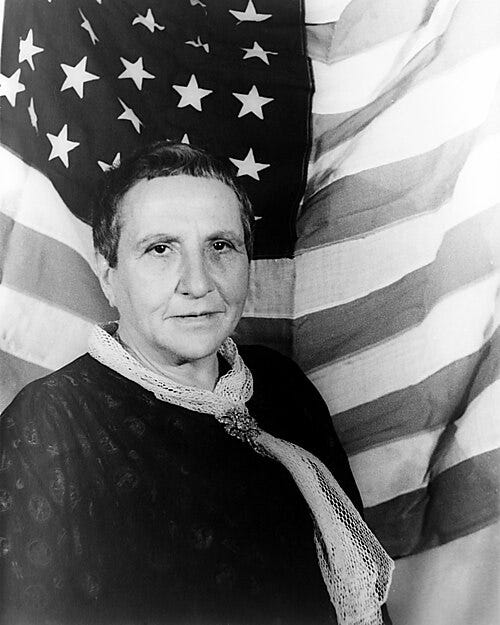 The ruthless executive, cut-throat trader, corrupt politician... even the squanderer of tomorrow | Welcome to Climate Workers Anonymous, where those working in climate share their anonymous and unverified experiences, feelings, and analysis about their labor.Today’s show has submissions covering both the highs and the lows. But even in saying that, I wonder if I start to cross my own editorial standards that I discuss in the podcast version of this episode.Someone left a review on Apple Podcasts that made me think—should I be commenting upon the submissions? So far I haven’t been. I’ve been publishing them and letting them stand on their own. I worry that if I say too much I might misinterpret, or point people away from their intended meaning. Or, potentially worse, distract from their truth with my own commentary.One of the other creative projects I work on is Carbon Removal Memes. It’s biggest on LinkedIn but starting to stand it up on Substack. I started it and built a writer’s room while at my previous company, Nori. It continues on with a rotating cast of meme writers where we workshop our pitches.While I do occasionally have to reign in an editorial take on an issue I think is beyond what is supportable, I mostly try to help people find their funny. I’m not trying to grind my own ax more than theirs. Even if I don’t connect with something they made, if they find it funny and stick up for it, I’m willing to give it a shot. If it connects with them, it will likely connect with someone else.It’s one of the few rules of making art that I know of—if you don’t like what you made, it’s unclear who else will. Or at the very least, you will be unable to tell if it is good or not unless someone tells you. That is a difficult aesthetic position to be in.And while I don’t agree with the editorial line every meme takes, I don’t view it as my role to be the final arbiter of truth. My job is to help others express themselves and make work of which they are proud.That ethos has also prepared me for Climate Workers Anonymous. These are unverified takes people send in. I’m not checking for corroborating sources. This is impressionistic; not journalistic. My work here is to enable others to create and share what they have experienced as true. That leads me to think I should minimize the amount of direct commentary on post submissions.If you think I’ve made a wrong turn, feel free to comment or send a message. I’m still figuring this out and I want it to be the best version of itself that we can make it.If you are truly a completist, here’s a link to Gertrude Stein. I am not sure if this is in fact an apt comparison, but it stands as a thought.Thank you for listening to and reading Climate Workers Anonymous. Subscribe to Substack here, and be sure to subscribe in whichever podcast app you use. An amazing rating and review on those podcast apps does a world of good. Would you please do that for me now? Here’s Apple Podcasts, Spotify, and YouTube.If you’d like submit your anonymous hopes, fears, or experiences to Climate Workers Anonymous, you can use this Tally survey or email climateworkersanonymous[at]protonmail.com, though I believe the Tally survey is more secure. Do not communicate anything you wouldn’t want a hacker to have access to, including an email address that could be linked to you if you email the account on Protonmail.Thanks so much for reading and listening. I am glad you’re here.Sincerely,Ross Kenyon, Curator of Climate Workers Anonymous Get full access to Climate Workers Anonymous at climateworkersanonymous.com/subscribe | 14m 04s | ||||||
| 7/21/26 |  Maybe CDR is a good decision that just feels bad right now. | Welcome to Climate Workers Anonymous, where those who work in climate get to share their anonymous and unverified feelings, experiences, and analysis. Today’s episode has two longer pieces that were submitted.Before I get into those, I wanted to share an additional reflection about the origins of the show’s name. A friend of mine said it and I cottoned onto it right away, and I didn’t quite make the connection that it might also have to do with my admiration for the Catholic Worker Movement and Dorothy Day, in addition to my respect for the various addiction treatment mutual aid organizations that end in “Anonymous”.What I love about both organizations is that they don’t use a hierarchical charitable orientation. The addiction groups are run by an ethos of equality, and that all are addicts, and it is addicts helping one another. For the Catholic Worker, their focus is on works of mercy that recognize the inherent dignity and equal worth of all people, and that any of us might just as easily be in a position that needs this kind of help.This recognition of moral luck renders judgment and hierarchy irrelevant, since it simultaneously encourages us to see ourselves as a fallen sinner as equally as those we “help”, and (if not secular, which many participants in Catholic Worker houses are) to recognize Christ in the “least of these.” The dual nature of humans as both entirely equal and plain, as well as being a locus for divinity to break through everyday reality, is a paradox I like to think a lot about.Ideally, that gives some additional context for why I am attracted to this kind of work.Sincerely,Ross KenyonCurator of Climate Workers Anonymous------------------------------------------------Thank you for listening to and reading Climate Workers Anonymous. Subscribe above, and be sure to subscribe in whichever podcast app you use. An amazing rating and review on those podcast apps does a world of good. Would you please do that for me now? Here’s Apple Podcasts, Spotify, and YouTube.If you’d like submit your anonymous hopes, fears, or experiences to Climate Workers Anonymous, you can use this Tally survey or email climateworkersanonymous[at]protonmail.com, though I believe the Tally survey is more secure. Do not communicate anything you wouldn’t want a hacker to have access to, including an email address that could be linked to you if you email the account on Protonmail. Get full access to Climate Workers Anonymous at climateworkersanonymous.com/subscribe | 7m 50s | ||||||
| 7/14/26 |  The denial of grief plays a central role in the work | Welcome to episode #4 of Climate Workers Anonymous, where those workers in climate can share their anonymous and unverified thoughts, feelings, and experiences about their work. What do you dare to think when you might not be judged for it? What’s your heretical thought, your foolish hope, or your hard-won experience? Share it here for publication on the written Substack and to be read in the podcast version.In this episode’s introduction, I explain a bit more about the limits of the show, and why if you believe there is any sort of questionable behavior by specific parties you should consider contacting an investigative journalist whom you respect. They are much better equipped to evaluate truth claims in this way and typically have anonymity protocols far more sophisticated than what I can offer. I keep this show anonymous and unverified to make sure there is room to discuss the truth of experience and feelings without having to do the hardboiled work of others. I hope that makes sense!Visit the Substack here to read the submissions for yourself.Thank you again to everyone who has submitted to the project!------------------------------------------------Thank you for listening to and reading Climate Workers Anonymous. Subscribe to Substack here, and be sure to subscribe in whichever podcast app you use. An amazing rating and review on those podcast apps does a world of good. Would you please do that for me now? Here’s Apple Podcasts, Spotify, and YouTube.If you’d like submit your anonymous hopes, fears, or experiences to Climate Workers Anonymous, you can use this Tally survey or email climateworkersanonymous[at]protonmail.com, though I believe the Tally survey is more secure. Do not communicate anything you wouldn’t want a hacker to have access to, including an email address that could be linked to you if you email the account on Protonmail.Sincerely,Ross KenyonCurator of Climate Workers Anonymous Get full access to Climate Workers Anonymous at climateworkersanonymous.com/subscribe | 6m 10s | ||||||
| 7/7/26 |  "I do believe deep down that society will one day achieve net-negative emissions" | Warning: these submissions are anonymous and unverified.We’ve barely even started Climate Workers Anonymous and I’m already receiving such challenging and intriguing pieces of feedback, and so many submissions. Thank you to everyone who has participated to date and taken time to share something real with this project.A friend of mine wrote me right before I recorded this episode and mentioned that he wanted fewer hot takes and more stories, and emotional content beyond anger. It set me to thinking about anger and how I understand its usefulness or lack thereof.I wrote a fair amount about this topic in the Substack posting of this podcast. If you are only seeing this in your podcast app, head over to the Substack for the full experience. You can also read all of the submissions over there rather than only listening to me read them.Also, stay tuned for an episode of my other podcast, Reversing Climate Change, which will soon feature a fuller exploration of the Bhagavad Gita.---------------------------------------------------------------Thank you for listening to and reading Climate Workers Anonymous. Subscribe on Substack here, and be sure to subscribe in whichever podcast app you use. An amazing rating and review on those podcast apps does a world of good. Would you please give Climate Workers Anonymous a full rating and great review for me now? Here’s the show on Apple Podcasts, Spotify, and YouTube.If you’d like submit your anonymous hopes, fears, or experiences to Climate Workers Anonymous, you can use this Tally survey or email climateworkersanonymous[at]protonmail.com, though I believe the Tally survey is more secure. Do not communicate anything you wouldn’t want a hacker to have access to, including an email address that could be linked to you if you email the account on Protonmail. Get full access to Climate Workers Anonymous at climateworkersanonymous.com/subscribe | 17m 00s | ||||||
| 6/30/26 |  "the company I work at is going to fail and the founder is in denial about it" | Warning: these submissions are anonymous and unverified.Today we have thirteen(!) submissions to read that cover despair, rage, and other feelings about working climate that the authors could not say aloud.The intro to this show also explains why this project isn't an act of investigative journalism, but a collective art project about feelings. I can't verify the claims of submissions and don't seek to. I alter submissions when it feels necessary to preserve the spirit of the project, but I freely admit I am trying to figure out where the editorial line might be.If you submit, I hope you can respect this approach.---------------------------------------------------------------Thank you for listening to and reading Climate Workers Anonymous. Subscribe on Substack here, and be sure to subscribe in whichever podcast app you use. An amazing rating and review on those podcast apps does a world of good. Would you please give Climate Workers Anonymous a full rating and great review for me now? Here’s the show on Apple Podcasts, Spotify, and YouTube.If you’d like submit your anonymous hopes, fears, or experiences to Climate Workers Anonymous, you can use this Tally survey or email climateworkersanonymous[at]protonmail.com, though I believe the Tally survey is more secure. Do not communicate anything you wouldn’t want a hacker to have access to, including an email address that could be linked to you if you email the account on Protonmail.N.B. there were actually only thirteen submissions; not fourteen! I skipped a number in there. Get full access to Climate Workers Anonymous at climateworkersanonymous.com/subscribe | 17m 15s | ||||||
Want analysis for the episodes below?Free for Pro Submit a request, we'll have your selected episodes analyzed within an hour. Free, at no cost to you, for Pro users. | |||||||||
| 6/24/26 |  "Science as a shroud for ruthless profiteering" | Here it is: the first show with anonymous submissions to Climate Workers Anonymous. In this episode there are six short thoughts (or four depending upon whether technology has its say), and one longer one.There are big thoughts and analysis. There are feelings of dread and hope. Listen in for yourself.Also, this episode starts with some of my thoughts on some of the ethics and aesthetics of a show like this, as well as a few quotes:" I am human. Nothing human is foreign to me."— Terence" Your energy recycles into every possible relation to everyone else's energy, even Brad's. You've been predator and prey with him, friends, enemies, brother, sister, mother, child."— I Heart Huckabees---------------------------------------------------------------Thank you for listening to and reading Climate Workers Anonymous. Subscribe on Substack here, and be sure to subscribe in whichever podcast app you use. An amazing rating and review on those podcast apps does a world of good. Would you please give Climate Workers Anonymous a full rating and great review for me now? Here’s the show on Apple Podcasts, Spotify, and YouTube.If you’d like submit your anonymous hopes, fears, or experiences to Climate Workers Anonymous, you can use this Tally survey or email climateworkersanonymous[at]protonmail.com, though I believe the Tally survey is more secure. Do not communicate anything you wouldn’t want a hacker to have access to, including an email address that could be linked to you if you email the account on Protonmail. Get full access to Climate Workers Anonymous at climateworkersanonymous.com/subscribe | 15m 25s | ||||||
| 6/17/26 |  Welcome to Climate Workers Anonymous | Welcome to the first episode of Climate Workers Anonymous. If you are listening on your usual podcast app, you might notice that the old feed for Carbon Removal Newsroom has been officially repurposed for this new project. I started Carbon Removal Newsroom a very long time ago. My name is Ross Kenyon, and I’m a former cofounder of the Nori carbon dioxide removal marketplace and registry. This show is a dedicated space for the hard, often unspoken truths of working in the climate and carbon dioxide removal (CDR) sectors.Founding a company or working in the climate sector is notoriously difficult. Beyond the business mechanics, climate workers face a unique burden: they are actively trying to capture a dilute gas and stabilize the atmosphere for the survival of humanity, often while relying on an economic system that doesn’t reward this behavior at scale. (We still haven’t quite figured out how to decarbonize.)Workers and founders frequently have to project unwavering strength to buyers and investors. They have to suck up to companies that they might actively wish didn’t exist in the first place. Expressing this feeling, or any of the doubts, exhaustion, or frustrations can feel like a massive professional risk. Bottling up these feelings takes a severe emotional toll.When I was a teenager, I really loved the collaborative art project PostSecret. Climate Workers Anonymous invites you to share your hidden thoughts, moral dilemmas, artwork, and naive hopes without fear of career repercussions. Whether you are wrestling with the ethics of doing business with billionaires who seemingly don’t care about much of anything but themselves, heavily polluting companies, or are simply exhausted by the slow pace of global change, this is a place to be heard.Telling the truth about the reality of working in climate is a productive, necessary action. I hope you will join us in this experiment!Send us your stories for audio and text publication here or at [email protected] for listening!Sincerely,Ross KenyonRecommended supplemental listening: “When Bad Companies Buy Good Carbon Removal” from my other show, Reversing Climate Change.For the full experience, community, and to support the project, please subscribe to Climate Workers Anonymous on Substack here. Get full access to Climate Workers Anonymous at climateworkersanonymous.com/subscribe | 20m 54s | ||||||
| 6/10/24 |  Myles Gray on the US Biochar Initiative's 2023 Global Biochar Market Report | So much is happening in the world of biochar. It's both a physical product and can also be a more abstract concept called a "carbon removal". How is the industry balancing the divergent business logic of these two different markets, and what challenges and opportunities will it face?In today's episode of Carbon Removal Newsroom, producer and guest host Asa Kamer interviews Myles Gray, the program director of the US Bicohar Initiative about their 2023 Global Biochar Market Report.Biochar is responsible for a huge amount of currently delivered durable carbon removals. It's more shovel-ready than other forms of carbon removal, which have much higher CapEx requirements and are betting more on future cost-curves than present deployment. However, some participants in biochar production can face challenges from those concerned about additionality, among other issues.The discussion covers the production scale, market dynamics, economic challenges, and the growing number of biochar producers, particularly in the Global South. Gray also highlights the importance of high-quality standards, the role of innovative business models, and the need for better market development for physical biochar to help scale the industry globally. Listen in to learn more.On This EpisodeAsa KamerMyles GrayResourcesUS Biochar InitiativeUSBI's 2023 Global Biochar Market ReportConnect with NoriNoriNori’s X accountNori’s other podcast Reversing Climate ChangeNori’s CDR meme X account Get full access to Climate Workers Anonymous at climateworkersanonymous.com/subscribe | 41m 55s | ||||||
| 5/28/24 |  Gabrielle Walker on the State of Corporate Carbon Removal Demand | Everyone used to say carbon removal was supply-constrained. Now everyone says it is demand-constrained. So which is it?Today's show has Dr. Gabrielle Walker, Co-Founder of the carbon removal marketplace CUR8 and the Founder of Rethinking Removals, an NGO working to change the conventional environmental story around CDR. She is hosted by Nori's VP of Supply and Methodology, Radhika Moolgavkar.Dr. Walker discusses her long history in the climate space, including time spent in carbon capture, and how she works to address questions from corporate buyers.The conversation covers the importance of portfolios in carbon removal strategies, the necessity of immediate action, and the challenges of gaining local and environmental community support.Additionally, Dr. Walker delves into major stories in carbon removal for 2024, including the XPRIZE finalists, Europe's policy actions, and private industry investments.On This EpisodeDr. Gabrielle WalkerRadhika MoolgavkarResourcesDr. Walker's LinkedInDr. Walker's TwitterRethinking RemovalsCUR8Connect with NoriNoriNori’s X accountNori’s other podcast Reversing Climate ChangeNori’s CDR meme X account Get full access to Climate Workers Anonymous at climateworkersanonymous.com/subscribe | 44m 39s | ||||||
| 5/21/24 |  The Carbon Removal XPRIZE Announces Their 20 Finalists | The XPRIZE remains one of the top stories in carbon removal and one of the largest funding sources for CDR start-ups. The Elon Musk-backed competition will award $50 million to the winning CDR startup in 2025 and send $10 million to three other runner-up teams.Over 1000 teams worldwide have applied since the award was announced in 2021.This month, XPRIZE released the detailed “Getting to Gigaton” report, which provided comprehensive data and analysis of the top 100 teams. A few weeks later, they announced the top 20 finalist teams competing for the grand prize.The report and the selection of the top teams provide a state of play for the industry by showing what methodologies are most ready to grow to a gigaton scale, according to XPRIZE's expert CDR judges.Today's show is with Nikki Batchelor, the Executive Director of XPRIZE Carbon Removal, and Mike Leitch, the Senior Technical Lead, about how they selected the top 20, what they found in this report, and what comes next for the competition.On This EpisodeNikki BatchelorMike LeitchRadhika MoolgavkarResources“Getting to Gigaton” reportConnect with NoriNoriNori’s X accountNori’s other podcast Reversing Climate ChangeNori’s CDR meme X account Get full access to Climate Workers Anonymous at climateworkersanonymous.com/subscribe | 38m 11s | ||||||
| 5/14/24 |  The Carbon Dioxide Removal Gap | Lots of news in carbon removal this past week! Frontier made their largest-ever purchase of $58 million from relatively new BiCRS company Vaulted Deep, Climeworks unveiled their Mammoth facility in Iceland, and Microsoft purchased 3.3 million tons of CO2 from BECCs in Sweden.These deals represent significant private market volume in CDR. But a new report in Nature called The carbon dioxide removal gap” highlights some of the policy needs that remain to get carbon removal where it should be to keep us on track for our climate goals.Listen in today to learn about VCM and policy updates from the world of carbon removal, and understand some of the biggest deals this space has yet seen.On This EpisodeWil BurnsHolly Jean BuckRadhika MoolgavkarResourcesNature report, "The carbon dioxide removal gap” Connect with NoriNoriNori’s X accountNori’s other podcast Reversing Climate ChangeNori’s CDR meme X account Get full access to Climate Workers Anonymous at climateworkersanonymous.com/subscribe | 32m 59s | ||||||
| 5/7/24 |  Carboneers: Biochar in India and Ghana | Biochar is an increasingly global carbon removal pathway. What does it look like to do business in Ghana and India? What does it mean for biochar to be decentralized?Mart de Bruijn is the Co-Founder and Director of Carboneers, a Dutch biochar company working to implement carbon removal solutions in India and Ghana.The conversation covers the challenges of securing enthusiastic participation from local farmers, navigating cultural and regulatory landscapes, and the technical aspects of biochar production. Additionally, the episode sheds light on the crucial role of monitoring, reporting, and verification in ensuring the efficacy of carbon credits, alongside the future expansion plans and potential bottlenecks faced by distributed/decentralized carbon removal systems.This episode is hosted by Radhika Moolgavkar, Nori's VP of Supply and Methodology.On This EpisodeRadhika MoolgavkarMart de BruijnResourcesCarboneers Get full access to Climate Workers Anonymous at climateworkersanonymous.com/subscribe | 30m 14s | ||||||
| 5/2/24 |  Carbon Gap and CDR Policy in Europe | Europe has a lot happening for carbon removal, and on several different levels. What is the state of CDR policy and industry?Today's episode has Nori's VP of Supply and Methodology, Radhika Moolgavkar, on hosting duties, and Sylvain Delerce, the Associate Research Direct of Carbon Gap, joining the show to catch listeners up on Carbon Gap and the latest on European carbon removal news.Sylvain highlights the European Union's efforts to structure and fund the industry amidst broader regulatory efforts, and how Carbon Gap fits into the ecosystem.The conversation also covers the importance of distinguishing carbon removal from carbon capture and storage (CCS) in policy texts, the need for a clear EU vision on CDR, and the potential impact of the Net-Zero Industry Act and the Carbon Removal Certification Framework on the industry. Sylvain also discusses the role of individual European countries in advancing CDR and the potential for France to deploy significant carbon removal solutions by 2050.On This EpisodeRadhika MoolgavkarResources"Decoding the Net-Zero Industry Act – Implications for carbon removal" by Carbon Gap"Envisioning a carbon removal strategy for Europe" by Carbon Gap Get full access to Climate Workers Anonymous at climateworkersanonymous.com/subscribe | 44m 34s | ||||||
| 4/30/24 |  SBTi, Scope 3, and Carbon Removal | The Science Based Targets Initiative (SBTi) recently came out and announced they would be issuing guidance for how some carbon offsets may be used to address Scope 3 emissions (activities beyond direct business operations and energy). This set off a firestorm of protest within and outside of SBTi, as well as some calls of support.It was essentially a tabula rasa one could project one's carbon hopes and fears onto: would this lead to increased financing of sustainability efforts, or result in a race to the bottom of low-quality credits finding a new market? Something in-between, or just too early to tell?In today's episode of Carbon Removal Newsroom, host Radhika Moolgavkar, Nori's VP of Supply and Methodology, is joined by her business panelists Susan Su, a venture capitalist at Toba Capital, and Na'im Merchant, the Co-founder and Executive Director of Carbon Removal Canada, to make sense of this news.They also cover other CDR industry headlines from April, including sustainable aviation fuel, biochar in the global south, and significant subsidy announcements from Denmark and Canada for carbon removal projects.On This EpisodeRadhika MoolgavkarSusan SuNa'im MerchantResources"Inside the Controversy That's Divided the Carbon Offsets Market" at Bloomberg"SBTi is committed to robust governance and will not shy away from debate" by Luiz Amaral, CEO, Science Based Targets initiative (SBTi)"Carbon Offset Market Faces Chaos as African Mega-Project Collapses" at Bloomberg"Removals are better than some reductions - The case of electrofuels for aviation" by Robert Höglund2023 Global Biochar Market ReportCaptura's fundraising newsMission Zero's fundraising news Get full access to Climate Workers Anonymous at climateworkersanonymous.com/subscribe | 48m 41s | ||||||
| 4/23/24 |  How Far Behind Is the World on CDR Policy? | Carbon removal is sometimes thought to be enjoying policy tailwinds. But is it anywhere close to what we need to avoid the worst of climate change?A new report from the Rhodium Group suggests the CDR industry is receiving about 1% of what it would need to reach a one CO2 gigatonne/year capacity! Our regular panelists, Drs. Holly Jean Buck & Wil Burns discuss the challenges of government budgeting, politics, eminent domain, profit-sharing Community Benefits Agreements, and so much else as this industry tries to scale.On This EpisodeWil BurnsHolly Jean BuckAsa KamerResourcesRhodium Group's "The Landscape of Carbon Dioxide Removal and US Policies to Scale Solutions" reportConnect with NoriNoriNori’s X accountNori’s other podcast Reversing Climate ChangeNori’s CDR meme X account Get full access to Climate Workers Anonymous at climateworkersanonymous.com/subscribe | 38m 35s | ||||||
| 4/9/24 |  How InPlanet is Growing ERW | InPlanet is an enhanced weathering company spreading rock dust on agricultural fields to draw down CO2. In November, it announced a new investment of $4.6 million from a group of investors. Based in Germany, InPlanet collaborates with farmers in Brazil, aiming to remove 1 million tons of CO2 by 2026.As they work to scale their operations, they face a similar challenge all ERW operations are dealing with right now. While the basic science of rock weathering is well understood, accurately measuring CO2 removal in real-world conditions remains a significant hurdle.Ensuring trust in the process will require improved measurement and verification from what exists today- a problem InPlanet is working to solve. On this episode we’re joined by InPlanet’s Head of Carbon Matthew Clarkson who recently released pre-print research evaluating the different methods of measuring CO2 removal from rock weathering and made recommendations for areas of improvement. ERW is technologically ready, has co-benefits, and has already attracted significant investment. It is ready to grow to climate relevant scale- but only if it can be properly measured. On this episode we’ll talk with Matthew about his MRV research, working on the ground with Brazilian farmers, and what hurdles he sees to InPlanet’s goal of megaton removal in the next three years. On This EpisodeRadhika MoolgavkarMathew ClarksonResourcesInPlanetFundraising NewsMatthew’s Pre-print paperEnhanced Weathering AllianceBloomberg article on ERW fundingConnect with NoriNoriNori’s TwitterNori’s other podcast Reversing Climate ChangeNori’s CDR meme twitter account Get full access to Climate Workers Anonymous at climateworkersanonymous.com/subscribe | 35m 45s | ||||||
| 3/26/24 |  Compliance and Voluntary Carbon Markets in the EU & US | Criticism of VCM is very common. But what about CCM?! Compliance Carbon Markets face design and political economy issues as well. Could we replace them both with industrial policy? Maybe, but that has trade-offs too. For what is a climate-concerned person to root?This show delves into the fluctuations in the European Union's Emissions Trading System (ETS) carbon price and the U.S. Department of Energy's (DoE) efforts to boost carbon dioxide removal (CDR) investments through a purchasing challenge. The discussion spans the voluntary versus compliance carbon markets, with a focus on how the EU employs regulatory measures whereas the U.S. leverages financial incentives to address carbon emissions.The episode also addresses the impacts of these policies on multinational corporations, the potential effects on carbon credit pricing, and the interplay between public policy and private sector initiatives in driving innovation in carbon removal technologies.On This EpisodeWil BurnsHolly Jean BuckRadhika Moolgavkar Resources"Carbon Removal Is Getting Gamified", Heatmap article from Emily PontecorvoConnect with NoriNoriNori’s X accountNori’s other podcast Reversing Climate ChangeNori’s CDR meme X account Get full access to Climate Workers Anonymous at climateworkersanonymous.com/subscribe | 29m 40s | ||||||
| 3/19/24 |  What Does It Mean When Oil Majors Buy Biochar? | Do carbon removal suppliers and registries have a responsibility in choosing their customers, or in enforcing how their carbon removals are used? Is it better that the money go to carbon removal than alternative uses? What matters, and at which magnitudes?In today's episode of Carbon Removal Newsroom, host Radhika Moolgavkar, Nori's VP of Supply and Methodology, is joined by her business panelists Susan Su, a venture capitalist at Toba Capital, and Na'im Merchant, the Co-founder and Executive Director of Carbon Removal Canada.A spirited debate ensues about Shell Environmental Product's purchase of biochar credits, SWISS and Lufthansa Group's support of Climeworks, as well as the Copenhagen Airport's carbon removal portfolio purchase from Klimate.co. This type of industry interest in carbon removal, while directionally correct, can trigger debate within the carbon removal community. Many are happy for the support in scaling the new industry. Others worry it is better to maintain CDR's independence. This question is unlikely to be settled any time soon, but tune in and listen to some hot and yet considered takes on the matter.On This EpisodeRadhika MoolgavkarSusan SuNa'im MerchantResourcesThe ETH Zürich report on DAC costsRobert Höglund's responseConnect with NoriNoriNori’s X accountNori’s other podcast Reversing Climate ChangeNori’s CDR meme X account Get full access to Climate Workers Anonymous at climateworkersanonymous.com/subscribe | 43m 11s | ||||||
| 3/12/24 |  The Rise of Climate Law within Carbon Removal | Law structures so much of our lives, but can feel inaccessible to those untrained. It is also in flux! How is the law being changed in response to climate change? Which laws can be adapted to suit our climate-changing country and world? And which are unprepared for new challenges?Today's episode of Carbon Removal Newsroom is hosted by Radhika Moolgavkar, Nori's VP of Supply and Methodology. She is joined by Romany Webb, the Deputy Director of the Sabin Center for Climate Change Law at the Columbia Law School.They discuss the evolving field of climate law, its critical role in the development of carbon dioxide removal (CDR) technologies, and the unique legal challenges presented by ocean-based CDR methods. Webb highlights the growing interest among law students in climate technology and emphasizes the importance of legal frameworks in addressing climate change. The conversation delves into the complexities of international and local laws governing oceans, the innovative concept of Community Benefits Agreements for climate projects, and the positive feedback on model law proposals intended to regulate CDR activities safely.The episode underscores the necessity of a diverse portfolio of CDR solutions to combat the climate crisis and explores the legal opportunities and challenges facing the CDR industry’s advancement.On This EpisodeRadhika MoolgavkarRomany WebbResourcesSabin Center for Change Law at the Columbia Law SchoolConnect with NoriNoriNori’s X accountNori’s other podcast Reversing Climate ChangeNori’s CDR meme X account Get full access to Climate Workers Anonymous at climateworkersanonymous.com/subscribe | 25m 09s | ||||||
| 3/5/24 |  Biotech Trees w/ Living Carbon | Biotech trees: the new frontierThis week on Carbon Removal Newsroom, we sat down with Maddie Hall, CEO and co-founder of Living Carbon, to discuss how her company enhances the ability of photosynthetic organisms to draw down and store carbon from the atmosphere through the responsible use of biotechnology.Listen in to hear Maddie explain how these trees are designed to absorb more carbon dioxide by leveraging C4 photosynthesis, a more efficient form of photosynthesis.Learn about typical concerns and misconceptions regarding the risks of photosynthetically enhanced trees, and discover why tree resilience is as exciting to Living Carbon as carbon removal.Enjoy this foray into the promising potential of biotech trees!On This EpisodeRadhika MoolgavkarMaddie HallResourcesLiving Carbon CRISPERLoblolly Pines Open AIConnect with NoriNoriNori’s X accountNori’s other podcast Reversing Climate ChangeNori’s CDR meme X account Get full access to Climate Workers Anonymous at climateworkersanonymous.com/subscribe | 23m 50s | ||||||
Showing 25 of 184
Pitch Fit is a Pro feature
See how bookable this show is for guests, which brands already advertise, the per-episode ad value, and the best-fit guest and sponsor profile. The numbers are blurred on the free plan.
How readily this show books outside guests like you.
How proven this show is for host-read sponsorships.
For Guests
ProFor Advertisers
ProUpgrade to Pro to unlock guest cadence, sponsor categories, fit scores, and per-episode ad value for this show.
Similar Audience Demographics
Podcasts that attract a similar listener profile





Chart history for Carbon Removal Newsroom
Peaked at #41 in NG, currently #41 in NG.
| Market | Genre | Peak | Current | Trend |
|---|---|---|---|---|
| NG | — | #41 | #41 | — |
Chart Positions
1 placement across 1 market.
Chart Positions
1 placement across 1 market.