

Insights from recent episode analysis
Audience Interest
Podcast Focus
Publishing Consistency
Platform Reach
Insights are generated by CastFox AI using publicly available data, episode content, and proprietary models.
Total monthly reach
Estimated from 4 chart positions in 4 markets.
By chart position
- 🇩🇪DE · Earth Sciences#29100K to 300K
- 🇦🇺AU · Earth Sciences#1945K to 30K
- 🇳🇱NL · Earth Sciences#2130K to 100K
- 🇳🇿NZ · Earth Sciences#513K to 10K
- Per-Episode Audience
Est. listeners per new episode within ~30 days
69K to 220K🎙 Weekly cadence·20 episodes·Last published 9mo ago - Monthly Reach
Unique listeners across all episodes (30 days)
138K to 440K🇩🇪68%🇳🇱23%🇦🇺7%+1 more - Active Followers
Loyal subscribers who consistently listen
41K to 132K
Market Insights
Platform Distribution
Reach across major podcast platforms, updated hourly
Total Followers
—
Total Plays
—
Total Reviews
—
* Data sourced directly from platform APIs and aggregated hourly across all major podcast directories.
On the show
Recent episodes
EP 16 Methane from Trash with Tia Scarpelli of Carbon Mapper
Sep 29, 2025
Unknown duration
EP 15 SATLANTIS: Tracing Emissions from Oil and Gas Pipelines with Aitor Morinigo
Sep 3, 2025
Unknown duration
Ep 13 TROPOMI: Seeing Methane from Space with Dr. Ilse Aben
Jul 21, 2025
Unknown duration
Ep 11 Tracking Power Plants from Space Using Satellites and AI with Dr. Heather Couture
Jun 2, 2025
Unknown duration
Ep 10 The Climate TRACE Coalition with Dr. Aaron Davitt
May 27, 2025
Unknown duration
Social Links & Contact
Official channels & resources
Official Website
Login
RSS Feed
Login
| Date | Episode | Description | Length | |
|---|---|---|---|---|
| 9/29/25 | EP 16 Methane from Trash with Tia Scarpelli of Carbon Mapper | In this conversation, Tia Scarpelli discusses her journey in climate research, focusing on methane emissions from landfills and the complexities of solid waste management. She highlights the importance of understanding methane generation, the role of remote sensing in emission detection, and the challenges of measuring emissions accurately. The discussion also covers mitigation strategies for landfills and the need for effective stakeholder engagement to drive action towards reducing methane emissions.Keywordsclimate change, methane emissions, landfills, remote sensing, environmental engineering, solid waste management, greenhouse gases, emission detection, waste reduction, sustainabilityChapters03:30 The Importance of Landfills and Methane Emissions12:09 Understanding Landfill Composition and Methane Generation20:15 Modeling Methane Emissions from Landfills25:30 Research and Measurement Challenges in Landfill Emissions26:57 Measuring Greenhouse Gas Emissions31:14 The Role of Remote Sensing in Emission Detection35:24 Confidence in Remote Measurements39:58 Mitigation Strategies for Landfills46:56 CarbonMapper's Goals and Stakeholder Engagement | — | |
| 9/3/25 | EP 15 SATLANTIS: Tracing Emissions from Oil and Gas Pipelines with Aitor Morinigo | In this conversation, Sean Crowell interviews Aitor Morinigo, CEO of Satlantis, about the company's innovative approach to remote sensing and methane detection. Aitor shares his background in mechanical engineering and his journey from working in large corporations to leading a startup focused on satellite technology. The discussion covers the evolution of Satlantis, its partnerships with companies like Encino Environmental Services, and the importance of understanding customer needs in the oil and gas industry. Aitor also highlights the challenges of methane detection and the innovative technologies being developed to address these issues, like polarization sensitivity and higher spatial resolution in their next generation of sensors.KeywordsSatlantis, remote sensing, methane detection, satellite technology, environmental monitoring, space industry, EOChapters00:00 Introduction to Aitor Morinigo and Sattlantis02:10 Aitor's Journey into Remote Sensing and Engineering04:41 Transition from Traditional to New Space07:01 The Importance of Business Acumen in Engineering08:29 Overview of Sattlantis and Its Mission10:13 Sattlantis' Shift to Data Solutions12:58 Partnership with Encino and Industry Insights15:21 Innovative Technology for Pipeline Monitoring17:57 Multispectral Imaging and Its Advantages20:10 Combining Technologies for Enhanced Detection22:36 Business Model and Customer Engagement25:09 Future Developments and Innovations at Sattlantis | — | |
| 7/21/25 |  Ep 13 TROPOMI: Seeing Methane from Space with Dr. Ilse Aben | How do you detect methane leaks from space? And once you do - what comes next?In this episode, Dr. Ilse Aben shares the story of TROPOMI, the Dutch-led satellite instrument that scans the Earth daily for greenhouse gases. We explore how column measurements are turned into emissions, the power of'tip-and-cue' collaboration with commercial satellites, and how UN-backed systems are turning satellite data into climate action on the ground.• SRON Netherlands Institute for Space Research: https://www.sron.nl/• TROPOMI: https://www.tropomi.eu/• IMEO MARS Program: https://www.unep.org/explore-topics/climate-action/what-we-do/imeo• GHGSat: https://www.ghgsat.com/• Global Methane Hub: https://www.globalmethanehub.org/Episode Outline01:00–04:00 | Scientific Background04:00–09:15 | From SCIAMACHY to TROPOMI09:15–16:00 | How Satellites Measure Methane16:00–20:00 | Methane Sources Explained20:00–25:00 | Diffuse vs. Point Sources25:00–30:00 | Super Emitters and the Tip-and-Cue Model30:00–35:00 | IMEO & Global Mitigation via Satellites35:00–39:00 | Waste Emissions and Monitoring in the Global South39:00–43:00 | What’s Next in Satellite Methane Monitoring43:00–End | Final ReflectionsKeywordsgreenhouse gases, carbon sense, international cooperation, physics, spectroscopy, TROPOMI, satellite measurements | — | |
| 6/2/25 | Ep 11 Tracking Power Plants from Space Using Satellites and AI with Dr. Heather Couture | In this conversation, Dr. Heather Couture discusses her work with Climate TRACE, focusing on the use of AI and satellite data to estimate CO2 emissions from power plants. She explains the importance of granular data for individual power plants, the challenges of estimating emissions accurately, and the need for collaboration in improving emission monitoring techniques. The discussion covers various aspects of machine learning, satellite technology, and the complexities of emissions data.KeywordsClimate TRACE, AI, CO2 emissions, power plants, satellite data, machine learning, greenhouse gases, emissions monitoring, environmental science, energy production | — | |
| 5/27/25 | Ep 10 The Climate TRACE Coalition with Dr. Aaron Davitt | In this conversation, Sean Crowell and Aaron Davitt of WattTime discuss the intersection of climate data, remote sensing, and emission tracking. Aaron introduces the Climate Trace Coalition, which was founded by Watt Time and former US Vice President Al Gore to create comprehensive greenhouse gas emission inventories. Unlike the previous discussions of GHG remote sensing, this discussion highlights the use of different sets of satellite imagery (visible, thermal, SAR, etc) to locate sources for monitoring emissions across various sectors, the importance of data accessibility, and the collaborative efforts needed to improve emission estimates and mitigation strategies.This is Part 1 of a series on Climate TRACE. Key Topics:04:24 Aaron Davitt's Journey in Climate Science06:50 Understanding Watt Time and Its Role08:54 Overview of Climate Trace Coalition11:17 Utilizing Satellite Data for Emission Estimates13:43 Sector-Specific Emission Monitoring15:40 Innovative Approaches in Emission Estimation18:24 Collaboration and Open Data in Climate Trace20:36 Future Directions for Climate TraceKeywords: climate data, remote sensing, greenhouse gas emissions, satellite technology, Wattime, Climate Trace, emission inventory, environmental technology, data accessibility, collaboration, RMI | — | |
| 4/13/25 | Ep 7 CO2M and the Future of Urban to National GHG Monitoring with Yasjka Meijer | In this conversation, Dr. Sean Crowell interviews Yasjka Meijer about the advancements in remote sensing technology and its application in monitoring greenhouse gases. They discuss the importance of satellite data, the role of the European Space Agency (ESA) and the Copernicus program, and the challenges faced in accurately measuring CO2 and methane emissions. Yashka shares insights from his career, the significance of continuous data collection, and the need for collaboration between public and private sectors to address climate change effectively. The discussion emphasizes the urgency of climate action and the role individuals can play in mitigating emissions.Learn more about CO2M and Copernicus here:https://www.esa.int/Applications/Observing_the_Earth/Copernicus/Introducing_Copernicushttps://www.eoportal.org/satellite-missions/co2mKeywords: remote sensing, greenhouse gases, satellite technology, climate monitoring, Copernicus program, CO2M mission, ESA, air quality, methane measurements, validationTakeaways- The Copernicus program aims to provide continuous data for climate monitoring.- Satellite technology is crucial for understanding greenhouse gas emissions.- Operational satellites must ensure data continuity and accuracy.- Engagement with the private sector enhances data utilization for climate action.- The CO2M mission focuses on measuring anthropogenic CO2 emissions.- Validation of satellite data is essential for accurate climate assessments.- The global stock take is a critical component of the Paris Agreement.- Public perception of climate change needs to shift towards urgency.- Individual actions can significantly contribute to reducing emissions.Outline00:00 Introduction to Remote Sensing and Greenhouse Gases00:56 New Chapter02:56 Yasjka Meijer's Journey in Atmospheric Science05:47 The Evolution of Copernicus Programs08:03 The Role of ESA in Earth Observation10:35 Engagement with the Private Sector in Copernicus12:54 The Importance of Continuous Monitoring15:46 CO2M: A New Era in Greenhouse Gas Monitoring17:59 Challenges in Measuring CO2 and Methane20:16 The Design and Functionality of CO2M Satellites35:08 Building on Heritage: The Role of Mission Advisory Groups37:54 Innovations in Spectrometer Design for CO2 and Methane Measurement41:37 The Importance of NO2 in Emission Estimates44:45 Addressing Aerosol Challenges in Satellite Observations47:09 Data Products and Collaboration in Greenhouse Gas Monitoring50:32 The Role of Copernicus in Climate Monitoring53:30 Validation and Accuracy in Satellite Measurements56:56 International Collaboration for Greenhouse Gas Monitoring59:30 The Role of SEOS in Climate Observations01:05:02 Personal Contributions to Climate Action01:08:37 The Urgency of Climate Change and Individual Responsibility01:17:55 Introduction to Carbon Sense Podcast01:17:56 Exploring Carbon Footprint and Its Impact | — | |
| 3/31/25 | Ep 6 GHGSAT: Revolutionizing Emission Monitoring with Jean Francois Gauthier | In this conversation, Sean Crowell interviews J-F Gauthier, Vice President of GHGSat, about the company's mission to monitor greenhouse gas emissions using satellite technology. J-F shares his unique journey into the field of remote sensing, the evolution of GHGSat, and the challenges faced by commercial entities in this space. The discussion covers the importance of accurate emission detection, collaboration within the remote sensing community, and the future goals of GHGSat, including the ambition to monitor every emitter globally on a daily basis. J-F emphasizes the need for actionable data to drive environmental change and the importance of collaboration among various stakeholders in the fight against climate change.Chapters00:00 Introduction to GHG-Sat and Its Mission00:20 JF Gauthier's Background and Career Path03:47 The Genesis of GHG-Sat and Its Technology06:38 Current Constellation and Future Plans08:30 Commercial Challenges in Methane Monitoring12:23 Understanding GHG-Sat's Detection Capabilities15:56 Validation Efforts and Transparency in Data21:54 Collaboration and Standardization in the Industry25:13 Uncertainty in Measurements and Its Implications25:50 Understanding False Positives in Methane Detection27:42 The Role of Wind in Emission Measurements29:52 Source Attribution Challenges in Emission Data32:46 Human Oversight in Automated Data Analysis34:14 Customer Interaction and Data Delivery39:53 Future Goals for GHGSat44:40 Challenges in CO2 Measurement49:36 The Importance of Actionable DataKeywordsGHGSat, remote sensing, greenhouse gases, methane detection, CO2 monitoring, satellite technology, environmental impact, emissions measurement, climate change, industrial emissionsWhite paper on GHGSat Validation: https://www.ghgsat.com/en/scientific-publications/validation-and-metrics-for-emissions-detection-by-satellite/ | — | |
| 2/20/25 | 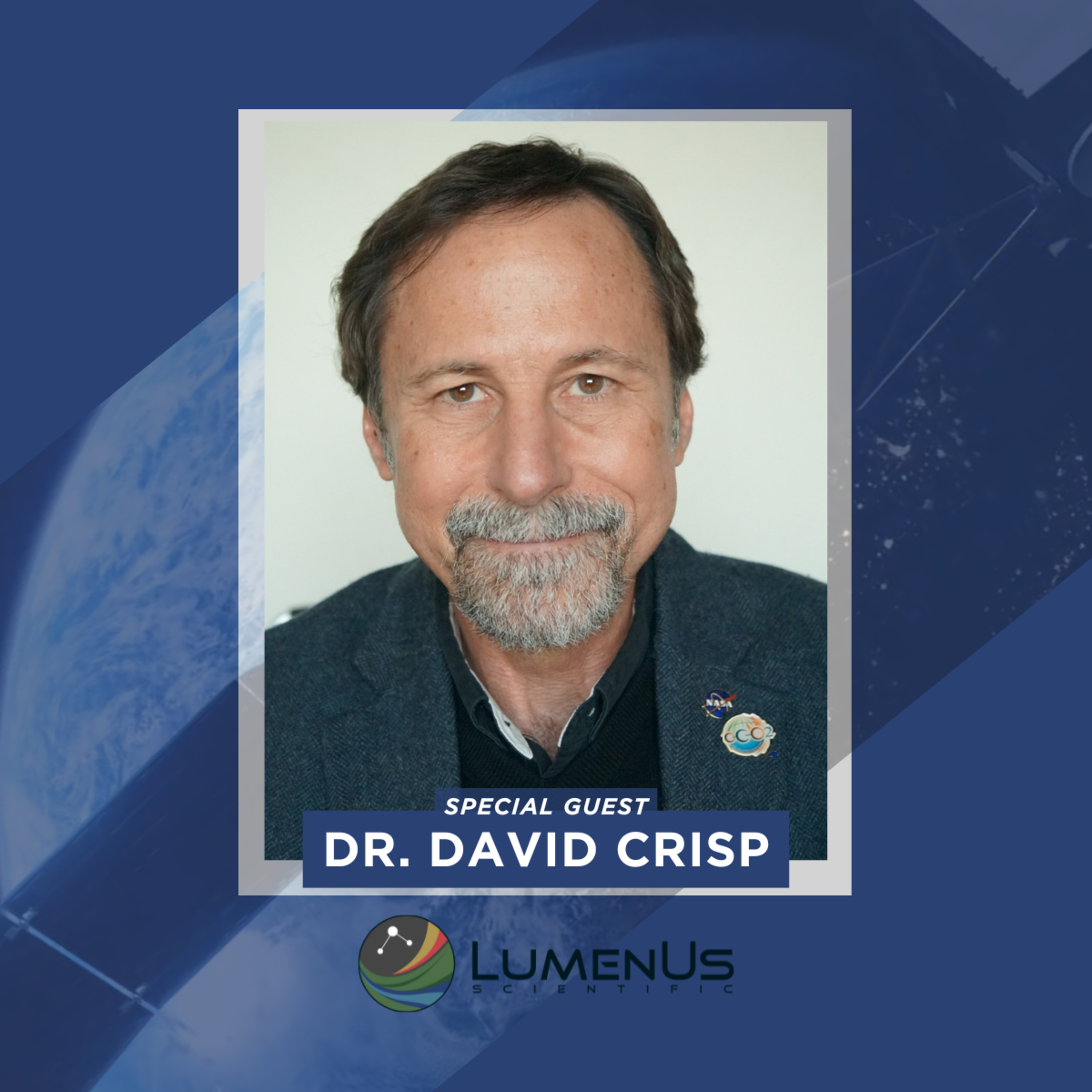 Ep 3 A Deep Dive into the Science of Remote Sensing with Dr. David Crisp | In this conversation, Dr. Sean Crowell and Dr. David Crisp delve into the intricate interactions of light with matter, focusing on the principles of absorption, transmission, and reflection of photons. They explore the challenges of measuring greenhouse gases, the importance of accuracy and precision in remote sensing instruments, and the role of satellites in monitoring emissions. The discussion also highlights the differences between CO2 and methane, their sources, and their atmospheric lifetimes, while emphasizing the need for improved measurement systems to inform climate policy effectively.Chapters00:00 Understanding Light Interaction: Absorption, Transmission, and Reflection08:18 Modeling Planetary Atmospheres and Greenhouse Effects14:12 Measuring Accuracy and Standards in Spectrometry22:27 Signal to Noise Ratio: Precision in Measurements26:31 Remote Sensing Retrieval Algorithms and CO2 Measurement34:06 Applications of Greenhouse Gas Measurements41:41 Measuring Emissions: The Challenge of Cities45:03 The Evolution of Emission Mapping Instruments48:26 Commercial vs. Public Sector in Emission Monitoring52:39 The Need for Precision in Emission Measurements58:41 Understanding CO2 and Methane: Differences and Implications01:04:50 Challenges in Remote Sensing: Optical Path and Scattering01:19:25 The Future of Emission Monitoring: Lessons Learned and Next Steps01:21:38 Understanding Photons and Radiation01:21:47 The Importance of Subscribing and Supporting the Podcast | — | |
| 2/17/25 | Ep 2 From Venus to Earth: The Story of the Orbiting Carbon Observatories with Dr. David Crisp | In this episode, Dr. David Crisp shares his remarkable journey from studying planetary atmospheres to leading the development of the Orbiting Carbon Observatory (OCO). He discusses the challenges faced during the mission, the importance of international collaboration in climate monitoring, and the advancements in remote sensing technology for measuring greenhouse gases. Dr. Crisp emphasizes the significance of accurate carbon dioxide measurements in understanding and combating climate change, and he reflects on the future of carbon monitoring and the role of scientific collaboration in addressing global environmental challenges.Keywords: remote sensing, greenhouse gases, carbon emissions, Orbiting Carbon Observatory, climate change, international collaboration, NASA, carbon dioxide measurement, space missions, environmental science | — | |
| 2/6/25 | 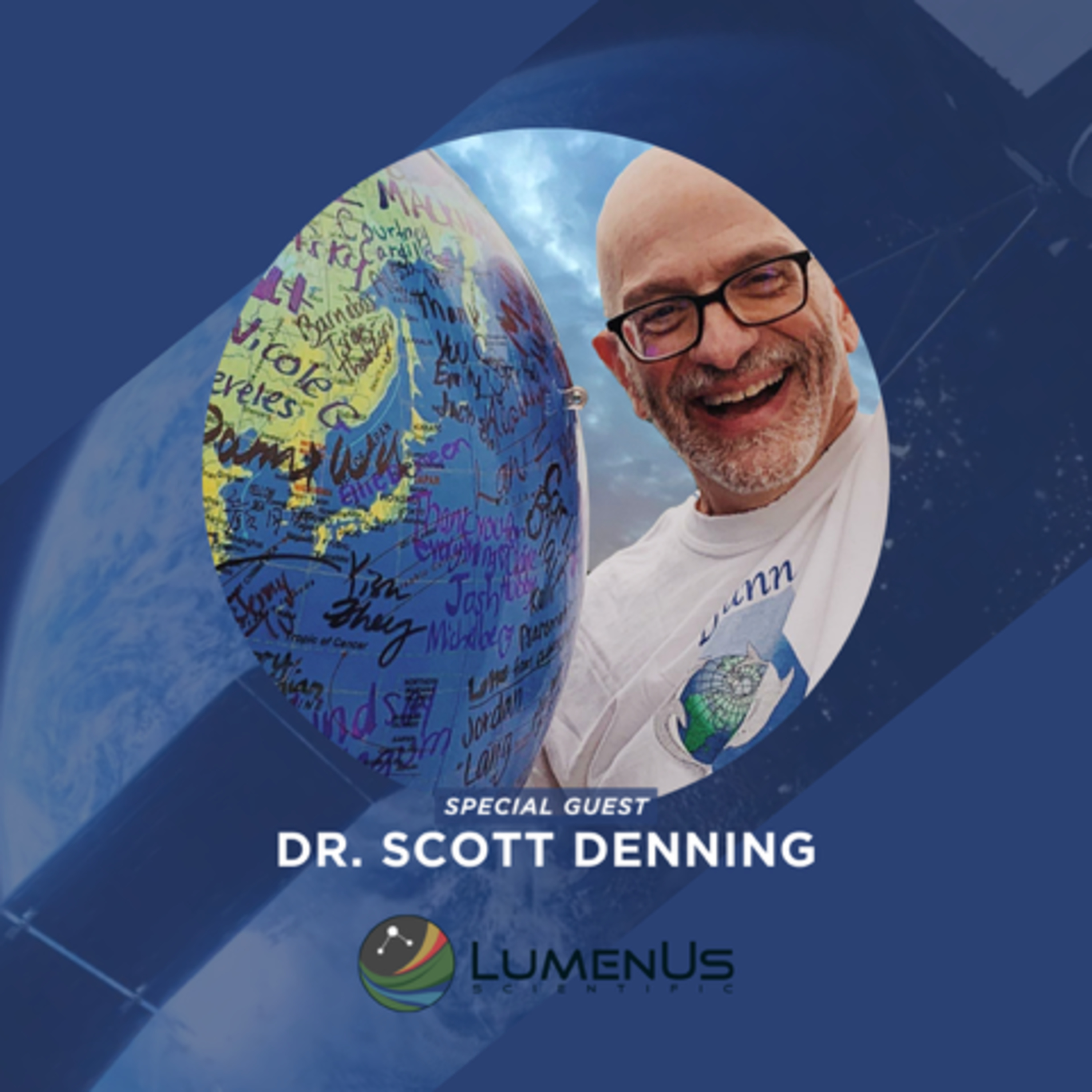 Ep 1 The Carbon Cycle, Greenhouse Gases, and Our Global Climate Reality with Dr. Scott Denning | In this inaugural episode of Carbon Sense, host Sean Crowell welcomes atmospheric science expert Dr. Scott Denning, retired professor from Colorado State University and a pioneer in climate modeling. Together, they dive deep into the intricacies of carbon dioxide, methane, and the critical role they play in climate change. Dr. Denning explains the science behind the carbon cycle and how human activities have dramatically shifted the balance, with tangible effects on ecosystems and global warming.This conversation is packed with fascinating insights, from how plants “breathe” carbon dioxide, to why methane is the “Elvis” of greenhouse gases—it wiggles its hips but dies young. Whether you’re a climate science novice or a seasoned environmentalist, Dr. Denning’s engaging storytelling and practical breakdown of complex topics will leave you with a newfound appreciation for the world’s carbon dynamics. | — |
Showing 10 of 10
Pitch Fit is a Pro feature
See how bookable this show is for guests, which brands already advertise, the per-episode ad value, and the best-fit guest and sponsor profile. The numbers are blurred on the free plan.
How readily this show books outside guests like you.
How proven this show is for host-read sponsorships.
For Guests
ProFor Advertisers
ProUpgrade to Pro to unlock guest cadence, sponsor categories, fit scores, and per-episode ad value for this show.
Chart Positions
4 placements across 4 markets.
Chart Positions
4 placements across 4 markets.