
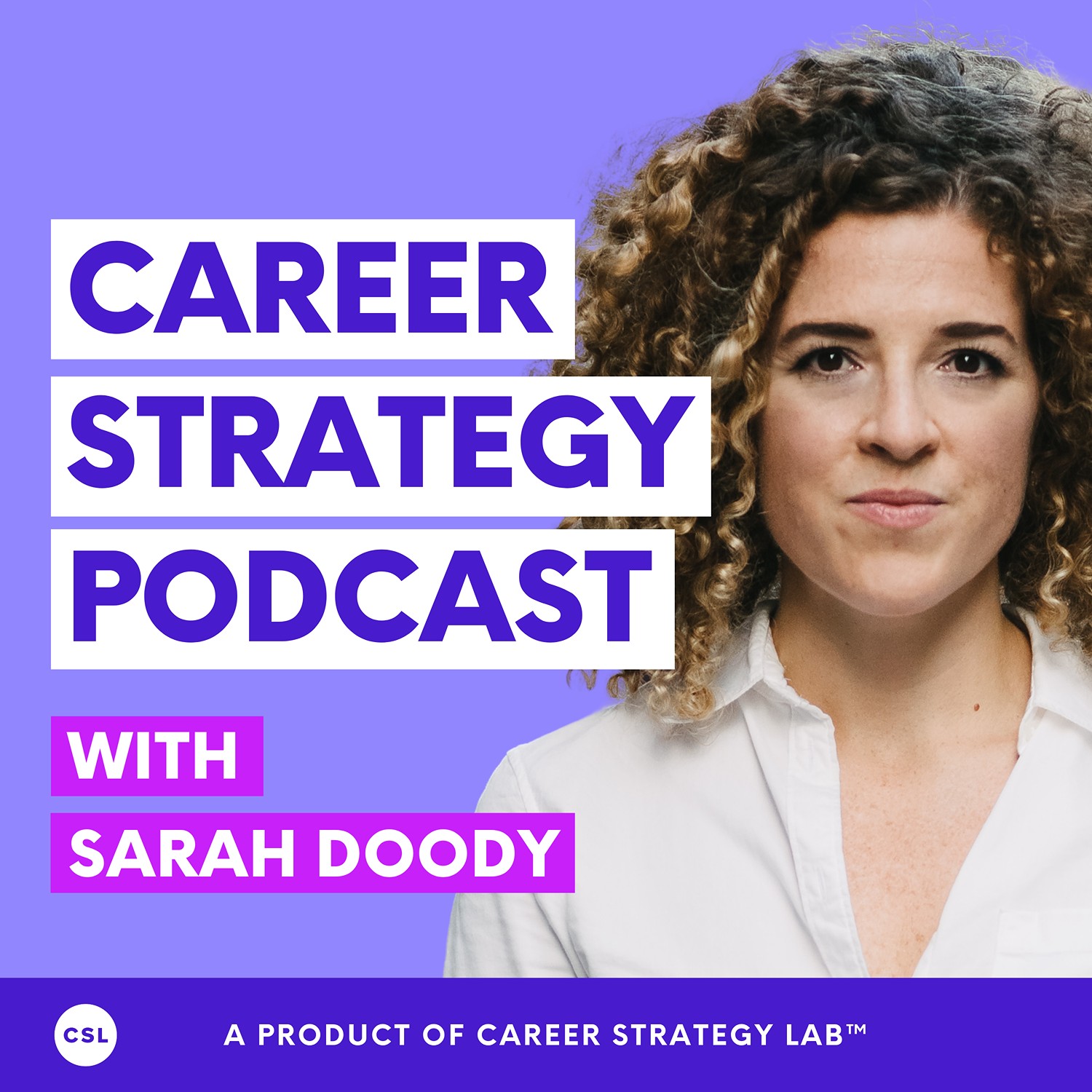
Career Strategy Podcast with Sarah Doody | UX, Product Design, UX Research
by Sarah Doody from Career Strategy Lab
Is this your podcast?Insights from recent episode analysis
Audience Interest
Podcast Focus
Publishing Consistency
Platform Reach
Insights are generated by CastFox AI using publicly available data, episode content, and proprietary models.
Most discussed topics
Brands & references
Total monthly reach
Estimated from 10 chart positions in 10 markets.
By chart position
- 🇨🇦CA · Careers#6230K to 100K
- 🇺🇸US · Careers#1485K to 30K
- 🇰🇷KR · Careers#8110K to 30K
- 🇮🇳IN · Careers#1051K to 10K
- 🇩🇰DK · Careers#3310K to 30K
- Per-Episode Audience
Est. listeners per new episode within ~30 days
21K to 75K🎙 Daily cadence·178 episodes·Last published 5d ago - Monthly Reach
Unique listeners across all episodes (30 days)
71K to 249K🇨🇦40%🇺🇸12%🇰🇷12%+7 more - Active Followers
Loyal subscribers who consistently listen
28K to 100K
Market Insights
Platform Distribution
Reach across major podcast platforms, updated hourly
Total Followers
—
Total Plays
—
Total Reviews
—
* Data sourced directly from platform APIs and aggregated hourly across all major podcast directories.
On the show
From 10 epsHost
Recent guests
Recent episodes
181: How UX people are leveraging relationships to get hired with the help of Career Strategy Lab
Jun 29, 2026
Unknown duration
180: UX Hiring Insights: Eric Shumake on Healthcare UX, Specializing, & Thinking of Your Career as Gigs
Jun 22, 2026
Unknown duration
179: Feel Burnt Out & Invisible in Your UX Job Search? How Emmanuel Re-Entered the UX Job Market After a Career Break
Jun 15, 2026
Unknown duration
178: Stop Mass Applying: How Carlos Got Hired in UX and Promoted to Senior Product Designer
Jun 8, 2026
25m 38s
177: Getting ghosted in your UX job search? You're not invisible — you're unpositioned
Jun 1, 2026
22m 33s
Social Links & Contact
Official channels & resources
Official Website
Login
RSS Feed
Login
| Date | Episode | Topics | Guests | Brands | Places | Keywords | Sponsor | Length | |
|---|---|---|---|---|---|---|---|---|---|
| 6/29/26 | 181: How UX people are leveraging relationships to get hired with the help of Career Strategy Lab | The UX job market is rough right now. If your LinkedIn feed looks anything like Sarah's, you already know that. But while everyone is complaining about the market, almost nobody is focusing on the part of the job search they can actually control.In this episode, Sarah breaks down why the job market feels so impossible right now, including the surprisingly outsized role that one-click apply has played in flooding recruiters with hundreds of applications per posting and what you can do about it. (Hint: The answer isn't more applications.)Sarah shares real examples from inside the Career Strategy Lab community of how alumni are leveraging relationships to get referrals, introductions, and job offers, including one person whose hire two years ago has now led to four or five other alumni landing roles at the same company. The through-line is simple: the people who benefit most from their communities are the ones who actually show up in them.Topics Discussed✅ How the one-click apply button has made the job search harder for everyone and what that means for your strategy✅ Why relationships matter more than ever in this job market, and why you need to start building them before you need them✅ Why people say no to referral requests and how to change that✅ Real examples of Career Strategy Lab alumni using community relationships to get referral links, introductions, and job offers✅ How one hire two years ago has cascaded into multiple alumni landing roles at the same company✅ The difference between existing in a community and actually participating in oneLinks & Resources🔗 Jared Spool: Why is the UX job market such a mess right now?💸 See how you can get hired in UX with the help of my UX job search coaching program📋 Take a peek inside my UX job search coaching program👋 Follow me, on LinkedIn, Instagram, & YouTube | — | ||||||
| 6/22/26 | 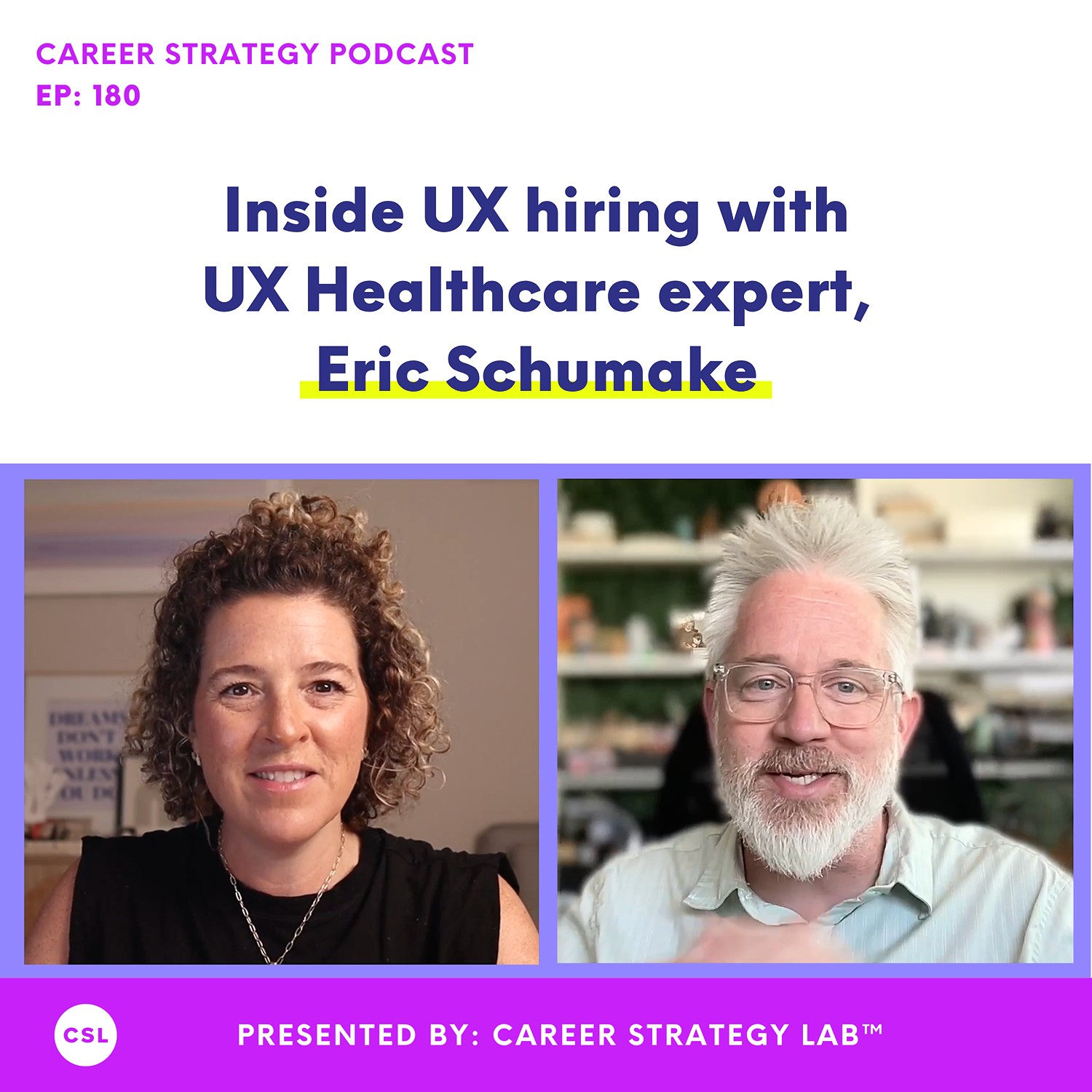 180: UX Hiring Insights: Eric Shumake on Healthcare UX, Specializing, & Thinking of Your Career as Gigs | Most UX professionals spend years trying to be good at everything. Eric Shumake, founder of HXR Labs, spent 20 years getting really good at one thing and it kept opening doors he didn't expect.Eric is a principal UX researcher and a well-known voice in healthcare UX. His career has taken him through companies like Pfizer, Johnson & Johnson, Novartis, Myriad Genetics, and AliveCor.He also teaches, including a popular course on Maven on breaking into healthcare UX, and has been exploring how AI can meaningfully (and responsibly) augment research without replacing the judgment that makes research trustworthy.In this episode, Eric and Sarah cover a lot of ground: how specializing almost always beats generalizing, what surprises people when they try to bring standard UX practices into clinical environments, why Eric thinks of every role as a gig, and what he'd prioritize if he were managing someone's job search like a product.Topics Discussed✅ Why specializing beats generalizing and how to niche down even when it feels risky✅ How transferable skills work in practice: why experience in one highly regulated industry (like finance) can open doors in another (like healthcare) ✅ The biggest blind spot people bring into healthcare UX✅ Why "recommendations are where insights go to die" and how to tie research to decisions and numbers so stakeholders actually act on it✅ Treating every role as a gig and why that mindset is more practical than it sounds in today's job market✅ Why posting consistently on LinkedIn is one of the highest-leverage things a UX professional can do in a job search right now✅ Where AI genuinely helps in UX research (desk research, competitive analysis, automating the time-consuming parts) and where to draw a hard line✅ What neurodivergence in the workplace looks like from the insideduring a job searchLinks & Resources🔗 Eric Shumake on LinkedIn🔗 HXR Labs🔗 Eric's Maven course on breaking into healthcare UX💸 See how you can get hired in UX with the help of my UX job search coaching program📋 Take a peek inside my UX job search coaching program👋 Follow me, on LinkedIn, Instagram, & YouTube | — | ||||||
| 6/15/26 | 179: Feel Burnt Out & Invisible in Your UX Job Search? How Emmanuel Re-Entered the UX Job Market After a Career Break | Re-entering the UX job market after years away is harder than most people expect, especially when you're doing it alone.After 12 years at Constant Contact, growing from associate interaction designer to principal UX designer, Emmanuel relocated, took a deliberate career break, and then tried to re-enter a job market that had completely changed. He spent three months rebuilding his portfolio alone, then another three months applying and hearing almost nothing. His LinkedIn hadn't been updated since 2017. He burned out.In this episode, Emmanuel shares what finally got him unstuck; why working on his resume, portfolio, and LinkedIn in parallel changed his messaging faster than tackling them one at a time; how early feedback from coaches and a community shortened iteration cycles he'd been stuck in for months; and what shifted when he started applying only to roles that actually fit. He's actively interviewing now, and the inbound LinkedIn requests have started coming in too.Topics Discussed:✅ What re-entering the UX job market after a long tenure at one company feels like and how to close the gap✅ Why working on your resume, portfolio, and LinkedIn in parallel sharpens your message faster than doing them one at a time✅ How long iteration cycles quietly stall your progress and what to do instead✅ Why submitting imperfect work for feedback early is one of the highest-leverage moves you can make✅ What AI tools genuinely help when job searching and where human judgment still matters more✅ The confidence cost of mass applying✅ What changes when you get more selective about the roles you apply to💸 See how you can get hired in UX with the help of my UX job search coaching program📋 Take a peek inside my UX job search coaching program👋 Follow me, on LinkedIn, Instagram, & YouTube | — | ||||||
| 6/8/26 | 178: Stop Mass Applying: How Carlos Got Hired in UX and Promoted to Senior Product Designer✨ | job search strategiesUX design+4 | Carlos | Covenant EyesCareer Strategy Lab | — | UX jobsjob applications+5 | — | 25m 38s | |
| 6/1/26 | 177: Getting ghosted in your UX job search? You're not invisible — you're unpositioned✨ | UX job searchghosting+4 | — | — | — | UXjob search+5 | — | 22m 33s | |
| 5/25/26 | 176: Stuck at the Final Round of UX Interviews? Andrew Re-Did His UX Portfolio and Got 3 Offers (Including Blue Origin)✨ | UX interviewsportfolio development+3 | Andrew | Blue OriginFacebook+3 | — | UX portfoliointerview strategy+3 | — | 59m 12s | |
| 5/18/26 | 175: How to Deal with NDAs When Creating Your UX Portfolio✨ | NDAsUX portfolio+4 | — | — | — | NDAUX design+5 | — | 14m 07s | |
| 5/11/26 | 174: The Bar to Stand Out As A UX Candidate is Lower Than You Think✨ | UX job applicationsresume mistakes+3 | — | University of Houston | — | UX jobsresumes+4 | — | 17m 33s | |
| 5/4/26 |  173: UX Hiring Insights: Jeni Bible, UX Manager at Home Depot, on How She Got Hired, What She Looks for in Candidates, & Presenting UX Case Studies✨ | UX hiring insightsjob application process+3 | Jeni Bible | Home DepotCareer Strategy Lab | homedepot.com | UX designjob search+3 | — | 1h 02m 28s | |
| 4/27/26 | 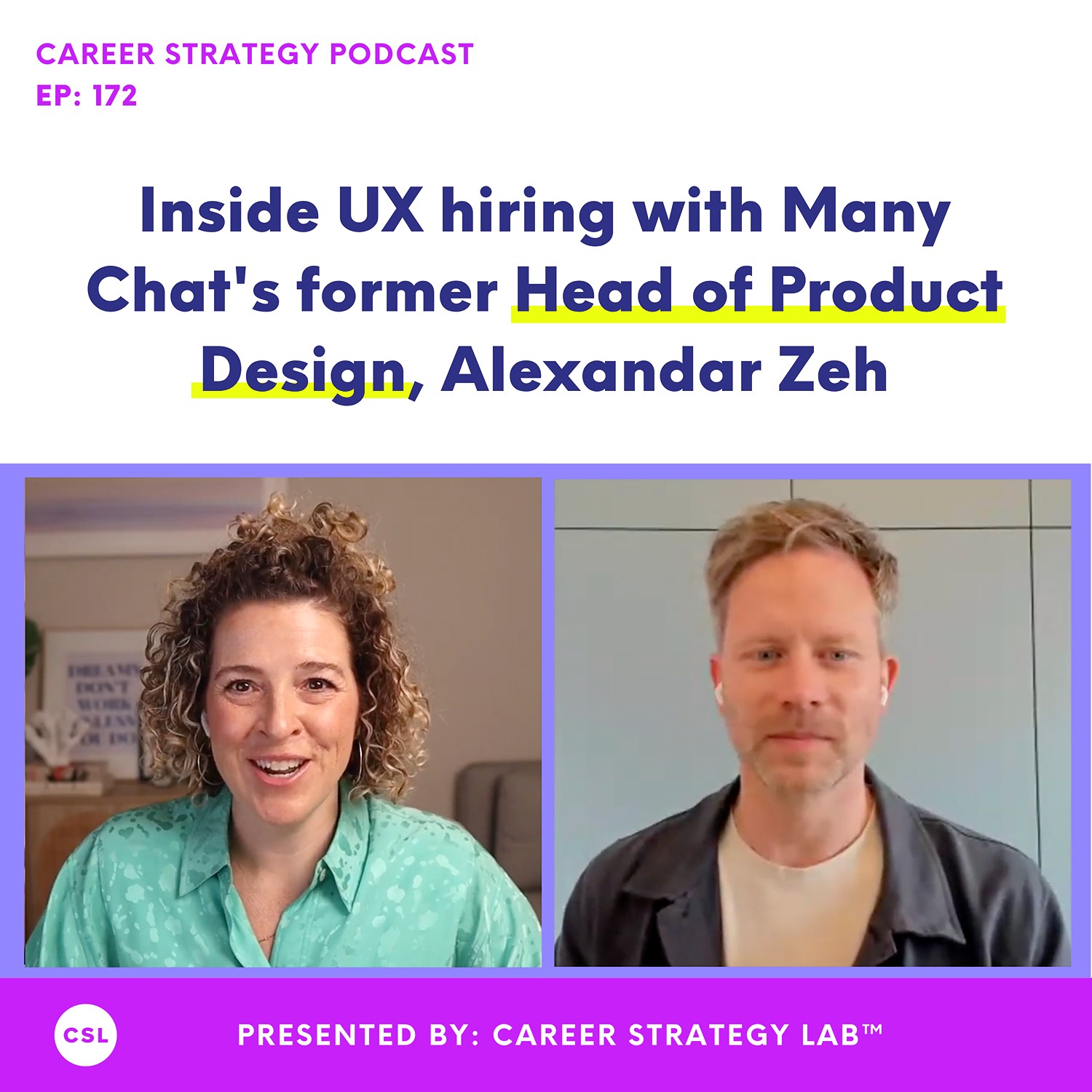 172: UX Hiring Insights: Alexander Zeh, Head of Product Design at ManyChat, on Building Diverse UX Teams, Scaling Design Teams, and What Makes a Portfolio Stand Out✨ | UX hiringdiverse UX teams+5 | Alexander Zeh | ManyChat | — | UX portfoliohiring manager+5 | — | 54m 45s | |
Want analysis for the episodes below?Free for Pro Submit a request, we'll have your selected episodes analyzed within an hour. Free, at no cost to you, for Pro users. | |||||||||
| 4/20/26 | 171: The 6-Word Post-It Note To Speed Up & Fix Your UX Job Search✨ | UX job searchproductivity+3 | — | Career Strategy Lab | — | UX job searchPost-It note+5 | — | 10m 33s | |
| 4/13/26 | 170 - Finding Your UX Niche: Jonathan's Journey From UX Layoff to UX Executive in Higher Education✨ | job searchUX design+5 | Jonathan | University of Houston Downtown | — | UX nichejob applications+6 | — | 28m 00s | |
| 4/6/26 | 169 - 3 ways to stop wasting time in your UX job search✨ | UX job searchresume tailoring+3 | — | — | — | UX job searchresume+5 | — | 17m 47s | |
| 3/30/26 | 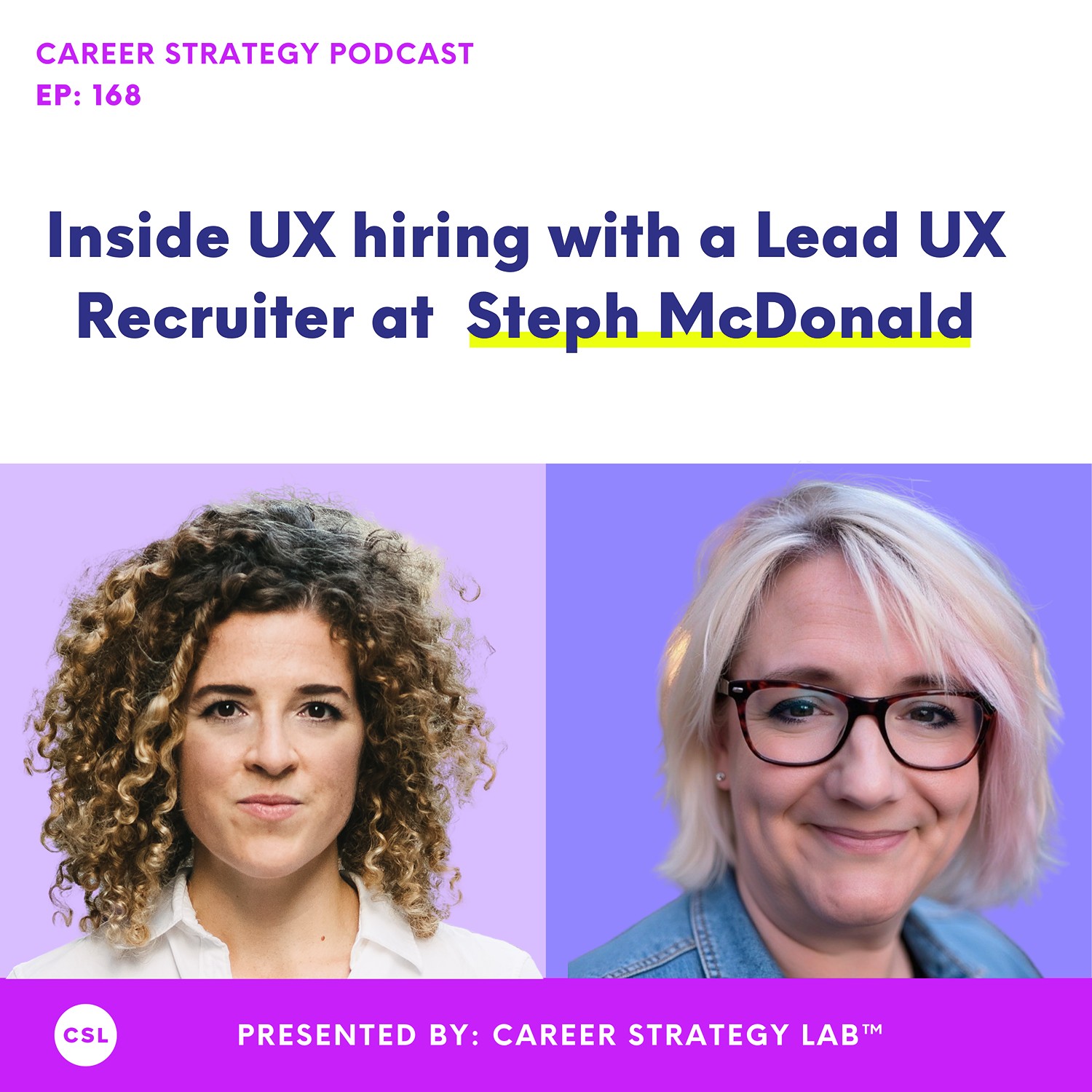 168 - UX Hiring Insights: Steph McDonald UX Design Recruiter at HubSpot on AI in Hiring, Portfolios & What Gets You Hired | What does it actually take to get hired in UX Design and stand out to UX recruiters? Steph McDonald, a UX Recruiter from HubSpot is here to share how she approaches UX hiring. With 300+ applications often coming in for a single UX design role, the competition is intense. And behind every application is a recruiter making real decisions about who moves forward and who doesn't.In this episode of the Career Strategy Podcast, Sarah Doody sits down with Steph McDonald, a lead UX design recruiter at HubSpot who has spent over 25 years in recruiting. Steph is refreshingly honest about what's happening on the other side of your application. She breaks down exactly how candidates are evaluated, how AI is being used in hiring right now, and the resume and portfolio mistakes that get you skipped. She also shares what she actually wants to see in a portfolio (spoiler: the messy stuff), why one-page resumes drive her crazy, and why those AI-powered bots that apply to jobs on your behalf are doing more harm than good.Whether you're actively applying to UX roles, this conversation will change how you think about showing up as a candidate.Timestamps:00:00 Meet Steph McDonald, UX Design Recruiter at HubSpot01:55 How Steph got into recruiting by accident03:39 How the job market has shifted post-COVID05:28 Why companies are hiring fewer people at higher levels06:35 How long it actually takes to get hired at HubSpot07:51 How HubSpot tweaks its hiring process like a product08:41 Trauma-informed recruiting and candidate empathy10:03 How HubSpot gives candidates real feedback after interviews13:53 How AI is used inside HubSpot's hiring process16:23 Auto-reject questions and how they work18:04 Why AI application bots are hurting candidates21:49 How recruiters feel when they spot AI-generated answers24:58 Resume hot takes: font size, page length, and impact29:22 What Steph looks for in a UX portfolio33:46 Portfolio format: website vs. presentation vs. Google folder34:49 Diversity and inclusion in HubSpot's hiring process38:45 How many people actually get interviewed per role41:21 Can you reach out to a recruiter after getting rejected?45:15 Using video in your portfolio: supplement, not replacement46:02 What "experience with ambiguity" really means50:03 Is HubSpot hiring right now?51:29 Lightning round: first job, dream career, interview pump-up song💸 See how you can get hired in UX with the help of my UX job search coaching program📋 Take a peek inside my UX job search coaching program👋 Follow me, on LinkedIn, Instagram, & YouTube | — | ||||||
| 3/23/26 | 167 - Stop Asking How: Speed Up Your UX Job Search With This One Question | If your first move when updating your resume, building your UX portfolio, or preparing for an interview is to Google "how do I…" — you're falling into a trap that's slowing down your entire UX job search. In this episode, Sarah Doody breaks down the "Who Not How" framework and explains why the question you should be asking isn't how — it's who. You'll learn why DIYing your job search with Google searches and Reddit threads is costing you time, money, and momentum, and how to start thinking like a high performer instead.Topics discussed in this episode: ✅ The "Who Not How" framework from Dan Sullivan and Benjamin Hardy✅ Why Googling "how to get a UX job" keeps you spinning your wheels✅ The hidden time and money cost of DIYing your job search✅ How high performers think differently about getting help✅ A 3-step exercise to identify where you're stuck and what to do about it✅ Why this concept applies to your career, business, and lifeTimestamps:00:00 Introduction: Are you stuck in the "how" trap?01:43 The concept I can't stop thinking about02:11 The "Who Not How" book explained03:30 The physical therapist analogy04:36 How this applies to your UX job search05:30 The how trap costs you time, money, and momentum07:04 Why asking for help is not a weakness08:15 The "how trap" with your resume09:29 The "how trap" with your portfolio10:15 The "how trap" with job interviews11:44 Takeaway 1: Audit where you've been stuck14:09 Takeaway 2: Match your "how" list to a "who"16:36 Takeaway 3: The real cost of staying stuck17:30 How I took 20 minutes off my marathon with a coach18:54 This applies way beyond your job search💸 See how you can get hired in UX with the help of my UX job search coaching program📋 Take a peek inside my UX job search coaching program👋 Follow me, on LinkedIn, Instagram, & YouTube | — | ||||||
| 3/16/26 | 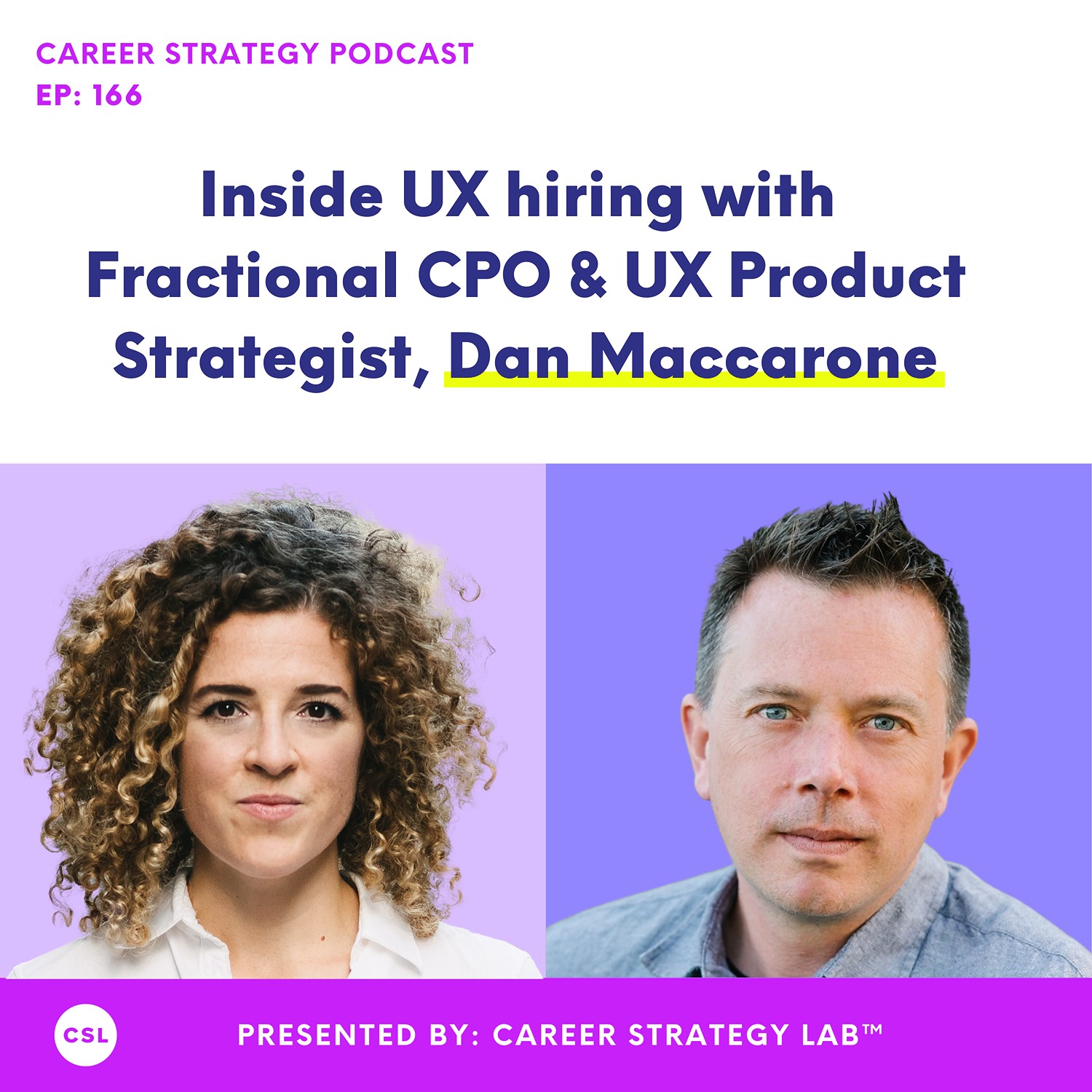 166 - UX Hiring Insights Dan Maccarone on Thinking Over Tools & UX Career Reinvention | UX hiring insights from a UX veteran with 25+ years in UX and product. In this episode, Sarah Doody interviews Dan Maccarone, co-founder of Hard Candy Shell and Charming Robot, fractional Chief Product Officer, and a UX expert who's worked on products for Hulu, Rent the Runway, Foursquare, and the Wall Street Journal. In the episode Dan shares about what he actually looks for when hiring UX people (spoiler: it's not your Figma skills).Dan shares why he doesn't care about tools, why he conducts interviews over drinks instead of in conference rooms, and how he evaluates candidates based on curiosity, empathy, and how they think, not what software they know. He also gets into career reinvention, the rise of fractional leadership roles, and why your hobbies outside of UX might matter more than your case studies.If you're a UX or Product professional navigating your next career move, this conversation will challenge what you think hiring managers care about.What's discussed in this episode:Why Dan has hired people who didn't know Figma — and doesn't careWhat curiosity and a humanities background signal to a hiring managerWhy Dan prefers to conducts interviews with candidates over coffee or drinks, not in conference roomsHow he uses observation and empathy cues to evaluate candidates (the same way you'd do user research)Why he hates design assignments and considers them insultingWhat "career reinvention" looks like after 25 years in UX and how to know when it's timeThe real requirements for going fractional (and why it's not for everyone)Why your identity and hobbies outside of work actually make you better at your job\How he's re-invented his own UX career multiple times💸 See how you can get hired in UX with the help of my UX job search coaching program📋 Take a peek inside my UX job search coaching program👋 Follow me, on LinkedIn, Instagram, & YouTube | — | ||||||
| 3/9/26 | 165 - 5 practical time-saving tips for your UX job search | Feel like your UX job search is full time job? Here are 5 things you can start using today to save time, reduce overthinking, and make real progress in your UX or Product job search. These are tips that Sarah sees working for people inside her UX career coaching program, Career Strategy Lab, and some she uses in her own work every day.Topics discussed in this episode of the Career Strategy Podcast:How to create a plug-and-play script document so you never start from scratch on emails againHow text replacement tools like TextExpander can automate repetitive job search messagesWhy using a Pomodoro timer can dramatically increase your job search productivityWhy committing to following up three times eliminates the worry spiral of being ghostedHow to run a weekly "Job Search CEO Hour" to track what's working and course correct fastRESOURCESText Expander https://textexpander.com/Pomodoro Timer https://pomofocus.io/Flow Timer https://www.flow.app/💸 See how you can get hired in UX with the help of my UX job search coaching program📋 Take a peek inside my UX job search coaching program👋 Follow me, on LinkedIn, Instagram, & YouTube | — | ||||||
| 3/2/26 | 164 - What is Career Maximalism and Why Caring Too Much About Your Job Can Backfire | Career maximalism is a mistake that many high achieving professionals make. When you care too much about your job, you can actually become worse at it. In this video, learn what Career Maximalism is, and why this behavior is everywhere, often rewarded, and quietly working against you.Career maximalism is when your job becomes a major source of your identity and your emotional state rises and falls based on how work is going. It often looks like being a great employee, but there's a tipping point where it clouds your judgment, slows your decisions, and makes everything heavier than it needs to be. Sarah Doody discusses the difference between commitment and emotional over-identification, shares a Reddit thread about treating UX as a job instead of an identity, and gives three practical tips for caring deeply without making work who you are.3 tips for avoiding the trap of Career Maximalism: 1) Build proof of your self-worth outside your job with physical challenges, creative projects, community, etc.2) Practice emotional detachment without disengagement. Detachment isn't apathy, it's clarity.3) Set clear standards and boundaries. When expectations are vague, everything becomes emotional.Resources & Links Mentioned: Reddit thread about treating UX as a job instead of an identity🎙️ Ep 163: What is Career Minimalism and How It Can Quietly Weaken Your Career 💸 See how you can get hired in UX with the help of my UX job search coaching program📋 Take a peek inside my UX job search coaching program👋 Follow me, on LinkedIn, Instagram, & YouTube | — | ||||||
| 2/23/26 | 163 - What is Career Minimalism and How It Can Quietly Weaken Your Career | The idea of career minimalism sounds healthy. But this trending philosophy of your job being a tool, not your identity (especially popular with Gen Z) could be quietly weakening your career if you're not careful.In this episode, Sarah Doody breaks down what career minimalism actually is, why it's gained so much momentum (spoiler: burnout, broken loyalty, and unpredictable layoffs), and the hidden risk most career minimalists never talk about. The real danger isn't doing less at work — it's what you're building (or not building) while you're there.Sarah also discusses the concept of "Portable Equity" and shares three practical tips so you can protect your work-life balance without accidentally making yourself less employable.Timestamps:0:00 Introduction0:58 What is career minimalism?3:24 How did we get here? Burnout, hustle culture, and broken loyalty4:41 Where career minimalism starts to get tricky6:51 The hidden assumption of career minimalists7:50 Why career minimalists often end up job hopping10:16 The reframe: building portable equity11:24 Three practical tips for career minimalists11:45 Tip 1: Optimize for portability, not just balance12:34 Tip 2: Know the difference between being useful and being valuable13:59 Tip 3: Treat every role as temporary16:35 Always be seeking — the career version of "always be closing"17:36 Wrap up💸 See how you can get hired in UX with the help of my UX job search coaching program📋 Take a peek inside my UX job search coaching program👋 Follow me, on LinkedIn, Instagram, & YouTube | — | ||||||
| 2/16/26 | 162 - How Erica Got Hired as a UX Officer at WK Kellogg Foundation After a CDC Layoff | Erica Jiminez went from facing a potential layoff at the CDC to landing her dream role as the first-ever User Experience Officer at WK Kellogg Foundation. In this episode, Sarah Doody chats with Erica about her experience in Sarah's UX job search coaching program, Career Strategy Lab.Erica shares how she got clear on what she wanted, made sense of a non-linear career path, and landed a mission-driven UX role.Erica talks about how the Career Roadmap and Compass Statement in Career Strategy Lab helped her shift from a fear mindset to clarity, why her "messy" career path across social work, public health, and UX research actually became her biggest strength, and how she got hired using a whiteboard and Mural board instead of a polished portfolio. She also shares why she negotiated her salary and got what she asked for, and what hiring managers actually look for when multiple candidates are equally qualified.Erica's 3 lessons from her UX job search:1) Follow what you're passionate about2) Go for it even if you're not ready3) Know your worth and advocate for yourself — the worst they can say is noTimestamps0:00 Introduction 1:00 Meet Erica, the first UX Officer at WK Kellogg Foundation 3:00 The career roadmap: realizing how unintentional her career had been 4:30 From social worker to UX researcher — a 12-year non-linear path 5:00 Seeing the story in a "messy" resume 7:00 The Product of You: Design yourself before marketing yourself 8:00 Getting clarity vs. jumping straight to tactics10:00 The Gumby mindset & reframing your experiences12:00 Lesson 1: Follow what you're passionate about13:00 Lesson 2: Go for it even if you're not ready 15:00Lesson 3: Know your worth & salary negotiation17:00 The heroes exercise & discovering what matters beyond UX19:30 Applying UX skills beyond big tech20:00 Advice for anyone on the fence about Career Strategy Lab22:00 Why the human element matters most in hiring💸 See how you can get hired in UX with the help of my UX job search coaching program📋 Take a peek inside my UX job search coaching program👋 Follow me, on LinkedIn, Instagram, & YouTube | — | ||||||
| 2/9/26 | 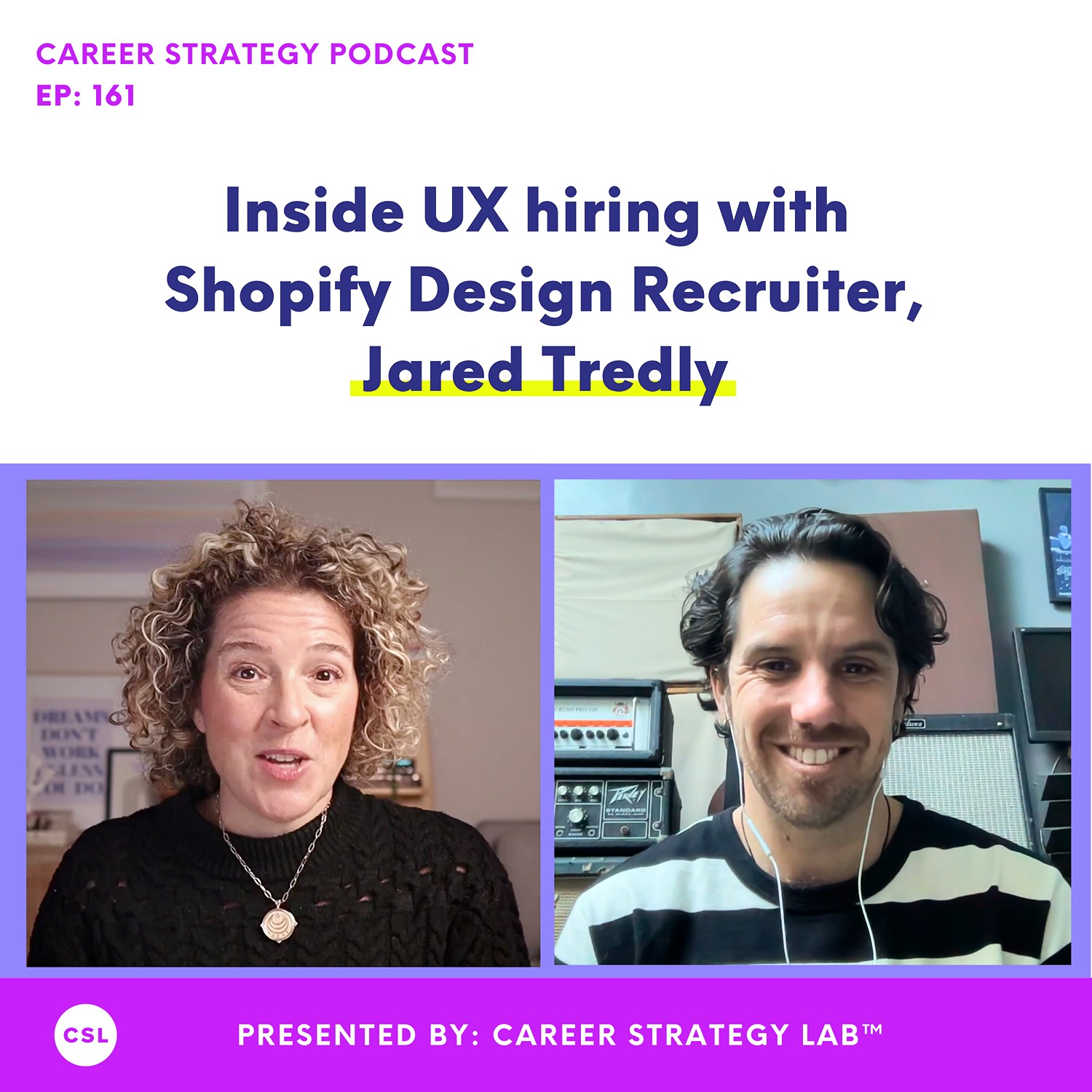 161 - UX Hiring Insights with Design Recruiter Jared Tredly from Shopify | In this episode, Sarah Doody talks with Jared Tredly, a design recruiter at Shopify, about what really happens behind the scenes when UX and Product Design candidates apply for roles.Jared shares an honest look at how generalist recruiters interpret design briefs, what they scan for in the first few seconds of reviewing a portfolio, and why so many designers accidentally bury the most important information. He also breaks down what senior-level designers must show, why overly long case studies backfire, and how to get visibility for design roles at Shopify through their general “design pool” application.If you’ve ever wondered what recruiters are actually thinking as they review your portfolio, this episode takes you inside the process.What you’ll learn:How recruiters evaluate portfolios when reviewing hundreds per dayWhy clarity, hierarchy, and intuitive navigation matter more than visualsThe difference between junior and senior-level UX signalsWhy “micro” case studies are often more effective than showing your entire processHow Shopify screens applications and why complete applications are criticalHow to get into Shopify’s internal design candidate poolLinks from this episode:Learn about working at ShopifyConnect with Jared on LinkedIn💸 See how you can get hired in UX with the help of my UX job search coaching program📋 Take a peek inside my UX job search coaching program👋 Follow me, on LinkedIn, Instagram, & YouTube | — | ||||||
| 2/2/26 | 160: Why This UX Designer Walked Away After 5 Interview Rounds (And Doesn't Regret It) | In this episode, Sarah Doody chats with Faith, a Product Designer who successfully transitioned from a layoff to a Product Design role, all while navigating UX career uncertainty. Faith shares how she used Career Strategy Lab’s intentional UX job search framework to slow down, get clear on what she wanted, and create a UX portfolio and application strategy that aligned with her career goals.In this episode, Faith shares how Career Strategy Lab helped her prioritize the “why” behind her career choices, overcome imposter syndrome, and set clear boundaries to avoid ending up in the wrong role. From networking on LinkedIn to being picky about where she applied, Faith’s story will inspire anyone going through a career transition or navigating a tough job search.What You’ll Learn in This Episode:✔️ Why being intentional about your job search makes all the difference✔️ How to avoid the trap of applying to jobs just for the sake of it✔️ How Faith used Career Strategy Lab to design her job search strategy✔️ The importance of knowing your “Compass Statement” to guide decisions✔️ Why Faith turned down a “perfectly good” offer in favor of the right fit✔️ How CSL’s support and community made her more confident in interviews✔️ Tips for networking and finding job opportunities that align with your values✔️ Why staying true to your career goals led to better offers and more optionsTimestamps:00:00 Introduction to Sarah Doody and Career Strategy Lab00:38 Episode Overview and Open House Context01:46 Faith's Career Journey and UX Experience03:09 Navigating Job Search Challenges05:05 The Importance of Intentionality in Job Applications07:43 The Role of Career Strategy Lab in Job Search09:21 Finding Job Opportunities and Networking14:38 Impact of Career Strategy Lab on Personal and Professional Growth17:11 Advice for Prospective Career Strategy Lab Members25:33 Conclusion and Final Thoughts💸 See how you can get hired in UX with the help of my UX job search coaching program📋 Take a peek inside my UX job search coaching program👋 Follow me, on LinkedIn, Instagram, & YouTube | — | ||||||
| 1/25/26 | 159: 3 Skills UX Professionals Need Most in the Age of AI | In this episode, Sarah talks about how AI is reshaping the UX landscape and why three key skills are more important than ever for professionals looking to stand out in the evolving job market.Despite the rise of AI tools, it’s not about being replaced—it’s about evolving your mindset and skills to stay relevant. In this episode, Sarah explains why UX professionals need to stop thinking like "doers" and start thinking like "drivers." You’ll also hear why the critical skills of speed, quality thinking, and impact are necessary to stay valuable in your career.This episode is for anyone feeling uncertain about how AI fits into your skillset or wondering how to stay relevant in an AI-powered UX job market.What You’ll Learn in This Episode:✔️ Why shifting from being a “doer” to a “driver” is essential for staying valuable in UX✔️ The 3 most important skills for UX professionals in the age of AI: speed, quality thinking, and impact✔️ How to leverage speed without sacrificing quality in your UX work✔️ Why quality thinking (and not relying on AI) is crucial to uncovering nuances and insights✔️ How to make sure your work has true impact—going beyond just delivering information✔️ The danger of de-skilling and how to stay sharp while using AI as a toolTimestamps:00:00 Introduction: The Future of UX Jobs in the Age of AI00:39 Meet Sarah Doody: Your UX Career Guide01:19 The Value of Strategic Thinking Over Task Execution02:05 Three Critical Skills for UX Professionals05:39 Skill 1: Speed with Strategy09:42 Skill 2: Quality Thinking14:52 Skill 3: Impact and Influence19:44 The Risk of De-Skilling in the Age of AI24:50 Conclusion: Be a Driver, Not a Doer25:54 Call to Action: Support the Podcast💸 See how you can get hired in UX with the help of my UX job search coaching program📋 Take a peek inside my UX job search coaching program👋 Follow me, on LinkedIn, Instagram, & YouTube | — | ||||||
| 1/19/26 | 158: From UX Internship to Amazon UX Designer: How Vasudha Got Hired With a Master's in HCI | In this episode, Sarah interviews Vasudha, a UX Designer at Amazon AWS Applied AI, to talk about what it really looks like to invest in your career early, and how the impact compounds for years.Vasudha joined Career Strategy Lab's UX job search accelerator in late 2023 while finishing her master’s degree, navigating the uncertainty of the job market as an international student, and waiting to see whether her AWS internship would convert to a full-time role. Today, she’s thriving at Amazon, and still actively uses CSL frameworks for LinkedIn updates, internal promotions, and long-term career growth.This episode is a powerful reminder that Career Strategy Lab isn’t just about landing one job. It’s about building a career operating system you can reuse, refine, and rely on over time.What You’ll Learn in This Episode:✔️ Why Vasudha decided to invest in CSL while still in grad school✔️ How talking to an alumni helped her decide to join✔️ Why CSL skills extend far beyond the job search✔️ How the portfolio sprint changed how she approaches real projects at Amazon✔️ Why answering “why” matters just as much as showing artifacts✔️ How CSL frameworks support promotions—not just hiring✔️ The confidence shift that comes from understanding your blind spots✔️ Why embracing being a UX generalist unlocked clarity and growth✔️ How CSL helps you tell the right story about yourself (not the wrong one)Timestamps:00:00 Introduction to Sarah Doody and Career Strategy Lab00:38 Episode Overview and Open House Context01:21 Vasudha's Journey: From Master's to Amazon05:38 The Impact of Career Strategy Lab10:56 Portfolio Development and Career Growth16:37 The Importance of Storytelling in UX Careers21:54 Advice for Joining Career Strategy Lab23:41 Conclusion and Final Thoughts💸 See how you can get hired in UX with the help of my UX job search coaching program📋 Take a peek inside my UX job search coaching program👋 Follow me, on LinkedIn, Instagram, & YouTube | — | ||||||
| 1/12/26 | 157: UX Hiring Insights: Ben Peck on UX Generalists, Soft Skills, & Standout Portfolios | In this episode, Sarah chats with Ben Peck, Director of Product Design & Global Strategy at nCino and a longtime community builder in the UX and product world, to demystify how UX hiring really works, from the perspective of someone who’s hired again and again.Ben brings over 20 years of experience across agencies, tech, leadership, and community building. As the co-founder of Front Conference and former Executive Director of Product Hive, he’s reviewed hundreds of portfolios, partnered closely with recruiters, and built high-performing design teams across industries.Together, Sarah and Ben unpack what actually happens after you click “apply,” how hiring managers scan portfolios, why storytelling matters more than polish, and how community and relationships quietly shape most UX careers.If you’ve ever wondered what’s going on behind the scenes of UX hiring, or how to stand out without burning yourself out, this episode is for you.What You’ll Learn in This Episode:✔️ What hiring managers actually look for in UX portfolios✔️ Why your portfolio needs a hook—and what that hook should be✔️ How recruiters and hiring managers split screening responsibilities✔️ The biggest mistakes candidates make when telling case study stories✔️ Why generalists are thriving in today’s UX job market✔️ How to make industry or role pivots without starting over✔️ The smartest way to reach out to companies (and who not to DM)✔️ Why community—not cold applications—is the real career accelerant✔️ How hiring managers evaluate experience beyond “years on paper”Timestamps:00:00 Introduction and Purpose of the Podcast00:38 Guest Introduction: Ben Peck03:25 Ben Peck's Career Journey05:31 The Value of Being a Generalist10:22 Hiring Insights and Job Market Trends20:59 Portfolio Tips for Job Seekers28:57 The Importance of Storytelling in Portfolios30:42 Balancing Content and Design32:21 Effective Use of Prototypes and Videos40:00 Transitioning to a UX Career43:22 The Role of Community in Career Growth48:37 Advice for Job Seekers49:33 Lightning Round: Fun and Personal Insights53:13 Conclusion and Final Thoughts💸 See how you can get hired in UX with the help of my UX job search coaching program📋 Take a peek inside my UX job search coaching program👋 Follow me, on LinkedIn, Instagram, & YouTube | — | ||||||
Showing 25 of 189
Pitch Fit is a Pro feature
See how bookable this show is for guests, which brands already advertise, the per-episode ad value, and the best-fit guest and sponsor profile. The numbers are blurred on the free plan.
How readily this show books outside guests like you.
How proven this show is for host-read sponsorships.
For Guests
ProFor Advertisers
ProUpgrade to Pro to unlock guest cadence, sponsor categories, fit scores, and per-episode ad value for this show.
Chart Positions
10 placements across 10 markets.
Chart Positions
10 placements across 10 markets.