Insights from recent episode analysis
Audience Interest
Podcast Focus
Publishing Consistency
Platform Reach
Insights are generated by CastFox AI using publicly available data, episode content, and proprietary models.
Most discussed topics
Brands & references
Total monthly reach
Estimated from 33 chart positions in 33 markets.
By chart position
- 🇨🇦CA · Careers#47100K to 300K
- 🇺🇸US · Careers#5430K to 100K
- 🇬🇧GB · Careers#7030K to 100K
- 🇦🇺AU · Careers#1985K to 30K
- 🇰🇷KR · Careers#20100K to 300K
- Per-Episode Audience
Est. listeners per new episode within ~30 days
151K to 482K🎙 Daily cadence·1,000 episodes·Last published 2d ago - Monthly Reach
Unique listeners across all episodes (30 days)
503K to 1.6M🇨🇦19%🇰🇷19%🇺🇸6%+30 more - Active Followers
Loyal subscribers who consistently listen
201K to 643K
Market Insights
Platform Distribution
Reach across major podcast platforms, updated hourly
Total Followers
—
Total Plays
—
Total Reviews
—
* Data sourced directly from platform APIs and aggregated hourly across all major podcast directories.
On the show
From 14 epsHosts
Not detected.
Recent guests
Recent episodes
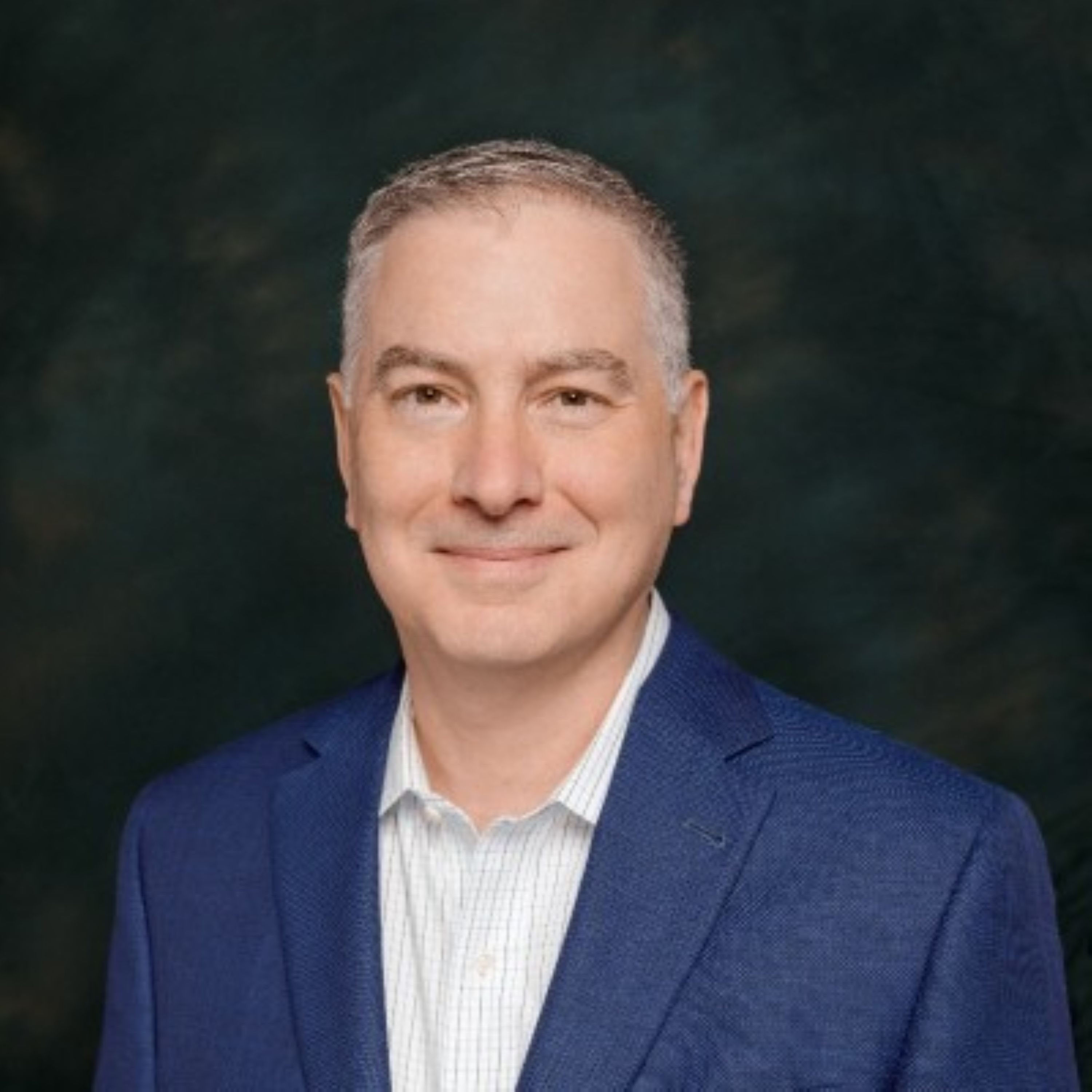
1191: From Complexity to Clarity: Building Operational Maturity | David Forlizzi, CFO, Salsify
Jun 10, 2026
Unknown duration
1190: Fixing What Growth Tries to Hide | Jaylene Kunze, LegitScript
Jun 7, 2026
Unknown duration
1189: Why Finance Should Lead with “Yes, And” | Bruno Annicq, CFO, Wellhub
May 31, 2026
Unknown duration
1188: Testing Assumptions Before Burning Capital | Kevin Hettrich, CFO, QuantumScape
May 28, 2026
Unknown duration
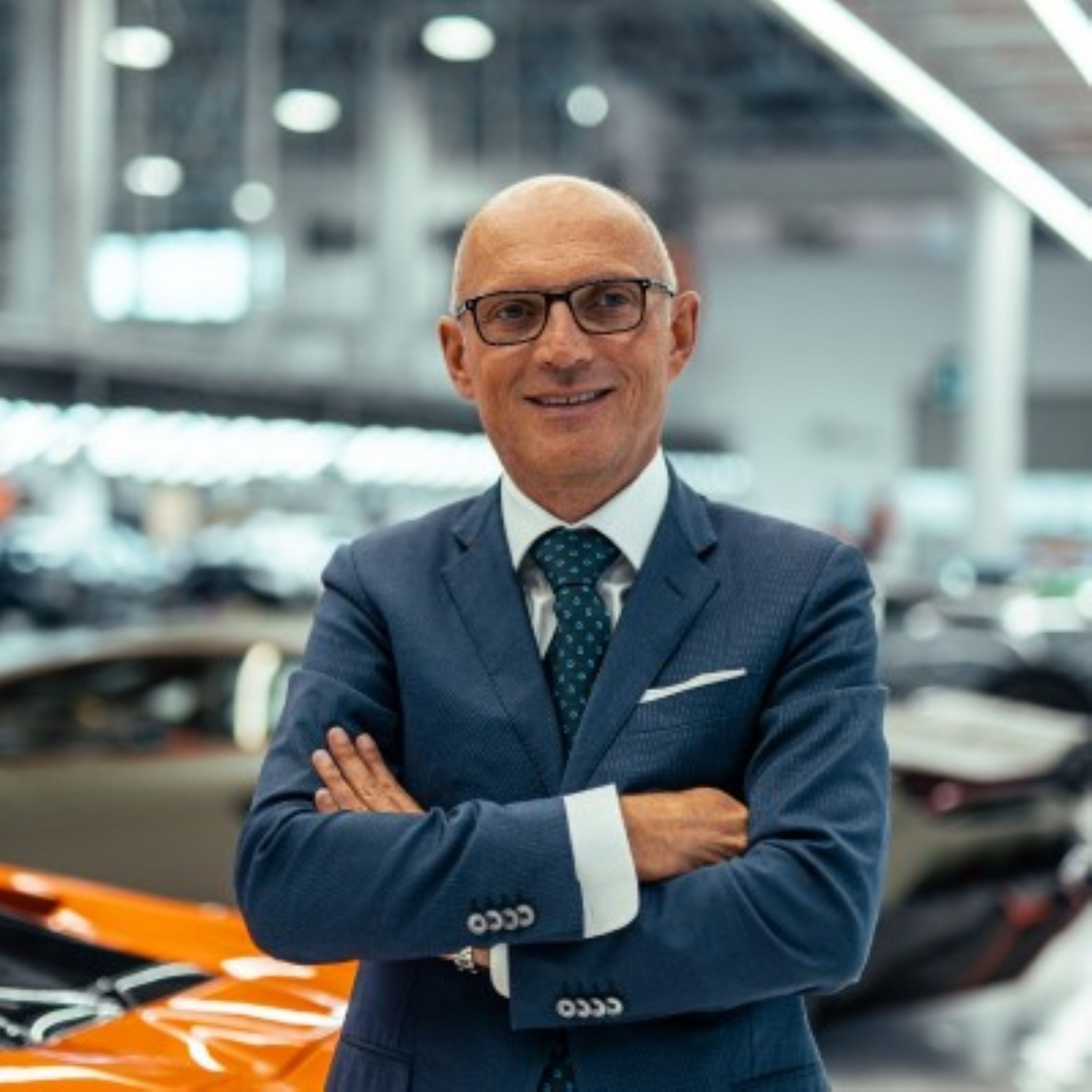
Bonus Replay: Building Luxury Growth Without Losing Financial Discipline | Paolo Poma, CFO, Lamborghini
May 26, 2026
Unknown duration
Social Links & Contact
Official channels & resources
Official Website
Login
RSS Feed
Login
| Date | Episode | Topics | Guests | Brands | Places | Keywords | Sponsor | Length | |
|---|---|---|---|---|---|---|---|---|---|
| 6/10/26 | ![]() 1191: From Complexity to Clarity: Building Operational Maturity | David Forlizzi, CFO, Salsify | When David Forlizzi describes Salsify, he begins with a simple observation: “We all use it every day.” Unlike some of the highly technical software businesses where he previously spent his career, Salsify’s value proposition is visible to anyone who shops online.Product content sits at the center of the company’s platform, Forlizzi tells us. Whether consumers are browsing a brand website, Amazon, or another online retailer, they rely on product descriptions, photos, videos, and specifications to make purchasing decisions. When that information is inconsistent or incomplete across channels, it can undermine confidence and influence buying behavior.Salsify helps brands manage and distribute that content across major retailers and commerce platforms, Forlizzi tells us. By serving as a central hub for product experience management, the company enables brands to deliver a consistent message while helping retailers improve conversion rates through stronger product information.As CFO, Forlizzi sees continuity in the company’s strategy. The fundamentals of the SaaS model—“land, expand and retain”—remain unchanged, he tells us. What has evolved over the last two to three years is a stronger emphasis on profitability as access to capital has become more challenging in a less certain economic environment.At the same time, AI is reshaping the software landscape. Salsify has embraced that change, and Forlizzi tells us the company views its position positively.When asked what drives success today, his answer begins with the product itself. More than 800 participants attended a recent user conference, primarily customers, and their enthusiasm was evident, Forlizzi tells us. Strong customer experiences, dedicated employees, and a shareholder base that includes both venture capital and private equity investors have helped create what he describes as a unique situation that is “working quite well.” | — | ||||||
| 6/7/26 | ![]() 1190: Fixing What Growth Tries to Hide | Jaylene Kunze, LegitScript | When Jaylene Kunze was asked to help rebuild a struggling subsidiary in the United Kingdom, she packed up her family and moved overseas with her nine-month-old daughter. The assignment was one more example of the type of challenge that would come to define her career. Rather than following a traditional finance path, Kunze gravitated toward what she calls “the fixer” role, stepping into situations where businesses needed operational repair, process improvement, or organizational change.That mindset began to take shape through compliance and Sarbanes-Oxley work. While many viewed the documentation requirements as burdensome, Kunze tells us the process forced her to understand “the intersection of people, process, and systems” behind the numbers. It gave her visibility into how businesses actually operated and prepared her for increasingly complex leadership roles.Her appetite for transformation became especially valuable when Tendril transitioned from venture-capital ownership to private-equity ownership. Kunze tells us the company ultimately combined six businesses into what became Uplight. As CFO, she oversaw diligence and integration while helping absorb five acquisitions within seven months.The experience delivered lasting lessons. Culture, she tells us, matters more than many leaders expect. Different organizations often make decisions in entirely different ways, creating friction that financial models cannot predict. She also learned the cost of pushing too hard. Her team successfully completed aggressive integrations, but Kunze tells us she underestimated the human toll and would invest more heavily in staffing and support if given the opportunity again.Today, those lessons continue to shape how she approaches leadership, growth, and change. | — | ||||||
| 5/31/26 | ![]() 1189: Why Finance Should Lead with “Yes, And” | Bruno Annicq, CFO, Wellhub | A conversation from years earlier still stands out to Bruno Annicq. While working at AOL, he was supporting business leaders and helping tell the story of the business through data and analytics. Then a senior executive, Holly Hess, approached him with an unexpected suggestion: Why not become the CFO of AOL’s platforms business?Annicq’s reaction was immediate. “Wait, me? Are you sure?” he recalls. Until that moment, he had never envisioned himself as a finance leader. Hess, however, saw something different—a broad skill set developed through engineering studies, consulting at McKinsey, and operational leadership roles inside AOL.That willingness to build capabilities outside a traditional finance path has shaped Annicq’s career. He studied engineering not because he intended to become an engineer, but because he believed the skills would prove useful later. After McKinsey, he deliberately sought operational experience, joining AOL during a period of significant change that included Verizon’s acquisition of the company and AOL’s involvement in the Yahoo acquisition.Those experiences reinforced lessons about adaptability and uncertainty. They also sharpened a principle he continues to emphasize today: distinguishing the “important” from the “urgent.”As CFO of WellHub, Annicq applies that mindset to forecasting and capital allocation. Seeking greater precision, his team reimagined its forecasting process using multiple models inspired by the Windy weather application. The effort improved forecasting accuracy from roughly 10% error to 2%, Annicq tells us. More recently, the team expanded those capabilities with AI-powered tools, enabling greater forecasting depth across markets and customer segments.For Annicq, finance’s strategic value is clear: better information creates the confidence to invest, move faster, and help the business grow. | — | ||||||
| 5/28/26 | ![]() 1188: Testing Assumptions Before Burning Capital | Kevin Hettrich, CFO, QuantumScape | Kevin Hettrich walked into a conference room with a whiteboard full of numbers and a problem no one had fully articulated. QuantumScape’s leadership team was discussing how to scale an expensive R&D tool used to produce early battery materials. Hettrich had spent two weeks gathering data, talking with engineers, and analyzing manufacturing economics. Then he laid out the comparison: QuantumScape’s current performance, the best anyone had achieved in any industry, and what would ultimately be required to succeed in automotive production. There were “six orders of magnitude” separating the industry benchmark from what the company would eventually need, Hettrich tells us.That moment became an early proving ground for a finance leader who had entered QuantumScape from a background shaped by McKinsey & Company, Bain Capital, and Stanford’s joint business and engineering program. Rather than staying confined to finance, Hettrich immersed himself in the company’s technical environment. He tells us he would contribute to at least one patent application each year and spent time “changing targets out of that tool” and mixing chemicals alongside engineers.The broader strategy behind QuantumScape has remained equally ambitious. The company’s goal is not incremental improvement, but batteries that are “smaller and lighter,” “faster charging,” “longer lived,” “safer,” and “lower cost at the same time,” Hettrich tells us. Today, the company has commercial partnerships with Volkswagen and collaborations with Corning and Murata Manufacturing as it works to commercialize its solid-state battery platform. | — | ||||||
| 5/26/26 | ![]() Bonus Replay: Building Luxury Growth Without Losing Financial Discipline | Paolo Poma, CFO, Lamborghini | In early 2009, Paolo Poma found himself navigating what he recalls as a “really tough” period. At the time, he was helping steer Ducati through a leveraged buyout negotiated before the collapse of Lehman Brothers. Debt obligations had arrived just as markets were “plummeting,” Poma tells us, while lenders closely monitored covenant compliance and private equity owners pressed ahead with the deal.Poma remembers sitting with bankers and shareholders through repeated discussions about liquidity, budgets, and cash generation. “Planning cash was crucial because covenants on cash were really tight,” he tells us. The experience forced him to balance operational performance with financial discipline while uncertainty spread across global markets. Ducati ultimately avoided breaking its covenants, Poma tells us, and the period became one of the defining stretches of his finance career.The challenge also reinforced the leadership style that would later shape his tenure at Lamborghini. Trained originally as an engineer, Poma tells us he built his finance career by combining analytical rigor with business understanding. He later expanded his responsibilities from controlling to investor relations, treasury, and accounting before formally becoming CFO in 2011.Today, that long-view mindset influences how he approaches Lamborghini’s growth. The company grew from roughly €200 million in revenue to nearly €2.4 billion over the last decade, Poma tells us, while maintaining a focus on profitability, product discipline, and sustainable expansion. | — | ||||||
| 5/20/26 | ![]() Bonus Replay: Building an Early Warning System | Patrick McClymont, CFO, Hagerty | Patrick McClymont still remembers the moment at IMAX when the numbers began moving in the wrong direction. Hired to help drive external growth through acquisitions and partnerships, he instead found himself sitting with CEO Rich Gelfond building what he calls an “early warning system.” Together, they agreed to monitor the next three film titles and “hold ourselves accountable” to a short-term scorecard, McClymont tells us. If the numbers shifted further, strategy would have to shift with them.That experience reinforced a lesson McClymont carried from his earlier years at Goldman Sachs and into multiple CFO roles: “the numbers don’t lie,” he tells us. Before Goldman, he worked in real estate development, where he learned to “boil it down to the numbers” and find clarity quickly. At Goldman, advising transportation giants including UPS and major airlines exposed him to CEOs and CFOs navigating large-scale operational complexity.When he joined Sotheby’s as CFO, however, McClymont discovered that financial fluency alone was not enough. The art specialists running major parts of the business “didn’t think about the world the way that Goldman Sachs people do,” he tells us. Rather than force financial terminology into conversations, he changed his communication style, using “brown bag lunches” to connect financial priorities with the realities of individual business units.Today at Hagerty, that same mindset shapes his focus on customer economics, profitability, and building “one version of the truth,” he tells us. | — | ||||||
| 5/17/26 | ![]() 1187: Pattern Recognition: How CFOs See Around Corners | Alex Chun, CFO, NEOGOV | Alex Chun already knew the management team at NEOGOV long before he became its CFO. As an investor at Warburg Pincus, he spent more than four years “in the trenches” with NEOGOV’s leadership team, flying to Los Angeles to work through operational challenges alongside them, Chun tells us.His path to finance leadership did not begin in accounting or FP&A. Instead, Chun spent nearly a decade evaluating companies at Morgan Stanley, General Atlantic, and Warburg Pincus, developing what he calls “pattern recognition” by analyzing “dozens, if not hundreds” of businesses, Chun tells us.That investor mindset now shapes how he leads finance. After joining NEOGOV in 2021, Chun focused on transforming finance into the company’s “centralized insights engine,” bringing quantitative discipline beyond the finance department and into sales, customer operations, and product decision-making, Chun tells us.He contrasts the polished presentations of boardrooms with the reality of operations, where even changing the pricing of a product can require “90 steps” across multiple teams, Chun tells us.Today, Chun is equally focused on AI’s impact across the business. At NEOGOV, teams are using AI to analyze customer conversations, automate workflows, and rethink scalability itself, Chun tells us. | — | ||||||
| 5/13/26 | ![]() 1186: Keeping the Applause in Check | Adam Goldbruch, CFO, DoorLoop | Adam Goldbruch still remembers the celebration. In 2017, he stood inside a Tel Aviv startup office while employees cheered a milestone: a Disney princess quiz had generated “2.8 million page views,” he tells us. Champagne circulated as the founder delivered a visionary speech about changing communication through content.At the time, Goldbruch was young enough to be swept up in the excitement, but skeptical enough to question what those metrics truly meant. Three years later, he found himself in the same company leading cost reductions and layoffs after realizing the celebrated KPI had not translated into sustainable value, he tells us.That experience shaped the finance philosophy he carries today as CFO of DoorLoop. Goldbruch’s career began in construction finance, where he learned unit economics by seeing how materials and labor translated into physical buildings, he tells us. He later built FP&A functions across startups, private firms, and public companies, experiences that taught him how to identify the operational “ropes” that actually move a business forward.At DoorLoop, that mindset surfaced again when leadership considered several new monetization initiatives. Rather than chase immediate revenue, Goldbruch modeled one-, three-, and five-year outcomes and concluded the company should focus on expanding the number of property units served, he tells us.For Goldbruch, finance leadership is not about celebrating vanity metrics. It is about identifying the measurements that compound value over time. | — | ||||||
| 5/10/26 | ![]() 1185: Scaling Smarter in the AI Era | Sarah Riley, CFO, dbt Labs | When the pandemic began reshaping the world in early 2020, Sarah Riley was helping guide finance at Zoom through an unprecedented surge in demand. “You could see the volume of Zoom almost spiking up by the regions that were going into shutdown,” Riley tells us. What followed was unlike anything most software companies had experienced before. During her four years at Zoom, the company expanded from roughly $200 million in ARR to $4 billion, Riley tells us. At one point, Zoom spent nearly half a billion dollars on AWS infrastructure costs it had not anticipated, she explains.For Riley, the experience fundamentally reshaped how she viewed finance leadership. Rather than becoming fixated on gross margin guidance or traditional planning cycles, she says the finance team had to continually reevaluate the “strategic heart” of the business as Zoom evolved from an enterprise software company into a platform supporting schools, consumers, and businesses worldwide. “Forecasting and discipline comes second” in moments of extraordinary change, Riley tells us.That mindset now informs her role as CFO of dbt Labs, where she oversees finance, accounting, and data operations while helping guide the company through its merger with Fivetran. Riley says today’s defining challenge for software businesses is balancing legacy operating models with the realities of AI-driven transformation. “You need to balance that with how do we make sure that we’re investing aggressively enough in capturing what our user base is turning into,” she tells us. | — | ||||||
| 5/6/26 | ![]() 1184: From Deal Sheets to Operating Seats | Rick Hasselman, CFO, Salesloft✨ | financebusiness integration+3 | Rick Hasselman | SalesloftClari | United States | CFOSalesloft+5 | — | 57m 10s | |
Want analysis for the episodes below?Free for Pro Submit a request, we'll have your selected episodes analyzed within an hour. Free, at no cost to you, for Pro users. | |||||||||
| 5/3/26 | ![]() 1183: Enter the Blockchain CFO: Reshaping Capital Markets | Macrina Kgil, CFO, Figure✨ | blockchaincapital markets+4 | Macrina Kgil | FigureFuture | — | blockchainCFO+4 | — | 46m 10s | |
| 5/1/26 | ![]() AI, Trust, and the Expanding Role of Finance: A Sage Future Special✨ | AI in financetrust and transparency+4 | Aaron HarrisJon Fasoli+1 | SageSage Future | San Francisco | AIfinance+5 | — | 42m 46s | |
| 4/29/26 | ![]() 1182: From Cockpit Decisions to Capital Decisions | Andre Mancl, CFO, Nium✨ | CFO decisionscompensation strategy+4 | Andre Mancl | NiumGoogle+3 | — | CFOcompensation increase+4 | — | 46m 30s | |
| 4/26/26 | ![]() 1181: What AI Means for the Future of Finance Leadership | Yuval Atsmon, CFO & Sr Partner, McKinsey & Company✨ | AI in financeleadership lessons+3 | Yuval Atsmon | McKinsey & Company | IsraelPhilippines+1 | AIfinance leadership+3 | — | 1h 03m 33s | |
| 4/22/26 | ![]() 1180: Where Finance Meets the Real World | Scott Thorell, CFO Benetrends✨ | financeleadership+4 | Scott Thorell | Benetrends FinancialErnst & Young+1 | AustraliaHong Kong+3 | CFOfinancial services+5 | — | 52m 06s | |

| 4/19/26 | ![]() Special Episode: Why Oracle Chose Hilary Maxson Now✨ | CFO appointmentAI infrastructure+4 | Hilary Maxson | Oracle CorporationAES+1 | — | CFOOracle+6 | — | 46m 34s | |
| 4/15/26 | ![]() 1179: Why Trust Can Outperform Price | Thomas Baumgartner, CFO, voestalpine Metsec✨ | trust in businessfinance leadership+3 | Thomas Baumgartner | voestalpine Metsec | AustriaUK | CFOfinance+5 | — | 52m 54s | |
| 4/12/26 | ![]() 1178: From Numbers to Narrative: Seeing the Business End-to-End | David Larson, CFO, Feedzai✨ | finance leadershipbusiness strategy+3 | David Larson | Thomson ReutersErnst & Young+1 | — | CFObusiness operations+3 | — | 54m 39s | |
| 4/10/26 | ![]() Special Episode: Why AI Speed Without Direction Is a Strategic Risk | Laura Belmont, General Counsel, The L Suite✨ | AI adoptionstrategic risk+3 | Laura Belmont | The L Suite | — | AIstrategic direction+5 | — | 24m 33s | |
| 4/8/26 | ![]() 1177: Navigating an Acquisition at the Edge of Change | Tom DiDesidero, CFO, SmartRecruiters✨ | acquisitionAI execution+3 | Tom DiDesidero | embedded AI productSmartRecruiters+1 | — | acquisitionSmartRecruiters+5 | — | 46m 52s | |
| 4/5/26 | ![]() 1176: From Signatures to Systems of Value | Blake Grayson, CFO, Docusign✨ | finance leadershipoperational efficiency+4 | Blake Grayson | Docusign | COVID | DocusignBlake Grayson+5 | — | 54m 49s | |
| 4/1/26 | ![]() 1175: Inside the C-Suite: Where Judgment Outranks Data | Amy Wang, CFO, Procurify✨ | leadershipjudgment+4 | Amy Wang | ProcurifyMorgan Stanley | Calgary | CFOleadership+5 | — | 53m 07s | |
| 3/29/26 | ![]() 1174: How a Hard Reset Reignited Momentum | Aidan Viggiano, CFO Twilio✨ | CFO leadershipcompany strategy+4 | Aidan Viggiano | Twilio | — | CFOTwilio+6 | — | 44m 10s | |
| 3/25/26 | ![]() 1173: The CFO at the Crossroads of Code, Capital, and Clarity | Rich Schmidt, CFO, Inmar Intelligence | Early in his career, Rich Schmidt recalls presenting an analysis of an operational challenge to leadership—only to be told, “we want you to go fix it.” The assignment marked a turning point. What began as financial analysis quickly became ownership, execution, and accountability across the business.That moment would come to define Schmidt’s future career path—one that would unfold almost entirely within Inmar Intelligence. After starting in public accounting—“a grind,” as he tells us—he gained exposure to multiple industries in rapid succession, from manufacturing to healthcare. Yet it was inside Inmar where his trajectory took shape, as he moved beyond traditional finance into roles that blended technology, operations, and execution.Rather than follow a conventional path across multiple companies, Schmidt built a reputation as a problem solver within one. Each new challenge expanded his scope. Each solution deepened trust. Over time, that pattern—analyze, act, deliver—created opportunities that no job change could have replicated.At times, the path brought uncertainty. He admits he wrestled with whether he was moving “sideways” instead of forward. But those lateral moves became his advantage—preparing him to lead initiatives like M&A integrations and enterprise transformations that required both insight and execution.Years later, that same mindset informed a defining leadership decision. Facing operational complexity after multiple acquisitions, Schmidt led a transition to a cloud-based ERP system—an investment that reduced the company’s close cycle from “eight to ten days” to “four and a half days,” he tells us.Looking back, Schmidt’s journey challenges a common assumption: that advancement requires moving on. In his case, growth came from going deeper—solving problems across the enterprise and building a reputation that ultimately carried him to the CFO seat. | — | ||||||
| 3/22/26 | ![]() 1172: Finance Isn’t the Brake—It’s the Steering Wheel for Growth | Tony MacDonald, CFO, Sama | Tony MacDonald prefers a different image of the CFO role—one that replaces restraint with direction. “I would like to be considered as one of the people on the stagecoach that helps hold the reins,” he tells us, describing sales as “the horses that I want galloping always full speed ahead.”That mindset was shaped during his time at Oracle, where he operated inside a deeply sales-driven organization. There, MacDonald learned that finance could influence growth not by limiting it, but by guiding it. His role extended beyond oversight—he led financial planning across an organization of roughly 140,000 people, gaining visibility into how revenue engines scale and where they break down, he tells us.Today, that experience informs how he approaches revenue operations. Rather than acting as a gatekeeper, MacDonald positions finance as an enabler—rewarding “exceptional performance…unconditionally relative to quality revenue,” while maintaining rigorous control over the metrics that matter, he tells us.This balance requires precision. From lead generation through the sales funnel, MacDonald emphasizes continuous calibration—using data to refine performance and ensure that growth is both measurable and repeatable. He remains actively involved, even helping build marketing dashboards to improve visibility across the funnel, he tells us.For MacDonald, revenue operations is not a support function—it is where finance and strategy intersect. The goal is simple: let sales run fast, but make sure they’re headed in the right direction. | — | ||||||
Showing 25 of 1189
Sponsor Intelligence
Sign in to see which brands sponsor this podcast, their ad offers, and promo codes.
Chart Positions
35 placements across 33 markets.
Chart Positions
35 placements across 33 markets.