

Insights from recent episode analysis
Audience Interest
Podcast Focus
Publishing Consistency
Platform Reach
Insights are generated by CastFox AI using publicly available data, episode content, and proprietary models.
Total monthly reach
Estimated from 6 chart positions in 6 markets.
By chart position
- 🇨🇦CA · Design#10300K to 1M
- 🇺🇸US · Design#1575K to 30K
- 🇧🇷BR · Design#1241K to 10K
- 🇲🇾MY · Design#113500 to 3K
- 🇵🇱PL · Design#118500 to 3K
- Per-Episode Audience
Est. listeners per new episode within ~30 days
92K to 315K🎙 Daily cadence·76 episodes·Last published 3d ago - Monthly Reach
Unique listeners across all episodes (30 days)
308K to 1.0M🇨🇦95%🇺🇸3%🇧🇷1%+3 more - Active Followers
Loyal subscribers who consistently listen
123K to 420K
Market Insights
Platform Distribution
Reach across major podcast platforms, updated hourly
Total Followers
—
Total Plays
—
Total Reviews
—
* Data sourced directly from platform APIs and aggregated hourly across all major podcast directories.
On the show
Recent episodes
Challenger Cities EP88: The Neighbourhood is the Amenity with Alicia Pederson
Jun 21, 2026
58m 36s
Challenger Cities EP87: Bringing Sexy Back to Transit with Mark Salsberg and Jonathan English
Jun 15, 2026
1h 00m 32s
Challenger Cities EP86: How the Robocars Meet the Curb with Bern Grush
Jun 11, 2026
58m 37s
Challenger Cities EP85: Canada Needs a Railway Architect with Michael Schabas
Jun 8, 2026
1h 08m 41s
Challenger Cities EP84: The De-Risking Industrial Complex with Richard Fisher
Jun 3, 2026
1h 12m 51s
Social Links & Contact
Official channels & resources
Official Website
Login
RSS Feed
Login
| Date | Episode | Description | Length | ||||||
|---|---|---|---|---|---|---|---|---|---|
| 6/21/26 |  Challenger Cities EP88: The Neighbourhood is the Amenity with Alicia Pederson | Alicia Pederson went from a Renaissance literature PhD and a two-year stint as an au pair in Florence to becoming one of the best voices on a deceptively simple idea: the courtyard in the middle of apartments. After watching family friends priced out of Chicago one by one - not because they disliked the city, but because the only family housing on offer was a million-dollar house with a private yard - she started asking why North America builds apartments as huge, hotel-like buildings when European cities solved this centuries ago. Her answer is the courtyard block with apartments that live like houses, with a front door onto the street and a back door onto a shared green courtyard. It's a housing idea that's genuinely lovable, demonstrably doable and cheaper to build ... and, as we get into, almost entirely illegal to build in many North American cities.In this conversation we dig into why a shared courtyard somehow feels more private than a fenced backyard, why your kids don't actually want a yard (they want friends to play with), and why the amenity-stuffed apartment building — gym, dog wash, rooftop — is starving the very neighbourhood that should be the amenity. Alicia and Iain make the case that density is a feeling before it's a number, that the cities which kept their apartments are the ones that proved resilient, and that the fix isn't masterplanning but handing cities back their oldest tool: lay the streets, cut the right parcels, and let a hundred small builders fill them in. We also push on where it's hardest — the cold-start problem, who governs the shared space, the parking question — but suspect you will come away convinced this is a concept every Challenger City should be looking at as it reimagines the home, the street and the shape of a life. | 58m 36s | ||||||
| 6/15/26 | 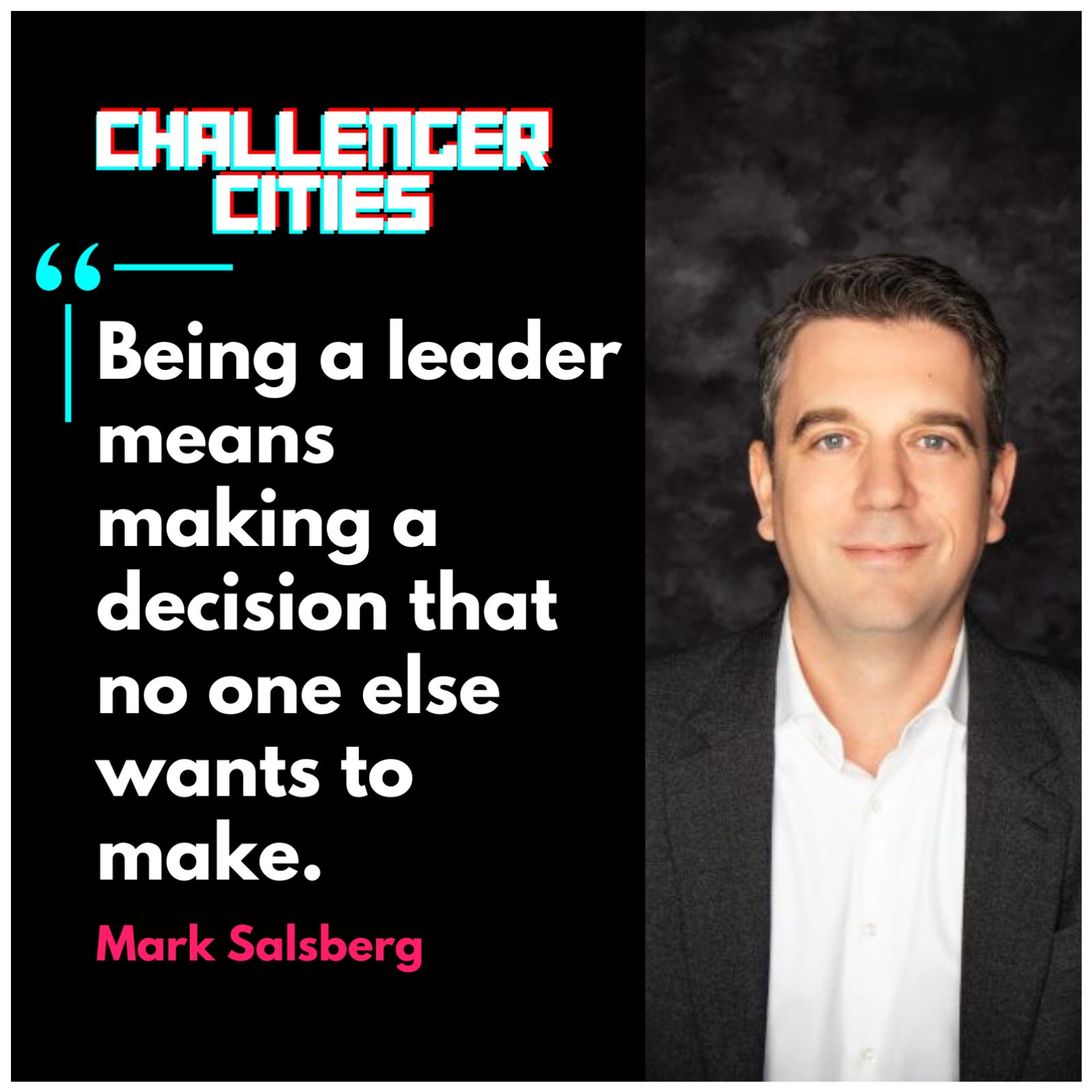 Challenger Cities EP87: Bringing Sexy Back to Transit with Mark Salsberg and Jonathan English | Canada is about to spend more on transit and rail than the oil sands are worth, and it's doing it without a national rulebook, a training pipeline or much recent memory of how to build well. So is that a crisis, or the best shot a country has ever had at becoming a genuine transit Challenger? This episode is a double act with two people who think about this for a living.Mark Salsberg is co-founder of TRACCS (the Transit Rail Association for Canadian Contractors, Maintainers, Operators and Standards), and his mission is the unglamorous connective tissue Canada skipped: standards, training, and procurement assurance. Jonathan English leads Infrastory Insights, holds a doctorate in urban planning from Columbia, was previously policy director at the Toronto Region Board of Trade, and the person who reminds us of the "Toronto Model" ... the heretical idea that good service is what actually drives transit demand, not the other way round.It starts a little dry and then gets properly good. We get into why Canada is one of the most expensive places on earth to build, why benchmarking against the United States ("the worst in the developed world," per Jonathan) imports all the wrong lessons, and why we keep trying to force passenger rail into a freight-shaped hole. But this isn't a kicking. There's a real opportunity buried in here for Canada acting as a bridge between a mature-but-complacent Europe and a car-choked North America that badly needs another way for its cities to grow.What we get into:The three things Canada never built: standards, training, procurement assuranceWhy we "learn bad lessons" and never close the loop on projectsThe one genuinely remarkable thing Toronto did after the war — and still benefits fromInfrastructure vs service, and why Canada has both problems"Is this an engineering problem, or a phone-call problem?"Bringing sexy back to transit: careers, signal engineers, and the passion the industry side-eyesThe biggest possible future and the smallest possible thing — including just running the buses more often | 1h 00m 32s | ||||||
| 6/11/26 |  Challenger Cities EP86: How the Robocars Meet the Curb with Bern Grush | Good new Challenger Cities episode today, all about autonomous vehicles and the bit that our guest, Bern Grush, thinks cities need to be thinking about more now. Like them or not, robotaxis are coming to cities. And for all the spectacular technology that helps cars drive themselves, the have some meaty challenges ahead. One of them being what happens when they interact with the curb. We've already seen how fleets of autonomous cars can create new forms of congestion, and we've seen tragic accidents come about as people open doors into the likes of passing cyclists. A few years ago I was involved in a project for a big tech firm looking at this, but it was rather quickly mothballed as big automotive clients shooed them away from it. The hardest part though was the orchestration layer between the operators of autonomous vehicles (think the ridehailing firms minus drivers) and deliveries that are seeking to move away from having a human at the wheel too. It effectively means redesigning who can stop where, when, for how long, and normally monetising it in the same way on-street parking is done today. So if you want to stop on a busy road to pickup/dropoff ... well you're going to pay for that. And you might be incentivised to do so somewhere quieter, or even let that tempt you towards public transport instead. We have finite space in urban areas, so we're going to need to be clever to make sure autonomous driving doesn't choke the city. | 58m 37s | ||||||
| 6/8/26 | 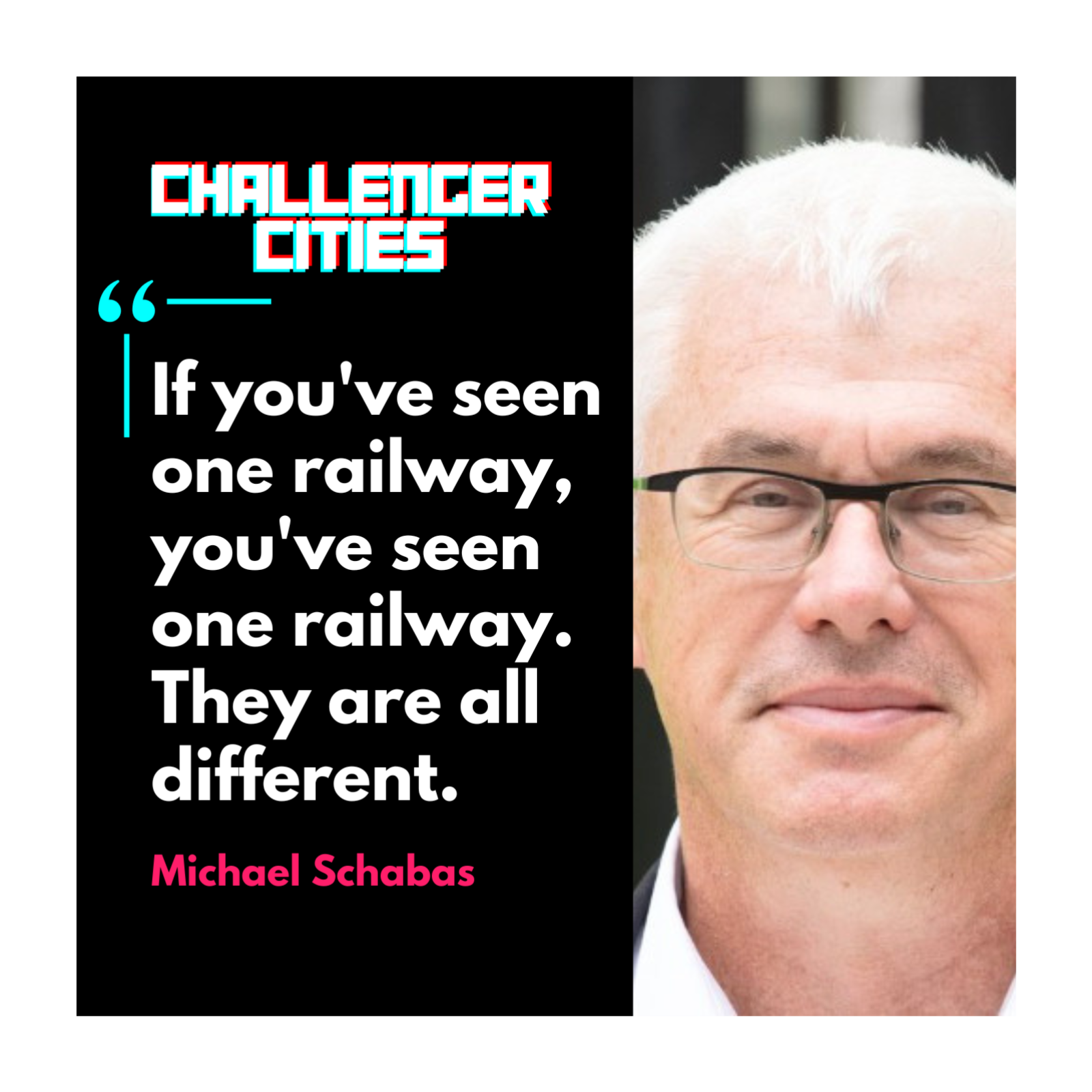 Challenger Cities EP85: Canada Needs a Railway Architect with Michael Schabas | Canada is, well might be, building a high speed train. At long last after 50 odd years of talking about doing so. But concerningly, there is much negative noise around the project as it seems it might not really be learning the lessons for how successful projects have been delivered elsewhere, and where projects for building fast trains have gone wrong.This podcast is with Michael Schabas, a Canadian, who knows all about how to make these projects successful. It's a really honest and open conversation about how to build HSR, what Canada is missing just now, and how we can hopefully influence Alto to ensure we actually learn from how it's been done elsewhere. If you like the idea of HSR, or even if you actually think it's a bad idea, well you should probably listen to this episode and get a feel for yourself. Michael's work is also available to be found here: https://www.highspeedrailcanada.com/p/all-canadian-hsr-studies.html | 1h 08m 41s | ||||||
| 6/3/26 |  Challenger Cities EP84: The De-Risking Industrial Complex with Richard Fisher | Two risk-management cultures looking at each other across a table, each waiting for the other to move. That's rail's relationship with venture capital. Iain talks to Richard Fisher, founder of Future Travel Studio, about why nobody would fund his Dream Suite flatbed seat for trains, even after InnovateUK had backed it and operators had tested it. About rail's proposition gap, the incumbents who monetise complexity rather than solve it, and why every discipline in the chain can be doing its job correctly while the sector as a whole still can't move. Plus what a transatlantic venture studio is trying to build instead. | 1h 12m 51s | ||||||
| 5/27/26 | 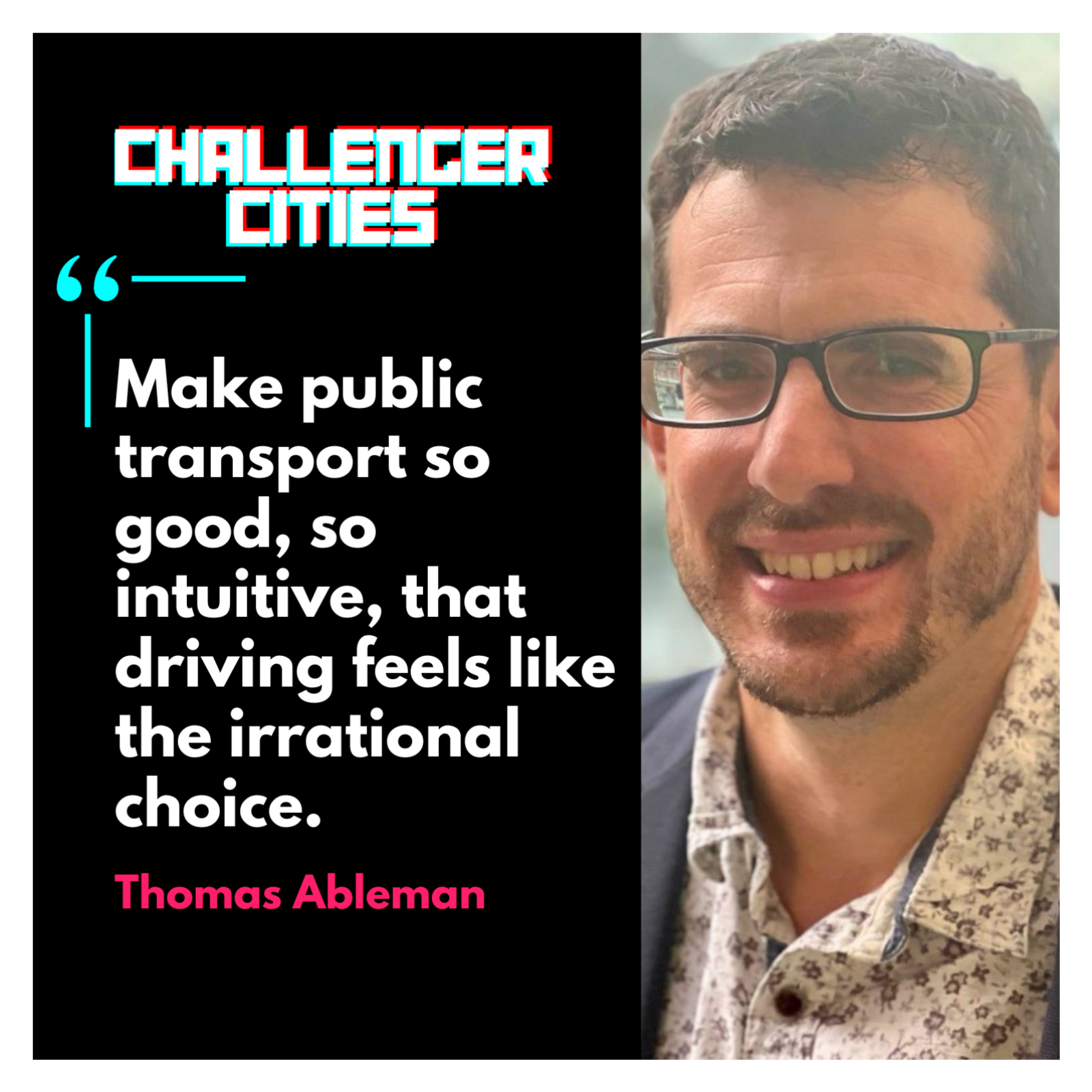 Challenger Cities EP83: A Little Piece of Switzerland in the Derbyshire Hills | This is a lovely episode with Thomas Ableman (a returning guest!) that is mostly about an amazing project he and a few volunteers recently secured funding to go and deliver called Mini Switzerland in the Derbyshire hills.We often hear about how it's not possible to deliver high quality public transport because there simply aren't enough people to make it worthwhile. That makes a lot of people feel quite clever in saying no to it. But then go an explain how Switzerland works then. If a nation that has some of the most challenging geography, and not particularly huge numbers of people, can deliver frequent, integrated, efficient and enjoyable transport to villages with as little as 300 people half-way up a mountain ... then I don't think we've got much excuse in the UK, US and Canada. We also talk quite a lot about trams, and how despite me really not being a fan of Andy Burnham, the fact a man that is probably best known for trams and yellow buses actually might make them an important topic for Westminster government to take more interest in. | 48m 39s | ||||||
| 5/22/26 | 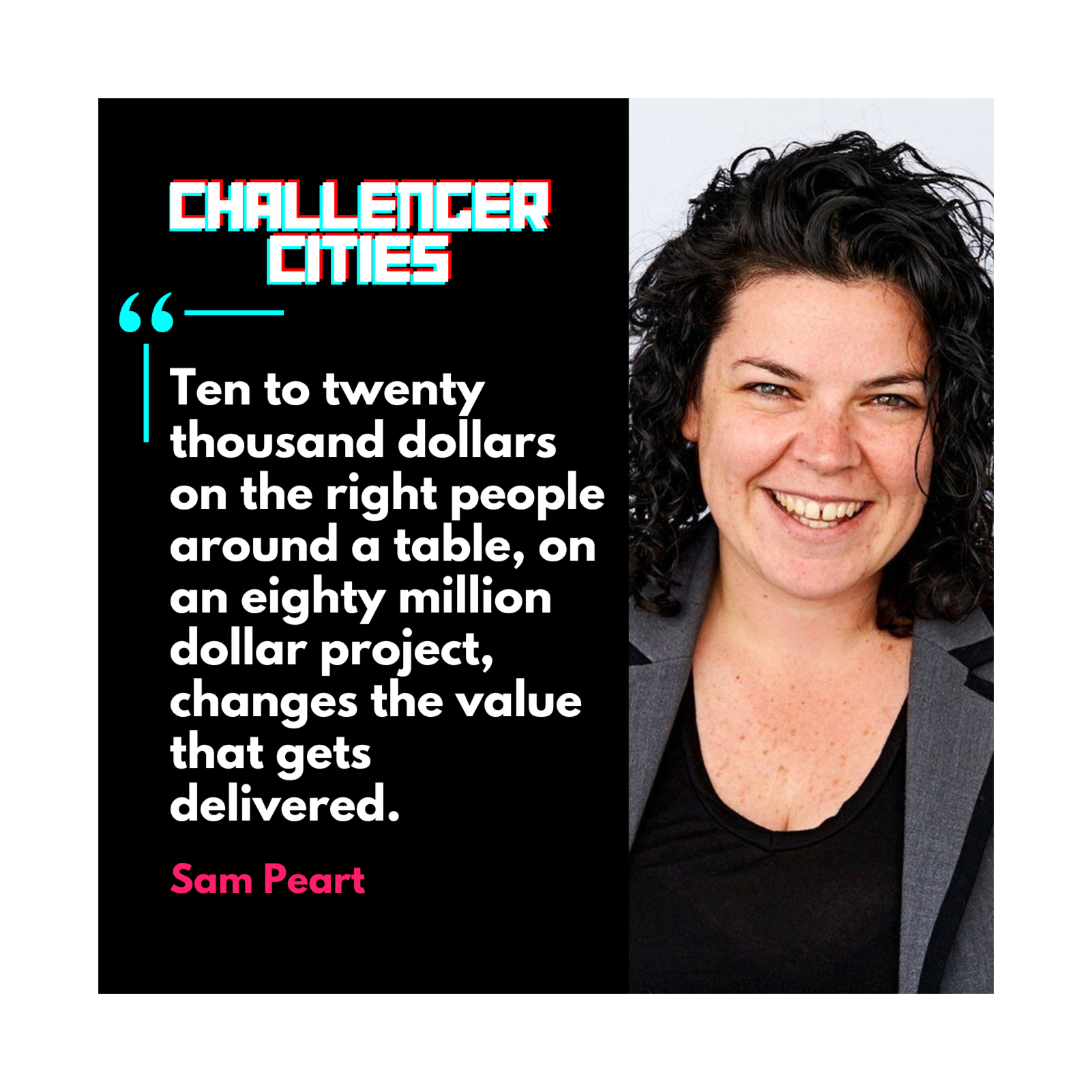 Challenger Cities EP82: The Purpose is Not the Function with Sam Peart | One of the best people I met last year was Samantha Peart. We were in Copenhagen for a few days and of our fellows group, I have to say she asked the best questions. She’s also exceptionally good at getting you to question your assumptions or reflect on why you might think what you’re thinking. And that really comes through in this conversation, with real examples that have had a massive impact on projects and places. I’m such a fan of hers, that I even let her destroy the magic wand question. Because she makes an excellent point about it. So if you’re involved in any sort of urbanism, placemaking or infrastructure project. This really is one you need to have a listen to. | 57m 52s | ||||||
| 5/15/26 | 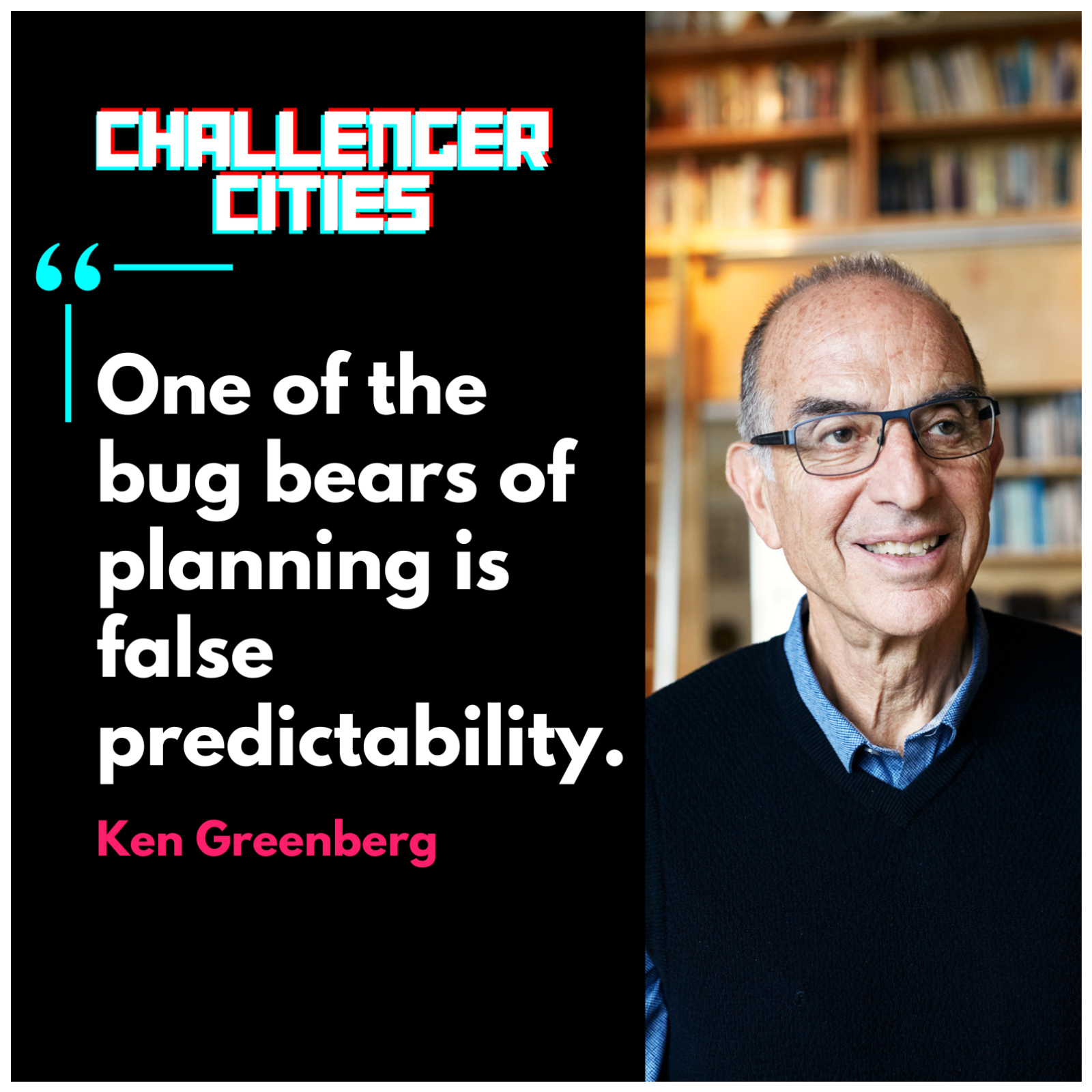 Challenger Cities EP81: A Chair in the City and a Stool at the Rouge with Ken Greenberg | If you liked our episode with Ilana Altman about The Bentway, then you'll like this one with Ken Greenberg, because he's part of that origin story. Ken is a legend in Toronto urbanism circles, as someone who did pioneering work in his early career in the city and then took it to the likes of St. Paul and Boston in the US. We set up this episode to discuss work he's doing around the newly free'd up airport lands in Pickering, ON and his vision to turn this into a new part of the Rouge National Urban Park. It's a conversation that we hope can breathe life and optimism into the Toronto urban discourse, as many of the components of what Challenger Cities need is right there. It just needs unleashing. | 1h 08m 42s | ||||||
| 5/12/26 | 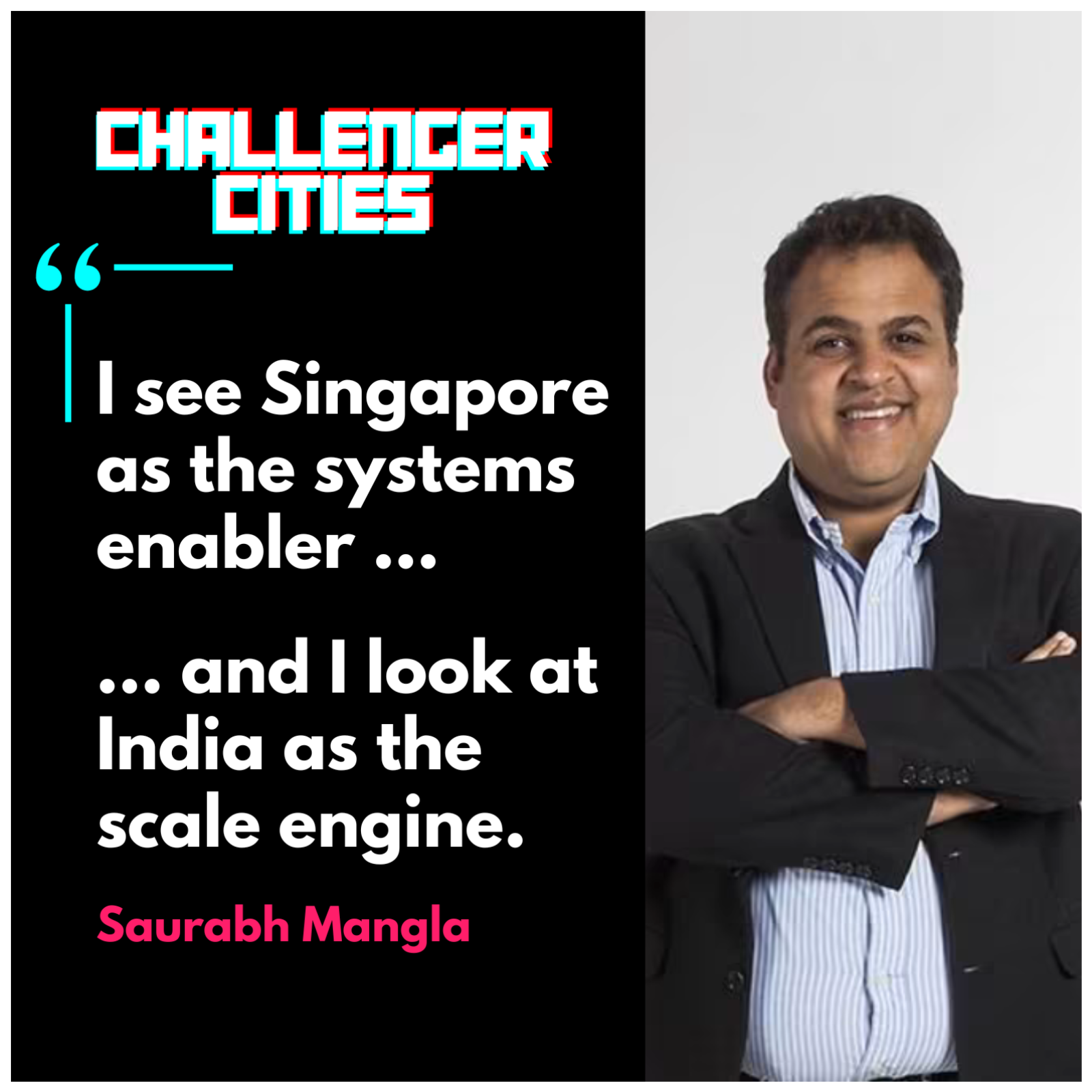 Challenger Cities EP80: The Materials of Cities with Saurabh Mangla | This is a bit of a different episode because we're talking about what cities are made of, rather than how we make our cities. I had the pleasure of meeting Saurabh Mangla on a day where I was hot, tired and just wanted a beer. But getting the story of his materials lab and how he's working to explore how cities use their materials more effectively, efficiently and in many ways, delightfully is a good reviver. We talk about Singapore, India and how material resources can be an excellent way for cities to demonstrate their Challenger mindset. | 45m 31s | ||||||
| 5/5/26 | 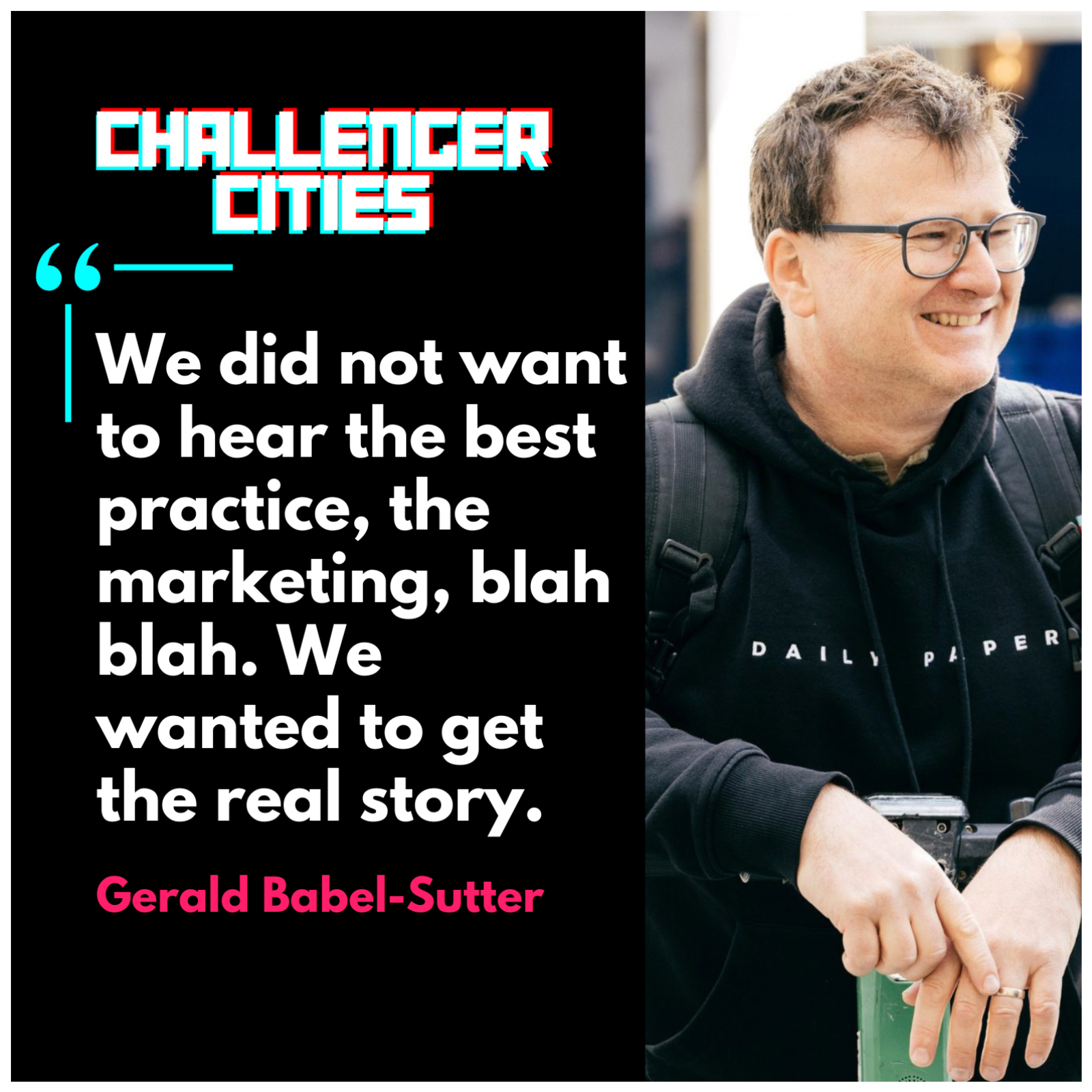 Challenger Cities EP79: The Best Practice Industrial Complex with Gerald Babel-Sutter | Gerald Babel-Sutter is the founder of Urban Future, a 14-year-old event that has grown from a workshop for ten city officials in Graz to a gathering of 2,000 people from 290 cities in 48 countries. The premise hasn't changed: get the actual project managers in a room, not the communications directors, and ask them to talk honestly about what went wrong.In this conversation we cover how a frustrated city official's complaint over a beer became the founding logic of one of Europe's most distinctive urbanism events, why Oslo's deputy mayor told a room full of city planners to never call anything a car-free city centre, what Helsingborg's annual fuck-up of the year award reveals about institutional culture change, and why Istanbul — four religions, sixteen million people, a more open visa regime — is where Urban Future is heading in April 2027.Gerald also makes a case that the knowledge flows in urbanism run almost entirely in the wrong direction, and that who gets a visa to attend whose conference is one of the most consequential questions in the field that nobody is talking about.https://urban-future.org/ | 53m 47s | ||||||
Want analysis for the episodes below?Free for Pro Submit a request, we'll have your selected episodes analyzed within an hour. Free, at no cost to you, for Pro users. | |||||||||
| 5/1/26 | 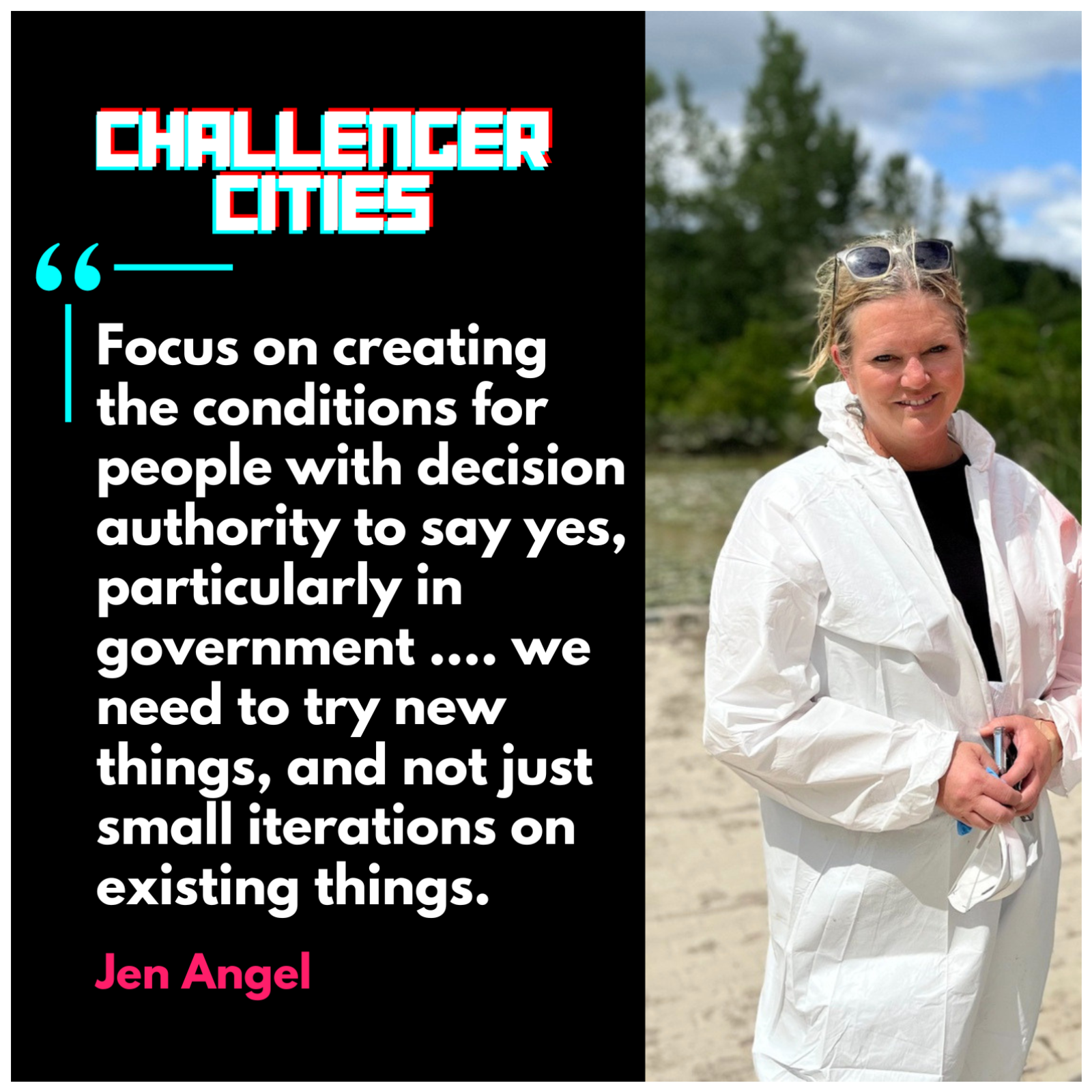 Challenger Cities EP78: Saying Yes More with Jen Angel | Jen Angel thinks Canada is closer to a moment of triumph in how it builds than it has been in her lifetime. The conditions are there. What's missing is enough people in positions of authority with the permission to say yes.Jen leads Evergreen, the national organisation behind the Brick Works in Toronto and a portfolio of public space projects across the country — from school grounds transformations in Halton and Winnipeg, to a Mi'kmaq Native Friendship Centre-led project in Halifax, to the Toronto ravines programme. Before Evergreen, she ran a Nova Scotia crown corporation that built the Halifax Waterfront, Peggy's Cove and Lunenburg Waterfront, alongside rural broadband and innovation hubs. She also sits on the Canadian Infrastructure Council, the ministerial-appointed arm's-length body writing Canada's first national infrastructure assessment.In this episode we get into:— Why "it's not that much harder to build a good one than a crappy one" might be the most damning line about Canadian infrastructure this year— The permission problem: why no has become the safe answer across our institutions, and what it costs us— Multi-benefit projects, and why our funding model is almost institutionally incapable of recognising them as legible— Why this particular moment — tariffs, geopolitical pressure, a public mood that actually wants things to be tried — might be a generational opportunity— What the East Coast knows about resilience that the rest of the country keeps forgetting— The Evergreen Conference at the Brick Works, May 6–7, theme: Cities Bursting with Life | 44m 19s | ||||||
| 4/28/26 | 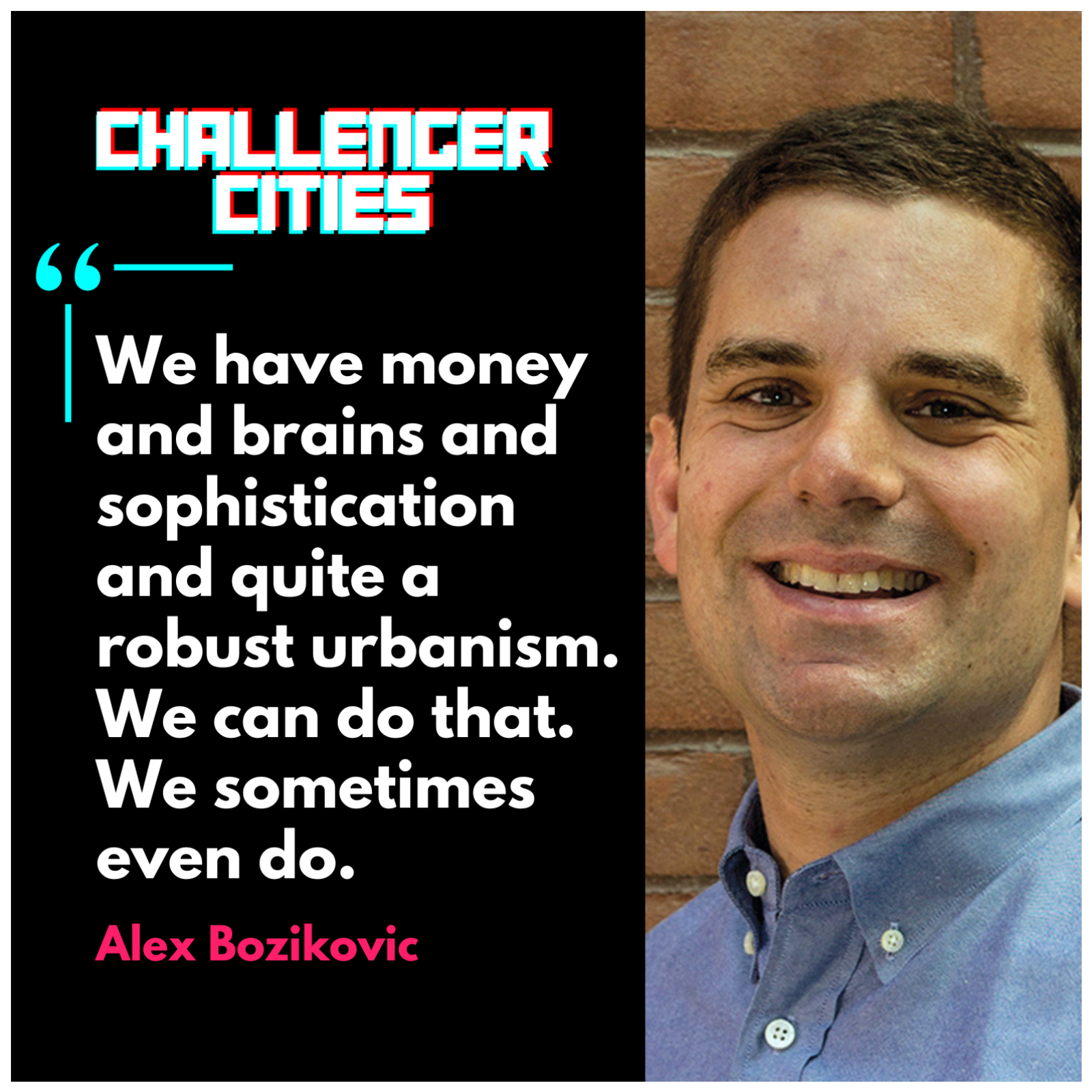 Challenger Cities EP77: The Will To Build with Alex Bozikovic | Alex Bozikovic is the architecture critic for the Globe and Mail, which in practice means he writes about everything from housing politics to the public realm to the quiet cultural erosion that happens when a city stops expecting much of itself. In this episode, Iain and Alex dig into why Toronto ... a city with extraordinary people, genuine sophistication and real financial muscle ... keeps failing to act on what it already knows. We cover the Spadina Expressway and the identity it left behind, the Ontario Science Centre closure and what it reveals about the state of progressive urban politics, the suburbs as the real story of Toronto's diversity, and what a bar in a 1899 attic has to do with the soul of a city. Plus Montreal, Sugar Beach, the Sanaaq Centre, and why the best things in Toronto tend to happen despite the default settings rather than because of them. | 1h 08m 18s | ||||||
| 4/23/26 |  Challenger Cities EP76: Urban Troubleshooting with Heath Gledhill & Tom Shield | Exploring Urban TroubleshootingIn this episode, Heath Gledhill and Tom Shield, founders of GledHill Shield, share their extensive experience navigating complex urban infrastructure projects. They discuss how early decision-making, constraints and collaborative design principles can transform city development. Whether you're an urbanist, engineer, architect, designer or planner, their insights challenge conventional project setups and advocate for more intentional, purposeful city shaping.Key Topics:The importance of framing the core problem before designing solutionsHow constraints foster innovative and effective urban designThe role of the business case in guiding project decisions and maintaining focusChallenges with briefs, approvals and stakeholder engagement in infrastructure projectsThe power of compromise and trade-offs in city developmentEmbedding aspiration and community impact through creative public programsCross-disciplinary integration as a necessity for successful urban projectsThe influence of cultural attitudes—Australia, Canada, the UK—on project deliveryThe potential of digital tools and visual artifacts to ground project visionBuilding trust and social license through transparency and stakeholder inclusionThe value of humility, purpose and intentionality in urban planning | 1h 01m 20s | ||||||
| 4/21/26 |  Challenger Cities EP75: What a Rock Off a Rock Can Teach the Rest of Us with Tasha Freidus | When the cod fishery collapsed in the nineties, Fogo Island lost its economy almost overnight. What came next — slowly, imperfectly and without a guarantee of success — became one of the most compelling stories in Canadian community development. Shorefast, the charity behind the Fogo Island Inn, wasn't built on the logic of charity. It was built on the logic of place. Every business decision, from the number of rooms in the inn to where every dollar gets spent, runs through a single question: does this strengthen the local economy?Tasha Freidus, Shorefast's Director of Education and Entrepreneurship, joins Challenger Cities to unpack the model and what it means beyond Fogo. We talk economic nutrition labels, the forgotten community pillar of the economy, why local banking matters more than most people realise, and how a platform launching this spring is attempting to connect communities across Canada who are quietly doing the same thing, whether they know it or not.Key TopicsFogo Island's history and economic transformationThe role of Shorefast and Zeta Cobb in community developmentAsset-based community development principlesStorytelling and social media in community buildingEconomic nutrition labels and local spendingScaling community models to larger citiesChallenges in local economic stewardshipThe importance of local banking and finance | 46m 22s | ||||||
| 4/17/26 | 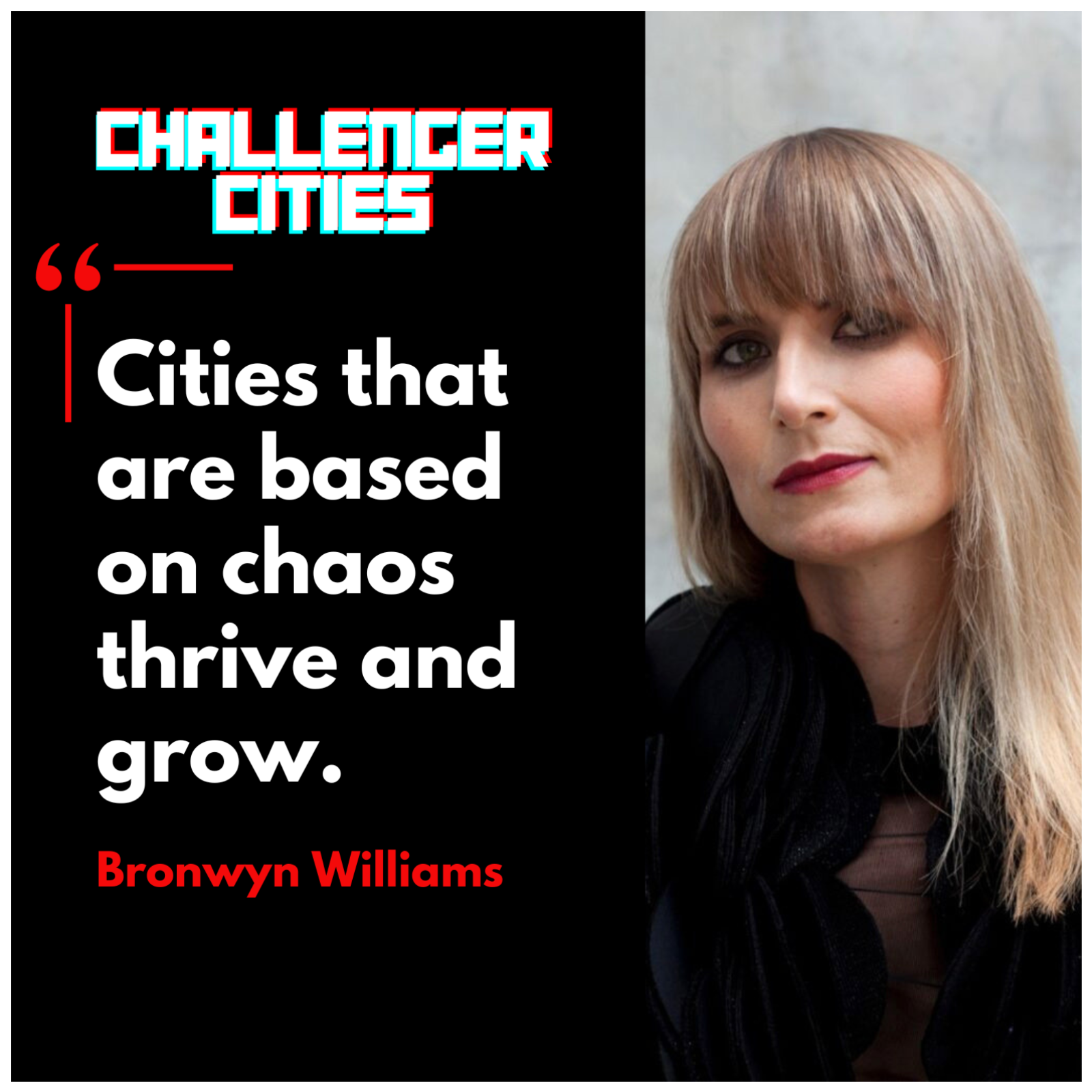 Challenger Cities EP74: Embrace the Chaos with Bronwyn Williams | Bronwyn Williams is a South African futurist and economist, a combination she'll tell you should not be the oxymoron most people assume it is. She's been doing sharp thinking about cities lately, and this conversation is a good example of why.We get into South African cities as a lens for the future with Johannesburg and Cape Town as two very different experiments in what happens when you try to impose order on a place that has other ideas. We talk about why the cities that look like they're working are often the most troubling ones of all, and what Dubai, Brazil and China tell us about the limits of control as a city-building strategy.We also get into AI and the data confidence problem including why shinier models don't mean better assumptions, just more expensive mistakes at greater scale. And we end up at the one question I always ask urban planners that they never quite know how to answer.Bronwyn is a futurist-economist based in Johannesburg. She works at the intersection of foresight and economic analysis, and has done work with Metropolis and UN-Habitat among others. | 44m 57s | ||||||
| 4/14/26 |  Challenger Cities EP73: Showing a City to Itself with Phil Tabah | Phil Tabah is the co-founder of The Main, Montreal's city magazine, and one of the most thoughtful people working on the question of how cities see themselves and tell their own story.In this conversation we get into why Phil started The Main at 21 as a Twitter account and what it's become, the publications that used to do this job well and what happened to them, why Montreal is a city that has cracked culture but not confidence, the economics of being a springboard city, and what it would actually take for Montreal to claim what it's already built.We also get into why the stories worth telling about a city are exactly the ones AI can't tell, and what a refined bullshit meter has to do with good editorial judgment.The Main is at themain.com. Go subscribe. | 43m 50s | ||||||
| 4/7/26 | 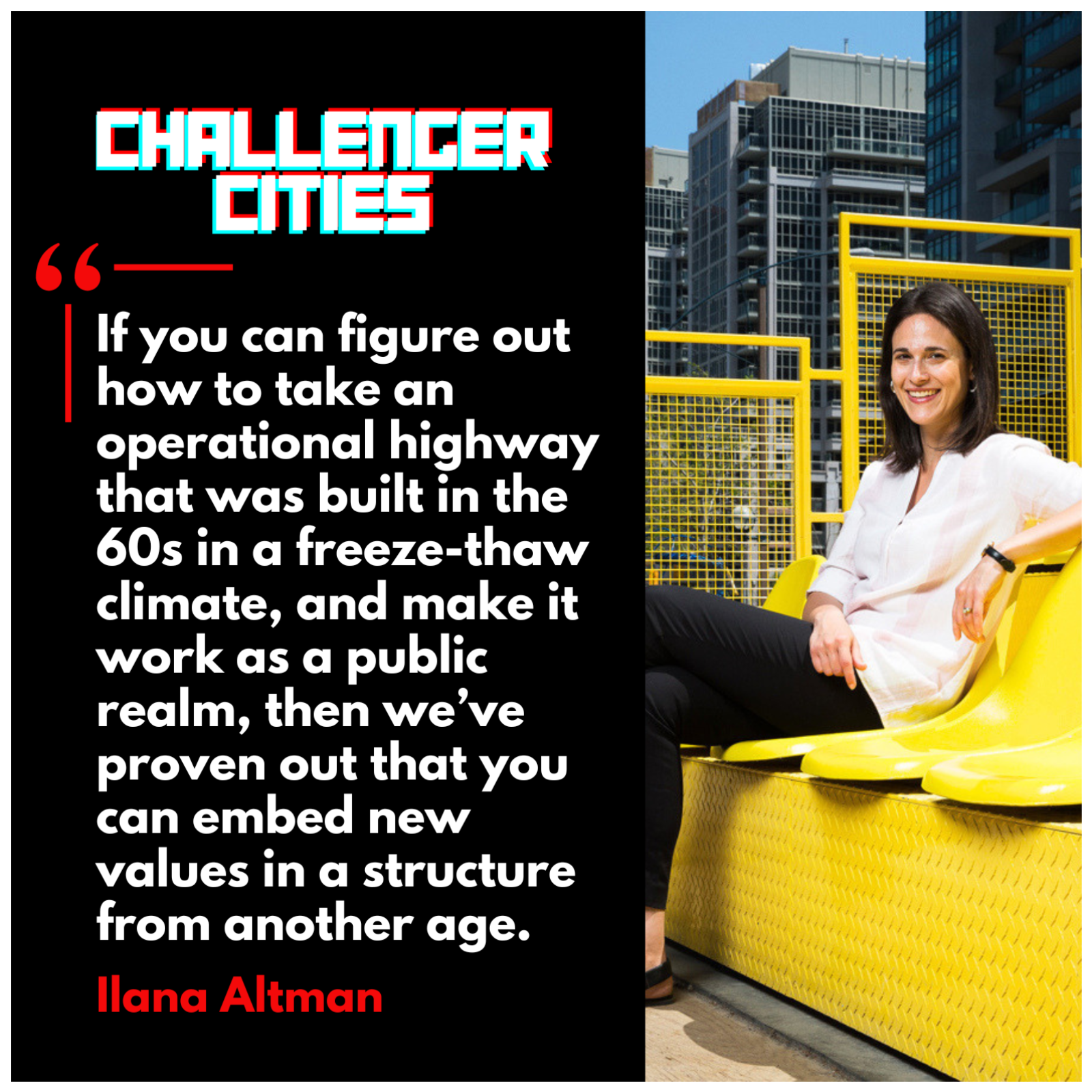 Challenger Cities EP72: The Case for Civic Joy with Ilana Altman | Most cities debate their troubled infrastructure to a standstill. Toronto has been arguing about the Gardiner Expressway for decades. Ilana Altman didn't wait for that debate to resolve. As CEO of The Bentway — a public space and cultural platform built underneath Toronto's elevated waterfront highway — she's been proving that you don't have to tear something down, or wait for it to die, to embed new values in it.In this conversation, Ilana and Iain cover the full arc: how the Bentway went from idea to open in under three years, what it actually takes to run a 24/7 public space underneath a working highway, and why the conservancy model it pioneered is still largely foreign to Canadian cities. They get into the practical constraints — maintenance access, lighting limits, the challenge of food and beverage on a linear site — and what those constraints have forced the team to do creatively. Including turning highway maintenance equipment into community mascots.But the deeper conversation is about civic joy as a strategy. The Bentway's Dominoes project — 2.7 kilometres of oversized dominoes run through Toronto streets by 300 volunteers — became one of the city's most shared moments in recent memory. Ilana traces what that kind of project actually does: not just entertain, but rebuild the connective tissue of a city that's been losing its volunteers, its optimism, and its willingness to celebrate what it's accomplished.With FIFA FanFest coming to the Bentway this summer and the full seven-kilometre Under Gardiner Public Realm Plan now approved by council, the window to get the rest of the corridor right is open. Ilana is clear-eyed about how short that window is.In this episode:How the Bentway went from philanthropic idea to open public space in under three yearsWhat makes it genuinely different from the High Line and other post-industrial urban renewal projectsThe conservancy model and why it's still novel in CanadaShade as a climate virtue — and how the Bentway reframed itThe Boom Buddies: turning maintenance constraints into public educationWhy volunteerism in Toronto is down 30% and what Dominoes did about itThe urgency of the eastern Gardiner corridor and the window that's closingToronto's self-confidence problem — and what it would take to fall back in love with the city | 1h 03m 07s | ||||||
| 3/30/26 | 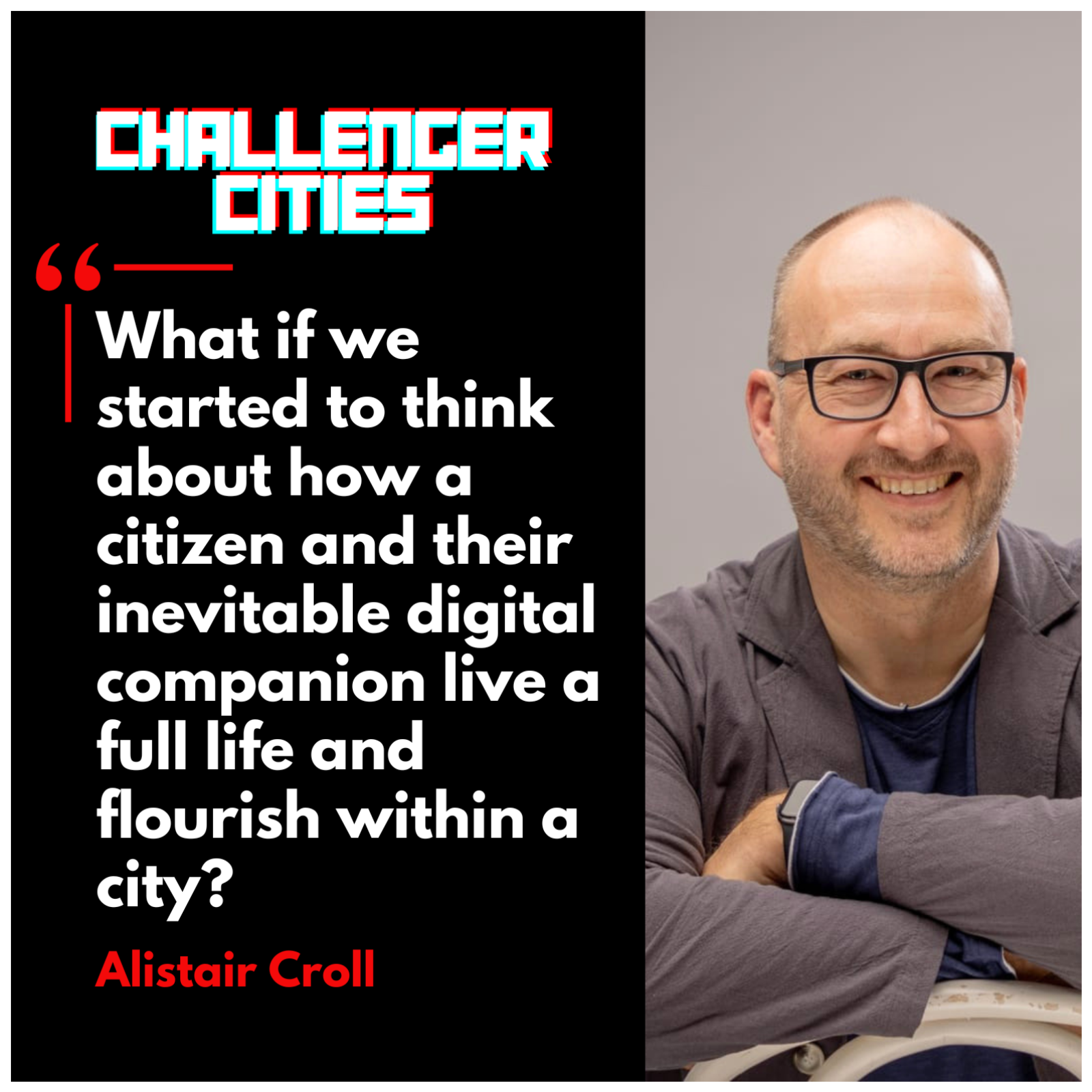 Challenger Cities EP71: Welcome to Your Agentic City with Alistair Croll | We have spent a lot of time on the podcast talking about physical cities as streets, buildings and the spaces between them. What we perhaps don't talk about enough is the digital layer underneath all of it, and how badly most cities are fumbling it. This week's guest has spent the last decade thinking about almost nothing else.Alistair Croll runs FWD50, perhaps the biggest gathering of digital first public servants in the world. He also wrote the book on lean analytics, literally, with Ben Yoskovitz. And last year he published Just Evil Enough with Emily Ross, which is about recognising the systems you're inside and getting them to behave in ways their creators didn't intend. As it turns out, that's a pretty useful instinct when you're trying to drag government into the 21st century.We talked about why digital government is slow ... and it's not the reason most people think, about what AI is about to do to the relationship between citizens and the state and why cities need to start thinking a lot weirder than they currently do.Basically if you're into cities as one of the original forms of artificial intelligence more than you are the built environment, this is the conversation for you. | 53m 26s | ||||||
| 3/16/26 | 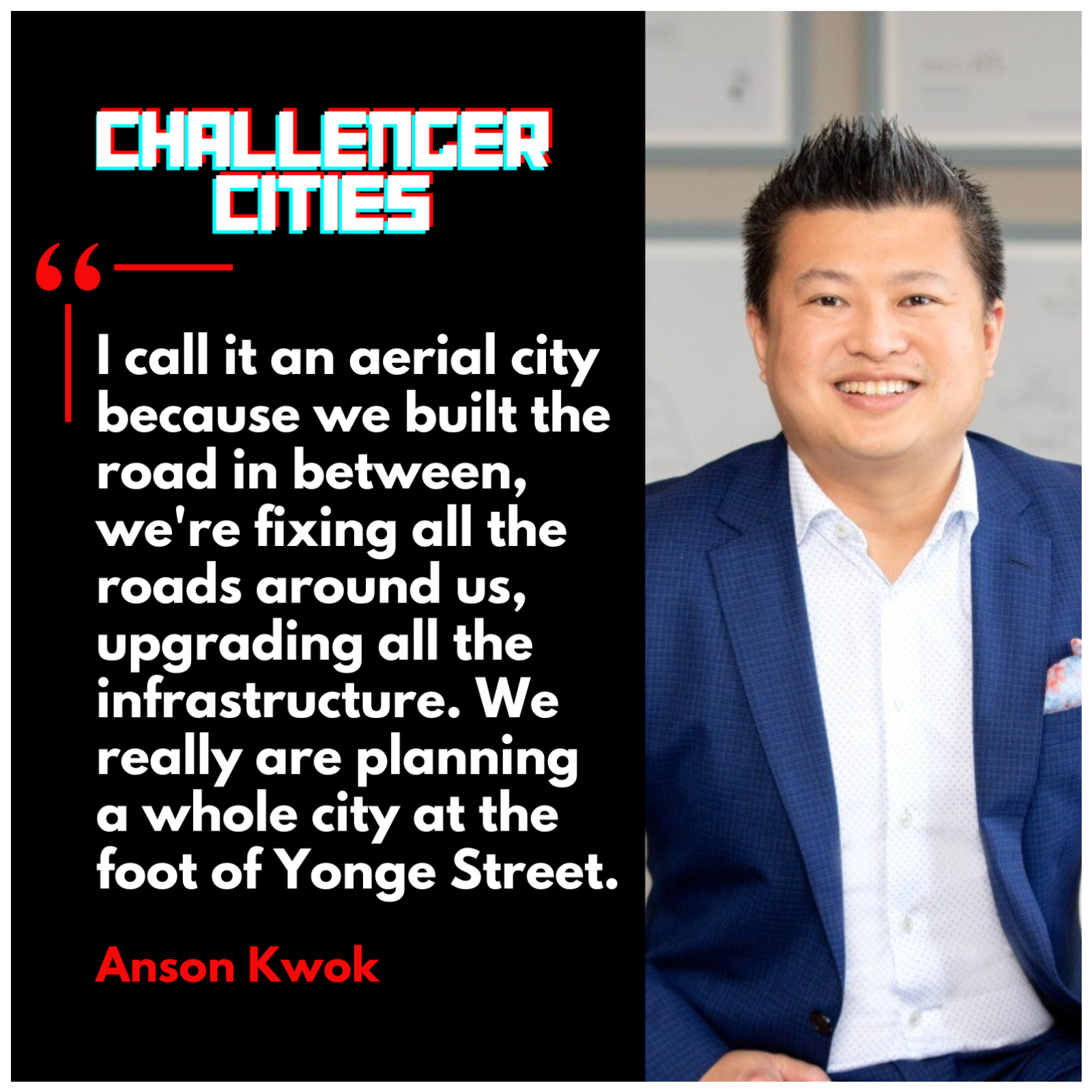 Challenger Cities EP70: Building a Village in the Sky with Anson Kwok | Anson Kwok has spent fourteen years building Canada's tallest tower at the foot of Yonge Street. As VP of Sales and Marketing at Pinnacle International, he's had a front row seat to how Toronto has transformed from a city of downtown parking lots to one of the most dense urban skylines in North America. We talk about what it actually takes to build a vertical city inside a city that wasn't designed for one, why the rules written for 20-storey buildings don't survive contact with a 106-storey one, and what patience has to do with getting any of it right. | 54m 21s | ||||||
| 3/16/26 | 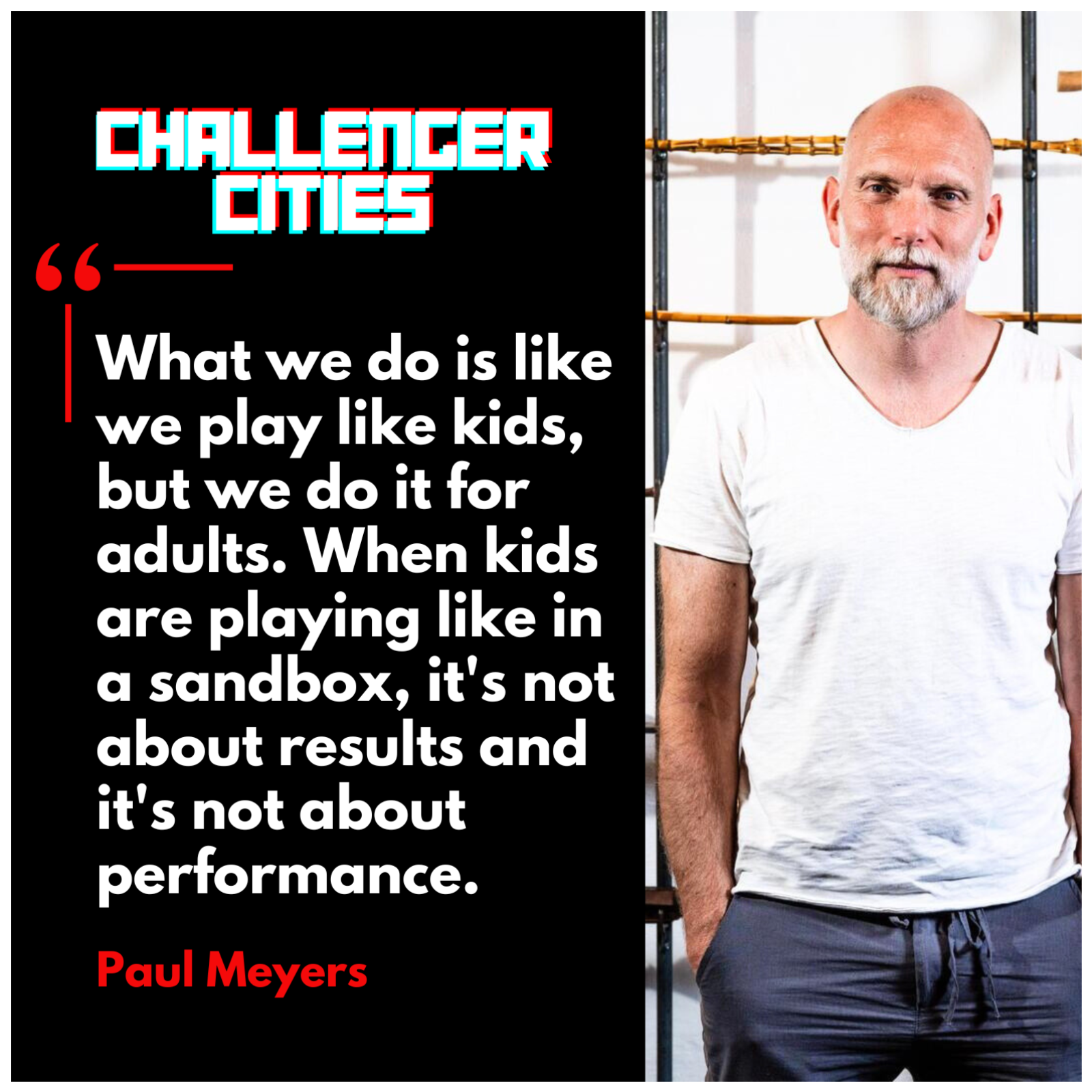 Challenger Cities EP69: Designing for Intimacy with Paul Meyers | At first glance, SPNKD might look like a BDSM venue. But Paul Meyers real focus is something deeper ... finding connection and creating intimacy.We explore how intimacy is designed, why many people use kink to avoid connection rather than deepen it, and what the concept of creating an arena in BDSM can teach us about relationships, work and even how cities function.Along the way we discuss:• Why Paul created SPNKD after finding most kink venues “tacky dungeons” • How BDSM spaces deliberately design trust, consent, and emotional safety • Why many couples visit not because something is broken, but because they want to invest in their relationship • The idea of the “arena” and what workplaces could learn from it • Why four hours together changes how people interact • How cities succeed or fail based on how they enable human interaction • The difference between technical performance and real connectionThis is a conversation about intimacy, but also about architecture, culture and subtle infrastructures that shape how we relate to each other.In other words: what happens when you design spaces for connection rather than efficiency. | 47m 13s | ||||||
| 3/3/26 | 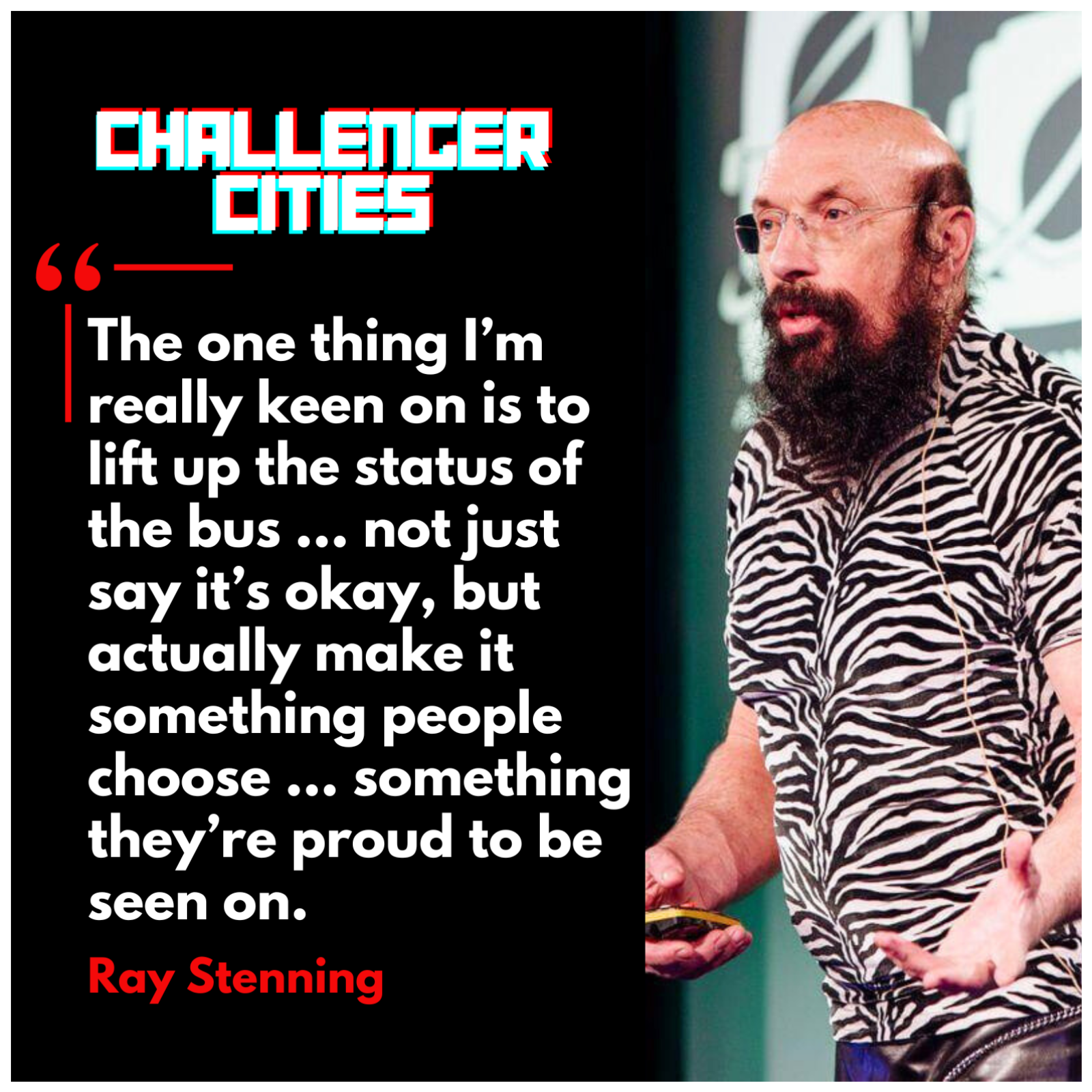 Challenger Cities EP68: The Bus Deserves Better with Ray Stenning | What if the problem with buses isn’t frequency, funding or technology ... but attitude?In this episode, we're in person with Ray Stenning, founder of Best Impressions and arguably the most prolific bus livery designer in the world. For more than 40 years, Ray has been quietly reshaping how buses look, feel and function across the UK — from iconic interurban routes like the X43 and the 36 to countless urban fleets most people ride without ever knowing who shaped them.But this isn’t a conversation about paint schemes.It’s a conversation about dignity.Ray argues that every rattling panel, every hard plastic bench, every grey-on-grey interior sends a message about who the passenger is assumed to be. When we design buses like cattle trucks, people behave accordingly. When we design them like shared public rooms, behaviour shifts.We explore:Why anxiety — not speed — is the real barrier to bus useThe psychology of reassurance in public transportHow small design details change passenger behaviourWhy manufacturers optimise spreadsheets instead of humansThe hidden importance of noise, seat spacing and eye-linesWhy drivers are always “on stage”The missed opportunity of electric buses that still feel like diesel punishmentAnd why a bus is closer to a café than a carRay makes a simple but uncomfortable point: buses have been treated as the lowest common denominator because the people who use them are assumed to be the lowest common denominator.If we want more people on public transport, we don’t just need better timetables. We need better environments. Better hospitality. Better ambition.Because public transport isn’t just about moving bodies. It’s about how we choose to treat one another in shared space. | 58m 58s | ||||||
| 2/25/26 |  Challenger Cities EP67: Watching a World From Behind the Window with Füsun Aydın | Füsun Aydın has spent twelve years reading people from a window in Amsterdam. Cities would be better places if the people planning them had half her instinct.Füsun is Turkish-born, a trans woman, a former sex worker, and now the madam of a bordello in Amsterdam's red light district. She came to the Netherlands as an asylum seeker at nineteen, having grown up in Istanbul where trans women have no legal discrimination protections and sex work on the street is both common and dangerous. The move wasn't idealism — it was survival arithmetic. In four years in Istanbul she knew fifteen women who were killed. In twelve years in Amsterdam, one. That is what regulation does.In this conversation we get into what it actually means to work behind a window in a residential neighbourhood — who walks past, how you read them, what the difference is between a local and a tourist, and what the red light district looks like from the inside at ten on a Monday morning versus nine on a Friday night. We talk about sex work as informal social infrastructure, the overlap between care work and sex work, and why the women Füsun has worked with who came from healthcare backgrounds didn't leave because the instinct to care disappeared — they left because the pay wasn't enough. And we get into the fight that matters most to her right now: Amsterdam's proposal to relocate the red light district, what it would actually mean for safety, and what it reveals about who gets listened to when cities make decisions about the places that matter most to the people who live in them.Füsun also writes about her life and work on Substack - https://substack.com/@fusunaydin, where she brings the same directness and warmth to the page that she brings to this conversation. | 51m 59s | ||||||
| 2/19/26 | 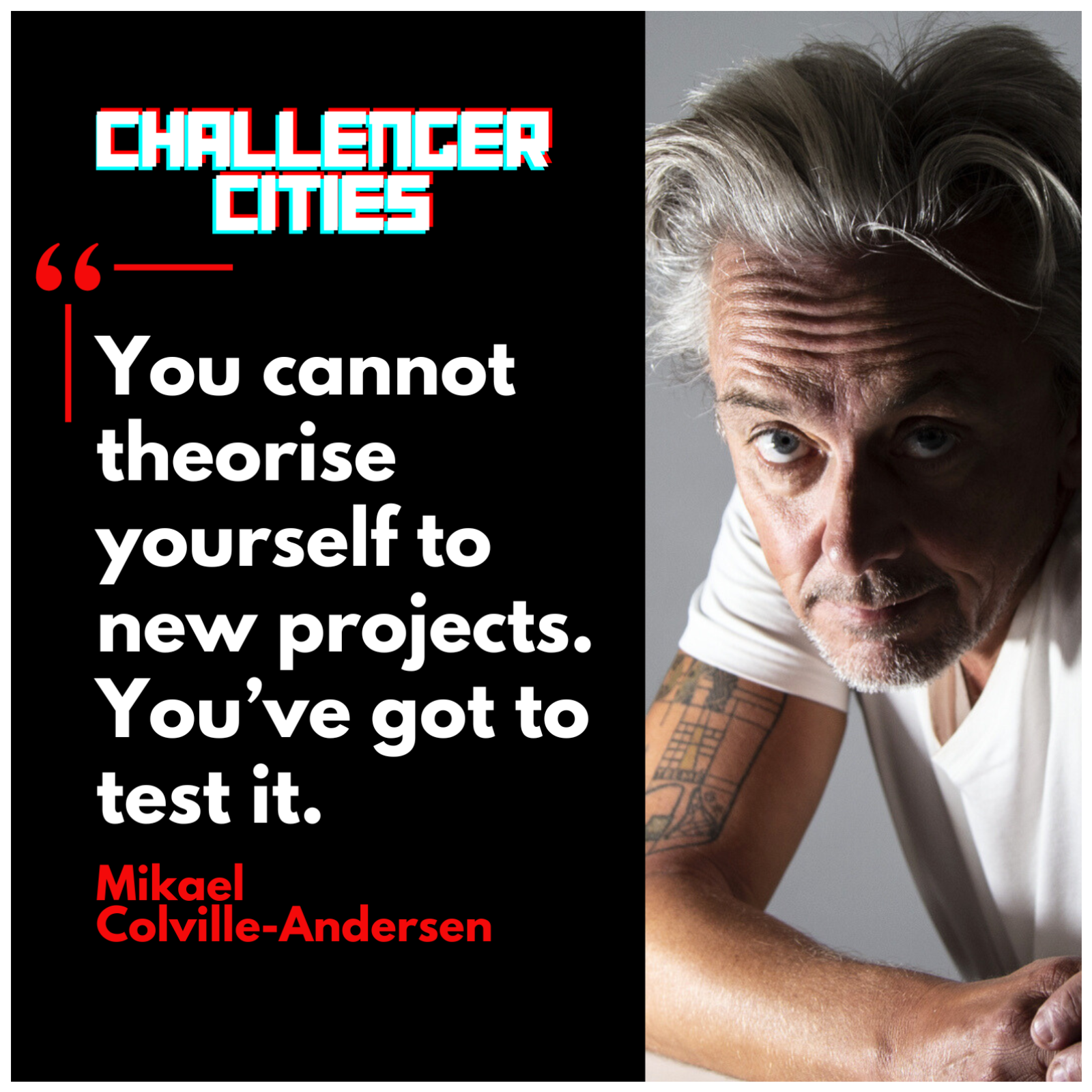 Challenger Cities EP66: Urbanism Without the Excuses with Mikael Colville-Andersen | In this episode of Challenger Cities, Iain Montgomery is joined by urban designer, filmmaker, and author Mikael Colville-Andersen for a wide-ranging conversation about why cities so often know what works, yet struggle to act on it.We start with train stations and the importance of arrival, before moving through cycling, design, experimentation, Nordic urbanism, and finally Mikael’s recent work in Ukraine, where urbanism takes on a very different meaning.We cover:Why train stations are still one of the clearest signals of a city’s confidence and prioritiesWhat cities lose when arrival becomes a throughput problem rather than a civic momentWhy Copenhagen doesn’t have “cyclists,” only people on bikesHow removing friction works better than persuading or moralisingWhy design creates behaviour, and why blaming people misses the pointParis as an example of what happens when infrastructure forces constant negotiationThe limits of theory, optimisation, and data-heavy urbanismWhy pilot projects shouldn’t be scary, and how fear quietly paralyses citiesHow Copenhagen built momentum by testing ideas quickly and publiclyWhat the Nordics get right, not as a model to copy, but as a cultural operating systemDemocratic urbanism and designing cities for the five-year-old and the ninety-year-oldTrust as an overlooked form of infrastructureMikael’s work in Ukraine, where benches, trees, and shade become “urbanism as medicine”What peacetime cities should learn from urban interventions built under air-raid sirensA provocation: what would happen if one city simply did everything it already knows to be right? | 1h 03m 38s | ||||||
| 2/16/26 | 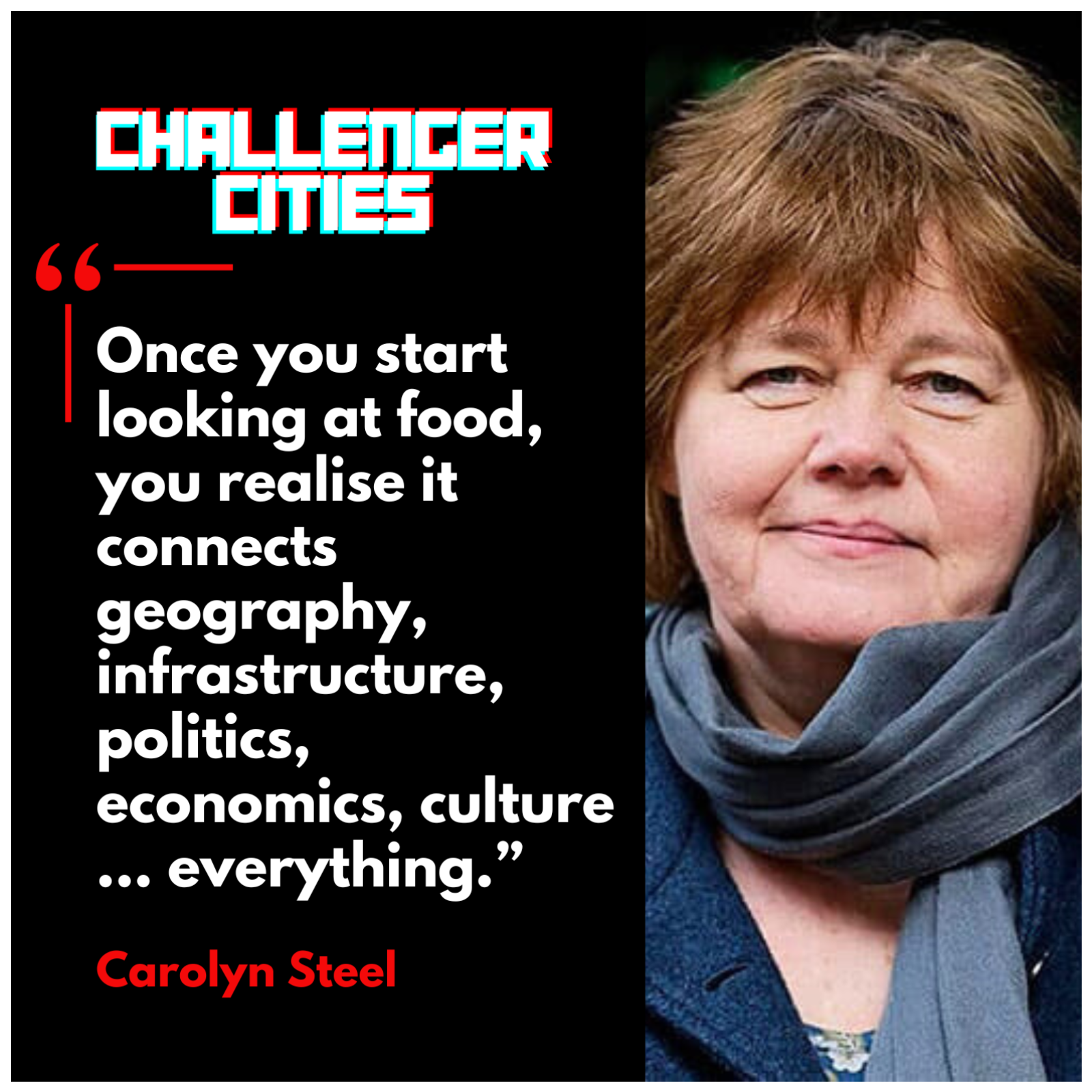 Challenger Cities EP65: Sitopia with Carolyn Steel | Cities are usually explained through buildings, infrastructure, policy and planning. Food rarely gets a look-in.Which is strange, because for most of human history, cities existed in the first place because we learned how to feed ourselves at scale. Farming allowed settlement. Settlement allowed specialisation. Specialisation gave us civilisation. Long before zoning codes or masterplans, food decided where cities formed, how power worked, and why empires survived or collapsed.In this episode, I’m joined by architect and writer Carolyn Steel, whose books Hungry City and Sitopia have quietly reshaped how many people think about food and place. Carolyn doesn’t approach food as lifestyle or culture. She treats it as infrastructure. A lens that connects geography, logistics, politics, economics, health and social life in ways that most urban conversations completely miss.We talk about cities as food machines, moving from Rome, Paris and London to Chicago, tracing how grain, rivers, canals, railways and refrigeration shaped very different political and economic outcomes. We explore how technology didn’t just speed food systems up, but fundamentally altered them, separating calories from nutrition and convenience from ritual.A big part of the conversation centres on Carolyn’s idea of exo-evolution: the moment when humans stopped adapting themselves to their environment and instead began redesigning the environment to suit their desires. Cities, it turns out, adapt very quickly. Human biology does not.We also dig into what was lost when markets gave way to supermarkets, how food was deliberately redesigned to remove human interaction, and why eating together remains one of our most overlooked forms of civic infrastructure.This is a conversation about food, but it’s really about cities. About how we live together, what we take for granted, and why so many urban problems make more sense once you stop looking at buildings and start following what’s on the plate.Don’t expect to walk through a supermarket in quite the same way afterwards.In this episode, we cover:• Why food is one of the fastest ways to understand how a city actually works • How Rome, Paris and London evolved very different food systems, and why that mattered politically • The role of grain, rivers and trade in shaping empires and revolutions • How Chicago became a global food hub through geography, railways and refrigeration • What exo-evolution means, and why cities adapt faster than human bodies • How ultra-processed food and constant availability changed our relationship with eating • Why markets were once the social heart of cities, and what happened when supermarkets replaced them • Eating together as low-tech civic infrastructure in an increasingly fragmented worldAbout CarolynCarolyn Steel is an architect and writer best known for Hungry City and Sitopia, two influential books exploring the relationship between food, cities and civilisation. Her work examines how food shapes the physical form of cities, the way societies organise themselves, and how modern food systems affect health, culture and everyday life. | 1h 21m 36s | ||||||
| 2/10/26 | 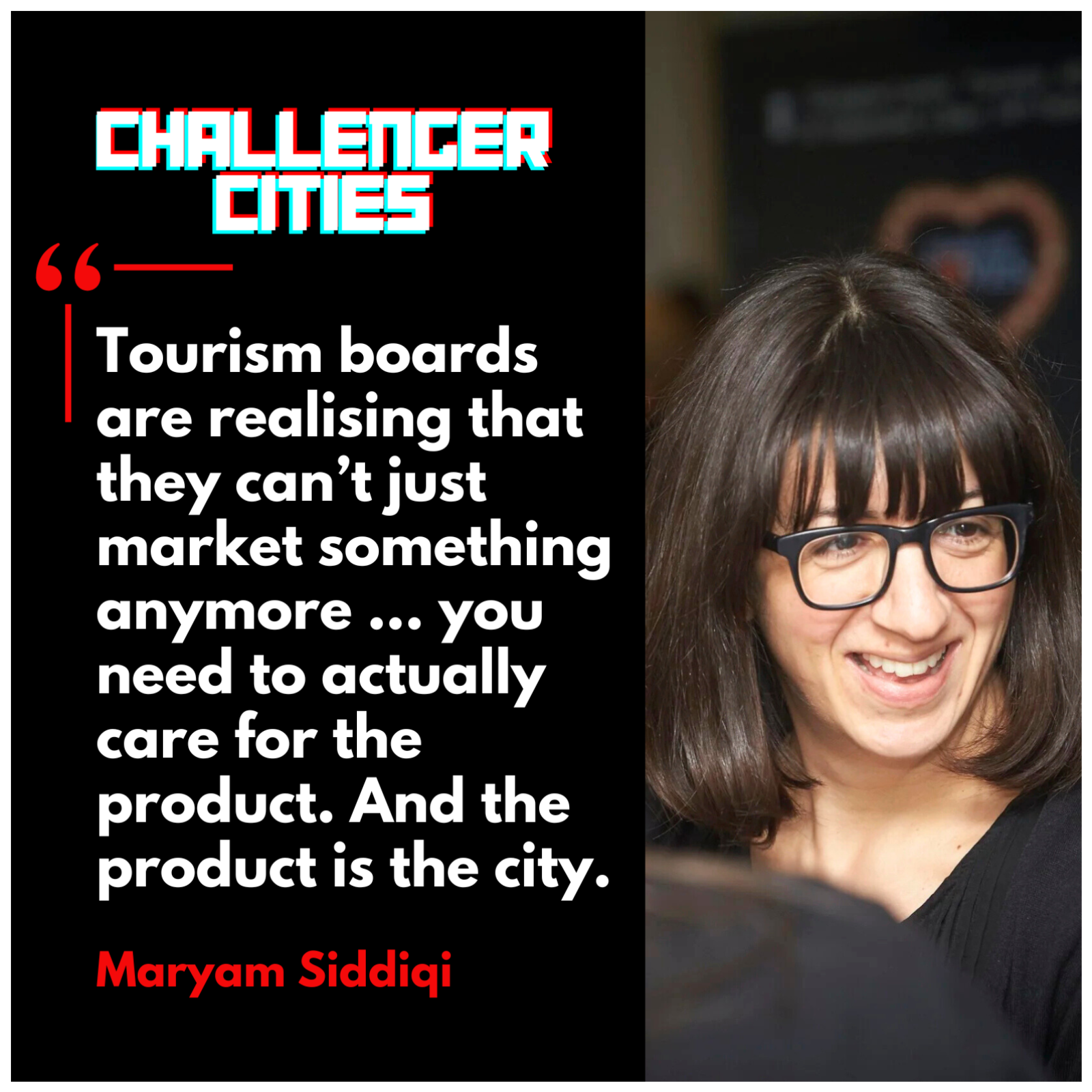 Challenger Cities EP64: Tourism as a Stress Test with Maryam Siddiqi | Tourism is big business. Cities spend vast sums attracting visitors, promoting landmarks and polishing their image. What they’re far less good at is thinking through the experience of actually being there. How a place works once you arrive. How you move around it. What makes sense, what doesn’t, and what quietly undermines the affection people might otherwise develop for a city.In this episode, Iain Montgomery is joined by Maryam Siddiqui, a Toronto-based travel and culture journalist who came to travel writing sideways rather than by design. Starting out in PR before moving into business journalism, then arts and culture, Maryam brings a critical, socially minded lens to how cities are marketed, experienced and lived in.Our conversation treats tourism not as leisure, but as a stress test for cities. We talk about over-tourism and the post-pandemic reckoning it forced into the open. About why cities are often better at selling themselves than explaining how they work. About transit systems that feel like puzzles, wayfinding that assumes insider knowledge, and why visitors notice problems locals have learned to tolerate.We dig into regenerative tourism, not as a buzzword but as a philosophy rooted in care, stewardship and Indigenous knowledge. If cities invite people in, what responsibility do they have for how those people move, behave and experience the place? And why are metrics like “heads in beds” still crowding out harder questions about emotion, memory and whether people actually want to come back?Toronto becomes a case study, from the confusion of its transit system to the disconnect between what’s officially promoted and what people actually love. Small theatres. Independent restaurants. Neighbourhood scenes that don’t lend themselves to brochures. As Maryam puts it, “The places that don’t need publicising are the ones with the money to do publicising.”We also talk about how people really plan trips today, bypassing official channels in favour of TikTok, Instagram, Reddit and word-of-mouth, and what that means for tourism organisations still behaving like broadcasters rather than curators.We close with Maryam’s magic wand: making it genuinely safe and easy to bike around cities, and pushing tourism organisations to show up for locals, not just visitors. Sponsoring neighbourhood festivals. Supporting cultural life. Making it obvious how tourism contributes to the everyday city.Because at its best, tourism doesn’t invent affection. It amplifies what’s already there.Topics covered:Tourism as a stress test for citiesOver-tourism and the post-pandemic shiftWhy cities sell highlights but neglect experienceTransit, wayfinding and everyday frictionRegenerative tourism and care for placeTikTok, trust and the collapse of official travel commsToronto as a case studyThe gap between what cities promote and what people loveWhy tourism organisations need to show up for locals | 1h 00m 08s | ||||||
Showing 25 of 90
Pitch Fit is a Pro feature
See how bookable this show is for guests, which brands already advertise, the per-episode ad value, and the best-fit guest and sponsor profile. The numbers are blurred on the free plan.
How readily this show books outside guests like you.
How proven this show is for host-read sponsorships.
For Guests
ProFor Advertisers
ProUpgrade to Pro to unlock guest cadence, sponsor categories, fit scores, and per-episode ad value for this show.
Chart Positions
6 placements across 6 markets.
Chart Positions
6 placements across 6 markets.